Abstract
The shape and size of the surface roughness induced by nanostructured materials have a significant effect on the wetting behavior of superhydrophobic surfaces. In this work, the effect of organosilane reaction duration on the formation of polymethylsilsesquioxane (PMSQ) nanostructures on cotton fibers surface has been investigated. The reaction was performed in methyltrichlorosilane (MTCS) solution at different duration time. The surface morphology and surface chemistry were investigated with scanning electron microscopy (SEM), attenuated total reflectance Fourier-transform infrared (ATR-FTIR) and energy dispersive X-ray (EDX) spectroscopy. The wetting properties of fabrics were elucidated by means of contact angle (CA) goniometry and sliding angle (SA) measurements. The results revealed that reaction duration has a significant effect on the morphology of nanostructures and also their covering density, which can influence the hydrophobic state of the surface. For fabrics with fine nanogrooves and low surface coverage, adhesion between droplets and the surface is high so that droplets cannot slide off even when the fabric was turned upside down (‘sticky’ surface) whereas for the fabrics with the high area density of the entangles nanofilaments, adhesion is low and droplets can roll off by tilting the plate (‘slippery’ surface). Mechanical properties of fabrics as well as washing durability were carried out. These findings would be helpful in understanding the role of the surface coverage and morphology of nanostructures on the superhydrophobic behavior of fabrics and guiding the design of perfect artificial superhydrophobic textiles for extended practical application.
In recent years, thanks to the unique water-repellent properties of the lotus leaf and engineering advances, the fabrication of superhydrophobic surfaces has become an area of active fundamental research; therefore, there are a variety of artificially (biomimetic) made superhydrophobic surfaces.1–7 Amongst superhydrophobic surfaces, water-repellent textiles have great potential for practical application and many researchers have used different methods and materials to impart superhydrophobicity characteristic to the surface of natural and synthetic textiles.8–19 Cotton is the most important natural textile fiber in the world and is also a cellulosic textile fiber which has been used to produce apparel, home furnishings, and industrial products. 20 Cotton cellulose is a superhydrophilic substrate because of the abundant hydroxyl groups on its surface. To be usable for certain applications, cotton needs surface modification in order to become hydrophobic. To this end, nanoparticles and nanostructures of distinctive materials such as silica,10–13 zinc oxide, 14 silver, 15 gold, 16 and aluminum oxide17,18 have been used for increasing the surface roughness of cotton fibers followed by the deposition of low surface energy layers, which give rise to high repellency.
There is now abundant evidence that the combination of topography and hydrophobic chemical structures produce surfaces with high contact angles (CAs) and an extensive variety of methods have been used, some of which are quite complex, to impart this condition to surfaces. An interesting technique can be a one-stage process in which using single materials can increase surface roughness and decrease surface energy simultaneously. In this regard, recently trichlorosilane compounds have attracted much interest because of the formation of silicone nanostructures which can offer a superhydrophobicity effect to the surfaces. These compounds have been applied to various substrates by simply solution immersion or a vapor-phase reaction.21–26 For instance, Gao and McCarthy 21 have prepared a perfectly hydrophobic surface on silicon wafer by its reacting with methyltrichlorosilane (MTCS) solution. Water CAs of the prepared surfaces were measured to be θA/θR = 180°/180°. Zimmermann et al. 26 have grafted silicone nanofilaments to the surfaces of different materials, which have rendered them superhydrophobic. Also, Seng Khoo and Tseng 24 prepared 3D silicone nano-architectures with large varieties of morphologies through the control of several synthesis variables based on the phase separation method of trichlorosilane reagent on commercially available glass and SiO2 substrates. These superhydrophobic surfaces showed high CA and different CA hysteresis.
There are different definitions for highly hydrophobic surfaces. In general, surfaces with very high water CAs particularly larger than 150° are usually called superhydrophobic surfaces.27–29 However, based on adhesion properties of water droplets; there exists two kinds of extremely superhydrophobic cases in nature, that is, ‘sliding’ superhydrophobic lotus leaves with ultralow water sliding resistance and ‘sticky’ superhydrophobic gecko feet with high adhesive force. Recently, Xia and Jiang 30 categorized superhydrophobic surfaces into six different CA states and hystereses: (a) Wenzel’s state (water droplets pin the surface in a wet-contact mode), (b) Cassie’s superhydrophobic state (water droplets adopt a non-wet-contact mode), (c) ‘Lotus’ state (special case of Cassie’s superhydrophobic state, high CA and very small CA hysteresis), (d) transitional superhydrophobic state between Wenzel’s and Cassie’s state, (e) ‘Gecko’ state (high CA and adhesion), and (f) Cassie impregnating wetting state. 30 Superhydrophobic surfaces with SA less than 10° are needed for the self-cleaning properties (‘slippery’), 27 whereas for delivery of water micro-droplets SA should be high (‘sticky’). 7 Therefore, for the full assessing of hydrophobicity effect, measuring the static and dynamic CAs is necessary.
In this work, we attempted to investigate the effect of the reaction duration on the formation of polysiloxane nanostructures on cotton fibers and its effect on the wetting properties of fabric. PMSQ nanostructures with different morphology and surface coverage that formed at various reaction durations have a significant effect on the adhesion of water droplets to the surface of fabrics and can regulate its stickiness to the textile substrate. This change in morphology is functionally significant; superhydrophobic textiles can be formed featuring very low or very high adhesion to water using a single precursor.
Materials and methods
Materials
MTCS, ethanol and anhydrous toluene were purchased from Merck and were used as received. Desized, scoured and bleached plain weave 100% cotton fabric (the wrap density of 40 yarn/cm, the weft density of 20 yarn/cm and the fabric weight of 230 g m−2) was supplied by Yazd Baf Co., Ltd, Iran. The fabric was washed in warm water using a non-ionic detergent to remove any pretreatment chemicals on the fabric. Deionized water was used throughout the experiments.
In-situ synthesis of MTCS nanostructures on cotton fabric
One gram of cotton fabric was dipped into the anhydrous toluene solution of 0.1 M MTCS (100 ml) in a Teflon vessel. Reactions were run at 25°C for different times (2, 5, 15, 30, 60, 120 and 180 min). Upon completion of the reaction duration, the samples were isolated and rinsed (in this order) with toluene, ethanol, ethanol–water (1:1), water, and then dried in an oven at 120°C for 30 min. The as-prepared samples were labeled as Cot-0 (untreated fabric), Cot-2, Cot-5, Cot-15, Cot-30, Cot-60, Cot-120, and Cot-180 in increasing order of reaction duration.
Scanning electron microscopy
Scanning electron microscopy (SEM) measurements were carried out using an AIS-2100 electron microscope operated at a pressure about 1.3 × 10⁻³ Pa at room temperature. The operation voltage was adjusted at 10 kV. Since cotton textile is insulator, the fabrics were sputtering coated (SC 7620 EMITECH) with a thin film of gold prior to SEM measurements. To determine the elemental composition of the fabric surface, an energy-dispersive X-ray (EDX) detector was used with the SEM.
Fourier-transform infrared spectroscopy
Attenuated total reflection infrared (ATR-IR) spectra were recorded on a Bruker Equinox 55 Fourier-transform infrared (FTIR) spectrometer, equipped with a nitrogen cooled MCT detector. A thin strip of the fabric was cut and pressed against a ZnSe ATR crystal using a flat metal strip. The spectra were recorded from 4000 to 400 cm−1 with a resolution of 4 cm−1 at ambient temperature.
The amount of deposited silicone polymer
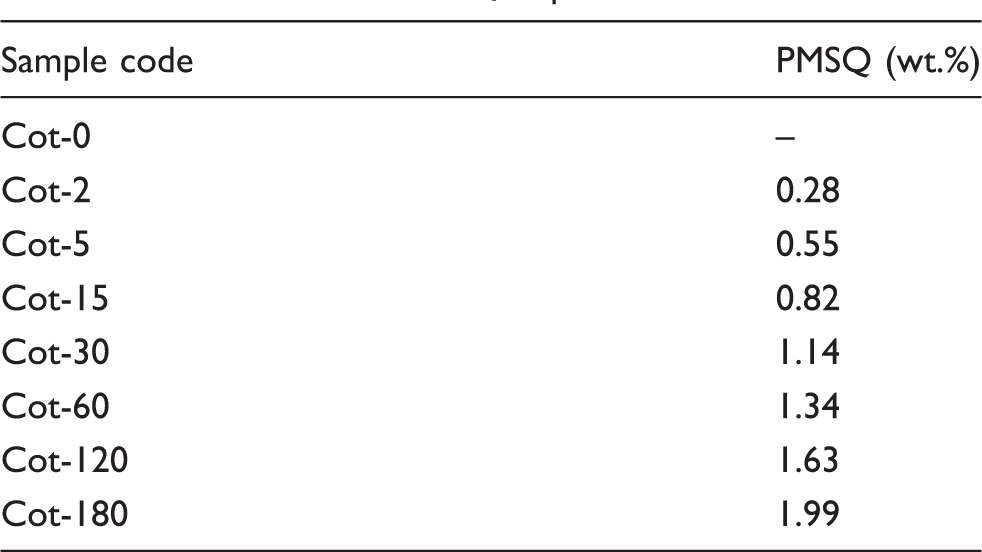
The amount of PMSQ polymer deposited on fabrics was determined by reweighing fabrics after drying for 1.5 h in an oven at 80°C. An analytical balance (Scatec SBA32) with 10−4 precision was used to measure the samples’ weights. The following equation was used to calculate the amount of PMSQ deposited on the fabrics (wt. %):

Contact angle and sliding angle measurements
CAs of water droplets were measured using a home-made goniometer apparatus coupled to a high-resolution camera. 31 The volume of the applied droplets of distilled water was 5 µl. The average of four measurements was used to evaluate CA values. Measurements were carried out in an ambient atmosphere at room temperature.
To measure the sliding angle (SA), droplets (volume ranging from 3 to 50 μl) were applied on the specimen attached to a glass cover and fixed to a tiltable plate. The plate was inclined slowly (1° s−1), until the droplet started to move. The mean value was calculated from eight individual measurements.
Mechanical properties
Tensile strength and elongation of untreated and MTCS treated fabrics were analyzed on MESDAN LAB instrument according to the ISO 5081 standard test (strip method). The constant cross-speed of approximately 50 mm min−1 was used throughout the experiments. Measurement was performed in the warp direction of fabrics. Four measurements were performed on each sample and the average value was reported.
Washing fastness
The treated cotton fabrics were washed with other loading fabrics, in order to get sufficient rubbing and reflect the true washing durability under normal conditions. The samples were washed for five cycles (according to the ISO 105-C10:2006(C)) with 5 g l−1 soap solution, having a liquor ratio of 50:1, at 50°C for 45 min. The samples were rinsed in cold distilled water and held under cold tap water for 10 min, dried at room temperature, and heat treated in an oven at 110°C for 1 h. CA and SA measurements were carried out on washed samples.
Results and discussion
Surface morphology
PMSQ nanostructures were synthesized on cotton fabric by dipping the samples in toluene solution of MTCS at room temperature. The reaction time is one of the most important parameters which can influence the surface morphology of MTCS nanostructures.21,24 Therefore, by fixing the MTCS concentration at 0.10 M; the effect of reaction time was investigated. Figure 1 shows the SEM images of MTCS-coated cotton fibers under the reaction times of 2, 5, 15, 30, 60, 120, and 180 min. The microscopy investigation exhibited the clear distinction between morphologies of the prepared samples. It can be observed that abundant number of nanoparticles combined with some miniature nanofilaments distributed on the surface of fabrics Cot-2 and Cot-5. On the fabric Cot-15, the continuous dense layer of nanoparticles with different shapes and sizes was formed. The nanoparticles transformed to nanofilaments on fabric Cot-30. A combined structure of nanofilaments and nanoparticles was formed on the fabric Cot-60 that increased the odds of entanglement. Dense entanglement of PMSQ nanofilaments with larger diameter and longer length were formed on the fabric Cot-120. Finally, on the fabric Cot-180, surface nanostructures changed and were composed of the combination of nanoparticles (more) and nanofilaments (less), which were unequally distributed on the surface of fibers.
SEM images of (a) Cot-2, (b) Cot-5, (c) Cot-15, (d) Cot-30, (e) Cot-60, (f) Cot-120, and (g) Cot-180 samples. Image (h) is higher magnification of Cot-120.
From the images, it is obvious that with the progress of reaction time the more particular structures in the beginning convert to the more fibrous structures (120 min) and then to the complex particular and fibrous structures. We propose a qualitative mechanism with a plausible explanation for the growth of the structures. MTCS reacts with water and surface silanols to form covalently attached solid particles. MTCS polymerizes with water and grows in three dimensions, but growth from one of the points on solid particles causes a loss of symmetry, and particles become elongated and form short filaments. This results in the formation of irregularly bent and hooked filaments at 120 reaction duration (Figure 1h). However, with increasing reaction duration to 180 min, a kind of complicated structure composed of filaments and particles emerged. In this state, the filaments become sparser, while a number of nanospheres emerged; maybe MTCS growth at the other sides of particular/filaments structures.
The amount of PMSQ deposited on the fabrics
Surface chemistry
It has been suggested that the mechanism for the formation of polymethylsilsesquioxanes (the term silsesquioxane indicates that each silicon is connected to three oxygen atoms, PMSQ referring to a class of silicon compounds that have the general formula CH3SiO3/2) nanostructures is a combination of hydrolysis and condensation reactions both in solution as well as at the substrate surface.32,33 The possible reaction steps are summarized in the following equations:
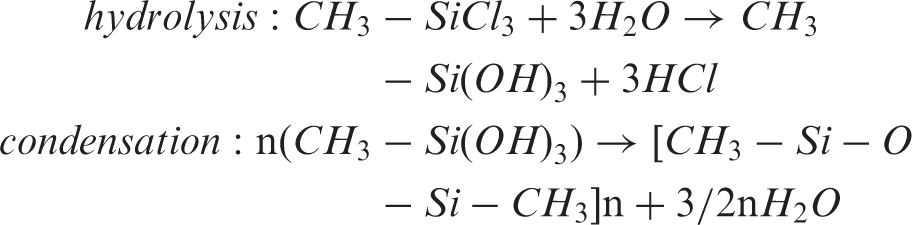
During the hydrolysis reaction, the trichlorosilane end groups react with water (the water source for the reaction comes from cotton fabric regain; the moisture content of the fabric was determined to be 3.77 wt.%, by reweighting fabric after drying in an oven at 105°C for 1 h) to form hydroxysilane species (sol). These hydrolyzed silane solutions are mixed with cellulose fibers, the reactive silanol groups have a high affinity for each other, forming –Si–O–Si– bonds (gel) and also for the hydroxyl sites of fibers via hydrogen bonds. Next, covalent bonding during the condensation reaction leads to the formation of cross-linked siloxane networks.34 At the surface onto which the PMSQ is deposited, this eventually leads to the formation of nanostructures that is highly cross-linked via covalent bonds to the fabric. The processing steps involved in the preparation of superhydrophobic cotton fabrics are illustrated in Scheme 1.
Formation of superhydrophobic surface on cotton based on PMSQ nanostructures.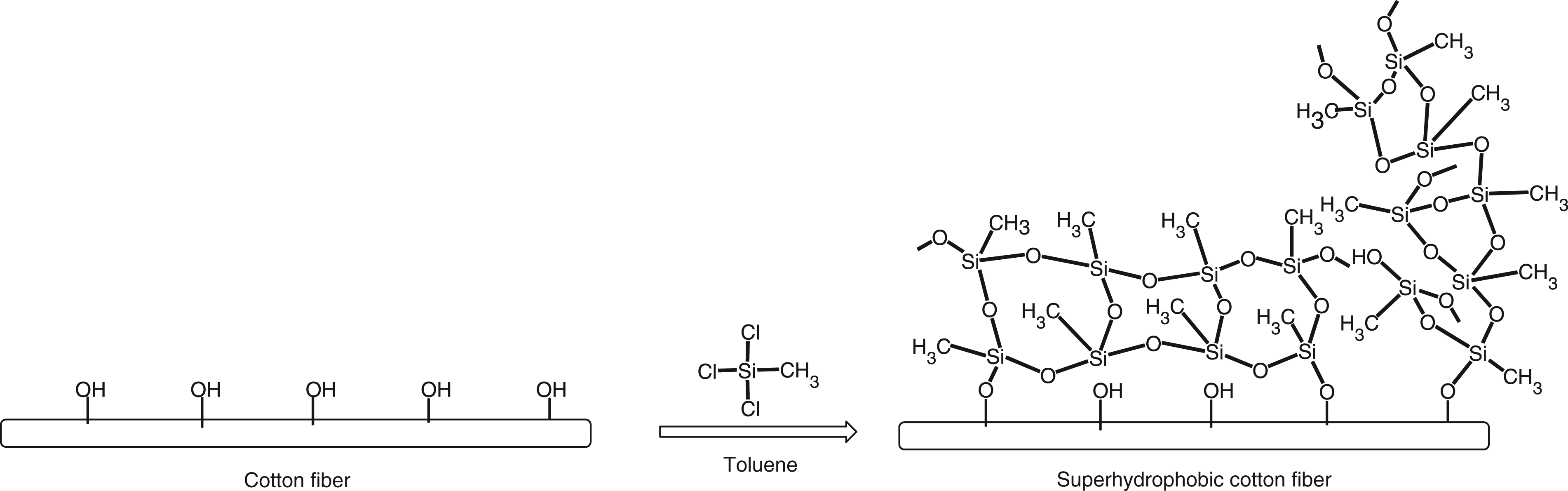
The formation of silicone polymer on cotton fabric is confirmed by FTIR analysis (Figure 2). FTIR spectra of two samples showed characteristic cellulose peaks around 1200–1000 cm−1. Other characteristic bands related to the chemical structure of cellulose were the hydrogen-bonded OH stretching at around 3550–3100 cm−1, the CH stretching at 2917 cm−1, and the CH wagging at 1316 cm−1. The FTIR spectrum of the modified fabric (Figure 2b) shows two new absorption peaks located at 781 and 1273 cm−1, which can be attributed to the stretching vibrations of the Si–C bonds and to –CH3 deformation vibrations of the siloxane compounds, respectively. Also, the new peak is appeared at 2965 cm−1, which can be attributed to the C–H band from Si–CH3. The typical absorption peaks of the Si–O–Si bonds of the siloxane compounds in the 1000–1130 cm−1 region appear to be overlapped by the cellulose bands due to C–O bending modes.
ATR-FTIR spectra of (a) the untreated cotton sample, and (b) the modified cotton sample.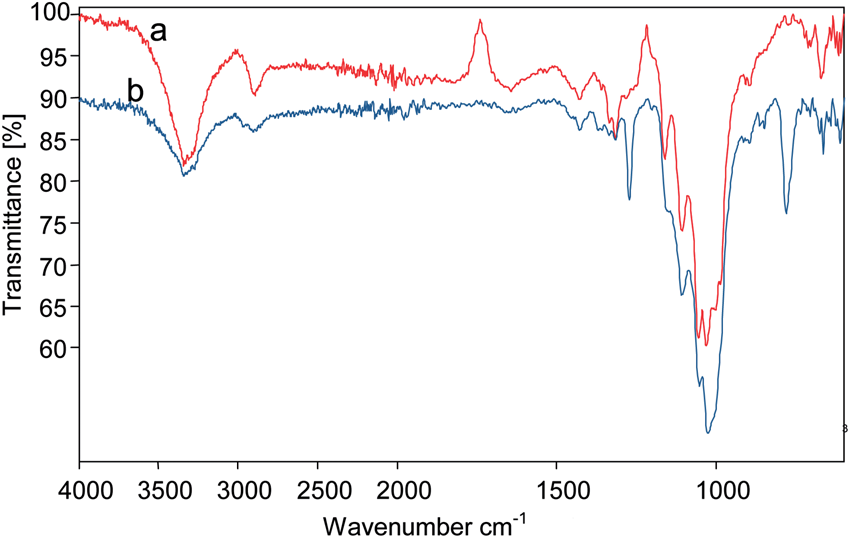
The chemical composition of the surface of untreated and PMSQ coated fabrics has been analyzed using an EDX technique (Figure 3). The spectrum of untreated fabric shows peaks for carbon and oxygen, and no silicon was detected. An EDX scan of the coated fabric yields carbon, oxygen, and silicon peaks. The appearance of the silicon peak is attributed to the silicone nanostructures.
EDS spectra of (a) the untreated cotton sample and (b) the modified cotton sample.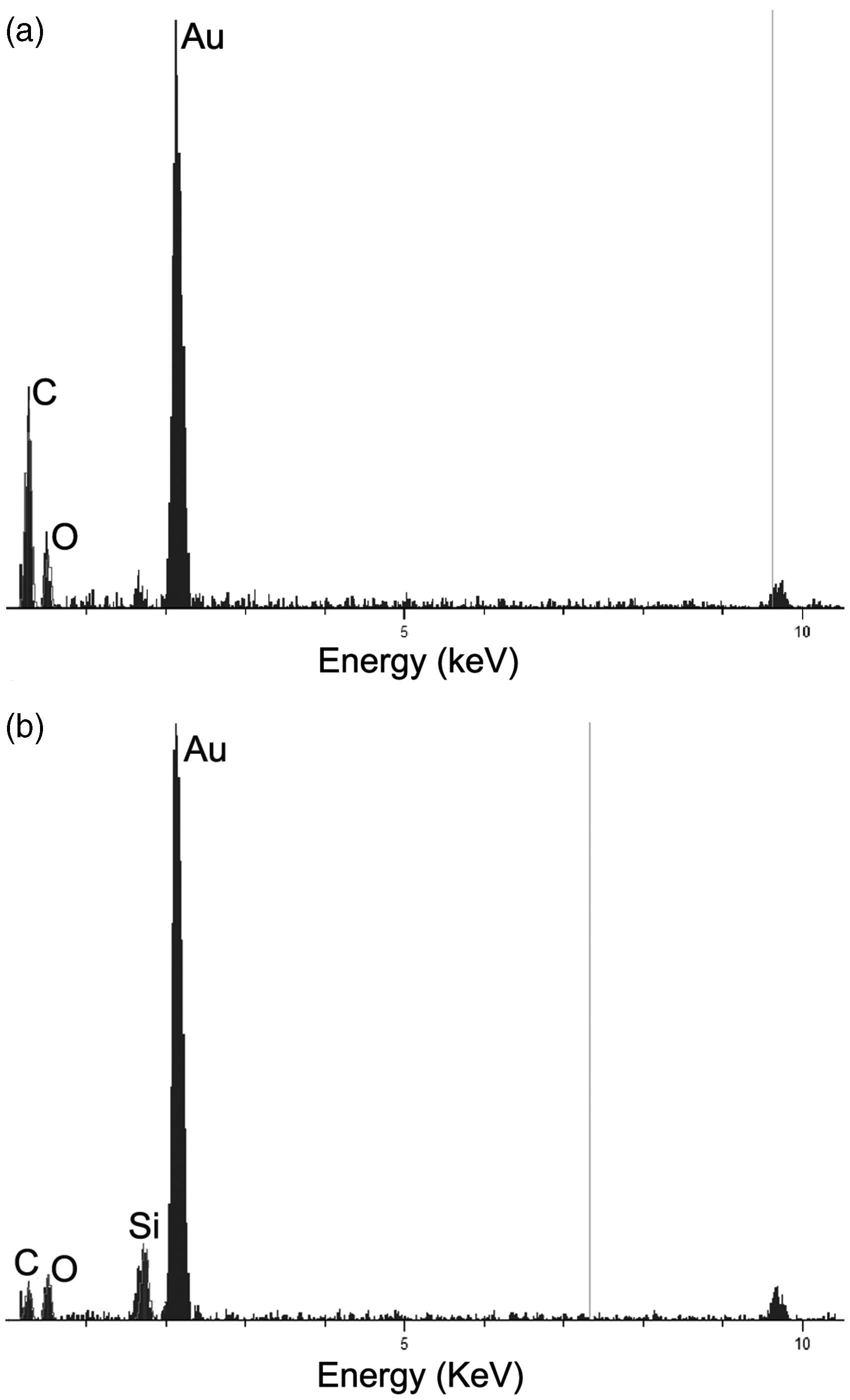
Contact angle
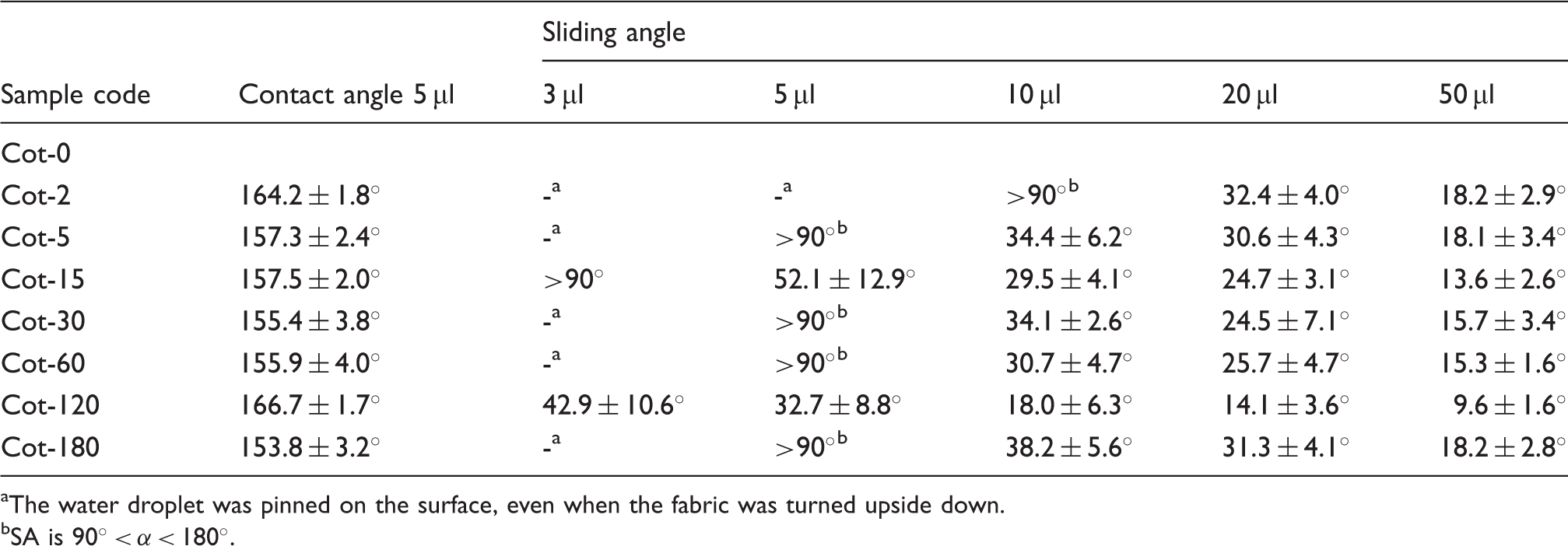
Hydrophobic properties of the prepared fabrics were evaluated by measuring the static CA of 5 µl water droplets. The native cotton fabric can be completely wetted by water due to the abundant hydroxyl groups in its structure (Figure 4a). However, after formation of PMSQ nanostructures on the surface of the cotton, the fabrics showed superhydrophobic characteristic so that water droplets remain on the surface of fabric (Figures 4b and 4c). The results of CAs are reported in Table 2. The CAs for all samples are greater than 150° which demonstrate superhydrophobic characteristic of the fabrics. The static CA for fabric Cot-2 was 164.2 ± 1.8°, whereas it decreased by about 8–10° and reached 157.3 ± 2.4°, 157.5 ± 2.0°, 155.4 ± 3.8°, and 155.9 ± 4.0° for fabrics Cot-5, Cot-15, Cot-30, and Cot-60, respectively. For the fabric Cot-120, the CA increased to 166.7 ± 1.7° again. One noticeable change in morphology at the reaction of 120 min is that the continuous filaments grow longer and entangle with each other, resembling a porous structures as illustrated in Figure 1(h) (high-resolution image). Finally for the fabric Cot-180, the CA decreased to 153.8 ± 3.2° which can be attributed to the inhomogeneous and compact structure of nanoparticles strongly adhered together.
Optical micrographs of 5 μl water droplet on the surface of (a) untreated, (b) Cot-10, and (c) Cot-120 samples. Water contact angle θ and water sliding angle α on cotton samples modified at different reaction duration The water droplet was pinned on the surface, even when the fabric was turned upside down. SA is 90° < α < 180°.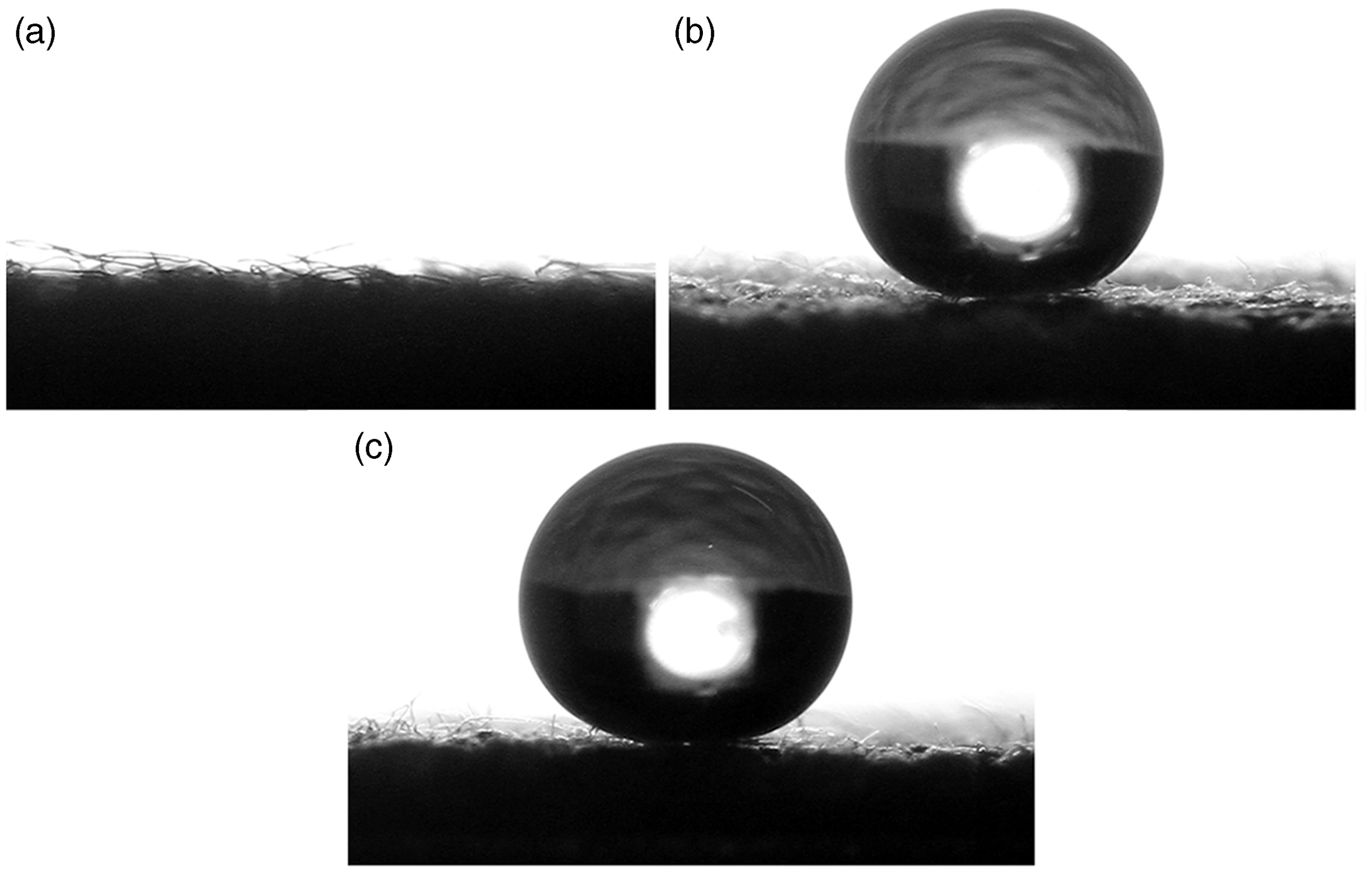
Sliding angle
In practical application, dynamic behavior such as water droplet rolling is more important than static characteristics such as the CA. In contrast CA that did not change considerably, the SA changed dramatically on different samples which corresponded well with the morphological changes of the modified surfaces (Table 2). The superhydrophobic fabric Cot-2 showed a ‘sticky’ property, so that 5 µl water droplet did not slide off even when the sample was turned to 90° or held upside down (Figure 5). The SA for the fabrics Cot-5 and Cot-15 decreased to α > 90° and 52.1 ± 12.9°, respectively; for fabrics Cot-30 and Cot-60 it increased to α > 90° again. From the SEM images, it is clear that the surface of the sample Cot-15 is composed of smooth nanoparticles that nearly covered the fiber surface uniformly and this may be the reason for its lower SA. On fabric Cot-120, SA decreased to 32.7 ± 8.8° (the lowest SA) which is due to the continuous entangled PMSQ nanofilaments formed on the surface. Again, SA increased to α > 90° on the fabric Cot-180.
Optical micrographs of 5 μl water droplet on Cot-10 sample, cv. Bairage at 90° and 180° tilt angles. Droplet is still suspended when the fabric is turned upside down.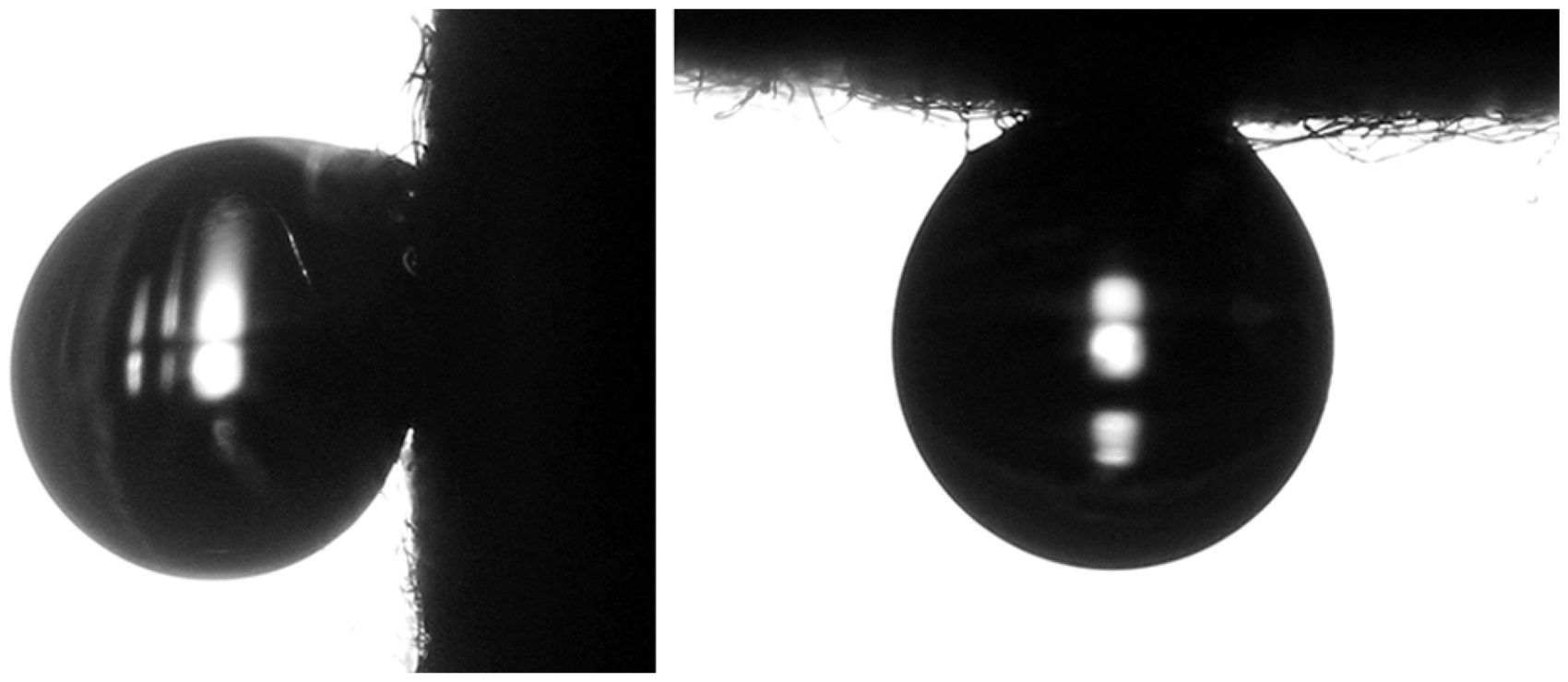
The effect of droplet volume on the SA was assessed by testing 3, 5, 10, 20, and 50 µL water droplets. For all samples, SA was strongly dependent on the droplet volume and by increasing droplet volume, SA decreased significantly so that 5 µl ‘sticky’ droplet can be transited to 50 µl ‘slippery’ droplet (e.g. fabric Cot-2). This is as expected since, as the water droplet exceeds a certain size, its gravity overcomes the adhesion force between the cotton fibers and the water droplet. 35
Hydrophobicity analysis
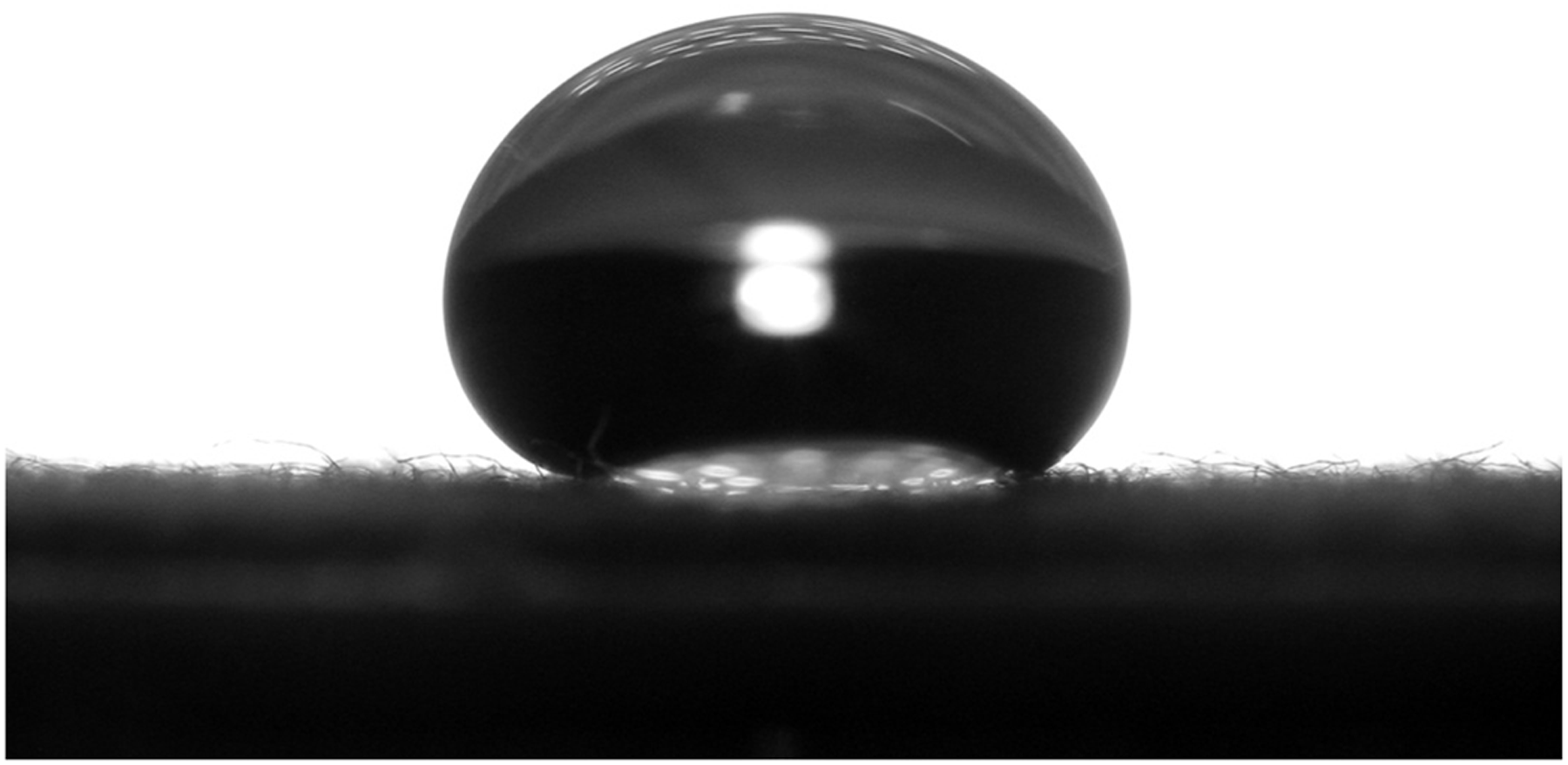
In general, there are two classical situations in the wetting of a rough surface: the homogeneous interface without any air pockets (Wenzel’s state) 36 and the composite interface, with air pockets trapped between the rough details (Cassie’s state). 37 Experimentally, the wettability state can be distinguished by whether there is light between the liquid and substrate in a microscopic side view. 38 Since cotton fabric is a rough, porous substrate produced by interlacing of threads (composed of micrometer-sized cellulose fibers) placed perpendicular to each other; consequently, there are air pockets at the interface of solid–liquid which demonstrate superhydrophobicity is based on Cassie’s state. (See Figure S1 in the supplementary data, where air pockets are clearly visible at the bottom area of the 50 μl water droplet.)
In the Cassie’s state:

The different SA of water droplets observed for treated fabrics is thought to be due to the abrupt change of the surface structure. From SEM images, it is obvious that the changes in the surface structure of the fabrics are related to two factors namely the surface coverage density induced by PMSQ nanostructures and also their morphology. Consequently, differences in the SA values of the fabrics should be related to the one of these factors or both of them. By comparison the data from SA and also theirs correspondence SEM images, it is specified that the fabrics with more bare areas and lower surface coverage have the higher SA and adhesion (e.g. sample Cot-2, see Movie 1 in the supplementary data) whereas the fabrics with lower bare areas and more surface coverage have the lower SA and adhesion (e.g. sample Cot-120, see Movie 2 in the supplementary data). Therefore, it can be concluded that the fabrics with higher surface coverage density have the lower SA. On the other hand, the sample treated for a 3-h reaction duration, despite its high surface coverage, has high SA. Consequently, in this state the morphology of the formed nanostructures should be influenced, the different morphology is obvious from its SEM image. In general, it can be argued that the SA values of the fabrics are related to two factors: (a) surface coverage density of the nanostructures (more importantly) and (b) nanostructures morphology.
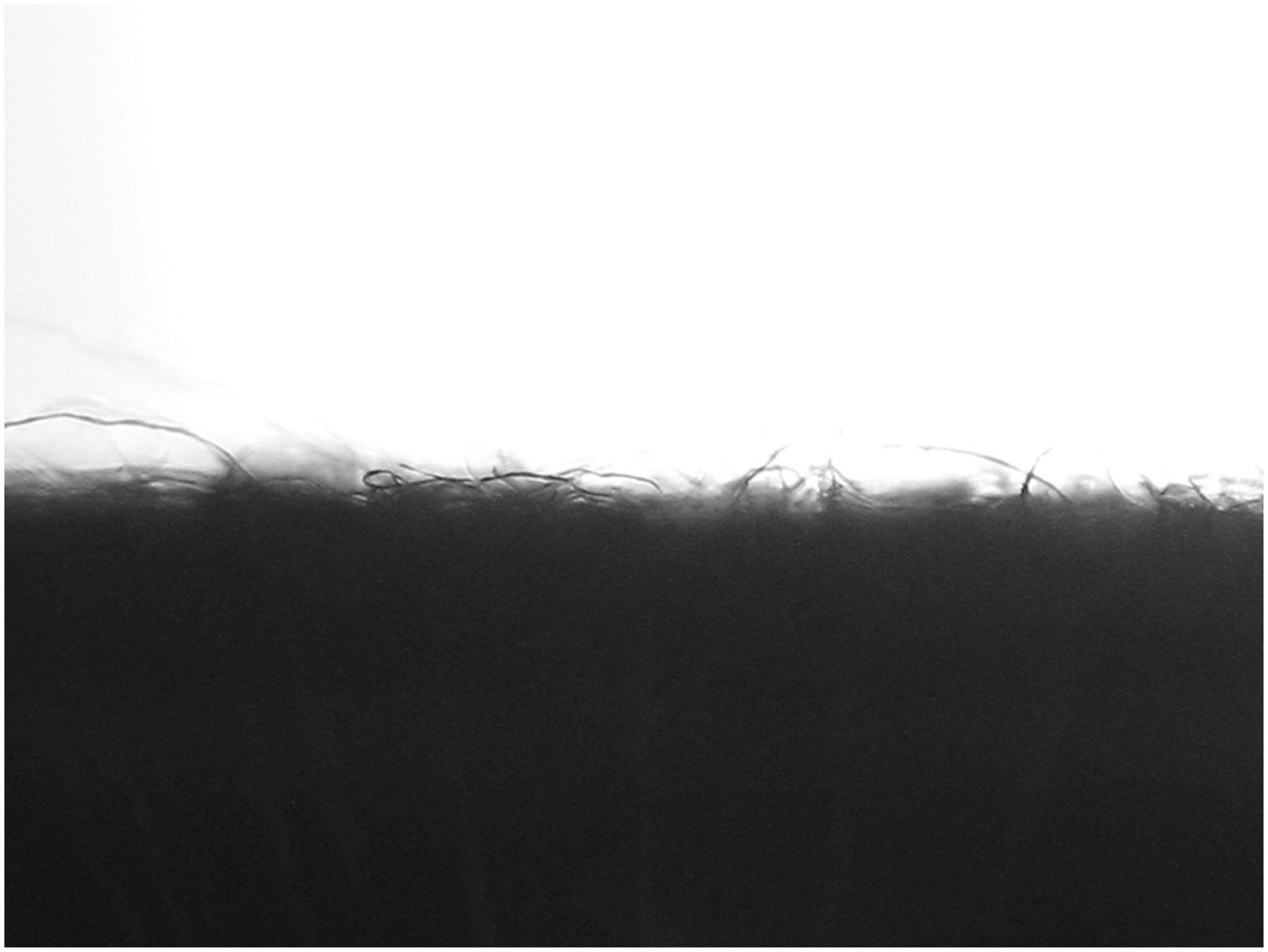
In addition to the above explanations and regarding the superhydrophobic surface of smooth materials such as silicon wafer, even in the case of fabric with lowest adhesion to water droplet, the value of SA is higher. This is due to the fibers sticking out from the cotton fabric surface (hairiness) (see Figure S2 in Supplementary data) that resistant against rolling. Even if the water droplet slides slightly, it will be trapped by new fibers at fabric surface, which will grip it from further sliding.
Also according to the results, droplet volume has an influence on the SA of the fabrics. For example, in sample Cot-2, 5 µl water droplets are pinned to the surface and even by turning the plate upside down, the droplet cannot fall down. By increasing the droplet volume, SA decreased and 50 µl water droplet was rolled off at 18.2 ± 2.9°. This is due to the higher weight of water droplets that (a) can easily dominate against nanogrooves which do not let the droplet move and (b) in the same way can dominate against the forces of fibers sticking out from the surface.
From the obtained results it is obvious that dual-zised structure of superhydrophobic fabrics composed of cellulose microfiber and PMSQ nanostructures is the key parameter for high CA. In addition, surface coverage density of fibers by PMSQ nanostructures and their morphology has considerable effect on the type of its superhydrophobicity so that adhesion of water droplets to the fabric surface can be changed. This information is critical in designing and engineering of superhydrophobic surface of textiles for applications requiring high water repellence.
We have also measured the oleophobicity property of the samples by using oil (Octane). The prepared superhydrophobic fabrics did not show oleophobicity character and the oil droplets were rapidly adsorbed by the fabrics. These observations demonstrate that the obtained fabrics are superhydophobic and superoleophilic.
For determination of the reproducibility of the results, two samples (Cot-2, highest adhesion to water droplets, and Cot-120, lowest adhesion to water droplets) were prepared according to the experimental section and subjected to CA (5 μl water droplet) and SA (10 μl water droplet) tests. CA measurements resulted in values of 162.8 ± 2.1° and 164.3 ± 1.8° for Cot-2 and Cot-120, respectively. Again, SA for the sample Cot-2 was high and the water droplets did not slide from the surface even after 180° tilt angle. For the sample Cot-120, the SA was low with the value of 17.5 ± 5.4°, which is close to the value of 18.0 ± 6.3° for the first prepared sample. These results demonstrate very good reproducibility of the applied method for the fabrication of superhydrophobic cotton textiles.
Tensile strength and elongation
The textile performance of the modified cotton samples was evaluated in terms of the strength properties. The results of the mechanical tests are shown graphically in Figure 6. The modified samples exhibited lower tensile strength when compared with untreated cotton sample. Tensile strength decreased from about 160 N cm−1 to 65 N cm−1 by increasing reaction duration. Decrease of tensile strength is because of the hydrochloric acid produced as a by-product in the vessel of reaction which can attack to the acid-sensitive cellulose fibers and damaging them. In comparison with application of MTCS in vapor phase
22
for superhydrophobic modification of cotton that caused decreasing tensile strength from 83 N cm−1 to 1.4 N cm−1 and elongation from 33.3% to 5.9%, using this method fabric damage is much lower even at maximum reaction duration. In spite of the reduction of tensile strength by about 60% for the sample treated at 180 min, reduction of tensile strength is less than 10% for fabrics Cot-2 and Cot-5 which retained mechanical properties for practical application. In future work, synthesis of PMSQ nanostructures with different morphology in minimum reaction time for imparting superhydrophobicity effect with different adhesion properties will be studied in order to reduce damaging caused by hydrochloric acid. Also, the application of this method for the fabrication of a polyester fabric, which is acid resistant and is more suitable as a substrate, will be investigated.
Changes in the mechanical properties of cotton fabrics after treatment with MTCS.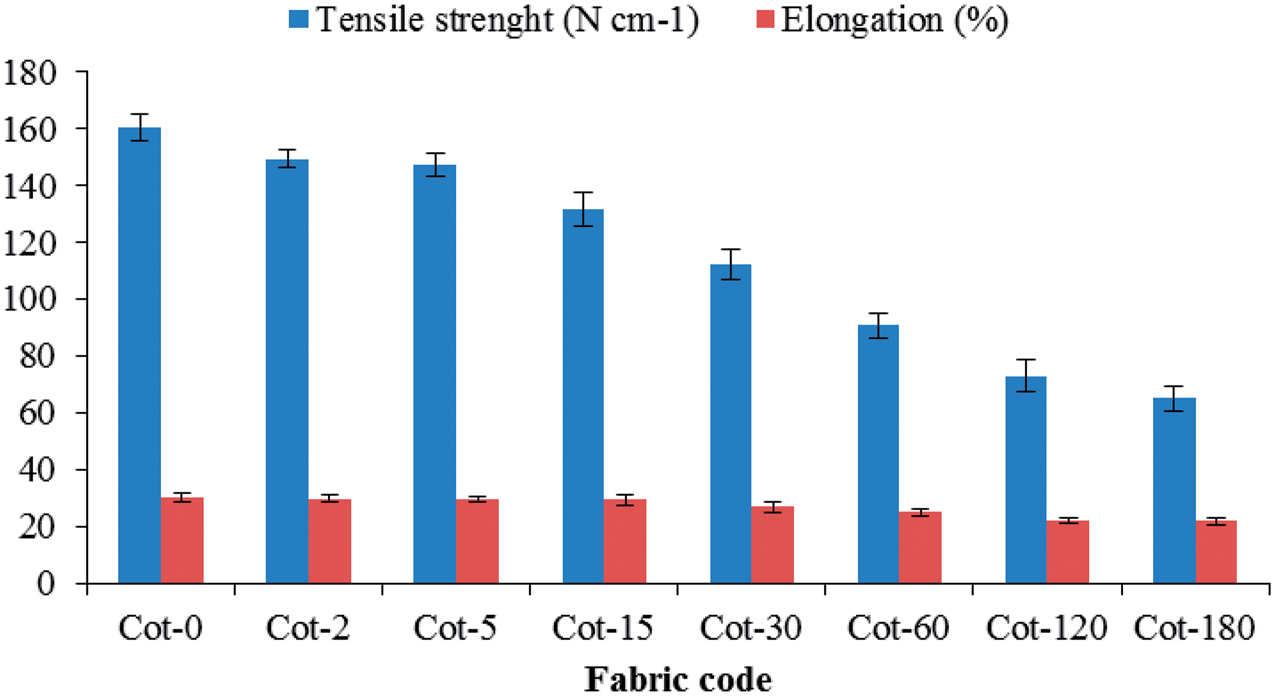
Washing fastness
Water contact angle θ and water sliding angle α on cotton samples modified at different reaction duration, after five cycles of washing
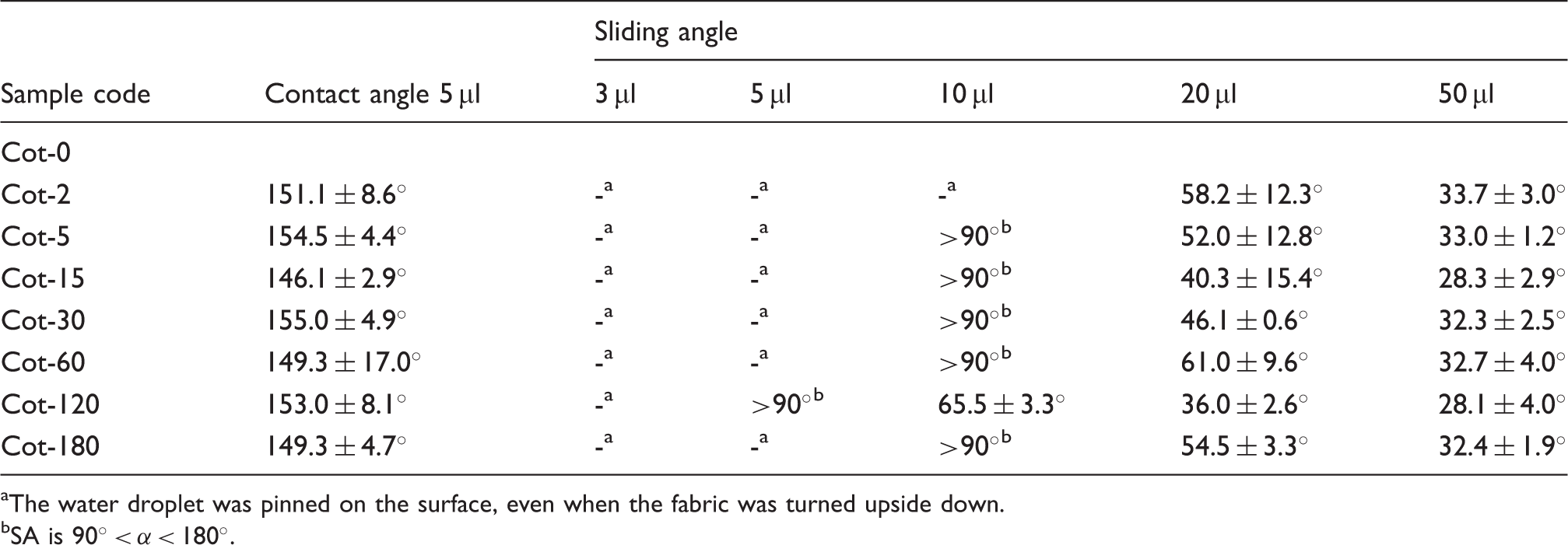
The water droplet was pinned on the surface, even when the fabric was turned upside down.
SA is 90° < α < 180°.
Conclusion
An effective method based on the regulating reaction duration of MTCS was used for the one-step synthesization and deposition of PMSQ nanostructures on the surface of cotton fabric, which opens a door for exploring the effects of the rough nanostructures on the surface hydrophobicity and water adhesion of textile materials. The detailed experiments and analysis have indicated that introducing the rough nanostructures on the surface of cotton microfibers can increase their surface roughness, which not only helps to maximally reduce the liquid–solid contact by forming numerous ‘point’ contacts and thus greatly enhance the CA value but, most importantly, can regulate the adhesion of water droplets to the surface. The perfect superhydrophobicity of the modified fabrics was demonstrated with a static CA of more than 150° whereas droplet adhesion behavior is completely different, which drives a droplet pinned or rolled by controlling reaction duration. These findings would offer us insight into the evolution of complex hierarchical microstructures and nanostructures on superhydrophobic surfaces and guiding the design of perfect superhydrophobic textiles.
Footnotes
Funding
This research project has been financially supported by the Research Council of the Yazd Branch, Islamic Azad University.
Supplementary Data
Image of 50 µl water droplet on the superhydrophobic surface of cotton fabric. Image of the surface of cotton fabric (side view).