







Abstract
A shear thickening fluid (STF) was prepared from SiO2/PEG200 by ball-milling and its effect on the sound insulation properties of textile materials investigated. The rheological properties of the STF were evaluated using a high-speed rotary rheometer and a field emission scanning electron microscope. Fabrics based on fibers of profiled cross-section were knitted on a computerized flat knitting machine, then dipped in the diluted STF and the microstructure and the sound insulating properties of the STF-treated fabrics were established using a two-channel acoustic analyzer. It was found that an increase in the SiO2 content of the STF decreased the critical shear rate, and the thickening effect of the STF system became effective once the SiO2 content reached 30 wt%. The sound insulation performance of the STF-treated fabrics was superior to that of the untreated fabrics, and their level of sound insulation level was particularly increased with increasing surface density.
A peaceful and stress-free environment is a basic requirement for human comfort. However, the environment in which we live has been severely disturbed by the rapid growth of modern industries. Noise pollution produced by these modern industries has been an increasing cause for concern, and the development of soundproofing materials has therefore become particularly important.
Textile materials have gained significant attention in the field of noise reduction due to their porosity, softness, good acoustic absorption properties, and their workability. 1 Tilak Dias has adopted the principle of the Helmholtz resonator to explore the effect of structural parameters on the sound absorption performance of knitted fabrics.2–3 Sezgin Ersoy has also applied woven fabrics and non-woven cloths to the study of acoustics. 4 In general, these textile materials are composed of fibers of circular cross-section. Compared with circular cross-section fibers, fibers of profiled section have a larger specific surface area, stronger fiber cohesion and a higher coefficient of friction. 5 Furthermore, more irregular holes are created in fabrics produced from fibers of profiled section, and these are conducive to the absorption of sound waves. 6 Fibers of profiled section were therefore used in the current study for preparing the textile materials to be examined.
Shear thickening fluids (STFs) are normally slightly sticky liquids that have the property of solidifying instantly under external impact.7–8 During this transformation a STF absorbs significant amounts of impact energy. STFs also have buffering and damping properties and are therefore often used in the manufacture of protective equipment.9–11 However, the application of STFs has not yet been reported for noise reduction. In the present study, textile materials were treated with STF and its effect on their sound insulation properties was investigated in order to obtain textiles with properties exceeding the established sound-proofing quality standards, and also to establish new applications for STFs.
Experimental details
Materials
The materials used for the experimental work involved nano-silica (SiO2, 15 ± 5 nm, Aladdin Chemical Reagent Co Ltd, China), polyethylene glycol (PEG200, Shanghai Pudong Gaonan Chemical Plant, China), anhydrous ethanol (Hangzhou Gaojing Fine Chemical Co Ltd, China), and fabrics with profiled section fibers (prepared in-house).
STF preparation
Nano-SiO2 and PEG200 were mixed and stirred for 2 h to produce a homogeneous dispersion of the SiO2. Dispersion was completed in a planetary ball mill for 1 h to 2 h, followed by holding it under vacuum for 2 h at 20℃ to obtain a stable STF. In this study six types of STF with different silica mass fractions of 5, 10, 15, 20, 25, and 30 wt%, respectively, were prepared.
Preparation of STF–fabric composites
Polyester yarns with two, three, four, five, or six strands were made into weft-knitted fabrics with different surface densities using an electronic flat knitting machine, and the fabrics were designated A, B, C, D, and E, respectively. The linear density of the polyester yarns was 11.39 tex and the loop length of the weft-knitted fabrics was 5.6 mm. A high-viscosity STF cannot easily penetrate fabrics at room temperature, and the fabrics were therefore treated with a solution of the STF in absolute ethanol in a volume ratio of 1:1. After soaking the fabrics in the solution for 30 min they were removed and the surface excess removed. The STF-treated fabrics were dried in an oven at 80℃ for 30 min.
Characterization methods
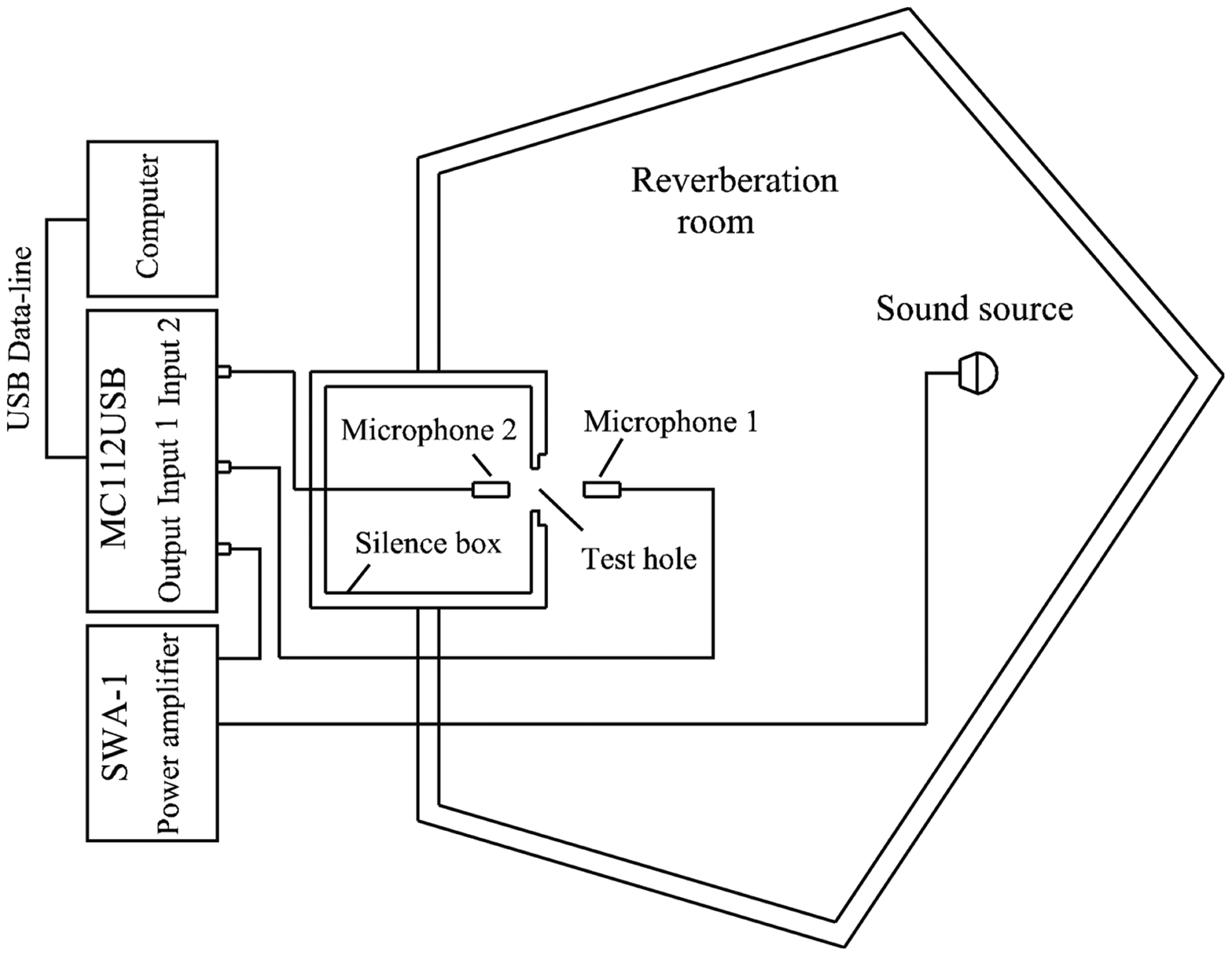
The rheological properties of the STF were assessed using a rotary rheometer (MCR301, Physia, Austria). The surface morphology of the profiled fiber and fabrics were observed using field emission scanning electron microscopy (FE–SEM, Ultra 55, Germany). The sound insulation property of the samples was investigated using a two-channel acoustic analyzer. The measurement system is illustrated in Figure 1. System for measurement of sound insulation.
Acoustic insulation is generally evaluated in terms of the sound transmission attenuation, R, which is expressed as

Results and discussion
Analysis of rheological properties of the STF
Figure 2 shows the relationship between the viscosity of the thickened systems and shear rate. The initial viscosity and the maximum viscosity of the STF system increased significantly, but the critical shear rate of the system decreased with increasing SiO2 content. The shear thickening effect was greater at lower shear rates because the clustering of the particles occurred more readily with increasing SiO2 content, thus improving the shear thickening of the STF system. Based on the analysis, the fabrics were treated with a STF containing 30 wt% SiO2.
Rheological property curves of STFs of various silica mass fractions.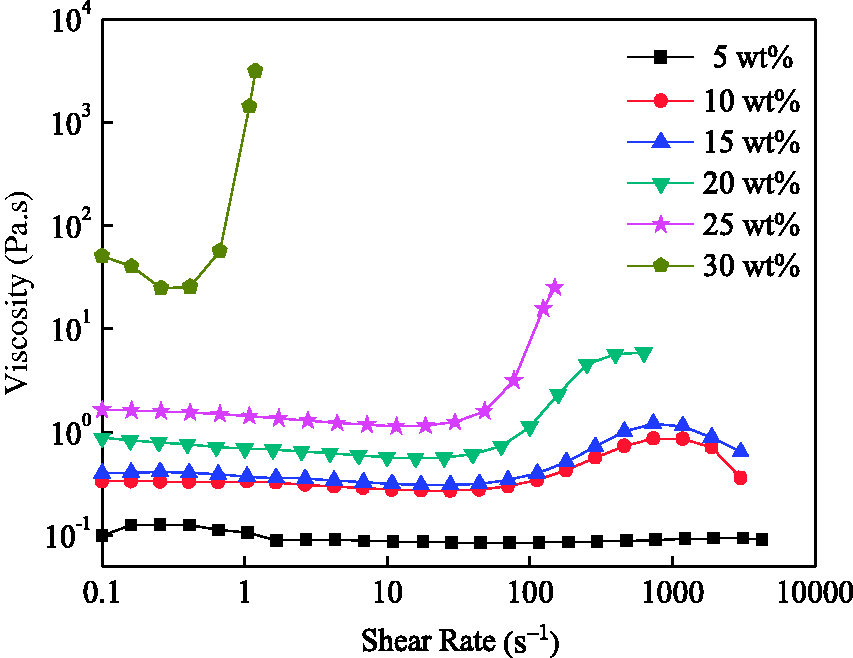
Surface morphology of the fiber profile
Figure 3 shows SEM images of the fiber profile. In cross-section the profile was trilobal (Figure 3(a)), and the surface of the fiber was very smooth. Figure 3(b) shows the grooves in the fiber.
SEM images of profiled fiber.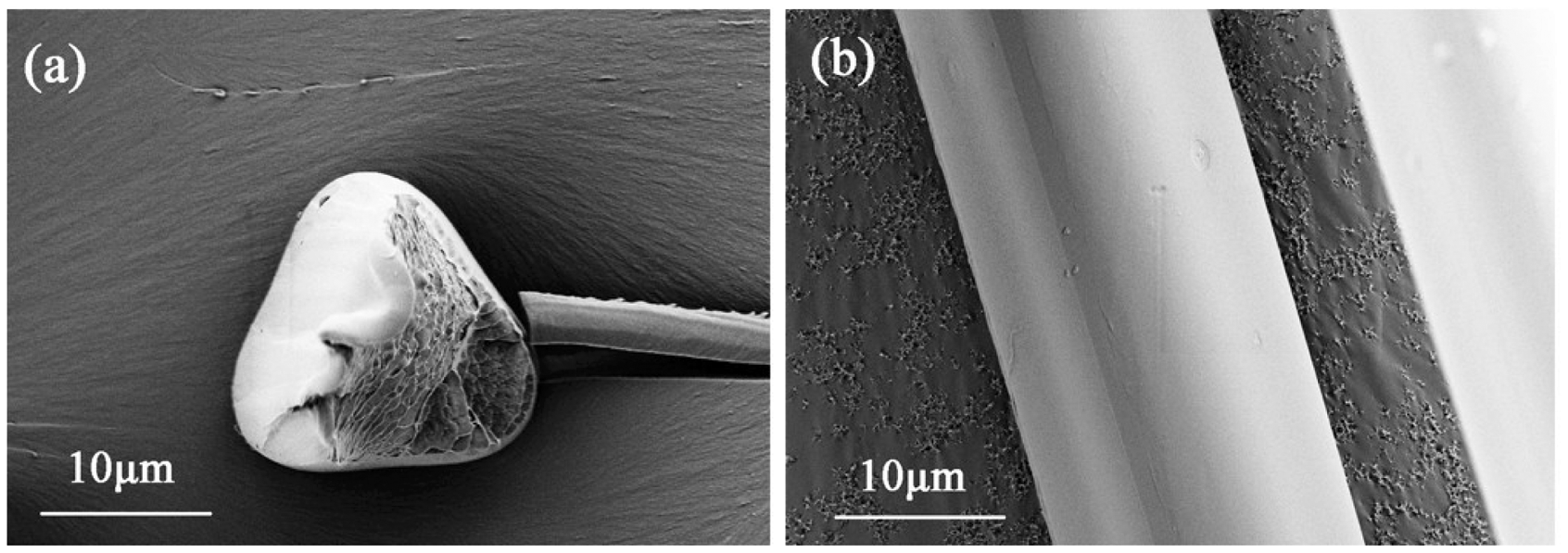
Effect of STF on the micro-morphology of the fabric
Figure 4 illustrates SEM images at different magnifications of the fabrics knitted with six strands of polyester yarn. The image of the untreated fabric at 30 × magnification (Figure 4(a)) shows a large number of pores with a relatively loose arrangement.
SEM images of the fabrics at different magnifications: (a) and (b) are untreated fabrics, and (c) to (f) are STF-treated fabrics (30 wt% SiO2 in the STF).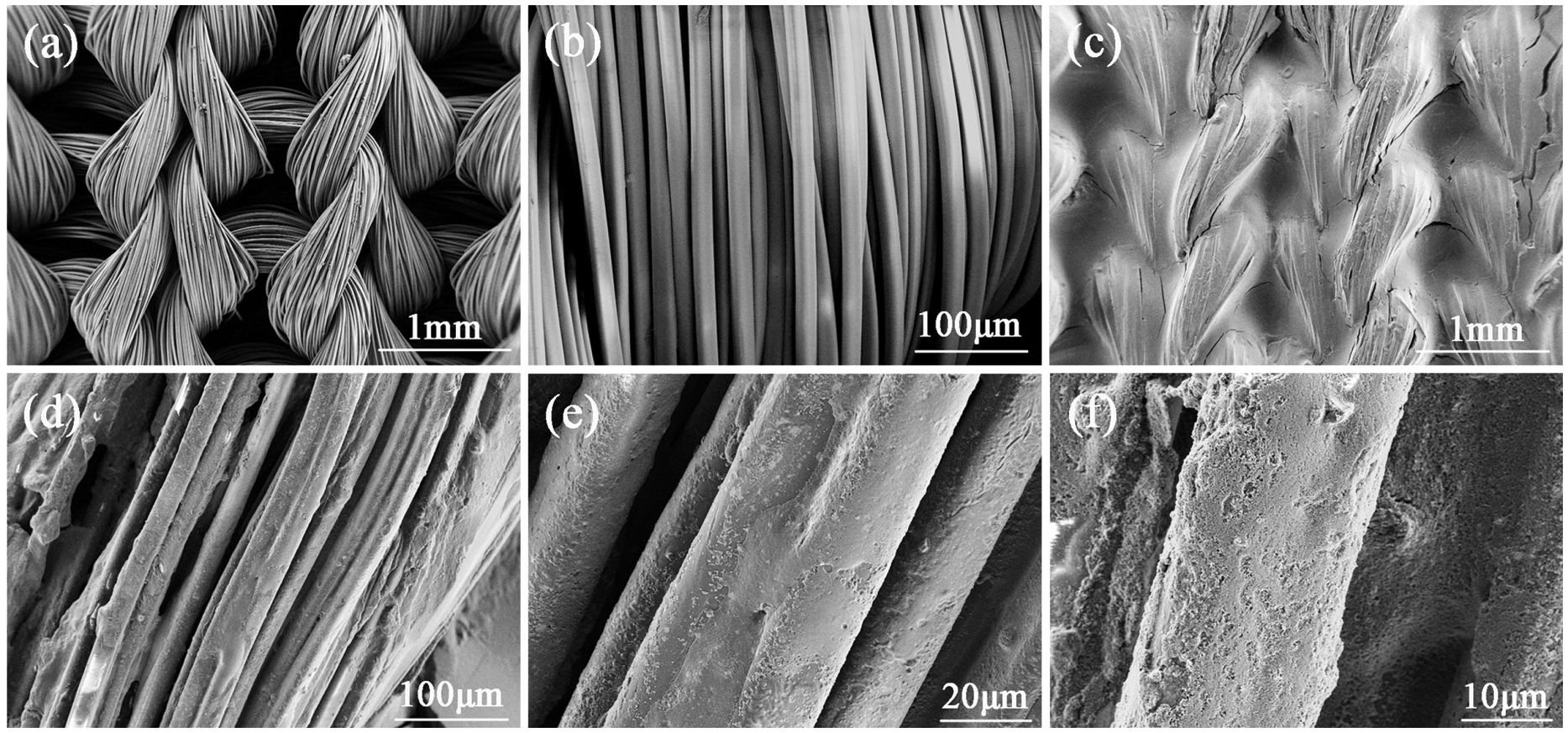
When the untreated fabric was magnified 250 × gaps could be observed between the fibers (Figure 4 (b)). Figures 4(c) to 4(f) show SEM images of the STF-fabric magnified 30, 250, 1000, and 2000 times, respectively. The fabric was treated with STF containing 30 wt% SiO2. Compared with Figures 4(a) and (b), the surface of the fabric was seen to be covered with a layer of STF that penetrated the gaps evenly between the fibers, which improved the tightness of the fabric structure. Since the STF was diluted with absolute ethanol (volume ratio, 1:1) before treatment of the fabric, the diluted thickening solution exhibited enhanced fluidity and penetrated easily into the fabric structure. The STF treatment did not affect the flexibility of the fabric. 13
Effect of STF on the sound insulation properties of fabrics with different surface densities
Parameters of fabrics with different surface densities
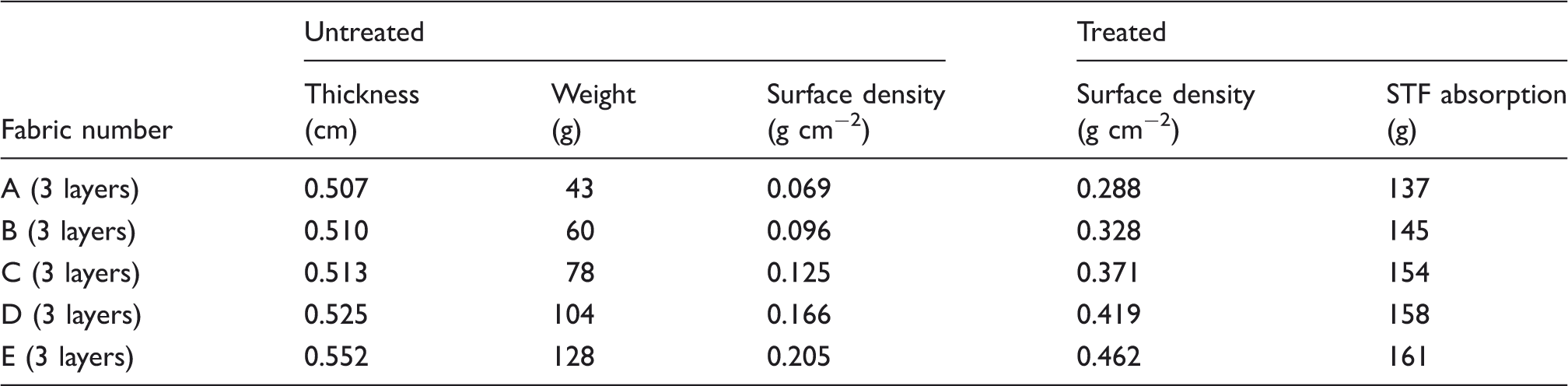
Figures 5(a) and (b) illustrate the acoustic performance curves of the fabrics of different surface density before and after treatment, respectively.
Transmission losses at different area densities of (a) untreated and (b) STF-treated fabrics; and (c) the average acoustic reduction index of samples of different surface density.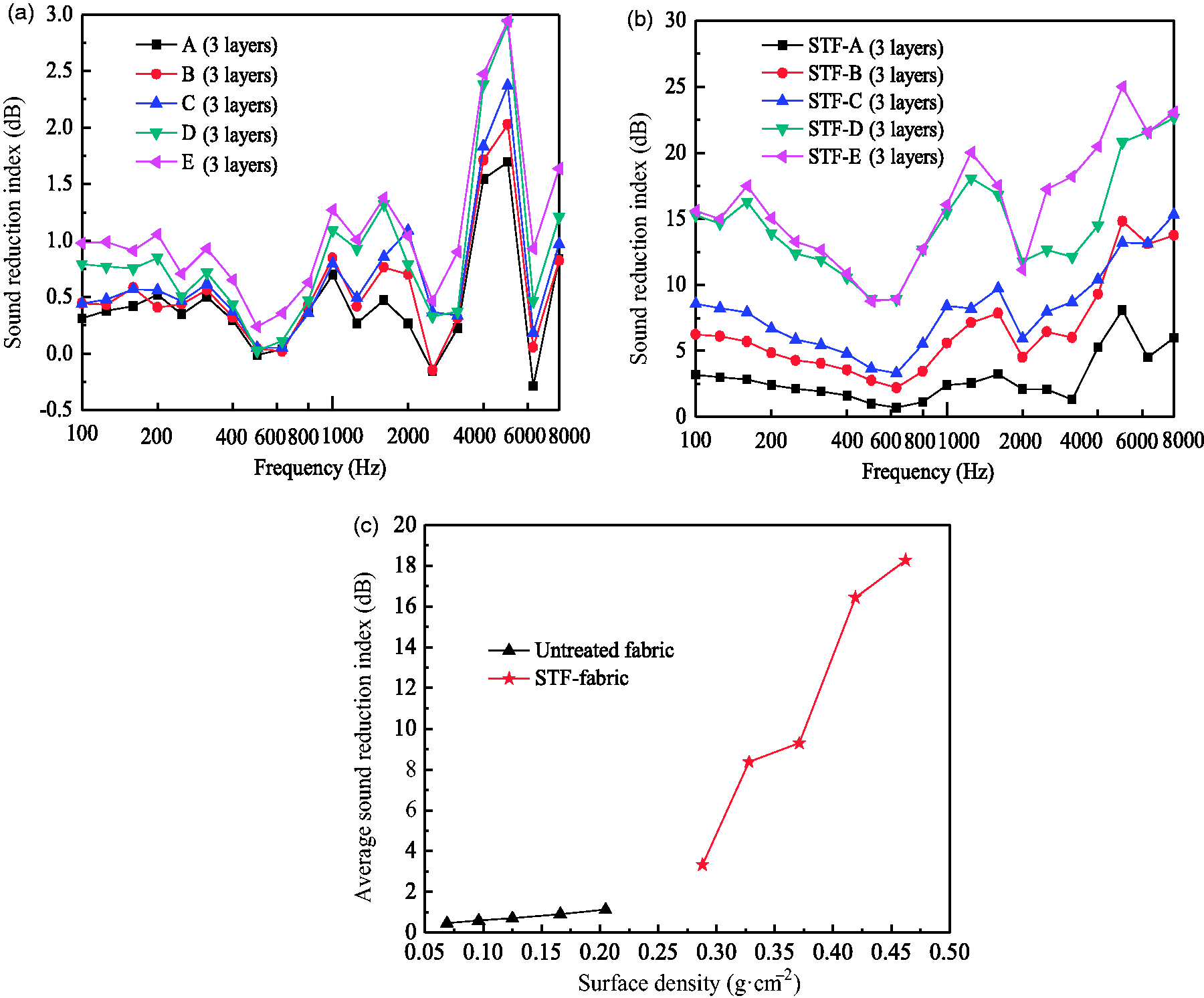
Figure 5 shows an increase in the sound reduction indices of the fabrics with increasing surface density. In addition, sound waves encounter higher resistance in fabrics of greater surface density. The propagation time of the sound wave in the fabric is prolonged and more sound energy is thus absorbed. Comparison of Figures 5(a) and 5(b) clearly shows that the acoustic performance of the fabrics was improved significantly following STF treatment. This improvement can be attributed to the enhanced relationship between the yarns in the fabric following STF treatment and to reduced sound mobility between fibers, meaning that more sound energy was absorbed when the sound wave penetrated the fabric. A further reason for this result is the effect of the STF thickening on movement between the yarns, which disperses the energy of the incident sound waves. Figure 5(c) shows the increase in average acoustic reduction indices of untreated and STF-treated fabrics with increasing surface density. After STF treatment the average acoustic reduction index of the three layers of fabric A increased by approximately 2 dB, and that of the three layers of fabric E improved by almost 13 dB. The sound insulation performance of STF-fabrics is thus clearly superior to that of untreated fabrics. In addition, compared with the untreated fabrics the sound insulation level of the STF-treated fabrics very clearly increased with increasing surface density.
Conclusions
Shear thickening fluid-fabrics were prepared by dip-coating and their rheological properties and their microstructure and sound insulation properties were investigated, giving the following results:
The critical shear rate of the SiO2/PEG200 system decreased with increasing SiO2 content. However, the initial viscosity and the maximum viscosity of the STF system also increased significantly. The STF system showed a good thickening effect once the SiO2 content reached 30 wt%. The morphology of STF-treated fabrics showed that the gaps between the fibers were effectively penetrated by the STF, and the tightness of the fabric structure was thus improved. The sound insulation performance of STF-treated fabrics was clearly superior to untreated fabrics. The average acoustic reduction index was improved, especially in the case of the three-layer fabric E, which increased by almost 13 dB.
Footnotes
Funding
The authors would like to thank the Science Technology Department of Zhejiang Province (China) for providing financial support for this study (Y4100213).