







Abstract
Human sebum is one of the major constituents of oily organic soils found in worn clothing. While there are methods to evaluate visible aspects of fabric cleanliness, such as stains, there is no objective method to detect skin oils transferred to the garment through contact with the human body. This research aims at establishing the feasibility of using ozone decay rates in the presence of soiled fabric samples as a metric for measuring the amount of sebum. Our central hypothesis is based on the fact that ozone is highly reactive with some of the primary compounds found in skin lipids originating from sebaceous gland secretions. Ozone decay experiments were conducted in the presence of fabric samples contaminated with known amounts of sebum and modeled using the exponential decay function. The results obtained exhibited a significant relationship between the soil add-on and the ozone decay rates. The presence of skin lipids on fabric accelerated ozone decay. It appears feasible based on our results to detect the presence of soils on garments and thus assess cleanliness using the variation of ozone decay rates.
The cleanliness of clothing and home textiles has throughout history been an essential component of human hygiene. According to Terpstra,1–3 hygiene pertains to the “establishment and maintenance of human health.” Textiles constitute an omnipresent interface that impacts what humans touch, inhale, and ingest. Consequently, adequate laundering to maintain the cleanliness of clothing and other textiles that come in intimate contact with the human body has major human health implications.
Laundering practices are changing with the adoption of new technology and the growing awareness and concern for the environmental impact of the life cycle of textile and apparel products.4–7 In recent years, there has been a growing interest in Life Cycle Assessment (LCA) studies of clothing and household laundry practices. Those studies show that the consumer use phase of clothing is invariably the most impactful in several aspects of the environmental footprint of a garment.4,8 In particular, washing and drying consistently appear as predominant contributors to energy and water consumption, global warming potential, ozone depletion, and eutrophication.4,9,10 As a result, research and development efforts for laundry equipment have focused on the measurable and quantifiable criteria of energy and water efficiency.5,6 High efficiency (HE) washers have become widespread in home laundering, and consumer adoption of HE laundering has been incentivized by many governments.5–7
Recent research has raised questions about the potential adverse effects of reducing energy and other inputs in the evolving domestic laundering process.11,12 From a conceptual perspective, laundry cleaning performance depends on inputs of water, energy (mechanical and thermal agitation), chemicals, and time. When one of those inputs is reduced (for example, for water or energy efficiency), it arguably must be compensated by another input in order to maintain the same cleaning performance standard.13,14 However, in the absence of an objective measurement of clothing cleanliness, it may be difficult to consistently find the balance between energy and water efficiency, on one hand, and cleaning performance, on the other.15–17 Consequently, assessment of the potential risks from inadequate laundry hygiene is difficult to carry out in the absence of an objective measure of textile cleanliness.1,2
When in contact with the human body, clothing is exposed to both visible and invisible contaminants consisting of stains and solid substances from the surrounding environment, and of oily organic substances from perspiration, skin shedding, and sebum.1,18 Human sebum is a sebaceous secretion of the skin and is a mixture of unique lipids, notably including squalene, wax esters, and fatty acids.19,20 Those substances, particularly squalene, oleic acid, linoleic acid, and triolein, have been shown to be abundant contributors to worn garment soil retention.18,21,22 They also serve as a nourishing medium on which microorganisms thrive, leading to the development of malodor in clothing.22–25 For instance, it was shown that Staphylococcus epidermidis had a higher growth rate on cotton fabric soiled with triolein, 22 a major component of human sebum. 26
Reported research and existing standards measuring textile cleanliness, for example, ASTM D2690-05, are aimed at subjective sensory evaluation by panels of assessors of odor, 24 or of both visible stains and odor before and after washing. 27 Other objective instrumental methods have focused on specific aspects of optical cleanliness, for example, visible stain removal, 28 or optical reflectance according to EN 604564. Early methods to detect sebum and other oily fabric soils relied on the observation of stain intensity either visually 29 or using reflectance and yellowness measures.30,31 Obendorf and Klemash 32 used electron microscopy as well as 14C radiotracer analysis 33 to detect the presence of residual triolein in various fabrics. More recently, McQueen et al.23,24,34 investigated sensory methods by human assessors along with PTR-MS (proton transfer reaction – mass spectrometry) of volatile compounds to detect axillary odor retention on fabrics. Both approaches detect odor-causing volatile compounds emanating from the fabric and do not provide a quantitative assessment of the oily soils.
Beyond the textile research field, studies aiming at quantifying sebum are relatively more abundant in medical research focusing on dermatology and cosmetics. For instance, Robosky et al. 35 reported a quantitative method for sebum analysis using nuclear magnetic resonance (NMR). More recently, Ashraf et al. 36 used infrared and visible absorbance spectroscopy to quantify sebum collected from the skin using Sebutape® patches. 36 The same patches were used in conjunction with image analysis by Mourelatos et al. 37 in a longitudinal study aimed at examining the relationship between sebum secretion and acne in adolescent children.
In summary of the review above, there is a critical need for an objective test method that enables the quantification of soils such as skin oils in a garment. Despite the prominence of sebum as a major contributor to worn garment soils,18,21,22 the literature indicates no objective methods for quantifying its occurrence in textiles. Our research aims at filling this gap by establishing the feasibility of a new objective evaluation of textile cleanliness, with a focus on skin oils accumulated upon contact with the human body. In the following sections, we discuss our approach to achieving this objective and the rationale justifying it. We then present the experimental procedures we adapted for detecting sebum using the kinetics of its reaction with ozone.
Materials and methods
Rationale and approach
Recently, new methods of combating organic malodors have emerged with the use of ozone as an oxidative agent, especially in the food industry as well as in water and indoor air sanitation.38–40 Ozone is an effective oxidant with unsaturated organic compounds.41,42 Most prominent compounds present in human skin lipids contain unsaturated carbon–carbon bonds and are highly reactive with ozone. 43 Of all the unsaturated compounds in human sebum, squalene has been confirmed as “the major scavenger of ozone” in reactions occurring between the atmosphere and the human skin environment. 43 Numerous studies have validated the affinity of ozone with squalene.42–47 This affinity between ozone and the oily organic soils found in clothing offers an opportunity to use the ozone reaction dynamics with soiled textiles as a metric for soil content.
The use of ozone reactivity as a metric to quantify substances with affinity to it has been mentioned in different contexts. For instance, Corsi et al. 48 studied ozone reactions with terpenes and terpenoids emitted from personal care products, such as cosmetics and fragrances. In studies concerned with air quality and potential health effects on aircraft passengers and crews, researchers44,45 measured ozone consumption and the volatile organic byproducts emitted from the reactions with materials found in aircraft cabins. Based on these precedents, we propose to capitalize on the affinity between ozone and sebum compounds to quantify the level of soiling by observing the reaction of ozone with the soiled garments, that is, by quantifying the rate of ozone depletion in the presence of a soiled garment. The central hypothesis is that higher amounts of soil residues on textile samples will result in faster ozone depletion due to the oxidative reaction. To test this hypothesis, textile samples with varied preparations were exposed to ozone in closed stainless-steel reaction chambers. Ozone concentration of the air exiting the chamber after contact with the samples was monitored and recorded as a function of time. Details about the experimental setup and material preparation are provided below.
Experimental setup
A drawing of the ozonation chamber system assembled for these experiments is shown in Figure 1. A photograph of the system is also shown in Figure 2.
Experimental apparatus. MFC: mass flow controller; SS: stainless steel. Overview of the experimental chamber system.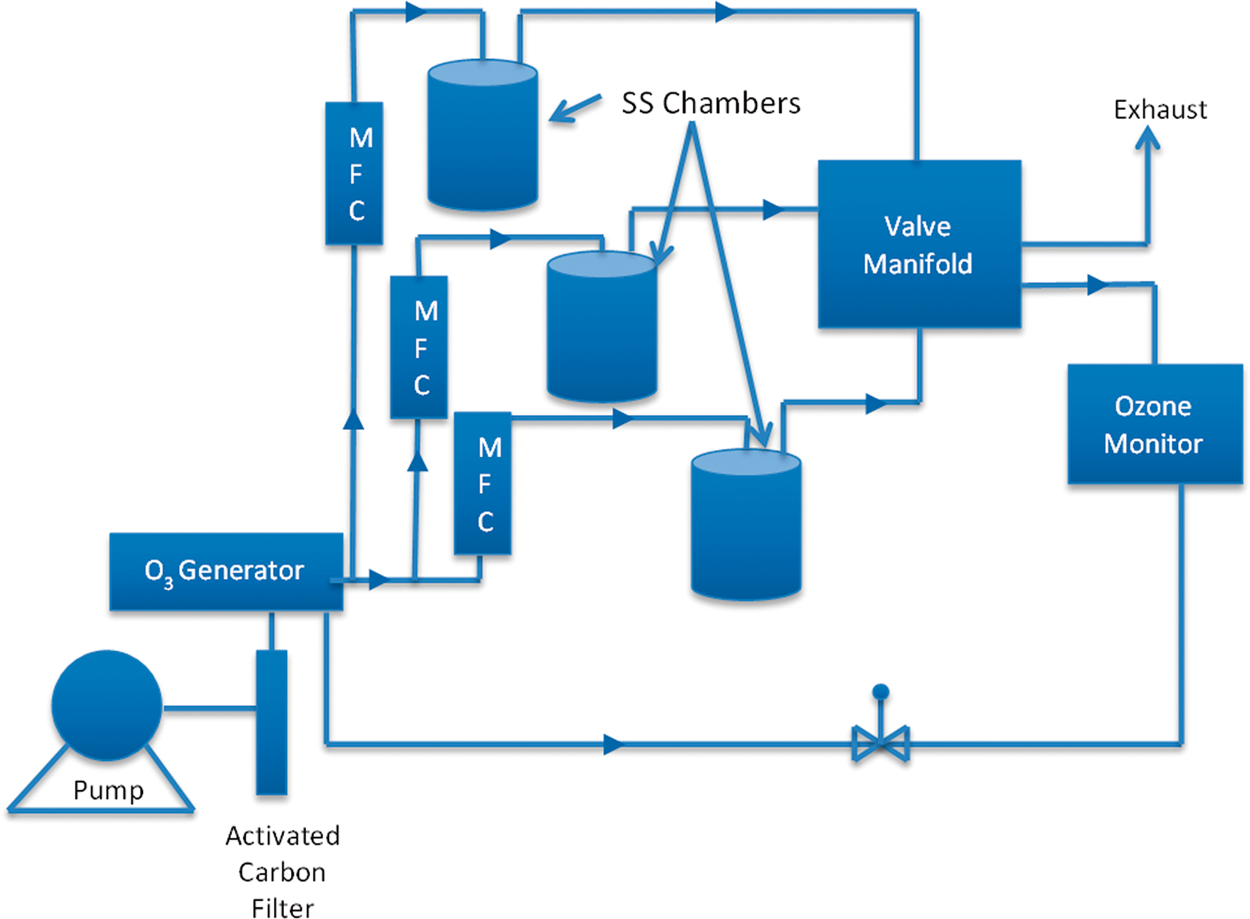
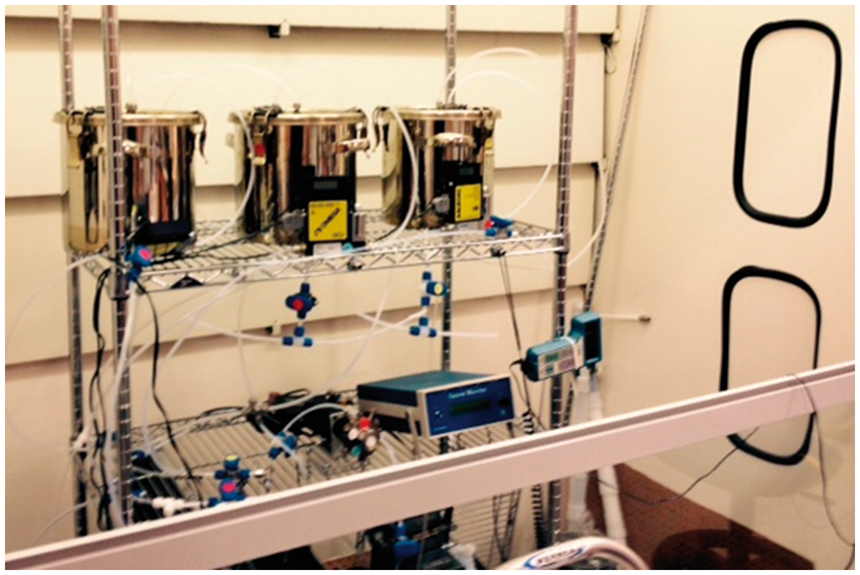
Room air was supplied to the apparatus using a pump through an activated carbon filter intended to remove any ozone present in the supply air. Following the activated carbon filter, the clean air was loaded with ozone generated using ultraviolet (UV) irradiation. The ozone-loaded air was then passed through three impervious and electro-polished stainless-steel chambers containing the test specimens. The air flow rate to the chambers was controlled and maintained constant at 800 ml/min using mass flow controllers (MFCs, Aalborg GCF171S). The chamber system has been shown to operate as an impervious continuous-flow stirred-tank reactor. 49 The experimental setup has been tested and proven adequate by many civil engineering and environmental science research teams interested in ozone reaction with various building materials.49–51 The effluent from the chambers was directed through a valve manifold to a UV-cell ozone monitor (2B Technologies, model 202). A bypass from the ozone generator to the ozone monitor was used to measure the inlet ozone concentration. The ozone monitor records ozone concentration data and uploads it to the data acquisition computer. The experimental system was housed in a laboratory enclosure, as shown in Figure 2. Temperature and relative humidity were at laboratory conditions of approximately 22–23℃ and 50 ± 5%.
The experiment described above was conducted in decay mode; that is, (1) the ozone concentration was first raised to at least 400 ppb in the empty chamber in order to account for the loss of ozone during the placement of the sample; (2) once the selected level was reached, the ozone generator was turned off and the sample was placed in the chamber using a stainless-steel wire holder; (3) the O3 concentration was recorded after the chamber was resealed with a continuous air flow rate of 800 ml/min, corresponding to the UV-cell ozone monitor operating range (2B Technologies, model 202). The timing of the experimental procedure was adjusted in order to expose the fabric sample to an initial ozone concentration of approximately 300 ppb once the chamber is resealed. These levels were selected based on preliminary trials to allow capturing the depletion reaction within an adequate duration. The duration of the ozone exposure test typically ranged from approximately 20 minutes to more than 1 hour, depending on the sample reactivity and the corresponding ozone depletion rate. A major advantage of the decay mode is that it is fast and relatively simple to interpret based on the exponential decay function.52,53
Fabric sample preparation
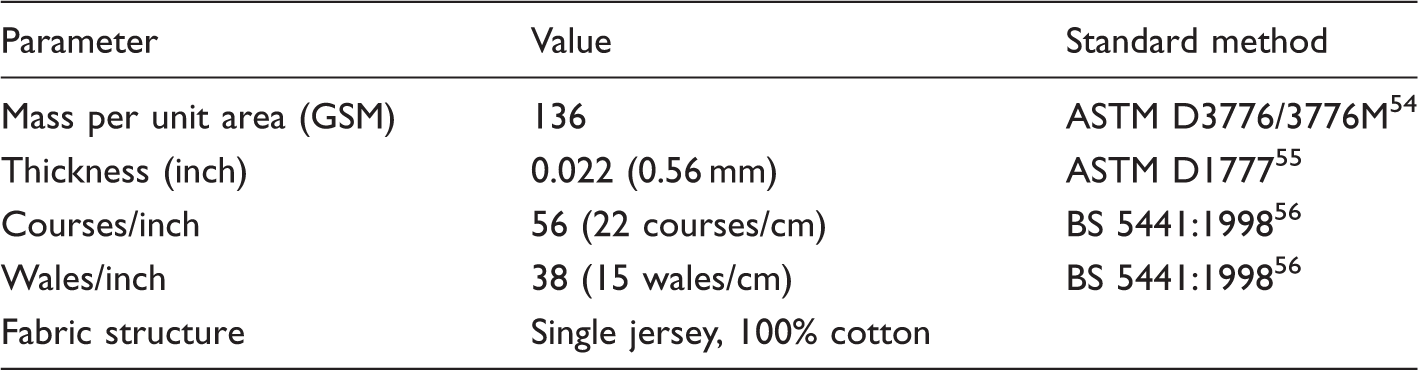
Fabric specifications and standards methods
Sebum contamination
Various methods for artificial sebum preparation were evaluated. Sebum formulations used in the cosmetic science literature have been shown to closely resemble the chemical composition of actual human sebum.20,26,57 The formulation we used was prepared according to the protocol stipulated by Wertz, 26 and consisted of 12.4% squalene, 25% wax monoester (jojoba oil), 44.6% triolein, 17% oleic acid, and 1% vitamin E (γ-tocopherol). The lipid mixture was dissolved in chloroform:methanol (2:1) at a concentration of 100 mg/ml. 26 All the materials required for synthetic sebum preparation were purchased from Sigma-Aldrich and used as received.
Artificial sebum experimental treatments per block
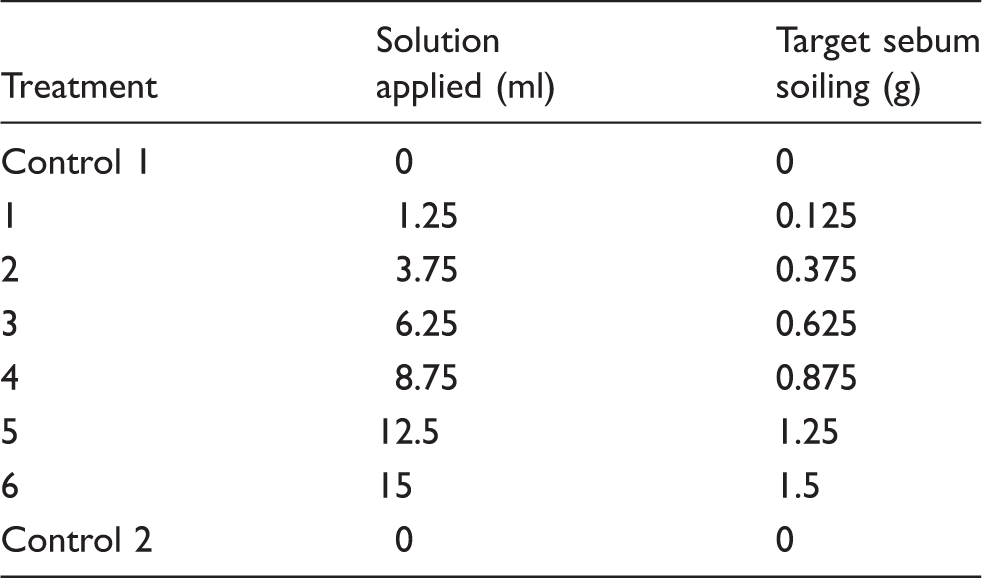
All treatments in Table 2 were replicated three times in a complete block design. The duration of the ozone exposure test typically ranged from approximately 20 minutes to more than 1 hour, depending on the sample reactivity and the corresponding ozone depletion rate. Therefore, the duration of each experimental block was approximately 10–12 hours when accounting for sample loading/unloading and adequate preparation for data recording and acquisition in between samples. All experiments in each block replication were completed within the same day, with the same batch of sebum preparation, and included a clean control sample at the beginning and end of the day. The order of the experimental treatments, other than the controls, was randomized.
Natural human sebum samples
In addition to the synthetic sebum experiment described above, we conducted a limited preliminary trial using actual wear tests. In order to collect natural human sebum in varied amounts, swatches from the same fabric described above were temporarily stitched to the inner axillary areas of 100% cotton single-jersey T-shirts prepared according to the same procedure described in the section above. Four identical T-shirts were prepared in this manner with two fabric swatches each (right arm and left arm) for a total of eight test specimen. The T-shirts were worn by one research assistant at rest and during three different exercise conditions in order to obtain tests specimens with a range of perspiration add-on. The exercise conditions ranged from light (e.g., 15 minute jump rope session) to intense (5 minute jump rope warm up, 45 minute weight lifting, 10 minute jump rope end).
The test swatches were collected from the T-shirts immediately following the exercise sessions, and stored in sealed clean containers in preparation for O3 exposure experiments. The samples were submitted to the same preparation as artificial sebum swatches (nitrogen drying) and weighed in both clean and contaminated conditions in order to determine the effective perspiration add-on by weight immediately preceding the ozone exposure test. It should be noted here that in addition to sebum, human perspiration consists of secretions by the eccrine, apocrine, and apoeccrine sweat glands.58,59 Similar to sebaceous glands, apocrine glands secrete into the hair follicle and thus apocrine sweat may be mixed with sebum. 59 Therefore, the weight add-on determined here may not be considered as strictly sebum. The lipid mixture constituting the sebum remains, however, the primary reactant in the ozone oxidative reaction, as discussed in the preceding sections. Precautions were taken to prevent the presence of personal care products (e.g., deodorant) during the experiment. The fabric samples collected in this trial were tested for ozone reactivity according to the same procedure as for the three experimental replicates described above.
Results and discussion
Exponential decay model
Upon exposure to the fabric sample, the ozone concentration of the air exiting the chamber was monitored and recorded as a function of time. The observed ozone depletion pattern was consistent with the exponential decay function,52,53 that is, expressing ozone concentration C as a function of time t according to the following equation


Figure 3(a) shows an example of the empirical data fit to the exponential decay function (plot on the left). When the fit is transformed to a logarithmic scale (Figure 3(b)), –k represents the slope of the obtained linear function.
Exponential decay fit to ozone concentration data: (a) original scale; (b) logarithmic scale.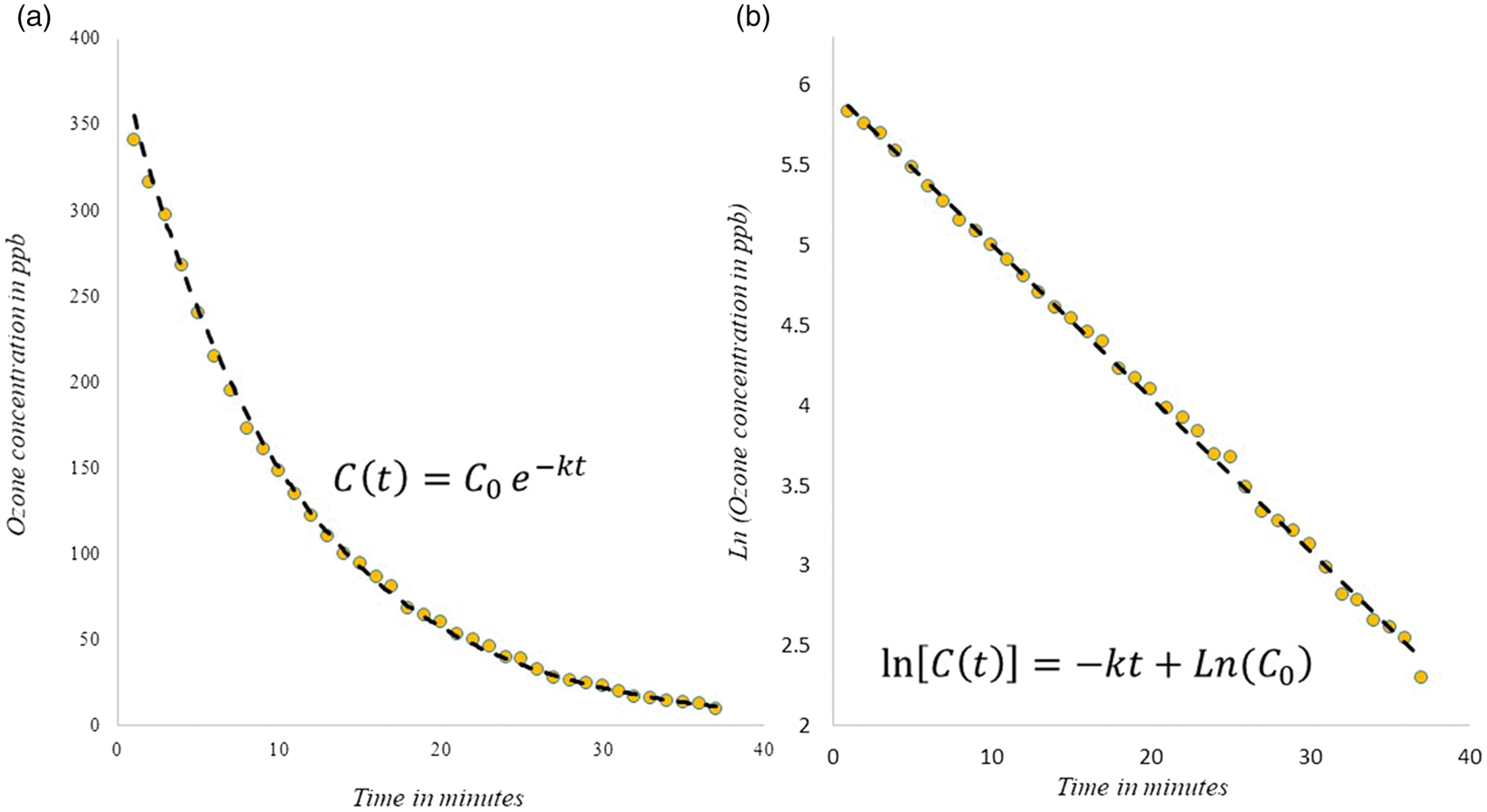
Based on this equation, k represents a measure of the rate of ozone depletion. Given the reactivity of ozone with the oily substances constituting human sebum, it is expected that the presence of those compounds would accelerate the ozone decay reaction and result in a faster depletion rate. Thus, the primary question tested in our experiments is whether there is a relationship between the level of sebum soiling on the fabric samples and the corresponding ozone depletion rate k.
Empirical fit
The exponential decay model in Equation (1) was applied to the results obtained on all fabric samples containing varied amounts of sebum, including the control swatches. All analyses were conducted using the Nonlinear Estimation module in Statistica® (Tibco Software Inc., Palo Alto, CA) with the Levenberg–Marquardt curve fitting algorithm. The analysis provides estimates of the two parameters (C0 and k) with respective standard errors and confidence intervals. In addition, goodness of fit was evaluated using estimates of the proportion of variance explained (ratio of the regression sum of squares to the total sum of squares), as well as the plots of the fitted functions.
Overall, the exponential decay function provided an excellent fit to the empirical data obtained on all samples tested in the different experimental batches described above. The proportion of variance accounted for by the exponential model ranged from 0.97 to 0.99 (on a scale from 0 to 1). Figure 4 depicts the plots of the fitted functions to the empirical observations of the two samples exhibiting the lowest and greatest goodness of fit statistic (proportion of variance accounted for). In addition, the empirical fit obtained on one of the control swatches is also represented. The logarithmic plots are represented in Figure 4(b).
Empirical observations and plots of the fitted functions for two samples with the lowest and greatest proportion of variance explained (0.97 and 0.99, respectively).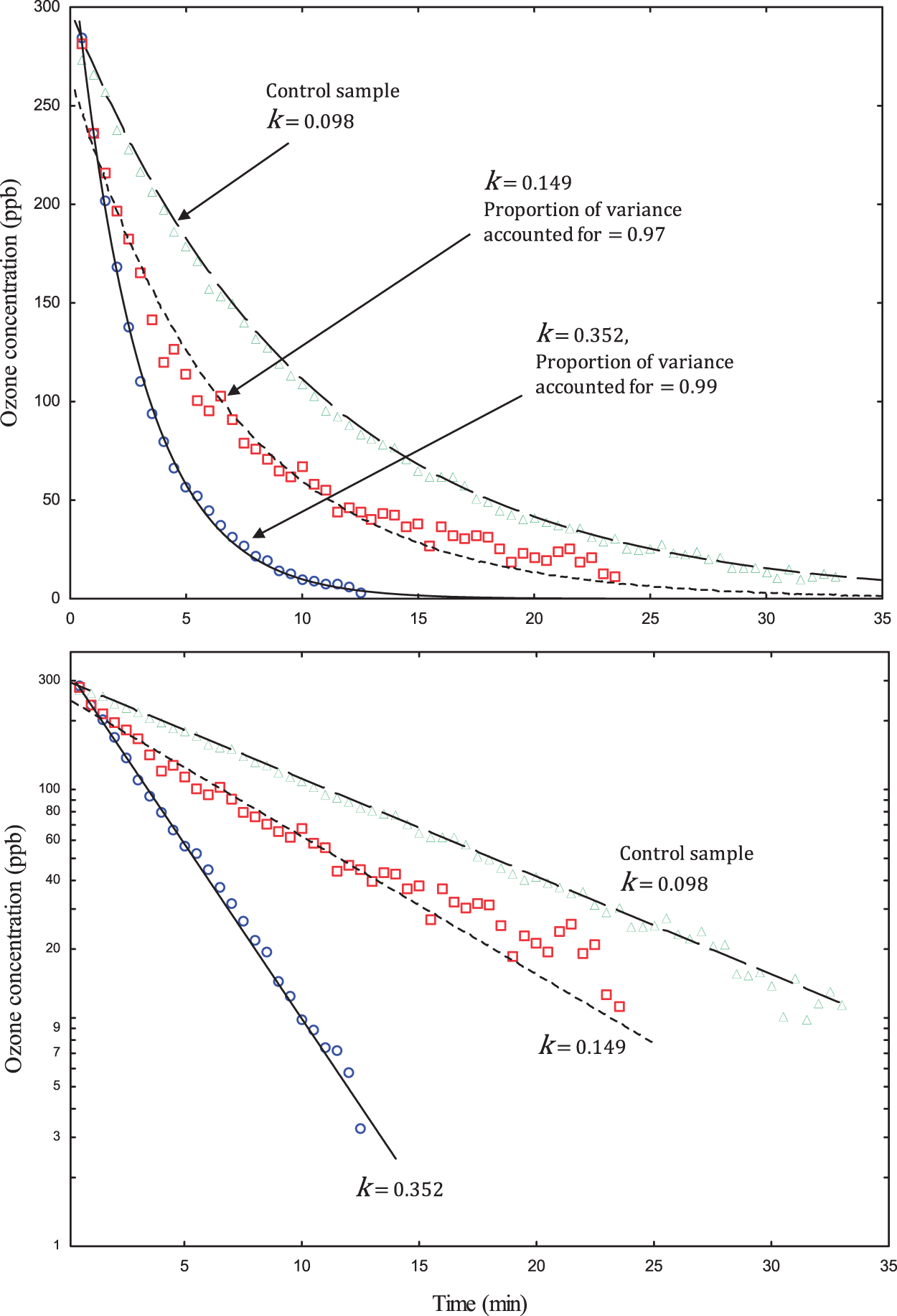
The appropriateness of the fit is clearly verified in the figure, considering that all other samples exhibited proportions of variance explained within the range illustrated by the two experimental treatments in Figure 4. In addition to the goodness of fit, Figure 4 also illustrates significantly different decay rates k. Indeed, the control shows a k value of 0.098, while the two treated samples exhibit k values of 0.149 and 0.352, respectively. It is apparent based on Figure 4 that the control shows a markedly slower ozone depletion than the treated samples. The plots are also depicted on a logarithmic scale in Figure 4(b), clearly showing the variation of the slopes. A detailed discussion of the variability of k estimates as a function of sebum residues is provided in the next section.
Ozone decay rate variability – artificial sebum
As mentioned, control samples were tested at the beginning and end of each experimental batch we conducted. We first examine the variability of ozone decay rates observed on the control samples, which establish a baseline for each experiment. Figure 5 depicts the k value estimates obtained for all control samples with the corresponding confidence intervals.
Ozone decay rate of the control samples tested at the beginning and end of each experiment.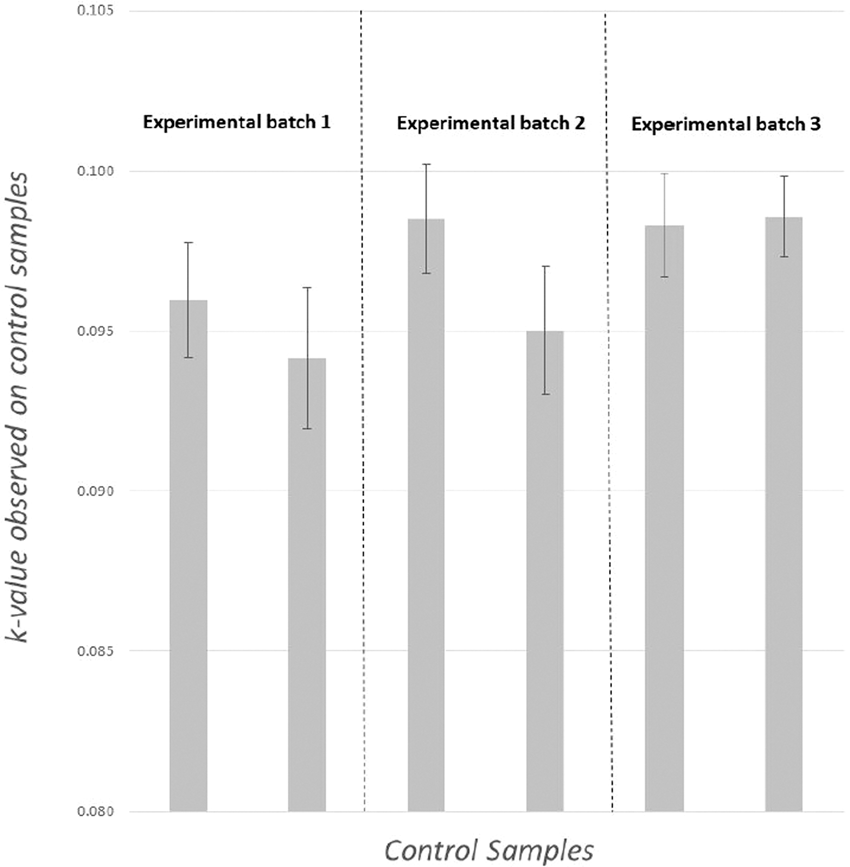
Overall, k ranged from 0.094 to 0.098 for the control samples, showing a notable degree of stability across the three experimental batches. Within each experiment, the k values recorded at the beginning and end of the experiment appear statistically equivalent. This indicates that the experimental conditions were maintained consistent, with no notable drift within or between experimental blocks.
We now examine the variation of the decay rate parameter k as obtained on fabric samples containing varied amounts of artificial sebum. Figure 6 depicts the exponential fits obtained for six such samples tested in the course of the first experimental block. The results are represented on a logarithmic scale and include the two sebum-free controls (beginning and end of the experimental batch). The data series legend on the figure reflects sebum add-on in milligrams per gram of fabric.
Ozone decay curves for samples containing varied amounts of sebum add-on.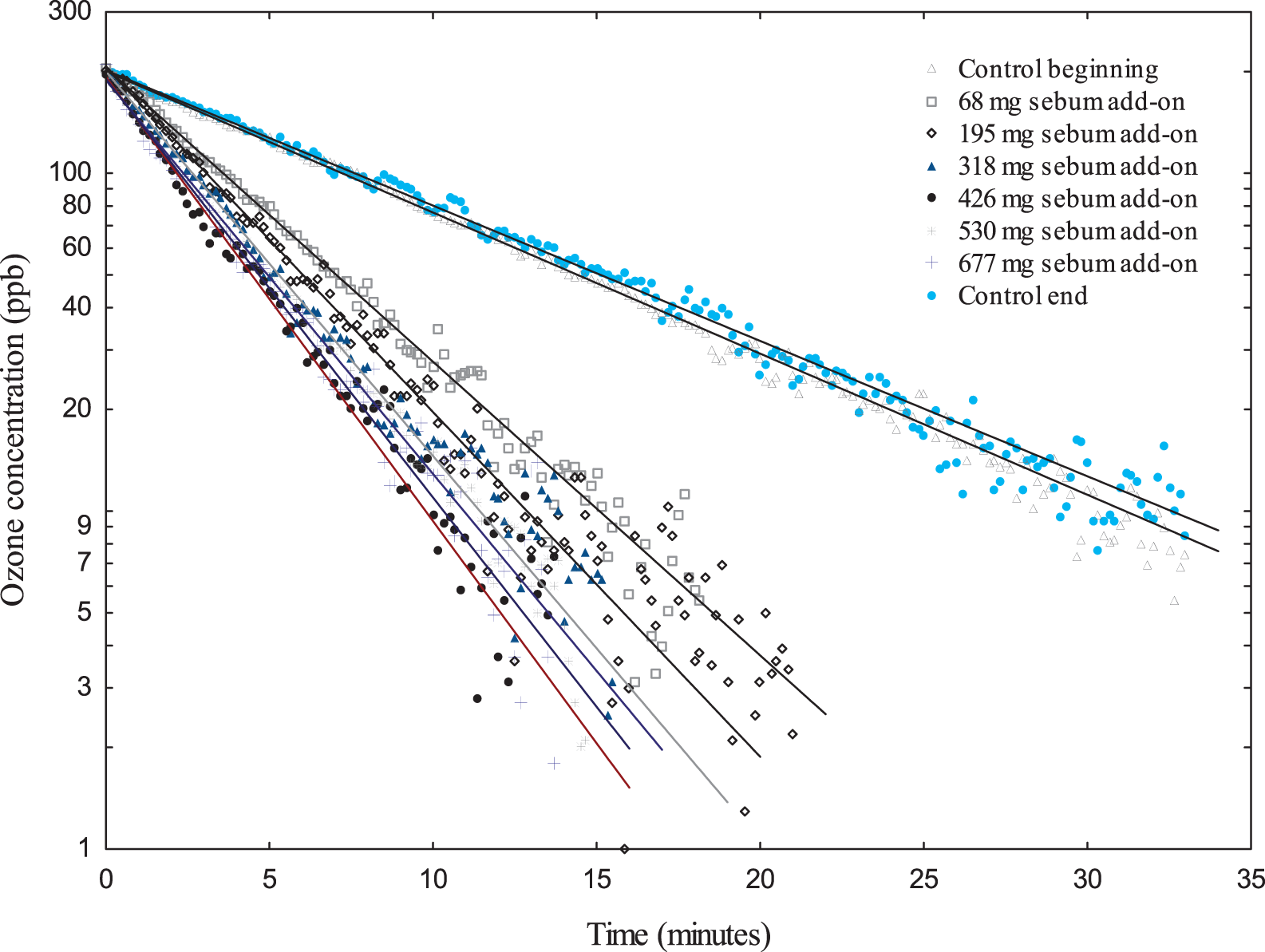
It is apparent from the results in Figure 6 that the incorporation of the sebum soil onto the fabric swatches resulted in a sizable acceleration of ozone depletion compared to the unsoiled controls. Even with the lowest add-on concentration, the observed logarithmic plot slope is substantially greater than that seen with the control samples. Differences in slopes among soiled samples with varied amounts of sebum can also be perceived from Figure 6.
The results obtained in the second and third experimental block replicates showed analogous exponential decay fits with a substantial acceleration observed when comparing the controls and the soiled samples. In all three experiments, the variation of the logarithmic slope between non-null sebum contents appeared of lower magnitude. We will not show the exponential plots for those experimental batches here for brevity purposes (the plots closely mimic Figure 6 in general pattern). However, k parameter estimates for all replicates are presented in the discussion below.
The relationship between k and sebum add-on amounts for all experimental batches is depicted in Figure 7. The three experimental blocks are represented using distinct point markers on the scatterplot. In addition, all corresponding control samples are indicated and identified separately.
Relationship between ozone decay rate k and artificial sebum add-on for the three experimental batches (represented using different point markers).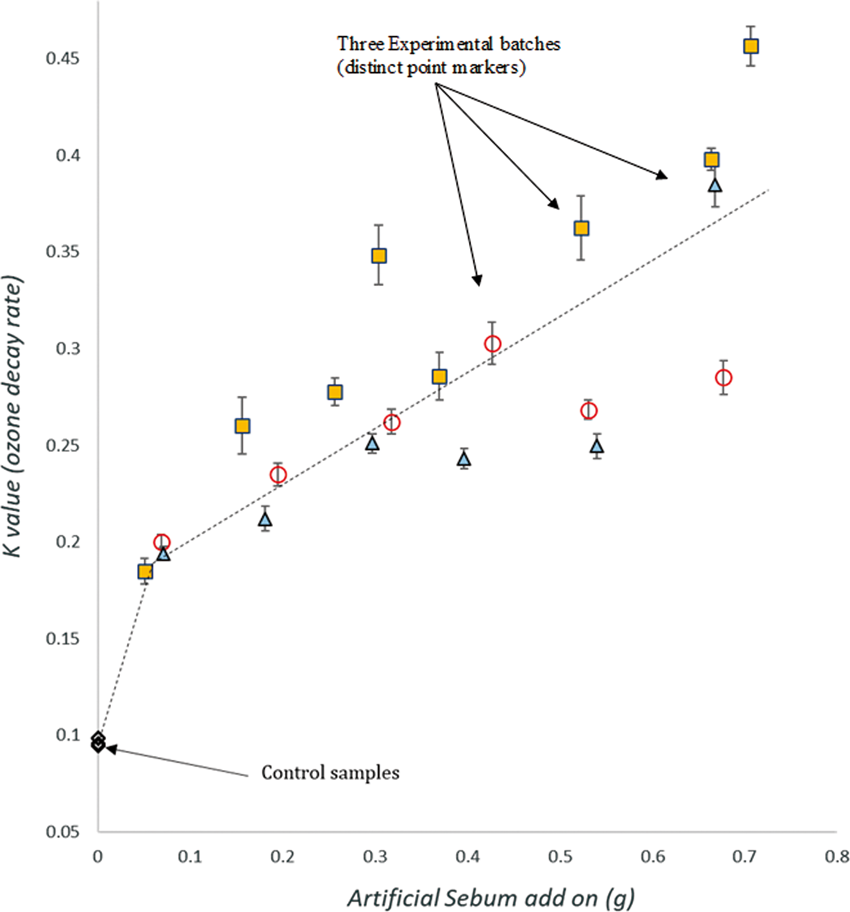
Overall, the results shown in Figure 7 confirm the existence of a clear relationship between sebum residue add-on and the rate of ozone depletion due to the oxidative reaction with the compounds present in the lipid mixture. The general pattern of the k-versus-soil-content curve is consistent across experimental replications and appears non-linear when considering the range from clean fabric controls (0 sebum residue) to the maximum add-on. In fact, the pattern seen in the scatterplots in Figure 7 appears segmented, with a rapid increase in k attributed to the presence of soiling in any amount (compared to the control), followed by a slower increase with higher soiling amounts. In addition to the apparent segmented pattern, the variability of k estimates appears to increase with higher sebum amounts. For instance, results obtained for the three replicates appear very closely spread, with little dispersion when considering the low end of the x-axis. On the other hand, the data points become sizably more scattered toward the right-hand end of the axis. The shorter duration of the overall depletion reaction with the higher sebum residue amounts is likely to be the source of this higher variability. Indeed, shorter sampling duration and, thus, steeper exponential decay curves tend to be associated with higher variance of parameter estimates. 53
Despite the apparent (and expected) higher variance of estimates in the upper range of the decay rate, the results we obtained clearly indicate a significant dependence of k on sebum residue content. An examination of the relationship observed for the non-null sebum content (i.e., excluding the controls) is represented in Figure 8. There is a highly significant positive relationship (r = .79, p < .001) between the decay rate and non-null sebum add-on levels.
Linear regression of k estimates against artificial sebum add-on for contaminated samples.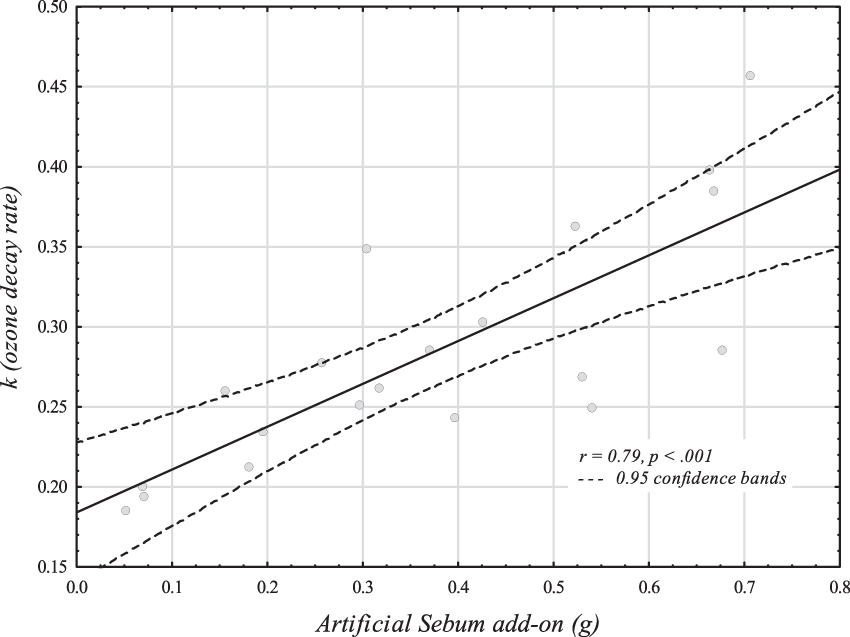
Ozone decay rate variability – human sebum experiment
The soil add-on obtained on the fabric swatches collected from worn T-shirts during varied exercising conditions ranged from 11 to 992 mg. We should note here that these observations are likely to vary significantly from one subject to another. The main objective of conducting the exercising experiment is to collect samples with a range of natural perspiration add-on from the same subject. It is to be noted here that the composition of the soil considered here corresponds to a mixture of sebum with eccrine and apocrine gland secretions, as mentioned previously.
The relationship between exponential decay rates and the natural soil add-on amounts above is shown in Figure 9. The results obtained with actual human sweat samples appear consistent with respect to the overall pattern with those observed with the artificial preparation. A similar non-linear pattern is seen, with a rapid increase in k as soon as a small amount of soiling is present, followed by a slower increase and a relative tapering of k growth as the amount of soiling add-on increases. The higher variability and dispersion of k estimates at the higher levels of soiling is also suggested in these results.
Relationship between ozone decay rate k and natural perspiration add-on for the three experimental batches.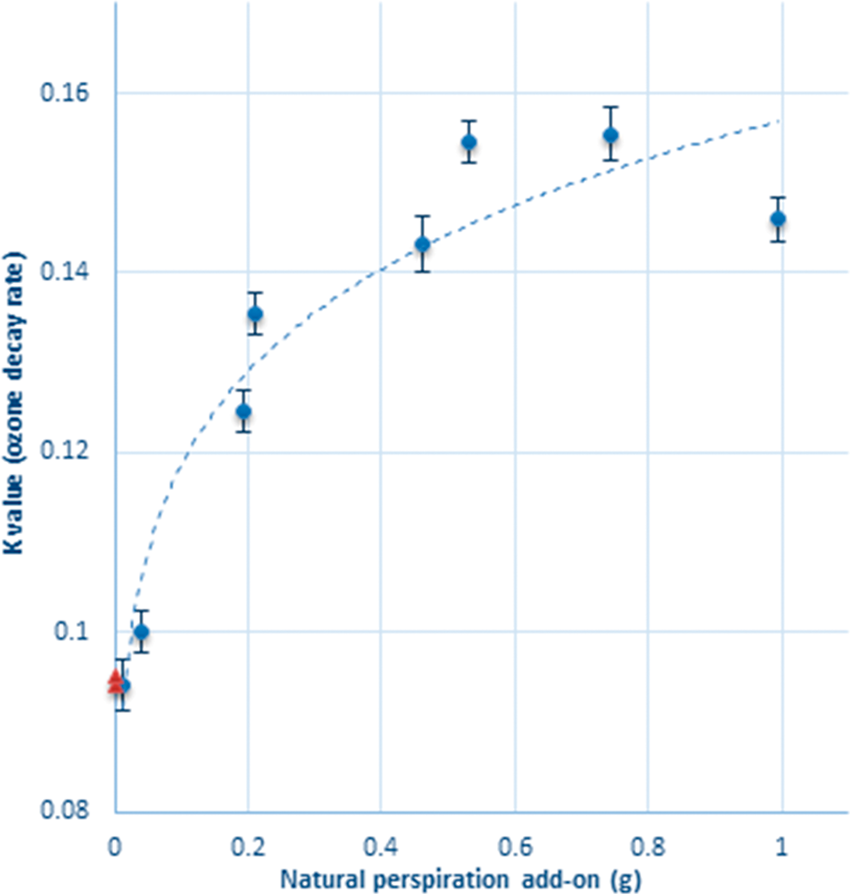
Therefore, the results obtained with both artificial and natural sebum soiling are consistent and support the primary hypothesis put forth in this research, that is, that the presence on fabric of the unsaturated compounds found in skin lipids accelerates ozone decay. The relationship between the amount of soil and ozone decay rates shows a complex non-linear pattern over the observed range of soil add-on. There is a sharp increase in k when transitioning from unsoiled control samples to swatches with even a small soil add-on. As soil amounts increase over a broader range, the increase in k estimates is slower and follows a linear curve with a smaller slope. Increased variance in parameter estimates with higher decay rates appears to impact the linearity of the observed regression over non-null soil content and indicates broad prediction intervals in the upper range of soil content.
Overall, these observations suggest the potential of a straightforward distinction between clean and soiled garments using the ozone decay approach. Distinction between different levels of non-null soil content appears feasible over the broader range. However, higher variance of parameter estimates may render differentiation between high levels of soiling less straightforward unless a relatively high number of replications is possible to allow statistical power.
Conclusion
The primary goal of this research is to explore the feasibility of using the ozone reaction with organic soils found in worn garments as a metric to measure the degree of soiling. Our central hypothesis is based on the fact that ozone is highly reactive with some of the primary compounds found in the contaminants accumulating on worn garments after contact with the human body, namely, the skin oils originating from sebaceous gland secretions. To test this hypothesis, we conducted ozone decay experiments in the presence of fabric samples contaminated with known amounts of artificial sebum and observed the variation of decay rates for varied soil add-ons. In addition, we conducted limited preliminary wear tests to collect natural soils. Overall, the pattern of the empirical data was adequately modeled using an exponential decay function. Parameter estimates of the decay constant were obtained using non-linear estimation with the Levenberg–Marquardt algorithm.
The results obtained are in support of the primary hypothesis put forth in this research, that is, the presence on fabric of the unsaturated compounds found in skin lipids accelerated ozone decay and resulted in higher decay constant estimates. Thus, it appears feasible based on our result to detect the presence of skin lipid soils on garments using the variation of ozone decay rates. Differentiating between clean and soiled samples appears straightforward using this approach, given the sharp increase in the ozone decay rate even with small amounts of sebum residue. In addition, distinction between different levels of non-null sebum content is feasible considering the linear relationship observed for moderate sebum add-on levels. Discriminating between larger amounts of sebum residues appears relatively more challenging because of the higher variance associated with parameter estimates of steeper decay functions. Calibration with a better control of k value variability is needed to achieve adequate distinction between different levels of contamination in the upper range. However, the ability to distinguish among such high soil amounts may not be needed in applications where this approach is used to assess laundering effectiveness. Indeed, in such circumstances the distinction between clean and soiled states based on pre-established thresholds may be sufficient. Thus, the most immediate application for this approach could be in determining whether different laundering practices, particularly in the context of the progress made with HE appliances, are effective in removing sebum residues from clothing.
The scope of this research is limited to sebum contamination on cotton fabrics. The procedures we tested may therefore be adequate for cotton clothing and home textiles that come in close contact with the human body and for which the main contaminant consists of human sebum. These oily contaminations are known to serve as a nourishing medium for microorganisms potentially causing malodor22–25 and spreading diseases.1–3 Therefore, the potential to effectively detect these substances appears most relevant to the study of household hygiene and home environment microbiome.
Further scope for future research includes the incorporation of other fiber materials in addition to knit cotton and the investigation of how ozone decay rates are impacted by laundering experiments. In addition, further research is needed for a better understanding of how other sources of contamination might impact the reaction with ozone. For instance, although the preliminary wear tests we conducted appear consistent with the overall pattern, further validation using more samples collected after contact with the human body is needed. Of particular interest is the potential interference of cosmetics and personal care substances in the reaction.
Footnotes
Acknowledgements
The authors would like to thank Dr. Richard Corsi and Dr. Neil Crain for allowing access and assistance with the Environmental Engineering lab facilities.
Declaration of conflicting interests
The authors declared no potential conflicts of interest with respect to the research, authorship, and/or publication of this article.
Funding
The authors disclosed receipt of the following financial support for the research, authorship, and/or publication of this article: Support for this research was provided, in part, by Cotton Incorporated, project # 14-301.