






Abstract
This study is a response to calls for more research on diversity in teacher leadership (TL), particularly in urban schools. Critical race theory illuminated the role race and racism can play in determining who gets access to TL positions and how that access is characterized using liberal discourse and ideology. We used a component mixed methods design to explore whether administrators and teachers perceived that teacher leadership positions were open to everyone. Beliefs that TL opportunities are “open to all” allow the field to accept the status quo, making it difficult to see (or do anything about) racial inequities.
Keywords
Scholarship on teacher leadership (TL) has seen a resurgence in the 21st century (Pan et al., 2023). Scholars have attributed this increase in TL research and corresponding TL practices to building instructional capacity within schools (Wenner & Campbell, 2017) and school improvement (York-Barr & Duke, 2004). In recent years, TL has been tied to higher student achievement (Ingersoll et al., 2017) and several important literature reviews have synthesized the research on this expansive topic (Nguyen et al., 2019; Wenner & Campbell, 2017). This work has demonstrated that much of this research did not triangulate methods of data collection and was purely descriptive (Wenner & Campbell, 2017).
Moreover, issues of equity, diversity, and inclusion were absent from this research, with only one of the studies cited focused on urban schools, and Wenner and Campbell (2017) highlighted the scarcity of teacher leaders from underrepresented groups. The purpose of the current study is to begin to explore these important topics. This is especially important in urban schools, which may be striving to attract high-quality teachers and school leaders (Welsh & Swain, 2020), as teachers who reflect the racial and ethnic identities of students are crucial to supporting student well-being and achievement (D’Amico et al., 2017).
Welsh and Swain (2020) noted that there are six categories that define urban education: “(a) population/location/geography, (b) enrollment, (c) demographic composition of students, (d) resources in schools, (e) disparities and educational inequality, and (f) social and economic context” (p. 5). These facets of urbanicity are important to consider when conceptualizing processes such as recruitment and retention that can eventually support the pool of teacher leaders.
Specifically, we set out to conduct a mixed methods study of TL in our home state of Virginia. We wanted to determine how administrators and teachers across the Commonwealth conceptualize and navigate issues of equity and diversity within TL, particularly whether participants perceived TL positions as open to teachers of diverse racial and ethnic backgrounds. This is important considering that the teacher workforce is predominately white, including that in urban schools (c.f., D’Amico et al., 2017). We included both teachers and administrators because their perspectives may shape how teacher leaders perceive themselves and their work (Stryker & Burke, 2000). The research questions that guided this study were as follows:
How do administrators and teachers perceive issues of equity and diversity in TL? How do administrators’ and teachers’ perceptions of equity and diversity in TL compare and contrast?
In the following sections, we review research on TL from the last two decades and situate our study within the framework of critical race theory (CRT; Ladson-Billings & Tate, 1995). We then introduce our component mixed method design (Greene, 2007), present the findings of the study, and connect the findings to implications for future research and practice.
Literature Review
In this section, we outline the construct of TL as well as the promise and possibilities of TL. We also describe barriers to TL—particularly for teachers of color.
The Problem of Defining Teacher Leadership: A Contextualized Construct
TL is highly contextualized due to the unique structure of any particular district/division, school, or sociopolitical context. Additionally, TL is variably defined as formal and informal. For example, in their germinal review of the research on TL, York-Barr and Duke (2004) found that research on TL rarely included operational definitions of TL, and they identified both formal and informal leadership roles. Moreover, context plays a role in defining TL positions because these vary across schools (Wenner & Campbell, 2017). For example, Anderson (2002) pointed out that rural and small schools tend to rely on informal TL roles rather than formal ones. In Scotland, Torrance and Forde (2017) connected TL to the sociopolitical context and conveyed how TL was related to professional accountability, professionalism, and practitioner inquiry.
Thus, it is also important to consider how the larger sociopolitical context of a country, state, or province may shape TL as well. To honor this continuum of TL in our study, we defined teacher leaders as those who remain in the classroom or who move beyond the classroom to accept new responsibilities. We believe TL roles can be both formal, including those teacher leaders who become department chairs or instructional coaches, and informal, including those teacher leaders who remain in the classroom while mentoring their peers informally or leading other efforts not supported by a stipend or title (York-Barr & Duke, 2004). In the sections that follow, we describe how this definition connects to our research methods, including sampling and data collection.
The Promise of Teacher Leadership
TL may garner a great deal of attention because of its potential—it has been tied to positive increases in a variety of school improvement variables. For example, Angelle and Teague (2014) found a strong relationship between collective efficacy and the extent of TL. While the direction of the relationship is not clear (i.e., whether collective efficacy fosters TL or vice versa), strong collective efficacy is indicative of teachers’ beliefs in their abilities to meet their goals.
Ingersoll et al. (2017) also tied TL to student achievement, which was an important milestone in the TL research that other scholars emphasized (e.g., York-Barr & Duke, 2004). Specifically, using the Teaching, Empowering, Leading, and Learning Survey, these researchers demonstrated that having effective administration and school leadership teams and fostering a shared vision among faculty and administration were more strongly related to higher achievement. The elements of TL that had stronger relationships to student achievement included establishing student discipline procedures and teachers’ roles in school improvement planning. These findings convey the importance of TL in school improvement.
Fostering Inclusivity through Expanding Definitions of Teacher Leadership
Conceptualizations of TL have changed and expanded over time (Bradley-Levine, 2011). For example, TL has been identified as a stance rather than a particular role in a school (Hunzicker, 2017; Smulyan, 2016), which we connect to informal TL. Stance is related to identity, or in this case, teacher leader identity, which can be developed by teachers who do not readily envision themselves as teacher leaders (Rojas, 2018). Smulyan (2016) suggested that the definition of TL be reframed and seen as an organically derived personal and political stance, or worldview, as “teachers’ way[s] of re-imagining society and the work they do within it” (p. 15), in the service of students, teachers, and communities, rather than as merely roles, behaviors, and skills.
At the heart of Smulyan's (2016) notion of stance is the idea that a teacher leader is “a fierce advocate for students and colleagues who ensures that everyone has the opportunity to learn and grow, and a collaborative member of a community dedicated to civic and social justice” (pp. 16–17). Hunzicker (2017) also maintained TL as a stance “or way of thinking and being, rather than a set of behaviors” (p. 1). Reframing the definition of TL in this way broadens the possibilities of who identifies as a teacher leader and the scope of what they can accomplish.
Others have also argued that definitions of TL should include advocacy for students of color and have noted that race, social justice, and equity are largely absent from the literature on TL and that the achievement of marginalized student learners must be prioritized (Bradley-Levine, 2018; Milner et al., 2015; Rojas, 2018; Wenner & Campbell, 2017). Based on her research in a large urban district, Rojas (2018), for example, emphasized the need for teacher leaders who support students of color and employ justice-oriented strategies that encourage students, teachers, and the community to confront systemic oppression.
Similarly, Bradley-Levine (2011) viewed TL as a critical practice wherein teacher leaders “develop critical consciousness” and interrupt “systems of power and authority within schools” (p. 249) to create change that leads to greater possibilities for students inside and outside of classrooms. Expanding the definition of TL so it includes an intentional focus on marginalized students and disrupting systemic oppressions that plague them makes it possible that such teacher leaders will be prepared to make needed changes in schools (Milner et al., 2015; Rojas, 2018; Smulyan, 2016).
Barriers to Teacher Leadership
In the United States historically, people of color, particularly Black people, have had to traverse obstacles to become educated and to acquire leadership opportunities in schools (Jean-Marie, 2006; Watson, 2007). Post-Brown, there have been fewer teachers and school leaders of color, particularly Black leaders, because integrating schools led to firing them and hiring whites instead (Tillman, 2004). Robinson and Ross Baber (2013) described Black American teacher leaders as “missing voices in the scholarly literature on teacher leadership” (p. 223). This scarcity of teacher leaders of color is due to institutional barriers to the profession in general and to TL roles specifically.
While teacher education also serves as a barrier for teachers of color entering the profession (Putman et al., 2016), we focus on hiring and retention, which are most closely related to TL. Scholars have noted the slow pace at which recruiting teachers of color is occurring and have reached similar conclusions that race and racism are factors in hiring practices (D’Amico et al., 2017; Lincove et al., 2018; Noonan & Bristol, 2020). For instance, D’Amico et al. (2017) examined teacher applicant and hiring data in a school district with an intention to increase the number of teachers of color in its schools and found that while Blacks made up 13% of the applicants, only 6% were offered positions. The researchers concluded that supply was not at issue, demand was.
Scholars have also pointed out that principals of color tend to be more likely to hire teachers of color, but racism has led to reduced numbers of principals of color as well (Bristol, 2018; Bristol & Shirrell, 2019; D’Amico et al., 2017). Discrimination in hiring practices contributes to the shortage of teachers of color and makes it challenging to create a diverse pool of teacher leaders. With so few teachers of color, TL becomes the property of white teachers, creating yet another obstacle for teachers of color interested in TL (Miller & Callender, 2018).
Bristol (2018) illuminated how employment policies influence the experiences and opportunities for leadership available to Black men. He divided participants into two groups: “loners” who were at schools by themselves and “groupers” who were teaching with other Black men at their school site. Loners reported that they planned to leave their schools, believed that colleagues in their buildings feared them, and thought teachers of color did not have opportunities to influence school policy. Groupers felt the exact opposite of loners. Bristol (2018) suggested race and racism are linked to recruiting and retaining teachers of color and determining who has the power to influence school policy—all factors that influence who principals select for TL opportunities. Furthermore, D’Amico et al. (2017) found “workforce segregation” (p. 30), as Black teachers were more likely to be assigned to schools struggling academically or with significant numbers of poor students and students of color.
Another barrier to TL involves the path to career progression, which relies in part on relationships with colleagues and access to information and knowledge. Yet, the path is blurry for teachers of color who get little, if any, guidance from administrators about career trajectories (Knaus, 2014). Once teachers of color do assume leadership responsibilities, many report having to navigate those duties while dealing with emotional stress related to working with white colleagues who doubt, deny, ignore, and devalue their abilities (Knaus, 2014; Robinson & Ross Baber, 2013; Watson, 2007). The isolation involved in being one of only a few teacher leaders of color in the building or district also adds stress to the challenges associated with TL and deters others from pursuing TL (Bristol & Shirrell, 2019; Knaus, 2014; Watson, 2007). Next, we ground our work in CRT.
Theoretical Framework: Critical Race Theory
Developed by legal scholars, CRT maintains race as a social construct and argues that racism is structural and ingrained in society—so normal in our institutions and social lives, it is often unrecognizable, hidden, and unchallenged (Bell, 1992; Delgado & Stefancic, 2017; Wing, 1997). Derrick Bell (1992), one of CRT's founding members, argued that racism “is an integral, permanent, and indestructible component of this society” (p. ix). CRT scholars were disenchanted with the slow, incremental progress of civil rights ideology favored by white liberals; noticed that many civil rights efforts had been delayed while others were modified; and recognized that traditional civil rights strategies and discourse were not effective (Bell, 1992; Crenshaw et al., 1995; Delgado & Stefancic, 2017; Wing, 1997).
Critical race theorists seek to change this; thus, they developed CRT, which draws from radical thinkers (e.g., Gramsci and Du Bois), movements (e.g., critical legal studies and Black Power), and traditions (e.g., ethnic studies) to both illuminate how race and racism operate in society and to facilitate transformation (Bell, 1992; Crenshaw et al., 1995; Delgado & Stefancic, 2017; Wing, 1997). A significant part of this work involves attending to how race, racism, and racial power are reflected in the law; scrutinizing whiteness and recognizing the privileges that accompany it, including its value as property; critiquing liberal ideas such as neutrality, colorblindness, and meritocracy, which distort racial inequality and emphasize whiteness as normative; and using narrative/storytelling and analysis to critique society while allowing the voices of people of color to shed light on cultural experiences, perspectives, and ways of knowing that are largely absent from dominant discourse (Bell, 1992; Delgado & Stefancic, 2017; Harris, 1993; Wing, 1997). Additionally, CRT scholars concur that interlocking oppressions based on race, gender, class, and sexuality exist (Dixson & Rousseau Anderson, 2018; Jean-Marie et al., 2009).
Another tenet of CRT is interest convergence, the idea that “[t]he interest of blacks in achieving racial equality will be accommodated only when it converges with the interests of whites” (Bell, 1980, p. 523). Interest convergence helps explain why some efforts to achieve racial justice are successful. For example, Bell wrote that the interest convergence principle explains why, after Black people had been challenging inferior schools for over 100 years, the Brown decision finally became possible: “the decision's value to whites” (p. 524) politically, economically, and internationally was apparent. Within interest convergence lies the possibility of losses for whites and gains for Blacks and other people of color (Milner, 2008). Thus, interest convergence can be a factor in attempts at racial equity and equality.
Ladson-Billings and Tate (1995) introduced CRT into the field of education and asserted that race and racism play a pivotal role in producing school inequities, including those related to school funding, curriculum, student performance/achievement, and disciplinary practices, and emphasized shortcomings in multicultural education. They also pointed out how liberal discourse praises the pace of progress made in schools thus far and demonstrated how Harris’s (1993) assertion that whiteness operates as property in the law (rights of disposition, rights to use and enjoyment, reputation and status property, and the absolute right to exclude) applies to education as well. CRT scholars in law and education have both pointed out that the Brown v. Board of Education ruling had some undesirable outcomes, including its disastrous impact on students, teachers, and school leaders of color and its inability to root out racial inequality (Bell, 1980; Crenshaw et al., 1995; Dixson & Rousseau, 2005; Ladson-Billings & Tate, 1995; Robinson & Ross Baber, 2013; Tillman, 2004).
Since Ladson-Billings and Tate's (1995) article, additional education researchers have used CRT to explore how race and racism are central to school inequity and to emphasize that racial disparities in schools affect students and teachers of color (Dixson & Rousseau, 2005; Knaus, 2014; Parker & Lynn, 2002). CRT has also helped scholars recognize racist policies and practices in schools and highlight the methods used to justify them (Parker & Lynn, 2002; Robinson & Ross Baber, 2013). In considering TL, CRT helps illuminate the role race and racism can play in determining who gets access to TL positions, how administrators and teachers characterize that access using liberal discourse and ideology (i.e., “TL is open to all”), and whether white people benefit from a diverse teacher leader workforce. Next, we elaborate on the methods we used to explore our research questions.
Methods
The current study is a component mixed methods design (Greene, 2007). For Greene, what is salient in defining mixed methods studies are the integration and the weight of the two methods. The qualitative and quantitative data remained separate through the analysis phase of our research until the reporting phase when the qualitative and quantitative data were combined to answer our research questions. The interview data were collected separately from the mixed methods survey, and the qualitative data carried more weight in this study. In sum, “component designs bring different methods into common action or harmony, yet the methods remain distinctly identifiable throughout the study” (p. 121).
Research Context
We chose to situate our study in our home state of Virginia to explore how TL was conceptualized across the Commonwealth. In Virginia, TL, like mentor teaching, is viewed as a stage of teacher professional development. The state provides no definition for how it views teacher leadership. Although unofficially viewed as an “endorsement area,” the requirements for teachers to add the designation of teacher leader to their teaching licenses require only the completion of five years of teaching experience and completion of National Board Certification or an administrator's recommendation that the applicant demonstrates the skills and abilities of school leadership (Virginia Administrative Code).
Our decision to focus on Virginia was based on empirical evidence from previous studies. In particular, Wenner and Campbell's (2017) synthesis demonstrated the need for a focus on diversity in TL. Virginia is rich in ethnic, racial, and linguistic diversity, which made it an ideal setting for this work; yet, similar to national trends, the student population is currently more diverse than the teacher population. Several of Virginia's schools and school divisions (what other states may refer to as school districts) are what Milner (2012) calls “urban emergent” (p. 559).
Participants
We solicited participation from every school division in Virginia for the current study. Virginia is divided into eight superintendent's regions that loosely map onto the geographic features of the region (e.g., coastal areas, mountains, etc.). In all, the current study included participation from 20 school divisions in superintendent's regions 1, 2, 3, 6, 7, and 8. School leadership in superintendents’ regions 4 and 5 either declined to participate, denied our IRB applications, or did not respond to the email invitation to participate. Region 4 is in the northern part of Virginia near Washington D.C., and region 5 is located more centrally within the Commonwealth in the valley of the Virginia mountain region. Region 4 may be more diverse in race, ethnicity, and language than other regions in Virginia due to its proximity to Washington D.C.; however, we do not believe that region 5 is substantially different in demographics from other superintendents’ regions.
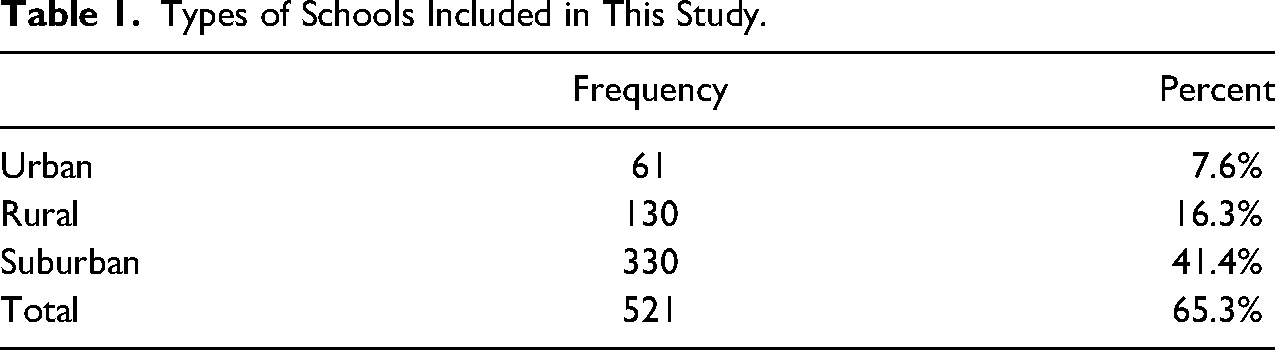
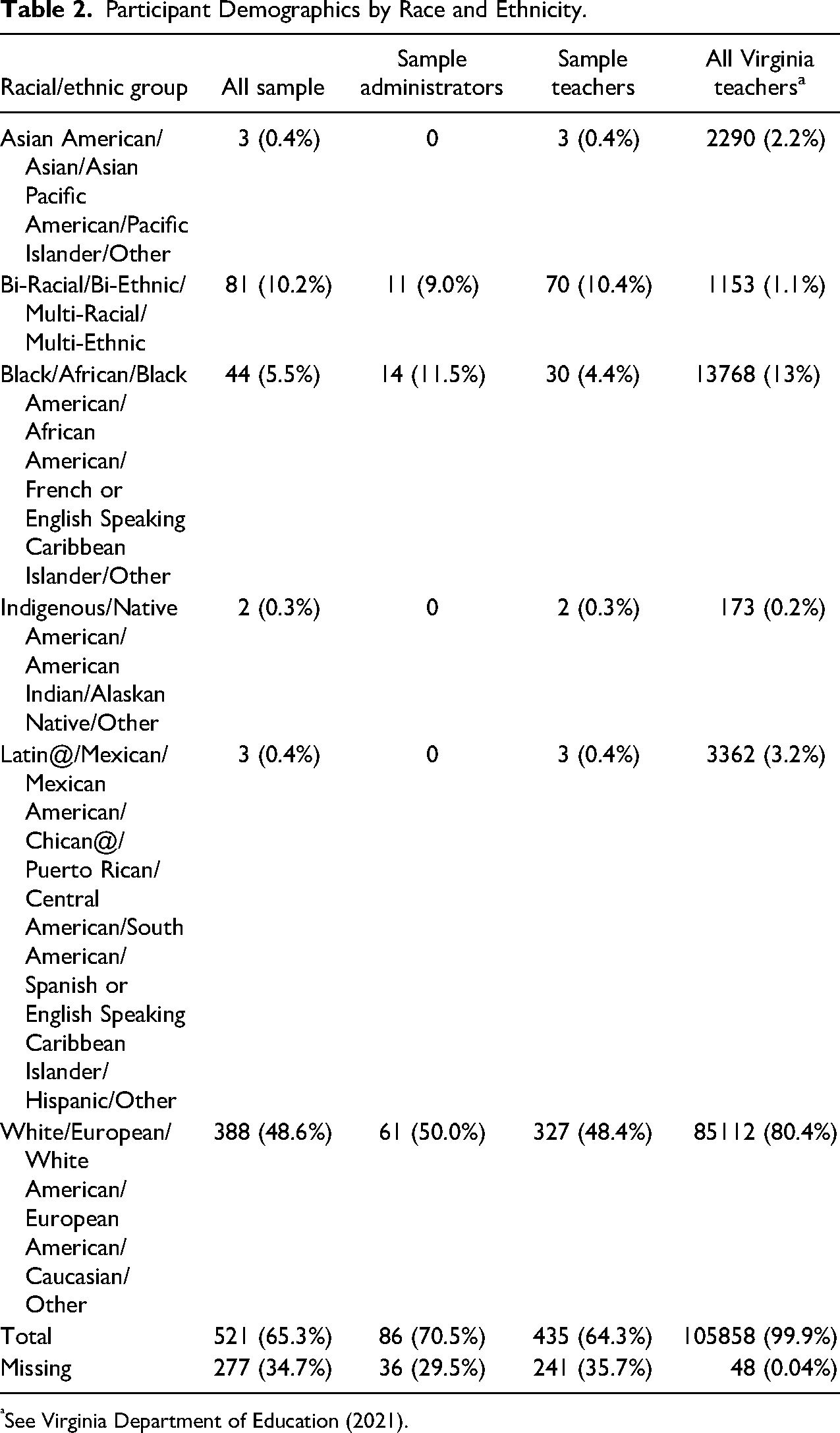
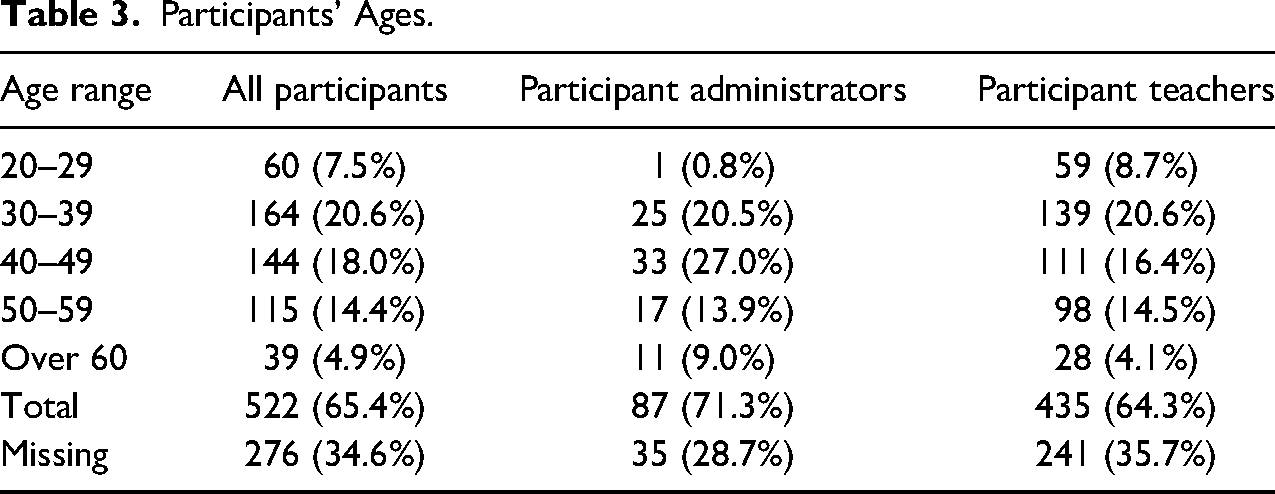
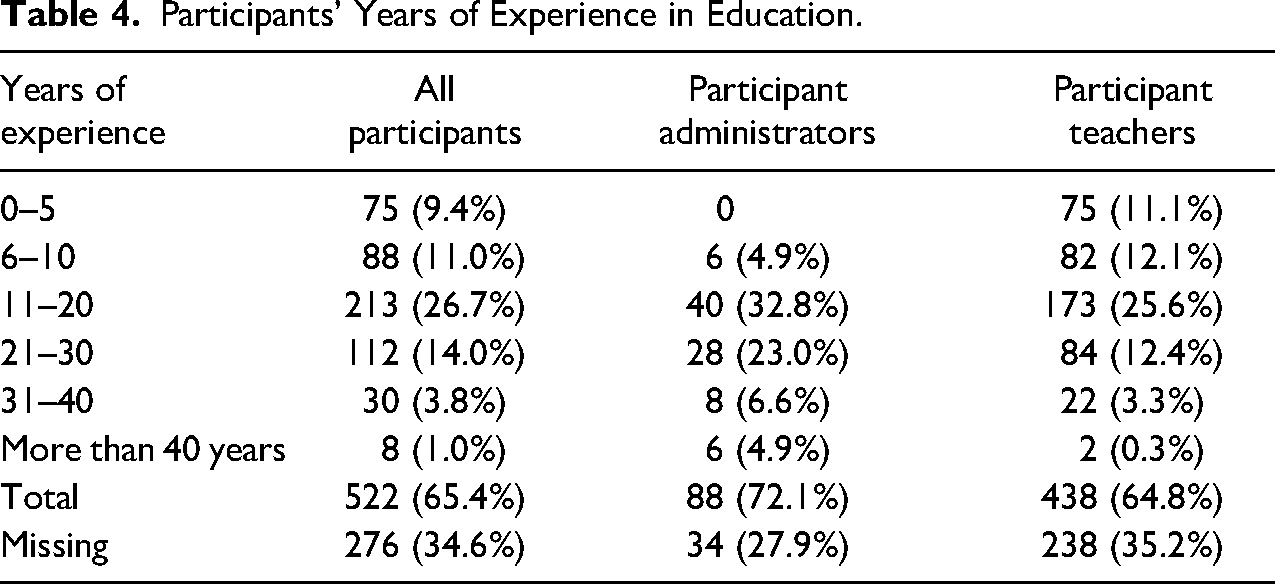
We included all teachers and administrators in our invitation to participate in the survey in an effort to be inclusive and recognize that TL exists inside and outside of the classroom in formal and informal roles. Moreover, administrators play a key role in hiring teachers and filling teacher leader positions. In all, 122 administrators (15.3% of the study sample) and 676 teachers (84.7% of the study sample) participated in the survey. However, only 526 participants (65.9%) provided demographic information. Participants were offered the opportunity to identify their school division as urban, rural, or suburban and 521 participants responded to this question (see Table 1). Table 2 provides the racial and ethnic identities of the participants who responded. Additionally, 86 of these participants identified as men (10.8%), 438 identified as women (54.9%), and 2 identified as nonbinary (0.3%). Tables 3 and 4 provide the ages of responding participants along with their years of experience in education, respectively. The majority of reporting participants were between the ages of 30 and 39 years and had 11–20 years of experience in education.
Types of Schools Included in This Study.
Participant Demographics by Race and Ethnicity.
Participants’ Ages.
Participants’ Years of Experience in Education.
The survey included a question in which participants could self-select to participate in a follow-up interview via a method that was convenient for them including face-to-face, phone, or video conferencing software. We conducted 31 interviews with seven administrators (including central office personnel) and 24 teachers (including instructional specialists).
Instruments
We created our own mixed methods survey for this study. We generated this survey based on the voids in the literature identified above. More specifically, we included items about diversity and inclusivity based on recommendations from Wenner and Campbell (2017), and we included roles identified by York-Barr and Duke (2004). For example, we asked, “Are the teacher leaders in your school building or school division ethnically diverse?” Teacher leader roles included in the survey were mentor, peer coaching or modeling, professional development, department chair, instructional specialist, data team leader, school-wide coordination, curriculum writing, school improvement, contributing to the profession, resource teacher, and content specialist. We differentiated the instrument for administrators and teachers; each survey included 25 quantitative and qualitative items. The survey was reviewed by two experts on TL who have done germinal work on TL and/or provided national service on this topic. The survey was not piloted before distribution.
Three quantitative survey questions were used in this study based on their relation to our research questions. As these questions were analyzed individually, no factor or reliability analysis was required. The questions are shown in Appendix A and participants responded to a five-point Likert scale with the following markers: (a) never, (b) almost never, (c) sometimes, (d) often, and (e) always.
Although parallel to the mixed methods survey in content, the interview protocol provided participants the opportunity to elaborate on their responses to the survey and gave researchers the opportunity to ask clarifying questions (see Appendix B). This was particularly important to our research question about diversity because the survey item was a forced response item and the interview allowed participants to speak at length about this topic. We used semi-structured interviews (Merriam, 2009) to allow the research team to generate similar data across participants while giving us the flexibility to ask follow-up questions. In all, we collected 16 hours of audio (966.5 minutes) and 339 pages of transcript data. Interviews averaged 31 minutes.
Data Analysis
Quantitative analysis
We analyzed the openness of TL positions to all teachers regardless of race, ethnicity, or gender. We used three quantitative survey items to assess perceptions of equity and diversity (see Appendix A). First, we wanted to understand educators’ perspectives on the openness of TL and used descriptive statistics. Next, we examined if teachers and administrators held similar perceptions of openness of TL and we employed ANOVA analyses to understand the differences between groups (administrators and teachers). Finally, we wanted to understand if educators’ perceptions of their schools’ openness to TL was seen in practice by using T-tests to analyze if there were differences in these two questions. The results of the quantitative analysis informed, and were used in conjunction with, the qualitative analysis to provide a more complete understanding of TL in the Commonwealth of Virginia. Quantitative analyses were conducted in SPSS version 28 and employed listwise deletion to handle missing data.
Qualitative analysis
We followed Saldaña's (2009) recommendations for coding data multiple times. For this study, we coded both survey and interview data from administrators and teachers in iterative rounds. First, the two lead authors began by individually coding all of the survey data for both administrators and teachers. We then met to talk through our coding and create a codebook that included 24 codes (see Appendix C for examples of codes and data). The codes in our codebook included structural codes, descriptive codes, in vivo codes, and values codes.
The first two authors then met to talk through the application of the codebook to the administrator survey data only. We coded two pages together to establish consistent use of the codes before dividing the remaining administrator survey and interview data to code independently using the codebook. After this coding was complete, we then reviewed each other's codes and made comments on whether codes were incorrectly applied or omitted, as well as other codes that emerged during this process. This process was repeated for the teacher survey and interview data with the first two authors dividing the teacher survey and interview data for coding before reviewing each other's codes and commenting. Throughout this process, the first two authors met periodically to talk through coding and note any discrepant cases or newly emerging ideas and codes.
Researchers’ Positionality
Our research team is made up of diverse identities. The first author identifies as a white, cisgender woman. Her experiences growing up in an impoverished rural area fostered her ability to empathize with marginalized groups. She engages frequently in professional development activities related to antiracism and espouses this in her work. The second author grew up poor in a rural, southern town and identifies as a Black woman committed to social justice. The third author identifies as a white, cisgender man. His experiences growing up and teaching in an urban emergent area of the American Southeast created a critical awareness of the inequities experienced by racial minorities politically, economically, socially, and educationally, which informed his commitment to a social justice-democratic education perspective. The fourth author identifies as a cisgender man. He grew up in mostly rural areas and has experience teaching in rural Virginia. As a white male, he has been engaged in reflecting on his privilege and participating in professional development around supporting diverse students and colleagues.
Validity and Reliability
We took multiple steps to ensure the validity and reliability of this study. We ensured content validity by asking two experts to evaluate and comment on the instrument. We used analyst triangulation (Patton, 2002) to ensure that we applied the codebook consistently throughout the data analysis, and all codes were negotiated between the two first authors of this manuscript. Analyst triangulation also served to mitigate researcher subjectivity which is inherent in all studies (Maxwell, 2013). We also ensured that we had rich data with 786 qualitative survey responses and 16 hours of interview audio (339 pages of transcript data). In this component mixed methods design (Greene, 2007), the qualitative data carried more weight and we used multiple measures to ensure the credibility of our interpretation of the qualitative data. The goal of this study was not statistical generalizability.
Findings
In the sections below, we report our findings thematically to explore our two research questions: (a) How do administrators and teachers perceive issues of equity and diversity in TL? and (b) How do administrators’ and teachers’ perceptions of equity and diversity in TL compare? In sum, the quantitative results showed that participants believed that TL positions were open to everyone but were not held by ethnically and racially diverse individuals. The qualitative findings provided nuance in further conveying that most participants believed TL positions were open to everyone, but that policies and practices were not in place to support these efforts. Participants did not unpack the implicit biases in these processes or the myth of meritocracy, either. We chose quotes from participants that represented the broad array of views we uncovered.
Teacher Leadership Openness to Diverse Individuals
This section of our findings is a synthesis of our quantitative and qualitative results for both of our research questions.
Quantitative findings
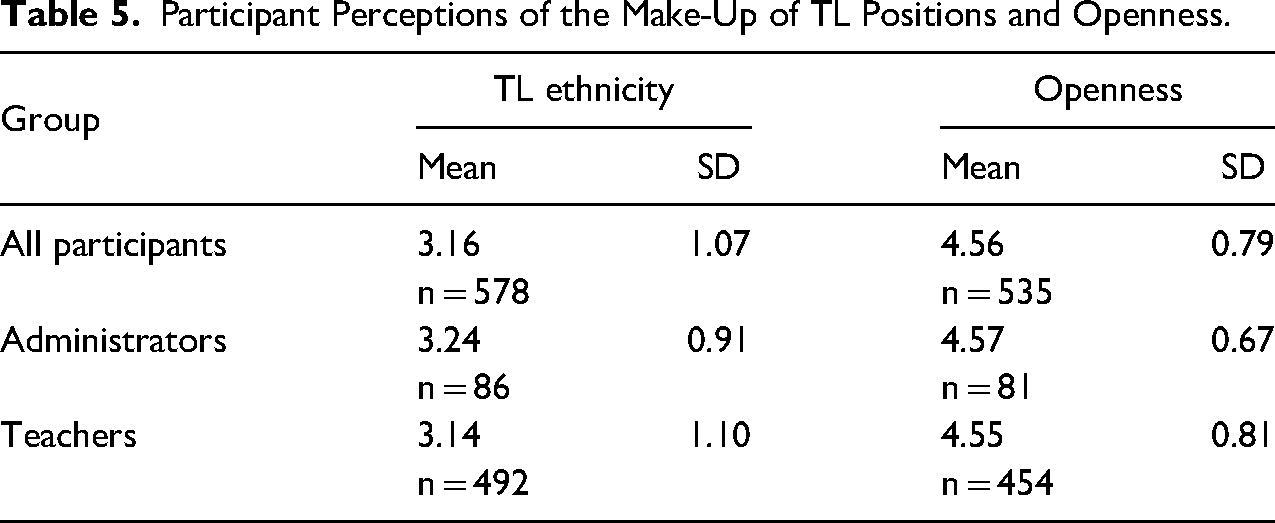
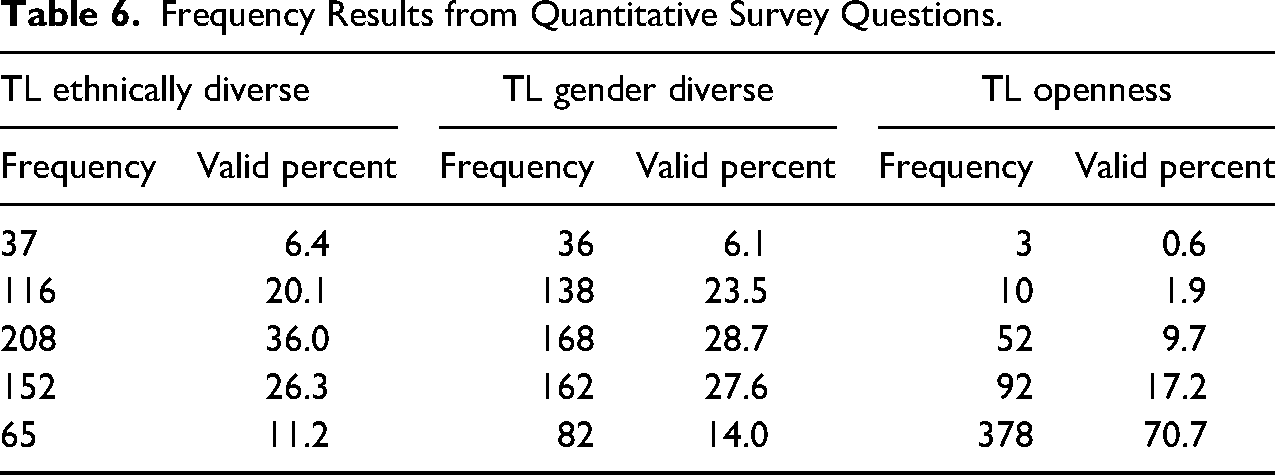
We examined participants’ responses to three questions regarding how open TL positions were to diverse individuals. Participants responded to a five-point Likert scale with higher numbers indicating increased frequency. As illustrated in Table 5, participants had a mean score of the presence of ethnic diversity of TL personnel of M = 3.16, with administrators (M = 3.24) and teachers (M = 3.14). Regarding whether TL positions were open to diverse individuals, all participants responded M = 4.56, with administrators M = 4.57 and teachers M = 4.55. Additional analysis shows the frequency of responses, as can be seen in Table 6.
Participant Perceptions of the Make-Up of TL Positions and Openness.
Frequency Results from Quantitative Survey Questions.
Next, we examined differences between administrators and teachers in their perceptions of the openness of TL positions. Results of ANOVA indicated that there were no significant differences between groups on any of the three questions indicating that administrators and teachers held similar views related to diversity in TL. However, we were also interested to know if the differences between perceptions of the presence of diverse individuals in TL positions were statistically different from the openness of TL positions to diverse individuals. Paired samples T-tests indicated that there was a significant difference between openness and the presence of diverse individuals in TL positions (both p < .001). This indicates that participants believed that TL positions were open to diverse individuals; however, they observed that TL positions are not currently held by diverse individuals.
Qualitative findings
The qualitative data provided nuance in understanding participants’ perceptions regarding diversity in TL and are essential to understanding participants’ responses to the quantitative items. Overall, administrators felt that TL positions were open to anyone regardless of race or ethnicity, yet they thought that the pool of candidates was shallow.
Administrators’ perceptions. Administrators noted the lack of racial and ethnic diversity in the profession, “So, I mean … we need more minority teachers in education. That’d be beautiful.” Thus, to ensure diversity within TL positions, the teaching ranks must be diversified to feed this pool. Some administrators noted that they addressed their shallow pools of teacher leader candidates by using informal but inclusive practices. One administrator explained, I don’t have any formalized practice other than making sure when I look at my teams that I’m including a wide variety of ethnicities, a wide variety of experiences … But looking at making sure, like you said, we’ve got some different varieties, different roles, that have a position. Meaning intermediate teachers versus primary, and then making sure that they are as representative as possible of our ethnicities.
This was echoed by other administrators who tried to be intentional in considering who was filling these TL positions and what grade level they were from or how they identified, Before we assign or invite or ask for volunteers for teachers to attend a specific professional development in the district or be a member of the committee, we look to make sure that there's kind of a broad representation so that we’re not always sending the same person or identifying the same strong teacher. We want to keep the opportunities open for everyone [who is] interested.
Another administrator explained that TL positions were “open to all” because these opportunities were distributed by administrators. However, this was not explained specifically—including who administrators sent these opportunities to. Another administrator noted the importance of mitigating financial expenses (e.g., paying for classes) to ensure that there were no barriers to TL. While these administrators did not cite policies or systematic practices, informal practices appeared to be in place in some divisions to ensure ethnic and racial diversity in TL.
However, some administrators also admitted that they did not have a plan in place to ensure diversity in TL, “I don’t feel like … I’m intentional about making sure I have different ethnicities on my school leadership team.” This same administrator noted that they wished for more male and “minority” teachers in education to resolve this issue but did not cite any specific steps they were taking to realize this. One administrator noted that they tried to address the issue of a predominantly white teaching workforce with recruitment, I will tell you I have really worked to try to get a more diverse population of teachers here. And it's tough, because typically … it's white women who are applying …. And I do try to encourage people who are not the typical to apply and to work here. It's hard.
It seems that this administrator did not have a systemic approach to ensuring the recruitment of diverse candidates but, instead, simply tried to recruit candidates who were “not the typical” to apply. In sum, administrators cited the lack of racial and ethnic diversity as a barrier to ensuring diversity in TL, yet they rarely identified explicit practices for mitigating this issue, nor did they seem to be aware of barriers for candidates of color in hiring or in their progress toward TL. This finding aligns with CRT principles that argue racism is systemic and often imperceptible and unhampered in policymaking and practice (Bell, 1992; Delgado & Stefancic, 2017; Wing, 1997).
Teachers’ perceptions. The teachers we interviewed expressed a strong consensus that TL positions were open to everyone, but that the pool of candidates was shallow and lacked diversity—much like the administrators. One teacher summed up this sentiment: I think that they're open to all regardless of race, ethnicity, and gender. There are a variety of teacher leaders based on the makeup of the division. I think the division is not necessarily very racially and ethnically diverse. So I think that is a smaller pool to pull from, right?
Our participants iterated this sentiment frequently, and some participants even steeped this in meritocracy: “That's been my experience, that it's pretty much based on qualifications or your previous performance … And willingness. There's a lot of people who are very talented and could be terrific leaders, but they just don’t want that responsibility.” Another participant echoed, “I think it's about work ethic as much as it is if you can prove yourself.” One participant noted that TL opportunities were generally limited, “Yes, I think they’re open to all. But I think that there aren’t many of them.” CRT scholars critique liberal notions such as meritocracy because they ignore institutional racism (Delgado & Stefancic, 2017; Parker & Lynn, 2002).
Some of our participants troubled the access to teacher leader positions, “Sometimes it can be a popularity contest. Or who likes who or who the principal's favorite is. It's a very ridiculous sort of thing at times. But I don’t think it depends on race and gender and all those things.” However, this participant did not unpack the implicit bias that can be inherent in these sorts of decisions. One teacher participant called this out by name: I think that there is inherently implicit bias when the only way that a lot of these things are done, like decisions about who to even ask to be department chair. And that kind of thing, are really just done by the people in charge, does that make sense?
This participant went on to note that the department chairs in his building were not reflective of the demographic diversity of the teachers in the building.
Some participants shared how diversity and equity had been prioritized in their buildings and divisions such as this participant who noted how this showed up in the staff, When I got hired … a previous superintendent specifically told me our kids don’t have a lot of diversity, so we’re bringing diversity to them … You know, so we have a very diverse community, and our staff is as well now because they brought in other people.
However, even this prioritization of ethnic and racial diversity in hiring was not enough when it came to TL opportunities, “But I think it's more word of mouth what opportunities are available. Or it's kind of like good ol’ boy kind of thing.” This quote suggests whiteness as property in the form of the power to exclude (Harris, 1993), as teachers of color are excluded in terms of access to opportunities and knowledge.
Another participant noted how they helped build capacity for diversity within their building: One of the things that I played a part in as far as leadership goes too is it's called cultural competency … I provided, the first year, four trainings that I did with the faculty and staff here. And that was done in every building. Then the second year, I believe it was another four or five.
However, like the principals we interviewed, systematic practices were rarely in place. Teachers also did not identify racist barriers to entering the profession or promotion to teacher leaders.
Discussion
In this study, we used CRT (e.g., Bell, 1992; Delgado & Stefancic, 2017) to understand the role race and racism can play in determining who gets access to TL positions and how administrators and teachers characterize that access. In particular, the purpose of this mixed methods component study was to explore issues of diversity, equity, and inclusion in TL in Virginia. To address the dearth of mixed methods research on TL, we used a survey and follow-up interviews to understand how our participants understood diverse representation in TL positions. The quantitative findings conveyed that participants felt positions were open to everyone regardless of race and ethnicity, but that these positions were not filled by ethnically and racially diverse individuals.
According to the qualitative findings, however, they noted that the pool of potential teacher leaders was shallow and lacking in ethnic and racial diversity. The predominantly white and female teacher workforce in the United States has been identified as problematic, and many programs have been created, such as teacher residencies, to support diverse candidates’ entry into the teacher workforce (e.g., Papay et al., 2012). However, our findings convey how this shallow pool creates a lack of diversity in TL positions as well.
This lack of diversity may be especially acute based on the context of the setting. Students who are diverse in race, ethnicity, and language attend urban schools at higher rates than nonurban schools (Welsh & Swain, 2020). For reasons of representation and equity, it is important to ensure that the teaching workforce mirrors the demographics of the student body. Thus, while it is important that all school districts and divisions craft policies and practices to ensure ethnic and racial diversity in TL, urban schools will need to be aware of the unique needs of their students and communities to guide their selection of teacher leaders.
Just as CRT scholars pointed out the slow pace of civil rights work, despite efforts to increase diversity in the teaching profession progress has been gradual (D’Amico et al., 2017; Noonan & Bristol, 2020). The slow pace in hiring teachers of color is largely due to long-held practices shaped by the historical origins of racism that influence current systems, which is reflective of a construct of CRT that argues racism is deeply embedded in U.S. institutions (Bell, 1992; Delgado & Stefancic, 2017; Parker & Lynn, 2002). D’Amico et al. (2017) maintained the lack of teachers of color, for example, is not a supply problem as previously thought; instead, racism is likely grounded in hiring practices. Black teachers, even when they applied at high rates and possessed similar qualifications, were simply not hired as often as white teachers. When Black teachers were hired, they were more likely to be hired by Black principals and assigned to teach in urban schools or experienced “workforce segregation” (D’Amico et al., 2017, p. 26).
Similarly, Noonan and Bristol (2020) argued parochialism and racism play a role in the slow pace of increasing numbers of teachers of color and found that an urban district preferred hiring white teachers with an attachment to their locale rather than teachers of color who had also grown up in the district. Noonan and Bristol suggested what CRT researchers have long pointed out: racism is not aberrant in education and other institutions, it is endemic (e.g., Ladson-Billings & Tate, 1995). Bristol (2018) found that even when teachers of color are on staff, they have “strained relationships with adults in the building” (p. 345) and endure “unique socioemotional challenges” (p. 346), which can dissuade them from seeking TL positions. Moreover, the loners in his study believed they were less likely to influence school policy, and they lacked social capital—authority teacher leaders need. This is consistent with one of the principles of CRT which explains how whiteness presents as material (e.g., landownership, buildings, and equipment) and intellectual (e.g., curriculum, teachers, school leaders) properties in schools and is used to exclude (e.g., Harris, 1993; Ladson-Billings & Tate, 1995).
We also want to attend to an issue that did not arise in our data with any consistency. Only one teacher participant was adamant that teacher leader positions were not open to everyone—particularly minoritized individuals. When asked to address issues of race, it is not uncommon for white people to deflect to other issues such as gender disparity rather than address racism or white privilege (e.g., DiAngelo, 2018). While we made every attempt to ensure our participants’ confidentiality and encourage their honest answers, their privileges or assumptions may have prevented them from identifying potential issues of racism within teacher leader positions.
We acknowledge that because TL roles are often positioned as opportunities given due to “merit” and, as CRT theorists argue, structural racism is often imperceptible, the participants might have been reluctant to view race or racism as factors because it goes against liberal ideals such as equality and meritocracy (Delgado & Stefancic, 2017; Parker & Lynn, 2002). As CRT helps illuminate, investment in equality and meritocracy often normalizes whiteness and ignores the role systemic racism plays in decisions about who gets access to opportunities and advantages (Delgado & Stefancic, 2017; Parker & Lynn, 2002). Ladson-Billings (1998) posited, “CRT argues that racism requires sweeping changes, but liberalism has no mechanism for such change” (p. 12). Unfortunately, beliefs that TL opportunities are “open to all” allow the field to accept the status quo and make it difficult to see (or do anything about) the real problem: racial inequities.
Interest convergence, a tenet of CRT posited by Bell (1980), might be relevant as it suggests that the lack of diversity in the teaching field and in TL ranks will be addressed only when white people perceive their gains will be greater than their losses as a result of diversifying the pool. In other words, preserving the status quo allows white people to continue to obtain the majority of the teaching positions and leadership opportunities while diversifying the field would lead to the loss of these advantages. According to D’Amico et al. (2017), it is evident that Black teachers, and by extension teachers of color, are beneficial for Black students, and many of the Black teachers in their study were hired to work in schools with large numbers of students of color rather than in white schools. How might people of color, as Bell (1980) might suggest, illuminate how the interests of white people intersect with teachers and students of color in this instance? For example, it might be helpful to argue that in a world where people of color are the global majority it is beneficial for white students to learn from teachers of color.
Conclusion
The teaching pool lacks diversity, and this contributes to the low numbers of teacher leader of colors. Yet, research suggests racism is likely involved in hiring practices and in making leadership roles available to teachers of color. In this mixed methods study of TL in Virginia, we used CRT to illuminate the role race and racism can play in determining who gets access to TL positions and how administrators and teachers characterize that access. More empirical research on how race and racism might be a factor in who gets access to TL opportunities is needed. Despite the need for more research, this study responds to calls for more inquiry on diversity in TL, particularly in urban schools.
The teaching profession itself appears to be “open to all” until researchers take a closer look. For example, D’Amico et al. (2017) found that even when applicants of color apply for teaching positions in significant numbers in a district with an intentional focus on diversity, they are less likely to be hired than their white, similarly qualified counterparts. TL will never be truly open to all if the profession is not.
Footnotes
Acknowledgements
The authors wish to thank Dr. Monica Taylor, Montclair State University, and Dr. Julianne Wenner, Clemson University, for their feedback on the survey used in this study. They deeply appreciate their time and expertise.
Declaration of Conflicting Interests
The authors declared no potential conflicts of interest with respect to the research, authorship, and/or publication of this article.
Funding
The authors received no financial support for the research, authorship, and/or publication of this article.
