






Abstract
This study focuses on the concepts of subjective age and subjective nearness-to-death (views-of-aging) and examines the association between individuals’ chronological age, self, and others’ perceptions of these variables and mental health. A total of 267 participants aged 40–95 M = 64.33 provided sociodemographic information and filled out scales assessing self and others’ views-of-aging, depressive symptoms, and their well-being. After controlling for covariates, age was not related to the dependent variables, whereas young/far from death self, and perceived others’ views-of-aging was related to better mental health. The interaction between young age and young/far from death perceived others’, but not self, views-of-aging was associated with lower depressive symptoms and higher well-being. Finally, the interaction between young/far from death self and perceived others’ views-of-aging was associated with lower depressive symptoms but not with well-being. These findings provide an initial glance at the complex relations between two types of personal views-of-aging and emphasize the importance of how individuals appraise others’ perceptions of their own aging process and life expectancy.
Keywords
Introduction
Mental Health
Mental health is a pivotal concept in evaluating the quality of life of older adults. Due to the increase in physical and mental morbidity as we age, the increase in life expectancy and the proportion of older adults in the population, older adults’ mental health have become a central issue in gerontological research (Galderisi et al., 2015). Although the definition of mental health has been controversial and has changed significantly over time, the World Health Organization's (WHO, 2004) characterization of this concept as “a state of well-being in which the individual realizes his or her own abilities, can cope with the normal stresses of life, … and is able to make a contribution to his or her community” seems to harbor the basic tenets of psychological well-being. In other words, it is postulated that mental health is not merely the absence of mental illness or alternatively the presence of high well-being; Rather, it is a state consisting of the presence of positive well-being while considering one's level of mental illness (Vaillant, 2012). Accordingly, when older populations are taken into account, low mental health levels may present not only the classic signs of depression but also lower emotional psychological and social well-being (Keyes & Lopez, 2009). Moreover, new directions have suggested a dynamic system of mental illness and well-being, in which mental health represents the equilibrium between these systems (Galderisi et al., 2015).
Studies have shown that mental health demonstrates modest changes (if at all) as individuals age. Regarding depressive symptoms, an inconsistency was found in the association between age and depressive symptoms, a main marker of mental illnesses (Rodda et al., 2011). Yet, it was found that its prevalence is directly associated with physical illnesses, and that the consequences of depression in old age were more detrimental when compared to younger cohorts (Fiske et al., 2009). As far as well-being, the positive aspect of mental health, is concerned, this concept was also found, contrary to common expectations, to have modest, if any, associations with age. In other words, mental health in older adults remains generally stable despite age-related losses and declines, a phenomenon that was termed as “the well-being paradox” (Kunzmann et al., 2000). Taken together, it seems that in order to gain a deeper understanding into older adults’ mental health, it is important to delve further into additional determinants that underlie mental health. Accordingly, the current study aims to examine specifically the concept of subjective views of aging (VoA) and how it may be associated with mental health among middle-aged and older adults.
Subjective Views of Aging
Subjective VoA are an umbrella concept that is defined as individuals’ perceptions and evaluations pertaining to their personal age and aging process, or alternatively, concerning attitudes or behaviors in the second half of life (Diehl et al., 2014; Shrira et al., 2022). In the last decade, research has demonstrated the importance of VoA with regard to positive mental health throughout the aging process (Diehl et al., 2014; Palgi et al., 2021; Wurm et al., 2017).
Recently, Shrira et al. (2022) argued that VoA should be seen as a hierarchical concept, that is divided into two distinct categories. The first, generalized VoA, refers to socially shared beliefs regarding old age and the aging process, as well as to older adults in general as an inferior social group (Ayalon & Tesch-Römer, 2018). This category includes concepts such as ageism and old-age stereotypes. The second, personal VoA, (or subjective aging; cf. Wurm et al., 2017), refers to internalized social representations regarding old age and the aging process. These views may also be affected by personal biography, behavioral experiences, and personality factors (Diehl et al., 2014). Personal VoA include concepts such as subjective age, perceptions of age awareness (cf. Diehl et al., 2014; Wurm et al., 2017), and lately even concepts like subjective nearness to death (Palgi et al., 2021). Personal VoA become stable and prominent at the age of 40 and above, showing a 20% younger subjective age perception comparing to chronological age (Rubin & Berntsen, 2006). Previous studies have shown that personal (self) VoA are strongly associated with physical and mental health outcomes (Wurm et al., 2017). These studies have consistently shown that positive personal (self) VoA may improve one's health and mental health (Westerhof et al., 2014). However, and surprisingly, it seems that when taking into account the deterioration in health and functioning in the second half of life, measures of VoA do not demonstrate dramatic changes as people get older, with the exception of individuals who had presented higher illness at baseline (Kleinspehn-Ammerlahn et al., 2008; Rantanen et al., 2006).
Self and Others’ Appraisals of One's VoA
Within this conceptual framework, the current study focuses on personal VoA. To that extent, it concentrates on a new perspective that aims to broaden our understanding of this concept. More specifically, it focuses on two perspectives regarding personal VoA. The first is the conventional perspective that examines one's own subjective age (i.e., how young or old the individual feels in relation to his/her chronological age) and subjective nearness to death (i.e., the extent to which an individual feels that his/her life is nearing its end; see Kotter-Grühn et al., 2010). Regarding these measures, a young subjective age and feeling far from one's own death were proven to be related to better mental health in previous studies (e.g., Bergman & Shrira, 2022; Shrira et al., 2014). The second perspective, defined as perceived personal others’ VoA, is a novel theoretical and empirical direction, which examines how the person perceives the manner by which others appraise or evaluate his/her age or their nearness to death (Bergman & Palgi, 2021). According to Bergman and Palgi (2020), older adults’ own subjective aging perceptions may be influenced by how they believe they are evaluated and appraised by others. This new perspective of perceived others’ VoA was proposed in order to fill the gap in our evaluation of our personal VoA as containing not only the way we feel about our age but also how they are constructed in relation to how we perceive others feel about our age. In this regard, Bergman and Palgi (2020) demonstrated that among participants with high self-age awareness (i.e., a tendency to attribute behaviors to one's age), who felt that others did not reciprocate these feelings (i.e., low others’ age awareness), negative attitudes about older adults (high ageism) were associated with reduced subjective accelerated age. However, among participants with high self and others’ age awareness, higher levels of ageism were associated with an evaluation of faster subjective accelerated age.
Thus, the interaction between self and perceived others’ VoA perspectives may enrich the way we evaluate personal VoA, and the interaction between these perspectives (self and perceived other VoA) may reflect in a better way the association between personal VoA and mental health.
The Current Study
Accordingly, the current study aims to continue to examine the association between self and perceived others’ VoA, and their association with age and mental health indices. We intended to examine how these two personal VoA perceptions (separately) are related to chronological age in midlife and old age, and how their interaction is related to mental health. Finally, we aspire to explore the association between self and perceived others’ VoA on mental health.
Our hypotheses were:
The association between age and self or perceived others’ VoA: (a) Negative self and perceived others’ VoA (feeling older or closer to death) will be related to lower mental health. (b) The two-way interaction between self or perceived others’ VoA and chronological age will show that older or closer to death self or perceived others’ VoA and older chronological age will be related to lower mental health. The association between self and perceived others’ VoA: The two-way interaction between self and perceived others’ VoA will show that those who feel older and close to their death will also report on lowest mental health condition. Finally, we will also tentatively examine the three-way interaction between self and other VoA and chronological age with mental health indices.
Methods
Participants and Procedure
The cohort was comprised of a convenience sample of 267 participants. The age range was 40–95 (M = 64.33, SD = 14.09), and 139 of the participants (52.1%) were women. Most participants were in a relationship (n = 195, 73.3%) and reported that their health was at least “good” (n = 193, 72.6%). Participants were recruited by trained graduate students, who approached them in their surroundings (e.g., neighborhood, work), and questionnaires were completed at the participants’ homes or at other venues convenient for them. Anonymity was guaranteed as identifying information was neither required nor noted. All scales were back-translated into Hebrew by two bilingual psychologists. The study received ethical approval by the IRB of (BLINDED FOR REVIEW), and all participants provided written informed consent.
Materials
Mental health was measured by two scales assessing depressive symptoms and well-being. Depressive symptoms were examined by a 10-item short version of the Center for Epidemiologic Studies Depression Scale (Andresen et al., 1994). Individuals state whether they had experienced certain emotions (e.g., “I was bothered by things that usually don’t bother me”) in the past month on a scale ranging from 0 (“rarely or none of the time”) to 3 (“most or all of the time”), and a sum was calculated. This scale has demonstrated high reliability in Israeli cohorts (Bergman et al., 2018), and Cronbach's α in the current study was .832.
Well-being was examined by the Mental Health Continuum-Short Form (MHC-SF; Keyes et al. 2008; see also Palgi, 2020). This is a 14-item scale that includes items related to emotional, psychological, and social well-being. Participants were asked to rate their level of well-being while referring to how often they had these experiences in the past month (e.g., In the past month, how often did you feel happy). Each item was rated on a 6-point Likert scale, ranging from 1 (“never”) to 6 (“every day”). A sum was calculated, and high scores represent increased well-being. Cronbach's α was 0.911.
Personal VoA included four measures, two for self VoA (self-subjective age and self-subjective nearness to death) and two for perceived others’ VoA (others’ subjective age and others’ subjective nearness to death). Self-subjective age was assessed by a 4-item scale adapted from Kastenbaum et al. (1972). This scale includes items referring to how old the individual feels now while referring to mental, physical, behavioral, and appearance-related aspects of his/her age (Shrira et al., 2018). Each item was rated on a 5-point Likert scale ranging from 1 (“much younger than my age”) to 5 (“much older than my age”). Using the mean scores, higher scores reflected an older subjective age identity. Internal reliability was α = 0.828.
Perceived others’ subjective age was examined using a similar scale but instead of rating their subjective feeling about their age, they were asked to refer to what they think others feel their age is from mental, physical, behavioral, and appearance-related aspects (i.e., “Other people think that mentally I am…”).
Self SNtD was assessed by the single item originally suggested by Kotter-Grühn et al. (2010), in which participants rate their agreement with the statement “I have a feeling that my life is approaching its end” on a scale ranging from 1 (“not at all”) to 7 (“very much”). This item has been used extensively to examine the personal feeling that life is ending across various age groups (see Bergman & Bodner, 2020).
Perceived others’ SNtD was examined using a similar single item, but instead of rating their self SNtD they were asked to refer to how far or near they think others evaluate their nearness to death (“Other people think that my life is approaching its end”), with the same Likert scale.
Sociodemographic information such as age, gender (male/female), marital status (not in a relationship/in a relationship), and self-rated health dichotomized to (1 = “not good to moderate” and 2 = “good or very good”) was also collected and controlled in the analyses due to their connection with the study variables (Bergman et al., 2018; Shrira et al., 2014).
Data Analysis
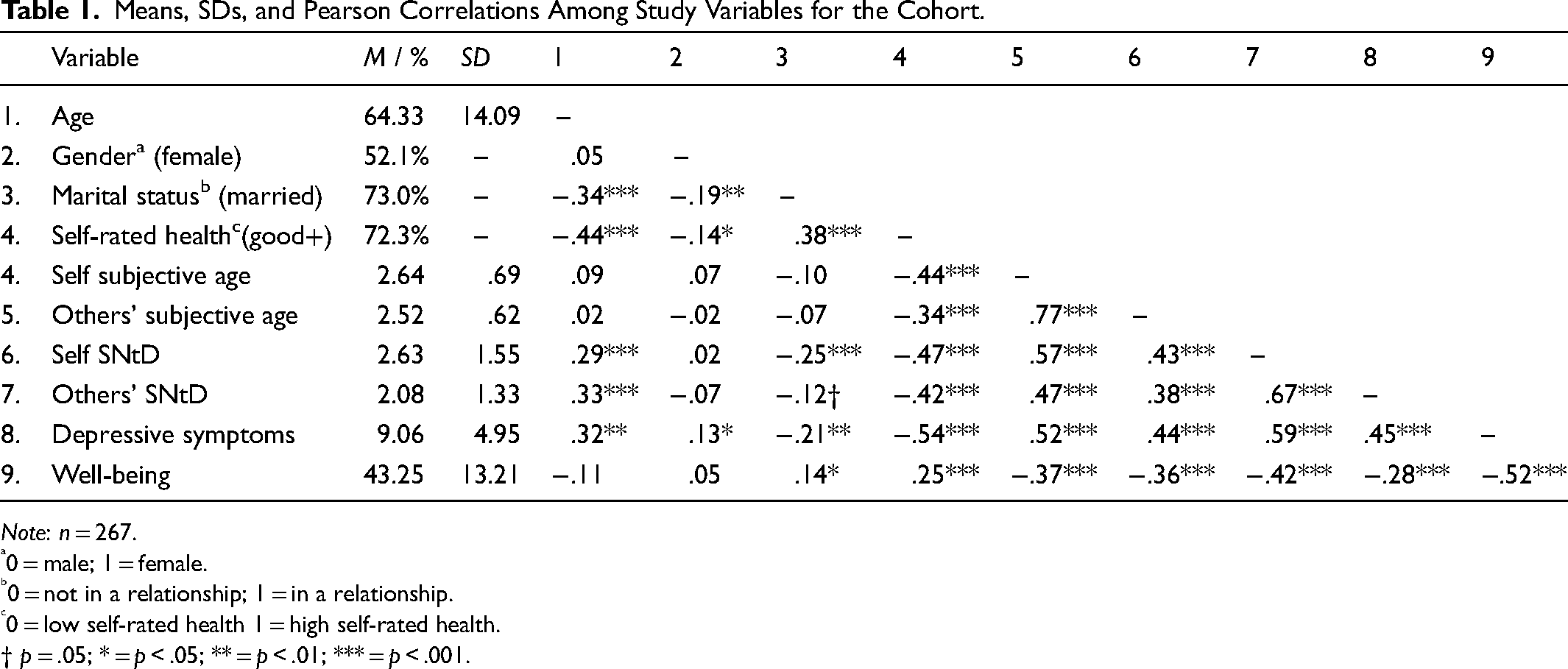
Analyses were conducted using the Statistical Package for the Social Sciences software (SPSS-27). First, correlations were examined in order to establish the preliminary connections between the study variables (see Table 1 for means, SDs, and correlation matrix for the study variables). The hypotheses were examined by two identical hierarchical regressions, in which depressive symptoms and well-being were the outcome variables, respectively (see Tables 2 and 3 for regression coefficients).
Means, SDs, and Pearson Correlations Among Study Variables for the Cohort.
Note: n = 267.
0 = male; 1 = female.
0 = not in a relationship; 1 = in a relationship.
0 = low self-rated health 1 = high self-rated health.
† p = .05; * = p < .05; ** = p < .01; *** = p < .001.
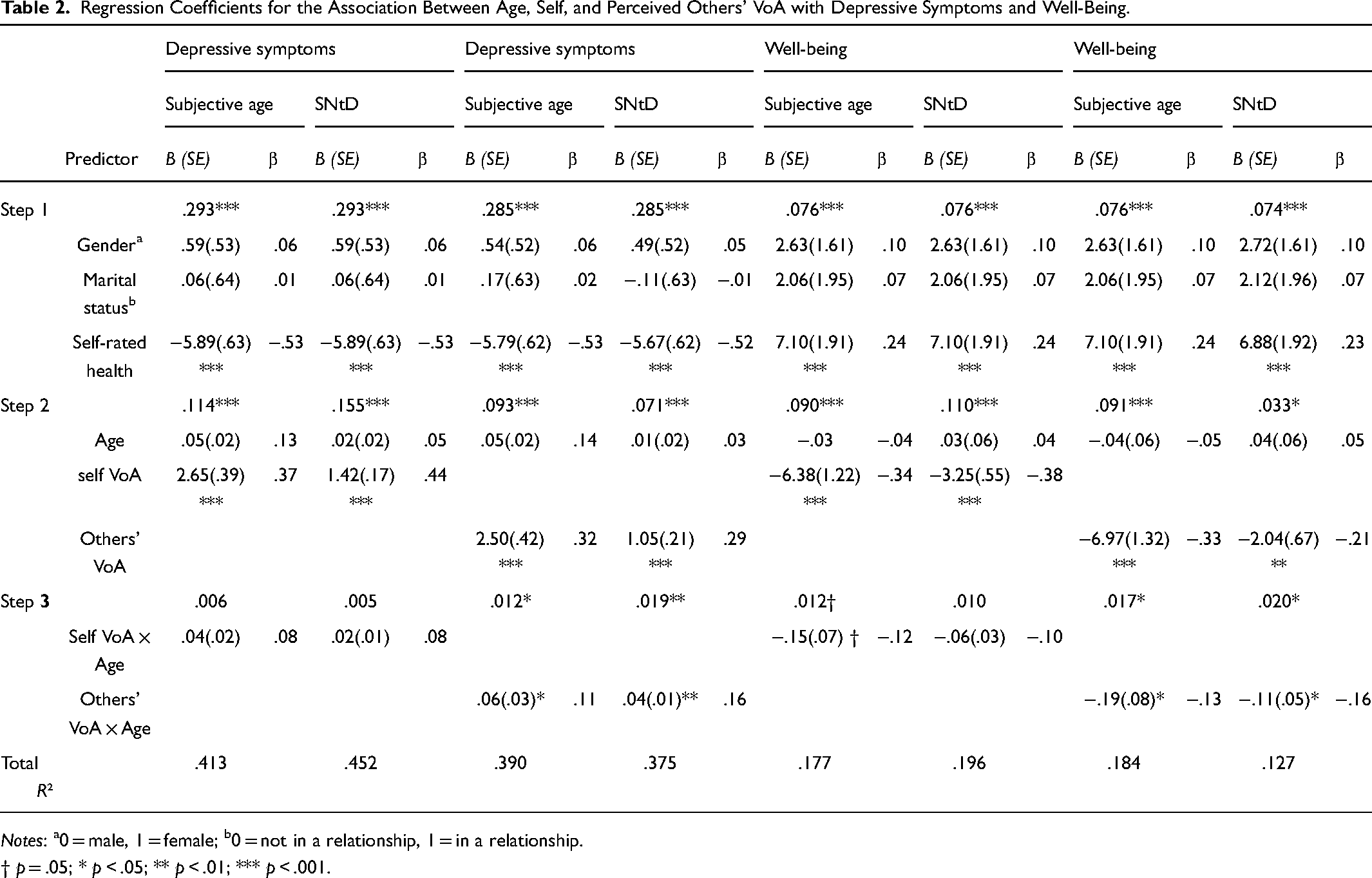
Regression Coefficients for the Association Between Age, Self, and Perceived Others’ VoA with Depressive Symptoms and Well-Being.
Notes: a0 = male, 1 = female; b0 = not in a relationship, 1 = in a relationship.
† p = .05; * p < .05; ** p < .01; *** p < .001.
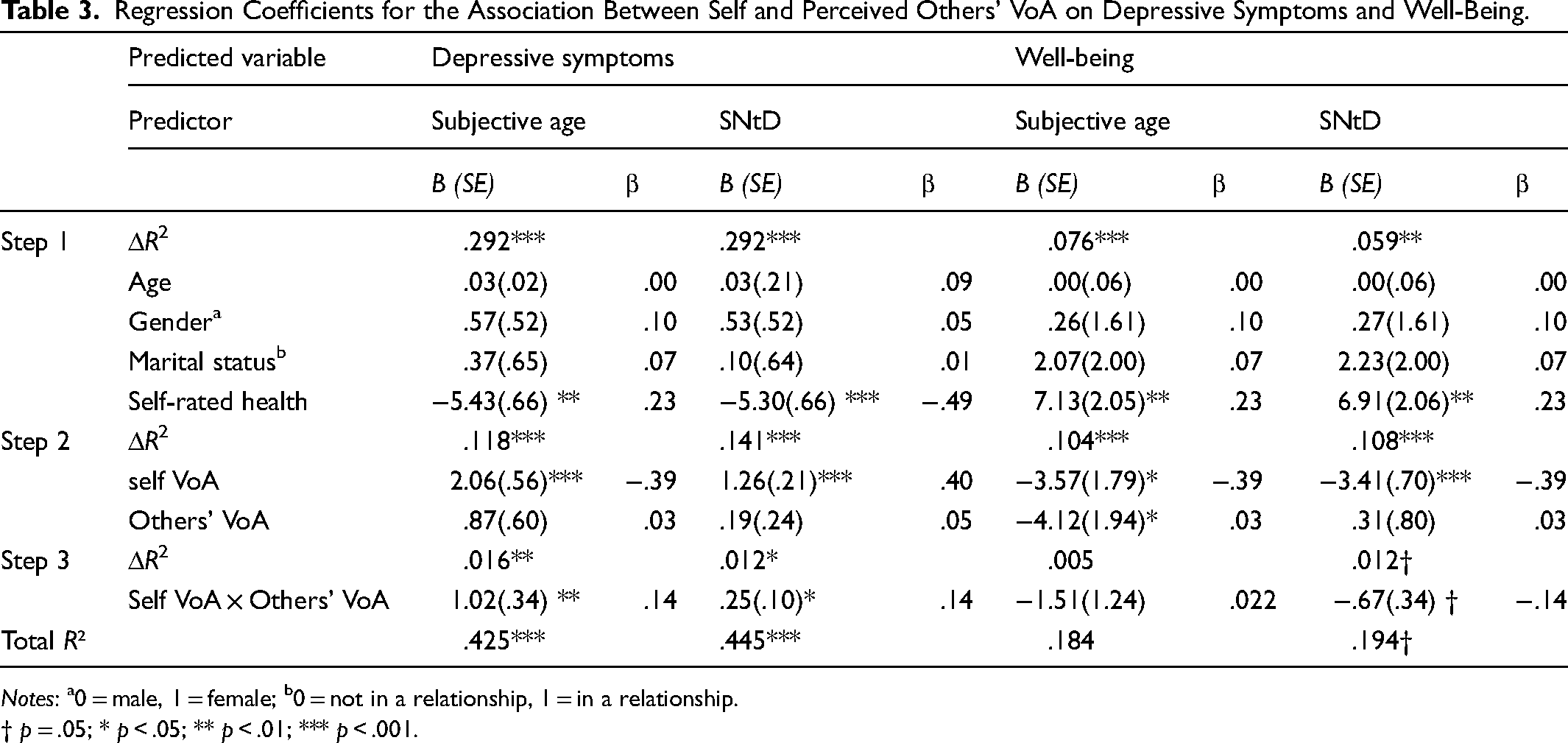
Regression Coefficients for the Association Between Self and Perceived Others’ VoA on Depressive Symptoms and Well-Being.
Notes: a0 = male, 1 = female; b0 = not in a relationship, 1 = in a relationship.
† p = .05; * p < .05; ** p < .01; *** p < .001.
Following the first hypothesis, the first step included gender, marital status, and self-rated health. The second step included the main effects of chronological age and self or perceived others’ VoA (four analyses for subjective age and four for SNtD), and the third and final step included the two-way interaction for age × self or perceived others’ VoA.
Following the second hypothesis, the first step included age, gender, marital status, and self-rated health. The second step included the main effects of self or perceived others’ VoA (two analyses for subjective age and two for SNtD), and the third and final step included the self × perceived others’ VoA two-way interaction. Finally, we tentatively examined the three-way interaction between chronological age, self, and perceived other VoA and mental health. The interactions were probed using Model 1 (and Model 3 for the three-way interaction) of the PROCESS 3.4 Macro for SPSS (Hayes, 2018). A power analysis for detecting a medium to strong effect size (0.20) with 7 predictors required a sample size of 153, indicating that the current sample was sufficient for the study model. Due to the correlations between the predictors, we examined the study model for potential multicollinearity and found that the tolerance (.46–.96) and VIF (1.07–2.76) values in all analyses are in line with literature requirements (see O’Brien, 2007).
Results
Correlations between the study variables indicated that age was not significantly correlated with self and perceived others’ subjective age and with well-being (r = .09, p = .15; r = .02, p = .70; r = −.11 p = .07, respectively). However, age was positively and significantly correlated with self and perceived others’ SNtD (rs = .29; .33, ps < .001, respectively) and with depressive symptoms (r = .31; p < .001). Moreover, older self and perceived others’ subjective age were associated with increased depressive symptoms (rs = .52; .44, ps < .001, respectively) and reduced well-being (rs = −.37; −.36, ps < .001, respectively). In addition, self and perceived others’ SNtD were associated with increased depressive symptoms (rs = .59; .45, ps < .001, respectively) and reduced well-being (rs = −.42; −.28, ps < .001, respectively). Moreover, self-subjective age was positively correlated with perceived others’ subjective age (r = .77, p < .001), and self SNtD was positively correlated with perceived others’ SNtD (r = .67, p < .001; see Table 1).
Subsequently, we examined the four interactions between age and VoA (age × self subjective age; age × perceived others’ subjective age; age × self SNtD; and age × perceived others’ SNtD) and their association with depressive symptoms and well-being. In line with the literature and the first hypothesis, age did not demonstrate a main effect in any of the eight regressions on depressive symptoms or well-being. However, self-subjective age demonstrated main effects on depressive symptoms (B = 2.65, β = .37, p < .001) and on well-being (B = −6.38, β = −.34, p < .001), as did perceived others’ subjective age (B = 2.50, β = .32, p < .001; B = −6.97, β = −.33, p < .001, respectively).
A significant effect of self SNtD was also discovered on depressive symptoms and on well-being (B = 1.42, β = .44, p < .001; B = −3.25, β = −.38, p < .001, respectively). Similarly, a significant effect of perceived others’ SNtD was also discovered on depressive symptoms and on well-being (B = 1.05, β = .29, p < .001; B = −2.04, β = −.21, p < .01, respectively).
Contrary to hypothesis 1b, no significant two-way interaction between age and self-subjective age was discovered for depressive symptoms or with well-being (B = .04, β = .08, p = .11; B = −.15, β = −.12, p = .05, respectively). Moreover, no significant two-way interaction was found between age and self SNtD as associated with depressive symptoms or with well-being (B = .02, β = .08, p = .13; B = −.06, β = −.10, p = .08, respectively; see Table 2).
However, the two-way interaction between age and perceived others’ subjective age was significant for both depressive symptoms and well-being (B = .06, β = .11, p < 0.05; B = −.19, β = −.13, p < .05, respectively). Similarly, the two-way interaction between age and perceived others’ SNtD was also significant for both depressive symptoms and well-being (B = .04, β = .16, p < 0.01; B = −.11, β = −.16, p < .05, respectively).
Upon probing these interactions using PROCESS (Hayes, 2018), it was revealed that the association between age and depressive symptoms was not significant for participants who reported that they felt others seeing them as younger than their chronological age or far from their own death. These participants, regardless of their chronological age, demonstrated lower levels of depressive symptoms (for further visualization see Figure 1a and c). Similar results, but in the opposite direction, were found in the association between age and well-being. Participants who showed a low level (young identity) of perceived others’ subjective age and low level (far from death evaluation) of perceived others’ SNtD, whether young or old, present a high level of well-being. However, participants who showed a high level (old identity) of perceived others’ subjective age and high level (subjective nearness to death evaluation) of perceived others’ SNtD, showed a significant lower level of well-being if they were older (for further visualization see Figure 1b and d).
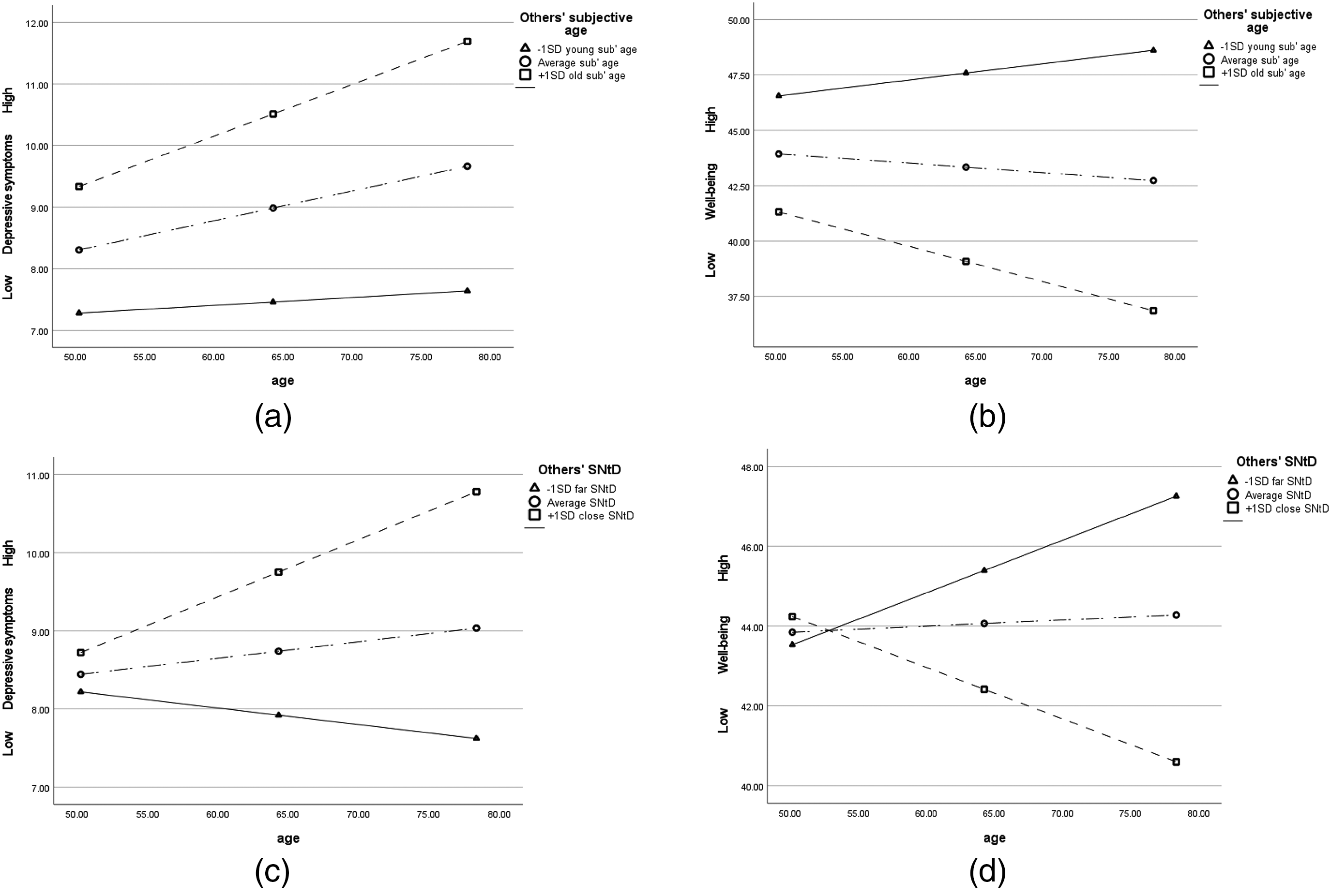
The associations between age and perceived others’ VoA with depressive symptoms and well-being.
In line with the second hypothesis, it was found that only self-subjective age and self-SNtD showed significant associations with depressive symptoms (B = 2.06, β = .29, p < 0.001; B = 1.26, β = .40, p < .001, respectively) and well-being (B = −3.57, β = −.19, p < 0.001; B = −3.41, β = −.39, p < .001, respectively). No significant association was found between perceived others’ subjective age and perceived others’ SNtD with depressive symptoms and well-being.
The two-way interaction between self and perceived others’ subjective age and between self and perceived others’ SNtD, as associated with depressive symptoms was significant (B = .06, β = .11, p < 0.05; B = −.19, β = −.13, p < .05, respectively). The two-way interaction between self and perceived others’ subjective age and between self and perceived others’ SNtD as associated with well-being, however, was not significant (B = −1.51, β = −.08, p = .22; B = −.67, β = −.14, p = .05, respectively).
Probing these interactions using PROCESS (Hayes, 2018) revealed that the association between self-subjective age and depressive symptoms was not significant for participants who showed a low level (young identity) of perceived others’ subjective age. The effect of age on depressive symptoms was significant at the different perceived others’ VoA levels. Participants who showed a high level (old identity) of perceived others’ subjective age showed a significantly higher level of depressive symptoms (for further visualization see Figure 2a). Next, the association between self-SNtD and depressive symptoms was significant at all levels of perceived others’ SNtD but showed a stronger association for participants who showed higher levels (close to death evaluation) of perceived others’ SNtD (see Figure 2b).
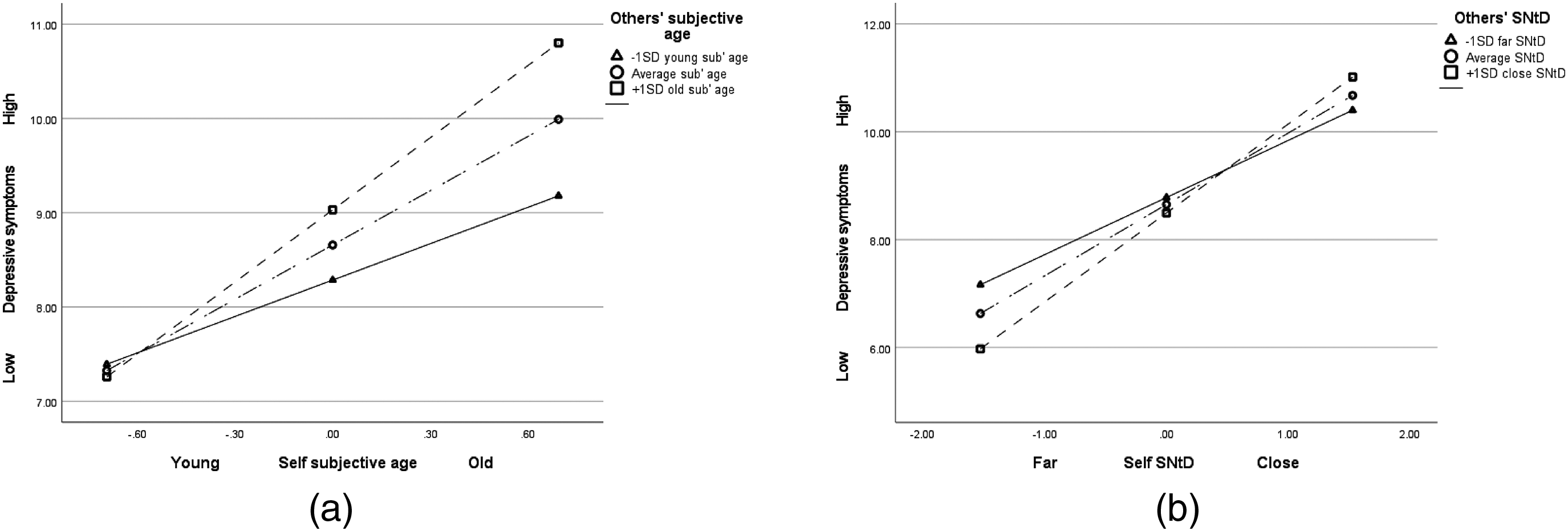
The associations between self and perceived others’ VoA with depressive symptoms.
Finally, checking tentatively the three-way interaction between chronological age, self, and perceived other VoA as associated with mental health found no significant results (for chronological age with self and perceived other subjective age as an associate with depressive symptoms (B = −.03, p = .32) and mental health (B = .04, p = .55) and for chronological age with self and perceived other SNtD as associated with depressive symptoms (B = −.00, p = .97) and mental health (B = .01, p = .72).
Discussion
The findings of the current study replicate previous findings that showed that in line with the first hypothesis (1a.), favorable self-VoA are associated with increased mental health (Alonso Debreczeni & Bailey, 2021). Moreover, they show that favorable perceived others’ VoA that were reported by the same participants are also important indices and are associated with better mental health.
In addition, it was found that although age was correlated with depressive symptoms, it was not associated with mental health after controlling for gender, marital status, and self-rated health. These findings correspond with previous studies which showed inconsistency in the literature regarding the relationship between age and depressive symptoms (Buber & Engelhardt, 2011; Kessler et al., 1992). Moreover, in line with the well-being paradox, it is apparent that age is not invariably associated with subjective well-being (Kunzmann et al., 2000).
The second part of the first hypothesis (1b.) was corroborated, demonstrating that perceived others’ but not self VoA interacted with age and these interactions were associated with mental health. This intriguing finding demonstrates that as we grow older, the manner by which we appraise other people's perceptions of us as young or old, as well as being far or close to our death, play a significant role in the level of our mental health. Specifically, older participants who appraised that others perceive them as older or closer to their death demonstrated stronger and worse associations with mental health. The association between self-VoA and mental health did not change among midlife or older adults. Perhaps the reason for this is that in older age, our age identity is more stable than our social age identity. It is reasonable to assume that our perceptions regarding the way others evaluate us may worsen as we get older. This finding echoes seminal works which claimed that socially shared beliefs regarding old age and older adults as an inferior social group may be internalized during the aging process, thereby contributing to decreased mental health in older adults (Ayalon, 2022; Levy, 2009). In this way, the part of self-age identity harbored by aging adults (I feel younger/older than my age, or closer to/far from my death) is generally protected from the effect of age. Nevertheless, the way people think others appraise their age (people think that I am younger/older than my age, or closer to/far from my death) is susceptible to the effect of age and affects mental health. Although the association between self and other age appraisals has been shown to affect personal VoA (Bergman & Palgi, 2020), this is, to our knowledge, the first study to demonstrate how this association relates to middle-aged and older adults’ mental health and well-being.
Following the second hypothesis (2.), self and perceived others’ VoA showed a main effect on mental health. This is in line with literature demonstrating that older subjective age is related to increase depressive symptoms and reduced well-being (Alonso Debreczeni & Bailey, 2021; Palgi et al., 2017; Rippon & Steptoe, 2018). Similar findings were presented regarding subjective nearness to death and depressive symptoms (Bergman et al., 2018) and well-being (Palgi et al., 2014). However, after controlling for the demographics and covariates, self-VoA in comparison to perceived others’ VoA, demonstrate stronger associations with mental health.
In relation to the second part of hypothesis (2.), only the interactions between self and other's VoA and depressive symptoms were significant. Inspecting these findings more closely reveals that while self-VoA are positively correlated with depressive symptoms, this association is stronger among those who believe that others perceive them to be older and closer to death. In other words, the way we perceive that our social surroundings appraise our age or nearness to death is a main factor in the association between self-VoA and depressive symptoms.
Taking these results together may suggest two important conclusions. First, as people grow older, the association between VoA and mental health is affected by social internalized shared beliefs. These results call for further exploration of the way we measure VoA, suggesting to add to the traditional measure of personal self VoA also items related to the social aspect of perceived others’ VoA, as it captures an additional aspect of how age may affect these relations. Second, the combination of self and other's perceptions of old subjective age/nearness to death was associated with the highest levels of depressive symptoms and that favorable perceived others’ VoA, feeling younger/far from death, mitigate the negative effect of old/close to death self VoA. It seems that the social aspect of VoA may assist researchers in broadening the understanding of the detrimental psychological consequences of personal VoA, above and beyond chronological age.
Certain limitations should be noted. First, due to the study's cross-sectional nature, it is not possible to determine whether VoA affect mental health or vice versa. However, most previous studies support the direction explored in the current work (see e.g., Bergman & Shrira, 2022; Shrira et al., 2022; Westerhof et al., 2014; Wurm et al., 2017). Second, our sample was relatively small, and some findings that were marginally significant could have possibly become significant in a larger sample. Yet this preliminary study opens a new and refreshing direction for future studies in the field.
Alongside these limitations, this study is the first to test the association of perceived others’ VoA and mental health. It added to past findings that showed that generalized VoA (i.e., ageist attitudes) predict personal VoA (i.e., subjective age; see, Bodner et al., 2021), nevertheless, it suggests that personal self VoA is also related to perceived personal others’ VoA. Yet, future studies are required in order to examine the temporal sequence between these types of personal VoA. It would also be interesting to examine whether perceived others’ VoA produces different descriptive statistics and correlations when pointing to how different “others” (i.e., lifepartners, family members, close friends) perceive individuals’ VoA. Moreover, it would be interesting to assess whether perceived others’ VoA are moderated by important social factors such as loneliness, social support, and social network size and structure. Furthermore, the findings suggest that part of the explanation for the well-being paradox may be related to the way we appraise that our personal social surrounding evaluates our VoA. This direction is of special importance as it may be a basis for future interventions that focus on changing and improving one's views of aging.
Footnotes
Authors’ note
The author asserts that all procedures contributing to this work comply with the ethical standards of the relevant national and institutional committees.
Declaration of Conflicting Interests
The author(s) declared no potential conflicts of interest with respect to the research, authorship, and/or publication of this article.
Funding
The author(s) received no financial support for the research, authorship, and/or publication of this article.
