






Abstract
Canadian postsecondary students indicate high rates of cannabis use and often report therapeutic motives—using cannabis to manage mental or physical health. In quantitative studies using postsecondary student samples, therapeutic cannabis motives have been associated with more frequent and problematic cannabis use; however, these findings do not offer insight into the subjective experiences and underlying context influencing how and why postsecondary students use cannabis to manage specific aspects of their health. As such, this qualitative study explored postsecondary students’ therapeutic motives for cannabis use and factors that may influence these motives. Participants were 14 emerging adult postsecondary students in Newfoundland and Labrador, Canada, who reported using cannabis to manage their health and well-being. Semi-structured interviews were conducted, and transcripts underwent an inductive thematic analysis. Students in this study described using cannabis to manage stress, reduce anxiety, slow thoughts, and regulate emotions. Cannabis was also used to improve sleep, reduce pain, and manage nausea and appetite. While students discussed using cannabis to manage their mental health, they often expressed uncertainty about whether cannabis ameliorated or worsened their psychological well-being. Students also highlighted factors associated with increased cannabis use, including intensity of health symptoms and academic pressure. The results highlight that Canadian postsecondary students use cannabis to manage diverse health concerns, often in ways not supported by clinical evidence. These findings may be relevant to healthcare professionals, as a better understanding of postsecondary students’ cannabis motives may assist in the identification, prevention and treatment of problematic cannabis use. Further, the results indicate that postsecondary students require education on the potential harms of cannabis, as well as increased access to healthcare and alternative coping strategies for mental health and stress management.
Introduction
Therapeutic motives for cannabis use—namely, using cannabis to manage mental and physical health—are frequently reported among postsecondary students (Nelson et al., 2020; Phillips et al., 2017; Wallis et al., 2022). Smith et al. (2019) found that 21% of Canadian postsecondary students who used cannabis reported therapeutic motives, most commonly managing anxiety (49%), sleep problems (26%), depression (25%), and pain (24%). While cannabis contains over 100 cannabinoids, the two most well-studied are Δ9-tetrahydrocannabinol (THC), the primary psychoactive component, and cannabidiol (CBD), a compound with minimal psychoactive effects which may counteract the effects of THC (Kaul et al., 2021). Clinical evidence suggests that cannabis has several therapeutic benefits; Solmi et al. (2023) synthesized the results of 101 prior meta-analyses on this subject, reporting that cannabis was effective in managing chronic pain and relieving symptoms related to cancer, epilepsy, multiple sclerosis, and irritable bowel syndrome. However, the findings also indicated several adverse health effects associated with cannabis use, including cognitive impairment, fatigue, digestive issues, and psychological distress (Solmi et al., 2023).
Medical cannabis was legalized in Canada in 2001 (Marihuana Medical Access Regulations, 2001); however, the majority (82%) of Canadians who report using cannabis for therapeutic purposes are not authorized medical cannabis users, raising concerns about efficacy and potential adverse effects (Health Canada, 2024a). Emerging adult cannabis users have indicated limited knowledge of the composition and potency of the cannabis products they consume, contributing to their risk of adverse effects (Coelho et al., 2024; Health Canada, 2024a). Additionally, public perceptions of cannabis’ therapeutic properties may not align with clinical findings; in previous studies, regular cannabis users have reported a variety of misconceptions, expressing beliefs that cannabis was an effective treatment for conditions such as cancer, diabetes, asthma, and attention-deficit hyperactivity disorder (ADHD), despite a lack of supporting evidence (Khademi et al., 2023; Kruger et al., 2020; Osborn et al., 2015). Further, while emerging adult cannabis users frequently report using cannabis to manage mental health (Health Canada, 2024a; Smith et al., 2019; Wallis et al., 2022), clinical evidence has linked regular cannabis use to increased psychological distress, psychotic symptoms, suicidality, depression and mania (Hosseini & Oremus, 2019; Petrilli et al., 2022).
Postsecondary Student Cannabis Use and Therapeutic Motives
Canadian postsecondary students are frequent cannabis consumers, with those aged 17 to 25 reporting high rates of past-year (43%), past-month (29%), and daily (8%) use (Health Canada, 2024b). Therapeutic motives for cannabis use are commonly reported among postsecondary students, often relating to the management of sleep, pain, and mental health concerns (Nelson et al., 2020; Phillips et al., 2017; Wallis et al., 2022). Many postsecondary students indicate significant rates of psychological distress; King et al. (2021) found that Canadian university students reported high rates of diagnosed mental illness (28%), anxiety symptoms (30%), depressive symptoms (28%), and suicidal ideation (25%). Further, the proportion of students reporting mental health concerns is rising (Linden et al., 2021; Ogrodniczuk et al., 2021; Wiens et al., 2020). Postsecondary students also frequently report sleep problems (52%; Ogrodniczuk et al., 2021), which are in turn associated with stress, anxiety, and depression (Becker et al., 2018; Taylor et al., 2013). A recent review and meta-analysis found that approximately 12% of emerging adults report chronic pain globally (Murray et al., 2022), although estimated prevalence rates vary greatly between studies (5%–30%; Brown et al., 2021). Among postsecondary students, chronic pain is associated with poor mental health, academic performance and social functioning (Serbic et al., 2023).
While the prevalence of mental and physical health issues in the postsecondary population is significant, the use of cannabis for therapeutic purposes poses additional issues. Most postsecondary students reporting therapeutic cannabis motives have not received medical authorization (Nelson et al., 2020; Smith et al., 2019) and may have limited access to accurate information on the health impacts of cannabis use (Leos-Toro et al., 2020; McMahon et al., 2023). Further, postsecondary students are subject to unique stressors, including adjusting to new environments, changing relationships and social networks, increasing academic demands, and financial difficulties (King et al., 2021; Linden & Stuart, 2020). Postsecondary education often coincides with emerging adulthood (ages 18–29), a developmental period when individuals are especially vulnerable to cannabis-related harms, including cognitive impairment, psychological distress, poor academic and occupational outcomes, and development of cannabis use disorder (CUD; Fergusson & Boden, 2008; Hall et al., 2020; Lisdahl et al., 2014).
Given the prevalence of both cannabis use and mental health concerns in postsecondary students, as well as the potential cannabis-related harms this population faces, there is a need to understand why and how this population uses cannabis for therapeutic purposes. Cannabis motives are important to study as they have differential effects on cannabis behaviors and health outcomes, and as such, offer predictive ability (Cooper et al., 2015). Simons et al. (1998) developed the Marijuana Motives Measure (MMM), which assesses five cannabis motives: enhancement, social, conformity, expansion, and coping. Subsequent studies have used the MMM to examine how these cannabis motives influence individual outcomes. In particular, coping motives (i.e., avoiding negative emotions) have been most consistently associated with adverse outcomes, including more cannabis use problems (i.e., CUD symptomatology; Naegele et al., 2022; Scarfe et al., 2022), depression (Glodosky & Cuttler, 2020; Mitchell et al., 2007), and anxiety (Bonn-Miller et al., 2008; Buckner et al., 2007). While cannabis is frequently used to manage mental and physical health, such therapeutic motives are not assessed by typical cannabis motive measures (Lee et al., 2009; Simons et al., 1998). Research suggests that addressing specific cannabis motives during treatment may improve outcomes (Banes et al., 2014; Blevins et al., 2016). Further, understanding the specific health needs that individuals are addressing with cannabis may be helpful when identifying individuals likely to use cannabis to cope, offering opportunities to provide education on the benefits and risks of cannabis and, if needed, alternative treatment options (Osborne & Fogel, 2008; Simons et al., 2000).
Therapeutic Motives: Existing Literature and Gaps
Qualitative research has provided further insight into therapeutic motives for cannabis use. Several studies have examined the use of cannabis to manage chronic pain, with participants reporting that cannabis improved daily functioning, sleep, mental health, and quality of life (AminiLari et al., 2022; Cummings et al., 2024; Dassieu et al., 2023; Warner et al., 2024). In other research, participants described using cannabis to manage mental health challenges, including anxiety, depression and post-traumatic stress disorder (PTSD; Castañeda, 2020; Das et al., 2024; Elliott et al., 2015; Elsaid et al., 2023). Coomber et al. (2003) found that cannabis was used to treat a variety of physical and mental health concerns, including pain and muscle spasms, nausea, appetite, sleep, stress, anxiety, and depression. Both medical and recreational cannabis users have described using cannabis as an alternative to certain pharmaceuticals, particularly antidepressants and opioids (Castañeda, 2020; Das et al., 2024; Dassieu et al., 2013; Warner et al., 2024); specifically, cannabis is often described as “natural” and therefore safer (Castañeda, 2020; Coomber et al., 2003; Das et al., 2024). While many of these studies were conducted in Canada since the legalization of medical cannabis (e.g., Cummings et al., 2024; Das et al., 2024; Elsaid et al., 2023; Robinson, 2015), just one looked exclusively at authorized medical cannabis users (AminiLari et al., 2023); this may reflect the significant proportion of Canadians using cannabis therapeutically without the supervision of a healthcare provider (Health Canada, 2024a).
To date, qualitative studies exploring therapeutic cannabis use have examined adult samples with a broad age range (e.g., Coomber et al., 2003; Cummings et al., 2024; Dassieu et al., 2023; Elsaid et al., 2023). There is little qualitative research focusing on postsecondary students’ therapeutic motives for cannabis use. While survey studies have reported the prevalence and correlates of therapeutic motives among postsecondary students (e.g., Chabrol et al., 2020; Smith et al., 2019; Wallis et al., 2022), these findings do not provide insight into why students are using cannabis to address their health needs, how cannabis is being used to manage specific health concerns, or the individual, environmental or social factors influencing cannabis use behaviors. Postsecondary students are a distinct population who share unique experiences and stressors and report high rates of psychological distress (Linden & Stuart, 2020; Ogrodniczuk et al., 2021), which is linked to more frequent, higher-risk cannabis use (Choi et al., 2023; Linden et al., 2021). As such, qualitative research is necessary to gain a more detailed understanding of how and why postsecondary students use cannabis to manage their health, and what factors influence this behavior.
The Current Study
Although postsecondary students frequently report using cannabis to manage their mental and physical health, there is a lack of qualitative research on therapeutic motives for cannabis use. As such, the present study qualitatively explored: (a) Canadian postsecondary students’ therapeutic motives for cannabis use; and (b) factors that may influence therapeutic motives in this population. This study contributes to knowledge by providing a more in-depth understanding of how and why postsecondary students use cannabis to manage health and well-being. These findings may be helpful to healthcare providers, as understanding therapeutic cannabis motives may help identify unmet health needs, providing opportunities to discuss alternative or supplemental treatment options to promote positive health outcomes. Identifying postsecondary students’ subjective experiences with therapeutic cannabis use, the specific reasons why they use cannabis to manage their well-being, and the factors influencing these decisions may provide insight into individuals at particular risk of using cannabis to cope, offering utility in prevention efforts. Further, addressing specific therapeutic cannabis motives may allow for more tailored interventions for students with cannabis use problems.
Methods
Study Design
This study was part of a larger project exploring Canadian postsecondary students’ motivations and experiences regarding cannabis use, particularly as they relate to mental health and well-being. Given the objectives of the larger study, the current sample consisted of postsecondary students who were current cannabis users and identified using cannabis for at least one reason related to their mental health and wellness. This study used semi-structured interviews conducted from July 25 to October 11, 2024. The study was conducted with a patient partner, a postsecondary student with lived/living experience with using cannabis to manage their mental health and well-being, who was involved in the development of the recruitment materials, eligibility survey and interview guide, and revision and editing of the manuscript. Ethics approval for this study was obtained from the Interdisciplinary Committee on Ethics in Human Research (ICEHR #20241954-SC).
Participants
Participants were eligible if they met the following criteria: (a) were enrolled in a postsecondary institution during 2024, (b) lived in Newfoundland and Labrador (NL), Canada, (c) were aged 18 to 29, (d) used cannabis (at least weekly use in the past month), and (e) used cannabis to manage at least one factor related to mental health and well-being, including stress, mood, worry, focus, sleep, social anxiety, or symptoms of a mental health condition. The use of cannabis for mental health purposes was self-reported, as this study was interested in students’ therapeutic motivations rather than the status of their cannabis use (i.e., medical or recreational). The sample consisted of emerging adults (aged 18–29), as this age range shares distinct social experiences and developmental attributes (Arnett et al., 2014; Linden & Stuart, 2020; Lisdahl et al., 2014) and reports the highest rates of past-12-month cannabis use (Health Canada, 2024a). The sample consisted of 14 participants, who were diverse in terms of gender, age, and geography. Participant characteristics are detailed in Table 1.
Demographic Characteristics of Participants.
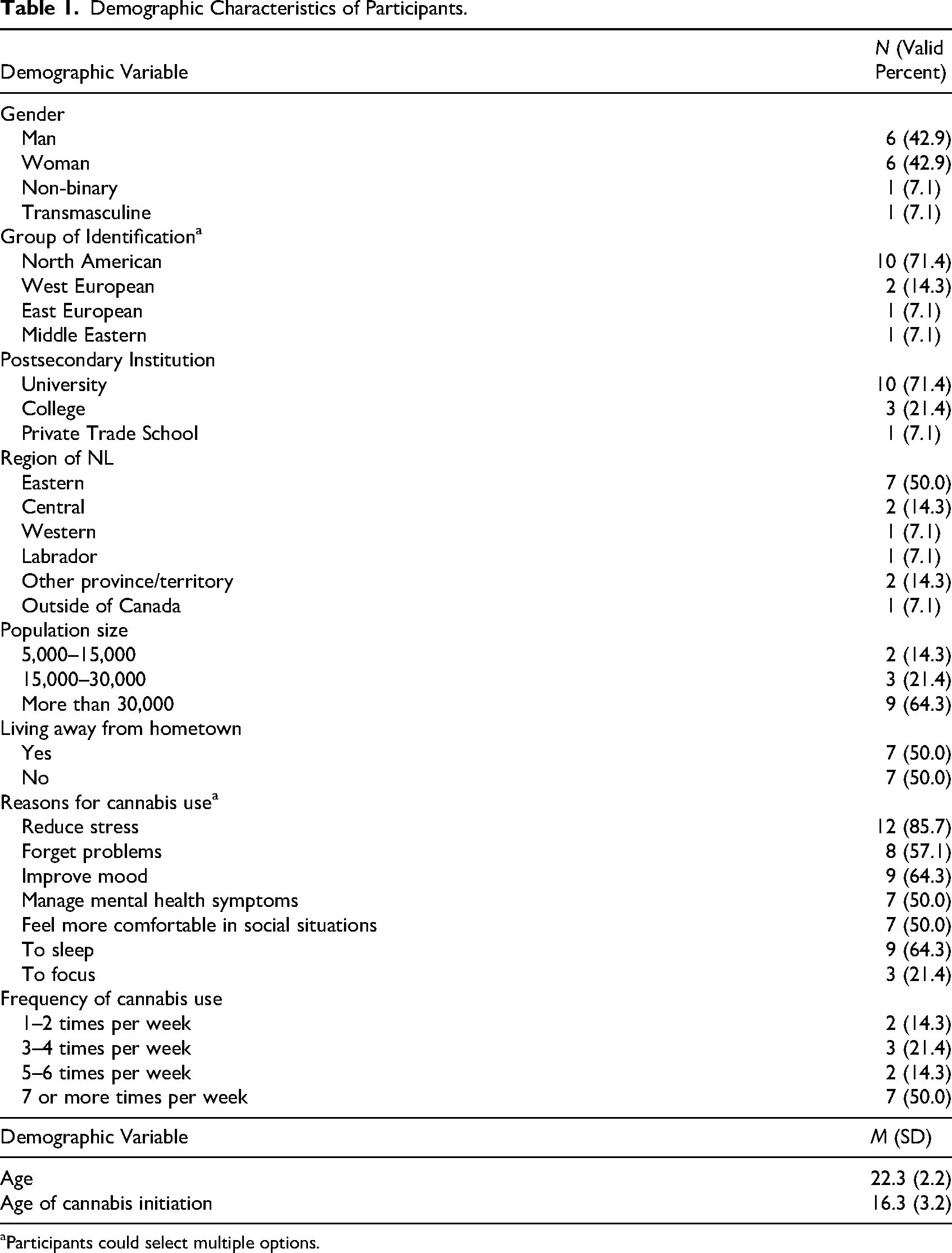
aParticipants could select multiple options.
Recruitment
Recruitment was facilitated through emails and newsletter postings circulated by NL postsecondary institutions. Snowball sampling methods were also employed, as interviewees were encouraged to share study details with other students who might be interested. Prospective participants completed a short expression of interest survey using Qualtrics, where written informed consent, eligibility criteria, demographic information and contact details were collected. The consent form outlined the aims of the study and what would be expected of participants during the survey and the qualitative interview, should they meet the requirements and agree to participate in an interview. Once consent was obtained, participants answered eligibility questions about their cannabis use (e.g., frequency of use, mode of consumption, reason for use), education (e.g., whether they were a current postsecondary student, type of education program they are completing), and other demographic factors such as age and gender. Eligibility screening took place from July 16 to October 4, 2024. Purposive sampling was used to obtain a diverse sample in terms of gender, age, group of identification (e.g., North American, Eastern European), postsecondary program, and region of NL. In total, 42 people completed the eligibility survey. Given the eligibility criteria and the implementation of purposive sampling, 14 survey participants were contacted to take part in a qualitative interview, all of whom agreed and were interviewed. Selected participants were contacted by email or text to schedule an interview and identify their preference for an in-person or virtual meeting. Recruitment concluded when data collection reached saturation, meaning that data from new interviews repeated what was found previously (Saunders et al., 2018). Participants were provided with a $50.00 Amazon gift card as compensation.
Data Collection
The first author conducted the interviews virtually on the Zoom video conferencing platform (Version 6.4.6) or in-person in a research lab at Memorial University of Newfoundland. The interviews followed a semi-structured interview guide (Appendix A), developed by the first author in collaboration with the research team and the patient partner. In line with the objectives of the larger study, the interview guide covered a range of topics, including postsecondary students’ motives for cannabis use, factors influencing motives, effects of cannabis use, and experiences with mental health and access to services and resources. Interview questions particularly relevant to the current study included the following: What motivates you to use cannabis? What kind of effects do you experience from using cannabis? How does cannabis affect your mental health and well-being? What factors influence your cannabis use? Interviews, which ranged in duration from 40 minutes to 80 minutes, were audio-recorded and transcribed using Otter AI transcription software (Otter.ai, 2025); the resulting transcripts were manually verified and de-identified before being emailed to participants, who were invited to review for accuracy and provide comments or corrections. No changes to the transcripts were requested by participants.
Thematic Analysis
A thematic analysis was conducted, guided by the framework by Braun and Clarke (2023). A hybrid approach was used, in which codes were both generated directly from the data and informed by pre-existing literature and theory (Xu & Zammit, 2020). While the interview transcripts contained discussions of a broad range of topics, the codes and themes identified in this study were those relevant to therapeutic cannabis motives. The first and second authors conducted data analysis using Taguette data analysis software (Rampin & Rampin, 2021), first reading the transcripts and becoming familiar with the data. Both coders completed open, line-by-line coding of three transcripts; the coders then compared initial codes, resolved discrepancies and created a codebook. This codebook was used to establish a consistent approach to the coding process between the two coders (Cofie et al., 2022). The rest of the transcripts were coded line-by-line by a single coder, with any new codes being added to the shared codebook throughout the process. Coding concluded when all codes relevant to the study objectives were captured within the codebook, as determined by review and consensus between the two coders. Themes and subthemes were then developed based on the codebook. Final themes were defined and named following an iterative process of discussion and revision between the coders.
Research Positionality and Reflexivity
As defined by Olmos-Vega et al. (2022), reflexivity in qualitative research broadly involves continuous and collective self-reflection, critical thinking, appraisal, and evaluation of how the authors' unique experiences influence the iterative process of research. As such, the current authors recognize the potential for their professional and personal experiences and perspectives to influence this work (Kennedy et al., 2024). The research team included two graduate Psychology students, two Pharmacy professors who research cannabis perceptions, behaviors, and policy, a clinical psychologist and professor whose research and clinical work focus on cannabis use among emerging adults, and a patient partner with lived experience with cannabis use and mental health challenges; these team members brought unique perspectives to this study. In recognizing these backgrounds, which include various levels of postsecondary education, clinical and cannabis knowledge, and lived experiences, we also recognize the influence that they have on the research questions and data analysis.
Semi-structured interviews were conducted by the first author, who has a particular interest in the relationship between substance use and mental health, informed by her academic background as well as her professional experience working with individuals with co-occurring mental health and substance use challenges. Data analysis was completed by the first and second authors, who both study Psychology, identify as White women, and have previous qualitative research experience. During the data analysis process, both authors practiced personal reflexivity to mitigate bias (Olmos-Vega et al., 2022). This involved holding meetings to discuss reactions to the qualitative data, disclosing research backgrounds and relevant training, and bringing awareness to the authors’ lived experiences. Bias was further mitigated by considering the perspectives of the other research team members, who provided feedback on the content and organization of themes and subthemes, and the quotes selected to illustrate them.
Results
In the current sample, therapeutic motives referred to the use of cannabis to manage aspects of mental or physical health; two students had authorized access to medical cannabis, while the rest of the sample's therapeutic cannabis use was self-referred. Beyond therapeutic purposes, students in this sample reported a variety of other cannabis motives and also described unintended effects of cannabis use; these findings will be reported elsewhere. Regarding students’ therapeutic motives for cannabis use, five themes were generated from the data: (a) managing cognitive and emotional states, (b) promoting sleep, (c) relieving pain, (d) managing nausea and appetite, and (e) factors influencing cannabis use.
Theme 1: Managing Cognitive and Emotional States
Students described using cannabis to manage cognitive and emotional states related to mental health, described in four subthemes: (a) managing stress, (b) reducing anxiety, (c) slowing thoughts, and (d) regulating emotions. However, participants’ uncertainty regarding the psychological benefits of cannabis was captured in another subtheme: (e) ambivalence toward therapeutic efficacy.
Managing Stress
The majority of students described using cannabis to manage stress, often related to aspects of daily life such as school and work. One participant said of her cannabis use: I would say the factors that influence it are probably stress-related, you know, feeling the stress of school or feeling the stress of work. And knowing that I can do this to take my mind off of those things, but also in a sense of, like, okay, these problems still exist. I’m not ignoring them. I'm just taking a moment to not be focused fully on them and enjoy my time (P12).
Another student described how they used cannabis to avoid fixating on work stress at the end of the day: It's definitely become a tool for me in that if I have a really busy day, I look forward to coming home and taking an edible… because I’m just so tired from the day, and I just don’t want my brain to spiral into stress about work and like, all that stuff (P14).
Cannabis was also described as providing relief from physical symptoms of stress, with one participant saying, “The minute it hits my body, my shoulders go down, because I'm always tense. My jaw is always clenched” (P2). Another student expressed a similar sentiment, explaining, “[Cannabis] gives me an hour to chill out and let all the stress kind of leave my body for at least the last hour of the day” (P8).
Reducing Anxiety
Cannabis was often used to reduce symptoms of anxiety. One student said of the effects of cannabis, “I just feel calm. I don’t feel anxious, and it just gives me a little break from my usual brain happenings if that makes sense” (P5). Another participant described how the ritual of smoking helped ease their anxiety, saying, “Even just the action, even if it's CBD weed I'm smoking, it's still just that ritual, that habit just calms you down a little bit itself” (P7). Students also used cannabis to cope with social anxiety, with one person explaining, “You kind of just stop thinking about everyone that's going to be there and how you’re going to act, and it lets me just be able to go and enjoy and not have to think about all that” (P4).
Several students indicated that they used cannabis as an alternative to prescription medication for anxiety. One person described their experience with benzodiazepines, saying, “I find those really hard to take, especially because they make me really sleepy. So that's why I wanted to switch over to CBD” (P13). Another student recounted the experience of being medicated for numerous conditions at once, including anxiety and ADHD: “I was on five different medications at one point. And I was like, this is way too much. I think I'm just going to go back to smoking weed and self-medicating” (P9). One participant explained that he had no interest in trying medication for his anxiety: I don’t want to go that route because I’m nervous about what the actual addictive properties of that are. I figured smoking weed is probably better for me in this period of time than taking the risk on any of that stuff. Because at least with weed, I know how my body reacts to it… I just find it's a better alternative for me (P1).
Slowing Thoughts
Cannabis was also used to slow racing thoughts resulting from stress, anxiety, and ADHD. One student explained how she uses cannabis to “just kind of quiet the mind a little bit. I find it helps because I am someone who has a lot of anxiety and intrusive thoughts” (P5). Another person described how cannabis helped her manage overwhelm: I think for me, the effect that I’m looking for when I smoke is just that feeling of only having one thought in the brain and not being so overwhelmed. Because overwhelm is my constant state… When I smoke, I'm like, okay, it's fine. I can handle it, one task at a time (P4).
Several students used cannabis to manage racing thoughts related to ADHD. One person said, “I find my thoughts are rambling all the time… If I smoke weed, it calms me down a lot. And my brain is not as hyperactive” (P8). Another participant stated: I have a lot of anxiety; I also have ADHD, so my brain is just constantly 1000 million thoughts, just going and going and going. Sometimes it's so fast I can’t even identify them. But when I smoke, everything else kind of quiets down in the brain so I can focus on one thought (P2).
Regulating Emotions
Students often used cannabis as a way to regulate their emotions. One individual described using cannabis to cope with difficult emotions after moving away from her hometown to attend university, citing her reasons for use as “a bit of boredom, but also loneliness and isolation” (P12). Another student explained how cannabis could completely turn his mood around: “If I wake up, and I don’t want to start my day, I’ll smoke and I'm like, oh, I feel great. I feel like a million bucks” (P3). Several participants identified using cannabis to manage anger, with one saying, “I’m not an angry person, but some stuff can make me so mad. And then I find if I smoke, it helps me significantly” (P10). Another participant seconded this idea: Say I’m really angry about something or something's really got me pissed off. I find if I smoke, then it automatically—not all the time, but nine times out of 10—it’ll calm me down and I’ll be like, you know what? That wasn’t as big a deal as I thought it was. So I kind of calm down as soon as I smoke (P8).
One student described how having borderline personality disorder impacted her emotions and how she used cannabis to cope in particularly challenging moments: It was like somebody else was taking the driver's seat, and it was just so many emotions that I couldn’t think about what to do next… So I think at that point, when it got really bad, is when cannabis became so useful for me to just get a better head on my shoulders and know how to proceed in such high moments of emotional intensity (P2).
Ambivalence Toward Therapeutic Efficacy
Despite each participant endorsing beneficial therapeutic effects of cannabis, students in the present sample also expressed mixed feelings about whether cannabis helped or hurt their health, particularly when using cannabis to manage psychological well-being. One participant stated, “I think it can go both ways. It can be negative on my mental health, but then positive too” (P3). Another student contemplated the impact of cannabis on her mental health, saying: I do wonder if it's affecting my mental health in a negative way, where it is almost like a crutch. You get so used to using [cannabis] to hide the symptoms that you’re feeling, that sometimes I do wonder if I were to try going off of it and dealing with those feelings in a different way, or just see if I could tell myself how to get through it (P4).
Another student expressed a similar sentiment that cannabis was only masking their symptoms, saying, “It's a blessing and a curse in a way… I’m just numbing the anxiety without actually fixing the problem” (P1). A participant who used cannabis to manage anxiety and obsessive thoughts described how cannabis could both improve or worsen symptoms, depending on the moment: If I'm having anxiety attacks or panic attacks or having very obsessive thoughts, I can smoke, get distracted and focus on other things. But at the same time, sometimes when I smoke, it causes these same obsessive thoughts and anxieties (P7).
Another participant expressed uncertainty about the effectiveness of cannabis in managing their mental health, saying: I definitely use [cannabis] for a lot of anxiety and stress, but I also find it can get in the way of a lot of things as well. So sometimes I find it can have the opposite effect on my mental health. So right now, my reason to continue smoking is unknown to myself (P5).
Theme 2: Promoting Sleep
Cannabis was frequently used to promote sleep among students. One person explained how using CBD in the evenings had improved her sleep, explaining, “My sleep patterns have been a lot better since I've been taking [CBD] gummies at night… I’m not so much tossing and turning at night and stuff like that” (P13). Several students described how they used cannabis to cope with sleep issues stemming from stress and anxiety. One person said, “I have bad insomnia. When I'm stressed, and when I'm anxious, I won’t sleep at all. But then if I have a bowl [smoke cannabis], I'm like, alright, I'll go to bed” (P10). Another participant discussed using cannabis to regulate her sleep schedule when working night shifts: Some nights when I get off work, if I’m in that state where I'm not ready to go to bed, that's when I'll also turn to cannabis for sleep because I know that if I go out and I have even two or three puffs of a joint in 15 minutes or so, I’ll be yawning and usually have a better sleep after that as well (P12).
One participant described discontinuing her prescription sleeping medications when she realized that cannabis had the same effect: I realized that subbing the Trazodone out for marijuana, I wasn’t groggy the next morning, I wasn’t dizzy. Basically, I had all of the benefits of why I was originally taking [Trazodone] and none of the side effects… I remember one night, I just forgot to take my Trazodone [but smoked cannabis]. I was like, Oh, I actually slept really well, okay! (P5).
Theme 3: Relieving Pain
Students described using cannabis to manage both chronic and acute pain. One participant explained: One reason I use cannabis is because of pain from the gym, landscaping and stuff like that; my back is destroyed all the time. So when you factor that part in as well, weed kind of takes away some of that, so I can relax a bit better (P1).
Cannabis was also used to manage the side effects of prescription medication: “I had this really bad headache that just would not go away, and I definitely found smoking [cannabis] helped with that” (P5). One person used cannabis to manage various symptoms of chronic muscle and nerve pain:
Theme 4: Managing Nausea and Appetite
Students also discussed using cannabis to increase their appetite and treat nausea. One person used cannabis to manage nausea and low appetite while coming off an antidepressant medication: There was a three-week period where I would wake up, and I would have to smoke immediately just to get some food into my body. So I definitely used [cannabis] to stimulate my appetite, to kind of offset whatever was going on. I found if I smoked, there’d be like a 30 or 40-minute time period, and then I would get the munchies, and then I’d be like, okay, let's get your nutrients for the day (P5).
Others used cannabis as an appetite stimulant on a more regular basis. One participant stated, “I can eat on [cannabis], which is nice because I’m pretty small, so it definitely helps with my appetite” (P9). Another participant said: I do use [cannabis] sometimes to help with my appetite. Because I find I just won’t feel hungry during the day sometimes, and so sometimes I will smoke just with the intent of, like, okay, I'm smoking because I know I need to eat something today (P11).
Theme 5: Factors Influencing Therapeutic Motives
Students also described factors that influenced the frequency and intensity of their cannabis use. Two subthemes were identified: (a) symptom intensity and (b) academic pressure.
Symptom Intensity
Students also described increased cannabis use when mental or physical health symptoms worsened. One participant explained how her mood impacted her cannabis use patterns: If I am having a bit of a rougher day, I will normally start [using cannabis] earlier, or I will use a lot. My mood has definitely affected my usage in the past, especially if I'm going through a rough patch or a rough week, I find my usage spikes (P4).
A similar pattern was described by a participant who used cannabis for pain management, who noted, “Depends on the day; sometimes it's as needed… Sometimes I have to take it every day, depending on how I feel when I wake up and how much pain I’m in” (P13).
Several students described using cannabis to manage their symptoms in the absence of formal treatment. One person described using cannabis to cope with worsening mental health concerns while waiting several years to access counseling: It was horrible to have to rely only on myself and medication, which, I feel, can only get you so far. For me, it was always counseling that did most of the work, so I was missing that a lot… So my cannabis use definitely picked up, and then I think at that point was when I was really like, okay, this works for me (P2).
Another student described increasing her cannabis use to manage pain after a medical procedure when pain management was not offered: Cannabis was my only pain medication for my IUD [intrauterine device] insertion. They were like, ‘No, we don’t do pain management here.’ So I smoked, and it definitely helped a little bit. It still sucked. Like, really, really badly, but definitely kind of took the edge off, and then in the seven days after that, when I was in unbearable pain—it was like the worst period cramps ever. I was smoking a lot, I would say, the most I've ever smoked (P5).
Academic Pressure
Students identified academic pressure as a significant stressor, which was often associated with increased cannabis use. Several participants described using cannabis to deal with stress related to academic performance; as one person said, “If I have an assignment and I get the grade back and it's not very good, I definitely want to come home and, you know, take the edge off and smoke a little bit” (P4). When asked how being a postsecondary student has impacted their well-being, another participant stated: It's worsened it. In high school, I sort of floated through with good grades. So then moving away and getting into a super hard program was a shock. And I definitely saw a tank in my grades a little bit, which definitely boosted my cannabis use quite a bit. (P6).
One student spoke about how his cannabis use increased around exam season, saying, “I start craving it more, because of how stressed I am” (P10). Another participant described how the demanding workload of university led her to use cannabis to cope with stress and burnout: At that point, my cannabis use increased because I was coming home burnt out. I would work so much, and I was like, you know what? I have two hours for myself. Why am I not going to enjoy them? (P5).
One student spoke about the stress of applying to competitive graduate programs and how it affected her, explaining, “It's so much anxiety, you don’t feel like you’re ever going to be good enough or you’re never going to get in. So honestly, yeah, even thinking about that sometimes increases my cannabis use because I'm in freeze mode” (P2).
Discussion
This qualitative study explored Canadian postsecondary students’ therapeutic motives for cannabis use in a sample of emerging adult students who used cannabis to manage their mental health and well-being. The findings offer further context regarding the specific symptoms that cannabis is used to manage, such as stress, anxiety, racing thoughts, difficult emotions, sleep difficulties, pain, appetite, and nausea. Students also described factors that were associated with increased cannabis use, including symptom intensity and academic pressure, identifying areas which merit further investigation.
Prior research examining postsecondary students’ therapeutic cannabis use (e.g., Chabrol et al., 2020; Smith et al., 2019; Wallis et al., 2022) has relied on survey methods, limiting the richness of the data collected. Smith et al. (2019) examined Canadian university students’ therapeutic cannabis motives, using an open-ended survey question to ask participants what physical or mental health concerns they used cannabis to manage. The authors reported that students used cannabis for reasons such as anxiety, sleep, depression, and stress; however, the method of data collection used precluded them from exploring the context of these findings, such as how cannabis helped with these concerns, why it was being employed as opposed to other coping methods, or what individual or psychosocial factors might influence these cannabis use behaviors. Using qualitative interviews and in-depth thematic analysis, the current study explored these considerations, allowing for more detailed and descriptive results, detailed below.
In the current study, cannabis was often used to relieve stress related to school, work and other daily responsibilities. Students described using cannabis to cope with daily stressors and to manage cognitive aspects, such as mentally replaying stressful events, and physical stress symptoms, such as muscle tension. Canadian postsecondary students report significant stress (American College Health Association, 2022; Linden & Stuart, 2020) and more than half (58%) feel that their stress levels impede their academic performance (Ogrodniczuk et al., 2021). Chronic stress is associated with poor mental health, cognitive functioning and academic performance (Lupien et al., 2009; Marin et al., 2011), as well as more problematic cannabis use (Cavalli & Cservenka, 2021; Spradlin & Cuttler, 2019). Further, using cannabis to manage stress has been associated with depressive symptoms (Glodosky & Cuttler, 2020). Given this finding, postsecondary students must be educated on both the potential impacts of cannabis use on mental health and alternative strategies for stress management.
Students often described using cannabis to manage feelings of anxiety. In particular, cannabis was used to calm anxious thought patterns and relieve discomfort in group settings for those who were socially anxious. Anxiety is a significant concern among Canadian postsecondary students (King et al., 2024) and is the most frequently reported therapeutic motive for cannabis use in this population (Smith et al., 2019). The use of cannabis to manage anxiety may be influenced by anxiety sensitivity, the fear of experiencing anxiety and associated harmful consequences (Zvolensky et al., 2009). Studies suggest that individuals who score higher on anxiety sensitivity measures are more likely to use cannabis to cope (Knapp et al., 2021; Short et al., 2022); additionally, coping motives mediate the relationship between anxiety sensitivity and cannabis dependence (Johnson et al., 2010). To date, there is a lack of evidence supporting the efficacy of cannabis in treating anxiety (Solmi et al., 2023; Stanciu et al., 2021). Further, research indicates that coping motives for cannabis use predict anxiety (Bonn-Miller et al., 2008), suggesting that those who use cannabis to manage anxiety may ultimately worsen their symptoms.
A common therapeutic motive for cannabis use was to slow thoughts. The use of cannabis to quiet the mind was described in relation to general stress as well as specific conditions such as anxiety and ADHD. In prior studies, participants identified using cannabis to manage racing thoughts related to PTSD (Elliott et al., 2015) and social anxiety (Elsaid et al., 2023). In other studies, cannabis users have provided anecdotal accounts of the efficacy of cannabis in managing ADHD (Mitchell et al., 2016; Stueber & Cuttler, 2022), despite a lack of clinical evidence (Francisco et al., 2023). Notably, individuals with ADHD may be at an increased risk of developing CUD (Lee et al., 2011); in fact, a recent meta-analysis found that individuals with ADHD were approximately 2.9 times as likely to report a lifetime diagnosis (Froude et al., 2024). As such, the use of cannabis to manage ADHD symptoms may signify a risk factor for cannabis-related problems.
In the current sample, students described using cannabis as a means of managing difficult emotions. Specifically, cannabis was used to cope during moments of emotional intensity and was perceived as a way to regain a sense of control in such situations. Students also described using cannabis to abate feelings of boredom, loneliness and anger. Importantly, individuals with poor emotion regulation—the ability to effectively manage emotional experiences—are more likely to use cannabis to manage their mood and are at a greater risk of developing problematic patterns of cannabis use (Buckner et al., 2017; Cavalli & Cservenka, 2021). Postsecondary students who use cannabis to manage emotions may benefit from education and resources about emotion regulation strategies, providing alternative approaches to managing mood.
Participants described using cannabis to improve sleep, a motive which has been identified in studies of authorized medical cannabis users (Lorenzo et al., 2025; Nunberg et al., 2011; Walsh et al., 2013). While the aforementioned studies reported only the prevalence of sleep motives, the current study provided insight into the ways in which cannabis was seen to improve sleep quality. Specifically, cannabis was reported to improve sleep indirectly by decreasing stress and anxiety, highlighting the interactions between psychological arousal and sleep patterns. Research suggests that while high levels of stress and anxiety predict sleep problems, sleep disturbances may in turn worsen anxiety (Åkerstedt et al., 2012; Peng et al., 2024); as such, students who use cannabis to manage sleep issues related to stress and anxiety may unintentionally exacerbate these symptoms. Students in the current study also described using cannabis to reduce nausea and stimulate appetite. While studies suggest that cannabis may improve nausea symptoms and increase appetite (Solmi et al., 2023), cannabis appears to have paradoxical effects on nausea, where lower doses improve nausea while higher doses can elicit nausea and vomiting (DeVuono & Parker, 2020). This relationship merits consideration given that emerging adults frequently report high-potency cannabis use, which may have adverse effects on digestive health (Fales et al., 2019; Health Canada, 2024a).
Students in this study also described using cannabis to manage pain. Pain management is a common reason for cannabis use among postsecondary students; in one sample, 24% of those who reported using cannabis therapeutically identified pain relief as a motive (Smith et al., 2019). The current findings provided further detail around how students are using cannabis for pain management, including relief from chronic muscle and nerve pain, as well as shorter-term concerns such as headaches or medical procedures. Additionally, cannabis was described as a viable alternative when over-the-counter or prescription pain medication was inaccessible or undesirable. The literature supports the analgesic properties of cannabis, with a recent meta-analysis reporting that cannabis may reduce chronic pain by as much as 30% (Solmi et al., 2023). Much of the research on cannabis use for pain relief has examined the efficacy of products containing only CBD or with lower-potency THC (<9%; Health Canada, 2018). However, Fales et al. (2019) found that among emerging adults using cannabis for pain relief, the majority (90%) used cannabis products containing over 15% THC, while 20% used products containing over 25% THC. This finding is concerning, as using cannabis products containing higher concentrations of THC is associated with an increased risk of depression, anxiety, psychosis and CUD (Hines et al., 2024; Petrilli et al., 2022).
A common topic across various therapeutic motives was the use of cannabis as a substitute for over-the-counter and prescription medications. Students used cannabis as an alternative treatment for concerns such as pain, anxiety, ADHD and insomnia, with cannabis being characterized as being equally effective with fewer side effects. Several participants mentioned using cannabis to discontinue prescription medications or manage associated side effects, as has been reported in prior research (Kruger & Kruger, 2019; Nunberg et al., 2011). In the current study, the decision to use cannabis for symptom relief was linked to mistrust of pharmaceutical medications due to prior negative experiences and concerns about their addictive potential. Similarly, other qualitative findings have revealed that distrust of healthcare providers is an influential factor in therapeutic cannabis use, as are dichotomous perceptions of cannabis as a “natural” alternative to “chemical” medications (Castañeda, 2020; Macario & Thomas, 2022), indicating an area where increased education and awareness are needed.
Beyond detailing postsecondary students’ therapeutic motives for cannabis use, the current findings also provide further insight into the factors that influence these motives. Students’ cannabis use varied by symptom intensity, with participants describing how increased stress, low mood, and acute pain would result in more frequent or heavy cannabis use. Students described increasing their cannabis use to cope with mental or physical health concerns when they did not have access to formal treatment, such as counseling services or pain management. Access to healthcare is a significant issue in Canada, particularly for emerging adults. While 86% of Canadians aged 15 and older had a regular healthcare provider in 2023, this rate was much lower among those aged 18 to 30 (74%; Statistics Canada, 2025). Rates of mental health treatment are also consistently low in the postsecondary student population (Horwitz et al., 2020; King et al., 2021; Marsh & Wilcoxon, 2015). In one sample of 4138 Canadian postsecondary students, 43% met the clinical threshold for anxiety or depression; however, just 15% had accessed university mental health services (King et al., 2024). This low rate of treatment access is despite the finding that Canadian postsecondary institutions typically offer free mental health services; Read et al. (2023) found that in a representative sample of 67 postsecondary institutions across Canada, 92% indicated that free counselling was available, although fewer reported providing multiple sessions (37%) or initial clinical assessments (25%).
While prior research found that Canadian postsecondary students used cannabis to manage stress, the associated stressors were not identified (Smith et al., 2019). Notably, the current findings suggested that academic pressure was a significant stressor among students, which was often associated with increased cannabis use. Students described using cannabis to cope with issues such as disappointing grades, exam stress, graduate admissions and feelings of overwhelm and burnout. Canadian postsecondary students report significant distress regarding their academic performance (Ogrodniczuk et al., 2021), and academic stress is associated with poorer mental health and higher rates of suicidality (Linden & Stuart, 2020; Liu et al., 2019). In a recent study, 62% of Canadian postsecondary students felt they had inadequate coping skills when beginning their studies, highlighting the need to further educate postsecondary students on effective coping strategies when facing stress related to postsecondary education (Moghimi et al., 2023).
While cannabis was frequently used to manage emotional and cognitive states, students in this study expressed mixed opinions and statements on whether cannabis improved or exacerbated these symptoms. Some individuals questioned whether cannabis helped their mental health or simply masked their issues; others felt that cannabis sometimes worsened the very symptoms they were trying to treat, such as anxiety and obsessive thoughts. Other studies have reported similar findings, in which anxiety was identified as both a motive and an outcome of cannabis use (Ghelani, 2021; Robinson, 2015). These diverse experiences, some helpful and others harmful, may be related to the varying psychotropic effects of cannabis based on cannabis potency, frequency of use and mode of administration (Cloutier et al., 2022; Petrilli et al., 2022). Research suggests that CBD may have anxiolytic effects, while THC may increase anxiety (Lichenstein, 2022; Wright et al., 2020). The effects of cannabis use may also vary by duration of use; for example, THC may accelerate sleep onset in the short term but decrease sleep quality and duration over time (Babson et al., 2017; Kesner & Lovinger, 2020).
While recognizing the risks of cannabis consumption among a postsecondary population, it is important to highlight that cannabis has numerous therapeutic uses. A recent umbrella meta-analysis by Solmi et al. (2023) synthesized the existing literature on the therapeutic efficacy of cannabis, finding that cannabis reduced certain types of chronic pain by up to 30% and provided symptom relief to patients with cancer and those receiving palliative care. Further, CBD was found to decrease the frequency of seizures in individuals with epilepsy. While findings by Solmi et al. did not support the efficacy of cannabis in managing mental health concerns, cannabis is often described as an effective tool for managing mental health concerns (AminiLari et al., 2022; Cummings et al., 2024). In the current study, findings highlight that cannabis is used as a means of managing mental health challenges while waiting to access formal treatment, providing symptom relief in the interim. It is also important to note that the outcomes of cannabis use vary greatly and are influenced by individual factors like genetics, substance use history, sociodemographic variables, and cannabis use expectancies (Fischer et al., 2023; Grigsby et al., 2023; Pinquart & Scheurle, 2025). Given the diverse factors influencing the impact of cannabis use, it stands to reason that individual experiences and reported health benefits of cannabis may diverge significantly from clinical findings on this topic.
It is worth noting that the shifting landscape of academia has contributed to a considerable increase in stress and mental health concerns among postsecondary students. Gill and Donaghue (2016) argued that modern universities are neoliberal institutions, where education is viewed as the product, and students as the consumers. This framework emphasizes individual responsibility for self-management and efficiency, while minimizing the role of systemic or structural issues in student success and well-being. Within a health context, this divide between the educational institution and the individual frames the student as wholly responsible for managing their own stress, exhaustion and mental health concerns, rather than addressing the structural issues that may be perpetuating them. While neoliberal universities have implemented interventions surrounding developing resilience in the face of stress and mental health challenges, Gill and Donaghue (2016) note that these often take the form of apps and workshops that promote self-management strategies, rather than providing more direct support or addressing the shared factors contributing to postsecondary student distress.
While self-directed stress management apps may fall short of meeting the mental health needs of postsecondary students, in-person services often fail to simultaneously capture the intersectional determinants of mental health and the diverse identities within this population. Jaworska et al. (2016) highlighted that Canadian university counseling services staff are often not comprised of individuals from diverse backgrounds, underscoring a gap in representation and care on campuses. To this point, racialized community members who use cannabis have expressed that mental health services need to focus on increasing representation of identities within healthcare and acknowledging systemic problems (Lazor et al., 2025). In particular, participants endorsed the opinion that their healthcare provider focused on just one part of their identity instead of taking an intersectional approach to their mental health challenges, while others noted experiencing discrimination from service providers related to their race and gender identity. These findings highlight a need for a more culturally sensitive approach to care regarding cannabis use and mental health. In keeping with this finding, Jaworska et al. (2016) emphasized a need for Canadian postsecondary institutions to provide more culturally adapted mental health care to students and relevant training to mental health care providers who serve this population.
The current findings have several implications. The results describe how postsecondary students use cannabis to manage specific aspects of their mental health and well-being, knowledge which may be informative to healthcare providers when working with this population. Specifically, understanding therapeutic cannabis motives may assist in the identification of unmet health needs and the prevention, identification and treatment of cannabis use problems (Banes et al., 2014; Blevins et al., 2016; Osborne & Fogel, 2008). Within the current sample, postsecondary students used cannabis to manage diverse health concerns, typically without the supervision of a healthcare professional. Participants frequently used cannabis to manage mental health concerns, a finding which is at odds with the large body of evidence that cannabis adversely impacts psychological health (Hall et al., 2020; Hosseini & Oremus, 2019; Solmi et al., 2023). This finding indicates a need to further educate postsecondary students on the potential harms associated with cannabis use. Studies have found that most Canadian emerging adults do not encounter public health messaging around cannabis (Leos-Toro et al., 2020), and most frequently report accessing cannabis-related knowledge from unreliable sources such as peers (67%) and social media (50%; McMahon et al., 2023). As such, further awareness and education are needed to inform this population on the potential risks associated with cannabis use, as well as the impact of factors such as potency, mode of administration and frequency of use on health outcomes.
The findings from the current study highlight several avenues for promoting postsecondary student well-being. Postsecondary institutions should prioritize promoting students’ social engagement through events, clubs and activities and encourage opportunities for social interaction in classroom settings, as such efforts may enhance student well-being and be protective against substance use (Coffman & Gilligan, 2002; McIntyre et al., 2018). In the current study, students described using cannabis to cope with stress; further, academic pressure was a significant stressor and was associated with increased cannabis use. In line with this finding, Litwiller et al. (2022) found that recreational programs involving activities such as mindfulness, meditation and yoga were associated with decreases in stress, anxiety and depression. As such, these programs may be doubly beneficial as they could simultaneously address multiple concerns among postsecondary students (i.e., social isolation, stress and mood; Linden & Stuart, 2020; Moghimi et al., 2023). Concerning interventions specific to cannabis-related issues among postsecondary students, a scoping review of 13 randomized control trials of interventions (i.e., four brief motivational interventions, nine personalized feedback interventions) for harmful cannabis use in United States college students found that just over half (seven studies) reported reduced frequency of cannabis use or adverse consequences of use at follow-up (Hone et al., 2024). These findings provided mixed evidence concerning current interventions targeting cannabis-related problems in postsecondary populations, identifying an area where further research is warranted.
Strengths, Limitations, and Future Research
This study had several strengths. Using qualitative methods allowed a more detailed description of postsecondary students’ cannabis motives, while considering individual experiences, perspectives and social context (Simpson & Bluthenthal, 2020). The use of semi-structured interviews was a strength, as it provided the opportunity to prompt participants for further information or ask for clarification when needed. Additionally, interviews offered a more private setting than other data collection methods, such as focus groups, which may have increased participant comfort when discussing substance use behaviors (Dunwoodie et al., 2023). Students were offered the choice to complete interviews in-person or virtually, increasing accessibility. Purposive sampling was used to obtain a diverse sample in terms of age, gender identity, and geographic region of NL. Finally, this study was conducted in collaboration with a patient partner, an emerging adult postsecondary student who has used cannabis to manage mental health. The patient partner added value to this project by ensuring that the study objectives, research materials, and reporting of the results were accessible and relevant to the population of interest (Strategy for Patient-Oriented Research, 2014).
The current study also had several limitations. While we aimed to recruit from various postsecondary institutions, most participants attended university rather than college or trade school. Although we employed purposive sampling to recruit a diverse group of students, almost all participants reported their group of origin as North American. Most participants were from Canada, while just one was an international student. International postsecondary students have unique experiences and stressors (Howe et al., 2023); additionally, the legal status of cannabis and cultural norms in their country of origin may lead to very different experiences with cannabis (Piontek et al., 2013; Skliamis et al., 2022); as such, future studies should explore therapeutic cannabis motives in more culturally diverse samples. Finally, although many participants discussed their experiences with mental health conditions during interviews, participants were not asked to indicate whether they had a formal diagnosis of a mental health condition.
The current findings must be interpreted within the context of the study objectives and sample. The purpose of this study was to describe postsecondary students’ therapeutic motives for cannabis use. Motives for cannabis use are, by definition, tied to perceptions of the efficacy or positive effects of cannabis; as such, participants in this study were those who perceived positive health effects from cannabis, which is likely not representative of all students. However, participants in this study also described unintended and undesirable effects of cannabis use, which will be reported in detail in another study. This study was part of a larger project exploring emerging adult postsecondary students’ cannabis motives, particularly as they relate to mental health and well-being; as such, one criterion for participation was the use of cannabis to manage mental health (i.e., stress, anxiety, mood, focus, sleep, or symptoms of a mental health condition). Physical health motives for cannabis were not required for participation; however, several motives related to physical health, namely pain relief and the management of nausea and appetite, were described and reported in this study. This finding was not surprising, as mental and physical health are inextricably connected, and health factors cannot be strictly categorized as one or the other (Doherty & Gaughran, 2014; Ohrnberger et al., 2017). Nonetheless, given that participants were recruited based on cannabis motives more closely aligned with mental health, the current findings may not capture the full scope of cannabis use for physical health in the postsecondary population. Future research should explore therapeutic cannabis motives in postsecondary student samples reporting a wider range of uses related to physical health.
Conclusion
Using a qualitative approach, this study detailed Canadian postsecondary students’ therapeutic motives for cannabis use. The findings indicated that students use cannabis to manage numerous health concerns, including stress, anxiety, racing thoughts, and mood, as well as sleep, pain, nausea and appetite. Further, students drew connections between increases in cannabis use and factors such as limited healthcare access and academic pressure; future research should examine these factors and their impact on cannabis use behaviors and outcomes. The findings also supported the need to increase postsecondary students’ access to healthcare as well as increase education on the risks associated with cannabis use and alternative coping strategies for managing stress.
Supplemental Material
sj-docx-1-cdx-10.1177_00914509261462951 - Supplemental material for Exploring Postsecondary Students’ Therapeutic Motives for Cannabis Use: A Qualitative Study
Supplemental material, sj-docx-1-cdx-10.1177_00914509261462951 for Exploring Postsecondary Students’ Therapeutic Motives for Cannabis Use: A Qualitative Study by Molly K. Downey, Olivia C. Bishop, Lisa D. Bishop, Jennifer R. Donnan, Grace E. Fitzpatrick and Nick Harris in Contemporary Drug Problems
Footnotes
Acknowledgments
The authors would like to thank Alannah Underhill for helping to verify the interview transcripts. We also extend our sincere gratitude to the students who participated in the study and generously shared their insights.

Ethical Approval
Ethics approval was granted by the Memorial University of Newfoundland Interdisciplinary Committee on Ethics in Human Research (ICEHR #20241954-SC).
Consent to Participate
Written informed consent was obtained from all participants included in the study.
Consent for Publication
All participants provided written informed consent regarding the publication of their data.
Funding
The authors disclosed receipt of the following financial support for the research, authorship, and/or publication of this article: This work was supported by the Substance Use and Addictions Program (SUAP) (grant number 2223-HQ-000204), Newfoundland and Labrador’s Support for People and Patient-Oriented Research and Trials (NL SUPPORT), and the Social Sciences and Humanities Research Council (SSHRC).
Declaration of Conflicting Interests
The authors declared no potential conflicts of interest with respect to the research, authorship, and/or publication of this article.
Data Availability Statement
The datasets generated during and/or analyzed during the current study are available from the corresponding author on reasonable request.
Supplemental Material
Supplemental material for this article is available online.
References
Supplementary Material
Please find the following supplemental material available below.
For Open Access articles published under a Creative Commons License, all supplemental material carries the same license as the article it is associated with.
For non-Open Access articles published, all supplemental material carries a non-exclusive license, and permission requests for re-use of supplemental material or any part of supplemental material shall be sent directly to the copyright owner as specified in the copyright notice associated with the article.
