






Abstract
This article analyzes how the politico-economic and institutional changes imposed by the dictatorship of Augusto Pinochet (1973-1990) have affected Chilean trade unionism. It explores how the Plan Laboral de 1979 (1979 Labor Plan) and the political repression dismantled the base of trade union power built over much of the 20th century and how this has limited labor power since the transition to democracy. Through a historical and analytical review, I argue that, despite the persistence of these restrictions, we have witnessed a process of trade union revitalization during the last two decades, reflected in higher levels of membership, labor disputes and the public legitimacy of the unions. Nevertheless, this revitalization remains partial and politically weak due to the lack of structural reforms and the difficulty in rebuilding alliances with parties on the left. The article concludes highlighting the need to combine pro-union reforms with the construction of trade union associative power.
Este artículo analiza cómo las transformaciones político-económicas e institucionales impuestas por la dictadura de Augusto Pinochet (1973–1990) han afectado al sindicalismo chileno. Se examina cómo el Plan Laboral de 1979 y la represión política desarticuló las bases del poder sindical construidas durante gran parte del siglo XX y cómo ello ha limitado el poder sindical desde la transición democrática. A partir de una revisión histórica y analítica, argumento que, pese a la persistencia de estas restricciones, en las últimas dos décadas se ha observado un proceso de revitalización sindical, reflejado en mayores niveles de afiliación, conflictividad laboral y legitimidad pública de los sindicatos. Sin embargo, dicha revitalización sigue siendo parcial y políticamente débil debido a la falta de reformas estructurales y a la dificultad para reconstruir alianzas con partidos de izquierda. El artículo concluye destacando la necesidad de combinar reformas pro-sindicales con la construcción de poder asociativo sindical.
Following decades of intense mobilization and its transformation into the cornerstone of the 20th century Chilean left, the trade union movement, along with the left-wing parties, became one of the principal targets of Augusto Pinochet’s neoliberal dictatorship (1973-1990). The dictatorship not only repressed trade unions and imprisoned and assassinated hundreds of leaders, it also enacted legislation (commonly known as the Plan Laboral de 1979) which substantially limited the right to unionization, collective bargaining, and the right to strike (Bellido de Luna, 2021; Feres, 2009b; Julián Véjar, 2016; Pérez-Ahumada, 2023). As a result, the unions found themselves in a weakened state during the democratic transition, with little capacity for political influence (Frías, 2008; Julián Véjar, 2016; Pérez-Ahumada, 2023). Despite this, from the mid-2000s to 2019 trade union activism was reinvigorated due to an overall increase in social protest around the country. Just as with other social movements, over the past decade, unions played a vital role in social mobilizations against neoliberalism, challenging the politico-institutional legacy of the military dictatorship (Fox-Hodess and Santibáñez, 2020; Osorio and Velásquez, 2022; Pérez-Ahumada et al., 2025). How should we interpret the decline and apparent rebirth of the trade unions in light of politico-economic transformations advanced by the military dictatorship? What are the major political and legal legacies of the dictatorship, which still restrict the activity of Chilean unions today? To what degree can we speak of a trade union revitalization if the power of the unions’ political influence continues to be weak compared to the years prior to the dictatorship?
In this article, I respond to these questions by showing how the politico-economic and institutional changes by the dictatorship affected the basis for the establishment and subsequent development of Chilean trade unionism. I also analyze the aspects present in the union movement, placing special emphasis on the way in which the politico-institutional legacy of the dictatorship—expressed, for example, in the persistence of the Plan Laboral de 1979—has limited the ability of the trade unions to build working class associative power, that is to say, collective power sustained by the ability of unions to promote, among other things, class solidarity, and the workers’ active participation in collective actions (Pérez-Ahumada, 2023). Along with explaining why the Plan Laboral has yet to be rescinded, I analyze how despite this, the trade union movement has resurfaced in recent decades. At the end of the article, I discuss how this revitalization, while important, continues to be limited by the labor movement’s weak political influence.
The Trade Union Movement Prior To The Dictatorship
Until the 1920s, Chilean unions remained marginalized from the political system. After intense worker mobilizations, the political and business elites were forced to incorporate them into the system. In contrast to other Latin American countries such as Argentina, Mexico, Peru, and Venezuela, where union inclusion occurred through populist parties, in Chile it was driven “from above” as a state and business response to the worker radicalism of the early 20th century (Angell, 1972; Collier and Collier, 2002). The result was the Código Laboral de 1931, designed to channel class conflict and limit union power.
Although it granted individual protections, the Código de 1931 fostered weak and divided unions. Unlike the corporatist systems of Argentina, Brazil, and Mexico, in Chile trade unions had little capacity to prevent firings, could not organize the public sector, and lacked uniform structures. Representation was concentrated at the company level, and negotiation by branch of economic activity was rare (Angell, 1972; Rojas, 2009). Nonetheless, sectoral agreements did exist—those concerning national tariffs—through which unions and employers set minimum wages with state supervision, a common practice in industries with strong federations such as mining or leather (Angell, 1972). These agreements were formalized through Law 17,074 of 1969 (Rojas, 2009: 89), which, along with the law of campesino unionization of 1967, boosted union membership growth from 10% in 1965 to 23% in 1970 (Figure 1).
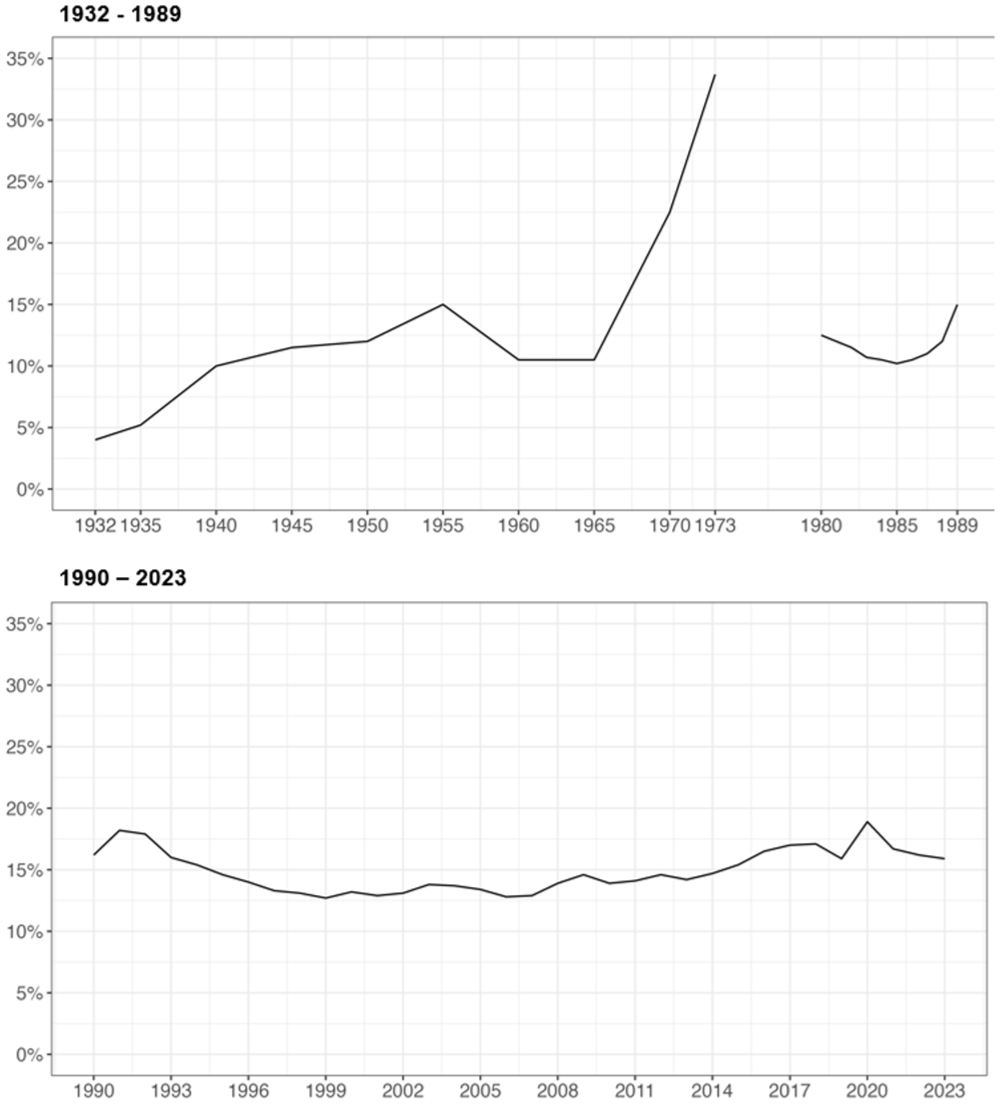
Unionization Rate in Chile, 1932 – 2023.
Despite this, Chilean trade unionism continued to be based on company unions, with a secondary role for federations and confederations. During the phase of Import Substitutions (ISI), the movement was weaker and more divided than in corporatist countries, compounded by legal divisions between “workers” (blue collar workers) and “employees” (white collar) (Angell, 1972; Rojas, 2009).
In this context of institutional weakness, the trade unions built political power through their close connection to the Communist (PC) and Socialist (PS) parties, and since the late fifties, to the Christian Democrats (DC) (Frías, 2008; Ulloa, 2003). These alliances provided the unions with material resources and access to the state, but also created tensions: the unions tended to acquiesce to partisan disputes, which weakened their independence (Drake, 1996). The Central Única de Trabjadores (United Workers’ Federation, CUT), founded in 1953, exhibited these tensions: despite their emphasis on class unity, it went through constant crises due to ideological conflicts between parties (Barría, 1971; Garcés and Milos, 1988). However, the CUT endured. Even among the most politicized leaders, a strong union identity prevailed: they acted first and foremost as trade unionists and secondarily as members of the party (Angell, 1972: 232).
The coming to power of the Unidad Popular (Popular Unity – UP) signified a decisive advance for the trade union movement. Until then, the CUT had operated without official recognition and with tense government relations. This changed with Salvador Allende. In December 1970, the CUT-Government accord was signed, committing to structural changes such as agrarian reform, nationalization of the banks and control of foreign trade (CUT and Gobierno de Chile, 1970). In 1972, the CUT obtained legal recognition by means of Executive Order 17,594, and its president, Luis Figueroa (CP), was appointed Minister of Labor.
Since the mid-1960s, a quantitatively smaller but not less important part of the trade union movement had established ties with non-institutional parties/movements such as the Movimiento de Izquierda Revolucionario (Revolutionary Left Movement, MIR) (Gaudichaud, 2016), whose strategic visions regarding how to build the socialist project in Chile differed from those of the UP parties led by Allende. As a result, during Allende’s administration these strategic differences—particularly, between the PC and the MIR’s understanding of socialist transition—were manifested within the very union movement. Thus, for example, while the unions linked to the UP parties supported the CUT’s ties to Allende’s government, the sectors close to the MIR advocated organizational processes in the workplace (more clearly expressed in the Cordones Industriales), which were not included in Allende’s original platform and that often exceeded the pace of the reforms established by the agreements between the government and the CUT (de Oliveira Cury, 2018; Gaudichaud, 2016).
Naturally, these politico-strategic differences undermined unity in the union movement and in general, the ability of the workers to influence the Chilean socialist project as a class. Nevertheless, in a context of institutional and political strengthening of the trade unions, union membership reached its highest historical level, reaching almost 35% in 1973 (Figure 1).
The Trade Union Movement During The Military Dictatorship
The September 11, 1973 coup d’état radically transformed the Chilean labor landscape with devastating consequences for the working class. Repression against leftist activists and union leaders destroyed the ties between unions and parties that had sustained the workers’ movement in the previous decades. Although the dictatorship espoused anti-union positions from the start, in its early years it lacked a coherent labor policy beyond repressing the more politicized sectors (Álvarez, 2010; Campero and Valenzuela, 1984). “Emergency Laws” were promulgated, suspending the right to collective bargaining and strikes (DL 43, 1973), dissolving the CUT (DL 133), and banning the election of union leaders (DL 198). Labor Minister Nicanor Díaz Estrada promoted corporatist state reform bills backed by General Gustavo Leigh, even proposing a pro-regime union federation, the Central Nacional de Trabajadores (National Workers’ Federation) (Campero and Valenzuela, 1984). However, the growing influence of the Chicago Boys blocked those plans.
A new phase began in the late seventies: the dictatorship substituted the union co-optation strategy with a neoliberal framework, put forward in DL 2.200 (1978) and the Plan Laboral (1979) (Álvarez, 2012; Rojas, 2007). The DL 2.200 eliminated the “principle of immobility” and the distinction between workers and employees, in the process flexibilizing employment. In turn, the Plan Laboral (Labor Plan) solidified a decentralized union structure, restricting collective bargaining to the company level, authorizing multiple unions per employer and limiting the right to strike to a negotiating process, with the possibility of replacements. It also restricted collective bargaining to exclusively economic issues and allowed the existence of what would later be known as non-union “negotiating teams” (Feres, 2009b; Rojas, 2007).
These reforms were paired with the regime’s economic restructuring, articulated in privatizations, the reduction in public employment, trade opening and deindustrialization (Campero, 1986). Thus, the Plan Laboral was the institutional pillar of the new model of neoliberal labor relations. According to Baccaro and Howell (2017), neoliberal labor relations are defined by the fact that they are designed to expand “business discretion” on salaries, company management and dismissals, while also limiting the ability of unions to oppose this discretionary power. Thelen (2014) identifies three means of liberalization: “deregulatory liberalization,” “dualization,” and “integrated flexibilization.” With this typology, in Chile, the Plan Laboral embodies a deregulating liberalization, an establishment of neoliberal labor relations maintained by a frontal attack on the previous normative framework.
From a comparative perspective, the decrees in the Plan Laboral allowed for the Chilean labor liberalization to be solidified earlier and more acutely than in the rest of Latin America (Cook, 2007). In the rest of countries in the region, the neoliberal reforms were not implemented until the late 1980s and early 1990s. Just as in Chile, these reforms deregulated the labor market promoting temporary contracts and removing protections for workers being dismissed (Marshall, 2005; Murillo, 2005; Vega Ruiz, 2005). Similarly, in many countries these legislative changes bolstered detrimental dynamics in the job market, such as the increase in informality and stagnating wages (Lozano, 1998). However, when implemented in democratic contexts, these legislative changes faced major union resistance, and in many cases, their outcomes were more limited than in Chile. For example, in countries such as Argentina, Brazil, or Uruguay, the neoliberal reforms aimed at weakening the trade unions and decentralizing collective bargaining were less severe than in Chile, and in Argentina and Uruguay, some of their effects were reversed during the 2000s as center-left governments came to power (Pérez-Ahumada, 2023).
Despite their repressive and anti-union slant, enacting the Plan Laboral de 1979 allowed for the return of legal collective bargaining and reactivated coalitions that existed clandestinely. Featured prominently were the Grupo de los 10 (Group of 10), of a moderate and Christian Democratic tendency, financed by the AFL-CIO, and the Coordinadora Nacional Sindical (National Trade Union Coordinating Body, CNS), founded in 1978 by leftist leaders of the Movimiento de Acción Popular Unitaria (United Popular Action Movement, MAPU) of the PS and the PC. Despite these differences, both groups denounced human rights violations, rejected pro-regime unions (such as the Unión Nacional de Trabajadores de Chile or National Workers Union of Chile, UNTRACH) and opposed the Plan Laboral, which they accused of “atomizing” trade unionism (CEXCUT, 1980; La Tercera, 1979; Revista Hoy, 1980).
Given this situation, the unions took advantage of the legal leeway to reorganize and promote union membership and quickly became the primary actor in national protests against the dictatorship (1983-1986) (Álvarez, 2012; Araya, 2014; Frias, 2008). In contrast to the period prior to the coup d’état, this trade union rebirth was more independent of the parties, since the repression had weakened partisan influence. The result was what Paul Drake (1996: 54) called the “Argentinization” of the Chilean union movement, whereby the unions, holding a position of greater autonomy with respect to the parties, took on functions previously monopolized by the parties. This included political representation, social coordination, and the design of alternative programmatic proposals to the dictatorial regime.
The new phase became apparent with the May 1983 general strike, called by the Confederación de Trabajadores del Cobre (Copper Workers’ Confederation, CTC) after regaining its internal autonomy in union elections. Out of that mobilization arose the Comando Nacional de Trabajadores (National Workers’ Command, CNT) which between 1983 and 1986 was consolidated as the vanguard of the opposition to the regime (Araya, 2014: 17). The CNT spearheaded programmatic proposals (such as the Petitorio del Pueblo or People’s Petition, the Pliego de los Trabajadores or Workers’ Platform, and the Pliego de Chile or Platform for Chile) and promoted the Asamblea de la Civilidad (Assembly of Civility), a broad social and political coalition which would form the base of the future Concertación de Partidos por la Democracia (Álvarez, 2012; Araya, 2014; Frias, 2008). The CNT represented the most robust attempt to build a united, democratic, and pluralistic unionism based on independence from the parties and a critique of the excessive ideologization of the past (Araya, 2014; Drake, 1996). These ideas inspired the Central Unitaria de Trabajadores (CUT) to form in 1988. Nevertheless, repressive toughening against the demonstrations and the partial political opening reduced that autonomy: when protests grew to be massive, union leaders called on the parties to lead the negotiations with the regime, ceding the protagonism gained in the early 1980s (Araya, 2014; Frías, 2008).
In this setting, the founding of the CUT in 1988—though a democratic and united process—was marked by strong political and ideological tensions. Much of the founding congress centered on debates over the nature of the union federation: moderate Socialists and the DC rejected the Communist proposal to define it as “anti-fascist” and “classist.” There were also arguments over the inclusion in the statutes of the concept “class struggle” and over membership in Marxist, Social Democratic, or Social Christian international trade union organizations (Revista Cauce, 1988; Revista Hoy, 1988). These differences were resolved through political agreements among the parties of the Concertación and the left. In these accords, the DC-PS alliance prevailed, securing the majority of union representatives. With that, a center-left bloc was formed, geared towards guaranteeing “governability” and the moderation of labor demands in the event of a “No” victory (El Mercurio, 1988). According to Drake (1996), this process reaffirmed partisan control over the unions, reproducing a pattern that existed prior to the military coup. In this way, the CUT once again structured itself around divisions and political alliances, despite its efforts to ensure trade union independence (Pérez-Ahumada, 2023).
Generally speaking, the founding of the CUT symbolized the rebuilding of the ties between unions and parties interrupted by the dictatorship. This coordination was reflected in the first internal voting process, where an accord among the lists of the Concertación brought DC and former CNT leader Manuel Bustos to its presidency. The hegemony of the Concertación was solidified in 1989 when the CUT officially backed presidential candidate Patricio Aylwin, committing to moderate its labor demands in exchange for Aylwin’s promise to reform the labor laws and social policy (La Época, 1989; La Nación, 1989).
The Trade Union Movement During The Democratic Period (1990-2025)
In spite of the trade union movement’s hopes and the 1980s reorganization experience, the return to democracy in 1990 did not represent the fulfillment of its historical demand to revoke the Plan Laboral de 1979. Between 1990 and 2001, the Concertación administrations implemented a series of labor reforms which left the fundamental pillars of the Plan Laboral intact. (Feres, 2009b; Pérez-Ahumada, 2023). This impacted the Chilean union movement and its decline during the first decade and a half of democratic rule.
Transition To Democracy, Continuation Of The Plan Laboral, And Trade Union Decline
The 1990-2001 reforms sought to correct the extremely liberal and repressive nature of the legislation imposed by the dictatorship. For example, with regard to the individual labor laws, the Patricio Aylwin (1990-1994) and Ricardo Lagos (2000-2006) administrations approved laws that increased the legal indemnification for dismissal (Law 19.010 of 1990) and reduced the work week from 48 to 45 hours (Law 19.759 of 2001). In addition, during Michelle Bachelet’s administration (2006-2010), a law was passed that established new regulations on subcontracting and temporary employment (Law 20.123 of 2006). In terms of collective rights, the Aylwin and Lagos governments legalized the trade union federations (Law 19.049 of 1991) and strengthened the powers of the Department of Labor in the realm of anti-union practices (Law 19.759 of 2001) (Feres, 2009b; Rojas, 2007)
However, none of these reforms altered the key aspects of the Plan Laboral (Pérez-Ahumada, 2023). They failed to do away with the co-existence of multiple unions within companies (dual unionism) or the competition between the unions and negotiating teams. Nor did they effectively protect the right to strike (for example, prohibiting the replacement of strikers) or to promote centralized collective bargaining (Feres, 2009b; Rojas, 2007). Although it is no longer prohibited, negotiation by branch of economic activity—“inter-company negotiation” according to Chilean law—was defined only as voluntary for the employers (Gamonal, 2011; Rojas, 2007).
As a result, and despite the successful transition to democracy, the Concertación administrations did not fulfill the core demands of the Chilean trade union movement. Against this backdrop, the trade union movement itself began to weaken. After a modest increase in union membership in the early 1990s, the rates steadily declined to less than 13% in 2006 (see Figure 1). In a similar fashion, union fragmentation is extremely high, even today. Official statistics demonstrate, for example, that in 2023, more than 11,500 active unions existed in the private sector, and that on average, each union had slightly more than 100 members (Dirección del Trabajo, 2023). This phenomenon is a recurring problem since at least the 1980s (Pérez-Ahumada and Ocampo, 2023).
Because of the lack of significant legal changes, the CUT was engulfed in political and strategic battles between leaders of the Concertación and the PC. During the 1990s and 2000s, internal crises, conflicts between “pro-Concertación” and “anti-Concertación” sectors and disaffiliations were common in the CUT (Osorio, 2015; Pérez-Ahumada, 2023). These crises produced divisions that persist today. For example, in 1994 dissident leaders founded the Central Autónoma de Trabajadores (Independent Workers’ Federation, CAT), while in 2004 another group of leaders founded the Unión Nacional de Trabajadores (National Workers’ Union, UNT). Furthermore, these crises greatly affected the legitimacy of the CUT and its ability to build working class associative power, understood as the capacity to foster the active participation of grassroots men and women workers, in order to develop strategies of effective mobilization, forge solidarity and consensus as a class, and to produce sustainable and effective organizational structures (Pérez-Ahumada, 2023).
In order to deal with these problems and the historical demand of trade unionism to repeal the 1979 legislation, in 2014 President Michelle Bachelet made a final major attempt to reshape the Plan Laboral. She put forth a bill to broaden collective bargaining, empower the unions in the face of the negotiating teams, and revoke the measures that allowed business owners to replace strikers. Some center-left leaders went so far as to state that they would take advantage of this opportunity to promote negotiations by branch of economic activity (El Mercurio, 2015).
Nevertheless, despite the expectations of the trade union movement and the efforts of the politicians of the left-wing sectors of the governing coalition (Nueva Mayoría), Bachelet’s labor reform project was unable to revoke the key aspects of the Plan Laboral de 1979 (Pérez-Ahumada, 2023). The pro-worker measures initially included in the draft legislation, or which arose during the 2015-2016 legislative debates, were eliminated or diluted to the degree that the resulting act (Law 20.940) had no real positive impact on the collective rights of men and women workers. As with the previous legislation, Law 20.940 (still in force today) continues defining supra-company collective bargaining as voluntary for employers. In addition, the bargaining power of the unions continues to be weakened by laws that promote competition among unions within the companies and that permit the proliferation of “semi-regulated” collective agreements as an alternative to collective contracts (which are standard, regulated, and legally protected collective bargaining accords). Moreover, in practice, the new legislation does not limit the power of the business owners to promote the signing of semi-regulated agreements (Pérez-Ahumada, 2023). Owing to the lack of specific rules that regulate the matter, during the Sebastián Piñera administration, a favorable opinion by the Department of Labor allowed companies to form negotiating teams to sign such semi-regulated agreements (Dirección del Trabajo, 2018). Those agreements are advantageous for the employers because they do not grant the typical protections of a standard collective contract to the workers, specifically, the right to strike and the right of jurisdiction for the union leader. For this reason, although the use of negotiating teams has decreased due to the lack of clear legislation, the unions have severely criticized the lack of provisions that explicitly prohibit negotiating teams. Lastly, the right to strike continues to be undermined by clauses that, while formally prohibiting the replacement of strikers, authorize entrepreneurs to carry out any “necessary modification” in the shifts and activities of the non-strikers in order to ensure the provision of “minimal services” as broadly defined by the companies (Pérez-Ahumada, 2023).
Why has it been so difficult to repeal the plan laboral de 1979?
The existing literature maintains that the outcome of the reform processes depends on the willingness of the governments and the ability of the unions to enact pro-labor legislation. This literature utilizes the idea of “power resources” to contend that the probability of implementing redistributive or pro-worker reforms is greater when strong ties exist between the trade union movement and center-left or leftist reformist administrations (Cook, 2002; Korpi, 2018; Murillo, 2005). According to this thesis, during the Concertación administrations it was difficult to implement pro-union reforms because the trade union movement was weak and the government did not have parliamentary majorities at the same time that a significant part of the government coalition had embraced neoliberalism in opposition to the strengthening of unions (Feres, 2009b; Frank, 2015).
Without diminishing the significance of these factors, other authors maintain that such explanations are insufficient to explain why the Plan Laboral has not been able to be repealed to date (see Pérez-Ahumada, 2023). In the mid- 2010s, the conditions for pro-union reform were comparatively more favorable than in the 1990s and 2000s. The 2005 constitutional reform had eliminated the appointed senators, and the 2013 electoral victory gave the center-left government coalition a parliamentary majority. Furthermore, in contrast to the Concertación, the Nueva Mayoría had incorporated the PC, which since 2012 was the hegemonic force of the CUT under the leadership of Bárbara Figueroa. Therefore, the entire leadership of the CUT was aligned with the government for the first time since 1988.
Despite this, the 2015-2016 labor reform did not achieve the objective of revoking the Plan Laboral. Putting forth a rational reading of the power of class—one that emphasizes the power relations between governments, unions and business associations, Pérez-Ahumada (2023) contends that it was that way because, although the government was in a strengthened position, an extensive inequality in power continued to exist between the trade union movement organized in the CUT and the entrepreneurial class organized in the Confederación de la Producción y del Comercio (Confederation of Production and Commerce, CPC). This inequality in power was partly the result of the CPC’s ability to mobilize corporate associative power against the labor reform project. In contrast to the CUT, the CPC was able to influence key phases of the legislative process—for example, during Senate proceedings—in such a way that at the end of the legislative debate, even lawmakers of the Nueva Mayoría ended up supporting the demands of the employers (recall, for example, the formation of the “Pro-PYME Caucus” in 2015). In concrete terms, this meant that all the pro-worker proposals included in the original bill or discussed in the initial stages of the legislative process were eliminated from the final draft (for example, proposals to facilitate inter-company negotiation), or were even recast to such a degree that they ultimately did not have the originally desired effect (for example, measures to strengthen the right to strike) (Pérez-Ahumada, 2023). Simply put, the main argument of Pérez-Ahumada (2023) is that analyzing the balance of power between workers and business owners is key to explaining why, after more than thirty years since the end of the dictatorship, a labor code designed to undermine the power of the unions continues to exist.
The Emergent Revitalization Of The Chilean Trade Unions
Despite the persistence of an anti-union labor code, Chile has witnessed a resurgence of union activism since the late 2000s. After years of inactivity, the unions in the strategic sectors such as mining and the port industry, as well as the traditionally “un-organizable” industries such as retail sales, led highly disruptive mobilizations which, on many occasions, translated into significant gains for the workers (Aravena and Núñez, 2009; Bank Muñoz, 2017; Fox-Hodess and Santibáñez, 2020, Pérez-Ahumada et al., 2025). At the same time, the number of labor strikes increased substantially. As shown in Figure 2, the number of strikes rose from less than 200 in 2005 to close to 450 in 2016. In each of the years, the majority of the strikes took place in the private sector, although the amount of public sector strikes grew substantially in years such as 2019. Figure 3 indicates that the occurrence of strikes varies according to the branch of economic activity: while it is low or very low in fields such as agriculture, forestry and fishing, and provision of electricity, gas, and water, it is markedly higher in the manufacturing (1990-1996) and services industry (especially in the period from 2008 onward). Reports suggest that this increase in strikes in the service industry is explained particularly due to the disruptive actions in the sector of social, health and educational services (OHL, 2020). Lastly, Figure 4 indicates that, until 2016, most of the strikes broke out over economic issues. However, since that year, there was a significant increase in the number of strikes over non-economic demands—associated with working conditions, organization of the work or other causes (for example, demands unrelated to the company, such as those evident during the general strikes). Thus, in years such as 2019 and 2023, nearly 70% of the strikes occurred due to non-economic demands. This is consistent with the evidence that supports the presence of a process of “politicization” of the strikes in Chile (Medel, Velásquez, and Pérez, 2023).
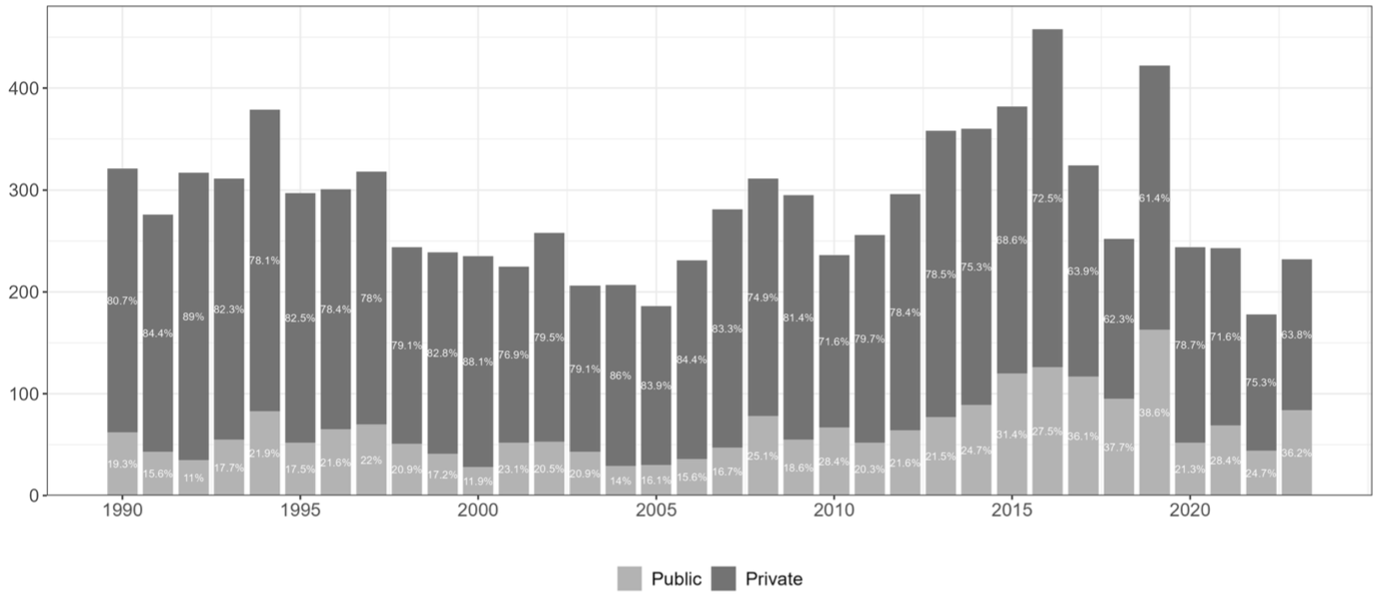
Number of Strikes by Public/Private Sector (1990 – 2023).
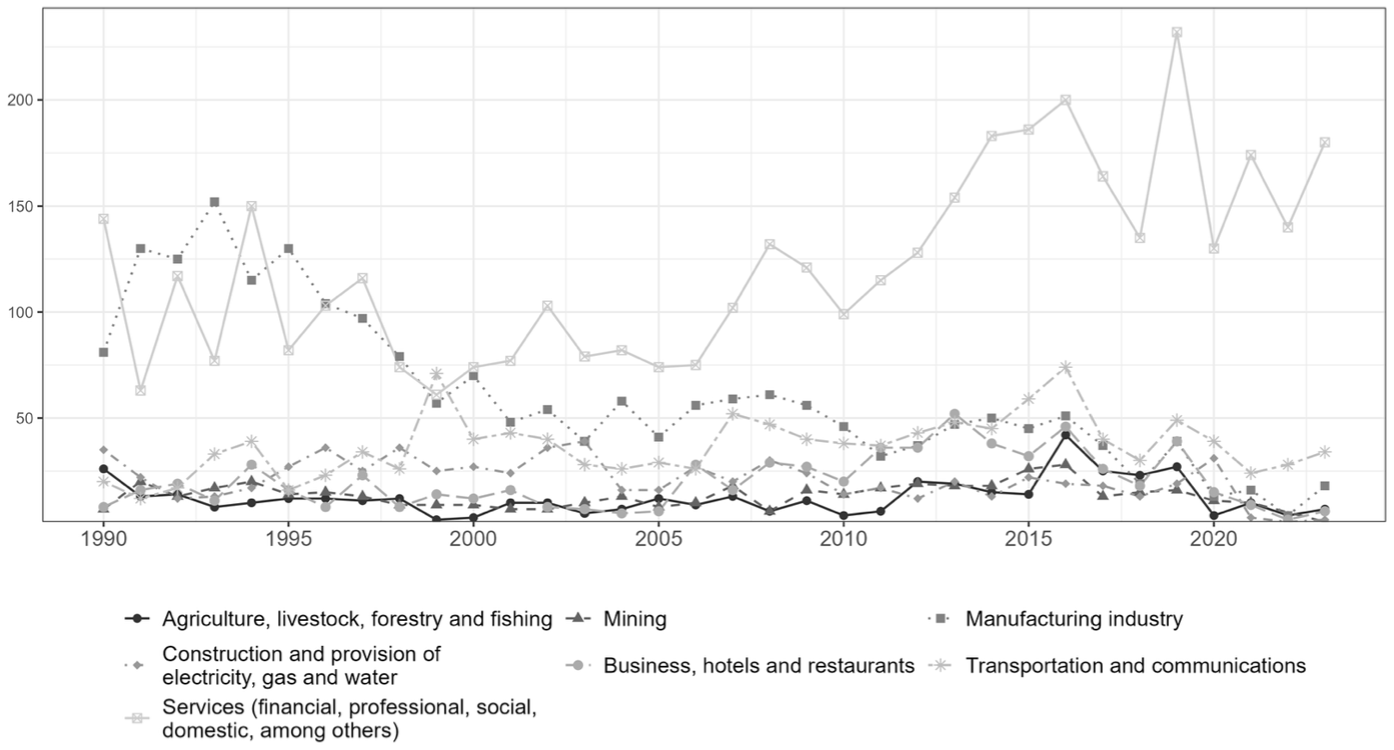
Number of Strikes by Branch of Economic Activity (1990 – 2023).
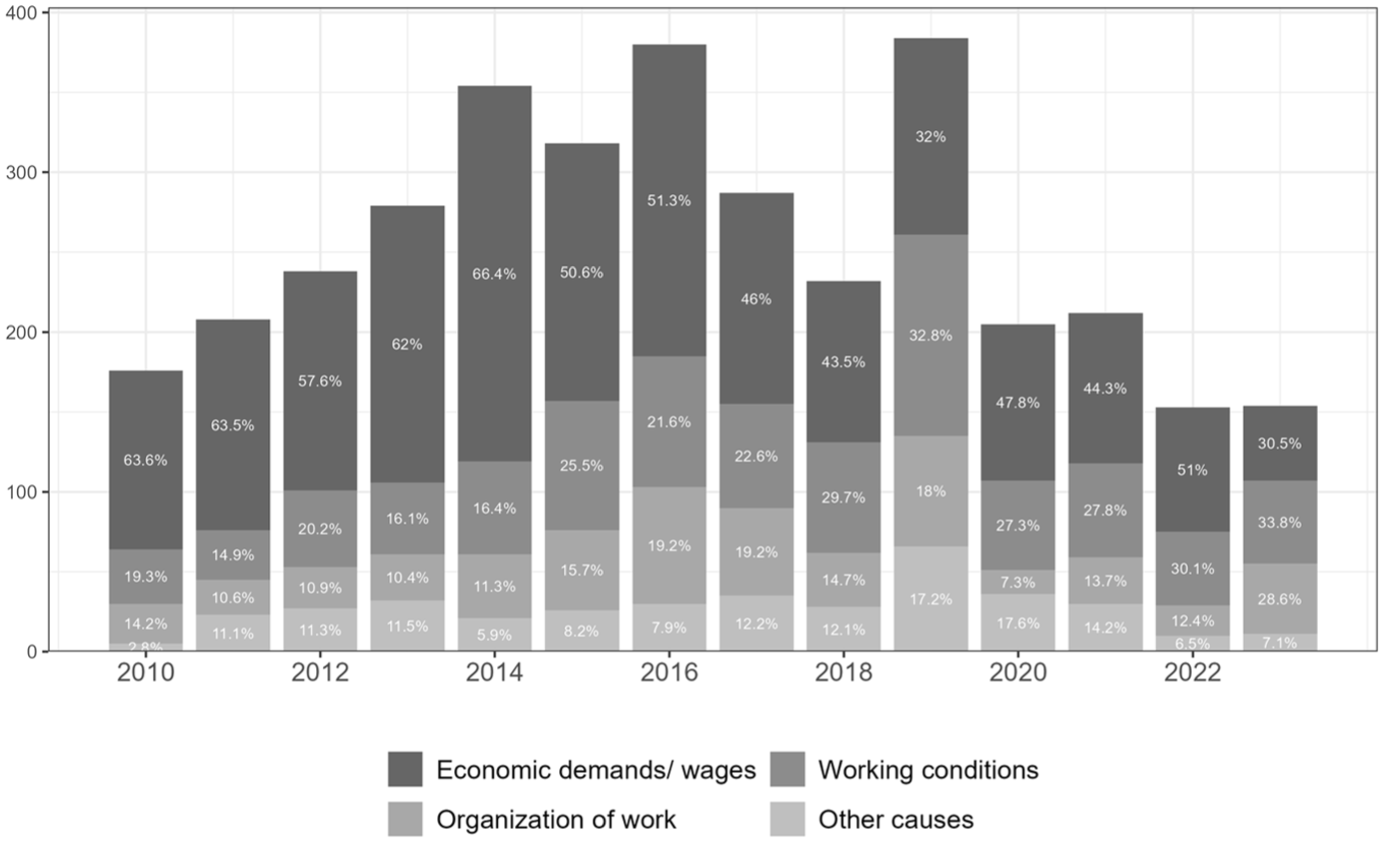
Number of Strikes According to Primary Cause (2010 – 2023).
This increase in strike activity was an important incentive for the growth in union membership (Pérez-Ahumada and Godoy-Márquez, 2026): between 2006 and 2019 the participation of workers in unions increased as never before seen, at least since the end of the dictatorship. In this period, the union membership rate rose from 13% in 2006 to almost 19% in 2020, the highest level since the return to democracy (Figure 1). After 2020, probably as a result of the economic recession stemming from the COVID-19 pandemic, both the union membership rate as well as the number of strikes experienced a decline. In the case of the strikes, this decline seems to have been interrupted in 2023.
During the reactivation period, the unions also began to organize more strikes for non-salary reasons (for example, strikes to increase the men and women workers’ control over their working conditions), while also beginning to build alliances with other non-union actors (such as student movements) in order to secure their sociopolitical demands (Medel, 2025; Pérez, Medel, and Velásquez, 2017). At times there were similar organizing processes, including among workers exposed to high levels of insecurity, as in delivery platforms (Gutiérrez Crocco, 2025).
This increase in labor mobilization reached its highest level during the October 2019 Social Explosion. In coordination with other social movements in the Social Unity Forum, between October and December 2019, the unions called four general strikes. They were important not only because they forced Sebastián Piñera’s government to sign a political accord, authorizing a plebiscite for a new constitution, but also because the trade unions acted in a coordinated fashion along with other social movements, just as they had done sporadically between 2011 and 2019 (Osorio and Velásquez, 2022). The protests initiated in October 2019 were also significant in strengthening the dynamics of unity and solidarity within the union movement itself. During this period, numerous unions, both affiliated and not affiliated with the CUT—such as the Unión Portuaria de Chile (Port Workers’ Union of Chile)—worked together in what was known as the Bloque Sindical de Unidad Social (Trade Union Bloc of Social Unity). This united effort was key to the successful November 12, 2019 general strike. Although its existence was short-lived, this trade union effort of unity allowed for a reduction in political and strategic differences which had divided Chilean trade unionism for decades and had weakened its capacity to build associative power in the working class (Pérez-Ahumada, 2023: 194-95).
The convocations for general strikes were not isolated events for the unions. Since 2011, general strikes had become a frequently utilized tactic by the Chilean unions. A report by the OHL (2020) shows that between 1990 and 2019, there had been eighteen general strikes, seventeen of which took place between 2011 and 2019. The increase in union mobilizations occurred in an overall setting of rising social protest. As it is well known, after the late 2000s, Chile went through a period of intense social mobilizations. Through massive protests, environmental, feminist, student, and trade union social movements demanded sweeping institutional changes in the Chilean neoliberal regime. At different points in the last decade, this demand for social change was conveyed through protests against profit-making in the private educational system (2011), for the expansion of union rights (2015 and 2016), against the private pension system (2016), for the expansion of sexual and reproductive rights (2018), and, most notably, in 2019’s protests and marches against the privatization of social rights and for the establishment of a constituent assembly which would put an end to the constitution imposed in 1980 by the Pinochet dictatorship (Donoso and Von Bülow, 2017; Araujo, 2020; Somma et al., 2021; Pérez-Ahumada, 2023).
These social mobilizations coincided with a considerable deterioration of confidence in institutions such as the parliament, the Congress and the political parties (Araujo, Angelcos, and Pérez-Ahumada, 2023). Some writers contended that, when this happens, confidence in the trade unions also deteriorates since the citizenry tends to “punish” all the institutions equally (González Begega, Rodríguez, and Cueto, 2018.) However, recent research suggests that this has not happened in Chile. In contrast to what has occurred with the political institutions, confidence in the Chilean unions has increased in recent years, probably because these organizations have been an active part of the social mobilizations against the status quo (Pérez-Ahumada and Carrasco, 2025). This suggests that, in contexts of intense social mobilization, the trade unions can be perceived not as organizations that defend the privileges of a minority, but rather as organizations that enable improvements in working and living conditions for a significant part of the working class (Pérez-Ahumada and Godoy-Márquez, 2025).
In line with this argument, Figure 5 shows the percentage of people who state having “a great deal of” or “some” confidence in the Congress, the government and the unions between 2003 and 2015. As we can see, at the beginning of the time series, slightly more than 40% of the people trusted the unions, while more than 60% of them trusted the government. The figure also shows that from 2011 onward, the patterns of confidence changed considerably: while trust in the unions reached more than 60% in 2015, confidence in the Congress consistently dropped and confidence in the government remained stable below the level of confidence in the unions. In this same period, trust in organizations such as the political parties was even lower. In 2020, for example, only 10% of the persons interviewed indicated trust in these organizations. 1
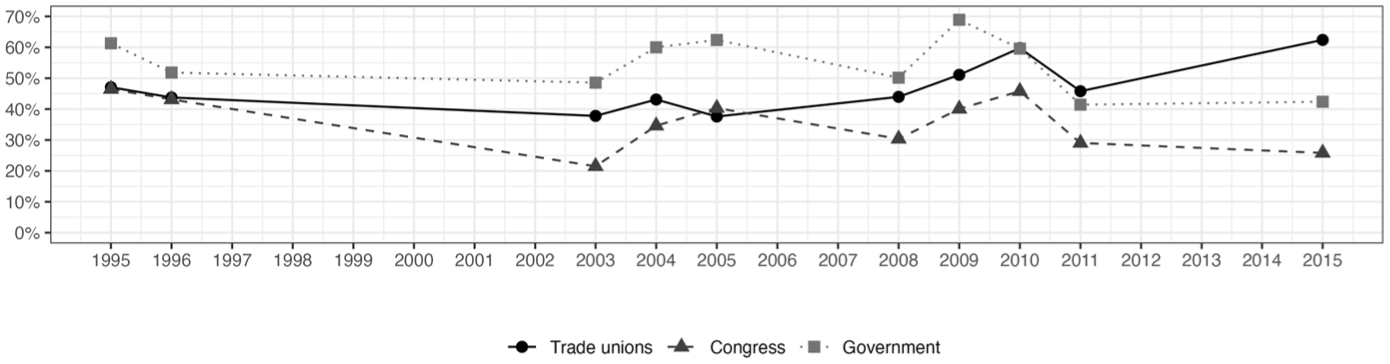
Trust in Unions, the Congress, and Governments in Chile, 1995 – 2015.
Recent evidence indicates that despite the challenges stemming from the COVID-19 pandemic, trade unions continue to be positively perceived by Chilean workers, both women and men. For example, data from the Encuesta de Conflicto, Clases y Trabajo de 2025 (2025 Survey on Conflict, Classes, and Labor, CONCLAT Survey) (Pérez-Ahumada, 2026) presented in Figure 6 demonstrates that, although nearly 15% of the men and women workers surveyed are unionized, this percentage rises to 57% when only those workers employed in companies where a union exists are considered. This suggests that one important cause of the low union membership in Chile is not the lack of interest but rather the practical impossibility to unionize. When the option to join a union exists, the majority of workers do so. Consistent with this result, Figure 4 also shows that almost 60% of the men and women salaried workers agrees with the phrase, “The government should enact laws to strengthen the unions.”
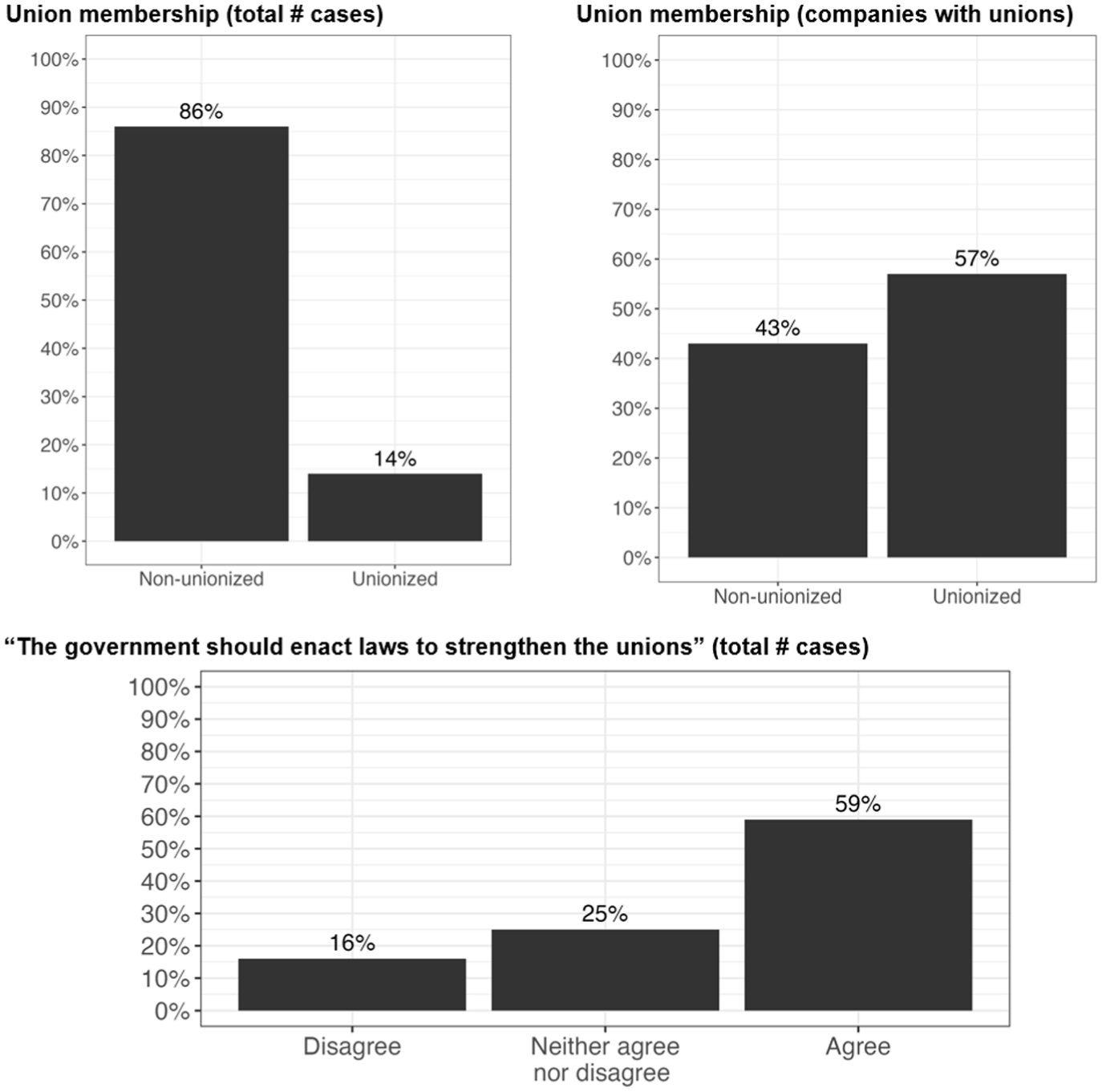
Attitudes of Chilean Salaried Workers Towards Unions, 2025.
In summary, throughout recent decades, unions have been able to mobilize in spite of an unfavorable institutional context. In this sense, if the last decade is compared to the first years following the return to democracy, it is possible to speak of a revitalization of the trade unions. This certainly does not mean ignoring the fact that unionism continues to be weak politically. Compared to the period prior to the coup d’état, labor’s current political influence is limited. Accordingly, some analysts have observed an inconsistent and emergent revitalization of Chilean unions, which is incomplete in that it is diverse (strong in some sectors and weak in others) and unconsolidated (see Durán and Stanton, 2025; Pérez-Ahumada et al., 2025). Although the capacity for union mobilization has steadily grown, it has not developed into greater union political power—that is, into greater capacity to imipact the political system (Pérez-Ahumada et al., 2025: 18-19).
Conclusion
In this article, I briefly examined the history of the Chilean trade union movement to show how the political, economic, and institutional changes enacted by the dictatorship affected its constituent bases and later development. Along with demonstrating how the dictatorship destroyed the alliances between unions and parties upon which the trade union movement was built prior to 1973, I showed how the Pinochet regime implemented far-reaching institutional transformations—particularly the Plan Laboral de 1979—which persist to this day. After explaining why the Plan Laboral has yet to be revoked, I analyzed a series of occurrences such as increases in union membership fees, strike activity, and trust in the unions, allowing us to affirm the existence of a revitalization (limited but significant) of the Chilean trade union movement.
It is important to reflect on the degree to which the union revitalization translates into its political strengthening. Recent evidence indicates that the unions can become relevant political actors when they successfully build associative power and when, based on that strength, they build alliances with political parties without being subordinate to them (Pérez-Ahumada, 2023). The disrepute of the political parties (including those of the left) and the split between the parties and the trade union movement impedes the building of these alliances. Moreover, Chile’s case illustrates that when alliances between unions and parties undermine the independence of the unions, unions suffer the most (Feres, 2009a; Julián Véjar, 2016; Pérez-Ahumada, 2023). This does not mean, however, that these alliances are not necessary or that they can be rebuilt in a way that is more beneficial to the unions. This can happen when, without relinquishing its political role, the trade unions decisively embark on the construction of working-class associative power, independent of the governments and the parties.
Chile’s left-wing parties have a fundamental challenge: to reconstruct the historical alliances with the unions without sacrificing union autonomy. This may seem to be a difficult challenge to meet considering that many progressive parties have moved away from a political focus on class. Nevertheless, the task is not impossible. Part of the more organized sectors of Chilean unionism—for example, the unions organized by the CUT—continue to be led by trade unionists who are members of traditional left-wing parties (particularly the PC and PS). These parties should pay more attention to what their union leaders do and accord them the importance they deserve within the partisan structures. Likewise, the leftist parties should focus attention on sectors of unionism with great disruptive power, such as the unions represented years ago by the Unión Portuaria de Chile. While not affiliated with the CUT, these unions demonstrated high organizational levels and an interest in going beyond the disputes exclusively centered in the workplace. An example of this is the recent creation of the Confederación Nacional de Trabajadores Portuarios, also called CNT Portuarios. The stronger ties between unions and parties could increase the influence of unions within the parties, as well as their political influence at the national level.
The comparative evidence suggests that the institutional context is key to facilitating or limiting the construction of trade union power (Pérez-Ahumada, 2023; Schmalz, Ludwig, and Webster, 2018; Traxler, Blaschke, and Kittel, 2001). As has been demonstrated, the ability to build associative power is significantly greater when laws exist that effectively protect the right to strike, that promote collective bargaining by branch and that foster the centralization of union organizations placing limits on dual unionism (Etchemendy, 2019; Traxler, Blaschke, and Kittel, 2001). In this sense, an essential political objective for parties on the left is the repeal, once and for all, of the Plan Laboral.
None of the center-left governments between 1990 and 2018 implemented pro-union reforms of this sort. Regrettably, this situation did not change during the administration of Gabriel Boric. Even though the platform that brought Gabriel Boric to power explicitly signaled the implementation of a labor reform aimed at strengthening the unions and prioritizing collective bargaining (Apruebo Dignidad, 2021), this goal was never at the heart of the governmental agenda. Thus, in a purely symbolic manner, the Boric administration proposed a pro-union labor reform bill in January 2026—that is, two months before the end of the presidential term. The coming to power of far-right president José A. Kast makes it highly unlikely that this draft bill will advance in the coming years. It is crucial that a future center-left government fulfill the pledge to revoke the Plan Laboral—a pledge that, was indeed, already contained in the program of the first administration of the Concertación (Concertación de Partidos por la Democracia, 1989.)
That said, pro-union labor reforms of this type do not replace the organizing work that the trade unions themselves must carry out in order to build working class associative power. The arrival of a far-right government in March 2026 clearly complicates the perspectives for union action. Nonetheless, just as was seen during the social explosion, the presence of a conservative administration may force the trade unions to build spaces of unity which until now have been largely sporadic. It is the unions themselves which have the potential to build collective power, and in that way, drive the changes necessary to eliminate the politico-economic vestiges of the military dictatorship that still exist in the country.
