






Abstract
The inherent non-linear factors and the interference of external surplus torque of the electric load simulator make it difficult for the conventional control methods to achieve satisfactory control effect. The cerebellar model articulation controller (CMAC) is widely used because of its simple structure and quick learning. However, conventional CMAC utilizes binary 0 and 1 logic, which will lead to the divergence during the torque tracking. Inspired by the cognitive characteristics of the human brain, the fuzzy logic is implemented to CMAC. In this paper, we design a naive method of applying fuzzy logic to CMAC (NFCMAC), which can take both advantages of the local neural network and the global neural network, and present a new interpretation of the entire network. With parallel control of a PD controller, the NFCMAC–PD control strategy has been successfully applied to the electric load simulator. Dynamic simulation and experimental results have indicated that the NFCMAC–PD control strategy can ensure the control precision, restrain interference and be free of divergence, while satisfy the control requirement of the passive loading system.
Keywords
Introduction
An electric load simulator is used to simulate aerodynamic hinge moment during flight testing under laboratory conditions (Yang and Han, 2014). Utilizing an electric load simulator is convenient, flexible and repeatable, thus greatly shortening the development cycle, saving research funds and improving the reliability. Presently, a brushless torque motor has become the mainstream choice in the electric loading system because it is free of pollution, low maintenance, smooth running, etc. As a typical passive loading system, however, the electric load simulator is disturbed by surplus torque generated on the shaft when the loading instruction is zero and no compensation or control measures are taken (Yang et al., 2014). Conventional control methods for load simulators, including the structure invariance principle (Ren and Jiao, 2003), adaptive control (Wang et al., 2010), etc. all need a relatively accurate mathematical model. If the angular velocity and the angular acceleration of the electric load simulator are available, a feed-forward compensator can be designed. However, in the actual system, the angular velocity and the angular acceleration can only be estimated by the angular displacement. Moreover, the inherent non-linear factors and the interference of external surplus torque make it difficult for the conventional control methods to achieve satisfactory control effect (Liu et al., 2011). Thus, an intelligence algorithm, which is independent of a mathematical model, should be used to guarantee the control performance.
Albus proposed the cerebellar model articulation controller (CMAC) in 1975 (Albus, 1975), and it is widely used for its simple structure, rapid learning speed, insensitivity of data sequence and non-existence of local minimum (Pallotta and Kraft, 1999; Liu and Ma, 2011; Wong and Sideris, 1992). Nevertheless, the conventional CMAC utilizes a simply clear logic 0 and 1 to classify space division and make an activation judgment, which causes the difference between the activation and deactivation lacking of continuity. CMAC is intended to simulate the human’s cerebellar neurons, therefore the 0 and 1 binary logic is not consistent with the cognitive characteristics of the human brain to the outside world. The human brain is more inclined to cognize without an obvious boundary, and the perception process of such neurons is more suitable for the excitation signals with a high-order continuous derivative. The analyses above can be easily linked to fuzzy logic. Utilizing fuzzy logic in CMAC can free the entire system from complicated discretizing quantization, coding and hashing procedures (Nie and Linkens, 1994). The activation degree of physical memory ranges from 0 to 1 instead of a simple 0 or 1 logic in the conventional CMAC, which is more suitable for the high-order continuous derivative of the excitation signals.
Research on fuzzy CMAC (FCMAC) has been extensive. Geng and McCullough (1997) introduced fuzzy logic to a CMAC neural network, and applied the proposed fuzzy CMAC to an integrated guidance and control system design for a BTT missile. However, they mentioned that the proposed fuzzy CMAC could not ensure the closed-loop stability, and only simulation results were given. The paper pointed out that the binary input activating function of CMAC will have a negative effect on its approximation ability. With the help of Sim et al. (2006) and Wang and Lu (2003), a conclusion can be drawn that applying a fuzzy membership function to CMAC can improve the smooth approximation ability of the neural network.
In recent years, two-dimensional FCMAC has become the mainstream of the related research. Cheng (2011) put forward an adaptive two-dimensional FCMAC with dynamic memory architecture and tested it on the well-known second-order van der Pol oscillator system. Li et al. (2014) studied the application of a two-dimensional FCMAC in electric seatless unicycles and gave only simulation results. Wang et al. (2015) came up with an adaptive supervisory sliding two-dimensional FCMAC, which incorporated a fuzzy compensator, the form of which is obtained through the Lyapunov approach, and applied it to sensorless vector-controlled induction motor drive systems. The common characteristic they share is that their models can obtain the precise form of state equation, so the Lyapunov approach can be adopted to either test the algorithm’s feasibility of the model or design a suitable compensator. However, the controlled object is a black or grey box in the most practical applications and the precise form of the state equation cannot be obtained. Hence, it is difficult to analyze the system control strategy or design a suitable compensator through a Lyapunov approach in actual control systems. Inspired by Yang et al. (2014), we can conclude that the two-dimensional method achieves a good approximation effect and system stability, but the rapidity of the system response has reduced, and the computing burden and the memory size have been increased compared with the one-dimensional method. Hence, it is necessary to find a naive method that can both simplify the control strategy and meet the control requirements.
In this paper, we design a naive method of applying fuzzy logic to CMAC, called NFCMAC (naively fuzzy CMAC). NFCAMC forms a parallel control with a PD (proportional–derivative) controller and presents a new interpretation of the entire network. NFCMAC realizes the feed-forward control to guarantee response speed and tracking effect; the PD controller is used to improve control performance. With the conduct of the NFCMAC learning process, the PD output gradually decreases while the NFCMAC output increases and dominates the control output. We use a PD controller rather than PID because the integral item has the drawback of slowing the learning process of NFCMAC.
With the application of the fuzzy membership function in CMAC and modification of the input and output mechanism, the change of the activated units, as well as the output of the entire network between every adjacent epoch, can be a gradual process, and the entire network can integrate the advantages of both the local neural network and the global neural network. Furthermore, the one-dimensional method can lower the memory size and reduce the computing burden. The network output can then be smoother and can quickly approach the instruction torque without the online setting work of the membership functions’ or the memory units’ related parameters, while satisfying the control requirements of the passive loading system. Besides the electric load simulator, the NFCMAC–PD control strategy is also suitable for real-time control of other non-linear systems.
Design of NFCMAC and PD compound control strategy
NFCMAC can be seen as the generalized form of CMAC where the physical memory unit’s degree of activation ranges from 0 to 1. This section will present the architectures of CMAC and NFCMAC, and make a detailed comparison between the two methods. The NFCMAC–PD compound control strategy is also described.
CMAC
Figure 1 shows the entire CMAC network consisting of Input Space (X), Association Space (A), Physical Space (W) and Output Space (Y).
Input Space (X): The input space can be multidimensional. According to the given control space, X can quantize the input variable and map it to the activated units in the Associative Memory
Associative Space (A): For a given quantitative input, several units will be activated in Associative Space and can be seen as a block. A similar input will activate a similar block. The activated block is indicated by the green rectangle in Figure 1. The Associative Space can decide which units are to be activated according to the input value, and records it in g. If the kth unit is activated,
Physical Space (W): The activation vector g will be mapped from A to W. The mapping methods can be various, and Figure 1 shows the simplest one-to-one mapping. Each unit in the Physical Space stores the weight value and the activated units, which as distinguish by g can adjust their weights according to the weight adjusting process (Geng and McCullough, 1997). The weight adjustment utilizes the gradient descent method to update the weight memory:

where
Output Space (Y): All weight values of the activated units in W add up to the output of CMAC:

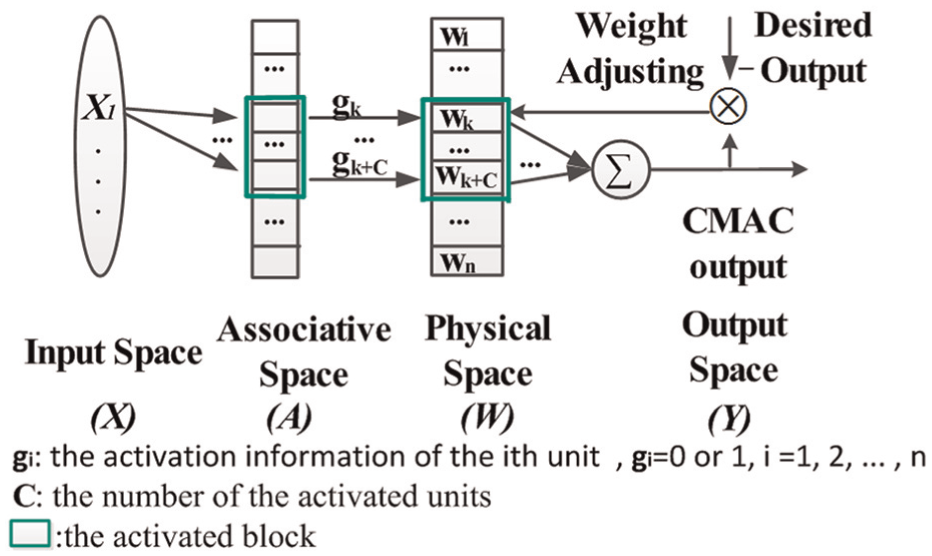
Architecture of cerebellar model articulation controller (CMAC).
NFCMAC
In CMAC, the physical memory unit’s degree of activation is 1 or 0. However, the activation degree of the physical memory unit in NFCMAC, as a reflection of the cerebellum’s understanding of the outside world, can range from 0 to 1 (Geng, 1995). Such memory association work is implemented by the modified Association Memory. Figure 2 shows the entire NFCMAC network consisting of Input Space (X), Association Space (A), Physical Space (W) and Output Space (Y).
Input Space (X): Although the activation method is the same as the conventional CMAC, which has been explained above, the mapping method is totally different from that of the traditional CMAC. For a certain dimension of the input, it will be mapped to all the units in Associative Space. In this paper, we only consider a one-dimensional input variable
Associative Space (A): We can divide the Associative Space into several input fuzzy sets according to the range of the input and every unit in A can be seen as an input fuzzy set. The Gaussian membership function is introduced to represent the membership of the input variable to each input fuzzy set in the Associative Space. The Gaussian membership function takes the following form:

where

where

Physical Space (W): Each unit in the Physical Space stores the weight value. The activated units labelled by g will adjust their weights according to the weight adjusting process. The weight adjustment utilizes the gradient descent method to update the weight memory, which has been explained previously
Output Space (Y): With the weighted summation of the ignition intensity calculated by A and the weight value, the output of NFCMAC can be calculated by

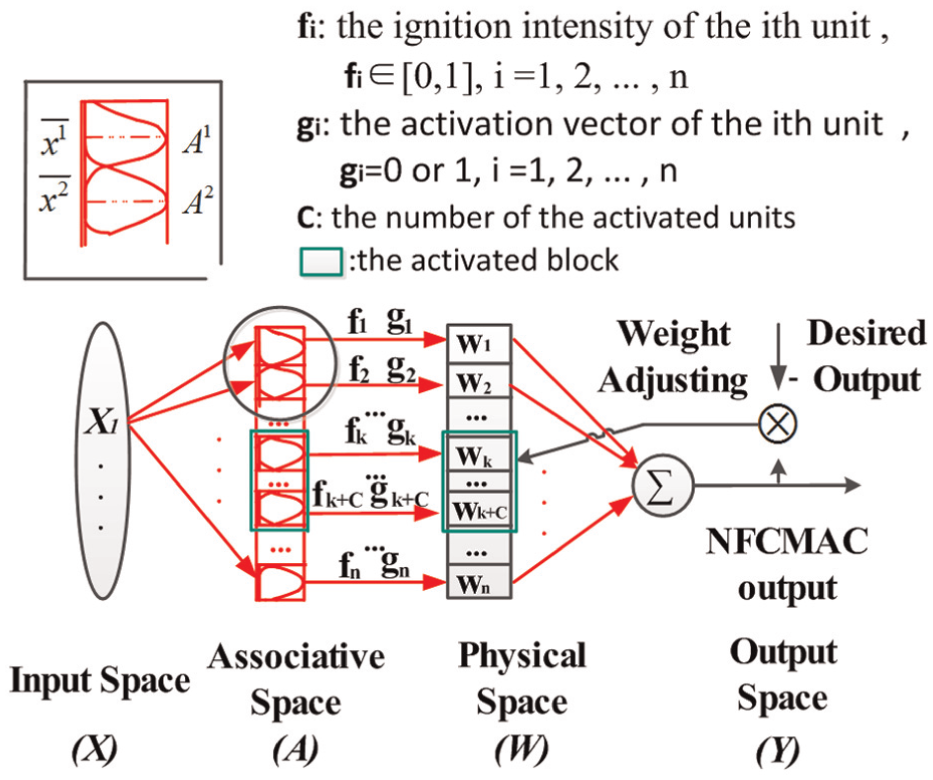
Architecture of naively fuzzy cerebellar model articulation controller (NFCMAC).
The conventional CMAC is a local neural network, as it adjusts the activated block’s weights and the weights are updated according the current tracking error. The updated weights, and only the activated weights, are exported to the network’s output in the next epoch. As the change of the activated block and the activation can only be defined as 0 or 1, the units at both ends of activated block will experience a sudden change between every two epochs. Thus, the approximation effect will be greatly weakened and the lack of continuity in the activation blocks between the adjacent epochs will cause instability of the entire system. While in NFCMAC, each unit’s value of Physical Space will be exported to the output in the next epoch and the ignition intensity determined by the similarity to the activated block is introduced to classify the percentage of each unit in the output. Thus, the transition process of either the output or the approximation effect between the adjacent epochs can achieve a gradient effect and ensure the stability for the entire system. In other words, the activation mode and the weight adjusting mode is local and the output mode is global (Figure 2).
NFCMAC–PD compound control strategy
The output of the compound controller FCMAC and PD can be described by:

where yNFCMAC is the output of the NFCMAC controller and yPD is the output of the PD controller.
Figure 3 depicts the NFCMAC–PD compound control strategy. The PD controller is situated at the feedback path of the control system while NFCMAC is situated at the feed forward path. At the beginning of the loading process, the PD controller occupies the dominant control, while as the learning process deepens, the output of NFCMAC increases rapidly and occupies the main part of the entire control quantity. In order to assure the stability of the control system, the PD controller is utilized to control the tracking error and assist the learning process of NFCMAC.
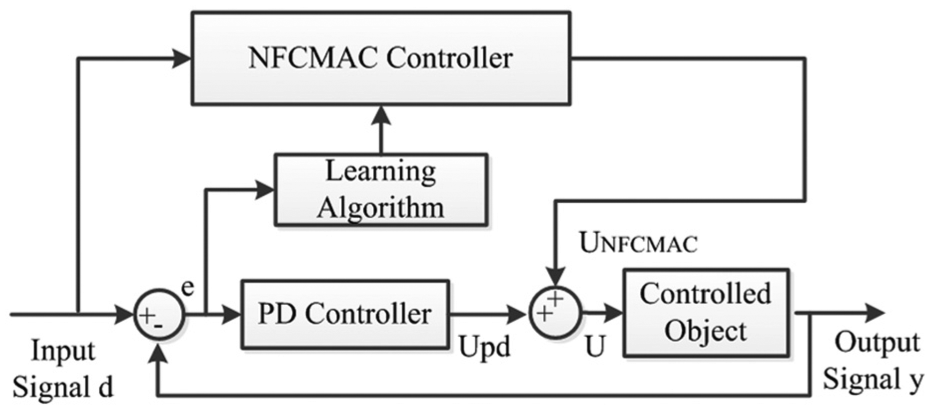
Architecture of naively fuzzy cerebellar model articulation controller (NFCMAC)–PD control strategy.
Simulation results and analysis
In NFCMAC, utilizing the generalization performance of CMAC, similar inputs can activate similar units in the Associative Space thus activating the corresponding weights of the connection weights in the Physical Space. With the adjustment quantity accumulating to the output and the weight updating process, the entire network processes the learning ability.
The simulation model of electric load simulator
The simulation model of electric load simulator is described in Han and Yang (2013) and shown in Figure 4, and the transfer function follows the form of:

where Uin represents the input voltage, Tf represents the load torque,
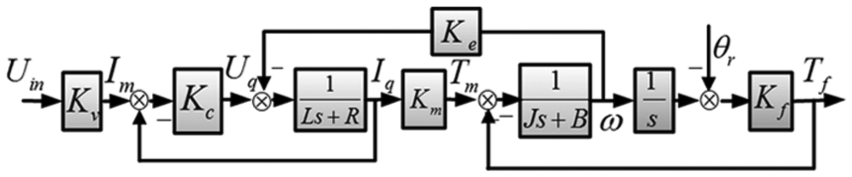
The simulation model of electric load simulator.
Main parameters of electric load simulator.

Therefore, the transfer function of electric load simulator can be given by:

Feasibility simulation and analysis
Based on the above analysis, conventional CMAC is not suitable for the tracking of continuous derivative signals. To test the feasibility of the NFCMAC–PD controller, the conventional CMAC–PD controller is chosen as the comparison group. Both NFCMAC and conventional CMAC are kept at the same level of generalization. The parameters are shown in Table 2.
Design parameters of controller.

CMAC, cerebellar model articulation controller; NFCMAC, naively fuzzy CMAC; PD, proportional–derivative.
The instruction torque follows the form of
The following simulation comparisons on the approximation process are given to analyse the control effect of NFCMAC.
Tracking error
Figures 5 and 6 depict the tracking error of conventional CMAC and NFCMAC, respectively. Figure 5 shows that the tracking error of conventional CMAC rapidly converges to 0.37 N·m within 1 s; however, it diverges after 2 s and the maximum of absolute error closes to 1 N·m. By contrast, the tracking error of NFCMAC rapidly converges near to 0.28 N·m and will not diverge during the rest of the simulation. Such a tracking result will be beneficial for improving the effect of motor control as well as preventing the motor from jittering.
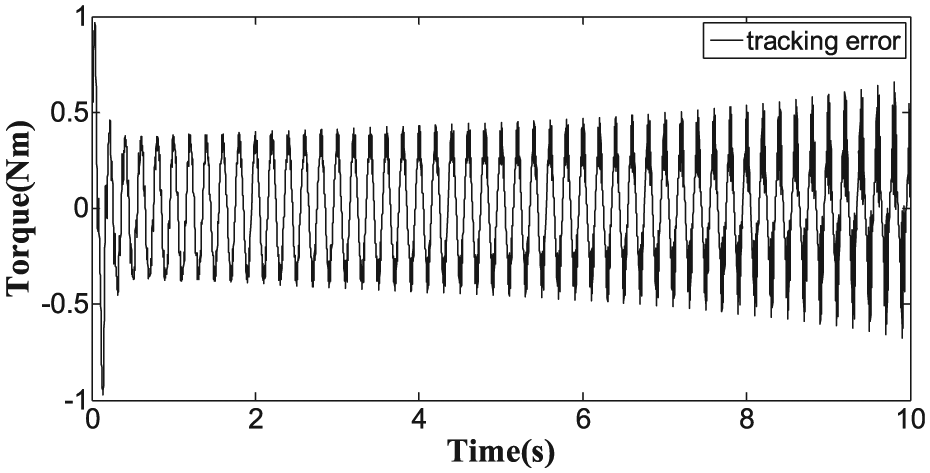
Tracking error of conventional cerebellar model articulation controller (CMAC).
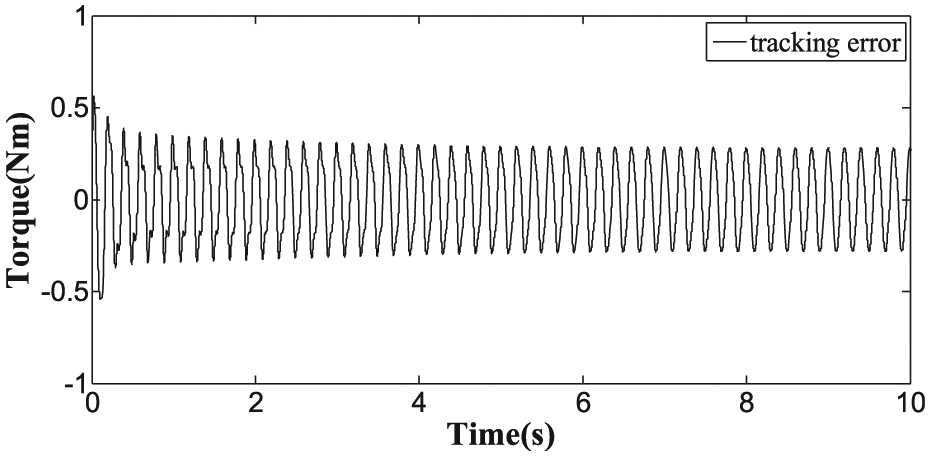
Tracking error of naively fuzzy cerebellar model articulation controller (NFCMAC).
Maximum error per cycle
In order to analysis the tracking information in detail, the maximum errors per cycle of the conventional CMAC and NFCMAC are depicted in Figure 7. The maximum error per cycle is the error’s maximum absolute value of every simulation cycle. Figure 7 shows that the cycle maximum error of conventional CMAC begins to diverge within less than five cycles, whereas NFCMAC shows no divergence in 50 cycles. The initial error of NFCMAC is smaller than that of conventional CMAC. Through the analysis mentioned above, we can summarize that the learning process of NFCMAC is faster than that of conventional CMAC.
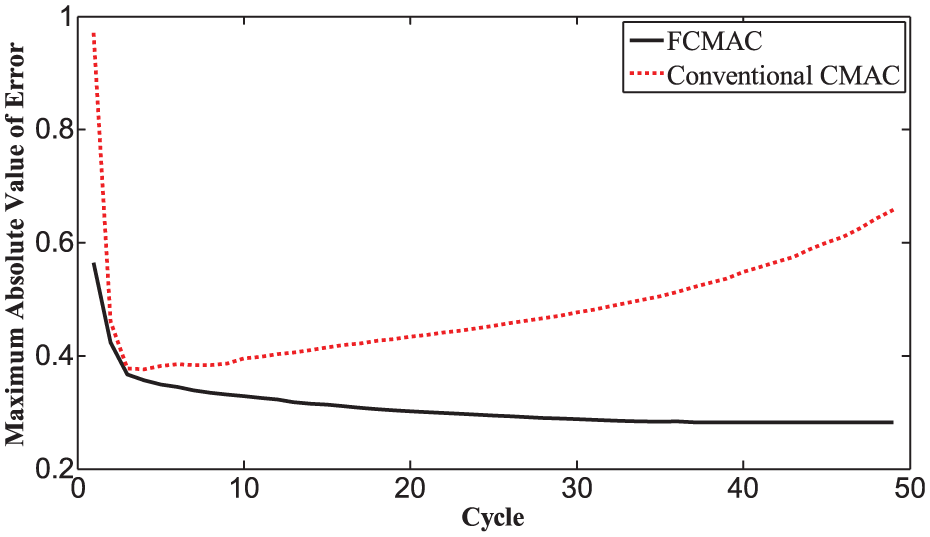
Cycle maximum error.
Anti-disturbance test
To test the anti-disturbance capability of the NFCMAC–PD compound controller, an anti-disturbance test is carried out. At 5–6 s, a disturbance torque of 2 N·m is imposed and the result is shown in Figures 8 and 9.
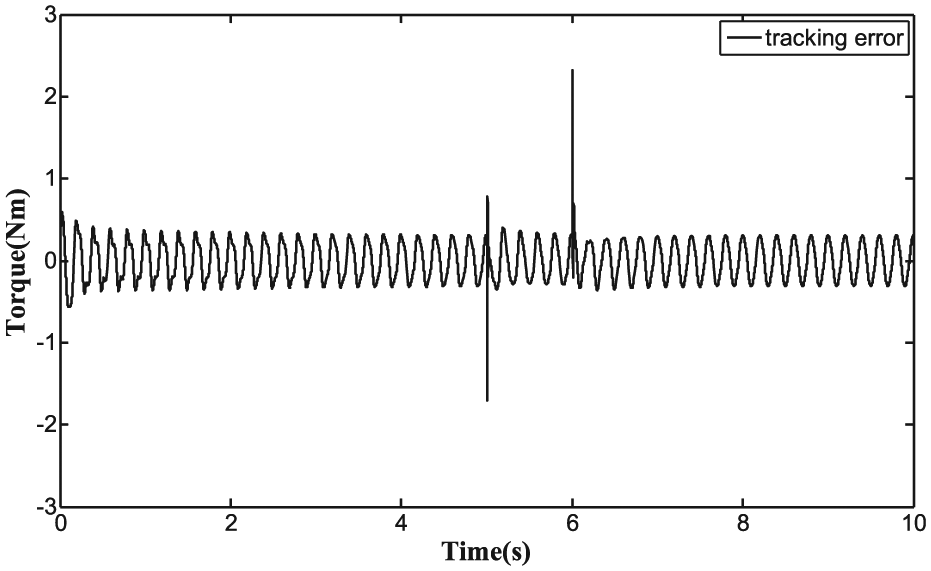
Tracking error of anti-disturbance test.
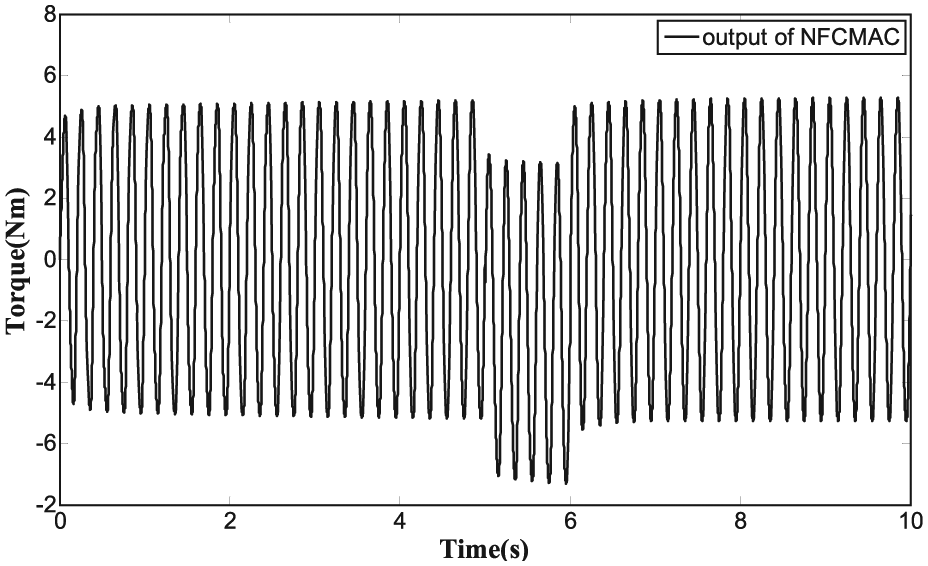
Output of naively fuzzy cerebellar model articulation controller (NFCMAC).
Figures 8 and 9 show that the error hops the moment the disturbance comes and yNFCMAC perceives the change of the error, hence it makes a negative offset immediately. A few seconds later, yNFCMAC maintains the negative deviation due to the persistence of the disturbance. As the revocation of the disturbance, the error hops instantaneously again. yNFCMAC perceives this change so that it makes the opposite deviation as the disturbance is imposed.
Selection of activated units in NFCMAC
Previously, the number of activated units is chosen as a prerequisite to the consistency of generalization. While in the independent NFCMAC network, fewer activated units mean that more weight increments will be added to the activated units and the computing burden will be lighter. Considering the real time control, control parameters should be the compromise between the computation burden and the control precision.
Table 3 records the average absolute error varying from the number of the activated units. The average absolute error in Table 3 is the average value of the maximum error per cycle during the simulation time of 40–50 s. As in the analysis mentioned above, the average absolute error increases as the number of the activated units increases. When the number of the activated units is one, the change of the average absolute error is beyond the acceptable range. We choose the number of activated units as two and the other parameters remain the same as stated earlier.
Simulation results.

Experimental results and analysis
Figure 10 shows that the test bed of the electric load simulator in the laboratory, which consists of a DC brushless torque motor, a host computer, a processor board DSP, a motor driver, a torque transducer, an AD7606, a FPGA, etc. The host computer is a PC with Intel core i7 CPU, and the codes are debugged and built under CCS in win7; DPS is a 32-bit TMS320F28355, which communicates with the host computer through the serial communication interface (SCI); the torque motor is a DC brushless torque motor C052A-13-3305 and the motor driver is SC10D4250U; AD7606 is a 16-bit high speed analogue-digital converter; FPGA is EP2C8Q208C8N, which filters the data obtained by the AD and transfers it to the DSP.
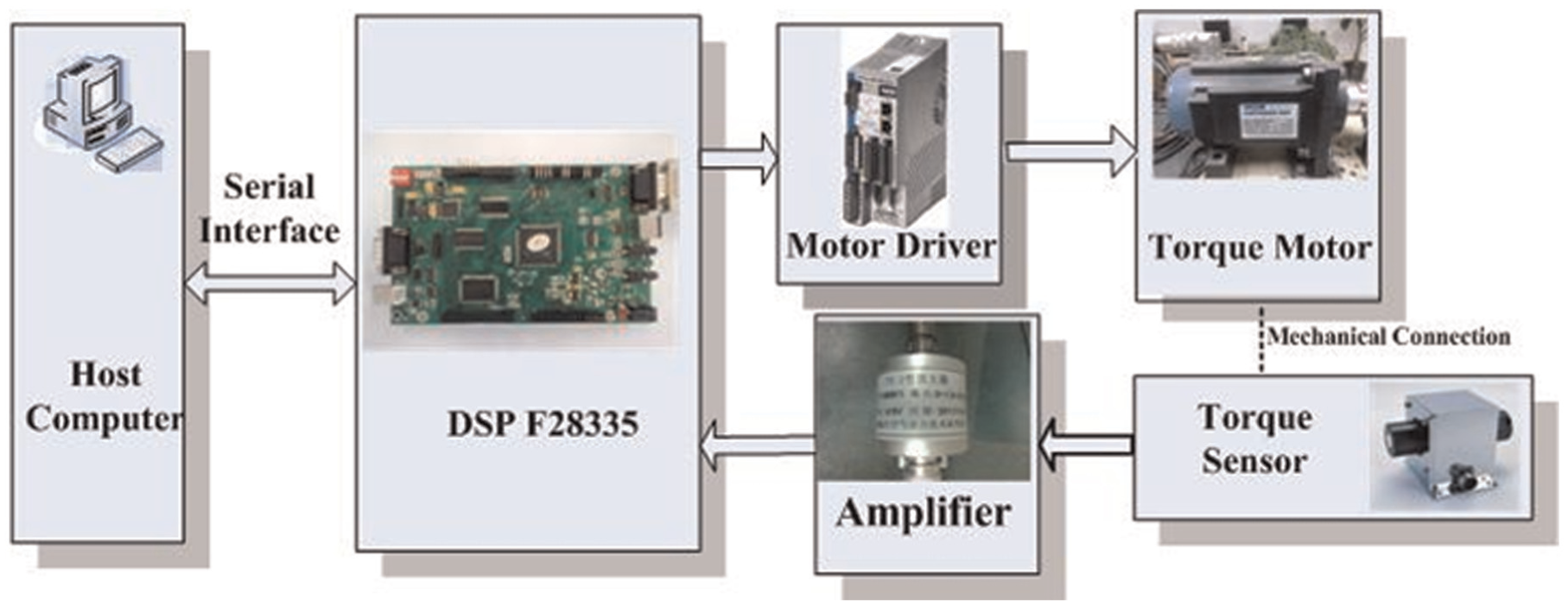
Block diagram of electric load simulator (Yang et al., 2014).
The control parameters of the experiment are the same as Table 2. The instruction torque is
Torque loading experiment
The tracking curves of the conventional CMAC–PD control strategy and the NFCMAC–PD control strategy are illustrated in Figures 11–14, in which the black curves represent the instruction torque, the blue curves represent the actual lines and the red curves represent the tracking error.
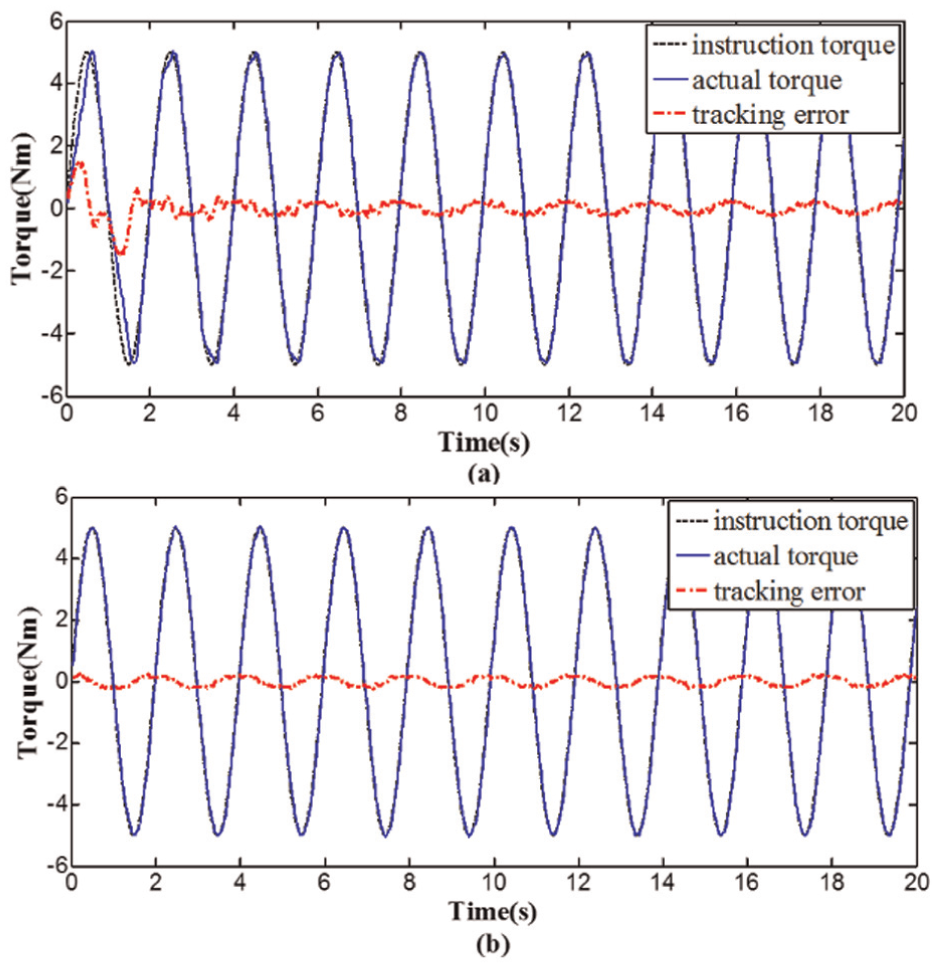
Tracking curves when instruction torque signal is 5 N·m at 0.5 Hz: (a) conventional cerebellar model articulation controller (CMAC)–PD; (b) naively fuzzy CMAC (NFCMAC)–PD.
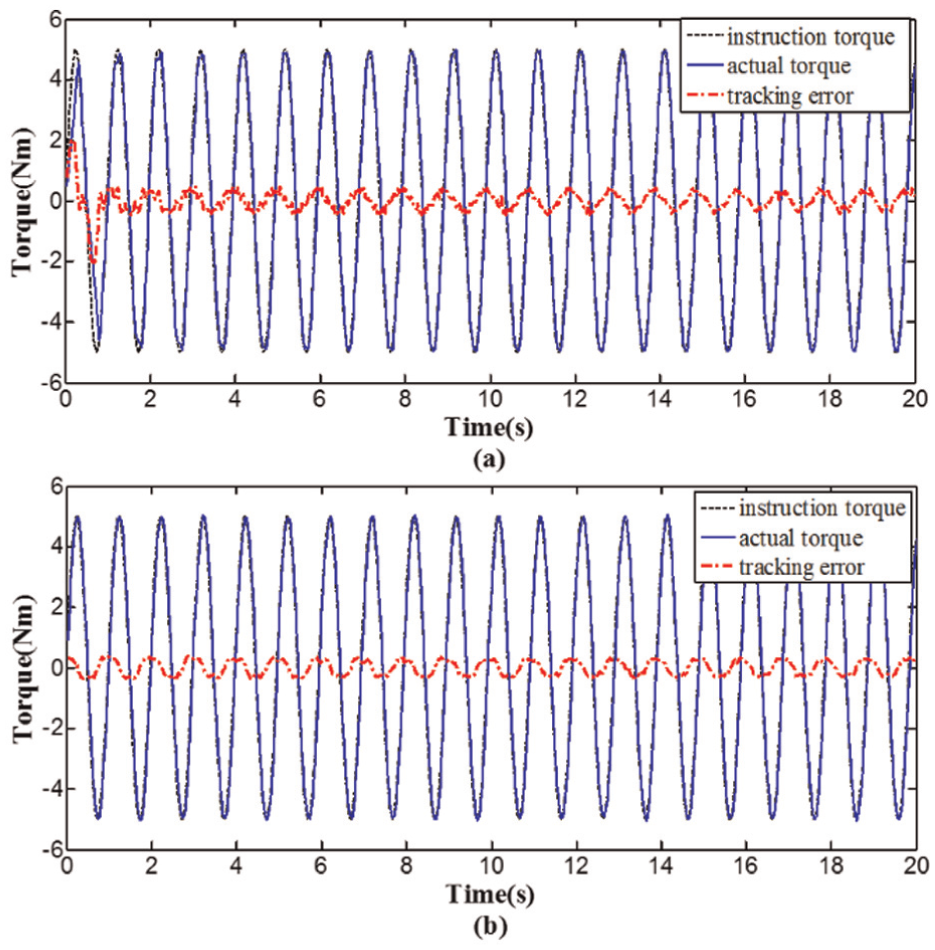
Tracking curves when instruction torque signal is 5 N·m at 1.0 Hz: (a) conventional cerebellar model articulation controller (CMAC)–PD; (b) naively fuzzy CMAC–PD.
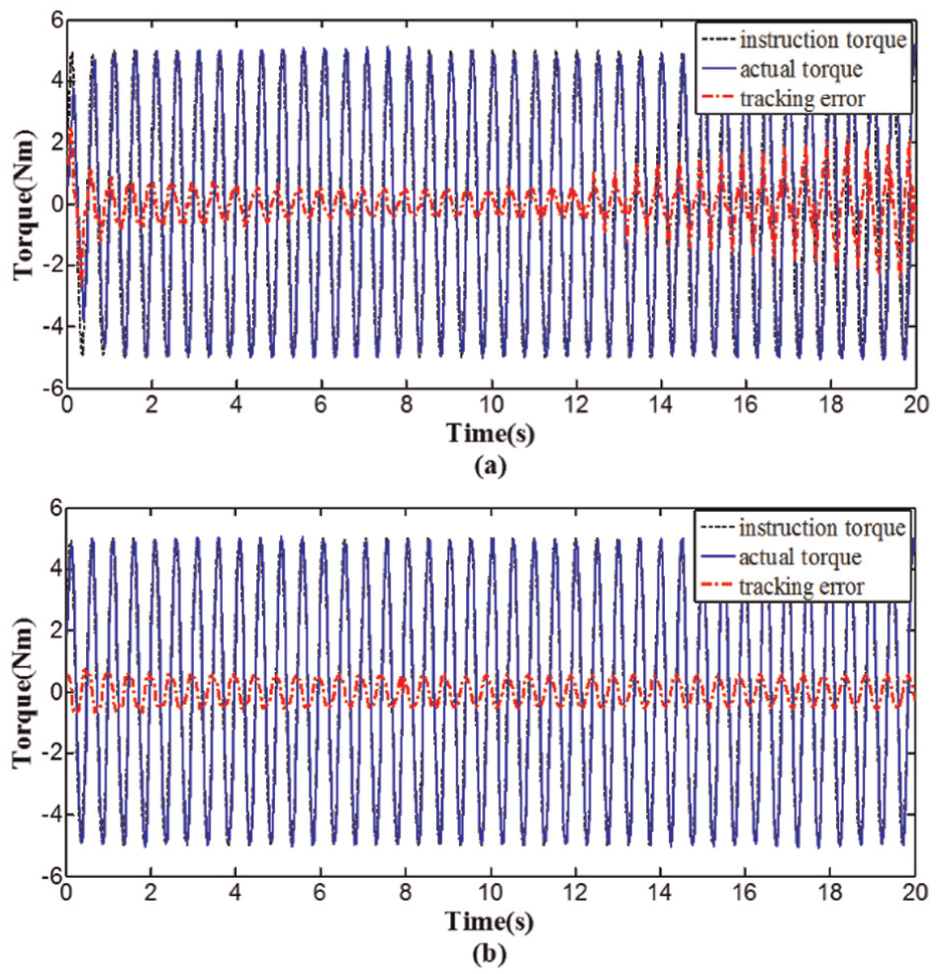
Tracking curves when instruction torque signal is 5 N·m at 1.5 Hz: (a) conventional cerebellar model articulation controller (CMAC)–PD; (b) naively fuzzy CMAC–PD.
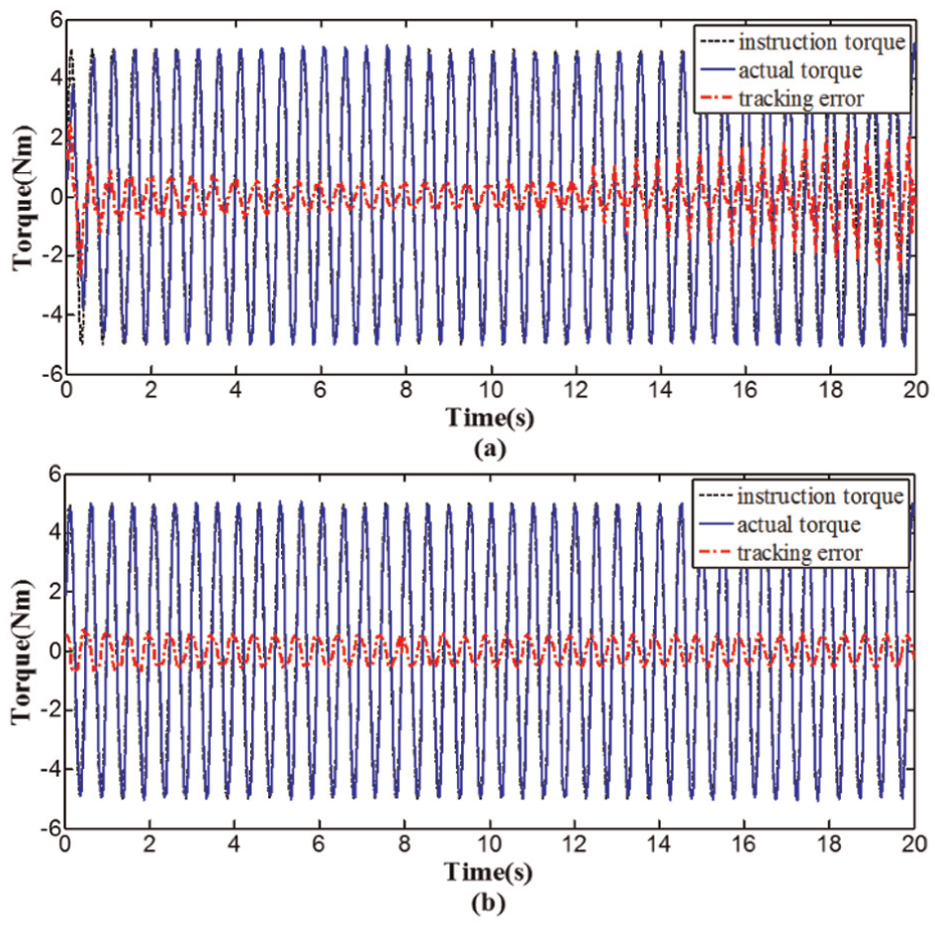
Tracking curves when instruction torque signal is 5 N·m at 2.0 Hz: (a) conventional cerebellar model articulation controller (CMAC)–PD; (b) naively fuzzy CMAC–PD.
The figures show that both the conventional CMAC–PD control strategy and the NFCMAC–PD control strategy converge rapidly at the same frequency but the convergence speed of NFCMAC–PD is faster than that of CMAC–PD. The reason is that the structure of both the conventional CMAC and NFCMAC is a simple one-to-one mapping structure and utilizes a gradient descent to update their weights, so that they all obtain a high convergence speed. Conventional CMAC uses a simple 0–1 logic to judge whether it is activated, while NFCMAC uses fuzzy logic to decide the weight units’ rate of contribution, which is higher than that of the conventional CMAC in the error tracking process; hence, the learning effectiveness is higher than that of conventional CMAC. On the other hand, the initial tracking error of the conventional CMAC–PD control strategy is larger than that of the NFCMAC–PD control strategy at the same frequency and the conventional CMAC–PD control strategy gradually diverges with the increasing load frequency, especially at the frequency of 2.0 Hz, whereas the NFCMAC–PD control strategy still stays converged as the load frequency increases. Furthermore, there is obvious local tremor in the tracking error of the conventional CMAC–PD control strategy, whereas the tracking error of the NFCMAC–PD control strategy is smoother.
Testing of anti-disturbance ability
Figure 15(a) and (b) illustrate the stability test of the conventional CMAC–PD control strategy and the NFCMAC–PD control strategy respectively. Without loss of generality, the test is conducted at the instruction torque of
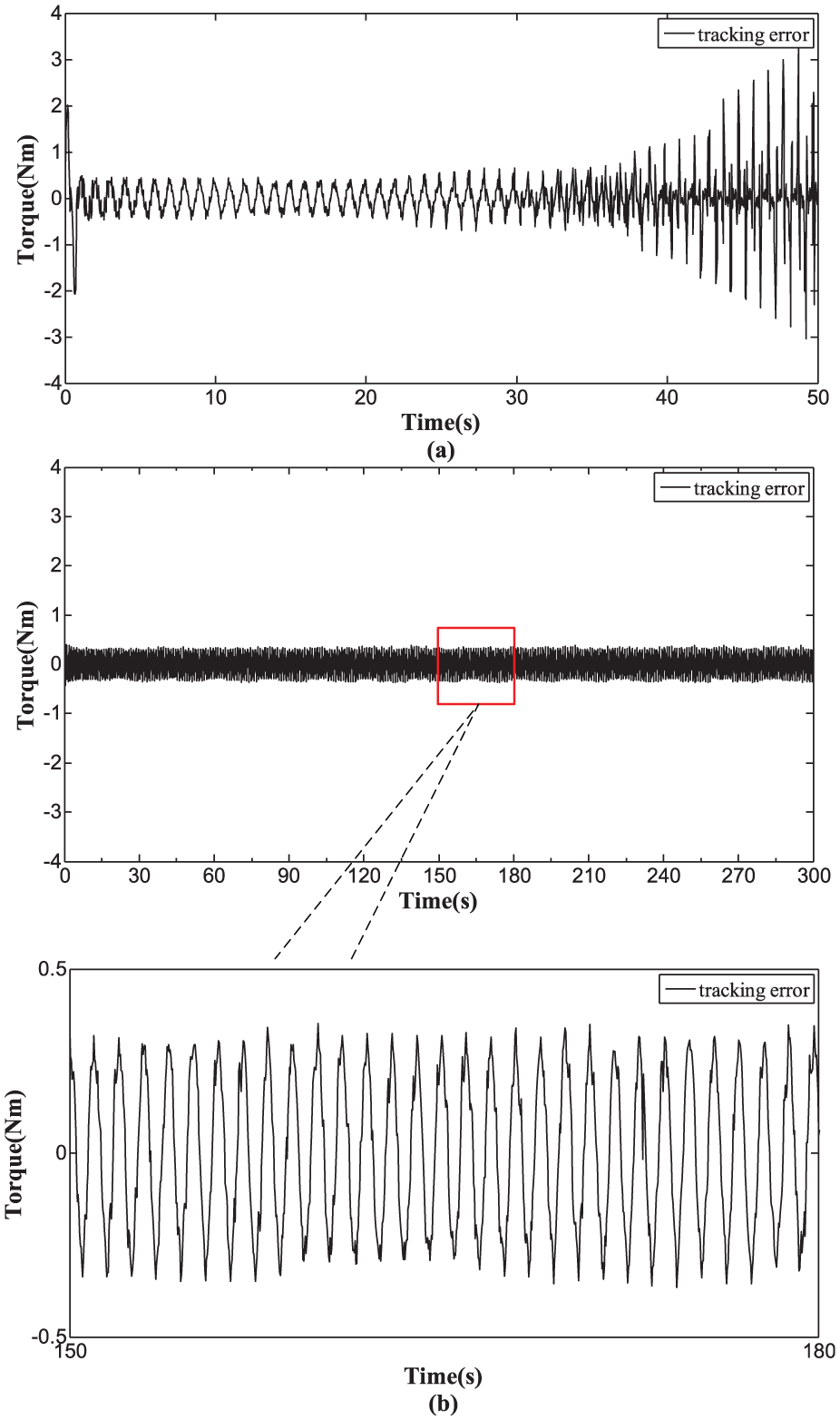
Stability test: (a) conventional cerebellar model articulation controller (CMAC)–PD; (b) naively fuzzy CMAC–PD.
In order to test the anti-disturbance ability of the NFCMAC–PD control strategy, six torques are added at about 20, 30, 60, 80, 100, 130, 170 and 220 s respectively. There are three disturbance levels, small, medium and heavy; the tracking error with the disturbances mentioned above is recorded in Figure 16. When the intensity of disturbance is small (A and H), the tracking error may rapidly recover to its previous stage. When the intensity of disturbance is medium (C, D, E and F), the tracking error may still recover to its previous stage. Furthermore, when the intensity of disturbance is heavy (B and G), the tracking error may recover to its previous stage after a few learning cycles.
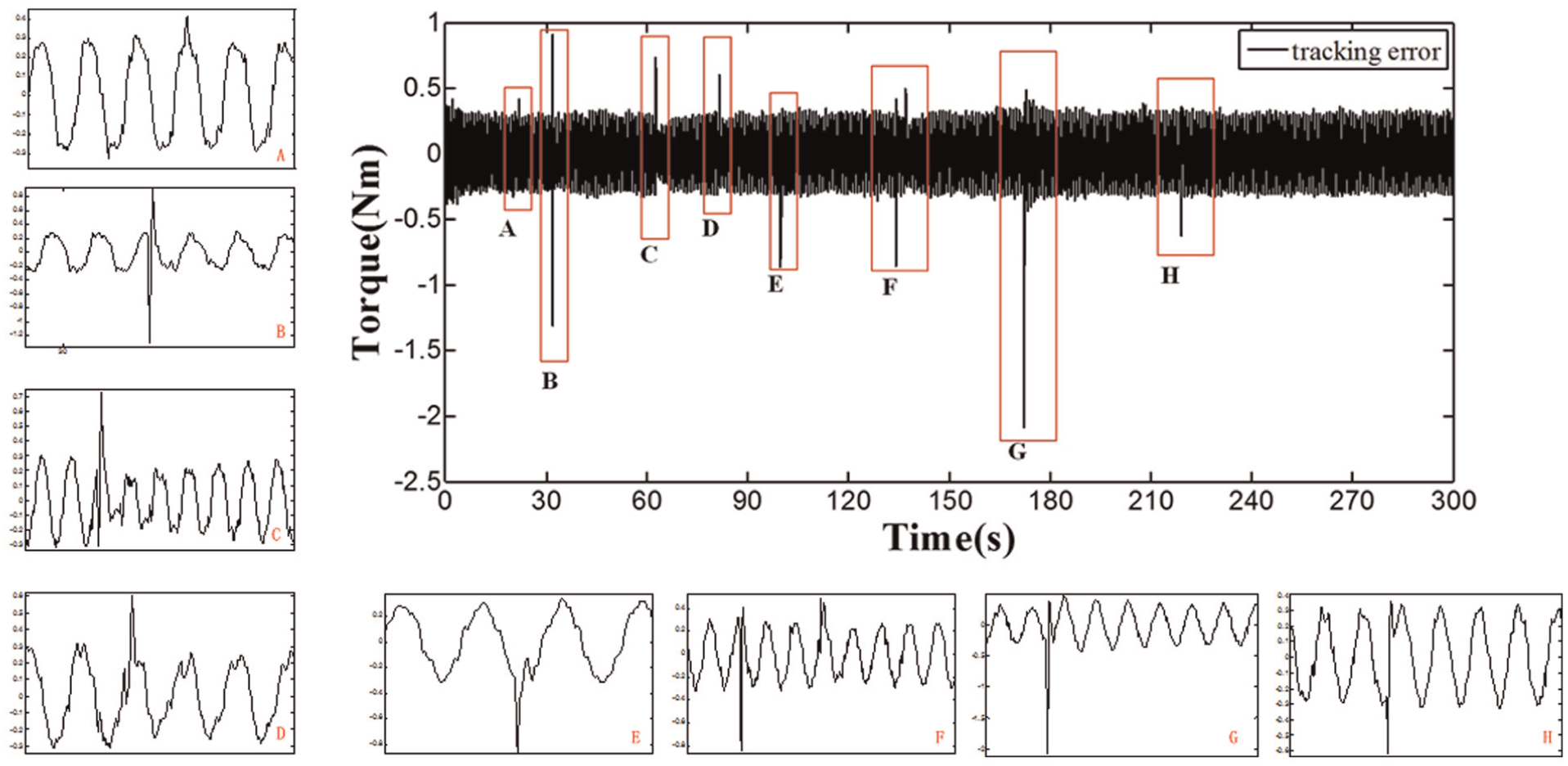
Tracking error of naively fuzzy cerebellar model articulation controller (NFCMAC)–PD control strategy with disturbance.
All the experiments carried out above demonstrate that the NFCMAC–PD control strategy may improve the control effect by increasing the learning effectiveness, smoothing the output torque and improving the anti-disturbance ability.
In recent years, our laboratory has been working on improving the control precision of the electric load simulator. Compared with the smooth CMAC–PD control strategy (Yang and Han, 2014) and the improved CMAC–PD control strategy (Yang et al., 2014), the proposed NFCMAC–PD control strategy has achieved good control precision. To prove such control superiority, the maximum absolute errors and cycle of the three control strategies are recorded in Table 4. A cycle is defined as one period of the instruction torque signal. For better comparison, the experimental tracking results of three control strategies are shown when the instruction torque signal is 5 N·m at 1.0 Hz.
Comparison of maximum absolute errors (N·m).

NFCMAC, naively fuzzy cerebellar model articulation controller; CMAC, cerebellar model articulation controller; PD, proportional–derivative.
Conclusion
In this paper, we introduced a simple NFCMAC–PD compound controller and successfully applied it to the electric load simulator. By using fuzzy logic to CMAC, the activation degree can range from 0 to 1, which will make it more suitable for the high-order continuous derivative of the excitation signals. The modest activation mode and the ignition intensity are achieved by the mapping from the input vector to the Associative Space. The output evaluation is decided by the ignition intensity and weight value of the units in the Physical Space, and the weight increment is determined by the activation mode. In other words, NFCMAC takes the advantages of both the local neural network and the global neural network, whereas the change of the activated block between the adjacent epochs is reduced so that the output divergence and the approximation effect can be ensured. The practicability and robustness of the control strategy has been verified through simulation and experimentation. The experimental results indicated that the proposed strategy exhibited good approximation and anti-disturbance ability.
Footnotes
Acknowledgements
The authors would like to express their gratitude for the financial support by National Natural Science Foundation of China (No. 51277008).
Conflict of interest
The authors declare that there is no conflict of interest.
Funding
The author(s) disclosed receipt of the following financial support for the research, authorship, and/or publication of this article: This study is financially support by National Natural Science Foundation of China (No. 51277008).