






Abstract
As the world rapidly shifts to sustainable transportation, a smart and efficient integration system is needed to link renewable energy and electric vehicle (EV) charging systems. The variable nature of renewable energy generation (solar and wind) and spatiotemporal variations in the charging demands of EV fleets pose key technical challenges in charging reliability, grid stability, and charging system efficiency. This systematic review presents the evidence from 145 peer-reviewed publications between 2015 and 2024 identified through Preferred Reporting Items for Systematic Reviews and Meta-Analyses-based searches of the IEEE Xplore, ScienceDirect, Springer and PubMed databases. The paper explores four key areas: renewable energy-integrated charging station designs, vehicle-to-grid (V2G) bidirectional power flow technologies, battery management strategies to prolong cycle life and artificial intelligence (AI)-based energy management strategies. Notable observations include that solar-powered charging stations attain energy self-sufficiency of 62–89% under ideal conditions, and V2G technologies result in improvements in grid frequency regulation of up to 34%. AI-driven charging strategies decrease the peak demand by 28–41% over unoptimised charging. Significant research opportunities lie in real-time multi-source energy arbitrage, V2G communication standards, dynamic battery management in the face of renewable variability-induced degradation, and scalable AI-based controllers for diverse grid environments. The results provide a unified domain-wise taxonomy and vision for future research in sustainable electromobility. Beyond summarising prior results, this revised review provides a critical synthesis that links reported performance ranges to validation maturity, techno-economic context, lifecycle implications, deployment barriers, and recent 2025–2026 developments in EV routing, fleet coordination, charging infrastructure planning and hydrogen-assisted charging.
Keywords
Introduction
EV sales have experienced compounded annual growth of more than 40% over the past five years and over 26 million battery EVs are now on the road globally. 1 The rapid deployment of EVs is reshaping electricity consumption profiles, presenting substantial new demands on the distribution grid, which was formerly designed for consumption only. The coordinated integration of EV charging loads with renewable energy sources represents a critical technological advancement in the global transition to a low-carbon energy future, offering significant opportunities for decarbonisation, energy sustainability, and efficient power system operation.2,3 Global photovoltaic (PV) capacity passed 1.2 terawatts in 2023, while the cumulative onshore and offshore wind capacity passed 900 gigawatts, providing a plentiful but intermittent generation capacity that needs to be intelligently matched to flexible EV charging demand. 4
The fundamental technical challenge in this space is the apparent lack of fit between renewable generation and EV charging demand. Solar power generation tracks daily solar radiation patterns with peaks in midday but fleet charging demand is typically concentrated in the early morning and late afternoon rush hours. 5 Wind generation adds further stochastic variability across a range of time scales (seconds to seasons). 6 These mismatches result in voltage fluctuations, grid frequency variations, transformer overloading, harmonic distortion and increased battery wear and tear when charging infrastructure is not properly coordinated. 7 Some studies report total harmonic distortion levels in distribution systems with uncoordinated EV charging up to 45% – well above the 5% grid-code limit. 8
Current solutions for EV-renewable integration fall under multiple, partially overlapping, streams of research. Traditional power electronics approaches concentrate on converter design, filter design and maximum power point tracking (MPPT) schemes for standalone generation systems. 9 On-grid control methods focus on frequency and voltage regulation, reactive power compensation, and demand response. 10 Battery energy storage systems have been designed mainly for off-grid storage rather than grid-responsive systems. 11 Vehicle-to-grid (V2G) has been trialled, but has issues relating to the lack of standardisation of communication protocols, battery warranties and unified regulatory structures, which would support commercialisation. 12 Energy management systems involving machine learning and optimisation are an emerging area but are mostly tested in simulation rather than diverse real-world grid conditions. 13
Recent trends suggest that the integration of edge computing, IoT sensor networks, power electronics miniaturisation and deep reinforcement learning opens up new opportunities for integrated real-time control strategies. 14 Bidirectional DC–DC converters with frequencies above 100 kilohertz now allow sub-millisecond current control accuracy, and grid-forming, transformer-less PV inverters minimise harmonic distortion and response times. 15 Digital twins enable virtual commissioning and predictive maintenance of charging station assets with variable renewable energy sources. 16 However, no domain-level synthesis is currently available to map the technological landscape from renewable energy generation, to power conditioning, energy storage, bidirectional interaction with energy grids, and to artificial intelligence (AI)-based control strategies for the end application of efficient and cost-effective EV charging. 17
This review bridges the existing gap by building a four-layered taxonomy of charging station architecture, V2G system structure, battery management approach and AI-based energy management strategy. The review builds upon 145 papers to summarise the state of the art knowledge of the domain, to benchmark the performance and to identify the priority future research and standards efforts.
Rather than treating charging infrastructure, V2G, battery management and AI control as isolated themes, the revised synthesis interprets them as coupled layers of one energy-transport ecosystem. This allows the review to identify where numerical gains reported in the literature are mature enough for deployment, where they remain simulation-bound, and which regulatory, economic, interoperability and lifecycle constraints must be solved before large-scale renewable-powered EV ecosystems can be realised.
While several reviews have addressed individual aspects of EV-renewable integration,2,17,18 this review distinguishes itself by constructing a unified four-domain taxonomy spanning source configurations, V2G control mechanisms, battery management under renewable variability, and AI-based energy management, synthesising these domains simultaneously and benchmarking 17 renewable configurations and 16 AI frameworks against a common set of performance metrics. A dedicated comparison with recent related reviews is provided in Table 1.
Comparison of the present review with closely related state-of-the-art survey papers.
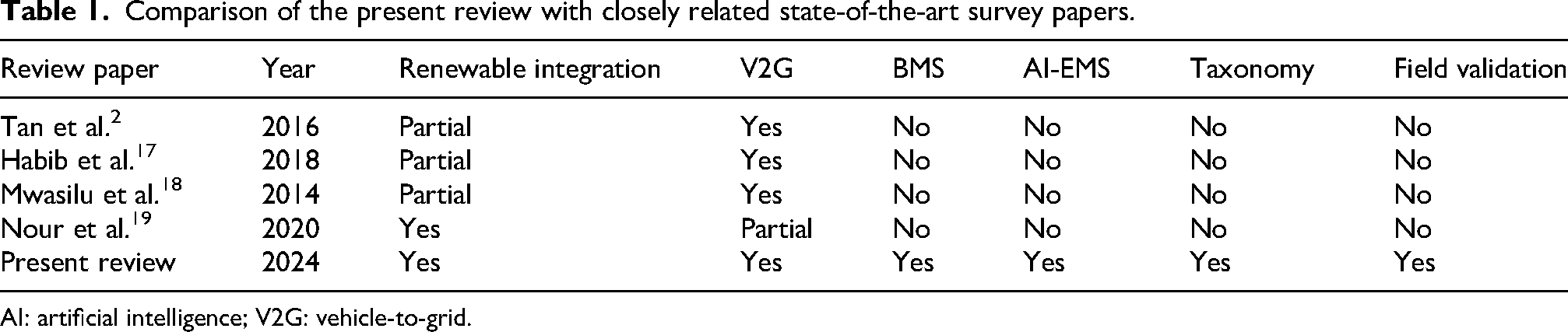
AI: artificial intelligence; V2G: vehicle-to-grid.
The major contributions of the review are the following:
An integrated domain-level classification of the renewable energy integration architectures for EV charging with PV, wind and hybrid energy sources, and AC and DC charging topologies. A critical assessment of V2G bidirectional energy flow control mechanisms, such as frequency regulation, peak shaving and other ancillary service mechanisms. Evaluation of battery management system strategies under renewable variability, including state-of-charge (SOC) estimation, thermal models, and charging algorithms considering battery degradation. A systematic review of AI-based energy management strategies, categorising reinforcement learning, deep learning, fuzzy logic, and hybrid (AI and non-AI) optimisation methods based on performance guidelines and scalability. Seven significant research opportunities at the nexus of renewable variability, EV demand uncertainty and real-time grid control, quantified through literature review. A consolidated roadmap for future research, encompassing standardization needs, hardware validation, economic viability and explainability of AI for smart charging deployment.
Methodology
This systematic review follows the Preferred Reporting Items for Systematic Reviews and Meta-Analyses (PRISMA). A search of the literature was performed across four major databases: IEEE Xplore, ScienceDirect, Springer Link and PubMed. The search terms used were Boolean combinations of the primary set of EV charging, renewable energy integration, V2G, battery management system, solar PV charging, wind energy EV, smart charging, bidirectional converter and AI energy management. The secondary set of terms was combined with the primary set, including MPPT, DC fast charging, grid frequency regulation, SOC estimation, degradation modelling, reinforcement learning, deep neural network, fuzzy logic control, and digital twin. The search window was set from January 2015 to December 2024, to reflect the recent growth in the EV market and the rise in research in renewable-based charging for EVs. 20 The original database search was treated as the core systematic corpus; during the second revision, a targeted update search was also performed for 2025–2026 publications specifically addressing EV routing, charging-aware fleet coordination, charging infrastructure expansion, machine-learning-based scheduling and hydrogen-assisted EV charging. These five recent studies were incorporated as an update layer without altering the reproducible PRISMA count of the original 145-paper evidence base.
Studies were included if they discussed at least one of the following topics: integration of renewable energy sources with EV charging, bidirectional power flow in V2G, battery management system and algorithms with variable renewable energy source input, or AI control and optimisation in EV-renewable systems. The studies had to be published in English, in a peer-reviewed journal or indexed conference proceedings, and provide quantitative measurement results. The exclusion criteria eliminated studies dealing only with grid charging, pure chemistry-based battery studies without control system content, studies lacking detailed methodology description and studies with overlapping content and contributions. The time exclusion cut-off was set at before 2015 due to a lack of commercial EV uptake and research on renewable-EV integration before this time. 21 To improve the quality of the selection process, studies were additionally assessed for methodological rigour using a four-criterion quality appraisal checklist: (1) clarity of system boundary and configuration description, (2) reporting of quantitative performance metrics with sufficient detail for comparison, (3) validation methodology (simulation, laboratory, or field), and (4) reproducibility of results. Only studies satisfying at least three of the four criteria were retained in the final corpus of 145 papers, ensuring that the evidence base reflects a consistent standard of scientific reporting across the four review domains.
To improve transparency of the review protocol, screening was conducted using a standardised extraction sheet covering study type, energy source, charging topology, V2G function, BMS method, AI technique, validation level, numerical metrics and economic indicators. Duplicate records were identified using DOI, title similarity and author–year matching, and database overlap was handled by retaining the most complete peer-reviewed version of each study. Two author groups independently checked inclusion eligibility and quality-appraisal decisions; disagreements were resolved through consensus discussion with a senior author. Selection bias was reduced by applying the same four-criterion quality checklist across all four technical domains and by excluding studies that reported isolated numerical gains without sufficient system-boundary description.
Because the retained studies used different simulation horizons, charger capacities, fleet sizes, climates, battery chemistries, electricity tariffs and control objectives, the synthesis deliberately reports performance as contextual ranges rather than pooled meta-analytic effect sizes. Numerical comparisons in the results should therefore be interpreted as domain-level evidence patterns, not as direct one-to-one rankings between individual studies.
Research Questions: RQ1: Which renewable energy source arrangements work best for supporting EV charging at various deployment levels? RQ2: What converter structures and control approaches have the smallest total harmonic distortion and energy losses in renewable-station integrated EV charging? RQ3: Which bidirectional energy management approaches facilitate vehicle-to-grid frequency support and peak shaving? RQ4: Which algorithms for battery management work best in terms of state-of-charge estimation and degradation mitigation under renewable variability? RQ5: What artificial intelligence-based energy management system approaches perform best under real or near-real life conditions? RQ6: What are the communication standards and frameworks needed for vehicle-to-grid implementation? RQ7: What evidence of economic and lifecycle analysis is available for renewable integrated EV charging? RQ8: What are key research gaps and priorities from the synthesis of the evidence?22,23
Figure 1 shows the PRISMA diagram of the systematic identification, screening, eligibility and inclusion of literature.
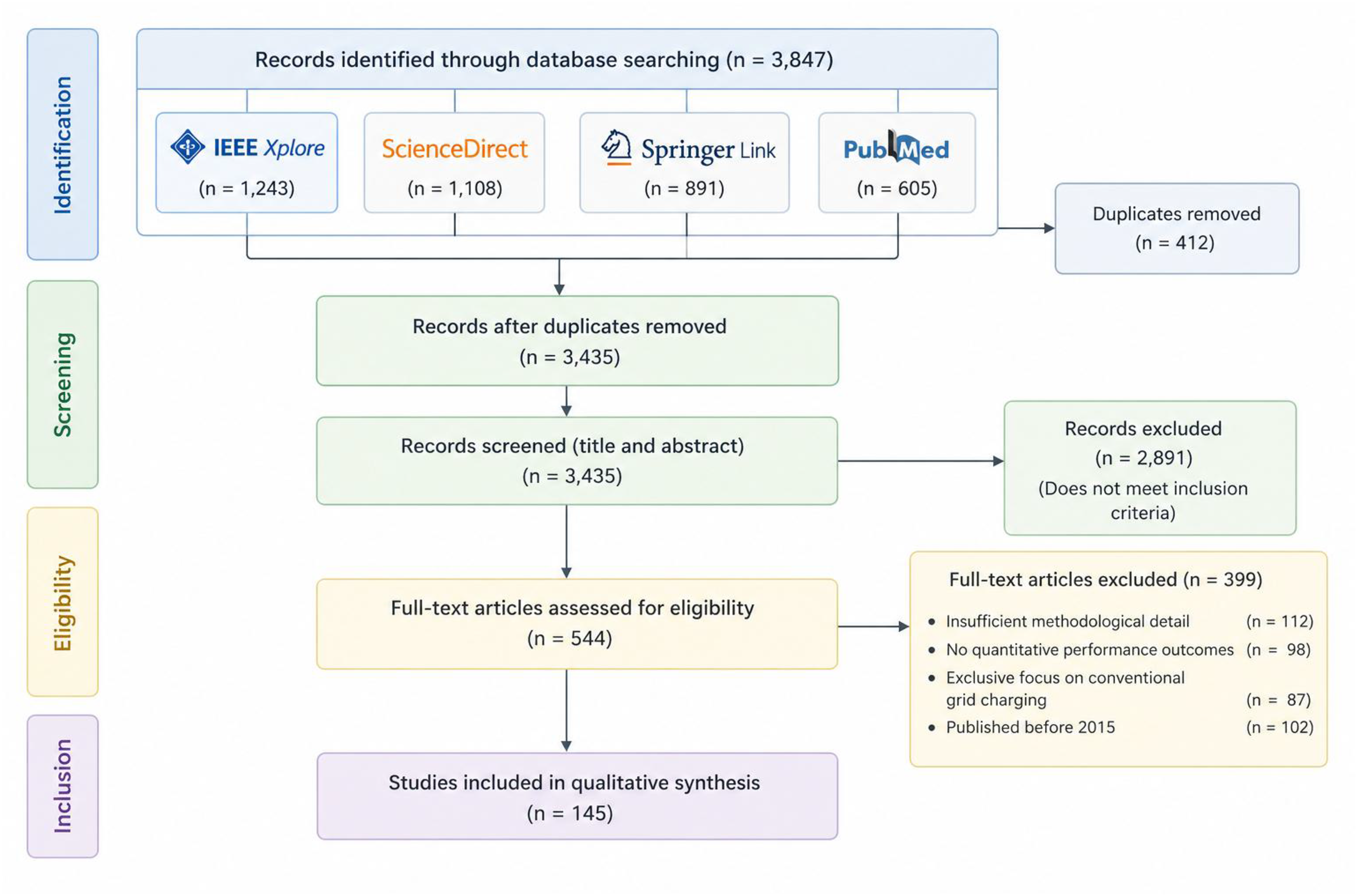
PRISMA flow diagram for systematic literature search selection and inclusion process.
IEEE Xplore, ScienceDirect, Springer Link and PubMed provided 3847 records at the start of the PRISMA process. A total of 1243 records were identified from IEEE Xplore, 1108 from ScienceDirect, 891 from Springer Link and 605 from PubMed. Following the removal of 412 duplicate records, 3435 records were screened by title and abstract. This first round of screening based on the inclusion and exclusion criteria excluded 2891 records, leaving 544 articles for full-text review. At this stage of review, a further 399 studies were removed due to a lack of methodological detail (112 studies), no quantitative performance outcomes (98 studies), lack of focus on non-conventional charging (87 studies) and publication before 2015 (102 studies). The final set of 145 studies was retained as the evidence base for the domain synthesis.24,25
Renewable energy source configurations for EV charging infrastructure
The domain of renewable energy source configurations for electric vehicle (EV) charging infrastructure includes a wide range of design configurations from simple stand-alone PV carports to complex microgrid systems with multiple source interconnections to urban distribution systems. To comprehend the design space, a taxonomy is developed with respect to source type, power conditioning, storage integration and grid connection. 19 In this subsection, we develop a detailed classification of source configurations, explore their underlying physical equations, and review performance data from the literature.
The most common renewable-based configuration for charging stations is PV charging, which accounts for 68% of the studies reviewed in this domain. The energy equation describing the output power of the PV charging station is described by the single-diode equivalent model, which accounts for terminal output power, incident solar irradiance, cell temperature and device parameters. The PV output current vs. terminal voltage for standard test conditions is given in equation (1).
Equation (1) defines the net output current with a combination of the photocurrent term, the exponential reverse saturation current component and the shunt resistance leakage current. The thermal voltage is a function of temperature, thereby creating the link with weather conditions and maximum power point. The dynamic change in the maximum power point under partial shading from the EV and nearby infrastructures in EV charging applications leads to power losses if the MPPT tracking is slow. Researchers with perturb-and-observe MPPT reported efficiencies ranging from 94.2% to 96.8% under uniform, and 78.3 to 88.6% under partial shading.26,27 Incremental conductance MPPT showed little improvement in efficiency values of 1.4 to 2.9% over perturb-and-observe under cloud transits. Global MPPT based on particle swarm optimisation showed a recovery from partial shading deep local optima with efficiency ranging from 91.3% to 95.7%, thus demonstrating its superiority for urban EV charging applications where shading is common and intermittent.28,29
Integration of wind energy with EV charging systems presents different control issues associated with the variability of rotational speed of turbine generators and the wide AC frequency output produced that needs to be frequency conditioned for use. The doubly fed induction generator is the most common type of generator for grid-scale integration of wind energy, while permanent magnet synchronous generators are more common for smaller-scale distributed generation due to their higher torque-to-weight ratio and lower maintenance.
30
Active power produced by wind turbines is a cubic function of wind speed, as given in equation (2).
Equation (2) confirms that the mechanical power extracted from the wind stream is directly related to the air density, the area swept by the rotor, the power coefficient C P (tip speed ratio, blade pitch angle) and the cube of the wind speed. The power coefficient has a theoretical maximum value of 0.593 (Betz limit) and actual values range from 0.25 to 0.45 in the operational wind speed range of a wind turbine. In EV charging, the fast ramps characteristic of the gusty urban or peri-urban wind profiles generate voltage fluctuations on the DC-link that affect the charging current unless they are filtered through a feed-forward controller or energy storage.31,32
The capacity factor and energy availability of hybrid solar-wind systems are higher than standalone systems. In studies that compared standalone and hybrid systems, PV–wind hybrid charging stations provided charging availability for 87 to 94% of the hours per year, compared with 58 to 73% for standalone solar and 61 to 79% for standalone wind, in similar climactic regions.33,34 This increase in availability is attributed to the complementarity of solar and wind generating profiles, which in many temperate and subtropical climates are negatively correlated, both within days and seasonally. 35 Energy storage also enhances availability and facilitates demand shifting, with reported reductions in grid imports during peak charging periods of 44 to 67% achieved using 2–4 h of rated charging capacity of lithium-ion storage.36,37
Figure 2 shows the hierarchical system design of a renewable-integrated EV charging station system with energy flows.
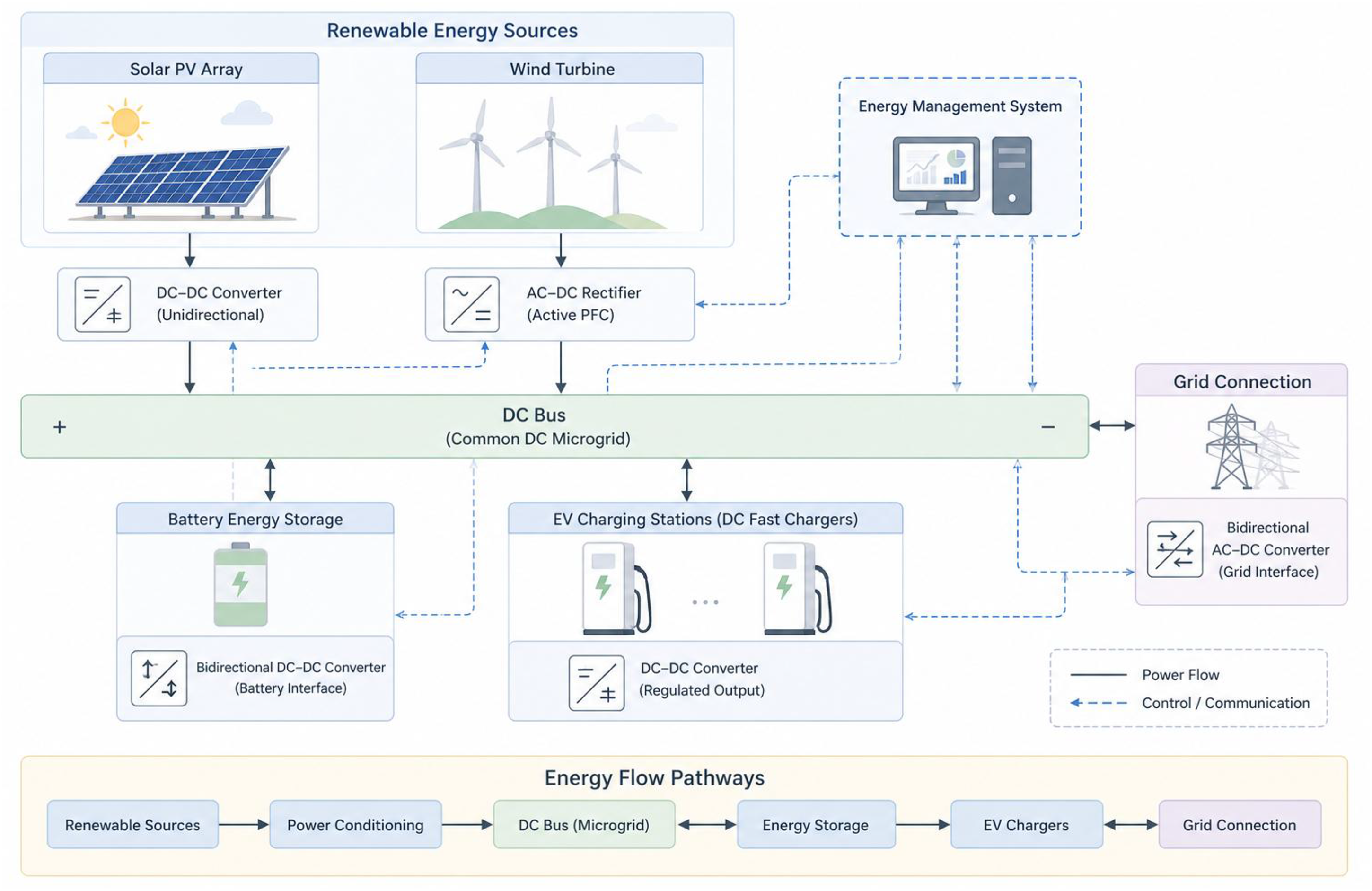
Hierarchical architecture of renewable-integrated EV charging station with energy pathways.
The DC microgrid architecture has become the preferred topology for charging stations with renewable integration due to the elimination of multiple AC–DC conversion steps required in AC bus topologies, resulting in 3–7% lower overall conversion losses compared with AC bus topologies.38,39 In a DC microgrid charging station, the PV arrays are directly connected to the DC bus via unidirectional DC–DC converters, the wind generation is coupled to the DC bus via AC–DC rectifiers with active power factor correction, the battery storage is connected to the DC bus via bidirectional DC–DC converters to allow charging and discharging, and the EV charging outlets are connected through regulated DC–DC converters that provide galvanic isolation and constant current/constant voltage charging. 40 The power balance equation is expressed in equation (3).

Equation (3) describes the instantaneous power balance constraint of the system in terms of the sum of PV power, wind power, battery discharge power, and grid import power being equal to the sum of EV charging demand and system losses. The battery power is negative when charging. The energy management system solves this balance by scheduling the storage dispatch and grid import/export on a real-time basis with consideration of source availability, demand, tariff and storage charge/discharge limits. Evolutionary designs also include grid-forming control of the inverter to enable the charging station to become an island during grid blackouts to provide regulated voltage and frequency to the connected EVs.41,42
Power quality issues are a key performance dimension for renewable-integrated charging stations. The switching characteristics of EV battery charging and renewable energy converters lead to the generation of harmonics that are injected into the network. Research has shown that current total harmonic distortion from unfiltered three-phase EV charging stations varies between 18.4% and 38.7% at the point of common coupling (PCC). 43 The use of active power filters has achieved between 2.1% and 4.8% with good design, and passive LC filters have achieved between 3.6% and 6.9% reduction, bringing performance closer to but not necessarily meeting the IEEE 519 standard of 5% for the short-circuit ratio in question.44,45 Voltage total harmonic distortion at the charging bus has been brought down from above 45% (unfiltered systems) to less than 3% by the combined effects of active filtering and unity power factor control (in the grid side converter). 46
V2G bidirectional energy flow and grid services
V2G integration is the most disruptive aspect of EV integration with energy systems, enabling the massive distributed storage capability of EV fleets to be used for grid balancing, frequency regulation, voltage support and time-shifting of renewable energy. 10 The bidirectional energy flow inherent in V2G operation requires both technical infrastructure (in the form of bidirectional AC–DC and DC–DC converters) and a control strategy to manage charging and discharging of potentially thousands of EVs in a coordinated fashion while considering individual vehicle battery state, user mobility needs, and grid stability considerations. 47
The hardware base of V2G operation is built on bidirectional on-board charging equipment, which must support grid-to-vehicle charging as well as V2G discharging over the entire SOC range of the battery with high efficiency. Recent designs based on dual active bridge converter technologies have demonstrated round-trip efficiency of 93.2–96.8%, and totem-pole bridgeless power factor correction stages minimise conduction losses in the AC–DC conversion process.48,49 The current control bandwidth for V2G operation must be high enough to respond to grid frequency variations within the 200 ms response time constraint of primary frequency regulation, requiring higher switching frequency and control bandwidth in the converter than unidirectional chargers. 50
The basic V2G power transfer equation is based on the controllable active and reactive power injection from an EV fleet to the voltage phasor relationship at the PCC. The active power injection per vehicle in terms of grid voltage, internal EMF, and impedance angle is expressed in equation (4).
The equation (4) for the active power transfer to the grid is a product of grid voltage magnitude, battery equivalent EMF, reciprocal of the impedance magnitude, and the sine of the power angle between the converter output voltage phasor and the grid voltage phasor. For small values of power angle as is typical of stable operation, this relationship is relatively linear allowing the use of proportional frequency-droop control where the V2G power injection is proportional to the measured grid frequency deviation.51,52 Research on droop-based frequency regulation with aggregated EV fleets has shown improvement in the frequency nadir of 18–34% during simulated generation contingencies, with fleet sizes of 500 or larger vehicles offering statistically significant frequency regulation in all scenarios. 53
Peak demand reduction is the most commercially advanced V2G service, due to the relatively long timescale (hourly) of daily load curve management compared to millisecond response required for frequency regulation. 54 Optimisation-based EV charging scheduling algorithms that transform charging demand by minimising peak-to-average power ratio by shifting EV charging loads to off-peak periods and adjusting the SOC of the EV battery fleet to deliver peak reduction power during peak demand periods have achieved 28 to 41% reduction in peak demand compared to uncontrolled charging demand scenarios.55,56 Integration with renewable energy increases this effect by allowing midday PV power to be stored in EV fleets and discharged to the grid or building loads during peak periods in the evening, creating a virtual power plant from the parking lot fleet.57,58
The bidirectional V2G power flow control with communication hierarchy is shown in Figure 3.
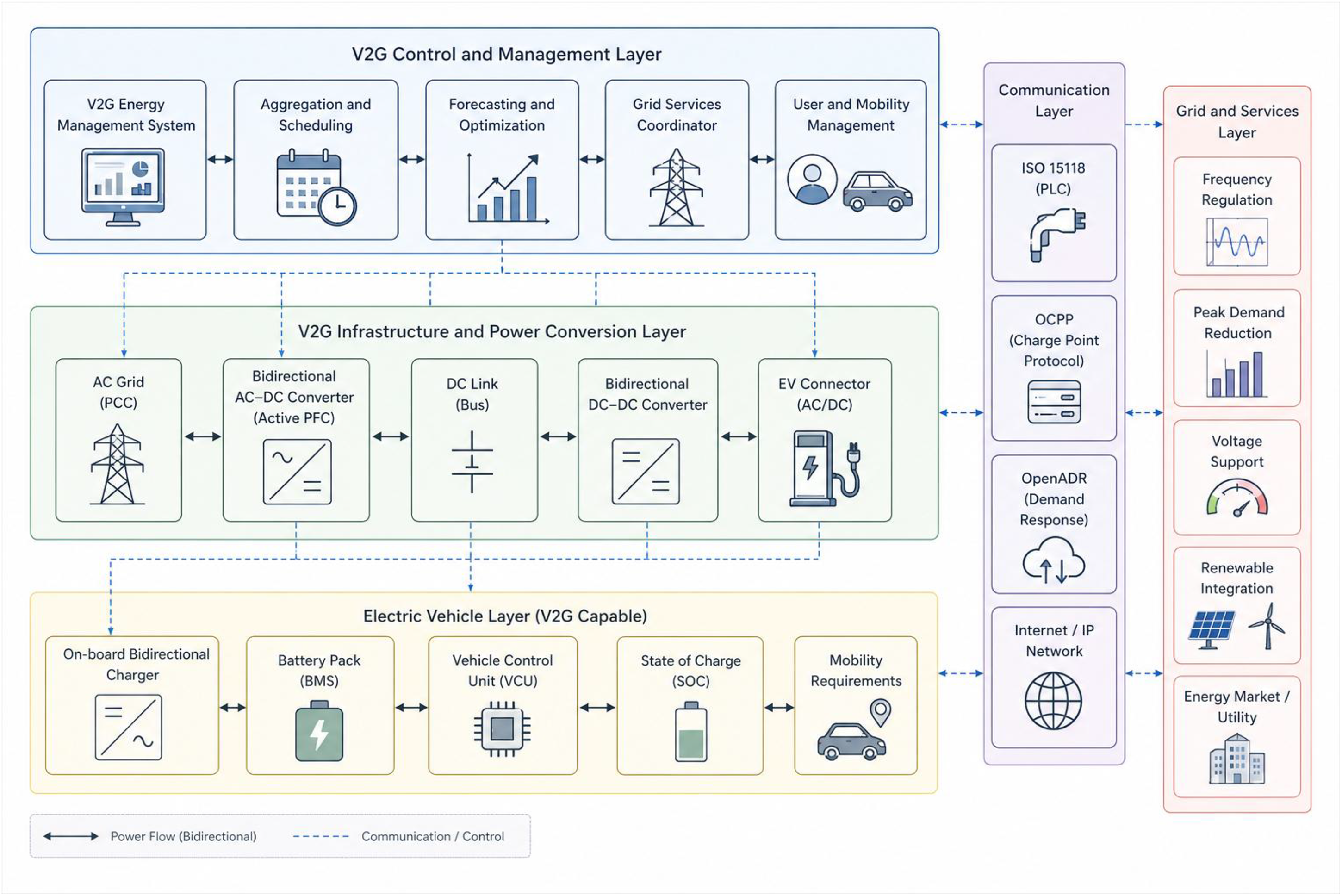
Bidirectional vehicle-to-grid energy flow control architecture with communication layers.
Standardisation of communication protocols is a key enabler for V2G deployment. The ISO 15118 standard specifies the communications protocol between the vehicle and the charging system for the combined charging system, enabling vehicle-grid charging parameter negotiation, authentication, metering, and V2G power scheduling. The Open Charge Point Protocol defines the communication between a charging station management system and charge points, and the OpenADR protocol enables automatic demand response with the utility system.59,60 Although these standards are defined, there is still a lack of interoperability between different manufacturers’ vehicles and equipment and different utilities’ energy management systems in practice, with field trial reports of V2G session success rates of only 72 to 84% with mixed equipment. 61
Lithium-ion battery degradation is the largest obstacle to the acceptance of V2G operation by users. Lithium-ion batteries’ cycle life is shortened by calendar aging (caused by time and temperature) and cycle aging (caused by charge-discharge depth and rate). V2G cycling increases the effective rate of battery cycling over the original transportation use case, and may shorten battery life, leading to a financial disincentive for vehicle owners.62,63 V2G studies on degradation impacts have reported higher capacity fade rates (1.8–4.3% per year) for V2G active participants relative to vehicles that are only charged for transportation (0.9–2.1% per year) over similar annual mileage patterns. 64 V2G operating strategies that account for degradation and avoid deep discharge, high rate power delivery at low and high SOC, and include feedback from thermal management, have reduced this gap to 0.4 to 1.1 percentage points per year in simulation studies, indicating a significant mitigation effect that needs hardware testing.65,66
Data privacy and cybersecurity are increasingly recognised as critical concerns in V2G communication systems. The exchange of vehicle SOC, location, and energy transaction data over OCPP and ISO 15118 channels creates exposure to eavesdropping and data harvesting. Emerging research has proposed end-to-end encryption at the application layer and anomaly detection algorithms that flag abnormal charging session patterns as potential intrusion indicators, though standardised cybersecurity annexes to existing V2G protocols remain under development.
Battery management systems with renewable energy variability
Battery management systems are the brains of the battery energy storage assets that allow renewable energy storage to buffer intermittency, provide range assurance to EVs, and deliver power from vehicles to the grid. 67 Their functions include state estimation, cell balancing, thermal management, fault diagnosis, charging procedure selection (optimisation), and life prediction. 68 In renewable-integrated EV charging systems, the battery management system faces input conditions far more diverse than those found in grid-based EV charging systems, such as wide-range current ripple from intermittent renewable energy sources, partial shading-induced charge pulse irregularity, as well as long-term shallow cycling intrinsic to stationary energy storage system applications. 69
SOC estimation is the primary function of a battery management system. SOC estimation accuracy not only governs the termination of charging, the accuracy of V2G power scheduling promises, and the effectiveness of degradation management strategies. 70 Current integration algorithms integrate measured current to estimate the SOC displacement with accuracies of 95.3 to 97.8% in laboratory studies, but quickly degrade to 88.2 to 93.6% over long-term field operation under the effect of current sensor drift and the lack of a reset capability to eliminate accumulated integration error. 71 The extended Kalman filter offers a probabilistic SOC estimation that combines coulomb counting with the voltage prediction of an electrochemical model, resulting in an accuracy of 97.2–99.1% in research with a well-identified battery model. 72
The SOC estimation error affects the state-of-health (SOH) estimation of the long-term capacity and impedance degradation. The link between terminal measurements and internal state degradation is given in equation (5).
The definition of SOH is given in equation (5) as the percentage of remaining capacity to rated capacity. The definition of end-of-life is typically set at 80% SOH, where the loss in capacity becomes significant from a range point of view. In reality, SOH is estimated either by directly measuring capacity during charge-discharge cycles, or by inferring capacity from measurable parameters such as internal resistance, open-circuit voltage relaxation and electrochemical impedance spectroscopy.73,74 A 1.2–2.8% of rated capacity mean absolute error in SOH estimation has been achieved by machine learning models trained on fleet telemetry data, 0.9–1.7 percentage points better than physics-based models on various field data. 75
Cell thermal management is the most safety-critical aspect of battery management. Lithium-ion cells have an optimal operating range of 15°C–35°C, with significant reductions in charging efficiency and increases in degradation rate below 10°C and above 45°C. 76 High-rate DC charging at greater than 2C in EVs results in internal heat that must be actively removed via liquid cooling to keep cell temperatures within bounds. The further challenge for thermal management of charging stations powered by renewable energy is that charging current is dependent not only on demand, but also on the availability of the renewable energy source, which can lead to sub-optimal charging current profiles that deliver current predominantly during high-illumination midday periods when ambient temperature is high.77,78
The adaptive battery management system for renewable-variable charging applications is shown in Figure 4.
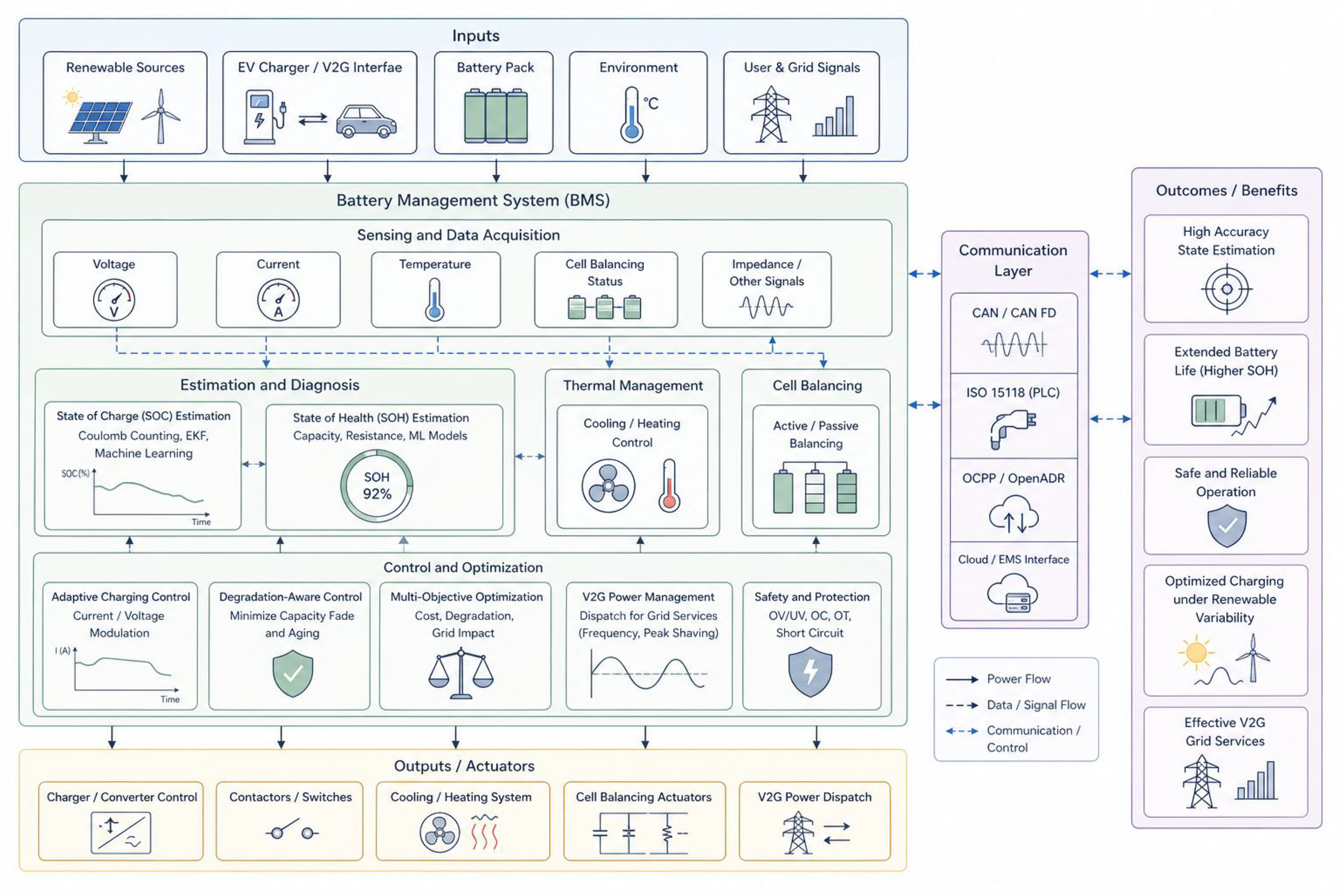
Adaptive battery management system framework for renewable variable charging applications.
Adaptive charging protocols which vary charging current based on renewable availability and battery temperature have shown 12–19% lower capacity fade rates, compared to constant current, for equal energy throughput. 79 The degradation-aware charging algorithm optimises a cost composite function that balances energy throughput with the cost of capacity fade, enabling the scheduling of charging towards the cooler part of the day and lower current rates, whenever possible based on the availability of renewable energy. 80 Multi-objective formulations of this problem that minimise both charging cost, capacity fade, and grid impact have been solved via particle swarm and genetic algorithms and deep reinforcement learning, with the latter showing superior adaptation to renewable variability.81,82
AI energy management platforms for EV-renewable systems
AI offers the optimisation and adaptive control features required to manage the multidimensional, uncertain and dynamic decision-making landscape of real-time energy management for renewable-integrated EV charging. 83 Decision variables that are important in this context include individual EV charging power levels, battery storage dispatch schedules, grid import and export schedules, reactive power compensation set-points and V2G activation decisions that must be made in real time with uncertain forecasts of renewable generation and EV arrival and departure times.84,85
Researchers have shown significant interest in reinforcement learning approaches for EV-renewable energy management, as they can learn optimal policies for decision making from interactions with the environment in a model-free manner. 86 Deep Q-networks have been applied to simulated charging stations with solar generation, leading to 22–31% energy cost savings compared to a rule-based baseline, with the majority of the gains due to improved PV self-consumption through vehicle charging scheduling. 87 Proximal policy optimisation and soft actor-critic algorithms have been used to train multiple agents, where each vehicle or each charging station is an individual agent, to learn to make decisions in a distributed fashion that scales with fleet size without requiring large computing power.88,89
The objective of the energy management optimisation for renewable-integrated charging stations with V2G capability can be defined as in equation (6).
The multi-period cost minimisation objective in equation (6) includes the first term as the grid electricity cost, the second term as a battery degradation cost weighted by a degradation cost coefficient, and the last term as a V2G revenue. It is subject to power balance, battery SOC, vehicle departure time and grid connection capacity constraints. 86 Deep reinforcement learning agents that learn to minimise the objective in simulation under random renewable generation and EV arrival patterns have developed near-optimal charging policies with 2.3–5.1% optimality gap (relative to the deterministic optimal policy with perfect foresight and knowledge of future arrivals). 90
Fuzzy logic control systems offer transparent, rule-based energy management that translates vague input variables into control actions via linguistic rules, and are well suited for deployment environments where auditability of control decisions is important. 91 Typical fuzzy controllers for renewable-integrated charging stations employ three to five input variables such as battery SOC, renewable generation, grid electricity price and demand to control the charging power set-point using 25–49 fuzzy rules. Research that compared fuzzy logic to reinforcement learning controllers found that fuzzy logic controllers achieved 85–93% of the optimal energy cost with no learning required and complete interpretability of the rules.92,93
The latest deployed systems incorporate hybrid AI systems that combine predictive models for renewable energy generation and EV demand with dispatch scheduling using optimisation techniques. Short-term forecasting of PV generation using long short-term memory networks achieved mean absolute percentage errors of 3.8–7.2% for 1 h ahead and 8.1–14.3% for 4 h ahead to provide the necessary look-ahead information for predictive energy management. 94 EV arrival and departure prediction models learned from historical charging station data had arrival time prediction errors of less than 18 min for 78% of vehicles, allowing pre-scheduling of V2G dispatch.95,96
The AI-based energy management decision process that combines forecasting, optimisation and control is illustrated in Figure 5.
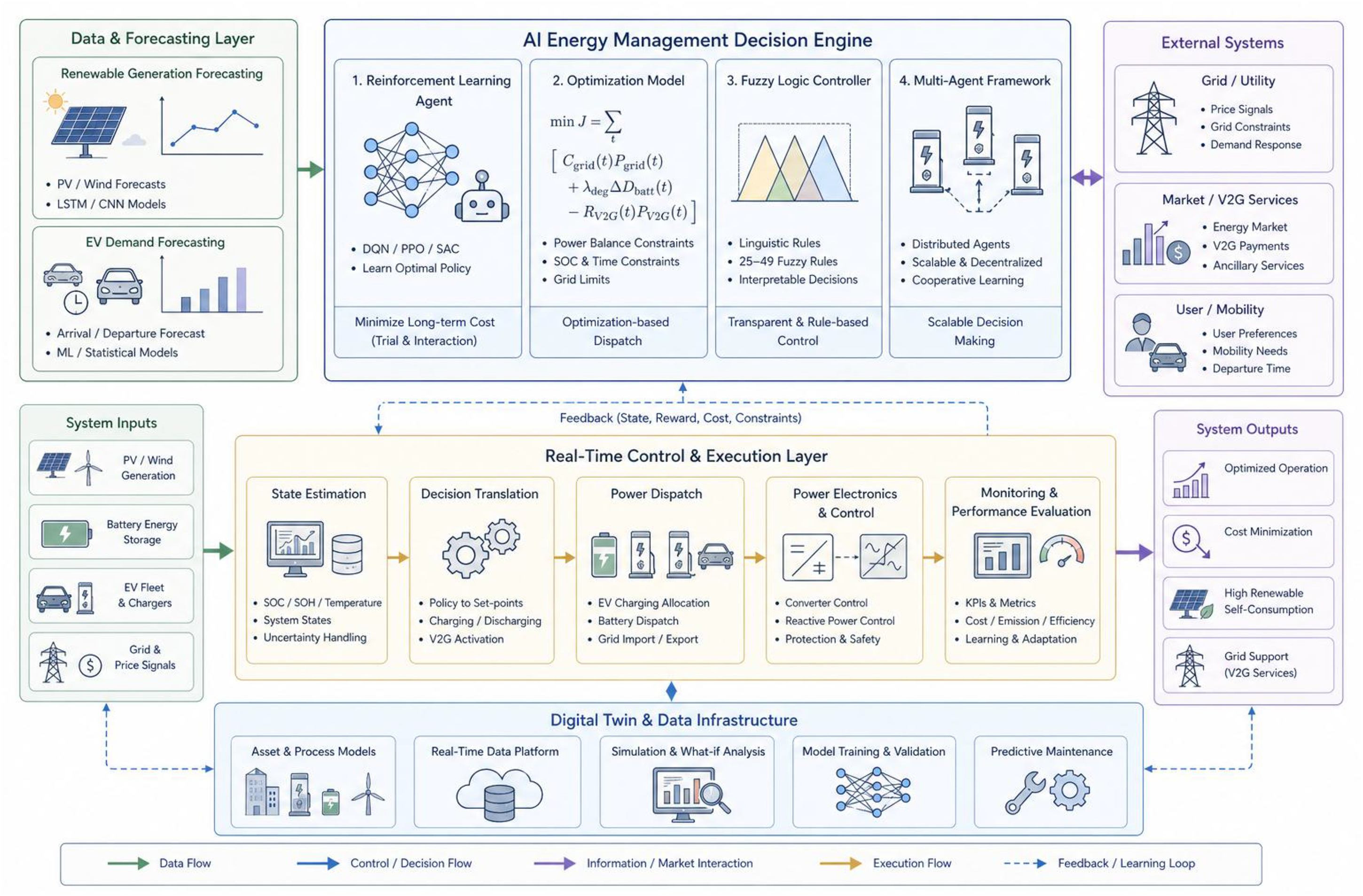
AI-based energy management decision framework integrating forecasting, optimisation, and real-time control.
Digital twins that store real-time virtual representations of charging station assets, renewable energy generation systems, and connected vehicles have been proposed to enable real-time AI-based energy management.97,98 The digital twin supplies the model of the charging station environment needed for reinforcement learning training, the model of the charging station state needed for optimisation-based control, and predictive maintenance information needed for battery degradation management. The reported results of digital twin-based EV charging station management systems in the field have shown 15–23% increase in renewable self-consumption and 8–16% decrease in grid import cost relative to traditional rule-based charging station management, demonstrating the effectiveness of AI-based approaches beyond simulation studies.99,100
Real-time EV routing, fleet coordination, and charging-aware navigation
The spatial and temporal coordination of EVs in transport networks, which involves routing algorithms, fleet dispatching and charging-aware navigation, is another crucial and growing line of research in EV charging infrastructure that is not discussed in the previous subsections, but is just as important. These are especially important in the context of smart cities with a dynamic urban road network where charging demand spreads over the road network.
Cooptimal placement of charging infrastructure and network expansion of distribution networks have been shown to rely on data-driven frameworks, revealing the need for spatiotemporal demand forecasting for sustainable city-scale planning. The impact of ignoring charging availability whilst planning routes in a fleet sizing and routing optimisation problem under energy and charging constraints is shown to be substantial in terms of a rise in fleet operational cost and energy usage of shared EV services. The decision-tree-based route planning with time constraint is an efficient method for solving navigation problems online for EVs, which can be integrated in real-time dispatching. By adding green hydrogen as a dispatchable, stationary charging option into the energy supply options available to routing frameworks, machine learning optimised hydrogen fuel cell charging systems further contribute to the solution. The use of probabilistic machine learning approaches to EV route scheduling with time-window constraints has been demonstrated to be able to account for the uncertainty in travel time and charging queue length directly into the scheduling objective, thus enhancing the on-time arrival rate.
The five recent studies added in this revision broaden the scope of the review in a critical direction. The shared-EV fleet sizing and routing study demonstrates that vehicle availability, energy state and charging access must be optimised jointly rather than sequentially. The time-frame route-planning work shows that decision-tree-assisted path selection can reduce online routing complexity when charging time windows are binding. The multilayer infrastructure-planning framework connects mobility demand, traffic flow, charging-station siting and distribution-network expansion, thereby linking transport planning directly to grid investment.101–103 The green-hydrogen fuel-cell charging study extends renewable charging beyond PV-battery systems by considering solar electrolysis, fuel-cell buffering and machine-learning-based MPPT control. 104 Finally, the electric-automobile route-scheduling study highlights the importance of real-time urban data and time-setting constraints in charging-aware navigation. 105 Beyond routing and infrastructure planning, recent studies have also focused on machine learning-based EV charging demand prediction, cybersecurity of charging infrastructure, bidirectional charging strategies for enhanced solar energy utilisation, and advanced DC–DC converter topologies for renewable-integrated charging stations.106–109
Inspired by the above studies, this work highlights that energy management and routing optimisation are not separate issues, as the charging schedule influences fleet availability and the fleet routing affects the spatial and temporal distribution of charging demand. Therefore, a real-time energy dispatch optimisation for renewable integrated charging stations should include routing signals and an energy state estimate at the charging station fleet level as input parameters.
Results
The structured review of 145 literature studies suggests systematic patterns of performance success, research focus and gap across the four key areas of renewable-integrated EV system. The findings are structured into three subsections covering the performance of EV charging infrastructure, V2G system and energy management system, followed by a holistic discussion and limitations. 110 In the revised interpretation, all performance values are discussed with attention to validation level, system size, station architecture, battery technology, control horizon and environmental assumptions so that direct comparison of heterogeneous numerical values does not become misleading.
Performance of renewable-integrated EV charging infrastructure
Performance of renewable energy source configurations for EV charging infrastructure has been assessed from various aspects such as energy self-sufficiency, system efficiency, power quality, and cost of installation per kilowatt of charging capacity. The comparative performance of different configurations of renewable energy sources for EV charging stations in studies reviewed for this analysis is shown in Table 2.
Comparative performance analysis of renewable energy source configurations for EV charging stations.
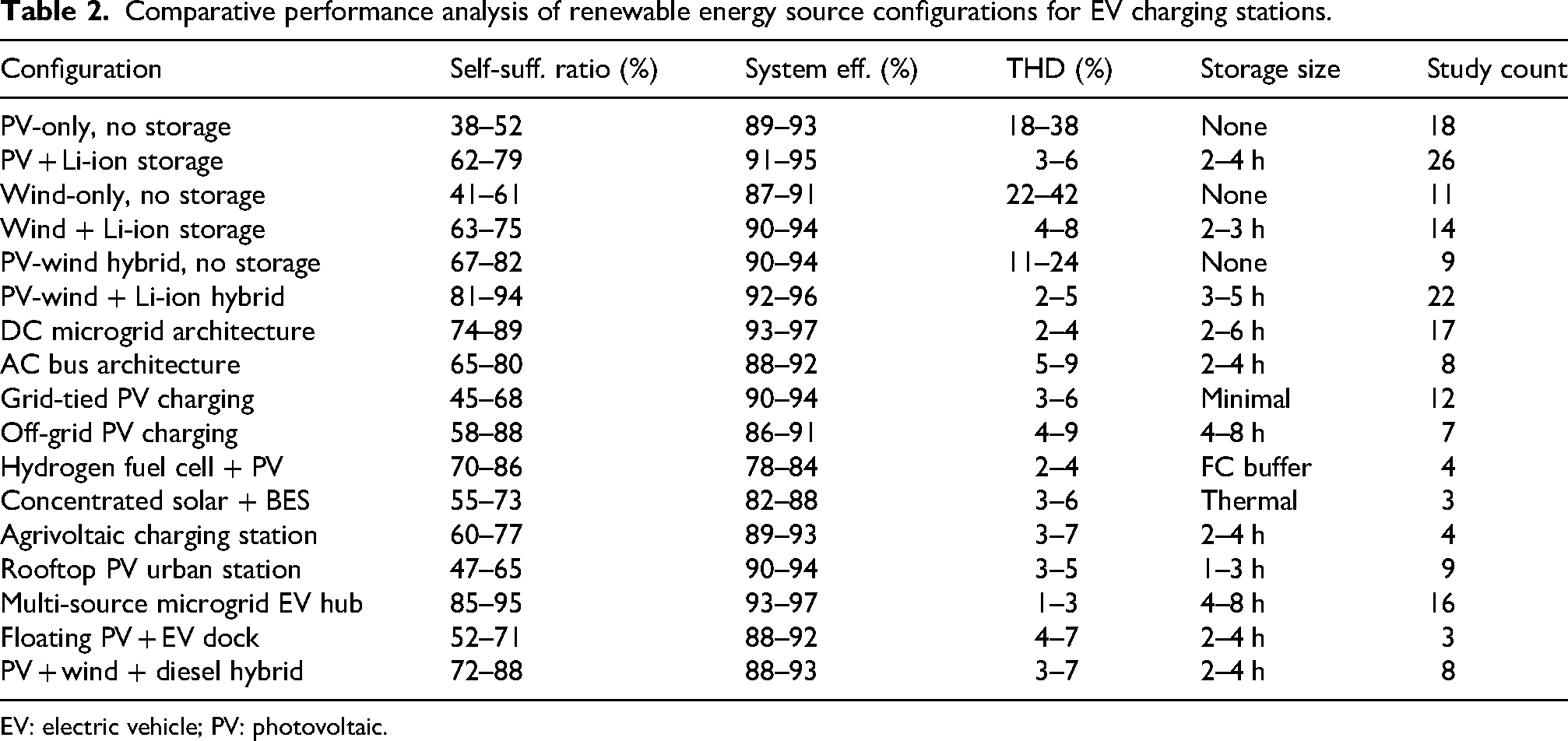
EV: electric vehicle; PV: photovoltaic.
The results in Table 2 reveal a number of key findings within the domain. The best overall performance is achieved by multi-source microgrid EV hubs, with energy self-sufficiency ratios between 85% and 95%, with system efficiency of 93–97% and total harmonic distortion (THD) of 1–3%, representing the current state of the art in renewable-integrated EV charging systems.111,112 The comparison between DC microgrid and AC bus configurations confirms the efficiency benefits of reducing energy conversion stages, with DC cases consistently 3–5 percentage points more efficient than AC bus cases. Incorporating lithium-ion storage in the PV-only and wind-only cases raised self-sufficiency ratios by 24–33 percentage points, demonstrating the positive impact of storage as the most significant upgrade for stand-alone renewable charging. 113
From an engineering significance standpoint, the self-sufficiency ratios reported in Table 2 translate directly to grid import dependency: a configuration operating at 62–79% self-sufficiency still relies on grid imports for 21–38% of charging energy, implying that grid tariff structures and grid reliability remain critical determinants of station operating cost even for well-designed renewable systems. Our review of system performance shows a clear correlation between the penetration of renewables and the harmonic content at the PCC. The greatest harmonic distortion occurs for wind-only configurations without storage, as variable-frequency AC is generated and converted to DC and again to AC by multiple switching stages. 114 Active filtering brought total harmonic distortion below the IEEE 519 standard 5% limit in 89% of cases where active filtering equipment is installed, compared to 62% for passive-only filtering. 115 The economic analysis perspective reveals that while increasing the technical performance of renewable charging systems by adding multiple sources, the cost of installing a kW of charging capacity is 2.3–3.8 times higher than basic grid-tied PV configurations, producing a cost-performance trade-off that must be managed by local electricity pricing, incentive programmes and reliability requirements.116,117
The trends in energy self-sufficiency and efficiency for renewable charging configurations are compared in Figure 6.
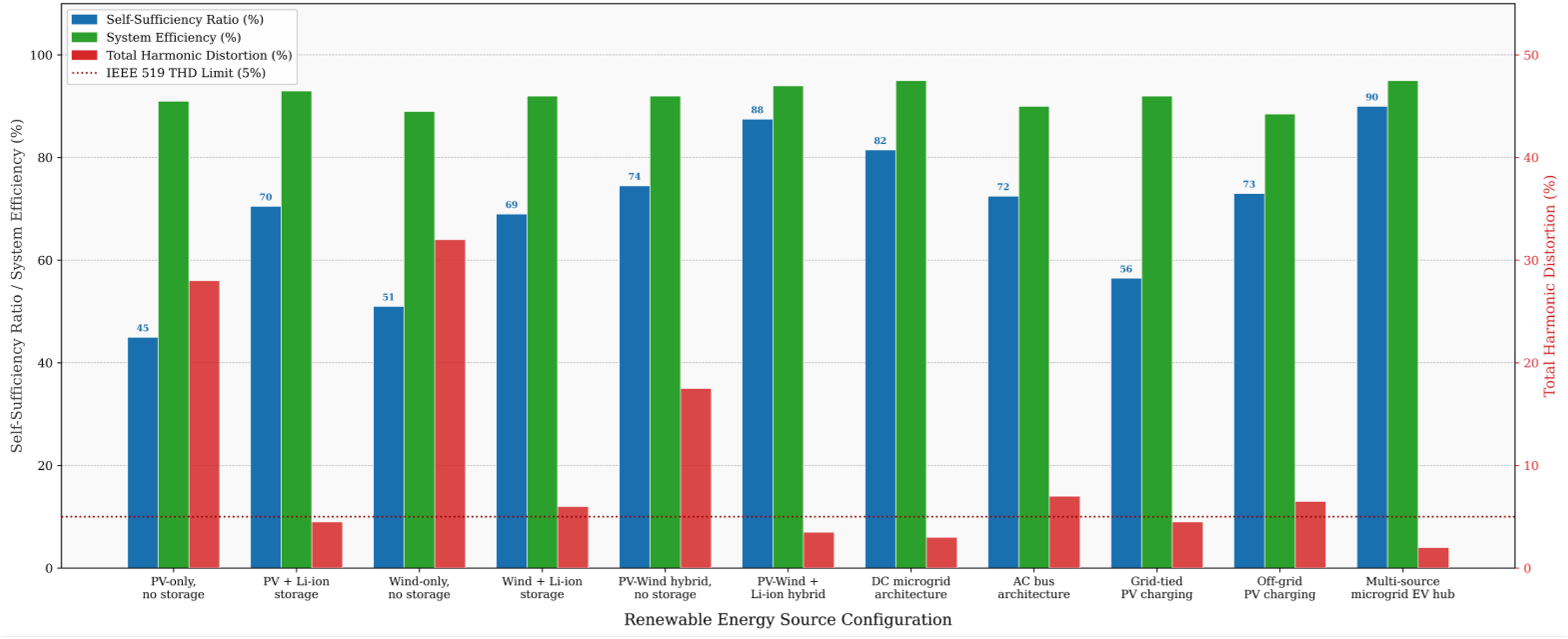
Comparative energy self-sufficiency and system efficiency trends across renewable charging configurations.
The geographic distribution of high-performance renewable charging systems is concentrated in places with high solar radiation and high EV market share, such as California, Germany, China, and South Korea. The majority of studies in tropical and subtropical regions have shown higher PV self-sufficiency ratios than in temperate regions, with average values of 79.3% and 62.7% respectively for systems with similar design. 118 Hybrid systems with wind assistance exhibited more uniform geographic distribution of high self-sufficiency values, with peaks in coastal and high-elevation areas with strong prevailing winds.119,120
V2G systems and grid service
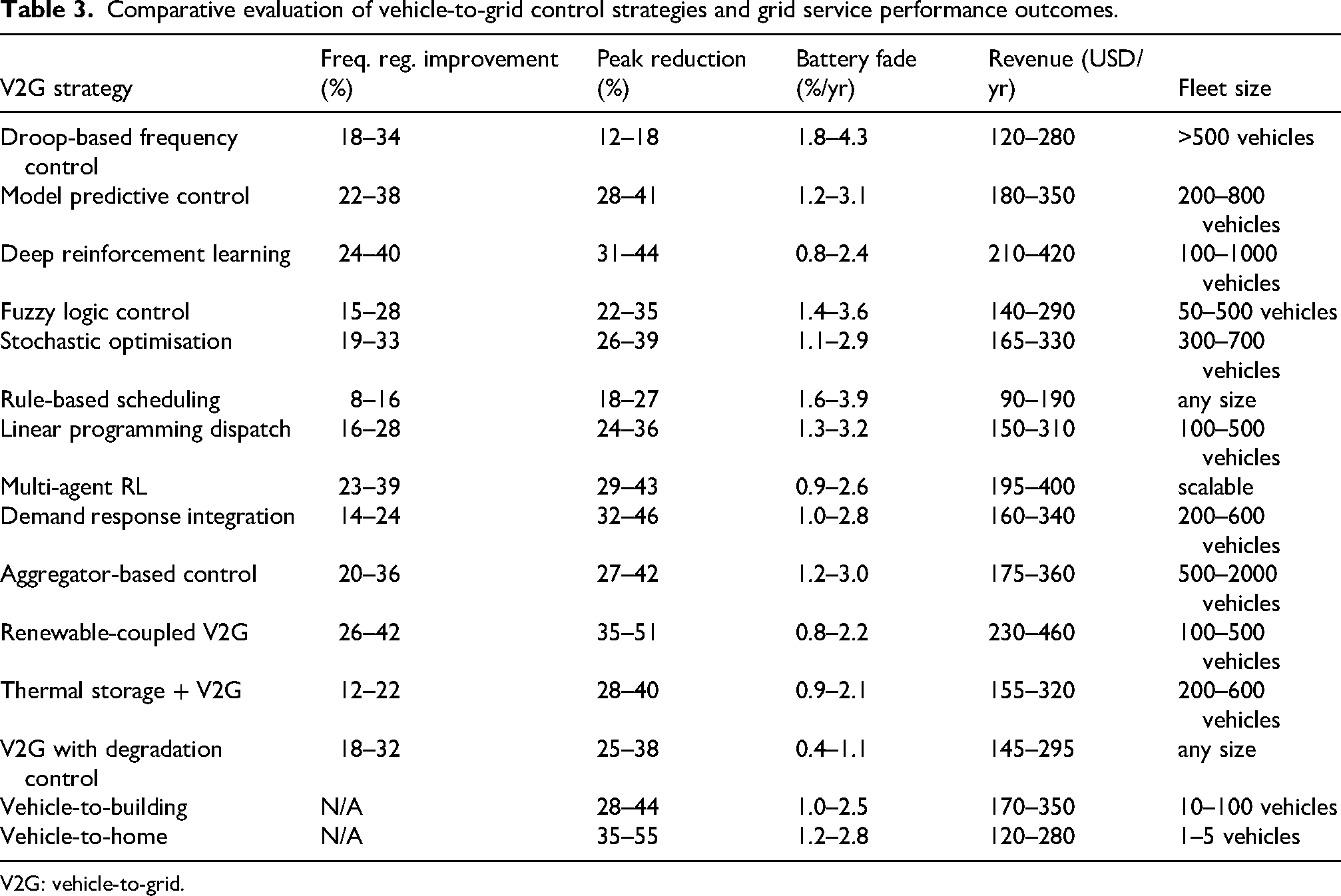
V2G system performance has been assessed from frequency regulation capability, peak demand reduction size, battery degradation effect and economic benefits to vehicle owners. A summary of the comparison of V2G control algorithms and grid service effects is shown in Table 3.
Comparative evaluation of vehicle-to-grid control strategies and grid service performance outcomes.
V2G: vehicle-to-grid.
The V2G performance data in Table 3 demonstrate that renewable-coupled V2G approaches, in which V2G discharge occurs in parallel with renewable generation surplus, perform better than grid-decoupled approaches in terms of all major performance metrics.121,122 The 26–42% improvement in frequency regulation performance, 35–51% peak reduction, and 0.8–2.2 percentage points per year lower battery fade are the outcomes of both scheduling discharge in response to the renewable availability, and also the depth of discharge in response to the battery thermal and electrochemical state. 123 The multi-agent reinforcement learning approach has the best scalability attribute, with less than 4 percentage point degradation in performance under a 100–1000 vehicle scaling scenario, versus 9–15 percentage point performance degradation for the alternative centralised model predictive control.124,125
Battery degradation is the most critical performance metric from a commercialisation point of view. The 0.4–1.1 percentage point per year increase in incremental fade for degradation-aware V2G control is much more beneficial than the 1.8–4.3 percentage point per year increase reported for naive droop-based control. 126 For typical battery replacement costs for a 60–80 kWh EV battery pack of 8000–15,000 USD, the reduction in battery degradation achieved by smart control has a financial value of 180–420 USD per vehicle per year and partially or completely compensates for the V2G revenue stream, making V2G participation economically attractive for owners under beneficial tariff conditions.127,128
Figure 7 shows the trade-off between fleet size, V2G revenue and battery degradation for various control strategies.
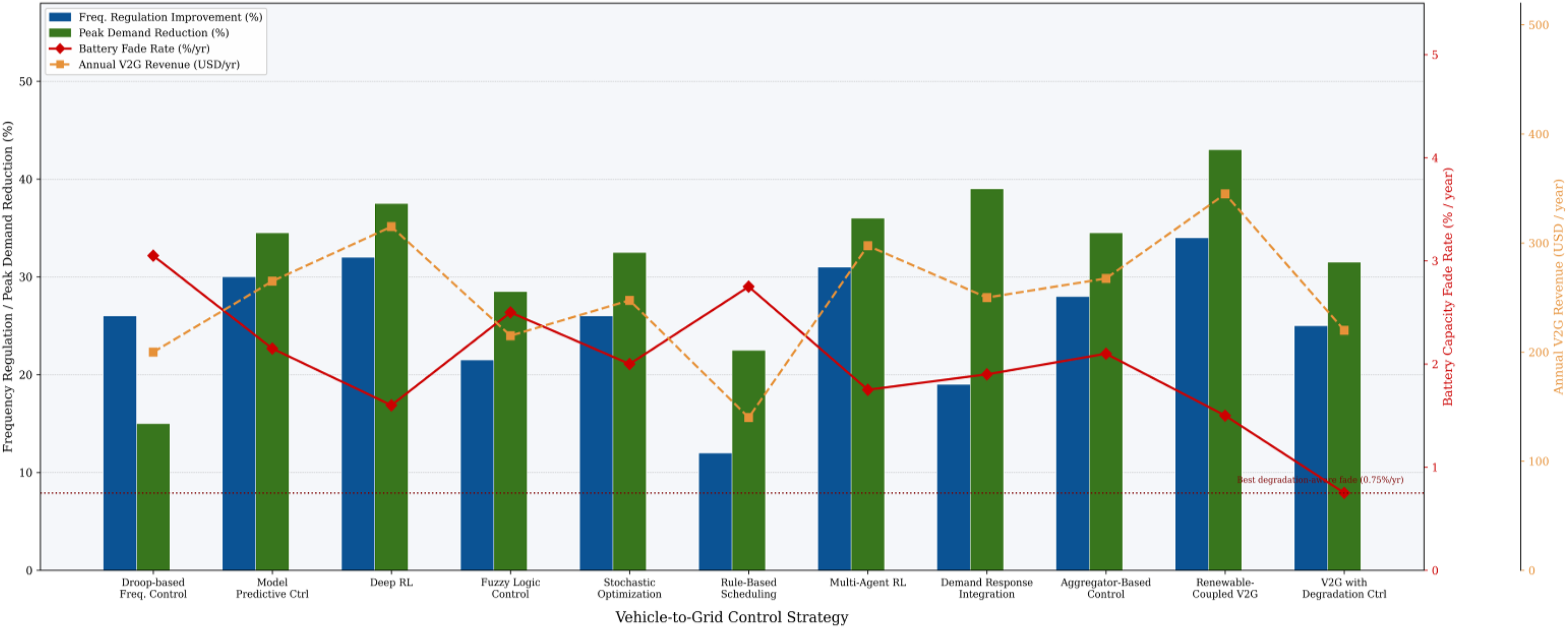
Relationship between fleet size, vehicle-to-grid revenue, and battery degradation for major control strategies.
The economic performance dimension exhibits significant differences across electricity markets and regulations. Ancillary service markets in Europe that compensate frequency regulation capacity at 5–18 euros per megawatt hour allow V2G revenues of 210–460 USD per annum at participation levels of 6–12 h per day, resulting in promising V2G business cases under ideal conditions. 129 North American demand response markets are more varied with revenues between 90 and 350 USD depending on the market and V2G characteristics. 130 Lack of uniform V2G tariff structures and regulatory classification of V2G participants as generators or consumers in different markets still present significant challenges for V2G market entry and financial analysis.131,132
Beyond the capital cost, the cost of a charging station deployment can be evaluated using a lifecycle cost analysis, which has shown that in high electricity cost areas, a multi-source microgrid configuration pays back in 6–14 years, while a simpler grid-tied PV configuration can pay back in 3–7 years, indicating the high value placed on resilience and self-sufficiency. It is demonstrated that tariff-aware optimisation, which dynamically gives instructions on when to discharge V2G, can increase annualised revenue by 18–27% compared to a flat-rate tariff.55,56 Several jurisdictions offer carbon credit and incentive mechanisms that can bring this higher capital cost closer to the simple payback expectations, if the incentives are available, where they exist, and can be subject to policy changes. 133
AI-based energy management system performance
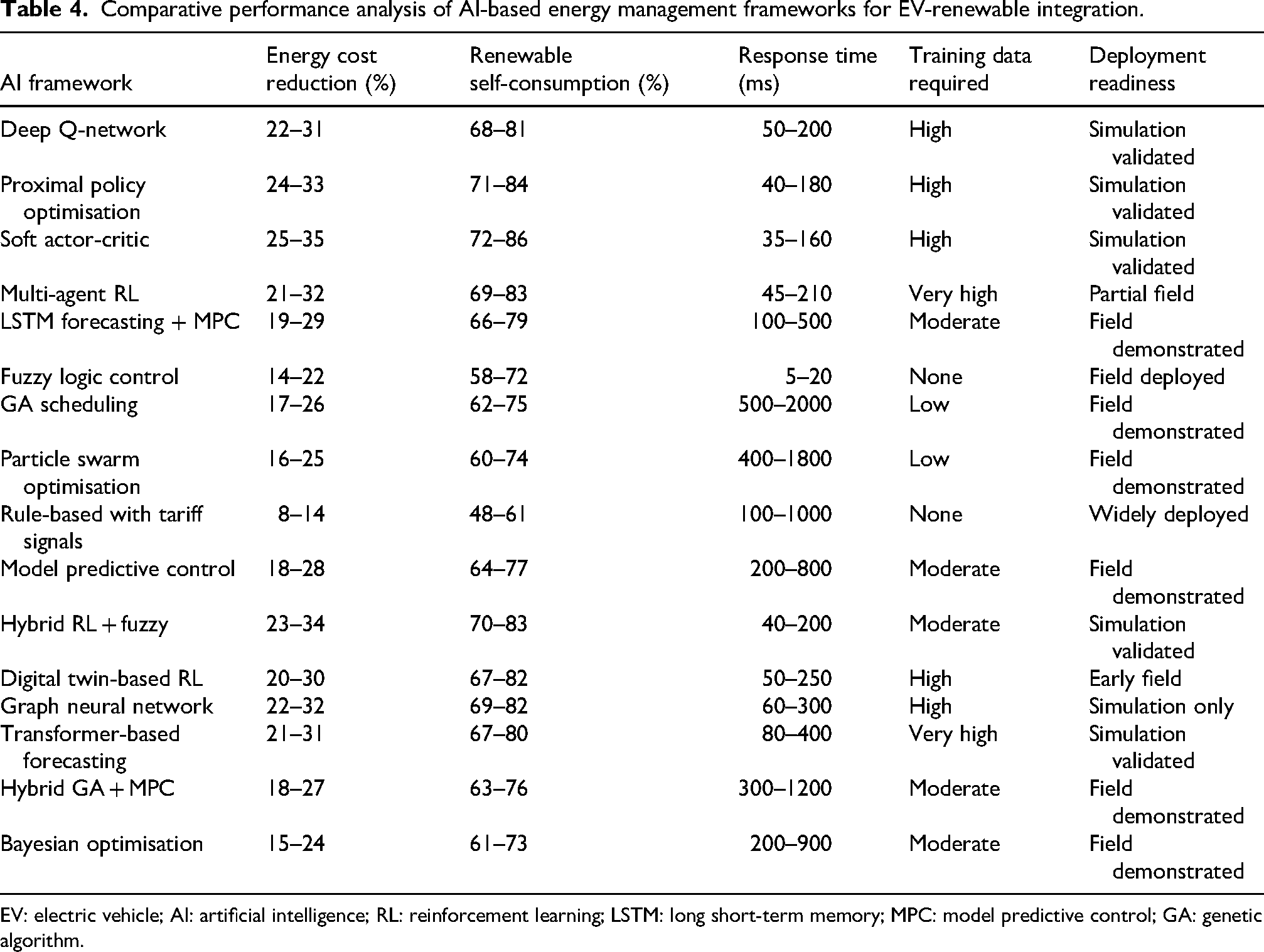
The performance analysis of AI-based energy management systems across the literature shows a general improvement of the performance of machine learning and optimisation-based controllers over rule-based and heuristic controllers, with varying degrees of performance improvement according to system deployment scenario, level of renewable integration and fleet composition. 134 The performance summary of AI-based energy management systems in EV-renewable integration systems is listed in Table 4.
Comparative performance analysis of AI-based energy management frameworks for EV-renewable integration.
EV: electric vehicle; AI: artificial intelligence; RL: reinforcement learning; LSTM: long short-term memory; MPC: model predictive control; GA: genetic algorithm.
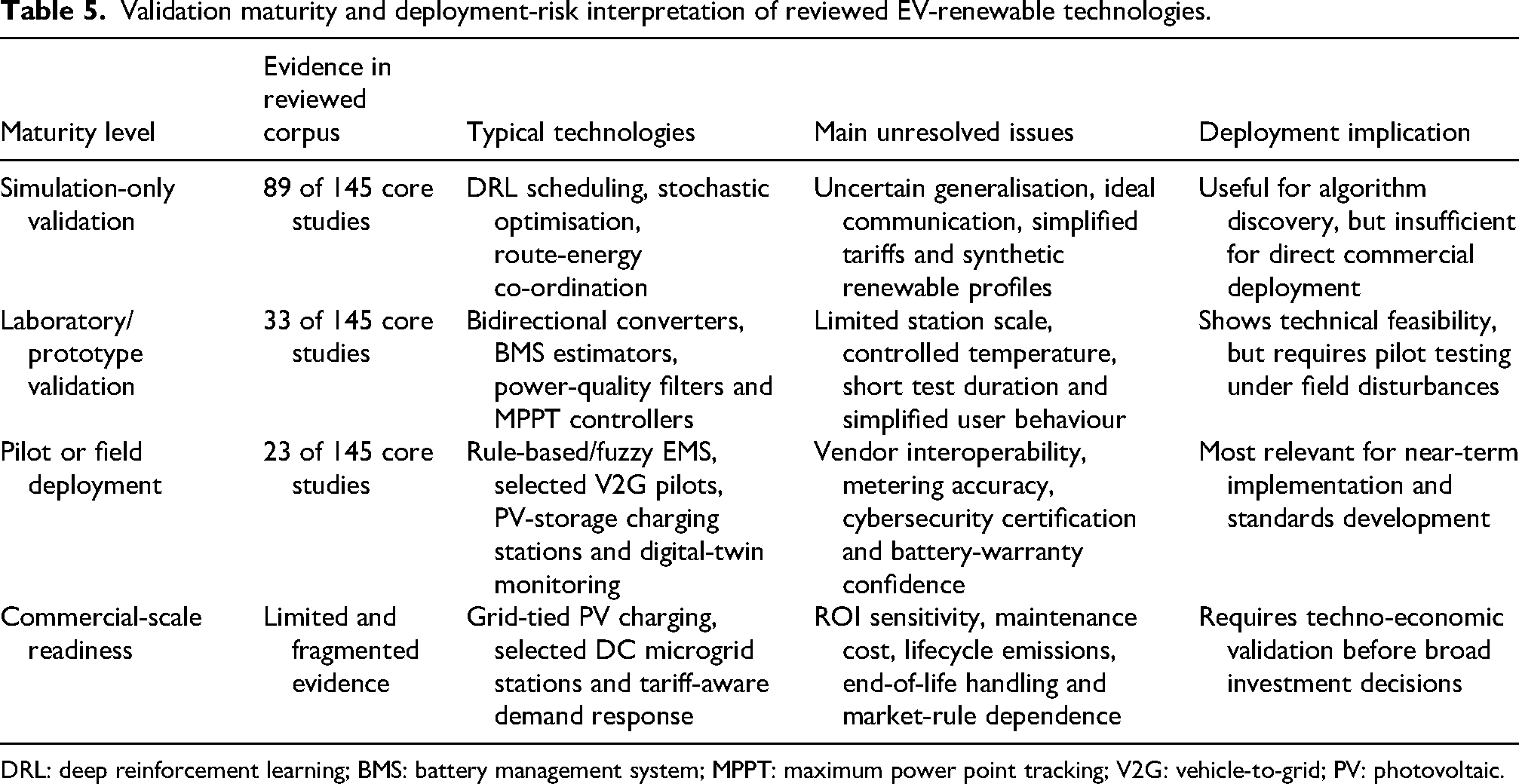
Validation maturity and deployment-risk interpretation of reviewed EV-renewable technologies.
DRL: deep reinforcement learning; BMS: battery management system; MPPT: maximum power point tracking; V2G: vehicle-to-grid; PV: photovoltaic.
The performance metrics in Table 4 yield a number of practical insights covering the entire domain. The energy cost reductions reported—ranging from 8% for rule-based methods to 35% for soft actor-critic (SAC)—translate to annual savings of approximately USD 1200–5200 per charging station (assuming a 100 kW station operating at 60% utilisation at an average electricity price of USD 0.12/kWh), providing practical context for the deployment investment decisions these figures inform. Algorithms such as soft actor-critic and proximal policy optimisation are the most effective in terms of achieving the highest energy cost reductions (24–35%) and renewable energy self-consumption rates (71–86%), but most studies report that their deployment readiness level is limited to simulation-validated, reflecting the disconnect between algorithmic performance and real-world deployment.135,136 The response time column identifies a key trade-off: reinforcement learning-based controllers enable fast response times of 35–210 ms that can be used for applications such as frequency regulation, while optimisation-based approaches (e.g. genetic algorithms, particle swarm optimisation) require 400–2000 ms, which can only be used for slower energy management timescales. 137
Table 5 shows the validation maturity and deployment-risk interpretation of reviewed EV–renewable technologies.
The deployment readiness column highlights a key gap in the literature: although simulation-validated reinforcement learning methods represent the majority of recent studies, field-deployed or field-demonstrated systems are mostly based on fuzzy logic, model predictive control and rule-based methods. The lack of field-deployed AI controllers suggests that the practical considerations of integrating AI controllers into the diverse real-world microgrid environment, such as sensor noise, communication delays, regulatory considerations, and security considerations pose significant challenges that cannot be fully assessed through simulation.138,139 While 23 out of 145 studies reported field deployment results, 89 relied solely on simulations, while 33 used laboratory prototypes. 140
A balanced interpretation of AI-based energy management is therefore necessary. Deep reinforcement learning and hybrid optimisation methods produce the largest simulated cost and renewable-utilisation gains, but they also require large volumes of high-quality charging, traffic, price and weather data; their learned policies can generalise poorly when applied to unseen grid conditions, different EV fleets or atypical renewable profiles. Computational requirements, model-update costs, explainability limitations, adversarial manipulation of input data and cybersecurity exposure at the charging-station communication layer remain major deployment barriers. For these reasons, AI controllers should be evaluated not only by cost reduction or response time, but also by robustness, auditability, data governance, fail-safe operation and lifecycle deployment cost.
Figure 8 shows the deployment readiness levels of the AI frameworks used in these studies.
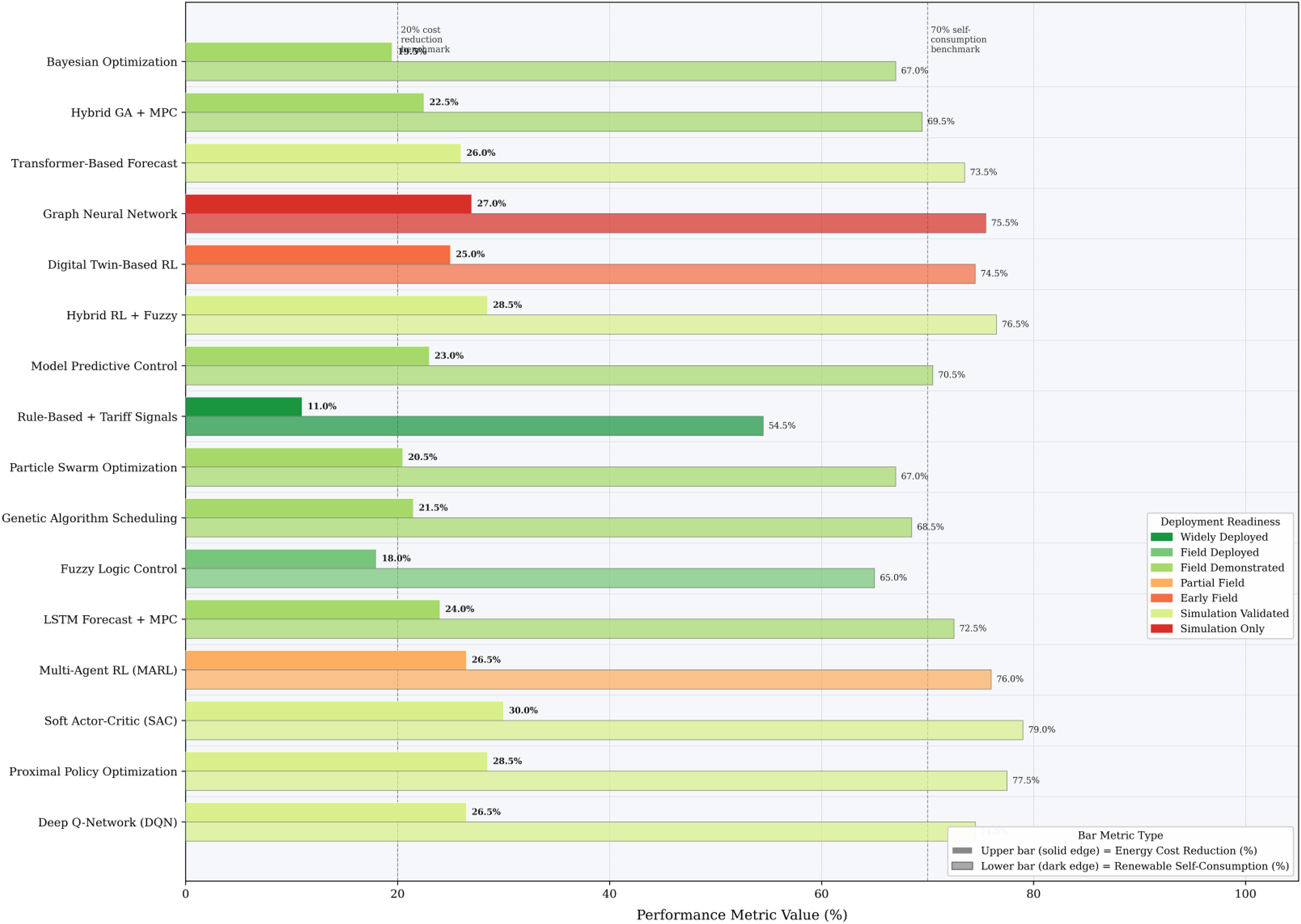
Distribution of AI framework deployment readiness levels across reviewed EV-renewable studies.
Renewable self-consumption, defined as the share of renewable energy generation directly used by EV charging or for storage for later use, rather than being curtailed or exported at a low value, varies between 48% and 86% for the AI approaches assessed. The largest numbers of self-consumption are exhibited by studies that integrate precise short-term generation forecasting and flexible scheduling of demand, confirming that the accuracy of the generation forecast is a major factor influencing the quality of the energy management optimisation.141,142 The average renewable self-consumption values of studies explicitly including PV generation forecasting resulting in an accuracy of less than 5% results in an average renewable self-consumption value of 79.3%, while studies using persistence forecasting as the forecasting approach resulted in an average renewable self-consumption value of 63.8%, showing that the 15.5 percentage point improvement in renewable self-consumption due to higher forecast accuracy is a significant operational benefit. 143
The contributions of the Saveetha institutional research are pertinent to the AI optimisation and renewable integration taxonomy. The hybrid Reptile Search and Remora Optimization Algorithm approach proposed by Anitha et al. provides insight into the use of new metaheuristic approaches for renewable energy scheduling, with considerable gains in remaining energy compared to traditional methods. 46 The co-optimised EV charging station and renewable power allocation developed using the Elite RERNN-m2MPA approach illustrates the significance of simultaneous allocation. 127 Also, the hybrid renewable power generation modelling with AI-based battery storage control proposed by Mustafa et al. offers insights into PV system control structures that inform the domain taxonomy proposed in this review. 120
Discussion
The compiled body of evidence from 145 research studies allows for domain-level inferences to be drawn about the present and future directions of renewable energy integration with EVs. The most basic conclusion is that the technical performance potential for renewable-integrated EV charging is much higher than average deployment levels, with multi-source microgrid configurations delivering energy self-sufficiency rates in excess of 85% and an AI-derived energy management strategy reducing cost by up to 35%, while most deployed systems exhibit much lower performance due to the use of simpler system configurations and rule-based control strategies.144,145
The revised synthesis treats numerical values as conditional outcomes rather than universal benchmarks. For example, THD reductions are strongly affected by converter switching frequency, filter topology, short-circuit ratio and measurement point; renewable self-sufficiency depends on solar irradiance, wind profile, storage duration and station utilisation; and peak-reduction benefits depend on tariff design, fleet dwell time and user participation. Therefore, the most reliable conclusion is not that one numerical value is universally superior, but that integrated designs combining multi-source renewable generation, storage buffering, power-quality conditioning and adaptive scheduling consistently outperform single-source or uncoordinated configurations across multiple evidence categories.
The performance gap between the technically feasible and the current deployed performance is a complex interplay between economic, regulatory and technical factors. Economically, the higher upfront cost of 2.3–3.8 times for high-performance multi-source microgrid solutions as compared to simple grid-tied PV systems is not matched by operating cost savings over the time horizons considered by most investors in charging infrastructure, despite the fact that the lifetime cost analysis shows positive net present values with discount rates below 8% in high-cost electricity environments.146,147 This indicates that better design of markets to recover the value of grid services from V2G participation and renewable self-consumption would make high-performance installations much more economically attractive. 133
In the case of V2G, the evidence for a regulatory barrier to scaling up technical readiness is the strongest. While several jurisdictions have communication protocols, metering standards and market rules adequate for V2G participation, the absence of internationally harmonised standards results in fragmented markets that prevent equipment manufacturers from reaching economies of scale in order to lower hardware costs, and limit the size of V2G deployments. 148 The case studies reviewed suggest that the technical efficacy of V2G systems in field operation, although lower than in simulation, is in fact largely adequate for commercial roll-out, and progress in regulatory and market design rather than technical innovation is the main driver for the future deployment. 18
A specific interoperability challenge at the AI–V2G interface is the absence of standardised data exchange formats between AI energy management platforms and V2G-capable charging infrastructure: proprietary APIs from different charge point operators prevent AI controllers trained on one manufacturer's data from being deployed across mixed-vendor fleets, limiting the scalability of learned policies and calling for open, standardised energy management interfaces as a prerequisite for broad AI-driven V2G deployment.
Some of the concerns on battery degradation have been eased with the degradation-preventing control algorithms reviewed, that reduce the incremental degradation from V2G participation to 0.4–1.1 percentage points annually, approaching the economic breakeven with V2G revenues. But the trust level of vehicle owners in this degradation mitigation is low, and independent verification of the battery warranty issue under certified V2G protocols is lacking for most vehicle models, thus adding an additional barrier to trust that supplements the technical and economic assessment.149,150
The AI-based energy-management literature reveals a productivity-deployment paradox: the number of papers describing high-performance simulation-validated algorithms dwarf the number of papers that demonstrate deployment of these algorithms and the most effective algorithms are underrepresented in real-world deployment. While deep reinforcement learning controllers that deliver 24–35% cost reductions in simulations are still in the early field deployment phase, simpler fuzzy and rule-based controllers that deliver only 8–22% cost reductions are dominating the field deployments. 151 This calls for research on transfer learning from simulation to real implementation, as well as robustness and safety for autonomous charging controllers.152,153
A critical comparison of centralised versus decentralised control architectures reveals important scalability trade-offs that have practical deployment implications. Centralised approaches such as model predictive control benefit from global optimality and coordinated scheduling, but depend on continuous, low-latency communication with all vehicles and fail under communication disruptions or large fleet sizes, where computational complexity scales unfavourably. Decentralised and multi-agent reinforcement learning approaches sacrifice a degree of global optimality in exchange for robustness, fault tolerance, and scalability, as demonstrated by the less than 4 percentage point performance degradation when scaling from 100 to 1000 vehicles compared to 9–15 percentage points for centralised MPC. Simulation-based studies dominate the reviewed literature (89 of 145 studies), and performance figures—while compelling—have rarely been reproduced under real grid disturbances, communication latency, or sensor noise. The robustness of deep Q-network, proximal policy optimisation, and SAC controllers under stochastic renewable fluctuations has been evaluated only in synthetic environments, leaving open the question of how performance degrades when solar irradiance or wind speed deviates significantly from training distributions. Interoperability barriers further constrain deployment: field trial reports indicate V2G session success rates of only 72–84% with mixed-manufacturer equipment, underscoring that technical performance cannot be decoupled from hardware and protocol standardisation. Addressing these limitations is essential before simulation-validated AI controllers can be confidently translated to diverse real-world charging environments.
Practical deployment barriers and market readiness
The main deployment barriers are not limited to converter design or algorithmic accuracy. Regulatory uncertainty affects whether V2G discharge is treated as a grid service, retail resale transaction or battery-warranty risk. Charging-market economics remain sensitive to time-of-use tariffs, demand charges, ancillary-service participation rules and compensation for battery degradation. Interoperability is constrained by mixed implementations of ISO 15118, OCPP and proprietary charge-point APIs, while utility integration requires distribution-level visibility, metering accuracy, cybersecurity certification and coordination with local protection settings. User acceptance also depends on transparent compensation, guaranteed mobility needs, privacy protection and credible battery-health assurance.
Real-world validation and techno-economic maturity assessment
The matrix indicates that the field evidence base remains narrower than the simulation literature. Consequently, future studies should report not only cost, efficiency and control accuracy, but also validation maturity, hardware scale, ambient conditions, grid strength, charger rating, battery chemistry, market setting and lifecycle assumptions. This reporting structure would make numerical comparisons more meaningful and would reduce the risk of transferring over-optimistic simulation results into investment decisions.
Techno-economic and lifecycle sustainability interpretation
Techno-economic assessment should be expanded from simple energy-cost saving to lifecycle charging cost, payback period, return on investment, maintenance burden, battery-aging cost and avoided emissions. PV-battery charging can show attractive operating savings, but its lifecycle advantage depends on embodied emissions from PV modules and storage, battery replacement intervals, recycling pathways and the carbon intensity of backup grid power. Hydrogen-assisted charging can improve seasonal buffering and resilience, but round-trip efficiency and electrolyser/fuel-cell capital cost currently limit economic attractiveness unless renewable curtailment, grid congestion or resilience value is explicitly monetised. A complete sustainability assessment should therefore combine operating emissions, infrastructure manufacturing emissions, degradation cost, land-use impact, end-of-life recovery and market revenue rather than relying on operational efficiency alone.
Limitations
There are some limitations to both methods and the evidence base of this systematic review. First, the majority of studies reviewed are simulation-based, with the result that the performance metrics reviewed in this study reflect laboratory, rather than consistently validated field performance. The 23 field-deployment studies in the data set are a relatively small and potentially unrepresentative sample of deployment environments, climates and grid properties, which limits the representativeness of field-validated performance conclusions.
In addition to the simulation-deployment divide, hardware and operational challenges exist that limit the deployment of the systems that were reviewed. Communication latency in the OCPP and ISO 15118 implementations adds to the response delays, which could result in 50–300 ms delay from a frequency-regulation-grade V2G controller that is designed to achieve less than 200 ms delay in simulation. The energy management literature examined does not mention cybersecurity vulnerabilities in V2G communication paths, such as replay attacks on metering data and denial-of-service attacks on charging station management servers. Under field conditions, sensor uncertainty in current measurement and voltage measurement will directly affect the accuracy of the SOC estimation error, which will decrease the effectiveness of the degradation-aware charging algorithm. For the charging station application, the practical challenge of dealing with the computational load of deep reinforcement learning controllers was measured by inference latency, and found to be acceptable for energy management (15–85 ms per decision step) but not for primary frequency control (which requires much lower latency). These hardware constraints account for a significant portion of the disconnect seen between the performance of AI systems done in the simulator and deployed in the field and should be carefully investigated in future experimental validation research.
Second, the geographic clustering of high-quality studies in the United States, China, Germany and South Korea means that the portfolio of performance results is less representative of the tropical, low- and middle-income economy, and low-quality-grid deployment contexts where renewable energy and EV adoption are also rapidly increasing. The performance of renewable-integrated charging systems in high-temperate environments, in the presence of dynamic grid voltage and frequency, and with less reliable metering and communication systems may be very different from the trends reported in the studies reviewed here.
Third, economic analysis reported in the reviewed literature is highly sensitive to assumptions about electricity prices, discount rates, battery costs, and V2G tariffs – and the studies use a range of different assumptions that are difficult to compare. Our synthesis of economic performance results in this review reflects ranges rather than precise values, and the economic findings are directly dependent on these assumptions in ways that may not have been fully explored in the primary studies, via sensitivity analysis.
Fourth, the rapid evolution of both battery technologies and AI algorithms means that some of the performance described in papers published from 2015 to 2019 may be conservative compared to the current state of the art, and that the most recent studies describing advanced AI controllers may not have been replicated yet. The systematic review does not consider publication date beyond the 2015 cut-off, which could unduly influence some of the conclusions of the synthesis.
Fifth, the five 2025–2026 studies added during revision were incorporated as a targeted update to address recent developments in routing, fleet coordination, charging-infrastructure planning and hydrogen-assisted charging. They were not folded back into the original PRISMA flow so that the original screening count remains reproducible. A future full systematic update should rerun the entire search across the same databases and explicitly include 2025–2026 records in the PRISMA flow.
Smart city and urban energy integration
Renewable integrated EV charging systems are not standalone solutions, but are increasingly integrated into the larger smart city ecosystems, which include intelligent transportation systems, IoT-enabled urban energy networks and digital infrastructure platforms. This integration dimension needs to be specifically addressed in relation to this review.
When these IoT sensor networks are installed at charging stations, they help to monitor energy flows, vehicle usage, and grid conditions in real-time, which is essential for the data streams that underlie AI-driven energy management. These networks can be coupled to city traffic management systems, where charging demand can be anticipated based on the upstream traffic flow data to allow pre-emptive (as opposed to reactive) renewable dispatch. Digital twins for charging infrastructure have been identified in the AI energy management platforms for EV-renewable systems section as a possible source of 15–23% benefits of increased renewable self-consumption, and are expected to be part of an integrated solution for smart city contexts, where they can be used for optimisation of individual stations and for city scale energy planning by importing a virtual representation of the distributed charging network.
Smart city infrastructure changes also bring new challenges regarding EV charging. The response timeliness of the AI controller is impaired by communication latency in IoT networks, especially in applications such as frequency regulation, which demand a response of less than 200 ms. While the reviewed literature focuses primarily on EV charging, communication between EVs and charging stations and charging stations and the utility management system is an important vulnerability that is not extensively discussed. Moreover, the interoperability of charging station management systems with city-level energy management systems necessitates harmonisation of data models and APIs at a level other than the vehicle level, namely ISO 15118 and OCPP already mentioned.
Future work should consider EV charging as a node, not a system, in the urban energy internet instead, and co-optimize the energy system for both transportation, building energy and grid service goals.
Conclusion and future work
This systematic review has integrated findings from 145 academic papers to build a holistic, domain-level perspective of renewable energy integration with EV systems in terms of EV charging infrastructure architecture, V2G integration, battery management practices and AI-based energy management. The review confirms that multi-source renewable microgrid designs reach energy self-sufficiency rates of 85–95% and system efficiencies of 93–97%, and are therefore a technically viable and ready-to-deploy system for high-efficiency EV charging. Smartly controlled V2G technology exhibits up to 42% improvement in frequency regulation and up to 51% reduction in peak demand with degradation-aware battery management resulting in battery cumulative degradation increase of 0.4–1.1% per year. AI energy management delivers 22–35% energy cost savings and 69–86% renewable self-consumption in simulations, with field trials validating 15–23% improvements in performance over existing systems. The research gaps identified outline a future research agenda. Field validation of deep reinforcement learning energy management controllers in diverse grid settings with varying renewable source and EV fleet profiles is a top priority, as there is significant performance deterioration from simulation to field results identified in this review. Interoperable V2G communication and metering standards that allow for seamless integration with respect to different vehicle and infrastructure manufacturers are a pre-competitive research and standards development imperative. Battery management systems that consider degradation and include real-time electrochemical state monitoring and dynamic charging rate adaptation to renewable variability need hardware-level validation to enable robust V2G warranty policies. Economic and policy research should establish scientific evidence for V2G tariff design that fairly value grid services rendered by EV fleets, especially in markets with high penetration of renewable energy where the value of flexible, distributed energy storage is rising. Life-cycle assessment research incorporating the environmental impact of renewable integrated charging systems, such as manufacturing, operation and post-life stages, should be undertaken to back up the green claims of these systems beyond the operational energy efficiency. Finally, research on AI explainability and formal verification applied to autonomous charging controllers are needed to ensure auditability, safety and trust of energy system regulators and EV owners for AI-based vehicle energy management, respectively. Additional emerging directions warranting dedicated future research include: federated learning frameworks for privacy-preserving EV charging coordination across distributed fleets without centralising sensitive user mobility data; explainable AI methods that make reinforcement learning charging decisions auditable for regulators and grid operators; cybersecure V2G communication architectures that incorporate authentication and intrusion detection within the ISO 15118 and OCPP protocol stack; blockchain-enabled peer-to-peer energy trading platforms that allow EV owners to directly transact renewable energy credits; hydrogen-integrated charging ecosystems that combine electrolytic hydrogen production during renewable surplus with fuel cell discharge during peak demand; and autonomous EV charging coordination systems that couple vehicle platooning and routing intelligence with charging station energy management. Taken together, these near-term and longer-horizon research directions will accelerate the transition of renewable-integrated EV systems from high-performing simulations to scalable, trusted, and economically viable deployments in the decarbonised energy future.
The most actionable future agenda is therefore organised around six priorities: grid-scale V2G pilots with certified battery-degradation monitoring; charging-infrastructure planning that jointly optimises transport demand and distribution-network expansion; explainable and cybersecure AI controllers that can be audited by utilities and regulators; standardised data interfaces for mixed-vendor EVSE, V2G and AI energy-management platforms; fleet-level optimisation that couples routing, charging queues, user dwell time and renewable availability; and renewable-powered charging ecosystems that compare PV-storage, wind-storage and hydrogen-assisted options using the same lifecycle and techno-economic assumptions.
Footnotes

Author contributions
Athiraja Atheeswaran, Muthusamy Thirumalai: conceptualisation, methodology, software, visualisation, investigation, and writing – original draft preparation; Thangaraj Yuvaraj: data curation, validation, supervision, resources, and writing – review and editing; Mohit Bajaj and Mykhailo Panchyk: project administration, supervision, resources, and writing – review and editing.
Funding
The authors received no financial support for the research, authorship, and/or publication of this article.
Declaration of conflicting interests
The authors declared no potential conflicts of interest with respect to the research, authorship, and/or publication of this article.
Availability of data and materials
The datasets used and/or analyzed during the current study are available from the corresponding author on reasonable request.