






Abstract
Social enterprises (SEs) combine social and economic goals, requiring a distinct social transformational leadership (STL) style characterized by moral clarity, inspiration, motivation, innovation, and personal growth. This leadership promotes social value and financial stability. Studies reveal SE leaders face a leadership skills gap due to limited training in public administration (MPA) and nonprofit management (MNM) programs. An online faculty survey found that although both programs include some STL competencies, SE-specific STL is underemphasized, particularly in MPA programs. Enhancing curricula can better prepare future leaders.
Keywords
Social enterprises (SEs) occupy a unique position in the modern economy by combining profit-driven business models with a focus on social or environmental issues. They are organizations motivated by social missions that pursue social entrepreneurship to fund vital social programs through innovative commercial activities while maintaining financial sustainability (Defourny et al., 2021; Defourny and Nyssens, 2017; Dees, 2012; Rychert and Wilkins, 2020). A key leadership challenge is managing and balancing these two, often conflicting missions to deliver social and financial, or shared, value, optimize performance (Battilana et al., 2015; Bielefeld, 2009; Yaari et al., 2020), and foster positive organizational and societal change (Ebrahim et al., 2014; Litrico and Besharov, 2019; Park and Bae, 2020). By prioritizing the needs of all stakeholders (Dees, 2012; Pache and Santos, 2013), SE leaders reinvest profits into addressing critical issues such as healthcare access, food insecurity, and poverty (Doherty et al., 2014; Oberoi et al., 2021).
SE success relies on a strong business strategy and transformational leadership, a style that inspires employees to exceed expectations and commit to a larger, shared social mission. Rooted in motivation, inspiration, and values, it is especially effective where purpose and innovation drive performance (Bass, 1985), as in SEs. However, SEs often struggle to find leaders with this unique combination of essential transformational leadership competencies needed for success (Bhati and Manimala, 2011; Mueller et al., 2013; Napathorn, 2018). This challenge raises the research question: Are young leaders receiving sufficient graduate-level training in the transformational leadership competencies they need? In this exploratory study, we will examine how transformational leadership contributes to the success of SEs by enhancing mission alignment, innovation, stakeholder engagement, performance, and sustainable growth, and then look at whether the master’s in public administration (MPA) and master’s in nonprofit management (MNM) programs address these concepts in their curricula.
SEs vary in form and structure, including benefit corporations (for-profit with social or environmental aims), tax-exempt not-for-profits supporting social missions, and cooperatives (member-owned, democratic, sharing profits or reinvesting). Whether private, public, or nonprofit, they share a dual mission to address social issues overlooked by traditional organizations.
SE leaders manage conflicting stakeholder priorities due to their dual mission. For example, a clean-water SE in Africa may favor long-term strategies that reflect higher prices for sustainability, while beneficiaries prioritize affordability and access. Stakeholder tensions can cause employees to prioritize financial goals, risking mission drift when social commitments weaken (Ebrahim et al., 2014; Salamon, 2015; Smith and Besharov, 2019; White et al., 2022; Young and Kim, 2015). This drift threatens sustainability and impact. Therefore, SE leaders must uphold core values while balancing stakeholder needs and economic challenges for success and integrity (Young, 2012).
Social enterprises (SEs) depend on leaders who manage growth and change, balancing conflicting priorities (Bublitz et al., 2021; Capella-Peris et al., 2020; Kerlin, 2006; Young and Kim, 2015). These leaders inspire others to adopt an entrepreneurial mindset and focus on larger goals beyond self-interest. The necessary competencies are rooted in social entrepreneurship and transformational leadership frameworks (Bhutiani et al., 2012). Practical training in these competencies is vital for leaders to tackle SE challenges that could threaten credibility and growth (Mueller et al., 2013; Rosser et al., 2021; Stevens et al., 2015).
Our research distinguishes itself from studies on SE configurations and management systems (Defourny et al., 2021). Using social entrepreneurship and transformational leadership frameworks, we aim to identify key leadership competencies for SEs and the governance challenges they face. Through a quantitative approach, we analyzed how Public Administration (MPA) and Nonprofit Management (MNM) master’s programs include these competencies. As universities expand curricula in these areas (Austin and Rangan, 2019), it is crucial to evaluate whether these programs effectively prepare students to lead transformative change in SEs.
The paper is organized as follows: first, we review social enterprises (SEs), covering their history, frameworks such as transformational leadership and social entrepreneurship, and their relationship to SE performance, leadership challenges, and key competencies. Then, we describe methods, present results, and discuss theoretical contributions, future research, and practical implications for SEs and SE education.
Social enterprise history and emergence
The rise of hybrid social enterprises in the U.S. during the 1960s coincided with increased political awareness and social upheaval, leading to a greater focus on marginalized communities and environmental issues (Ellis, 2010). Over the past 20 years, SEs have gained momentum as they tackle challenges often overlooked by private companies and the government (Shier and Van-Du, 2018). Confronted with budget limitations, competition from for-profit organizations, and the need to generate revenue, nonprofit organizations are evolving and adopting social enterprise traits (Hoefer and Sliva, 2016; Salamon, 2015).
Three prominent hybrid social enterprises are Goodwill, the Young Women’s Christian Association (YWCA), and Warby Parker. The U.S.-based Goodwill Industries, a nonprofit organization with a long history, operates thrift stores that generate $6 billion annually (about $18 per person in the United States) through a business model that relies on donated goods. Goodwill’s mission is to improve the dignity and quality of life for disadvantaged individuals through job creation and training (Gibbons and Hazy, 2017). Founded in 1858, the YWCA empowers women by offering social services such as childcare, housing, and job training (Roundy and Halstead, 2016). To support its social mission, local chapters have established for-profit ventures, including hotels and cafes. Warby Parker is a private, for-profit company recognized as a certified B Corp for its commitment to high social and accountability standards. The company sells affordable, stylish prescription glasses and donates a pair to someone in need for every pair sold through its “Buy a Pair, Give a Pair” program. This approach demonstrates how a business can successfully combine profit-making with a strong social mission.
SE formation has grown in the United States over the past two decades because the market for socially and environmentally conscious products and services has expanded to $361 billion, creating a need to meet this market opportunity (Abramson and Billings, 2019; Haigh et al., 2015; Polaris Market Research, 2024). Additionally, the distinctions between the private, public, and nonprofit sectors are increasingly eroding, leading to innovative responses to neoliberalism and the privatization of state-owned organizations (Boas and Gans-Morse, 2009; Dean, 2014). Advances in technology enable stakeholders to tackle social and environmental issues more efficiently (Yaari et al., 2020). By focusing on innovation, inspiration, financial sustainability, and community service, social enterprises (SEs) are strategically positioned to provide crucial social services (Salamon, 2002).
According to Salamon (2015), recent trends in government funding cuts do not alter this outlook. SEs are well-prepared for these changes, whether they operate as for-profit or nonprofit organizations, and they increasingly encourage the adoption of social entrepreneurial business models to maintain their mission work without relying solely on traditional revenue sources or philanthropic support.
Social enterprise and transformational leadership
Leaders in a dynamic SE environment broaden perspectives, inspire dual visions, promote ethics, and boost social welfare by spotting opportunities, fostering innovation, and motivating staff towards larger goals (Zhu et al., 2016). Bass (1985), along with Bass and Avolio (1994) and Northouse (2021), describes this behavior as transformational leadership, a framework in which leaders serve as role models for followers, inspiring them to exceed expectations and prioritize organizational goals over individual interests. This process results in personal fulfillment and promotes “extra discretionary effort” when employees choose to do above and beyond what is required of them (Barnett, 2019; Oberfield, 2014). Bums (1978) observed that transformational leaders elevate followers’ moral awareness and motivate by prioritizing the common good. Key elements involve inspiring others toward a shared vision (Bass, 1985; Bums, 1978): (1) Idealized Influence: Leaders demonstrate high moral standards, encouraging followers to trust and relate to them (Bass and Riggio, 2006). (2) Inspirational Motivation: Leaders provide meaningful challenges and articulate a vision of the future that inspires followers (Bass, 1998). (3) Intellectual Stimulation: Leaders encourage innovation by soliciting followers’ ideas and encouraging them to analyze problems from new perspectives (Avolio and Yammerino, 2013). (4) Individual Consideration: Leaders support personal and professional growth through mentoring and coaching (Bass, 1985).
These elements collectively foster trust, credibility, intrinsic motivation, and innovation—qualities essential for SE organizations seeking to balance profitability and social mission. They emphasize the vital role of transformational leaders in inspiring followers’ commitment and innovative behavior in SEs.
Researchers have explored the intersection of social entrepreneurship and transformational leadership. Bhutiani et al. (2012) developed a framework to study the overlap between social entrepreneurship and transformational leadership, with the key question of what similarities exist between transformational leaders and social entrepreneurs in their operating practices. The researcher identified four constructs to help explain the similarities: inspiration, defined as what inspires the social entrepreneur or transformational leader; influence, defined as how the social entrepreneur or transformational leader influences their stakeholders; innovation, how the leader creates economic or social value; and implementation, or how the leader makes the mission happen. A highlight of their work is a model that shows the conceptual similarity between the two concepts. Considering the construct of inspiration, Bhutiani’s team compared Dees’s (2007) social entrepreneurship concept of “giving meaning to a poor person’s life” with Bass’s (1998) transformational leadership concept of “helping others and having more noble goals than immediate profit.”
SEs differ from traditional businesses in that success is defined through both financial sustainability and social impact. Performance metrics may include revenue growth, job creation, community well-being, or environmental outcomes. This multidimensional performance model requires leadership that can unite diverse stakeholders behind shared goals and sustain motivation in resource-constrained environments (Doherty et al., 2014). Transformational leadership is well-suited to this task because it emphasizes moral clarity, innovation, inspiration, and sustainability (Wiltshire et al., 2018).
A growing body of research links transformational leadership to better organizational outcomes in SE and public sector leadership: • Strong passion and motivation for transformational leadership can lead employees to internalize a public or nonprofit SE’s social mission (Bao et al., 2025; Thorgren and Omorede, 2018) and align their personal mission with the organization’s (Muralidharan and Pathak, 2018). • Innovation and Adaptability: Sari et al. (2021), Dewi (2024), and Al Doghan et al. (2023) show that transformational leaders encourage experimentation, organizational learning, entrepreneurship, creativity, and knowledge sharing, allowing SEs to innovate in response to complex social needs and challenges. • Stakeholder Engagement: Mair and Martí (2006) and Naderi et al. (2019) observe that the social entrepreneurship of transformational leaders enhances trust among funders, beneficiaries, and community partners, thereby boosting legitimacy and support of SEs. • Sustainability and Growth: Naderi et al. (2019), Nguyen et al. (2017), and Jeong (2024) report that transformational leadership predicts financial performance and employee job satisfaction in SEs and is positively related to sustained social capital.
Several mediating mechanisms help further our understanding of the relationship between transformational leadership and social entrepreneurship/SE performance: • Organizational Commitment: Transformational leaders inspire emotional attachment to the mission, reducing turnover and increasing volunteer engagement (Park and Pierce, 2020). • Organizational Learning and Creativity: Intellectual stimulation fosters an environment in which employees feel safe and confident contributing ideas and challenging norms (Sari et al., 2021). • Trust: Through ethical leadership and vision, transformational leaders build trust and partnerships across sectors, amplifying social reach (Chang and Jeong, 2021).
Transformational leadership is vital for social enterprises, inspiring teams, fostering creativity, and building trust to align goals with the mission (Buchholtz, 2021). It promotes SE formation, enhances performance, and boosts social impact and sustainability (Wiltshire et al., 2018). Developing these qualities in founders, managers, and volunteers is key to long-term success.
Transformational leaders and social entrepreneurs share similar motivations. Bums (1978) said transformational leaders seek self-actualization, while Bass (1998) said they aim to improve others’ lives. Similarly, social entrepreneurs are motivated by passion, empathy, values, and innovation to solve problems and improve lives at the social bottom (Fruchterman, 2011). Creating social good can give social entrepreneurs and transformational leaders a sense of purpose and self-fulfillment. This offers opportunities to develop students’ transformational leadership skills in the classroom and practicum settings, helping them eventually lead social ventures. Leadership programs that focus on these concepts can boost resilience among social entrepreneurs.
An online survey of 241 nonprofit organizations found that transformational leadership—characterized by intellectual stimulation and idealized influence—predicted social value and hybrid SE organizational performance, especially in low socioeconomic settings (Felício et al., 2013). There is a clear positive link between transformational leadership, social entrepreneurship, and SE organization performance (Al Doghan et al., 2023; Bass & Riggio, 2006; Chang and Jeong, 2021; Naderi et al., 2019; Sari et al., 2021). Belle (2014) and Wright and Pandey (2010) emphasize this, arguing that transformational leadership is well-suited to the public sector, including nonprofit social enterprises. Studies show it correlates with mission success, higher employee job satisfaction, and motivation (Wright et al., 2012). Belle’s work highlights its positive effects on public employee performance, especially when they see their work benefits others.
Social entrepreneurship and transformational leadership are linked to SE performance, promoting the development of social capital, including internal and external employee connections (Naderi et al., 2019), as well as creativity (Stevens et al., 2015). Matzler et al., 2008 noted this positive link between transformational leadership and innovation. Naderi et al. (2019) advised hybrid social enterprise leaders to foster creativity and remove barriers to it.
Transformational leadership boosts shared management, fosters compromise, debates democracy limits, and encourages innovation (Shier and Van-Du, 2018; Vickers et al., 2025). Studies on structures and governance (Defourny et al., 2021; Doherty et al., 2014; Naderi et al., 2019) show that when social and commercial goals conflict, leaders must manage resources carefully, as prioritizing one complicates broader management. Most social entrepreneurs embed dual missions into their culture and strategy from the start when creating or transforming organizations (Ko and Liu, 2021), often excelling in transformational leadership.
SE outcomes associated with transformational leadership.
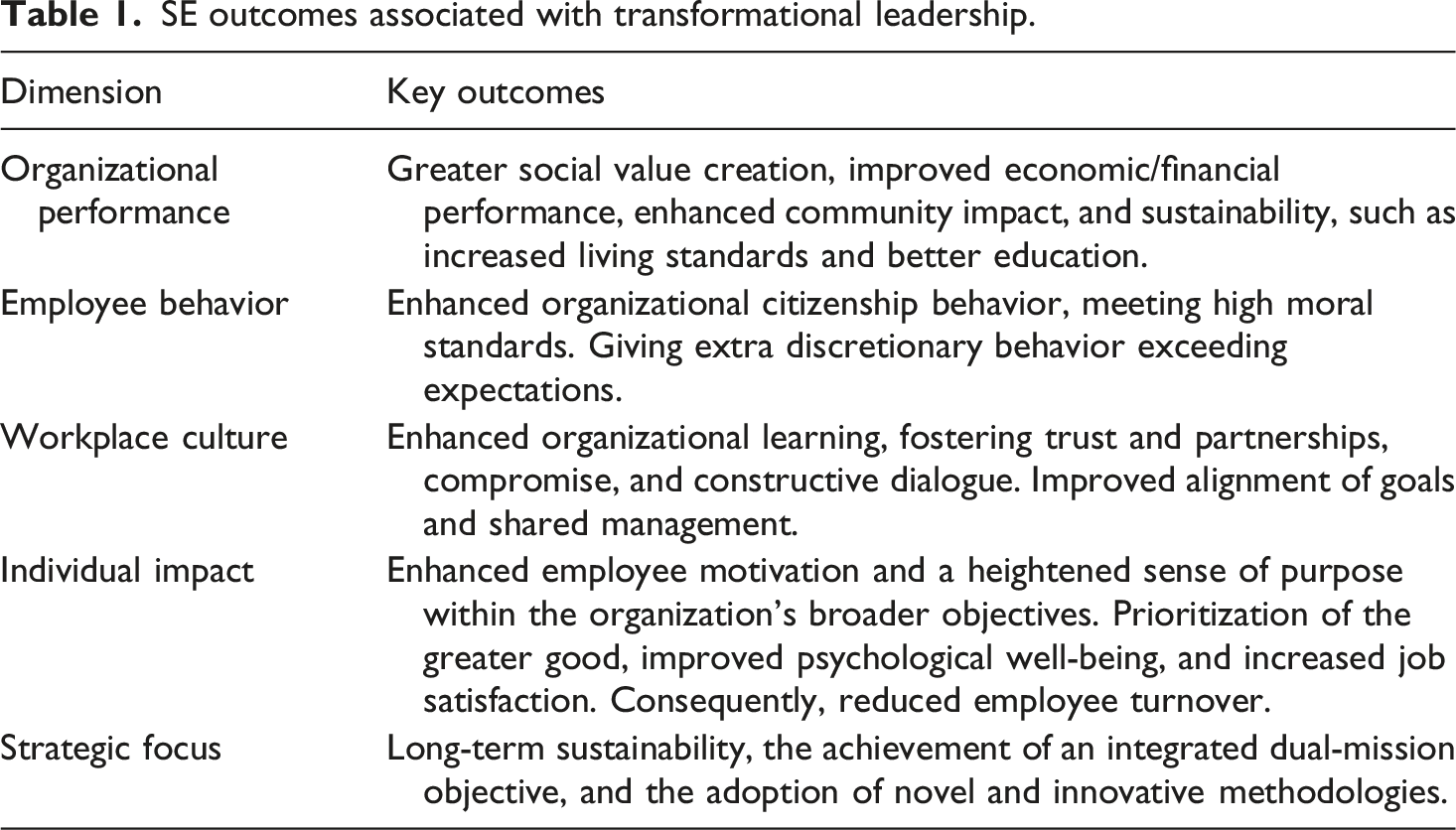
Social enterprise training challenge
Connecting SE and social-entrepreneurship success to transformational leadership reveals an educational challenge. Leaders must inspire teams to embrace SE’s dual mission (Battilana, 2018; Rychert and Wilkins, 2020; Yaari et al., 2020) through effective communication that builds trust and stakeholder support (Park and Bae, 2020). However, public administration and nonprofit training often lack education on social entrepreneurship and transformational leadership, leaving individuals unprepared for SE transitions amid conflicting goals (Mirabella and Eikenberry, 2017; Mirabella and Young, 2012; Steiner et al., 2018). Marathe et al., 2022 recommend emphasizing transformational leadership skills like advocacy and social entrepreneurship in public administrator training, teaching perceptive, emotional, and spontaneous decision-making practices, as most U.S. public policy and nonprofit programs focus on traditional leadership skills in HR, finance, and CSR (Austin and Rangan, 2019; Mirabella and Wish, 2000; Schlee et al., 2009). Many MBA and MPA programs also lack comprehensive courses in nonprofit management, thereby limiting SE education (Grønbjerg and O’Sullivan, 2003). Mirabella and Eikenberry (2017) endorse SE programs that focus on stakeholder engagement, mission integration, social outcomes, and social value creation. Engaging in social entrepreneurship ventures helps leaders develop transformational skills (Bhutiani et al., 2012; Felício et al., 2013; Naderi et al., 2019), with experiential learning practicums and internships vital for fostering leaders who are socially and economically valuable.
In their review of university course descriptions with a social entrepreneurship concentration within professional MPA, public policy, nonprofit, business, and religiously oriented institutions like American, Columbia, BYU, Duke, and Pepperdine, Mirabella and Young (2012) found that most courses focused on market skills (37%) expressed as how to succeed in a market economy and philanthropic skills (34%) defined as acquiring resources and raising funds, with 11% focused on management skills. Leadership and, more specifically, transformational leadership courses were unlikely to be offered as part of the concentration, representing 3% of all content —often called servant leadership or emotional intelligence—putting the needs of others first, or change management—transitioning from a current state to a desired future state. Most schools that provide an MPA or MBA degree with a nonprofit concentration have much more content focused on philanthropic, financial, and programmatic skills.
Other studies examined professional courses on social entrepreneurship, finding that 49% of public policy and administration classes emphasized market and management skills, while only 6% emphasized leadership (Mirabella and Wish, 2000). Wiley and Berry (2015) analyzed the syllabi of social entrepreneurship courses from the top 30 public administration programs at universities. revealing that only half of the graduate courses included leadership studies.
Many universities that incorporate social entrepreneurship into their MBA, MPA, and nonprofit programs usually offer only a few courses. Most of these courses provide only an overview of the field and do not explore more advanced forms of experiential learning (Austin and Rangan, 2019; Gerlach, 2016; Mueller et al., 2013). While these courses discuss social enterprise (SE) start-ups and funding, they do not teach leadership and management skills needed by social entrepreneurial leaders in the long term (Brock and Steiner, 2009).
Brock et al. (2008) and Mirabella and Eikenberry (2017) note the progress by Cornell, Harvard, and Stanford in social entrepreneurship. Yet, SE, social entrepreneurship, and transformational leadership courses still need wider adoption. A survey found 42% of faculty are at institutions without these courses (Solomon et al., 2019), underscoring the need to expand programs.
Many studies have thoroughly examined leadership training in nonprofit management education programs such as MNM, MPA, and MSW (Fay, 2015; Mirabella et al., 2019). In a detailed analysis, Fay found that only 17% of the course outlines included the essential leadership skills needed to navigate the complexities of nonprofit and SE work. Likewise, Mirabella et al.'s research showed that leadership courses, including transformational leadership concepts, are offered in just 15% of programs, highlighting a significant gap in the educational landscape.
Developing curricula on leadership and management is complex for MPA programs (Haupt et al., 2017; Kapucu, 2017). Accreditation helps assess if programs prepare students effectively, shifting from traditional performance standards to competency-based approaches (Raffel et al., 2015). NASPAA provides guidelines focusing on leadership, management, conflict resolution, and building stakeholder consensus, crucial transformational skills. Experts agree that accreditation in public service education is ongoing with room for improvement. Haupt et al. found that 76% of MPA faculty view leading and managing as core, and they favor leadership courses that emphasize reflection, values, participatory engagement, and mentorship.
Recent findings suggest faculty support expanding leadership to include social entrepreneurship and transformation. However, many programs continue to focus on traditional topics like marketing, HR, and fundraising, often overlooking urgent needs for transformational leadership. Evaluating these programs’ incorporation of such leadership is crucial to better prepare future leaders for transformative SE roles.
Social enterprise competencies
We aim to identify key transformational leadership concepts for social enterprises and evaluate their inclusion in professional MPA and MNM programs. A comprehensive model is needed to show how transformational leadership can reduce conflicts from diverse SE objectives, promote systemic change, align goals, foster innovation, teamwork, and motivate teams to achieve outcomes. While some research explores transformational leadership in the SE sector, a major gap exists in understanding its role in hybrid SE success. Consequently, SE typology literature lacks consensus on the importance of transformational leadership.
Research on SE organizations has increased significantly, highlighting their importance in social and economic contexts (Battilana, 2018; Billis, 2020; Litrico and Besharov, 2019; Smith et al., 2013). This interest was partly sparked by Dees’s (2007) call for academics to engage with these entities. Key areas of study include the nature of meaningful work (Sun and Sohn, 2021), mission evolution (Ramus et al., 2021), and the application of design thinking for problem-solving (Docherty et al., 2023). Funding strategies, including program-related investments (Jones and Donmoyer, 2015) and resource acquisition (Cobb et al., 2016; Lall and Park, 2022), have also been explored, along with the role of market reform in SE operations (Beaton and Kennedy, 2021).
Tools for monitoring missions and goal differentiation (Besharov et al., 2019) are discussed in the research, stressing the importance of an organizational culture tailored to SE missions (Albrecht et al., 2018; Naderi et al., 2019). Despite extensive research, a notable gap remains in the study of leadership competencies for guiding individuals in the unique SE environment (Battilana, 2018). While there has been progress, more attention needs to be given to SE leadership competencies (Gupta et al., 2020; Jackson et al., 2018). Jackson et al. noted the limited exploration of hybrid SE leadership due to the sector’s size and the need for empirical data.
Current studies emphasize creativity (Bublitz et al., 2021), problem-solving (Grint, 2005a; Jackson et al., 2018), and consensus-building (Johnson, 2012) while supporting the “paradoxical leadership” model that navigates competing goals (Al Taji and Bengo, 2018; Gopakumar and Gupta, 2023; Park, 2020; Smith et al., 2012). However, there is a tendency to focus on individual leaders (Corner and Ho, 2010) and heroic-type entrepreneurs (Siegner et al., 2018; Yaari et al., 2020). More research is needed on the specific leadership competencies in this context (Grint, 2005b; Jackson et al., 2018). Despite increased interest in leaders navigating profit and social impact (Al Taji and Bengo, 2018; Cornelissen et al., 2021), a consensus on leadership competencies for hybrid SEs remains elusive.
Current methodologies have significantly advanced our comprehension of management strategies tailored for SEs. However, challenges related to leadership quality and the specific competencies associated with SE transformational leadership remain pressing issues that warrant further exploration (Yaari et al., 2020). To effectively address these challenges, researchers should curate and assess a list of leadership competencies vital for navigating SEs. While research has primarily examined individual leaders, management practices, and strategies, leadership competencies require greater academic focus.
SEs, as social change agents, need leaders who leverage competencies to tackle social issues and generate revenue. This calls for a unique transformational leadership style centered on mission, sustainability, innovation, and inspiration, different from traditional models (Battilana, 2018; Belle, 2014; Weaver, 2021).
For the rest of this paper, we use ‘social transformational leadership’ (STL) to describe competencies adapted from validated transformational leadership dimensions within social entrepreneurship, supported by a literature review. Our study uses the term ‘social (socialized) transformational leadership’ (STL), aligned with the seminal works of Bass (1985), Battilana (2018), Riggio et al., 2004, and supported by Robinson (2025), to describe transformational leadership that inspires and motivates followers to innovate and act for the collective good, transcending personal needs for greater societal change through a shared social mission. This term highlights collective assumptions that are considered valid. The competencies include: (1) Integrating conflicting missions for sustainability involves building trust through idealized influence, motivating stakeholders to align goals, reduce tensions, and develop a shared vision and strategy (Mirabella and Eikenberry, 2017; Pache and Santos, 2013). This is reflected in survey items 4, 7, and 8. (2) Collaborative innovation involves SE leaders working with stakeholders to develop practical, creative solutions to social issues, using intellectual stimulation to motivate teams (Avolio and Yammerino, 2013; Shier and Van-Du, 2018). This is reflected in survey items 1, 6, 9, and 10. (3) SE Leaders should offer vision, encouragement, mentorship, and challenges to inspire others to prioritize collective goals. This drives systemic change through inspirational motivation and individual consideration (Bass, 1998). Items 2, 3, and 5 on the survey reflect this competency.
Collectively, these competencies play an integral role in enhancing the effectiveness of transformational leadership in SEs.
There is an urgent need for educational programs on SEs and STL. Research shows that many students value the industry’s role in addressing social issues and want to drive positive change. Impressively, 74% of U.S. college students see themselves as leaders addressing social and environmental problems.
Higher education's role in developing STL competencies is questioned, with studies showing challenges in attracting SE leaders with them (Bhati and Manimala, 2011; Mueller et al., 2013; Napathorn, 2018; Smith and Darko, 2014) and few candidates with STL experience and education (Battilana et al., 2012). This study explores how MPA and MNM programs foster the development of STL competencies for SE leadership.
Data and Methods
Sample selection
To include enough universities to gather a wide range of views, we recruited MPA and MNM faculty members and administrators in the United States for this study, representing 120 MPA and 40 MNM programs across public and private universities. We have a convenience-based nonprobability sample, which is appropriate when the researcher cannot access the entire target population. Only some individuals had a chance of being included because we could not know how many MPA/MNM programs there actually are in the regions targeted for the study. We did not intend to test a hypothesis about the larger population but to develop an initial understanding of an emerging and under-researched phenomenon, that is, the extent to which graduate degree programs in public administration or nonprofit management are focused on developing the leadership capacity of students aiming to work in social enterprises (SEs). The recruitment process involved a few different strategies: • contacting MPA and MNM faculty members, department directors, or chairs directly by email or phone to gauge interest with follow-up communication containing additional study details, general timelines, and a survey link; • contacting MPA and MNM professional associations (for example, American Society for Public Administration) to ask for participant contact information or a link to the survey in their membership communications and newsletters, and • seeking referrals from a professional network to contact MPA and MNM program faculty members in the United States.
The researchers selected faculty members and department administrators for their involvement in the curriculum design process, often seen as a collaborative effort (Dodd, 2021) involving teams with diverse areas of expertise, each bringing unique perspectives and skills to the table. A typical curriculum design team may include subject-matter experts such as faculty, department directors, curriculum coordinators, and instructional designers. However, our study focused specifically on faculty and administrators. Faculty members are primarily responsible for designing curricula and selecting instructional methods. They will most likely design syllabi, specific course content, and teaching approaches.
Department administrators oversee curriculum design, development, and implementation, collaborating with faculty on planning and approval. This may involve drafting syllabi, setting goals, and ensuring course alignment. Since administrators often plan at a higher program level, an SE course might include STL competencies without their awareness. The researchers address this validity challenge in the Delimitations and Limitations section. Both faculty and administrators should incorporate SE learning content, methods, and objectives into curricula.
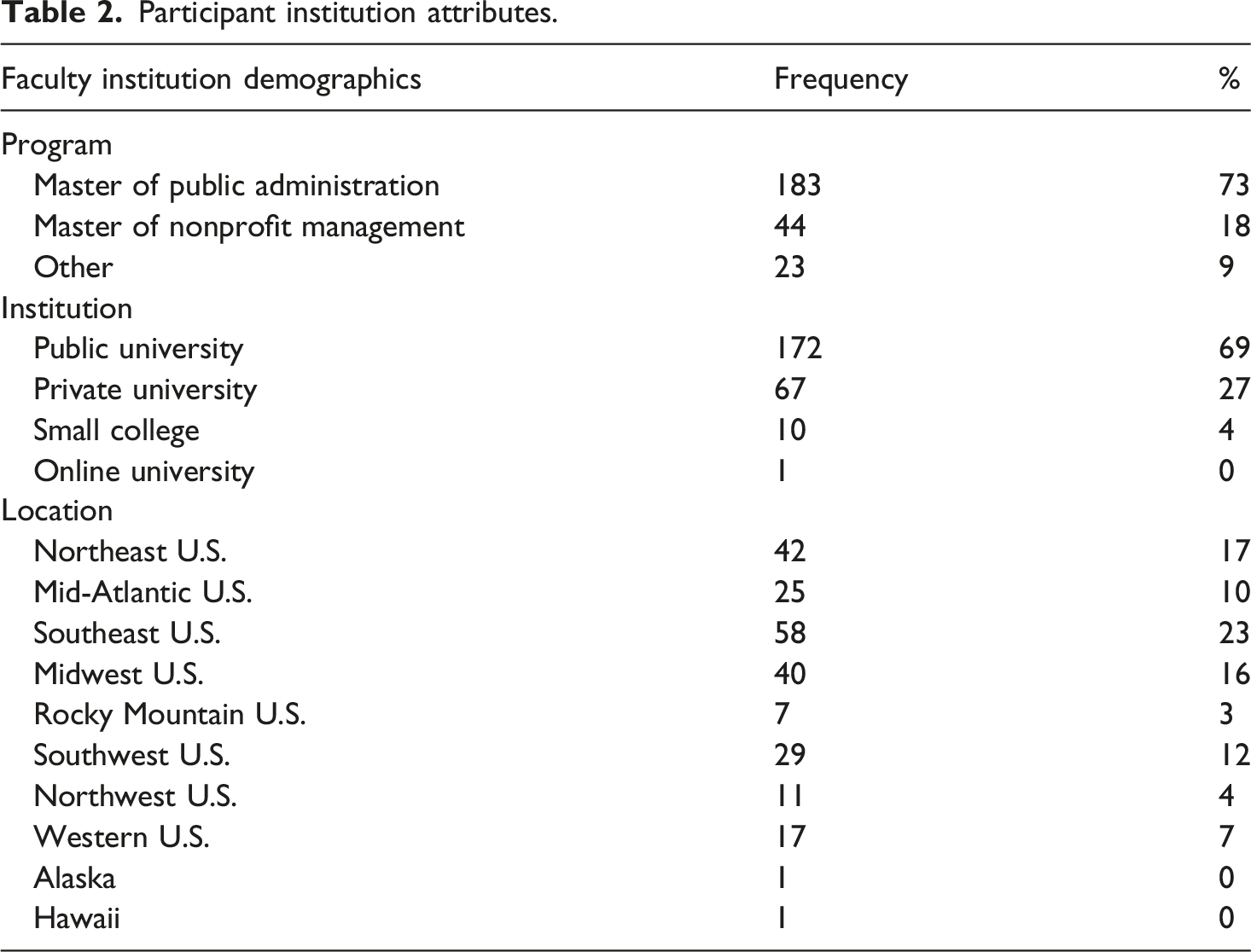
Participant institution attributes.
Participant employment attributes.
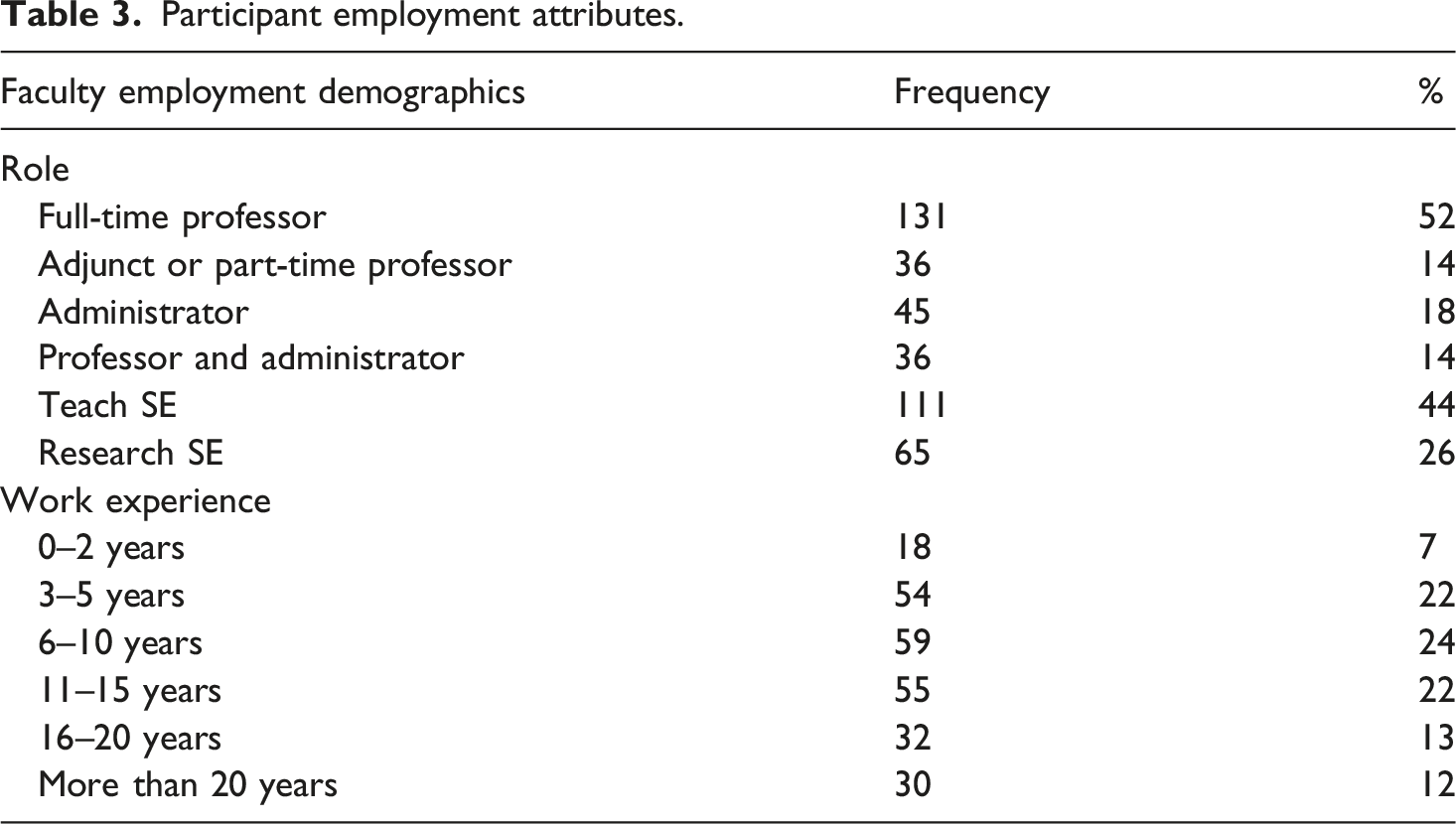
Of 794 surveys sent in the United States, 250 participants responded, yielding a 31% response rate. Of that sample, 73% (n = 183) of the respondents worked in an MPA program, 18% (n = 44) worked in an MNM program, and 9% (n = 23) worked in a mixed or “other” program, often a combination of public administration and nonprofit management or leadership.
Procedure
This investigation describes differences between two groups regarding one dependent variable related to graduate degree program curricula. For example, we examined the extent to which MPA and MNM programs focus on the primary social enterprise (SE) STL competencies, as measured by a survey of 10 individual social transformational leadership behaviors.
Non-experimental research has several advantages. First, it is highly flexible, allowing the investigator to determine demographic categories and seek a broad sample of participants. Second, the researcher can delimit the sample group’s specific characteristics for research purposes, such as selecting existing MPA, MNM, or social entrepreneurship programs.
Instrument design
The survey tool was available online through the Qualtrics platform and sent to participants via email, social media, or a website link. It took about 10 minutes on average to complete. The survey was pilot-tested before collecting data to ensure clarity and accuracy (Fink, 2017). We informed participants about the pilot’s purpose and encouraged them to give honest feedback. For example, we asked about their overall experience, including any confusion about the survey’s wording, length, and overall clarity. Edits to the survey included making the introductory phrases for each item more consistent and ensuring uniform terminology. We aimed for a high response rate (i.e., 30%–40%) by keeping the survey brief, sending reminders, and motivating participation with a trustworthy, personalized message and a clear explanation of its purpose. All data were collected using the online host’s procedures and then downloaded electronically to the researcher’s computer for analysis with commercial statistical software such as Excel and SPSS.
Method
This study examined differences between the Master of Public Administration (MPA) and the Master of Nonprofit Management (MNM) programs regarding university preparation curricula. We specifically focused on how these programs emphasize the primary SE STL competencies. To assess this, we developed a survey of 10 individual STL program competencies, drawing on established literature (Bublitz et al., 2021; Capella-Peris et al., 2020; Mueller et al., 2013; Roundy, 2017).
The survey items are categorized as follows: 2, 3, and 5 represent inspiration, 4, 7, and 8 represent integrating conflicting missions for sustainability, and 1, 6, 9, and 10 represent collaborative innovation. These survey items evaluate how MPA and MNM graduate programs incorporate these distinctive SE STL needs in their curricula (See Appendix A).
Survey responses were recorded using a 4-point Likert scale, with respondents indicating their answers at the top of the scale with “to a great extent” or at the bottom with “to a minimal extent.” We aimed to compare faculty perceptions across programs, among other analyses. Programs were examined using measures of central tendency, t-tests, and point biserial correlations. The measures of central tendency included the mean and standard deviation. The t-tests compared the means of the MPA and MNM program categories. Correlations were used to assess the relationship between STL competencies and program type.
Results
Social transformational leadership (STL) competency survey items by program type.
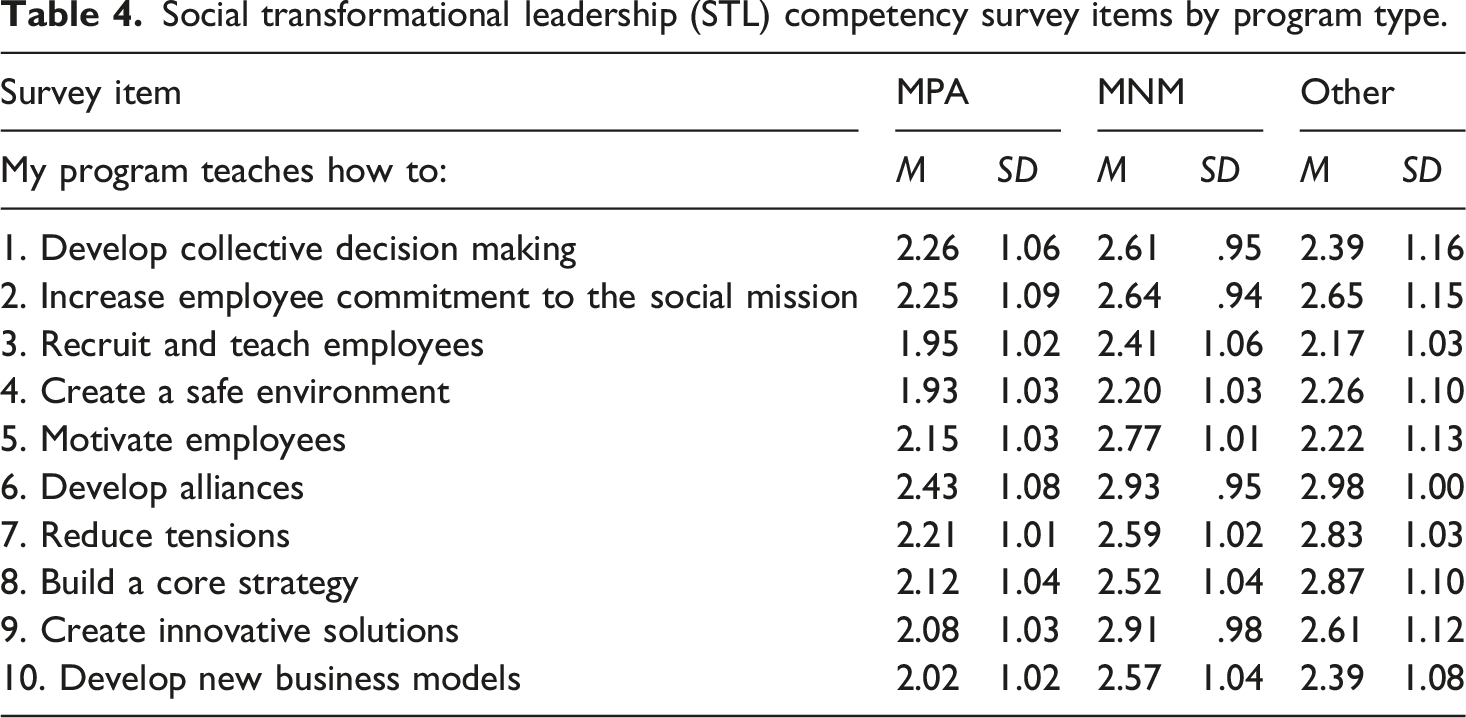
The results indicate that MPA, MNM, and other programs do not significantly integrate STL competencies into their curricula, although MNM and other programs do so to a greater extent than MPA programs. These findings align with previous research suggesting that these programs must address SE in their curricula more thoroughly. Faculty from MNM and other programs generally reported STL survey item averages in the upper half of the 4-point scale, while MPA faculty members reported averages mainly in the lower half. This prompted an examination of whether these differences were statistically significant.
For this purpose, we used an independent-samples t test because the groups were from two different populations: faculty from the MPA and MNM programs, excluding those identified as from other programs. The other category had a small sample size (i.e., 9%), which was insufficient to warrant inclusion in further analyses. Figure 1 shows program-type means and variances for the STL competencies. MNM programs have higher means, whereas MPA programs have higher rating variability. To obtain the program means, we summed the 1-4 survey response values across the 10 items for each respondent and then took the average. Social Transformational Leadership (STL) inclusion competency by program-type means and medians. Note. Sample size MPA = 183 and MNM = 44.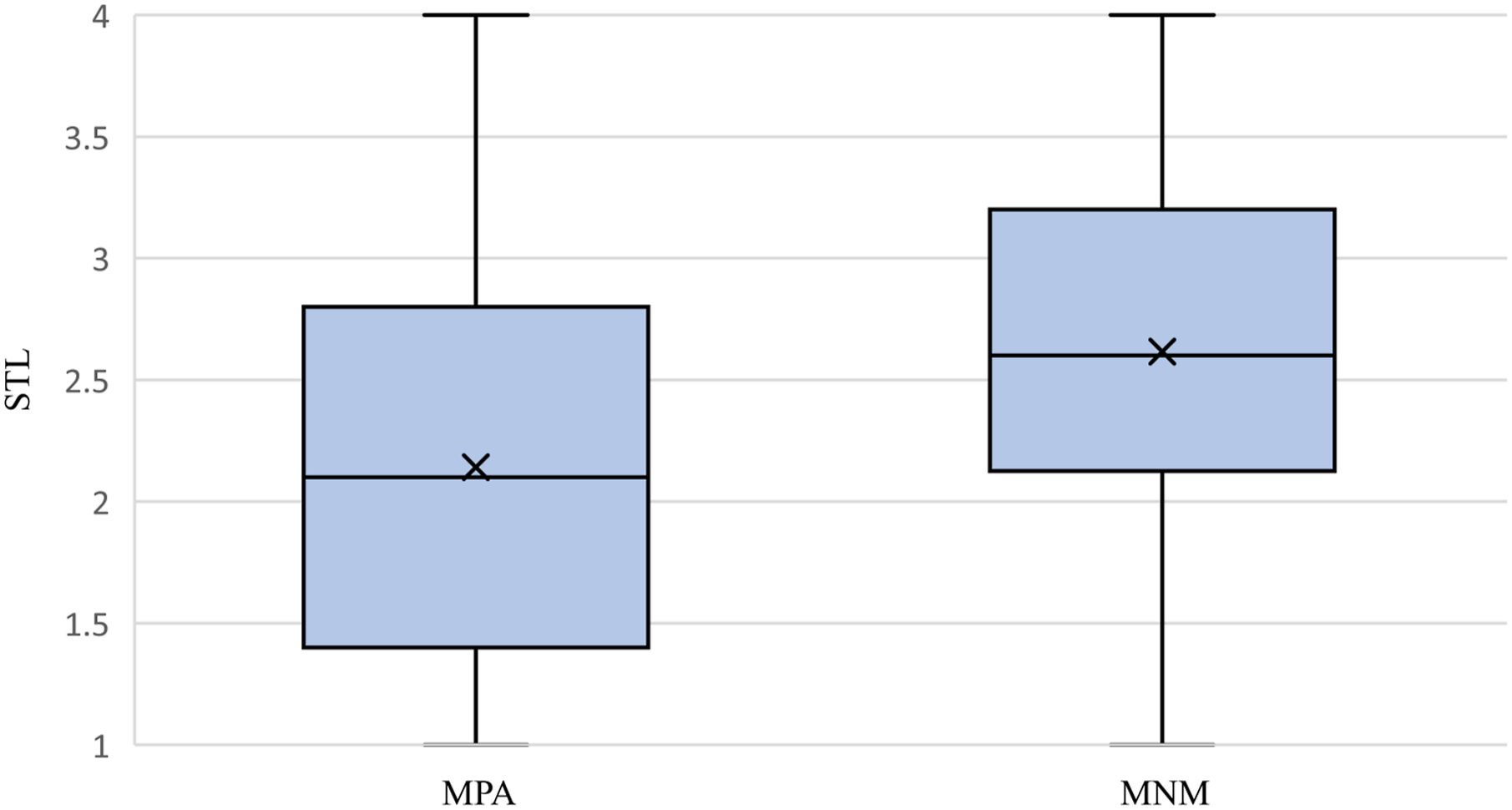
Social transformational leadership (STL) competency survey items by program-type differences.
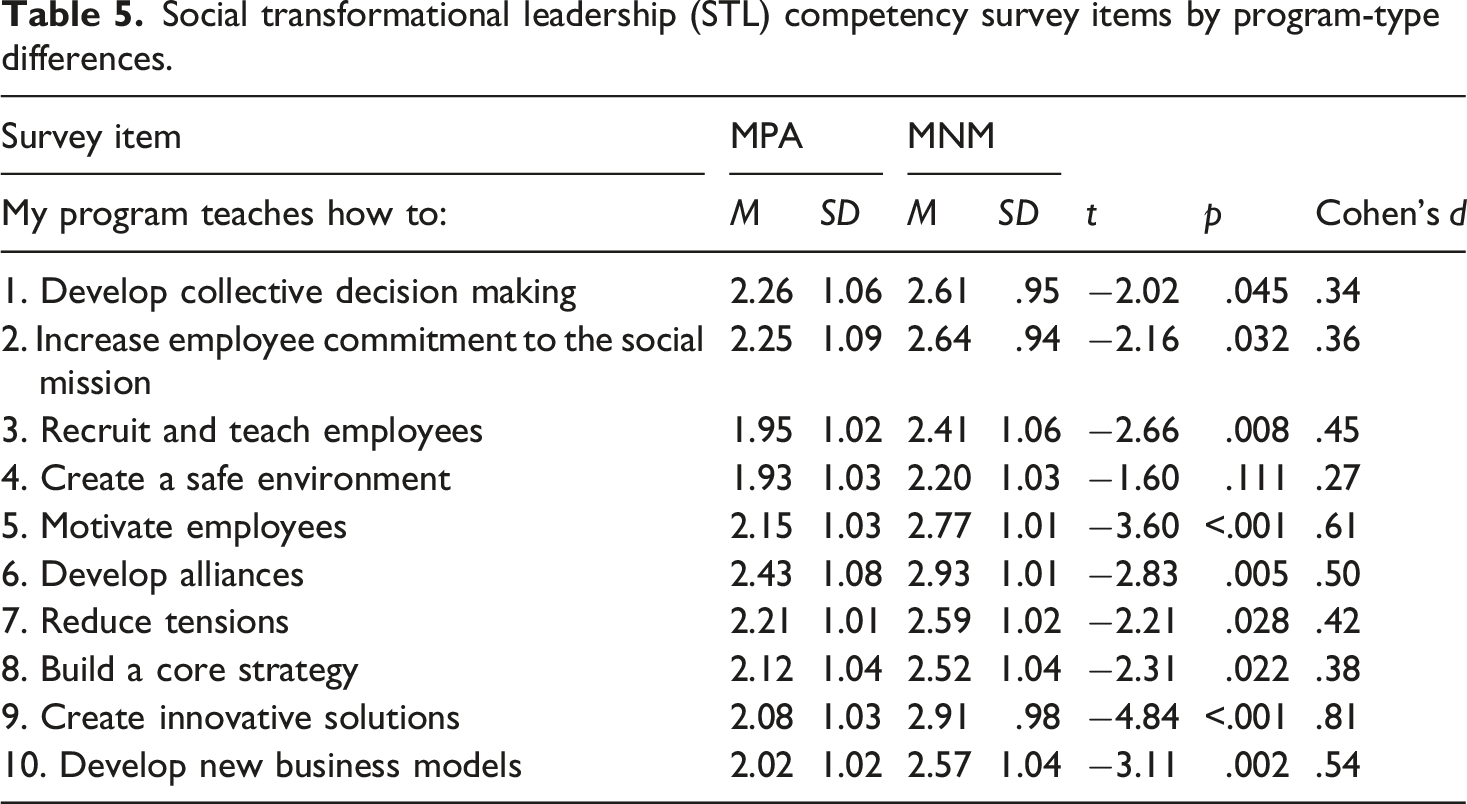
Cohen’s d showed a large effect for survey item 9 (d = 0.8), a medium effect for items 5, 6, and 10 (d = 0.5), and a small effect for the other significant items, indicating limited practical importance (Cohen, 1988). Levene’s test confirmed equal variances and normality for all. Items 5, 6, 9, and 10 had the largest mean differences between program types. Although MPA and MNM programs lack extensive social transformational leadership (STL) training, MNM programs include these competencies more than MPA, especially items 5, 6, 9, and 10.
A correlation analysis was conducted to investigate whether the inclusion of STL in program curricula is associated with program type. Given that program type was categorized into two groups due to the limited variety of other programs, point-biserial correlations were used to determine whether there was a significant association between program type and STL curriculum content (See Figure 2). The figure shows a slight upward slope to the right, indicating a positive relationship between the STL survey item ratings and MNM and MPA program types. Social Transformation Leadership (STL) inclusion competency by program-type correlations. Note. Sample size MA = 183 and MNM = 44.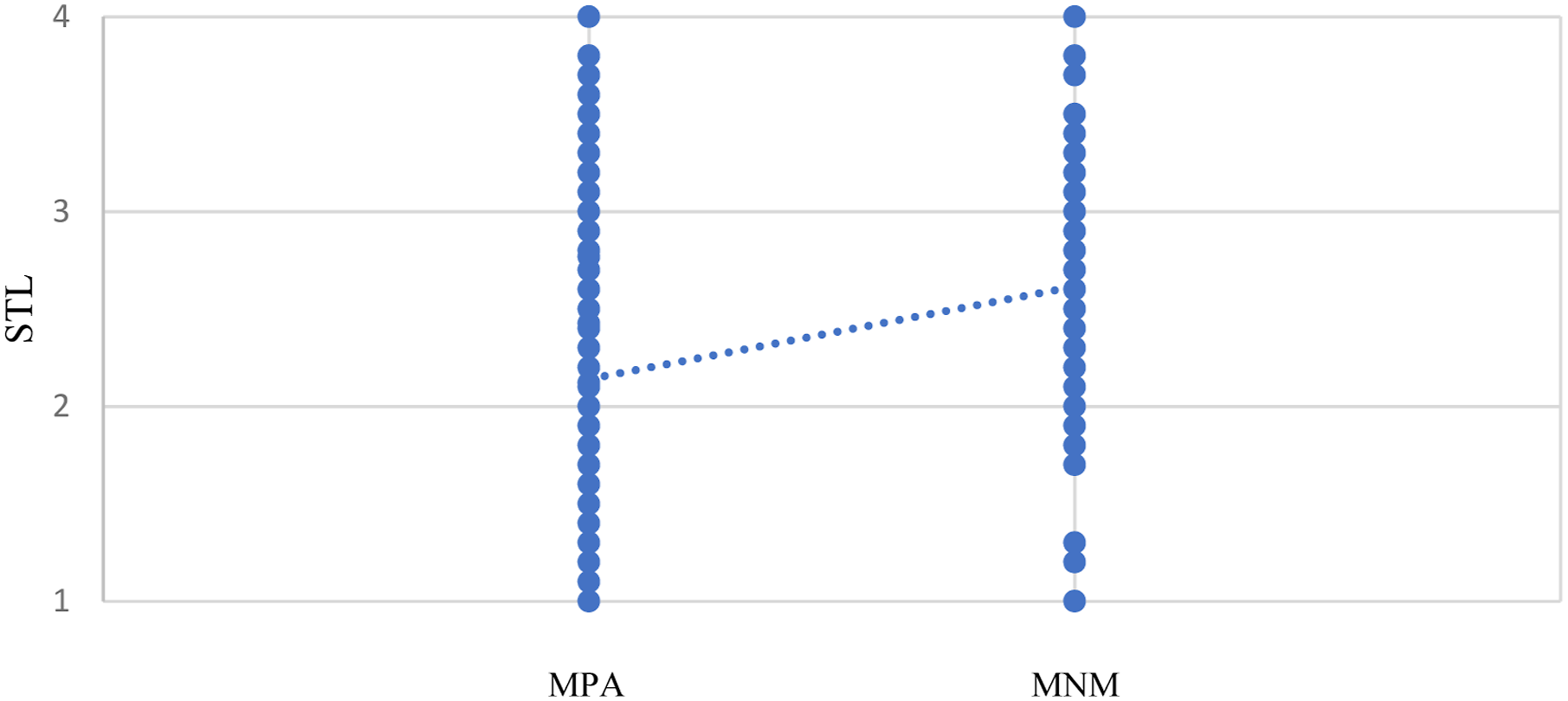
Social transformational leadership (STL) competency survey items by program-type correlations.
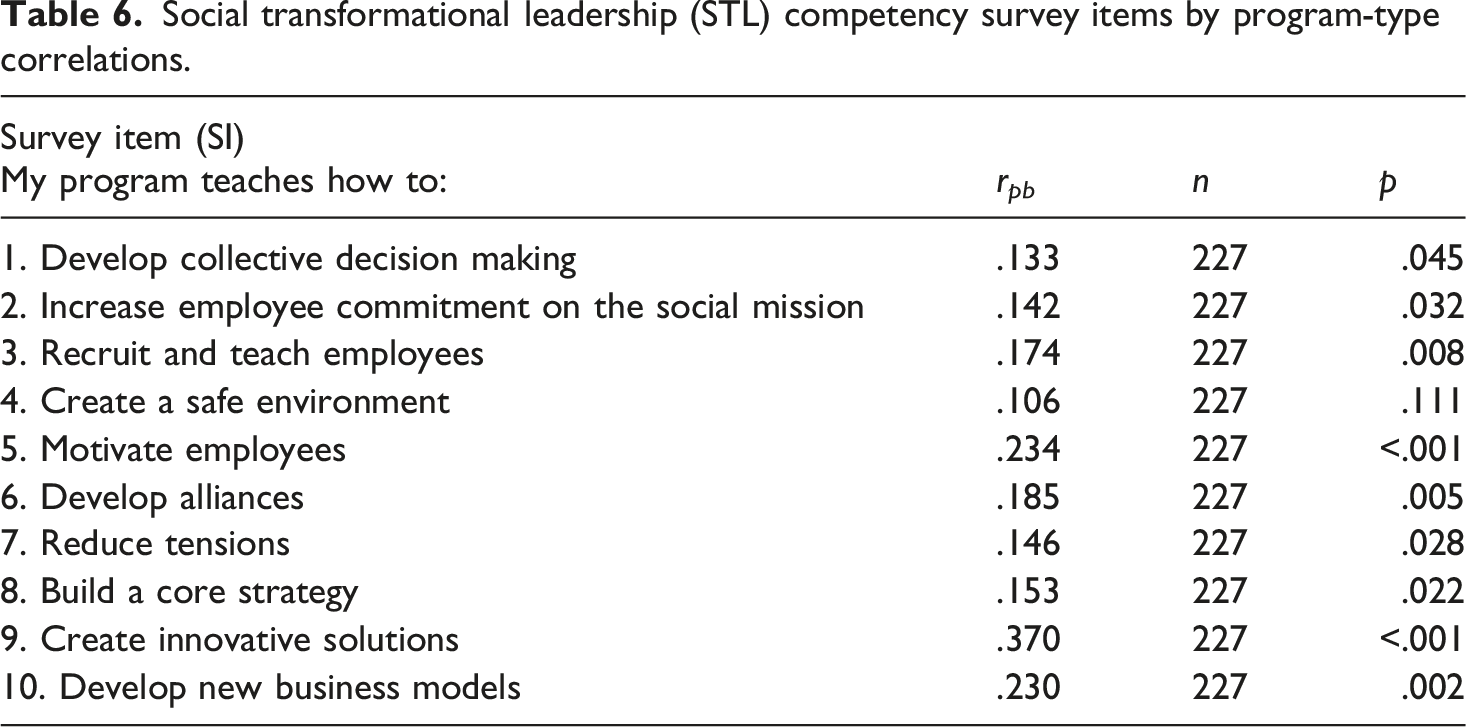
These results support the notion that MPA and MNM programs do not comprehensively cover the primary SE STL competencies in their curricula. However, statistical support suggests that MNM programs do this substantially better than MPA programs, particularly for STL survey items 5, 6, 9, and 10.
Ancillary findings
Ancillary findings about the institution-type independent variable were noted. Although not directly related to the study’s primary research questions, the independent variable of institution type (i.e., public or private universities) provides additional insights into how the STL inclusion competency is incorporated into program curricula. Figure 3 (Appendix B) shows the means and variances by institution type for the STL competency. As with the program-type boxplots, private universities have higher STL means, whereas public universities exhibit greater variability in ratings.
A t test revealed that private university faculty report significantly more STL competency inclusion in curricula than public university faculty. They also said their programs include seven of the ten STL survey items more often (see Table 7, Appendix B).
Cohen’s d was medium (d = 0.5) for survey items 6, 8, 9, and 10, and small for others (Cohen, 1988). Levene’s test confirmed homogeneity and normality for all items. Items 6, 8, 9, and 10 showed the largest mean STL differences by institution type. Although public and private institutions do not incorporate STL competencies to a great extent, private institutions incorporate STL more than public ones, especially items 6, 8, 9, and 10.
In addition to program type, the researcher conducted point-biserial correlations to examine potential relationships between STL and institution type. Figure 4 (Appendix B) shows the bivariate scatterplot of institution type and STL inclusion competency. The figure shows a slight upward slope to the right, indicating a positive relationship between the STL survey item ratings and private and public institution types.
There were slight positive correlations between the STL survey items and university curricula, and between the STL survey items and institution type. Correlations were statistically significant for seven of 10 survey items (see Table 8, Appendix B).
When the independent variable was a private university, the STL survey items received significantly higher ratings than when the variable was a public university. The effect size (r pb ) was medium (i.e., r pb ± .243) for survey items 6, 8, 9, and 10, whereas it was small for the others (Cohen, 1988).
These results confirmed that public and private universities do not comprehensively include the primary SE STL leadership competency in their curricula. However, statistical analysis indicated that private universities did so substantially better than public universities, particularly on STL survey items 6, 8, 9, and 10.
Delimitations and Limitations
The study’s limitations reveal two main threats to internal and external validity. First, the sample size is limited by the difficulty of finding willing participants from the MPA and MNM programs. As a result, the findings may apply primarily to faculty from these programs who responded to the survey, rather than to the broader population. Second, as with many non-experimental studies, the researcher had limited control over potential confounding variables. Participants were selected through convenience sampling of MPA and MNM programs rather than random assignment; therefore, self-selection bias could threaten internal validity. Geographic differences may have also affected the results. The respondents were mostly from the Southeast U.S., where regional cultural values and social conditions may have influenced their survey responses, limiting the generalizability of the results to other regions. Additionally, there may have been inherent differences between the MPA and MNM programs.
The study focused on MPA and MNM programs, not social work, business, or political science, which also prepare for SE careers. These graduate programs are especially interested in nonprofit management and social entrepreneurship (Austin and Rangan, 2019; Mirabella and Wish, 2000). The scope was narrowed to keep the study manageable and to avoid complicating the results with other participant types, which could hinder confident answers to the research questions.
The study’s delimitation concerns construct validity, also addressed in the Data and Methods section. High-level administrators involved in curriculum decisions and program review may not know SE-specific coursework as well as the faculty do. An SE course in an MPA or MNM program might cover STL competencies even if the overall program does not.
Readers should note the study’s limitations. A 31% response rate is acceptable but could improve. We asked MPA respondents about their degree programs, but not all offer nonprofit management concentrations. Thus, many surveyed SE skills may not be included in curricula. The study also reveals a significant imbalance between MPA and MNM faculty, exacerbating this issue.
Potential response biases may have influenced the study, including non-response bias that affected the results. We acknowledge the faculty’s time pressures and the sensitivity of our survey on curriculum content. Despite using incentives, multiple contact attempts, and various data collection methods, non-response bias may persist. Future research should aim to reduce this bias by using similar strategies and collecting data from non-respondents for comparison.
Social desirability bias is a potential limitation because faculty from NASPAA-accredited schools may have responded in a socially desirable manner when self-reporting curriculum content, even though the survey was anonymous and neutral. They might have felt pressure to present a positive image to stakeholders, which could bias results.
Given the rise of social enterprises and education in the U.S., most MPA faculty may lack experience and leadership in managing SEs. They probably haven’t led an SE or business organization. Readers should consider this when evaluating the findings. Future research should address these limitations.
Discussion and conclusion
The results showed that neither the Master of Public Administration (MPA) nor the Master of Nonprofit Management (MNM) programs extensively include social transformational leadership (STL) in their curricula. However, MNM programs tend to report a greater inclusion of STL competencies than MPA programs. Four survey items mainly supported this finding: Item 5, motivating employees; Item 6, developing alliances; Item 9, creating innovative solutions; and Item 10, developing new business models.
One possible explanation for these results is that program faculty may be overstretched in trying to cover the broad range of required knowledge, limiting their ability to fully develop specific SE leadership competencies. This heavy course load could explain the relatively low SE STL competency, especially in MPA programs that need to address a range of public administration topics.
It is also possible that faculty and administrators do not fully understand the concepts and principles behind SEs. The SE sector may need to advocate more effectively within higher education by showing faculty and administrators how to incorporate these STL leadership competencies into their programs, ultimately expanding students’ opportunities to meet the needs of SEs.
It is crucial to recognize that social enterprises, especially SEs, represent a relatively recent organizational form that has experienced remarkable growth over the past two decades (Abramson and Billings, 2019; Haigh et al., 2015; Polaris Market Research, 2024). The surge in SE research over the last decade (Battilana, 2018; Billis, 2020) underscores its increasing importance. However, MPA and MNM curricula have likely not kept pace with these rapid developments, and faculty may have fallen behind in integrating these cutting-edge leadership principles. Conducting further research is essential to identify and overcome the obstacles hindering the development of new SE leaders, ensuring the emergence of capable leaders to drive societal impact.
These findings emphasize the need to develop innovative business models to support SE success (Bublitz et al., 2021; Dacin et al., 2011; Greenwood et al., 2011; Park and Bae, 2020). Future research should explore how MNM programs manage to prioritize this STL competency more than MPA programs. MNM faculty, familiar with SEs’ dual-mission challenges, especially in nonprofits, may better understand how entrepreneurial approaches can help these organizations thrive in competitive funding environments. Their experience can offer valuable lessons to help improve MPA curricula.
The survey showed faculty and administrators differ on including SE concepts in MPA versus MNM programs, focusing on their presence in curricula rather than value. Future research should examine if MPA programs value these skills, as challenges may extend beyond time constraints.
The study found that program administrators or directors made up about 18% of the sample. These individuals are often responsible for high-level curriculum planning and design (Dodd, 2021; Wright et al., 2018). However, their level of involvement can vary across schools or departments, which may affect how well they understand each instructor’s approach, course outline, or specific skills, such as STL competencies embedded in course modules. Because faculty members frequently modify course content each semester, program directors may not have accurately assessed their programs’ content in this study. Therefore, future research should consider the involvement and knowledge of curriculum content among program directors and administrators.
Additionally, researchers did not evaluate whether the MPA programs included a concentration in SE or nonprofit SE management, nor whether the study’s MNM programs had a concentration in SE. The study’s purpose was to assess standard MPA and MNM programs. Future studies should control for these factors to determine their effect on the inclusion of STL competencies.
Private institutions report higher levels of STL integration than public ones, warranting further study. Many private universities are affiliated with religious denominations, acting as 501(c)(3) nonprofits. This spiritual alignment may boost their understanding and commitment to SE principles and STL skills. Future research should explore these effects.
The author identified 10 STL competencies from current research, documented in the literature but used here for the first time to examine how university prep programs introduce these concepts. Future work should validate the SE leadership profile through broader studies, possibly using a Delphi method with SE leaders and academics.
Finally, we examined demographic data comparing research and teaching faculty—perceptions of inclusion of STL competencies in curricula from researchers versus non-researchers and teachers versus non-teachers—to assess their relevance to the study outcomes. No observational differences were obvious, but future studies could explore these comparisons.
Practical implications
Identifying competency gaps in master’s programs for public administration (MPA) and nonprofit management (MNM) related to social transformational leadership (STL) competencies has significant implications for these fields. Currently, the lack of emphasis on STL highlights existing limitations and offers these programs a valuable opportunity to update their curricula. Implementing these changes is crucial to prepare students for leadership roles in social entrepreneurship, especially within the social enterprise (SE), nonprofit, and government sectors.
The survey findings reveal a concerning trend: MPA programs received significantly lower ratings than MNM programs across several key areas, underscoring an urgent need for improvement. Educators must provide targeted support to MPA students, focused on critical STL competencies such as motivation, collaboration, innovation, and sustainable business models.
For MPA programs with an SE concentration or considering one, integrating concepts of motivation and innovation into their curricula can address existing gaps. Programs without a nonprofit focus should strengthen coursework in this area to target the four STL competency deficiencies identified in the research.
Recognizing and integrating STL competencies will better prepare MPA and MNM students for STL challenges in SEs. Collaboration among educators, administrators, and students is crucial for addressing gaps and equipping future leaders to navigate the changing SE landscape.
Concluding remarks
This study evaluated the integration of STL into the MPA and MNM curricula, emphasizing essential competencies identified by SE organizations. The findings indicate a partial incorporation, with MNM programs demonstrating a better integration of STL skills such as motivating, inspiring, fostering innovation, and establishing alliances. These results can support SE managers, faculty, administrators, and scholars in leader recruitment, program development, and research activities.
Supplemental material
Supplemental Material - From classroom to community: Cultivating the next generation of transformational leaders for social enterprises
Supplemental Material for From classroom to community: Cultivating the next generation of transformational leaders for social enterprises by ARobert W. Adams, Barbara L. Nicholson in Teaching Public Administration
Supplemental material
Supplemental Material - From classroom to community: Cultivating the next generation of transformational leaders for social enterprises
Supplemental Material for From classroom to community: Cultivating the next generation of transformational leaders for social enterprises by ARobert W. Adams, Barbara L. Nicholson in Teaching Public Administration
Footnotes

Ethical considerations
IRBNet ID# 1923369-1. Our institution does not require ethics approval for anonymous, non-interventional studies. Following 45CFR46.104(d)(2), the above study was granted exempt approval by the Marshall University Institutional Review Board #2 (Social/Behavioral) designee.
Consent to participate
Informed consent was written and obtained through the online survey instructions.
Funding
The authors received no financial support for the research, authorship, and/or publication of this article.
Declaration of conflicting interests
The authors declared no potential conflicts of interest with respect to the research, authorship, and/or publication of this article.
Data Availability Statement
We will work with the journal editors to set up the research data in a public data repository.
Supplemental material
Supplemental material for this article is available online.
References
Supplementary Material
Please find the following supplemental material available below.
For Open Access articles published under a Creative Commons License, all supplemental material carries the same license as the article it is associated with.
For non-Open Access articles published, all supplemental material carries a non-exclusive license, and permission requests for re-use of supplemental material or any part of supplemental material shall be sent directly to the copyright owner as specified in the copyright notice associated with the article.
