






Abstract
We investigate the effects of entrepreneurial subjective ambivalence on a form of adaptive action: venture idea revision. Building on the affect-as-information perspective, we propose that entrepreneurial subjective ambivalence will increase venture idea revision by increasing information search behaviors. The results of a longitudinal, repeated-measures field study based on 175 entrepreneurs in a top incubator program demonstrate that when entrepreneurs experience higher subjective ambivalence (compared to lower ambivalence) in response to mentor feedback about their new ventures, they engage in higher levels of venture idea revision. We theorize and find that this increase in venture idea revision arises because subjective ambivalence is positively associated with more intense and broader information search behaviors. We discuss implications of our findings for research on affect in entrepreneurial decision-making, creative revision, and ambivalence in organizations, as well as for formal entrepreneurial mentoring programs.
Keywords
Introduction
Venture idea revision is a process of creative revision (Grimes, 2018; Toivonen, Idoko, Jha, & Harvey, 2023) defined as a process where feedback providers and creative idea owners interact repeatedly to improve the novelty and usefulness of an idea (Ananth & Harvey, 2023; Harrison & Rouse, 2015; Perry-Smith & Mannucci, 2015, 2017). Creative revision processes have been largely viewed as information exchange processes, and research demonstrates that entrepreneurs who revise their venture ideas in response to feedback from key stakeholders (e.g., mentors, advisors, investors) achieve faster and higher rates of success (Hallen, Cohen, & Bingham, 2020; Huang & Knight, 2017). When entrepreneurs approach the early-stages of venture development as an iterative, changing, or improvement process, they often deliver a better product-market fit and achieve better performance (Bammens & Collewaert, 2014; Grimes, 2018; Lounsbury & Glynn, 2001). The challenge, however, is that entrepreneurs often struggle to be open and receptive to feedback while creating value propositions, products, and business models (Hallen et al., 2020).
Factors that have been found to influence the venture idea revision process have focused on entrepreneurs’ high levels of psychological ownership towards their ideas. Due to the significant investments of time, effort, and money entrepreneurs often make towards their new ventures, they have been found to experience strong psychological ownership that increases their experience of strong emotional reactions to feedback from advisors, mentors, and investors, and, in turn, may limit or increase the likelihood that they engage in venture idea revision (Baer & Brown, 2012; Baron, 2008; Foo, Uy, & Baron, 2009; Grimes, 2018). Emotions, therefore, are a critical mechanism that helps explain variation in entrepreneurs’ venture idea revision.
However, despite research and ample anecdotal evidence that suggests entrepreneurs experience and display a broader “affective spectrum” covering the whole gamut of emotions—from positive to ambivalent to negative emotions—during venture idea revision processes (e.g., Huang & Knight, 2017; Toivonen et al., 2023), we know less about the effects of more complex emotional reactions to feedback such as emotional subjective ambivalence and the role it plays in shaping the venture idea revision process. This is even more problematic because early-stage entrepreneurship is a context in which entrepreneurs are highly uncertain they will obtain a successful venture (Baron, 2008; Portocarrero, Newbert, Young, & Zhu, 2025), a situation in which ambivalence has been demonstrated to be quite common (Reich & Wheeler, 2016).
In this study, drawing directly from the ambivalence literature, we focus on subjective ambivalence defined as the psychological state of conflict and tension associated with holding both positive and negative feelings at the same time about the same object, person, or issue (Plambeck & Weber, 2009; Priester & Petty, 1996; Rothman & Melwani, 2017). Individuals high on subjective ambivalence are aware of their feeling of being conflicted and torn about the object (Newby-Clark, McGregor, & Zanna, 2002; Priester & Petty, 1996; Thompson, Zanna, & Griffin, 1995), and such awareness has been found to be a driving force impacting both cognition and behavior (van Harreveld, Nohlen, & Schneider, 2015)—hence, our focus on subjective ambivalence in this research.
Whether entrepreneurs’ subjective ambivalence about the venture should increase, decrease, or have no effect on venture idea revision is currently unclear. There are two lines of discrepant thought regarding the potential effects of ambivalence in organizations (Pratt & Pradies, 2011; Rothman, Pratt, Rees, & Vogus, 2017). On the one hand, research suggests that because ambivalence is a consistency violation, it is experienced as unpleasant or aversive. As such, ambivalence is thought to motivate attempts to avoid or reduce the discomfort. For instance, to avoid the discomfort, ambivalence leads to behavioral paralysis, marked by less activity directed towards one’s goal and more time thinking or procrastinating about the goal (Nohlen, 2015). On the other hand, research suggests that ambivalence is not always experienced as threatening; it can even be desirable when an issue is controversial and cultivated by people in the face of uncertainty that they can obtain a desirable outcome (Reich & Wheeler, 2016). Ambivalence can also increase cognitive flexibility, openness to divergent perspectives, and even more adaptable action taking (Guarana, Rothman, & Melwani, 2023; Plambeck & Weber, 2009; Rees, Rothman, Lehavy, & Sanchez-Burks, 2013; Rothman & Melwani, 2017; Rothman, Vitriol, & Moskowitz, 2022). These inconsistent findings suggest inconsistent implications for whether we should predict a positive or negative effect of entrepreneurial subjective ambivalence on idea revision. Further, there is a lack of clarity about why entrepreneurial subjective ambivalence would positively affect creative idea revision over time. Although prior work has demonstrated a main effect of ambivalence on increased creativity (Fong, 2006), it has failed to explain a behavioral mechanism for this effect and to demonstrate whether this effect can emerge over time.
Our work advances the literature by building consensus between these diverging views on the effects of ambivalence on creative idea revision. We do so specifically by clarifying a behavioral mechanism by which entrepreneurial subjective ambivalence shapes creative idea revision. We suggest that entrepreneurial subjective ambivalence motivates information seeking behaviors to better understand their venture (Guarana et al., 2023; Rothman & Melwani, 2017). Second, building on prior work on creativity (e.g., Harrison & Rouse, 2015; Perry-Smith & Mannucci, 2017) and innovation (Kiss, Libaers, Barr, Wang, & Zachary, 2020; Li, Maggitti, Smith, Tesluk, & Katila, 2013) rooted in the behavioral theory of the firm (Cyert & March, 1963)—which posits that both the quantity and location of information search behaviors are important—we suggest that a higher amount of information, and information collected from a variety of sources—particularly outside the organization—are positively associated with venture idea revision over time. Thus, intense and broad information search efforts that stem from entrepreneurial ambivalence may act as important mediators in the relationship between entrepreneurial subjective ambivalence and venture idea revision.
We found support for our ideas in a sample of 175 entrepreneurs enrolled in one of India’s largest incubator programs that participated in our 3-month long study. Our results advance the literature on affect in entrepreneurship (Baron, 2008; Cardon, Foo, Shepherd, & Wiklund, 2012; Foo, 2011; Foo et al., 2009; Uy, Sun, & Foo, 2017) by moving beyond the study of isolated positive or negative emotions of entrepreneurs, for which we control, to examine the role of subjective ambivalence in entrepreneurial decision-making and action, and particularly whether and why subjective ambivalence can facilitate (rather than hinder) the venture idea revision process. As entrepreneurs navigate the initial stages of their firms, they commonly report feeling ambivalent (Kaffka, Singaram, Kraaijenbrink, & Groen, 2021). Our study allows for a more comprehensive understanding of the role of affect (emotions) in the venture idea revision process, and addresses recent calls (Portocarrero et al., 2025) to study emotions that are most relevant by entrepreneurial stage. Second, we contribute to the literature on subjective ambivalence in organizations by providing consensus about the mechanisms (intense and broad information search behaviors) responsible for the positive effect of subjective ambivalence on creative idea revision. Third, employing a repeated-measures design, we build additional support for an emerging perspective on how ambivalence can have functional benefits in contexts of change (Rothman & Melwani, 2017), and we advance this perspective by articulating the longitudinal benefits of ambivalence. Finally, our research has practical implications for founders, mentors, and other stakeholders involved in processes of feedback exchange in early-stage new ventures.
Theoretical Background
Venture Idea Revision as an Affective Process
As entrepreneurs work to create alignment between their ideas and the markets they are trying to influence, they engage with potential stakeholders, seek insights and feedback, and engage in creative idea revision. Ultimately, this iterative process will allow the founders to refine their ideas, identify gaps, and uncover unmet market needs (Lounsbury & Glynn, 2001); but it is also a highly emotional process. Indeed, the process of developing and revising a new venture idea is one of sustained, heightened affect (Grimes, 2018; Toivonen et al., 2023).
Prior research demonstrates that the process of creative revision is often challenging for founders both cognitively and emotionally (Baer & Brown, 2012; De Cock, Denoo, & Clarysse, 2020). Pressures to shift, transform, and pivot ideas can be emotionally draining (Grimes, 2018; Shepherd & Patzelt, 2018) because incorporating feedback and adapting ideas to meet market demands introduces uncertainty, risk, and potential rejection. Furthermore, for entrepreneurs who have a strong emotional attachment to their ideas, and whose efforts, sense of self, and even livelihoods are intricately intertwined with their ideas, the process of creative revision goes beyond reconsidering the idea itself and may require a re-evaluation of their own identity (Grimes, 2018; Lazar, Miron-Spektor, & Mueller, 2022). As a result, the revision process can be particularly challenging and emotionally charged because the success or failure of their ventures has a direct impact on both the entrepreneurs’ personal and professional identities (Grimes, 2018).
Research on the role of affect in new venture change related efforts and outcomes (e.g., Baron & Tang, 2011; Baron, Tang, & Hmieleski, 2011; Foo, 2011; Foo et al., 2009) has examined the role of discrete positive and negative affect in these processes. For example, in their study Foo et al. (2009) provide important insights into how negative affect may lead to fewer new venture related efforts and a relatively stronger focus on tasks immediately required, whereas positive affect may lead to more substantial new venture efforts and a relatively stronger focus on tasks beyond what is required. Further, Baron et al. (2011) have studied the curvilinear effects of dispositional positive affect on new venture related outcomes, such as new product introductions and sales growth, highlighting both its positive implications on cognitive flexibility and creativity as precursors to innovation, and also, at extremely high levels, its potentially negative implications on attention and information search efforts. Additional work focusing on the role of negative affect highlights its negative implications for subjective well-being (Baron et al., 2016), goal setting (Delgado-Garcia, Rodríguez-Escudero, & Martín-Cruz, 2012), or capacity to acquire resources (Baron, 2008), while also acknowledging that in certain settings (e.g., venture failure) it may prompt deeper sensemaking efforts (Byrne & Shepherd, 2015).
Taken together, this work provides important insights into how discrete forms of affect may influence new venture change related processes; however, we know comparatively less about how the simultaneous experience of positive and negative feelings (i.e. subjective ambivalence) influences these processes. Entrepreneurs often report feeling conflicted and torn about their new ventures as they receive feedback from mentors and other stakeholders (Kaffka et al., 2021), and we know people even cultivate ambivalence in the face of uncertain outcomes that they desire to achieve (Reich & Wheeler, 2016). The level of such inner conflict and tension (ambivalence) may systematically impact both the likelihood and the extent to which they engage in venture idea revision. We note here that our focus in this study is on state or subjective ambivalence (i.e., ambivalence experienced by entrepreneurs at specific moments in time in reaction to feedback) rather than dispositional/trait ambivalence that captures more general stable tendencies. However, similarly to research on state versus dispositional discrete affect (e.g., Baron, 2008; Baron et al., 2011), research on ambivalence (e.g., Fong, 2006) has also demonstrated that although originating from different sources, the two forms of ambivalence tend to produce similar effects.
Ambivalence in Organizations: Ambivalence and Information Search
There are two predominant theoretical approaches to the study of ambivalence. One perspective, largely rooted in dissonance theory (Festinger, 1957, 1964), focuses on the negative implications of ambivalence on cognitive and behavioral outcomes. Specifically, this perspective focuses on how experiencing ambivalence reduces action (e.g., Nohlen, 2015). For example, empirical evidence demonstrates that when individuals experience ambivalence they can become less engaged—procrastinate, behaviorally avoid (Ashforth, Rogers, Pratt, & Pradies, 2014), and search for information in a relatively narrower manner (Itzchakov & Van Harreveld, 2018)—presumably to tip the balance and cope with the psychological and physiological discomfort of ambivalence. This pattern occurs mostly when individuals are forced to make a choice, but not when they do not have to choose (Van Harreveld, Rutjens, Rotteveel, Nordgren, & Van Der Pligt, 2009).
A second perspective suggests that although ambivalence may be unpleasant, there are also positive implications of ambivalence in organizations (e.g., Rothman & Melwani, 2017; Rothman et al., 2017). This perspective is based on the “affect as information” model (Schwarz & Clore, 1983) which suggests that people attend to affective experiences as sources of information when making judgments and decisions (Clore & Parrott, 1994; Schwarz, 2012). More specifically, subjective ambivalence “alerts [the individual] to the complex and contradictory elements in their environment and the effectiveness of their current thinking and behavior with regard to those elements” (Rothman & Melwani, 2017: 265). Whereas negative emotions signal something is “problematic,” and are associated with a narrow focus of attention (Schwarz, 2012), and positive emotions signal something “benign” broadening peoples’ focus (Fredrickson, 2001), emotional ambivalence signals that the environment is atypical (Fong, 2006), thus drawing peoples’ attention to divergent perspectives.
As a result, the experience of ambivalence can broaden individuals general reasoning to cope with a contradictory and changing environment—broadening the scope of attention to divergent perspectives and also motivating a balanced consideration of multiple different perspectives while working on a task alone or with others; for instance, by seeking others’ input more extensively (Rothman et al., 2017). Once accessible, this broader general reasoning style can be applied to subsequent judgments and behaviors. For example, research has demonstrated that experiencing ambivalences increases people’s cognitive flexibility and creative problem solving when working alone (Fong, 2006), and also broadens people’s information search behavior (e.g., seeking positive and negative feedback before making final judgments) from peer experts (Rees et al., 2013), subject experts (Rothman et al., 2022), and team members (Guarana et al., 2023; Plambeck & Weber, 2009; Rothman & Melwani, 2017). Leaders who are ambivalent also demonstrate more adaptive actions at the organizational level, presumably as a result of broader engagement with departments within their organization (Plambeck & Weber, 2009).
Thus, drawing on this prior scholarship and integrating it with research (Kiss et al., 2020; Li et al., 2013) rooted in the behavioral theory of the firm (Cyert & March, 1963) on the role of information search effort and location (outside the organization) in innovative outcomes, we present a mediating model (depicted in Figure 1) that takes into account entrepreneurs’ information search behaviors. We explore the more specific links among the various components of the model in the next section.
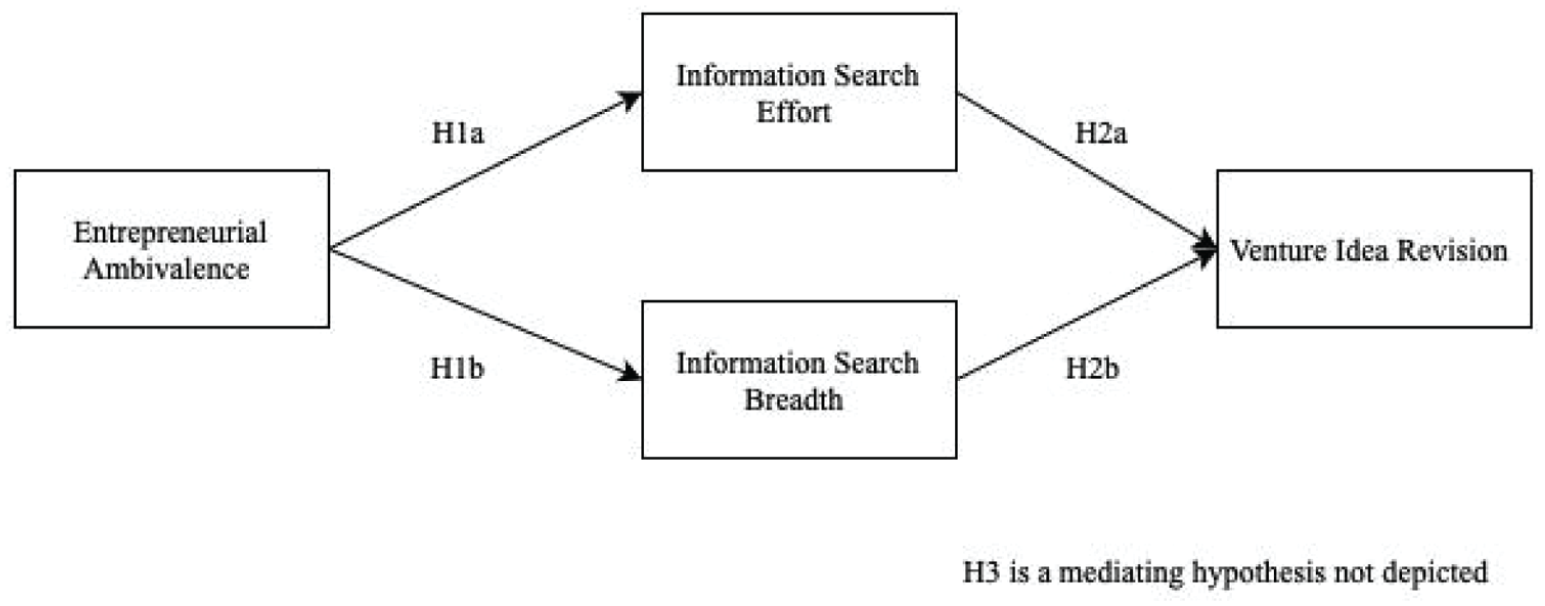
Model with Hypotheses Mapped On
Hypotheses
Entrepreneurial Subjective Ambivalence and Information Search
In the process of early-stage venture idea development, entrepreneurs often receive mixed feedback. For instance, feedback can include both negative components (e.g., a poorly defined target market, an inadequate business model, lack of resources) and positive ones (e.g., identification of additional sources of revenue, investment opportunities), and can thus give rise to experiences of subjective emotional ambivalence about the venture idea (Larsen & McGraw, 2014). Furthermore, because mentors tend to place pressure on entrepreneurs to act on their feedback, this may heighten the intensity of entrepreneurs’ experience of subjective ambivalence, or feelings of being torn and conflicted about the venture (Priester & Petty, 1996; Van Harreveld et al., 2009).
The social evolutionary theory of emotional ambivalence (Rothman & Melwani, 2017) draws on the “affect-as-information” model (Schwarz & Clore, 1983), and suggests that when people experience two simultaneous and opposing emotions this causes them to experience a feeling of inner conflict or subjective ambivalence. This subjective ambivalence is a “signal,” or “information” (Schwarz, 2012) that will indicate to them “that the situation is contradictory and changing (instead of ‘problematic’ or ‘benign’) and this signal will motivate a balanced consideration of information to meet situational requirements” (Rothman & Melwani, 2017: 266). In short, individuals’ subjective ambivalence will alert them to the complex and contradictory elements inside them, and in their environment, and this “information” will subsequently shape their attention and behavior in ways that help them to adapt and thrive in that complex environment. For instance, they will become more cognitively flexible—broadening their scope of attention on this particular task (e.g., individual creative problem solving) or by seeking input from others (e.g., information seeking). In addition, subjective ambivalence creates the motivational impetus for people to actually consider and be receptive to the information they receive from others.
It follows then that when entrepreneurs experience ambivalence about their venture idea they will be alerted to the complex and contradictory elements associated with their new ventures. We expect this will prompt them to engage in multifaceted information search behaviors. First, we expect that subjective ambivalence will lead to higher information search effort. Research by Guarana et al. (2023) demonstrates that managers experiencing ambivalence seek opinions and ideas from more sources on their own team (i.e., information search efforts). Specifically, in two laboratory experiments and one field study with consultants, these scholars demonstrated that when leaders experienced higher levels of subjective ambivalence, they sought more information from team members, as measured by the count of the number of subordinates in the team with whom the project leader sought information, and this information search effort helped the teams perform better on their complex tasks. By extension, entrepreneurs are also likely to seek a greater amount of information from their founding team members and immediate network.
Second, we expect subjective ambivalence will also lead to more information search breadth or search from sources that are different from those available inside the organizations (e.g., mentors, industry peers, customers). Because the experience of ambivalence can broaden individuals’ general reasoning to cope with a contradictory and changing environment (Rothman et al., 2017), we expect it to broaden an entrepreneur’s scope of attention to divergent perspectives, even from sources outside their organization. Such a broad information search is quite valuable for entrepreneurs to better understand the complex, contradictory environment they face with respect to their venture ideas. Thus, we predict the following:
Hypothesis 1: Entrepreneurial subjective ambivalence is positively related to (a) information search effort and (b) information search breadth.
Information Search and Venture Idea Revision
Thus far, we have focused on the individual effects of entrepreneurial ambivalence on information-seeking behaviors. Here, we suggest that such information-seeking behaviors influence the venture idea revision process. Venture idea revision, similar to most other creative idea revision processes, involves both the generation of new information from a multitude of sources and actors through interactions, as well as the combination and recombination of existing information in novel ways (Kim & Kim, 2020; Perry-Smith & Manucci, 2017). This suggests that venture idea revision processes require entrepreneurs to interact with mentors (and other stakeholders) to generate new information. These interactions then enable entrepreneurs to expand their cognitive schema, engage in divergent thinking, discover new perspectives, and potentially reframe problems into novel solutions (Elsbach & Kramer, 2003; Harrison & Rouse, 2015; Perry-Smith & Coff, 2011). As such, effective venture idea revision is a process that may benefit from both a higher quantity and diversity of sources of information about various areas of the venture.
Indeed, prior work suggests that the higher quantity and diversity of information needed for creative organizational outcomes are often generated through managerial (leader) information search processes (Cyert & March, 1963; Kiss et al., 2020; Li et al., 2013). This stream of work highlights that there are two equally important components of the search process: its location (inside the organization or local vs. outside the organization, distant) and its intensity (the amount of cognitive effort or persistence when searching for information). For creative organizational outcomes, leaders need to engage in both intense information search processes as well as distant search processes. Outside information search is likely to generate more diverse information while intense or effortful information search processes will generate higher amounts of information. These behaviors will, in turn, influence the extent of changes performed to, and novelty of, the original idea.
By engaging in greater information search efforts, entrepreneurs experiencing ambivalence obtain higher amounts of information from stakeholders about changes needed to their ventures. This should be valuable for revising the venture idea because having more information can lead to a larger set of potential combinations and recombinations of different information pieces (Perry-Smith & Manucci, 2017). For example, higher information search efforts generate more data that can allow entrepreneurs to make better sense of their environments and the requirements and demands of the market in which they compete. Revisions made can then be better aligned to products demanded by the market (Huang & Knight, 2017; Kiss et al., 2020).
By engaging in higher information search breadth (broader and more diverse information search efforts that are distant or outside the organization), entrepreneurs experiencing ambivalence generate new and different information and insights from stakeholders situated outside the organization that can provide new leads into critical areas of the new venture and more or less radical changes to its current configuration or its offerings (Kiss & Barr, 2017; Kiss et al., 2020; Reis, 2011). For example, engaging with one’s more diverse weak network ties (such as those that entrepreneurs might access in an incubator setting or through mentor recommendations), as opposed to one’s strong ties (e.g., family, friends, founding team), has been suggested to lead to the generation of non-redundant knowledge and recombination, and ultimately more creative and innovative ideas (Perry-Smith & Manucci, 2015; Phelps, Heidl, & Wadhwa, 2012). Furthermore, seeking more diverse viewpoints from stakeholders outside the organization about critical aspects of the new venture may also help mitigate the attachment that founders often have with their initial venture idea, and may increase divergent thinking, in particular if these viewpoints are consistently and substantially different from how entrepreneurs conceived their new ventures (Campbell, 1960; Guilford, 1950; Lazar et al., 2022; Toivonen et al., 2023). This detachment may be important as it allows entrepreneurs to critically evaluate their concepts and be open to redefining or revising their original ideas. Overall, by engaging in higher information search effort and breadth, entrepreneurs should engage in more venture idea revision. We propose the following:
Hypothesis 2: (a) Information search effort and (b) information search breadth are positively associated with venture idea revision.
Integrating the above logic and arguments, we argue that the impact of the entrepreneur’s subjective ambivalence on the decision to revise the venture idea is mediated by their information search behaviors. Our argument is based on the premise of the social evolutionary theory of emotional ambivalence (Rothman & Melwani, 2017), which argues that how individuals feel acts as a signal about their atypical environment, and may prompt them to engage in more effortful and broader information seeking behavior. We integrate this premise with insights from the creativity and innovation literatures (Kiss et al., 2020; Li et al., 2013; Perry-Smith & Mannucci, 2017) that suggest that the intensity and breadth of information seeking behaviors may in turn increase entrepreneurs’ propensity to revise their venture ideas. In particular, we propose a mediation process in which emotionally ambivalent entrepreneurs are more likely to search for diverse information and engage in effortful information search behaviors. In doing so, emotionally ambivalent entrepreneurs are more likely to collect and process a higher quantity and more diverse information, which allows them to engage in knowledge combinations and recombinations, and divergent and creative thinking, and thus increase their venture idea revision efforts. We hypothesize the following:
Hypothesis 3: The relationship between entrepreneurial subjective ambivalence and venture idea revision is mediated by (a) information search effort and (b) information search breadth.
Methods
Data and Sample
We tested our theory on a sample of 175 entrepreneurs participating in a program in an incubation center run by a major business school in collaboration with the government and industry in India. We chose to focus on this setting because incubators provide access to expert mentors who give real-time, context-specific feedback, which is vital for refining business ideas to meet market demands (van Werven, Bouwmeester, & Cornelissen, 2019). As such, incubators offer a structured environment that accelerates learning, iteration, and validation (Bergman & McMullen, 2022), and in which large amounts of information are transmitted through intensive interactions with mentors, potential customers, program directors, guest speakers, and other entrepreneurs in a short period of time. This is likely to amplify the affective processes that entrepreneurs may experience, and thus represents an appropriate setting for our research question (Cohen, Fehder, Hochberg, & Murray, 2019; Grimes, 2018).
The center provides free mentoring and incubation to entrepreneurs irrespective of their affiliation to the business school, and runs several programs. One such incubation program is a 12-week initiative that supports early-stage businesses primarily owned by women through structured mentorship and business training. The program is supported by funding from a large international financial institution. Of the 4000 applications that the center received in December 2021, 350 founders were selected for the incubation program to start in the summer of 2022. The first orientation for the cohort was held in August, and participants were informed about the study. Following the orientation, a baseline survey requesting demographic information was distributed electronically to all 350 founders. Of the 350 entrepreneurs invited to participate in our 12-week study, 244 initially consented to join, resulting in an enrollment rate of 69.7%. Over the course of the study, 54 participants formally dropped out, and an additional 15 participants provided incomplete weekly responses (e.g., missed one or more survey waves but remained in the program). As a result, 175 participants completed the survey every week without interruption. These individuals, who provided complete data over the entire study period, represent our final sample. The industry categories represented were in the manufacturing sector (e.g., healthcare, food and beverages, aerospace and defense, cleantech) and service sector (e.g., fashion, tourism, consultancy), the firms were between 1 and 3 years old, and the entrepreneurs ranged in age from 20 to 60 years old, with a mean age of 38 years. Approximately 63% of our participants indicated that they had obtained a graduate education degree (Master’s or PhD), and 19% had prior experience as entrepreneurs.
We employed a repeated measure design in which participants provided in situ reports of their experiences over a period of 12 weeks (Foo et al., 2009; Uy, Foo, & Aguinis, 2010). We used the center’s digital communication platform to distribute weekly surveys to capture the key variables included in our study. This is used to distribute feedback surveys, assignments, and other information to the participants; hence the participants are already comfortable with the platform. The survey is designed to record the time when a response is provided. Participants received coaching on how to complete the survey during the orientation program. They were instructed to complete the survey upon receipt of the notification on every Friday at 1 pm for the entire duration of the 12-week program. Participants received the first remainder at 1 pm and a second reminder at 4 pm. This time frame was selected because we wanted to capture responses from the entrepreneurs soon after they had meetings with their mentors, which were scheduled from 8 am to 12 pm on every Friday. The mentors, comprising faculty from business schools, industry leaders, seasoned serial entrepreneurs, angel investors, and seasoned consultants, covered a variety of industries, aligning with the diverse sectors in the program. A total of 80 mentors participated in the program. The mentors were matched to founders based on the similarity of industry in which they operated. On average, each mentor worked with four to five founders.
The weekly survey was designed to be short enough to be completed within 5 minutes. In total, 3000 prompts were sent, and 2328 valid reports were received, yielding a response rate of 77.6%. Following previous studies employing experience sampling methodologies (ESM) which rely on a repeated-measure design, valid reports are those received within 2 hours after the SMS prompt was sent (Foo et al., 2009).
Measures
Prior research employing ESM methodologies to capture affect recommends the use of abbreviated scales to capture the main constructs included in the study. The use of short or single-item scales is common in ESM studies (Foo et al., 2009; Ong, Bergeman, Bisconti, & Wallace, 2006) because of the efforts required of participants to respond to each survey item multiple times.
Following recent work on venture idea revision (e.g., Grimes, 2018; Toivonen et al., 2023), which suggests that entrepreneurs may experience both major and minor shifts in venture ideas and may undertake changes along several firm dimensions during venture idea revision processes, we captured venture idea revision by asking participants to rate their agreement on a scale of 1 (strongly disagree) to 7 (strongly agree) to the following statements on a weekly basis: “I came up with new ideas for change” and “I experienced a major shift in ideas.” The range of the variable is from 1.0 to 7.0. The within-person reliability is ω (within) = 0.85, 95% CI [0.83, 0.86].
We controlled for several individual (demographic and dispositional) and firm level characteristics. Dispositional variables were controlled for in the analyses to partial out-between-individual effects on the ESM variables. We captured most of these variables during the orientation survey administered prior to the ESM survey guided by prior research on affect and (venture) idea change and revision (Baron et al., 2011; Foo et al., 2009). We controlled in all the models for entrepreneurs’ age, education level (Masters or PhD vs. neither), prior entrepreneurial experience (yes or no), entrepreneurial self-efficacy, perceived need for change, firm sales, and industry (Manufacturing or Service).
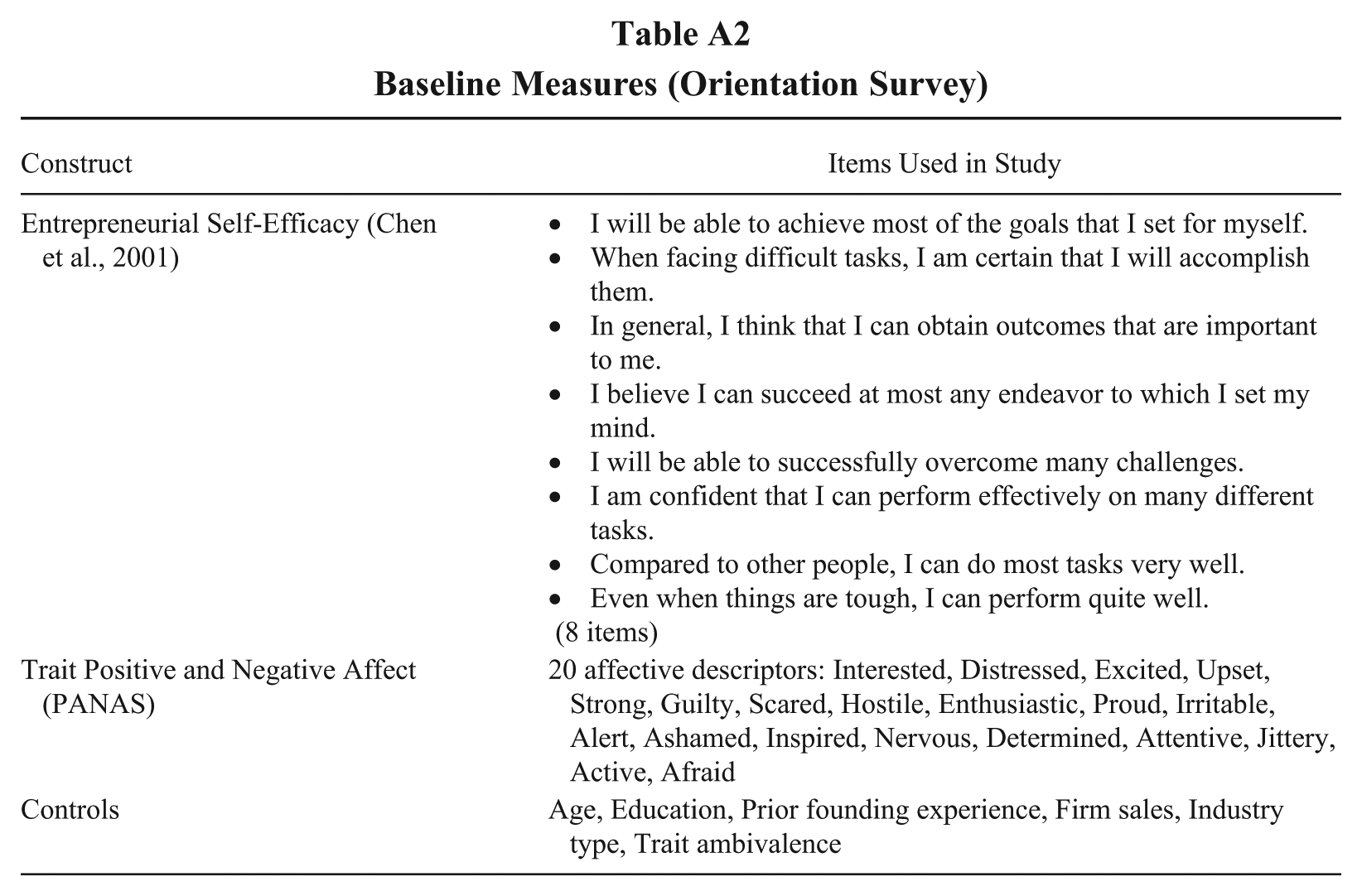
The full description of the main measures used in the study is included in the Appendix.
Data Analysis
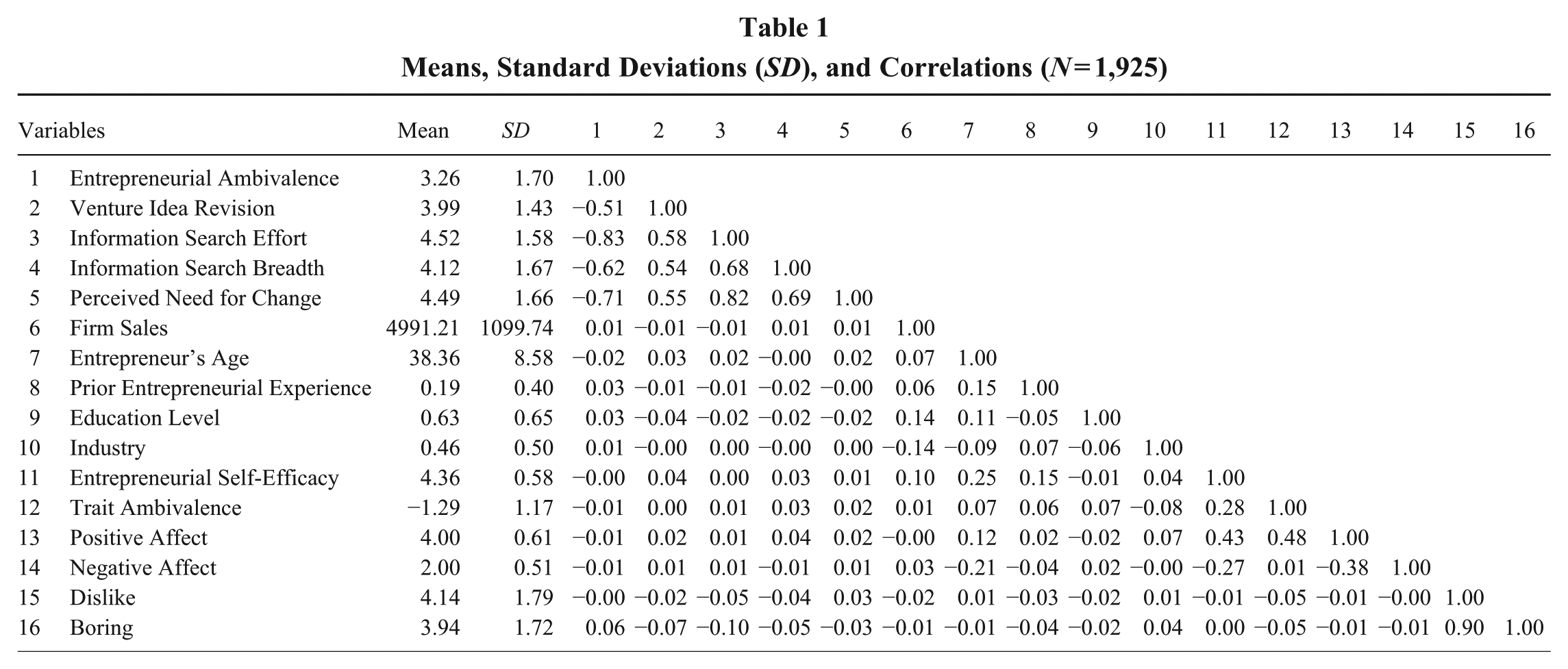
We tested our hypotheses using a hierarchical regression approach. Because our data has a longitudinal structure in which individuals have multiple observations over time, we used a mixed effect model with individual random effect to test our hypotheses. For all mixed models, all predictors were standardized and the independent and dependent variables were lagged by 1 week. We also included a time dummy variable for each week to control for individual invariant time effects. Table 1 includes information on variable means, standard deviations, and zero-order correlations among study variables. Table 2 shows regression results for our hypotheses. We used the four-step methodology advanced by Baron and Kenny (1986) and bootstrapping analyses to test our hypotheses. In the first step (Model 2), we tested whether ambivalence is positively related to venture idea revision (β = 0.05, p = .009). In the second step (Models 3 and 4) we showed that a positive association exists between ambivalence and information search effort (β = 0.02, p = .077) and information search breadth (β = 0.03, p = .034). Thus, Hypotheses 1a and 1b were supported. In the third step (Model 5), we established that a relationship exists between the mediator variables information search effort and breadth and venture idea revision (β = 0.37, p = .000 and β = 0.26, p = .000). Thus, Hypotheses 2a and 2b were also supported. In the last step (Model 6), we assessed whether the effect of the independent variable—ambivalence—on the dependent variable—venture idea revision—is reduced when the mediators were included in the model (β = 0.02, p = .130). The analyses suggested full mediation and support for Hypothesis 3. Baron and Kenny’s (1986) approach has been criticized for not providing an explicit test of mediation. To address this limitation, we implemented the bootstrapping approach to test the mediation effects. This test provides additional, stronger support for the mediation hypotheses. To assess the indirect effects of the mediators on venture idea revision, we used the boot.ci function in the R package boot. The confidence intervals obtained on 2000 subsamples for search effort (CI [0.002, 0.020]) and search breadth (CI [0.003, 0.019]) do not include zero such that indirect effects may be assumed.
Means, Standard Deviations (SD), and Correlations (N = 1,925)
The Impact of Subjective Ambivalence on Information Search and Venture Idea Revision
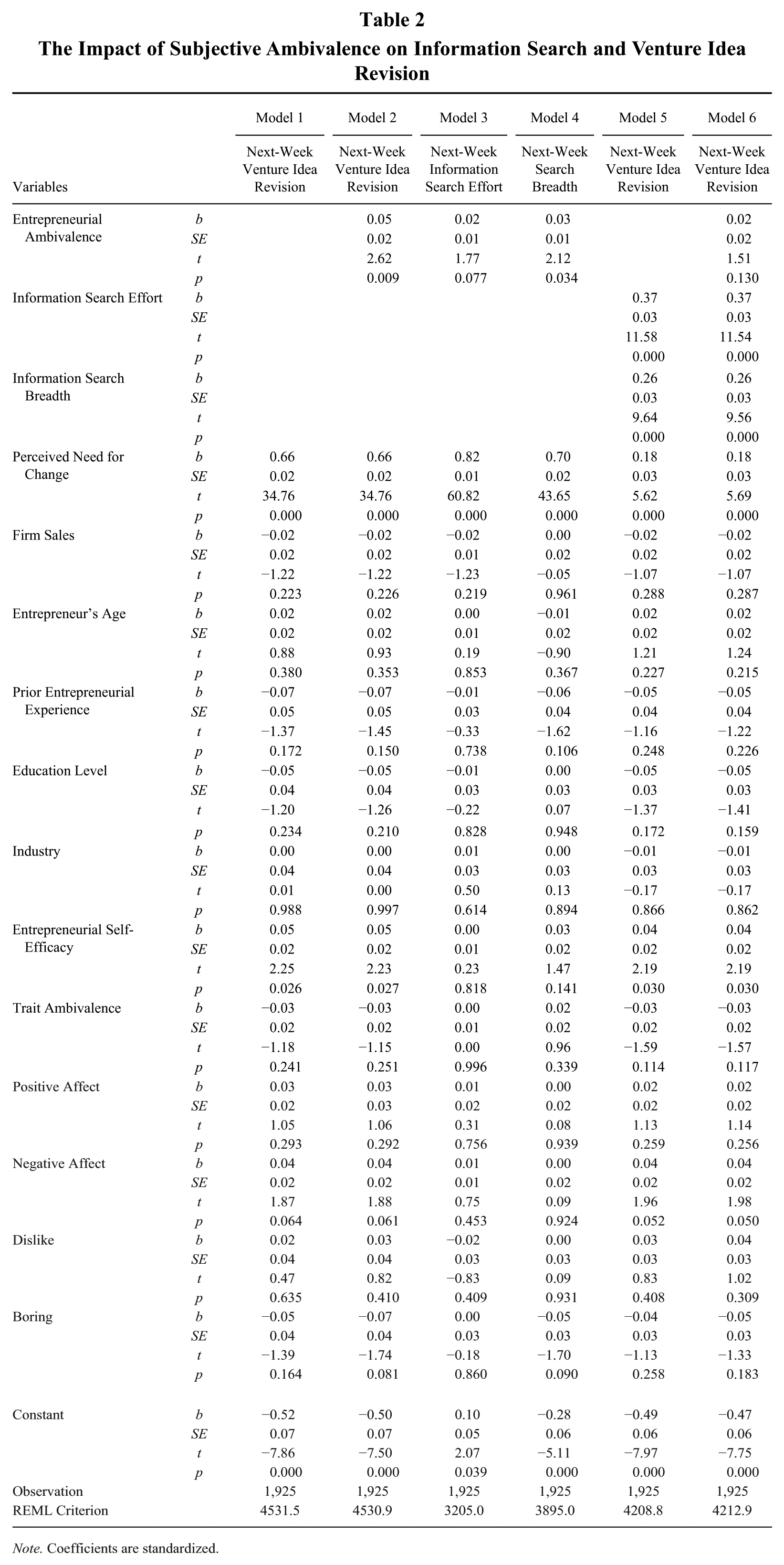
Note. Coefficients are standardized.
Effect size considerations
To examine whether the influence of ambivalence and information search processes on venture idea revision is meaningful, we calculated partial eta-squared (η2) estimates, which report the partial variance explained by a particular coefficient in a linear equation. While explaining effect sizes in terms of “small” or “large” is somewhat controversial, Cohen (2013) suggested that measures of η2 typically range from 0.01 (i.e., small effect size) to 0.09 (i.e., large effect size) in social science research. The η2 estimates of the influence of ambivalence on information search effort and information search breadth were 0.002 and 0.002, respectively, suggesting small effects. While small effects often go hand in hand with the ESM design, the weekly effects that we report in our study can accumulate meaningfully over time (Koopman & Dimotakis, 2022). As our variables in the analysis are standardized, we need to convert them to the original scales for practical interpretation. Given that the standard deviation of venture idea revision is 1.43 on a 7-point scale, the estimated coefficient of ambivalence on venture idea revision (β = 0.05) corresponds to a 0.07-point weekly increase (0.05 × 1.43 = 0.0715). Because the standard deviation of ambivalence is 1.70, a 1-point increase in ambivalence yields approximately a 0.04-point increase in idea revision in the following week. After including the information search mediators, the direct effect of ambivalence decreases to β = 0.02 (p = .130), corresponding to a 0.03-point weekly increase (or approximately 0.02 points for a 1-point increase in ambivalence). In the mediation model, the effect size (η2) of information search effort and breadth on venture idea revision were 0.07 and 0.05 which were moderate effect sizes. The effect sizes of information search effort and information search breadth are similar or larger than other variables in our model including perceived need for change (0.02), self-efficacy (0.03), and chief executive officer (CEO) characteristics such as age (0.01), experience (0.01), and education (0.01), which support our thesis that these may important variables to consider in venture idea revision. Expressed in practical terms, a 1-point increase in search effort yields approximately a 0.34-point increase in revision intensity, while a 1-point increase in search breadth yields approximately a 0.22-point increase in the subsequent week. Because effects are estimated on a weekly basis, sustained differences accumulate over time. Before accounting for mediators, maintaining a one standard deviation higher level of ambivalence corresponds to approximately 0.71 points over 10 weeks. After mediation, the corresponding cumulative difference is approximately 0.28. Thus, while ambivalence has a modest direct effect, its substantive impact on venture development unfolds primarily through sustained differences in information search behavior and accumulate over time. To conclude, our results are important in addressing preconceived assumptions about the paralyzing role of ambivalence in an entrepreneurial setting.
Robustness tests
To test the robustness of our results we first tested for reverse relationships (i.e., the impact of venture idea revision on ambivalence and for next-week lags). The results of these analyses showed that venture idea revision did not impact next-day ambivalence affect, search effort, and search breadth (β = 0.02, ns, β = −0.01, ns, β = −0.00, ns, respectively). In addition, we tested how search effort and search breadth affect ambivalence. The results suggest that search effort and search breadth have insignificant effects on ambivalence (β = 0.00, ns, β = 0.02, ns, respectively). In general, the findings were more consistent with the direction we hypothesized than with the reverse relationships. Second, a related concern for self-reports is common method variance (Campbell & Fiske, 1959). Nonetheless, repeated-measure studies involving within-individual analyses may reduce this concern, “because research demand characteristics are likely to weaken with repeated measurement over time” (Williams & Alliger, 1994: 863). Moreover, we lagged the dependent variables for next-week outcomes. We also conducted a Harman’s single factor test, which yielded a factor for 25.6% of the variance in the data which is below the 50% threshold. Thus, common method variance was unlikely to be a serious problem in this study. To test multicollinearity, we used the Generalized Variance Inflation Factor (GVIF) method for our models. We found that all adjusted GVIF values are less than 3 in any models we used, which implies that multicollinearity is not likely to be an issue in our models (Fox & Monette, 1992). We also examined the relationship between venture idea revision and the number of firm dimensions (Kiss & Barr, 2015; e.g., marketing, operations, HR, new product development, international, strategic alliance) on which entrepreneurs reported that they undertook weekly actions while controlling for ambivalence, and found a positive relationship. This validates the notion that the perceived amount of idea revision reported by entrepreneurs translated into actual firm level changes. The results of these analyses are available from the authors. Finally, we also ran analyses with the three-item ambivalence scale used by Rothman and Northcraft (2015; see also Guarana et al., 2023; Priester & Petty, 1996) which also included the item “ I feel ambivalent” and our results were similar. This item was left out from our main analyses as we realized over the data collection process and in our subsequent interviews with locals that the word “ambivalent” is rarely used in India in everyday English and may be generally problematic in countries where it is understood to mean a neutral emotional state of “indifference.” Indeed, this item was negatively correlated with the other two items, so we ultimately decided to take a more conservative route and focus on the two unequivocal items, and this may be a limitation of the context in which we conducted our research. However, the two items that explicitly capture emotional tension and conflict are aligned with the definition of subjective ambivalence adopted in the paper.
Discussion and Implications
Is entrepreneurial subjective ambivalence beneficial or harmful to venture idea revision, and what is the mechanism that explains any such impact? In this research we set out to elucidate the relationship between entrepreneurial subjective ambivalence, in particular as a reaction to feedback received from mentors, and engagement in venture idea revision by establishing information search behaviors (effort and breadth) as intervening mechanisms. Our conceptual model was fully supported. We found that entrepreneurial ambivalence acts as a signal for entrepreneurs to engage in intense and broad information search behaviors, and that these behaviors are in turn positively associated with venture idea revision. Taken together, our findings contribute to and extend theory in several ways.
Implications for Work on Affect in Entrepreneurship
The role of affect in entrepreneurship has long been recognized, as researchers have pointed to the heightened implications of emotions in the entrepreneurial journey, which is laden with unpredictability and uncertainty (cf. Baron, 2008; Cardon et al., 2012; Foo et al., 2009; Portocarrero et al., 2025). While research has demonstrated the role of (discrete) positive and negative affect on a range of individual and firm level outcomes in entrepreneurship, there has been comparatively less research on the role of ambivalence. This is a notable gap, considering that ambivalence is likely to arise in entrepreneurial contexts, particularly during the early-stage feedback processes between entrepreneurs and mentors, and may have meaningful effects on the entrepreneurs’ behaviors.
We advance the entrepreneurship literature on affect in two different ways. First, our study focused on early stage ventures in an incubator setting. We show that subjective ambivalence has an independent, positive influence—beyond positive and negative affect—on information search behavior and venture idea revision, pushing forward the research agenda on the effects of emotions on early venture efforts (e.g., Foo et al., 2009), and expanding the spectrum of emotions that may need to be evaluated in an entrepreneurial setting. Further, we demonstrate that two information search behaviors may be important mechanisms through which subjective ambivalence influences entrepreneurs’ venture idea revision efforts. By using affect-as-information-based arguments we suggest that subjective ambivalence increases feelings of tension and conflict in the entrepreneur about their venture, and, in turn, this experience prompts entrepreneurs to react by increasing information search efforts and the use of outside information sources. In turn, these information search behaviors provide entrepreneurs with useful knowledge that they combine and recombine with information they already have, to revise their venture ideas. Taken together, these findings respond to recent calls (Portocarrero et al., 2025) to focus on those affective processes most relevant to specific stages in a new venture’s evolution (in this case the initial stages) and elucidate their underlying mechanisms.
Implications for Work on Affect and Creative Outcomes
Our work builds on and extends Fong’s experimental work (Fong, 2006) that has linked ambivalence to individual creativity by highlighting and testing two potential intervening (mediating) mechanisms in this relationship. We suggest that intense or effortful information search behaviors associated with subjective ambivalence may provide entrepreneurs (individuals) with greater amounts of information—including better-quality information—while broader information search focused on sources external to the firm may provide them with new, non-redundant information. Both of these types of information have been suggested to lead to more creative, innovative outcomes (Kiss et al., 2020; Li et al., 2013). Thus, through our study set in an entrepreneurial context, we provide a more elaborate understanding of the process that underpins the relationship between ambivalence and creative outcomes.
Applying a creative idea revision lens to venture idea revision and focusing on the affective components of this process, we also shift attention from the largely relational and structural related aspects of the feedback exchange process that is typically emphasized in creative revision work (e.g., Harrison & Rouse, 2015; Perry-Smith & Manucci, 2017). Our study underscores the importance of the emotional states, and, in particular, ambivalence—so prevalent during the creative revision process. In doing so, our study answers recent calls in the literature (e.g., Grimes, 2018; Toivonen et al., 2023) to focus more closely on the emotional aspects attached to creative revision processes. For example, Grimes (2018) explores the intertwined relationship between creative idea revision and founders’ identities during venture idea revision processes and highlights that when founders’ venture ideas are challenged, more often than not their understandings of self-concepts (i.e., identities) are also challenged, with subsequent implications for revision efforts. Feedback from mentors and other stakeholders are deeply emotional processes. In our work, we illuminate the important role of ambivalent emotional reactions in potentially positively shaping entrepreneurs’ ability to move through those identity challenges and engage in revision efforts.
Implications for Work on Ambivalence in Organizations
Our study also has two implications for work on ambivalence in organizations. First, based on cognitive dissonance theory, ambivalence is often considered an internal evaluative inconsistency, and thus individuals experiencing ambivalence are thought to process information more narrowly in an effort to resolve the discomfort from their ambivalence or to increase their certainty, and this may also lead to behavioral paralysis (Jonas, Diehl, & Brömer, 1997; Sawicki, Wegener, Clark, Fabrigar, Smith, & Durso, 2013; Van Harreveld et al., 2015). In contrast, our study extends the growing body of research based on the affect-as-information perspective, which suggests that experiencing ambivalence has many positive benefits, including on an individual’s behavioral approach (Gabriel et al., 2022; Guarana et al., 2023; Reich, Fulmer, & Dhar, 2022). However, existing research is largely still unclear on the specific nature of information search behaviors in which ambivalent leaders may engage, particular when they pursue creative outcomes. We advance prior scholarship by offering some clarity: we demonstrate that entrepreneurial subjective ambivalence is positively associated not only with more intense information search behaviors but also with broader information searches from external stakeholders, and, in turn, this increases creative idea revision. This is a meaningful advancement in our understanding of the benefits of ambivalence as it suggests that ambivalence can be an asset for entrepreneurial decision-making in both new and established firms, prompting intense and broader information searches, with downstream benefits.
Second, Rothman and Melwani’s (2017) social evolutionary theory of emotional ambivalence suggested that the benefits of leader ambivalence for adaptable action might be realized in complex and changing circumstances. Our work meaningfully advances their theorizing by unpacking the longitudinal benefits of emotional ambivalence for idea revision in a repeated-measures design over 3 months, and by clarifying the type of information seeking that fuels such benefits. The task of developing a new venture is by definition complex—these ventures are non-routine and require multifaceted approaches (Baron, 2008; Shane, 2003). Furthermore, early-stage entrepreneurs are continuously receiving feedback from mentors, making the process even more complex, contradictory, and uncertain. With task complexity and uncertainty as contextual backgrounds, we theorize and find that ambivalence is not just beneficial for prompting adaptive actions within entrepreneurs (individuals) in the short term, but these benefits are experienced over a sustained period of time. Prior scholarship mostly based on experimental and/or cross-sectional designs has paid limited attention to the longitudinal effects of ambivalence, and thus our study provides meaningful advancements to our understanding of whether the benefits of ambivalence are only temporary, or whether they can be sustained over time.
Practical Implications
Early-stage entrepreneurs are more likely to experience emotional complexity than people in most other professions. By acknowledging and exploring the role of entrepreneurial ambivalence in a new venture setting, our study has several practical implications. First, we suggest that entrepreneurial practitioners should acknowledge the influence of entrepreneurial ambivalence in the decision-making process and focus on its potential benefits. By understanding that ambivalence can be a constructive force, mentors may tailor their mentorship approaches and guide founders to navigate this emotional state more effectively. Second, programs designed to support entrepreneurs should emphasize and encourage entrepreneurs to engage in not only intense but also broad information search behaviors. This involves creating a culture that values diverse sources of information and encourages founders to ask questions and request feedback. By promoting a comprehensive approach to information gathering, program administrators can enhance the effectiveness of the entrepreneurial decision-making process, particularly early in the venture’s life-cycle. Third, organizations and institutions offering entrepreneurial mentoring programs should consider incorporating structured frameworks that address and harness the positive aspects of entrepreneurial ambivalence. Entrepreneurial ecosystems and organizations, including universities, should foster a culture that values and encourages creative revision, and extends beyond incubators and accelerators, where this process is more common. Recognizing that ambivalence can also be a driving force behind innovative thinking, creating an environment that embraces change and iteration can enhance the overall entrepreneurial ecosystems.
Limitations and Future Research
There are some limitations associated with our study that may warrant additional investigations. First, our study, set in the context of new ventures operating in an incubator, may be an extreme test of the relationship between entrepreneurial subjective ambivalence and venture idea revision, given the pace and intensity of interactions and feedback exchanged in a specific time window. While this setting allowed us to ensure comparability and consistency across our sample, the question of whether subjective ambivalence plays a similar role for new ventures operating in a different setting remains open for investigation. Second, our research design required the use of abbreviated scales and self-reported measures for the study including the dependent variable. While the repeated-measure, longitudinal aspect associated with our work has important strengths and minimizes common-method bias issues, future studies utilizing smaller new venture samples, or a different design that allows the use of more developed questionnaires, may also consider the use of third-party (e.g., mentors) reports to capture venture idea revision efforts. Third, while we view the use of a research sample comprised in its entirety by (female) founders operating in an emerging economy as a strength of our study, the extent to which our findings are generalizable to the larger population/founders operating in other country contexts is an area for future research. Relatedly, our Indian respondents indicated a slightly different (neutral) understanding of the term “ambivalence,” which prompted us to drop one item from the full scale used in prior work. While our results have remained unchanged, this issue raises the possibility that while the emotion itself may be experienced similarly across settings, the term “ambivalence” may carry different meanings. Finally, in our main and post-hoc analyses we controlled for positive and negative trait affect as well as negative state affect; however, future work may also need to control for positive state affect for a more conservative test of the main effects of ambivalence.
Notwithstanding these limitations, our study uncovers important associations between entrepreneurial subjective ambivalence and an important part of the entrepreneurial journey: initial idea revision. We see additional avenues for research on ambivalence in this context. First, there is still relatively limited research on founders’ displayed affect and/or the disconnect between displayed and experienced affect (cf. Cardon et al., 2021) and their role in venture funding decisions, for example. Founders are likely to experience and/or display ambivalence during pitch competitions, or other funding-related interactions where their value propositions are more critically examined. The extent to which experienced ambivalence acts as an impetus to engage more vigorously in an information exchange with the investor may lead to funding success, and is a direction worthy of investigation. Conversely, some investors may interpret any displayed ambivalence as a signal of unpreparedness and judge the opportunity presented more harshly, while others could see it as form of authenticity and vulnerability and react more favorably. However, these assertions need to be empirically examined and validated.
A second area of research interest is ambivalence in new venture teams. As recent reviews highlight, emotions can also occur as a collective state in new venture teams (e.g., Knight, Greer, & De Jong, 2020), but they are seldom explored. Ashforth et al. (2014) note in their conceptual article that ambivalence can also be a collective state that may be triggered by opposing demands, or other factors, and may influence the types of responses that actors collectively engage in as a result of their experienced ambivalence. These responses could range from avoidance to compromise and holism, and have both positive and negative effects at the individual, team, and organization level. It would be interesting to examine the dynamics of these responses and outcomes in new venture teams, given the higher prevalence of conflicting and opposing demands originating from various actors in a venture’s network and ecosystem.
A third line of research that may be of interest to entrepreneurship scholars is the relationship between entrepreneurial subjective ambivalence and venture exit (e.g., business closure). For example, in their review, Rothman et al. (2017) highlight both the positive and negative implications of experienced ambivalence in an organization and suggest that high levels of actor ambivalence may, in certain cases, lead to complete disengagement from the project or task that they perform. How does this process unfold in the context of new ventures? What is the critical threshold level of entrepreneurial ambivalence that leads to complete disengagement from one’s team or firm? We expect that this relationship will be a function of various individual, team, firm, and industry level characteristics, and may reveal interesting insights into the role of affect in new venture-related outcomes.
Finally, the relationship between ambivalence, information search behaviors, and venture idea revision may be more complex and contingent on additional individual, firm, and environmental factors than those we were able to include or explore in our study. For example, future studies may want to explore an entrepreneur’s emotional intelligence or holistic thinking style, (perceived) resource slack, or industry competitiveness as potential moderators of the relationships uncovered in this study.
Conclusion
In this study, we have set out to investigate the role of a complex emotional state—subjective ambivalence—in venture idea revision processes. We found that entrepreneurial subjective ambivalence experienced as a reaction to feedback received from mentors about the new venture may prompt entrepreneurs to engage in more intense and broader information search processes that are likely to be positively associated with creative idea revision. Our findings have practical implications and extend research on affect and entrepreneurship, creative outcomes, and ambivalence in organizations, by highlighting the relatively enduring benefits of subjective ambivalence over time, and clarifying one possible mechanism (i.e., broad and intense information search behaviors) through which these benefits may be achieved.
Footnotes
Appendix
Baseline Measures (Orientation Survey)
| Construct | Items Used in Study |
|---|---|
| Entrepreneurial Self-Efficacy (Chen et al., 2001) | • I will be able to achieve most of the goals that I set for myself. • When facing difficult tasks, I am certain that I will accomplish them. • In general, I think that I can obtain outcomes that are important to me. • I believe I can succeed at most any endeavor to which I set my mind. • I will be able to successfully overcome many challenges. • I am confident that I can perform effectively on many different tasks. • Compared to other people, I can do most tasks very well. • Even when things are tough, I can perform quite well. (8 items) |
| Trait Positive and Negative Affect (PANAS) | 20 affective descriptors: Interested, Distressed, Excited, Upset, Strong, Guilty, Scared, Hostile, Enthusiastic, Proud, Irritable, Alert, Ashamed, Inspired, Nervous, Determined, Attentive, Jittery, Active, Afraid |
| Controls | Age, Education, Prior founding experience, Firm sales, Industry type, Trait ambivalence |
Acknowledgements
We thank the editor, Herrman Ndofor and two anonymous reviewers for the developmental feedback and guidance provided throughout the review process. We also thank David Williams, Denis Gregoire, Andrew Shepherd, and participants at the Babson College Entrepreneurship Research, Academy of Management, and Strategic Management Society Conferences for useful feedback and comments provided on previous versions of the paper. Finally, we thank the team at the NSRCEL for facilitating access to their programs, and the entrepreneurs who agreed to participate in this research.
