







Abstract
While opportunity beliefs, specifically the confidence in the viability of a new venture idea, are recognised as key drivers of entrepreneurial processes, the mechanisms through which they function remain unclear. We hypothesise that individuals adjust their opportunity confidence according to the valence of external assessments, with this effect amplified when the assessment comes from a prestigious source. Furthermore, we hypothesise that lower levels of opportunity confidence subsequently motivate efforts to revise the new venture idea. In two vignette experiments, we find empirical support for our hypotheses. In so doing, we offer insights into the cognitive mechanism through which assessment can motivate efforts to revise the content of new venture ideas as a way to (re)direct the entrepreneurial processes.
Introduction
Optimistic beliefs in the viability of a new venture are key drivers of entrepreneurial pursuits (Alvarez and Barney, 2007; Davidsson, 2015; Wood and McKinley, 2010). These beliefs – often in entrepreneurship understood as key cognitive–motivational constructs that link individual perceptions to entrepreneurial activity (McMullen and Shepherd, 2006; Dimov, 2010; Frese and Gielnik, 2023) – are typically made manifest during the exploratory nascent stage of entrepreneurship, where aspiring entrepreneurs and their potential supporters evaluate and potentially refine their new venture ideas (Dimov, 2007). In this process, beliefs emerge as the result of ongoing subjective assessments about whether the contents of an idea represent a viable foundation for new venture creation, which in turn guide decisions regarding how to proceed (Shepherd, 2015; Davidsson, 2023).
Prior research shows that optimistic beliefs in both the prospective venture and one’s capability to pursue it positively influence venture emergence (Dimov, 2010). That said, Davidsson (2015, 2021) suggest that these different types of entrepreneurial beliefs may distinctly influence how entrepreneurial processes unfold. Specifically, they notice that prior research has not sufficiently differentiated between those beliefs that incorporate one’s own role in creating the venture and beliefs that concern the venture independently of the assessing individual. Empirical research provides preliminary support for Davidsson et al.’s (2021) argument; that is, optimistic beliefs that takes into account one’s own entrepreneurial capabilities enhances venture emergence (Bergenholtz et al., 2023; Boudreaux et al., 2019; Zhao et al., 2005), while optimistic belief in the venture, by itself, has shown a more complex relationship with venture emergence (Vilanova and Vitanova, 2020). Specifically, although the latter belief type, termed opportunity confidence by Davidsson (2015), also spurs progress by motivating entrepreneurial action, prior research found a negative, direct relationship with venture emergence (Vilanova and Vitanova, 2020). We currently lack sufficient insight into how opportunity confidence influences, and is influenced by, entrepreneurial pursuits (Davidsson, 2015; Davidsson et al., 2021). In this regard, we have identified two key weaknesses in prior literature related, respectively, to antecedents and consequences of opportunity confidence.
First, while the literature primarily provides conceptual insight into the relationship between individual beliefs and the unfolding of entrepreneurial pursuits (McMullen and Shepherd, 2006; Vogel, 2017; Wood and McKinley, 2010), empirical research that investigates how opportunity confidence relates to specific behaviours and decisions remains scarce (Jiang et al., 2021; Kirtley and O’Mahony, 2023), particularly in the relation to idea work, defined as efforts ‘to enhance the novelty and usefulness of an idea’ (Grimes, 2018: 1693). While intuitively, low opportunity confidence may lead to discarding the idea, it may also motivate individuals to engage in idea work. We lack understanding of how varying levels of opportunity confidence relate to idea work as a way to develop the venture further (Shepherd, 2015; McMullen and Dimov, 2013). Second, empirical insights are lacking regarding antecedents of opportunity confidence, in particular concerning the role of new information, such as assessments from others (Davidsson et al., 2021; McCann and Vroom, 2015; Shepherd et al., 2022). Opportunity confidence is not formed once and for all, but rather situationally reshaped and modified as individuals interact with their social surroundings (Elfring et al., 2021). We lack insights into how the conditions of information provided by others affect opportunity confidence.
In this article, we aim to address these limitations by empirically investigating antecedents (i.e. external assessments) and consequences (i.e. idea revision effort) of opportunity confidence. We follow Davidsson (2015) and define opportunity confidence as the outcome of the assessment of a new venture idea. Specifically, we integrate insights from the literature on social influence and entrepreneurial emergence to investigate how social cues shape opportunity confidence depending on the prestige of their source, and, in turn, how variation in opportunity confidence affects efforts to revise the underlying venture idea. We hypothesise that opportunity confidence decreases when individuals are confronted with a pessimistic, versus optimistic, assessment from an external assessor particularly when the external assessor has prestige as an entrepreneur. We further hypothesise that lower levels of opportunity confidence motivate efforts to revise the idea. By addressing these research questions, we respond to calls for research on ‘the interrelationships among stakeholder feedback and changes to the venture idea’ (Davidsson et al., 2021: p. 19).
To test these relationships, we adopted a manipulation-of-mediator experiment design (Pirlott and MacKinnon, 2016). Specifically, we conducted two vignette experiments following a double randomisation approach (total n = 600). In each experiment, participants reported their level of opportunity confidence regarding a given new venture idea before and after exposure to external assessments, after which they completed an idea-revision task to measure subsequent revision effort. In line with our model, these external assessments are non-directive social cues; they shape idea revision effort through updated opportunity confidence rather than directly, as they provide valence but no content-level guidance that would independently prescribe revision.
In Experiment 1, we examined the direct effects of randomly exposing participants to either an optimistic or pessimistic assessment of the presented idea, provided by a prestigious or non-prestigious source, on both opportunity confidence and idea revision effort. The results showed that pessimistic or optimistic social cues about a venture idea’s viability significantly decreased or increased opportunity confidence, respectively. This effect was further amplified when the information originated from a prestigious source. In Experiment 2, we exposed all participants to the pessimistic, prestige-backed assessment from Experiment 1, thereby holding the external assessment constant. Participants were then randomly assigned to reason either in favour of or against the presented idea, with the aim of directly manipulating their level of opportunity confidence in addition to the negative influence of the provided social cue. This design allowed us to isolate the effect of opportunity confidence on subsequent idea revision effort without the risk of confounding. Following this approach of manipulation-of-mediator experimental design, we find strong empirical evidence in support of the mediating role of opportunity confidence in the relationship between external assessments and idea revision effort. These results were also supported statistically in Experiment 1, with the effect of external assessments on idea revision being mediated by opportunity confidence.
This article advances our understanding of the nuanced role of opportunity confidence in entrepreneurship by showing that lower levels of opportunity confidence in a new venture idea can motivate efforts to revise the idea’s content, potentially altering the trajectory of the entrepreneurial pursuit. This finding extends theories of entrepreneurial action by highlighting the nuanced role of opportunity confidence in the entrepreneurial process. Rather than simply impeding action, lower levels of confidence can function as a productive psychological trigger that motivates entrepreneurs to engage in idea work as a means of strengthening the conceptual foundation of entrepreneurial endeavours. We also contribute to research on how entrepreneurial beliefs are socially shaped, revealing that the prestige of an information source plays a critical role in determining how strongly an external venture assessment affects opportunity confidence. Taken together, this work empirically demonstrates the mechanism through which social information motivates idea-revision efforts by shaping opportunity confidence levels, with source prestige playing a crucial role in driving these confidence shifts.
Theory and hypotheses
Entrepreneurial beliefs as drivers of entrepreneurial activity
Cognition-based theories of entrepreneurship posit that ongoing assessments and the resulting beliefs about the possibility, feasibility, desirability, timing, and viability of an entrepreneurial pursuit are important drivers of entrepreneurial activity (Davidsson et al., 2021; Frese and Gielnik, 2023; Vogel, 2017). This perspective recognises that entrepreneurship is characterised by high uncertainty after an idea has emerged and the absence of reliable performance indicators, requiring relevant actors to rely primarily on their individual beliefs when making decisions on whether and how to act (Dimov, 2007). As aspiring entrepreneurs and their supporters navigate this uncertainty, their beliefs evolve and shape how the entrepreneurial process unfolds (Davidsson and Gruenhagen, 2021; McMullen and Dimov, 2013). In general, optimistic assessments and the corresponding formation of optimistic beliefs about a potential new venture are argued to act as a cognitive catalyst that motivates individuals to engage in entrepreneurial activities aimed at bringing the venture into existence (Dimov, 2010). Conversely, pessimistic assessments about a potential new venture are argued to discourage actions toward its establishment and may lead to abandonment. In entrepreneurship, beliefs are therefore broadly viewed as key cognitive-motivational constructs that link individual perceptions to entrepreneurial activity.
Opportunity confidence as a distinct type of entrepreneurial belief
One specific type of entrepreneurial belief that has received growing attention is opportunity confidence, which is defined as the outcome of new venture idea assessments (VIAs), or, more precisely, ‘the degree of confidence an individual has in a venture idea in and of itself as a basis for the creation of a new venture, independent of the perceived qualities of any entrepreneurial agent with whom this idea may be associated’ (Davidsson et al., 2021: 6). This conceptualisation disentangles third-person beliefs regarding the venture itself and first-person beliefs regarding oneself, enabling examination of the different ways in which beliefs about the venture itself form and influence entrepreneurial activity (Davidsson et al., 2021). This is critical because both belief types potentially affect entrepreneurship differently. For example, low belief in one’s own capabilities may motivate individuals to acquire skills or find complementary partners to realise an envisioned venture they perceive as economically viable (Engel et al., 2017), whereas low belief in the envisioned venture itself may trigger behaviours aimed at exploring alternative ideas without necessarily affecting beliefs regarding oneself. It may be noted that the construct of opportunity confidence has been originally defined as the combined belief in a new venture’s inherent viability and the entrepreneur’s start-up self-efficacy (Dimov, 2010). Davidsson (2015) 1 further developed the construct by solely referring to the outcome of an assessment of an entrepreneurial stimulus, independent of the self or other potential actors. Such stimuli may take the form of specific external circumstances that a venture may be able to exploit for economic gain, that is, external enablers – or, as in our case, a new venture idea.
The role of opportunity confidence in the entrepreneurial process
Rare empirical evidence examining the distinct effects of entrepreneurial self-efficacy and opportunity confidence found that entrepreneurial self-efficacy has positive direct, and indirect, effects on venture emergence through action-taking; opportunity confidence about the venture itself, however, has been found to have a negative direct effect on venture emergence (Vilanova and Vitanova, 2020). In interpreting their findings, Vilanova and Vitanova (2020) suggest that, while both high levels of self-efficacy and opportunity confidence motivate entrepreneurial action, opportunity confidence may potentially direct efforts along trajectories that ultimately prove unsuccessful. High levels of confidence may foster an over-reliance on one’s internal perspective and undermine subsequent critical engagement with the new venture idea upon which confidence is based. Consequently, individuals who have high opportunity confidence in an idea may neglect opportunities to revise its content and develop the idea further. Conversely, lower levels of confidence may cause individuals to take a step back and reflect upon the venture idea and adjust its contents. Therefore, opportunity confidence may regulate the extent to which individuals allocate effort toward revising a new venture idea. Such a course of action has been termed idea work and involves updating and revising new venture ideas, which form the conceptual foundation for entrepreneurial activity (Grimes, 2018). Idea work typically draws on feedback or assessments from a variety of stakeholders that serve as cues about a new venture idea’s viability. Exposure to such external information, particularly which calls the idea into question, can trigger reflection and revision. Yet research has shown that individuals adopt information selectively, and that external inputs do not necessarily translate into idea work (Grimes, 2018).
We theorise that opportunity confidence plays a crucial role in explaining the relationship between exposure to external information and idea work; that is, a revision effort. Typically, exposure to pessimistic information is expected to reduce opportunity confidence, which in turn motivates more idea revision effort, whereas exposure to optimistic information reinforces or elevates confidence, which reduces revision effort. However, because entrepreneurship is characterised by uncertainty, it is often difficult to determine which information to incorporate. Under such conditions, individuals may rely less on the content of information itself and more on cues associated with its source as heuristics for judging credibility and relevance (Ramoglou et al., 2025), particularly the assessment source’s prestige (Jiménez and Mesoudi, 2019). Thus, we argue that the extent to which external information influences opportunity confidence, and thereby idea revision effort, depends on the prestige of its source.
In summary, our theoretical model posits that the influence of external information on idea revision effort is contingent on its effect on opportunity confidence, with source prestige strengthening this effect (see Figure 1). Because the assessments are non-directive social cues, they convey evaluative valence but no concrete design instructions. We therefore, do not expect a direct assessment-to-revision path once confidence is taken into account. Practically, updated confidence functions as a motivational gatekeeper of revision effort: lower confidence triggers more revision to restore perceived viability, whereas higher confidence reduces the perceived need to revise. In the following, we outline the theoretical rationale underlying our research model.
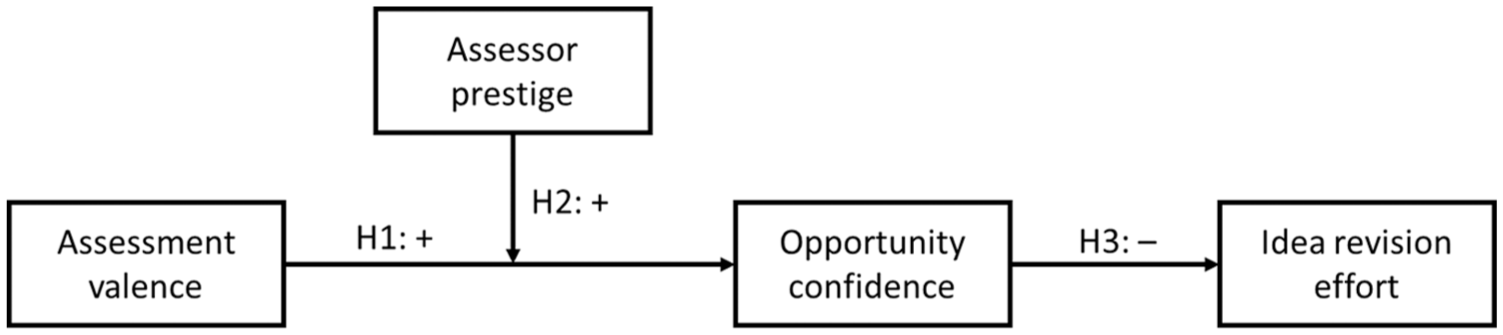
Research model: How assessment valence and assessor prestige influence idea revision effort via opportunity confidence.
Hypotheses: The impact of external assessment and prestige on opportunity confidence
Aspiring entrepreneurs and potential supporters typically undergo an exploratory phase prior to committing to venture creation, during which they test and evaluate a venture idea against external stimuli (Elfring et al., 2021). Given that entrepreneurship is a social process, such stimuli often arise through social interactions and commonly take the form of external assessments and feedback concerning the viability of the proposed venture (Elfring et al., 2021; Wood and McKinley, 2010). The importance of social structures and cues has been well-documented in the literature, with a growing stream of research also pointing to the dynamic nature between venture developments and social factors (Jiang et al., 2021; Shepherd, 2015). Specifically, this literature suggests that social cues can shape beliefs and behaviour under conditions of uncertainty (Engel et al., 2017), for example, by demonstrating how social factors influence venture process trajectories (Shepherd et al., 2022), idea selection (Fleury et al., 2020), or product development and performance (Borchert and Rochford, 2017).
In the context of entrepreneurial cognition, social interactions and exposure to external assessments that suggest that a given idea constitutes a viable new venture are argued to foster opportunity confidence and leading the envisioned venture to be increasingly perceived as warranting enactment (Dimov, 2010). In contrast, negative external assessments regarding the viability of a new venture idea may diminish opportunity confidence and prompt alternative behaviours. Prior research suggests that under conditions of uncertainty, individuals are particularly susceptible to social cues when forming judgments (Fleury et al., 2020), indicating they are likely to adjust their confidence in an opportunity in accordance with the valence of the external assessments they receive. Therefore, as a baseline hypothesis, we argue that receiving social cues in the form of optimistic opportunity assessments should increase confidence in the opportunity, while receiving negative assessments should decrease opportunity confidence.
Baseline Hypothesis 1 (H1): The valence of an external assessment received influences opportunity confidence; specifically, optimistic (pessimistic) opportunity assessment increases (decreases) opportunity confidence.
However, theory suggests that not all external inputs influence opportunity confidence in the same way (Wood and McKinley, 2010). In addition to the valence of the assessment, the assessment source plays a critical role; individuals are especially receptive to feedback from sources perceived as competent (Kim et al., 2013; Wood and McKinley, 2010). Yet, in uncertain contexts, such as nascent entrepreneurship, it is often difficult to directly assess the competence of others. In such situations, there is reliance on indirect cues of competence, using them as heuristics to guide learning and decision-making (Jiménez and Mesoudi, 2019), with the assessor’s prestige as perhaps the most prominent of such cues. Prestige or status influence is a well-established notion in a broad range of social settings (Berger et al., 1972; Gould, 2002; Kim and King, 2014), including entrepreneurship (Patel et al., 2022; Wood and McKinley, 2010). It is typically acquired and maintained in merit-based status hierarchies through demonstrated competence in a specific domain (Cheng and Tracy, 2014). As a result, responses reflect admiration and deference to ‘socially learn from the prestigious individual’ (Jiménez and Mesoudi, 2019: 2; see also Henrich, 2016; Price and Van Vugt, 2014; Von Rueden et al., 2008). Empirical studies in other fields strongly support the effectiveness of prestige and have shown that more attention is afforded to high-prestige individuals compared to those with lower-prestige (Dalmaso et al., 2012; Gerpott et al., 2018; Ratcliff et al., 2011) who tend to copy successful individuals (Atkisson et al., 2012; McElreath et al., 2008; Wood et al., 2013) and purposefully deviate from unsuccessful ones (Zaggl and Block, 2019).
Given the extensive evidence supporting the influence of prestige in the context of social learning, we hypothesise that it also plays a significant role in the adoption of external opportunity assessments and the formation of opportunity confidence. Specifically, to compensate for the uncertainty inherent in early-stage opportunity confidence assessments, we argue that greater confidence is afforded to external assessments provided by prestigious rather than non-prestigious sources (Lifchits et al., 2021; Morgan et al., 2012). Accordingly, we expect the effect of assessment valence on opportunity confidence to vary depending on the prestige of the source providing the assessment that is, a prestigious vs. non-prestigious assessor. Specifically, we hypothesise that receiving optimistic or pessimistic opportunity assessments from prestigious individuals strengthens the effect of the assessment on an individual’s opportunity confidence.
Hypothesis 2 (H2): The effect of assessment valence on opportunity confidence is moderated by the assessor’s prestige status, in that prestige strengthens the positive effect of optimistic opportunity assessment and the negative effect of pessimistic opportunity assessment.
The impact of opportunity confidence on idea work
Prior research has largely discussed the relationship between opportunity confidence and venture development in a binary manner; that is, high levels of confidence are seen to motivate action towards venture establishment, whereas low levels are associated with abandonment (Vilanova and Vitanova, 2020). However, aspiring entrepreneurs or stakeholders may also respond to experiencing low, or lower, levels of opportunity confidence by seeking to adjust the direction of the entrepreneurial pursuit (Shepherd, 2015). Rather than discarding a new venture idea due to a lack of confidence, individuals may engage in activities other than those focused on realising the idea in its current form. One way to do so is by engaging in ‘idea work’, that is, the enhancement of the underlying venture idea (Grimes, 2018), which should strengthen its viability or open new paths for development. Idea work allows the adherence to potentially useful elements and resistance to major changes (Kirtley and O’Mahony, 2023) and to change ideas incrementally as beliefs evolve in response to new information (Frese and Gielnik, 2023). It can be highly valuable, as critical reflection can improve alignment between the venture and external realities (Leatherbee and Katila, 2020) and venture performance (Camuffo et al., 2020). The effort exerted upon idea work, which we refer to as ‘idea revision effort’, is the extent to which an individual tries to engage in idea work and improve the venture idea. It does not necessarily lead to an improved idea, which makes it empirically easier to capture because true improvement is difficult to judge in most situations.
When confidence in the opportunity is low, there may be less willingness to proceed with the idea in its current form but not disengage entirely. We argue that experiencing low levels of opportunity confidence can motivate reflection and revision of the contents of a new venture idea. Such a lack of confidence may create a sense of urgency that drives increased effort to improve the idea and restore its perceived viability. Conversely, when opportunity confidence is high, there may be greater commitment to the current version of the idea and less compulsion to revise it. Accordingly, we expect that those with low opportunity confidence reconsider the content of their venture idea and exert effort to revise the idea. Conversely, we argue that higher levels of opportunity confidence reduces the perceived need and the willingness to exert revision effort.
Hypothesis 3 (H3): Opportunity confidence decreases idea revision effort.
Methods
Our empirical design aimed to address two potential sources of endogeneity: first, the relationship between opportunity confidence and the content of the venture idea itself; and second, the potential confounds between opportunity confidence and revision effort. To address the first, we used a vignette-based experiment with a standardised venture idea, ensuring that all participants responded to the same stimulus. This allowed us to isolate the effect of external assessments on confidence without variation in idea content. It also meant we could not use actual entrepreneurs evaluating their own ideas, which would have introduced uncontrolled variance and self-selection biases (McMullen and Shepherd, 2006). Moreover, randomly exposing real entrepreneurs to pessimistic or optimistic assessments about their own business ideas would raise serious ethical concerns and violate principles of responsible research conduct. We thus argue that our sample reflects our theory as closely as possible (Williams et al., 2019).
Experiment 1 (n = 400) tested the effects of assessment valence (optimistic vs. pessimistic) and assessor prestige (prestigious vs. non-prestigious) on both opportunity confidence and idea revision effort. Demonstrating these effects through randomisation allowed us to test the proposed mediation model, in which external assessments influence idea revision effort through changes in opportunity confidence. The assessment stimuli were intentionally non-directive, that is, they provided evaluative valence but no specific content changes. Hence, any influence on revision should arise through updated opportunity confidence rather than direct instruction. This design choice is consistent with an indirect-only account from assessment to revision. However, because confidence was only measured, not manipulated, causal claims about mediation remained limited; participants self-selected into different levels of the opportunity confidence mediator, leaving open the possibility that unobserved factors influenced both confidence and revision effort.
To address this second endogeneity concern and provide a stronger causal test of the proposed mediation path, Experiment 2 (n = 200) used a manipulation-of-mediator design (Pirlott & MacKinnon, 2016; Stone-Romero and Rosopa, 2011). All participants were exposed to the same pessimistic, prestige-backed assessment and were then randomly assigned to a self-encouragement or self-discouragement condition. This exogenously altered their opportunity confidence, enabling a direct test of its causal impact on idea revision effort and providing a more rigorous evaluation of the mediation mechanism.
We preregistered our research on AsPredicted.com and the Open Science Framework, where links are removed for blind review. While we adhered to the general plan outlined in our preregistration, some adaptations were necessary. We present the same modelled relations between assessment valence, opportunity confidence, and idea revision effort as in the preregistered description; however, minor adjustments included identifying redundant sub-hypotheses and utilising linear regressions for hypothesis testing instead of an ANOVA, given their better model fit and interpretability.
Experiment 1
In Experiment 1, we tested the effect of the assessor’s prestige and the assessment valence on opportunity confidence and idea revision. We manipulated participant exposure to external idea assessment by randomly assigning each participant to one of four written scenarios that varied in their description of the assessors (high or low prestige) and their assessment valence (optimistic or pessimistic) of a given idea.
Study material and stimuli
Venture idea description: All participants were given a description of a hypothetical venture idea. The idea presents a fresh-food delivery service, and the information provided is based on three elements derived from Davidsson’s (2015) notion of new venture ideas as ‘imaginary combinations of product/service offerings; potential markets or users and means of bringing these offerings into existence’ (Ramoglou, 2021: 684). We also ensured that the idea description would resemble an early-stage new venture idea and that the idea would be easily comprehensible to facilitate engagement with the task (see Appendix 1 for the full description).
Treatment scenarios: We developed four treatment scenarios describing how either a prestigious or non-prestigious assessor (assessor prestige) provides an optimistic or pessimistic assessment (assessment valence) of the given venture idea. When designing these scenarios, we used prestige cues outlined in the literature on social influence to portray prestige, or a lack of it (see Appendix 1; Chellappoo, 2021). In the prestige scenario, the assessor was categorised as a high-status entrepreneur due to prior venture success and being treated by others with respect and deference. In the non-prestige scenario, the assessor was described as having no entrepreneurial status.
In addition to the prestige of the assessor, the treatment scenarios describe how the assessor provides either an optimistic or pessimistic opportunity assessment (assessment valence) of the given idea. In the optimistic scenario, the assessment provider was described as being ‘very fond of the idea’ and thinking ‘that the idea would likely work out and that there is money to be made’. By contrast, in the pessimistic scenario, the assessor was described as being ‘very sceptical of the idea’ and thinking that ‘the idea would probably not work out and that there is no money to be made’. It is important to note that the external assessment did not address specific aspects of the given venture idea to avoid influencing how participants engage in the subsequent revision. We validated the setup in a pilot study on the online platform Prolific (N = 80), where we found that participants did indeed differ in their perception concerning the prestige of the assessor as well as the valence of the provided assessment. We also completed a manipulation check.
Participants and procedure
We conducted a power analysis (using the software program G*Power). Our goal was to obtain a power of 0.80 to detect a medium effect size of 0.26 at a 0.05 error probability (alpha). The values for the power analysis were derived from our pilot test and adapted conservatively.
We recruited 400 participants from the online platform Prolific to take part in our experiment. To ensure high data quality, we only allowed participants to sign up if they had an approval rate of a minimum of 95% on the Prolific platform. The sample consisted of 229 males (57.3%), 167 females (41.8%), and four others (1%) with an average age of 25.5 years (SD = 7.5).
Upon entering the experiment, participants received a brief introduction to the task. They were informed that acquaintances had approached them with a new venture idea and asked them for their assessment of the idea. Using acquaintances as a medium created a plausible and immersive reason to be exposed to the same stimulus in the form of a pre-defined new venture idea. This allowed us to mitigate and thereby control for unobservable effects caused by differences in, for example, riskiness or novelty of the idea, on each of the participant evaluations.
After this introductory information, the participants were presented with a text describing the new venture idea in question (see Appendix 1). To ensure that they read and understood the venture idea, we included an attention check after the reading task by prompting them to answer a multiple-choice question regarding the contents of the provided idea. Failing to correctly answer this question would give the participant a second chance to read the idea description and answer the question. In case a participant failed to answer the second time as well, their participation was automatically terminated, which happened in fewer than five cases. Included participants were then asked to evaluate their initial level of opportunity confidence regarding the given idea using the VIA scale (Davidsson et al., 2021).
Following this initial evaluation of the idea, the participants were randomly assigned to one of four treatment conditions, presenting them with either an optimistic or pessimistic assessment of the new venture idea by either a prestigious or non-prestigious source. Subsequently, we asked the participants to again evaluate their confidence using the same scale as before. Importantly, there were no statistically significant differences across experimental conditions in terms of age, gender, entrepreneurial experience, motivation, or any of the other collected measures, indicating successful randomisation. To reduce the risk of consistency bias or a spillover effect due to the prior rating, we asked them to provide demographic information and answer the manipulation check questions before providing their opportunity confidence rating.
In the next step, the participants were given the opportunity to revise the contents of the new venture idea. This could be done by adding, subtracting, or replacing the original text without restrictions in a text box; participants were told they had full discretion in rewriting the provided venture idea. Once satisfied with their efforts, their revised version of the idea was submitted, confirming they had finished. Finally, we asked the participants to rate their level of experience with entrepreneurship in general, and the idea-related industry and market in specific, as well as the other control questions.
Measured variables
Opportunity Confidence: We used the VIA scale (Davidsson et al., 2021) to measure opportunity confidence. The VIA consists of four items, asking the participants to rate their level of confidence regarding the qualities of a given venture idea on a scale from 1 to 100. Example questions are ‘how confident are you that this idea is a good business opportunity for the right person or team’, or ‘how confident are you that someone could turn this idea into a successful business?’ Post hoc analysis demonstrated very good reliability of the VIA scale (Cronbach’s α = .84). To assess the effect of the treatment on opportunity confidence, we measured opportunity confidence levels both before and after the treatment. To examine the relationship between opportunity confidence and idea revision effort, we used the post-treatment confidence level to capture participant confidence at the time of their revision decision.
Idea revision effort: The effort of idea revision was operationalised as changes in the content of the idea description. To measure content and content change, we used a ‘bag-of-words’ approach, allowing us a direct pairwise comparison of the original idea description with the changed description. Similar approaches have been used in prior innovation and entrepreneurship research (Janisch and Vossen, 2022; Zaggl, 2017). In detail, the idea description texts of all participants and the original idea text were cleansed of stop words, numbers, and punctuation, including new lines and quotation marks, and all words were transformed into their stem forms. Then, each idea – the original idea description and the refined ideas – could be represented as a word vector in the vector space of the entire body of texts, based on which we calculated the cosine distance (i.e. 1 – cosine similarity) between the original idea and each of the refinements. 2 This cosine distance constitutes the idea revision effort measure; a higher distance represents more revision effort.
Control variables: To account for demographic characteristics, we included age (Bohlmann et al., 2017) and gender (Zhang et al., 2023) as control variables. To control for a potential first-person opportunity effect (McMullen and Shepherd, 2006), we also asked participants to rate how likely it is that they would personally join the venture (personal venture likelihood), based on a 7-point Likert scale from ‘very unlikely’ to ‘very likely’. Additionally, to adjust for any chance imbalance in prior experience in various domains (Staniewski, 2016), we asked participants to rate their experience with entrepreneurial activities in general (entrepreneurial experience), experience with the product described in the business opportunity (product experience), and experience with the market/industry described in the business opportunity (industry experience), based on a 7-point Likert scale going from ‘no experience at all’ to ‘a lot of experience’. Finally, to account for variations in intrinsic motivation (Ryan, 1982), we controlled for motivation to engage in the idea revision task at the end of the experiment (task motivation) using a 7-point Likert scale going from ‘not motivated at all’ to ‘highly motivated’.
Results
We obtained submissions from all 400 Prolific participants, rejecting one participant for grossly falling below the average and expected completion time; the average completion time in Experiment 1 was 16 minutes and 44 seconds, while the rejected participant submitted after 1 minute and 17 seconds. Following the exclusion, we reopened the participation slot, allowing for additional participants.
Table 1 shows pair-wise correlations and descriptive statistics, and Table 2 illustrates the means and standard deviations of the pre- and post-test opportunity confidence ratings, as well as the idea revision effort across the treatment conditions.
Correlation matrix and descriptive statistics (Experiment 1).
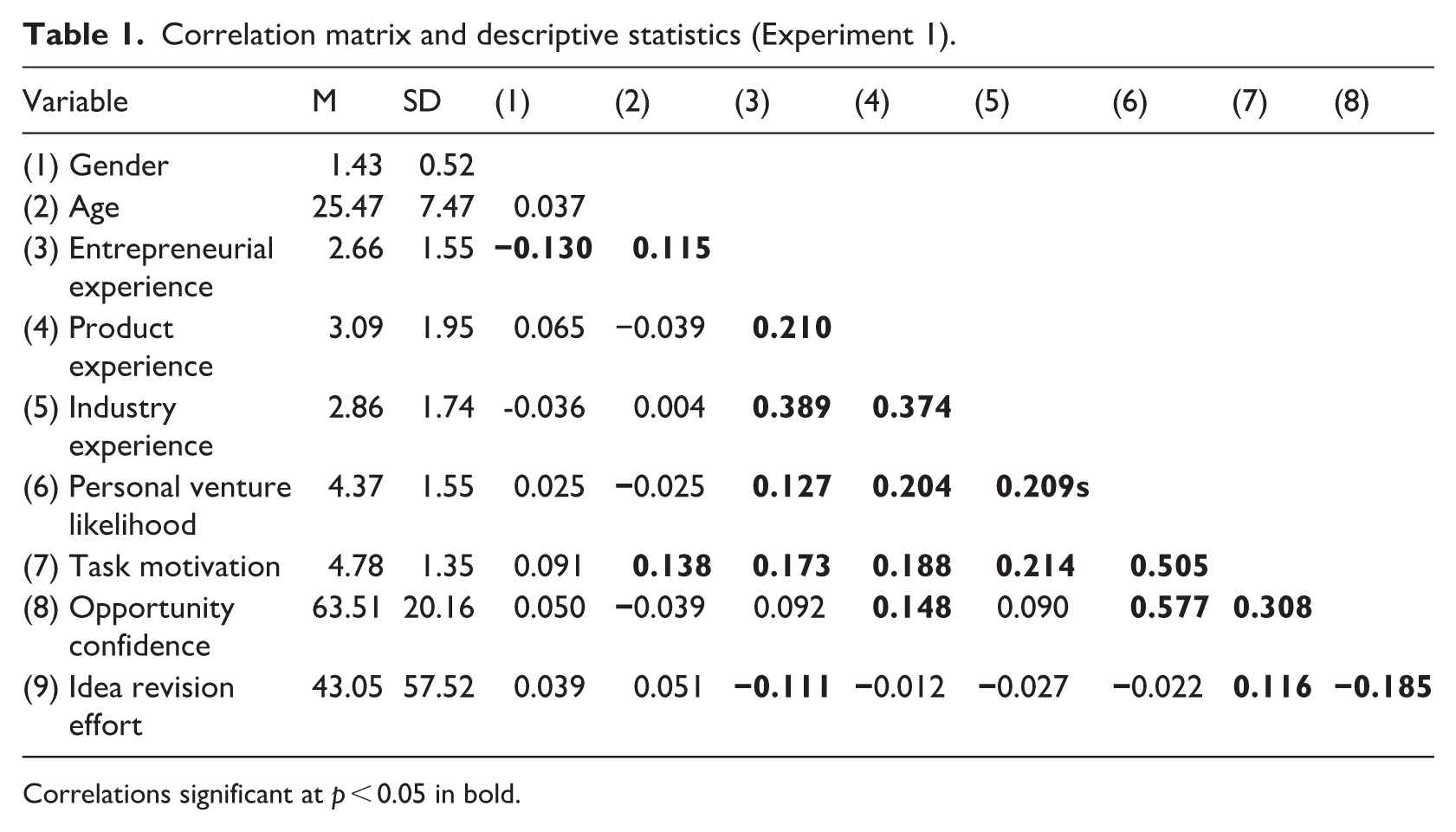
Correlations significant at p < 0.05 in bold.
Means and standard deviations of pre-treatment and post-treatment opportunity confidence and idea revision effort across treatment conditions (Experiment 1).
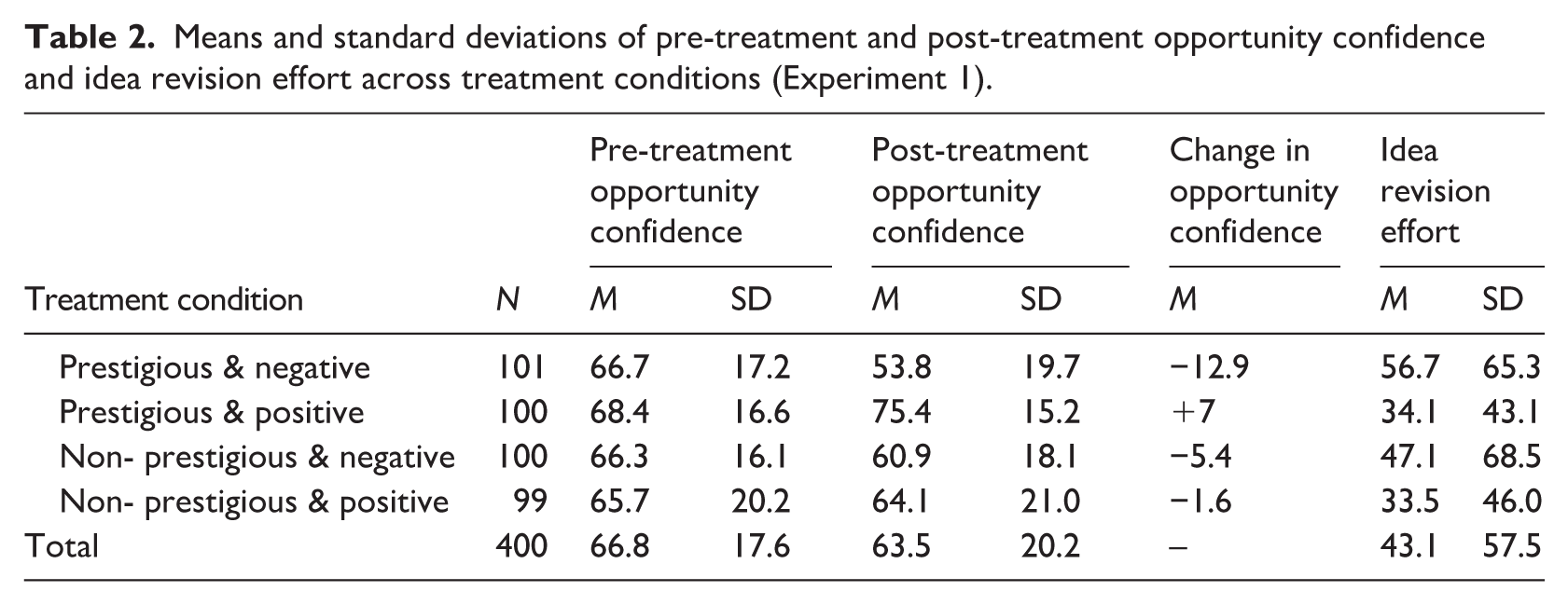
Manipulation check: We relied on two manipulation checks. First, we asked participants how they perceived the described assessor’s prestige as well as the valence of the provided assessment. As intended in our design, participants exposed to the high-prestige scenario also perceived the described person as significantly more prestigious (M = 6.01, SD = 0.77) than those exposed to the low-prestige scenario (M = 2.98, SD = 1.22), (t(389) = 29.89, p < 0.001). Similarly, participants who received the optimistic assessment scenario also perceived it significantly more as such (M = 5.34, SD = 1.30) compared to those who received the pessimistic assessment scenario (M = 3.06, SD = 1.30), (t(398) = 17.48, p < .001).
Second, we examined changes in opportunity confidence between treatment groups by comparing pre- and post-treatment confidence. Analysing opportunity confidence levels before being randomly allocated to one of our treatment conditions, we found no significant differences (p = 0.727). When comparing pre- and post-test ratings, we found significant changes within the treatment groups (see Figure 2). We also found a statistically significant difference between the treatment groups regarding their level of opportunity confidence (F(3, 396) = 23.43, p < 0.001, see Figure 2). All groups significantly differed from each other in opportunity confidence rating (p < 0.001), except for the participants in the two non-prestige conditions, where the difference is marginally significant (p = 0.056). We, therefore, conclude that our manipulation was successful in eliciting an impact on opportunity confidence.
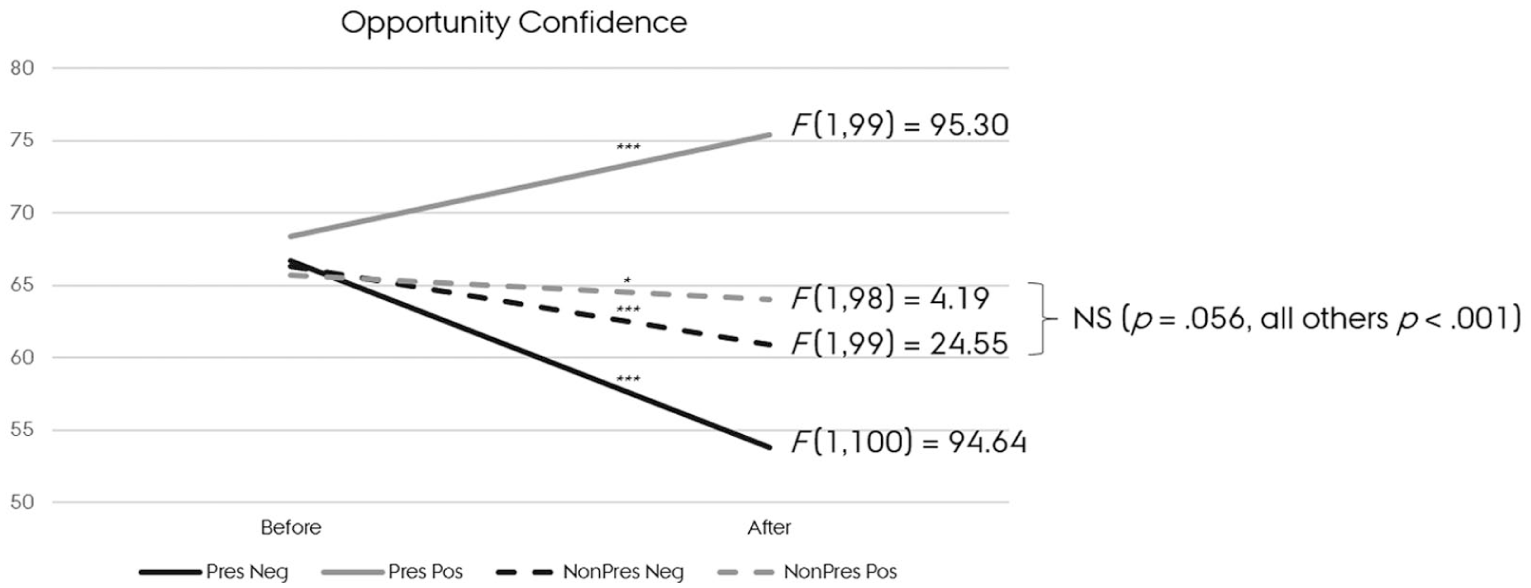
Within- and between-subject opportunity confidence comparison (Experiment 1).
Testing full mediation model: Before we tested the hypotheses, we ensured that the mediation model supports our overall conjecture of the research model (see Appendix 2). Our analysis supports a full mediation effect of external assessments on idea revision effort, conditional on assessor prestige as a moderator.
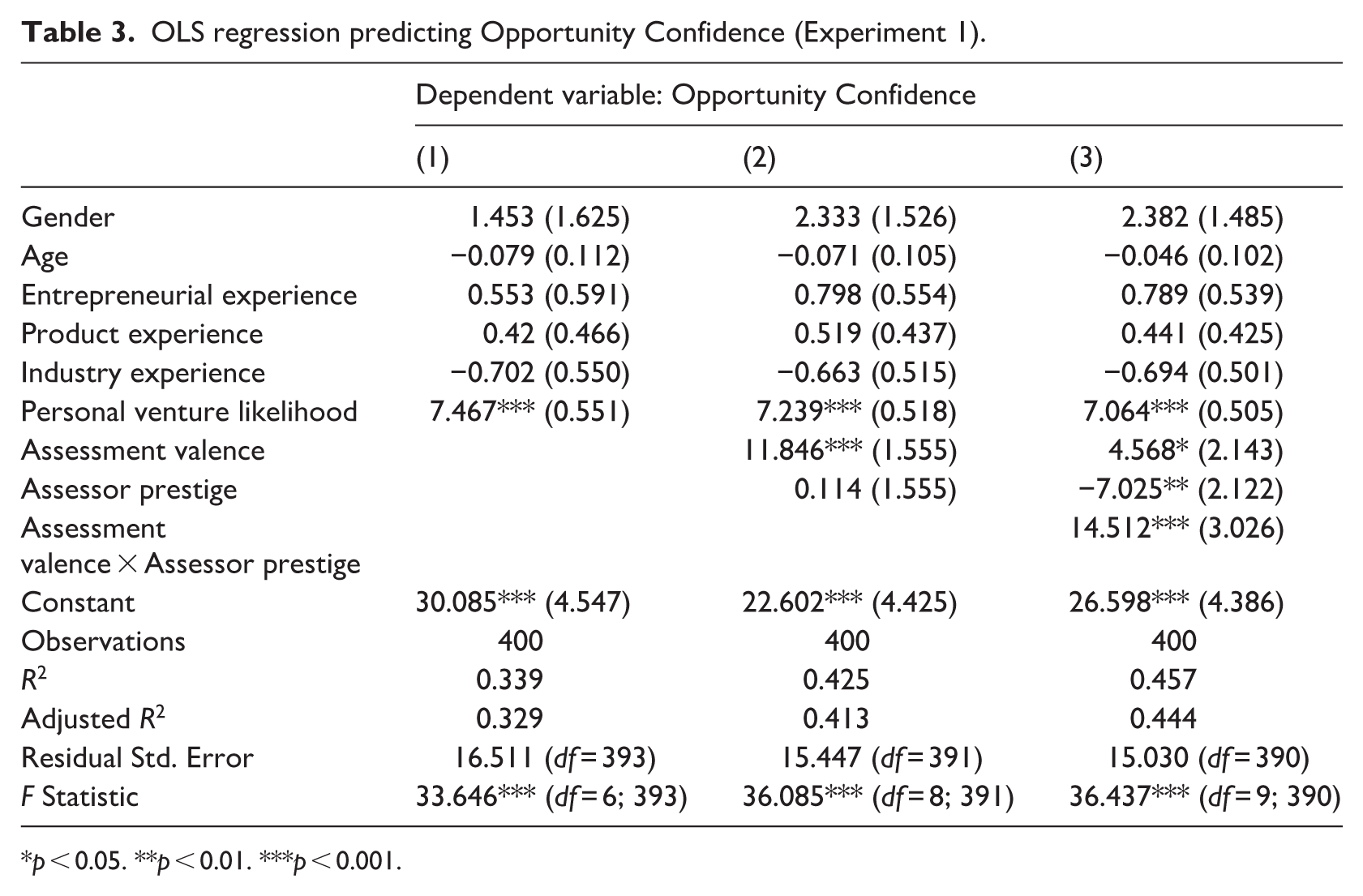
Hypothesis test: We fitted a linear model to predict opportunity confidence with external assessment valence, the assessor’s prestige status, as well as gender, age, entrepreneurial experience, product experience, industry experience, personal venture likelihood, and task motivation (see Table 3).
OLS regression predicting Opportunity Confidence (Experiment 1).
p < 0.05. **p < 0.01. ***p < 0.001.
H1 predicts that the valence of external assessments increases individuals’ opportunity confidence. The relation is positive and significant (β = 11.85, 95% CI [8.79, 14.90], t(391) = 7.62, p < 0.001; see Table 3, model 2), meaning that optimistic (pessimistic) external assessments significantly increase (decrease) opportunity confidence. The main effect of assessment valence indicates that participants exposed to an optimistic opportunity assessment differed by about 12 points in their opportunity confidence from individuals in the pessimistic condition (see Table 3).
H2 predicts that the positive (negative) effect of an optimistic (pessimistic) assessment on opportunity confidence is amplified by the external assessor’s prestige status. Consistent with the prediction, our results show a statistically significant and positive interaction effect of assessment valence and the assessor’s prestige (β = 14.51, 95% CI [8.56, 20.46], t(390) = 4.80, p < 0.001; see Table 3, model 3).
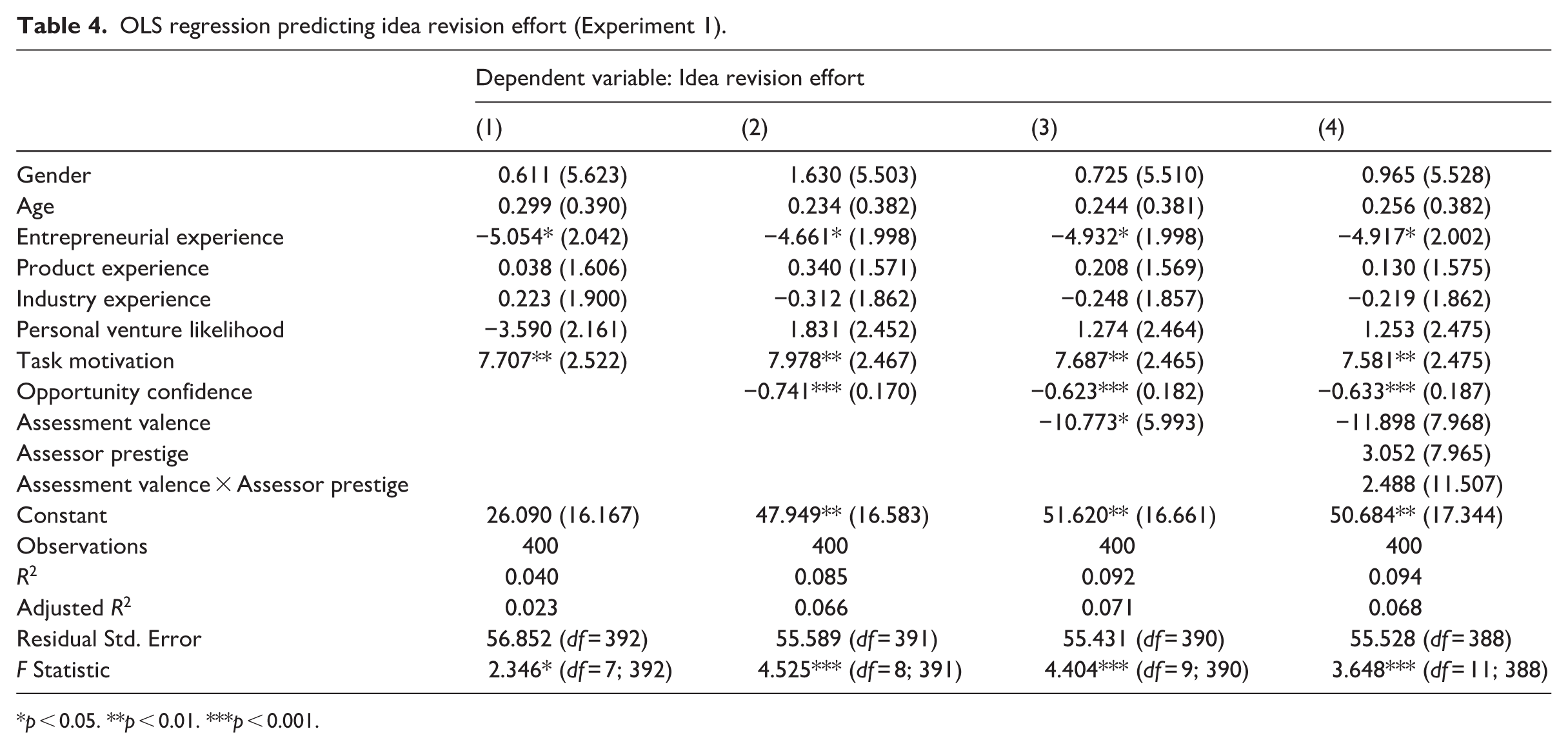
H3 predicts a negative effect of opportunity confidence on idea revision effort, which is supported (β = −0.74, 95% CI [−1.07, −0.41], t(391) = −4.36, p < 0.001, see Table 4, model 2). Notably, when adding valence, prestige, and their interaction (models 3 and 4), the effect of opportunity confidence remains significant, providing a preliminary, statistical indication for mediation, which is then further tested and supported in Experiment 2.
OLS regression predicting idea revision effort (Experiment 1).
p < 0.05. **p < 0.01. ***p < 0.001.
Experiment 2
In Experiment 1, we tested whether the treatment conditions directly affected opportunity confidence and, in turn, idea revision effort. In Experiment 2, we ran a stricter manipulation-of-mediator test (Mark, 1990; Pirlott and MacKinnon, 2016): we directly manipulated opportunity confidence to examine its causal role linking prestige-backed external assessment to revision effort. To do so, we simplified the design by fixing the initial stimulus for all participants to the pessimistic evaluation from a prestigious assessor – the condition that produced the strongest, most consistent effects in Experiment 1. Holding this influential input constant maximised systematic variance in the mediator (opportunity confidence) and enabled a stronger assessment of its causal impact on idea revision effort.
Participants and procedure
We again recruited participants from Prolific (N = 200) with an approval rate of 95% for all Prolific tasks and ensured that no participant overlapped with the sample of Experiment 1. We did not exclude any participants from the final analysis. The sample consisted of 85 (42.5%) females, 112 (56.0%) males, and 3 (1.5%) other participants. The average age was 25.2 years (SD = 8.9).
The procedure of Experiment 2 was almost identical to Experiment 1, except that we held both assessment valence and assessor prestige constant: all participants were exposed to the same external assessment, that is, a pessimistic evaluation from a prestigious assessor. What we manipulated in Experiment 2 was opportunity confidence, the proposed mediator in our model. To do so, participants first provided an initial rating of their opportunity confidence, then read the assessment scenario. Afterward, they were randomly assigned to one of two self-persuasion conditions designed to exogenously shift their opportunity confidence: a self-encouragement condition (writing three arguments in favour of pursuing the venture idea) or a self-discouragement condition (writing three arguments against pursuing the idea). This argument-generation task is a well-established method for manipulating the confidence with which people hold their attitudes (Briñol and Petty, 2009). The act of generating supporting or opposing reasons changes the confidence individuals have in their own thoughts, thereby directly influencing their overall evaluation certainty (Tormala and Petty, 2002). This approach enables a direct test of the proposed mediation effect on idea revision effort. The remaining procedure mirrored Experiment 1, including the dependent variable: idea revision effort, measured as the cosine difference between the original and revised idea texts.
Results
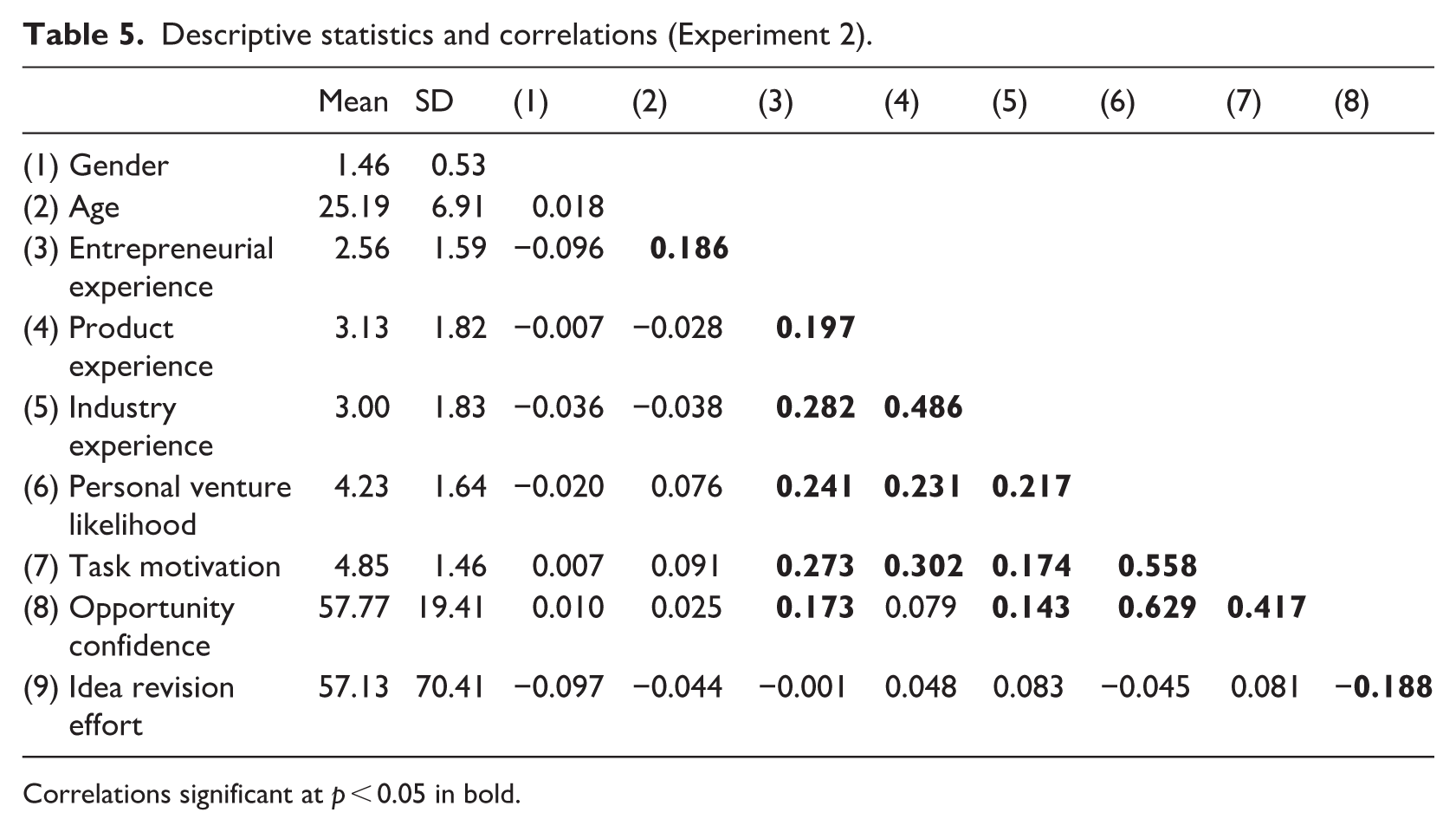
Table 5 presents correlations and descriptive statistics of Experiment 2.
Descriptive statistics and correlations (Experiment 2).
Correlations significant at p < 0.05 in bold.
Manipulation check: Pre-treatment opportunity confidence did not differ significantly between conditions (F(1, 198) = 0.61, p = 0.434), indicating successful random assignment. Following the manipulation, a statistically significant difference in opportunity confidence emerged between the two groups (F(1, 198) = 6.82, p < 0.01). Furthermore, there were significant within-subject changes across time (F(1, 198) = 26.41, p < 0.001; see Figure 3). As expected, opportunity confidence decreased overall due to the shared exposure to the pessimistic assessment. However, the decrease was significantly smaller in the self-encouragement condition than in the self-discouragement condition. We confirm the effectiveness of the manipulation: post-treatment opportunity confidence was significantly predicted by experimental condition (β = 8.71, 95% CI [5.32, 12.10], t(197) = 5.06, p < 0.001), controlling for pre-treatment confidence (β = 0.86, [0.76, 0.96], t(197) = 17.16, p < 0.001). We conclude that the manipulation successfully created systematic variation in opportunity confidence, validating the experimental design and enabling a causal test of its effect on idea revision effort.
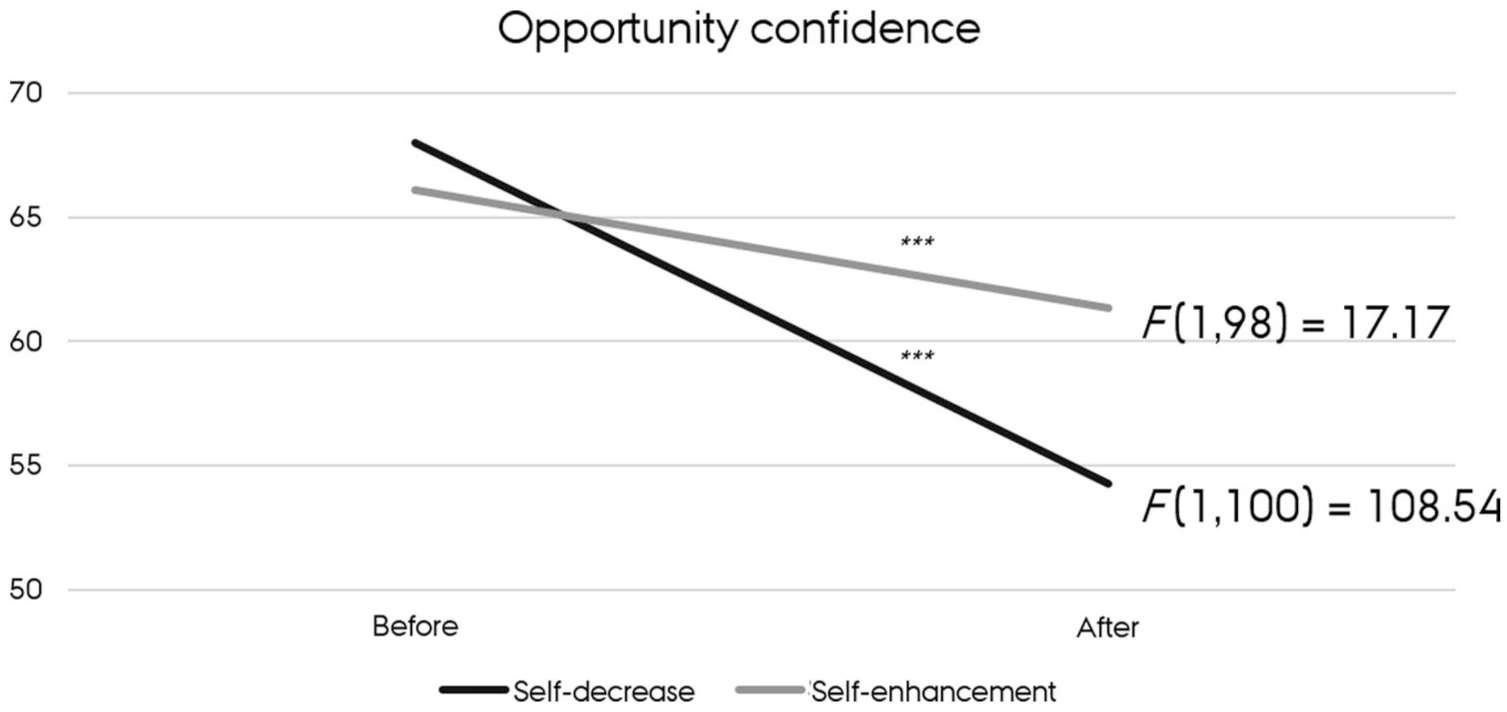
Within- and between-subject opportunity confidence comparison (Experiment 2).
Hypothesis test: We fitted a linear model to predict idea revision effort with opportunity confidence rating, gender, age, entrepreneurial experience, product experience, industry experience, and task motivation (see Table 6). H3 predicted that opportunity confidence negatively affects idea revision effort. Using a mediation-by-design approach, we found that the effect of opportunity confidence is statistically significant and negative (β = −1.04, 95% CI [−1.69, −0.39], t(191) = −3.16, p = 0.002; see Table 6, model 2). Because opportunity confidence was exogenously manipulated while the assessment cue was held constant, the observed change in revision provides a causal test of the mechanism, again aligning with an indirect-only account.
OLS regression predicting idea revision effort (Experiment 2).
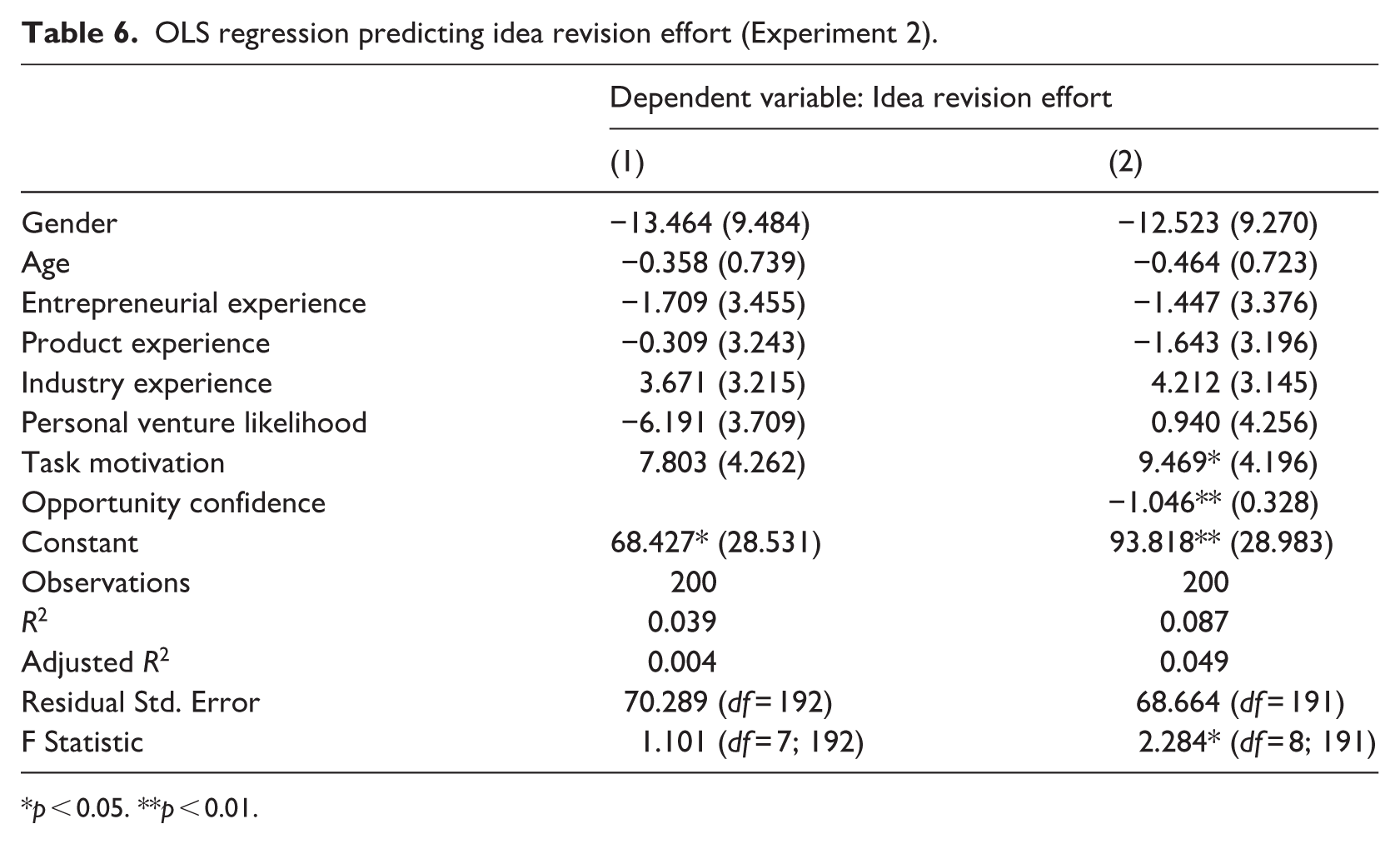
p < 0.05. **p < 0.01.
Discussion
Entrepreneurship unfolds through loops of action and feedback (Frese, 2023; Frese, 2021). New ventures evolve as entrepreneurs or other relevant stakeholders respond to new information through corresponding actions (McMullen and Dimov, 2013), ideally developing initial ideas into viable new businesses (Packard et al., 2017; Vogel, 2017). This process involves continuous assessment of whether a new venture idea, in its current form, represents a viable path to venture success (Frese and Gielnik, 2023). The outcome of these ongoing assessments manifests as subjective levels of opportunity confidence, with higher confidence driving efforts towards the venture’s establishment (Davidsson, 2015; Dimov, 2010). Our research sheds new light on the role of opportunity confidence by examining how it shapes the relationship between receiving new information and engaging in efforts to revise the idea on which opportunity confidence is based. We empirically demonstrate that opportunity confidence is differentially influenced by external information depending on the prestige of its source, and that subsequent idea revision effort increases as opportunity confidence decreases. Our study has several theoretical and practical implications.
Theoretical implications
First, our work contributes to discussions about the role of beliefs, and more specifically opportunity confidence, for the dynamic unfolding of entrepreneurial processes. It is commonly acknowledged that entrepreneurial processes are non-linear and iterative (McMullen and Dimov, 2013), and that subjective beliefs serve as a key driver of these processes (McMullen and Shepherd, 2006; Shepherd et al., 2015). Yet, the specific ways in which opportunity confidence as a concrete type of entrepreneurial belief in a new venture idea can influence entrepreneurial trajectories remain insufficiently understood (Davidsson et al., 2021). The influence of opportunity confidence has largely been discussed in binary terms: high confidence in a new venture idea fuels action and progress toward venture creation, whereas low confidence results in inaction and abandonment (Dimov, 2010). However, this framing overlooks the malleable nature of new venture ideas as the conceptual foundation of entrepreneurial processes (Vogel, 2017). Our findings highlight that, rather than stifling action, lower levels of opportunity confidence can instead prompt individuals to engage in idea work by revising the content of a new venture idea. Our findings show that the role of opportunity confidence is more multifaceted than previously assumed (Vilanova and Vitanova, 2020; Davidsson, 2015). Rather than serving only as motivational fuel for new venture creation – or its absence as a barrier to it (Dimov, 2010), lower confidence can trigger a distinct form of entrepreneurial action aimed at refining or even reorientating the venture’s conceptual foundation (Grimes, 2018). This suggests that opportunity confidence functions as an internal regulatory mechanism that directs attention toward critical reflection and revision, thereby playing a key role in shaping how entrepreneurial processes unfold (Kirtley and O’Mahony, 2023).
Second, we contribute to research on entrepreneurial action. This research has not sufficiently focused on idea work and revision activities as a distinct form of entrepreneurial action. Specifically, our study extends a growing body of research on conceptual development and change in entrepreneurship, including work on entrepreneurial imagination (Kier and McMullen, 2018), pivoting (Shepherd and Gruber, 2021), and idea work (Perry-Smith and Mannucci, 2017). This literature stream emphasises how venture concepts develop over time through dynamic interaction between individual perceptions and ideas as creative products. An important insight from that literature is that frequent revision of the conceptual foundation for a new venture is essential for improving alignment between the envisioned new venture and external realities (Leatherbee and Katila, 2020; Wood and McKinley, 2010), thereby increasing the likelihood of venture success (Camuffo et al., 2020). By focusing on idea work, our research provides novel empirical insight into the mechanisms through which idea revision effort occurs. Specifically, our findings show that motivating idea revision first requires influencing opportunity confidence regarding the viability of the idea. Although this dynamic has been theorised in prior work (Dimov, 2010), it has not, at least to our knowledge, been empirically demonstrated.
Relatedly, our research suggests that interventions aimed at reducing opportunity confidence can stimulate reflection and idea revision. However, dampening opportunity confidence too much may demotivate any engagement with the prospective venture (Dimov, 2010). Given that many entrepreneurial pursuits end before they truly begin, this is an important issue to consider. It would imply a ‘sweet spot’ in terms of the strength of one’s opportunity confidence; that is, having a healthy amount of confidence, which does not prematurely kill the venture and simultaneously maintaining the ability to critically reflect. Although our empirical design was not intended to identify such a sweet spot, it is intuitively plausible that one exists. Overall, research aiming to explain entrepreneurial action, especially in terms of conceptual development, needs to consider these possible trade-offs and dynamics and shed more light on how conductive openness and reflectivity can be maintained through the regulation of opportunity beliefs.
Third, prior research has shown that individuals often avoid – or even resist – incorporating new information into their existing beliefs about a venture’s viability, making it challenging to influence opportunity confidence (Kirtley and O’Mahony, 2023). Yet, incorporating new and diverse information promotes adaptability and advances venture development (Shepherd et al., 2022). Conversely, neglecting external cues heightens the risk of overlooking potential issues, clinging to flawed assumptions, and failing to adapt to changing conditions (Chen et al., 2018). Our findings show that, depending on the social context, new information can influence opportunity confidence and prompt reflection on the content of an underlying new venture idea. Although social factors are well established as influential in the development and performance of new ventures (Clough et al., 2019; Shepherd et al., 2022), the specific circumstances that lead entrepreneurs and other contributors to update their opportunity confidence are unclear (Shepherd, 2015). Our study shows that the effect of external venture assessments on opportunity confidence varies considerably depending on the source of the assessment. When an assessment is provided by a highly prestigious individual, recipients are more likely to align their level of confidence with the valence of that assessment. Consequently, assessments by prestigious individuals that question the viability of an envisioned new venture can substantially influence opportunity confidence and prompt subsequent doubts regarding the underlying new venture idea.
Thus, our work expands existing theories that illustrate the importance of the assessment source characteristics for conveying new information (Wood and McKinley, 2010). The early stages of entrepreneurship are particularly marked by high levels of uncertainty, making it difficult for individuals to discern which information is relevant and should be acted upon (Jiménez and Mesoudi, 2019; McMullen and Shepherd, 2006). Given that confidence is an important driver of entrepreneurial pursuits and that resources are typically limited (Davidsson, 2015), aspiring entrepreneurs and other contributors must be selective in the information they incorporate into their judgments to avoid jeopardizing progress. In this context, the perceived credibility of the information source, based on their social esteem, provides an important heuristic for whether new information receives attention and serves as a basis for the potential re-evaluation of existing confidence. Since the true extent of an information provider's expertise or credibility can be difficult to assess, especially in early interactions, prestige functions as a visible and socially shared signal that helps individuals infer trustworthiness and relevance, thereby facilitating the uptake and consideration of new information.
Practical implications
The evidence from this study suggests that engaging in idea work is a strategy for coping with low confidence; in this way, a lack of confidence can be utilised and channelled into a productive force. Thus, low confidence is not necessarily detrimental; it can motivate greater investment in venture ideas. This insight is not only valuable for individuals who hold a venture idea but also for institutional supporters of entrepreneurship, who often assume that confidence is uniformly positive and that low confidence is inherently harmful. As such, we argue that the prestige of an assessment amplifies how opportunity confidence is shaped. Thus, advisors, mentors, and institutional supporters with established status may function as levers to foster necessary scrutiny or iteration in early-stage ventures. This influence calls for caution such that entrepreneurs and stakeholders must be aware of the potential for status-based distortions.
Individuals are more likely to adjust their confidence, not necessarily because of new substantive information, but also because of the status of the person offering the opinion. This emphasises the need for reflective filtering: Should I take this input seriously because it is insightful, or simply because it comes from someone perceived as prestigious? Furthermore, prestigious individuals should similarly be mindful of the weight their commentary carries. Even subtle or loosely grounded judgments can lead recipients to significantly re-evaluate their ideas, sometimes in ways that may not serve the quality of the idea itself. In particular, the early ideation phase is vulnerable (Bennett and Chatterji, 2023): individuals are forming beliefs that will later guide commitment and resource allocation.
Limitations and future research
This article opens several fruitful directions for future research emerging from its current limitations. Using a controlled online experiment, we provide causal evidence that opportunity confidence mediates how external information influences venture idea revision. However, it remains unclear how this mechanism operates within the context of real-world entrepreneurial processes. In practice, entrepreneurs and stakeholders form and navigate a complex web of interrelated beliefs to guide their decisions.
Prior research indicates that it can be challenging to motivate critical reflection and idea revision (Kirtley and O’Mahony, 2023); this may be due to strong first-person beliefs fostering fixation biases (Grimes, 2018). While our approach isolates the effect of opportunity confidence on idea revision, it is unclear how this effect operates alongside other belief types. We encourage future research to examine how opportunity confidence interacts with other types of entrepreneurial beliefs to better capture the complexity of belief systems and their distinct and interactive effects on entrepreneurial activities (Shepherd, 2015). For instance, research could untangle the effects of confidence in one’s abilities versus the confidence in the opportunity as such in connection to idea work. Alternatively, future research could investigate how revision activities feed back into individual beliefs. Prior studies suggest that contributing to an idea strengthens an individual’s sense of ownership (Baer and Brown, 2012), and a similar effect could occur for opportunity confidence. Moreover, we suspect that as revision efforts accumulate, both opportunity confidence and sense of ownership may increase, potentially reducing openness to further revisions (Crilly, 2018).
In addition, we recognise that the nature and impact of opportunity confidence may differ across contexts. Our study aimed to approximate a scenario situated in the earliest stages of entrepreneurship. Given the lack of maturity and specificity of the venture idea at this stage, we expect that confidence regarding its viability is relatively malleable, making it more likely that new information will influence opportunity confidence and motivate revision. Future research could examine how this mechanism unfolds across different stages of the entrepreneurial process, as the stability and strength of confidence may evolve over time. Moreover, the influence of opportunity confidence may vary depending on the individual’s role with respect to the venture idea. Entrepreneurs typically have a different relationship to their ideas than do advisors, investors, or other stakeholders; they tend to be more emotionally and cognitively invested (Cardon et al., 2005). While such personal investment may be critical for perseverance (Cardon and Kirk, 2015), it may also suppress the effect of critical external information on opportunity confidence and idea revision effort. In contrast, individuals who have a lesser degree of personal investment may be more open to incorporating new information into their opportunity confidence. Future research could extend our study by examining whether the mediation effect differs across various actors.
Finally, this research has potentially valuable insights for research on social support in entrepreneurship. While social support theory, applied to entrepreneurship, acknowledges that social support can be both positive and negative (Treffers et al., 2019) and that social support effects depend on their timing and sources (Klyver et al., 2018, 2020), the micro-mechanisms through which social support functions remain under unexplored. Our study points towards opportunity confidence as one potential micro-mechanism through which social support affects venture development. Accordingly, we encourage future research to look deeper into opportunity confidence as a micro-mechanism for social support and explore the boundary conditions across, for instance, stages in the entrepreneurial process, gender, human capital, culture, etc.
Conclusion
This article demonstrates the importance of considering opportunity confidence as a key determinant of entrepreneurial action. Using two vignette experiments, we have provided empirical evidence supporting the notion that individuals are influenced by the external assessments of business ideas, with the assessment source’s prestige playing a pivotal role in shaping their confidence levels and revision efforts. We address a significant gap by investigating the antecedents and consequences of opportunity confidence, particularly focusing on the role of social influence in shaping an individual’s confidence level and subsequent engagement in revision activities. Our findings contribute to the understanding of the social dynamics of opportunity confidence and offer valuable insights into how individuals navigate and refine business opportunities. By elucidating the mechanisms through which social cues influence an individual’s confidence levels and subsequent revision efforts, we provide valuable insights that can inform both theory and practice in the field of entrepreneurship. Moving forward, further exploration of these dynamics is warranted to enhance our understanding of how entrepreneurs navigate their opportunity confidence through the complex entrepreneurial process.
Footnotes
Appendix A
Appendix B
To statistically test whether opportunity confidence mediates the relationship between external assessments and idea revision effort, and whether this mediation depended on the prestige of the assessment source (Baron and Kenny, 1986), we conducted a moderated mediation analysis using the ‘mediation’ package and bootstrapping (1000 samples) in R (Tingley et al., 2014).
We conducted three iterations of the analysis for each level of the moderator. First, we tested models including only the constructs specified by our theoretical framework. Next, we tested models, including our control variables to account for potential confounds. Finally, we included pre-treatment opportunity confidence to examine whether changes in confidence, rather than post-treatment levels alone, drive idea revision effort.
Funding
The authors received no financial support for the research, authorship, and/or publication of this article.
