






Abstract
Ensuring the social acceptance of disaster management policies and promoting the well-being of residents in safe environments requires consideration not only of objective risk levels but also of subjective risk perception. When individuals perceive hazards as uncontrollable, their anxiety tends to increase, highlighting the importance of training programs that strengthen coping capacity as a critical aspect of disaster management. Against this backdrop, this study examines the effect of coping capacity on disaster-related risk perception in South Korea. Despite rapid economic growth and improvements in living standards, South Korea continues to report lower life satisfaction than the OECD average, largely due to recurring natural and man-made disasters that amplify social anxiety. This study distinguishes between natural and man-made disasters to analyze the factors influencing risk perception and to explore requirements for more effective safety systems. Using pooled cross-sectional data from four waves of Statistics Korea’s Social Survey (2018–2024), the analysis applies a binary logistic model. The results show that coping knowledge reduces fear associated with risk perception, but its effect varies by health status, suggesting the need for risk education tailored to health conditions. In addition, differences by gender, education, income, and regional exposure indicate the necessity of prioritizing vulnerable groups in disaster management strategies. Furthermore, regional emergency response accessibility was found to mitigate perceived risk of natural disasters, highlighting the importance of improving accessibility to emergency services as a means of strengthening disaster response capacity.
Introduction
Living in a safe environment is a key factor in shaping an individual’s quality of life. Within the regional science literature, quality of life is widely understood as a multidimensional construct shaped by a combination of spatial and socioeconomic factors, including health, housing, accessibility, and safety (Barreira et al. 2021; Goetzke and Rave 2015; Kourtit et al. 2021). Among these, safety is consistently highlighted as a critical pillar that enhances residents’ mental well-being and overall housing satisfaction. Furthermore, as Lozano-Gracia et al. (2010) demonstrate, safety perceptions critically drive spatial choices and migration flows, indicating that subjective safety is pivotal in shaping regional dynamics. From this perspective, strengthening regional disaster management and public safety systems is an indispensable strategy for elevating the overall quality of life of local residents.
In efforts to improve quality of life through the creation of a safer society, it is essential to consider not only objective risks but also the risks subjectively perceived by residents. The perception of safety is not determined solely by the physical level of risk but is shaped through psychological processes grounded in individual intuition, emotion, and trust. As a result, even when scientific probabilities indicate the same level of danger, the degree of perceived risk can vary significantly across individuals (Siegrist and Árvai 2020; Slovic 1987; Wilson et al. 2019). Moreover, recent regional studies highlight that a profound discrepancy often exists between actual disaster damage and individuals’ perceived level of risk, underscoring a critical gap between objective hazard conditions and subjective risk valuation (Le 2024). Policies that are based on perceived risk can enhance social acceptance by aligning with the public’s thresholds for risk tolerance, thereby facilitating the development of more effective risk management strategies (Renn 1998; Slovic 1987; Vanem 2012). According to the “Psychometric Paradigm” proposed by Fischhoff et al. (1978), differences in how people perceive the severity of various risks stem from multidimensional factors such as dread, the degree of scientific knowledge, and familiarity with the risk (Fischhoff et al. 1978; Slovic et al. 1985). In other words, perceptions of risk are shaped by considerations such as how fatal the consequences might be, how much is scientifically known about the risk, and how familiar the public is with it. Ultimately, when individuals believe they are capable of coping with a given risk, their level of fear decreases. From this perspective, training aimed at strengthening coping capacity has been increasingly utilized in disaster management as a means of promoting preparedness actions and resilience skills.
In this regard, this study examines the perceived risk of disasters, using South Korea as a case context. Following the country’s rapid economic development, public interest in living in a safe and comfortable environment has increased substantially; however, whether safety considerations are sufficiently ensured within the broader concept of quality of life remains open to debate (Yoo 2015). From 2020 to 2022, South Korea’s average life satisfaction score was 5.95 out of 10, ranking fourth lowest among 38 OECD countries, compared to the OECD average of 6.69. Although life satisfaction is shaped by multiple structural factors, including working conditions, income, and social relationships (Park et al. 2019; Song and Lee 2021), public anxiety and perceived risks within urban environments are increasingly recognized as significant detractors from subjective well-being (Lee et al. 2014). Within this broader context of societal stress, recurrent natural and man-made disasters likely contribute to heightened perceptions of insecurity and social anxiety. According to the 2023 Disaster Statistical Yearbooks published by the Ministry of the Interior and Safety, South Korea has incurred annual average damages of approximately 400 billion KRW (around 270 million USD) from natural disasters over the past decade. Major natural hazards frequently affecting the region include typhoons, heavy rainfall, heatwaves, and landslides. Concurrently, man-made disasters, spanning infectious disease outbreaks, fires, structural collapses, and crowd-related incidents, have occurred in increasingly diverse forms, with the number of reported cases rising from 17 in 2014 to 32 in 2023.
In the initial stage of the analysis, this study examines broader trends in public awareness over the past decade. It then identifies the socioeconomic characteristics of groups that perceive each type of disaster as particularly threatening and investigates the factors contributing to these perceptual differences using pooled cross-sectional data. Particular attention is given to the role of coping capacity, assessing both its impact on risk perception and variations across social groups. The findings are expected to highlight priority groups requiring focused attention and to suggest directions for providing them with necessary support, thereby contributing to the creation of a safer society.
Literature Reviews
Factors Affecting Risk Perception
Individuals’ perception of risk varies based on their experiences and socioeconomic status; thus, personal characteristics are essential factors to consider in studies of risk perception. Previous studies have employed socioeconomic factors such as gender, age, education level, and income as personal characteristics in risk perception research ( Echavarren et al. 2019; Eryılmaz Türkkan and Hırca 2021; Lee et al. 2017a; Lee and Kim 2020; Savage 1993). These studies indicate that socially vulnerable groups, such as women, the elderly, individuals with lower incomes, lower education levels, and non-professionals, tend to exhibit higher levels of risk perception. According to Ho et al. (2008), men are less likely than women to feel life-threatening danger or experience financial loss and fear during a disaster, indicating gender differences in risk perception. Additionally, lower income and education levels may hinder access to and understanding of information about disaster situations and recovery, leading to differences in risk perception (Eryılmaz Türkkan and Hırca 2021). Similarly, Yoo (2015) categorized the variables affecting safety perception into three dimensions: social factors (e.g., safety education, access to safety information); personal history factors (e.g., risk experience, past socioeconomic status); and psychocultural factors (e.g., personality, safety awareness, current socioeconomic status).
Although risk perception is a subjective judgment, social, economic, political, and cultural contexts influence the decision-making process (Mañez et al. 2016); therefore, consideration of the local environment is also necessary. For these reasons, it has been suggested that not only individual-level characteristics—such as prior experiences of harm, income level, race, and gender—but also contextual factors at the regional level, such as crime rates, influence individuals’ risk perception (Hicks and Brown 2013). In a study conducted on European countries, Bodas et al. (2022) found that cultural backgrounds, such as shared social atmospheres, values, and traditions among neighboring countries, lead to similar ways of perceiving and responding to risks. Similarly, Lee et al. (2017a) demonstrated that differences in regional culture and values create variations in individuals’ socioeconomic characteristics, resulting in differing safety perceptions. By comparing Seoul and Busan, they explained that the influencing factors varied significantly depending on specific risk factors. Additionally, Li et al. (2021a, 2021b) confirmed that as the GDP level of a region increases, the growing middle class leads to increased demand for better living environments while lowering the threshold for risk acceptance.
It can thus be concluded that the evaluation of risk situations varies depending on an individual’s knowledge and understanding of risk factors, as well as personal traits, experiences, emotions, and cultural, economic, and political contexts (Li et al. 2021a, 2021b).
Role of Coping Capacity
Risk perception refers to the subjective judgment of risk, encompassing perceptions, beliefs, and attitudes regarding the likelihood of risk occurrence, its severity, and potential threats (Bodas et al. 2022; Li et al. 2021a, 2021b). A representative theoretical framework that interprets this process of risk perception from a psychological perspective is the Protection Motivation Theory (PMT), which explains how individuals’ protective behaviors in response to hazardous situations are determined based on their perceived risk. The concept was first introduced by Rogers to explain changes in individuals’ health behaviors in the context of health threats. The theory posits that protective behavior is determined through two cognitive appraisal processes: threat appraisal and coping appraisal (Grothmann and Reusswig 2006). Threat appraisal reflects the perceived severity and probability of harm, along with the emotional response of fear. Coping appraisal, in contrast, involves an individual’s perceived ability to respond to the threat and is determined by protective response efficacy, perceived self-efficacy, and the perceived costs of the protective action. When both threat and coping appraisals are high, individuals are more likely to adopt protective responses. However, if coping appraisal is low, they may exhibit non-protective behaviors instead. Thus, effective risk communication must go beyond simply conveying the severity of a risk—it should also aim to enhance individuals’ confidence in their ability to cope with the risk. Motivating individuals by reinforcing self-efficacy and response efficacy can lead to greater engagement in protective behaviors (Ahmed et al. 2018; Hu et al. 2022).
While risk perception is fundamentally shaped by individual psychological factors, the role of information and knowledge is also critical. In one of the earliest studies on risk perception and acceptance, Starr (1969) suggested that discrepancies between actual and perceived risk arise from differences in individuals’ levels of knowledge. That is, well-known risks tend to be more readily accepted, whereas unfamiliar risks are often perceived as more frightening. This aligns with the “unknown” dimension of the psychometric paradigm, wherein a lack of access to accurate information and knowledge leads the general public to either overestimate or underestimate risks compared to experts (Marris et al. 1997; Mitsushita et al. 2023). Given these dynamics, the production and dissemination of knowledge have been recognized as vital components of disaster risk reduction (DRR). The importance of knowledge in fostering resilience and informed decision-making is also emphasized in the Sendai Framework for Disaster Risk Reduction (SFDRR) (Weichselgartner and Pigeon 2015).
Methods and Data
Methods
Existing studies on risk perception have mostly focused on natural disasters such as floods, landslides, and climate change (Echavarren et al. 2019; Eryılmaz Türkkan and Hırca 2021; Ho et al. 2008), with limited attention to man-made disasters, despite their increasing prevalence due to industrialization and technological advancements (Baum et al. 1983; Coleman 2006). Given the growing complexity of human activities in densely populated areas with concentrated buildings, facilities, and infrastructure, a comprehensive understanding of not only natural disasters but also man-made disasters is necessary. Accordingly, separate models are constructed for natural and man-made disasters. While man-made disasters encompass various types, this study focuses on accidents involving buildings and facilities, given their recent frequency in Korea.
In this study, the dependent variable is the perceived risk level of natural disasters and building/infrastructure-related disasters. It was originally measured as an ordinal variable on a five-point Likert scale. However, the distribution of responses across the five categories was highly uneven. Moreover, the primary objective of this study is to identify factors associated with perceiving disasters as risky, which requires a clear distinction between safe and unsafe perceptions. When the dependent variable was modeled using either the original five categories or a three-category specification (safe–average–unsafe), the proportional odds assumption was violated according to the Brant test. Given that the ordinal logistic model did not satisfy this assumption, it was deemed inappropriate. Accordingly, the dependent variable was recoded into a binary outcome with “safe” coded as 0 and “unsafe” coded as 1, and a binary logistic regression model was employed as the final analytical approach.
The basic form of the binary logistic regression model is presented in equation (1).



Because the probability function of the logistic model is nonlinear, the average marginal effect (AME) is used to estimate the average impact of a specific variable
To determine the optimal model specification, a stepwise approach was employed. A baseline model containing only the main effects was initially estimated, followed by extended models that incorporated additional variables and an interaction term between coping knowledge and health condition. The Akaike Information Criterion (AIC) was utilized as the primary decision tool to evaluate model fit and guide the specification search, where a lower AIC indicates a better fitting model. In addition, Likelihood Ratio (LR) tests were used to formally compare the nested models.
All statistical analyses were conducted using R (version 4.5.1), and average marginal effects were estimated using the margins package.
Data
Variables for analyzing risk perception
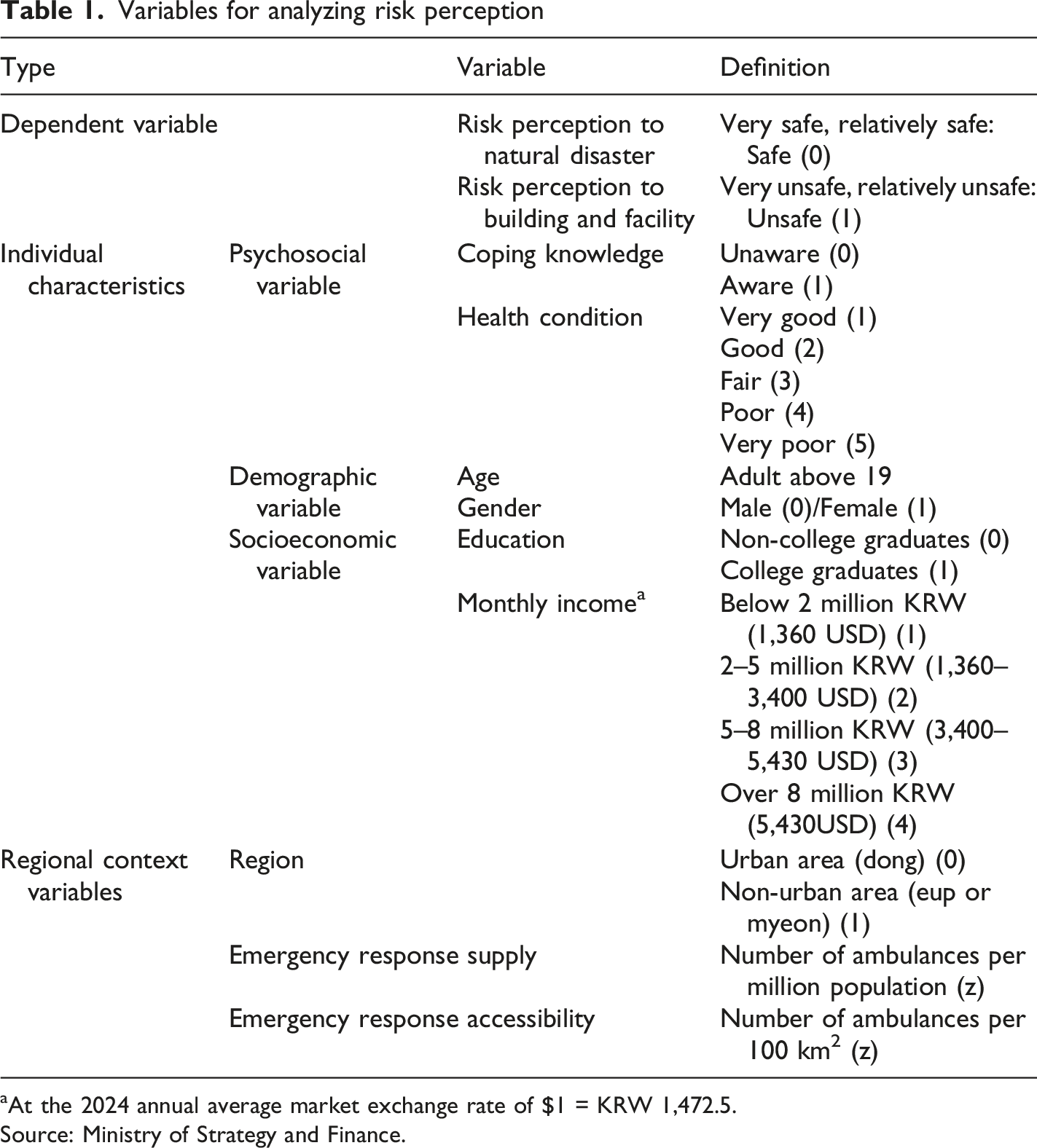
aAt the 2024 annual average market exchange rate of $1 = KRW 1,472.5.
Source: Ministry of Strategy and Finance.
The dependent variable was constructed based on survey questions regarding safety perception in various sectors. These questions cover 12 areas related to safety, including general social safety, national security, natural disasters, buildings and infrastructure, fire safety, food hygiene, food security, information security, personal data leaks, emerging diseases, and crime. Respondents were asked, “How safe do you think our society is [in terms of specific area]?” and could choose from five categories: (1) very safe, (2) relatively safe, (3) average, (4) relatively unsafe, and (5) very unsafe. Since this study aims to distinguish between natural disasters and man-made disasters, responses regarding “natural disasters” were used to assess perception of risk related to natural disasters, while responses regarding “buildings and infrastructure” were used to assess perception of risk related to man-made disasters. For both types of disasters, approximately 50 percent of the responses were “average,” while the proportions of “very safe” and “very unsafe” were relatively low, around 6 percent each. This resulted in an uneven distribution of responses, with most clustered around the “average” category. To facilitate a clearer analysis of risk perception, responses for “very safe” and “relatively safe” were combined into a category labeled “safe,” while “relatively unsafe” and “very unsafe” were grouped under “unsafe.” This allowed the dependent variable to be constructed in a binary form. The “average” category was excluded from the analysis to maintain a clear distinction between safe and unsafe perceptions. This allowed the dependent variable to be constructed as a binary outcome.
Given that risk perception is shaped by both individual characteristics and the regional environment, the independent variables were categorized into individual characteristics and regional context variables. Among the individual characteristics, psychosocial variables were included to assess coping capacity, specifically focusing on “knowledge of emergency response actions in disaster situations” and “self-reported health status.” Awareness of emergency response behaviors was originally measured on a four-point scale (very well aware/somewhat aware/not well aware/not aware at all). To more clearly capture the effect of coping capacity, responses were dichotomized into a binary variable: “aware” and “not aware.” Health status, reflecting individuals’ overall physical condition, was retained as a five-point scale variable, based on the assumption that perceived healthiness would be associated with differences in risk perception. According to Bandura's (1986) self-efficacy theory, physical condition is one of the key components shaping self-efficacy. On this basis, health status was included as an indicator of coping capacity. In addition, age and gender were included as demographic variables, while educational attainment, income level, and region were considered socioeconomic variables. These were used to identify population groups more sensitive to perceived risk. However, since responses were often missing for individuals under the age of 19, the analysis was conducted on adults aged 19 and older.
Regional context variables were constructed to reflect whether each respondent resided in an urban or non-urban area, as well as the level of emergency response capacity in terms of supply and accessibility. Urban and non-urban areas were distinguished to examine whether risk perception differs according to the scale and characteristics of the region. Based on the Korean administrative classification, districts (dong) were defined as urban areas and towns and villages (eup or myeon) as non-urban areas. Emergency response capacity was measured using the number of ambulances by province. As a component of emergency medical service (EMS) infrastructure, the number and accessibility of ambulances are commonly used indicators of regional disaster response capacity (Li et al. 2021a, 2021b; Zhu et al. 2021). Accordingly, this study defined the number of ambulances per one million population as response supply, and the number of ambulances per 100 km2 as response accessibility. Considering that most other variables in the model were dummy or categorical variables, these two variables were standardized using z-score normalization to ensure comparability of scale across variables.
To account for potential differences in major events or survey contexts across the period from 2018 to 2024, survey year fixed effects were included in the model. The purpose of including year effects is not to analyze temporal trends, but rather to control for year-specific heterogeneity in order to more accurately estimate the effects of individual and regional factors.
Result
Descriptive Statistics
While the main analysis focuses on four specific years—2018, 2020, 2022, and 2024—a broader trend analysis was conducted using a heatmap to examine changes in public risk perception over a longer period, covering the years from 2010 to 2024.
Figure 1 illustrates a heatmap of risk perceptions by age and period for two types of disasters: natural disasters and man-made disasters. Overall, except for the year 2014, the risk perception scores for natural disasters are generally higher than those mand-made disasters, with a notably elevated perception of man-made disasters risk in 2014. Natural disasters typically have clear and identifiable causes, whereas man-made disasters often occur in more complex forms with ambiguous origins (Coleman 2006). According to McDaniels et al. (1992), perceptions of well-defined disasters are influenced by personal experiences, but when disasters are less defined, factors such as levels of dread and perceived severity have a greater impact on risk perception. In South Korea, due to its geographic location and climatic characteristics, disasters like earthquakes and volcanic eruptions are rare. However, the country frequently experiences flood damage, typhoons, and heavy snowfall during winter months (Lee et al. 2017b). Statistics from the Ministry of the Interior and Safety indicate that over the past 12 years (2010–2022), an average of approximately 288 million USD in property damage has occurred annually due to natural disasters. Consequently, the level of risk perception for natural disasters does not show significant fluctuations over time but remains relatively consistent, likely due to the repeated annual experiences of such events. This consistent exposure may contribute to a generally higher risk perception for natural disasters compared to man-made disasters. Heatmap of risk perception by age and period.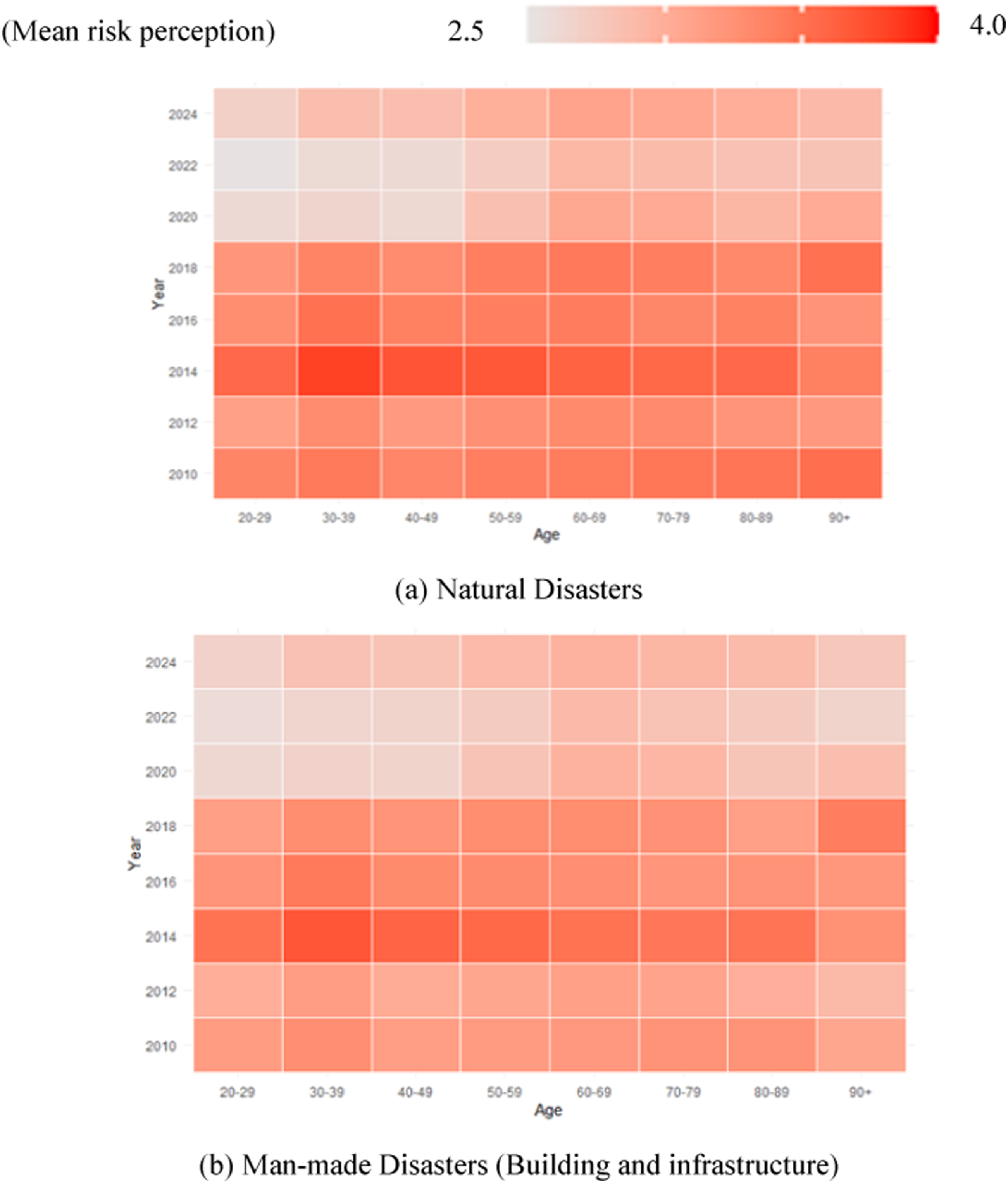
On the other hand, the perception of risk for man-made disasters was found to be particularly high from 2014 to 2018. This peak temporally coincides with a period characterized by a succession of major social and infrastructural disasters in South Korea. For instance, the tragic Sewol ferry accident in 2014 resulted in 299 deaths and profoundly impacting national sentiment regarding safety. Additionally, the collapse of the Gyeongju resort during a university freshman welcome event led to 10 deaths and affected 124 individuals, while the collapse of the Pangyo ventilation shaft caused 16 deaths and injured 11 others. In 2018, a burst hot water pipe in Goyang-si, Gyeonggi Province, disrupted heating services for approximately 2,800 households for about 10 hours, prompting discussions on the need for measures to address aging infrastructure. These high-profile incidents likely contributed to the elevated risk perception of man-made disasters during this period.
From 2020 to 2022, during the global COVID-19 pandemic, the risk perception levels for both types of disasters were lower than in other periods. It is hypothesized that the high severity and pervasive concerns over COVID-19 led the public to focus more on the pandemic, consequently paying less attention to other risks. This trend is consistent with findings by Bodas et al. (2022), which suggest that individuals tend to prioritize risks that significantly disrupt their daily lives.
Risk perception across age groups exhibits distinct patterns depending on the disaster type. For natural disasters, older age groups generally demonstrated higher levels of risk perception compared to their younger age groups. Older adults are often physically vulnerable and are reported to experience greater psychological impacts during natural disasters (Jia et al. 2010), which typically correlates with heightened perceived risk. Conversely, an alternative body of literature suggests that older adults residing in hazard-prone areas may actually underestimate risks due to an ‘optimistic bias’ fostered by long-term residence and strong place attachment (Seebauer and Winkler 2020). These contrasting perspectives highlight that age-related risk perception is not driven by a singular mechanism, but is instead shaped by a complex interplay of psychological, physical, and experiential factors. In contrast, for man-made disasters, younger age groups tended to report higher levels of risk perception. This may be explained by the prominence of human-caused disasters affecting individuals of similar age groups, as well as indirect exposure through digital media and social networks, which can induce vicarious trauma and heighten perceived risk (Blanchard et al. 2004).
Response ratio for each variable
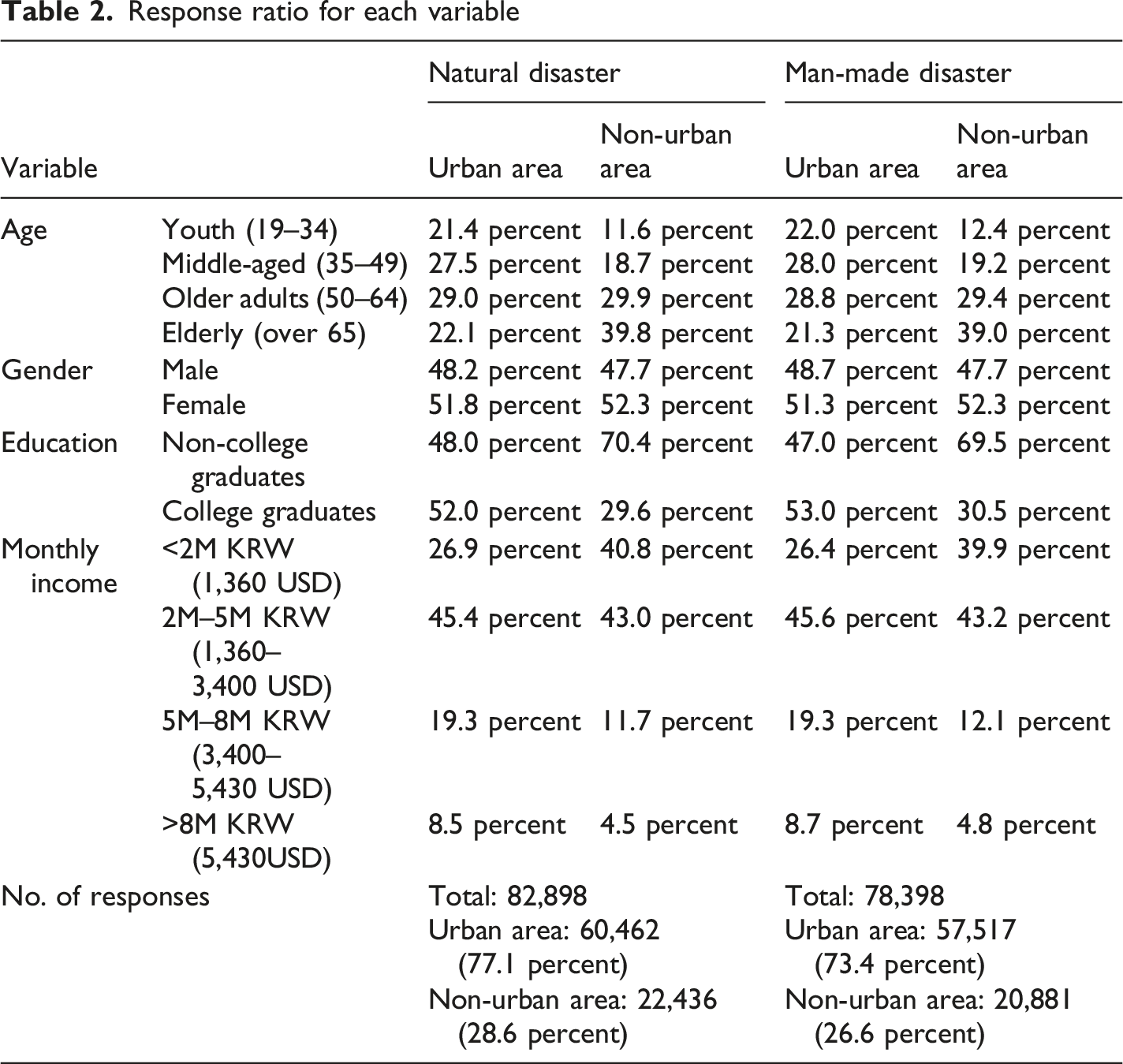
The response rate composition by region for each independent variable was found to be similar. In terms of age distribution in urban areas, the highest percentage was among middle-aged individuals (approximately 30 percent), followed by older adults, young adults, and the elderly. In non-urban areas, the highest percentage was among the elderly (about 38 percent), followed by older adults, middle-aged, and young adults. This indicates a higher proportion of older populations in non-urban areas compared to urban centers.
Regarding gender distribution, both urban and non-urban areas had a higher proportion of female respondents. For monthly household income, urban areas had a more even distribution, with households earning between 2 million and 5 million KRW (1,360–3,400 USD) accounting for about half of the respondents. In contrast, in non-urban areas, more than half of the households reported earning less than 2 million KRW (1,360 USD) per month. The proportion of households earning more than 5 million KRW (3,400USD) was twice as high in urban areas compared to non-urban areas.
These findings highlight socioeconomic disparities between regions. Non-urban areas had a lower proportion of younger age groups and a higher proportion of elderly individuals aged 65 and above, who are often considered socially vulnerable. Additionally, non-urban areas had a higher proportion of low-income households. These demographic and socioeconomic differences may influence risk perceptions and underscore the importance of considering regional characteristics in disaster risk management strategies.
Factors Influencing Risk Perception
Logistic model result for natural disaster
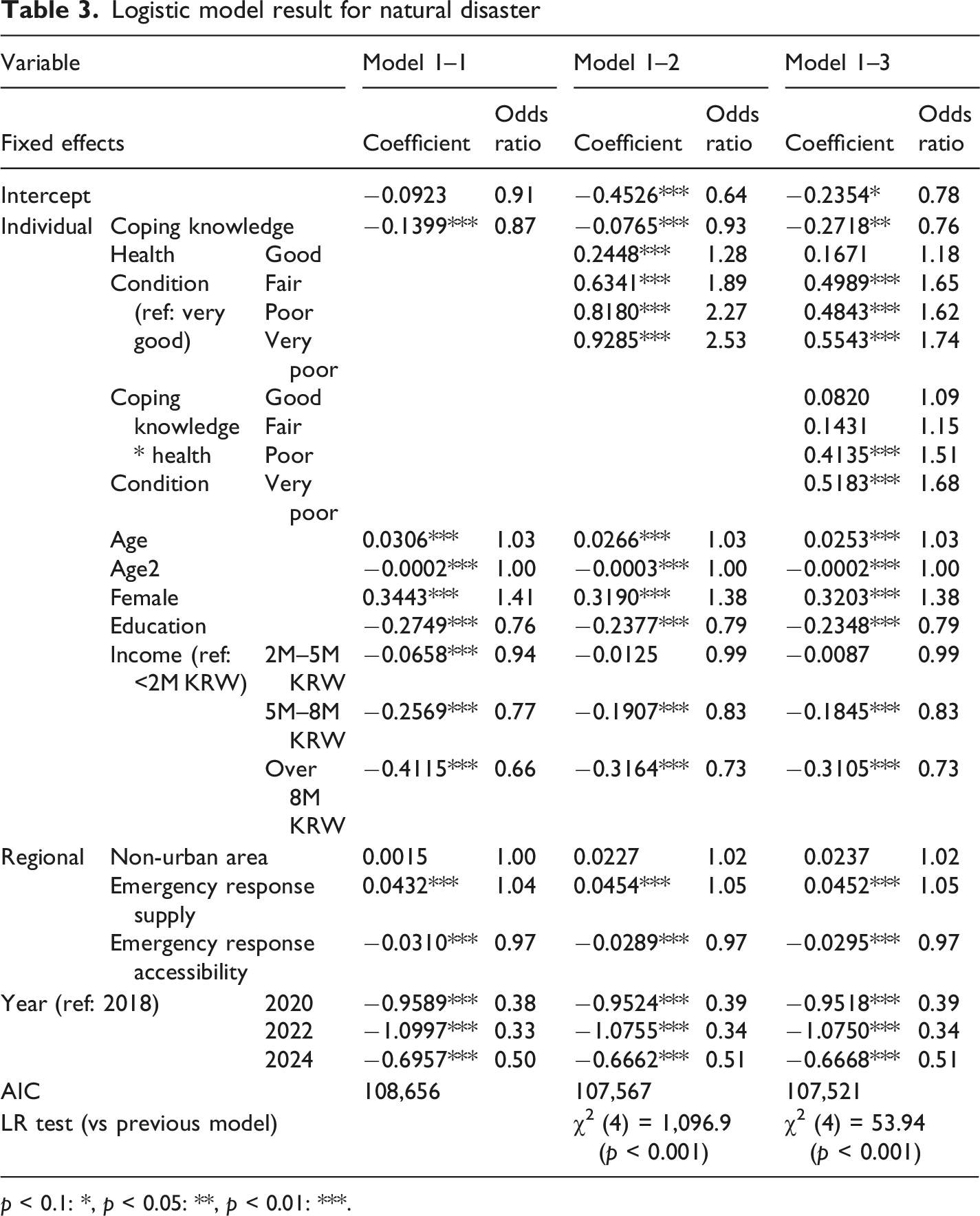
p < 0.1: *, p < 0.05: **, p < 0.01: ***.
First, among the individual characteristics, the key variable “coping knowledge” showed a statistically significant negative association with perceived risk. For respondents in the “very good” health category (reference group), awareness of appropriate emergency response measures was associated with 0.77 times lower odds of perceiving the situation as dangerous, compared to those lacking such knowledge. This finding supports theoretical arguments suggesting that knowledge mitigates fear associated with risk.
Regarding health condition, individuals in poorer health were more likely to perceive higher levels of risk. Poor physical and mental health conditions are associated with a tendency to perceive oneself as vulnerable due to insufficient preparedness for disasters (Li et al. 2024; Strine et al. 2013). Such psychological states have been identified as factors that further heighten risk perception, contributing to increased concerns not only about disasters but also about risks such as crime (Chadee et al. 2017; Jackson and Stafford 2009). Furthermore, the interaction term between coping knowledge and health condition revealed that the effect of coping knowledge varies depending on one’s physical health status. Compared to individuals who reported being in “very good” health, those who reported “poor” and “very poor” health had 1.51 and 1.67 times higher odds of perceiving risk, respectively. These findings suggest that while coping knowledge may reduce perceived risk among healthy individuals by reinforcing their sense of control, it may have the opposite effect among those in poor health. For the latter group, physical vulnerability may limit their ability to respond effectively, thereby heightening their perceived risk. According to Protection Motivation Theory (PMT), self-efficacy is considered a core component of the coping appraisal process, which motivates protective behavior. However, the present findings suggest that self-efficacy may also directly influence perceived risk itself. In particular, as suggested by Maddux and Rogers (1983) and Witte (1992), low self-efficacy leads to behavioral avoidance and sustained anxiety rather than proactive responses to risks. This finding indicates that among health-vulnerable groups, coping knowledge does not function as useful information but instead contributes to heightened anxiety when combined with perceived limitations in the ability to act.
Furthermore, individuals with poor health conditions often face severe physical limitations during actual hazard events, restricting their adaptive behaviors (Huang et al. 2025; Nguyen-Trung et al. 2025). As noted by Iwai (2024), risk response is shaped not only by spatial factors but also by physical capacity, where mobility constraints can critically hinder the process of translating risk awareness into protective action, particularly among older adults. When considering these psychological vulnerabilities and physical constraints together, it is important that policy interventions include targeted, physical support mechanisms designed to directly enhance the adaptive and evacuative capacity of health-vulnerable populations in risk situations. The differential effects of coping knowledge across health status categories are visualized in Figure 2 using a forest plot. Conditional effect of coping knowledge by health status (natural disaster).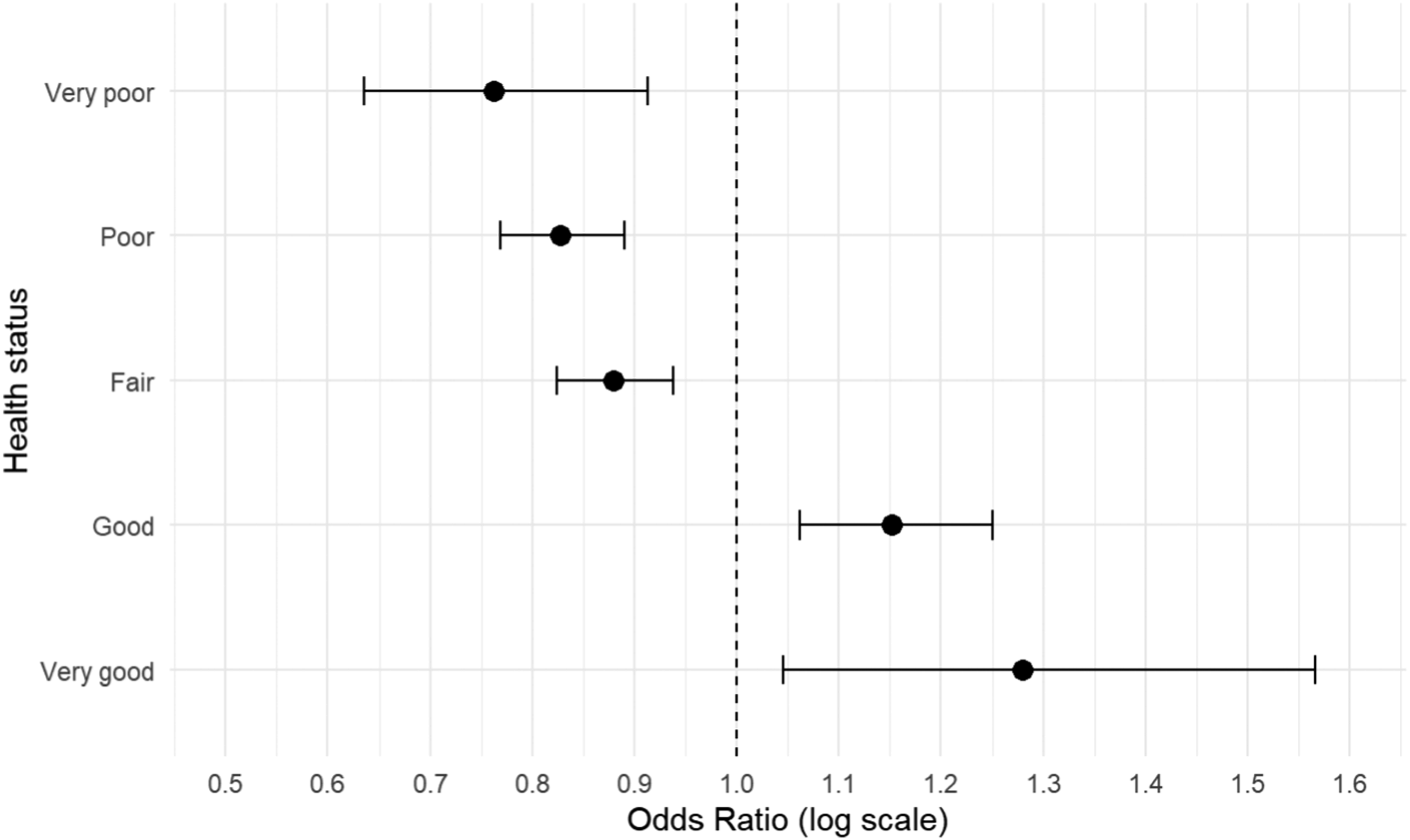
Among the demographic characteristics, age showed a significant positive effect, while age squared exhibited a significant negative effect at the 1 percent level. This indicates that risk perception of natural disasters follows a non-linear inverted U-shaped pattern, rather than a simple linear increase or decrease. Similar age-related patterns have been observed in various types of fear (Cicirelli 2006; Dillard et al. 2017; Moore and Shepherd 2007). According to these studies, young adults tend to perceive risks as less severe due to a sense of invulnerability. As individuals reach middle age, their level of fear increases, driven by growing health concerns and social responsibilities. In contrast, older adults may adopt a more avoidant or attenuated attitude toward fear, shaped by established health behaviors and life experiences. As discussed in the previous section, this downward trend in later life may also reflect an optimistic bias rooted in long-term place attachment, which buffers their perception of immediate environmental threats.
In addition, the odds ratio for females was estimated to be 1.38 times higher than that for males, indicating that women perceive natural disasters as more threatening than men do. The tendency of women to perceive higher levels of risk has also been consistently identified in previous studies. Khan et al. (2020) and Mizrak et al. (2021) explained that women generally report higher risk perception as they respond more strongly to feelings of fear and trust. Morioka (2015) interpreted this difference as being related to the social and cultural roles typically associated with men.
Individuals with a university degree or higher exhibited 0.79 times lower odds of perceiving natural disasters as dangerous compared to those with less than a university education. In terms of income, individuals with higher income levels were generally less likely to perceive risk. Specifically, those earning over 8 million KRW (5,430USD) per month had the lowest odds ratio, at 0.73, compared to low-income individuals earning less than 2 million KRW (1,360USD). Individuals with higher levels of education and income tend to exhibit higher risk perception regarding health risks, as they have greater access to health information and show more interest in health-related issues (Reed-Thryselius et al. 2022). However, in the case of natural disasters, their level of risk perception tends to be lower. This has been explained by their higher level of trust in government and a general tendency to worry less about risks (Morioka 2015), as well as their greater resilience to disaster impacts (Frankenberg et al. 2013). In particular, Frankenberg et al. (2013) emphasized that differences in personal resources and access to information create disparities across social groups, highlighting the need for support to reduce the vulnerability of groups with lower levels of resilience.
Among the regional context variables, place of residence was not significantly associated with risk perception. Although residents of non-urban areas had slightly higher estimated odds of perceiving natural disasters as threatening compared to urban residents (OR = 1.07), this effect was not statistically significant. Regarding emergency response capacity, response supply (the number of ambulances per population) showed a positive association with the likelihood of perceiving natural disasters as threatening, whereas response accessibility (the number of ambulances per unit area) showed a negative association. This contrast may reflect that the two indicators capture different dimensions of emergency response capacity. Supply per population represents the overall scale of response systems, while availability per area is more closely related to perceived accessibility and the likelihood of receiving timely assistance. In contrast, better accessibility to emergency response resources appears to reduce individuals’ anxiety and fear by increasing the perceived likelihood of receiving timely rescue and medical assistance during natural disasters. These findings suggest that accessibility to medical and rescue services, as well as the reliability of transportation and urban infrastructure during emergencies, can influence risk perception. Therefore, strengthening disaster response capacity through improved accessibility to emergency services is an important policy implication (Dvir et al. 2022; Gendeshmin et al. 2025; Vann et al. 2022).
Compared to the baseline year of 2018, perceived risk of natural disasters was lower in the subsequent survey years. This trend may be attributed to the heightened awareness of risks with direct impacts on daily life, such as the COVID-19 pandemic, which may have shifted public attention away from natural disaster risks (Bodas et al. 2022).
Logistic model result for man-made disaster
p < 0.1: *, p < 0.05: **, p < 0.01: ***.
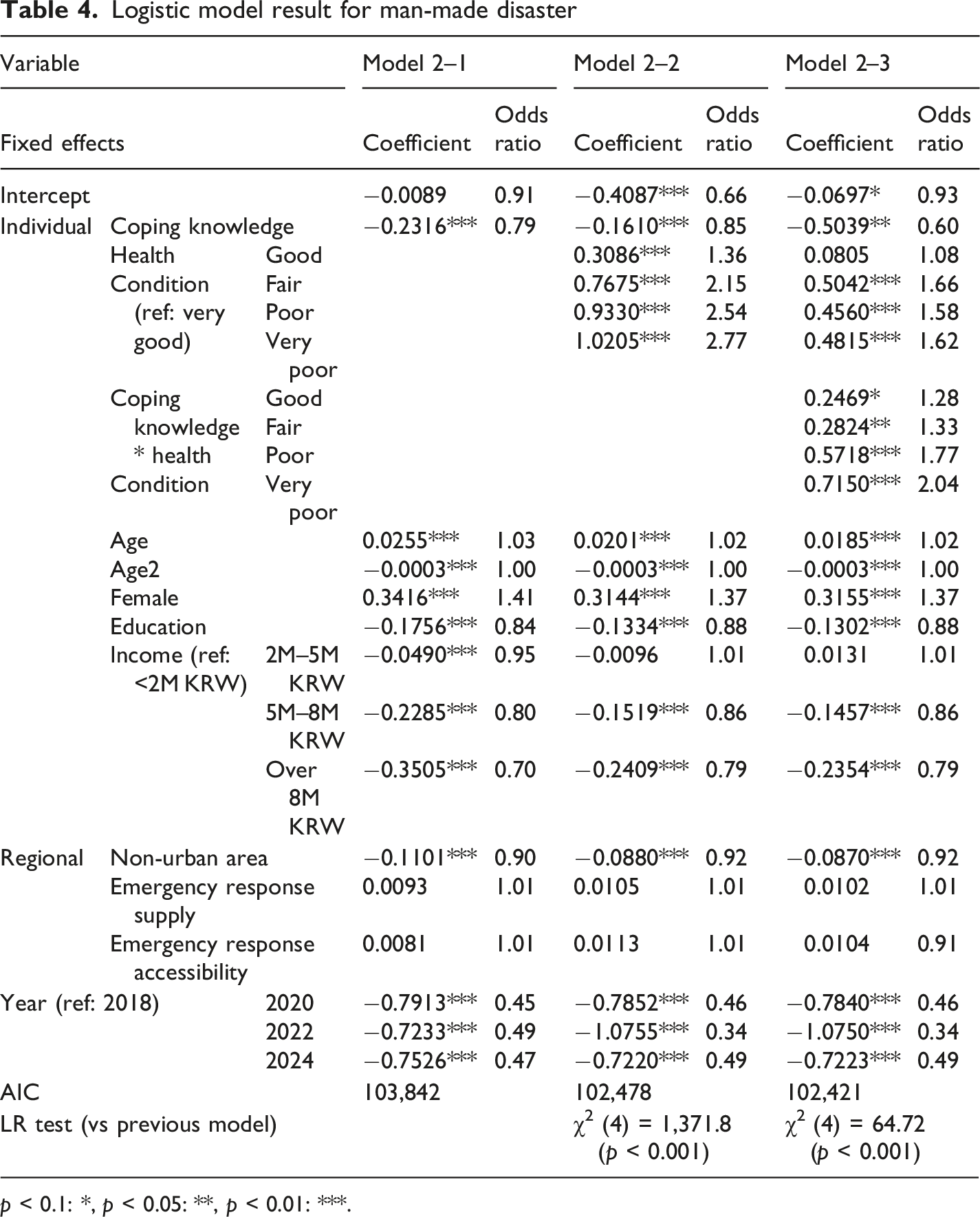
However, unlike in the case of natural disasters—where statistically significant differences appeared only among those reporting “poor” or “very poor” health—statistically significant effects were also observed for respondents in “good” and “fair” health categories in the context of man-made disasters. These differences in effects across health status categories are presented in the forest plot in Figure 3. Conditional effect of coping knowledge by health status (man-made disaster).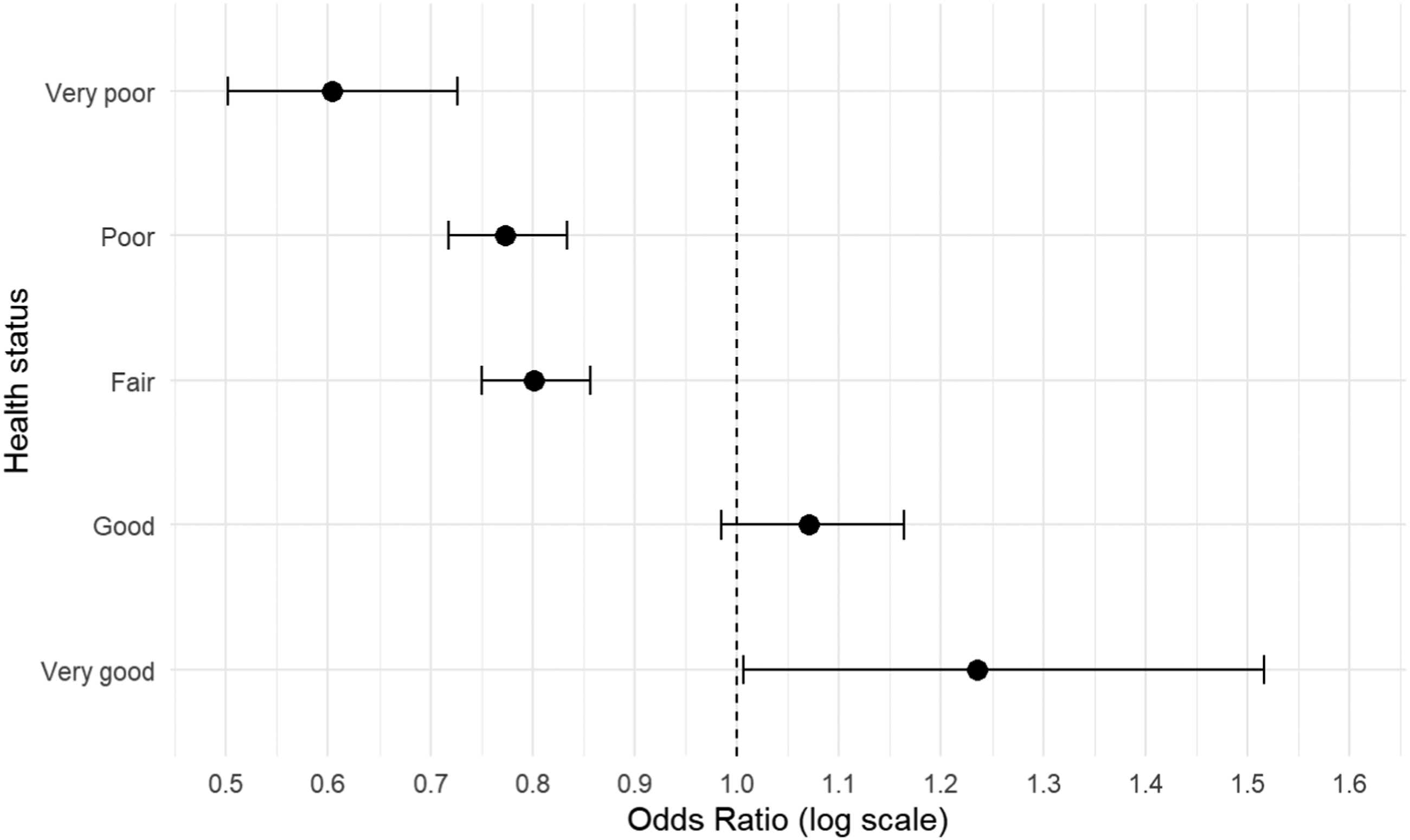
Women, individuals with lower educational attainment, and those in lower income brackets were more likely to perceive higher risk. Specifically, women had 1.37 times higher odds of perceiving man-made disasters as dangerous compared to men. Individuals with a university degree or higher showed 0.88 times lower odds of perceiving risk compared to those with less education. Income also had a negative association with risk perception, with those earning over 8 million KRW (5,430USD) per month showing the lowest odds ratio at 0.79, relative to those earning under 2 million KRW (1,360USD).
Unlike natural disasters, residents of non-urban areas were less likely to perceive man-made disasters as threatening, with an odds ratio of 0.93, suggesting that urban residents are more sensitive to man-made disaster risks. These results align with previous studies, including O’Neill et al. (2016), which highlight the influence of spatial proximity and exposure on risk perception. In summary, natural disasters are more often perceived as threatening by residents of non-urban areas due to greater exposure to natural hazards, while man-made disasters are viewed as more threatening in urban environments. Regarding regional emergency response capacity, unlike in the case of natural disasters, neither supply nor accessibility showed a statistically significant association with individuals’ perception of man-made disaster risk. These findings reflect the differences in the mechanisms of occurrence and perception between natural and man-made disasters, as discussed by Brun (1992). In the case of natural disasters, evaluations of the likelihood of rescue and survival are directly linked to risk perception. In contrast, for man-made disasters, perceptions of preventability and controllability tend to serve as more important criteria in risk judgment. Accordingly, the effect of regional EMS capacity, such as ambulance resources, was not observed in this study.
Marginal Effects of Disaster Coping Capacity
Marginal effects of coping knowledge on risk perception probability by health status
Note. Statistical significance is evaluated at α = 0.05 (two-tailed tests).
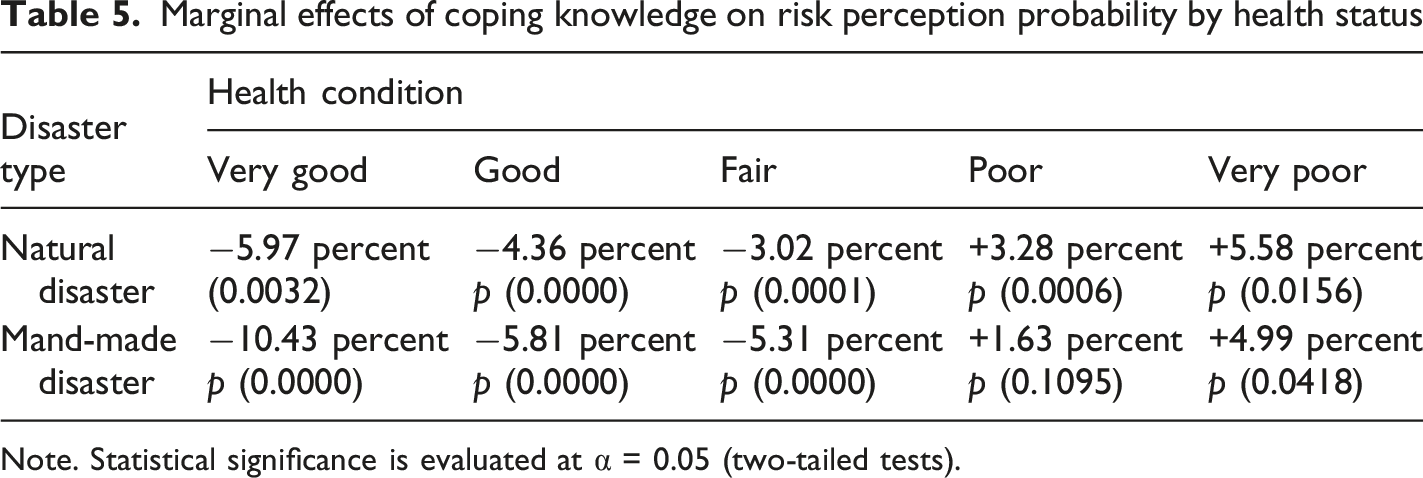
For natural disasters, a shift from “not aware” to “aware” of coping knowledge led to a decrease in the probability of risk perception by 5.84 percentage points for individuals in very good health, 4.2 percentage points for those in good health, and 2.89 percentage points for those in fair health. In contrast, for individuals in poor health, risk perception increased by 3.41 percentage points. These results suggest that while coping knowledge may reduce fear of natural disasters among those with moderate to excellent health, it can increase anxiety and perceived risk among individuals in poor health—likely due to diminished self-efficacy stemming from physical limitations.
In the case of man-made disasters, the transition from not being aware to being aware of coping knowledge reduced the probability of risk perception by 10.46 percentage points for individuals in very good health, 5.82 percentage points for those in good health, and 5.32 percentage points for those in fair health. For individuals in poor health, the effect was not statistically significant, whereas for those in very poor health, risk perception increased by 4.99 percentage points. Similar to the findings for natural disasters, coping knowledge reduced perceived risk among healthier individuals but had the opposite effect among those in poor health.
When comparing the two types of disasters, the effect of coping knowledge appears to be greater in the context of man-made disasters, particularly among individuals in good health. This can be attributed to the different nature and perceived controllability of the two disaster types. Natural disasters are typically seen as unavoidable forces of nature, where mitigation relies heavily on external interventions such as infrastructure. In contrast, man-made disasters often result from institutional failures, policy gaps, or violations of safety protocols, making them more preventable when individuals possess relevant knowledge and are aware of appropriate actions (Brun 1992; Tansel 1995).
Conclusion
Although interest in quality of life has increased following South Korea’s economic development, the country continues to report relatively low levels of life satisfaction compared to other advanced nations. Considering that a safe environment is a key component of quality of life, the increasing frequency of risk events underscores the need for more proactive efforts by national and local governments in the area of risk management. To enhance public satisfaction with related policies, it is essential to consider public acceptance, which requires a clear understanding of how people perceive risks. In light of these concerns, this study analyzes changes in risk perception and identifies the factors influencing such perceptions using data from Statistics Korea’s Social Survey. The goal is to examine key considerations for creating a safer environment. The findings are based on an analysis of both natural and man-made disasters, categorized in accordance with the Framework Act on the Management of Disasters and Safety, and are summarized as follows.
First, coping knowledge, defined as awareness of appropriate actions in response to hazardous situations, was found to reduce fear associated with risk perception. Second, individuals with poorer health conditions were more likely to perceive higher levels of risk. Moreover, since health status is one of the key components shaping self-efficacy, the effect of coping knowledge was shown to vary by health condition. Third, individuals considered socially vulnerable, such as women, those with lower educational attainment, and low-income groups, tended to perceive both types of disasters as more threatening. Fourth, although the overall patterns were largely consistent across both types of disasters, differences were observed in the magnitude of the coping knowledge effect among individuals in good health. In particular, coping knowledge had a stronger effect in reducing perceived risk of man-made disasters among healthy individuals. This suggests that differences in the causes and perceived controllability of natural and man-made disasters may influence how individuals interpret and respond to these risks. Fifth, among the regional emergency response capacity variables, accessibility was found to alleviate individuals’ anxiety and fear related to natural disaster risk, likely by increasing the perceived likelihood of rescue and survival during disaster events. Sixth, residents of non-urban areas perceived natural disasters as more threatening, whereas urban residents perceived greater risk from man-made disasters. This pattern reflects differences in exposure to risk factors shaped by regional environmental characteristics (O’Neill et al. 2016).
The significance of this study lies in its empirical examination of risk perception in relation to quality of life, approached through the perspectives of individual coping capacity and regional emergency response capacity, drawing on Protection Motivation Theory (PMT) and knowledge-based theories. The finding that coping knowledge reduces perceived risk underscores the importance of safety education in preparing individuals to respond effectively to hazardous situations. Kanakis and McShane (2016) and Azmi et al. (2021) reported that education and public campaigns aimed at enhancing self-efficacy play a critical role in improving preparedness for cyclones and floods, as well as strengthening community resilience. In addition, Fatmah (2022) found that flood response training significantly improved disaster management knowledge among families with older adults. These prior studies suggest that disaster preparedness education and knowledge accumulation extend beyond mere information provision; they may function as psychological mechanisms that enable individuals to perceive hazards as more controllable, thereby reducing fear. This interpretation is consistent with Cieslak et al. (2008), who demonstrated that coping self-efficacy mediates the relationship between negative cognitions and emotional distress. In this regard, coping capacity in disaster contexts may serve to regulate the tendency to interpret hazards as overwhelmingly threatening. However, since the effect of coping knowledge varies depending on health status, it is crucial to consider additional support measures for those in poor health, such as physical assistance during evacuation or mechanisms for requesting help in emergencies. Moreover, the development of coping capacity requires not only the possession of knowledge but also the self-efficacy to act on it. Therefore, continuous practice and simulation-based training or education that assumes real-life situations are essential to ensure individuals can effectively translate their knowledge into action. The finding that regional emergency response accessibility mitigates perceived risk of natural disasters suggests that risk perception is influenced not only by individuals’ knowledge and personal characteristics but also by the response capacity of the environments in which they live. This result also implies that improving accessibility is an important means of strengthening regional disaster response capacity. Zang et al. (2025) and Jin et al. (2025) emphasized that accessibility to community service facilities is a key factor in community disaster resilience, noting that prompt, effective, and precise responses to emergencies depend not merely on the number of facilities but on their accessibility. In line with these previous studies, the present study derives similar findings and contributes by demonstrating that regional response capacity plays an important role not only in terms of community resilience but also in shaping individual risk perception. In addition, safety systems should be prioritized according to regional risk characteristics to create environments where residents can live with a sense of security. In non-urban areas, disaster prevention infrastructure and response systems must be strengthened to address natural hazards such as floods and landslides. In contrast, urban areas require improvements in safety management systems to prevent man-made disasters, including structural collapses, traffic accidents, and fires. However, as Alves et al. (2025) emphasize, the efficacy of disaster risk management policies hinges not merely on their statutory existence, but on local financial capacity, implementation capability, and institutional coordination. Therefore, enhancing regional safety requires not only policy adoption but also strengthening the local institutional capacity to ensure their effective implementation.
Although regional characteristics are an important factor influencing the psychological process of risk perception beyond individual-level conditions, this study is limited in its ability to fully account for such characteristics due to data constraints. In the Social Survey, only province-level information for the 17 metropolitan cities and provinces (si/do) is available, and preliminary statistical examinations, including the intraclass correlation coefficient (ICC), indicated that regional differences at this broad level were insufficient to be meaningfully modeled. Accordingly, among the regional context variables, place of residence was classified only as urban or non-urban. In addition, emergency response capacity was measured using province-level statistics, which were applied to individuals based on their place of residence. If more detailed geographic information, such as at the level of 229 cities, counties, and districts (si/gun/gu), becomes available in future research, multilevel modeling could be employed to incorporate localized disaster incidence, response capacity, and other regional characteristics more precisely, thereby enabling more detailed discussions at the regional scale.
Footnotes

Consent for Publication
The authors hereby provide consent for publication.
Funding
The authors disclosed receipt of the following financial support for the research, authorship, and/or publication of this article: This work was supported by the Ministry of Education of the Republic of Korea and the National Research Foundation of Korea (NRF-2021S1A3A2A01087370).
Declaration of Conflicting Interests
The authors declared no potential conflicts of interest with respect to the research, authorship, and/or publication of this article.