






Abstract
Twice-exceptional learners exhibit both giftedness and disabilities, creating unique learning needs that have been increasingly studied in the gifted education field. Therefore, the goal of this systematic review was to synthesize research on twice-exceptionality, exploring participant demographics, identification and assessment practices, the masking effect, and study purposes. Findings revealed considerable demographic variability, as race/ethnicity and gender generally aligned with U.S. population distributions when adjusted for sample size. Most participants were identified as twice-exceptional by their schools rather than medical/psychological providers, with intelligence tests being the primary method for identifying giftedness. Although 60% of the studies discussed the masking effect, only 7% described how their identification procedures accounted for this effect. Most studies (n = 80%) described twice-exceptional learner characteristics and assessment options, whereas only 15% explored interventions. This review highlighted the need for future research to move beyond twice-exceptional characterization and toward practical strategies that support twice-exceptional students in educational settings.
Approximately 7.5 million U.S. students—15% of the U.S. student population—have one or more disabilities (National Center for Education Statistics [NCES], 2024), whereas about 6% of U.S. students are identified as gifted (NCES, 2022). Both groups have unique learning needs requiring specialized educational services, but identification can be complex. Among students with disabilities, an estimated 9% (approximately 675,000 students) may also be gifted, making them twice-exceptional learners (Barnard-Brak et al., 2015). These students may be identified with various disabilities while demonstrating giftedness in areas such as intelligence or creativity, potentially resulting in challenges in both assessment and identification.
These needs and challenges have been recognized in both research (e.g., Foley-Nicpon et al., 2013; Gierczyk & Hornby, 2021) and organizational statements and standards (e.g., Council for Exceptional Children [CEC], 2024; National Association for Gifted Children [NAGC], 2019), as they strive to support twice-exceptional learners. For example, CEC (2024) recently outlined professional preparation standards for educators who work with students who are gifted, emphasizing supporting students from diverse backgrounds, students with disabilities, and those who are twice exceptional. Yet, critical questions remain regarding the characteristics, assessment, and identification of twice-exceptional learners, who are a particularly unique population given their giftedness and disabilities. Although myriad individual studies have navigated these complex questions (e.g., Antshel, 2008; Atmaca & Baloğlu, 2022), no contemporary, comprehensive systematic reviews of the literature on twice-exceptional learners have been conducted. There are several prior reviews of the literature on twice-exceptional learners, like autism and giftedness (Gelbar et al., 2022) or twice-exceptional student experiences (Gierczyk & Hornby, 2021); however, there has not been a recent, comprehensive empirical review specific to identification in almost 15 years, since the review by Foley Nicpon et al. (2011).
The purpose of this study, therefore, was to conduct a comprehensive systematic review of empirical research studies on twice-exceptional learners to examine (a) the characteristics of twice-exceptional learners included in studies of twice-exceptionality, (b) the assessment and identification procedures used to identify learners as having a disability and as being gifted (and therefore twice-exceptional), (c) whether studies have considered the masking effect (i.e., disability or giftedness masking the other) in the study conceptualization and methodology, and (d) the study purpose. In the following sections, we present an overview of gifted identification, disability identification, and twice-exceptionality, with a focus on the U.S. context, given that much of the research, legislation, and organizational infrastructure to date has been centered in the United States.
Identifying Giftedness
Because there is no universally accepted or mandated definition of giftedness, states and school districts often define it differently. Giftedness is frequently described as potential that, within the right environment, develops into talent (Gagné, 2023; Gierczyk & Hornby, 2021). NAGC (2019) defined gifted students as those who perform—or have the potential to perform—at higher levels than their peers and who require modifications to their education to reach their potential. This definition further emphasizes that gifted students come from diverse backgrounds, require appropriate learning opportunities, and may also have disabilities requiring specialized support, making them twice-exceptional.
Despite NAGC’s definition, there are no federal mandates requiring states to identify or provide services to gifted students, and further, there are no federal regulations (i.e., laws) or guidelines regarding identification procedures, leaving complete responsibility to the states (Pereira et al., 2015). In many states, students may be identified as gifted in the areas of intelligence, academic achievement, creativity, leadership, and the arts (Hodges et al., 2018; Rinn et al., 2022). Although trends have shown a shift toward identifying other forms of giftedness (e.g., creativity), historically, most gifted identification procedures prioritized intelligence (McClain & Pfeiffer, 2012).
Research has expanded to examine various assessment methods for identifying gifted students. Gifted identification may involve both traditional (e.g., intelligence or academic testing) and nontraditional (e.g., rating scales and student work) assessments (Hodges et al., 2018). Experts have recommended multi-method approaches, incorporating checklists, behavior rating scales, student work, and standardized tests (Jung & Worrell, 2017). However, recent studies cautioned against overreliance on some data sources, particularly teacher rating scales, which may reflect teacher biases or variability more so than student abilities (Rambo-Hernandez et al., 2023). The complexity of defining and identifying giftedness continues to grow; still, given the unique learning needs of twice-exceptional students, it is essential to understand how these constructs and methods are applied to this population.
Identifying Disability
Compared to gifted assessment and identification, disability assessment and identification procedures are more standardized due to federal special education laws (i.e., Individuals with Disabilities Education Improvement Act [IDEA], 2004) and medical/psychological diagnostic criteria (e.g., Diagnostic and Statistical Manual of Mental Disorders (5th ed.), Text Revision [DSM-5-TR]; American Psychiatric Association [APA], 2022) outlining identification and diagnostic procedures. Under IDEA, students can be identified with one or more of 13 disability categories (e.g., autism spectrum disorder [ASD], other health impairment [OHI], specific learning disability [SLD]). In schools, the most frequently identified disabilities in children and youth include SLD, speech or language impairment, and OHI, which includes disorders such as attention-deficit/hyperactivity disorder (ADHD; NCES, 2024). Outside of schools, children and youth also may be diagnosed with a disorder (e.g., anxiety, depression) by a medical professional using diagnostic criteria under the DSM-5-TR, which functions separately from IDEA. Thus, although children may meet criteria for clinical diagnosis under the DSM-5-TR, they may not be identified with a disability in the school system and vice versa (Tannock, 2013).
When assessing functioning related to a possible disability, it is recommended to include multiple methods (direct and indirect), perspectives (parents, teachers, student), and modalities to determine individual strengths and needs (Benson et al., 2019). Although assessment procedures can vary, commonly used assessment procedures may include academic testing, intelligence testing, behavior rating scales, and observations (Harlen, 2007). Assessment procedures should align closely with the area of concern, resulting in potential assessment differences across disabilities (Koretz & Barton, 2004). This alignment ensures that assessments accurately capture the specific skills, abilities, and difficulties individuals may experience that are associated with the disability. For example, academic testing may focus on measuring subject-specific skills, whereas intelligence tests are used to assess cognitive abilities such as reasoning and problem solving (Mayer et al., 2014). Similarly, rating scales and observations are often tailored to observe and evaluate behavioral patterns and social interactions, which can vary widely depending on the nature of the disability being assessed (Staff et al., 2021). Thus, the diversity in assessment procedures reflects the need for tailored approaches that effectively address the unique characteristics and needs of individuals with disabilities. Yet, how such measures have been examined in research with students with disabilities and who are gifted is unclear. Given the relatively large number of disabilities and disorders represented in IDEA and the DSM-5-TR, understanding who (e.g., the characteristics of participants) has been included in studies of twice-exceptionality can help inform support services for those students, along with identifying needs for research on identification of students with disabilities for which there is limited research.
Identifying Twice-Exceptionality
Although many definitions of twice-exceptionality have been proposed, Reis et al. (2014) proposed the following operationalized definition that came from the Joint Committee on Twice-Exceptionality (2010): Twice-exceptional learners are students who demonstrate the potential for high achievement or creative productivity in one or more domains such as math, science, technology, the social arts, the visual, spatial, or performing arts or other areas of human productivity AND who manifest one or more disabilities as defined by federal or state eligibility criteria. These disabilities include specific learning disabilities; speech and language disorders; emotional/behavioral disorders; physical disabilities; Autism Spectrum Disorders (ASD); or other health impairments, such as Attention Deficit/Hyperactivity Disorder (ADHD). These disabilities and high abilities combine to produce a unique population of students who may fail to demonstrate either high academic performance or specific disabilities. Their gifts may mask their disabilities, and their disabilities may mask their gifts. (p. 222)
Gifted learners who are twice-exceptional may receive special education services in schools when they meet the eligibility criteria for a specific disability (Foley Nicpon & Teriba, 2022). Twice-exceptional learners present a unique combination of abilities, difficulties, and needs; yet a lack of policies addressing their need for specialized support (Foley Nicpon & Teriba, 2022) has contributed to their under-identification when compared to students who exhibit only one exceptionality (Gilman et al., 2013). One key factor in this under-identification is the variability in twice-exceptional learner profiles (Maddocks, 2020). Some may demonstrate average academic performance, particularly if they have high intellectual abilities, whereas others may exhibit below-average academic skills (Gilman et al., 2013).
To address the complexities of identifying twice-exceptional learners, researchers have examined a range of instruments and procedures tailored to specific twice-exceptional profiles or disabilities, such as high ability and ASD (Foley Nicpon et al., 2022; Michaelson et al., 2021), SLD (Maddocks, 2018), and ADHD (Gomez et al., 2019). Although an exhaustive review of all available tools and procedures is beyond the scope of this paper, several illustrative examples highlight common challenges and emerging practices. Standard screening tools, such as the Autism Spectrum Screening Questionnaire, have been shown to result in inconsistent identification of gifted autistic students (Cederberg et al., 2018). As a result, some have suggested the Autism Diagnostic Observation Schedule (ADOS) and the Autism Diagnostic Interview–Revised (ADI-R) as more reliable identification tools than traditional rating scales (Foley Nicpon et al., 2017). For gifted students with SLD, some researchers have emphasized the importance of identifying uneven ability/achievement profiles by closely analyzing subscale discrepancies (Foley‐Nicpon & Assouline, 2020; Maddocks, 2018), which requires administering both ability and achievement assessments, then comparing high-ability subtest scores with lower-than-expected academic/achievement performance. However, such ipsative profile analysis has been shown to have technical adequacy issues (Dombrowski et al., 2025; Kranzler et al., 2019; McGill & Busse., 2017; Miciak et al., 2016), potentially undermining conclusions drawn regarding twice-exceptional identification using such an approach (McCoach et al., 2001). Alternatively, progress monitoring using curriculum-based measures can be used to evaluate students’ need for both academic support and challenge (Robertson & Pfeiffer, 2016). Similarly, identifying gifted students with ADHD is complicated by behavioral profiles that may mirror those of average-ability peers with ADHD, including symptoms such as inattention, distractibility, impulsivity, and hyperactivity (Assouline & Whiteman, 2011). Yet, some gifted students with ADHD reported fewer symptoms than expected when compared to normative samples, further complicating diagnosis (Gomez et al., 2019).
Experts increasingly recommend using multiple measures to identify students as gifted with a disability (i.e., as twice-exceptional), including the use of rating scales and behavioral checklists (Morrison & Rizza, 2007); however, some caution is needed when interpreting teacher rating scales, as they may reflect teachers’ characteristics more so than that of the students (McCoach et al., 2024). Although individual studies have provided support for specific procedures and instruments, a comprehensive synthesis is lacking regarding how assessment tools are used to identify students as twice-exceptional because the last systematic review that explored identification tools was published in 2011 (Foley Nicpon et al., 2011). Therefore, a clear understanding of how these learners are assessed in research could help clarify existing practices, specify the populations to whom they apply, and guide future efforts to improve identification systems.
The Masking Effect
The complexity of twice-exceptional student identification is characterized by the masking effect, which describes the phenomenon of (a) giftedness “masking” the appearance or recognition of a disability, (b) a disability “masking” the appearance or recognition of giftedness, or (c) both giftedness and a disability masking one another (Lewandowski et al., 2006). As a result of the masking effect, it is hypothesized that the learner may not be appropriately identified as a twice-exceptional learner, because one initially identified exceptionality prevents the recognition and identification of the other (King, 2022). This masking can further complicate effective interventions, as it may lead educators to overlook the full range of a student’s abilities and challenges (Trail, 2022). Twice-exceptional learners whose disability or giftedness is masked by the other exceptionality may struggle for a prolonged period of time before the other exceptionality is identified (if at all), which can be detrimental to the learner’s academic and social-emotional well-being (Trail, 2022). Thus, many have purported that understanding and addressing the masking effect is crucial to provide appropriate support and opportunities for twice-exceptional learners, ensuring that both their exceptional talents and their specific learning needs are recognized and nurtured effectively (see Atmaca & Baloğlu, 2022; Foley Nicpon et al., 2011; Maddocks, 2020; Van Viersen et al., 2017). Although the masking effect has been frequently and widely discussed in twice-exceptionality literature, it is unclear how the masking effect has been empirically examined in twice-exceptional research.
Prior Reviews of Twice-Exceptional Learners
Previous scholarship of twice-exceptional learners examined their characteristics, identification procedures, and assessment approaches for several disability categories (see Amran & Abd Majid, 2019; Beckmann & Minnaert, 2018; Desvaux et al., 2024; Gelbar et al., 2022; Gierczyk & Hornby, 2021; Foley Nicpon et al., 2011; Kranz et al., 2024; Villanueva & Huber, 2019; Yilmaz-Yenioglu & Melekoğlu, 2021). Review findings suggested a lack of consensus regarding the definition of twice-exceptionality (Villanueva & Huber, 2019); differences in twice-exceptional learner experiences across disability type (Gierczyk & Hornby, 2021); disagreement about identification procedures (Foley Nicpon et al., 2011); and a need to (a) include learning strategies for twice-exceptional learners, (b) use a strength-based approach when intervening, and (c) provide support to address social impairments (Amran & Abd Majid, 2019). However, the findings and conclusions drawn from prior reviews are limited due to focus on only specific disabilities (e.g., reading disabilities and SLD); teacher and student perceptions; understanding of identification and assessment procedures; and characteristics of twice-exceptional learners. Thus, a comprehensive review of scholarship examining identification and assessment procedures with twice-exceptional learners is needed.
Study Purpose
The purpose of this systematic review, therefore, was to offer a comprehensive empirical examination of identification and assessment practices in studies with participants who were twice exceptional and to examine how the masking effect was conceptualized and methodologically examined within the identified studies. The following research questions guided the study: (1) What are study participants’ demographic characteristics and disabilities in studies of twice-exceptionality? (2) What are the most common identification resources and assessment measures used to identify learners as gifted and with disabilities? (3) To what extent do studies consider the masking effect in the study’s conceptualization and method? (4) What is the purpose of studies of twice-exceptionality?
Method
We conducted a systematic review of the literature in accordance with PRISMA guidelines (Page et al., 2021). We conducted a comprehensive search of the literature, applied inclusion and exclusion criteria consistent with the study purpose, and applied a systematic coding system to examine studies with twice-exceptional learners.
Search Procedures
Databases searches included PsycInfo, ERIC (through EBSCO), and Web of Science to identify studies related to twice-exceptionality in PK–12 settings. We included studies up until 2023 (study commencement) and did not set a start date for the inclusion of studies. We used the following search terms: “twice exception*” OR “dual exception*” OR “gifted” AND “disability” AND “education” AND “student.” This initial search yielded 2,366 studies across the PsycInfo (1,487 studies), ERIC (738 studies), and Web of Science (141 studies) databases. There were 535 duplicates across the databases, which were removed, resulting in 1,831 unique studies.
Inclusion and Exclusion Procedures
Our inclusion criteria were as follows: (1) Study focused on twice-exceptionality (i.e., participants were identified as or evaluated for both gifted and disabilities). (2) Participants were in grades PK–12. (3) The study was empirical and reported original research. (4) The study was published in a peer-reviewed journal or a dissertation/thesis. (5) The study was written in English.
The first author (associate professor, school psychology) trained two graduate students on the inclusion criteria during a one-hour training session. During the session, we reviewed the criteria and practiced applying the criteria to one study together and to an additional study independently. Following the training session, the two graduate students independently reviewed five studies for possible inclusion, with a priori criteria of 90% agreement needed to complete independent inclusion decisions for all studies. Initial inclusion review resulted in 80% agreement. The first author and two graduate students reviewed disagreements and the inclusion and exclusion criteria. The two graduate students then independently reviewed five additional studies for possible inclusion, resulting in 100% agreement.
The two graduate students independently screened all titles and abstracts of the studies for inclusion (96.80% agreement). They discussed all discrepancies with the first author until consensus was reached. A total of 1,317 studies were excluded based on title and abstract screening. The two graduate students then independently reviewed the full text of 513 studies for possible inclusion (92.09% agreement). The two graduate students discussed discrepancies with the first author until reaching consensus for each study. A total of 118 studies were included in the review (see Supplemental Table 1 for a list of references). The PRISMA flow diagram outlines the search and inclusion and exclusion process, including reasons for exclusion (see Figure 1). PRISMA Figure of Search and Study Inclusion Process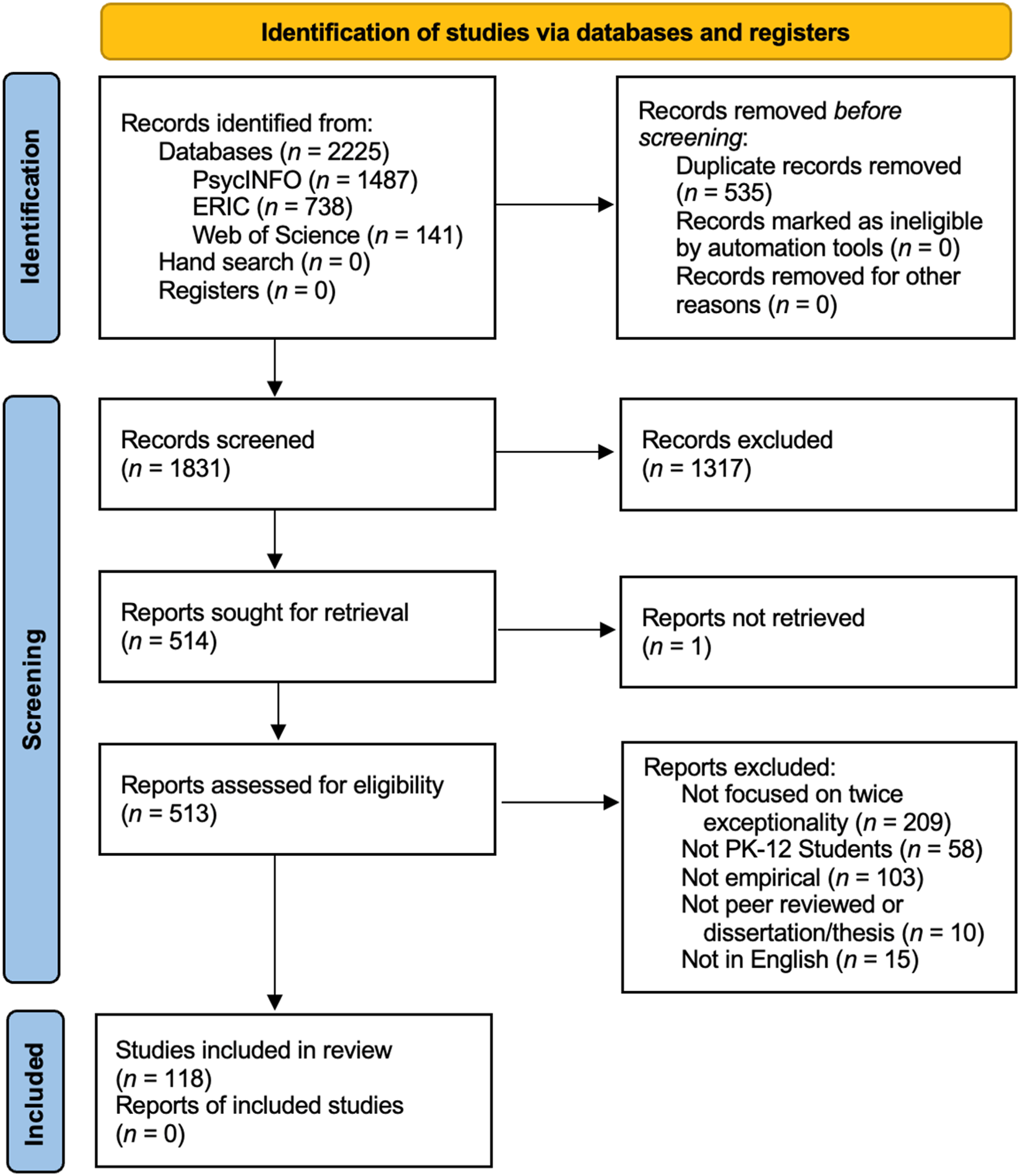
Coding Procedures
The first, third, and fourth authors developed a comprehensive codebook with 50 variables of interest (see Supplemental Table 2) aligned with the research questions and identified gaps in the literature. The codebook was developed to capture the conceptualization of twice-exceptionality (i.e., components of giftedness and disability), along with masking and included study purposes. We developed the variables through an iterative process, initially drafting variables, variable descriptions, and codes aligned with each of the research questions. Finally, we revised our variable descriptions and codes through discussion and practice coding.
Variables were primarily forced-choice or quantitative. Forced-choice variables required coders to select a code that best captured the information in the study, whereas quantitative variables required coders to write in quantitative information from the study (e.g., percentage of individuals identified with a disability). The variables were organized into six broad categories, including (a) study information, (b) participant demographic information, (c) gifted and disability identification, (d) gifted and disability assessment, (e) masking effect information, and (f) research purpose. Study information included six variables (e.g., author, year of publication, and study title). Participant demographic information included 10 forced-choice variables (e.g., age, grade, race, ethnicity, disability type). Gifted and disability identification included 11 dichotomous (yes or no) forced-choice variables (e.g., medical disability identification, school gifted identification, and school disability identification). Gifted and disability assessment included 19 forced-choice and quantitative variables (e.g., use of IQ assessment for giftedness, percentage of students identified as gifted based on high achievement). Masking effect information included two variables, “general masking effect discussion” and “accounted for masking effect in study methodology.” The “general masking effect discussion” was a dichotomous variable (yes or no) that was coded “yes” if studies mentioned the masking effect anywhere in the study such as in the introduction when discussing research on twice-exceptionality. The “accounted for masking effect in study methodology” variable was categorical (yes, no, or unclear based on information provided) and was operationalized based on whether studies allowed for participants to achieve at grade level or in the average range and be identified with a disability or as gifted. For example, if participating students were twice-exceptional and performed in the average range on a standardized achievement test but had an IQ score of 130 (well above average), they could still be identified as having SLD and as being gifted. Research purpose included two forced-choice variables (i.e., study purpose, methodological approach).
The first author trained the two graduate students on the codebook during a two-hour training session. The team determined that the graduate student coders would need to reach 90% coding agreement during practice coding before independently completing coding for the review. The graduate students independently coded three studies for practice, which resulted in 85.25% agreement. The first author reviewed the codebook and coding disagreements with the two coders and clarified language in the codebook in response to coding inaccuracies. The graduate students then independently coded three more studies, resulting in 93.50% coding agreement. The graduate students then independently coded approximately 75% of the 118 studies so that 50% of all studies were coded twice. Initial coding agreement was 89.27%. The first author then served as a third coder for all discrepancies, including a review of all studies that were not initially double coded. The three coders reviewed discrepancies until consensus was reached.
Analytical Procedures
The research questions were analyzed descriptively. For RQ1 (characteristics of twice-exceptionality research participants), we calculated means and standard deviations (SDs) using two different approaches: (a) study percentage mean (SPM) and (b) participant mean (PM). The SPM was calculated using the percentages reported in the studies, which gives equal weight to small studies as large studies. For example, if Study A reported 25% girls (n = 25) and 75% boys (n = 75), and Study B reported 100% girls (N = 10), the mean percentage of girls across studies would be 62.50% girls and 37.50% boys. However, some studies included a small number of participants from only one demographic group (e.g., 10 girls), which could skew the SPM. Thus, we also calculated PM by using the raw number of participants. We totaled the number of participants of various demographic backgrounds across all studies and divided by the total number of participants for all studies to recalculate the mean and SD for participant gender, race, ethnicity, and English Learner (EL) status. Using the above example, when calculating the PMs, we would first add 25 females (Study A) + 10 girls (Study B) and 75 boys (Study A) + 0 boys (Study B) for a total of 35 girls, 75 boys, and 110 participants total. To calculate the percentage of girls, we would divide 35 by 110 for 31.82%, and for the percentage of boys, we would divide 75 by 110 for 68.18%. All other descriptive statistics are reported in terms of frequency counts and percentages.
Results
RQ1: Participant Characteristics
Participant characteristics included (a) demographics and (b) disabilities. We first investigated the frequency with which studies reported participant characteristic information to contextualize the information reported. For demographic information, we report information for all studies and studies conducted in the U.S. Most studies reported information on participant age (n = 83, 70.34%), gender (n = 99, 83.90%), grade (n = 90, 76.27%), and disability (n = 112, 94.92%). Fewer studies reported information on race (n = 49, 41.53%), ethnicity (n = 31, 26.27%), and EL status (n = 9, 7.63%). Of the studies conducted in the U.S., 57.32% (n = 47) reported age, 77.61% reported gender (n = 52), 52.44% reported race (n = 43), 34.14% (n = 28) reported ethnicity, and 10.98% (n = 9) reported EL status.
Participant Characteristics
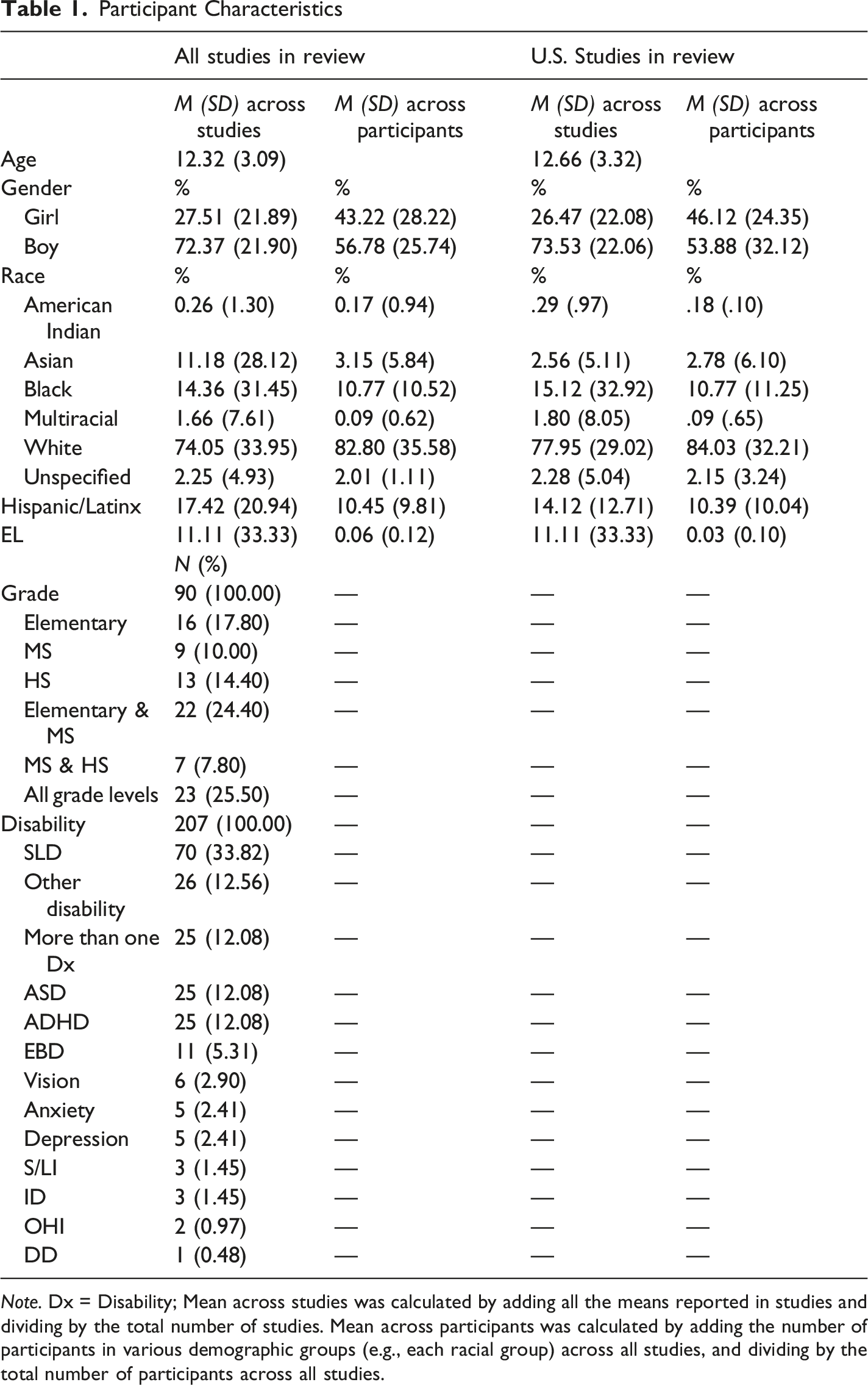
Note. Dx = Disability; Mean across studies was calculated by adding all the means reported in studies and dividing by the total number of studies. Mean across participants was calculated by adding the number of participants in various demographic groups (e.g., each racial group) across all studies, and dividing by the total number of participants across all studies.
RQ2: Assessment Processes
Assessment Procedures
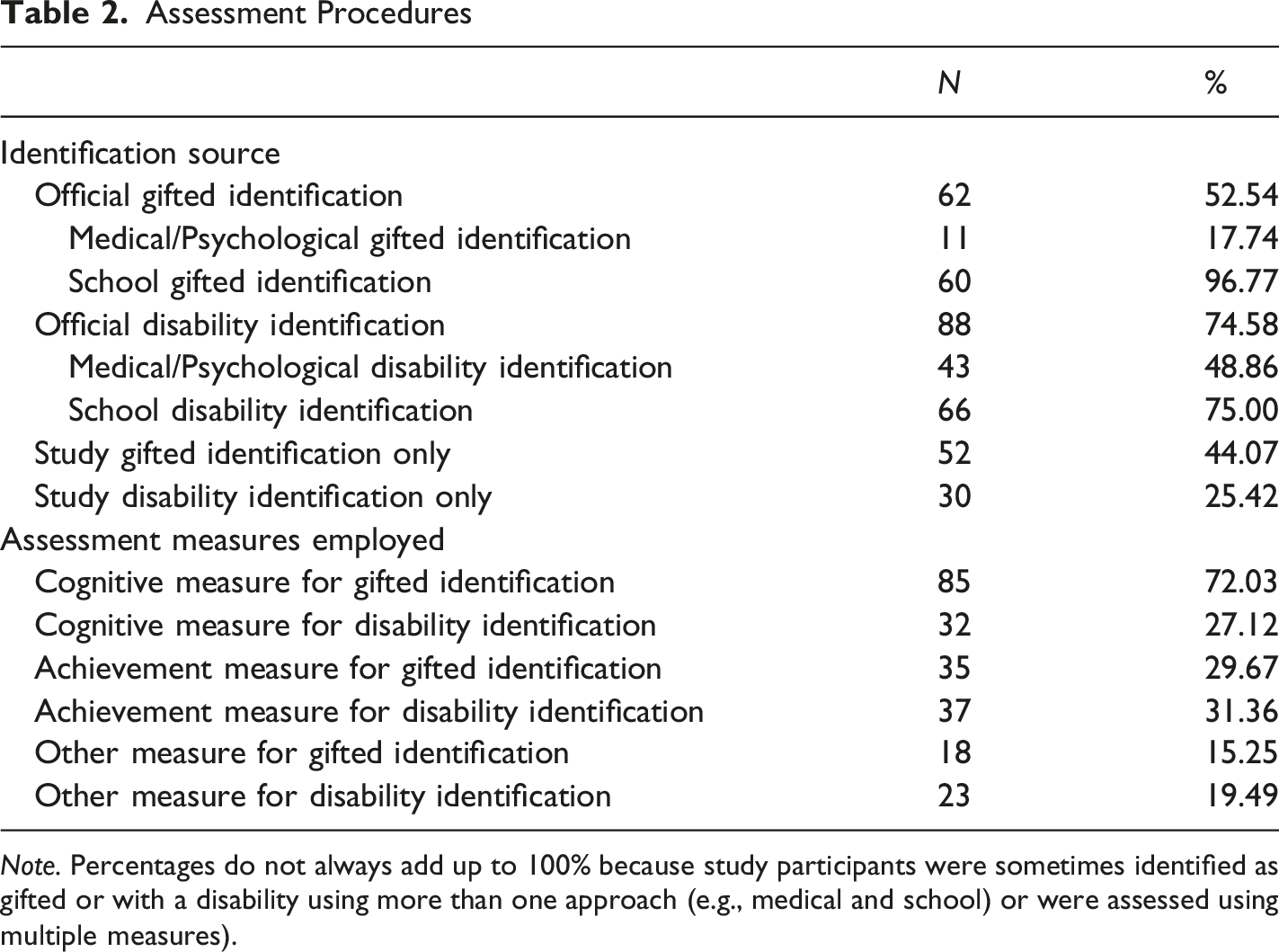
Note. Percentages do not always add up to 100% because study participants were sometimes identified as gifted or with a disability using more than one approach (e.g., medical and school) or were assessed using multiple measures).
Masking Effect in Studies of Twice-Exceptionality
RQ3 examined the extent to which studies discussed the masking effect in their study conceptualization or study methodology. Most studies (61.86%) discussed the masking effect (e.g., literature review and discussion). However, far fewer studies accounted for the masking effect in their study methodology (i.e., allowed for student performance in the average range or at grade level). Only 7.63% of studies clearly accounted for the masking effect in their methodology, and 20.34% of studies possibly accounted for the masking effect, but a lack of clarity in study methodology precluded understanding of the procedures.
Purpose of Studies of Twice-Exceptionality
RQ4 examined the purpose of identified twice-exceptionality studies. Most studies described the characteristics of twice-exceptional learners (n = 51, 43.22%) or participants’ lived experiences (n = 31, 25.27%). Fewer studies included an intervention (n = 18, 15.25%) or assessment (n = 11, 9.32%) with twice-exceptional learners. An additional seven studies (5.93%) had a different study purpose not captured by our coding system (coded “other”).
Discussion
Students who are twice-exceptional have unique learning needs. Yet, their characteristics and how studies of twice-exceptionality assessment were largely unclear. The purpose of this study, therefore, was to systematically review studies with participants who were twice-exceptional to better understand (a) demographic characteristics of participants who were twice-exceptional, (b) how twice-exceptional learners were identified as gifted and as having a disability, (c) how studies considered the masking effect in their study conceptualization and methodology, and (d) twice-exceptionality study purposes.
Across the studies that reported participant demographic information, most participants were boys and White (based on SPMs), although gender and racial composition more closely reflected the U.S. population when calculated across participants (i.e., PMs). Most studies included elementary and middle school participants, with a mean age of 12.32 years old. SLD was overwhelmingly the most common disability with which participants were identified. Further, participants were most likely identified as gifted and as having a disability by their school. Interestingly, intellectual assessments were overwhelmingly the most common measure used to identify giftedness. Although more than half of studies discussed the masking effect as a consideration for identifying students who are twice-exceptional, very few systematically accounted for the masking effect in their study methodology.
Expanding the Scope With Additional Exceptionalities
Understanding participant characteristics is crucial for assessing the state of the field—not only in terms of what is known and unknown, but also to identify which characteristics have been prioritized. Given prevalence rates of disability identification (NCES, 2024), we might expect a higher proportion of boys than girls in the included studies; yet deliberate efforts appear to have been made to ensure both boys and girls were represented (i.e., PMs). Some studies even focused exclusively on girls (e.g., Fugate & Gentry, 2016). Interestingly, the racial composition of these studies closely mirrored that of the general U.S. population (U.S. Census Bureau, 2022), although the representation of Asian participants was slightly lower than in the gifted program population. The studies also showed a relatively even distribution across grade levels, indicating that research is not concentrated in any one specific grade.
Comparing Research Shifts in Disability Foci
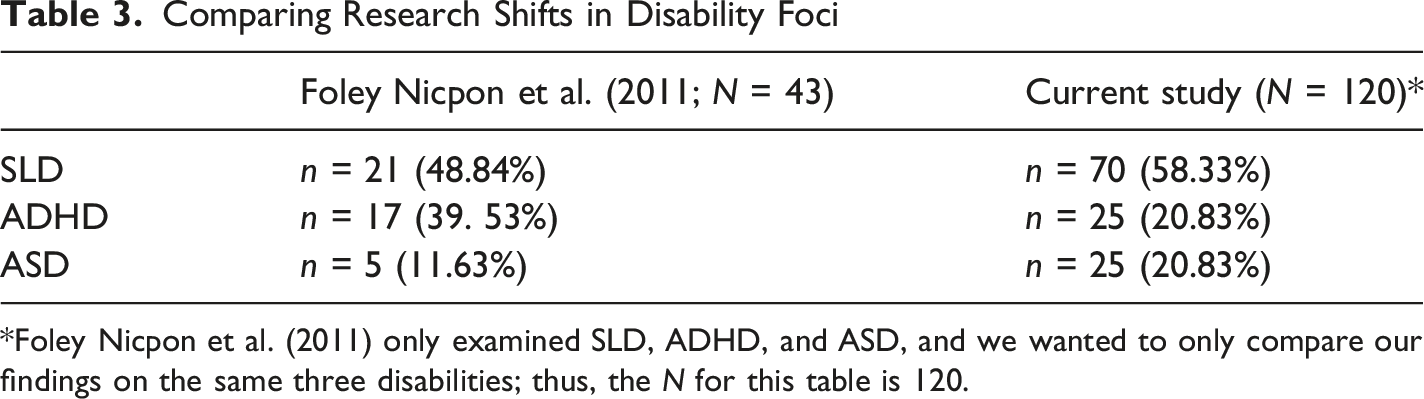
*Foley Nicpon et al. (2011) only examined SLD, ADHD, and ASD, and we wanted to only compare our findings on the same three disabilities; thus, the N for this table is 120.
To our knowledge, this study is the first systematic review to examine the identification of all disabilities within twice-exceptionality, so we do not have additional data to compare prevalence shifts across all disabilities. Notably, we observed the emergence of additional disabilities/disorders in the literature, such as anxiety and depression. These are particularly significant given their rising prevalence after the COVID-19 pandemic (Hawes et al., 2022). Still, only four studies in this review addressed anxiety, and likewise, only four studies focused on depression, as most studies included participants with school-identified disabilities (anxiety and depression are medical diagnoses and not served directly by schools). However, rates of severe anxiety and depression among students have reached unprecedented levels—with anxiety disorder estimates ranging from 5% (World Health Organization, 2004) to 15% (Centers for Disease Control, 2024a), with a likely increased prevalence during the COVID-19 pandemic. About 10% of students are diagnosed with depression (Centers for Disease Control, 2024b), with 20% of adolescents having experienced a major depressive episode within a year (Substance Abuse and Mental Health Services Administration, 2022). Although there is no consistent evidence suggesting these disorders are more prevalent in gifted students when compared with the general population, it is likely that anxiety and depression occur at similar rates within gifted and nongifted students (Duplenne et al., 2024). Additional research on how these disorders may interact with gifted identification is needed, considering the characteristics of the disorders (e.g., amotivation, difficulty processing, and interference with cognitive resources) could impact the assessment and identification process. Moreover, we strongly recommend further research to explore how to best support gifted students with mental health disorders as untreated mental health conditions can have potentially severe consequences.
Using Identification Methods to Reveal Twice-Exceptional Conceptualizations
Understanding the methods used to identify students as gifted, including both the sources (i.e., who identifies) and measures, illuminates (a) how studies define and operationalize twice-exceptionality and (b) types of services students may receive. Regarding the identification source, only 53% of studies included participants who had official gifted identification (i.e., through school or medical/psychological provider), whereas 75% of studies included participants with an official disability identification. This discrepancy could exist for multiple reasons. First, disability identification could have been the prerequisite for study participation, with the gifted identification completed as part of the study purpose (e.g., Cadenas et al., 2020). Second, disagreement in the field of gifted education about identification has led to varied and inconsistent identification approaches (Hodges et al., 2018). Further, around half of the studies relied on school-based gifted identification, which has both advantages and limitations. On one hand, school systems often use formalized processes, and students in these studies may have a higher likelihood of receiving services. On the other hand, identification processes can differ widely among schools and districts (Maki & Adams, 2020), potentially leading to inconsistent gifted and disability identification, especially for students from minoritized backgrounds (Peters & Engerrand, 2016).
Studies used different measures to identify twice-exceptional learners. Seventy-two percent of studies used intellectual measures for gifted identification, which implicitly communicates how researchers conceptualize giftedness. Multiple paradigms of giftedness have been proposed. For example, Dai and Chen (2013) conceptualized (a) the whole child paradigm, which defines giftedness as innate and domain-general; (b) the talent development paradigm, which views giftedness as achievement-based, domain-specific, and malleable; and finally (c) the differentiation paradigm, which presents giftedness as contextually dependent, needs-based, and also malleable. Historically, the field has been strongly rooted in the whole child paradigm, largely influenced by Terman’s (1926) philosophy and his use of IQ testing.
Despite calls to shift toward talent development and differentiation models, our findings showed that most studies (72%) continued to rely on intelligence assessments, indicating continued adherence to the whole child model, which may have two unintended consequences. First, students with specific talents (e.g., creativity, particular domain) are not likely to be included within this research corpus, which may be a large proportion of twice-exceptional students. Specifically, many students’ giftedness may go unrecognized if intelligence tests are used as the primary metric for identifying giftedness because they are not designed to identify creativity, leadership, or even domain-specific giftedness (Guignard et al., 2016). Second, unlike the talent development and differentiation paradigms, the whole child paradigm does not recognize the need for and importance of environmental support for students’ giftedness to continue to grow and develop. Philosophically, the field has disagreed with this assumption (e.g., Gagné, 2023); however, in practice, using a single intelligence test score to identify giftedness neglects the importance of environmental factors, which further communicates giftedness is innate.
Acknowledging and Accounting for the Masking Effect
Across theoretical and empirical research, authors consistently discuss the consequences of the masking effect—when a disability hides the student’s giftedness or when giftedness hides the disability or when neither the giftedness nor disability can be identified (e.g., Atmaca & Baloğlu, 2022; Foley Nicpon & Lin, 2022). In our review, more than 60% of the studies discussed the masking effect and its likely deleterious effects, which can result in students not receiving support services. Despite frequent inclusion of the masking effect in the literature, operationalizing this proposed phenomenon in the literature can be challenging. For this review, we considered whether individuals who presented as average achievers participated in the included studies, as only 7% of studies explicitly accounted for this possibility in the identification methods.
These findings highlighted a central tension in the field: although masking is widely acknowledged as a barrier to accurate identification (Atmaca & Baloğlu, 2022; Foley Nicpon et al., 2011; Maddocks, 2020; Van Viersen et al., 2017), the empirical examination of masking is less prevalent. This inconsistency raises important questions about how researchers’ assumptions about masking inform the design of twice-exceptional studies, influence the interpretation of findings, and impact future research, educational practice, and policy. Furthermore, consideration of alternative frameworks—such as strength-based or neurodiversity-affirming models—might better address the complexities of twice-exceptionality by reducing the reliance on deficit-driven identification models.
The Masking Effect in Research
Within twice-exceptional research, it is difficult to account for the masking effect when, by definition, one condition is hiding the other. This concept may make intuitive sense, but if a disability or giftedness is masked, how do we empirically know it exists? Moreover, “unmasking” disability or giftedness is an inherently reactive approach in which a student’s giftedness or disabilities have not been adequately addressed. Although requiring official identification in both giftedness and disabilities makes for a cleaner, more defensible study, it also limits the generalizability of the work.
The lack of methodological approaches to address the masking effect significantly impacts research design, including the populations sampled, the assessment tools selected, and the criteria used to determine twice-exceptionality. Without empirical examination of the masking effect, the identified populations will represent the extremes, including only the students who can clearly be identified as both gifted and with a disability. Although important, focusing on the extremes may neglect a larger population: students whose performance appears average but need additional cognitive challenges and/or targeted supports (Villanueva & Huber, 2019). These decisions reflect differing assumptions about the prevalence and detectability of masking, which in turn shape both the design and interpretation of twice-exceptionality identification studies (McCoach et al., 2001).
The extent to which researchers consider the masking effect influences the ways they interpret their findings. If they assume masking is occurring, they may be more likely to interpret their findings within that lens (e.g., attributing low identification rates to underrecognition and tool limitations). In contrast, researchers that ignore the masking effect may suggest there is simply a low base rate of twice-exceptional students (i.e., confirmation bias; Lilienfeld, 2012). As such, differing views on masking can lead to different conclusions about the effectiveness and equity of current identification systems.
The Masking Effect in Practice
Empirically examining the masking effect could lead to critical recommendations and changes in practice. Educators who lack awareness of the concept may overlook students’ strengths or difficulties, resulting in missed referrals for dual identification (Maddocks, 2020). This oversight can lead to inadequate support and missed opportunities to provide the services necessary to prepare twice-exceptional students for future educational and career success.
In addition to having appropriate, research-supported practices, educational personnel must be aware of their own cognitive biases that could influence their ability to recognize the masking effect. All human judgment and decision-making are error-prone, including professional decision-making (Watkins, 2009). Professional decision-making is vulnerable to cognitive biases that shape how educators think, act, and interact with others (Lilienfeld, 2012). Relevant biases in identifying twice-exceptional students include confirmation bias (seeking evidence that supports initial beliefs), diagnostic overshadowing (overlooking additional diagnoses due to dominant ones), illusory correlation (perceiving nonexistent relationships), belief perseverance (maintaining unsupported beliefs), and anchoring (overreliance on initial information). As a result of such underlying, subconscious cognitive errors, twice-exceptional learners’ dual needs may not be adequately recognized or addressed. Still, decision-makers can also avoid the significant impacts of cognitive errors through careful, reflective professional practice (Lilienfeld et al., 2012; Watkins, 2009). Avoiding such cognitive errors and therefore masking effects requires a shift in how professionals think about students who are gifted and students who have disabilities, their characteristics, and their needs.
The Masking Effect in Policy
In addressing policy, many systems still require separate pathways for special education and gifted identification, which could result in twice-exceptional learners’ complex needs not being met (i.e., masked). As noted above, empirical study is still needed to examine such questions. To address policy, Rubenstein et al. (2022) reconceptualized IDEA (2004) using the axiom of brilliance (Gholson et al., 2012), which assumes all students have strengths that simply may not have manifested in their current environment. IDEA (2004) only mandates local educational agencies identify and provide services for disabilities without simultaneously identifying and promoting strengths, which can shape program recommendations and perceptions of the student. To account for the masking effect, education policy could include procedures for identification of both giftedness and having a disability.
Alternative Paradigms to Circumvent Masking
A potential way forward is to reconsider the paradigms that frame identification altogether. Alternative approaches—such as strength-based identification (Kettler & Sulak, 2022) and neurodiversity-informed models (Grant, 2015; Rosqvist et al., 2020)—offer promising avenues to circumvent the masking problem. Strength-based models focus on identifying and nurturing student assets, even in the presence of challenges, while neurodiversity frameworks position learning differences as natural human variation rather than deficits to be remediated. These paradigms move away from dichotomous labeling and instead emphasize contextual fit and individualized support. As such, they shift the focus from “unmasking” hidden traits to designing systems that are responsive to diverse learners from the outset. Although these approaches present implementation challenges (e.g., eligibility requirements and funding constraints), they offer a powerful conceptual shift that could lead to more equitable and effective identification and support systems for twice-exceptional students.
Prioritizing Instructional and Intervention Studies
Analyzing the research purposes of completed studies helps delineate the current body of knowledge and identify gaps in understanding. Through this review, we found that most studies (80%) focused on student characteristics and/or assessment experiences. In contrast, only 15.25% examined the effects of instructional practices or intervention outcomes. This finding is consistent with the findings from a previous systematic review (Foley Nicpon et al., 2011), which identified only seven out of 43 (16.28%) studies examined interventions with twice-exceptional students. 15 years ago, Foley Nicpon et al. (2011) called for additional scholarship examining effective interventions; yet the imbalance between characteristics and assessments and interventions persist. This imbalance may be due to several factors, including the relative youth of twice-exceptionality research and the methodological challenges associated with conducting intervention research.
First, early stages of a developing area of scholarship often focus on defining and identifying key characteristics. For example, initial studies within the gifted and ADHD literature established that students can be both gifted and diagnosed with ADHD (Antshel, 2008), but misdiagnoses may also occur (Mullet & Rinn, 2015). In exploring characteristics of this population, Foley Nicpon et al. (2012) found that gifted students with ADHD tend to have lower self-esteem and self-concept compared to their gifted peers without ADHD. Qualitative studies shared the lived experiences of gifted students with ADHD (Fugate & Gentry, 2016). Although these studies provided essential foundational knowledge, more research is needed.
For twice-exceptionality to remain practically relevant, a stronger emphasis on intervention research is essential to address students’ difficulties and needs and create opportunities for their strengths to flourish, even when answers regarding how to define and identify twice-exceptional students are not yet available. This situation mirrors the broader special education field, where debates over definitions and assessments continue despite decades of research. To shift these debates, researchers and practitioners have employed multitiered systems of support (MTSS), which use curriculum-based assessments (e.g., curriculum-based measurement) to identify students needing support in specific areas (Jimerson et al., 2016). This approach shifts the focus away from rigid definitions and labels, instead prioritizing timely support for students’ immediate needs. The area of twice-exceptionality could benefit from empirically researching a similar model, identifying when students require additional support and when they need greater challenges. Multiple authors in the field of gifted education have called for MTSS (e.g., Johnsen, 2023); however, again, few studies in the twice-exceptionality have examined interventions.
A second reason for the lack of intervention research may be the significant methodological challenges involved, such as small sample sizes and the practical difficulties of working within school settings. Reviewers and the broader field need to acknowledge that intervention studies often have these limitations—they tend to be small-scale and rarely proceed without complications. Small sample sizes can be addressed in various ways, such as using single-case designs and reporting effect sizes rather than solely focusing on significance levels (Simonsen & Little, 2011). Despite challenges, intervention studies offer valuable, practical insights into how best to support twice-exceptional students (e.g., Foley Nicpon & Candler, 2018), and currently, they are not being prioritized within twice-exceptionality research.
Limitations and Future Research
This systematic review yielded multiple interesting findings; however, as with all studies, the findings should be interpreted within the context of the review’s limitations. First, we completed the systematic search primarily using three databases, PsycInfo, ERIC, and Web of Science, and we relied on specific keywords (e.g., “twice exceptional” and “gifted and disability”). It is possible that relevant studies used different terminology or were published in journals not indexed by these databases, which could limit the comprehensiveness of the review. Second, our inclusion criteria may have inadvertently excluded relevant studies or perspectives, particularly unpublished work such as conference presentations or white papers, that may offer valuable insights into twice-exceptional learners. Future work could address these limitations by implementing a broader search, potentially using advanced bibliometric techniques to map the field and integrating additional unpublished work. Third, although our study provided useful information on the general identification methods and broad assessment techniques, we did not examine specific measures used for gifted nor disability identification. Future research could examine if specific measures (e.g., specific intelligence, creativity, behavioral, and achievement) are used to identify students as gifted or with specific disabilities when examining twice-exceptionality, given the measures used can affect identification. Relatedly, we likely missed some key variables to extract from the 118 studies. For example, it would have been interesting to examine their explicit definitions of giftedness or disability to determine if they aligned with their identification practices. Future research could explicitly examine only longitudinal studies to explore twice-exceptional learners over the course of their educational development to determine how identification and assessment practices affect long-term outcomes for these students.
Conclusion
This systematic review highlighted the complexities surrounding the identification and assessment of twice-exceptional learners. Although substantial progress has been made in understanding the unique needs of this population, our review underscored several persistent challenges, including inconsistencies in identification processes, the limited attention to certain prevalent exceptionalities (e.g., anxiety), and the lack of intervention work. The variability in the methods used to assess both giftedness and disabilities further complicates the accurate identification of twice-exceptional students, which can hinder appropriate interventions. To move the field forward, future research should prioritize longitudinal studies and interventions that address the dual needs of these learners. By continuing to develop evidence-based practices and refining identification processes, educators and practitioners can better support the academic and social-emotional growth of twice-exceptional learners, ensuring they reach their full potential.
Supplemental Material
Supplemental Material - Seeing Both Sides: A Systematic Review of Identification Methods for Twice-Exceptional Learners
Supplemental Material for Seeing Both Sides: A Systematic Review of Identification Methods for Twice-Exceptional Learners by Kathrin E. Maki, Marie Dougé, Lisa DaVia Rubenstein, Lisa M. Ridgley, and Lillian DeShon in Journal for the Education of the Gifted
Footnotes

Ethical Considerations
All procedures were conducted in accordance with the ethical standards in research. The authors have no conflicts of interests to report.
Funding
The authors disclosed receipt of the following financial support for the research, authorship, and/or publication of this article: This work was funded by a grant from the U.S. Department of Education (S206A220014).
Declaration of Conflicting Interests
The authors declared no potential conflicts of interest with respect to the research, authorship, and/or publication of this article.
Supplemental Material
Supplemental material for this article is available online.
Author Biographies
References
Supplementary Material
Please find the following supplemental material available below.
For Open Access articles published under a Creative Commons License, all supplemental material carries the same license as the article it is associated with.
For non-Open Access articles published, all supplemental material carries a non-exclusive license, and permission requests for re-use of supplemental material or any part of supplemental material shall be sent directly to the copyright owner as specified in the copyright notice associated with the article.
