






Abstract
Intervention fidelity is essential to achieving meaningful learning outcomes for students with disabilities. However, maintaining the fidelity of evidence-based interventions (EBIs) is difficult due to time constraints, lack of professional development, case loads, and varying student needs (Griffen et al., 2024). For students with disabilities, artificial intelligence (AI) has the potential to assist educators in intervention delivery (Mosher et al., 2026). However, AI’s use in intervention implementation remains underresearched. This systematic review examines whether artificial intelligence (AI) may support dimensions of intervention fidelity (i.e., adherence, dosage, and quality of delivery) in special education contexts. Across five empirical studies, AI-supported tools were associated with improved implementation monitoring and implementor fidelity under constrained conditions. Evidence linking fidelity gains to student outcomes remains indirect, as no included studies conducted formal mediation analyses. Findings should therefore be interpreted as suggestive rather than causal. Ethical, developmental, and feasibility considerations are discussed.
Keywords
Introduction
The very architecture of successful education for students with disabilities is closely linked to the effective implementation of instructional strategies and interventions built from strong scientific support (Mosher et al., 2020; Smith et al., 2020; Strnadová et al., 2024; Van Dijk et al., 2023). Special education professionals have invested decades in locating and refining evidence-based interventions (EBIs) to address the learning differences of students (Collins et al., 2025; Cook et al., 2009). However, the promise of these interventions often fails to translate into real-world gains in classrooms (Hill & Erickson, 2019; Mosher, 2022). This persistent research-to-practice gap is not a primary failure of the interventions themselves. The fracture is more often associated with the implementation of that intervention (Cook & Odom, 2013; Hill & Erickson, 2019; Mosher & Carreon, 2021).
The Continued Challenge of Intervention Fidelity
Despite the extensive research demonstrating the effectiveness of EBIs, a persistent gap exists between potential and actual outcomes observed in classrooms, especially for students with disabilities (McKenna et al., 2014; Mosher et al., 2025). Poor implementation can significantly undermine the effectiveness of EBIs (Combs et al., 2022; Durlak & DuPre, 2008; McKenna et al., 2014; Noell et al., 2002; Smith et al., 2020). For example, observational and treatment integrity studies consistently find that educators implement EBIs at substantially lower fidelity in classrooms than in research conditions, and these implementation gaps directly predict weaker student outcomes (Durlak & DuPre, 2008; Noell et al., 2002). Classroom-level conditions further erode fidelity during scale-up, including time pressures, competing instructional demands, and uneven training (Combs et al., 2022; Mosher & Carreon, 2021). EBIs that produce moderate to large effects in controlled research settings often fail to produce comparable outcomes in everyday classroom environments (McKenna et al., 2014).
Defining Intervention Fidelity
To produce significant changes in learning and behavioral trajectories, the use of EBIs needs to occur with high levels of fidelity. Intervention fidelity, a term often used interchangeably with procedural fidelity, treatment fidelity, or implementation fidelity, refers to the accurate and consistent delivery of instructional strategies and interventions precisely as designed and intended by their developers (Durlak & DuPre, 2008; McKenna et al., 2014). This seemingly straightforward definition highlights a multifaceted construct beyond simple procedural compliance (Rouse, 2023). Much of the foundational literature on intervention fidelity predates the integration of contemporary AI systems in education and reflects implementation challenges within traditional instructional contexts (Mosher et al., 2026).
In contrast, emerging research on AI-integrated interventions examines how these technologies may address or reshape these longstanding challenges, though this evidence base remains limited. Many assume intervention fidelity is merely concerned with the extent to which educators adhere to intervention protocols; however, it also includes how well they implement the intervention (i.e., quality of delivery; Mosher et al., 2024c) and the frequency and duration of implementation (i.e., dosage or exposure; Dane & Schneider, 1998; Gresham, 2009). Adherence, quality of delivery, and dosage form the three dimensions that create the conceptual framework for understanding and measuring how educators deliver EBI with fidelity (Carroll, 2007). Intervention fidelity is also notoriously difficult to measure and sustain, as fidelity constructs are operationalized inconsistently across studies, rely heavily on observer judgment or self-report, and are often compromised by contextual constraints such as time, training, and competing instructional demands (Bos et al., 2023; McKenna et al., 2014). These limitations complicate both cross-study synthesis and causal inference as discussed later in the limitations section.
AI’s Potential Role in Intervention Fidelity
In this review, artificial intelligence (AI) refers specifically to adaptive computational systems that modify feedback, prompts, or decision rules based on input data (Mosher et al., 2024a). Non-adaptive educational software and static digital tools were excluded. Researchers have conducted substantial studies on AI in education over the past few years to augment teacher capacity and support students (Dieker et al., 2024; Krstić et al., 2022; Mosher et al., 2026). Artificial intelligence’s capacity to offer personalized learning paths, adaptive feedback, and enhanced engagement is a promising element in education for all students, including those with disabilities (Mosher et al., 2024). As AI-driven innovations in education advance rapidly, educators and researchers must explore how to leverage these technologies to bridge the persistent research-to-practice gap, especially to ensure intervention fidelity for students with disabilities.
The concept of intervention fidelity is crucial in ensuring educational practices produce the desired outcomes for students with diverse learning needs (Mosher et al., 2024). Educators must implement instruction for many students with disabilities in a structured and tailored manner (Smith et al., 2020). Poor implementation can significantly undermine, and in some cases nullify, the positive effects of even the most potent interventions (McKenna et al., 2014; Noell et al., 2002). Researchers design evidence-based interventions with specific core components, allowing for little adaptation for meaningful progress toward goals (McKenna et al., 2014). Therefore, it is important to understand each aspect of implementation fidelity and AI’s potential influence.
Adherence
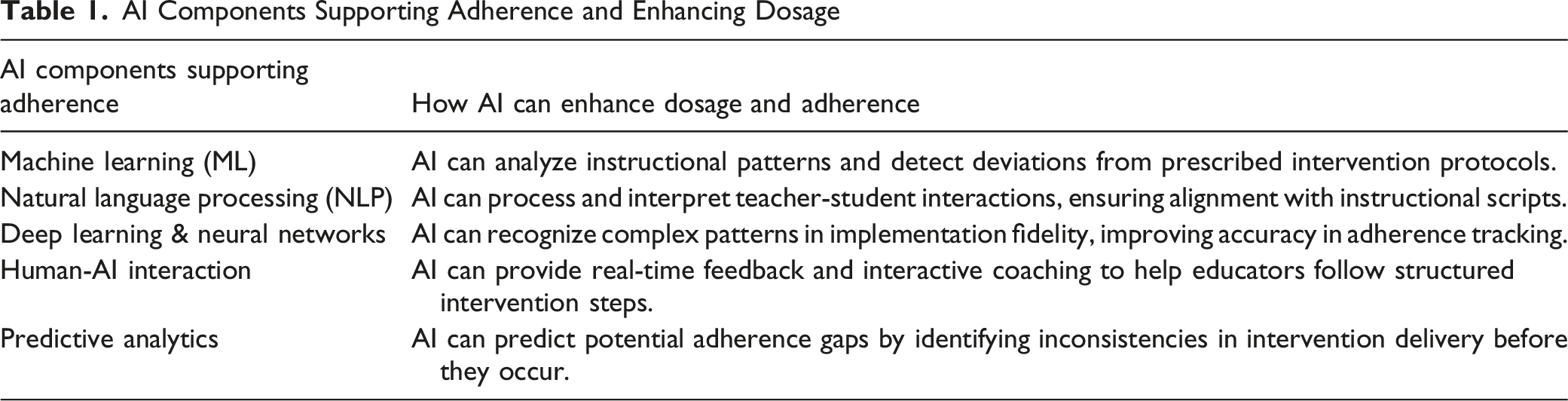
Adherence refers to the extent to which implementation of an intervention or instructional strategy occurs in line with the intervention protocols (Bos et al., 2023; Sanetti, 2021). Adherence measures how consistently the implementer follows prescribed procedures, instructional components, and implementation guidelines without significant modifications or omissions. Maintaining high adherence ensures the intervention’s integrity and effectiveness by following protocols, using designated materials, and delivering instruction as intended. Artificial intelligence can enhance adherence through machine learning (ML), natural language processing (NLP), deep learning and neural networks, predictive analytics, and human-AI interaction (Taddy, 2018). These components will enable AI to track intervention fidelity by analyzing instructional patterns, comparing teacher delivery to the intervention protocol, and predicting potential implementation gaps before they occur (Mosher et al., 2025).
AI Components Supporting Adherence and Enhancing Dosage
Dosage and Exposure
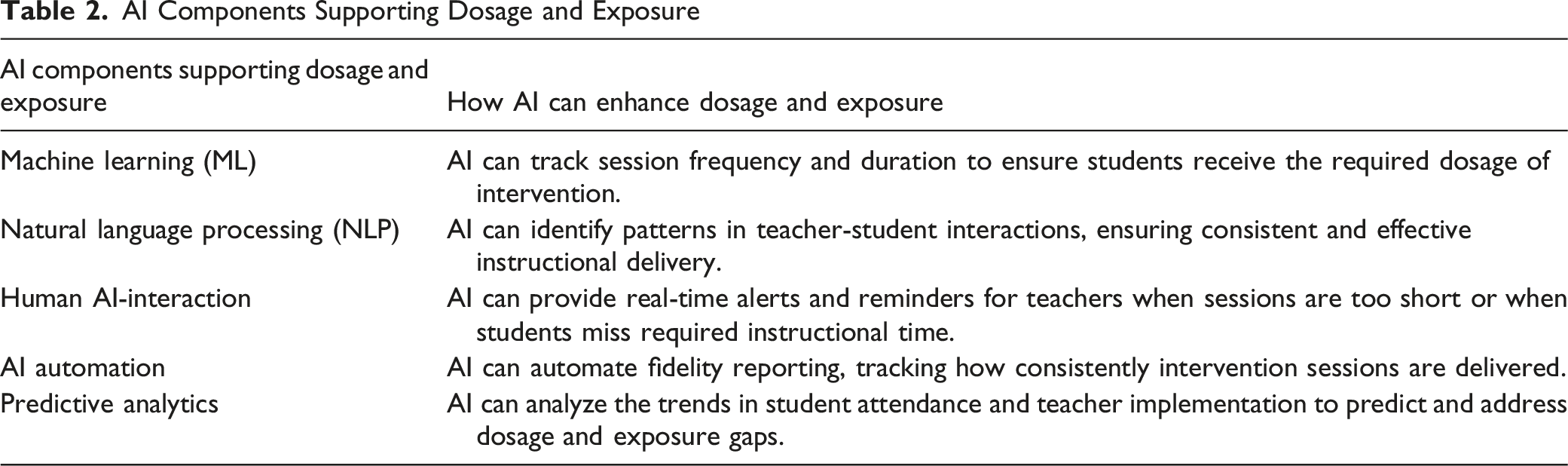
These terms describe the frequency and duration of an intervention that educators deliver and students receive (Sanetti, 2021). The extent to which educators deliver an intervention can significantly impact its effectiveness (Bos et al., 2023). For example, researchers design reading instruction for a teacher to deliver for 20 hours or more a week. In that case, any deviation from the prescribed dosage, such as reducing instructional hours or inconsistent delivery of the intervention, may limit its effectiveness and prevent students from achieving the intended learning outcomes (Roberts et al., 2022). Conversely, exceeding the recommended dosage may not always yield additional benefits and could result in diminishing returns, depending on the intervention and students’ needs. A meta-analysis by Roberts and colleagues (2022) shows that reading gains peaked at approximately 39.92 hours of instruction (effect size = 0.77), after which the benefits began to decline. This finding suggests a limit to how much additional instruction improves reading outcomes, and exceeding this dosage may not provide added value.
AI Components Supporting Dosage and Exposure
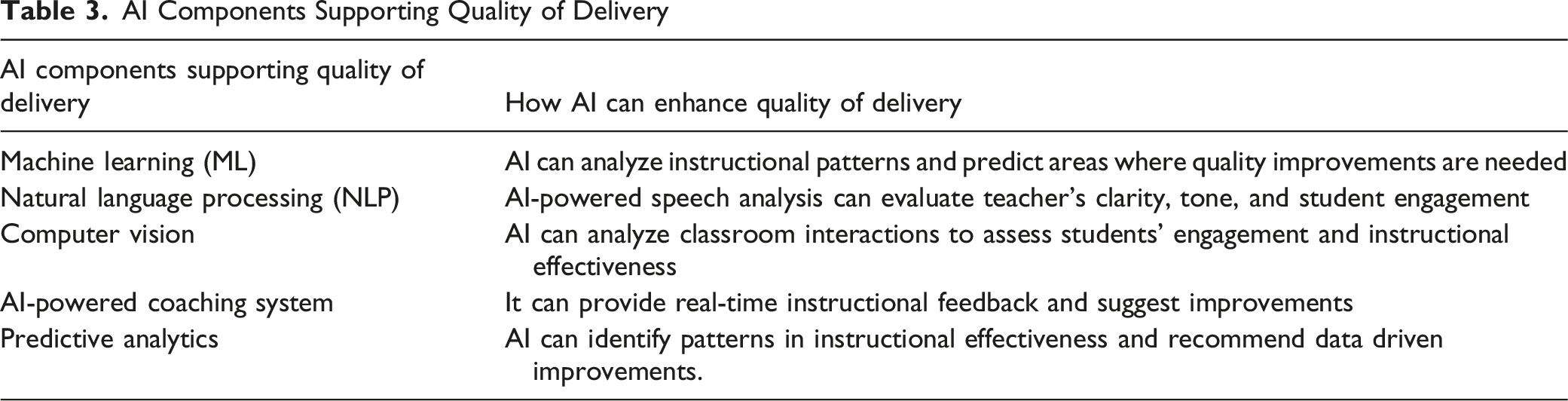
Quality of Delivery
AI Components Supporting Quality of Delivery
Systemic Barriers to High-Fidelity Implementation
Inadequate Professional Development (PD)
The potential of EBIs from rigorous research is irrelevant if teachers are not prepared to implement them with fidelity. Financial constraints often tragically restrict teacher PD on complex EBIs to “one-off” workshop formats (Griffen et al., 2024). Traditional PD models do not provide the sustained support necessary for teachers to implement EBIs with fidelity (Griffen et al., 2024; McKenna et al., 2014). A potential solution to this issue might be AI, which can provide more sustained, scaffolded, and engaging PD aligned with implementation fidelity procedures outlined for EBIs (Mosher et al., 2026).
Artificial intelligence-enhanced PD could offer ongoing, personalized support to teachers reviewing and ensuring fidelity of EBIs by providing the resources, feedback, and guidance to implement strategies effectively over time (Goldman et al., 2026). These AI-driven coaching systems could analyze classroom practices and provide real-time feedback, helping teachers to adjust their methods in alignment with evidence-based protocols. For example, Griffen and colleagues (2024, 2025) used an AI tablet-based application to provide least-to-most prompt, immediate feedback, and total task chaining to behavior technicians who were implementing a hand-washing intervention for students with disabilities. This type of AI support could assist even substitute teachers who might not have received the PD to implement interventions with fidelity (Mosher et al., 2024a).
Classroom Dynamics and Variability
Necessary modifications for classroom variability may sometimes dilute the core components of an intervention, reducing its overall effectiveness (Durlak & DuPre, 2008; Mosher et al., 2024c). High student-teacher ratios, particularly in inclusive settings, exacerbate this challenge, making it almost impossible for a single teacher to deliver intensive, individualized interventions to multiple students simultaneously while stewarding the broader classroom environment (Gage et al., 2012).
Artificial intelligence technology could address this problem by using an agent for implementation delivery or to coach teachers needing support. With predefined rules and protocols, programmers can design AI to adapt to different situations while maintaining the fidelity of EBIs, even when classrooms vary (Luckin et al., 2016; Mosher et al., 2025). By making specific adaptations based on individual students’ needs, AI can preserve core components of the EBI while still addressing the unique challenges and providing personalized instruction (Mosher et al., 2026). For example, a comprehension instruction AI could assist students during self-questioning reading sessions by analyzing the uploaded passage and giving feedback on the appropriateness of their questions (Goldman et al., 2026).
This type of AI tool helps maintain the fidelity of reading comprehension interventions by guiding students to ask questions that directly correspond to the text, thereby enhancing their comprehension skills without compromising the intervention’s core objectives or asking the teacher to respond to 20 students simultaneously (Luckin et al., 2016). Not to mention the demanding, consuming daily tasks in special education settings leave many teachers with vanishingly limited time to meticulously plan for and efficiently implement interventions with high fidelity (Wainer & Ingersoll, 2013).
The Need to Understand AI’s Benefits and Risks
Despite advancements in AI technology, legitimate concerns exist over the use of AI in education (Mosher et al., 2024a). Responses from AI apps continue to be unnatural to human conversation, misleading, inaccurate, vague, and biased toward the data’s source (Fryer et al., 2019; Sallam, 2023). Research indicates a potential decline in the quality of education if teachers become overly reliant on AI (Chiu et al., 2024). Still, AI has the capacity to assist educators, as shown in numerous systematic reviews within education (Chen et al., 2020; Laupichler et al., 2022; Ng et al., 2024; Salas-Pilco et al., 2022; Sanusi et al., 2023). Therefore, a need exists to understand emerging research on AI use in EBI delivery, determine the benefits and risks involved, and assess the protocols and safeguards in place to mitigate these risks.
Ethical use of AI in schools requires direct attention to how these tools inform educational planning, decision-making, and professional learning (Mosher et al., 2026). In both pre-service and in-service contexts, educators must be prepared to interpret AI-generated guidance as advisory rather than prescriptive, ensuring instructional and IEP-related decisions are grounded in professional judgment, student data, and legal requirements (Mosher et al., 2024a). Without structured preparation of educators and clear guardrails, AI tools risk shaping instructional planning in ways that are misaligned with EBP, equity principles, and educator accountability (Goldman et al., 2026).
Theoretical Frameworks
The rapid evolution of AI in education and intervention science necessitates a rigorous theoretical foundation for evaluating its impact on practice. As the complexity of intervention delivery increases, particularly for students with disabilities, there is a growing need for frameworks that can account for both the pedagogical and systemic dimensions of technology integration and implementation fidelity. Drawing from the literature, two complementary frameworks have emerged as especially relevant for this purpose: Technological Pedagogical Content Knowledge (TPACK) and Implementation Science (Fixsen et al., 2005; Mishra & Koehler, 2006). These frameworks provide a structured lens for analyzing how AI can support intervention fidelity for students with disabilities (Figure 1). Venn diagram of the intersection of the TPACK and implementation science frameworks Figure 1 (Fixsen et al., 2005; Mishra & Koehler, 2006)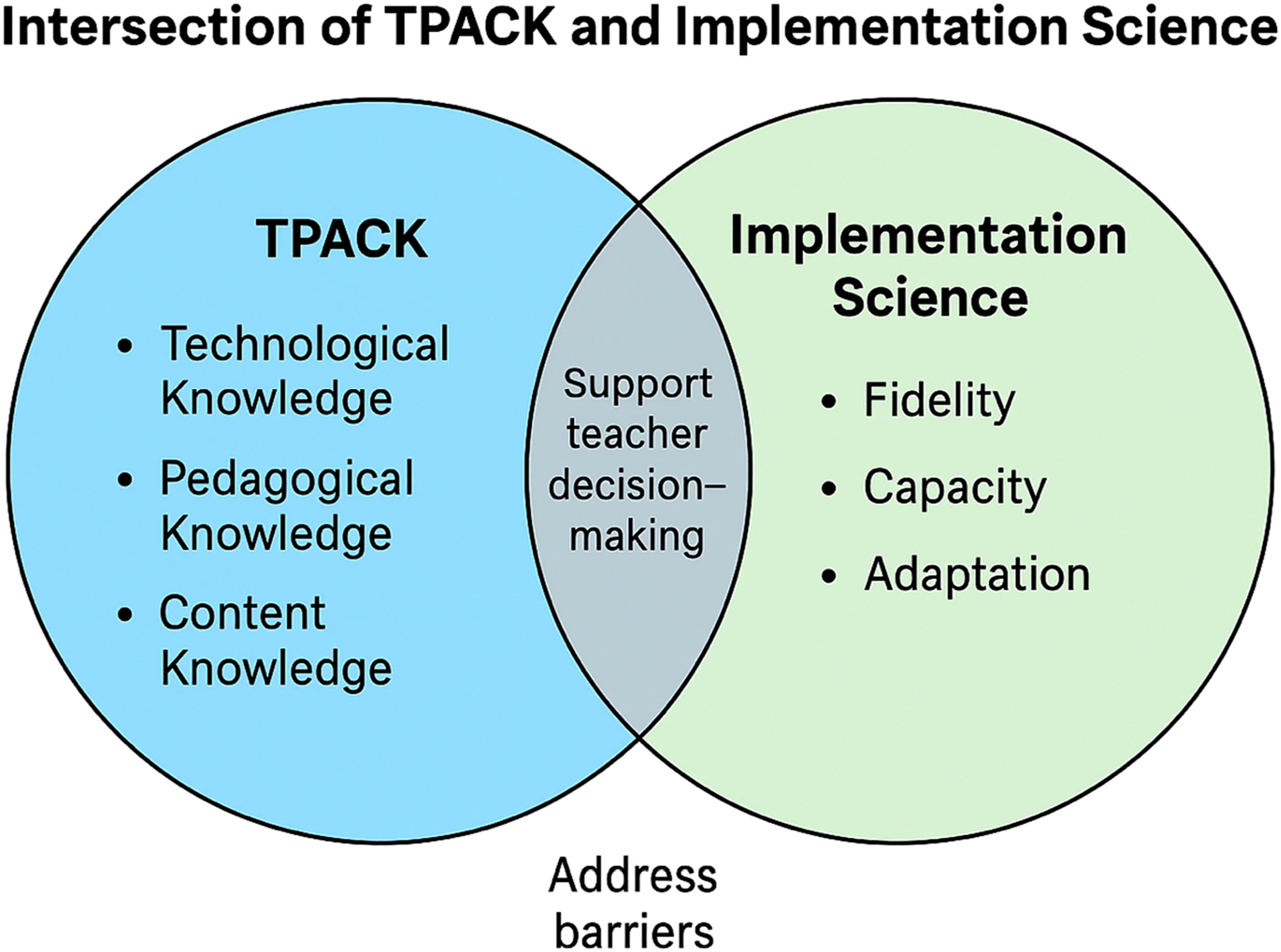
The TPACK framework, developed by Mishra and Koehler (2006), conceptualizes the intersection of technological, pedagogical, and content knowledge. For educators implementing EBIs, these domains are critical. Effective AI integration requires not only technological proficiency but also alignment with instructional strategies and disability-specific content knowledge. TPACK ensures that technology adoption is pedagogically sound and contextually relevant.
Implementation Science, as described by Fixsen and colleagues (2005), emphasizes systematic processes for embedding EBIs into practice, focusing on constructs such as fidelity, capacity, and adaptation. Fidelity refers to the delivery of interventions as intended, while capacity addresses the resources and skills needed for implementation. Adaptation acknowledges the necessity of tailoring interventions to diverse student needs without compromising core components. These constructs are particularly relevant given barriers such as time constraints, professional development gaps, and high caseloads (Griffen et al., 2024).
The integration of TPACK and Implementation Science (See Figure 1) offers a robust foundation for evaluating AI’s role in intervention delivery. TPACK ensures pedagogical alignment, while Implementation Science addresses fidelity and systemic barriers. Artificial intelligence tools can bridge these frameworks by supporting teacher decision-making through real-time data and feedback, reducing variability in intervention delivery via automated monitoring, and enhancing capacity by streamlining administrative tasks and providing adaptive supports.
For example, to demonstrate the link between theory and practice, two brief examples are provided using each framework to illustrate how AI-supported tools function in real classroom contexts. For example, using the TPACK, an AI coaching tool could support a teacher in delivering a reading intervention by aligning digital prompts with both instructional strategies and disability-specific content. From an Implementation Science perspective, AI could operationalize fidelity constructs by monitoring adherence, logging doses, and providing real-time feedback to support consistent use of EBPs despite classroom constraints (Mosher et al., 2026).
This combined lens positions AI as a scaffold rather than a substitute for teacher expertise or for any required human time (e.g., minutes on the Individualized Education Program (IEP)), enabling educators to implement EBIs with greater consistency and precision (Mosher et al., 2024a). Applying these frameworks allows the review to systematically evaluate existing research, identify gaps, and inform future directions for practice and policy.
In this review, intervention agents refer to the individuals responsible for delivering, supporting, coaching, or facilitating the implementation of an intervention. These agents may include teachers, paraprofessionals, therapists, behavior technicians, caregivers, or peers that assist in delivery and fidelity monitoring. Understanding the characteristics of the intervention agents is important because their training, expertise, and interaction with the AI systems may influence the fidelity of intervention implementation.
Researchers have conducted limited studies and discussions on leveraging AI to support teachers directly, particularly in the critical task of implementation fidelity (Hopcan et al., 2023). This review seeks to understand whether AI holds significant potential to address the systemic barriers to intervention fidelity through the following research questions:
Method
We conducted a systematic review following the traditional approaches and guidelines to identify all relevant articles (Cumming et al., 2023; Gersten et al., 2005; Horner et al., 2005), as well as the reporting usage of the Preferred Reporting Items for Systematic Reviews and Meta-Analyses Protocols (PRISMA-P, 2021; Luckin et al., 2016). Given the nascent evidence base and focus on fidelity mechanisms rather than breadth of AI applications, a systematic review was selected over a scoping review. The goal was to identify, evaluate, and synthesize existing research on the use of AI to support or enhance intervention fidelity in special education for K-12 students. The initial database search was conducted in September 2025 and the literature review applied five procedures. These included (a) search, (b) selection, (c) relevance, (d) coding, and (e) analysis.
Search Strategy
A comprehensive literature search identified relevant articles published between 2013 and 2025. The literature search was bounded to studies published from 2013 forward to align with a documented inflection point in artificial intelligence research marked by the emergence and widespread adoption of data-driven, adaptive learning architectures (e.g., deep learning, natural language processing, and real-time analytics). Prior to this period, most educational technologies labeled as “intelligent” relied on rule-based or static systems that lacked the adaptive, feedback-responsive characteristics central to contemporary AI applications. Systematic syntheses of AI in education identify the post-2012 period as a substantive methodological shift, justifying the exclusion of earlier studies that are conceptually misaligned with current AI-mediated implementation supports (Chen et al., 2020; Krstić et al., 2022).
A search of the electronic databases yielded the following results: ERIC (Ebsco; n = 22), Web of Science (n = 3), Google Scholar (n = 41), and PsycINFO (n = 8). The search strategy combined keywords from three main categories: Population/Setting: special education or students with disabilities or K-12 or inclusive classroom; Intervention/Concept: intervention fidelity or implementation fidelity or treatment fidelity or adherence or evidence-based practice; and Technology: artificial intelligence or AI or machine learning or natural language processing or AI coach or intelligent tutoring system. Searches were conducted using full-text indexing to capture studies in which AI-supported fidelity mechanisms were embedded within implementation or methodological sections rather than named explicitly in abstracts. The exact Boolean search string applied across databases was (“special education” OR “students with disabilities” OR K-12 OR “inclusive classroom”) AND (“intervention fidelity” OR “implementation fidelity” OR “treatment fidelity” OR adherence OR “evidence-based practice”) AND (“artificial intelligence” OR AI OR “machine learning” OR “natural language processing” OR “intelligent tutoring system” OR “AI coach”). This approach was selected to maximize sensitivity given the inconsistent labeling of AI technologies in applied educational research.
For the validity of the initial search, author two conducted a second search of the same databases with the same terms 5 days later, achieving 92% agreement with n = 74. In addition, the authors conducted a manual search of the reference lists of identified key articles and relevant reviews to locate n = 4 additional articles and a hand search of the following four journals publishing in the area of special education and AI Journal of Special Education Technology, Computers and Education: Artificial Intelligence, Review of Educational Research, and Education Sciences located n = 3 additional articles. The team removed duplications n = 3. In addition to database searches, forward citation searching was conducted for all studies meeting inclusion criteria using Google Scholar to identify subsequent publications that cited the included articles. This step was undertaken to capture recently published studies that may not yet have been indexed fully within disciplinary databases, a common limitation in rapidly evolving research areas such as artificial intelligence in education. Figure 2 illustrates the process, based on 78 articles reviewed for inclusion and exclusion criteria. PRISMA flow diagram of the literature search and selection process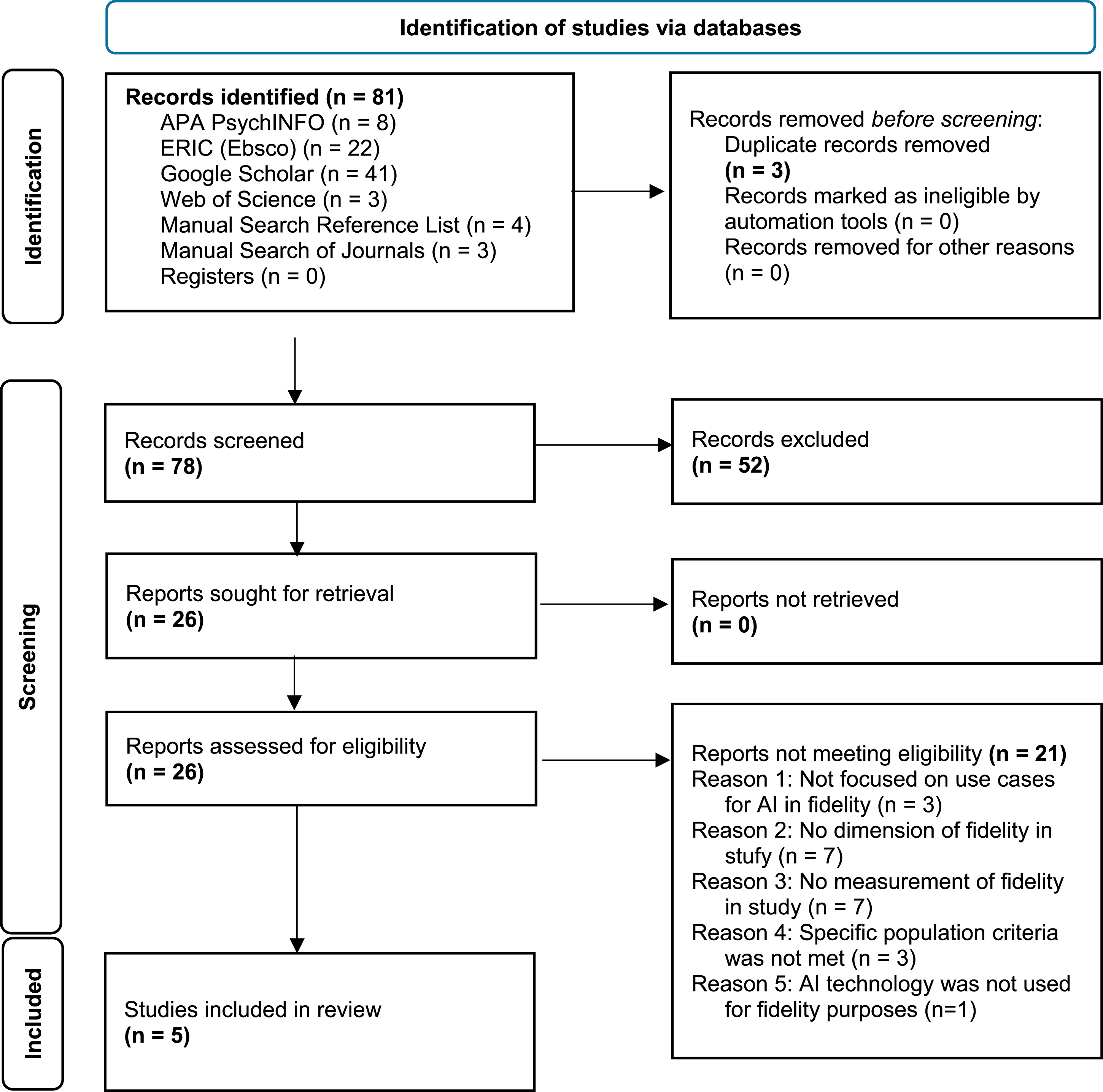
Inclusion and Exclusion Criteria
The research included studies if they: (a) were peer-reviewed, empirical journal articles, conference proceedings, or scholarly book chapters, (b) were published in English, (c) explicitly discussed the use or potential use of an AI-based technology to measure, monitor, support, or improve at least one dimension of intervention fidelity (adherence, dosage, quality of delivery) in an education context, and (d) focused on K-12 students with identified disabilities or professionals serving this population. Dissertations and thesis were excluded to ensure that all included studies had undergone formal peer review and met established standards for methodological transparency and reporting. Prior syntheses of implementation fidelity emphasize that peer review functions as a critical quality control mechanism, particularly for studies reporting fidelity constructs that are variably operationalized and susceptible to measurement bias (Bos et al., 2023; McKenna et al., 2014).
Given the small and emerging evidence base at the intersection of AI and fidelity, the review prioritized methodological consistency and replicability over breadth. The team excluded studies if they: (a) focused exclusively on adult populations, (b) discussed technology that did not meet the definition of AI (e.g., basic educational apps, non-adaptive software), or (c) mentioned AI and fidelity but did not describe a precise mechanism linking the two. The search team applied the above criteria to ensure that the AI was being measured in some manner to improve an element of fidelity, rather than merely using AI within the intervention for outside reasons (e.g., motivation, game-like features).
Study Selection and Data Extraction
The study selection process involved a two-phase screening. In the first phase, two reviewers screened titles and abstracts of all retrieved articles for relevance. The team discarded articles that clearly did not meet the inclusion criteria. In the second phase, the researchers reviewed the full text of the remaining articles to independently determine final eligibility among two reviewers. The team resolved discrepancies through discussion with a third blind reviewer, settling any non-consensus disputes.
The researchers extracted and organized the data into a coding table from selected articles. The extracted information included: (a) author(s) and year of publication, (b) the focus of the study or intervention AI is designed to enhance (e.g., systematic instruction, data-based individualization, reinforcement feedback), (c) the specific AI technology investigated (e.g., Generative AI, Natural Language Processing, Intelligent Tutoring System, Machine Learning) and person using the technology and intervention (characteristics of interventionists and students) (d) the dimension(s) of fidelity addressed (e.g., adherence, dosage, quality of delivery, or a combination) and who controlled/used the AI technology (e.g., student, teacher, researcher) as well as the mechanism of fidelity (e.g., automated planning support, post-hoc performance feedback, real-time coaching, visuals), and (e) a summary of the key findings (e.g., intervention fidelity, student academic outcomes, behavioral outcomes).
Since AI is a branch of computer science that enables machines to simulate human intelligence (Chen et al., 2020; Krstić et al., 2022), it encompasses numerous technologies and components that require definitions for coding in Part C above. We used the following subsets of AI definitions:
Validity and Reliability Assessment
To ensure the validity and reliability of the findings in this review, the team assessed the quality of the included empirical studies using a critical appraisal checklist. We adapted this checklist from established frameworks for evaluating educational technology research. Key indicators of study quality included: (a) clear research questions, (b) detailed description of the sample and setting, (c) robust research design (e.g., experimental, quasi-experimental, single-case), (d) clear description of the AI intervention and its implementation, (e) use of valid and reliable measures for both fidelity and student outcomes, and (f) appropriate data analysis techniques. Two reviewers independently assessed the quality of each study and resolved discrepancies through discussion with a third blind reviewer, settling any non-consensus disputes to understand the strength of evidence from each study when synthesizing the results. Figure 2 displays the results of the process.
Results
The systematic search yielded a growing but still nascent body of literature at the intersection of AI and intervention fidelity in special education. Much like the individual frameworks of implementation and TPACK, the current literature offers limited research that crosses between these fields. Nonetheless, the findings from the selected studies do demonstrate AI’s potential across all three dimensions of fidelity: adherence, dosage, and quality of delivery. Although several studies reported both fidelity improvements and student performance gains, none tested mediation pathways linking fidelity to outcomes. Student gains co-occurred with improved implementation but cannot be attributed causally to fidelity without additional analytic evidence. The authors organize the results thematically to reflect participant characteristics, targeted skill domains, and AI features influencing fidelity.
Study Characteristics and AI Features
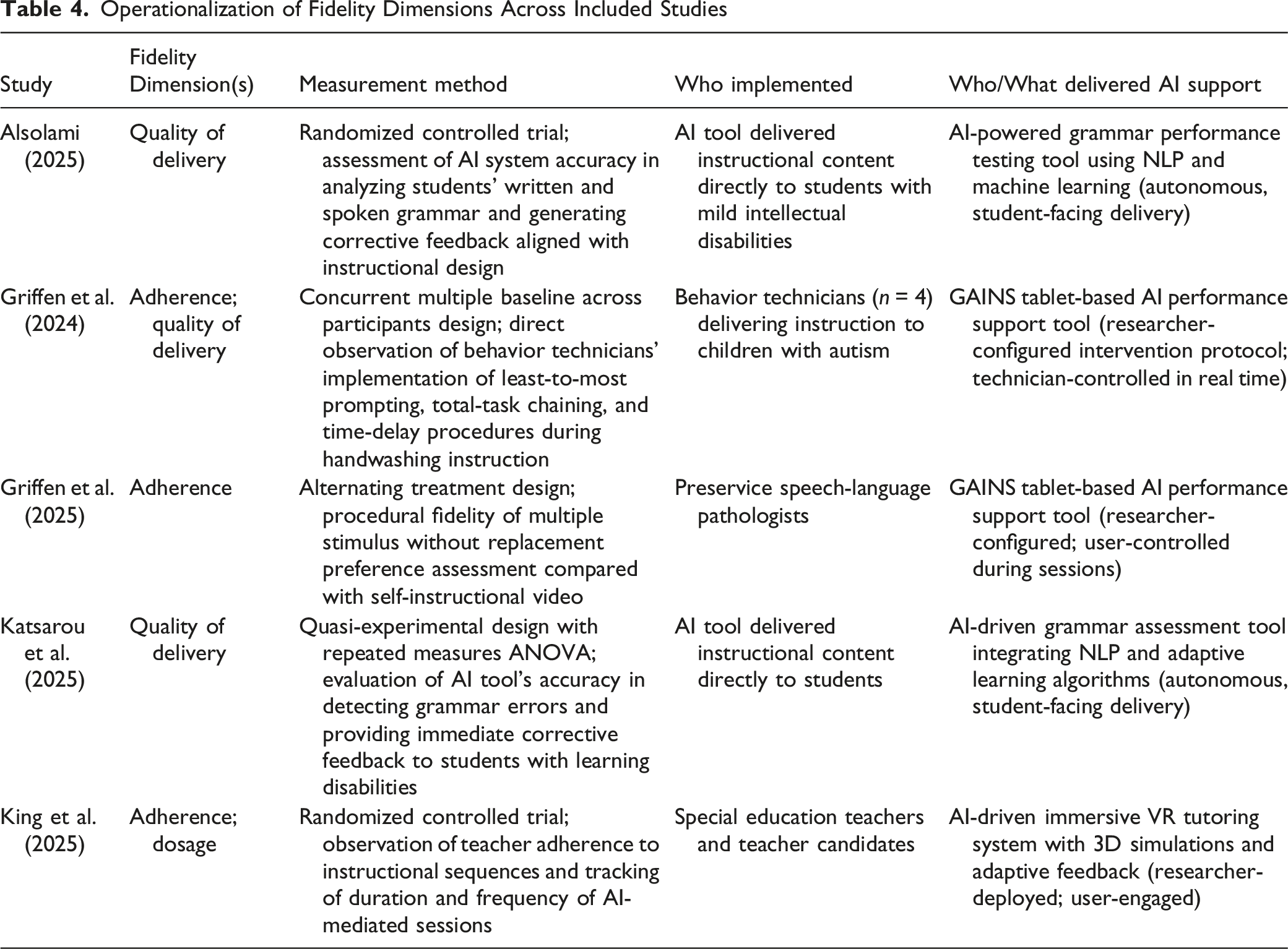
This review identified participants’ and implementors’ characteristics across five studies, addressing the first research question. Participants included students with disabilities such as autism spectrum disorder, mild intellectual disability, and learning disabilities, as well as implementers, including registered behavior technicians, preservice speech-language pathologists, teacher candidates, and special education teachers (Alsolami, 2025; Griffen et al., 2024; Katsarou et al., 2025; King et al., 2025). Research designs ranged from randomized controlled trials and quasi-experimental designs to single-case experimental designs, providing methodological diversity. Griffen and colleagues (2024) employed a concurrent multiple baseline across participants design to investigate the effects of GAINS, a tablet-based application that utilizes AI, on the fidelity of implementation of least-to-most prompting, total chaining, and time delay by the four behavior technicians during handwashing instruction for young children with autism. Griffen and colleagues (2024) used an alternating treatment design to evaluate whether GAINS improved the procedural fidelity of multiple stimulus without replacement preference assessments compared to the traditional self-instructional video. On the other hand, King and colleagues (2025) and Alsolami (2025) used a randomized control trial design, while Katsarou and colleagues (2025) used a quasi-experimental design with repeated measures ANOVA to examine the impact of AI-based instructional tools on students’ language performance and engagement outcomes.
Artificial intelligence technologies included adaptive educational software, intelligent tutoring systems, and AI-augmented virtual reality (VR) simulations. Researchers consistently identified standard features, such as real-time feedback, automated prompts, and adaptive algorithms, as mechanisms for improving fidelity (Griffen et al., 2024; Katsarou et al., 2025; King et al., 2025). Four of the studies used computer software (Alsolami, 2025; Griffen et al., 2024; Katsarou et al., 2025) while one study used an intelligent VR system (King et al., 2025).
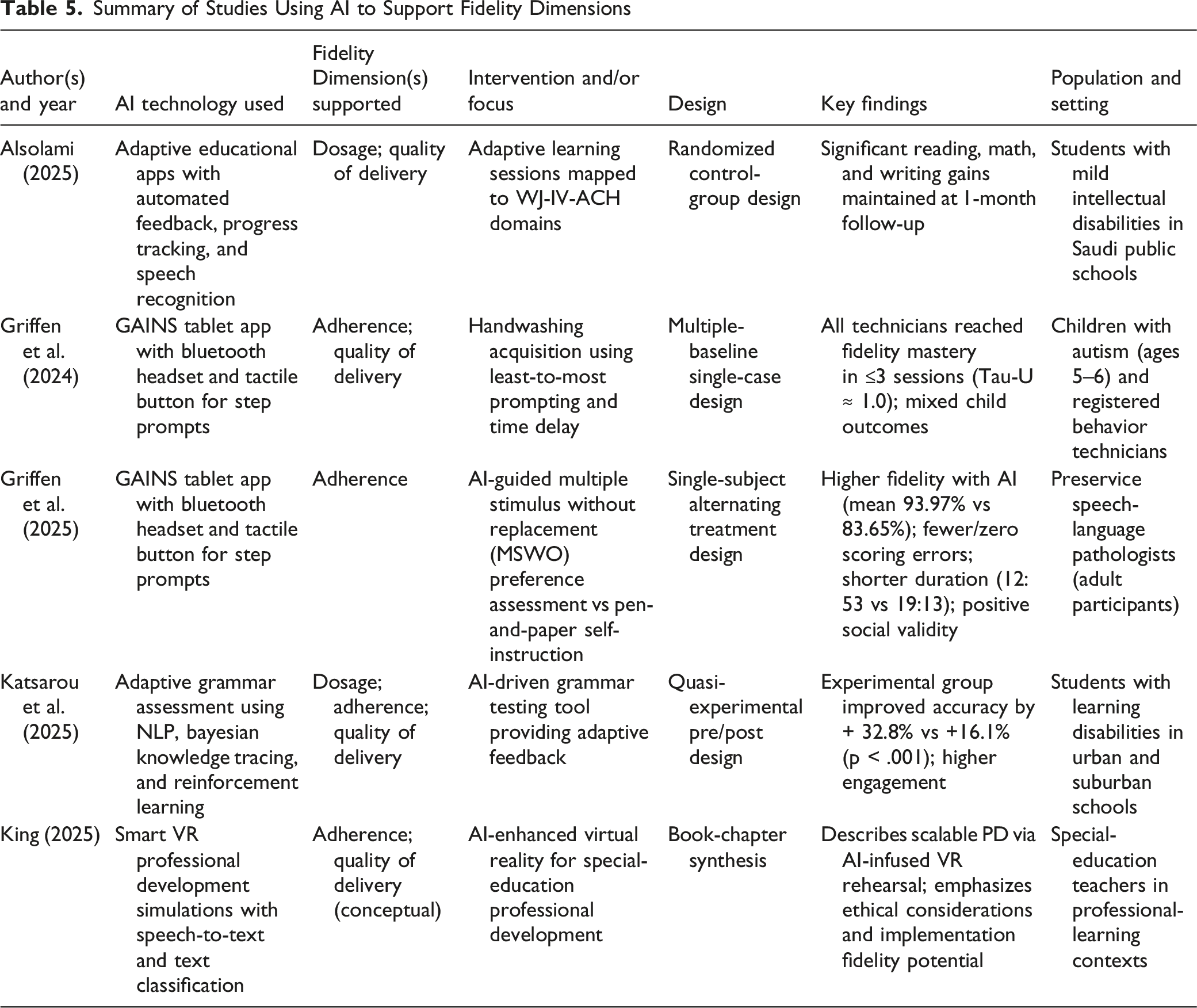
Alsolami (2025) used an AI-powered grammar performance testing tool that used NLP and ML to analyze students’ written and spoken responses. The AI tool detects grammatical structures, identifies errors, and provides immediate feedback to the students. Griffen et al. (2024) used the Guided Artificial Intelligence Instructional Networked System (GAINS®), an AI-driven tablet performance support tool. GAINS® responds to user input in real-time and provides guidance to help them choose the most appropriate next action. The intervention protocol is set up beforehand by an expert to determine the feedback provided during use.
Katsarou et al. (2025) used an AI-driven grammar assessment tool that integrates NLP and adaptive learning algorithms to tailor grammar exercises to each student’s unique needs. The tool integrates error analysis models that identify errors made and provide immediate feedback to students with detailed explanations. Unlike the other four studies, which used computer software, King and colleagues (2025) employed an AI-driven immersive VR tutoring system. The system integrates AI with 3D simulations and adaptive feedback, allowing the AI to monitor students’ interactions and adjust task difficulty.
Skill Domains and Reported Outcomes
To address the second research question, the review examined skill domains targeted and outcomes reported. Artificial intelligence-supported interventions produced positive effects on implementor fidelity and, in some cases, student outcomes. Implementors achieved rapid mastery in single-case designs (Griffen et al., 2024), and randomized trials reported large effect sizes favoring AI conditions (Alsolami, 2025; King et al., 2025). Although several studies reported both implementor fidelity outcomes and student performance gains, none conducted formal mediation analyses linking fidelity improvements to student outcomes. As such, student gains should be interpreted as co-occurring with, rather than causally resulting from, AI-supported fidelity (Durlak & DuPre, 2008; Noell et al., 2002). Student outcomes included academic gains in reading, math, and writing (Alsolami, 2025), improved grammar performance (Katsarou et al., 2025), and maintenance of skills at follow-up. Efficiency and social validity were additional benefits, with AI conditions reducing errors and task duration while increasing engagement (Griffen et al., 2025).
Dimensions of Fidelity Implementation
Across the studies, researchers addressed fidelity implementation as a critical outcome for evaluating the effectiveness of AI-based instructional tools. Four studies examined the adherence dimension of fidelity, including Griffen and colleagues (2024, 2025) and King and colleagues (2025), one study assessed dosage (King et al., 2025), and three studies assessed quality of delivery (Alsolami, 2025; Griffen et al., 2024; Katsarou et al., 2025). Griffen and colleagues (2024) assessed behavior technicians’ adherence and quality of delivery to the implementation of least-to-most prompting, total-task chaining, and time-delay procedures, as well as the quality of their delivery of these strategies during handwashing instruction. Likewise, Griffen et al. (2025) measured the adherence with which the behavior technicians implemented Multiple Stimulus Without Replacement Preference Assessment. King and colleagues (2025) examined the extent to which the special education teachers adhered to the instructional sequences. Also, it examined the duration and frequency (i.e., dosage) of the AI-mediated sessions.
Operationalization of Fidelity Dimensions Across Included Studies
AI Features Influencing Fidelity
The third research question focused on AI features that support or challenge fidelity. Across studies, AI served as a fidelity scaffold by providing real-time feedback and automated guidance, reducing variability in implementation (Griffen et al., 2024; See Table 5). Features such as ML algorithms, NLP, and predictive analytics supported adherence and dosage monitoring, while immersive simulations enhanced the quality of delivery (King et al., 2025). Three themes emerged: (1) Artificial intelligence reduced variability in implementation through real-time feedback. (2) Learner performance improved when fidelity was high, although child acquisition varied in single-case studies. (3) AI-enhanced professional development demonstrated potential for scalability but raised ethical considerations related to access and equity. Summary of Studies Using AI to Support Fidelity Dimensions
Discussion
AI systems may function as fidelity scaffolds when carefully bounded, ethically governed, and embedded within human-led instructional systems. Their role is supportive, not substitutive, and their impact remains contingent on implementation quality, feasibility, and policy alignment. This systematic review suggests that AI-based tools may support specific dimensions of intervention fidelity, though the current evidence base remains limited in size, scope, and methodological maturity. These findings draw from a small set of recent AI-integrated studies and should be interpreted in relation to a broader intervention fidelity literature developed prior to the widespread use of AI; accordingly, claims regarding scalability and student impact should remain provisional.
Across five studies, AI-supported interventions improved implementor adherence and efficiency, with single-case designs showing rapid mastery of fidelity steps (Griffen et al., 2024) and randomized trials reporting large effect sizes favoring AI conditions (Alsolami, 2025; King et al., 2025). Artificial intelligence-enhanced approaches also supported student outcomes, including gains in reading, math, and writing (Alsolami, 2025), and improved grammar performance (Katsarou et al., 2025), with some evidence of maintenance. Features such as real-time feedback, automated prompts, and adaptive algorithms acted as fidelity scaffolds, reducing variability in implementation and strengthening professional development (Griffen et al., 2024; King et al., 2025). These findings highlight AI’s potential to address the research-to-practice gap by delivering scalable, data-driven solutions that monitor and enhance fidelity across adherence, dosage, and quality of delivery. However, the limited number of studies and narrow focus on specific disability populations indicate that this area remains in its early stages, requiring further research to establish generalizability and long-term impact. Therefore, findings should be interpreted cautiously given the limited and emerging evidence base.
AI supported fidelity scaffolds align with a growing body of research suggesting that AI may enhance the delivery of EBPs when used to augment rather than replace educators’ expertise (Creed et al., 2022; Griffen et al., 2024; Mosher et al., 2024a). Emerging studies in special education indicate that AI systems may support intervention agents through real time coaching, adaptive prompting, automated feedback, and implementation guidance that strengthen adherence to intervention procedures while preserving educator decision making (Griffen et al., 2024; Goldman et al., 2026). For example, Griffen and colleagues (2024) demonstrated that an AI-supported coaching platform increased therapists’ fidelity in implementing prompting hierarchies, task analysis, and time delay procedures during handwashing instruction for children with autism. The AI system provided immediate feedback and guidance during the delivery of the intervention, functioning as an in the moment fidelity scaffold rather than an autonomous instructional replacement. AI supported systems may offer scalable mechanisms for strengthening procedural adherence and reducing implementation of drift (Mosher et al., 2024a). However, the current evidence base remains preliminary, and more research is needed to determine whether AI-supported fidelity systems can sustain implementation quality across diverse educational settings, disability categories, and developmental levels over time.
Developmental risks warrant explicit attention when AI systems mediate instruction for students with disabilities. For some students, particularly those with social communication differences, intellectual disabilities, or limited prior exposure to AI tools, AI systems may be perceived as social agents rather than instructional supports. This perception raises concerns about authority attribution, relational misunderstanding, and displacement of human instructional interaction (Fryer et al., 2019). Students who interact frequently with conversational or feedback-driven AI may also develop emotional reliance on automated responses, treating AI feedback as a substitute for teacher relationships, peer collaboration, or self-regulated reasoning (Chiu et al., 2024). A related concern is the limited capacity of many students with disabilities to evaluate AI-generated errors, including hallucinated content, biased outputs, or incorrect feedback that contradicts the intervention protocol (Sallam, 2023). Without instruction in how to question, verify, or override AI guidance, students may internalize errors that compound across sessions and undermine the very fidelity the AI is intended to support.
Mitigating these risks requires concrete safeguards rather than general assurances. Monitoring should include human review of AI-generated feedback at predetermined intervals, with documented procedures for flagging and correcting errors. Transparency requires that students, families, and teachers receive plain-language explanations of what the AI does, what data it uses, and where its limitations lie. Data security requires role-based access, minimal data capture, encrypted transmission, and retention windows aligned with district policy and FERPA. Student comprehension should be supported through age-appropriate and disability-responsive instruction in AI literacy, including how to recognize when an AI response is uncertain, incorrect, or socially inappropriate. Without these safeguards, AI tools risk amplifying rather than reducing the implementation gaps the field is working to close.
Limitations
This review was subject to several limitations. First, the available evidence base includes only five publications, pointing to the need for further research on the influence of AI on intervention fidelity across content areas. Additionally, the small number of studies available for review primarily sampled students with higher-incidence disabilities and utilized AI that was primarily computer software. Consequently, tests of the effectiveness of fidelity tools for transition services, adults, or multilingual learners, and various forms of AI, are not available for inclusion in this analysis.
A central limitation of this review concerns the inherent difficulty of measuring and sustaining intervention fidelity across applied settings. Fidelity is not a single, stable construct; rather, it is variably defined, operationalized, and assessed across studies, with measurement approaches ranging from direct observation to self-report and automated logging. These methodological differences constrain comparability across studies and limit the precision with which fidelity outcomes can be synthesized. Further, fidelity is often compromised by real-world conditions, including instructional time pressures, uneven training, and competing classroom demands, which may reduce the likelihood that interventions are implemented fully or consistently, even when supported by AI tools. As documented in prior fidelity syntheses, these challenges complicate efforts to draw strong causal inferences and underscore the need for caution when interpreting reported fidelity gains (Bos et al., 2023; McKenna et al., 2014).
Secondly, as is common with any attempt to aggregate studies that include the same dependent variable, our key variable of fidelity was not operationalized in the same way across studies. Some emphasized adherence, while others focused on the quality of delivery, and so on. For example, several included studies reflect clinical or quasi-clinical implementation contexts (e.g., behavior technicians delivering discrete protocols), which differ meaningfully from classroom-based instructional fidelity characterized by simultaneous demands, curricular pacing, and group instruction. However, not all studies clearly revealed this information.
Most “comprehensive” summaries, including ours, face another limitation: we restricted the potential pool of published studies to peer-reviewed English-language works. We did not include other potential research experiences concerning intelligent tutoring and AI coaching, such as these, dissertations, or non-English peer-reviewed studies. Finally, as emphasized earlier, AI itself is a moving target. The capabilities of models today or in the near future differ substantially from those examined in studies conducted even a few years earlier. Therefore, readers should view any conclusions about AI-based tools as time-bound and recognize that they carry a moderate risk of being instantly outdated.
Implications for Practice
AI-mediated instructional activities should be treated as instructional supports rather than autonomous service delivery that accounts for any IEP delivered services. Responsibility for specially designed instruction under IDEA remains with certified personnel, and AI-supported sessions should be documented within IEP service frameworks with clear human oversight. Schools should utilize AI as a scaffold that maintains EBIs with strict adherence, visibility in dosage, and consistency in quality of delivery.
Start by codifying non-negotiable steps and acceptable adaptations, then point AI prompts to those guardrails and require human verification for any instructional decision. Make intensity explicit by auto-logging minutes, sessions, and opportunities to respond, with simple alerts for short sessions or missed blocks. Pair AI guidance with short coaching cycles that review logs, fix one step, and retry, and integrate this routine into MTSS so that Tier 2 and Tier 3 teams can see fidelity before changing interventions. Protect privacy with role-based access, minimal data capture, clear retention windows, and plain-language notices to families. Ensure accessibility with captions, alt text, translation, and assistive technology compatibility. Pilot tools for two weeks against a procurement checklist that includes evidence of fidelity gains, teacher time burden, and integration, then scale only when social validity and workload data are acceptable. Finally AI should not be viewed as a replacement for teachers. Rather, it should serve as a support system that helps scale the implementation of evidence based practices while maintaining fidelity across diverse educational settings.
Implications for Research
Prioritize designs that estimate the full causal chain from AI use to fidelity gains to student outcomes, with dosage treated as a primary endpoint and modeled for nonlinear effects and maintenance. Build and test classroom-embedded, low-latency coaching that delivers just-in-time prompts, and compare it with post-hoc analytics on efficiency, burden, and learning. Pre-register protocols, report AI components and guardrails with error and bias rates, and share de-identified logs, prompts, and codebooks for replication. Include diverse disability categories, multilingual settings, and inclusive classrooms with planned subgroup analyses, and measure implementation outcomes such as feasibility, acceptability, appropriateness, cost, and fidelity to the AI usage protocol. Use mixed methods to explain mechanisms, run multi-site replications, report null results, and extend follow-ups to test generalization and sustainability across teachers, schools, and semesters.
Conclusion
The adaptive and data-driven features of AI make it a scalable and sustainable solution for improving the fidelity of evidence-based practice implementation in special education. Fidelity of implementation often declines over time due to complex classroom dynamics, insufficient professional development, and human error in monitoring adherence, dosage, and delivery quality (Griffen et al., 2024). Artificial intelligence-driven systems can address these challenges by automatically monitoring instructional delivery, providing immediate, individualized feedback, and modeling expert performance. Artificial intelligence must operate with accuracy, transparency, and alignment to the task (e.g., vetted intervention protocols and repositories), and researchers must triangulate all data with human judgment and progress data (Zhou, 2023).
When using AI for fidelity, it is important to ensure PD that covers AI’s capabilities, limits, classroom cases with representative data, trustworthy sources, a clear evidence trail, and known failure modes (Mosher et al., 2026). When district PD is limited, checklists, online courses, and community partners must tie fidelity to adherence, dosage, and quality of delivery (Ng et al., 2024). Artificial intelligence needs to be implemented with role-based access and family notices that explain what is collected and why. By embedding adaptive feedback into daily instruction and with quality PD, AI holds the potential to close fidelity gaps, enhance instructional consistency, and promote sustained, high-quality implementation of evidence-based practices across diverse special education contexts.
Footnotes

Funding
The authors received no financial support for the research, authorship, and/or publication of this article.
Declaration of conflicting interests
The authors declared no potential conflicts of interest with respect to the research, authorship, and/or publication of this article.