






Abstract
Objectives:
Socioeconomic status and health in childhood are linked to health outcomes in later life. Health outcomes may also be shaped by socioeconomic circumstances in adulthood and later life. This paper examined the relationship between childhood conditions and later life health and tested whether this relationship was mediated by later life economic living standards.
Methods:
Data from a longitudinal study of aging was combined with retrospective life history data from 787 participants from the New Zealand Health, Work and Retirement Study.
Results:
Significant relationships were found between childhood conditions and later life health. These relationships were mediated by economic living standards in older age, but the partial direct effect of childhood conditions on health found in early older age became fully meditated 10 years later.
Conclusion:
While childhood circumstances are part of this complex relationship, socioeconomic conditions in later life are vital to ensuring ongoing health into older age.
Keywords
Introduction
Circumstances in childhood are linked to health outcomes in adulthood and later life. Physical health in childhood has a persistent association with later life health (Haas & Oi, 2018). Children who experience health problems have an increased risk of physical and mental health conditions in later life (Lam et al., 2019). Childhood health status is not separate from socioeconomic circumstances; poor health in childhood is more common among children from disadvantaged backgrounds who may have restricted access to healthcare or limited access to resources that support long-term health (Ferraro et al., 2016). Childhood health disparities rooted in socioeconomic differences in childhood may also impact on socioeconomic status throughout the life course (Ruijsbroek et al., 2011). Research has reported that socioeconomic status in adulthood both reflects childhood socioeconomic status and shapes later life health outcomes (Case et al., 2005; Zhang et al., 2016). Although these relationships are complex, typically, childhood circumstances continue to influence health in older age even after taking socioeconomic status in later life into account (Angelini et al., 2019; Greenfield & Moorman, 2018). The complexity of these relationships is due both to the interrelationships between health and socioeconomic status and to the dynamic nature of socioeconomic status across the life course. Late life health can be conceptualized as the outcome of childhood health and socioeconomic status, as well as adult life events.
Childhood Socioeconomic Status and Childhood Health
The relationship between socioeconomic status and health has been understood in a variety of ways; one is through material pathways where socioeconomic status patterns access to material resources necessary for good health. For example, children from households with limited socioeconomic resources may live in low quality housing and receive less nutritious foods (Ball, 2015). The impact of these material conditions may establish patterns that persist into adulthood and later life, negatively affecting health and functioning (Kaikkonen et al., 2013). Childhood socioeconomic status can also influence health through non-material pathways, such as shaping a sense of control and autonomy. Restrictions in a sense of control and autonomy may reduce timely access to adequate healthcare or shape willingness to engage in health promoting behaviors (Ferraro et al., 2016). In these ways, childhood health and childhood socioeconomic status are not separate and set patterns that may persist beyond childhood.
Childhood Circumstances and Late Life Health
The effects of circumstances on later life health have been theorized in several ways which point to different mechanisms. The critical period model suggests that experiencing particular conditions during critical developmental periods may produce direct long-term health impacts throughout adulthood and into later life (Berndt & Fors, 2016). This theory posits that similar living environments at different developmental points may not produce the same long-lasting health outcomes. Cumulative advantage/disadvantage theory (CAD) hypothesizes that comparatively minor differences in childhood circumstances shape subsequent experiences and milestones over the life-course, which consequently lead to widening differences in later life health outcomes (Lynch & Brown, 2011). In this way, socioeconomic status in childhood has an impact on later life health by setting people on different pathways and these trajectories amplify differences over time (Agahi et al., 2014).
Alternatively, it has been proposed that health inequalities between people may become less pronounced over time. This “aging-as-leveler” hypothesis argues that inequalities in health decline in older age, as aging brings health declines for all and those with previous socioeconomic advantage have most to lose (Brown et al., 2012). This leads to health trajectories between groups converging after midlife (Brown et al., 2016). This may be due to processes of mortality selection leading to the most disadvantaged being selected out. In addition, delayed onset of illness leads to morbidity becoming compressed into later old age among more advantaged groups (Brown et al., 2016). These three theories describing the development of health inequalities over the life course are not necessarily competing; there is evidence that they may function to explain variations in health outcomes at different points in the life course (Brown et al., 2012, 2016). For example, Kim and Miech (2009) found evidence that supported CAD theory in early and midlife, and patterns consistent with age-as-leveler in later life. This complexity means that it is useful to consider the impact of intervening variables on health outcomes measured at different points in the life course.
Health Inequalities and Age
Different theories regarding the development of health inequalities provide different accounts of the shape of these relationships over time. The critical period model proposes that health inequalities between groups remains stable over time; CAD theory suggests that over time the gap between advantages and disadvantaged groups will increase, and aging-as-leveler hypothesis argues that health outcome disparities between groups will converge over time. Although these theories explain changes in health disparities over time, research has demonstrated great variability in the age at which health outcomes are assessed. For example, Case et al. (2005) found that the health impacts of childhood circumstances may operate indirectly through the impact on adult health and socioeconomic status, and through a direct effect of prenatal and childhood health. However, the results were confined to midlife and did not explore health impacts in later life. This limits what can be understood about processes of divergence and convergence in later life.
Studies examining participants in later adulthood have demonstrated that circumstances during childhood have a direct impact on later life physical and mental health, and this impact persists after considering socioeconomic status in adulthood (Angelini et al., 2019; Kendig et al., 2017; Pakpahan et al., 2017). These studies, however, differed significantly in the age at which health outcomes were measured. This variability makes it difficult to determine whether leveling processes may be influencing the shape of health outcomes or whether processes of accumulation might continue to shape health outcomes. In addition, research on study cohorts either nearing the end of their working life or on reaching retirement have found that socioeconomic status in adulthood and later life is a stronger predictor of health outcomes than conditions during childhood (Greenfield & Moorman, 2018; Zhang et al., 2016; Zimmer et al., 2016). This is consistent with aging-as-leveler hypothesis, whereby health inequalities diverge in late adulthood and converge in older age (Brown et al., 2012; Greenfield & Moorman, 2018; Kim & Miech, 2009).
Limited research has compared the health impacts of childhood conditions on different stages of the life course. There remains considerable uncertainty about the shape of these relationships at different points in older age. For example, Ferraro et al. (2016) used two points of outcome data to examine childhood disadvantage and health in adulthood and later life, with participants aged 25–74 and 10 years later at 35–84. While results demonstrated that early disadvantage was related to health problems at the baseline survey and the development of new health problems 10 years later, what remains unclear is whether the shape of this relationship differs at different points in older age. If the late life health impacts of childhood conditions differ depending upon the point in later life that they are examined, this may clarify which processes are influential. If differences in health outcomes are due to the direct impact of childhood conditions, then it would be expected that this influence would be detected regardless of age of health outcome. If processes of leveling are occurring, then the direct impact of childhood conditions may not be significant at later ages. Measuring health outcomes at different time points is an important step in examining the complexity of the relationships between childhood conditions and late life health.
Objectives
Evidence suggests that health outcomes are not only influenced by conditions early in life, they may also be shaped by subsequent socioeconomic circumstances in adulthood and later life. The aim of the present study was to investigate the long-term impact of childhood circumstances on the health of older people in the Aotearoa New Zealand context. Specifically, the goals of this research were to (1) determine the impact of childhood health and childhood socioeconomic status on physical and mental health in later life, (2) examine the extent to which economic living standards in adulthood and later life mediates these relationships, and (3) compare the impact on physical and mental health outcomes at two different time points, 10 years apart.
Materials and Methods
Design. The present study used data from the Health, Work and Retirement (HWR) longitudinal study of aging. HWR is a biennial postal survey that examines the health and wellbeing, social participation, and economic participation of older New Zealanders (Towers et al., 2017). Data from the 2017 HWR Life Course History Interviews (LCHI) and the first (2006) and the sixth (2016) waves of the HWR postal survey study were used for these analyses. Equal probability sampling procedures and random selection were used to select community dwelling participants aged 55–70 years from the New Zealand electoral roll in 2006 (Towers & Stevenson, 2014). To maximize the participation rates of Māori, the indigenous people of New Zealand, oversampling protocols were implemented in the original sampling strategy (Towers, 2006). The 2006 postal questionnaire was sent to 13,045 people and 6,657 responded (51% response rate), with 3,551 in the Māori subsample (Towers & Stevenson, 2014), resulting in an over-representation of Māori compared to the general population.
A post-stratification weighting variable was calculated to account for the known discrepancies between the sample and the population. The variable was computed based on population estimates from the 55–70 year old population, provided by Statistics New Zealand. Each participant was allocated a sample weight according to their primary ethnicity (Towers, 2006). The 2017 LCHI collected retrospective life course information using life history calendars in conjunction with computer assisted telephone interview software (Allen, 2018). To mitigate recall bias, life history calendars were used to anchor participants’ responses in relation to key life stages and events (Glasner & van der Vaart, 2009). Life history calendars provide structure to assist the respondents to remember life events more accurately (Mazzonna, 2014). Ethical approvals for the HWR longitudinal study (Application 05/90; Application 09/70; Application 13/30) and the LCHI (Application 15/45) were obtained from the Massey University Human Ethics Committee.
Sample
Participants were included in the LCHI sample if they had completed the initial 2006 HWR postal survey and were still active in the longitudinal study in 2017. In 2017 a total of 1,133 participants in the longitudinal study were eligible to participate in the LCHI study and 787 completed an interview (69% response rate). Of the 787 participants who completed an interview, 66% (n = 520) completed all six waves of postal data collection (biennially from 2006 to 2016) and 34% (n = 267) missed at least one but not more than four waves of postal data collection. Participants were aged 55–70 years when they first entered the study in 2006 and aged 65–81 years at the time of the LCHI interviews.
Measures
The sociodemographic variables used for the descriptive analyses were age, gender, and Māori descent.
Childhood socioeconomic status (CSES)
CSES is regularly measured in retrospective life history data collections using four components (Pakpahan et al., 2017; Wahrendorf & Blane, 2015). This includes the number of books in the household at age 10, with five ordinal categories from none or very few (0–10 books), to enough to fill two or more bookcases (more than 200 books); the occupation of the household’s main breadwinner at age 10 (no main breadwinner, elementary, skilled, associate, and manager), the number of rooms per capita at age 10 (dichotomized to more than 1.5 people per room or less than 1.5 people per room) and the number of features in the household at age 10 (fixed bath, cold running water supply, hot running water supply, inside toilet, and the number of heating options).
In order to apply this measurement to an Aotearoa New Zealand context eight items from the New Zealand Material Wellbeing Index (Perry, 2015) relevant to the cohort’s childhood were selected to measure wellbeing in childhood. For example, “did you have suitable clothes for important or special occasions when you were aged 10?” Together these five components were summed and used to form an overall indicator of CSES. The total score of CSES which ranged from 0 = least advantaged to 16 = most advantaged. Confirmatory factor analysis was performed to test the construct of CSES with the five domains of the composite variable. The results demonstrated a close to perfect fit (χ2 = 2.31, df = 5, p = 0.81, GFI = 0.99, AGFI = 0.99, CFI = 1.00, RMSEA = 0.00, CI 0.00e–0.03).
Childhood health (CHealth)
Four health domains based on previous research (Leist et al., 2014; Pakpahan et al., 2017) were used to construct a composite variable to assess CHealth. This included participants’ self-rated health from birth to age 15 rated as poor, varied, fair, good, very good, and excellent. Total diagnoses/illnesses experienced before the age 15 were counted. Participants had a range of 0 to 9 health conditions. Participants indicated if they were ever in hospital, confined to a bed or home, and missed school for 1 month or more because of a health condition during childhood. Participants also indicated if they had ever stayed in hospital more than 3 times within a 12-month period during their childhood. The summed score of the four domains represented overall CHealth, with 0 = poor health and 16 = excellent health. Confirmatory factor analysis demonstrated very good model fit (χ2 = 0.29, df = 1, p = 0.59, GFI = 1.00, AGFI = 0.99, CFI = 1.00, RMSEA = 0.00, CI 0.00–0.08).
Economic living standards
The Economic Living Standard Index–Short Form (ELSI-SF) was used to measure economic living standards in adulthood (Jensen et al., 2005). The ELSI-SF contains 25 items that examine ownership, social participation restrictions and parsimony to form a scale that ranges from 0 (lowest) to 31 (highest) (Ministry of Social Development, 2005). ELSI-SF demonstrated very good internal consistency in 2006 and 2016, Cronbach α = 0.88 and α = 0.83, respectively.
Physical and mental health in later life
The Medical Outcomes Study Short Form (12) Version Two Health Survey (SF-12v2) is a well-used indicator of physical and mental health (Ware et al., 1996). The SF-12v2 is comprised of 12 items that measure eight main areas of health; scores are integrated to generate two component scores, the Physical Component Summary (PCS) Score and the Mental Component Summary (MCS) Score (Cheak-Zamora et al., 2009). Both component scores have a range of 0 (representing the worst health) to 100 (representing the best health). The MCS assesses participants’ feelings of depression and anxiety and social activity. The PCS examines participants’ general health and mobility (Cheak-Zamora et al., 2009; Ware et al., 1996). The SF-12 MCS and PCS demonstrated high internal consistency in 2006 and 2016, α = 0.92, α = 0.85 and α = 0.93, α = 0.89, respectively.
Analytic strategy
Descriptive statistics and correlations were used to assess the composition of the sample, screen and remedy errors within the data, and to evaluate the assumptions underlying multivariate analyses. The bivariate and multivariate assumptions of multiple regression were met to an acceptable level. A missing values analysis procedure was conducted, which showed the pattern of missing data was random. Additionally, due to the large sample size of 787, it was deemed appropriate for the inferential analyses for missing data to be excluded. The “exclude cases pairwise” option was used in SPSS to deal with missing data. Un-weighted data was used in the descriptive analyses, and a weighted ethnicity variable specific to the LCHI cohort was used in the inferential data analyses to adjust for the over-sampling of Māori in the study. In order to assess the robustness of the analyses and determine whether selective sample attrition occurred, sensitivity analyses were conducted. The results demonstrated that the impact of the attrition variable was not significant to either dependent variable, and therefore selective sample attrition did not occur, and biases were limited.
Four separate hierarchical multiple regression analyses were performed to examine the relationships among CSES, and CHealth with mental health and physical health in 2006 and in 2016, controlling for the sociodemographic variables of age, gender, and Māori descent, and to assess the unique contribution of late life economic living standards in 2006 and 2016, respectively. The variables were entered in the hierarchical models based on their successive position in the life course (Valeri & VanderWeele, 2013). Using a hierarchical approach enables us to examine how the influence of childhood conditions may change once later life mediators are introduced into the model (Richiardi et al., 2013; Wen & Gu, 2011).
Mediation analyses were carried out using the PROCESS macro (Hayes, 2017) to test whether the relationship between childhood SES and childhood health and later life physical and mental health was mediated by late life economic living standards. In the 2006 mediation analyses ELSI 2006 was used as the mediator, and in the 2016 mediation analyses ELSI 2016 was used as the mediator. The significance of the indirect effect was assessed using bootstrapping procedures, unstandardized indirect effects were computed for each of 2,000 bootstrapped samples, and the 95% confidence interval was obtained (Hayes, 2013). Given there was sufficient power to detect statistically significant effects with relatively small effect sizes, adjusted R2 values are provided as an indicator of overall model predictive accuracy (Hair et al., 2010) alongside total R2 values and their associated effect size (f 2) and statistical significance (p). Data were analyzed using IBM SPSS Statistics for Windows Version 25.
Results
Descriptive Statistics
A summary of descriptive statistics for the sample is provided in Table 1. The age range of the participants was 65–81 years of age in 2017, 47.9% of the sample was male and 52.1% was female, and 60.4% of the sample was Non-Māori while 39.6% were Māori. Table 2 shows the correlations between the variables in the study. CHealth and CSES were significantly positively correlated with ELSI, PCS and MCS, at both time points. ELSI was also significantly positively correlated with PCS and MCS. Additionally, CSES was significantly associated with Māori descent; those of Māori descent were less likely to have had an advantaged childhood.
Descriptive Summary of the Sample (n = 787).
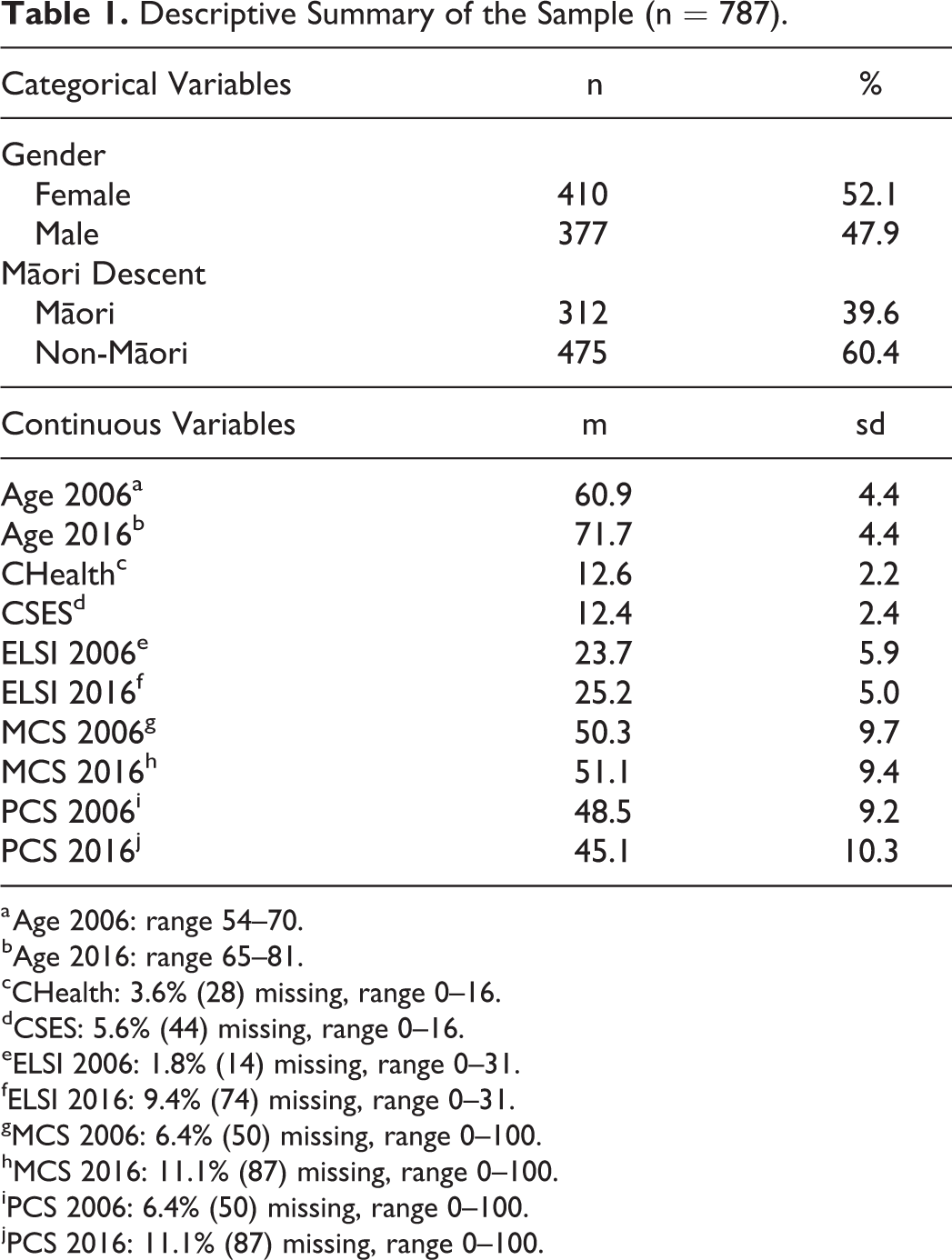
a Age 2006: range 54–70.
bAge 2016: range 65–81.cCHealth: 3.6% (28) missing, range 0–16.
dCSES: 5.6% (44) missing, range 0–16.eELSI 2006: 1.8% (14) missing, range 0–31.
fELSI 2016: 9.4% (74) missing, range 0–31.gMCS 2006: 6.4% (50) missing, range 0–100.
hMCS 2016: 11.1% (87) missing, range 0–100.
iPCS 2006: 6.4% (50) missing, range 0–100.
jPCS 2016: 11.1% (87) missing, range 0–100.
Correlation Matrix for All Variables (n = 787).
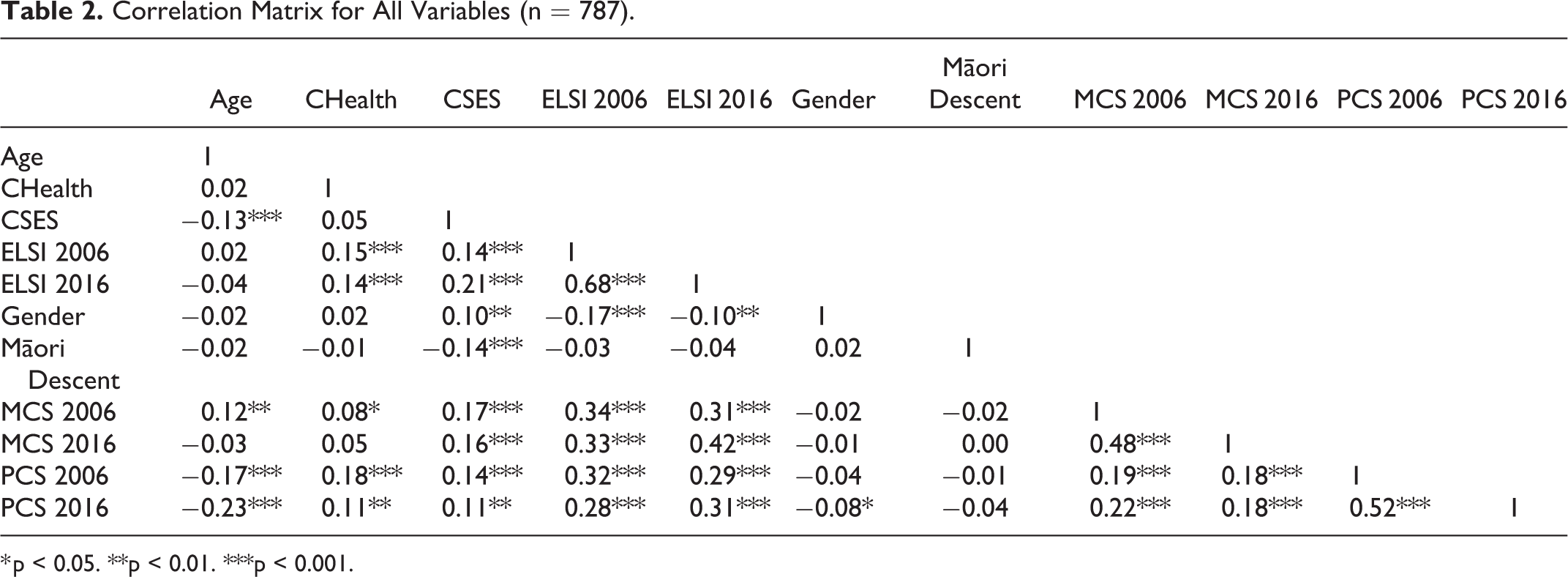
* p < 0.05. **p < 0.01. ***p < 0.001.
Hierarchical regression analyses
Two hierarchical regression analyses were performed with PCS as the dependent variable, the first predicting physical health in 2006 and the second predicting physical health in 2016 (see Table 3). In 2006, the final model explained 15.6% of the variance (R2) in physical health scores, f 2 = 0.18, p < 0.001. Age, CHealth, CSES and ELSI had a medium significant effect on the variance explained in the model (β = −0.164, p < 0.001; β = 0.137, p < 0.001; β = 0.070, p < 0.05), with ELSI making the largest contribution (β = 0.294, p < 0.001). In 2016, the final model explained 15% of the variance in physical health scores, f 2 = 0.18, p < 0.001. Again, age and ELSI had a medium significant effect on the variance explained in the model (β = −0.218, p < 0.001; β = 0.275, p < 0.001); however, CHealth only had a small significant effect (β = 0.071, p < 0.05) and CSES no longer made a significant contribution to the model.
Hierarchical Multiple Regression Analyses of Socio-Demographic Variables, Childhood Circumstances and Adult Socioeconomic Status on Physical Health in 2006 and 2016 (n = 787).
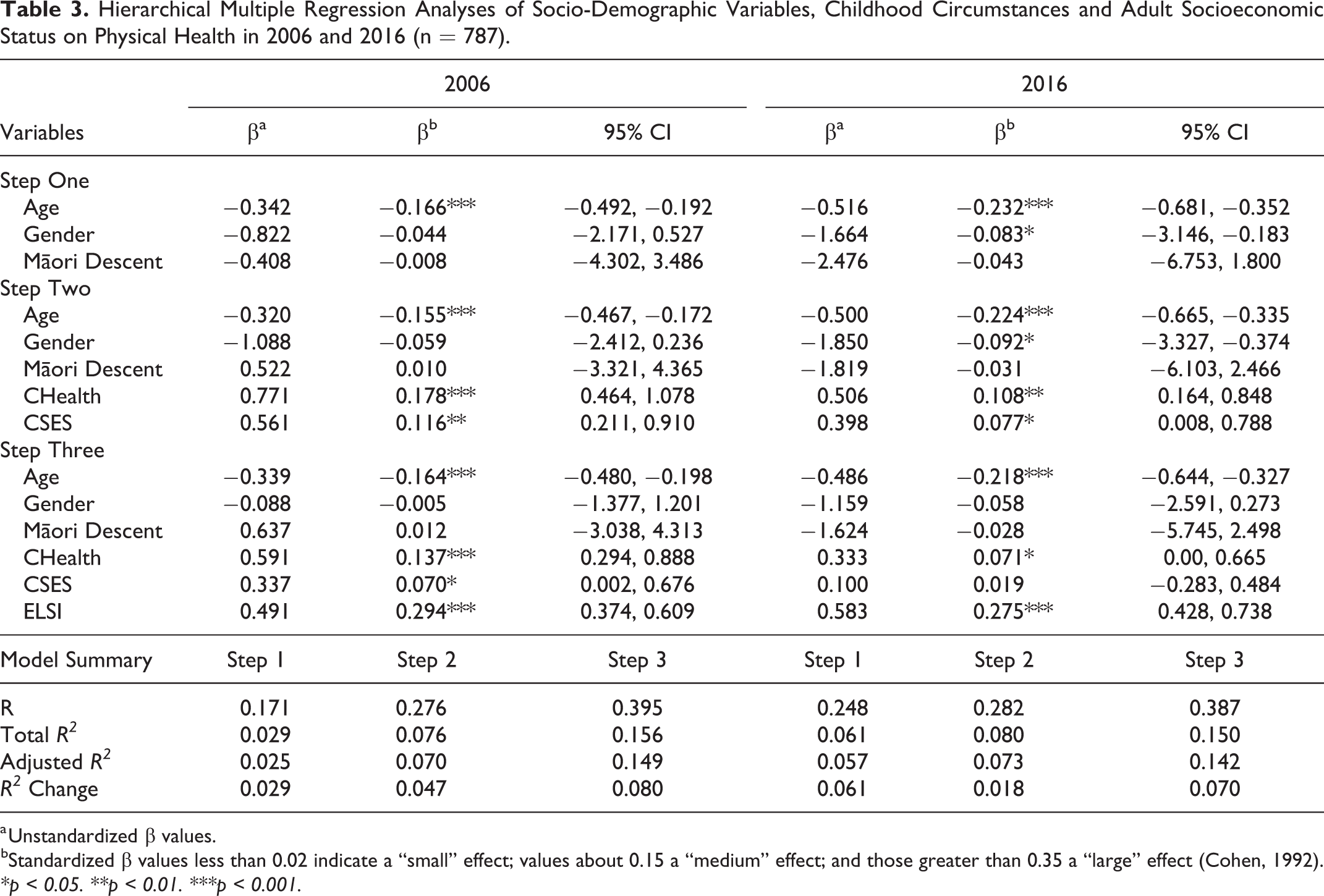
a Unstandardized β values.
bStandardized β values less than 0.02 indicate a “small” effect; values about 0.15 a “medium” effect; and those greater than 0.35 a “large” effect (Cohen, 1992).
*p < 0.05. **p < 0.01. ***p < 0.001.
Table 4 displays the results of two hierarchical regression analyses predicting mental health, in 2006 and 2016. In 2006, the final model explained 15% of the variance in mental health scores, f 2 = 0.18, p < 0.001. Age, CSES and ELSI had a medium significant effect on the variance explained in the model (β = 0.135, p < 0.001; β = 0.143, p < 0.001), with ELSI making the largest contribution (β = 0.315, p < 0.001). In 2016, the final model explained 18.7% of the variance in mental health scores, f 2 = 0.23, p < 0.001. CSES only had a small significant effect (β = 0.077, p < 0.001), while ELSI had a large significant effect (β = 0.071, p < 0.05) on the variance explained in the model. Furthermore, the effect of CSES diminished after the addition of ELSI in step three. It is evident that when controlling for ELSI, CHealth and CSES had little explanatory power in both models. CHealth did not make a significant contribution to the model in 2006 or 2016.
Hierarchical Multiple Regression Analyses of Socio-Demographic Variables, Childhood Circumstances and Adult Socioeconomic Status on Mental Health in 2006 and 2016 (n = 787).
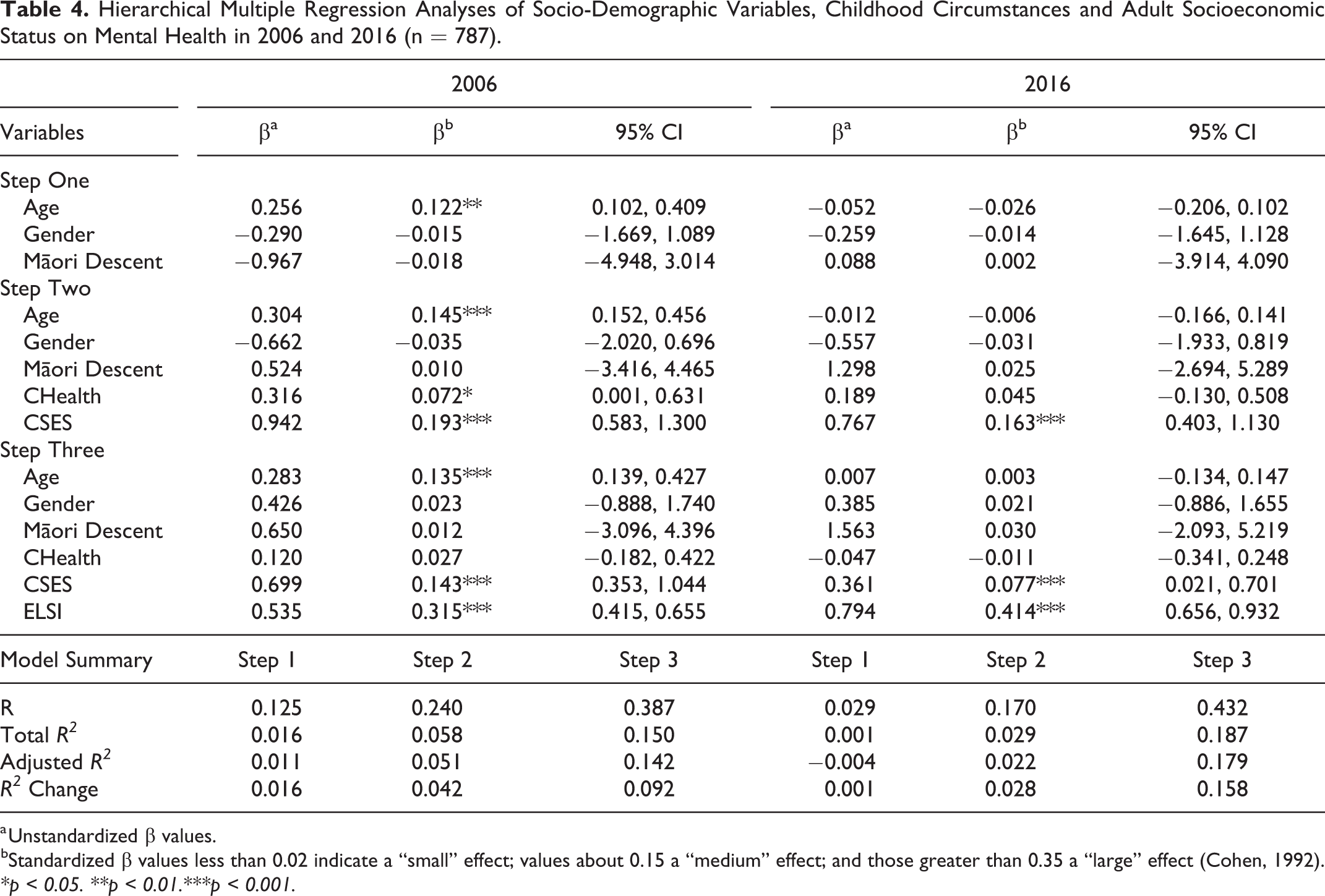
a Unstandardized β values.
bStandardized β values less than 0.02 indicate a “small” effect; values about 0.15 a “medium” effect; and those greater than 0.35 a “large” effect (Cohen, 1992).
*p < 0.05. **p < 0.01.***p < 0.001.
Mediation analyses
The 2006 data indicated significant direct relationships between CHealth and PCS, and MCS, mediated by ELSI (see Table 5), supporting partial mediations. For the 2016 data, results indicated that a significant and direct relationship was found between CHealth and PCS, but not to MCS. These results indicated that ELSI fully mediated the relationship between CHealth and MCS, and partially mediated the relationship between CHealth and PCS. As with CHealth, the 2006 data indicated significant direct relationships between CSES and PCS, and MCS, mediated by ELSI, supporting the partial mediations. However, in 2016, results indicated that direct and significant relationships between CSES and PCS, and MCS were not supported. These results indicated that ELSI fully mediated the relationship between CSES and PCS, and MCS.
Direct and Indirect Effects on Physical and Mental Health in 2006 and 2016.
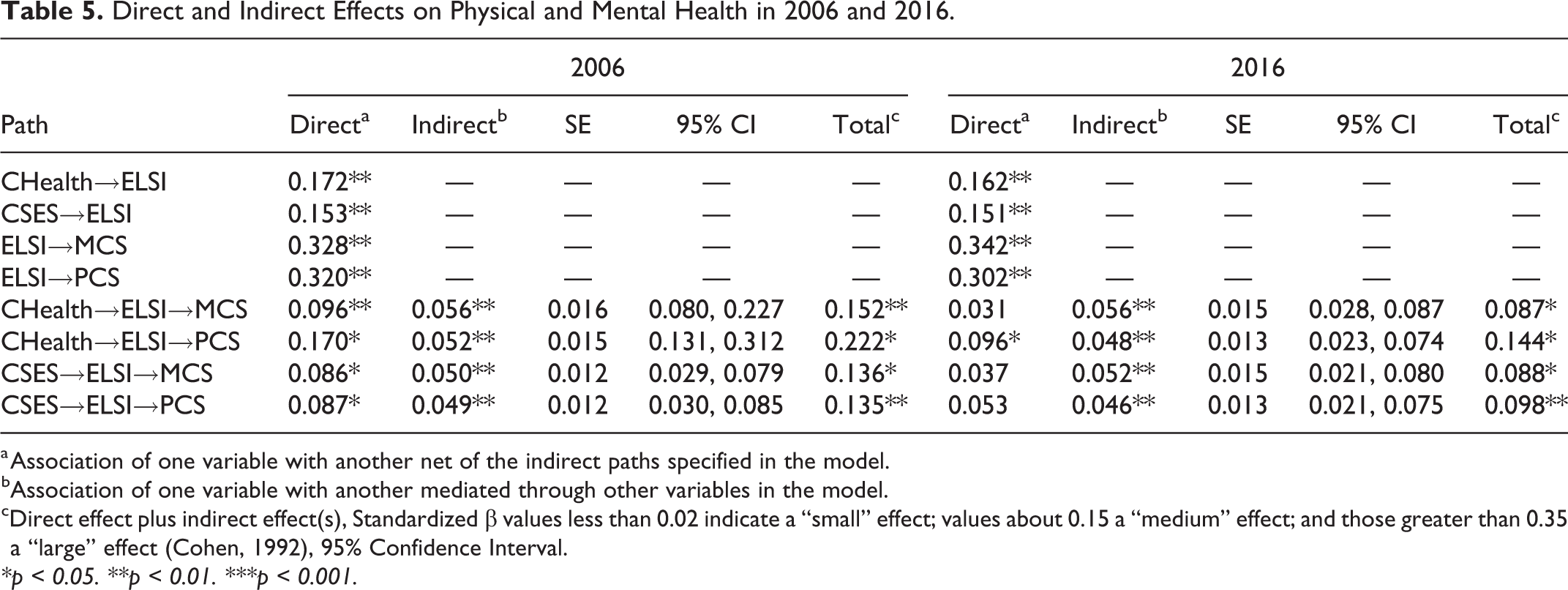
a Association of one variable with another net of the indirect paths specified in the model.
bAssociation of one variable with another mediated through other variables in the model.cDirect effect plus indirect effect(s), Standardized β values less than 0.02 indicate a “small” effect; values about 0.15 a “medium” effect; and those greater than 0.35 a “large” effect (Cohen, 1992), 95% Confidence Interval.
*p < 0.05. **p < 0.01. ***p < 0.001.
Discussion
The determinants of late life health are multidimensional and complex, and the different pathways that lead from childhood socioeconomic conditions to late life health may operate together in complicated ways. Our results demonstrated that childhood socioeconomic status and childhood health were significantly related to late life mental and physical health. This is consistent with the wider literature which has established that health conditions and socioeconomic status during childhood are associated with health in later life (Angelini et al., 2019; Arpino et al., 2018; Lam et al., 2019; Pakpahan et al., 2017). Circumstances during childhood have a significant impact on health in later life because this is where the pathways that lead to health outcomes begin (Arpino et al., 2018; Pakpahan et al., 2017). However, results also indicated that the relationships between childhood circumstances and late life health may reflect both direct and indirect pathways.
Economic living standards in later adulthood accounted for more of the variation in health outcomes in later life than childhood conditions. These results demonstrated that the effect of childhood conditions diminished with the addition of economic living standards in the final step of the hierarchical regression models. This provides indicative evidence for the accumulation of health inequalities. Economic living standards may have explained the largest proportion of the variance in physical and mental health in later life due to the accumulation of socioeconomic disparities beginning in childhood. These results are also consistent with previous research which has argued that socioeconomic status in adulthood is a key indirect mechanism through which childhood socioeconomic status impacts later life health outcomes (Agahi et al., 2014; Pakpahan et al., 2017). Furthermore, Case et al. (2005) demonstrated that health during childhood had a lasting direct effect, as well as an indirect impact on health and socioeconomic status in mid-life. The present study expanded on this research and demonstrated consistent results with participants in later life.
A distinctive contribution of the present study was the repeated data analyses at two distinct time points, which demonstrated that the impact of adult economic living standards became more important than the impact of childhood circumstances, over time. Using 2006 health outcome data, partial mediation was found; there was a significant direct effect of childhood health and childhood socioeconomic status on later life health as well as a significant mediational role for late life living standards. Contrastingly, using the 2016 health outcome data the pattern of results shifted. All but one of these relationships were now fully mediated by late life living standards. Earlier in the life course childhood conditions and adult socioeconomic status had both direct and indirect impacts on later life health. However, after participants had aged 10 years, the direct impact of childhood conditions on later life health was not apparent. In addition to aging 10 years between these two time points, the participant’s socioeconomic circumstances may have altered due to their eligibility for income support changing as they age. These results demonstrate that the socioeconomic context at each time point has a significant impact on health outcomes in later life, above the impact of childhood circumstances. Therefore, collecting outcome data at two distinct time points has enabled the clarification of the relationship between childhood circumstances and health outcomes across older age, rather than at a fixed point in later life.
The leveling of health inequalities in older age is not separate from the socio-political context in which aging occurs. The provision of resources associated with increasing age includes age-related healthcare resources as well as pension provision. These shape the relationship between socioeconomic status and health (Brown et al., 2012, 2016). By providing basic resources previously unavailable to those of low socioeconomic status, disparities may be reduced between socioeconomic groups (Adler & Newman, 2002). Therefore, health and mortality outcomes may become less related to socioeconomic status than occurs earlier in the life course and reflective of concurrent socioeconomic status. It is therefore important to examine health outcomes across the life course and in the context of age-related social policies.
In Aotearoa New Zealand, on reaching 65 years of age, citizens and permanent residents become eligible to receive universal superannuation. For some older New Zealanders, particularly those with low living standards across their lifetime, eligibility for New Zealand Superannuation lifts their living standards in retirement (Allen, 2019). At the beginning of the HWR study, only 25% of participants were eligible to receive universal superannuation. However, at the time of the fifth wave of data collection in 2016, all participants were 65 years or older and eligible to receive universal superannuation. Due to this, at the second point of data analysis, participant’s income reached a minimum threshold and therefore there was less variability in the lower range of living standards at this later point in time. By conducting the mediation analyses at different outcome ages the present study was able to expand on the results of international research which suggests that both direct and indirect effects of childhood circumstances influence outcomes in later life (Case et al., 2005; Zhang et al., 2016; Zimmer et al., 2016). In the Aotearoa New Zealand context, the direct effect of childhood circumstances does not persist into later life. Instead, childhood conditions work only through their influence on socioeconomic resources available in later life. This provides some clarity regarding the impact of childhood conditions on health in older age, relatively separate from the dominating effect of concurrent economic living standards.
The present findings are significant in terms of our understandings of how childhood conditions persist over the life course. It appears that low childhood socioeconomic status has a detrimental effect through midlife and early older age. Equally, those with high socioeconomic status in childhood benefit from a protective effect through midlife and early older age. Beyond early old age, late life living standards become more important for predicting later life mental and physical health. This has important policy implications. Much of the debate in policy tends to suggest that child poverty alleviation will enable lifelong gains. However, our findings demonstrate that childhood is not the only opportunity to intervene. Adverse childhood effects can be offset by life-course factors such as education, occupational status and material wealth (Pakpahan et al., 2017). Although childhood is an important period to invest resources, education and support, this investment will also need to be sustained throughout the life course to protect mental and physical health as people age (Ferraro et al., 2016; Heckman, 2013). Attention to socioeconomic resources and maintaining late life living standards is essential in ensuring ongoing mental and physical health for older people.
Limitations
First, those who experience significant disadvantage during childhood may not be included in research due to factors such as health, mortality, institutionalization and incarceration (Ferraro et al., 2016). This is likely to be particularly important in longitudinal research. This may have resulted in the underestimation of the effect of childhood health and socioeconomic disadvantage on health incomes; it is likely that a more representative sample would show a stronger effect. Second, the childhood health composite measure assessed physical health in childhood. Consequently, this measure had a stronger association with physical health outcomes in later life than with mental health outcomes, as demonstrated in the hierarchical regression models. More broad-based measures of childhood health may demonstrate different patterns of relationships, which would contribute to understanding how health in childhood influences ongoing health and wellbeing throughout the life course.
Third, recall bias may have had an impact on the childhood circumstances data, due to the retrospective data collection methods. The measurement of childhood socioeconomic status was based on relatively objective and concrete items; however, the measurement of childhood health may have been more susceptible to recall bias due to the subjective nature of the items. Those who experience poor health in adulthood may be more likely to report health problems during childhood (Smith, 2009). Finally, due to the repeated cross-sectional design of the study, it was not possible to determine the direction of the relationship between economic living standards and physical and mental health. However, the present research has explored a key mediator and the impact it has based on an a priori model from the previous research. Knowing the impact of this important potential mediator at two distinct time points can be used to build further model testing including additional intervening variables. For example, examining the role of education and employment pathways may contribute significantly to our understanding of when and how early childhood conditions predict health trajectories over the life course.
Conclusion
Conditions in childhood are important predictors of late life mental and physical health and improving the socioeconomic conditions of children will have positive repercussions over the life course. Childhood circumstances also structure the development of trajectories that persist over the life course, as shown by the influence of lifetime living standards on late life mental and physical health. This provides evidence that health in later life can reflect a lifetime of unequal access to resources to support good health. Furthermore, while the impact of childhood conditions persists into early older age, the direct effect was not sustained into later older age. This demonstrates that experiencing disadvantages in childhood circumstances has long-lasting and harmful effects on later life health, both independently and through late life living standards. Recognizing the importance of childhood as the start of a mediated, incremental process during the life course is the first step in addressing these health disparities in later life. However, maintaining late life living standards is also a key mechanism to ensure the ongoing health and wellbeing of older people.
Footnotes
Authors' Note
Brendan Stevenson is now affiliated with Allen+Clarke Consulting, Wellington, New Zealand.
Data Availability
The data that support the findings of this study are available on request from the Health and Ageing Research Team researchers.
Declaration of Conflicting Interests
The author(s) declared no potential conflicts of interest with respect to the research, authorship, and/or publication of this article.
Funding
The author(s) disclosed receipt of the following financial support for the research, authorship, and/or publication of this article: This work was supported by the New Zealand Health Research Council [HRC05/311] and the Ministry of Business, Innovation and Employment [MAUX1403].
