






Abstract
The use of digital technology by older adults has improved in recent years in response to the need for their functional adaptation to an increasingly technological social context. Understanding this type of technological adaptation has recently become an important field of inquiry in both social and gerontological studies. Working within this framework, the aim of this study is to identify the main determinants that influence the intention of older people to use digital technology in their daily lives, using the Technological Acceptance Model. A study was carried out with the participation of 1155 people over 65 years of age in Spain. Confirmatory Factor Analysis and structural equation models (SEM) were performed. The results show that the TAM is a useful model to explain the intention of older adults to use Digital Technology, showing a high predictive power, highlighting Perceived Usefulness and Perceived Ease of Use as the main predictor variables.
Keywords
Introduction
The expansion, improved connectivity and ubiquity of digital technologies (DT) are some of the factors which explain why many researchers are interested in analyzing their use both in relation to certain socialization processes and in the field of aging. Special attention has been paid to assess how certain age groups integrate technology into their everyday life and how they cope with these challenges. In recent years, we have seen a considerable increase in the number of studies analyzing the use of technologies by older persons (over 65 years of age). This investigation is focused on assessing the effects of new digital technologies on the vital and functional performance of older individuals and groups (Hofer et al., 2019; Seifert et al., 2020).
These studies primarily seek to analyze the attitudinal, cognitive, and emotional components that shape certain mental representations that, in turn, condition the use of a given technology or set of technologies. The most widely used theoretical and empirical framework for this type of research are the so-called Technology Adoption Models (Technology Acceptance Model, TAM; Unified Theory of Acceptance and Use of Technology, UTAUT, etc.) (Chen & Chan, 2011; 2014; Morris & Venkatesh, 2000; Mostaghel & Oghazi, 2017; Nägle & Ludger, 2012; Peral et al., 2014). This approach is already widely applied in the fields of academia and teaching, online banking, marketing or online shopping, but more and more studies are applying it to explore the behavioral intentions of technological use in older adults (Chen & Chan, 2011; Czaja et al., 2018; Elliot et al., 2014; Guner & Acarturk, 2020; Martín-García et al., 2021 etc.).
The main theoretical basis of such expectancy-value approaches suggests that an individual’s acceptance of a technology is influenced by his or her intention to use it and this, in turn, by a set of core beliefs about the benefits and outcomes of its use. The interest in using these models lies in the fact that they provide a comprehensive conceptual framework to describe the relationships between the predictor variables and the main criterion variables under study. However, despite the wide support that the TAM model or similar ones, such as the UTAUT, have received in the literature, several recent reviews suggest that there is neither a unique formulation of these models for each type of technological use, nor a consensus on the importance of the main constructs that they propose (Abdullah & Ward, 2016; Granić & Marangunić, 2019; Scherer et al., 2019).
Another weakness of the TAM models is the absence of affective or motivational factors whose effects are considered to be behaviorally relevant (Bagozzi, 2007). Thus, it is understood that there are important differences in the acceptance and use of a technology depending on an individual’s characteristics (Venkatesh, 2000). Studies related to the application of the TAM model to the context of aging have highlighted the need to incorporate new factors that more broadly explain the use of a given technology in this age group (Moon & Kim, 2001; Shi et al., 2021) given that very little is known currently about their technological use behavior (Cimperman et al., 2016; Hoque & Sorwar, 2017).
For this reason, the main research objective of this article will be to analyze the explanatory and predictive power of a model of digital technology use in people over 65 years of age on the basis of the theory proposed in the TAM models. To this end, we explore several variables in our theoretical TAM model, which we justify in the following section.
Theoretical Background
Formulation of the Theoretical Model: Research Hypotheses
Technological Acceptance Models (TAM) derive from the Theory of Reasoned Action (TRA), proposed by Fishbein and Ajzen in the 1970s (Fishbein & Ajzen, 2011), and the Theory of Planned Behavior (TPB), a variant introduced by Ize Ajzen in 1991 (Ajzen, 1991). Both theories support the idea that much of human behavior has a rational basis determined by a subject’s intention to perform that action or behavior. The original idea put forward by these theories established that Behavioral Intention (BI) (defined as the subjective probability of performing that behavior) is determined by the Attitude Toward the Behavior (AT), configured on the basis of a series of core beliefs about the consequences of performing that action and by the Subjective Norm (SN) or the subject’s perception that people important to him will approve his performance of that behavior. The development of the TAM models, originally proposed by Davis in the 1980s for the study of usage behaviors of different types of technologies (Davis et al., 1989) and group beliefs that give rise to Attitude into two types: Perceived Usefulness (PU) and Perceived Ease of Use (PEOU). The initial TAM model has undergone modifications and extensions (e.g., TAM2, TAM3) (Venkatesh & Bala, 2008), seeking to improve the predictive power of the model and also trying to respond to technological usage behavior in complex systems such as corporate, educational, and/or social contexts, in which the technological component is important, but in which another series of social, contextual, affective, etc., variables are also involved. Therefore, the model has been accommodating new explanatory variables related to affective factors, individual characteristics of users or factors related to the effect or social and contextual influence. Although these models address some key aspects of technology acceptance by older adults, Astell et al. (2020) suggest that we lack a more general theoretical model that could explain why older adults frequently reject new technologies and devices, despite their benefits and useful applications.
In relation to aging, the latest TAM models make use of and explore new sociodemographic variables, in addition to age or gender, namely, educational level, income, race/ethnicity, among others. This line of inquiry has begun to consolidate and can be summarized with the acronym STAM (Senior-TAM) which focuses on the study of the acceptance of digital technology in a general way by older people (Cabero Almenara & Llorente Cejudo, 2020; Berkowsky et al., 2017; Chen & Chan, 2014; Chen & Lou, 2020; Dogruel et al., 2015). Studies conducted so far usually analyze usage behaviors with respect to a particular type of technology: internet use (Guner & Acarturk, 2020; Jansen-Kosterink et al., 2019; Larsson et al., 2013; Niehaves & Plattfaut, 2014); robot use (Roberts et al., 2019; Souders et al., 2017; Yang & Shih, 2020); electronic payment (Morga, 2016; Peral-Peral et al., 2015); use of smartphone (Lee, 2019; Petrovčič et al., 2015); devices related to the provision of tele-healthcare (Huang, 2011; Scerra, 2016; Zhou et al., 2019); use of Social Networks (Braun, 2013), or use of tablets (Gatti, et al., 2017), etc. Existing studies emphasize the significant role of age regarding the use of the internet and other devices, as well as with respect to skills and experience with technological innovations. Regarding Internet use, it has been suggested that the group of people of 75 years and older use Internet less frequently than the group aged 65–75 years (Crouch & Gordon, 2019; Vulpe & Crăciun, 2020). However, when using the Internet for health purposes, the differences between age groups appear to be less marked (Macdonald & Hülür, 2021).
More recent studies are beginning to offer a series of proposals that try to model the possible effect of these new explanatory factors on the behavior of technological use in older adults. Age does not appear to be the only factor explaining the differences in technology use and acceptance by older adults. Other factors that could explain the reduced rate of technology adoption by seniors may be related more to the design of technology-based devices or contextual factors, such as health status (when people have a chronic disease the probability of patients using web-based health resources seems to increase). Educational level, e-literacy, and exposure to technology earlier in life have also been suggested as relevant variables (Crouch & Gordon, 2019; Vulpe & Crăciun, 2020). Attitudes toward computers are also generally more positive among younger cohorts (Pruchno, 2019). Device design may also be an explanatory factor for the low adoption of technology by older adults, as these devices often don’t adequately meet their physical and cognitive needs (Vulpe & Crăciun, 2020).
Ageism appears to a be another factor influencing technology adoption. Choi et al. (2020) have suggested that people who experience ageism may be less willing to use the Internet, perceive it as unhelpful, and often find it more difficult to use. As a consequence of this digital divide, older people may miss out on technology-based opportunities (in relation to health, leisure, financial and administrative issues, well-being…) (Choi et al., 2020). Given the novelty of this line of research, no consensus has yet been reached on the role or effect of certain constructs or on the precise definition of a baseline model (Chen & Lou, 2020). Different types of explanations and models have been proposed with a similar theoretical approach but using different explanatory factors. For these reasons, it is necessary to adapt the general TAM model to the particular circumstances of study in each case. In this study, we will consider only the main constructs that can predict technological use behavior in older people and will not deal with the moderating effect of other types of individual external variables.
Latent Variables of the Model
Intention and Technological Use
The two main criterion variables of TAM are the behavioral intention to use technology by older adults and the current use of it (technological use). The analysis of both is starting to be of scientific interest in the field of gerontology. Some studies have indicated, for example, the positive relationship between the use of email and social networks and the social, mental and emotional well-being of older adults (Carpenter & Buday, 2007; Karavidas et al., 2005; Slegers, et al., 2008; Zickuhr & Madden, 2012). Other authors have highlighted the positive effects of technology on social interaction and social support (Cody et al., 1999; Slegers et al., 2008), helping to prevent depressive states (Barg et al., 2006; Cacioppo et al., 2006; Cotten et al., 2012; McConatha et al., 1994; Shapira et al., 2007) and/or loneliness (Choi et al., 2012; Shah et al., 2021). Finally, digital technology (DT) provides users with better resources for performance in everyday life, for example, access to health information, banking, and shopping (Selwyn et al., 2003; Slegers et al., 2008). However, despite the benefits that DT can offer to older people, the fact is that most of the research that supports these findings offers only preliminary results and many others studies do not find clear significant relationships derived from the use of DT (Heyn Billipp, 2001; Fazeli et al., 2013; Fokkema & Knipscheer, 2007; Olson et al., 2002).
Perceived ease of use and usefulness of digital technology
The vast majority of studies conducted through the TAM approach assume that perceptions of usefulness are associated with the acceptance and usage behavior of particular products (Chen & Chan, 2011). Based on this, it is suggested that users will accept a new technology when their perceptions of the usefulness or advantage of its use are clearly positive. In the specific case of older adults, some authors point out that if they do not perceive the usefulness of this type of technology, they will not use it (Goher et al., 2017; Conci et al., 2009). The other main variable in TAM is (PEOU). In research conducted using the TAM model in the general population, little influence of this variable on Behavioral Intention (BI) is observed, but in the case of older adults, it does turn out to be an important explanatory factor (Pan & Jordan-Marsh, 2010; Schehl et al., 2019). The main reason for this discrepancy seems obvious if one considers that older adults have less experience and training with digital technology. Therefore, the perceived difficulty of technological use becomes a clear deterrent for an effective use of this type of technology. PEOU has also been correlated with increased anxiety and stereotype threat related to age (Mariano et al., 2021).
Extension of the TAM Model
Perceived Technological Competence
Perceived Technological Competence reflects individual perception of competence in technological environments. In other models of technological acceptance and adoption, similar variables, such as general self-efficacy or perceived technological self-efficacy, are considered. As proposed by Kamin et al. (2017), we understand the perception of Technological Competence to be the perception of one’s own competence and its relation to technology. There is a large body of research in the literature on the competencies of certain types of users (in particular teachers or students) with respect to the use of Information and Communication Technologies (ICT). However, current knowledge about this type of competencies in the older population is scarce.
Some studies have highlighted the importance of assessing this type of competencies because of their decisive effects on the improvement of independence and life satisfaction, on increased social contact and, consequently, on the reduction of loneliness in the older adults (Kaspar, 2004). In this regard, Gatti et al. (2017) have shown how the lack of competence and control over technology can be associated with blockages and confusion, which limits the individual to undertake certain actions related, for example, to learning and continuous training. Other studies are also evaluating the lack of competence in the use of technology as a useful marker that can contribute to the detection of cases of dementia or severe and mild cognitive impairment (Ranieri et al., 2021; Rosenberg et al., 2009).
In summary, we include the PTC variable in our model, understanding that if an older adult perceives himself as competent in the use of digital technology, he will perceive the usefulness of this technology (PU) in a more positive way. Likewise, the PTC will positively improve the perception of ease of use of the DT (PEOU).
Perceived Safety of Technology
The Perceived Safety of Technology variable is related to the sense of safety and reliability while using technology (Boise et al., 2013). For many older adults, new technological developments often bring with them feelings of insecurity because of the lack of control they seem to have over them. Lack of knowledge and unfamiliarity with these types of devices can also generate in older adults a sense of loss of privacy or security, leading them to think that they can be used inappropriately. Consequently, a greater sense of security could be a protective resource against the risks associated with technological environments and, therefore, we understand that the Perceived Safety of Technology variable may affect beliefs related to the PU and PEOU of technology.
Technological Anxiety
In older adults, worries and anxieties seem to play a critical role in the use of technology (Czaja et al., 2006; Ha & Park, 2020; Hofer et al., 2019; Laguna & Babcock, 1997). In this sense, technological anxiety constitutes one of the main barriers identified for technology adoption in this group (Guner & Acarturk, 2020; Knowles & Hanson, 2018). This type of anxiety generally manifests itself in the form of apprehension, nervousness, and general discomfort, factors that can influence the perceived ease and usefulness of digital technology (Gelbrich & Sattler, 2014). Pioneering studies in this regard, such as those by Ellis and Allaire (1999), found in a sample of older adults (aged 60–97) that interest in technology could be negatively predicted by computer anxiety and age. In the same way, recent studies, conducted in Italy by Di Giacomo et al. (2019) in adults aged 50–67 years, confirm computer anxiety as a predictor mechanism of technophobia and anxiety. According to these authors, the anxiety that DTs can cause could prevent older adults from taking advantage of the benefits derived from its use in everyday life, thus increasing the digital divide with younger people. For all these reasons, we believe it would be of interest to include the variable of Technological Anxiety in the predictive model for the intention to use technology in older people.
Economic cost
Finally, in our model, we include another contextual factor with respect to the economic cost of the technological devices. In our case, since we are not analyzing a corporate context, such as a work or educational environment, we considered as a contextual conditioning factor only the cost that the purchase of certain technological devices may have for older adults. It is understood that the general loss of income applicable to older adults and the fact that in many cases these types of devices are not considered essential goods may condition their purchase and therefore their use (Cohen-Mansfield et al., 2005; Larsson et al., 2013; Peek et al., 2014).
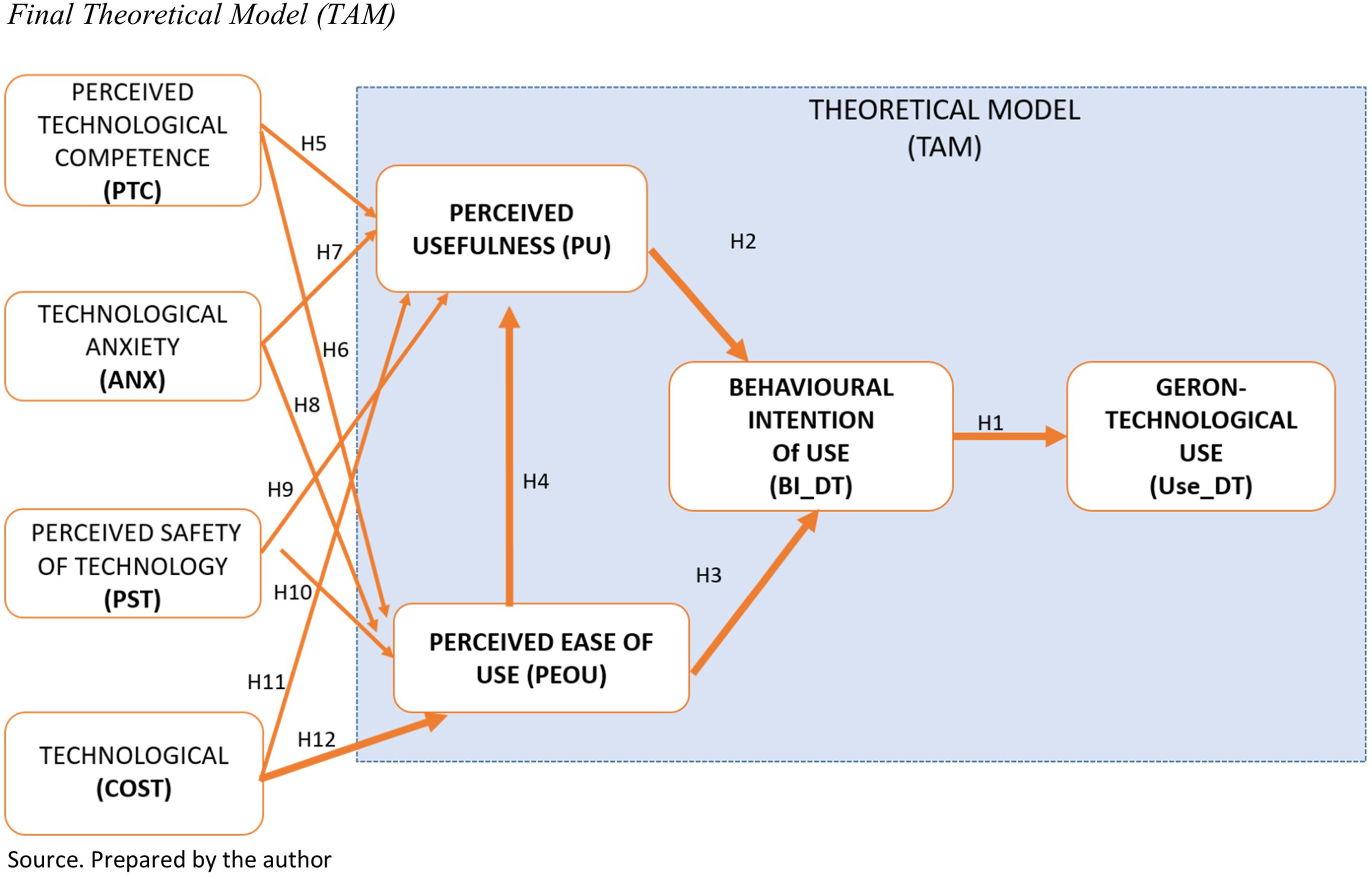
From the above, the following research hypotheses are proposed Figure 1: (1) H1: Intention to use digital technology (BI_DT) predicts its actual use in older people (USE_DT). (2) H2: PU of digital technology (PU) positively and significantly affects behavioral intention to technological use (BI_DT) in everyday life contexts. (3) H3: Perceived Ease of Use (PEOU) positively and significantly affects behavioral intention to actual use (BI_DT) in everyday life contexts. (4) H4: Perceived Ease of Use (PEOU) positively and significantly affects PU of digital technology (PU). (5) H5: Perceived Technological Competence (PTC) positively and significantly affects PU of digital technology (PU). (6) H6: Perceived Technological Competence (PTC) positively and significantly affects (PEOU). (7) H7: Technological Anxiety (ANX) negatively and significantly affects PU. (8) H8: Technological Anxiety (ANX) negatively and significantly affects PEOU. (9) H9: Perceived Safety of Technology (PST) positively and significantly affects PU of digital technology (PU). (10) H10: Perceived Safety of Technology (PST) positively and significantly affects PEOU. (11) H11: Economic cost (COST) negatively and significantly affects PU. (12) H12: Economic cost (COST) negatively and significantly affects PEOU. Proposed theoretical model (Senior-TAM) method. Note: TAM: Technological Acceptance Model.
Method
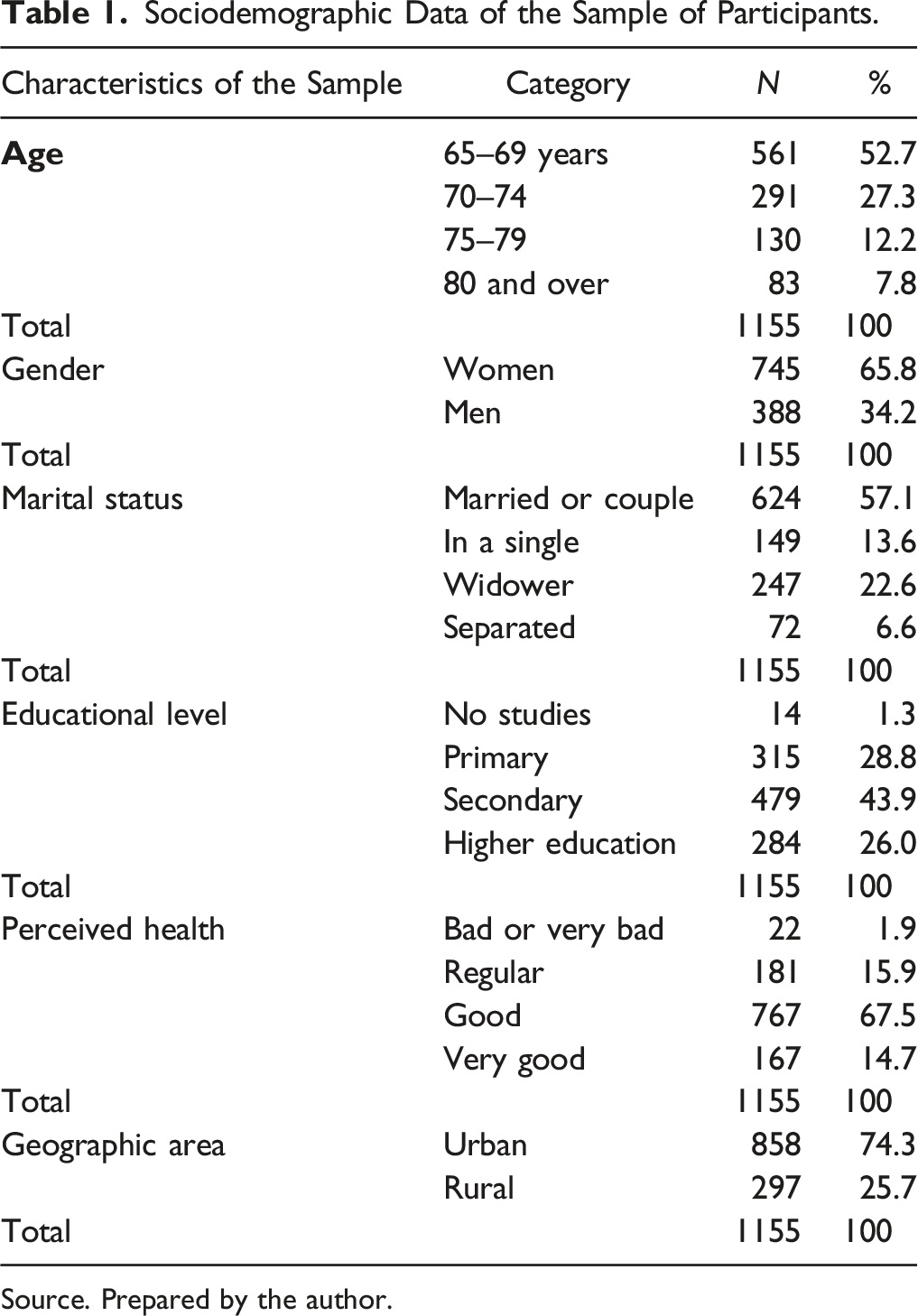
Participants
Sociodemographic Data of the Sample of Participants.
Source. Prepared by the author.
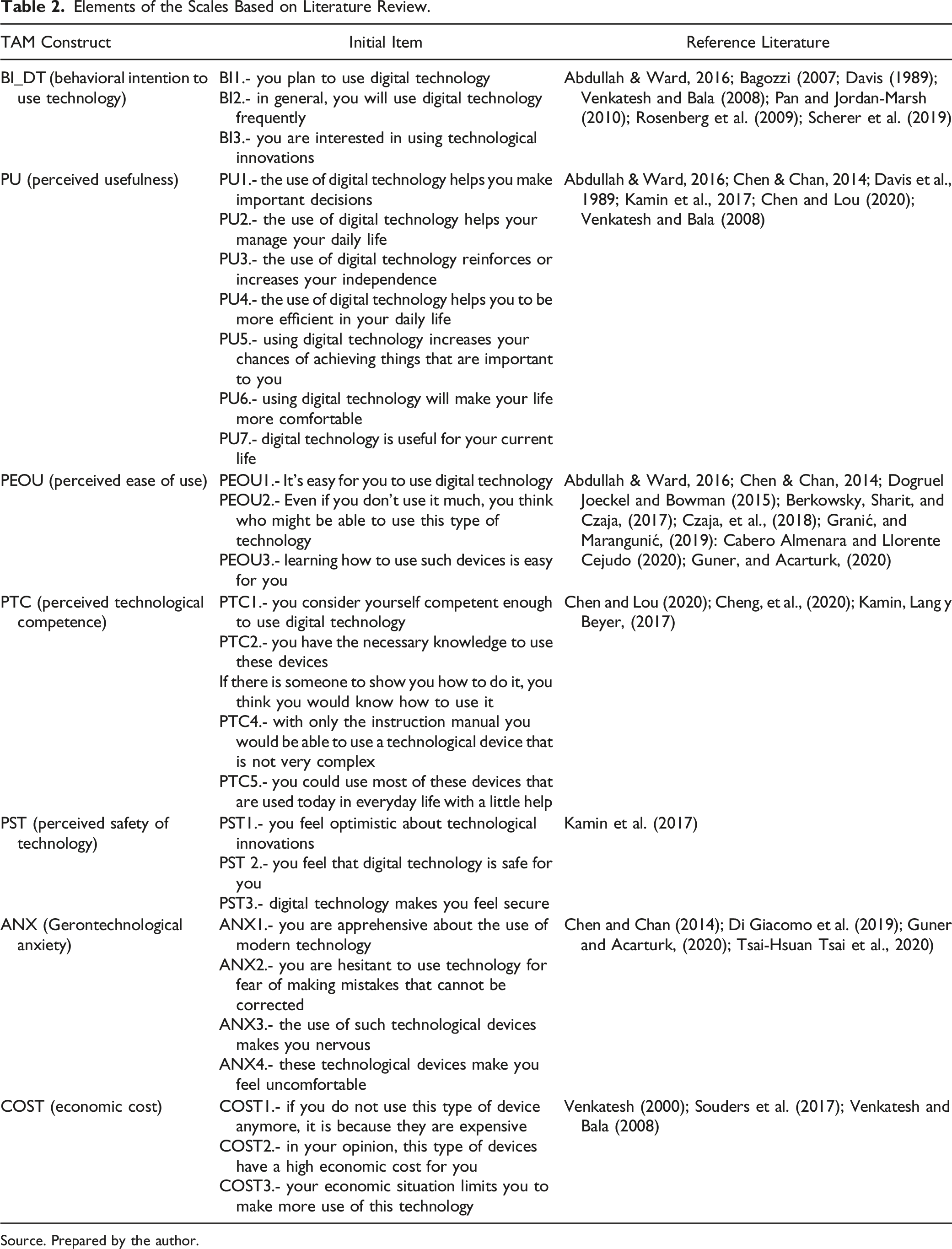
Measures
Elements of the Scales Based on Literature Review.
Source. Prepared by the author.
Use of Digital Devices (Technological Use).

Source. Prepared by the author.
Statistical Analyses
Adjustment of the Measurement Model: Reliability and Validity of the Scales
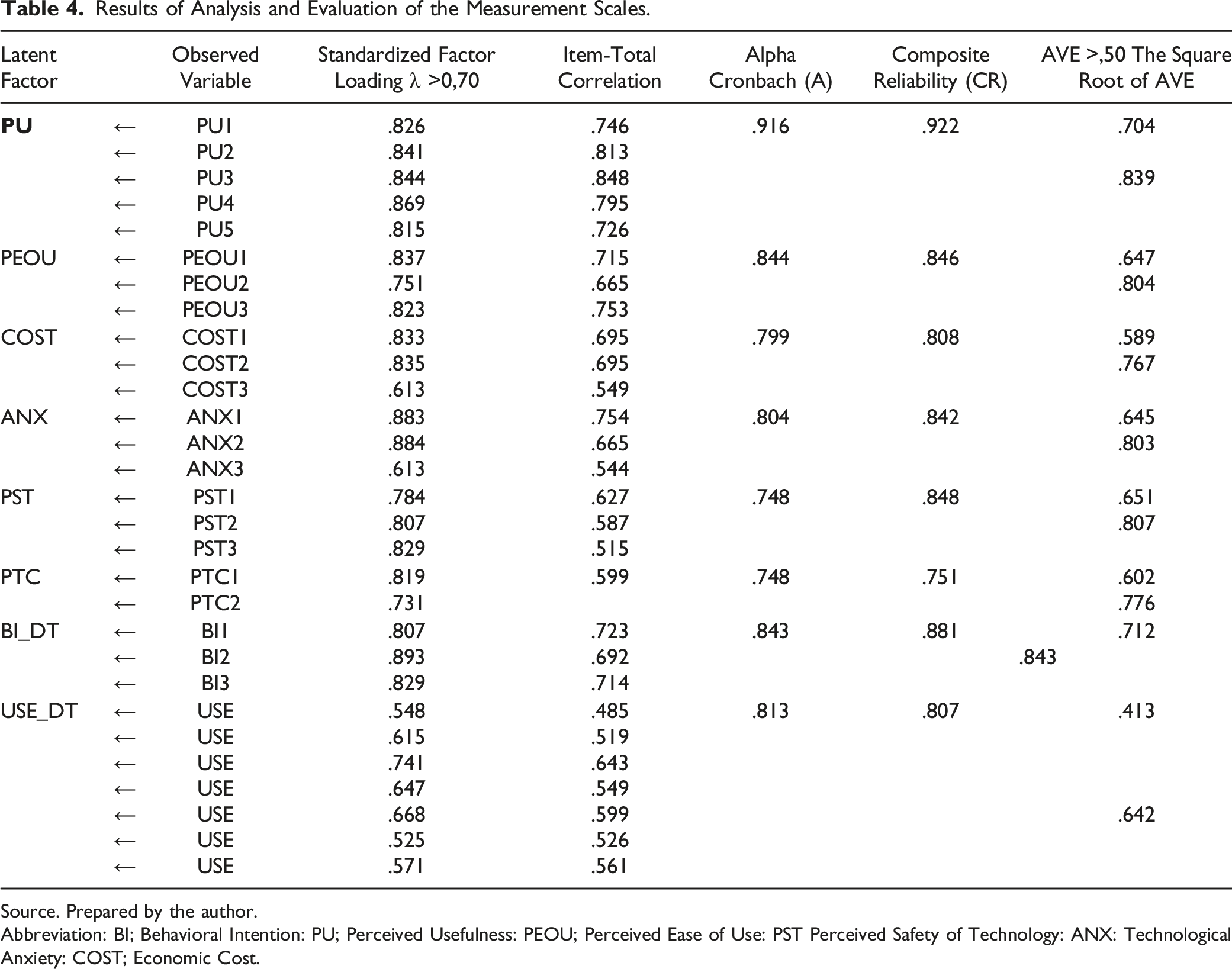
To evaluate the homogeneity of the measurement scales of each of the variables appearing in the model, the correlation of the items with the total scale and Cronbach’s alpha coefficient were used. For the item-total correlation, the criterion was that all cases should obtain values above the minimum required (>0.3; Nurosis, 1993) and alpha values equal to or greater than 0.7 (minimum established). In the second phase of validation of the proposed constructs, a confirmatory factor analysis (CFA) was carried out according to the structural equations approach structural equation models (SEM) with parameter estimation, using the maximum likelihood (ML) method, since the conditions for parameter estimation were met (sample size, use of interval level measures, and multivariate normal distribution). The AMOS version 25.0 statistical program was used for this purpose. A measurement model was analyzed in which the different latent variables were freely correlated. The model was identified given that each latent variable had at least two indicators (Bollen & Long, 1993; McDonald & Ho, 2002). The results of the CFA show that the initial measurement model presents 68 variables, of which 38 are exogenous variables and 30 are endogenous variables. Additionally, there are 20 observed variables or indicators, including the measurement errors and the eight constructs or latent variables. Furthermore, the absolute values of asymmetry and kurtosis were obtained using the AMOS program, without the presence of values greater than 2 (West and Finch, 1995). Results showed univariate normality of the data, as well as the existence of multivariate normality, since the Mardia coefficient obtained was 116.87 (multivariate kurtosis of 45.36) which is lower than p* (p + 2) = 960 (where p is the number of observed variables) (Bollen & Long, 1993).
To measure the internal consistency of the indicators for each factor, the Composite Reliability Index (CR) was calculated taking the recommended value of above 0.7 as the criterion (Lévy-Mangin & Varela, 2006). The total amount of variance of the indicators (Average Variance Extracted) was measured using the recommended value of above 0.5 for each latent construct (Bagozzi & Yi, 2012). In addition, the internal consistency of the scales was also evaluated through Cronbach’s Alpha (values above 0.70). The validity of the scales of the model was based on content validity and construct validity. The former is supported by the literature review carried out and summarized in the previous section, which served to define the concepts contrasted in the study, while convergent and discriminant validity were analyzed to verify construct validity. With respect to convergent validity, all loadings and correlations were found to be significant at a confidence level of 95% (imposing the maximum requirement for the value of Student’s t statistic (t > 2.58; p = 0.01). Compliance with this requirement ensured that all indicators were significantly related to their corresponding latent variable, as well as that their standardized lambda coefficients (λ) were greater than 0.5 (strong convergence condition) (Kline, 2005).
Results
Results of Analysis and Evaluation of the Measurement Scales.
Source. Prepared by the author.
Abbreviation: BI; Behavioral Intention: PU; Perceived Usefulness: PEOU; Perceived Ease of Use: PST Perceived Safety of Technology: ANX: Technological Anxiety: COST; Economic Cost.
Average Variance Extracted (AVE), Square Root of AVE and Correlations among the Latent Variables.
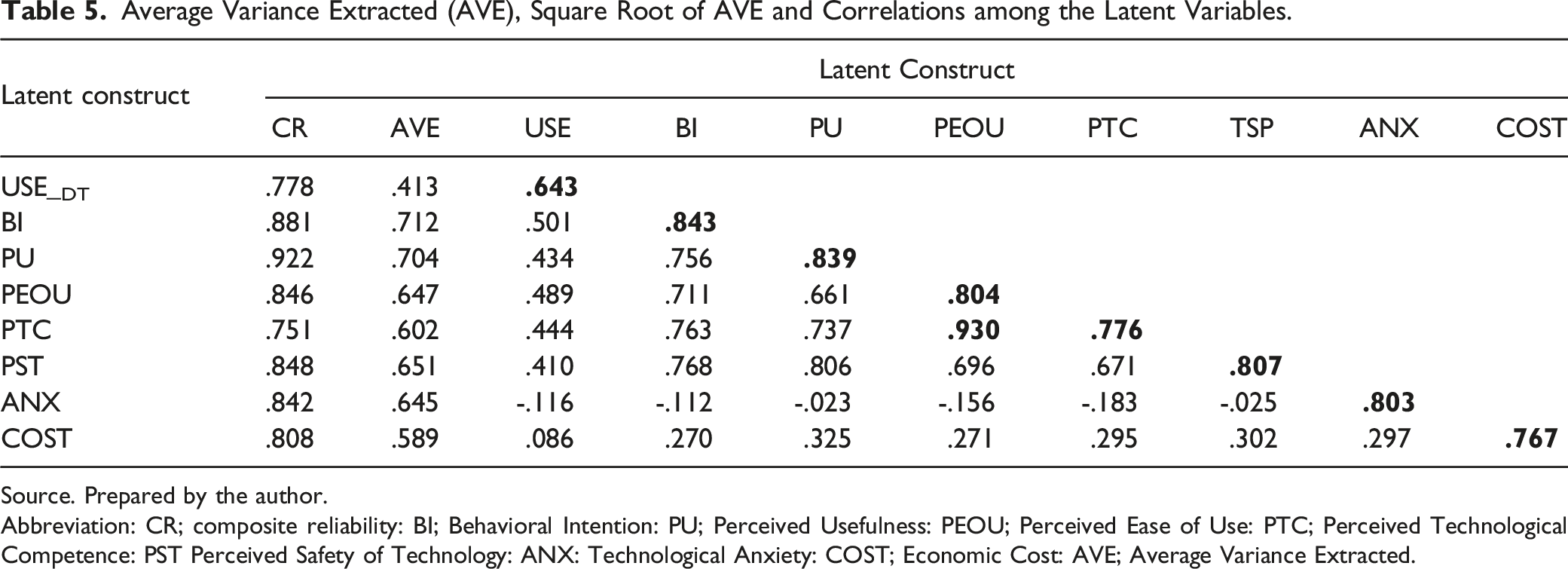
Source. Prepared by the author.
Abbreviation: CR; composite reliability: BI; Behavioral Intention: PU; Perceived Usefulness: PEOU; Perceived Ease of Use: PTC; Perceived Technological Competence: PST Perceived Safety of Technology: ANX: Technological Anxiety: COST; Economic Cost: AVE; Average Variance Extracted.
Finally, the quality of the measurement model fit was evaluated with a combination of absolute fit index (Chi-square/DF and RMSEA), Root Mean Square Error of Approximation (RMSEA = 0.047); incremental fit index (CFI, IFI; NFI, TLI) and parsimony index (PCFI), obtaining optimal theoretical values: χ2/d. F (CMIN/DF) = 1293.35/365 = 3.422; CFI = 0.953; TLI = 0.944; IFI = 0.953; PCFI = 0.799; NFI = 0.936.
Results of the Structural and Model Hypotheses Testing
Fit Index and Structural Model Results.

Source. Prepared by the author.
Abbreviation: CFI, incremental fit index: PCFI; parsimony index: RMSEA; Root Mean Square Error of Approximation.
Summary of Significant Relationships in the Structural Model.
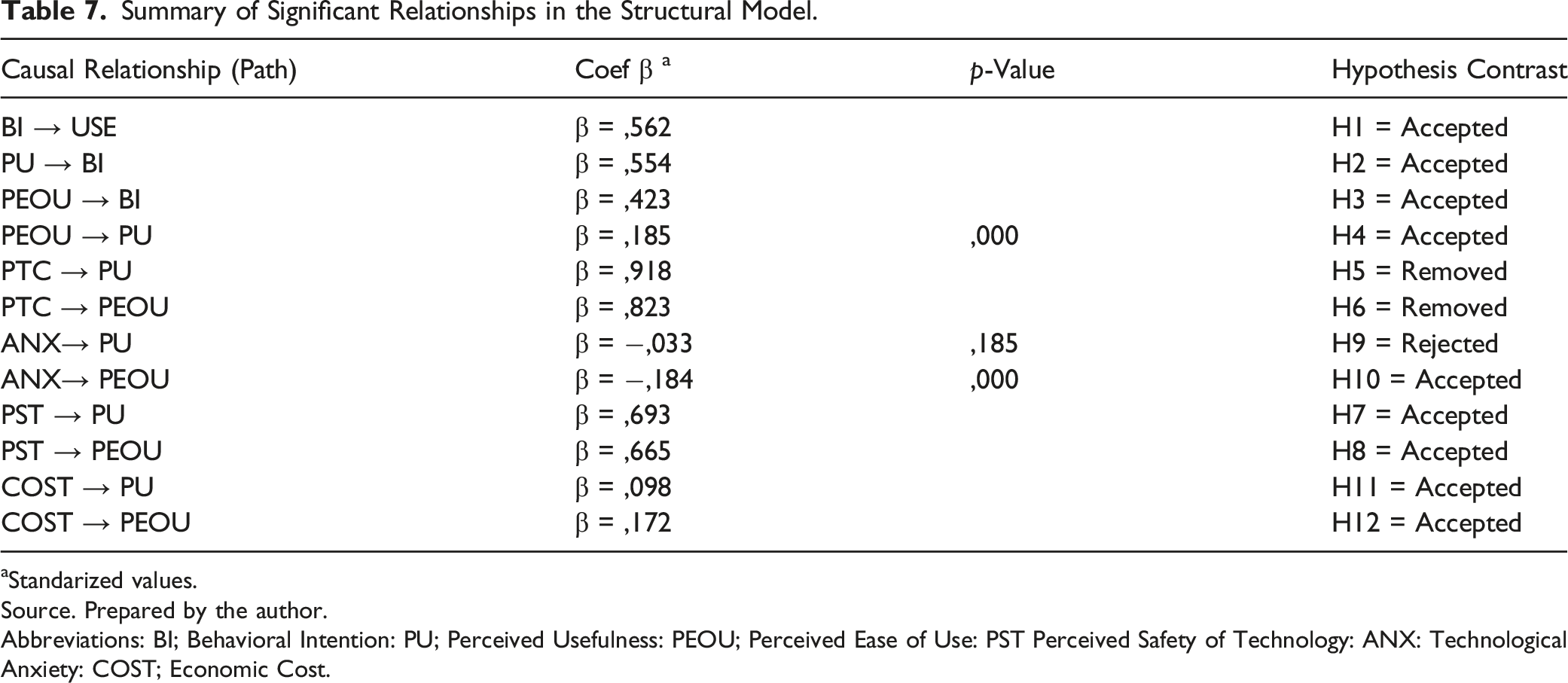
aStandarized values.
Source. Prepared by the author.
Abbreviations: BI; Behavioral Intention: PU; Perceived Usefulness: PEOU; Perceived Ease of Use: PST Perceived Safety of Technology: ANX: Technological Anxiety: COST; Economic Cost.
Discussion
In this study, we have tested an explanatory model of technological intention and behavior in older adults. It is a simple model based on six constructs that, according to our empirical data, could predict 31% of technological use behavior in older adults (Figure 2). The literature reports that, in exploratory studies, the predictive value of TAM models on the variable “use” is relatively low, in a range between 20 and 70% of the variance, (Marchewka & Kostiwa, 2007; Wong et al., 2012; etc.), and we believe our result would be in line with the general literature on the application of the theoretical framework used. The participants in our study express a good appraisal of digital technology, although they generally make moderate use of it. The most common device used is the Smartphone. The rest of devices (e-Books, GPS, Tablet, etc.) are used only in situations motivated by specific needs or demands (for example, related to information search, health or professional activities). However, the model significantly increases its explanatory power in the case of the variable Intention to use technology (BI_DT), which is explained by 79.8% (R2 = 0.798). In addition, BI_DT presents a moderately high effect (β = .559) on DT Use. This result is also consistent with TAM-based theory (Cabero Almenara & Llorente Cejudo, 2020; Dogruel et al., 2015; Guner & Acarturk, 2020). Final senior-TAM model. Note: TAM: Technological Acceptance Model.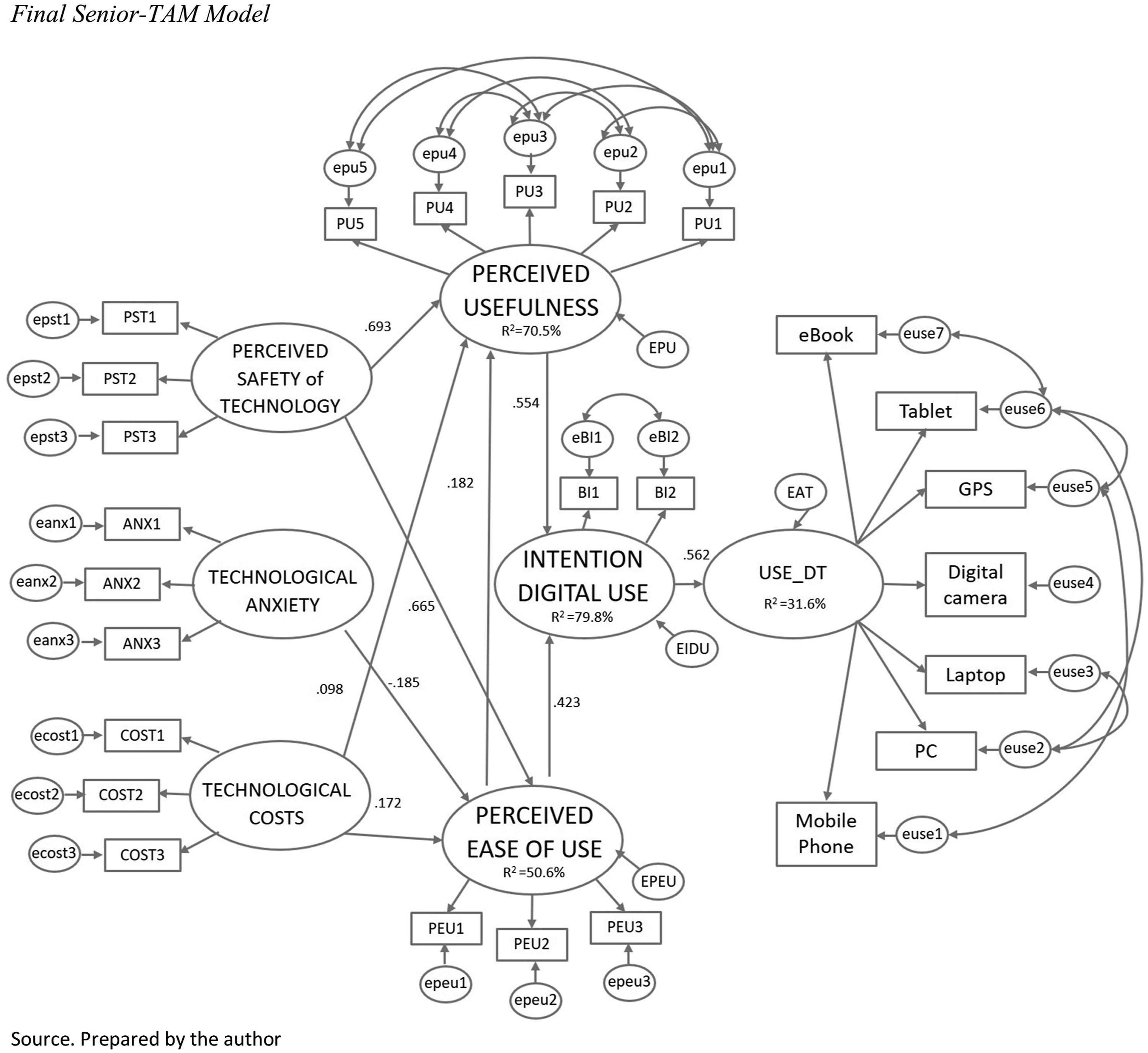
From the analyses performed, the greatest explanatory weight of this intention to use falls on the PU of using or not using a particular digital device (PU), a result which is in line with others reported in the literature (Conci et al., 2009; Goher et al., 2017) and which is important to take into account with the aim of trying to improve the frequency of use of digital devices in older adults, for example, through training programs or activities. In this sense, it seems fundamental to ensure that older adults perceive the advantages of using DT. In our study, we have identified a series of outstanding beliefs that are the most widely valued by the subjects in relation to the usefulness of DT (using digital technology will make my life more comfortable; the use of digital technology strengthens or increases my independence; the use of digital technology helps me to be more efficient in everyday life). On this basis, we understand that training actions in this field should be oriented not only toward training in the use of technological devices of therapeutic or assistive type, but also in making known the advantages and utilities derived from the use of these devices in everyday life situations (Martín, 2009).
On the other hand, the second variable that modulates the intention to use DT is related to the beliefs about the ease or difficulty of use (PEOU). Thus, it is assumed that an older adult is more likely not to use digital devices if he or she perceives their difficulty of use for practical purposes. This perception of difficulty in using a given technological device is clearly more prevalent in groups of older people than in groups of younger people (Pan & Jordan-Marsh, 2010; Schehl et al., 2019). Ease of use goes hand in hand with perceived control over the technology and competence in its use. Based on these results, it is suggested that technology-specific training is an area that should be expanded.
The third variable in importance in our work is Perceived Safety of Technology (PST) which appears as a protective factor of intention to use, through its effect on PU and PEOU. As also highlighted in previous literature (Gatti et al., 2017), the lack of security in technology, either due to previous lack of knowledge or as an effect of fear of the unknown, can also translate into loss of control or fear of making mistakes, which may contribute to deter its use.
Finally, the effect of the variables anxiety and economic cost should be considered part of the explanatory model of the intention to use technology in older adults. Anxiety can act as an inhibitor of technological use as this type of technology, due to its effect on PEOU, is often perceived as threatening, as suggested in recent studies (Di Giacomo et al., 2019; Guner & Acarturk, 2020; Knowles & Hanson, 2018; Tsai et al., 2020). Finally, the perception of the economic cost of DT indirectly limits the intention to use this type of device in its effect on the PU, that is, if the subject does not clearly perceive the advantages (PU) of using digital technology, he/she will understand that the economic expense involved in the purchase of these devices does not compensate him/her.
When interpreting current data from Spain, we should take into account different contextual and sociological factors that can influence use and technology adoption by older people. A recent study by Merkel and Hess (2020), based on a detailed analysis of all data included in the Special Eurobarometer 460 (SB 460), confirmed the relevance of the country context when evaluating the use of Internet-based health and social care services. In Spain, the use of these types of technologies is only 10.3% among older adults. Different factors such as broadband and mobile internet availability, population density and people living in rural areas, or the lack of training programs on how to use digital-based technologies and e-health services, could explain some differences between European countries in technology adoption.
Finally, although in our current work we have not analyzed the effect of sociodemographic variables on the model, it is of interest to note that in a recent study by Simonova et al. (2020) that explores the use of Internet in older adults, found that gender was not a significant variable, although the group of female respondents was higher. This result agrees with that obtained in our study. However, in a metanalysis, Kavandi and Jaana (2020) found that gender could influence some variables such as, for example, predictors of behavioral intention of technology use. For that reason, these authors recommend to balance gender proportion in future studies.
Conclusion
The relationship between technology and older adults is changing rapidly. One of the practical implications of our results may be related to the role that new technologies could have in the adaptation by older adults to the Covid-19 pandemic, contributing to overcome both the social and digital exclusion of this population group (Seifert et al., 2021). Data obtained in this type of studies can also help to identify the main barriers and facilitators of technology adoption by older adults, improving the design of new devices and technologies taking into account the needs and preferences of this age group. We have moved from a stage where older adults seemed not to be interested in using technology, and where technology was not generally designed for them, to the current stage where evidence suggest that it is especially in this group that technologies offer the greatest benefits in terms of improving their quality of life (Özsungur, 2019). The decision to accept and use digital technology on a regular basis by older people lags far behind the speed of creation of these devices (Lund & Nygård, 2003; Vaportzis et al., 2017). Such evidence corroborates the need to continue to focus on finding and identifying the factors that explain the process of acceptance and adoption of digital technologies by older adults. The TAM approach focuses attention on the influence that users' beliefs and attitudes have on their intention to use a given technology. However, the application of TAM model in research with older adults is still very scarce and focuses mainly on the identification of those factors that act as barriers or facilitators in the acceptance of technology (Peral-Peral et al., 2015).
In our study, we have expressly considered digital technologies of everyday use. Knowledge of technological use at this level can also be expanded in order to understand the acceptance of assistive technologies, associated with health or related to other aspects of support for adaptive functional activities. It is worth highlighting the importance of decision-making in relation to digital competence training for older adults, to the degree that it can lead to a change of attitude in the use of technology. This requires overcoming the traditional distrust of innovation and insecurity that learning to use DTs generates in this age group. As we have seen in our research, this type of competence is conducive to a greater predisposition for older adults to positively value the usefulness of digital technology in general, while clearly decreasing the perception of difficulty associated with their use. Together with these two factors, the promotion of information and practical training on DT will help older adults to overcome their fear of them and to eliminate the anxiety that may be generated by their use. These key aspects, well integrated into appropriate learning designs, will improve the intention and use of technology and, therefore the quality of life for older adults.
Limitations
The main limitations of our work include the fact that the research was conducted over a specific period of time, which prevents us from considering the variation of individual beliefs over a longer period of time. This type of general limitation is part of the weaknesses inherent to the use of the TAM approach and cross-sectional research itself. Consequently, a longitudinal study would be desirable to appreciate these changes more clearly. Another major limitation of our study has to do with analyzing the use of a set of digital devices. Clearly, it would be simpler and easier to understand for users and for the interpretation of the results when a single device or technological system is considered (Smartphone, Tablet, Internet...). Basically, this boils down to a distinction between simple behavior and a category of behaviors as noted by Fishbein & Ajzen, 2011 (Fishbein & Ajzen, 2011). Finally, further studies should include a more representative sampling in order to generalize the results for a general population of older adults.
Footnotes
Declaration of Conflicting Interests
The author(s) declared no potential conflicts of interest with respect to the research, authorship, and/or publication of this article.
Funding
The author(s) disclosed receipt of the following financial support for the research, authorship, and/or publication of this article: This work was supported by the Spanish Ministry of Science and Innovation and co-funded by the European Regional Development Fund (ERDF) (UE). [Ref. PID2019-107,826GB-I00].
