






Abstract
This study investigates the emerging field of innovative technology applications for public usage, focusing on employee perspectives. The research employs a questionnaire-based approach, collecting responses from 439 participants and examining demographics, technological proficiency, utility perceptions, personal data concerns, attitudes towards artificial intelligence and generative artificial intelligence, and willingness to endorse technology adoption. The data analysis minimises discrepancies between predicted and actual values through multiple linear regression. In addition, statistical methods such as Spearman’s ρ, the Wilcoxon–Mann–Whitney test and chi-square statistics are employed to consolidate the findings, ensuring the thoroughness and validity of the research process. The results indicate a positive inclination among participants to perceive artificial intelligence as augmentative rather than a replacement in public usage contexts. The research’s originality lies in the unique contribution of employees to technology adoption and strategic knowledge asset renewal for the management in the public domain.
Keywords
1. Introduction
In spite of the increased prevalence of digital technology in today’s corporate landscape, there still needs to be a comprehensive understanding of the constituents of digitisation capabilities. The extant body of literature on digital transformation predominantly examines its impact on external stakeholders, particularly the dynamics between organisations and their customers [1]. However, there appears to be a relative paucity of research addressing the role of employees in the adoption and implementation of digital transformation within organisations [2]. A significant gap in the academic literature exists concerning the role of employees’ perceptions and attitudes towards new technologies, particularly artificial intelligence (AI), and the subsequent impact these factors have on the adoption and endorsement processes of such technologies. This oversight represents a crucial problem in understanding the comprehensive dynamics of technological integration in the workplace. Further scholarly exploration in this domain is warranted to decipher and appreciate the underlying factors that shape the incorporation of these transformative technologies in businesses.
The study aims to create a dialogue between theoretical studies and empirical studies, filling in this research gap by providing an overview of how public organisations’ employees perceive AI technology and the role of that perception in adopting and endorsing AI technologies in public administration practices. This research aims to bridge two different points of view about digitalisation in the public sector: the first concentrates on external stakeholders. In contrast, the second focuses on the role of employees’ perception of innovative technologies. Authors embed the discussion in the theory of human knowledge assets, treating employees as key organisational assets determining the process of AI implementation. Authors contribute to the existing research by analysing the influence of different demographics in the process, to explore how various demographic factors – such as age, gender, educational background and job experience – influence these perceptions and attitudes. Understanding these demographic nuances is vital, as it can lead to more effective and inclusive approaches to technology adoption, ensuring that the benefits of new technologies are maximised across the entire workforce. By addressing these gaps, future research can provide a more holistic view of the factors that drive successful technology integration, ultimately fostering a more adaptive and forward-thinking organisational culture.
This study explores how civil servants perceive the use of AI technologies in the public sector, aiming to fill gaps in the existing literature. The authors added the effect of gender and age on the technology acceptance variables, addressing the following research questions:
Research Question (RQ1): How do various dimensions of perception impact civil servants’ inclination to adopt and endorse AI technologies in public administration practices?
Research Question (RQ2): Are there any gender, age, work position or work sector differences in the responses? Can we predict AI development in the public sector considering bias about differences of perceptions among employees?
The remainder of the article is structured as follows. The second section consists of the theoretical background, where the authors present the concept of AI, focusing specifically on public sector specificity. The third section outlines the methodology, precisely a questionnaire-based approach. The fourth section presents the main results, and the fifth section presents the discussion. The article concludes with theoretical and managerial implications and study limitations, paving the way for future research.
2. Theoretical background
2.1. AI and generative AI
Generative AI pertains to AI systems that create content, be it text, audio or video. Its primary objective is to generate fresh and imaginative outputs based on the knowledge acquired through training data. According to Mannuru et al. [3], generative AI systems possess the distinctive capability of delivering responses and originating the content of those responses. Recent strides in AI during the Fourth Industrial Revolution, typified by tools like ChatGPT, have garnered widespread attention and transformed the landscape of content production and creative endeavours.
According to Tegmark [4], ‘there is no agreement on what AI is, even among AI researchers’. As Enholm et al. [5] aptly point out, AI encompasses a range of cognitive functions, including learning, reasoning and comprehension. On the contrary, the term ‘artificial’ pertains to entities created by humans rather than arising naturally, as elucidated by Mikalef and Gupta [6]. When merging these concepts, AI can be defined as the ability of machines to replicate intelligence [7].
Kaplan and Haenlein [8] offer a comprehensive characterisation, describing AI as the capability to independently interpret and learn from external data to attain specific objectives through adaptable adjustments. The swift advancements in generative AI owe their momentum to the strides made in natural language processing (NLP) and deep learning, capturing considerable interest in both industrial and academic spheres. AI has evolved from its earlier days of programmed line-by-line instructions to a state where it can self-learn and autonomously evolve through continuous development.
Blockchain, Internet of Things (IoT) and AI are integral to the private and public sector’s adoption and use of enabling technologies [9]. Society 5.0 envisions a harmonious integration of technology and human well-being [10]. Generative AI models, exemplified by ChatGPT, play a pivotal and versatile role in actualising the objectives of this societal paradigm [11]. Juniper Research [12] confirm the benefits of increased levels of AI adoption within a wide range of applications, such as manufacturing, healthcare and digital marketing, which are fuelling considerable academic interest. The digitisation of the economy and society and the development of a knowledge-based economy have recently become one of the most dynamic changes. On one hand, it opens new opportunities in creating business models. On the other hand, however, it brings uncertainty and different types of threats related to, among other things, the social effects of automation of production processes and security in the sense of safety. Digitisation means using work systems containing increasingly intelligent or self-learning system components in which decisions made by people or machines influence each other.
2.2. Exploration of generative AI in the public sector
Research has shown that digital technologies profoundly impact various organisations, including public sector entities [2]. AI for public usage is still a young field of research. No wonder there is still scepticism and fear that public organisations may become too technocratic, jeopardise privacy, reinforce inequality and even threaten democracy when adopting AI [13]. However, with increasingly sophisticated algorithms and greater data availability, AI has become an increasingly valuable tool for public service and community decision-making and management [14–16]. Generative AI technologies empower public agencies to enhance their efficiency, effectiveness and responsiveness in delivering quality services to citizens [17–19]. AI in the public sector can reduce administrative burdens and encourage resource allocation [14], thus improving public service delivery and support for citizens. Chilunjika et al. [20] argue that the inclusion of AI in the public sector is critical in transforming that sector’s activities, but at the same time, public organisations struggle to adopt this technology [13].
The US federal government has harnessed AI to enhance fraud detection capabilities and to streamline and expedite regulatory decision-making [21]. Janssen and Kuk [22] delved into integrating an algorithm for using big and open data for the large-scale personalisation of public services, achieved through citizen profiling activities. Governments are progressively exploring the use of AI algorithms to enhance security measures, including analytical tools to predict youth at considerable risk of engaging in activities like crime, prostitution, alcohol and drug abuse [23], as well as predicting the emergence of new virus outbreaks [24] and optimising health inspection efforts in food service operations [25].
Citizen demand for responsive and personalised services (social care, healthcare, education, law enforcement) requires a technologically mature public sector, capable of adapting advanced and agile practices. The literature has shed light on integrating AI-based systems within the public sector, primarily owing to potential societal risks [26].
2.3. Employees as a public organisation’s knowledge asset determining future application of IA
Integrating AI technologies into public institution services can deliver substantial benefits and public value to citizens [27]. Compared with other Information and Communication Technologies (ICTs) utilised by the government, AI is argued to wield a more substantial impact on citizens due to its potential deployment in the core functions of governmental organisations and its inherent learning nature. This continuous learning capability will improve public sector performance and influence decision-making processes [21].
The digitisation of the public institution workplace involves using digital technologies that act as automated support tools in organisations [28]. It also causes changes in job expectations, job designs and knowledge assets of public sector employees, affecting their work engagement [29–32]. AI and other IT solutions, including the IoT, 3D printing, drones and Big Data, are breakthrough solutions that have efficiently taken over many tasks and functions previously performed by employees [33]. While automation directly impacts jobs with many routine and manual tasks, it can also probably impact jobs where the expected impact could be more obvious. Therefore, the spread of digital technologies creates a need for new skills and priorities, such as entrepreneurial attitudes, business acumen and social intelligence.
Thus, integrating AI in the public service workplace may introduce potential conflicts with employees’ job identification, leading to resistance behaviours exemplified by algorithm aversion, extensively studied by Dietvorst et al. [34] and Venkatesh [35]. Craig et al. [36] coined the concept of the reluctance to embrace AI as an IT identity threat, which signifies the fear of harm to one’s self-image caused by using technology.
Digitalisation requires public sector employees to start a new learning process, to be integrated into the work process. International experience in implementing digital technologies has shown that one of the most crucial management tasks is eliminating differences in the level of digital competencies among employees by creating and managing employees’ knowledge resources [37]. Employees’ knowledge assets determine how they perceive these technologies and adopt and endorse them in their work. The attitude of civil servants towards innovative technologies requires public sector organisations to manage employees’ knowledge assets appropriately. The full potential of innovative technologies in the public sector thus depends on employees’ knowledge of them and how they are perceived in terms of their usefulness, adopted and implemented by public employees [26,38].
2.4. Different knowledge assets
According to Mentzas [39], ‘knowledge asset’ refers to an organisation’s accumulated intellectual resources, such as information, learning, ideas, insights, memory, technical skills and capabilities. According to the latest management theories, including the knowledge-based view (KBV), knowledge is the fundamental source of creating long-term competitive advantage in a dynamically changing business environment [40]. That concept refers to the capability to accumulate, integrate and leverage knowledge as a strategic company asset that stimulates continuous innovation and the organisation’s performance [41,42]. Wu and Hu [43] defined knowledge assets as intangible and intellectual assets used to develop an organisation’s core competencies to reap the maximum organisational benefits. Knowledge assets in organisational sectors can be approached as stemming from personal and organisational activities. Recent studies have found that personal knowledge assets in the public sector refer to employee knowledge, experience, skills, talents and attitudes, while organisational knowledge assets constitute non-human databases, infrastructure, technologies and corporate culture [40]. According to Serenko and Bontis [44], inside the category of intellectual knowledge assets, three significant subcategories are human, relational and structural knowledge assets. Structural knowledge assets include knowledge embedded in a firm’s repositories (databases), management processes, organisational culture and structure, and cooperation practices enable employees to share and take advantage of their knowledge assets [45]. A relational knowledge asset refers to the knowledge embedded in an organisation’s relationships with external entities such as customers, suppliers, partners and other stakeholders. Human knowledge assets are the aggregated knowledge, wisdom, skills and experience of all employees working for the organisation [46]. Assuming that all three dimensions of knowledge assets intertwine with each other, in this research, authors embedded the knowledge assets in the concept of human assets.
2.5. Human knowledge assets
Bontis and Fitz-enz [46] state that human knowledge assets are the profit lever of knowledge organisations. Bontis [47] also appreciated the role of human assets, concluding that they constitute the ‘intelligence of the organisational member’. These assets refer to employees’ values, attitudes, aptitudes, skills, capabilities, individual relationships, creativity, experience, openness to new challenges, education, motivation, expertise, proactivity, flexibility, learning capacity, commitment, intellectual agility and risk-taking propensity [48]. Knowledge assets at employees’ disposal are important because they are a source of innovation and strategic renewal [48]. Thus, human knowledge assets form the basis of competitive advantage in many of today’s organisations and sectors, including public ones. As emphasised by Westerman [49], ‘digital transformation needs a heart’. It is people who make companies work, and implementing AI alone by the public sector will only help if employees use it. Mathrani et al. [50] stress that achieving strategic benefits from implementing AI necessitates integration and resource utilisation, including human knowledge resources. As noticed by Du et al. [51], employees can not only conceive possibilities arising from AI but also put them to use and learn from interactions to adapt their behaviour and find new ways of using technologies through their daily practices. However, to make this work, civil servants need to have a positive attitude towards AI, accept it and be open to endorsing it in their daily work. As the work of Murawski and Bick [33] highlights, the main challenge for public organisations is to adapt their culture, mindset and competencies to the new, digital way of working rather than to technological trends, disruptive innovations or new customer behaviour. The shift towards culture, mindset and competencies demands a focus on employees. If they do not accept and resist innovative technologies and have negative attitudes towards them, it will be impossible to implement them. If employees are not ready for AI applications, employee experience practices will not achieve the goal of creating personalised, compelling and memorable environment for employees. It will generate employee information overload and anxiety [52]. Employee communication and participation are crucial in fostering commitment to change initiatives. Their perceptions shape technology acceptance, usage and regulation, given their direct interaction with the technology [53].
2.6. Theoretical models to analyse acceptance of new knowledge
The technology acceptance model (TAM) has been widely used as a theoretical model to assess the level of acceptance of several types of enabling technologies [54]. This model posits that the perceived usefulness (relevance of innovative technologies in the digital context) and perceived ease of use (including ease of learning) can drive the adoption and implementation of new workplace technologies. Following the TAM model, when all features and functions are equal, the perceived ease of use determines how valuable and essential a technology is [35].
Park et al. [54] hypothesise that demographic and psychological variables related to each person may influence the perceived usefulness and ease of use of innovative technologies. Perceived ease of use is a stronger predictor for women, while perceived usefulness is more robust for men [55]. However, determining the most influential variables can be challenging for companies due to the diversity of their workforce.
According to Nunes et al. [55], gender and age may influence the determinants of technology acceptance. Several authors considered contextual variables, such as organisational culture [56]. Limited access, resource rigidity and insufficient investment by public companies can result in reduced employee performance due to resource constraints. A positive attitude and tech-savviness facilitate successful tech integration, while doubt and hesitancy can hinder AI adoption [26].
Bin Taher et al. [57] argue that higher-ranking employees who cling to traditional bureaucratic methods intensify resistance to change in the public sector, fearing a loss of power due to AI advancements.
Another perspective raises concerns about exacerbating discriminatory biases related to gender, race, sexuality and ethnicity, potentially leading to systemic inequality in contrast to democratic principles [58].
Studies revealed that older people resist change, making it more challenging to learn and use [59]. Recent research on the impact of gender and age on behavioural intent across different contexts has delivered inconsistent findings [60], warranting additional exploration. Indeed, ethical and legal issues are the primary challenges for AI-enabled public services [61].
3. Methodology
The exploratory research used a questionnaire as the primary method of data collection. The authors took the questions from the survey by Ahn and Chen [62] as a reference, as it was considered comprehensive. Participants used a 5-point Likert-type scale (ranging from no knowledge/impact to high knowledge/impact) to indicate the response to each demand. The 17 questions investigated several aspects of the phenomenon:
Respondents’ demographic characteristics, gender, age, work sectors, job position (role) currently held and education and experience in years (six items);
The general level of knowledge on big data, machine learning, cloud computing, blockchain and overall experience in using these technologies (five items);
Perception of the usefulness and impact of innovative technologies for advancing decision-making in the public sector. Concerns about using innovative technologies for personal data (three items);
How people perceive the use of generative AI in the future (one item);
The willingness to adopt and endorse the implementation and use of innovative technologies in workplace practises (four items).
Participants were chosen from various hierarchical levels, including department heads, directors, managers and employees of multiple ranks, to guarantee a broad and representative sample. The questionnaire was constructed using the Google platform and disseminated online via email.
Following the construction of the questionnaire, a pretesting process was conducted. The questionnaire was assessed by 30 individuals who provided feedback regarding its complexity and question formulation. The pretest aimed to identify any apparent defects, and fortunately, this phase did not reveal any issues.
Data collection took place in Italy between June and August 2023. Out of the 470 participants, 439 returned complete questionnaires. These respondents comprised 196 females and 243 males domiciled in Italy, with an average age of 47 years (standard deviation, σ = 11.5).
It is important to note that incomplete questionnaires, representing only 6.59% of the total, were not included in our analysis. This approach allowed us to disregard the handling of missing data. Authors consider the obtained sample significant, and its representativeness has been determined using Cochran’s method [63].
The authors declare their objectivity in the face of competing commercial interests or personal relationships that may influence the outcomes presented in this article.
4. Analysis methodology
The collected data were analysed using R software, and various statistical tests were performed, including measures of dispersion, adjusted dispersion, the Student’s t-test, tests for heteroskedasticity and criteria such as Akaike, Schwarz and Hannan–Quinn. These tests were carried out to evaluate and confirm the model’s reliability.
To test the RQ1, authors implemented an econometric model based on a multiple linear regression (MLR) function. This method, widely used in various studies [64–66], enables understanding the relationship between a dependent variable and multiple independent variables. It aids in predicting outcomes and clarifying the contribution of various factors to these outcomes, allowing simultaneous management of multiple predictors and providing a clearer picture of how these factors collectively impact the dependent variable. In addition, it offers precise estimates of the strength and direction of each predictor’s effect [67–69].
The MLR distribution utilises the ordinary least squares (OLS) method

where:
The MLR (authors’ values) best fit the data and minimise the sum of squared residuals (the differences between the predicted values and the actual values).
RQ2 was verified using Spearman’s ρ, which allows authors to measure the strength and direction of monotonic association between variables [70–72]. This coefficient is used in many studies to verify the convergent validity of assumptions considered [73–75]. Differences in mean scores were assessed through the Wilcoxon–Mann–Whitney test [76], while the relationships between nominal variables were tested using chi-square statistics [77]. The level of statistical significance for tests was set at p ≤ 0.05.
5. Results
Table 1 shows the characteristics of the respondents.
Sample demographics features.
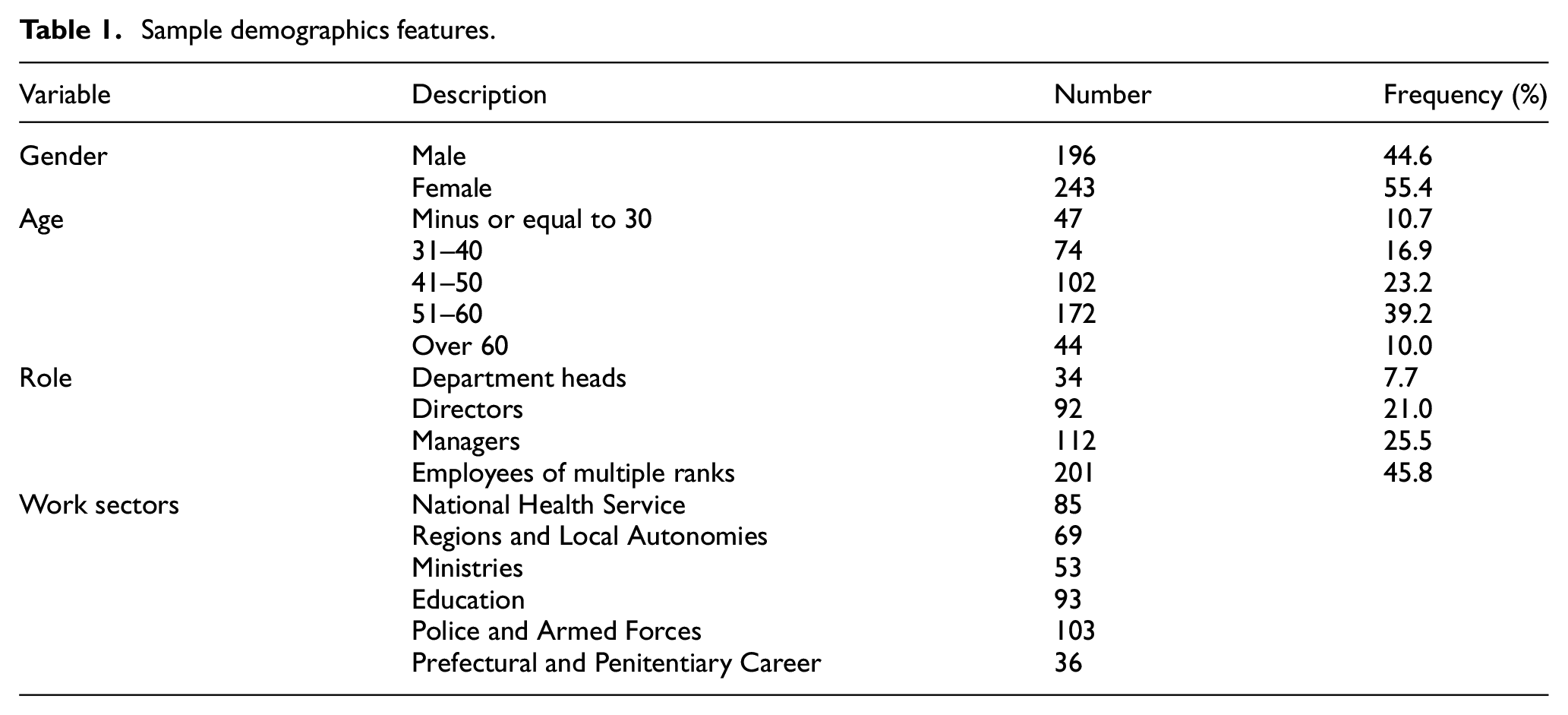
The data distribution table enabled us to understand the background of Italian respondents, dominated by female employees with an average age of 47 years (σ = 11.5). The obtained values are consistent with the data distributed in Italy by ISTAT [78]; therefore, the sample can be considered as representative of the population.
To examine RQ1, the authors employed an MLR model. The data analysis was carried out utilising R software. The initial stage involved assessing the multicollinearity of the variables under consideration. This step was essential, as correlations between multiple independent variables in a multiple regression model could lead to regression coefficient estimates that lack statistical significance. With this aim, authors computed the variance inflation factor (VIF). The obtained value (VIF = 1.59), following Debbie et al. [79], indicates that no multicollinearity was observed.
The second phase aggregated the questions related to each aspect to obtain a representative index. To do this, authors calculated the average of the responses to individual questions and then assessed the robustness of this aggregation using the standard error. By combining the participants’ responses, researchers aimed to obtain a general indicator or score that reflected the overall measure of each aspect considered. The average calculation was used as the aggregation method; at the same time, the standard error was considered to assess how consistent and reliable the responses were as the basis for creating the representative index. This process is intended to simplify the interpretation of the data and provide a clear view of the overall trends in the data related to the aspects considered (Table 2).
Layout of the aggregative method.
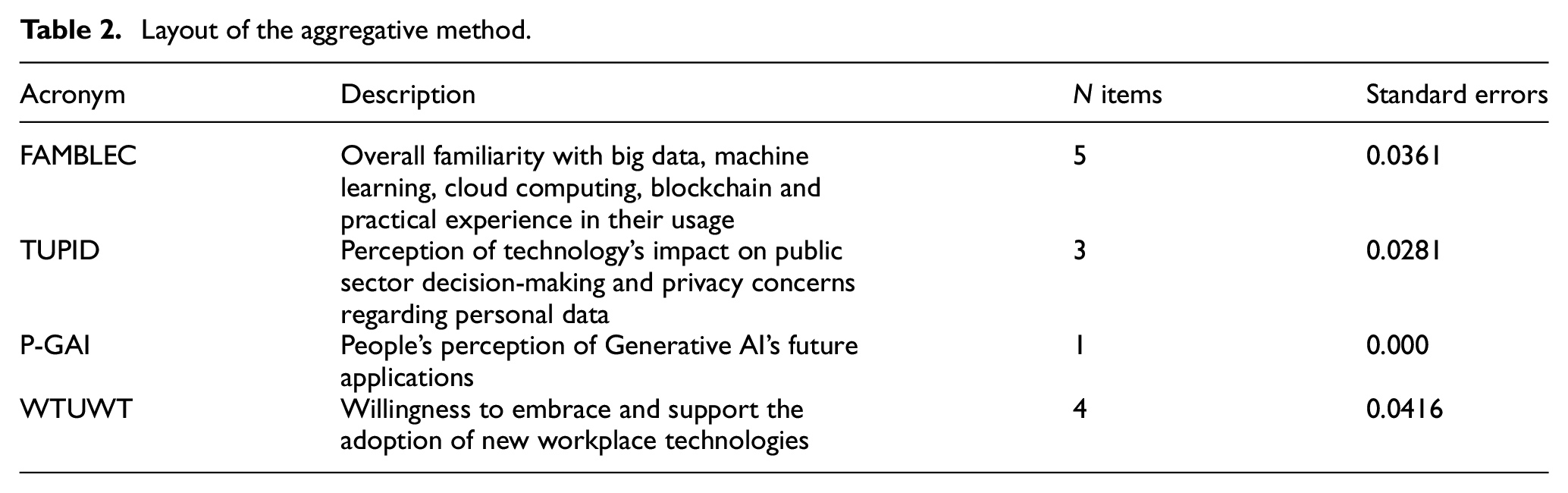
To determine how various dimensions of perception influence public servants’ inclination to adopt and endorse AI technologies in public administration practices, the authors established a multiple linear equation based on the OLS method

where
The formulation of the equation indicates that the model accounts for 89.1% of the studied phenomenon, namely the perception of the utility and impact of new technologies for advancing decision-making in the public sector, combined with the willingness and desire to support their implementation and use in work practices, as well as the general level of knowledge of digital technologies, generates a greater inclination towards the use of generative AI in public administration practices.
The conducted statistical tests reveal a substantial homogeneity among the regression variables, as indicated by the p-value coefficient

Histogram distribution.
RQ2 aims to verify whether the desire and willingness to support the implementation and use of innovative technologies in workplace practices are influenced by factors such as age, gender, job position and type of occupation.
First, the authors analysed the relationship between age and willingness to embrace and support adopting new workplace technologies (WTUWT). For this purpose, the authors computed Spearman’s rho correlation
Spearman’s correlations between age and WTUWT.
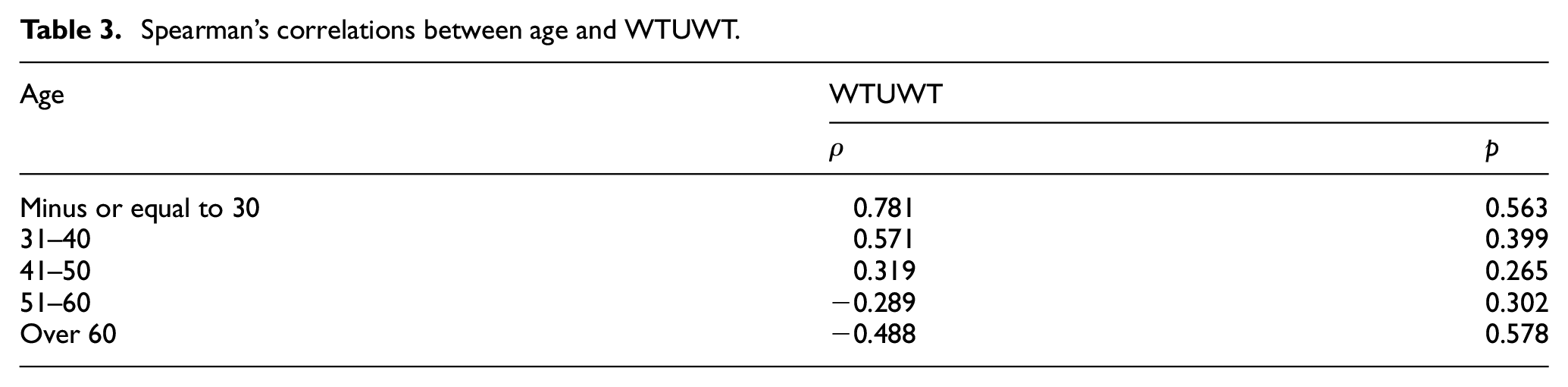
Differences between men and women regarding the frequency of willingness to embrace and support adopting new workplace technologies were tested using chi-square statistics
To compare the job position (role), the Wilcoxon–Mann–Whitney test was used, a non-parametric test that allows determining if there are statistically significant differences between the means of two independent groups (skewness and kurtosis exceeding 1). The results are shown in Table 4.
Job position decisions.
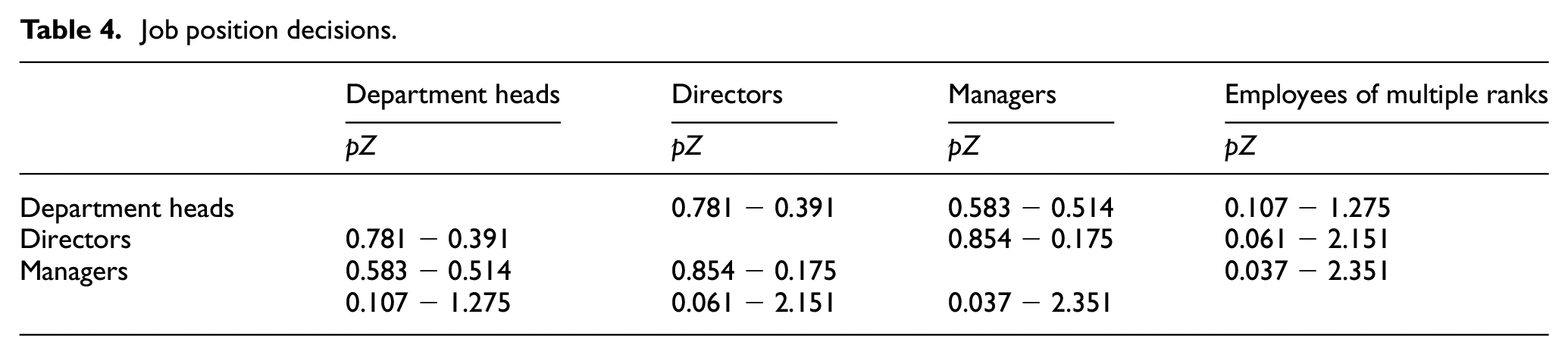
The obtained values highlight a different desire and willingness among various job positions. In particular, the results show considerable differences between employees and the other clusters. On the contrary, significant differences must be evident among the other groups.
The Wilcoxon–Mann–Whitney test was employed to compare the job sectors. The results are shown in Table 5.
Work sector decisions.
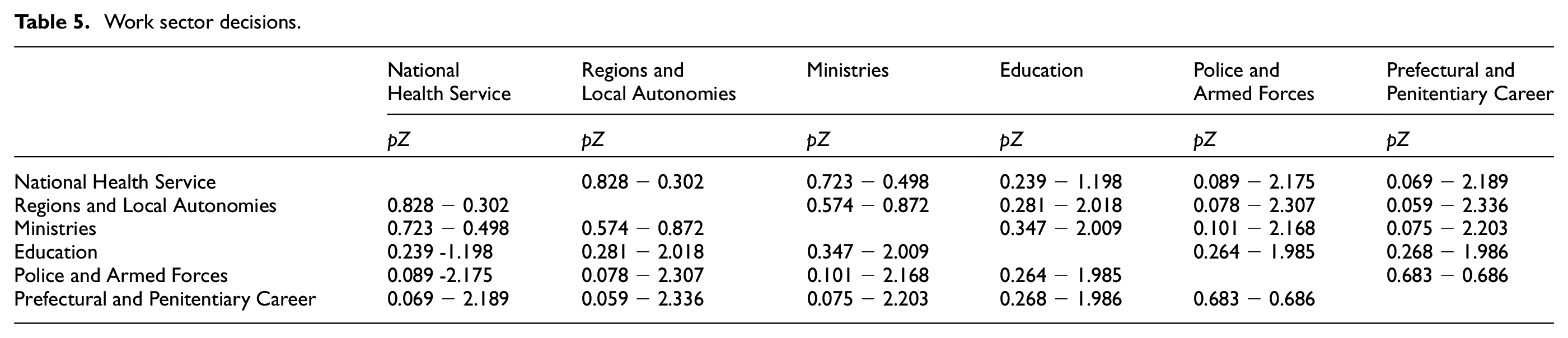
The obtained values highlight a different desire and willingness among various work positions. In particular, the test indicates significant differences between clusters of National Health Service, Police and Armed Forces, or Prefectural and Penitentiary Careers. These differences could be attributed to the distinct job roles, work environments, stress levels and the nature of the tasks associated with each position.
6. Discussion
The results of this survey can provide valuable information for policymakers and practitioners seeking to improve the effectiveness and efficiency of the public sector through technological progress.
Concerning the first research question, as proved by the early studies by Davis et al. [80], the perceived importance of innovative technologies has a more significant impact on the intention to use rather than the ease of use. However, the latter also has a considerable influence. There is a positive and significant correlation between the perceived importance of technology and the intention to disseminate it; however, the opposite cannot be confirmed. Even those most sceptical about innovative technologies did not oppose their dissemination. The research gave clear evidence about the impact of dimensions of perception on civil servants’ inclination to adopt and endorse AI technologies in public administration practices. Online questionnaires showed positive attitudes towards implementing AI technologies in the public sector. Contrary to Craig et al. [36], most surveyed people assumed that AI would not replace their roles.
Technological background acquired skills or previous experience positively influence acceptance regarding attitude, intentions and behaviour towards AI. In contrast, there is no inverse correlation between the level of knowledge of the technologies and the willingness to use them. Our results indicate that even those with little knowledge are still willing to use innovative technologies to support their work. An explanation of this phenomenon can be found in the concept of trust: user trust in technology, exemplified by studies like Chang et al. [81], is essential. It empowers users to rely on devices like Google Maps for restaurant directions. Successful outcomes reinforce this trust, creating a positive cycle of reliance on technology for achieving the desired goals.
Concerning RQ2, the results of this study showed significant differences in respondents’ answers not only by age, as initially assumed by the authors, but also related to role and worker sector. The study also reveals that predictions about AI development in the public sector can be done, considering bias about differences of perceptions among employees.
The perceived usefulness of innovative technologies is more relevant for younger people. In contrast, mature clusters, who believe they have low technological skills, find technologies challenging. Many studies have proved that older adults remain at the opposite end of the digital divide [82–84]. Studies also proved that older adults who adopt ICT feel its value even if it is for a limited number of functions, such as email [85].
The study gives an important contribution to academic research that focuses on knowledge asset frameworks and bias. An example can be found in recent studies that deepen the concept of trust as not necessarily affected by age [86]. Results also contribute to the present field of study concerning how cognitive biases can affect our judgement and ability to make rational decisions in personal and professional environments [87]. Finally, the article integrates important academic research focusing on knowledge contributions of the stakeholders of AI auditing, such as the recent study conducted by Laine et al. [88].
Furthermore, a correlation exists between role and intention to use. The Mann–Whitney test indicates significant differences between cluster employees and directors or managers, as shown in Table 4. Consistent with Bin Taher et al.’s [57] findings, middle and senior managers (executives and department heads, male) were less willing to support introducing enabling technologies in their work practices, while most employees accept and are committed to using and supporting AI.
According to Abdullah and Fakieh [89], this difference in perceptions regarding job tenure may be motivated by the fact that employees are more probable to meet the potential of innovative technologies by working ‘on the front line’ directly with the patient, unlike top managers [90]. Recent studies underscore the significance of empowering frontline workers to provide specific and critical feedback on designing and deploying AI systems [91].
According to the findings of this study, organisations could benefit from the result findings to enhance their digital competence levels to disseminate a credible digitisation culture. Only with an awareness of top management can the latter approve successful technology initiatives promoted by the lower hierarchy ranks [92].
Another significant discovery pertains to variations in willingness among distinct occupational sectors. The data underscore that healthcare professionals exhibit a more pronounced proclivity towards technology adoption when compared with their counterparts in the military sector. This inclination can be attributed to the healthcare sector’s pressing demand for swift access to critical medical information, an environment characterised by ongoing technological advancements, an imperative for real-time communication and information exchange, rigorous record-keeping and monitoring prerequisites, evolving demographics and a prevailing culture that champions innovation.
In summary, our research underscores several critical insights. Regarding the impact of various dimensions of perception on civil servants’ inclination to adopt and endorse AI technologies in public administration practices, public sector employees hold positive attitudes towards AI implementation [93], believing it will enhance, rather than replace, their roles. The perceived importance of innovative technologies significantly influences their adoption, although ease of use also plays a role. A technological background positively influences attitudes, intentions and behaviours towards AI, while the level of knowledge does not deter willingness. Finally, healthcare professionals are more ready to embrace technology, reflecting the sector’s unique demands and innovation-oriented environment. Recent studies confirm that ChatGPT, as a language model, is a groundbreaking healthcare innovation [94].
An important theoretical contribution of this research is related to the field of knowledge assets and the connection with demographic data: results show that gender, age, work position or work sectors differed in the responses. These variables emerged as critical determinants of attitudes and intentions, emphasising the need for tailored strategies aimed at managing human knowledge assets. According to the results of this study, open innovation and knowledge-sharing are pivotal within public sector organisations. The article suggests an interesting direction to manage employees as key organisation’s knowledge assets. The methodology of the study could be developed as a theoretical content for corporate organisations. Top management could benefit from this analysis to acquire digital competence to drive a culture of digitisation. Digital leadership, as discussed by El Sawy et al. [95], pertains to leaders undertaking effective actions to navigate the digitalisation of organisations. This concept encompasses qualities that positively impact the attitudes and behaviours of organisational members influenced by digital technologies [96].
7. Conclusion
According to Gartner, by 2026, enterprises that apply Trust, Risk and Security Management (TRiSM) controls to AI applications will increase the accuracy of their decision-making by eliminating 80% of faulty and illegitimate information. By 2028, 75% of enterprise software engineers will use AI coding assistants, up from less than 10% in early 2023.
According to the results discussed, public sector organisations could operate effectively by managing their knowledge assets with some suggested strategies: developing an open innovation environment, encouraging knowledge access and sharing it among employees at all levels. Although hampered by rigid hierarchies, disseminating knowledge in the public organisation seems to encourage enabling technological progress at all levels [97].
The methodological framework adopted incorporates a meticulously designed questionnaire, referencing antecedent research for its construction. The findings articulate a prevailing optimism among respondents regarding integrating AI technologies within the public sector, aligning with contemporaneous studies [98]. This study accentuates the pivotal role of perceived technological importance in shaping adoption intentions. Furthermore, the analysis reveals that a technological background positively influences attitudes and intentions towards AI adoption, underscoring the pivotal role of trust in technology. The study advocates for nuanced strategies in the public sector to accommodate employees’ diverse perceptions and preferences. Insights about management underscore the evolving nature of leadership in the face of increasing digitisation [99].
As public administrations undergo transformative shifts to meet emerging societal needs, civil servants necessitate digital competencies for more efficient and effective public service delivery [100]. In a broader context, this research augments the knowledge base available to policymakers and practitioners endeavouring to enhance the efficacy of the public sector through technological advancements.
Distinguished by its methodological rigour, exhaustive exploration of diverse technologies, nuanced analysis of demographic variables and theoretical contributions, this research emerges as a novel and valuable addition to the academic literature in different fields, such as technology adoption within organisational contexts, analysing knowledge assets frameworks and bias, and stakeholders mapping of AI auditing.
Nevertheless, limitations of the study can be found in the territorial restriction on the stakeholder involved. More comprehensive research could confront other European contexts apart from the Italian one. Nationality is an essential limit to this field of research, as European laws tend to find a better definition and regulation of AI adoption. The General Data Protection Regulation (GDPR) within the European Union (EU) stands out as a premier framework, adeptly addressing AI decision-making within governmental contexts.
Another limitation of the article can be found in the specificity of the legislations considered about corporate and public contexts and adoption of AI. An interesting comparison could also be made with a country like the United Kingdom, close enough to Italy and the European culture but outside the EU legislation. A critical case study is the Open Government Data of Gov.uk. The United States and China, among other nations, have acknowledged the substantial value of AI for public benefit, initiating costly AI initiatives that underscore the diverse potential applications in various fields.
The article wants to open an original field of research about bias affecting the perception of AI adoption in the public sector, but still lacks to consider a wider range of AI technologies and flows. Future research agenda can be developed for the entire AI innovation lifecycle of adoption, implementation and diffusion in the public sector. Developing research fields that help predict directions in AI development is crucial.
Footnotes
Author’s Note
Luca Giraldi is also affiliated with the University of Turin in Turin, Italy.
Declaration of conflicting interests
The author(s) declared no potential conflicts of interest with respect to the research, authorship and/or publication of this article.
Funding
The author(s) received no financial support for the research, authorship and/or publication of this article.
