






Abstract
This article explores the use of generative artificial intelligence in Latin American university libraries, discussing both its potential benefits and challenges. It emphasizes how generative artificial intelligence, which is capable of generating text, video, images, music, and code, is revolutionizing library operations by automating tasks and enhancing research and reference services. The research involved a literature review and interviews with library directors from six prominent universities, revealing varied levels of generative artificial intelligence adoption, from experimental to fully integrated within institutional frameworks. The challenges include staff resistance, training deficiencies, and technological constraints. The study is optimistic about the future of generative artificial intelligence in academic libraries, recommending ongoing training and clear policy development for its successful and ethical implementation. Major service providers like EBSCO, Clarivate, and Elsevier are also noted for their role in supporting this digital transition.
Keywords
Introduction
Libraries have been one of the most representative pillars for the preservation of humanity’s memory and have played a significant role in all cultures. They make a wide variety of collections accessible, and they promote reading, learning, and the exchange of ideas. Thus, they foster education, the democratization of knowledge, and the building of communities around their collections and services (Kalisdha, 2023; Salcedo and Lima, 2019; Szekely, 2014).
The library sector has undergone significant transformations due to technological advancements, which have brought notable improvements in collaboration and resource-sharing among libraries. These advancements have enabled libraries to enhance communication processes, streamline technical functions, and efficiently address the diverse information needs of users across various geographic regions. By integrating digital tools and platforms, libraries are not only expanding their reach but also fostering a more interconnected global library network. This shift has allowed libraries to transition from isolated information providers to active participants in a global information ecosystem, where knowledge is shared and accessed more fluidly (Leung, 2023).
Traditional libraries were known for their physical spaces and large print collections. Nowadays, thanks to technological advancements, we can shorten distances and democratize information access, breaking down the barriers of time and space. This facilitates collaborative processes among academic communities worldwide and fosters new ways of learning. Libraries now offer personalized services, such as reading recommendations and intelligent research tools (Quadri, 2012; Vagiswari et al., 2001). However, this shift has also introduced new challenges, such as the long-term preservation of digital data and the need for librarians to acquire new skills.
University libraries in Latin America have undergone a significant transformation in recent decades, driven by the digital age and changes in users’ study and research habits (Brunner and Labraña, 2020; Humenchuk, 2022). Despite these advances, they still face a series of challenges that require attention, such as open access and interoperability processes, including knowledge and research management, evaluation systems, digital divide and digital preservation issues, competition with search engines, and, most recently, the advent of generative artificial intelligence (GAI), which may pose a challenge if library staff do not promptly adapt to current scenarios (Lee, 2023).
The objective of this study is to analyze the adoption of GAI in university libraries in Latin America, evaluating both its benefits and operational and ethical challenges. Additionally, the strategic role of three information service providers in the implementation of these technologies is examined in order to understand their influence on the digital transformation of the sector.
GAI
GAI can be classified as a branch of AI characterized by its ability to emulate the human brain in specific processes, such as creating text, video, images, music, and code from existing data. It is important to distinguish between the terms AI and GAI, as the former has been studied for decades, while the latter emerged in November 2022. GAI is based on artificial neural models that learn complex patterns from large data sets. Once trained, these models can generate new data that shares the same statistical characteristics as the original data (Rathod, 2024; Yafei et al., 2024). As shown in Figure 1, Generative AI (GAI) integrates various modalities, including text, audio, image, and video.
Main application areas of GAI.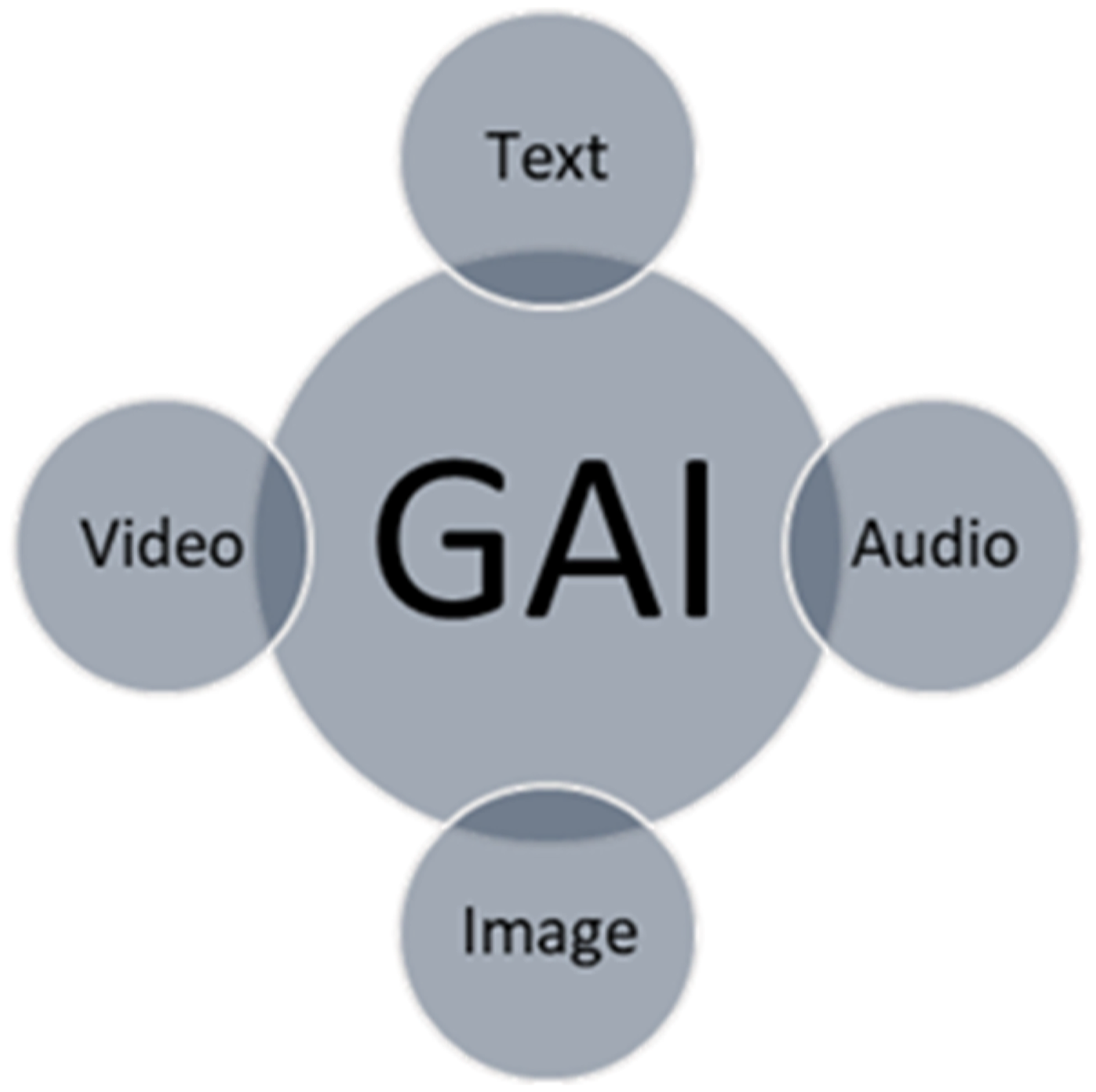
Undoubtedly, GAI has democratized the way content is generated to a certain extent, eliminating the need for intermediary interventions by providers and experts in computing languages. This allows almost anyone with basic literacy skills to generate processes using natural language.
GAI and libraries
The integration of GAI, represented by models like OpenAI and particularly using agents, assistants, or chatbots, is revolutionizing librarians’ practices in various areas. By enabling the automatic generation of code in different languages from natural language instructions, these developments facilitate many tasks, such as web data extraction and the automation of repetitive tasks (Semeler et al., 2024).
The possibility of creating intelligent agents streamlines library processes and democratizes access to programming techniques, allowing librarians with varying levels of technical expertise to adapt these technologies for both administrative and research-related purposes. In this evolving context, algorithmic literacy has become a crucial competency for information professionals, enabling them to develop innovative services and enhance the quality of user-centered information delivery. Libraries play a vital role in promoting this skill, as they are uniquely positioned to teach and support understanding of algorithm-driven technologies and their social implications (Ridley and Pawlick-Potts, 2021).
ChatGPT has generated great interest in the library world. Picalho et al. (2024) conducted a systematic literature review in Web of Science, Scopus, and the Library, Information Science and Technology Abstracts database to identify emerging studies on the use of ChatGPT in libraries. Their analysis revealed 22 relevant studies focusing on two main themes: (1) the appropriate use, risks, limits, and ethical aspects of ChatGPT and( 2) library services and professional practice. These studies indicate that while ChatGPT offers many possibilities for improving library services, its impact cannot be ignored.
Johnson et al. (2024) explored the impact of integrating GAI tools such as ChatGPT into the development of critical skills in university students. Through an instructional design based on the principles of universal design for learning and constructivist theory, they implemented an activity that combined AI-generated text with information search and evaluation strategies. Their results indicated that students developed the ability to critically evaluate the outputs of AI tools, effectively applied library search strategies, and reinforced the importance of citing evidence in their arguments. These findings suggest that the strategic integration of GAI in the educational environment can enhance the development of essential 21st-century learning skills.
Michalak (2024) explored the experience of university students using GAI tools such as Scholarcy for academic research. The participants reported significant improvements in their ability to identify key arguments and understand the methodologies used in scientific articles. However, concerns were raised about overreliance on these tools and the potential erosion of critical reading skills. Similarly, Wiredu et al. (2024) found that while GAI tools can enhance students’ comprehension, excessive dependence on them may hinder the development of critical thinking abilities. These findings suggest that although AI tools are valuable for academic work, their use should be balanced with efforts to cultivate independent thinking and analytical skills.
In the field of library and information science, the experience of search-based GAI tools such as SciSpace and Consensus, along with the application of large language models (LLMs) to library activities, has gained attention. The use of ChatGPT in university research and education, as well as its application in programming tasks in various languages using a no-code approach, reflects the growing significance of GAI in the field. This is also evident in the development of tools like PyDataBibPub (Lázaro-Rodríguez, 2024).
Toane et al. (2023) developed the 99 AI Challenge at the University of Toronto, which was a program designed to bring GAI closer to the university community. It offered an online course and sessions with experts, and it increased the participants’ knowledge of GAI. Their results showed that, beyond acquiring technical knowledge, the participants developed critical thinking about GAI and its ethical implications. This initiative highlights the role of libraries in continuous GAI education. By providing access to resources and organizing such events, libraries can help form an informed citizenry capable of understanding and using GAI tools responsibly. The success of the 99 AI Challenge sets an important precedent for future initiatives aimed at democratizing knowledge about GAI in academic environments and beyond.
Methodology
The methodology employed in this study included a review of the literature and interviews. The interview sample included library directors and managers of information resources and services at six universities. The inclusion criteria for selecting the institutions analyzed were based on the 2025 QS World University Rankings for Latin America, with one university chosen from each country within this group. Three recognized information service providers were also included in the study. The inclusion of EBSCO, Clarivate, and Elsevier is justified by their central role in providing advanced information and technology services to university libraries. These providers enable an analysis of how GAI tools are integrated into diverse academic contexts, offering a crucial perspective to understand the possibilities and limitations of these technologies in Latin America. The universities selected were the University of Buenos Aires (Argentina), University of São Paulo (Brazil), University of Chile (Chile), 15 University of the Andes (Colombia), Technological Institute of Monterrey (Mexico), and Pontifical Catholic University of Peru (Peru).
The inclusion of the three service providers (EBSCO, Clarivate, and Elsevier) is justified by their dominance in the Latin American market, their offering of AI-based solutions, and their historical collaboration with academic institutions in the region.
The literature review aimed to identify relevant studies on the adoption of GAI in university libraries and its impact on library services, considering both benefits and challenges. Search terms such as “Generative Artificial Intelligence AND libraries,” “technological adoption AND digital transformation,” and “university libraries AND Latin America” were employed. The search was conducted in the Scopus and Web of Science databases, prioritizing empirical studies published between 2014 and 2024. Although formal guidelines like PRISMA (Preferred Reporting Items for Systematic Reviews and Meta-Analyses) were not applied, the review adopted a narrative approach to cover the key areas related to the study topic comprehensively.
With the aim of analyzing the implementation and impact of GAI in university libraries, a set of questions was developed to explore the practices, challenges, and strategies associated with the use of these technologies. These questions were designed to gain a deeper understanding of how libraries are adopting GAI and to identify key areas for improvement in its integration. Below are the key questions formulated during the interviews:
What are the current levels of adoption of GAI in university libraries in Latin America, and what factors influence its implementation? What impact do GAI technologies have on task automation and the improvement of library services in these institutions? What are the main barriers and strategies to overcome the challenges associated with the implementation of GAI in university libraries? What roles do information service providers (EBSCO, Clarivate, and Elsevier) play in supporting the digital transition of libraries in Latin America? What are the prospects for GAI in university libraries in the region, and what impacts are anticipated in terms of innovation and technological development?
The interviews were structured around four thematic axes: (1) level of technological adoption; (2) impact on library services; (3) barriers and mitigation strategies; and (4) role of external providers. Each axis included open-ended questions, such as:
What institutional factors have facilitated or hindered the implementation of GAI? How has GAI influenced user interaction?
The participants were asked for their views on the future of GAI in university libraries, specific examples of success, and whether they would recommend its implementation to other libraries. For those who had not yet adopted GAI, the interviews covered the reasons for this, future plans, the resources needed for potential implementation, and the structural changes necessary to facilitate its adoption. This approach provided a detailed understanding of the integration and perspectives of advanced technologies in the Latin American library sector.
Results
To protect the privacy of the participants’ data, the analysis will be conducted randomly and anonymously, as outlined in the methodology section.
Latin American universities
University 1
It was mentioned that there is currently some resistance and distrust towards GAI among library staff, primarily due to the lack of established applications in the library field and attitudinal barriers. Despite this initial unfamiliarity, initiatives have been implemented to integrate GAI into staff training programs, including a talk with an AI expert during Librarian’s Day, demonstrating an effort to increase understanding and interest in this technology.
Additionally, it was recognized that the effective adoption of AI will require a significant review of library staff skills and a redesign of services to better meet the needs of university communities, including the promotion of inclusivity. The advantages of implementing AI were seen in the potential automation of technical tasks, allowing staff to focus more on inclusive activities and strengthening the sense of belonging within university communities.
While the future implementation of AI is being considered, the library is already adopting other advanced technologies, such as radio-frequency identification (RFID) systems and assistive technology equipment, demonstrating a continuous commitment to improving efficiency and user services.
University 2
At the institutional level, the university has subscribed to services like Copilot for the entire university community and is exploring and piloting additional tools like ChatGPT, DALL-E, and Canva Magic within the library. The creation of “Chatmigo,” an AI-based chat that incorporates knowledge bases from various university units to facilitate interaction and access to university information, was mentioned.
Although it is too early to measure the concrete impact of AI on the library system, the openness and alignment of the teams to the university’s direction toward continuous adaptation to competitive and challenging realities was highlighted. In terms of training, self-learning models and collaborations with information producers have been adopted to maximize the use of these technologies.
The team leaders, mostly young, show a natural inclination toward self-directed learning, which has facilitated the adoption of innovative pathways in services. The main barrier identified was the fear of job displacement by AI, and it was suggested that trust in creativity and technological appropriation could help overcome these barriers, allowing staff to diversify and humanize their services.
It is anticipated that AI will play a crucial role in reducing operational burdens, improving collaboration, and enhancing user services. Although it is still too early for definitive success stories, initiatives like Chatmigo are expected to demonstrate tangible benefits in terms of communication and reference services. Finally, the implementation of GAI solutions in other libraries was recommended, emphasizing that this is not just about adopting new technologies, but part of a continuous development model to improve service to the community.
University 3
In response to the inquiry about the use of GAI in their library systems, the interviewee from a prominent university in Latin America indicated that they are currently facing significant challenges due to the economic crisis impacting science and higher education in their country. The economic situation has been widely reported in the media, and the institution has recently declared budgetary and salary emergencies. Due to these challenges, including the lack of a national budget, the university’s ability to plan and schedule general activities, including potential projects related to AI in libraries, has been affected.
University 4
In this interview, it was explained how both the free and paid versions of ChatGPT have been used for different projects, emphasizing a cautious and controlled approach, particularly in the ethical handling of information.
It was noted that it is still too early to measure the real impact of AI in libraries, as the services utilizing this technology are in the initial phases of implementation. However, it is anticipated that ChatGPT will facilitate reference services, allowing basic queries to be automatically resolved, thereby freeing librarians to focus on more specialized questions. A self-developed initiative of a chatbot that will function as a virtual reference librarian for basic questions in 2025 was also mentioned, while more complex queries will be directed to human specialists.
The interview also covered the training and self-directed learning on AI by library staff, indicating that although there have been no formal training sessions exclusively for them, some have participated in demonstration sessions and are actively exploring this technology. Finally, the challenges for AI implementation were discussed, such as the need for effective integration between academia and the library, ethical information management, and institutional willingness to support these initiatives. The interviewee was optimistic about the future of AI in libraries and recommended its adoption, highlighting the importance of not remaining a mere observer in this era of technological change.
University 5
In the interview, it was mentioned that the library system is in the process of adaptation due to a new educational model and institutional strategic plan spanning 2023–2027. It was revealed that GAI is not currently being used due to barriers related to the lack of clarity on how to employ these tools. Instead of providing direct answers, the library has been offering resources such as thematic guides and specific references, exploring tools like Semantic Scholar, Consensus, and Research Rabbit for self-learning in specific workshops.
The creation of a consortium with other universities in the country was highlighted, which has formed a committee to explore synergies and evaluate the use of AI technologies. This committee has proposed conducting surveys to measure library staff's competencies in AI usage, with the goal of offering training and ensuring the ethical use of these technologies. It is expected that a clearer vision of implementation plans will soon emerge, with a formal implementation projected for 2025.
The interview also addressed the advantages and disadvantages of GAI, highlighting efficiency in information collection and systematization, but also raising ethical and legal concerns. Additionally, it was mentioned that basic digital transformation tools, such as Power BI and Keyflow, are currently being used to improve data analysis and decision-making.
The need for a clear institutional policy for AI usage and the importance of ongoing training for library staff were discussed. It was recognized that there are varied attitudes among librarians regarding the adoption of new technologies, with some showing enthusiasm and others resistance. Finally, the internal reorganization of the library was highlighted, which now operates with cross-functional management based on key processes, improving the effectiveness and efficiency of services.
University 6
In the interview, it was mentioned that although there is currently no full implementation of GAI in the library system, an exploratory and testing phase with linked data and the use of knowledge bases is underway. It was acknowledged that since November 2022, with the emergence of tools like ChatGPT, there has been significant interest in GAI. However, challenges such as the possibility of obtaining unreliable information and the risk of hallucinations in results have been identified.
The interview highlighted that work has been done with direct interaction with tools like ChatGPT and others, as well as with the use of the Application Programming Interface (API) to integrate specific institutional data, such as academic journals and research data repositories. However, it was emphasized that this is still exploratory and faces technical and resource limitations, such as the need for adequate infrastructure to support these technologies.
It was mentioned that there has been a gradual impact on the library with GAI, especially in how to guide users in its use, considering the younger generations who seek information quickly. The role of the library in educating users on the use of these tools, as well as the importance of training library staff, was emphasized. Curiosity and proactivity in learning about GAI were observed, although barriers such as the lack of trained human resources and adequate technological resources were also mentioned.
A project in the country to develop a Latin American language model was mentioned, which could help overcome some of the current barriers, such as the predominant use of English in AI models. Additionally, the need to improve the quality of records and metadata in library systems to facilitate integration with AI technologies was discussed.
Regarding the future of GAI in Latin American university libraries, integration was anticipated, which could create a new gap between technologically advanced universities and those with fewer resources. It was also mentioned that library service providers, such as ProQuest, EBSCO, and Clarivate, are developing their own AI solutions, which could facilitate the adoption of these technologies.
Finally, it was mentioned that although there are no fully implemented success stories at present, exploration and cost analysis for future implementations is underway. Other libraries were recommended to consider implementing GAI solutions, as long as they are adapted to the specific realities and needs of each institution.
Table 1 presents a comparative analysis of various universities' adoption and implementation of AI technologies within their library services. It examines key aspects such as the level of GAI adoption, librarian training, AI tool usage, barriers to adoption, and future perspectives on AI integration. This table provides insights into how different institutions are navigating the challenges and opportunities presented by AI, and the strategies they are employing to enhance library services through technological innovation.
Comparative analysis of AI adoption in library services across universities.
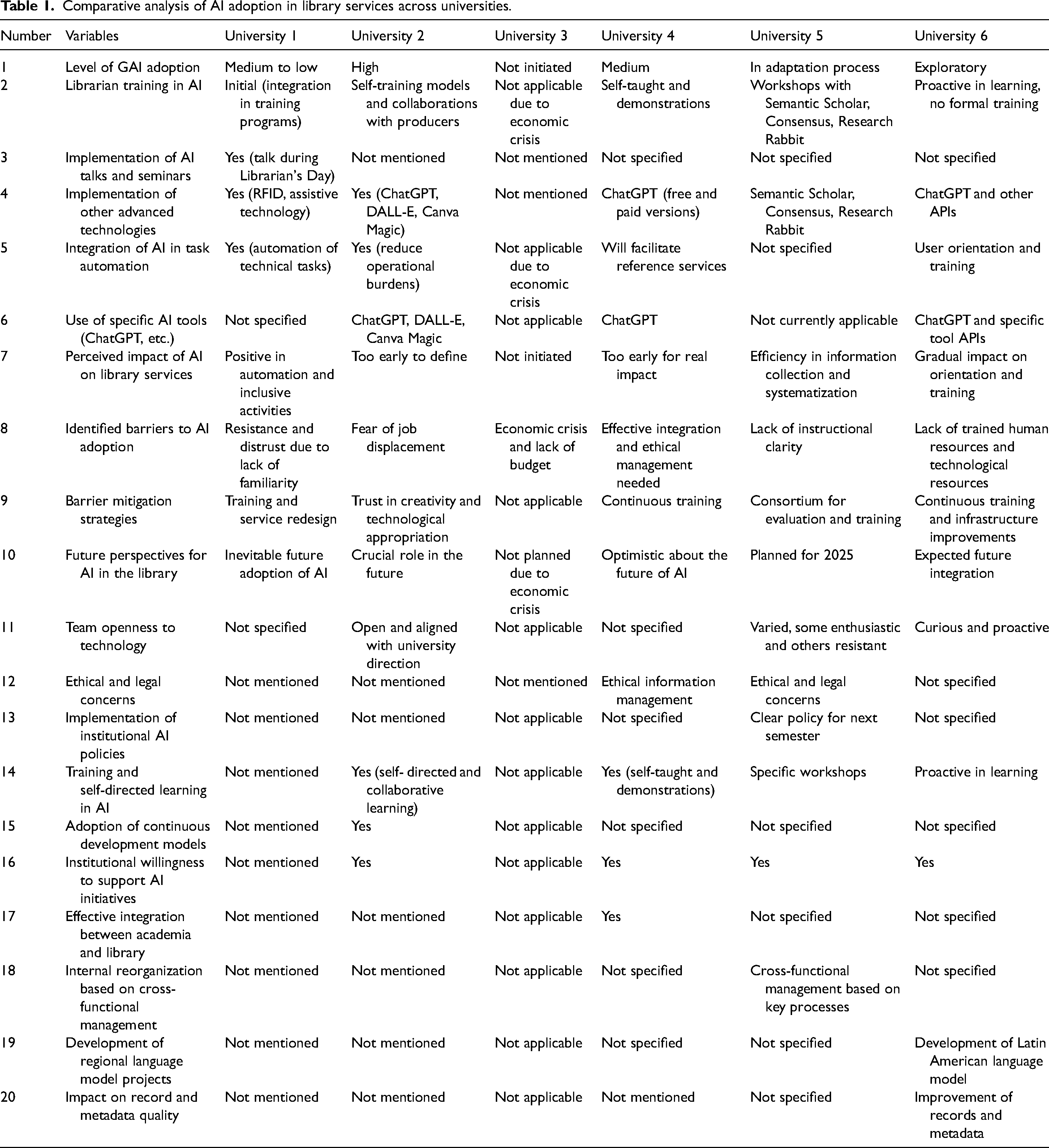
The adoption of GAI in university libraries varies significantly among the institutions studied. Some universities are in the early stages, exploring and testing tools like ChatGPT and RFID systems, while others have begun implementing institutional policies and strategic plans that include AI. In particular, Universities 1 and 2 demonstrate a proactive approach, integrating AI into training programs and adopting continuous development models. In contrast, University 3 faces significant challenges due to budget constraints, limiting any progress in AI adoption.
Staff training is key to the successful integration of AI. Most universities have implemented some form of training, whether through talks, seminars, or the adoption of self-training models. Universities 4 and 5, for example, highlighted the importance of self-directed learning and continuous training. However, barriers such as distrust and fear of job displacement remain significant challenges.
Several universities are integrating other advanced technologies alongside AI, such as RFID systems and assistive technology. This demonstrates an effort to improve efficiency and automate technical tasks, allowing staff to focus on more valued and humanized activities, as observed in University 1.
The perceived impact of AI varies, ranging from increased efficiency to enhanced user services. However, the barriers identified include a lack of clarity in AI application, ethical and legal concerns, and the need for adequate infrastructure. Some universities, such as University 6, are working to overcome these barriers by developing regional language models and improving the quality of records and metadata.
The outlook for AI in libraries is generally optimistic. The universities anticipate deeper integration, which could significantly transform library services. Strategies to mitigate barriers include continuous training, the development of clear policies on AI use, and strong institutional support for adopting these technologies.
Providers
EBSCO
The representative of EBSCO addressed the use of AI in their services, highlighting collaboration with providers and libraries. Initially, EBSCO used predictive AI, which required human intervention to interpret and apply recommendations. However, it has now ventured into the use of GAI, which can produce content such as video, text, and audio.
To ensure the ethical use of this technology, EBSCO has established principles that guarantee research quality, data protection and privacy, transparency, the avoidance of bias in model training, the promotion of digital and informational literacy, and the protection of editorial integrity. These principles also ensure that the generated products have value for the end user. Additionally, the company is developing a tool called Insights, which will allow users to ask questions in natural language and receive answers based on pre-trained research data, citing relevant articles and clearly indicating which parts were generated by AI.
The evolution of technological tools, such as the transition from slide rules to calculators, was used to illustrate how AI can free up time for more important tasks. EBSCO was planning to launch the beta phase of the Insights tool in July 2025 and make it available to customers by mid 2025, emphasizing the importance of adaptation and technological innovation.
Clarivate
The representative from Clarivate highlighted the use and integration of AI in library and educational services, emphasizing several initiatives planned for 2025. They mentioned the company's commitment to the responsible application of AI to uphold research integrity and enhance learning processes. Furthermore, Clarivate is working on improving the efficiency of educational processes through AI, including an innovation that functions as a virtual teacher to assist students in their learning. This application is currently being tested in several universities, with plans for broader implementation. Products like Web of Science and Ebook Central were also addressed, which will gain from AI-driven research assistants, ensuring that users receive reliable and well-supported results.
In discussing the use and integration of AI in library and educational services, the Clarivate representative underscored several implementations planned for 2015. The company has been actively involved in adapting AI within existing client solutions and in developing new tools, with a particular focus on Panamerican University.
Elsevier
On the other hand, the representative from Elsevier mentioned that the RELX Group has been working with AI for several years in various areas. A notable example is LexisNexis, a sister company within the group, which has made significant advancements in sentiment analysis on legal issues, using AI to analyze court cases in the US legal system. This tool allows for detailed searches and analysis of what judges, juries, lawyers, and prosecutors have said.
Elsevier, another company in the group, has been implementing AI in different solutions for a long time. It uses natural language processing in its Pure Fingerprint Engine, in category assignments in Scopus, and in funding recommendation systems in Funding Institutional. In SciVal, it employs AI to generate word clouds and, recently, it has started using generative language models to create descriptions of prominent topics.
Moreover, Elsevier has applied AI algorithms, such as logistic regression, to identify documents related to the United Nations’ Sustainable Development Goals and to refine results obtained from MegaQuery. This demonstrates that AI has long been an integral part of its tools and that now, with the advent of generative language models, new layers of functionality are being added.
A recent example is Clinical Key AI, a tool aimed at medical staff that uses a chatbot to answer questions about symptoms in a humanlike tone, based on data from medical databases. Elsevier also launched Scopus AI in February of this year 2025, which uses an architecture called Retrieval-Augmented Generation (RAG). This architecture allows for more precise searches in Scopus without the need for advanced knowledge in prompting, reducing bias in questions and minimizing the risk of hallucinations in results. Scopus AI not only searches for relevant information but also generates concept maps and extended summaries that broaden the research landscape, suggesting additional questions to delve deeper into a topic. This is possible thanks to a curated and reliable information corpus, which includes millions of documents indexed in Scopus, with dual peer-review certification both at the journal level and by the Scopus committee.
Elsevier also has several ongoing projects to add new features to Scopus, with the goal of further improving the research discovery process. The cross-functionality of the technology and the ability of generative language models to synthesize large volumes of information are key aspects in the future development of these tools. Unlike other initiatives that rely on data from across the Web, Scopus is based on a curated and organized information repository, giving it a competitive edge in finding reliable academic information.
Finally, Scopus allows not only for the identification of relevant articles but also for finding experts on a specific topic, saving time and facilitating the development of research projects. The tool provides a quality rating of the evidence supporting the generated texts, ensuring confidence in the information provided. This combination of advanced technology and access to a clean and organized corpus makes Elsevier and its tools leaders in the use of AI for academic research.
Table 2 presents a comparison of the AI solutions and applications implemented by three different providers, highlighting their approaches to AI technology, ethical considerations, and their impact on staff and research processes. The table outlines key aspects such as the type of AI used, AI applications, and future developments, providing an overview of how each provider is contributing to innovation and the facilitation of AI use in academic and research environments.
Comparison of AI solutions and applications across providers.
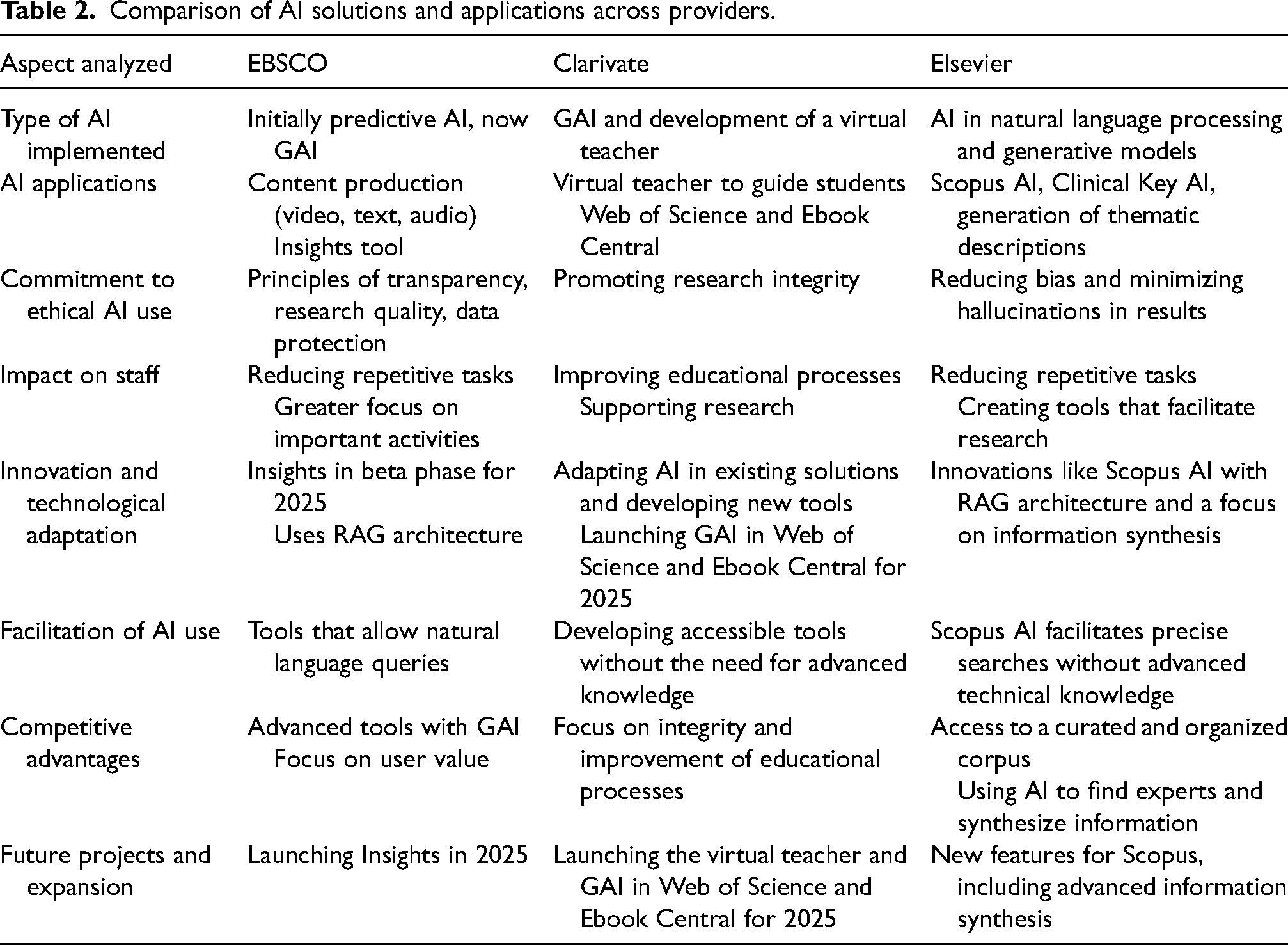
The adoption of GAI by these providers highlights diverse approaches tailored to their specific objectives, with EBSCO focusing on content production, Clarivate emphasizing educational applications like a virtual teacher, and Elsevier integrating AI across various research platforms. All three companies are committed to the ethical use of AI, prioritizing transparency, research integrity, and bias reduction, and ensuring that AI-driven tools meet high academic standards. The implementation of AI has had a significant impact on staff roles, reducing repetitive tasks and allowing for a greater focus on complex and meaningful activities. A key trend is the focus on making AI tools more accessible to users without advanced technical knowledge, thereby democratizing access to AI-powered resources.
Looking ahead, these companies have strategic plans to expand their AI capabilities by 2025, reinforcing their positions as industry leaders and gaining competitive advantages through the enhancement of research, educational processes, and content production.
Adoption of GAI in academic institutions and information resource and service providers
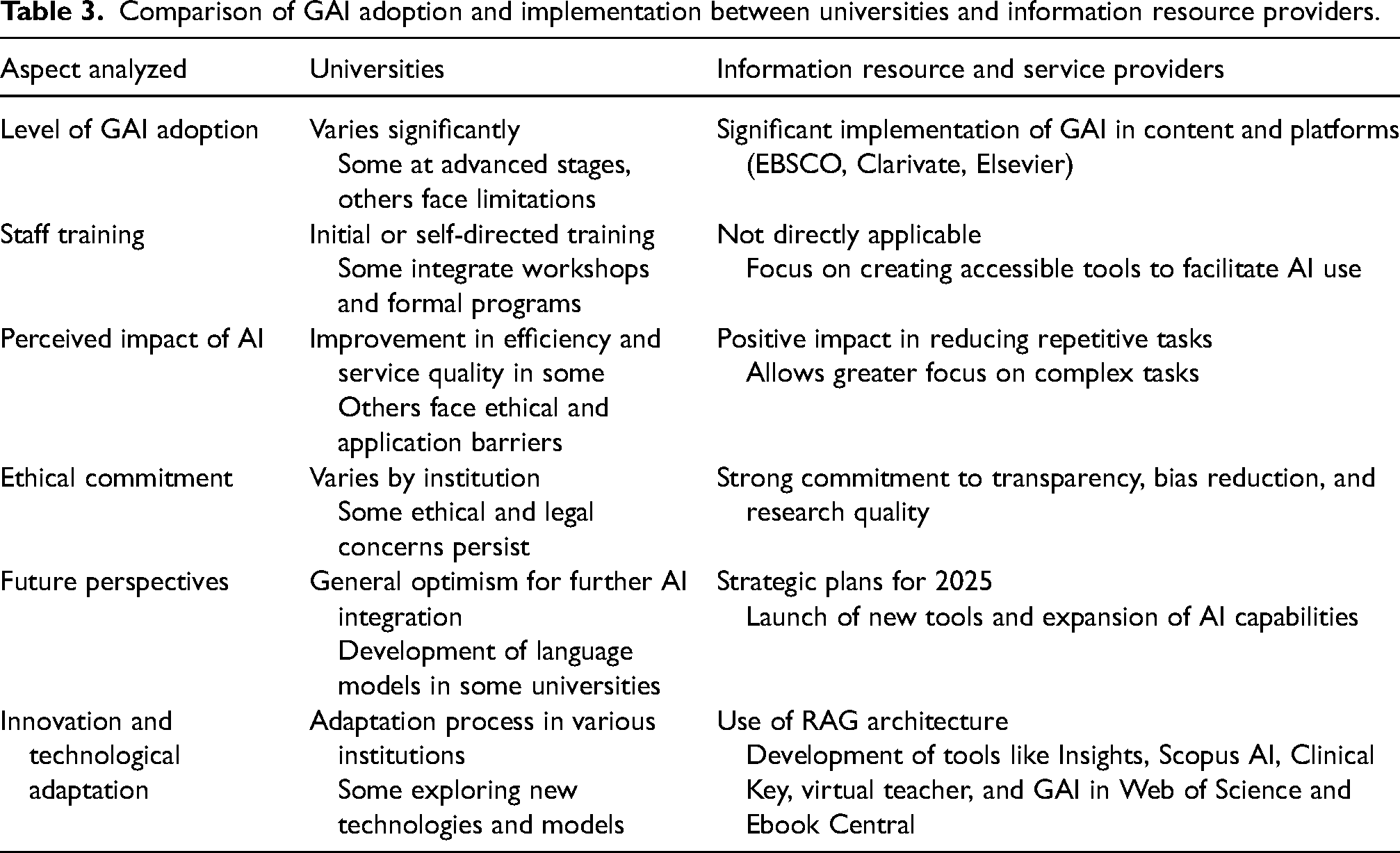
Both universities and information resource and service providers are at different stages of adopting GAI, and have distinct approaches and challenges. Universities show significant variability in AI integration, with some advancing more rapidly while others face significant limitations. Staff training and overcoming ethical and legal barriers are recurring themes in universities. On the other hand, information providers are focused on developing accessible and advanced tools, with a strong ethical commitment and clear strategic plans to expand their GAI capabilities in the future. Overall, the trend is optimistic, with both sides working to improve their processes and services through the use of AI, though at a different pace and with different approaches.
Table 3 compares the adoption and implementation of GAI technologies between universities and information resource and service providers. It highlights differences in the level of AI integration, staff training, ethical considerations, and future plans for AI expansion. The table provides insights into how these sectors are adapting to the increasing presence of AI tools and their impact on operations and service delivery.
Comparison of GAI adoption and implementation between universities and information resource providers.
Study limitations
This study, while providing a broad perspective on the adoption of GAI in university libraries in Latin America, presents the following limitations, which should be considered when interpreting the results:
Limited sample of institutions: Although prominent universities in the region were included, the study analyzed only six institutions, which were selected based on the 2025 QS World University Rankings. This may limit the generalizability of the findings to other universities with different contexts, particularly those with fewer technological resources or less infrastructure. Geographic focus: The study focused exclusively on Latin America, which means that the results do not reflect the realities of libraries in other regions. This restricts the possibility of making global comparisons regarding the implementation and adoption of GAI. Lack of longitudinal data: Since the study was conducted during a specific time frame, it did not analyze long-term changes in the adoption and impact of GAI. This limits the ability to evaluate the sustainability and evolution of the implemented technologies. Diversity of technologies analyzed: Although tools like ChatGPT, DALL-E, and other GAI-based solutions were considered, the analysis focused more on general applications, potentially overlooking specific technologies that have a significant impact on libraries. Limited perspectives of stakeholders: The interviews were conducted with library directors and administrative staff, leaving out the perspective of end users (students and faculty), who also interact with these tools and could provide relevant insights into their experiences. Methodological constraints: While the literature review adopted a narrative approach, formal guidelines such as PRISMA were not applied, which may have reduced the comprehensiveness in selecting relevant studies. Additionally, the interviews relied on open-ended questions, which may have introduced biases in the responses due to subjective interpretations by the participants. Rapid technological evolution: Given the constant evolution of GAI technology, some of the findings may quickly become outdated. This limits the relevance of the study in the context of technological advances that may arise in the short term.
These limitations highlight the need for complementary research that includes a broader and more diverse analysis in terms of institutions, technologies, and user perspectives in order to build a more comprehensive understanding of the impact of GAI on university libraries.
Conclusions
Based on the research conducted, a complex landscape is described, despite almost two years having passed since the emergence of ChatGPT. While there are similarities among the various institutions analyzed, a series of common challenges that need to be addressed was also highlighted.
It is important to emphasize a common perspective regarding budget allocations among institutions and the lack of concern for subscribing to institutional AI services with a service-oriented approach. This is likely because it would also entail a significant investment in staff training and the development of new digital skills, not to mention the major ethical issues that would need to be resolved. We still do not have sufficient technological maturity to fully understand the different dimensions of this disruptive technology.
Despite the above, the outlook is very encouraging from the perspective of decision-makers in information centers, as an experimental first step in the use of GAI is already being taken. The need to create consortia and collaboration programs to facilitate the exchange of experiences and better integrate AIs into the work environment is emphasized, both at a personal administrative level and at a service level, focused on comprehensive optimization.
In general, AI represents an opportunity to enhance capabilities and thus all the processes that are carried out in libraries. It is important to leverage this level of information processing and put it into service. The analyzed libraries, like the surveyed providers and the rest of the world, are in the process of technological adaptation and appropriation. The literature is presenting us with results on the use of AI, informing of the advantages and disadvantages that will be faced in daily operations.
The synergy between libraries and service providers emerges as a key factor in overcoming technical and ethical challenges. While universities require clear policies and ongoing training, providers must prioritize accessible solutions adapted to regional contexts, such as Spanish-language models. This collaboration could reduce technological gaps and accelerate the digital maturity of the sector.
Footnotes
Declaration of conflicting interests
The authors declared no potential conflicts of interest with respect to the research, authorship, and/or publication of this article.
Funding
The authors received no financial support for the research, authorship, and/or publication of this article.
