







Abstract
Democracy greatly benefits from credible courts. If context conditions make democratic consolidation unlikely, as in many African countries, credible arbitration between political actors can be essential for democracy. This article argues that informal judicial networks can critically affect a court’s credibility. Network analysis of Benin’s Constitutional Court using original data on major politicians and all 25 judges who have served between 1993 and 2018 provides evidence that biased judicial networks can jeopardize the crucial role of courts for democratic consolidation. In Benin, the loss of credibility under the Yayi presidency correlates with a clear political representation bias on the constitutional bench whereas socio-cultural representation remained balanced. Since executive and legislative appointment practices account for the network balance or bias, the political creation and privation of informal judicial relations emerges as an interesting avenue for studies of democratic consolidation.
Introduction
Credible dispute-settlement bodies are indispensable for any democratic polity to peacefully resolve political and private conflict. Usually formal courts play this role. Courts conducting independent constitutional reviews are particularly conducive to democratic regime stabilisation (Epstein et al., 2001: 155; Larkins, 1996) and independent judiciaries, more generally, tend to prevent regime change towards authoritarianism (Gibler and Radazzo, 2011: 696). Courts can become key players in emerging and gradually consolidating democracies of less-developed countries. Especially the highest courts have proven their ability to act not only as central political players but political activists (see Dressel, 2012; Kapiszewski et al., 2013), even in liberalising authoritarian regimes (Ginsburg and Mustafa, 2008; Hilbink, 2007). Courts are not necessarily one-sided champions of liberty (Ellett, 2013; Trochev, 2008). They need to acquire the role of a credible arbiter through their own actions and favourable surrounding conditions. The literature largely agrees that courts need to earn credibility from the public, or at least from important societal actors to build the ability to settle conflict with authority (Caleidra, 1986; Gibler and Randazzo, 2011: 698; Vanberg, 2000). In other words, credibility and a good reputation among the relevant public can significantly contribute to a court’s ability to act as a legitimate democratic arbiter.
Given this, surprisingly little is known empirically about how the required credibility is created and sustained. The largest empirical void exists with regard to the least developed countries that often accumulate the most unfavourable conditions for democratic progress, such as economic fragility, extensive presidential powers and ungovernable militaries (see Cheibub, 2007; Linz and Valenzuela, 1994; Przeworski et al., 2000). A number of unlikely third-wave democracies have managed to survive for two or three decades. In some of them – including the West African Republic of Benin – expectations for democratic continuity are relatively high. Since we can consider these countries to be in the process of democratic consolidation, they must have found a way to avoid the negative effects of their unfavourable situation. A credible arbiter which can effectively solve political conflict can be a crucial factor for these consolidating democracies.
What makes courts credible arbiters of political disputes and brings them into the position to facilitate or even foster the consolidation of unlikely democracies? Similar to other African scholars in the field of judicial politics who directly hold appointment practices responsible for the legitimation and functional performance of African courts (Adouki, 2013; Fombad, 2014), I argue that the representation of networks on the bench (see Dressel et al., 2018) critically affect the court’s reputation and credibility. Due to the court’s reputational decline in the recent past, the Constitutional Court of Benin (CCB) presents a pertinent case for empirically examining the link between (objective) network structures and (subjective) perceived credibility. A range of socio-cultural, personal and political ties are included in the analysis. And the results provide two major insights. First, the composition of the bench does correspond with the court’s public reputation, and so appointment practices influence the court’s ability to facilitate or foster democratic consolidation. Second, despite the emphasis on communalism in scholarly and public debates regarding African political systems in general and Benin in particular, the representation of political affiliations on the bench appears to support credibility much more than the usually suspected ethno-regional connections.
The argument will be developed in four steps. First, I briefly recount the theoretical debate on the relevance and sources of court credibility. Second, I present the theoretical argument concerning the meaning of balanced network representation on the bench for the court’s credibility in greater detail. The subsequent empirical analysis is based on original interviews, newspaper analyses and comprehensive biographical data on major politicians and all Constitutional Court judges who have served on the CCB from its creation in 1993 up to and including the fifth round of appointments in 2013. The third section presents the contextual information on the subject and the descriptions of various public perceptions of the court. Fourth, tools from formal network analysis will provide visual and numerical information about the shape of judicial networks and about the fair or biased representation of these networks on the bench over time. Finally, I draw general conclusions about appointment practices, judicial networks, court credibility and the barriers to democratic consolidation.
The relevance and sources of court credibility
Two major concepts have crucially contributed to creating court independence which Gibler and Randazzo (2011), Larkins (1996), and other authors argue provide credibility and legitimacy. The first is neutrality (Shapiro, 1981) and the second is insulation from political actors. Neutrality refers to a fair equidistance of the court from all relevant actors. Insulation is how institutions protect the court from outside interference. We know that political competition often determines formal institutional protection (Finkel, 2008; Ginsburg, 2003; Ramseyer, 1994; Stroh and Heyl, 2015), and we know that biases on the bench, that is, the lack of neutrality, affect judges’ decision-making strategies (e.g. Helmke and Staton, 2011; Hilbink, 2007). We know much less about how precisely neutrality and institutional insulation sustain credibility over time, in particular when it comes to adjudication with a political dimension in democracies that survive despite unfavourable context conditions.
This article focuses on the systematic assessment of fair equidistance between the court and all disputing parties as well as on the consequences of biases. Because perceptions determine whether or not equidistance is fair and therefore whether the court has earned credibility, the endeavour is far from trivial. Echoing Shapiro, Brinks (2011: 129) states that ‘if courts are to be credible dispute resolvers, they must at least appear to be neutral’ (emphasis added). Russell (2001: 9) argues that courts must be perceived as ‘acceptable’. In other words, the more relevant actors consider the court to be sufficiently neutral and insulated, the more likely its recognition is as a legitimate adjudicator in political conflict. These perceptions may rely on various factors that can include the formal setup and the professional quality of adjudication. I argue that another crucial factor is the degree to which a court bench represents equidistance by balanced linkages. Thus, the actual ties connecting the bench – not just the judges’ personal qualities – must mirror a reasonably equal representation of relevant social networks.
Authors who explored perceptions and court credibility emphasise the relevance of different groups of actors and their perceptions. Caldeira (1986: 1209) and Vanberg (2000: 333) focus on the importance of the general public or, more precisely, the entire electorate. They argue that voters who support a credible court will tend to punish politicians at the polls who interfered with the court’s independence. Their argument implies that elections are competitive and democratic ballots are to be respected – in other words, that democracy is consolidated (Ramseyer, 1994: 740). By contrast, Brinks and Russell tend to focus on how political litigants perceive the court; taking their point to the extreme, though broad public support is irrelevant if all litigants respect the court. I argue that in consolidating democracies among the world’s less-developed countries, by and large, the perceptions of elites matter the most. If the educated class and opinion makers perceive the courts as legitimate dispute-settlement bodies, and thus credible arbiters, they are encouraged to support the democratic constitutional order. As they mostly dominate information chains, their withdrawal of support can seriously damage national institutions. Perceptions captured in elite interviews and print media reports which are mainly consumed by the elite can be seen as an acceptable approximation as to the court’s reputation among them, especially where large and reliable survey results are missing or unreliable. The later problem has been typical of sub-Saharan Africa, especially in the past.
Balanced representation as a source of court credibility
How do courts build and sustain credibility? The dominant public support approach focuses on the content and quality of adjudication, but the focus on decisions might underestimate the role of balanced representation on the bench. Instead of analysing court decisions, we may ask why relevant actors perceive courts as generating legitimate decisions. For example, the observer may be directly affected by the court’s decisions, or the observer dislikes only some decisions that have meta-political importance. Studies of courts in consolidated democracies have found that judges tend to act according to their ideological position, which is usually determined by party membership or the party affiliation of the appointer (e.g. Brouard, 2009; Hönnige, 2009; Segal et al., 1995). If there is no such thing as completely ‘neutral’ judges, not even in consolidated democracies, the interested observer may turn away from assessing decisions and individual characteristics of judges and instead focus on the web of connections that the bench represents as a whole. In other words, acceptance and credibility depend on a balanced inclusion of most or all relevant networks in the country, in particular if appointment practices are politicised – which they usually are, and even more so in unconsolidated democracies.
Since many unconsolidated third-wave democracies are less rooted in programmatic competition than driven by personal and group relations, balancing representation on the bench goes beyond ideological affiliations. Recent studies have described the importance of networks in non-Western courts, the effects of loyalty through networks (e.g. Ingram, 2012) and how judges use networks for personal gains (e.g. Trochev and Ellett, 2014). The issue becomes more relevant in communalistic rather than individualistic societies. For example, Mazrui has explained that ‘Africans have responded more to socio-cultural ideologies than to socio-economic ideologies’ (2001: 98). For him socio-economic ideologies represent the classic political cleavages between class and economic interest that have shaped political competition in Western democracies, while socio-cultural ideologies focus on identity, ethnicity, kinship and religion. Assuming that the ‘preference for kinship solidarity as against theoretical ideology has manifested itself behaviourally in many African elections’ (2001: 101), Mazrui claims that communalistic points of reference strongly affect trust and perceptions of fairness (2001: 115).
Communalist arguments have in common that perceptions of fair representation of the relevant network affiliations on the bench help people to believe that the court will make ‘good’ decisions: belief replaces verification. On the other hand, less essentialist understandings of socio-cultural identities exist. Varied models, such as the domination of primordial identity (Geertz, 1973), the concurrence of primordial and ‘modern’ civic relations (Ekeh, 1975), and the political construction of groups at large (Chandra, 2012) or for individual instrumentalist ends (Posner, 2005) share the view that socio-cultural relations influence whom one trusts to represent one’s best interests. Purely political relations can serve the same end. Given that there is no agreement in the literature that socio-cultural ties were a result of political relations or vice versa, any study of politically relevant networks in these specific societies should take into account a broader range of cultural, economic and social relations rather than solely the political (see Dressel et al., 2018). In the following, I selectively pick the communalist argument to illustrate the implications of a broader conception of what a court bench delivers for its credibility in many debates related to Africa.
If balanced representation of relevant groups affects a court’s credibility, appointment practices that determine the composition of the court will have great influence on how it is perceived. Appointments can help to sustain or jeopardise court credibility and its functional contribution to democratic consolidation. The act of appointing judges attracts public and political attention far above average and therefore has a particularly high chance of shaping perceptions of the court. Court credibility could be at risk if appointments incite doubts about fair representation on the bench. The communalist argument states that with developing societies the balanced representation of socio-cultural groups should have a greater impact on perceived fairness than political representation. On the other hand, if political networks were found to have more impact than cultural ties, this would question the communalist assumption of a difference between parts of the world and rather suggest the need to revisit the ideology mechanism in established democracies. Ideology is usually conceptualised as an attitude of individuals. However, it might be wise to apply an alternative reading. It might be better to define ideology as one mechanism amongst many that creates political ties between individuals – establishing meaningful relations or making them part of a group – and therefore co-shapes perceptions of either balanced or biased representation on the bench. In the empirical remainder of this article, I will correlate observable aspects of socio-cultural and political representation on the bench with accounts of court credibility. As I show that positive representation biases systematically mirror trends in perceptions, the findings will support the argument that appointment practices can jeopardise the credibility, and therefore functionality, of critical judicial arbiters. Depending on the importance of the arbiter for political stability in a given country, appointments to top courts may even put democratic consolidation at risk.
The Constitutional Court of Benin
The Republic of Benin is an African third-wave democracy with widespread poverty, a strong presidential system and difficult civil-military relations. Ethnic relations are often cited as a major factor which can shape politics. Benin is therefore a ‘deviant case’ in terms of general democracy research because, under such conditions, it seems rather unlikely that the country has maintained democratic politics for more than two decades (see Cheibub, 2007; Linz and Valenzuela, 1994; Przeworski et al., 2000). Yet, the presidency has peacefully turned over four times after democratic elections: Nicéphore Soglo became the first post-transition president in 1991. Mathieu Kérékou, the former military dictator (1972–1990), was elected president in 1996 and ruled democratically for 10 years. Thomas Boni Yayi won the 2006 presidential elections and was re-elected in 2011. Most recently, Patrice Talon succeeded Yayi in April 2016 after another round of peaceful balloting.
One element often cited to explain Benin’s unlikely democratic success is the Constitutional Court. There is initial evidence that the court’s good reputation has a positive effect on democratic consolidation (inter alia, Banégas, 2003: 236–240). But its reputation has fluctuated over time, with a remarkable decline under Yayi Boni’s presidency (Puddington, 2014: 89). Title V of Benin’s Constitution of 11 December 1991 specifies that the CCB be a single chamber of seven judges, 1 all appointed at the same time to five-year terms. Sitting judges may be reappointed once. The successor to a judge who leaves the bench serves for the remainder of that term and may also only be reappointed once. Judges cannot be removed before the term ends. Parliament’s executive committee (Bureau de l’Assemblée Nationale, BAN) appoints four judges and the president of the republic three. Both are obliged to choose a magistrate from an ordinary court, an experienced jurist and a personality of great professional esteem. The BAN selects an additional magistrate. The seven judges elect the court president and vice president.
Since the first CCB bench was seated in 1993, five terms have started and 25 individual judges have been appointed to 35 theoretically available full-term positions. The CCB holds considerable judicial review powers, including abstract and concrete review before a law is promulgated and any time thereafter. All citizens have direct access to the court and may challenge laws and executive acts as unconstitutional. The CCB also supervises national elections, adjudicates electoral disputes and promulgates the results. It is formally one of the most powerful courts in Africa, if not worldwide.
Socio-political context
The many peaceful presidential turnovers eminently highlight Benin’s democratic progress. All changes of government resulted from regular elections, but none rested upon structured party political competition. The party system is weak and fluid. Presidential movement parties have usually been created only after the chief of the executive had taken office. Ideological or programmatic cleavages have hardly shaped political competition. The public debate in Benin consistently refers to ethno-regional relations as shaping national politics. The confrontation of three ethno-regional blocs had been blamed for democratic failure in the immediate postcolonial period in the 1960s. Even the constitution recognises the importance of ethno-regional balancing by stating in its Article 153 that the state should watch over the inter-regional equilibrium in order to foster harmonious development. However, the public automatically attributes ethno-regional labels to presidents. They are generally suspected of group patronage. Presidents Kérékou and Yayi have been labelled as of ‘northern’ origin, whereas Soglo and Talon are usually considered ‘southern’ presidents. Of course, structures are more complex and no government has been blatantly regional since 1991. As a consequence, when the simplistic regional explanation fails, the public discourse usually turns to more fine-grained personal relationships. Eventually, all sorts of bonds are held liable for alleged political biases and those bonds obscure the apparently clear structure of tripartite ethno-regionalism. Any network analysis in Benin seeking to decipher the underlying patterns of political processes should account for a broad range of relationships, including professional collaboration, joint education and common party activities, all of which can create friendship and personal loyalties that go beyond socio-cultural ties.
Perceptions of credibility
Socio-cultural, political and personal ties provide the main independent variables of this study. Perceptions of credibility represent the outcome of interest. The assessment of perceptions draws on original interviews and data from the archives of two major daily newspapers. This captures the discourse of a mainly urban elite which is considered to be decisive for political development in the country as they dominate information chains. The choice of data also reflects that adequate large-scale surveys covering the entire period of interest are unavailable. The results need to be interpreted with caution. For instance, journalists in Benin have often avoided in-depth analyses of the composition and work of the court, and though newspapers publish important decisions in full, they rarely comment on them. However, there is also much tabloid journalism that opens up space for perceptions, speculations and allegations based on limited evidence. Notably, in the period reviewed, analysis of antagonistic outlets, state-run and private, consistently finds increased suspicion of the court’s intentions. 2
The one major critic of the first court (1993–1998) was President Soglo. He delayed the creation of the court by two years and then complained that the bench was ‘overly marked by affiliation to political parties’, 3 thereby alluding to the opposition. Soglo’s take on the court, however, did not deter the state-run daily La Nation from concluding that the ‘solemn institution of the Constitutional Court, [Benin] is taking an important and decisive step towards the consolidation of our young democracy.’ 4 The second court (1998–2003), appointed after President Kérékou was elected in 1996, had a difficult start. An administrative mistake led to the annulment of the court president Elisabeth Pognon’s reappointment. The private daily Le Matinal characterised this as a ‘political decision’ and even a ‘plot’ against the esteemed first president of the court. 5 La Nation expressed concerns about the second court indirectly by praising the first since it ‘appeared to be more open to critique, and thus more democratic.’ 6 Both newspapers asserted that Conceptia Ouinsou, who was nominated to replace Pognon and who became president of the second and third courts, was both an excellent legal scholar and a political barrier against Soglo’s then-leading opposition party. 7 Later, the press expressed appreciation for Ouinsou and the court. The third court, also appointed during President Kérékou’s term, attracted little newspaper attention. This can be read as a sign that the court continued to serve as a well-established institutional counterbalance to the elected branches.
The tone changed significantly when the fourth court was appointed in 2008, about two years after President Yayi’s election. The executive and legislative branches announced the selection of judges exceptionally early, and there was immediate and extensive suspicion about partisanship. No judges from the previous court were reappointed, even though two – considered to be close to the opposition – had only served one term. La Nation stated that the new ‘seven sages have political affiliations which move them close to the FCBE [Forces Cauris pour un Bénin Emergeant, Yayi’s political grouping],’ and that suspicion of the choice of judges was ‘early but legitimate’. 8 Le Matinal, which had supported Yayi’s campaign, did not report on this suspicion but among headlines in other papers were ‘Yayi’s Court’, ‘Power-Holders’ Sounding Board’, ‘The Court of Miracles’ or ‘The Court of All Dangers’. 9 When the fifth court (2013–18) was appointed, the newspaper Adjinakou defined its great challenge as ‘to sanitize the public image of an institution in which many Beninese had lost faith’. 10 The fact that President Yayi did not reappoint the three judges he had selected five years earlier also generated suspicion about his intentions. Since little was known about the three newcomers, it has been suggested that Yayi selected weak judges to minimise resistance from the court. 11
For the first three terms of the CCB, major press outlets had shared a generally positive perception of its composition. Substantial journalistic challenges to the court’s credibility began with the fourth round of appointments and continued with the fifth. The interviews 12 generally support the notion of a gradual decline in the CCB’s legitimacy. Almost all interviewees praised the first court, with only one qualifying it as too close to the opposition. 13 With the fourth court, almost three-quarters of the interviewees explicitly agreed that, rightly or wrongly, suspicions of political bias had undermined its reputation. Most experts who commented on this perception quoted the view that President Yayi had imposed ‘his’ seven candidates. A former BAN member stated: ‘The government itself took care of sending the four names [of those to be appointed by parliament] to the National Assembly, which didn’t take any further action’ (Interview, September 2012, translated by the author). Although another former assembly leader confirmed this, not all interviewees interpreted Yayi’s appointments the same way, and experts generally agree that the perception of bias has seriously damaged the court’s reputation. Nevertheless, some interview partners nuanced their opinion by pointing to a possible political bias within the third court in favour of the presidential camp. 14 A few of those interviewed also suggested that political bias might have even begun in the CCB’s second term. In light of these perceptions, we can see a gradual trend towards less inclusive and more biased court structures, with a considerable leap between the third and fourth courts.
In sum, the comprehensive newspaper analysis and qualitative interviewing draw a rather coherent picture of the perceived loss of credibility due to President Yayi’s appointments. He is accused of biasing representation on the bench and therefore jeopardising the equidistance of the court as a whole from parties of dispute in politically relevant cases. In the following, I will show this representation bias existed and is measurable with the help of formal network analysis.
Judicial network analysis
In this analysis, judicial networks refer to complex personal relationships on and beyond the bench. In order to examine if the actual composition of the court mirrors its reputation, and therefore its ability to act as a credible arbiter, a new dataset has been compiled on all 25 CCB judges that were appointed between 1993 and 2013. The dataset also includes information on major political actors.
15
The socio-biographic information in the dataset helps to visualise the social and political ties of judges. Social network analysis (SNA) provides an excellent tool for evaluating this data.
16
Group representation on the bench can easily be translated into judges’ membership in networks. Network theory formalises actors as sets of nodes (

Visual analysis
Figure 1 represents selected CCB networks in the form of spring-embedded sociograms. This technical specification makes the graphs visually interpretable (Dekker, 2005). Two versions of the sociograms are provided for both the second and the fifth terms of the court. The graphs in the left column include all societal ties – personal and socio-cultural – whereas the right column excludes affiliations to socio-cultural clubs (ex
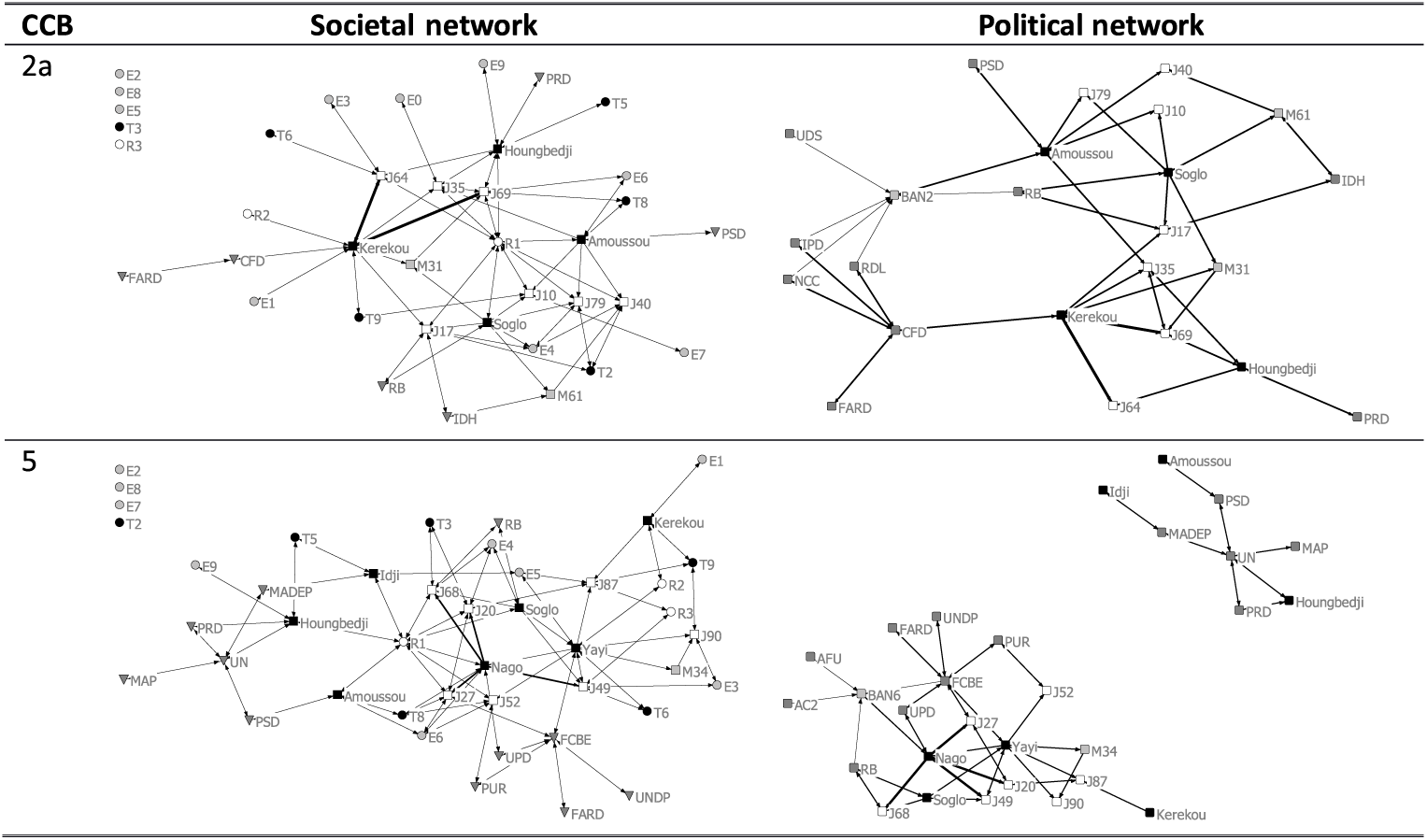
Sociograms of the court’s second and fifth terms.
More recent networks comprise of more actors because new major politicians appeared before the ‘old guard’ had left the scene. In the graphs, disconnected components and large distances to selected actors point to a representation bias. Compact sociograms showing many ties between all sorts of actors in similar proximity to judges represent greater inclusion and point to fair representation. Thick lines visualise strong (multiple) ties. Only considering the societal networks on the left, access to judges does not appear manifestly unbalanced in either graph. Interestingly, the shapes of the graphs change dramatically when socio-cultural ties are excluded (right column). While the societal networks stay more or less constantly balanced, the political networks show a clear trend towards marginalisation and even exclusion of major politicians. The sociograms selected for Figure 1 represent the second and the fifth court because the interviews and press analyses showed relative consensus about inclusiveness and imbalance in those periods. The difference between the societal and the political networks is striking. The graphs incorporating socio-cultural ties apparently show inclusive structures that do not demonstrate serious biases or the marginalisation of key politicians (black squares) regarding access to judges (white squares). 17
In contrast, the political networks display a sharp difference between the CCB’s second and fifth terms. For the second court, distribution of political actors and judges is balanced. All four major politicians, whether in or opposed to the presidential camp, were directly connected to three judges. 18 Consensus shaped appointment decisions. For example, opposition MPs negotiated the parliamentary appointments of two new judges with political ties to the leader of the opposition (nodes J10 and J40). President Yayi’s appointments to the fourth court clearly marginalised the opposition and in the fifth term excluded them entirely. The graph for court five has two components: the core network of all judges and the ‘opposition component’ of leading opposition politicians. The graph for the fourth term (not reported) shows opposition politicians Idji and Amoussou as already marginalised and Houngbédji, Yayi’s major opponent in the second round of the 2006 presidential election, as disconnected.
Numerical analysis
Three standard indicators complement the visual interpretations. First, group centrality measures how diverse access to constitutional judges was over time. It reports the share of all other nodes that can reach at least one of the nodes in the group of judges in one or two steps (Everett and Borgatti, 2005). Decreasing values point to an increasing share of actors at greater distance from the court, which is usually interpreted as less access or influence (Freeman et al., 1991: 141). Although the societal networks appear to become denser, group centrality data shows that variance in the judges’ collective centrality is limited (see Table 1). In other words, the average access of groups and politicians to the bench appears not to have changed a lot over time considering the inclusive societal structures.
Group centrality data for judges.
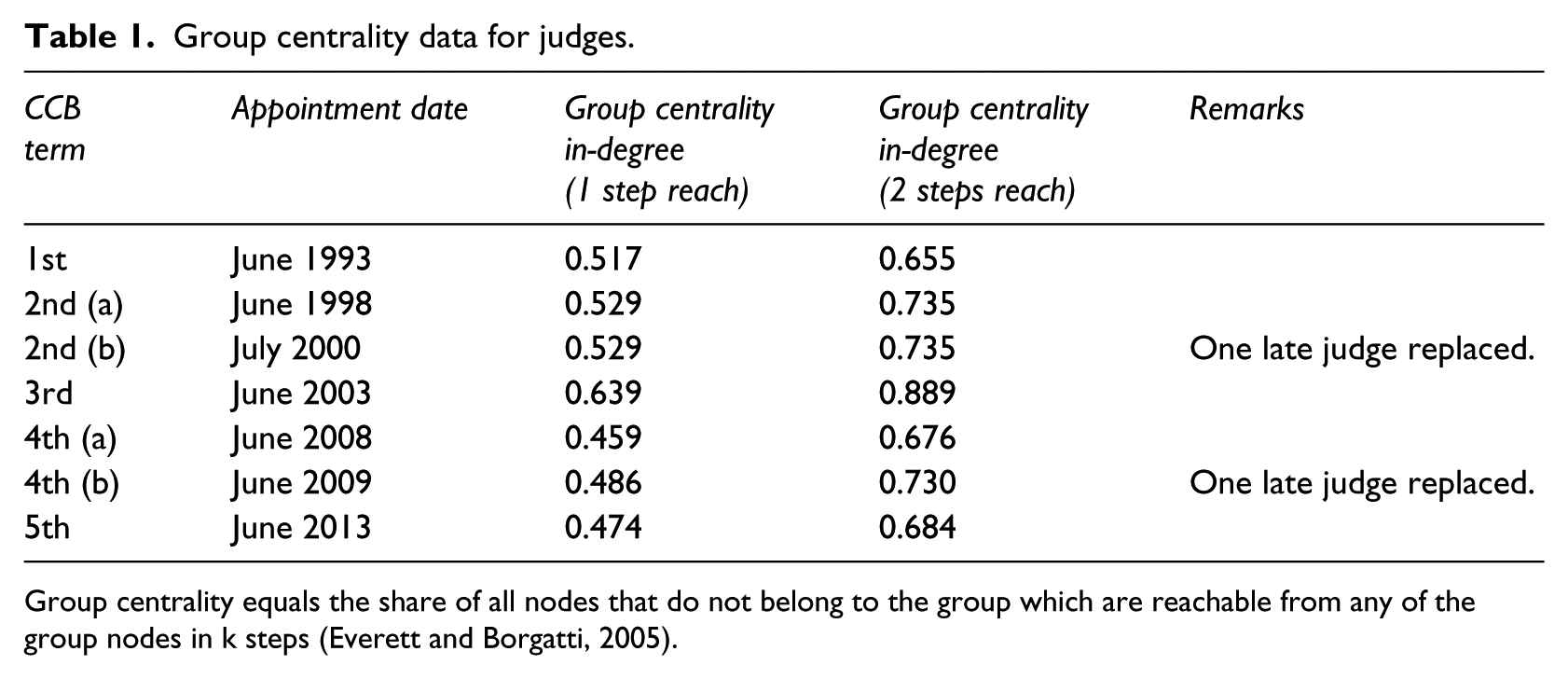
Group centrality equals the share of all nodes that do not belong to the group which are reachable from any of the group nodes in k steps (Everett and Borgatti, 2005).
Second, average geodesic distances; and third, minimum-cut measures, provide information on how closely the major politicians, their political camps and, if required, other actors are connected to the judges. The political camps are divided into presidential supporters and the opposition. Directed geodesic distances (dij) describe the shortest path between two individuals.
The smaller the value, the closer the actors. It is usually assumed that closeness means accessibility. The closer a politician (p ∈ P) is to as many judges as possible, the greater P’s potential influence on the court. The number of reachable judges (r) with whom politician P connects varies between zero and the number of judges of the t’th court (
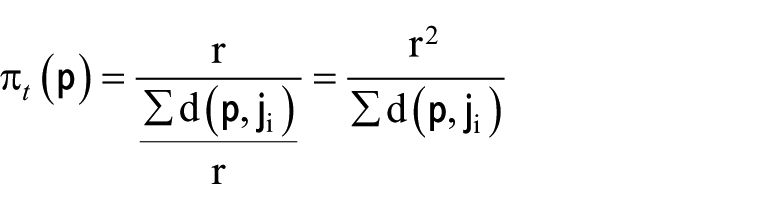
This is the adequate level of aggregation since the outcome of interest is the credibility of the court as a collective whole. The maximum size of π equals r. The average distance to the court of a politician completely disconnected from any judge is defined as infinite, which brings the minimum size of π to zero

While the shortest path and average proximity tell us about closeness, the number of paths between a non-court actor and a judge tells us about the strength of this relationship. The idea is that multiple ties enhance the capacity to exchange information. This capacity can be measured using the minimum number of ties that must be cut to disconnect two actors (Freeman et al., 1991). The average strength of politician P’s connection to the t’th court can be formally defined as the minimum-cut indicator λ as follows
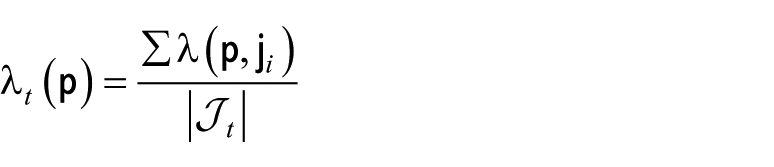
The higher λ is for a relationship between a politician and the court, the stronger the access to the bench should be. If networks contribute to court credibility in the suspected way, the following should be observed. Less reputed courts come with more unbalanced sociograms, and less equally distributed closeness and minimum-cut measures across the politician’s group than the courts’ are perceived to be more legitimate. Aggregated biases between the presidential camp and the opposition should have particularly important effects. If a bias occurs, we shall be able to identify which network subsets contribute most to the degree of credibility.
The entire data set comprises of 189 dyadic connections between elements of the set of political actors and the set of judges over five court terms. Calculating proximity (π) and strength (λ) measures for each dyad in the two societal and political sociograms results in 756 values. One example of a short but weak tie is as follows. The then-president of the National Assembly, Amoussou, appointed judge J10 to the second court but had no other political ties to J10. By contrast, to disconnect President Yayi from J27 in the political graph of the fifth court, four ties have to be cut, although the distance between Yayi and J27 is only two. The judge is indirectly linked to the president because J27 served on the FCBE electoral campaign team (Gnanih, 2008), which organised support for Boni Yayi. However, Yayi is closely connected in three other ways to the same judge (Yayi-Nago-J27, Yayi-J87-J20-J27 and Yayi-J52-PUR-FCBE-J27). In network analytical terms, Yayi’s capacity to access J27 ( λ(Yayi,J27) = 4 ) is much greater than Amoussou’s capacity to access J10 ( λ(Amou,J10) = 1 ).
Table 2 reports average values for key politicians and camps in the political networks. It also reports the attribution of individual politicians to the political camps over time. Keeping in mind that the aggregated values follow the intuitive logic that higher values indicate easier access to the court, the picture is clear. Some actors have always had closer ties to more judges than others; however, the distribution of access to the court among the politicians, especially between the presidential and the opposition camps, has changed considerably. Access to the two most recent courts was less equally distributed than before. Between 1998 and 2003, the difference in λ between the most and the least strongly connected politician went from 1.7 to 3.4 points, and the difference in π between the politician who had the closest ties to the bench and the one at the greatest distance went from 2.2 to 4.9 points. Thus, the opposition has been systematically disconnected from the court’s networks.
Political networks.
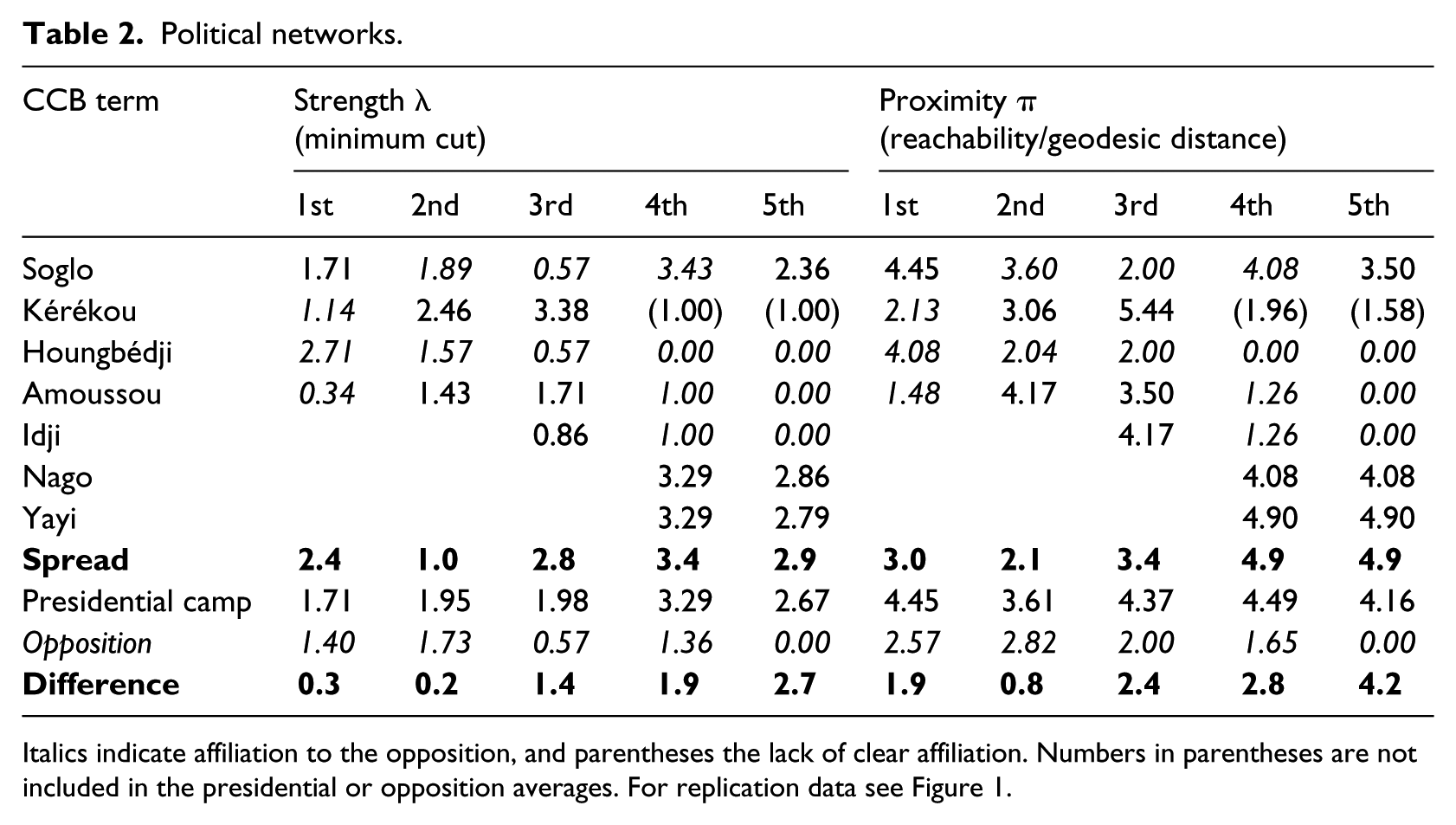
Italics indicate affiliation to the opposition, and parentheses the lack of clear affiliation. Numbers in parentheses are not included in the presidential or opposition averages. For replication data see Figure 1.
The numerical measures of proximity and relational strength confirm the gravity of the change. Not only was access to the court more balanced between presidential and opposition players in earlier years, but the existing (within-camp) connections have, on average, also grown stronger, though not more proximate. The latter mainly results from the limited number of actors in the networks of interest.
General insights
Benin’s Constitutional Court has suffered from decreasing public support over time. As the above newspaper and interview analyses have shown, the two courts appointed during Boni Yayi’s presidency attracted more criticism than any previous court. Critics have often failed to substantiate the main allegation driving this change in perception – that the court became more biased towards the president. SNA now shows that communalistic biases do not coincide with the reported change in perceptions. The same two ethnic groups, for example, have been disconnected from the court network throughout the court’s existence. These are smaller groups from the north of Benin. The network data cannot confirm ethnic favouritism for northern groups under Yayi given that (a) these two groups have not been represented on the court under any president, southern or northern; (b) since the court was founded, just four judges have had a southern ethnic background; and (c) the only exception occurred in the most criticised fourth court, when five judges represented southern groups.
The analysis of political networks finds strong support for the argument that appointments affect perceptions and thereby the functional leverage of the court. The visual and numerical interpretation of the fourth and fifth court networks are aligned with the perceptions of credibility drawn from interviews and the media, that opposition politicians had been successively marginalised. The strongest change in network structures correlates with a loss of credibility. Political power relations seem to be significant, though we cannot conclude that CCB membership has been structured along ideological party lines analogous to Western courts since Benin’s party system does not provide consistent programmatic or ideological positions. Political loyalty rather than ethno-regional ties shape the reputation of the court. There is little reason to believe that the CCB’s decreasing reputation was merely constructed by an oppositional discourse. There is evidence that deliberate appointment practices sought to reshape the judicial networks on the constitutional bench for political ends. Relevant actors have at least accepted the risk to undermine the court’s democratic consolidation function. How much exactly this delegitimisation affected democratic consolidation cannot be rigorously studied without more detailed data, but recent democratisation data for Benin 19 reports a decline in liberal democracy which corresponds to the above findings. At the very least, we find no obvious structural mismatch that would rule out an important effect of judicial networks on consolidation efforts in Benin as well as similar political contexts. Future cross-national comparative research would need to check the causal claim that these insights have suggested.
Conclusion
The analysis of network representation on Benin’s Constitutional Court bench empirically supports the importance of appointments to the highest courts. This is in line with earlier scholarly statements about the risks of one-sided politicised appointments in Africa (Adouki, 2013; Fombad, 2014). I have drawn attention to the balanced integration of the courts into relevant networks, acknowledging that ‘neutral’ judges may not exist, but equidistant benches may. Fombad (2014: 266), for instance, seeks an institutional solution that guarantees the appointment of ‘constitutional adjudicators that are competent, impartial and politically neutral but accountable’.
I have shown that since 2008 deliberate political decisions by Benin’s ruling politicians, coordinated by President Yayi and his parliamentary majority, have at least jeopardised, if not intentionally attacked, the CCB’s good reputation through controversial appointment practices. The attacks were not against the professionalism of individual judges, but rather against the perceived and real biases of the bench as a whole. At the time of writing this article, the regular mid-2018 court reshuffle had yet to show whether President Talon would return to consensual appointments.
More generally, I argue that fair representation on the bench has a powerful effect on its reputation. Comparative social network analysis over time has provided initial evidence that objective structures drive perceptions of fair representation and thereby court legitimacy. While we cannot exclude the possibility that hidden ties and non-observable networks, such as private clubs or secret societies, may distort the results, the Benin data suggests that the representation of ethnic, regional or religious groups has not determined the court’s legitimacy – the short-term political affiliations of the judges matter much more.
The CCB gives one successful example of how credible dispute-settlement bodies can compensate for a lack of better context conditions. Economic and institutional requisites make many new democracies, particularly in Africa, unlikely to be able to survive for over two decades. Balanced network representation appears to be an important resource for the necessary credibility. This makes turning away from individual membership characteristics in politically relevant dispute-settlement bodies to the overall balance of political and social relations within such bodies interesting for research beyond constitutional courts.
Supplemental Material
Anonymized_sets__supplement1 – Supplemental material for Sustaining and jeopardising a credible arbiter: Judicial networks in Benin’s consolidating democracy
Supplemental material, Anonymized_sets__supplement1 for Sustaining and jeopardising a credible arbiter: Judicial networks in Benin’s consolidating democracy by Björn Dressel, Raul Sanchez-Urribarri, Alexander Stroh and Alexander Stroh in International Political Science Review
Supplemental Material
CCB_1to5_all_Sociograms__supplement2 – Supplemental material for Sustaining and jeopardising a credible arbiter: Judicial networks in Benin’s consolidating democracy
Supplemental material, CCB_1to5_all_Sociograms__supplement2 for Sustaining and jeopardising a credible arbiter: Judicial networks in Benin’s consolidating democracy by Björn Dressel, Raul Sanchez-Urribarri, Alexander Stroh and Alexander Stroh in International Political Science Review
Footnotes
Acknowledgements
I am very grateful to Johanna Schäfer-Kehnert for excellent research assistance. I wish to thank all commentators on earlier versions, including Björn Dressel, Mariana Llanos, Maria Popova, Raúl Sánchez Urribarrí and three anonymous reviewers.
Funding
The data collection used for this work was supported by the Leibniz Association, Germany [Leibniz Competition grant SAW-2011-GIGA-5].
Notes
Author biography
References
Supplementary Material
Please find the following supplemental material available below.
For Open Access articles published under a Creative Commons License, all supplemental material carries the same license as the article it is associated with.
For non-Open Access articles published, all supplemental material carries a non-exclusive license, and permission requests for re-use of supplemental material or any part of supplemental material shall be sent directly to the copyright owner as specified in the copyright notice associated with the article.
