







Abstract
This study examines the environmental impacts of US sanctions on Iranian companies from 2013 to 2023, finding significant increases in air pollution, energy consumption and industrial waste. Although corporate governance and social responsibility practices offer some mitigation, they do not fully offset the negative effects. However, community social capital completely neutralizes the environmental damage. This research contributes to public policy discourse by emphasizing the complex and unintended consequences of sanctions on environmental sustainability.
Introduction
Sanctions are increasingly used by governments, with over 25 countries, including China, Iran, Russia and Venezuela, currently under US sanctions (Meyer et al., 2023). Recent events, such as the Ukraine conflict and US–China tensions, highlight sanctions’ strategic significance (Meyer et al., 2023). Although debate over sanctions’ effectiveness persists, their environmental impact is underexplored (Özdamar and Shahin, 2021), a crucial area as sustainability gains global priority.
This study examines US sanctions’ environmental effects on companies, focusing on air pollution, energy consumption and industrial waste. Sanctions can raise operational costs, possibly increasing pollution or, conversely, reduce economic activity, which might lower energy use (Petrov, 2018). Using a difference-in-differences (DD) approach to Iranian companies (2013–2023), the study finds that sanctions increase air pollution, energy use and waste. Although corporate governance (CG) and corporate social responsibility (CSR) offer partial mitigation, only community social capital (CSC) fully offsets sanctions’ adverse environmental effects.
This study significantly advances our understanding of the environmental consequences of US political sanctions by offering a comprehensive analysis of various environmental indicators, including air pollution, energy consumption and industrial waste generation. Although previous research (e.g. Arapova, 2023; Guo et al., 2021) has primarily focused on the economic dimensions of sanctions, our investigation highlights their profound impact on multiple environmental factors. This study also extends the recent research regarding the harmful effects of sanctions on human rights (e.g. Perry and Peksen, 2024). To mitigate these unintended environmental effects, this paper provides key recommendations, such as enhancing CG and promoting CSR initiatives. Furthermore, by emphasizing the mitigating role of CSC on the effects of sanctions, this study underscores the crucial importance of active public engagement and collaboration among non-governmental organizations (NGOs), governments and academic institutions in fostering social capital for environmental conservation. Notably, this paper is the first to provide field evidence that supports the quantitative findings, demonstrating the tangible environmental impacts of sanctions. Overall, this study offers valuable insights that can inform policy discussions and corporate strategies aimed at mitigating the unintended consequences of sanctions while promoting environmental sustainability.
Background and hypotheses development
Institutional background
The relationship between the US and Iran has been marked by historical tensions and ideological conflicts, dating back to the 1950s when the US orchestrated a coup against Iran’s democratic leader, resulting in the establishment of a US-backed Shah who faced significant opposition (Nakanishi, 2015). The 1979 Iranian Revolution shifted power dynamics, fostering anti-American sentiments in the new Islamic Republic (Sharifi, 2020). Subsequent events, including US involvement in the Iran–Iraq War, the hostage crisis and disagreements over Iran’s nuclear program, further strained relations. Although the Joint Comprehensive Plan of Action (JCPOA) temporarily eased tensions by limiting Iran’s nuclear activities in exchange for sanctions relief, the US withdrawal from the agreement in 2018 resulted in the re-imposition of severe sanctions, which now also cover many new firms within Iran’s capital market, significantly harming Iran’s economy and trade (Nakhli et al., 2020).
Iran’s capital market
Iran’s capital market, classified as a developing market, has seen substantial growth since the Tehran Stock Exchange (TSE) was established in the early 1960s as the main platform for trading equities and financial instruments. Currently, the TSE lists over 350 companies across sectors such as petrochemicals, metals, automotive, chemicals, pharmaceuticals and telecommunications. This diversity highlights the market’s role in offering critical financing access for both state-owned and private enterprises. Despite fluctuations in market capitalization due to economic sanctions and domestic challenges, the TSE represents a significant portion of Iran’s gross domestic product (GDP), estimated at around 25% to 30%, underscoring its pivotal role in the Iranian economy as firms increasingly rely on capital markets for funding amidst financial constraints.
Iran’s capital market is a member of the International Organization of Securities Commissions, underscoring its adherence to international standards such as the International Financial Reporting Standards, international auditing standards and the International Corporate Governance Code. These standards mandate regulations that promote transparency and investor protection through verified reports, including audited financial statements, management discussions and analysis, internal control reports, disclosures of material information, and reports on board and committee changes. The Securities and Exchange Organization acts as the primary regulatory authority, ensuring compliance with both domestic regulations and international best practices to uphold market integrity.
The structure and regulatory requirements of Iran’s capital market enhance transparency and significantly limit the influence of paramilitary groups. However, numerous listed companies have recently been sanctioned by the US government. For non-listed firms, sanctions criteria are relatively straightforward, often linked to associations with the Islamic Revolutionary Guard. 1 In contrast, sanctions criteria for listed companies are less transparent, with US targets seemingly focused on highly profitable firms that might support the Iranian government, though not all such firms face sanctions, creating uncertainty around US policies. To account for potential systematic differences between sanctioned and non-sanctioned firms in evaluating sanctions’ environmental impact, this study uses return on assets (ROA) as a primary comparative metric and examines government ownership percentages. Supplementary analyses, included in the online Appendix, further address these potential differences.
Literature review and hypotheses development
Sanctions have become a critical tool in international relations, aimed at achieving political goals by targeting specific countries and their leaders (Flach et al., 2024). Policymakers often prioritize sanction implementation over assessing outcomes (Kavaklı et al., 2020; Zarpli and Peksen, 2024), with US presidents more likely to impose sanctions during high unemployment and reduced congressional influence (Attia, 2023). Sanctions are also used to project strength, deflect domestic issues and handle international threats without military intervention (Tama, 2020). Although some argue that sanctions destabilize regimes through internal dissent (Mei, 2024), others suggest that accusations of foreign interference weaken public support for protests (Chow and Levin, 2025).
Research primarily examines economic impacts on targeted nations. Studies show that sanctions significantly reduce trade (Dizaji and Farzanegan, 2024; Flach et al., 2024) and sometimes lead to income decline (Flach et al., 2024). Financial sanctions, for instance, cut multinational bank lending to neighboring nations, whereas trade sanctions hinder economic openness, capital flows and technology transfer, impairing business growth (Newman and Zhang, 2024). Sanctions can also weaken democratic institutions and firm performance by limiting globalization (Grauvogel and Von Soest, 2014). Moreover, sanctions are more effective when imposed by countries with a comparative export advantage (Kavaklı et al., 2020).
Although extensive research has examined the economic consequences of sanctions, their environmental impacts remain largely underexplored. Sanctions can significantly constrain firms’ access to critical resources, limiting investments in clean technologies and sustainable practices. Reduced financing options often compel sanctioned firms to abandon or delay investments in renewable energy and pollution-control technologies (Rühl, 2022). This dependency on traditional, pollutant-intensive technologies can contribute to increased pollution levels and undermine climate change efforts (Lewandowski et al., 2024; Xu and Kim, 2021). Additionally, sanctions restrict companies’ access to international suppliers, often forcing a reliance on local resources that may lack stringent environmental standards, potentially leading to immediate pollution increases and waste generation. Sanctions also impose economic pressures that encourage firms to prioritize short-term survival over long-term sustainability. As firms attempt to maintain production levels and meet demand, heightened energy consumption and pollution may result from extended operational hours or increased throughput (Chen et al., 2022). Firms may also delay essential maintenance or prolong the use of outdated, inefficient equipment, which can further drive up energy use and generate additional waste through less efficient manufacturing processes. Financial constraints can lead companies to pause or abandon initiatives aimed at improving environmental performance, disrupting sustainable waste management practices and increasing industrial waste (Gao and Chen, 2023). Moreover, sanctions often disrupt supply chains and limit access to raw materials and spare parts, compelling firms to substitute with alternatives that may be of lower quality or more environmentally damaging. For example, if clean fuels or low-emission materials are no longer available, firms might be forced to resort to higher-emission substitutes, resulting in increased pollution and waste. Under these constraints, companies may reduce sustainability programs, delay environmental initiatives and increase energy use to maintain profitability, leading to higher pollution and waste. Sanctions may also create uncertainty around compliance with environmental regulations. Facing legal and operational challenges, firms may unintentionally violate environmental standards as they strive to sustain operations. This lapse in compliance can result in increased air pollution, as companies are less likely to invest in adherence measures during periods of economic hardship.
Conversely, sanctions can also catalyze positive environmental changes. Reductions in economic activity – especially in heavy industries – can lead to lower air and water pollution (Hussain et al., 2023; Willis and Fytianos, 2022; Yu et al., 2021). Additionally, sanctions may incentivize nations to pursue alternative, sustainable economic activities, fostering innovation in renewable energy and efficient resource management (Klimenko et al., 2021). In certain instances, sanctions stimulate collaboration among stakeholders – including government entities and research institutions – to devise innovative solutions to environmental challenges (Sinah and Oladele, 2016). Furthermore, the imposition of sanctions might prompt governments to strengthen environmental regulations, emphasizing sustainability amid the associated economic turmoil.
Overall, although sanctions may yield negative consequences, they can also act as a catalyst for positive environmental change by stimulating innovation, fostering collaboration and encouraging the adoption of more sustainable practices. Consequently, this paper proposes a non-directional hypothesis as follows:
This paper examines four key moderating variables – managerial ability (MA), CG quality, CSR and CSC – to assess their impact on the relationship between sanctions and environmental metrics. These variables are situated along a spectrum of two strategic management theories: resource-based theory (RBT) and stakeholder theory (e.g. Freeman et al., 2021), as shown in Figure 1. RBT focuses on a firm’s internal resources and capabilities, suggesting that success depends on leveraging these strengths to navigate challenges such as sanctions. MA and CG align closely with RBT, as they reflect how leadership can utilize internal competencies to mitigate negative environmental impacts. In contrast, stakeholder theory emphasizes the importance of engaging with external parties for long-term success. CSR and CSC relate to this theory, highlighting how firms manage relationships with external stakeholders to enhance resilience and sustainability. Thus, although RBT centers on internal capabilities, stakeholder theory underscores the value of external collaboration, providing a comprehensive framework for developing strategies to address environmental challenges stemming from sanctions.
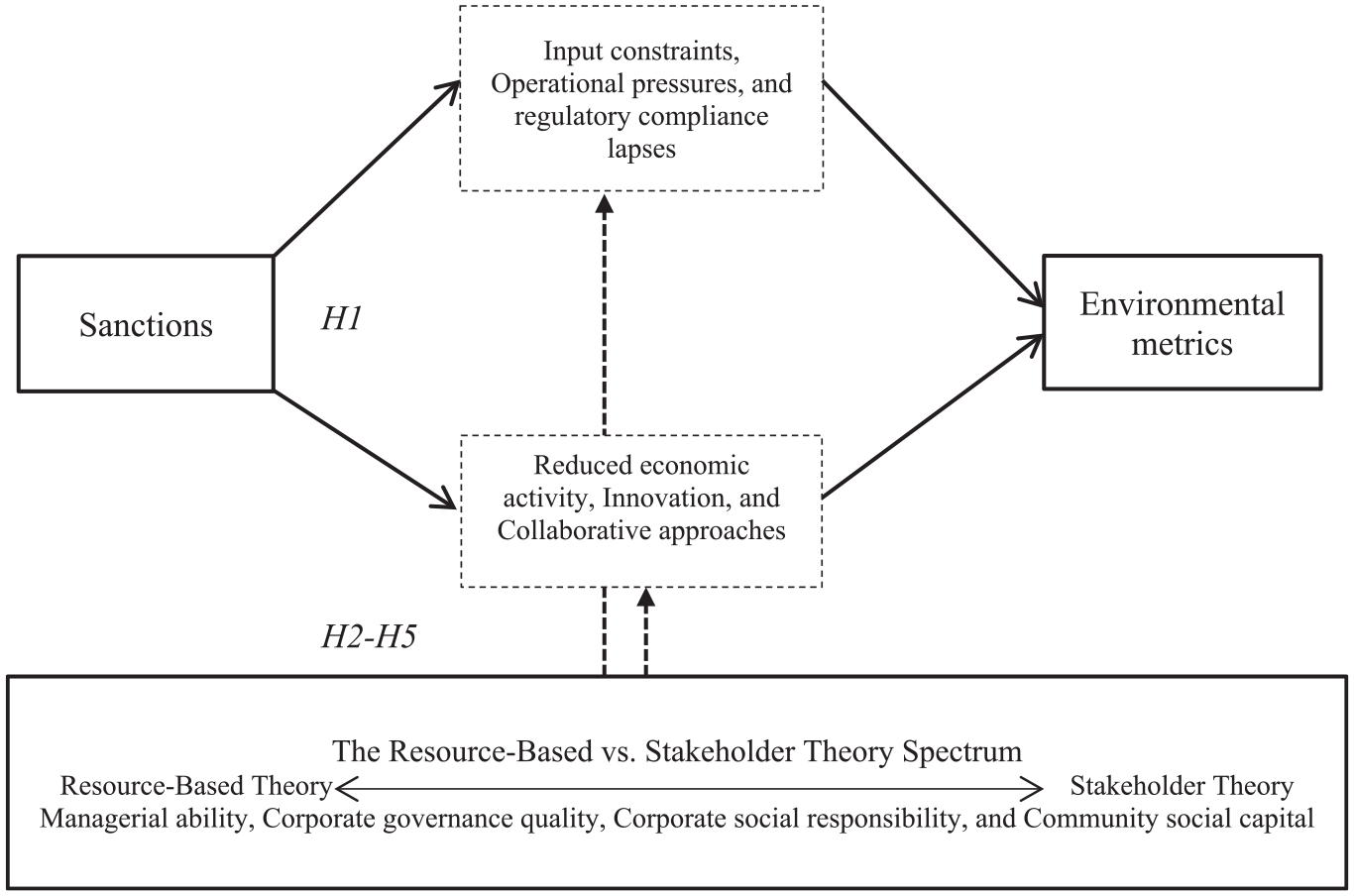
Hypothesized relationships between sanctions, environmental metrics and moderating variables.
MA is critical, as proficient managers possess foresight and adaptability, enabling them to anticipate the environmental consequences of sanctions and implement strategies to mitigate adverse effects (e.g. Pérez and Kiss, 2012). Skilled managers may prioritize cleaner technologies, efficient resource management and sustainable production practices despite economic constraints, highlighting the second hypothesis:
CG quality, another RBT-aligned factor, is also central in shaping firms’ environmental responses under sanctions. Strong governance supports risk oversight, transparency and accountability, ensuring that environmental commitments are upheld even during economic hardship (e.g. Desalegn et al., 2022; Pirson and Turnbull, 2011). Effective CG promotes long-term sustainability by engaging boards and management in responsible resource allocation and environmental stewardship (e.g. Nguyen et al., 2020; Velte, 2024). Therefore, the study posits:
Conversely, stakeholder theory emphasizes the role of external engagement with stakeholders, represented by CSR and CSC. CSR reflects a firm’s commitment to managing its environmental footprint through proactive measures such as environmental management systems, cleaner production technologies and renewable energy investments (Murillo-Avalos et al., 2020). Transparent environmental reporting fosters stakeholder trust, while collaboration with local communities encourages collective environmental initiatives (e.g. Hanjani and Kusumadewi, 2022; Toniolo et al., 2023). This leads to the following hypothesis:
Finally, CSC encapsulates the broader societal network supporting sanctioned firms. Strong social capital fosters information sharing, resource mobilization, collective action and community-led monitoring, helping to mitigate environmental degradation during sanctions (e.g. Marbuah et al., 2021; Sung and Park, 2022). Through shared knowledge, financial support and advocacy, social capital can enable firms to maintain environmental standards despite financial challenges (e.g. Liao and Zhang, 2024). This leads to the fifth hypothesis:
Research methods
Models
The DD method compares pre- and post-sanctions periods for both sanctioned and non-sanctioned groups to isolate sanctions’ causal effect on the environment. This method controls for confounding factors such as firm characteristics, industry trends and economic conditions (Liu et al., 2024). DD is ideal for this research, as it overcomes the impracticality of randomized trials in social sciences and addresses biases from selection factors influencing sanction targets.
To implement the DD method, this paper uses the following equations:


The term Environment includes metrics such as air pollution (AP), energy consumption (EC) and industrial waste generation (IW), measured as annual changes. Negative values indicate a reduction from the previous year, whereas positive values show an increase. Information is extracted through textual analysis of annual reports (e.g. Glaeser and Lang, 2024; Liao and Zhang, 2024). Treatment is set to one for Iranian firms affected by US sanctions and zero for matched firms not affected. Post is set to one for both groups in the year after sanctions are implemented and zero otherwise.
Moderators refers to moderator variables such as MA, CG, CSR and CSC. To assess MA, inspired by the approach outlined by Demerjian et al. (2017), this study initially employs data envelopment analysis (DEA) to evaluate managers efficiency in revenue generation. Inputs considered in the DEA include the cost of goods sold, administrative expenses and tangible assets, and net sales serve as the output (Demerjian et al., 2017). To operationalize CG, this study employs a composite index based on common measures drawn from existing literature (e.g. Kavadis and Thomsen, 2022). The index encompasses CG quality, comprising factors such as board independence, board size, average independence of specialized committees of the board of directors, average size of specialized committees of the board of directors, and institutional ownership. Each component is dichotomized at its median and then aggregated to construct the composite index. CSR is assessed using the standardized score of CSR, obtained through textual analysis of annual reports, which extracts 42 item indexes. Exclusions were made for disclosures related to air pollution, energy consumption and industrial waste generation to prevent spurious correlations in statistical findings. CSC is measured using a county-level framework developed by Rupasingha et al. (2006), which encompasses several key indicators: voter turnout, census response rate, the number of domestic nonprofit organizations and the number of civic organizations within the jurisdictions of the firms being studied (Hartlieb et al., 2020). In the context of this research, high voter turnout and robust census response rates serve as indicators of a politically active and informed community. Such engagement can lead to greater accountability and heightened demand for environmentally responsible practices from local firms. Furthermore, a greater presence of domestic nonprofits and civic organizations within a jurisdiction reflects a vibrant civil society that can meaningfully advocate for environmental protection and effectively monitor firms’ compliance with environmental standards. These organizations may possess the expertise needed to assist the community in adopting sustainable practices and can mobilize collective action to combat environmental degradation. For analysis, the individual indexes are quartiled and summed to create a total score. The resulting scores, which range from 4 to 16, represent levels of CSC, with 4 indicating the lowest and 16 indicating the highest levels of civic engagement and organizational presence. 2 Since approximately 30% of the sampled firms have headquarters and factories located in different countries, this paper focuses on the countries where the factories are situated to better capture the influence of local CSC on environmental practices and responses to sanctions. The environmental practices of companies more directly impact the communities surrounding their factories, and, by concentrating on these locations, we can more accurately reflect direct impacts, local engagement and relevant regulations. For firms with multiple factories, we calculate an average score to ensure a comprehensive and balanced representation.
Controls encompasses a variety of variables previously recognized in research as influential factors shaping corporate decisions regarding environmental matters (e.g. Glaeser and Lang, 2024; Ma and Zhu, 2024; Schweizer et al., 2023; Velte, 2024; Yu et al., 2021). Definitions for all variable are provided in Table 1.
Variables definition.
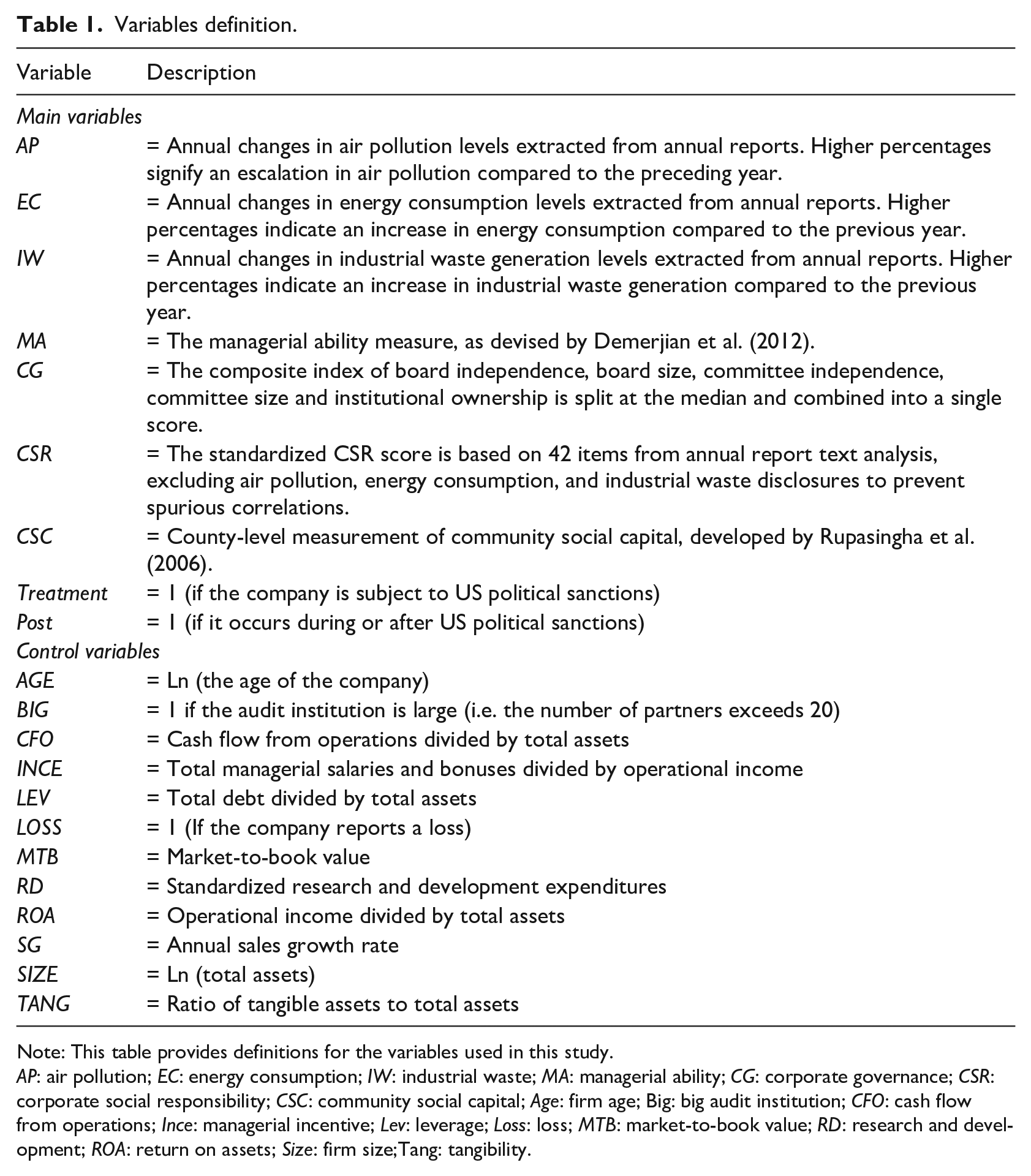
Note: This table provides definitions for the variables used in this study.
AP: air pollution; EC: energy consumption; IW: industrial waste; MA: managerial ability; CG: corporate governance; CSR: corporate social responsibility; CSC: community social capital; Age: firm age; Big: big audit institution; CFO: cash flow from operations; Ince: managerial incentive; Lev: leverage; Loss: loss; MTB: market-to-book value; RD: research and development; ROA: return on assets; Size: firm size;Tang: tangibility.
Sample
This study employs publicly available sanction data from the US Treasury Department’s Office of Foreign Assets Control (OFAC) for the years 2013–2022, focusing on Iranian listed companies. It excludes firms in the finance and regulated sectors to ensure a homogeneous analysis environment (Liu et al., 2024), ultimately identifying 23 sanctioned Iranian firms in non-financial sectors with accessible financial data. Additionally, data for 2023 is collected to account for environmental metrics requiring subsequent-year information.
To support the DD analysis and ensure comparability, each sanctioned firm is paired with a non-sanctioned counterpart. The matching is based on industry and the closest ROA for the same year. This process results in a dataset of 46 firms (23 sanctioned and 23 non-sanctioned) over a 10-year period, yielding a total of 460 firm-year observations for analysis.
Findings
Univariate statistics
Table 2 presents descriptive statistics for the variables utilized in the study. As listed in Panel A, the change in air pollution (AP) averages approximately -0.055 for control observations (Treatment = 0) and -0.017 for treatment observations (Treatment = 1), highlighting a notable disparity in air pollution reduction between non-sanctioned and sanctioned firms. This difference implies a potential failure rate of around 70% in some of the air pollution control plans for sanctioned firms compared to other firms. Similarly, the mean of change in energy consumption (EC) indicates a decrease in consumption trends, transitioning from -0.051 to -0.034. Regarding industrial waste (IW), both groups exhibit positive means, reflecting challenges in managing industrial waste. However, the increase in industrial waste (0.017) for the treatment group is slightly higher than that of the control group (0.010), suggesting possible poorer performance in managing industrial waste among sanctioned firms. Collectively, these findings suggest a potential negative impact of sanctions on environmental metrics. Panel B also presents the paired correlations among the principal research variables. Notably, the panel reveals significant associations between environmental metrics, consistent with the literature (e.g. Wang et al., 2019). Moreover, CSR and CSC exhibit adverse correlations with certain environmental metrics.
Descriptive statistics.
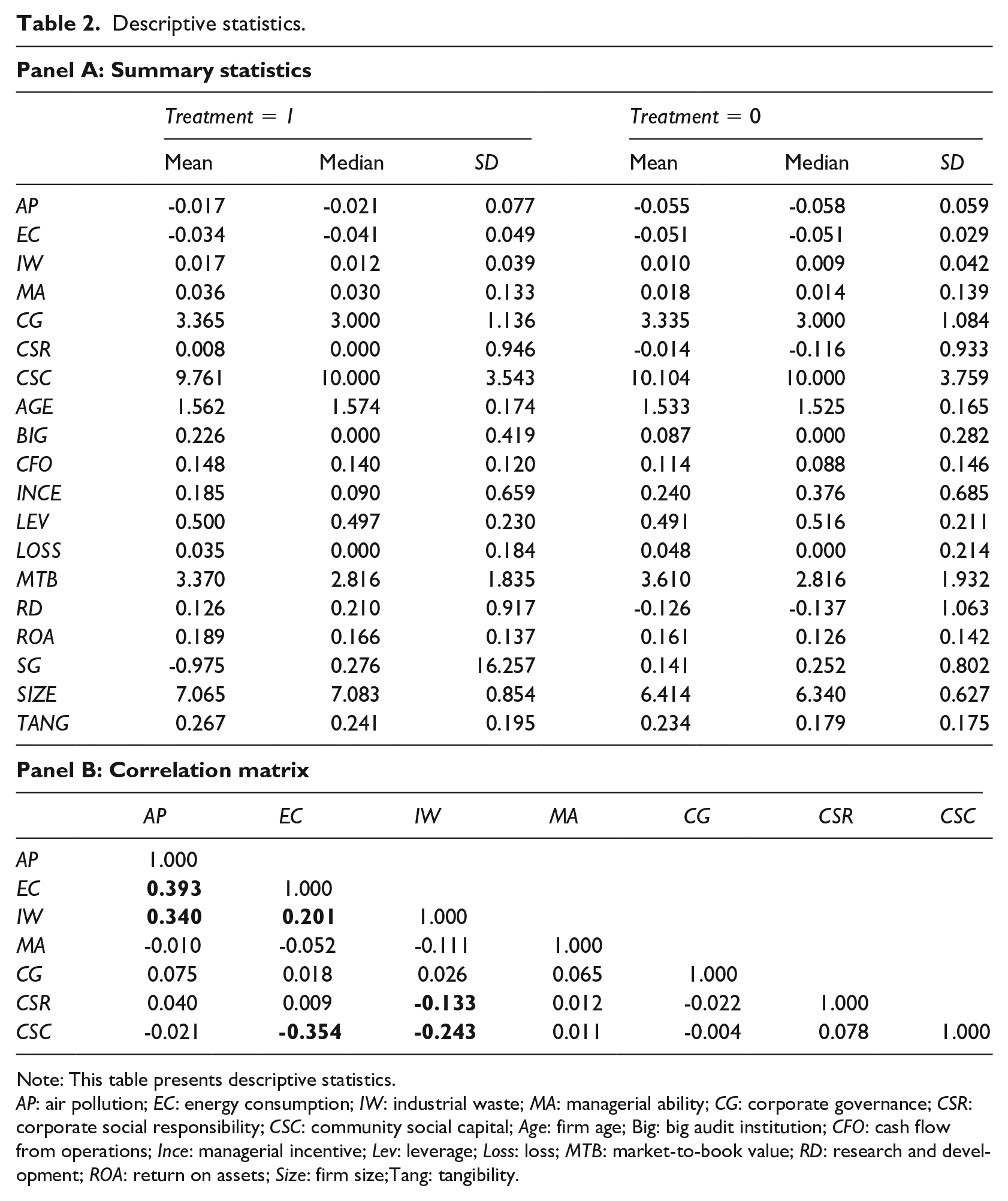
Note: This table presents descriptive statistics.
AP: air pollution; EC: energy consumption; IW: industrial waste; MA: managerial ability; CG: corporate governance; CSR: corporate social responsibility; CSC: community social capital; Age: firm age; Big: big audit institution; CFO: cash flow from operations; Ince: managerial incentive; Lev: leverage; Loss: loss; MTB: market-to-book value; RD: research and development; ROA: return on assets; Size: firm size;Tang: tangibility.
Inferential statistics
To evaluate the first hypothesis, the present study employs the DD method (Equation (1)) and cluster standard errors at the firm level to address potential heteroscedasticity. Table 3 lists the results, with the dependent variables being air pollution (AP), energy consumption (EC) and industrial waste generation (IW). In the first column, the coefficient on Treatment × Post is positive (coefficient = 0.100) and statistically significant at the 1% level, indicating that sanctions lead to an increase in changes in annual air pollution levels. This suggests that sanctions adversely affect air pollution control efforts by constraining companies’ capabilities in pollution management. Similarly, significant positive coefficients on Treatment × Post (0.041 and 0.002) in the second and third columns reveal that sanctions also lead to an increase in energy consumption and industrial waste generation. This also implies that sanctions negatively influence both energy consumption and industrial waste management. To better compare the effect sizes of explanatory variables, the scaled (standardized) coefficients are reported in brackets. As demonstrated, the scaled coefficients on Treatment × Post (0.521, 0.377 and 0.188) are the largest across all columns, indicating the substantial role of sanctions on environmental effects. More specifically, these coefficients suggest that, given the overall standard deviations of the dependent variables, sanctions are associated with an annual increase in 3.7% in air pollution (0.521 × 0.071), 1.5% in energy consumption (0.377 × 0.041) and 0.7% in industrial waste (0.188 × 0.040). These findings support the notion that sanctions restrict companies’ access to markets, financing, and technology, driving them to prioritize short-term economic objectives over long-term environmental concerns (e.g. Petrov, 2018). This confirms the first hypothesis. Additionally, among the control variables, CG and sales growth consistently have a statistically significant impact on environmental metrics in most cases. This is likely because CG provides a framework for responsible decision-making and sustainable practices, while sales growth enables the allocation of resources and fosters innovation, both of which contribute to improved environmental performance. The lack of statistical significance for other company-specific factors could be due to the highly disruptive nature of sanctions, which may overshadow the predictive power of typical control variables in such extreme conditions.
The impact of sanction on the environmental metrics.
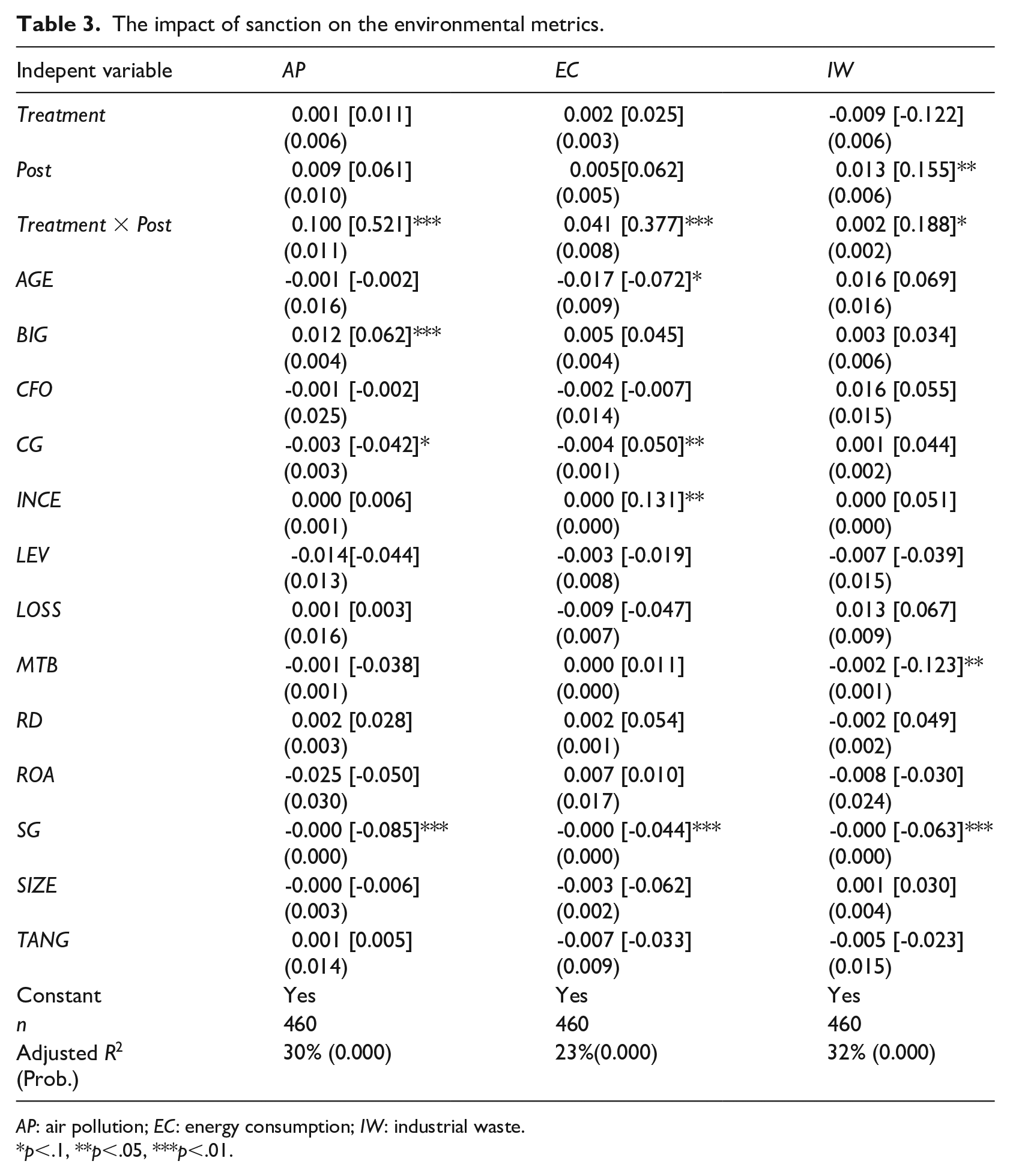
AP: air pollution; EC: energy consumption; IW: industrial waste.
p<.1, **p<.05, ***p<.01.
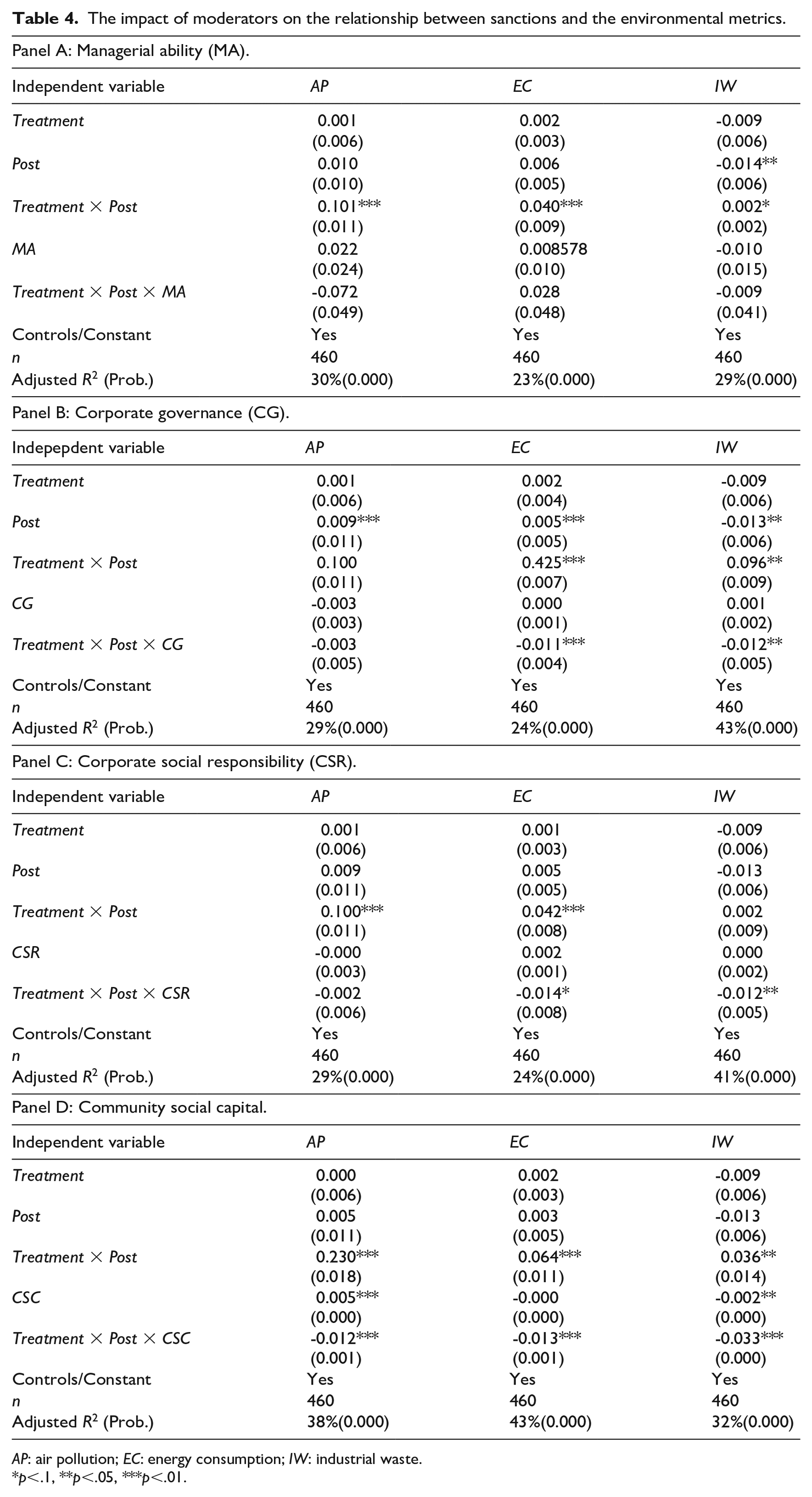
The second through fifth hypotheses propose that various moderating variables influence the relationship between sanctions and environmental metrics. To test these hypotheses, this manuscript estimates Equation (2) and examined the results presented in Panel A of Table 4. For all environmental metrics (AP, EC and IW), the coefficients on Treatment × Post × MA are statistically insignificant. This indicates that the impact of sanctions (Treatment × Post) does not significantly differ between companies with higher and lower levels of managerial ability. In essence, managerial ability does not exert a significant influence on the relationship between sanctions and the environment, leading to the rejection of the second hypothesis. This outcome may be attributed to executives prioritizing the immediate financial and operational challenges imposed by sanctions, rather than focusing on long-term environmental considerations.
The impact of moderators on the relationship between sanctions and the environmental metrics.
AP: air pollution; EC: energy consumption; IW: industrial waste.
p<.1, **p<.05, ***p<.01.
Conversely, in Panels B (as well as Panels C and D), the coefficients on Treatment × Post × CG (as well as Treatment × Post × CSR and Treatment × Post × CSC) are predominantly negative and significant. This suggests that the increasing effects of sanctions on environmental metrics are mitigated by CG (as well as both CSR and CSC), confirming the third through fifth hypotheses. The exception lies in the moderating effect of CG on the sanction–air pollution relationship and the moderating role of CSR in the sanction–industrial waste relationship. To provide a conceptual justification for the first exception, CG typically emphasizes decisions that impact short-term financial performance, such as energy savings and waste reduction, which provide immediate economic benefits (Velte, 2024). In contrast, air pollution initiatives, though beneficial long-term, offer less immediate financial returns and thus receive less emphasis. Under economic sanctions, companies may focus on CSR activities that align with corporate values and stakeholder expectations, whereas waste management decisions remain more influenced by economic incentives than by CSR alone (Dolci et al., 2023).
Additional analyses
Johnson-Neyman analysis
Recent studies (e.g. Jollineau and Bowen, 2023) have highlighted limitations in conventional regression analysis, which often focus only on single conditional effects. To address this, researchers increasingly recommend using Johnson and Neyman’s (1936) method with conditional slope graphs and confidence bands to display the significance of all conditional slopes. This article adopts this approach, leveraging an online tool (http://www.quantpsy.org/interact/hlm2) frequently used in recent research (Jollineau and Bowen, 2023) and presents graphs in Figure 2.
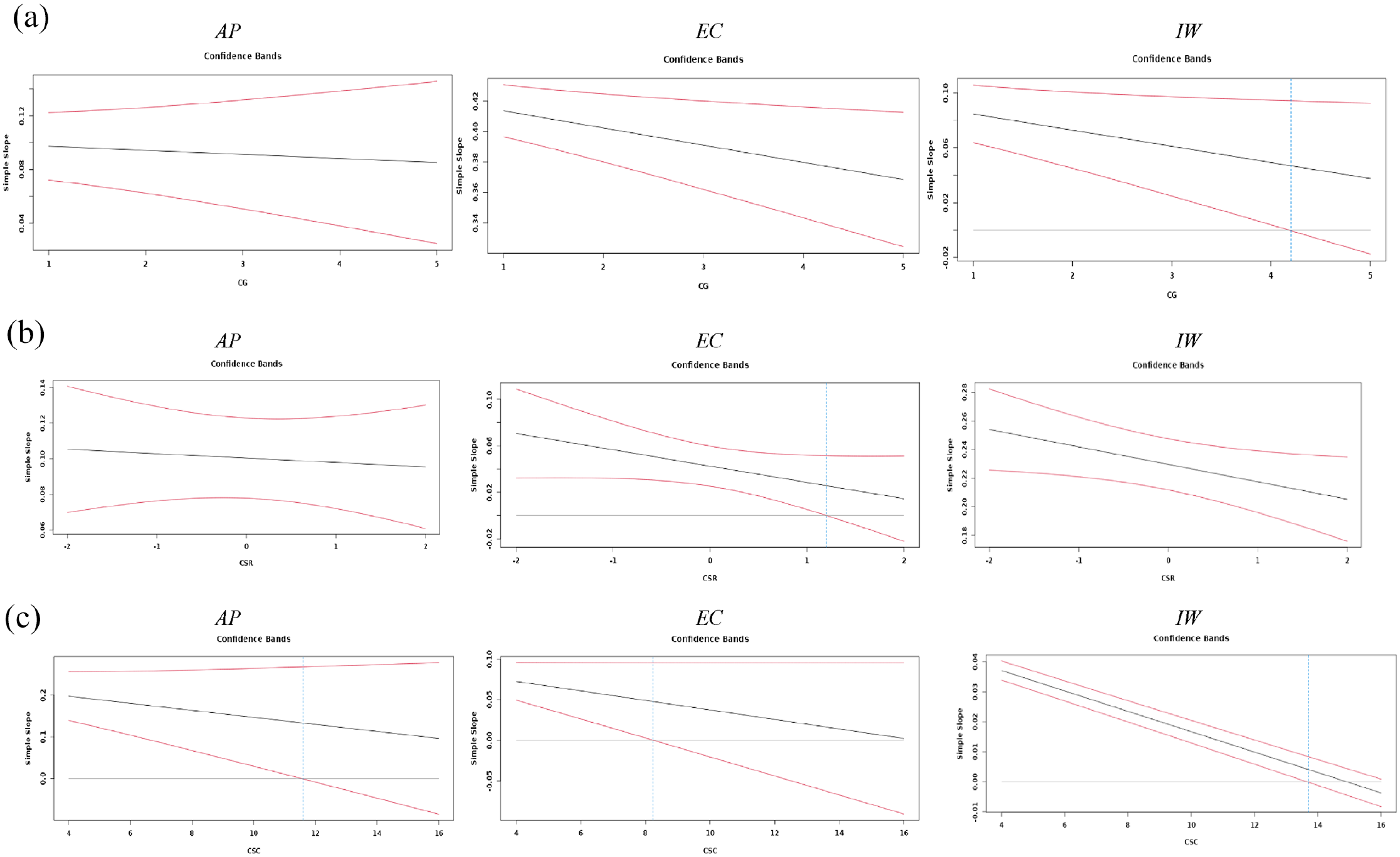
Johnson-Neyman analysis on the impact of moderators on the relationship between sanctions and the environmental metrics.
Panels A to C illustrate the moderating effects of CG, CSR initiatives and CSC on the relationship between sanctions and environmental metrics. The y-axis shows sanction effects (i.e. coefficients on Treatment × Post), and the x-axis represents levels of each moderator. Red confidence bands denote 95% confidence intervals, while black lines show estimated slopes, indicating that sanctions’ effects are greater at low moderator levels.
For Panels A and B, confidence bands mostly do not overlap zero, indicating moderators reduce but do not fully eliminate sanction impacts on the environment. In contrast, all graphs in Panel C show that CSC fully offsets sanction effects at certain thresholds, nullifying negative impacts on air pollution, energy use and waste generation, particularly above specific levels (around 12, 8 and 14). Thus, CSC not only moderates but also completely counteracts the environmental effects of sanctions at higher levels.
Assumption of post-shock effects and parallel trends
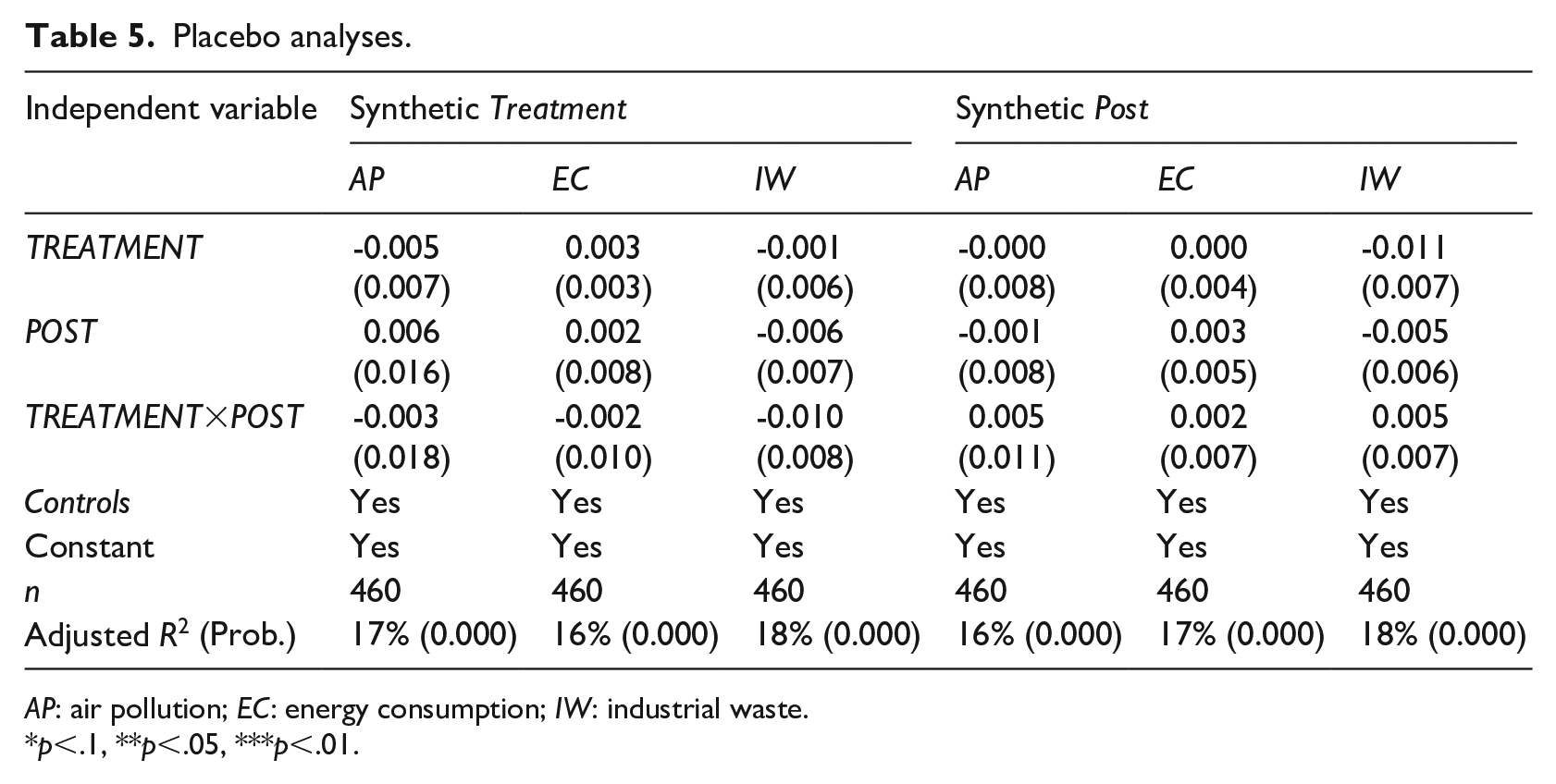
This study utilizes placebo analyses (e.g. Egami and Yamauchi, 2023) to assess the validity of the post-shock effects and parallel trends assumption within the DD framework. To this end, a synthetic treatment group is created by substituting the actual treatment group with non-sanctioned firms from the same year, matched by industry and their closest ROA to those of the control group. Additionally, a synthetic post variable is established, which is assigned a value of one for periods after ‘t-2’ (i.e. two years prior to the implementation of sanctions) and zero for earlier periods. Table 5 lists the findings of this analysis, which indicate that throughout the synthetic treatment and synthetic post columns, the coefficients for the interaction term TREATMENT×POST are statistically insignificant. These results suggest that the significant associations observed in previous studies are more likely attributable to the effects of the sanctions, rather than any pre-existing trends.
Placebo analyses.
AP: air pollution; EC: energy consumption; IW: industrial waste.
p<.1, **p<.05, ***p<.01.
Field evidence
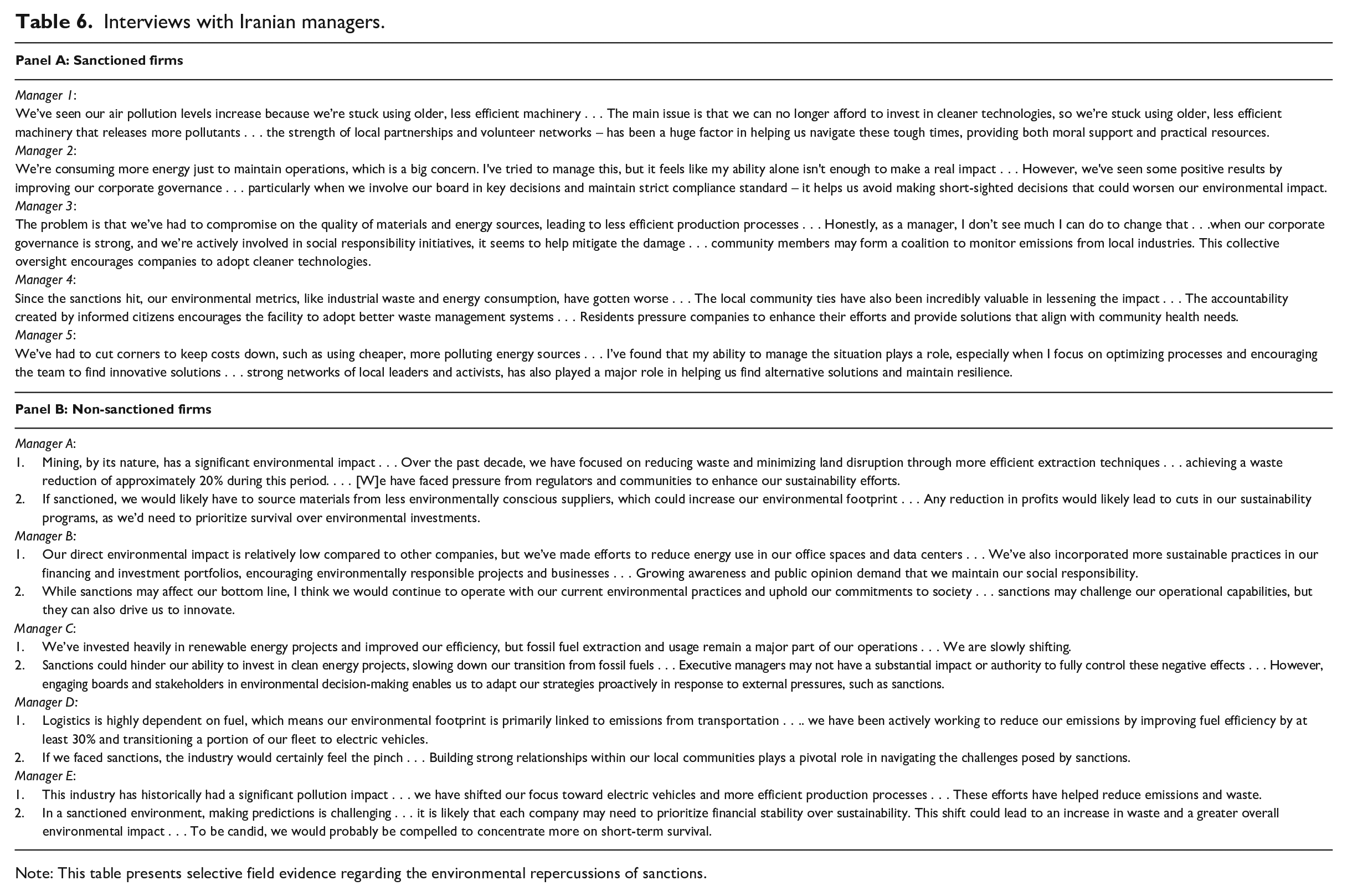
The interview-based research offers critical insights into how sanctions impact environmental metrics. This section summarizes findings from interviews with 20 executive managers from both sanctioned and non-sanctioned Iranian firms, with durations ranging from 4 to 25 minutes. To reduce bias, managers from sanctioned firms were encouraged to openly discuss the effects of sanctions on their environmental metrics and any factors influencing this relationship. Respondents from non-sanctioned firms first evaluated their company’s overall environmental impact over the past decade and then speculated on how US sanctions might affect their environmental practices, including any moderating factors they identified. The aim was to collect nuanced, context-specific insights to enhance understanding of the primary hypotheses, with selected evidence presented in Table 6.
Interviews with Iranian managers.
Note: This table presents selective field evidence regarding the environmental repercussions of sanctions.
In summary, managers from sanctioned firms confirmed sanctions’ negative environmental impact, citing increased air pollution from outdated machinery (Manager 1) and rising energy consumption for operational maintenance (Manager 2). Although views on managerial ability’s role were mixed, most managers pointed to CG, CSR and CSC as key mitigators. For instance, Manager 2 noted that board involvement and compliance standards prevent short-sighted, environmentally damaging decisions, and Manager 4 highlighted community pressure for improved environmental efforts.
Managers from non-sanctioned firms reported environmental progress over the last decade but acknowledged that hypothetical sanctions would likely hinder these efforts by redirecting resources to immediate financial needs. Manager A explained that profits cuts might force reductions in sustainability initiatives, and Manager E emphasized prioritizing short-term survival. These managers also recognized CG, social responsibility and community engagement as essential in responding to external pressures, with Manager B referencing public demand for social responsibility and Manager C discussing proactive strategy adjustments.
Overall, the interview data supports quantitative findings, underscoring sanctions’ adverse environmental effects and the moderating roles of governance, CSR and social capital in this relationship.
Conclusions
This study highlights the negative environmental impacts of corporate sanctions. The findings indicate that although managerial ability alone does not significantly mitigate these adverse effects, robust CG and effective CSR initiatives are critical in alleviating the negative consequences of sanctions. CSC emerges as a key moderator, demonstrating the potential to completely offset the adverse environmental impacts of sanctions. These results align closely with the resource-based view of the firm incorporating stakeholders (Freeman et al., 2021), which emphasizes the importance of integrating stakeholders to maintain a competitive advantage. This perspective also underscores the value of societal cooperation and shared values in enhancing sustainable performance.
These findings have important implications for policymakers, particularly concerning sanctions such as those imposed by the US on Iran. First, they highlight the need to consider the unintended environmental consequences of sanctions. This study underscores the necessity of conducting environmental impact assessments during the design and implementation phases of sanctions to prevent unforeseen damage. However, policymakers should exercise caution when applying these findings universally, as sanctions regimes can differ significantly in scope, intensity and the economic structures they target. Second, the study emphasizes the importance of international cooperation in mitigating the environmental repercussions of sanctions. Political leaders should support global agreements and collaborative frameworks that facilitate collective efforts to minimize unintended harms, thereby enhancing both environmental sustainability and the overall effectiveness of sanctions. Moreover, the findings reveal the crucial role of CSC in alleviating the negative environmental impacts of sanctions. Political leaders are encouraged to recognize the significance of community cohesion and public engagement as vital buffers against environmental degradation during periods of political and economic strain. Collaborative efforts involving political leaders, cultural figures and NGOs are essential in tackling these environmental challenges. Additionally, strengthening CG and CSR within sanctioned firms is critical for reducing environmental fallout. Although strategies have proven effective in the context of Iran, generalizing the effects of sanctions across various nations or smaller developing economies should be approached with caution, given the unique characteristics of their capital markets.
This study has limitations warranting caution in applying its results. First, it focuses on Iran’s economy, which has experienced fluctuating periods of sanctions and relief. Despite conducting various robustness tests, potential spillover effects from external firms may still impact those within our sample. Second, although the study employed a robust DD approach, outcomes could also be affected by macroeconomic factors – such as market conditions or specific sanction designs – limiting the generalizability of findings. Third, this study examines only short-term effects; long-term impacts may shift as firms, society and governments adapt or as sanctions intensify. Fourth, the paper centers on financial and economic sanctions imposed on corporations, so its findings may not fully extend to other types of sanctions, such as those targeting individuals or specific industries, political sanctions that restrict attendance of key personnel at international forums, trade sanctions that limit imports and exports of particular goods, or technological sanctions that prevent access to certain digital services or software. These diverse forms of sanctions may produce distinct environmental impacts, underscoring the need for future research to examine their specific effects. Finally, although we identify and provide field evidence on potential mechanisms (e.g. input constraints and innovation) within the sanctions–environment relationship, these mechanisms are not empirically measured, and, thus, countervailing mechanisms are not isolated – indicating a valuable path for future research.
Footnotes
Acknowledgements
I would like to express my gratitude to Ameneh Bazrafshan and the Department of Accounting at Ferdowsi University of Mashhad for their insightful comments on earlier drafts of this paper. I also extend my thanks to the two anonymous reviewers and the editor, Daniel Stockemer, for their valuable contributions during the review process. Lastly, I thank Adel Vahedi for his assistance with data.
Data availability
The research data includes information on Iranian firms facing sanctions, along with similar firms not previously recognized. As a result, this data may imply support for further sanctions against Iran, raising potential ethical and accountability concerns for the author, with no possibility of data release.
Funding
The author received no financial support for the research, authorship and/or publication of this article.
