







Abstract
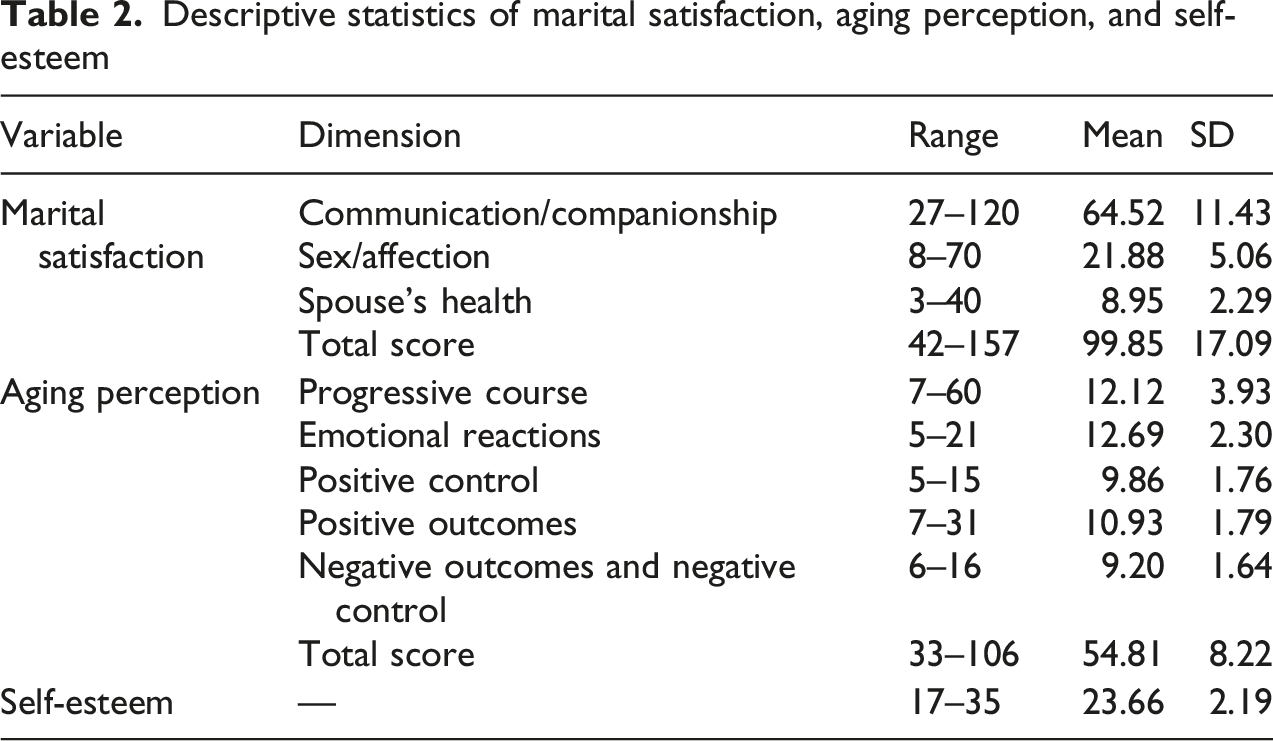
Marital satisfaction is essential for older adults’ well-being. This cross-sectional study examined sociodemographic and psychological factors influencing marital satisfaction among 363 older adults in Semnan, Iran (mean age 65.42 ± 5.24 years; 58.1% male; mean marriage duration 42.09 ± 7.13 years). Data were collected in 2024 using the Marital Satisfaction Questionnaire for Older Persons, Brief Aging Perception Questionnaire, and Rosenberg Self-Esteem Scale. Non-parametric tests were applied with significance set at p < .05. Mean scores for marital satisfaction, aging perception, and self-esteem were 99.85 ± 17.09, 54.81 ± 8.22, and 23.66 ± 2.19, respectively. Men, retirees, and those with better health and economic status had significantly higher marital satisfaction. Monthly income and age correlated positively with all marital satisfaction dimensions, while a negative perception of aging correlated with lower satisfaction regarding the spouse’s health. These findings highlight the interplay of sociodemographic and psychological factors in marital satisfaction, suggesting targeted interventions for older adults.
Introduction
Population aging is a growing global phenomenon with profound implications for individual well-being and social systems (Pan et al., 2019). According to the World Health Organization (2023), the proportion of people aged 60 and over is increasing faster than any other age group (Vaisi-Raygani et al., 2019). In Iran, people aged 60 and over made up around 10.5% of the population in 2021, a figure that is expected to rise to over 20% by 2050 (Moradnezhadi et al., 2022). This demographic shift has increased interest in psychological and relational dimensions of aging, particularly the quality of close interpersonal relationships such as marriage, which are central to emotional and social well-being in later life (Fernandes-Pires et al., 2023; Margelisch et al., 2017).
Marital satisfaction—defined as the individual’s subjective evaluation of the quality, stability, and fulfillment of the marital relationship—is an important determinant of health and life satisfaction in older adulthood (Bookwala, 2012; Carr et al., 2014). High levels of marital satisfaction are associated with less depression, better cognitive and physical functioning, and longer life expectancy (Fernandes-Pires et al., 2023; Ghorbanian et al., 2017; Korporaal et al., 2013). However, late-life marriage can be influenced by particular stressors such as retirement, caring responsibilities, chronic illness, and changing gender dynamics (Azimi et al., 2025; Boerner et al., 2014; Yorgason et al., 2008; Zarei et al., 2019). These life transitions can either strengthen or strain marital quality, depending on how couples adapt to them (Levenson et al., 1993; Margelisch et al., 2017).
Research has identified several sociodemographic and psychological correlates of marital satisfaction among older adults. Gender, age, education, income, and employment status all shape marital dynamics (Fotokian et al., 2020; Levenson et al., 1993; Tang et al., 2024; Zang, 2020; C. Zhang & Liang, 2023). For instance, women often report lower marital satisfaction than men, which may reflect disparities in emotional labor, caregiving roles, and communication expectations (Beam et al., 2018; Haris & Kumar, 2018; Tang et al., 2024). In the Iranian context, studies have highlighted the roles of gender norms, family solidarity, and religious values in shaping perceptions of marital quality in later life (Fotokian et al., 2020; Gilasi et al., 2019; Izadi-avanji et al., 2019; Zarei et al., 2019).
Psychological factors such as self-esteem, perceived social support, and self-perceptions of aging also play a critical role in how older adults experience their relationships (Fotokian et al., 2020; Y. K. Kim et al., 2021; Özcan Tozoğlu & Gürbüzer, 2025; Tang et al., 2024). Positive attitudes toward aging and higher self-esteem have been shown to enhance emotional intimacy, buffer stress, and promote constructive communication (Arjmand-sangani et al., 2024; Fernandes-Pires et al., 2023; Fotokian et al., 2020; Wurm et al., 2007). In contrast, negative perceptions of aging may reduce psychological security and increase relational dissatisfaction (Cohn-Schwartz et al., 2021; Fernandes-Pires et al., 2023).
Despite these insights, most available studies have been conducted in Western societies, which emphasize individualism and personal autonomy (Carr et al., 2014; Fernandes-Pires et al., 2023). In collectivist cultures like Iran, the experience of marital satisfaction may be shaped by different relational expectations, family obligations, and social norms (Fotokian et al., 2020; Zarei et al., 2019). However, there remains a scarcity of empirical evidence on how sociodemographic and psychological factors interact to influence marital satisfaction among Iranian older adults.
Therefore, the current study aims to explore the relationship between marital satisfaction and sociodemographic variables and psychological factors (e.g., self-esteem, perception of aging) among older adults in Semnan, Iran. This research seeks to fill an important gap in culturally contextualized knowledge, providing evidence that may inform tailored interventions and policies to support relational well-being and healthy aging in Iranian society.
Methods
Study Design and Setting
This cross-sectional descriptive-analytical study was conducted in 2024 in Semnan City, Iran.
Sample Recruitment and Characteristics
The study population comprised all older adults who were registered and insured at the comprehensive health centers in Semnan. A total of 363 participants were selected through a multistage random sampling method. First, two comprehensive health centers with the largest catchment areas in the city of Semnan were randomly selected. Upon visiting these centers, the demographic data of older adults—including names, contact information, and residential addresses—were retrieved from the national integrated health system (SIB) managed by the Vice Chancellor for Health of Semnan University of Medical Sciences. Each eligible individual was then assigned a unique identifier code, and a simple random sample was drawn from those who met the inclusion criteria.
Participants were eligible for inclusion if they were aged ≥60 years, had an active health record at one of the selected health centers in Semnan, had a history of at least one marriage, and were currently married. Adequate cognitive ability was confirmed by achieving a score of seven or higher on the Abbreviated Mental Test (AMT) (Bakhtiyari et al., 2014). Exclusion criteria included: (1) physical disabilities that could confound responses; (2) a documented or self-reported history of psychiatric disorders under active treatment; and (3) the occurrence of an acute medical event (e.g., stroke or myocardial infarction) during the study period. Furthermore, participants who failed to complete the questionnaires or who withdrew consent during data collection were excluded from the final analysis.
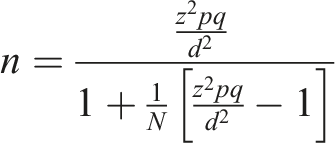
The population of older adults aged 60 and above residing in Semnan was estimated at 13,526 according to the 2016 national census, with 10,088 individuals meeting the marital status criteria (Detailed results of the General Census of Population and Housing-2016, 2018). The initial sample size was calculated to be 312 using the following formula:
Data Collection Procedures and Analysis
When participants were visited, the purpose of the study was clearly explained, and written informed consent was obtained from those who agreed to participate. Once consent was given, data were collected through structured interviews conducted by trained interviewers who asked the questions and entered the participants’ responses directly into the questionnaire. If a selected older adult was unable to answer the questions, the next eligible person on the sample list (based on the assigned code) was invited to participate in the study.
Data were collected between October 2024 and May 2025. Sociodemographic information and three standardized questionnaires—Marital Satisfaction Questionnaire for Older Persons, Brief Aging Perception Questionnaire, and Rosenberg Self-Esteem Scale—were administered.
Marital satisfaction among older adults was assessed using the Marital Satisfaction Questionnaire for Older Persons (MSQFOP), originally developed by Haynes et al. (1992). The original version includes 24 items measuring one main domain (Communication and companionship) and two subdomains (sex/affection and spouse’s health) on a six-point Likert scale ranging from 1 (very dissatisfied) to 6 (very satisfied). The Persian version, adapted for cultural relevance, consists of 22 items: 20 items address specific aspects of marital satisfaction, and two items assess overall satisfaction and changes over time. Subscale scores are calculated by summing relevant item scores, with higher scores indicating greater satisfaction. The instrument has demonstrated acceptable reliability and validity in various languages. In Iran, Ghorbanian et al. (2017) reported a content validity index of 0.89 and a Cronbach’s alpha of 0.72 for the Persian version (Ghorbanian et al., 2017).
The Brief Aging Perception Questionnaire (B-APQ) was developed by Barker et al. (2007) to assess individuals’ evaluation of their aging process (Barker et al., 2007). The questionnaire consists of 17 items across five dimensions: Progressive course (items 1–3), positive outcomes (items 4–6), positive control (items 7–9), negative outcomes and negative control (items 10–14), and emotional reactions (items 15–17). Items are rated on a five-point Likert scale ranging from “strongly agree” to “strongly disagree.” The minimum score is 17, and the maximum score is 85. Higher scores indicate a more positive perception of aging, while lower scores reflect a more negative perception. The instrument was translated, validated, and standardized in Iran by Sadegh Moghadam et al. (2016), with a reported content validity of 94% and a Cronbach’s alpha of 0.75, indicating acceptable reliability (Sadegh Moghadam et al., 2016).
The Rosenberg Self-Esteem Scale (RSES) was developed by Rosenberg in 1965 (Rosenberg, 1965). This scale includes 10 items that assess an individual’s overall sense of self-worth or self-acceptance. Each item is rated on a four-point Likert scale: Strongly Agree (score 4), Agree (score 3), Disagree (score 2), and Strongly Disagree (score 1). The total score is obtained by summing the scores of all 10 items, with a minimum possible score of 10 and a maximum of 40. Higher scores indicate greater self-esteem. The validity and reliability of the Persian version of the Rosenberg self-esteem scale have been confirmed in the study of Shahbazzadegan et al., which reported a reliability coefficient of 0.85 among elderly residents in nursing homes (Shahbazzadegan et al., 2009), and Hojjati et al. reported a Cronbach’s alpha of 0.78 (Hojjati et al., 2011).
Sociodemographic data were collected using a questionnaire specifically developed for this study. Participants provided information on age (in years), gender (1 = Male, 2 = Female), length of marriage (in years), number of children, monthly income (in Tomans), employment status (1 = Employed, 2 = Retired, 3 = Housewife), educational level (0 = Illiterate, 1 = Elementary, 2 = Secondary, 3 = High School, 4 = Diploma, 5 = Academic Degree), self-perceived economic status (1 = Very Good, 2 = Good, 3 = Middle, 4 = Poor, 5 = Very Poor), and self-rated health status (1 = Excellent, 2 = Very Good, 3 = Good, 4 = Fairly Good, 5 = Poor).
Descriptive statistics were used to summarize the participants’ characteristics. The normality of marital satisfaction scores was tested using the Kolmogorov–Smirnov test (K–S = 0.121, p < .001) and the Shapiro–Wilk test (S–W = 0.943, p < .001), both of which indicated a significant deviation from normality. Inspection of the Q–Q plot also confirmed a non-normal distribution with visible deviations from the diagonal at both ends. Given the non-normality, non-parametric tests were applied: the Mann–Whitney U test for comparisons between two groups and the Kruskal–Wallis test for more than two groups. The significance level for all statistical tests was set at α = 0.05. To assess the predictive role of age perception and self-esteem on marital satisfaction, multiple linear regression with bootstrapping (1,000 replicate samples, 95% CI) was performed. Bootstrapping ensured robust estimation under non-normal conditions. All analyses were conducted with SPSS version 26.
Results
Descriptive Data
Sociodemographic characteristics of the participants
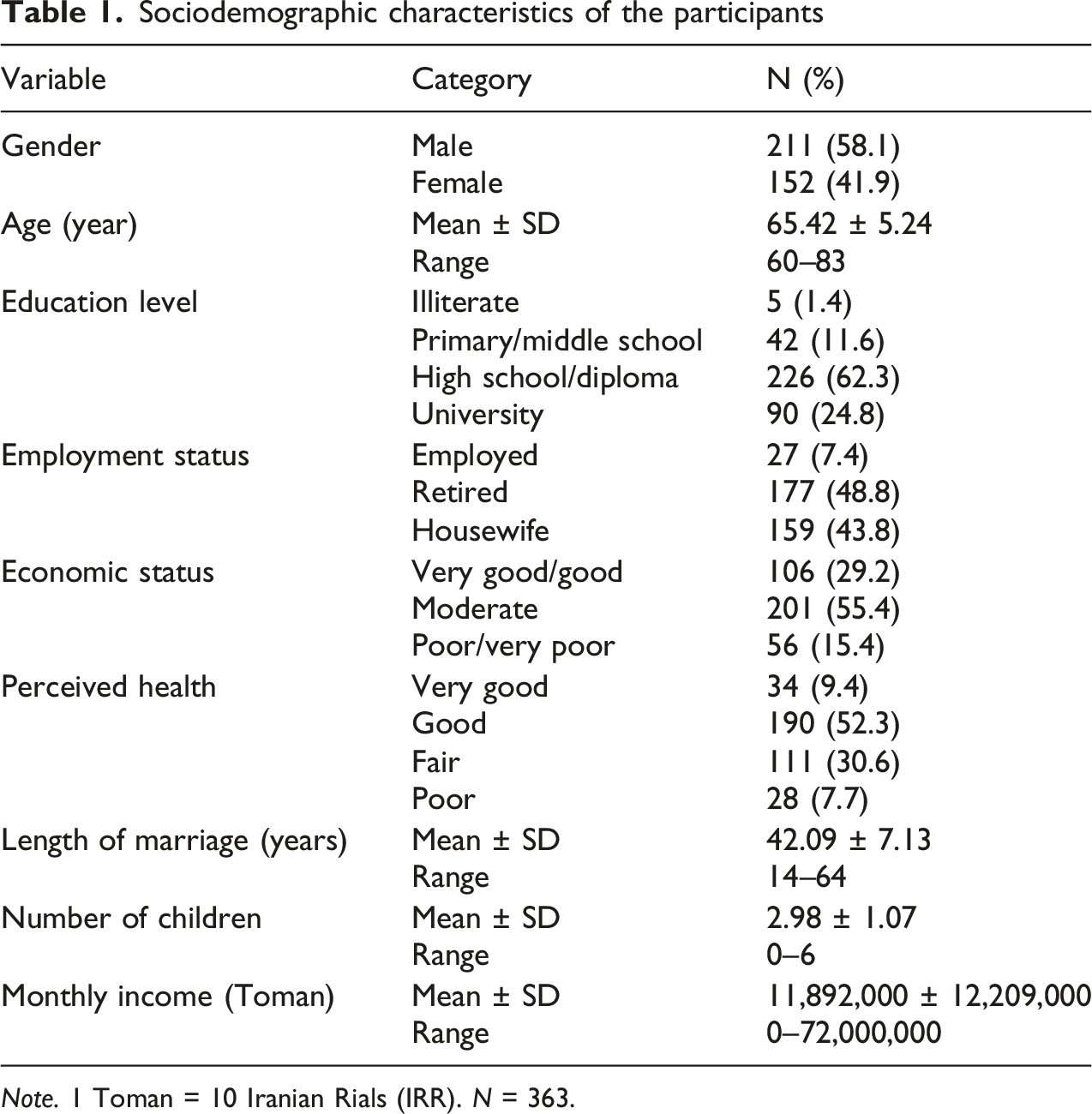
Note. 1 Toman = 10 Iranian Rials (IRR). N = 363.
Descriptive statistics of marital satisfaction, aging perception, and self-esteem
Group differences in marital satisfaction dimensions by sociodemographic variables
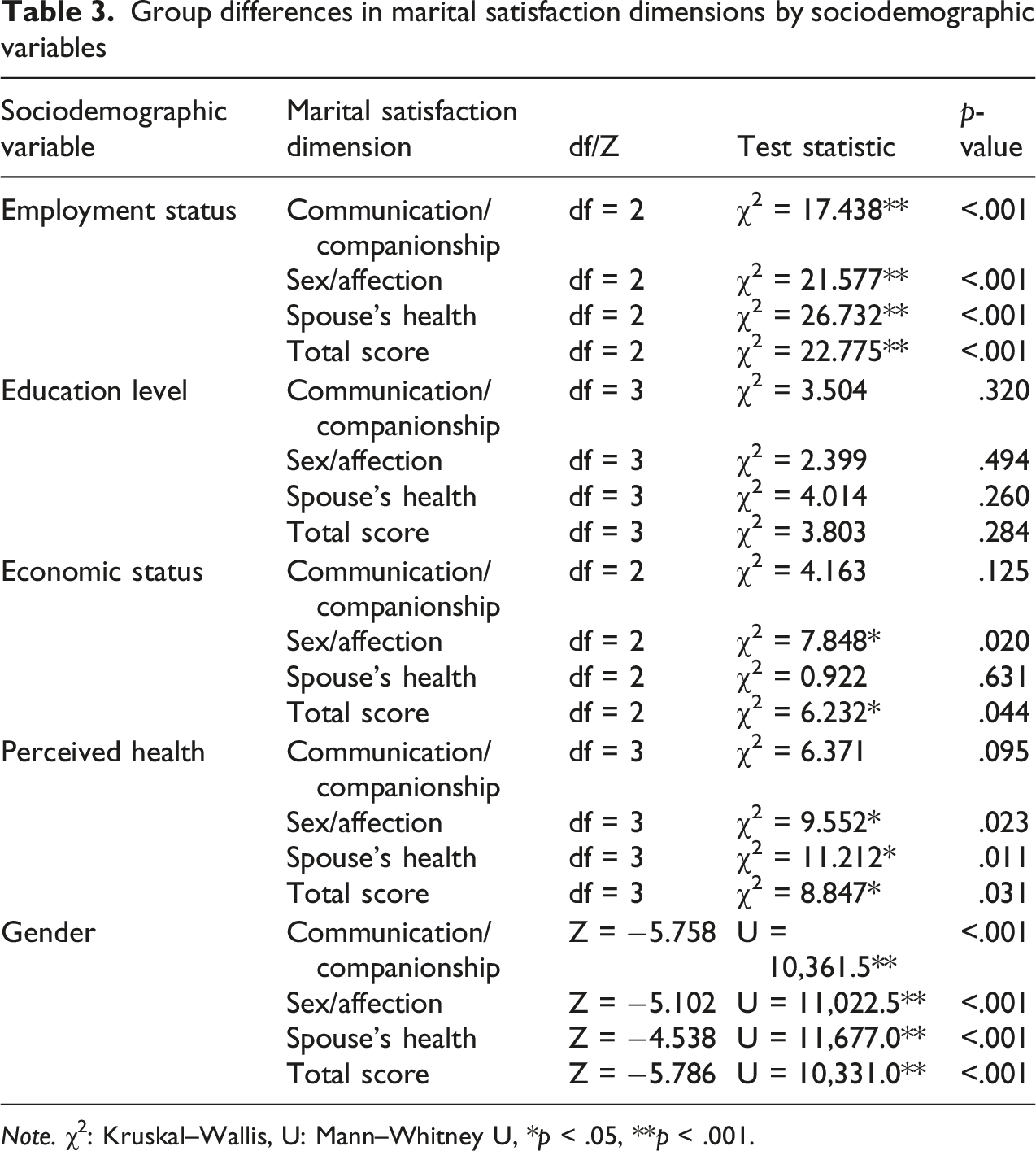
Note. χ2: Kruskal–Wallis, U: Mann–Whitney U, *p < .05, **p < .001.
Correlation between marital satisfaction, aging perception, and self-esteem
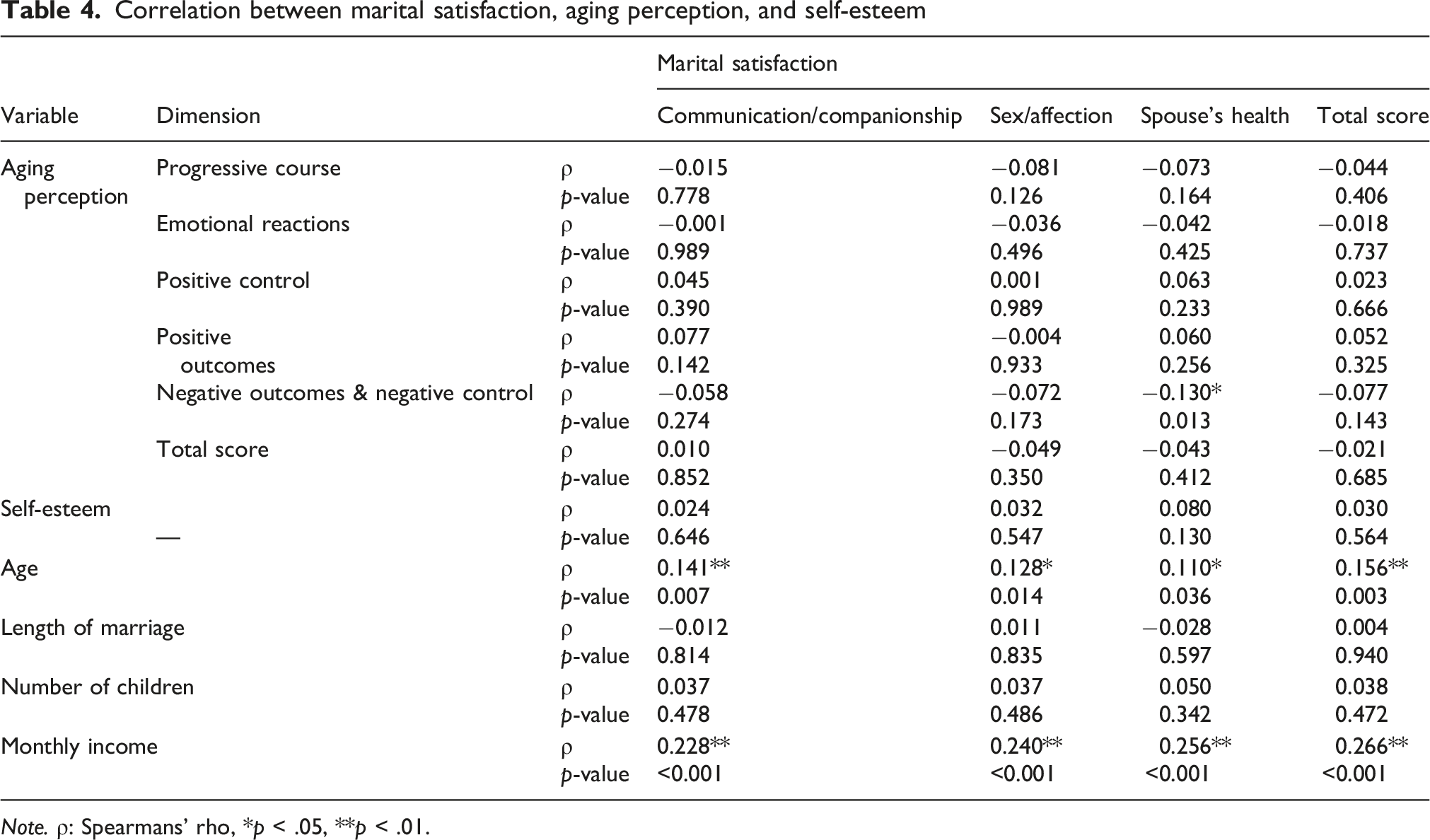
Note. ρ: Spearmans’ rho, *p < .05, **p < .01.
Conclusions and Discussion
This study aimed to investigate the relationship between marital satisfaction, perception of aging, and self-esteem among older adults. The findings of the present study indicate that older participants reported generally favorable levels of marital satisfaction, particularly in the domain of communication and companionship. This suggests that emotional closeness and mutual understanding remain important and relatively well-maintained aspects of marital relationships in later life (Bookwala, 2012; Carr et al., 2014; Fotokian et al., 2020; Haris & Kumar, 2018; Zarei et al., 2019). Lower mean scores in the area of satisfaction with spouse health may indicate increasing health concerns as people age, which can affect overall marital dynamics (Bookwala, 2012; Korporaal et al., 2013).
As far as the perception of aging is concerned, the participants showed a mixed view. The relatively high score on emotional responses indicates heightened emotional awareness or sensitivity to aging, which may include both concern and acceptance (Fotokian et al., 2020; Levy & Myers, 2004; Wurm et al., 2007). Notably, this finding contrasts with a study in which the highest score was obtained in the “negative control” dimension, indicating a stronger perception among participants of a lack of control over the consequences associated with aging (Fotokian et al., 2020). In contrast, the relatively low score on the positive control dimension suggests that many older people have less confidence in their ability to actively manage or shape the outcomes of the aging process. This may reflect a sense of diminished agency or perceived limitations in maintaining autonomy and control in old age (Robinson & Lachman, 2017; Yao et al., 2023), which is consistent with the findings of previous studies (Lachman, 2006; Pan et al., 2019; Rony et al., 2024). This duality reflects the complexity of how aging is perceived—both as a source of growth and of challenge (Ryff, 1995; Westerhof & Wurm, 2015).
The self-esteem scores were relatively high, suggesting that despite the physical, emotional, and social changes associated with aging, many older individuals retain a positive self-image. This may be attributed to accumulated life experience, stable relationships, or supportive social environments (Orth & Robins, 2014; Souza Júnior et al., 2022).
There were significant differences between the genders, with men consistently reporting higher levels of marital satisfaction in all dimensions assessed. These findings are consistent with previous research suggesting that men derive greater emotional benefits from marital relationships in later life (Boerner et al., 2014; Chang & Fu, 2022; Jackson et al., 2014). Such patterns could also be characterized by gender-specific social expectations, different reaction tendencies, or differences in emotional expressiveness between men and women. Nevertheless, the current findings are not fully consistent with some previous studies that found either no gender differences or higher marital satisfaction among women in certain contexts (Beam et al., 2018; Haris & Kumar, 2018; J. Kim, 2023; Tang et al., 2024; Zarei et al., 2019), suggesting that gender-specific patterns in later-life satisfaction may be more complex and context-dependent than previously assumed.
The results of this study show that employment status plays an important role in all dimensions of marital satisfaction. Individuals who were retired reported higher levels of marital satisfaction compared to employed individuals or housewives, possibly due to lower stress levels, more time spent interacting with their partner, and a shift in life priorities after retirement. These findings are consistent with previous studies suggesting that work-related demands and role overload can negatively impact marital relationships in mid-to-late adulthood (Azimi et al., 2025; Fotokian et al., 2020; Lavner & Clark, 2017; Szinovacz & Schaffer, 2000; Zang, 2020).
Perceived health status also emerged as a key factor, particularly about emotional intimacy, spouse’s health satisfaction, and overall marital satisfaction. These findings are consistent with prior research suggesting that better self-rated health enhances individuals’ ability to engage positively in intimate relationships and maintain marital cohesion (Korporaal et al., 2013; Margelisch et al., 2017; Tucker, 2002). Poor health, on the other hand, may limit communication, increase dependency, or introduce caregiver strain—all of which can challenge marital quality (Niedling & Hämel, 2023; Yorgason et al., 2008).
Although economic status was not significantly associated with all dimensions of marital satisfaction, it did predict higher levels of sexual and emotional intimacy and overall marital satisfaction. Financial security may facilitate better access to healthcare, reduced stress, and greater opportunities for joint leisure, all of which are positively linked to marital quality (Aktaş Özdemir & Çopur, 2025; Tang et al., 2024).
Contrary to expectations, education level was not significantly related to any domain of marital satisfaction. This finding differs from some previous literature that linked higher educational attainment to better relationship quality through communication skills and conflict resolution (Aidoo et al., 2024; C. Zhang & Liang, 2023). However, it is possible that among older adults, the impact of education is mediated by other variables such as life experience, resilience, or social support.
The findings indicated no significant associations between overall aging perception, self-esteem, and the various dimensions of marital satisfaction among the older participants. This may suggest that marital satisfaction in later life tends to remain relatively stable and may be less susceptible to subjective evaluations of aging or self-concept (Levenson et al., 1993; Roth et al., 2024). One possible explanation is that long-term marital dynamics and established relational patterns may exert a stronger influence than individual psychological factors at this stage of life. However, this pattern contrasts with the results of several prior studies that have reported significant links between self-perception or aging attitudes and marital satisfaction (Arjmand-sangani et al., 2024; Fernandes-Pires et al., 2023; Fotokian et al., 2020; Y. K. Kim et al., 2021; Özcan Tozoğlu & Gürbüzer, 2025; Tang et al., 2024; Velaithan et al., 2024), highlighting the potential role of cultural, contextual, or methodological differences in shaping these associations.
However, a significant negative correlation between satisfaction with spouse’s health and the negative outcomes and control dimension of aging perception suggests that individuals who perceive more negative aspects and a lack of control over aging may also report lower satisfaction with their partner’s health (Cohn-Schwartz et al., 2021; Smith et al., 2019; N. Zhang et al., 2023). This finding may reflect the intertwined nature of health concerns and psychological well-being in aging couples (Shrout et al., 2023).
Age was found to be positively correlated with all dimensions of marital satisfaction, indicating that as individuals grow older, they may experience greater acceptance, emotional connection, or stability within their marital relationships. This is consistent with the notion that long-term relationships may mature over time, fostering deeper bonds and mutual understanding (Cornwell et al., 2008; Fotokian et al., 2020).
Furthermore, monthly income showed a significant positive relationship with all dimensions of marital satisfaction. This underscores the role of financial security in enhancing relational quality in later life, possibly by reducing stress and increasing access to resources that support well-being (Conger et al., 2010; Lee et al., 2020; Tang et al., 2024; Wickrama et al., 2022).
Contrary to some expectations, neither the duration of marriage nor the number of children was significantly related to marital satisfaction in later life. These results suggest that marital duration and family size are not in themselves reliable predictors of marital quality in older adults. The quality of marital interaction, emotional intimacy, and the ability to resolve conflict may play a more decisive role than structural factors such as the duration of the marriage or the number of children. However, these results are not fully consistent with previous studies that have found significant associations between these variables and marital satisfaction (Fotokian et al., 2020; Levenson et al., 1993; Roth et al., 2024), suggesting that possible moderating factors such as cultural context, health status or life course transitions need to be taken into account.
This study highlights the multifaceted nature of marital satisfaction among older adults and emphasizes the importance of sociodemographic and psychological variables such as gender, employment status, perceived health, income, and perceptions of aging. While emotional closeness and communication remain strong pillars of marital quality in later life, satisfaction is also influenced by practical concerns such as health and financial security. The lack of strong associations between self-esteem or general perceptions of aging and marital satisfaction suggests that long-term relationship patterns may be more important than individual psychological characteristics at this stage of life. These findings provide important clues for developing culturally appropriate interventions to promote older couples’ well-being in their relationships.
This study has several limitations that should be considered. First, the cross-sectional design limits the ability to infer causal relationships. Second, the data were collected in a single city in Iran, which may limit generalizability to other cultural or geographical contexts. Third, the use of self-reports may have led to social desirability bias or recall bias. Fourth, the study did not examine spouses’ perspectives, which could provide a more comprehensive understanding of marital satisfaction. And finally, possible confounding variables such as personality traits, caring responsibilities, or mental illness were not taken into account.
Future studies should consider longitudinal studies to investigate causal relationships and changes in marital satisfaction over time. Including both partners in dyadic analyses could provide a deeper insight into couple dynamics. Extending the research to different cultural and socioeconomic settings would improve generalizability. In addition, qualitative studies could help to explore the nuanced experiences and meanings of marital satisfaction in later life. Finally, investigating the potential mediating or moderating role of coping strategies, emotional regulation, and social support could enrich our understanding of the complex interactions between aging, psychological well-being, and marital quality.
Footnotes
Acknowledgments
The authors would like to express their gratitude to all those who contributed to this research, as well as the older adults who participated. This study was approved by the Review Board of the Semnan University of Medical Sciences.

Ethical Considerations
Ethics committee review board license number IR.SEMUMS.REC.1403.090.
Funding
The authors disclosed receipt of the following financial support for the research, authorship, and/or publication of this article: This study was approved by the Research Deputy of the Semnan University of Medical Sciences [research code 4041].
Declaration of Conflicting Interests
The authors declared no potential conflicts of interest with respect to the research, authorship, and/or publication of this article.
Data Availability Statement
The associated data could be made available by a reasonable request from scientists by sending an email to the corresponding author.