






Abstract
This study examines how different acculturation strategies influence parenting self-efficacy (PSE) among married immigrant women in South Korea, with a particular focus on the mediating role of self-esteem. Using a nationally representative dataset of multicultural family parents from the Korean Youth Policy Institute (N = 1,198), this study employs multiple linear regression and bootstrapping analyses to test the effects of integration, assimilation, and separation strategies on PSE. Self-esteem is introduced as a mediating variable, and Korean language proficiency, income level, native language use, and country of origin are treated as control covariates. Theoretically, the study contributes in three major ways. First, it integrates Berry’s acculturation framework with Bandura’s self-efficacy theory and Rosenberg’s model of self-esteem, proposing a multidimensional pathway from cultural adaptation to parenting outcomes. Second, it reconceptualizes separation not merely as maladaptive, but as potentially empowering under specific identity-reinforcing conditions, particularly when native language use and community embeddedness are strong. Third, it demonstrates that parenting self-efficacy is not only a psychological trait but a contextually contingent construct shaped by structural resources such as language and income, aligning with intersectionality and ecological systems theory. Practically, the findings underscore the importance of culturally responsive parenting support programs that acknowledge and incorporate immigrant mothers’ cultural identity, language practices, and economic contexts. Interventions designed without consideration of these embedded dynamics risk reproducing structural inequality and limiting parenting capacity.
Introduction
The rise of multicultural families in South Korea—driven by transnational marriages and labor migration—has significantly transformed the country’s once homogenous demographic landscape. These changes have prompted national conversations on identity, integration, and inclusion. Yet, despite the increasing visibility of multicultural families, female marriage migrants continue to face systemic barriers related to language acquisition, cultural dissonance, and social exclusion. The Committee on the Elimination of Racial Discrimination criticized Korea’s persistent ethnonationalism, noting its adverse effects on the integration of minority groups. Scholars such as Shin (2006) and Kim (2011) have similarly argued that Korea’s educational system and public policy remain entangled with a monoethnic ideology that marginalizes culturally diverse populations. Among the groups most affected by these dynamics are female marriage migrants who, upon entering Korea, face multifaceted challenges in adapting to a new cultural, social, and linguistic environment. While previous studies have explored the mental health, social support, and life satisfaction of migrant women (Kim & Kim, 2014), systematic empirical research examining how different acculturation strategies affect PSE remains scarce. This is particularly significant in the Korean context, where parenting norms are shaped by Confucian family values, collectivist ideologies, and patriarchal expectations. These sociocultural dynamics have unique implications for migrant women, particularly regarding parenting roles. While earlier studies have examined their mental health (Kim & Kim, 2014), life satisfaction, and perceived social support (Park & Kim, 2019), there is a striking absence of empirical research investigating how acculturation strategies directly influence PSE—the belief in one’s capacity to effectively raise children (Bandura, 1997). This research gap is significant because parenting within a cross-cultural environment demands both emotional resilience and cultural adaptability. To address these gaps, this study proposes an integrated framework that combines Berry’s acculturation typology and Bandura’s self-efficacy theory. By examining how acculturation strategy and self-esteem interact to influence PSE, the study seeks to extend both theoretical domains while offering practical insights for multicultural family policy in South Korea.
Acculturation refers to the psychological and behavioral changes individuals undergo as they come into sustained contact with a new culture. It is not a unidirectional replacement of cultural identity, but rather a dynamic, bidirectional process that involves managing tensions between heritage and host cultural practices (Berry, 1997; Schwartz et al., 2010). For female marriage migrants, this process has direct implications for parenting, as shifts in identity and value systems often affect child-rearing beliefs and practices (Costigan & Dokis, 2006; Kim & Abreu, 2001). Berry’s (1997) Two-Dimensional Acculturation Theory outlines four acculturation strategies: integration, assimilation, separation, and marginalization. Among these, integration—where individuals maintain their original culture while also engaging with the host society—is associated with better psychological and social outcomes (Nguyen & Benet-Martínez, 2013). However, empirical studies that link these specific strategies to PSE within Korea’s unique sociocultural environment remain limited. PSE refers to a parent’s belief in their ability to effectively raise and nurture their child (Bandura, 1997). High levels of PSE have been associated with better child outcomes and improved family functioning. Yet, most studies on parenting efficacy have focused on Western contexts, neglecting the sociocultural specificities of East Asian countries such as Korea, where collectivism, hierarchical family structures, and gender role expectations prevail. In patriarchal and Confucian societies like Korea, migrant women often occupy subordinate positions within the household, which may hinder their confidence and perceived authority as parents. Moreover, language barriers and limited social networks can further exacerbate feelings of isolation and incompetence. These contextual factors suggest that PSE among immigrant women cannot be fully understood without considering the broader cultural adaptation process. While Berry’s (1997) model explains how immigrants navigate cultural differences, it lacks specificity regarding parenting roles. Conversely, Bandura’s (1997) theory highlights the psychological mechanisms of efficacy beliefs but does not incorporate the sociocultural challenges faced by immigrant populations. This study aims to bridge these theoretical gaps by integrating the two frameworks. By doing so, we propose that the type of acculturation strategy adopted by migrant women significantly affects their PSE. Studies have suggested that women who adopt integration strategies tend to report higher parental self-efficacy, while those who experience marginalization or separation often report lower levels (Choi & Kim, 2010; Kim & Abreu, 2001; Yoon et al., 2013). However, these studies often lack rigorous statistical modeling or fail to consider interactive contextual variables such as language proficiency or income levels. Given these theoretical and empirical gaps, this study seeks to explore the following research questions: How do different acculturation strategies influence PSE among immigrant women in Korea? We hypothesize that those adopting integration strategies will exhibit higher PSE, while those following marginalization strategies will report lower levels. To what extent do contextual factors such as Korean language proficiency, household income, and social support moderate this relationship? We anticipate that language proficiency and strong social networks may buffer the negative effects of less adaptive acculturation strategies. To address these questions, this study employs Multiple Linear Regression Analysis. The model includes acculturation strategy as the primary independent variable and PSE as the dependent variable. Control variables include Korean language ability, household income, native language usage, and country of origin. Interaction terms (e.g., acculturation type × language proficiency) are included to explore moderation effects and uncover nuanced patterns.
The primary objective of this study is to examine how different acculturation strategies adopted by immigrant women influence their perceived parental efficacy. By conducting an in-depth analysis of cultural adaptation types and their impact on parenting confidence, this study aims to provide both theoretical insights and practical implications for enhancing family stability and child development in immigrant households. To this end, the research incorporates a range of demographic variables and explores how various acculturation orientations—such as integration, assimilation, separation, and marginalization—shape PSE. This approach not only contributes to the theoretical expansion of acculturation research, but also offers actionable knowledge for designing culturally tailored support programs for immigrant mothers and their families. From a theoretical perspective, the study addresses the underexplored intersection between cultural adaptation and parenting efficacy, thereby enriching the discourse on immigrant family adjustment. From a practical standpoint, the findings can inform the development of evidence-based interventions that support immigrant mothers in their parenting roles, taking into account their cultural orientation and access to social resources. In pursuit of these aims, the study raises the following research questions: first, how do different acculturation strategies affect immigrant women’s sense of parental efficacy? It is hypothesized that women who adopt an integration strategy are likely to report higher levels of parental efficacy, whereas those aligned with a marginalization orientation may experience significantly lower levels. Second, to what extent does social support—derived from family, friends, and community networks—influence parental efficacy during the acculturation process? It is anticipated that higher levels of perceived social support will be positively associated with stronger parental efficacy among immigrant women. By addressing these questions, the study seeks to uncover the nuanced ways in which cultural adaptation and social environments interact to shape parenting beliefs and practices in immigrant contexts.
Literature Review
Parenting Self-Efficacy
Over the years, various psychologists have begun to pay more attention to positive psychology, which focuses on conditions that promote human and social development. Life satisfaction is a holistic evaluation of one’s life, a subjective well-being of life, and a concept that can be approached from one’s perspective (Bowling, 1990). A study of Arab seniors also argued that life satisfaction is influenced by family solidarity and family culture, and that life satisfaction is high when the level of conflict with family and neighbors is low and may vary depending on the level of individual social expectation (Katz, 2009). Life satisfaction is a subjective feeling or attitude of happiness and contentment with one’s current situation and life lived to date (Havighust et al., 1968). Angelini et al., (2015) emphasized through a study on German immigration policies and life satisfaction that despite different cultural backgrounds, manifested in different languages and religions, factors that affect the life satisfaction of migrant workers are stronger. In particular, language, ethnic-centered regional networks, citizens’ spontaneity, and cultural activities were highlighted as potential factors that promote cultural assimilation.
Studies of social support and life satisfaction show that migrants receive early social support through their home networks in developed countries; however, there are also many negative experiences, such as competitively sharing social and economic resources, forcing a sense of community, and weak social support (Khawaja et al., 2016; Ryan et al., 2008). In addition, a study on the relationship between various psychosocial and health-related factors and life satisfaction of 237 elderly people living in communities over age of 70 in the United States claimed that social support was significantly related to life satisfaction Amit, K. (2010). Parents with high parenting efficacy engage in desirable parenting behaviors and positive parent–child interactions that ultimately lead to positive physical, emotional, and psychological development in their children. In contrast, parents with low parenting efficacy not only exhibit inappropriate parenting behaviors but also hinder their children’s positive development (Coleman & Karraker, 1997; Dorsey et al., 1999). Another factor historically associated with social-emotional adjustment is parental self-efficacy – the degree to which parents perceive themselves as capable of performing various tasks related to their roles. Previous research has shown that parenting characterized by high self-efficacy is associated with greater social-emotional adjustment in children (Albanese et al., 2019; Steca et al., 2010). Dorsey et al., (1999) defined PSE as parents’ beliefs about their ability to perform parenting behaviors that lead to healthy child development. PSE is a parent’s belief in their own ability to engage in valued behaviors related to the desirable development of their child (Dorsey et al., 1999) and is the extent to which parents perceive their own ability to parent well and solve difficulties and problems related to their child’s upbringing. It also encompasses parents’ beliefs about their own ability to raise their children in a desirable manner. Parental self-efficacy is the extent to which parents perceive themselves as capable of fulfilling their parenting roles and positively influence their children’s development (Scheel & Rieckmann, 1998). Parents with high parental efficacy believe they are good at parenting and are flexible when faced with problematic situations, whereas those with low parental efficacy believe they are bad at parenting and use ineffective problem-solving strategies when faced with problematic situations. Parental efficacy has been consistently studied, but we excluded studies similar to PSE—parents’ perceived competence, confidence, respect, and parenting attitudes.
First, Harpaz et al., (2021) suggested that parenting style can significantly affect child rearing; however, the study used a relatively small sample size and lacked cultural diversity. Vance and Brandon (2017) presented a variety of theoretical concepts that ultimately lead to parental efficacy from both the parent and child perspectives. This is supported by the work of Wittkowski et al., (2017). These studies explain how PSE is related to parenting and child variables. Second, the special circumstances of migrant women must be explained further. Parenthood can be different at different developmental periods because the focus and circumstances vary; it differs across unique situations, settings, ages, and countries, and affects PSE as a predictor of parenting and children’s academic and adaptive outcomes, as well as parents’ beliefs about their influence on their children (Albanese et al., 2019; Jones & Prinz, 2005). Third, recent studies (Albanese et al., 2019; Fang et al., 2021) update the research on PSE. As Jones and Prinz (2005) suggest, a gap exists in the current understanding of PSE. Two recent studies have been recognized for investigating the different roles of PSE in relation to the parent and child variables proposed in the initial conceptual model (Fang et al., 2021).
The increasing prevalence of multicultural families in South Korea, driven by international marriages and labor migration, has brought attention to the unique challenges faced by immigrant women in adapting to new cultural environments and fulfilling parental roles. PSE, defined as parents’ belief in their ability to effectively manage parenting tasks (Bandura, 1997), is a critical factor influencing child development and family dynamics. However, existing research on PSE among immigrant women has several limitations that hinder a comprehensive understanding of their experiences and needs. Many studies on PSE among immigrant women have utilized small, culturally homogeneous samples, limiting the generalizability of their findings. For instance, Harpaz et al., (2021) conducted a study with a relatively small sample size, which may not capture the diverse experiences of immigrant mothers from various cultural backgrounds. This limitation underscores the need for research that includes larger, more culturally diverse samples to better understand the nuances of PSE across different immigrant populations. Existing research often fails to adequately account for the unique challenges faced by immigrant women, such as cultural adaptation, language barriers, economic instability, and social isolation. These factors can significantly impact PSE but are frequently overlooked in studies that focus on general parenting populations. For example, Roh (2017) highlighted the compounded stress immigrant women experience due to simultaneous transitions into motherhood and adaptation to a new culture, which can adversely affect their parenting efficacy.
Most studies rely heavily on traditional theories like Berry’s (1997) acculturation model, which categorizes adaptation strategies into integration, assimilation, separation, and marginalization. While useful, this model does not fully capture the complexity of immigrant women’s experiences, particularly in relation to parenting roles. Furthermore, the application of Bandura’s (1997) self-efficacy theory often lacks integration with sociocultural factors pertinent to immigrant populations. There is a pressing need for theoretical frameworks that incorporate both individual psychological processes and broader social influences. To address these gaps, integrating Berry’s acculturation theory with social support frameworks offers a more comprehensive understanding of PSE among immigrant women. Social support, encompassing emotional, informational, and instrumental assistance from family, friends, and community, plays a crucial role in mitigating acculturative stress and enhancing PSE. For instance, Lee and Jeon (2021) found that social support significantly influenced parenting efficacy among North Korean refugee mothers in South Korea. Moreover, studies have shown that social support can buffer the negative effects of stress on PSE. In a study by Eltanamly et al. (2023), refugee parents who received targeted support interventions exhibited increased resilience and PSE. These findings suggest that incorporating social support into theoretical models can provide a more holistic understanding of the factors influencing PSE in immigrant populations. Employing mixed-methods research designs can further enhance the understanding of PSE among immigrant women by capturing both quantitative data and qualitative insights into their lived experiences. For example, a study by Lee et al., (2021) utilized a mixed-methods approach to explore the parenting experiences of immigrant mothers in South Korea, revealing nuanced challenges and coping strategies that quantitative data alone might not uncover. Such approaches allow for a more comprehensive exploration of the complex interplay between cultural adaptation, social support, and parenting efficacy. Understanding the multifaceted factors influencing PSE among immigrant women has significant implications for developing culturally sensitive support programs and policies. Interventions that enhance social support networks, provide language and parenting education, and address economic challenges can empower immigrant mothers and improve family outcomes. For instance, community-based programs that facilitate peer support among immigrant mothers have been shown to bolster PSE and reduce parenting stress (Kim & Kim, 2014).
Cultural Adaptation Type
In terms of individual factors, much of the existing research on age and acculturation has consistently found that younger age is favorable for acculturation because the acculturation process begins earlier and involves fewer conflicts and difficulties (Berry et al., 1984). Acculturation can be described as an umbrella concept for each independent cultural group. It is formed through direct and sustained contact and relationships, and through this process, cultural groups change (Redfield et al., 1936), with less dominant cultural groups and their members being more affected by intercultural contact (Berry, 2001). Berry (1997) proposed four types of acculturation based on two criteria: “cultural maintenance,” which refers to the degree to which migrants recognize the importance of their original culture’s identity in adapting to the new culture, and “contact and participation,” which refers to the degree to which migrants contact and interact with the new culture.
First, integration is the adoption of the culture of the new society while maintaining one’s home culture and is characterized by a successful integration of both cultures and a competent bicultural attitude. Second, assimilation is the abandonment of one’s home culture and adoption of the culture of one’s new society. Third, separation occurs when a person retains his or her native culture, rejects the new social culture, and maintains the cultural identity to which he or she originally belonged. Fourth, marginalization occurs when a person neither maintains their native language nor adopts the culture of the new society and remains on the periphery of the mainstream culture. They are often relegated to the lower strata of society and may have values and behaviors that rebel against the existing order and culture. The number of international marriages between Korean men and women is rapidly increasing. Women now migrate to South Korea through marriage for a variety of reasons, but in the past, the main motivation was the ability to provide financial support to parents and family members in their home countries and the desire to find new life opportunities in South Korea through marriage. In recent years, women’s perceptions and values regarding intermarriage have changed because of the external image of Korean culture and the wider scope of overseas activities among Korean men. China and Vietnam have the largest numbers of migrant women in Korea. Many Chinese migrant women belong to the Han ethnic group. Korean male and Chinese female couples account for 53% of the total, with 47% of them being ethnic Han migrant women (Yang, 1994). Ethnically, they are not Korean. They are ethnically Korean and are known as Joseon. Proficiency in the Korean language varies. Language skills are generally better among the ethnic Koreans. For non-Korean overseas Chinese and women from other countries, this racialized proficiency in Korean and Chinese provides unique opportunities to become migrant women after marriage. Intermarriage between men and women has thus increased dramatically, and large-scale cross-border marriage agencies have been active since the early 2000s, coinciding with the influx of Korean men and Vietnamese and Chinese women (Ahn & Lubotsky, 2024).
Recent studies have found that the separation acculturation type is most prevalent among Chinese migrant women, who are relatively culturally homogeneous with Koreans, and the integration acculturation type is most prevalent among Vietnamese migrant women, who are culturally different from Koreans (Yang et al., 2007). Although the four acculturation types are conceptually distinct, various social factors play a role in determining each type. Schwartz and Szapocznik (2010) suggested that researchers should consider multiple approaches to measure acculturation (Brown et al., 2013). Previous studies have thus applied certain general and comprehensive perspectives to analyze different domains of acculturation (Berry et al., 2006; Brown et al., 2013; Chang, 2006; Petreñas et al., 2019). This study is particularly relevant to married Korean migrant women, as their acculturation process is based on their unique cultural situation. Several previous studies have confirmed through cluster analysis that acculturation types are defined differently from the four groups proposed by Berry (Brown et al., 2013; Schwartz & Zamboanga, 2008). Therefore, the analysis aimed to identify unique patterns in the data, rather than impose an a priori structure (Aronson & Brown, 2013). Previous studies have used a variety of variables in addition to the four acculturation strategies in Berry’s model to identify unique subgroups (Berry et al., 2006; Brown et al., 2013).
The intersection of acculturation processes and PSE among immigrant mothers has garnered increasing scholarly attention, given its implications for family dynamics and child development. Acculturation, as conceptualized by Berry (1997), delineates how individuals adapt to a new cultural environment, adopting strategies such as integration, assimilation, separation, or marginalization. Concurrently, Bandura’s (1997) social cognitive theory posits that PSE—parents’ beliefs in their capabilities to influence their children’s development—is pivotal in shaping parenting behaviors and outcomes. Despite the theoretical robustness of these models, existing literature reveals limitations in addressing the nuanced experiences of immigrant mothers, particularly concerning how acculturation strategies impact PSE. This chapter critically examines these theoretical frameworks, identifies gaps in current research, and proposes an integrative approach to better understand and support immigrant mothers in their parenting roles.
Many studies on PSE and acculturation have been conducted with limited sample sizes and lack cultural diversity, restricting the generalizability of findings. For instance, Harpaz et al., (2021) utilized a relatively small, culturally homogeneous sample, which may not capture the varied experiences of immigrant mothers across different backgrounds. This limitation underscores the need for research encompassing diverse cultural contexts to enhance the applicability of results. Existing research often overlooks the specific challenges faced by immigrant mothers, such as navigating cultural adaptation while managing parenting responsibilities. Studies like those by Costigan and Koryzma (2011) highlight the influence of acculturation on parenting but do not delve deeply into the unique stressors and adaptations required of immigrant mothers. Addressing this gap necessitates research that centers on the lived experiences of these women, considering factors like language barriers, social isolation, and cultural dissonance. While Berry’s acculturation model provides a foundational understanding of cultural adaptation strategies, it may not fully account for the dynamic and multifaceted nature of immigrant mothers’ experiences. Similarly, Bandura’s concept of PSE, though instrumental in understanding parenting behaviors, may not encompass the cultural and contextual factors influencing immigrant mothers’ self-efficacy beliefs. Integrating these models with additional theories, such as social support theory, could offer a more comprehensive framework. To address these limitations, this study proposes an integrative framework that combines Berry’s acculturation strategies with Bandura’s PSE concept, augmented by social support theory. This approach acknowledges that immigrant mothers’ PSE is influenced not only by their cultural adaptation strategies but also by the social support systems available to them. For example, mothers employing an integration strategy may experience higher PSE due to supportive networks that facilitate cultural adaptation and parenting practices. Conversely, those experiencing marginalization may face diminished PSE due to isolation and lack of support. To capture the complexity of these experiences, employing mixed-methods research designs is recommended. Quantitative measures can assess the relationships between acculturation strategies, PSE, and social support, while qualitative interviews can provide in-depth insights into immigrant mothers’ lived experiences. Such an approach allows for a nuanced understanding of how cultural adaptation and support systems interact to influence PSE. Understanding the interplay between acculturation strategies and PSE among immigrant mothers is crucial for developing effective support programs and interventions. By integrating theoretical models and employing comprehensive research methodologies, future studies can better address the unique challenges faced by this population, ultimately promoting healthier family dynamics and child development outcomes.
Self-Esteem
Berry’s (1997) acculturation model delineates four strategies—assimilation, integration, separation, and marginalization—based on individuals’ orientations toward their heritage and host cultures. While this model has been instrumental in understanding cultural adaptation, its application to parenting behaviors, especially among immigrant mothers, remains limited. The model does not fully capture how specific acculturation strategies influence parenting practices and self-perceptions. Moreover, existing studies often suffer from methodological constraints, such as small sample sizes and lack of cultural diversity, limiting the generalizability of findings (Harpaz et al., 2021). There’s a notable scarcity of research focusing specifically on immigrant mothers, whose parenting experiences are uniquely shaped by cultural adaptation, language barriers, and social support systems. To address these gaps, future research should employ diverse, large-scale samples and consider mixed-methods approaches to capture the nuanced experiences of immigrant mothers.
Bandura’s (1997) self-efficacy theory posits that individuals’ beliefs in their capabilities significantly influence their actions and resilience in the face of challenges. In the parenting context, self-efficacy pertains to parents’ confidence in managing child-rearing responsibilities effectively. High PSE is associated with positive parenting behaviors and better child outcomes (Jones & Prinz, 2005). However, the theory’s application to immigrant mothers requires consideration of cultural and contextual factors. Immigrant mothers often navigate parenting within dual cultural frameworks, which can impact their self-efficacy beliefs. For instance, discrepancies between heritage and host cultural parenting norms may lead to uncertainty and reduced confidence in parenting roles. Therefore, integrating cultural dimensions into the self-efficacy framework is essential for a comprehensive understanding of immigrant parenting experiences.
To bridge the theoretical and empirical gaps, we propose an integrated framework that examines the interplay between acculturation strategies and PSE among immigrant mothers. This framework considers how different acculturation orientations influence mothers’ confidence in their parenting abilities and, subsequently, their parenting practices. For example, mothers adopting an integration strategy—maintaining their heritage culture while embracing aspects of the host culture—may experience higher PSE due to their ability to draw from a broader repertoire of parenting practices and support systems. Conversely, those employing a marginalization strategy may face challenges in accessing cultural or community resources, potentially leading to lower self-efficacy. Additionally, the framework acknowledges the role of social support, language proficiency, and socioeconomic factors as mediators or moderators in the relationship between acculturation and PSE. Understanding these dynamics can inform targeted interventions to bolster parenting confidence and effectiveness among immigrant mothers. This integrated framework offers a comprehensive lens to examine the multifaceted experiences of immigrant mothers. For researchers, it underscores the importance of culturally sensitive methodologies and the inclusion of diverse immigrant populations in studies. Practitioners can leverage this framework to design interventions that enhance PSE by addressing acculturation challenges and strengthening support networks. By acknowledging the complex interrelations between cultural adaptation and parenting beliefs, this approach aims to support immigrant mothers in their parenting journeys, ultimately contributing to the well-being of their families and communities.
Limitations of Previous Research
Prior research on immigrant parenting has been constrained by several limitations. First, many studies lack cultural and sample diversity, making it difficult to generalize findings across heterogeneous migrant groups (Harpaz et al., 2021). Second, the unique experiences of immigrant women—who often navigate parenting responsibilities while experiencing acculturative stress, gender inequality, and linguistic marginalization—are insufficiently theorized. Third, methodological approaches have largely relied on static, unidimensional conceptualizations of acculturation, ignoring the dynamic, context-sensitive nature of immigrant adaptation (Brown et al., 2013; Schwartz et al., 2010). Berry’s (1997) acculturation model effectively categorizes immigrant adaptation strategies but lacks specificity regarding how these strategies manifest in family or parenting contexts. On the other hand, Bandura’s (1997) PSE theory outlines how beliefs about one’s parenting capability predict actual parenting behavior but fails to incorporate cultural and socio-structural influences. To address these gaps, we propose an integrative framework in which self-esteem functions as a psychological bridge connecting cultural adaptation and parental efficacy. This design aligns with Rosenberg’s (1965) conceptualization of self-esteem as a core personality variable that shapes individual motivation and interpersonal behavior. Additionally, social support theory informs our understanding of how contextual resources moderate the relationship between acculturation and parenting efficacy. This comprehensive framework allows for an exploration of both psychological mechanisms and environmental influences on immigrant parenting.
Research Method
Analysis Data and Research Subjects
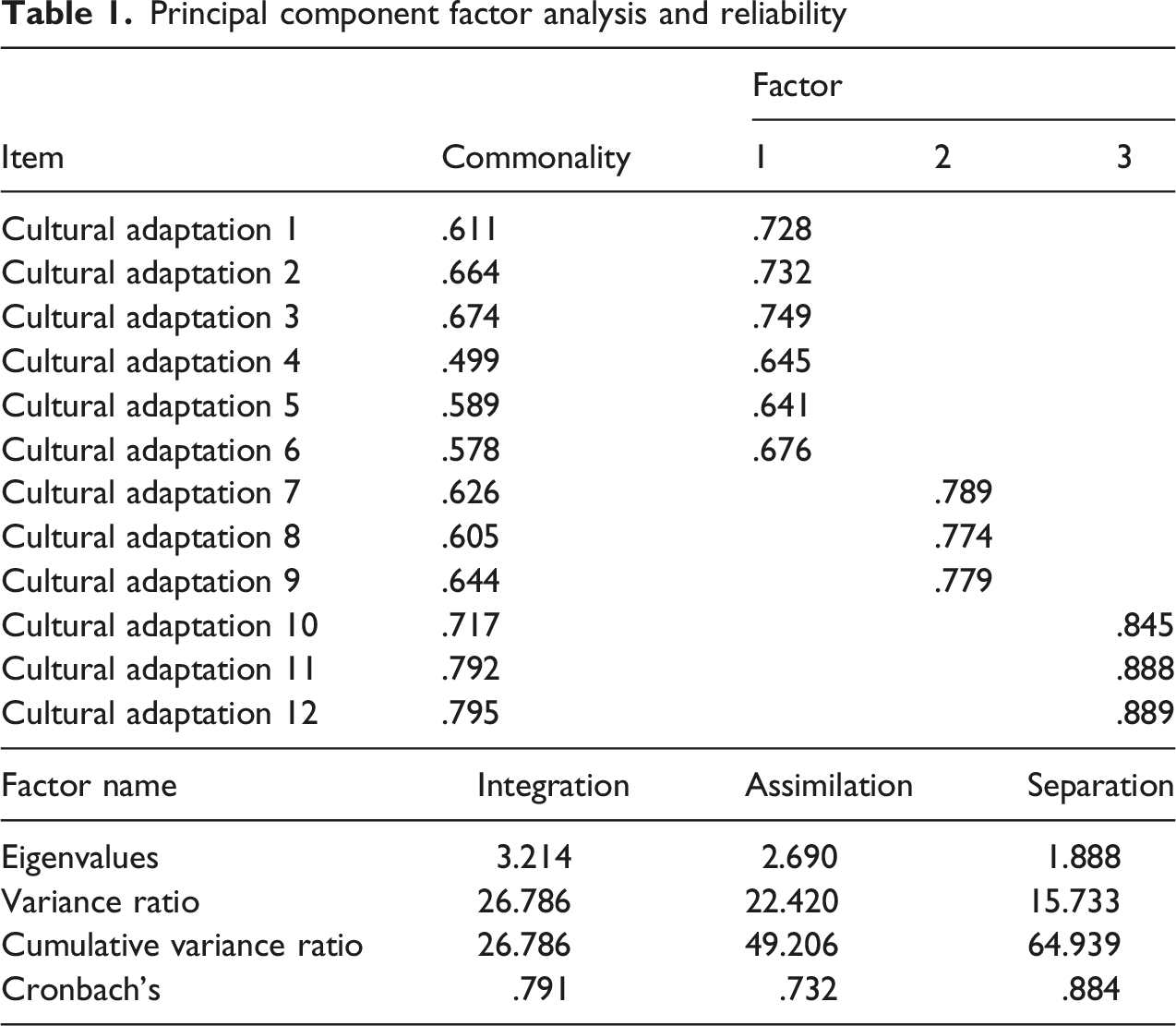
Principal component factor analysis and reliability
Analysis Method
This study used SPSS 24.0 to analyze whether the cultural acculturation type of marital migrant women affects parental efficacy, descriptive statistics were conducted to derive frequency analysis and basic data for demographic variables, and ANOVA was conducted to analyze differences according to demographic variables. Additionally, correlation (Correlation coefficient) analysis was conducted between cultural acculturation type and parental efficacy variables, and multiple linear regression analysis was performed to verify how cultural acculturation type (integration, assimilation, and separation) affects parental efficacy among immigrant women.
Research Model and Hypotheses Development
Research Model
This study integrates Berry’s (1997) bidimensional acculturation theory and Bandura’s (1997) PSE theory to examine how different acculturation strategies influence the parental efficacy of married migrant women in Korea. Specifically, it investigates the mediating role of self-esteem in the relationship between acculturation type and parental efficacy. Based on prior literature, three acculturation strategies are operationalized as independent variables: Integration, Assimilation, and Separation. The marginalization strategy is excluded for both theoretical and contextual reasons. In the Korean context—characterized by collectivism, robust government support for multicultural families, and dense social networks—marginalization tends to be a transient rather than stable adaptation type (Brown et al., 2013; Schwartz & Zamboanga, 2008). Empirical studies also suggest that the separation strategy is more commonly observed than marginalization among migrant populations in Korea (Han & Kim, 2020). Therefore, excluding marginalization aligns with the study’s empirical relevance and theoretical clarity. Parental efficacy is employed as the dependent variable, reflecting one’s perceived competence in fulfilling parenting roles (Jones & Prinz, 2005). As the mediating variable, self-esteem plays a critical role in shaping behavioral outcomes, especially under challenging cultural and environmental conditions (Bandura, 1997). From the perspective of social cognitive theory, self-esteem enhances resilience and contributes to adaptive parenting behaviors, particularly for individuals facing cultural transitions (Caprara, 2004).
To examine these relationships, a three-step regression-based mediation analysis is conducted using SPSS 24.0. First, the direct effect of acculturation types on parental efficacy is assessed through multiple linear regression. Second, self-esteem is introduced as a mediating variable. A statistically significant reduction in the regression coefficient of the independent variable after including the mediator indicates a partial mediation effect (Baron & Kenny, 1986). Finally, the direct and indirect effects of acculturation types and self-esteem on parental efficacy are simultaneously tested to assess the robustness of the mediation mechanism. Additionally, a set of socioeconomic control variables is included: Korean language proficiency, monthly household income, economic status, use of native language at home, and country of origin. These factors are known to influence both acculturation outcomes and parenting practices (Bornstein & Bradley, 2014; Suárez-Orozco et al., 2011). By incorporating these covariates, the model aims to isolate the core psychological mechanisms from contextual influences. In summary, the theoretical integration of Berry’s and Bandura’s frameworks allows for a multidimensional understanding of parenting experiences among migrant women in Korea. This model contributes to the growing literature on cross-cultural parenting by highlighting the psychological pathways through which cultural adaptation shapes parental efficacy within an underexplored sociocultural setting.
There has thus far been a lack of research on parental efficacy according to the acculturation type in Korean society. Previous research has focused on the life satisfaction of foreign workers (Amit, 2010; Katz, 2009; Ying, 1996), which has been shown to positively affect mental health and life satisfaction. Recent research has focused on social support and life satisfaction, including studies on Bangladeshi and Australian migrant workers in South Korea (Angelini et al., 2015). Harpaz et al., (2021) suggested that parenting styles can significantly affect child outcomes. However, the study uses relatively small sample sizes and lacks cultural diversity. Vance and Brandon (2017) presented various theoretical concepts from both parent and child perspectives, ultimately leading to parental efficacy, which was supported by the work of Wittkowski et al., (2017). Considering the limited number of previous studies, we propose the following hypotheses regarding the acculturation and parental efficacy of married migrant women in Korean society.
Hypotheses Development
Acculturation is a multifaceted process through which immigrants adjust to a new cultural environment while maintaining aspects of their heritage culture (Berry, 1997). Among the four acculturation strategies proposed by Berry—assimilation, separation, marginalization, and integration—the integration strategy has been widely recognized as the most adaptive and psychologically beneficial (Berry, 2017). Integration refers to the adoption of the host culture while preserving elements of one’s native cultural identity. In the context of migrant mothers, this bicultural orientation can create a stable psychological base that fosters confidence in parenting, thereby enhancing parental efficacy. According to Berry (2017), individuals who adopt the integration strategy are more likely to experience lower levels of acculturative stress and higher self-esteem, which are critical factors in effective parenting. In particular, integration enables migrant mothers to draw upon both cultural resources, such as using their native language to reinforce emotional bonding with their children while also leveraging the host language and norms to navigate institutional settings like schools (Berry, 2017). Such as Berry (2017) some empirical studies support the positive relationship between integration and parenting outcomes. Kim and Kim (2020) found that migrant women in Korea who engaged in both cultural retention and host language adoption reported higher parental efficacy and more effective communication with their children. These mothers used both Korean and their native language at home, allowing for cultural continuity while ensuring school-related adaptation (Kim & Kim, 2020). Furthermore, Schwartz et al., (2010) emphasized that biculturalism offers adaptive flexibility that contributes to greater psychosocial well-being, which is a core determinant of parenting confidence and responsiveness (Schwartz et al., 2010). In addition, Calzada et al., (2012) reported that Latino immigrant mothers in the U.S. who maintained cultural values while integrating into the host society demonstrated higher levels of warmth and responsiveness in parenting, mediating improved child outcomes and enhancing maternal perceptions of parenting competence (Calzada et al., 2012). Taken together, these findings strongly suggest that the integration style of acculturation facilitates positive emotional stability, bicultural competence, and adaptive parenting behaviors, which in turn contribute to higher parental efficacy among migrant women.
Acculturation style (integration) positively affects parental efficacy.
Assimilation refers to an acculturation strategy in which individuals relinquish their heritage culture and adopt the values, language, and behaviors of the host society (Berry, 1997). For migrant women, adopting the assimilation strategy may offer short-term adaptive advantages such as quicker social integration, enhanced language proficiency, and access to institutional resources, all of which may contribute positively to parenting in a new sociocultural context. Cuéllar et al., (1995) developed the Acculturation Rating Scale for Mexican Americans-II (ARSMA-II), through which they observed that individuals with high assimilation scores demonstrated stronger affiliation with mainstream values and behaviors. They noted that such alignment may facilitate smoother interactions with the host community and access to educational and health services, potentially leading to increased parental efficacy in navigating systems that affect their children’s development (Cuéllar et al., 1995). However, assimilation may have ambivalent effects. While the adoption of host norms may enhance functional competence in child-rearing practices, the detachment from one’s native culture may create intergenerational cultural gaps and emotional distance between mother and child. Schwartz et al., (2010) argued that the complete substitution of the host culture can limit emotional expression and cultural continuity in the home, potentially undermining relational dynamics and parenting confidence (Schwartz et al., 2010).
Nevertheless, other studies suggest that assimilation can still positively influence parental efficacy if the mother perceives integration into the host culture as a pathway to empowerment. For example, Lau (2003) found that among Chinese-American mothers, those who more strongly identified with U.S. parenting styles and educational expectations reported higher self-efficacy in managing their children’s academic life, indicating a form of “instrumental assimilation.” Additionally, Farver et al. (2002) reported that assimilation among Korean immigrant mothers led to improved understanding of school expectations and parental roles in the U.S. system, thereby boosting confidence in parenting practices, especially in educational involvement. In sum, while assimilation may limit cultural retention and thus introduce emotional or identity-related tensions, it can also enhance parental effectiveness by facilitating functional adaptation to host cultural norms and institutions. The effectiveness of assimilation on parenting outcomes thus appears to be contextually dependent on the mother’s perception of cultural loss versus gain.
Acculturation style (assimilation) positively affects parental efficacy.
Berry (1997), in his seminal study on immigration, acculturation, and adaptation, emphasized that migrant women who adopt a separation acculturation style—rejecting the host culture while strictly adhering to their heritage culture—are more likely to experience social isolation. Such isolation may undermine their parental efficacy. Supporting this view, Lee et al., (2021) found that acculturation stress negatively affected parenting efficacy and parent–child relationships among migrant mothers, suggesting that difficulties in adapting to the host society may increase parenting stress and undermine effective parenting.
An acculturation style characterized by separation negatively affects parental efficacy.
Choi and Kim (2010), in their research on Bangladeshi migrant workers residing in Korea, argued that a migrant woman’s country of origin can significantly impact parental efficacy due to differences in cultural background, education, and socioeconomic status. Similarly, Ying (1996), in her study on the psychological adjustment of Southeast Asian refugees, concluded that cultural differences rooted in one’s country of origin substantially influence both psychological adaptation and parenting effectiveness among migrant women.
The country of origin significantly affects parental efficacy.
Language proficiency has also been identified as a critical determinant of parental efficacy. Kim and Kim (2019), examining migrant women’s cultural adjustment and mental health, demonstrated that higher Korean language proficiency enhances social integration and fosters more effective communication with children, thereby increasing parental confidence. Likewise, found that language barriers directly hinder migrant mothers’ social adaptation and diminish their parental efficacy.
Higher levels of Korean language proficiency positively affect parental efficacy.
Socioeconomic factors, particularly income, have also been shown to influence parenting. Easterlin (1995), in his analysis of income and subjective well-being, asserted that low income exacerbates economic insecurity among migrant women, which may, in turn, negatively affect their parenting capabilities. In a cross-national study, Bjørnskov (2003) emphasized that economic hardship reduces life satisfaction and impairs parental efficacy among minority populations, including migrant women.
Lower average monthly income negatively affects parental efficacy.
According to Portes and Hao (2002), using one’s native language to communicate with children not only reinforces immigrant women’s cultural identity but also contributes to enhancing their parental efficacy. Similarly, Schwartz et al., (2013) argue that the use of a mother tongue supports children’s emotional stability and learning capacity, which in turn positively influences parental self-efficacy.
Using the language of origin when communicating with children positively affects parental efficacy.
To analyze whether acculturation style influences the parental efficacy of married migrant women, a research model is proposed (Figure 1). Control variables include Korean language proficiency, average monthly household income, the country of origin of the migrant woman, whether the native language is used at home, and the primary language used to communicate with children. Self-esteem has also been found to mediate the relationship between acculturation and parental efficacy. High self-esteem not only promotes individual growth but also enhances resilience in stressful environments (Aspinwall & Taylor, 1992). For women who have migrated to Korea, self-esteem plays a crucial role in child-rearing. Mothers with higher levels of self-esteem tend to raise children who are more autonomous and independent, thereby increasing their sense of parental efficacy. Furthermore, parenting attitudes are closely tied to psychological variables, particularly self-esteem. When mothers possess high self-esteem, they are more affectionate and accepting in their interactions with children. In contrast, low self-esteem may lead to negative perceptions of the child and emotionally distant or even hostile parenting behaviors (Hammen, 2003; Langrock et al., 2002; Lovejoy et al., 2000; Qian, 2024). Research model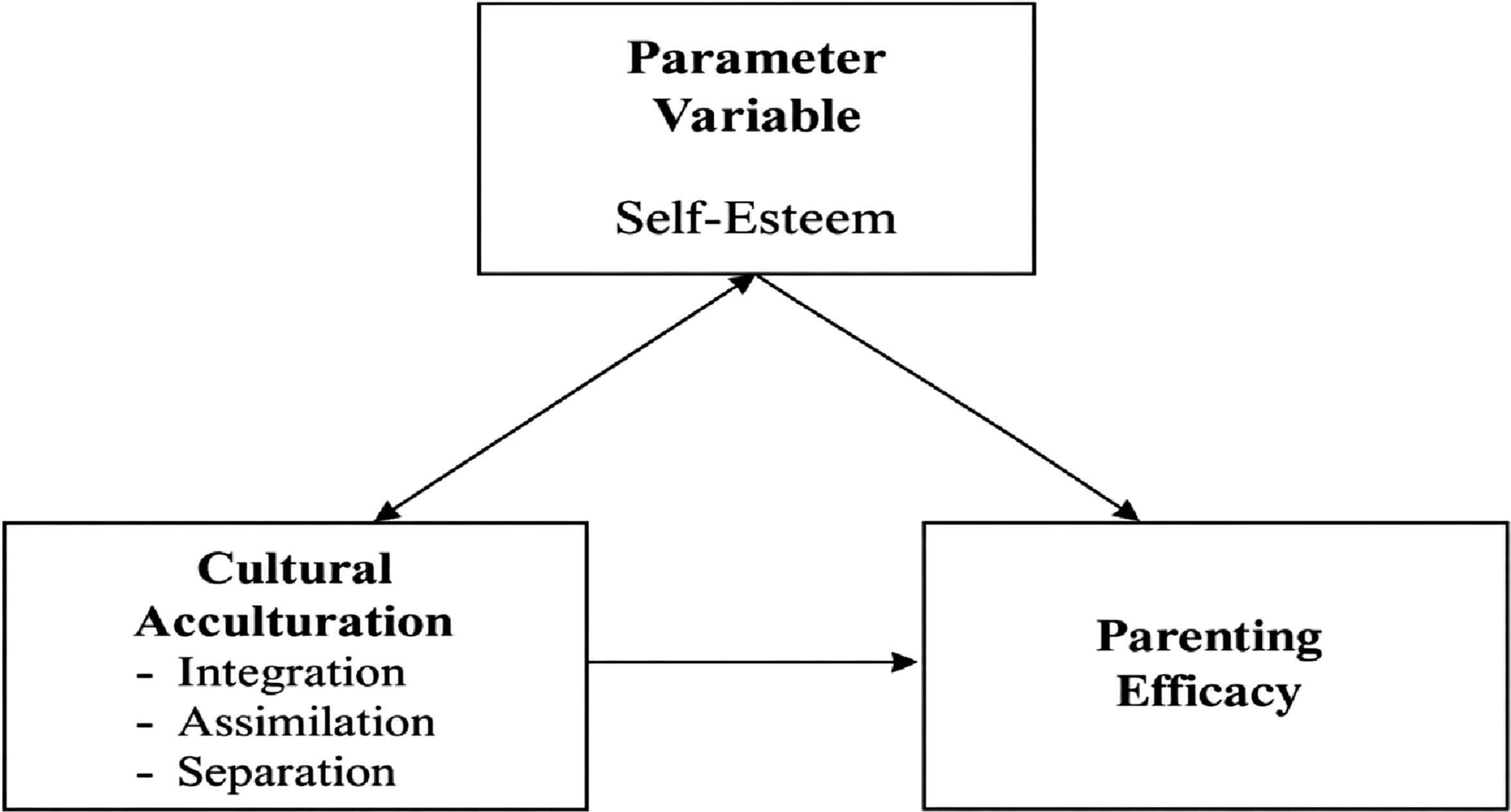
Self-esteem mediates the relationship between acculturation style and parental efficacy.
Measurement of Key Constructs
Acculturation Style
To measure acculturation style, this study adopted a scale based on the East Asian Acculturation Measure (EAAM) originally developed by Berry (2001) and later translated and revised by Noh (2006). The MAPS collected data from parents using 12 items categorized into three acculturation styles: assimilation, integration, and separation. Each style was assessed using three items measured on a five-point Likert scale ranging from 1 (“strongly disagree”) to 5 (“strongly agree”). The average score of the three items for each style represented the respondent’s degree of acculturation for that dimension, with higher scores indicating stronger alignment with that acculturation type. The reliability (Cronbach’s alpha) for each subscale was .871 for assimilation, .785 for integration, and .815 for separation.
Self-Esteem
Self-esteem among multicultural parents was assessed using nine items adapted from Rosenberg’s (1965) Self-Esteem Scale, as implemented in the second wave of the MAPS. The items included statements such as “I feel that I am a person of worth, at least on an equal basis with others,” “I am satisfied with myself,” and “I have a positive attitude toward myself.” Negatively worded items, such as “I feel I do not have much to be proud of” and “At times I think I am no good at all,” were reverse-coded. All items were rated on a five-point Likert scale from 1 (“strongly disagree”) to 5 (“strongly agree”), with higher total scores indicating higher levels of self-esteem. The scale demonstrated good internal consistency in this study (Cronbach’s α = .829).
Parental Efficacy
Parental efficacy was measured using a nine-item scale originally developed by Gibaud-Wallston and Wandersman (1978) and adapted for use in the MAPS. This instrument evaluates parents’ perceived competence in fulfilling their parenting roles. Sample items include “I am aware of how my behavior affects my child,” “I understand what my child struggles with,” and “I believe I am a role model of good parenting for others.” Responses were recorded on a five-point Likert scale from 1 (“strongly disagree”) to 5 (“strongly agree”), with higher scores reflecting stronger parental efficacy. The reliability coefficient for this scale in the present study was Cronbach’s α = .813.
Results
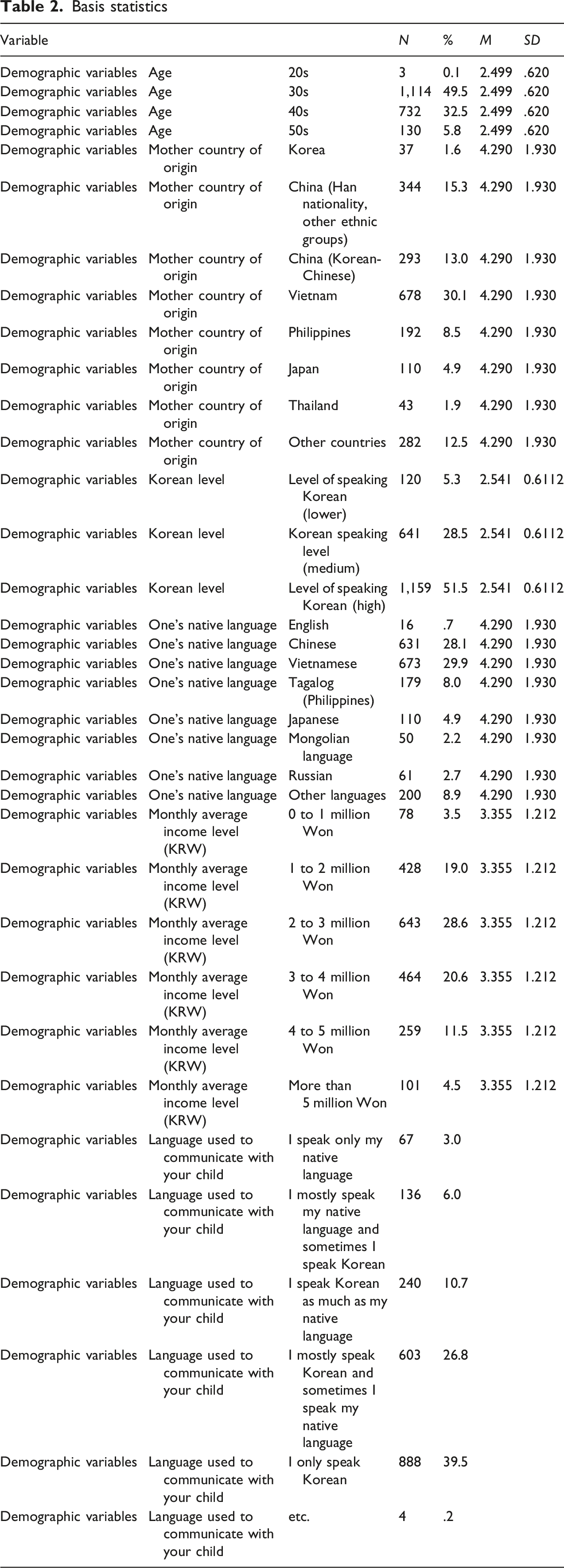
Basis statistics
Difference Verification
Demographic Variables on Parental Efficacy (N = 1,920)
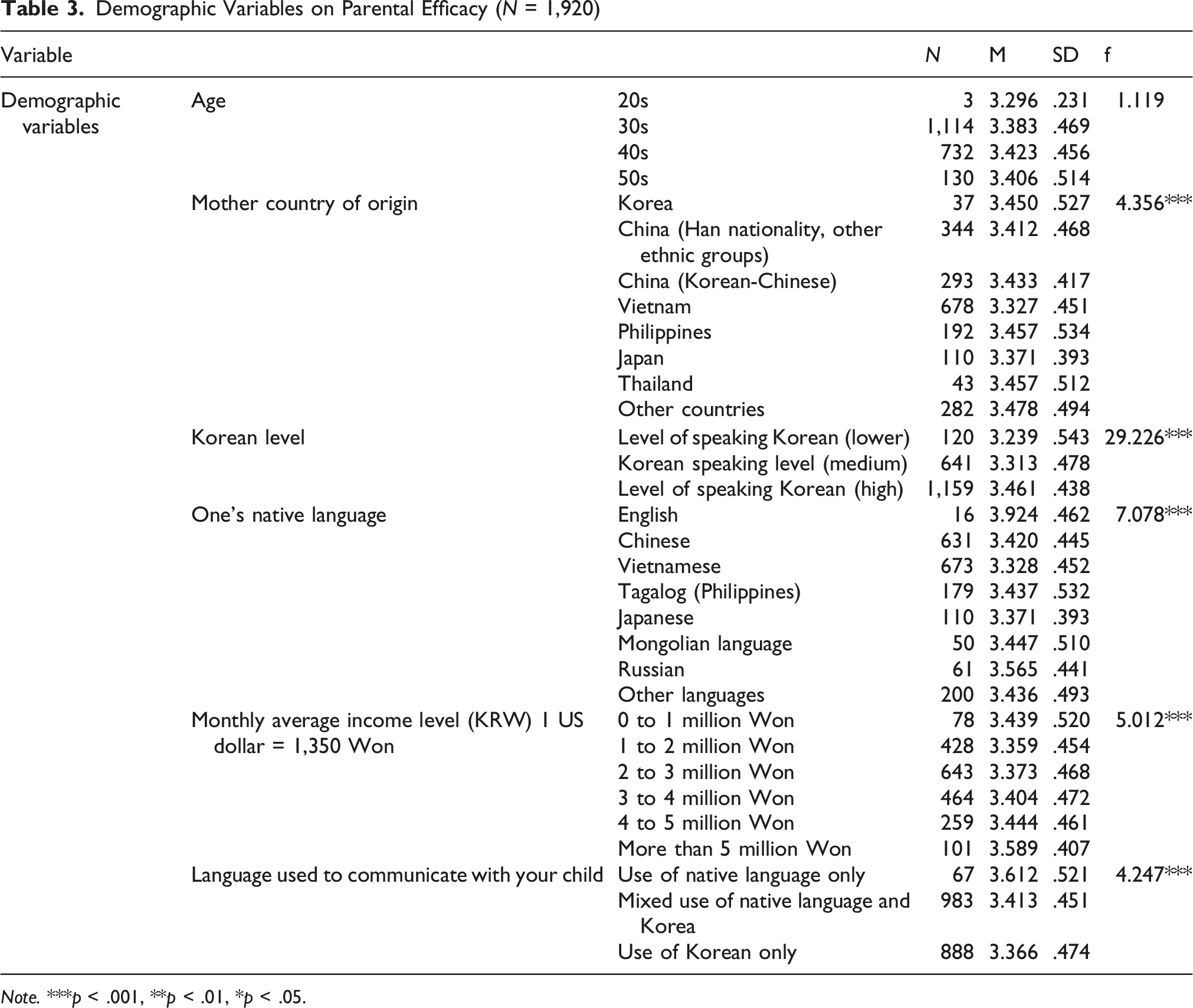
Note. ***p < .001, **p < .01, *p < .05.
Examining Differences in Self-Esteem Across Demographic Variables (N = 1,920)
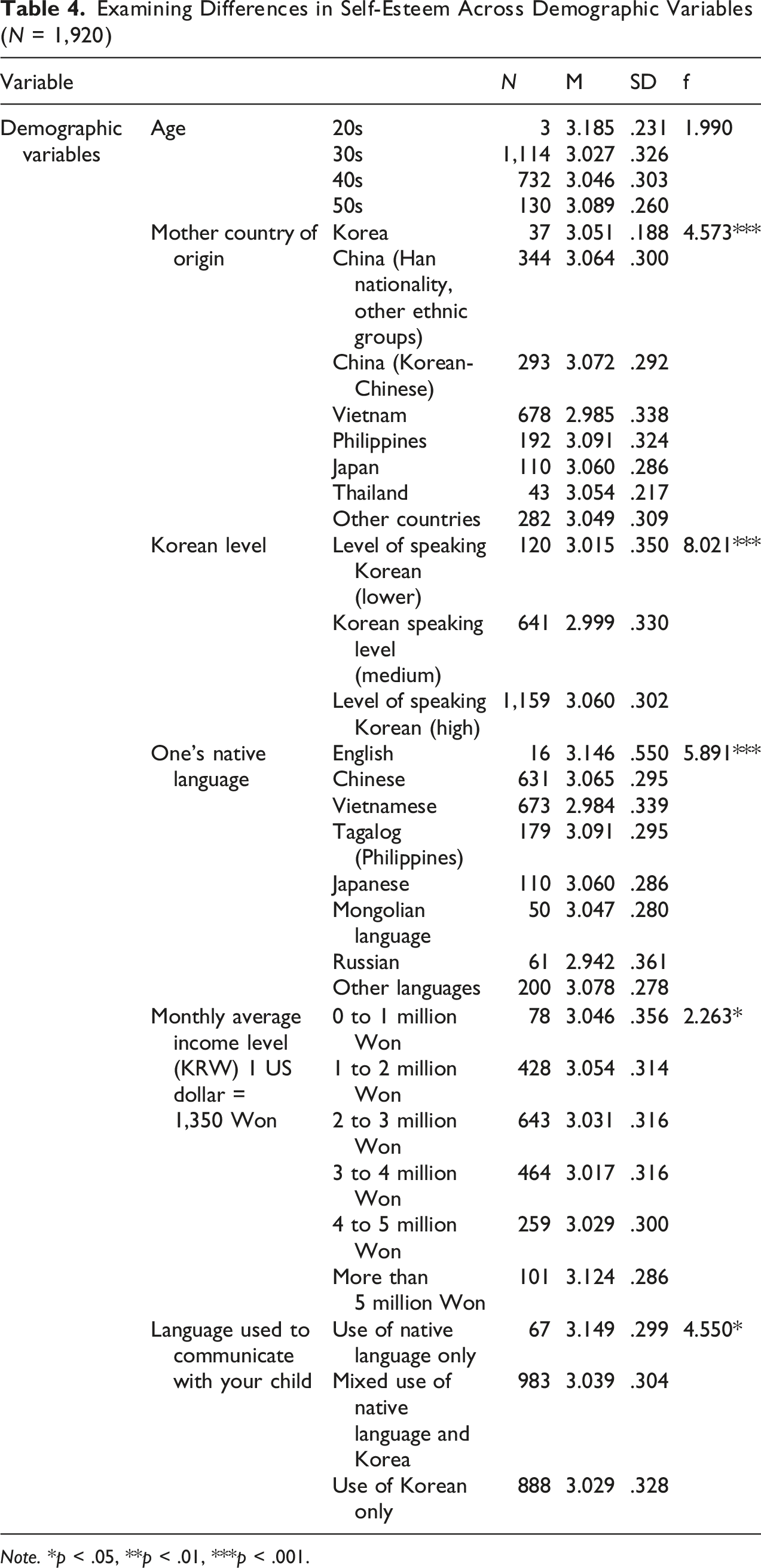
Note. *p < .05, **p < .01, ***p < .001.
Correlation Analysis
Correlation Analysis Results between Cultural Adaptation Strategies, Parental Efficacy, and Self-Esteem
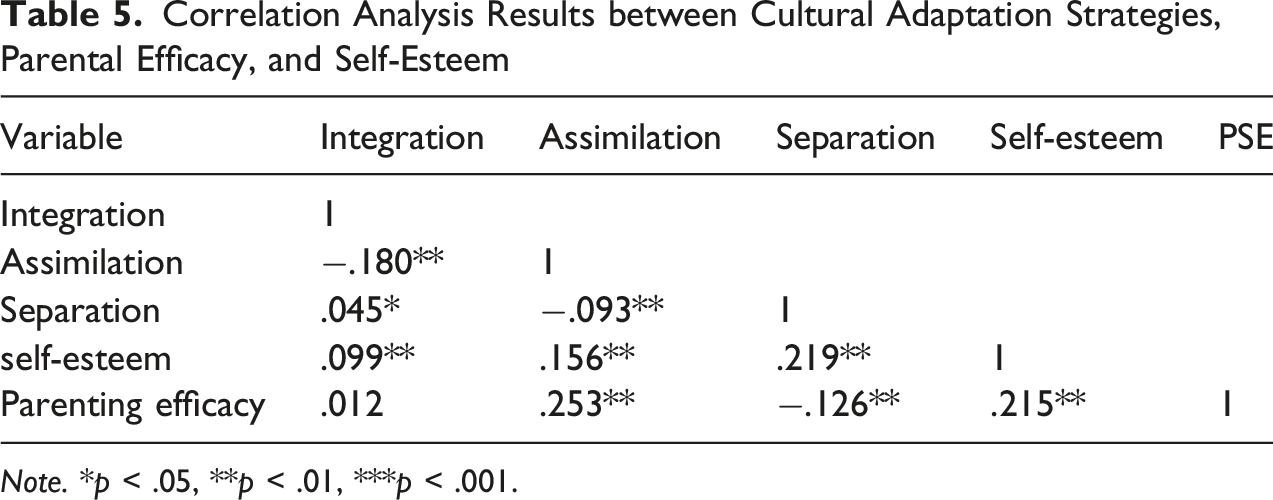
Note. *p < .05, **p < .01, ***p < .001.
The Mediating Effects of Self-Esteem
The Mediating Effect of Self-Esteem on the Relationship Between Assimilation Cultural Adaptation and Parental Efficacy Among Married Immigrant Women
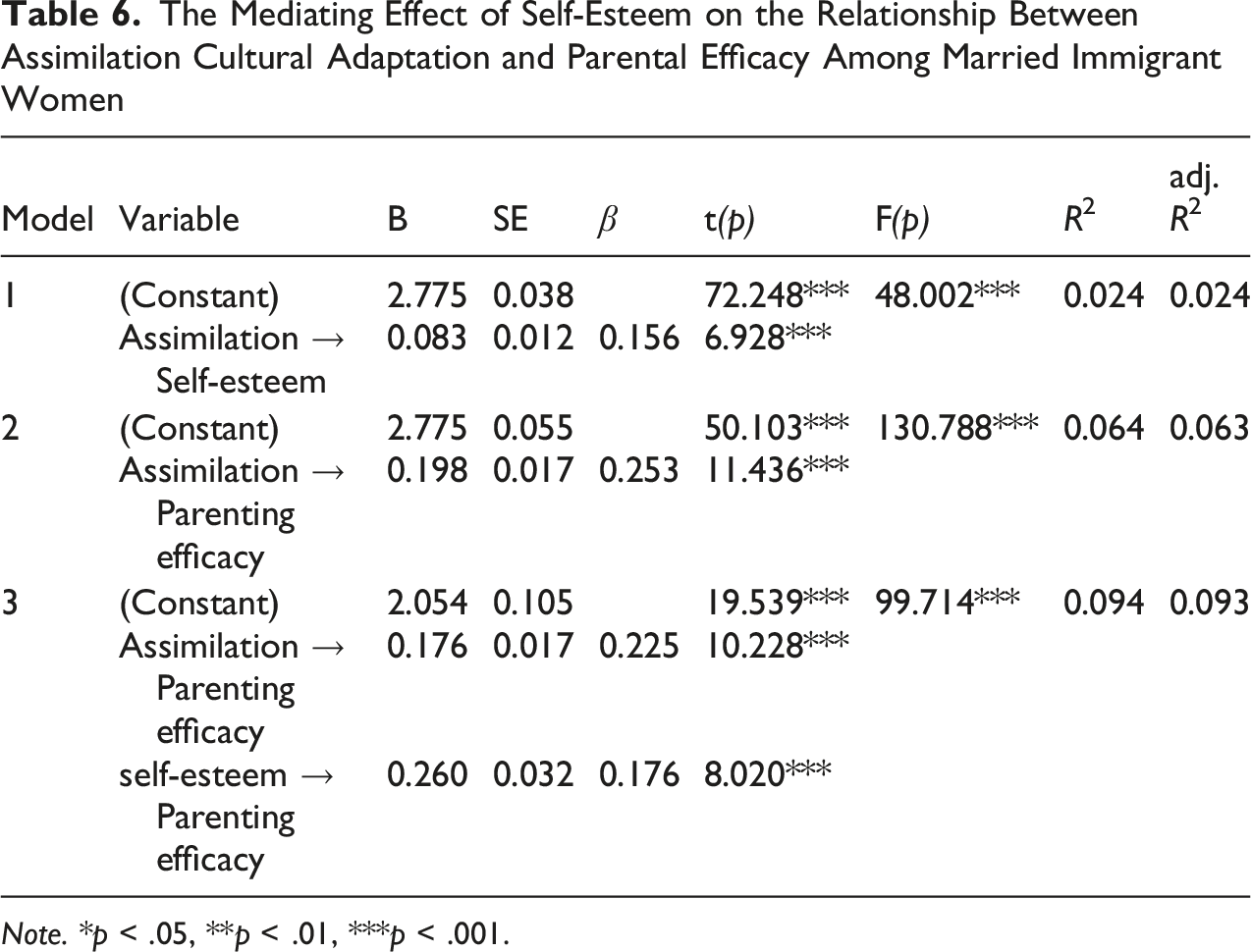
Note. *p < .05, **p < .01, ***p < .001.
The Mediating Effect of Self-Esteem on the Relationship Between Cultural Adaptation Type (Separation) and Parental Efficacy Among Married Immigrant Women
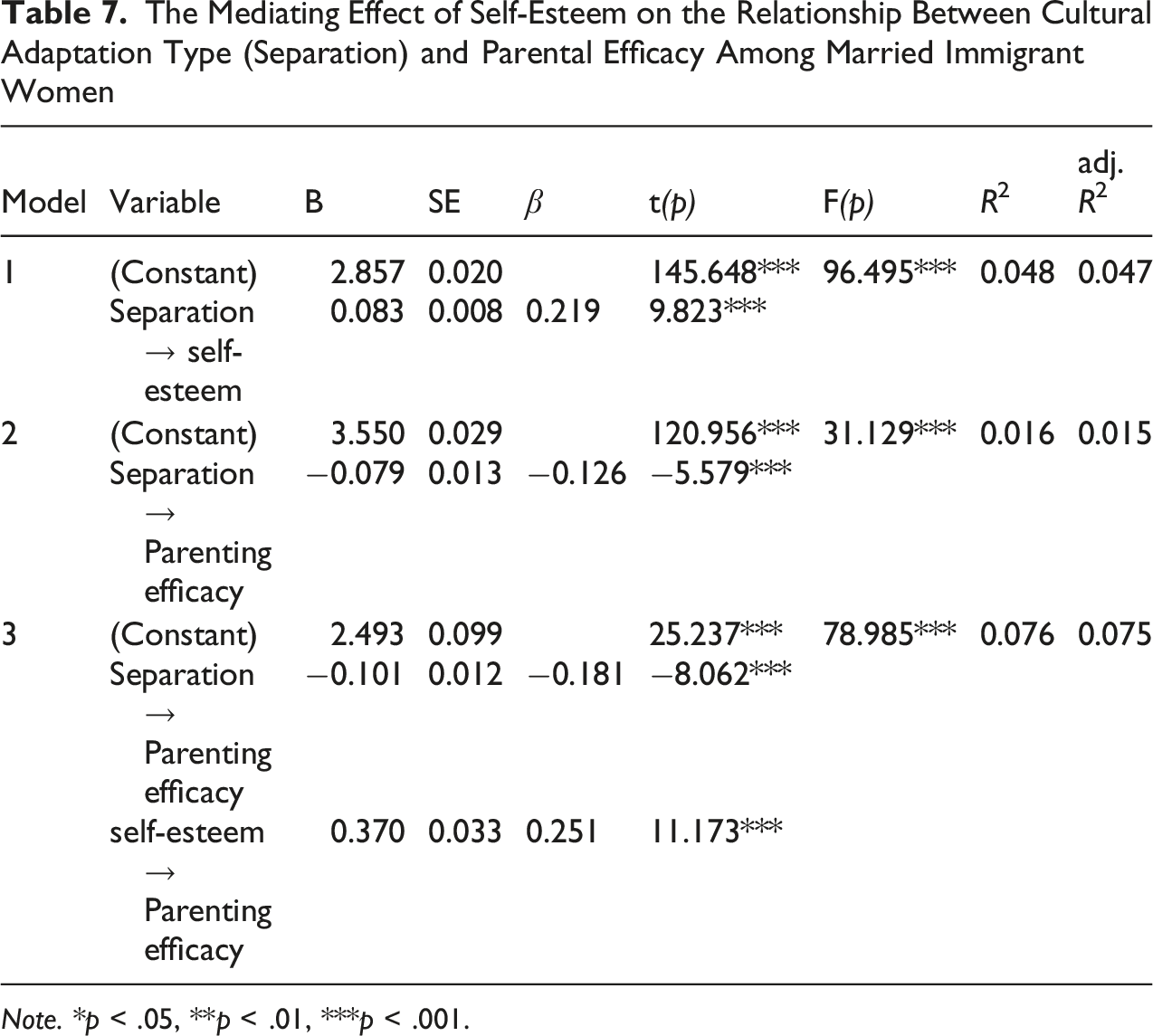
Note. *p < .05, **p < .01, ***p < .001.
Regression Results
Regression analyses demonstrated that the integration strategy significantly predicts higher levels of parental self-efficacy (β = 0.182, p < .001), aligning with Berry’s (1997) assertion that bicultural adaptation leads to positive psychological outcomes. This supports findings by Kim and Abreu (2001), who observed enhanced parenting confidence among culturally integrated mothers. Conversely, the separation strategy was negatively associated with parental efficacy (β = −0.079, p < .001), although bootstrapping confirmed that self-esteem partially mediated this relationship (indirect effect = −0.101, CI [−0.125, −0.077]), echoing Bandura’s (1997) assertion that psychological beliefs are critical to behavioral outcomes. Language proficiency (β = 0.142, p < .001) and use of native language with children (β = 0.167, p < .01) emerged as significant predictors of PSE. These results are consistent with Bandura’s emphasis on mastery experiences and Yeh and Inose’s (2003) argument that linguistic competence enhances immigrant confidence. These findings collectively support the multidimensional nature of acculturation posited by Schwartz et al. (2010) and highlight the role of both psychological and sociocultural factors.
Conclusion and Implications
This study investigates the impact of cultural adaptation strategies on PSE among married immigrant women in South Korea, integrating Berry’s (1997) acculturation theory and Bandura’s (1997) self-efficacy framework. The results offer nuanced insights into how psychological and sociocultural processes jointly shape parenting beliefs. First, the integration strategy, where individuals simultaneously maintain their heritage culture and adopt aspects of the host culture, significantly predicted higher levels of parental self-efficacy (β = 0.182, p < .001). This confirms the adaptive value of biculturalism (Berry, 1997; Kim & Abreu, 2001) and supports Schwartz et al. (2010), who emphasize the psychosocial advantages of flexible bicultural identities. Second, the separation strategy was negatively associated with PSE (β = −0.079, p < .001). However, a mediation analysis revealed that self-esteem partially mitigates this negative effect (indirect effect = −0.101; 95% CI: −0.125 to −0.077). This finding reflects Bandura’s (1997) emphasis on self-beliefs as mediators of behavioral outcomes and aligns with Rudmin’s (2009) view that cultural maintenance may bolster self-worth under specific sociocultural conditions. Third, while assimilation showed a positive direct effect on PSE (β = 0.253, p < .001), self-esteem again played a mediating role (β = 0.260, p < .001), suggesting that fully embracing host culture norms without retaining heritage identity can still enhance efficacy—but primarily through perceived competence and belonging (Caprara, 2004; Fang et al., 2021). Fourth, Proficiency in Korean (β = 0.142, p < .001) and frequent use of native language with children (β = 0.167, p < .01) were strong predictors of PSE. These findings reinforce Bandura’s (1997) emphasis on mastery experiences and Yeh and Inose’s (2003) research on language proficiency as a vehicle for psychological adaptation and parenting confidence. Fifth, Higher monthly household income and country of origin significantly influenced PSE levels. Mothers from higher-income brackets and certain national backgrounds (e.g., the Philippines and China) reported significantly higher PSE scores, supporting prior findings on economic security and culturally embedded parenting beliefs (Bjørnskov, 2003).
This study provides several theoretical contributions by integrating Berry’s (1997) bidimensional acculturation theory and Bandura’s (1997) self-efficacy framework to examine how different acculturation strategies influence PSE among married immigrant women in Korea. First, the study advances Berry’s acculturation theory by applying it beyond psychological or identity adaptation to functional family roles—specifically, parenting efficacy. While previous research has largely focused on individual well-being or identity alignment (e.g., Berry, 2005; Schwartz et al., 2010), this study extends the theoretical scope by showing how cultural adaptation shapes the enactment of parental roles within diverse cultural and socioeconomic contexts. The findings resonate with contemporary arguments (Schwartz et al., 2010) that acculturation should not be treated as a static, unidimensional process but as a dynamic, context-sensitive phenomenon. By demonstrating that both heritage culture maintenance and host culture adoption interactively influence parental self-efficacy, the study offers a nuanced understanding of how migrant women navigate their bicultural environments.
Second, this study advances Albert Bandura’s (1977, 1997) conceptualization of self-efficacy by integrating self-esteem as a mediating mechanism that is formed and activated through cultural adaptation experiences. Traditionally, self-efficacy has been viewed as a cognitive process influenced by four primary sources: mastery experiences, vicarious learning, social persuasion, and emotional arousal (Bandura, 1982, 1997). While these internal processes remain central to behavioral activation and persistence, they often underrepresent how sociocultural transitions—such as migration and acculturation—reshape self-beliefs in immigrant populations. Drawing from empirical findings, the present study confirms that self-esteem serves as a critical intermediary in the relationship between acculturation strategies and PSE, revealing that external cultural adaptation processes can shape internal motivational schemas. This finding builds on Caprara, (2004), who demonstrated that self-esteem not only contributes to psychological well-being but also acts as a predictor of prosocial behavior and parental confidence. Similarly, Masselink et al. (2018) found that adolescents’ self-esteem significantly influenced self-efficacy and depression, suggesting that self-evaluation is foundational to action-oriented belief systems
Third, another key contribution of this study is its critical re-evaluation of the adaptive value of specific acculturation strategies, especially the separation strategy, which has often been classified as maladaptive in mainstream acculturation theory (Berry, 1997, 2005). The canonical model posits that integration—where individuals maintain their heritage culture while adopting key aspects of the host culture—is the most psychologically beneficial strategy (Nguyen & Benet-Martínez, 2013). In contrast, separation, characterized by cultural retention without engagement in the host culture, has been linked to higher levels of isolation, acculturative stress, and identity fragmentation (Sam & Berry, 1995; Schwartz et al., 2010). However, the findings of this study challenge this binary classification by showing that separation, while associated with lower PSE, is positively associated with self-esteem under certain sociocultural conditions. This suggests that in some cases, separation may serve as a psychological buffer, allowing individuals to protect their cultural identity in a socially or institutionally unwelcoming environment. These findings resonate with Rudmin’s (2009) critique of Berry’s framework, which argues that separation should not be uniformly viewed as dysfunctional, particularly when it reflects an active effort to preserve identity coherence in the face of cultural domination or exclusion. From a psychological standpoint, this study highlights how cultural identity maintenance, when supported by strong in-group networks and native language use, can enhance emotional security and identity stability (Phinney et al., 2001). For immigrant mothers, cultural separation—such as speaking exclusively in their native language at home or maintaining heritage traditions—may function as a form of emotional scaffolding that reinforces parenting confidence in familiar domains, even if broader societal adaptation remains limited (Levitt & Glick Schiller, 2004; Portes & Rumbaut, 2001). This recontextualization supports the call for context-sensitive acculturation models that take into account the social reception of immigrants in host societies (Schwartz & Unger, 2017). For example, in settings where structural racism, language discrimination, or institutional neglect prevail, separation may become a rational strategy that sustains self-worth and cultural coherence, even if it limits institutional integration (Suárez-Orozco et al., 2011). In summary, this study suggests that acculturation strategies should be evaluated not solely based on integration outcomes, but on their capacity to preserve self-esteem, protect cultural identity, and support functional parenting within available resources. This insight adds depth to the acculturation literature by encouraging a move beyond linear, adaptive–maladaptive dichotomies toward multidimensional, intersectional perspectives.
Fourth, this study makes a significant contribution to the conceptualization of PSE by demonstrating its contextual dependency on structural variables—notably language proficiency and economic capital—within immigrant family settings. While Bandura’s (1997) social cognitive theory primarily frames self-efficacy as a belief rooted in personal mastery and agency, this study extends that view by showing how structural constraints and enablers shape self-efficacy beliefs, especially in marginalized populations. The empirical findings support previous work suggesting that language proficiency is not merely a functional tool, but a psychological resource that influences parental confidence and responsiveness (Kim & Kim, 2019). Language ability facilitates access to educational institutions, healthcare systems, and social networks, thereby reducing role ambiguity and enhancing a sense of parental competence. Yeh and Inose (2003) emphasize that acculturative stress is significantly mediated by host language fluency, which also contributes to emotional resilience and clearer family role articulation. By empirically integrating these variables into the modeling of PSE, the study affirms the importance of combining structural and psychological dimensions. It also aligns with intersectionality theory (Crenshaw, 1991), which posits that overlapping systems of identity (e.g., ethnicity, gender, immigrant status) interact with institutional systems (e.g., economic and linguistic access) to shape individual agency. This perspective reinforces that PSE is not a universally stable trait, but one that varies across socioeconomic strata and is shaped by differential access to institutional and cultural capital (Bourdieu, 1986). Thus, the study urges scholars to rethink PSE as not only a personal but also a systemic construct, modulated by access to resources, policy frameworks, and social recognition—especially within immigrant and minority parenting contexts (Bornstein & Bradley, 2014; Suárez-Orozco et al., 2011).
Fifth, Contrary to traditional assumptions that separation strategies are maladaptive (Berry, 1997), this study provides evidence that maintaining one’s native language and cultural identity can support parental self-efficacy under certain conditions. In line with research by Rudmin (2009), the findings suggest that for many migrant women, cultural retention functions as a source of psychological stability and strengthens intra-family bonds. Therefore, separation should not be uniformly pathologized but rather reinterpreted as a context-dependent adaptation strategy, particularly in societies where full assimilation may be neither possible nor desirable.
To this end, a few practical suggestions can be made. First, as shown in this study, Asian women are the majority of married migrant women in Korean society. Given their Korean speaking level, use of their mother tongue, and the language they use to communicate with their children, it is necessary to categorize regional characteristics such as region of residence, number of family members, income level, job environment, and language problems through the Korean language learning experience and develop specialized programs with active government support. This can help improve the income of multicultural families, easing the period of child rearing and enhancing communication. Second, there is a need for community-centered support to help migrant women build a sense of community in their country of origin. Given the circumstances in which they must juggle their roles as parents and wives, many factors are closely related to loneliness, administrative work, language problems, and ritualistic lifestyles, which are difficulties in Korean work and social life. Therefore, social support is needed to form self-sustaining communities that help them maintain their native language and cultural identity by shifting from an integrative and assimilationist perspective to a separationist perspective. Third, institutional and policy support is required to prevent social discrimination against married migrant women, especially workers, in Korean society. Employers should provide human rights education and awareness-raising training for migrants to maintain good relations with co-workers and adapt to the workplace. Further, legal enforcement should be strengthened to prevent discrimination. Migrant women should also be supported in Korean language education and the workplace to avoid discrimination due to language communication problems, as they have to raise children and work at the same time. At the individual level, workers who are discriminated against need psychological support and warm care and attention.
Discussion
The present study provides several important theoretical implications regarding the relationship between acculturation strategies and parental self-efficacy among married migrant women in South Korea. First, this research advances Berry’s (1997) acculturation framework by emphasizing a multidimensional perspective on immigrant adaptation. Traditional models often treated acculturation as a linear process, categorizing individuals into discrete types such as integration, assimilation, separation, and marginalization. However, our findings, aligned with Schwartz et al. (2010), indicate that acculturation occurs across overlapping domains including language proficiency, economic participation, and social integration. The interactive influence of heritage culture maintenance and host culture adoption on parental self-efficacy underscores the complex, dynamic nature of bicultural adaptation. Second, the study highlights the critical role of language proficiency in enhancing parental self-efficacy among migrant women. Consistent with Bandura’s (1997) social cognitive theory, which underscores the importance of mastery experiences, our results show that improved Korean language skills significantly predict higher levels of parental efficacy. Language acquisition emerges as a key mechanism for societal participation and psychological empowerment within the family context (Portes & Rumbaut, 2001; Yeh & Inose, 2003). Third, informed by the concept of transnationalism (Levitt & Glick Schiller, 2004; Portes et al., 1999), this study reframes marital migration as embedded within ongoing transnational social fields rather than a simple linear process of assimilation. Maintaining strong cultural ties through language and community networks was found to shape parenting practices and identity development, challenging the traditional assumption that successful integration necessitates cultural detachment. Fourth, the study emphasizes the importance of socioeconomic factors in the adaptation process. Consistent with the family stress model proposed by Conger and Donnellan (2007), financial strain negatively impacts parental self-efficacy by increasing psychological stress and diminishing emotional resources. This finding suggests that future acculturation models must incorporate material conditions such as income stability and access to employment opportunities. Fifth, contrary to conventional views that separation strategies are maladaptive (Berry, 1997), our findings demonstrate that under certain conditions, cultural retention can enhance parental self-efficacy. Supporting Rudmin’s (2009) perspective, separation should be reconceptualized not as inherently negative but as a potential strategy for preserving psychological stability and strengthening intra-family bonds, particularly in societies where full assimilation is challenging.
While this study offers significant theoretical and practical contributions, it has several limitations. The sample focuses primarily on Asian migrant women, limiting the generalizability of findings to other immigrant groups. Key factors such as the number of family members, occupational characteristics, regional differences, and detailed experiences of discrimination were not fully explored. Future research should extend the scope to include male migrants, adolescents, and more diverse ethnic groups, and incorporate socio-cognitive and psychological variables in more nuanced analyses.
Footnotes

Funding
The authors received no financial support for the research, authorship, and/or publication of this article.
Declaration of Conflicting Interests
The authors declared no potential conflicts of interest with respect to the research, authorship, and/or publication of this article.