






Abstract
Cyclical increase in economic uncertainty and structural economic uncertainty seems to decrease fertility. This study analyzing the event history of an individual uses a sequence of events to address the question: Why do some individuals postpone to have children while others do not? The economic shock of sudden increased unemployment and changed fertility trends are studied in a large scale prospective longitudinal study (n=300,000) of individuals born 1980–85 followed through linked administrative records analyzed in discrete-time hazard regression. The experience of economic uncertainty is approximated from records of unemployment records. Economic uncertainty and social exclusion increase the individual risk of induced medical abortion, family dissolution, and postponing parenthood. Postponement of fertility is closely related to the expansion of education. The economic shock of sudden increased unemployment is found to decrease fertility rates. Labor market conditions characterized by temporary employment and social exclusion are decisive when decision about starting a family.
Introduction
The hypotheses under study are that economic uncertainty can induce a short-term reduction in fertility due to postponement of decisions to have a child (Brewster & Rindfuss, 2000; Cazzola et al., 2016). Economic uncertainty is described as an experienced risk factor characterized by unemployment, part-time work, working on a term-limited contract, or difficulties entering the labor market (Blossfeld et al., 2006; Kreyenfeld et al., 2012; Mills, M. & Blossfeld, 2006).
A historical review of the economic shocks of sudden increased unemployment enlightened a potential causal relationship between economic uncertainty and the observed decreasing fertility trend (Jones & Schoonbroodt, 2016).
Historical Review
The Demographic Transition in Denmark
The structural economic changes seem to make the fertility to decline during the last many decades. The change from traditional society with high fertility and high mortality to “modern societies” where mortality and fertility are low is called the Demographic Transition (Figure 1). The term ‘modernization’ is not defined, nor does it include the crucial questions about causation (Kirk, 1996). Crude birth rate and death rate in Denmark, 1734–2002. (Per 10,000 population). Source: Matthiessen, 1970 and Denmark Statistics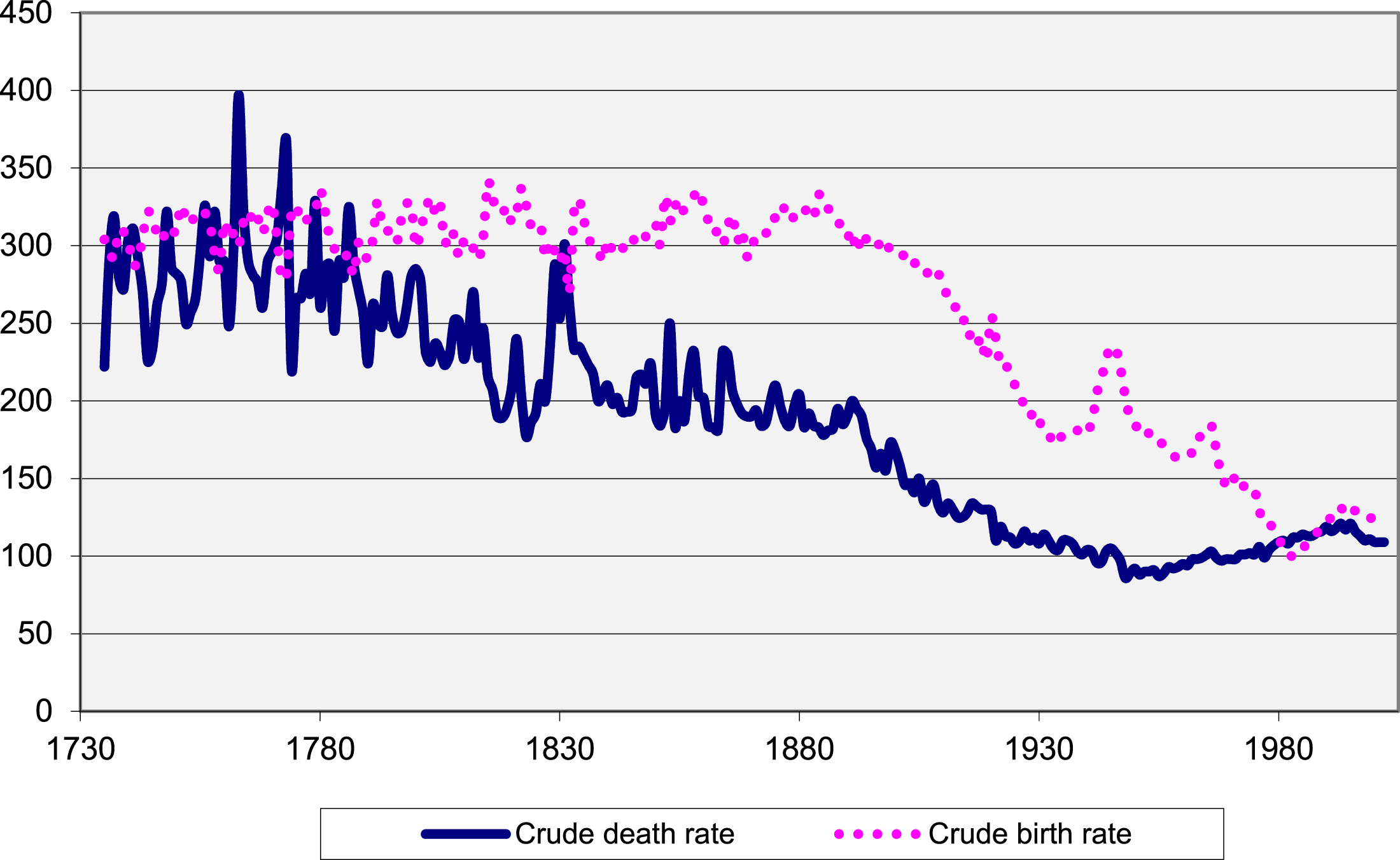
Mortality started to decline around 1800, while a pronounced fertility decline began around 1890 in Denmark (Matthiessen, 1970). The development in European countries appears to contradict the hypothesis that infant mortality decline was a main causing factor of fertility decline during the transition (Doepke, 2005; Van de Walle, 1986). The date of onset and the speed differed much between the countries (Matthiessen, 1970).
The relative timing of fertility and mortality decline do not follow a general pattern. In some countries the fertility decline started before infant mortality started declining, for example, United Kingdom, France; in other countries sizable reductions in infant mortality fell took place before the fertility decline, for example, Germany, Sweden, and Denmark (Doepke, 2005).
The speed of the fertility decline displays an enormous variety. It took United Kingdom 95 years, and United States 82 years to reduce fertility from more than 6 to less than 3 children per women, Iran and China made this transition in 11 years—before the introduction of the one-child policy (Roser et al., 2014).
Decline in Fertility in Denmark
Women born 1840–44 in Denmark gave birth to 4.5 children in average while the generation born 1905–09 gave birth to 2.3 children (Figure 2). Accumulated fertility rates for generations females born 1840–1985. (per 1,000 women)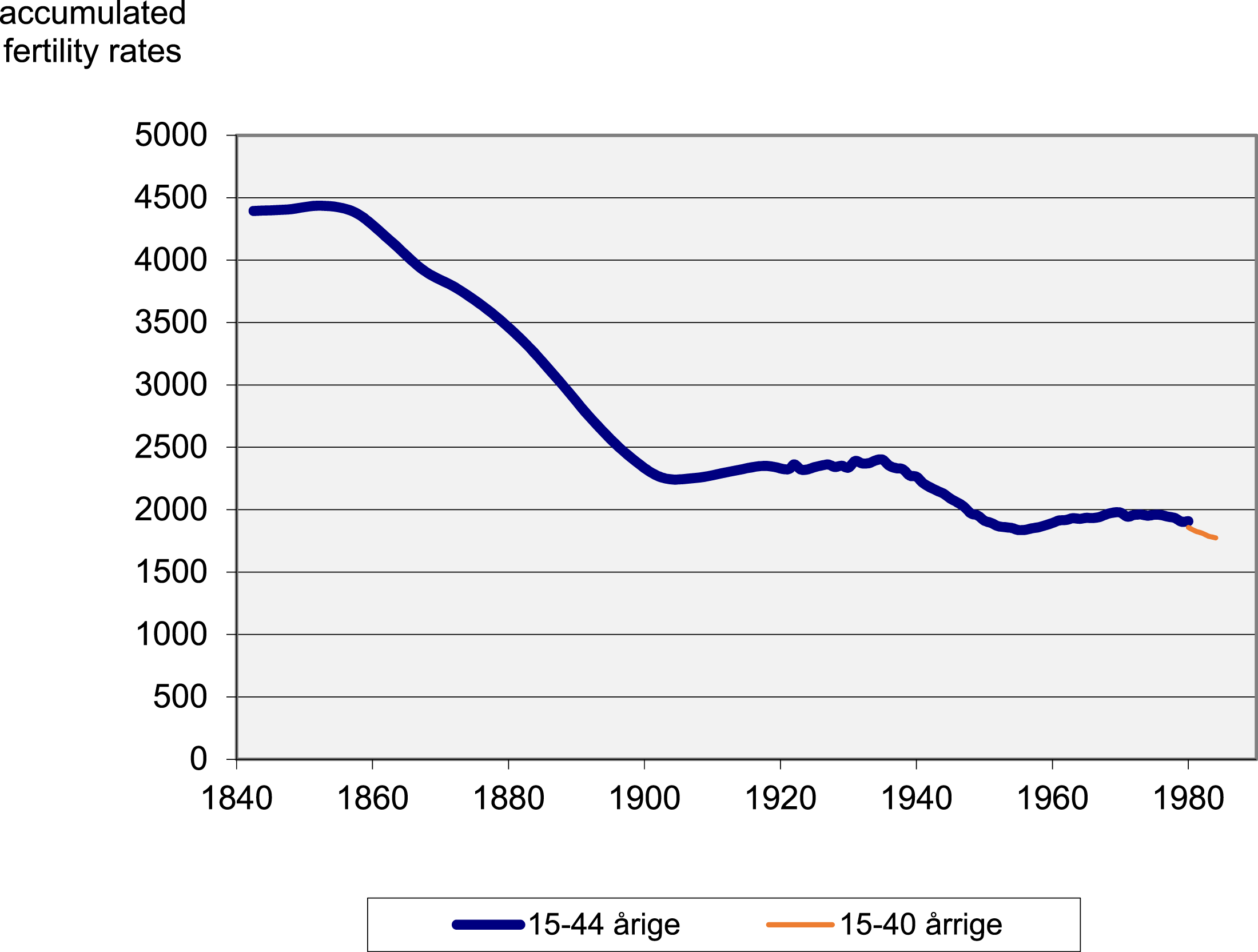
During the 18th and 19th centuries, large proportion of the population (e.g., landless and unskilled laborers) never married at all before they had established an independent livelihood to support a family (Kreyenfeld et al., 2012; Lee, 2002). Consequently, age at first marriage for women was late, the average age at birth were 32 years, and the childlessness in the Nordic countries were around 25 pct. among women born around 1910 (Sobotka, T., 2017).
Economic hardship is a decisive factor for postponed or foregone marriage formation and reduced fertility (Bengtsson & Saito, 2003; Kreyenfeld et al., 2012). As a consequence, it was extremely difficult for a single mother to take care of a child. The infant mortality rate among unmarried women were more than two times higher than in married couples in 1901 (Kristensen & Knudsen, 1986; Lindhardt, 1949; Matthiessen, 1970; Statistiske Undersøgelser, 1966; Vedel-Petersen, 1952). The decline in fertility was fastest in the capital and slowest in the rural districts. For the generation born 1895/99 the total fertility rate in provincial towns was 34 per cent higher and in the rural districts 96 per cent higher than in the capital (Matthiessen, 1970).
Was the Decline in Fertility Historical Driven by the Demand for Education?
The Industrial Evolution had the consequence that only few children could participate in the parents’ work and learn their parents’ trade (Johansen, 1985). The growing complexity of industrial machinery raised demand for skills and an increase in schooling enrollment.
A research question is whether education has been the main socioeconomic determinant of the demographic transition. Technological changes have raised the return to education, hence fostered investment in child education. And this has caused a reduction in fertility (Murtin, 2013). Laws restricting child labor and compulsory education combined with the inherent parental support for their children’s education, so they could be prepared for non-farming occupation (Caldwell, John, 1999). Education is a key factor in next generation’s ability to adopt to changes in environment.
Research establishes a causal relationship between rising education and decreasing number of children (Roser eta la, 2014). Macro-level studies examining fertility declines across various countries from 1870 to 2000 found that an increase from 0 to 6 years in average primary schooling was associated with a 40% to 80% reduction in fertility rates (Murtin, 2013; Roser et al., 2014). Later macro studies show that educational expansion has been a structural driver of fertility postponement (Neels et al., 2024).
Sudden Economic Shock and Declining Fertility
Various theories have been proposed and especially two theories fought together for supremacy. One theory observed a close relationship between economic recessions with rising unemployment and forgone partnership formation and declined fertility. This has been observed repeatedly in many studies (Comolli, 2017; Sobotka, Tomas et al., 2010; Yu & Sun, 2018).
An alternative explanation has been suggested to account for declining fertility, based on a study of the 1920–58 period suggesting that marriages and births respond only minor to changes in economic conditions (income per capita) and that changes in fertility have for most part been the result of changes in attitudes rather than in the constraints of income (Kirk, 1960; Sweezy, 1971).
The Sudden Economic Shock
Studies of the Great Depression (1), World War II (Jones & Schoonbroodt, 2016; Morgan, 1991; Sobotka, Tomáš et al., 2011); and (2) the global-economic recession (Neels & De Wachter, 2010); and (3) the economic shocks after 1989 in Eastern Europe (Goldstein & Kreyenfeld, 2011; Sobotka, Tomáš et al., 2011); and (4) the Great Recession (Goldstein et al., 2013; Schneider, 2015) support the assertion that sudden change in unemployment rate tends to influence couples’ decisions and induce perceptions and expectations of job instability, and economic uncertainty (Cazzola et al., 2016; Sobotka, Tomáš et al., 2011). The hypothesis is corroborated by the observation that recessions often lead to a postponement of childbearing, especially of first births (Cherlin et al., 2013; Kiser & Whelpton, 1953; Sobotka, Tomáš et al., 2011).
The Great Depression
Historical time series of economic and demographic indicators suggest that fertility was linked to economic recessions, although the Great Depression (1929–1945) did not affect the long-term decline in fertility rates in the West (Sobotka, Tomáš et al., 2011). The Great Depression led to postponement of childbearing, although childlessness peaked among women born 1901–10 (Figure 2), who were most severely affected by the depression (Morgan, 1991; Sobotka, Tomáš et al., 2011).
The net reproduction rate fell during the 1920s and 1930s in Denmark from 1.300 in 1920 to 0.897 in 1933 (Figure 3). The Net reproduction rate (NRR): The average number of female children born per women given an age-specific fertility rates, a given set of age-specific mortality rates, and a given sex ratio at birth (Manual, 1983). Net reproduction rate, 1900–2024. (per 1,000 women age 15–44). Source: Denmark Statistics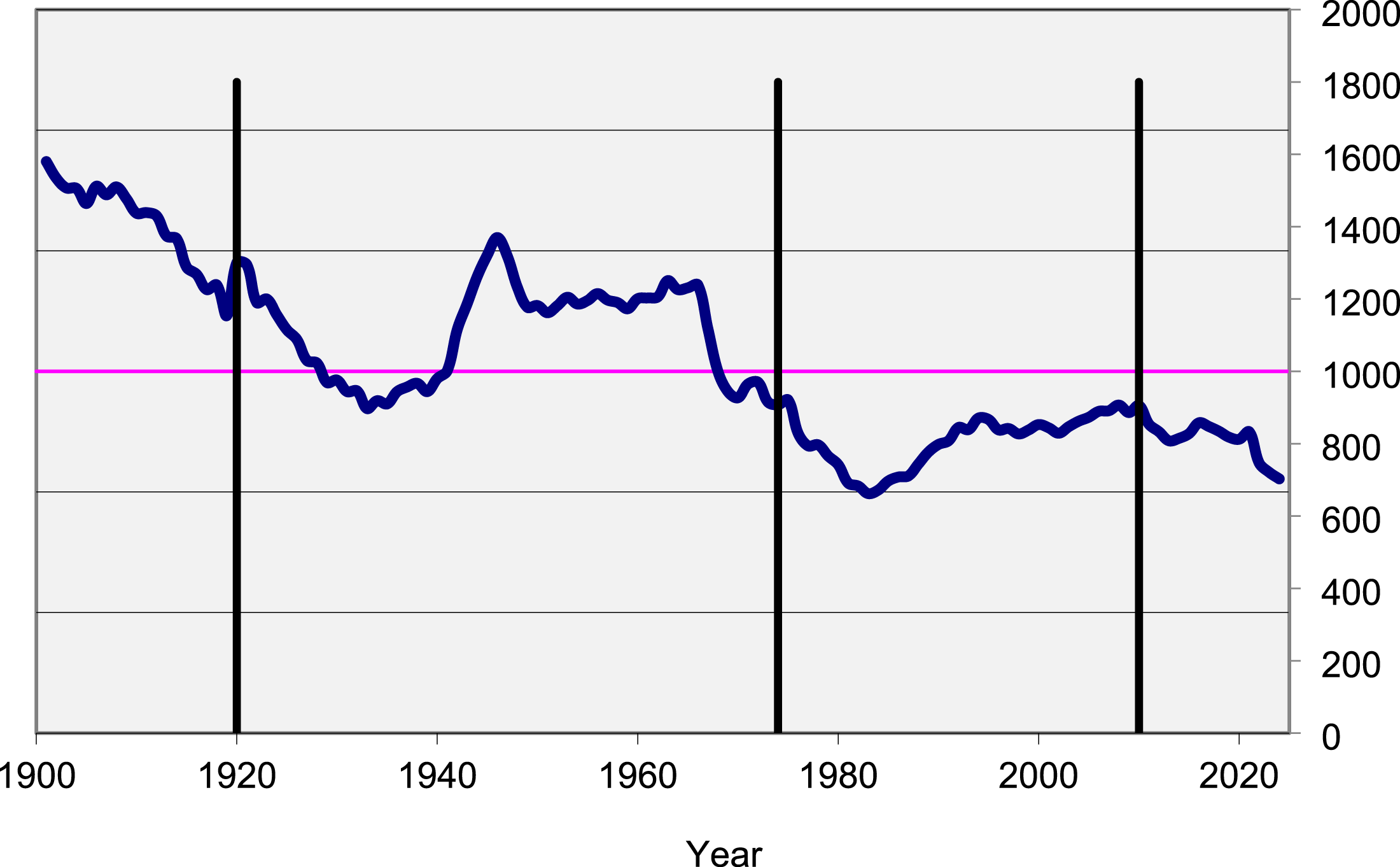
The rate measures replacement fertility assuming continuation of the specified conditions of fertility and mortality, contrary to “Cohort Fertility” or accumulated fertility (Figure 2): the fertility experienced over time by a group of women (Manual, 1983).
Despite the Great Depression, the generations of women born from 1902 to 1912 in Denmark caching up and obtained between 2.3 liveborn children during the reproductive life (age 15 to 44). The economic uncertainty in the 1930s made many women postpone childbearing, which resulted in the baby boom starting 1941 and ended in late 1940s. But not all fertility was made up at older ages, and the lifetime levels of childbearing declined modestly (Cherlin et al., 2013).
Global Economic Recession
The most severe global economic recession took place in the mid-1970s, and the following energy crises were associated with the steep fall in the net reproduction rate in Denmark. Postponement of fertility after 1970 is closely related to the unemployment rate and the expansion of education and vocational training (Neels & De Wachter, 2010). From 1974 to 1983 the NRR fell from 0.908 to 0.662 (Figure 3). The rising unemployment were followed by postponement of partnership formation and a steep decrease in NRR. From 1974 to 1990 an increase in vocational training, and educational achievements can be observed in Denmark. In 1974 half of the 17-years old were studying, while this was the case for 90 percent in 1990 (Christoffersen, Mogens N., 2004).
Economic Shocks After 1989 in Eastern Europe
Economic shocks in Central and Eastern Europe after 1989 with unemployment, inflation, and declining public support for families were causing an extreme low level of fertility and the sharpest rise in the age at first births (Sobotka, Tomáš et al., 2011). The decline in cohort fertility in East Germany shows a real reduction in lifetime childbearing after 1990 (Goldstein & Kreyenfeld, 2011).
The Great Recession
The Great Recession began suddenly and without warning December 2007 and ended in June 2009 with high unemployment rates, mortgage foreclosures, while housing values fell. The deteriorating economic conditions negatively impact household’s consumption, investment, and savings arrangements (Comolli, 2017; Hout & Cumberworth, 2015; Thiede & Monnat, 2016).
In Denmark the net reproduction rate fell after 2009 from 0.886 to 0.702 in 2024 (Figure 3).
Generally, the fertility decline in Europe and USA was strongly related to unemployment increase during the economic recession as compared with the pre-recession period (Comolli & Bernardi, 2015; Matysiak et al., 2021; Percheski & Kimbro, 2014; Puig-Barrachina et al., 2020; Schaller et al., 2020; Schneider, 2015, 2017).
Male unemployment rate generally appears to be most important predictor of fertility decline in particular in countries where men are expected to be main breadwinners (Cazzola et al., 2016). The two partners’ job stability affect the likelihood of becoming a parent. The characteristics of their employment is associated with the fertility in Italy, as an example, because increasingly both partners are employed (Vignoli et al., 2012).
Sudden economic shock and declining fertility
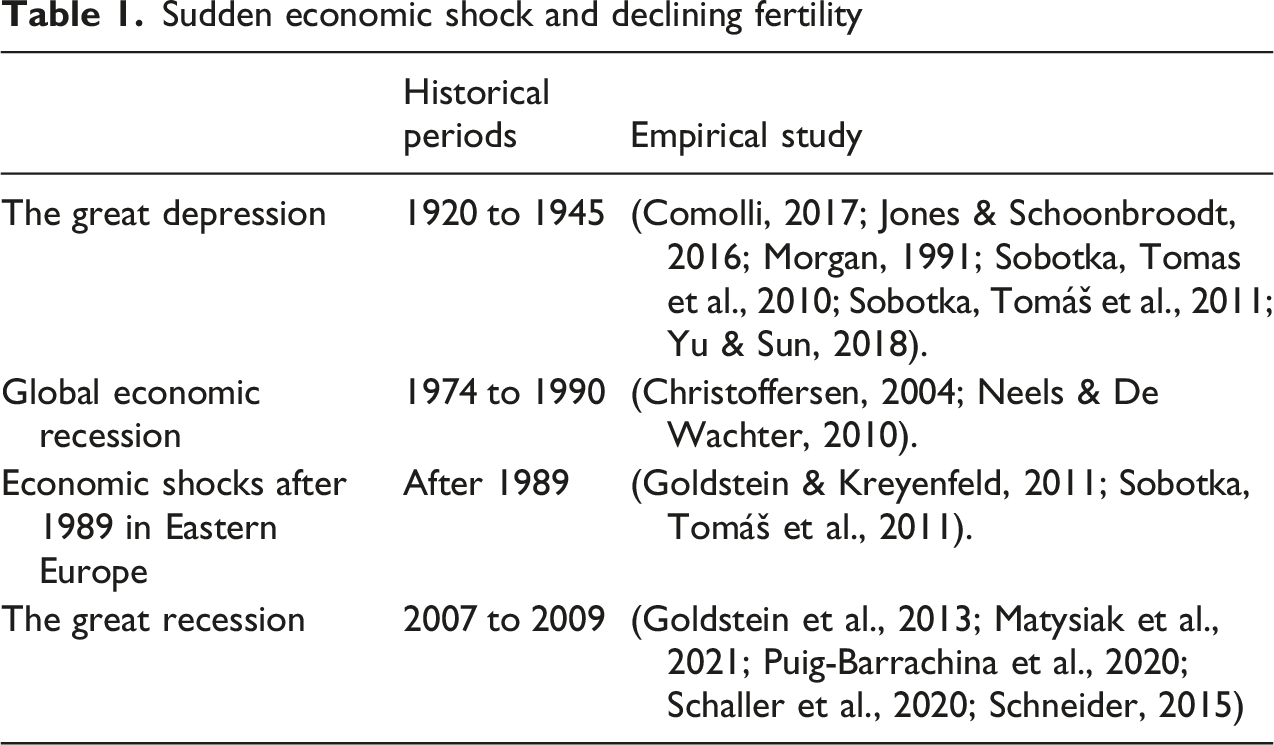
Cherlin and colleagues found a sharp rise in young adults living with their parents because they could not find employment and start their autonomous adult lives (Cherlin et al., 2013). The effect on second and third births is smaller (Comolli, 2017), probably because these families have already established a more secure position in labor market.
Long-Term Developments in Childlessness in Europe
Most prior research on business cycle finds clear evidence that fertility declines in economic downturns (Brewster & Rindfuss, 2000; Cazzola et al., 2016; Goldstein et al., 2013; Neels et al., 2024). It is hypnotized that many parents make substantial investment in their children, and in times of recession they decide to delay fertility with the expectation that they will be better to support their children in the future (Schneider, 2017). This corresponds with previous findings that suggest that unemployment mainly have an effect on fertility postponement in the earlier ages (Comolli & Bernardi, 2015; Currie & Schwandt, 2014).
The unemployment made many young women to postpone childbearing. When women are followed to age of 40, the unemployment seemed to have caused a small fall in fertility which is largely driven by women who remain childless (Cherlin et al., 2013; Comolli, 2017; Currie & Schwandt, 2014).
Childlessness is often driven by a mix of adverse circumstances and unforeseen events, such as poor health, not having a partner, and men and women in the reproductive age adopt a strategy of perpetually postponing childbearing (Berrington, 2004; Gray et al., 2013; Heaton et al., 1999; Sobotka, T., 2017). The childlessness levels were high across Europe in the course of the demographic transition (Rowland, 2007; Sobotka, T., 2017). It appears that the factors that have contributed to the decline in cohort fertility have also been driven trends in childlessness (Sobotka, T., 2017).
Childlessness levels of women decreased in the 20th Century, and in most countries the lowest level of cohort childlessness is observed among women born around 1940 (Figure 4). In the Nordic countries (and other countries) the increase in childlessness began among women born in the 1950s and 1960s then progressed slowly (Sobotka, T., 2017). The childlessness levels among women born around 1970 are not unusually high when compared with those of their counterparts born in the early twentieth century, Sobotka observed. Some researchers predict that the proportion of women who will remain childless will most certainly increase, but it is unknown whether we will return to the levels recorded in 1930 (Rowland & Merlo, 2000). Women born 1907–1985, with at least one child (per 100 women).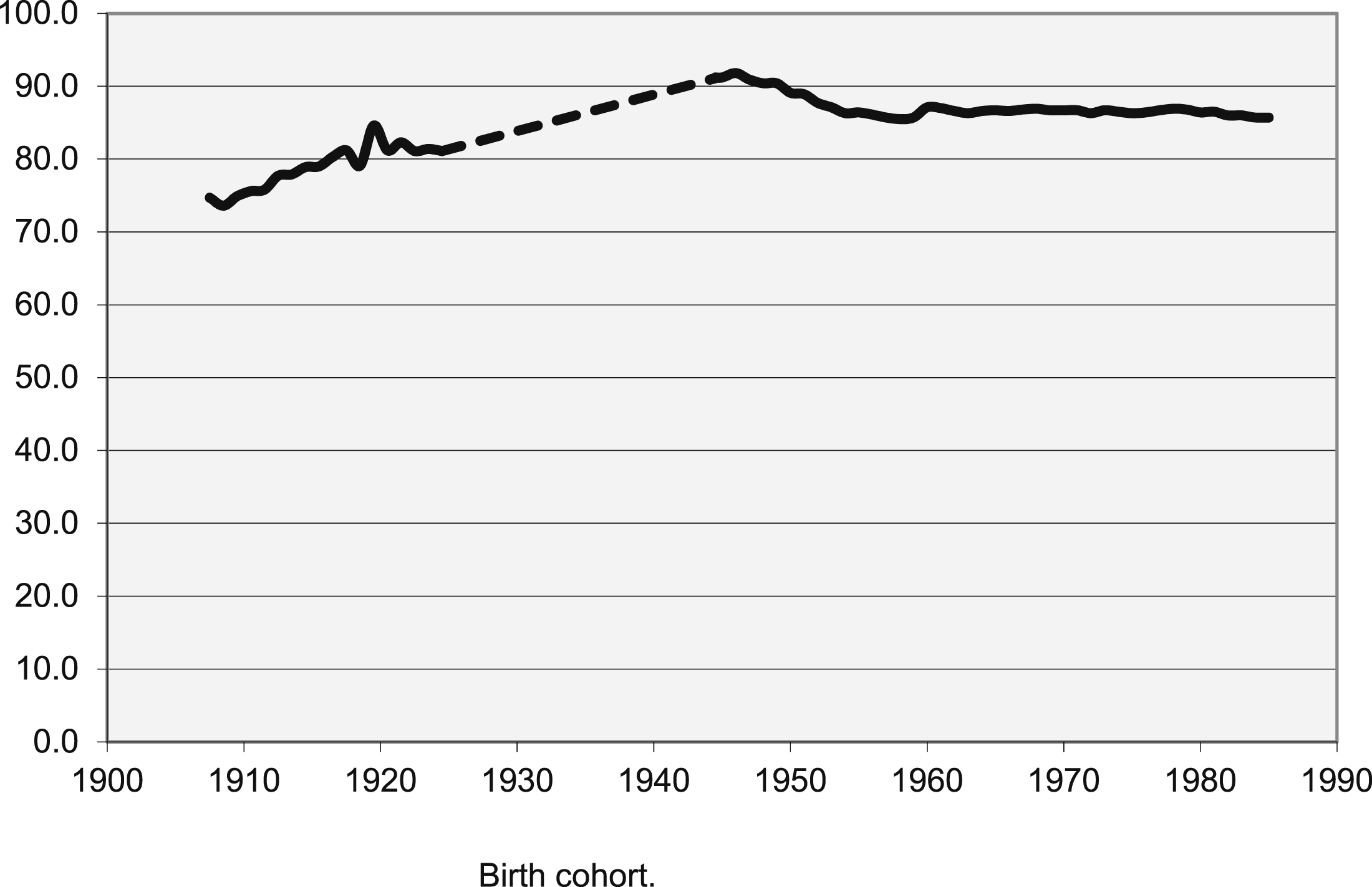
Childlessness is also on the rise in countries where labor market conditions are characterized by unemployment, temporary employment, and self-employment, combined with institutional shortcomings because of no parental leave, limited childcare, inflexible work conditions, and long work hours. Under these circumstances they can’t afford the type of housing they would need to start a family (Sobotka, T., 2017). The job market had become more competitive, more demanding, and less secure, young men and women in the reproductive age work in temporary and poorly paid stop-gap jobs, which led many to postpone marriage and parenthood (McDonald, 2002; Mills, R. et al., 2007).
The Method of Event History
This study analyzing the event history of an individual uses a sequence of events to address the question: Why do some individuals postpone to have children while others do not? Why do some give birth as teenager and others do not? Why do a parent choose to divorce while others do not? or why do some women decide for a medical abortion while others don’t? The event history include data on relevant explanatory variables. And we want to test if economic uncertainty measured by long-term unemployment during a calendar year is a time-varying explanatory variable in all of these cases. Events can occur at any point in time, and the method allows for individual changing explanatory variables. Each individual is followed until an event occurs, and then the individual is censored. The model is called the proportionally hazards model because the ratio of the hazard rates for any two individuals at any point in time is assumed to be a constant over time (Allison, 1982).
Data
Each individual born in the years 1980 to 1985 (n = 300.000) is observed until an event occurs or the observation is censored either because of emigration, death, or the individual is lost for observation for other reasons.
Economic uncertainty is estimated by long-term unemployment which is a more tangible indicator than, for example, GDP change because unemployment has direct bearing on men and women in the reproductive ages (Sobotka, Tomas et al., 2010).
Social exclusion refers to a broader situation. “Social exclusion refers to the multidimensional and dynamic process of being shut out, fully or partially, from the economic, social and cultural systems that determine the social integration of a person in society” (Levitas et al., 2007; Walker & Walker, 1997). Data on social exclusion have been extracted from Danish administrative linked databases: (a) family dissolution, abandonment (being in care, or adopted), (b) educational attainment (not graduated, no vocational training), (c) housing (moving into (or out of) a disadvantaged area), and (d) civil rights (non-Danish citizenship). Indicators of risk factors were exposure to violence (e.g., parental domestic violence, child being a victim of a sexual or violent crime), selected individual disadvantages (e.g., ADHD, autism, brain injury, alcohol, or drug abuse), and family risk factors (e.g., parental substance abuse, parental suicidal behavior, teenage motherhood, and parental long-term unemployment). For details see online Appendix.
Statistical Model
The logistic regression function is written (Allison, 1982):
Pit is the conditional probability that individual i has an event at age t, given that it has not already occurred to that individual.
Education Is a Driving Factor to Avoid Economic Uncertainty
Young people are especially vulnerable by rising unemployment rates (Verick, 2009), and youth are increasingly vulnerable to uncertainty across all countries in a globalizing world (Mills, M. et al., 2006). It seems that obtaining education (human capital) is a strategy to gain certainty in order to form a family (Mills, M. et al., 2006). Youth experiencing temporal uncertainty were significant less likely to enter into partnership and parenthood (Mills, M. et al., 2006).
The societal demand for a skilled and educated work force was met with the need of the young men and women to acquire training and education. Young people were met with a growing degree of labor market competition and an increase in required qualifications; including increasing costs of housing, lack of credit opportunities, particularly for young people (Frejka, 2008).
Less-educated individuals were far more likely to experience unemployment during an economic recession (Yu & Sun, 2018). To gain economic security for many young people a strategy could be to increase educational attainment (Neels & De Wachter, 2010).
Contrary to this strategy teenage motherhood is associated with job uncertainty, frequent unemployment periods, low level of education, and dependence of social benefits. Micro-level studies shows that many of the teenage mothers were living together with their parents and not with their partner (Christoffersen & Lausten, 2009; National Research Council, 1987).
A micro-level event history study showed that the hazards of early motherhood as a teenager increased if the young women were experienced long-term unemployment, she was not in progress of training or education, had not graduated or was living in a disadvantages area, the year before the birth (Christoffersen, M. N. & Lausten, 2009). Parental substance abuse, domestic violence, parental dissolution, living in a disadvantaged area were associated with the risk of teenage pregnancies.
Indicators of economic uncertainty (unemployment) and first child birth. Women born 1980-85 followed in ages 15-19 years old. Adjusted Odds Ratio
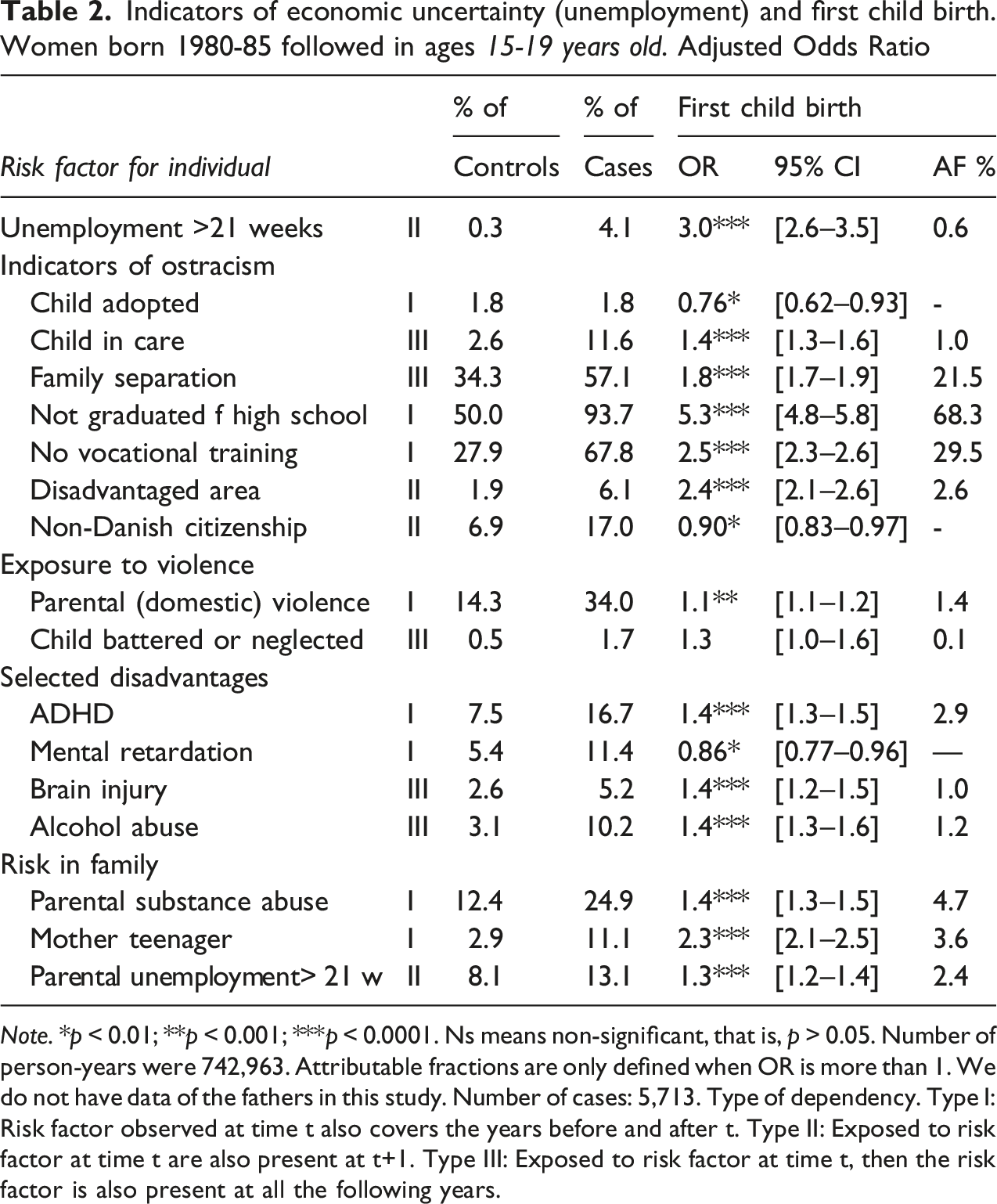
Note. *p < 0.01; **p < 0.001; ***p < 0.0001. Ns means non-significant, that is, p > 0.05. Number of person-years were 742,963. Attributable fractions are only defined when OR is more than 1. We do not have data of the fathers in this study. Number of cases: 5,713. Type of dependency. Type I: Risk factor observed at time t also covers the years before and after t. Type II: Exposed to risk factor at time t are also present at t+1. Type III: Exposed to risk factor at time t, then the risk factor is also present at all the following years.
Indicators of social exclusion were precursors of teenage pregnancies. Child in care, family dissolution, not graduated from high school, no vocational training, living in a disadvantaged area, were all highly indicative. Contrary to this, being adopted or non-Danish citizenship were associated with postponement of parenthood, when adjusted for all the known risk factors.
The number of children with a teenage mother had steadily declined since 1964 due to expansions of education possibilities and vocational training.
Young People’s Employment Position
The young adult population is especially vulnerable to labor market uncertainty (Zaidi & Morgan, 2017). It is of crucial importance for the younger generations to stay in a job in the highly competitive labor market. Young people are in an employment position especially sensitive to economic downturn, because their marginal position they will be the first to be dismissed, and on the other hand they will be the first to be hired in an economic upturn. The explanation is based on the general circumstances that youth turnover is on a considerable higher level than the turnover for the older age groups (Hansen, 1987; Rahmqvist, 2006).
Studies have shown a strong negative effect of shocks of unemployment on the hazards of first births among men and women below 30 years old (Comolli & Bernardi, 2015; Neels et al., 2013). Youth unemployment rates might capture both the potential parent’s economic uncertainty, and the economic uncertainty may play a role in shaping decisions of future child bearings (Comolli, 2017; Vignoli et al., 2012).
In Western Europe, towards the end of the 20th century there were circumstances making it difficult for young people to establish families and have children (Frejka, 2008). After World War II, South of Europe (France, Italy, Spain and Portugal) have experienced a pattern of delayed transition into adulthood, first birth, and marriages (Rydell, 2002). Unemployment (or the threat of unemployment) may influence the decision to whether or not to have a child.
Graduated or vocational training seems to increase the probability of becoming a parent, while social disadvantages such as ADHD, autism, drug abuse make the potential mothers to postpone parenthood.
Indicators of economic uncertainty (unemployment) and first child birth. Women born 1980-82 followed through the ages 26–29 years old. Adjusted Odds Ratio
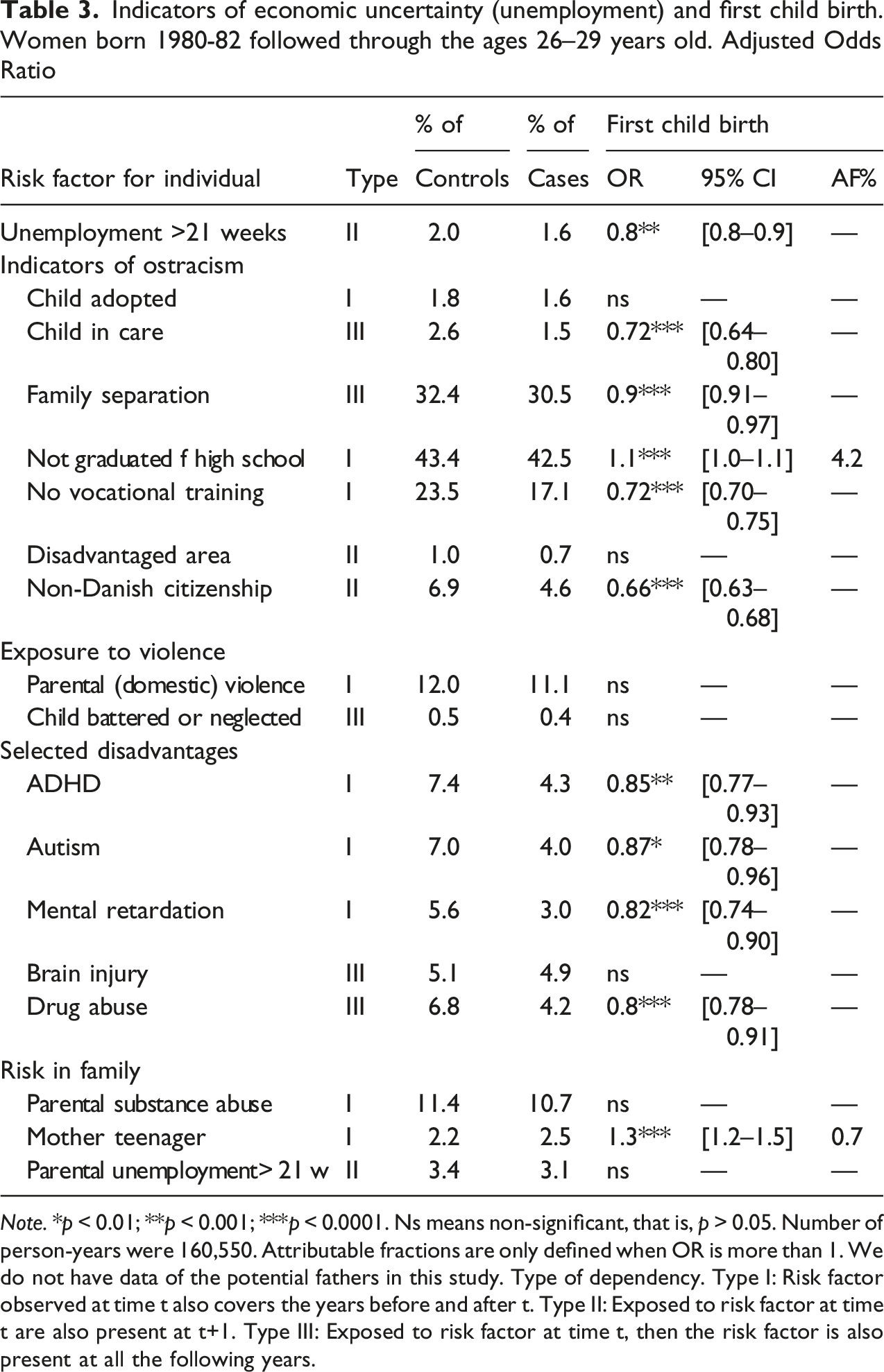
Note. *p < 0.01; **p < 0.001; ***p < 0.0001. Ns means non-significant, that is, p > 0.05. Number of person-years were 160,550. Attributable fractions are only defined when OR is more than 1. We do not have data of the potential fathers in this study. Type of dependency. Type I: Risk factor observed at time t also covers the years before and after t. Type II: Exposed to risk factor at time t are also present at t+1. Type III: Exposed to risk factor at time t, then the risk factor is also present at all the following years.
Graduating from high school also were a precursor of postponing parenthood, probably because they have prolonged their educational attainment.
Economic Uncertainty and Family Dissolution
Commitment in a relationship is important in the decision to have a child (Heaton et al., 1999). Engagement is seen as a promise to marry in the early and middle decades of the 20th century (Tushnet, 1997). Engagement and marriages have been a way to commit in a relationship, but this has changed gradually in the Scandinavian countries. In 1938 one third of the total numbers of first-born children were born within the marriage’s first 8 months, and in 1960, nearly half of the marriages first-births were conceived out-of-wedlock (Christoffersen, 2015; Statistiske Undersøgelser, 1966). Thirty years later, in 1990, half of all newborn children were born out-of-wedlock, but into a two-parent relationship. Only few, approximately 2 percent were born into a one-parent family (Christoffersen, Mogens N., 2004).
The association between the father’s unemployment and family dissolutions has been described in the 30s Great Depression (Komarovsky, 1971; Liebow, 1967). It seems as if the separation causes less social support and elevate the risk of less educational attainment among the children in focus. The association between parental separation and children’s lower educational achievements is a robust finding (Bernardi & Comolli, 2019).
Divorces and family dissolution have become more frequent. One third of the newborn experienced that the parents moved to separate household before the child became 18 years old (Christoffersen, M. N., 2002).
Indicators of economic uncertainty (unemployment) and family dissolutions. Children born 1980-85, age 7 to 18 years. Adjusted Odds Ratio
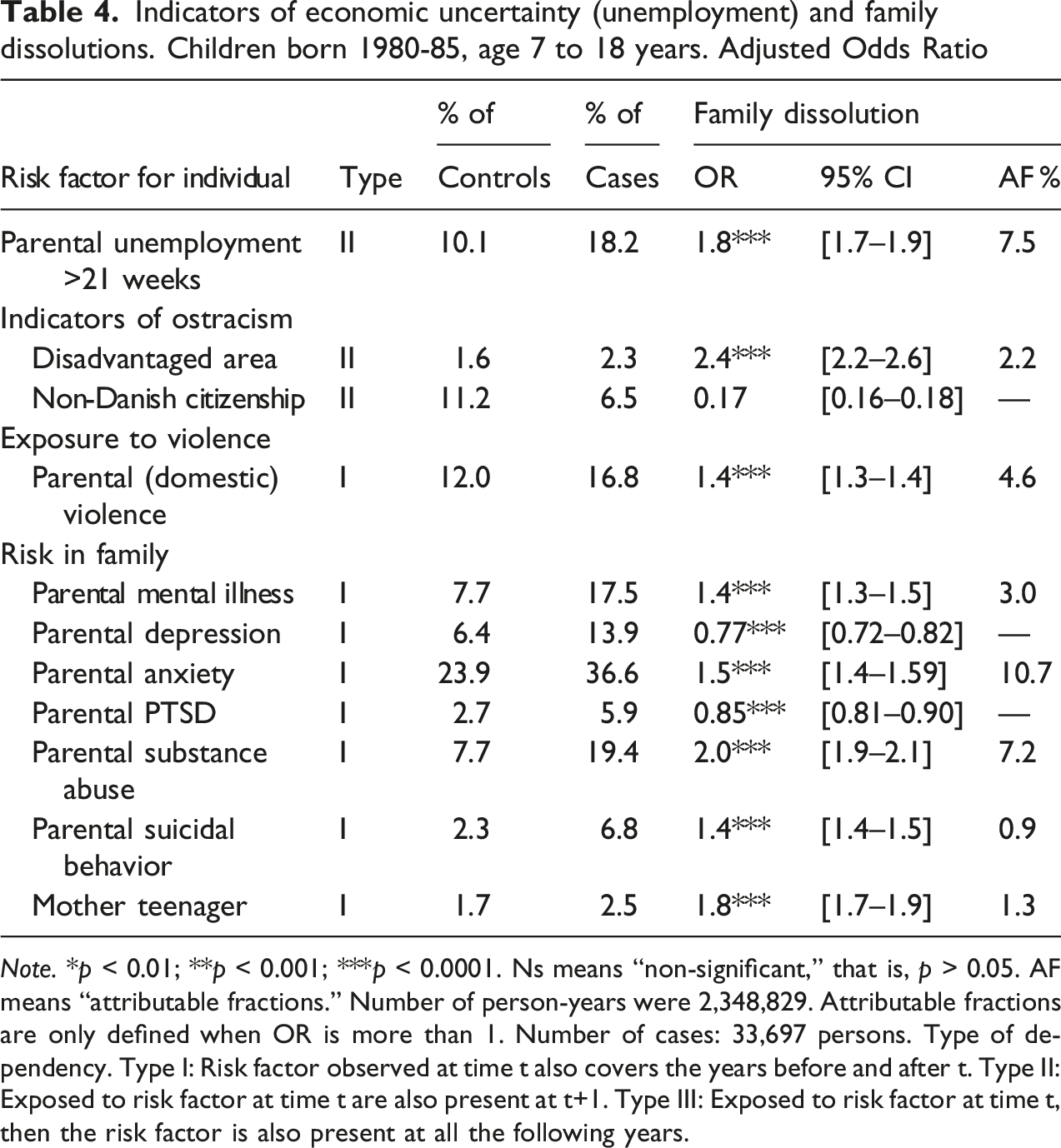
Note. *p < 0.01; **p < 0.001; ***p < 0.0001. Ns means “non-significant,” that is, p > 0.05. AF means “attributable fractions.” Number of person-years were 2,348,829. Attributable fractions are only defined when OR is more than 1. Number of cases: 33,697 persons. Type of dependency. Type I: Risk factor observed at time t also covers the years before and after t. Type II: Exposed to risk factor at time t are also present at t+1. Type III: Exposed to risk factor at time t, then the risk factor is also present at all the following years.
Medical Abortions and Business Cycles
The sudden changes in societal economic uncertainty indicated by changes in the unemployment rate shows a relationship between abortion rates and economic fluctuations, although the study reflects associations and do not speak to causality (Bárdits et al., 2023; Cavallini, 2024; Gonzalez & Quast, 2022; Percheski & Kimbro, 2017; Roberts et al., 2020). Women’s unemployment and their partner’s unemployment are frequently mentioned as a reason to apply for an abortion in Denmark (Christiansen et al., 1970; Rasmussen, 1983), and unemployment is found to be associated with higher rate of induced abortion in Denmark (Rasch et al., 2008). In the year before the abortion observations from linked registers (an event history study) shoved that changes into unemployment were significantly more often seen among women who chose abortion, also when other risk factors were considered (Christiansen et al., 2003).
Indicators of economic uncertainty (unemployment) and medical abortion. Women born 1980–85. Adjusted Odds Ratio
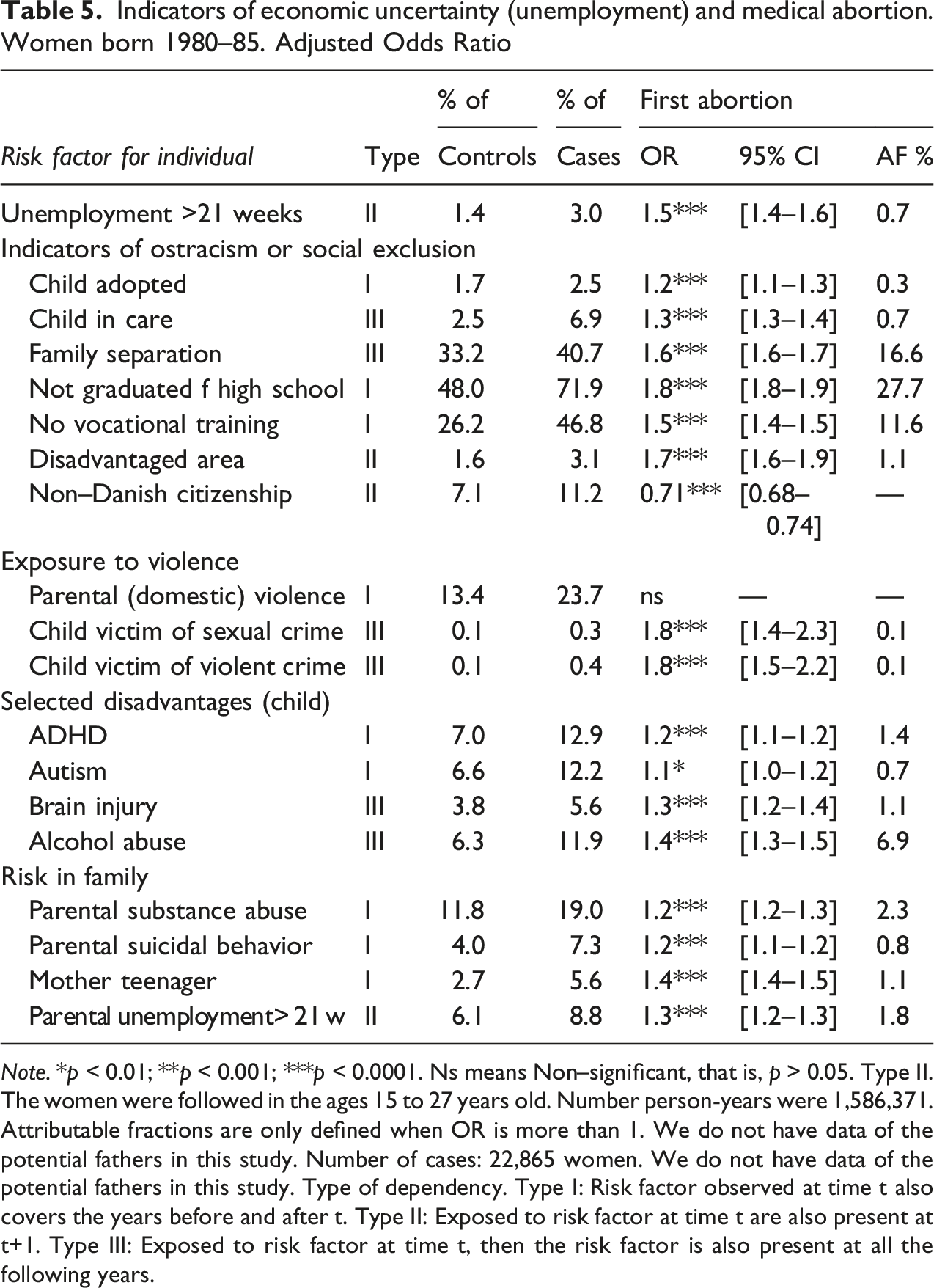
Note. *p < 0.01; **p < 0.001; ***p < 0.0001. Ns means Non–significant, that is, p > 0.05. Type II. The women were followed in the ages 15 to 27 years old. Number person-years were 1,586,371. Attributable fractions are only defined when OR is more than 1. We do not have data of the potential fathers in this study. Number of cases: 22,865 women. We do not have data of the potential fathers in this study. Type of dependency. Type I: Risk factor observed at time t also covers the years before and after t. Type II: Exposed to risk factor at time t are also present at t+1. Type III: Exposed to risk factor at time t, then the risk factor is also present at all the following years.
Discussion
Economic Uncertainty and Temporary Contracts
Long-term structural economic changes can influence the fertility level. Various indicators reflect aspects of economic uncertainty such as temporary contracts, seasonal work, dispatch work, involuntary part-time work, and flexible jobs (Cazzola et al., 2016). Since 1970s, most western countries have experienced an increase in temporary employment working arrangements (Albæk & Andrade, 2023; Kauhanen & Nätti, 2015).
The fixed-term contract can be an accumulated problem because postponement of marriage and maternity is at least partially responsible for the fall in fertility rates. Not having a permanent job or having a precarious job is decisive when making the decision to have a family (Fernandez-Crehuet et al., 2020; Schmitt, 2008). Previous research has documented a negative association of non-standard employment with childbearing for both men and women (Meron et al., 2002; Modena et al., 2014; Raymo & Shibata, 2017; Rica & Iza, 2005; Vignoli et al., 2012).
A Danish study observed that surprisingly many women on parental leave were unemployed after the leave due to fixed-term contracts (Christoffersen, Mogens Nygaard, 1990; Rostgaard et al., 2000). Experience gained abroad indicate that the unstable contracts can partly be responsible for further declining fertility.
The development had made some researchers to argue that it is advisable for labor market policy to make it easy for those in involuntary temporary employment to find permanent jobs (Albæk & Andrade, 2023; Kauhanen & Nätti, 2015).
Are Policy Factors Drivers of Decline in Fertility?
There is a variety of views on policy to affect the declining fertility in western Europe and the United States. US fertility rate has been falling since 2007, and the decline cannot be explained by women delaying childbearing, according to Kearney and Levine. They are unable to find any period-specific social, economic, or policy changes that can explain the fertility decline since 2007. Their study did not include effects of the long-term changes in economic uncertainty, for example, fixed-term contracts, (lack of) working time regulations, nor young men’s and women’s prolonged education (Kearney, Melissa S. et al., 2022; Kearney, Melissa S. & Levine, 2022). The procyclical fluctuations impact on reproductive decisions emphasizes the importance of implementing policies that address these consequences (Cavallini, 2024).
Kearney and colleagues conclude that pro-natalist policy responses are unlikely to reverse the trend (Kearney, Melissa S. & Levine, 2022). Pro-natalist policies such as subsidized childcare, parental leave policies, child allowances, tax credits are implemented in many countries with a goal of increasing fertility (Aassve & Lappegård, 2009; Bergsvik et al., 2021; Cohen et al., 2007; Sobotka et al., 2019; Stone, 2020), although having a positive effect in fertility, Kearney and Levine argue that these types of policies lead to modest increases in birth rates, and they are costly (Kearney, Melissa S. et al., 2022; Kearney, Melissa Schettini & Levine, 2025).
Kaa and Sauvy and others conjecture that the decline in fertility reflects shifted priorities across recent cohorts of young adults. They argue that the driving force behind the decline in fertility was an ideational shift from ‘altruistic’ to ‘individualistic’ norms and attitudes (Schmid, 1984; Van de Kaa, 2003; Zaidi & Morgan, 2017). Their speculations about shifting attitudes and priorities across cohorts of young adults is not backed up by any data. The argument is that shifting priorities such as preferences for having children, aspirations for life, parenting norms, are harder-to-quantify factors (Kearney, Melissa S. et al., 2022; Kearney, Melissa Schettini & Levine, 2025).
From an evolutionary perspective, our DNA with some variations contains a motive for starting a family and a parental drive to ensure that their children have the necessary potential to survive in society. The prospect of children getting employment in the modern sector of the economy made parents to support their children’s education. The desire that children should be prepared for non-farming occupation were decisive for education and fertility decreased during this process (Caldwell, John, 1999).
Conclusion
More than a hundred years ago, it has been observed a close link between business cycles such as unemployment and marriage rates and birth rates (Galbraith & Thomas, 1941; Hooker, 1901; Yule, 1906). We have methodologically focused at the economic shock of sudden increased economic uncertainty (unemployment, fixed-term contracts) and the potential causal relationship with declining fertility.
Both historical data since last century and individual event history data showed a decline in fertility the years with long-term unemployment. Adolescents and young adults exposed to social exclusion or economic uncertainty have postponed parenthood.
The economic shock of sudden increased unemployment is found to decrease fertility rates. It appears that the factors that have contributed to the decline in cohort fertility have also been driven trends in childlessness. Childlessness is also on the rise when labor market conditions are characterized by temporary employment.
The micro-level causal analysis of economic uncertainty (more than 21 weeks unemployment during a calendar year) has documented postponement of parenthood, increased risk of medical abortions, and an increased probability of family dissolutions among cohorts born in 1980 to 1985.
Postponement of fertility is closely related to the expansion of education. To minimize economic uncertainty and avoid unstable contracts, young men and women postpone childbearing and engage in skill-acquisition (Adsera, 2004). Numbers of children with a teenage mother have declined during the last decades due to the expansion of education.
There is no micro-level causal data on shifting priorities on the individual level, and this make it difficult to argue that shifting priorities may be the key driver of both the observed increased fertility rates and the decline in births rates since the Demographic Transition in Denmark.
Structural changes such as increase demand for education make young people to spend more and more time in education and vocational training together with expansion of fixed-term contract have been closing the window of reproduction and it can be disturbed by a sudden crisis with economic uncertainty. In order to increase fertility, it is advisable for labor market policy to make it easy for those in temporary employment to find permanent jobs (Albæk & Andrade, 2023).
When studying the economic depression, it turns out that social and economic policy can influence the birth rates. The new Deal Relief programs was associated with lower infant mortality, lower suicide rates, fewer deaths from diarrhea and infectious diseases, and higher birth rates (Fishback et al., 2007).
In Denmark the Great Depression triggered a legislative package (Christoffersen, Mogens N., 2004) for rental allowances for low-income families with children, founding of housing cooperation (1938), home visiting public health nurse to improve newborn children’s health and well-being (1937), health law on pregnancy hygiene and aid in childbirth (1945), Mother’s Aid Society (1939), supplemented by medical care at school (1946). The generations who postponed parenthood in 1930s created a baby boom in the mitt 1940s this was made possible by a low and decreasing unemployment rate in 1940’s.
Globalization led to high levels of life course uncertainty (Zaidi & Morgan, 2017). Declining importance of national borders for economic transactions, and accelerated global interconnectedness accompanied by privatization have led to high levels of uncertainty for youth in society (Blossfeld et al., 2006; Mills, M. & Blossfeld, 2006). The declining propensity to marry and to have children depends on the structural-related processes, Kotowska and colleagues argue. The labor market is becoming increasingly affected by globalization, which lead to family-unfriendly developments (Kotowska et al., 2008). Unstable and discontinuous employment with work–family incompatibilities affect family-related decisions (Kotowska et al., 2008; Mills, M. & Blossfeld, 2006). Growing uncertainty about jobs and inadequate reconciliation between work and family impede decisions on long-lasting commitments like family formation and childbearing. In some jobs, it has become more and more difficult to reconcile work and family. The declining birth rates reflect potential families’ adaptions to the changing environmental conditions in labor market (Kotowska et al., 2008). Larger share of public employment by providing employment stability, parental benefits linked to employment, boost fertility rates in Scandinavian countries (Adsera, 2004). The demographic transition has made some researchers to suggest that only massive government intervention could raise fertility (Caldwell, John C., 2006).
Many countries are contemplating or implementing pro-natalist policies and the United Nations report an increasing number of countries with the goal of increasing fertility (Kearney, Melissa S. et al., 2022).
Supplemental Material
Supplemental Material - Economic Uncertainty and Postponed Parenthood – A Study of Event Histories
Supplemental Material for Economic Uncertainty and Postponed Parenthood: A Study of Event Histories by Mogens Nygaard Christoffersen in Journal of Family Issues.
Footnotes

Funding
The author received no financial support for the research, authorship, and/or publication of this article.
Declaration of conflicting interests
The author declared no potential conflicts of interest with respect to the research, authorship, and/or publication of this article.
Supplemental Material
Supplemental material for this article is available online.
References
Supplementary Material
Please find the following supplemental material available below.
For Open Access articles published under a Creative Commons License, all supplemental material carries the same license as the article it is associated with.
For non-Open Access articles published, all supplemental material carries a non-exclusive license, and permission requests for re-use of supplemental material or any part of supplemental material shall be sent directly to the copyright owner as specified in the copyright notice associated with the article.
