






Abstract
Objective
To perform a systematic review of the international biomedical literature evaluating the effectiveness, complications, and safety of transoral robotic surgery (TORS) for the treatment of obstructive sleep apnea (OSA).
Data Sources
PubMed/MEDLINE, Embase, and EMB Reviews databases were searched up to November 27, 2015.
Review Methods
Two authors systematically and independently searched for articles on TORS for the treatment of OSA in adults that reported either outcomes for the apnea-hypopnea index (AHI), lowest oxygen saturation percentage (LSAT) or changes in the Epworth Sleepiness Scale (ESS), and/or rates and types of complications associated with the operation.
Results
In total, 181 records were identified and 16 articles met inclusion criteria. Transoral robotic surgery was almost always combined with other sleep surgery procedures. The summary estimate of the decrease in AHI using TORS as part of a multilevel surgical approach was 24.0 (95% confidence interval [CI], 22.1-25.8; P < .001, I2 = 99%). The summary estimate of a decrease in ESS score was 7.2 (95% CI, 6.6-7.7; P < .001, I2 = 99%) and of the overall surgical “success” (defined as AHI <20 and 50% reduction) was 48.2% (95% CI, 38.8%-57.7%; P < .001, I2 = 99%). Three large studies reported on their total complication rates with an average of 22.3% (range, 20.5%-24.7%).
Conclusions
The initial results for the use of TORS as part of a multilevel surgical approach for OSA are promising for select patients. However, the cost and morbidity may be greater than with other techniques offsetting its advantages in visualization and precision. More prospective studies are needed to determine the optimal role of this tool.
Keywords
Obstructive sleep apnea (OSA) remains a serious public health epidemic with mild cases (apnea-hypopnea index [AHI] ≥5) occurring in an estimated 3% to 28% and moderate cases (AHI ≥15) occurring in 1% to 14% of the American populace. 1 An estimated 5% of the Western global populace is undiagnosed. 1 An association exists between OSA and hypertension, 1 stroke,2,3 heart failure, 3 coronary heart disease, 3 cognitive dysfunction,4,5 motor vehicle accidents, 6 and death. 2 Undiagnosed OSA causes an estimated $3.4 billion in US health care costs annually. 7
Continuous positive airway pressure (CPAP) is the standard of care for medical treatment of OSA with demonstrated improvement in sleep quality, cognitive impairment, and hypertension. 8 However, for those patients who fail CPAP due to nontolerance and/or noncompliance, surgical treatment provides a logical yet debatable option for certain patients. 9 The radiofrequency base-of-tongue (RFBOT) reduction and coblation (submucosal minimally invasive lingual excision [SMILE]) 10 employ the technique of resecting a portion of the base of tongue (BOT) and provide 2 potentially effective surgical options. Transoral robotic surgery (TORS) provides another novel technique for surgical resection of the BOT and lingual tonsil. Transoral robotic surgery was initially used for resection of base-of-tongue neoplasms in 2006, and it provided improved magnification, surgical precision, avoidance of critical vessels and nerves, hemostatic control, and precise handling of tissues. 11
In 2010, Vicini et al 12 introduced TORS for BOT and lingual tonsil resection for OSA, with good functional results of reasonable pain, good swallowing, and improved quality of life that were considerably encouraging. Since then, several studies have been published looking at TORS for OSA. To our knowledge, this is the first systematic review of TORS as a treatment for OSA and fills a gap in knowledge for this particular area of research. Our objective was to perform a systematic review of the international biomedical literature evaluating the effectiveness, complications, and safety of TORS for the treatment of OSA and then to provide recommendations for future research.
Materials and Methods
Search Strategy
A review of the literature identified articles related to TORS in patients with OSA. We used the Preferred Reporting Items for Systematic Reviews and Meta-Analyses checklist and recommendation for this systematic review. 13 The search was initiated on April 21, 2015, and was completed November 27, 2015. We systematically and independently searched PubMed, Embase, and the EBM Reviews, which reviews the Cochrane DSR, ACP Journal Club, DARE, CCRCT, CMD, HTA, and NHSEED. We conducted searches for articles containing TORS and OSA. For PubMed, the search strategy used the terms ((transoral[tiab] AND robot*[tiab]) OR (robot*[tiab] AND surg*[tiab]) OR TORS[tiab] OR Robotic Surgical Procedures [mh] OR robotics[mh] OR “da vinci”[tiab]) AND (Sleep Apnea Syndromes[mh] OR Sleep Apnea* OR (“Sleep-Disordered” AND Breathing [tiab]) OR hypopnea OR hypopnoea OR sleep apnoea* OR sleep[tiab]). For Embase, the search was (“robotic surgical procedure”/exp OR (transoral AND robot*) OR tors OR (robot* AND surg*) OR “robotics”/exp OR “da vinci”) AND (“sleep disordered breathing”/exp OR “sleep apnea” OR “sleep apneas” OR (“sleep-disordered” AND breathing) OR “sleep apnoea” OR “sleep apnoeas” OR hypopnea OR hypopnoea) AND [embase]/lim. For EBM, we used the following search terms: (sleep or apnoea or apnea or hypopnea or hypopnoea).mp. (transoral or (robot* and surg*) or tors).mp.
Inclusion and Exclusion Criteria
We independently reviewed the selected articles that studied TORS for OSA. We identified changes in AHI, lowest pulse oxygen saturation (LSAT), Epworth Sleepiness Scale (ESS), and the rate of successful surgery of TORS for OSA and/or those articles that reported rates and types of complications. In addition, all study designs met inclusion criteria except case reports and small cases series with fewer than 5 patients. We studied articles addressing both single and multilevel operations. Only English-language articles with a title, abstract, and full text were included. After an initial review of the titles and abstracts, the reviewers culled the list to 16 full publications. Two investigators (G.A.J. and E.T.C.) reviewed the articles for inclusion and exclusion criteria.
Study Extraction, Categorization, and Analysis
Articles were analyzed for variables including study size, intervention performed, sleep study and operative data, complications, and outcomes. Data on surgical success (defined as AHI ≤20 and reduction of AHI by 50%) and cure (identified as AHI ≤5) were collected. Two investigators (G.A.J. and E.T.C.) both reviewed the articles independently and reached a consensus on the data and the outcomes of the various studies. Articles were then split into 2 categories: (1) those that addressed sleep study data and the rate of surgical success and cure and (2) those that discussed complications. Articles were then subcategorized by the type of operations performed.
Level and Quality of Evidence Assessments
Both the level of evidence and the quality of each study were evaluated. The 2011 Oxford Centre for Evidence-Based Medicine Levels of Evidence table was used to assess the level of evidence. 14 Level 1 symbolized a systematic review of randomized trials or n-of-1 trials; level 2 represented a randomized trial or observational study with dramatic effect; level 3 denoted a nonrandomized controlled cohort/follow-up study; level 4 characterized a case series, case-control, or historically controlled study; and level 5 described a mechanism-based reasoning study. 14
A checklist from a recent article 15 was adapted and altered as needed to assess the quality of evidence. A 14-item checklist was developed that took into account study design and demographics, intervention performed, sleep study and operative data, complication rate, and type and overall surgical success ( Table 1 ). Studies that had 11 to 14 points were deemed high quality; 6 to 10, moderate quality; and 0 to 5, poor quality. 15
Criteria for Assessing Methodological Quality of Studies.
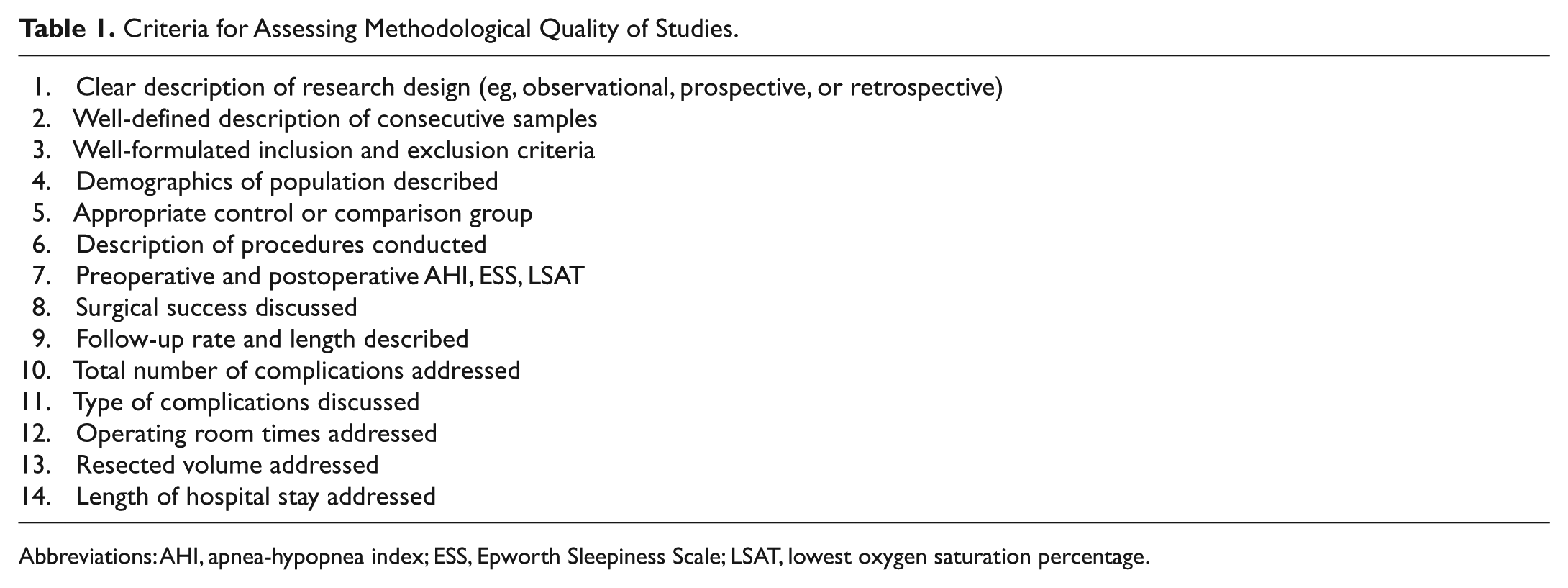
Abbreviations: AHI, apnea-hypopnea index; ESS, Epworth Sleepiness Scale; LSAT, lowest oxygen saturation percentage.
Statistical Methods
Statistical analysis was performed with statistical software (STATA 8.2; StataCorp LP, College Station, Texas). Random-effects modeling (standard error estimate = inverse of the sample size) was used to calculate summary effect measures with corresponding 95% confidence intervals (CIs), and forest plots were generated. The I2 statistic was used to assess between-study heterogeneity. In some cases, the between-study heterogeneity was not significant, and therefore the random-effect modeling estimate equaled the fixed-effects estimate. Possible publication bias was assessed using graphical funnel plot analysis. A P value of less than .05 was considered significant.
Results
Search Results for TORS for OSA
In total, 181 records were identified using the search strategy detailed above. A flowchart ( Figure 1 ) illustrates how the selected studies were included. Articles were excluded for numerous reasons: duplicates (n = 45), unrelated to TORS for OSA (n = 106), presentation abstract (n = 5), review article (n = 2), no sleep and/or complications data (n = 4), description of surgical technique (n = 2), and cadaveric study (n = 1).
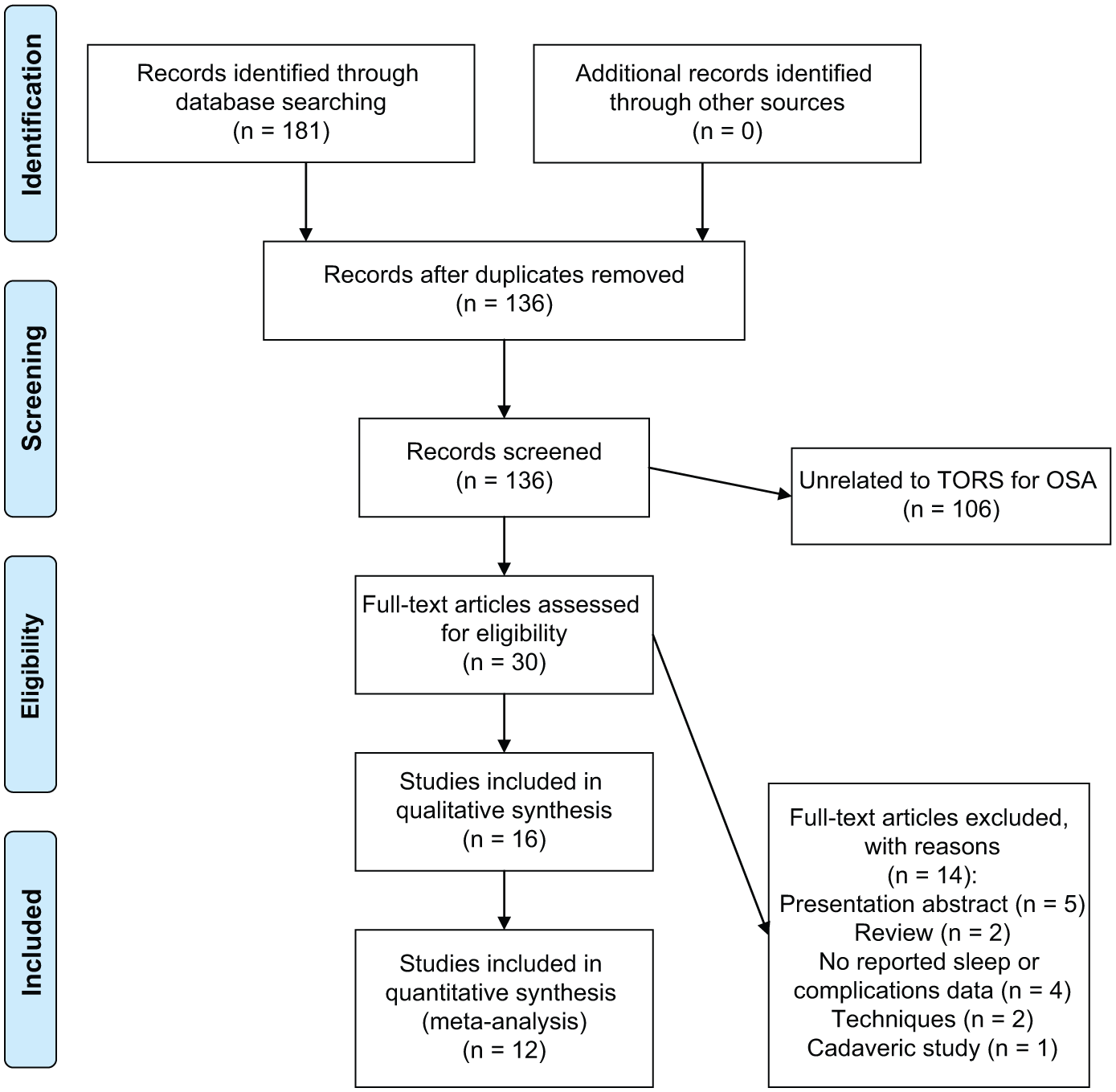
Flowchart of article selection. OSA, obstructive sleep apnea; TORS, transoral robotic surgery.
Vicini et al 12 published the first article in 2010, and since then, there have been 15 other articles published on TORS in OSA.10,16 -29 Overall, there has been an increase in the number of publications on TORS for OSA, with 1 each in 2010 and 2011, 2 each in 2012 and 2013, and 8 in 2014 but only 2 in 2015. The number of patients included in these studies ranged from 6 to 285.
Quality and Level of the Evidence
All 16 articles were evaluated for the quality and level of evidence presented ( Table 2 ). Ten studies were of moderate quality12,16 -20,24,25,27,28 and 610,21 -23,26,29 were of high quality. There were no randomized control studies identified. There were 2 prospective nonrandomized studies,20,25 1 retrospective study with historical controls, 10 and 13 retrospective case series. All were level 4 with regard to the 2011 Oxford Centre for Evidence-Based Medicine Levels of Evidence table.
Study Design, Quality, and Level of Evidence.
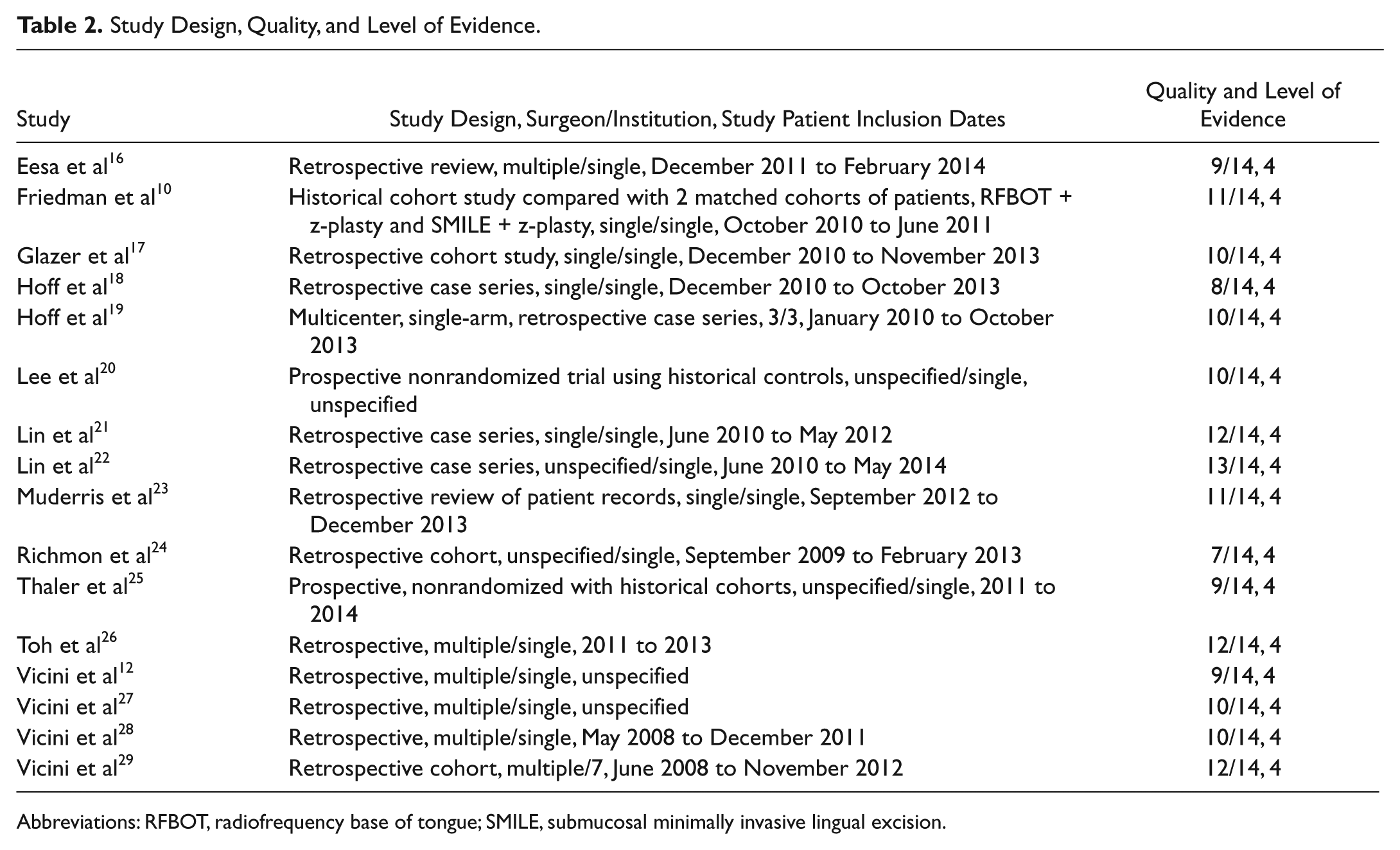
Abbreviations: RFBOT, radiofrequency base of tongue; SMILE, submucosal minimally invasive lingual excision.
Patient Demographics, Interventions and Operative/Hospital Data
Various patient demographic data, including mean age and body mass index (BMI), were collected. In addition, descriptions of the various interventions performed, operative time, resected volumes, and length of hospital stay were reviewed ( Table 3 ). In the 16 studies, the grand mean age reported was 49.39 years (Richmon et al 24 was not included since this study reported age as a median and included patients with cancer). The range was 43.8 to 54.6 years. Preoperative BMI was reported in 11 studies.10,17 -23,25,26,29 The grand mean preoperative BMI was 30.44 kg/m2 with a range of 26.5 to 34.5 kg/m2. Most studies had more male than female patients, with an average of 74.25% (range, 25%-90%; Muderris et al 23 was all female and Richmon et al 24 had patients with cancer; both were not included).
Inclusion Criteria, Surgical Operation, Demographics, and Hospital Data.
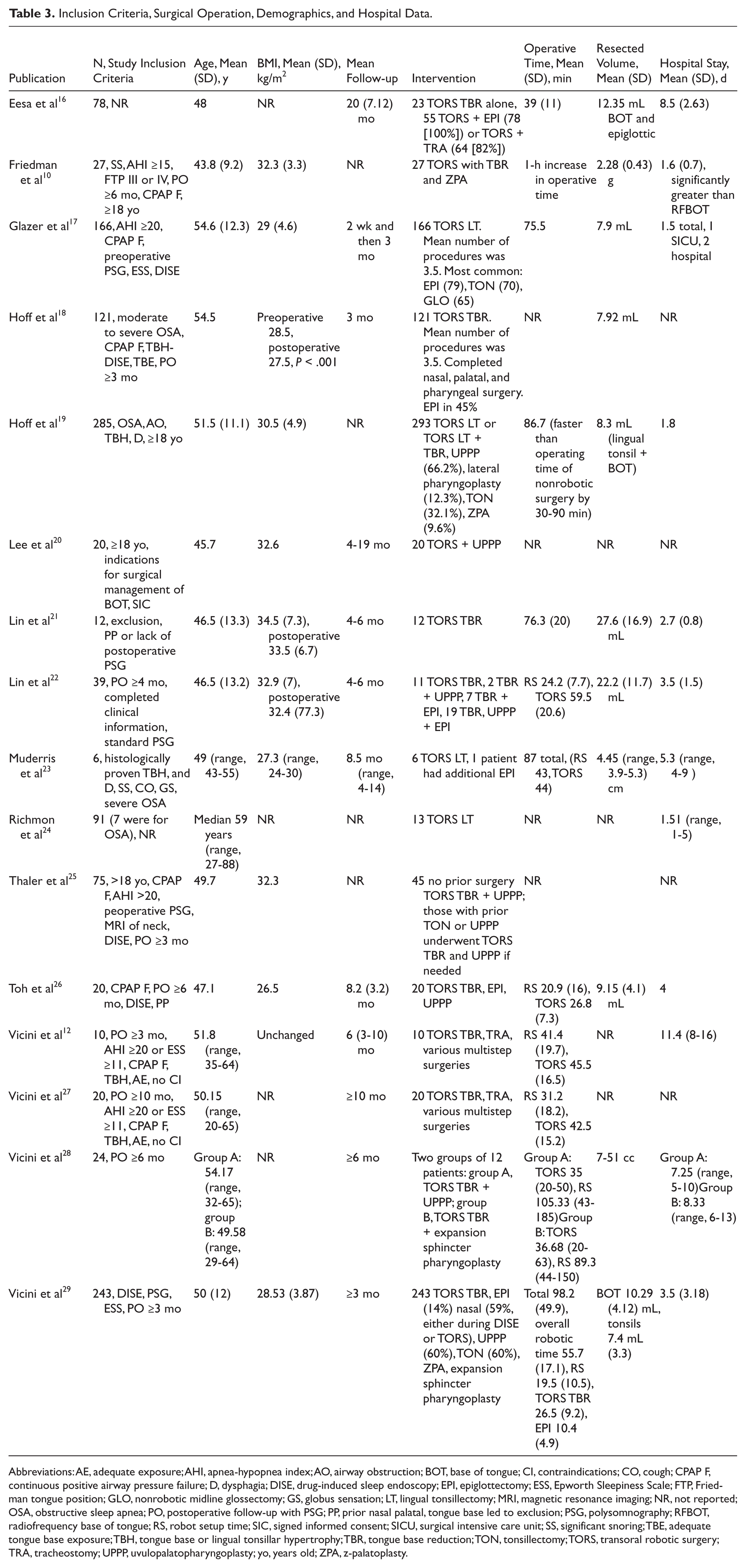
Abbreviations: AE, adequate exposure; AHI, apnea-hypopnea index; AO, airway obstruction; BOT, base of tongue; CI, contraindications; CO, cough; CPAP F, continuous positive airway pressure failure; D, dysphagia; DISE, drug-induced sleep endoscopy; EPI, epiglottectomy; ESS, Epworth Sleepiness Scale; FTP, Friedman tongue position; GLO, nonrobotic midline glossectomy; GS, globus sensation; LT, lingual tonsillectomy; MRI, magnetic resonance imaging; NR, not reported; OSA, obstructive sleep apnea; PO, postoperative follow-up with PSG; PP, prior nasal palatal, tongue base led to exclusion; PSG, polysomnography; RFBOT, radiofrequency base of tongue; RS, robot setup time; SIC, signed informed consent; SICU, surgical intensive care unit; SS, significant snoring; TBE, adequate tongue base exposure; TBH, tongue base or lingual tonsillar hypertrophy; TBR, tongue base reduction; TON, tonsillectomy; TORS, transoral robotic surgery; TRA, tracheostomy; UPPP, uvulopalatopharyngoplasty; yo, years old; ZPA, z-palatoplasty.
There was wide diversity among the 16 studies with regard to the types of procedures performed. All studies reported the use of TORS in base-of-tongue resection or lingual tonsillectomy with or without simultaneously performing additional sleep surgery. Only 1 study looked simply at TORS BOT resection, 21 another explored TORS BOT resection and uvulopharyngopalatoplasty (UPPP), 20 and a different article looked at TORS BOT resection with partial epiglottectomy and UPPP. 26 An additional interesting study was a comparison of TORS BOT resection and UPPP vs TORS BOT resection and extension sphincter pharyngoplasty. 28 Friedman et al 10 published a retrospective cases series with historical cohorts comparing TORS with BOT resection and z-palatoplasty compared with RFBOT with z-palatoplasty and SMILE with z-palatoplasty. All other studies12,16-19,22-25,27,28 consisted of TORS lingual tonsillectomy or BOT resection and multiple other operations, with epiglottectomy, UPPP, and tonsillectomy being the most common. In addition, 4 of the reviewed studies provided data on patients who received a tracheostomy, all of whom were European.12,16,27,29
The various studies revealed a degree of heterogeneity in the amount of time needed to perform TORS BOT resection or lingual tonsillectomy, with some studies including epiglottectomy and other procedures. Thus, we split our analysis into those reporting total operative times in which the specific amount of time of the actual TORS procedure as part of a multilevel operation was vague vs those reporting TORS docking and operative times. Eleven studies12,16,17,19,21 -23,26 -29 reported their results for an average operative period of 80.68 minutes with a range of 39 to 132.5 minutes. Seven studies12,22,23,26 -29 broke their times into docking and operative times. The average docking time was 41.6 minutes with a range of 20.9 to 97.5 minutes, and operative time was 44.15 minutes with a range of 26.8 and 55.7 minutes. Finally, Friedman et al 10 noted an average of a 1-hour increase in operative time compared with SMILE and RFBOT.
There was wide diversity in the reporting of the resected volume of tissue, with some including just BOT and others BOT and epiglottic tissues ( Table 2 ). In addition, multiple studies failed to report any description of the resected tissue. Furthermore, 1 study reported the volume of resected tissue in grams, while another reported the thickness of the tissue in centimeters. For studies that reported the mean volume of resected tongue tissue, the summary estimate using random-effects modeling was 12.7 cm3 (k = 9 studies; 95% CI, 11.3-14.1 cm3, P < .001, I2 = 99%).
Hospital Stay
Twelve studies reported the average length of hospital stay ( Table 3 ). The summary estimate of hospital stay was 4.9 days (k = 12 studies; 95% CI, 3.6-6.2; P < .001, I2 = 99%). In addition, there was a wide range of locations for the hospital stay, with some patients placed in the intensive care unit (ICU)17,18,21,22,26 and others extubated directly after surgery10,25 and placed in medical/surgery wards.
Nasogastric Tube Requirement and Time to Oral Feeding
Nasogastric tube requirement (NGT) requirement was discussed in 3 studies,17,19,23 with 1 to 2 patients per study requiring NGT placement due to dysphagia. Vicini et al12,27 published initially that they used NGT in their first 3 patients but realized quickly that they were not routinely necessary. These data were insufficient for meta-analysis.
In addition, multiple studies published on the time to oral feedings and return to normal diet. One study discussed return to oral diet as early as 5 hours, 23 although most published around 24 hours.12,16,26,29 In addition, 3 articles10,22,26 discussed the time to normal diet, which ranged from 2 to 4 weeks. These data were also insufficient for meta-analysis.
Outcomes for AHI, LSAT, and ESS and Surgical Success
Twelve studies reported at least 2 of the preoperative and postoperative AHI, ESS, and LSAT ( Table 4 ). Almost all cases reported a significant improvement in AHI, ESS, and LSAT. Using random-effects modeling, the summary estimate of the decrease in AHI using TORS as part of a multilevel approach was 24.0 (k = 13 studies; 95% CI, 22.1-25.8; P < .001, I2 = 99%) ( Figure 2 ). The change in LSAT was an increase of 5.3% (k = 9 studies; 95% CI, 4.0-6.7%; P < .001, I2 = 99%). The summary estimate of a decrease in ESS was 7.2 points (k = 12 studies; 95% CI, 6.6-7.7; P < .001, I2 = 99%) ( Figure 3 ). Finally, the estimate of surgical “success” was 48.2% (k = 9 studies; 95% CI, 38.8-57.7%; P < .001, I2 = 99%) ( Figure 4 ).
Outcomes for AHI, LSAT, and ESS and Surgical Success.
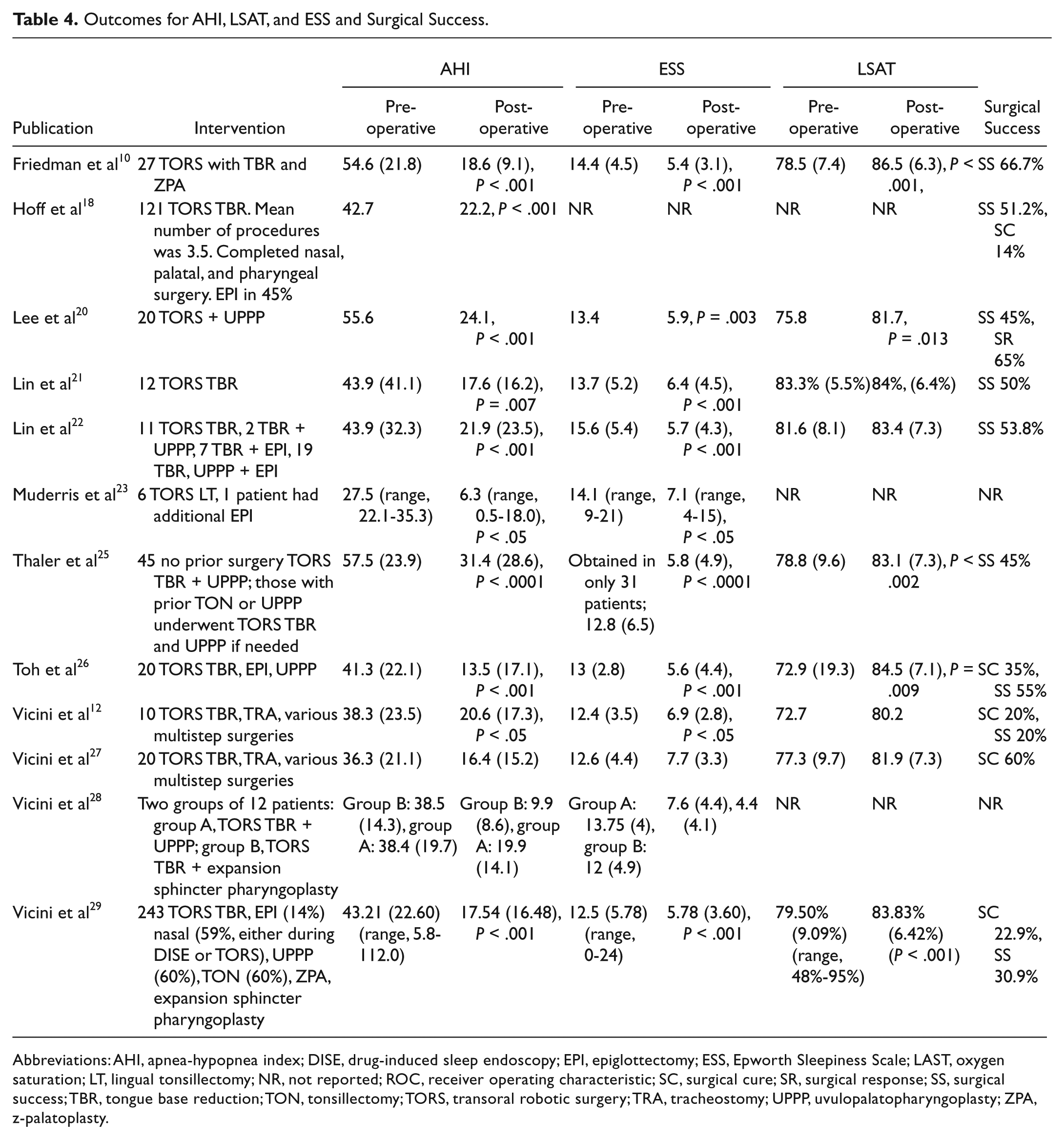
Abbreviations: AHI, apnea-hypopnea index; DISE, drug-induced sleep endoscopy; EPI, epiglottectomy; ESS, Epworth Sleepiness Scale; LAST, oxygen saturation; LT, lingual tonsillectomy; NR, not reported; ROC, receiver operating characteristic; SC, surgical cure; SR, surgical response; SS, surgical success; TBR, tongue base reduction; TON, tonsillectomy; TORS, transoral robotic surgery; TRA, tracheostomy; UPPP, uvulopalatopharyngoplasty; ZPA, z-palatoplasty.
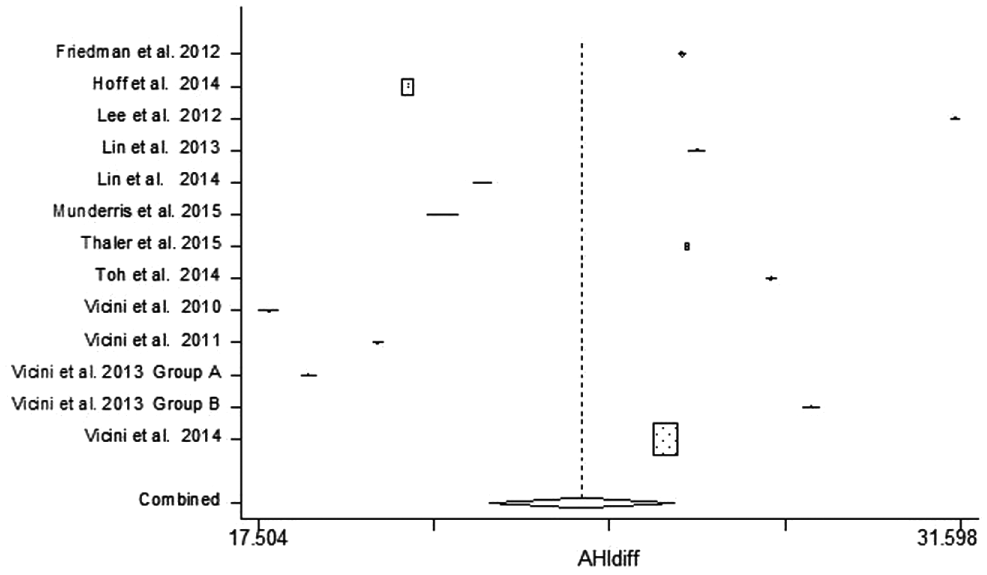
Summary estimate of the decrease in apnea-hypopnea index (AHI) using random-effects modeling.
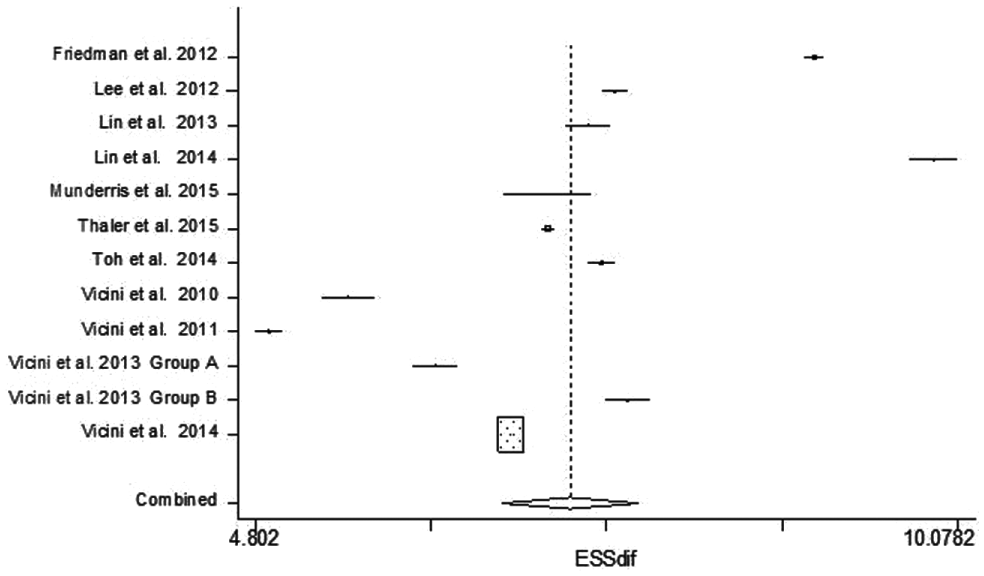
Summary estimate of the decrease in Epworth Sleepiness Scale (ESS) using random-effects modeling.
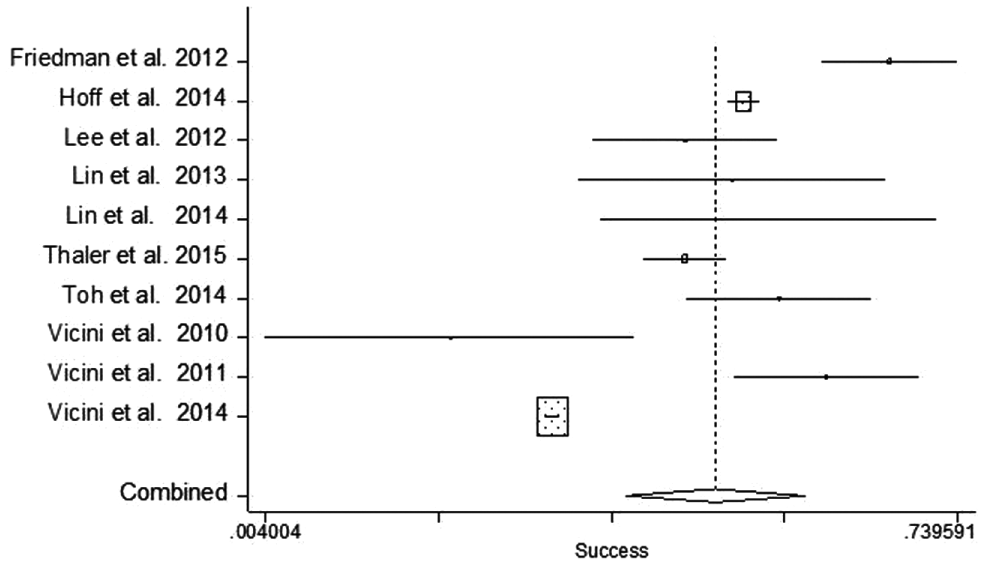
Summary estimate of surgical success using random-effects modeling.
Complications
Three large studies reported on their total complication rates with an average of 22.3% and range of 20.5% to 24.7%.17,19,29 A review of the complications included in 14 articles can be studied in Table 5 . Complications found included bleeding requiring cauterization in the operating room, pulmonary embolism/deep venous thrombosis, aspiration, dysphagia, pneumonia, dehydration, uncontrolled pain, globus sensation, minor bleeding, and dysgeusia. These data were too diverse to allow for a formal meta-analysis.
Complications.
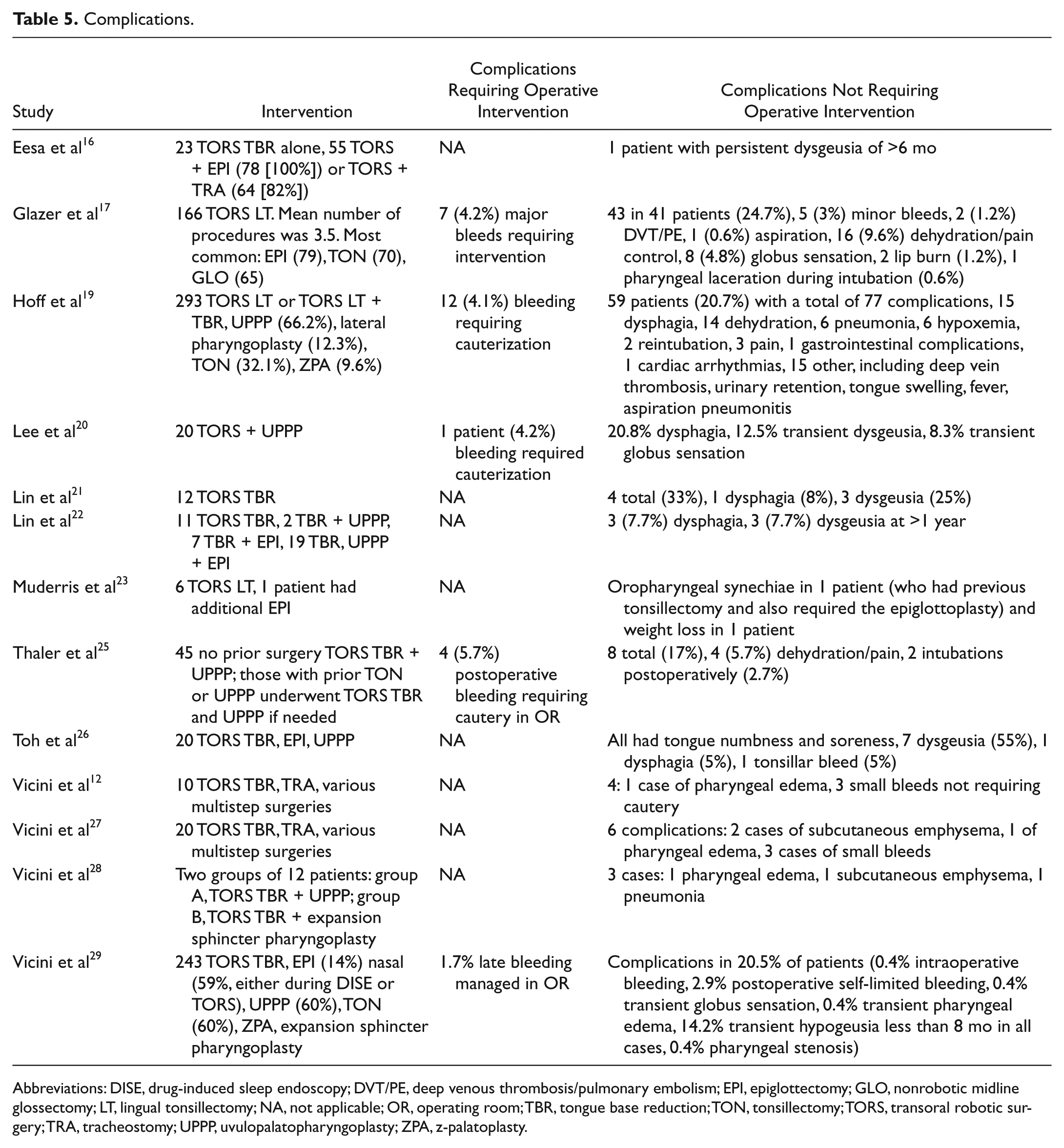
Abbreviations: DISE, drug-induced sleep endoscopy; DVT/PE, deep venous thrombosis/pulmonary embolism; EPI, epiglottectomy; GLO, nonrobotic midline glossectomy; LT, lingual tonsillectomy; NA, not applicable; OR, operating room; TBR, tongue base reduction; TON, tonsillectomy; TORS, transoral robotic surgery; TRA, tracheostomy; UPPP, uvulopalatopharyngoplasty; ZPA, z-palatoplasty.
Discussion
Transoral robotic surgery for OSA is a relatively new tool for BOT resection and lingual tonsillectomy first described by Vicini et al 12 in 2010. The advantages described of TORS for BOT resection and lingual tonsillectomy compared with non-TORS methods of tongue reduction are reported to be improvement in magnification, surgical precision, avoidance of critical vessels and nerves, hemostatic control, and precise handling of tissues. 11 However, these advantages come at the expense of both longer total operative times of about an hour and greater disposable costs of as much as $500 per case. 10 In addition, there is the increase in cost associated with purchasing the robot itself and the maintenance expenses, but the results of sleep and complications data collected have been encouraging for TORS for OSA as part of a multilevel surgery.
The AHI, ESS, and LSAT data were reviewed in this study with an approximate summary estimate decrease in AHI of 24 and ESS of 7.2, as well as improvement of LSAT of 5.3%. Almost all studies showed a significant difference in AHI, ESS, and LSAT. The results from the Friedman et al 10 study were particularly encouraging, with an AHI and ESS reduction of approximately 36 and 9, respectively, both of which were significantly greater than RFBOT and SMILE.
As most of these studies contain multilevel operations, it is difficult to ascertain whether this change in AHI, ESS, and LSAT data is specifically due to the use of TORS for BOT resection or lingual tonsillectomy. Lin et al 21 was the only study to look at TORS BOT resection alone. The results were promising, with a significant mean (SD) preoperative and postoperative reduction in AHI and ESS of 43.9 (41.1) to 17.6 (16.2) (P = .007) and 13.7 (5.2) to 6.4 (4.5) (P < .001), respectively. Interestingly, these results are similar to other studies in the review, in which patients underwent multilevel surgery. As this was a retrospective study of only 12 patients and they were not able to find any demographic or clinical data that correlated with surgical success, it is hard to make any judgments on whether TORS BOT resection could be completed as a standalone procedure, but this should become an interesting area of future research. In addition, although its effect in isolation appears promising, it is difficult currently to pinpoint its effect in multilevel surgery. Future studies will need to ascertain its value in multilevel surgery relative to cost and complexity.
With regard to surgical success, the summary estimate was 48.2%. In the Friedman et al 10 study, TORS for OSA was found to have a significant surgical success rate compared with RFBOT but not SMILE. A couple articles18,22 looked at factors that predicted surgical success. Hoff et al 18 observed the effect of BMI on surgical success and found that patients with a BMI ≤30 kg/m2 vs those with a BMI ≥30 kg/m2 had a difference in success of 69.4% and 41.7% (P = .004), respectively. There was not a significant difference in the cure rate. Lin et al 22 found that BMI ≤30 kg/m2, AHI ≤60, and absence of lateral pharyngeal wall collapse had a significant difference in surgical success, with excellent rates of 88.2%, 67.9%, and 66.7%, respectively. In the same study, Friedman tongue position; tonsil size; BOT collapse; concomitant UPPP, epiglottectomy, or UPPP and epiglottectomy; or amount of tissue removed did not correlate with surgical success. Lin et al 30 published a systematic review of multilevel surgery for OSA and found a surgical success rate of 66.4% in all patients and 59.2% in those who did not undergo maxillomandibular advancement. It appears that with the selection of proper patients, the use of TORS may lead to improved results.
In addition, multiple studies discussed the results of the improvement in AHI, LSAT, and ESS in relationship to the amount of tissue removed.10,16,22 Eesa et al 16 found that the removal of between 10 and 20 cc of tissues resulted in greater surgical success than <10 cc or >20 cc. Friedman et al 10 and Lin et al 22 did not find a correlation. Future randomized studies should be conducted in which comparisons of more vs less aggressive tongue base resection are compared.
The 3 largest studies17,19,29 had an average complication rate of 22.3%, which is comparable to other studies. A recent systematic review of glossectomy for OSA found a complication rate of 16.7%, 31 while Woodson and Fujita 32 studying lingualplasty found a 27% complication rate and Hou et al 33 reviewing UPPP and midline glossectomy found a 24% complication rate. Glazer et al 17 looked as factors that correlated with complications. They found that American Society of Anesthesiologists (ASA) score (P = .003) and number of adjunct procedures (P = .004) correlated with postoperative complications, while age, BMI, AHI, LSAT, number of comorbidities, and anticoagulation therapy were dissociated. Since there was no standard in reporting of complications between all of the studies and because of the heterogeneity of procedures completed during the operation, it is difficult to observe whether a particular procedure increased the rates of certain complications.
An important observation from this review was that dysphagia requiring NGT was incredibly rare and reported in only 4 total cases. Critically, the use of NGT was not required routinely. A previous study 34 on the use of TORS for partial pharyngectomy and partial glossectomy for neoplastic disease found higher rates of dysphagia than in the non-TORS operations (19.5% vs 8.0%, P < .001). Other studies32,33,35 -39 using various techniques for glossectomy for OSA have had varied rates of dysphagia ranging from 0% to 33%. However, in these studies and in the articles included in this review, there was a wide variety in the methods and definitions of dysphagia. Eesa et al 16 studied the effect of TORS for OSA on swallowing and found an insignificant difference in the preoperative and postoperative MD Anderson Dysphagia Inventory questionnaire. In addition, there was no correlation between the amount of tissue resected and the risk of aspiration. 16 It is encouraging that multiple studies demonstrated a return to oral feeding in 24 hours.12,16,23,26,29 However, the time to normal diet was at least 2 to 4 weeks,10,22,26 and Friedman et al 10 found this to be significantly longer than SMILE and RFBOT.
A few articles10,21,27 disagreed about the requirement of an overnight ICU stay and length of stay in the hospital postoperatively. Friedman et al 10 advocated for extubation directly after the operation with a mean (SD) hospital stay of 1.6 (0.7) days. Vicini et al 27 completed routine tracheostomy on all patients with a mean (SD) hospital stay of 9.5 (2.9) days. Lin et al 21 took the middle ground by keeping their patients intubated overnight in the ICU with a mean (SD) hospital stay of 2.7 (0.8) days. Due to the number of TORS for OSA studies completed with no difference in complications with or without tracheostomy, this suggests that tracheostomy may not be a necessary adjunct procedure.17,19,20 -23,25,26 However, the difference between maintaining a patient intubated in the ICU for 1 night vs extubating after the surgery is still up to debate. The amount of tissue removed in the Friedman et al 10 study was reported as 2.28 (0.43) g, which is approximately 2.28 mL since the density of the tissue removed is about 1 g/mL. In comparison, the amount of tissue removed in the Lin et al 21 study was 27.6 (16.9) mL. Most of the studies17,18,22,26 in which larger amounts of tissue were removed than in Friedman et al 10 advocated an overnight stay in the ICU. Unfortunately, Thaler et al 25 reported on direct extubation of patients after surgery but did not report on the amount of tissue resected. In future studies, whether removal of a larger amount of tissue and extubation directly after surgery lead to an increase in airway complications after surgery should be analyzed.
The heterogeneity of the data in these studies due to variation in reporting and its use as a tool in multilevel surgery makes it difficult to compare studies of TORS for OSA and note its true effect in isolation. However, due to the increase of the use of TORS for OSA, we felt that a review of the studies would point out areas of improvement in future research. For future publications, more homogeneous reporting of data is necessary so that better comparisons to other studies using TORS and/or other surgical operations for OSA can be made.
For example, there should be a uniform method of identifying surgical response (AHI ≥50% reduction), success (AHI ≥50% reduction and AHI ≤20), and cure (AHI ≤5). In addition, consistent methods of describing the volume of BOT resected are needed; we would recommend solely reporting the volume of tongue resected and not including the tissue from the epiglottectomy. There need to be more prospective studies of TORS alone as a tool for BOT resection or lingual tonsillectomy in comparison to multilevel procedures using TORS for part of the procedure. Due to the heterogeneity of the data, it is currently difficult to analyze the differences between glossectomy and lingual tonsillectomy with regard to surgical success and complication rates. In addition, future studies should look at Friedman tongue position and lingual tonsil grade prior to TORS BOT resection or lingual tonsillectomy, as well as the effect of epiglottectomy in isolated studies, since their effect on surgical success or complications remains unclear. Differences in the volume of tongue resected should be reviewed. Although retrospective case series are critical, to demonstrate the true benefit, complications, and financial cost, more studies such as Friedman et al 10 need to be published. Finally, a cost benefit analysis of TORS for BOT resection should be published as Friedman et al 10 demonstrated that it is more costly and time-consuming but has better efficacy than SMILE and RFBOT.
There is significant risk of bias in this systematic review. It was difficult to get a true number of cases that had actually been completed since many of the authors were collaborating with each other. They published patients from the same institution and time periods using different inclusion criteria for different studies. As such, there may have been overlap of patients, in the sleep and complications data, and surgical success between multiple studies. In addition, many of the articles were retrospective case series without control arms. Finally, many of these studies used multilevel operations, and as such, it is hard to judge if BOT resection alone had an influence on the surgical results.
Conclusion
The initial data from these 16 studies are encouraging, with a statistically significant reduction in AHI and ESS and an increase in LSAT. Good rates of surgical success and cure were reported in certain patients, especially those with a BMI ≤30 kg/m2. The complication rate is comparable to previous studies addressing surgical operations for OSA. Two critical findings from this systematic review are that tracheostomy and NGT are not necessary after surgery. New studies are necessary to review the effects of the amount of tongue volume resected, the need for an ICU stay, and the cost-benefit of TORS for OSA vs other methods of glossectomy.
Author Contributions
Disclosures
Disclaimer
The views expressed in this manuscript are those of the authors and do not reflect the official policy or position of the Department of the Army, Department of Defense, or the US Government.
Footnotes
Acknowledgements
The authors thank Rhonda Allard, MLS, for her extensive help with designing the literature search and retrieving various documents.
No sponsorships or competing interests have been disclosed for this article.