





Abstract
This plain language summary serves as an overview in explaining earwax (cerumen). The summary applies to patients older than 6 months with a clinical diagnosis of earwax impaction and is based on the 2017 update of the Clinical Practice Guideline: Earwax (Cerumen Impaction). The evidence-based guideline includes research that supports diagnosis and treatment of earwax impaction. The guideline was developed to improve care by health care providers for managing earwax impaction by creating clear recommendations to use in medical practice.
How Was This Summary Developed?
This plain language summary is based on the American Academy of Otolaryngology–Head and Neck Surgery Foundation’s (AAO-HNSF’s) “Clinical Practice Guideline (Update): Earwax (Cerumen Impaction),” 1 which updates an earlier guideline developed in 2008 by the AAO-HNSF. 2 The purpose of the summary is to convey key concepts and recommendations from the guideline in clear, understandable, patient-friendly language. It was developed by consumers, clinicians, and AAO-HNS staff.
The earwax impaction guideline was developed using the methods outlined in the AAO-HNSF’s “Guideline Development Manual, Third Edition.” 3 A literature search was performed by an information specialist to identify research studies (systematic reviews, clinical practice guidelines, and randomized controlled trials) published since the prior guideline (October 2007 to April 2015).
The AAO-HNSF assembled a guideline update group representing the disciplines of otolaryngology–head and neck surgery, otology/neurotology, family medicine, audiology, advanced practice nursing, and a consumer advocate. The group also included a staff member from the AAO-HNSF. Prior to publication, the guideline underwent extensive peer review, including open public comment.
Why Do I Have Earwax?
Earwax or “cerumen” (si-ROO-men) is a normal substance made by our bodies to clean, protect, and “oil” our ears. It acts as a self-cleaning agent to keep our ears healthy. Dirt, dust, and other small pieces of stuff stick to the earwax which keeps it from getting farther into the ear. Chewing, jaw motion, and growing skin in the ear canal help to move old earwax from inside our ears to the ear opening, where it then flakes off or is washed off when we bathe. This normal process of making wax and pushing the old wax out continues nonstop. Figure 1 shows where earwax occurs in the ear. 4
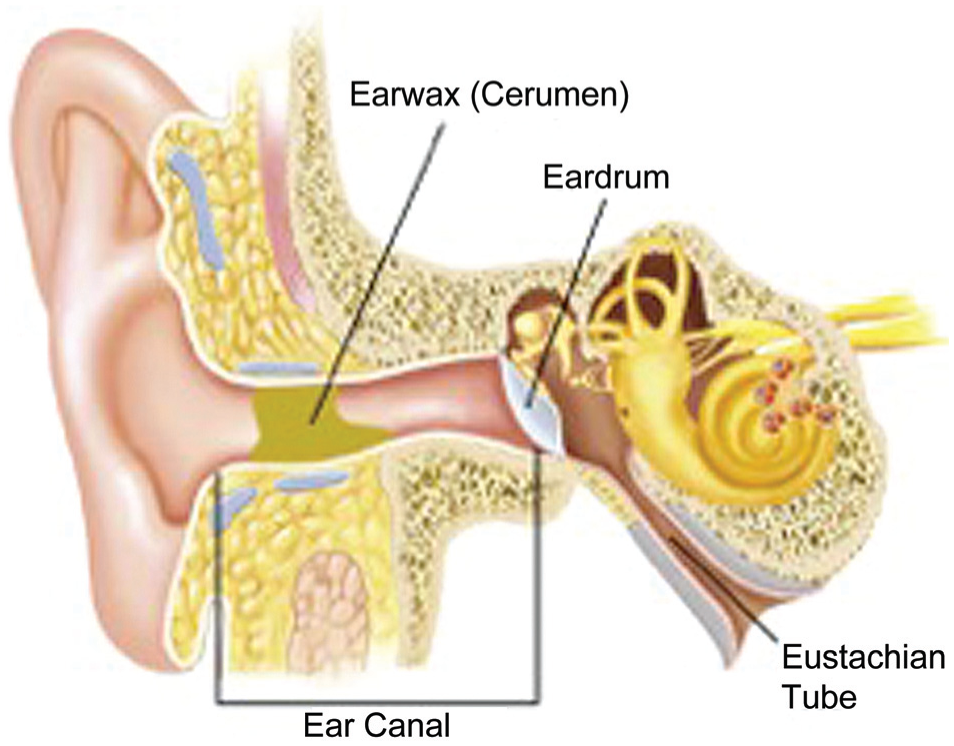
Cerumen is formed in the outer two-thirds of the ear canal and not the inner-third that ends at the eardrum. Impacted earwax (brownish mass) can completely obstruct the ear canal. Adapted and reproduced with permission. 4
What Does It Mean if My Earwax Is Impacted?
At times, your ear’s self-cleaning process might not work very well and may lead to a buildup of earwax. When this happens, earwax can collect and block or partly block your ear canal. This is impaction. Impacted earwax can cause symptoms like hearing loss, itching, or ear pain. The impaction also makes it hard for your health care provider to see in your ears. You can have symptoms when your ear canal is completely blocked by earwax or only partly blocked.
What Are the Symptoms of Earwax Impaction?
Ear pain
Itching
Feeling of fullness in the ear
Ringing in the ear (tinnitus)
Hearing loss
Discharge coming from the ear
Odor coming from the ear
Cough
Change in hearing aid function
You should see your health care provider if you have symptoms and you are not sure if they are caused by earwax. You might have a different ear problem that needs medical care.
Who Is More Likely to Get Earwax Impaction?
It can happen to anyone but is more common in the following:
○ Elderly people
○ People who use hearing aids or earplugs
How Is Earwax Impaction Diagnosed?
Earwax impaction is diagnosed through a physical examination and review of your medical history. Your health care provider may look in your ear canal with a tool called an otoscope (OH-t-OH-scope) or other device to see if you have impacted earwax. If you do, you may be treated for the impaction at that time or you may be sent to another provider for treatment.
How Is It Treated?
Impacted earwax can be treated in several ways. Some of the treatments can be done at home, but you may have certain medical or ear conditions that could make home options unsafe. You and your health care provider should discuss possible treatments and decide on the best treatment for you. Figure 2 may help with your discussion. 5 Available treatments are:
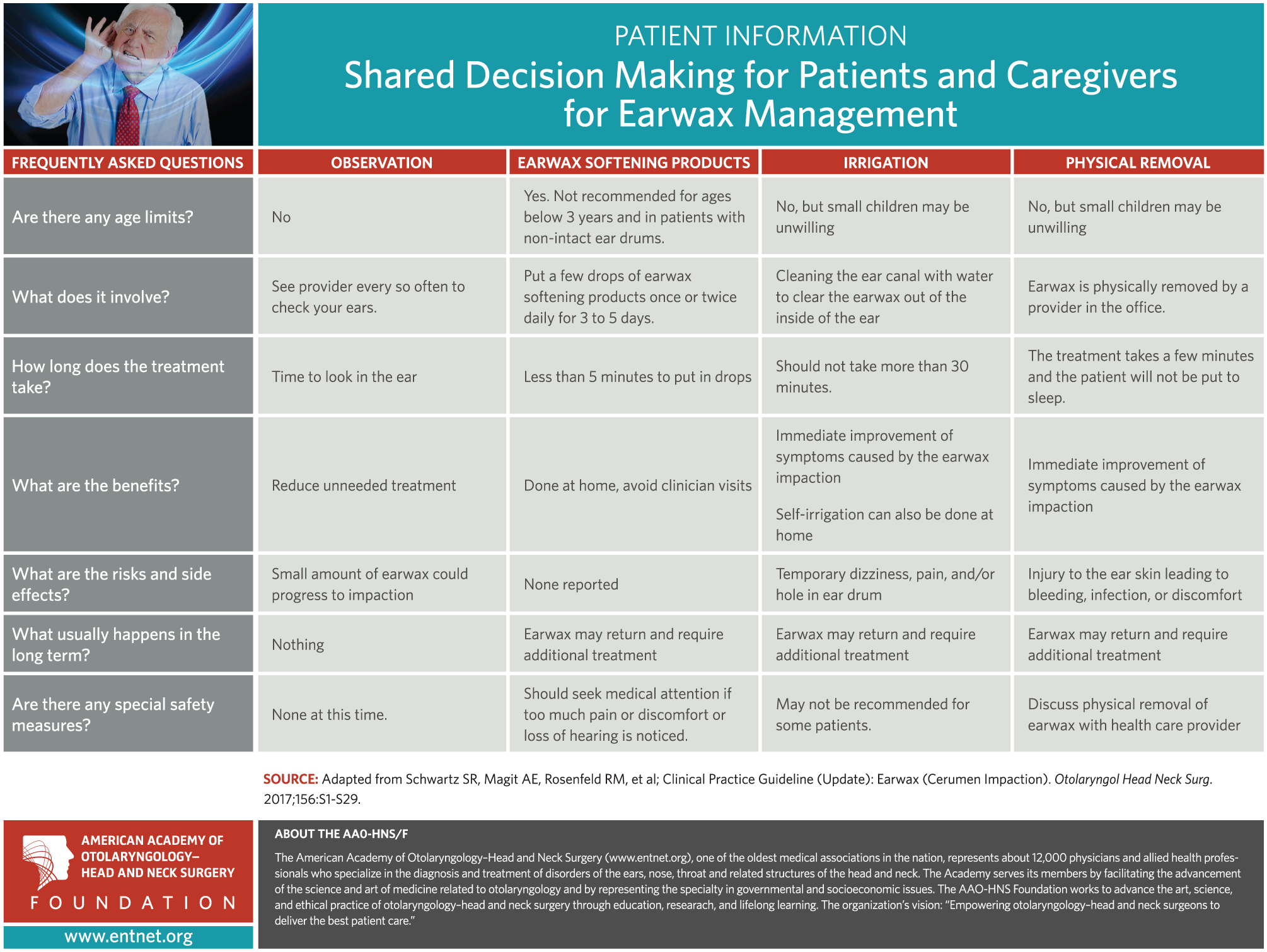
Shared decision grid for patients and caregivers regarding therapeutic options for earwax management.
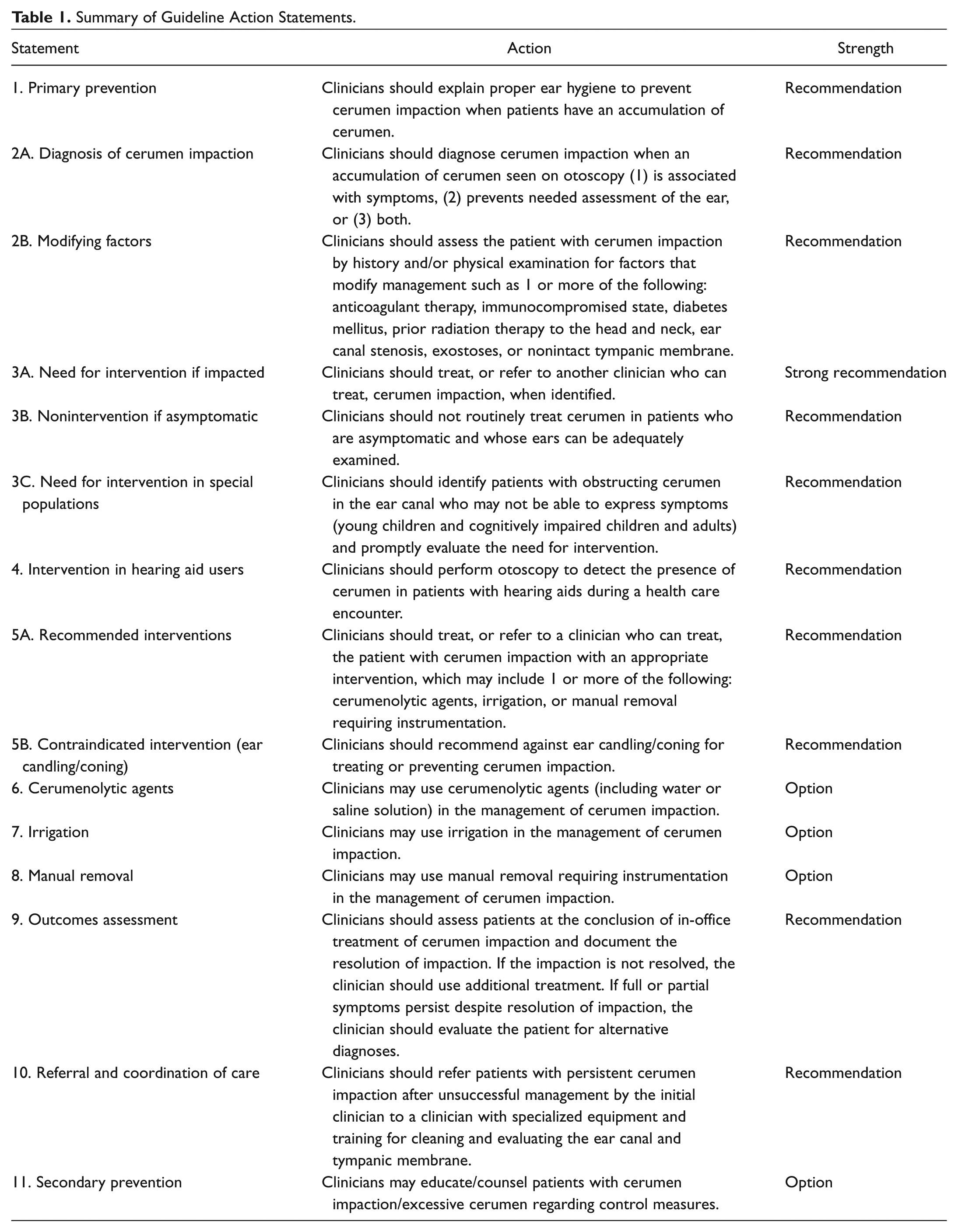
The updated Clinical Practice Guideline: Earwax (Cerumen Impaction) offers recommendations, also called key action statements, to improve the quality of care that people with impacted earwax receive. See Table 1 for a summary of the key action statements. These recommendations are not meant to provide comprehensive advice on managing all aspects of earwax but to find opportunities to align care with best research evidence and improve quality overall. Your doctor will provide care that is individualized to you, but you can still use the guideline recommendations as a source for discussion and shared decision making.
Summary of Guideline Action Statements.
Can I Use Cotton Swabs to Clean inside My Ears?
You should avoid putting things in your ears. You may see some earwax come out on a cotton swab, bobby pin, paperclip, or other item you put in your ear canal, but you are really only pushing earwax back into your ear, which may cause problems. Putting things in your ears irritates them. You can also injure your ear by putting a hole in an eardrum, cutting or scratching the ear canal skin, or even causing an ear infection.
What about Ear Candling?
Ear candling or ear coning is NOT a safe option for earwax removal. Research shows that ear candling does NOT create a vacuum to suck earwax from the ear. Any wax left on the ear candle is from the candle itself, not earwax. Some risks of the ear candling process are the following:
Burns to the ear canal
Ear blockage from candling wax
Hole in eardrum
Ear infection
Should I Do Anything to Prevent Earwax Buildup?
Not everyone needs prevention, but it is best for some groups. If you are elderly, use hearing aids, or have a history of making too much earwax, you may need regular treatment. It is important to remember that earwax is natural and helpful to the body. It does not always need to be removed. You do not have to do anything unless you have earwax buildup that causes symptoms or prevents your health care provider from examining your ears.
Figure 3 , Dos and Don’ts of Earwax (Cerumen), gives some quick tips on earwax and what you should and should not do about ear care and health. You can always talk to your health care provider about simple things you can do to keep your ears healthy.
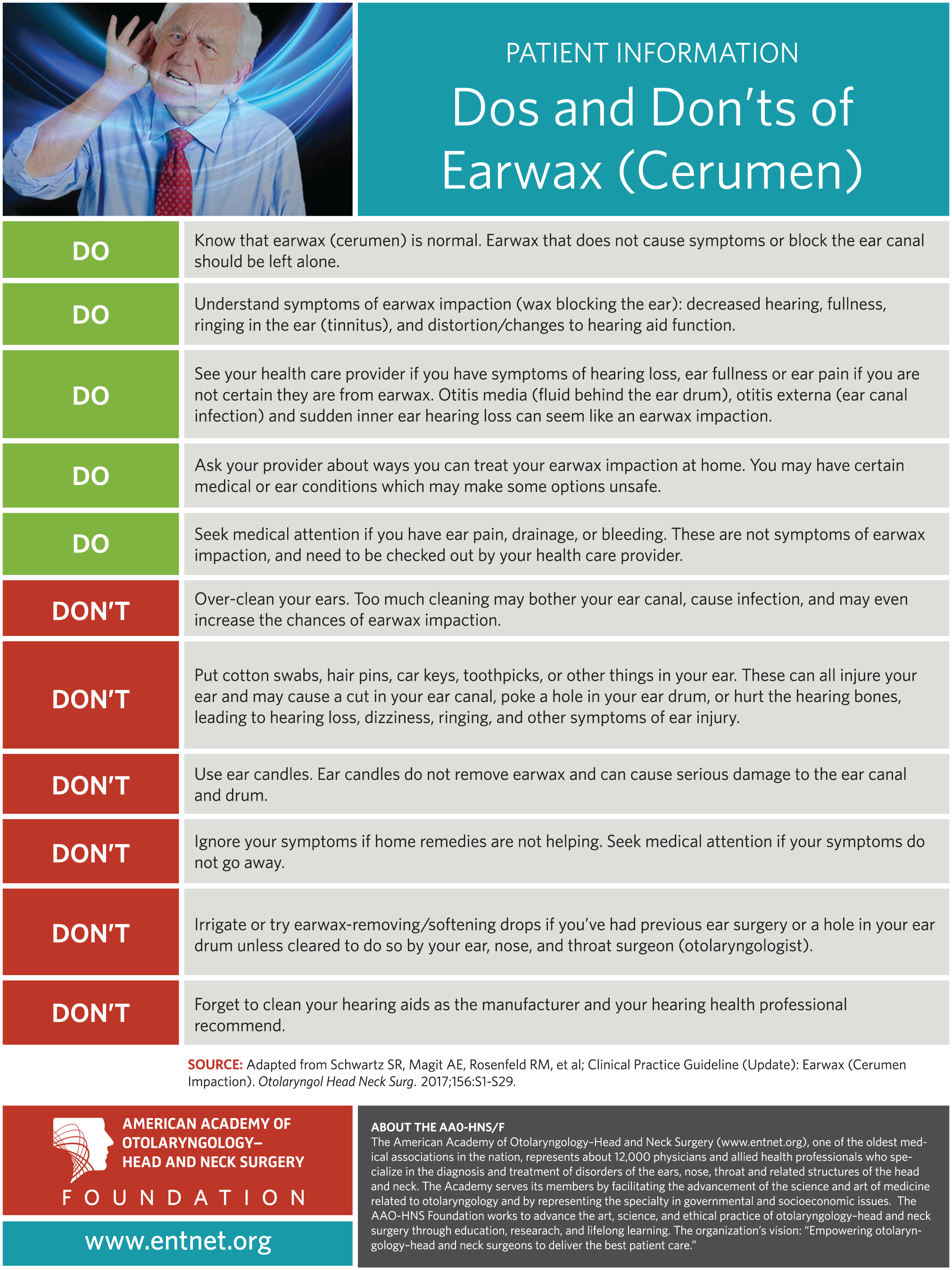
Dos and don’ts of earwax (cerumen).
Figure 4 includes some frequently asked questions about earwax prevention that might be helpful. You and your health care provider should talk about anything special you might need to do to prevent or lessen the buildup of earwax in your ears. Figure 5 , Ways to Help Reduce Earwax, offers other options to help reduce earwax.
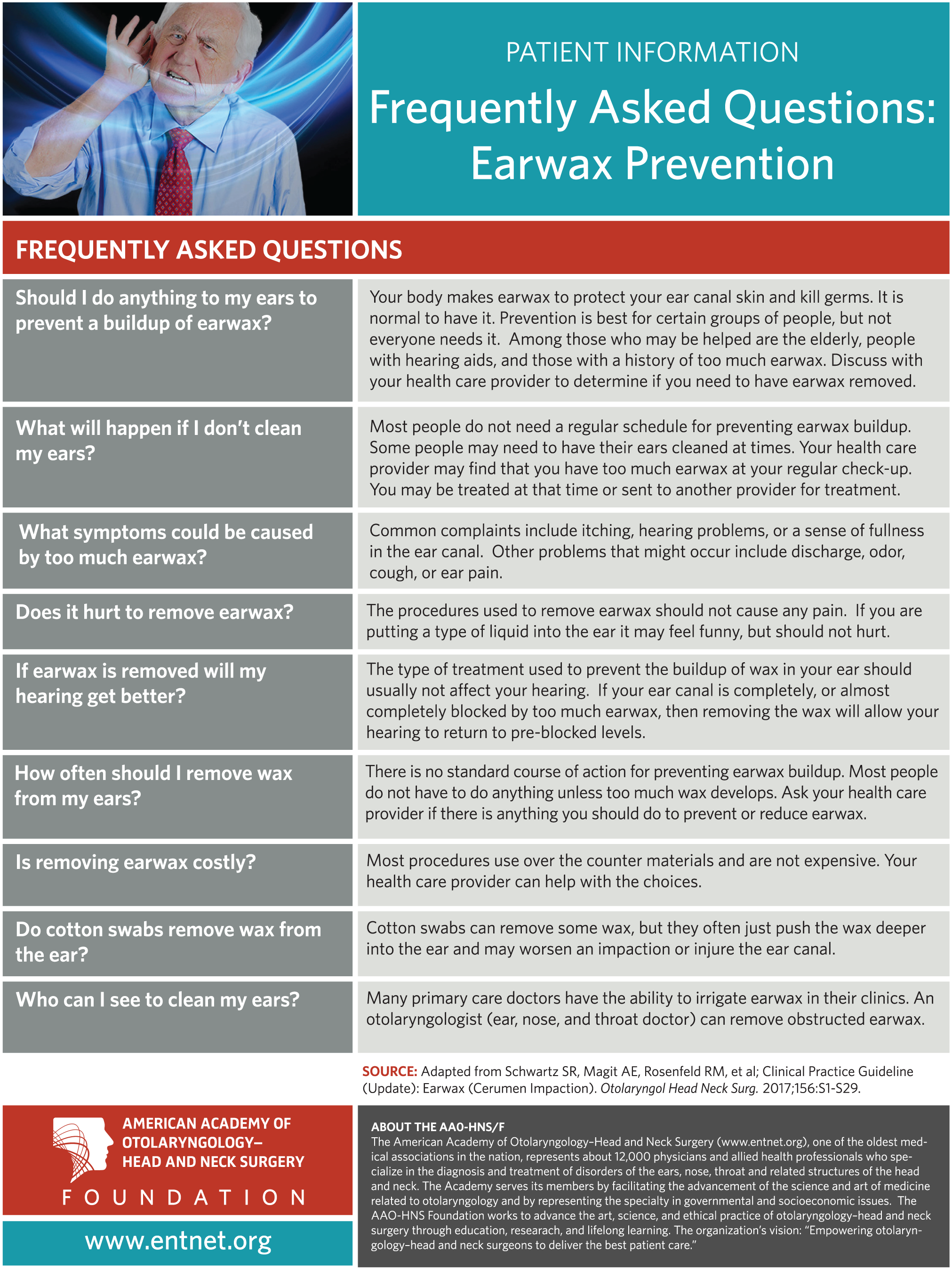
Frequently asked questions: earwax prevention.
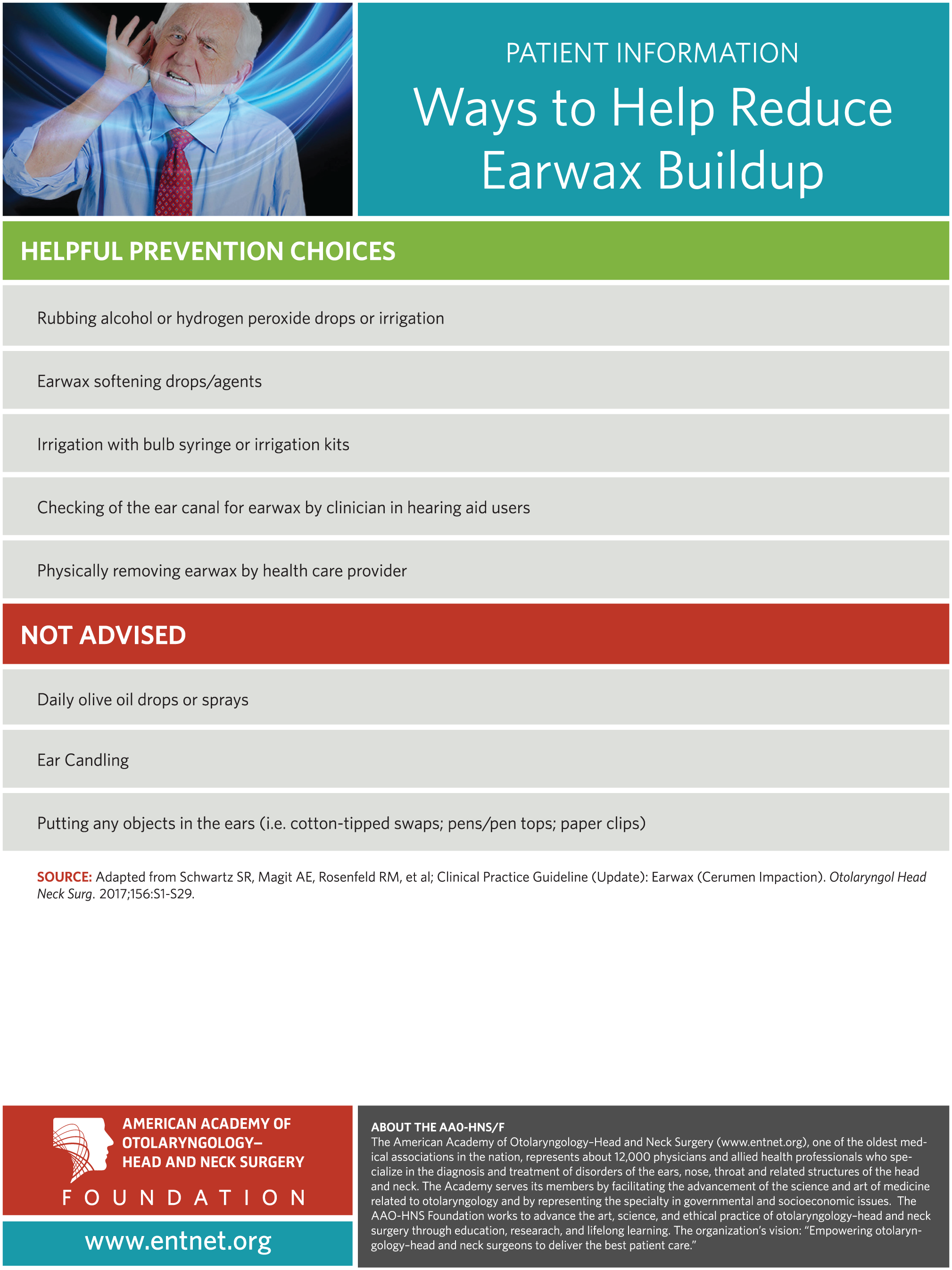
Ways to help reduce earwax.
Where Can I Get More Information?
Health care providers should discuss all treatment options and find the best approach for the patient. There are printable patient handouts and materials that further explain earwax impaction and can help with decisions about care options. For more information on earwax impaction, go to http://www.entnet.org/CerumenCPG.
About the AAO-HNS
The American Academy of Otolaryngology—Head and Neck Surgery (www.entnet.org), one of the oldest medical associations in the nation, represents about 12,000 physicians and allied health professionals who specialize in the diagnosis and treatment of disorders of the ears, nose, throat, and related structures of the head and neck. The Academy serves its members by facilitating the advancement of the science and art of medicine related to otolaryngology and by representing the specialty in governmental and socioeconomic issues. The AAO-HNS Foundation works to advance the art, science, and ethical practice of otolaryngology–head and neck surgery through education, research, and lifelong learning. The organization’s vision: “Empowering otolaryngologist–head and neck surgeons to deliver the best patient care.”
Author Contributions
Disclosures
Footnotes
Sponsorships or competing interests that may be relevant to content are disclosed at the end of this article.