






Abstract
Objectives
This article reports on a unique cohort of patients with idiopathic subglottic stenosis spilt fairly equally between endoscopic and open surgical approaches. Patients’ sequence of operations and reinterventions over time are outlined, offering insight to improve surgical counseling and allow for informative, autonomous patient decision making.
Study Design
Retrospective cohort study.
Setting
Tertiary care academic center.
Methods
Cases of consecutive adults with idiopathic subglottic stenosis managed surgically over a 12-year period (January 2006–December 2017) were retrospectively reviewed. Surgical workflow, complications, and outcomes, including reinterventions and tracheotomy dependence, are reported.
Results
Seventy-two patients (71 women; mean age, 50.4 years) with idiopathic subglottic stenosis requiring surgical airway intervention were identified. Six patients underwent tracheotomy prior to attempt at airway stenosis surgery. Initial surgical approach thereafter included endoscopic (73.5%, n = 53) and open (26.4%, n = 19) procedures. Thirty-one patients underwent cricotracheal resection; the reintervention rate was 22.5%. Sixty patients underwent 147 endoscopic procedures; the reintervention rate was 75.5%, and the mean time between dilations was 83 weeks (range, 5-402). Two (2.8%) patients remain tracheotomy dependent. Adverse events were significantly higher in the cricotracheal group, especially with respect to dysphonia and temporary gastrostomy tube placement (P < .01).
Conclusions
Endoscopic and open surgical airway intervention can be employed successfully to avoid tracheotomy dependence and maintain airway patency; however, multiple procedures are usually required, regardless of surgical approach. Cricotracheal reintervention rates are lower than endoscopic dilation but with increased morbidity. Quality-of-life outcomes should be clearly discussed with patients before deciding on a surgical management strategy.
Keywords
Idiopathic subglottic stenosis (ISGS) is a rare fibroinflammatory condition that causes progressive cicatricial airway narrowing of the subglottis and upper cervical trachea.1,2 ISGS is unique in that no specific cause is obvious on history or diagnostic workup. Despite this, patients share a homogeneous demographic, occurring predominantly in adult Caucasian females of European descent.2-5 Treatment is balanced between establishing durable airway patency and minimizing risks and complications. There is a propensity for recurrent stenosis after intervention,6-9 and management remains heterogeneous and controversial among treating physicians.3,10 Medical and surgical treatments are employed, often in combination. Broadly speaking, surgical options include tracheostomy, open neck surgery, and endoscopic procedures. The role of serial intralesional steroid injections has recently been proposed as an effective, durable strategy.11-13
Endoscopic management is divided into dilation and scar resection without dilation procedures.3,10,14 Radial incisions or scar resection is achieved with CO2 laser or cold knife, and dilation methods include continuous radial expansion balloons and rigid techniques. While less invasive than open neck procedures, recurrent stenosis requiring multiple interventions is common.3,10,15,16 Conversely, outcomes on voice, swallowing, and recovery time are more favorable than their open counterparts.10,15-18 Open neck surgery entails either cricotracheal resection (CTR) or laryngotracheoplasty with augmentative cartilaginous grafting. Both require longer operative times and recovery and pose greater complication risks. Yet, fewer subsequent reinterventions and more durable airway patency are reported.3,10,19
This rare condition has received recent increased attention in the literature. Several institutions have assembled to facilitate data aggregation through the North American Airway Collaborative (NoAAC), producing retrospective and prospective reports.3,10,20 Nonetheless, even between included individual institutions and NoAAC publications, there remains variability in reported outcomes. In this study, we detail a large cohort of patients with ISGS, unique in that management is spilt fairly equally between endoscopic and open approaches. Patients’ sequence of operations and reinterventions over time are outlined, offering insight to surgical workflow and outcomes when a multimodality management algorithm is readily available to patients. These results aim to improve surgical counseling and allow informative autonomous patient decisions on preferred management method.
Materials and Methods
Study Design
Institutional review board approval was obtained from Lawson Research Institute and Western University (ReDA ID 5108). Surgical billing codes identified patients who underwent surgery for stenosis between January 2006 and December 2017. A retrospective electronic chart review was performed, including follow-up visits, operations, and procedures until May 2019.
Eligibility Criteria
Diagnosis of ISGS was made after exclusion of other causes of stenosis, similar to previously established criteria.3,21 These included a history of prolonged (>24 hours) or traumatic intubation, obvious temporal relation to uncomplicated brief intubation, neoplasm or malignancy, as well as autoimmune, vasculitic, radiation, traumatic, or iatrogenic causes. Patients had negative antinuclear cytoplasmic antibody titers. The stenosis had to involve the subglottis. Patients with stenosis extending into the proximal cervical trachea were included. Cases with initial distal tracheal, glottic, or supraglottic stenosis and impaired vocal fold motion were excluded. Some patients underwent operative procedures before treatment at our institution or were treated at our institution before the study inclusion date. Their previous operations and tracheostomy histories were documented but not included in statistical analysis.
Demographic and Clinical Characteristics
Patient characteristics, medical comorbidities, presenting symptoms, and interventions prior to the study interval were extracted. Workup review included laryngoscopy/bronchoscopy, rheumatologic serology, and computed tomography scans. Stenosis severity was graded with the Cotton-Myer system 22 ; stenosis length was classified as a long (>1 cm) or short (≤1 cm) segment. 23 Number and nature of interventions, operative details, readmissions within 30 days, complications, and tracheostomy dependence were recorded.
Surgical Techniques
ISGS was managed by the otolaryngology and thoracic surgery services, 8 surgeons in total, at our tertiary care referral center. Surgical techniques were nonrandomized and based on surgeon preference, clinical judgment, and individual patient factors.
Endoscopic techniques varied but encompassed dilation procedures, excision of granulation tissue or scar/fibrosis, and any other endoscopic intervention with the goal of improving airway patency. Suspension laryngoscopy was performed, usually with a rigid Dedo-style laser laryngoscope (Pilling). A ventilating rigid bronchoscope (Karl Storz) was infrequently used. Radial incisions were performed under a high-power operating microscope (Leica Microsystems) with line-of-sight CO2 laser via micromanipulator (2 W, ultrapulse). The stenosis was gradually dilated until the maximal lumen was safely achieved with soft tip bougie dilators, continuous radial expansion pulmonary balloons (12 mm/13.5 mm/15 mm; Boston Scientific), rigid bronchoscope (Karl Storz), or endotracheal tubes. Long-acting steroid (triamcinolone acetate, 10 mg/mL) was often applied.
The open management procedure was CTR via a standardized surgical technique. Induction of anesthesia through a laryngeal mask airway or a preexisting tracheotomy was followed by flexible bronchoscopy to localize the proximal stricture. Crossfield ventilation was employed after tracheal transection with an armored endotracheal tube. Principles described by Pearson et al were used, including anterolateral cricoid resection with posterior subperichondrial resection.24,25 Anastomosis was performed with 3-0 Vicryl (Ethicon Inc) via a circumferential, end-to-end fashion. Tension-relieving procedures were employed as needed, including suprahyoid laryngeal release maneuvers and cervical tracheal mobilization. Tracheostomy was performed below the level of the anastomosis at case conclusion if significant glottic edema was observed or anticipated. Either a Shiley tracheostomy tube (Medtronic) or Montgomery T-tube (Boston Medical Products, Inc) was inserted, with decannulation planned at a later date.
Outcomes
Primary endpoints included reintervention rates and tracheostomy dependence. Additional outcomes included time to decannulation, surgical complications, and interdilation time interval. Voice and breathing outcomes were derived from follow-up laryngoscopy and the patient’s/provider’s subjective assessments. Dysphonia was coded as a bivariate outcome (present or absent) and included vocal complaints of quality, pitch, effort, or volume. It was considered permanent if reported at the most recent follow-up visit. Breathing outcomes were based on patient’s subjective assessment of dyspnea. Symptomatic dyspnea with endoscopic confirmation of airway stenosis was the singular indication for surgical intervention.
Statistical Analysis
Continuous and categorical variables were summarized with descriptive statistics; further comparisons were performed with Pearson’s chi-square test, Fisher’s exact test, Mann-Whitney U test, and 2-tailed Student’s t test as appropriate with SPSS Statistics version 26 (IBM). Statistical significance was set as P < .05. The Kaplan-Meyer method compared time with recurrent surgical reintervention. The index surgical procedure was defined as the first endoscopic or open intervention performed during the study inclusion interval, recorded as time zero. Censoring occurred with a recurrent surgical procedure, and differences were compared via log-rank tests.
Results
Over the study period of January 2006 to December 2017, 72 patients (71 female) underwent operative management for ISGS. Patients’ clinical and initial stenosis characteristics are summarized in Table 1 . The mean age was 50.38 years (SD, 13.88; range, 24-86); diagnosis latency (time from symptom onset to diagnosis) was 31 months (SD, 31; range, 2-156); and follow-up from the index surgical procedure was 4.37 years (SD, 2.94; range, 24-4724 days).
Clinical Characteristics of Patients With Idiopathic Subglottic Stenosis.
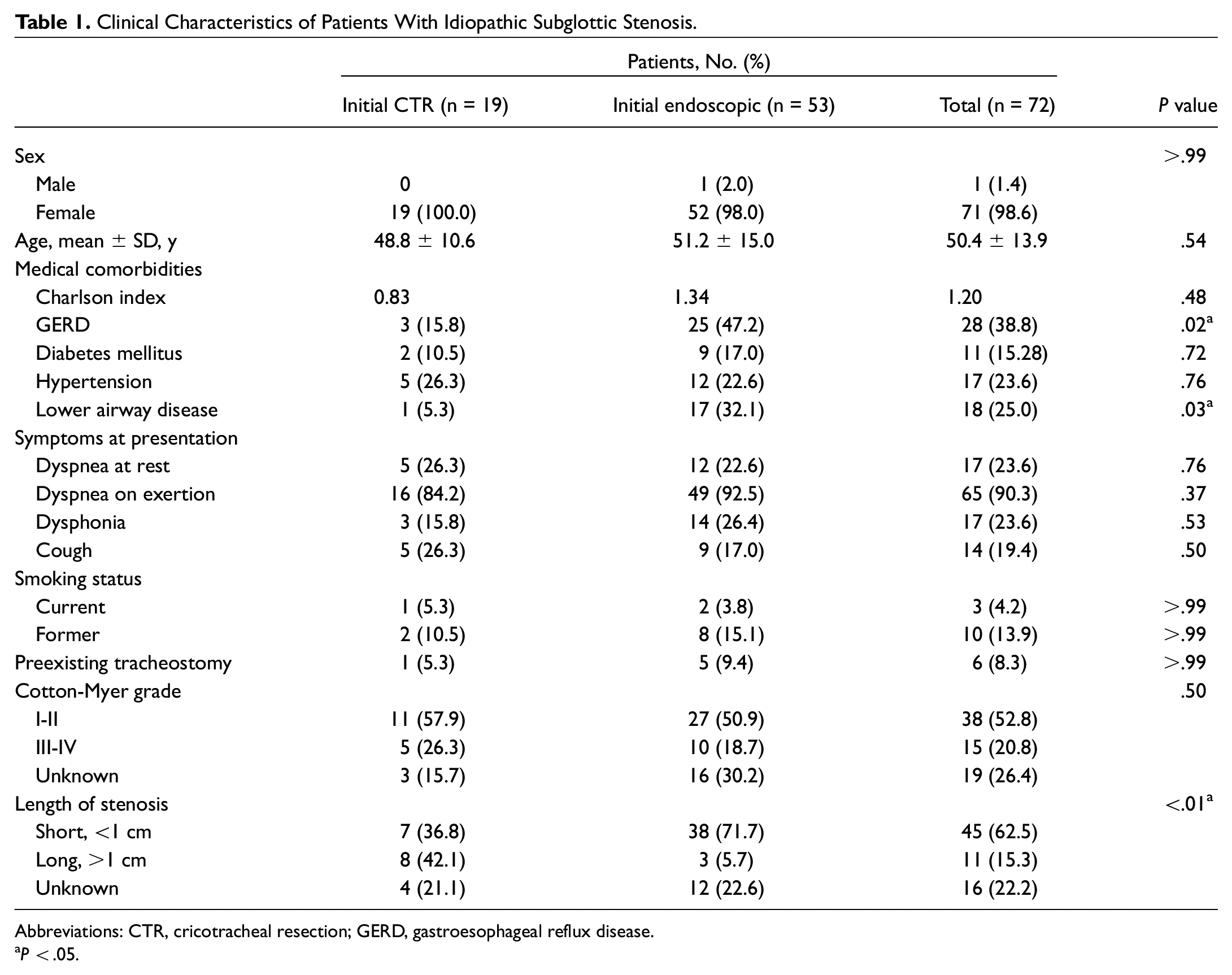
Abbreviations: CTR, cricotracheal resection; GERD, gastroesophageal reflux disease.
P < .05.
Operative Sequence Workflow
Eight (11.1%) patients had interventions before the study inclusion period or before referral to our center. This included tracheotomy (n = 1), endoscopic laser dilation surgery (n = 6), and CTR (n = 1). The remaining 64 (88.9%) had no evidence of prior treatment.
Figure 1 summarizes the operative sequence management. Six (8.3%) patients had tracheostomy before any attempt at open or endoscopic management. Endoscopic intervention was initially attempted in 73.6% of patients (n = 53); the remaining 26.4% (n = 19) underwent up-front CTR. Figure 2 summarizes patients’ surgical airway requirements (tracheostomy tube or T-tube) and operative sequence of achieving decannulation. Overall, 2 patients remain tracheotomy dependent (2.8%).

Surgical workflow: sequence of operative management.
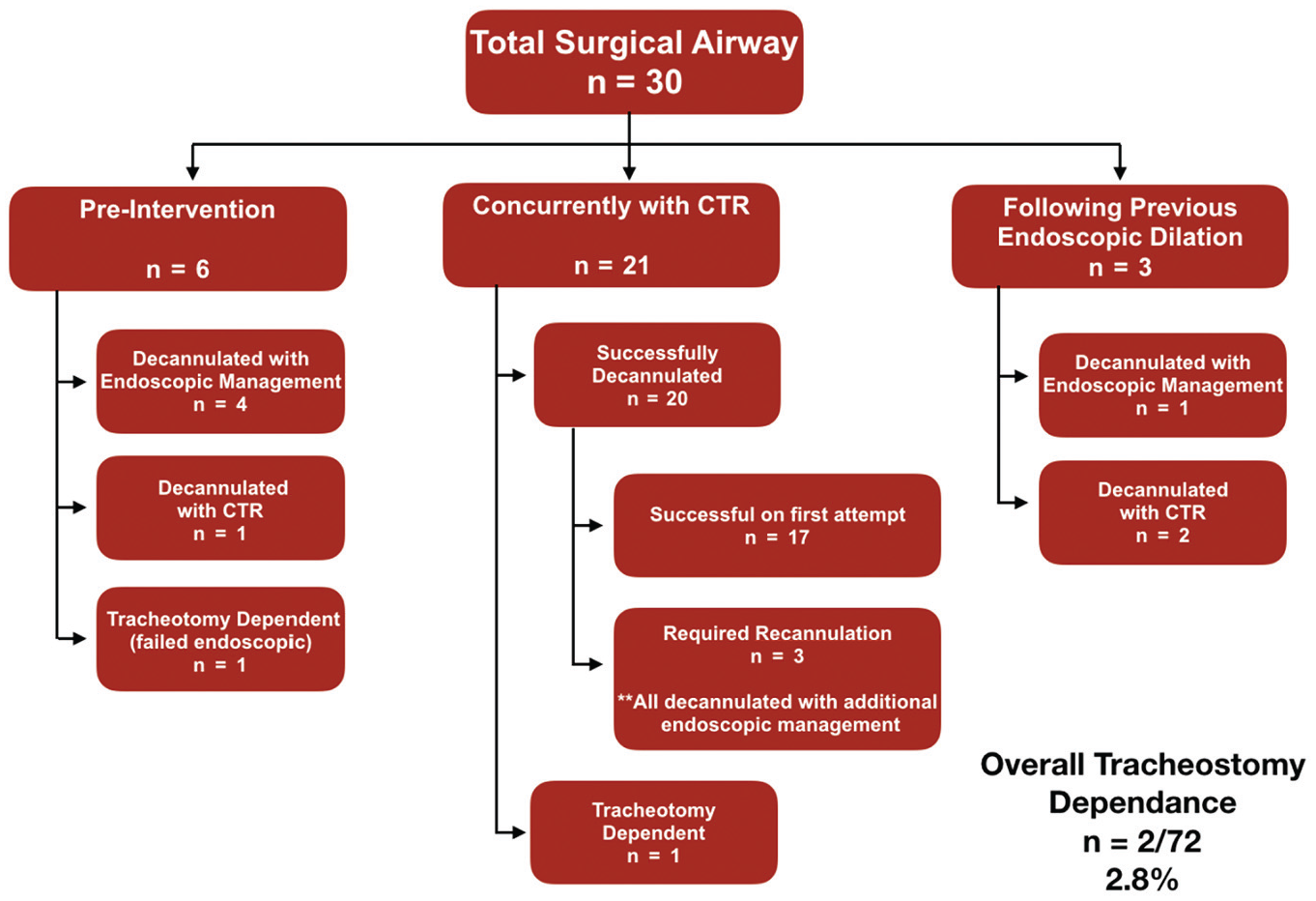
Surgical airway flow and sequence of attempt at decannulation. CTR, cricotracheal resection.
Open CTR of Stenosis
A total of 31 patients (n = 31/72, 43.1%) underwent open CTR. This was the initial surgical approach in 19 of 72 patients (26.4%). Of note, 1 of these patients had undergone CTR before the study inclusion period, with recurrent stenosis requiring endoscopic dilations. The remaining 12 patients (n = 12/72, 16.7%) underwent CTR following prior attempts at endoscopic management of their stenosis. Mean follow-up time from the date of CTR was 3.5 years (SD, 2.6 years; range, 2 months–11.5 years).
Table 2 provides surgical details for the 30 patients undergoing CTR during the study interval. The mean age at the time of open surgical resection was 55.1 years (SD, 13.9), and the mean BMI was 31.2 kg/m2. Twelve patients had previous attempts at endoscopic dilation, with the mean number of dilations being 2.2 (range, 1-6). The mean distance between the vocal folds and start of stenosis was 12.3 mm, ranging from just below the glottis to 27 mm.
Characteristics of CTR Cohort.
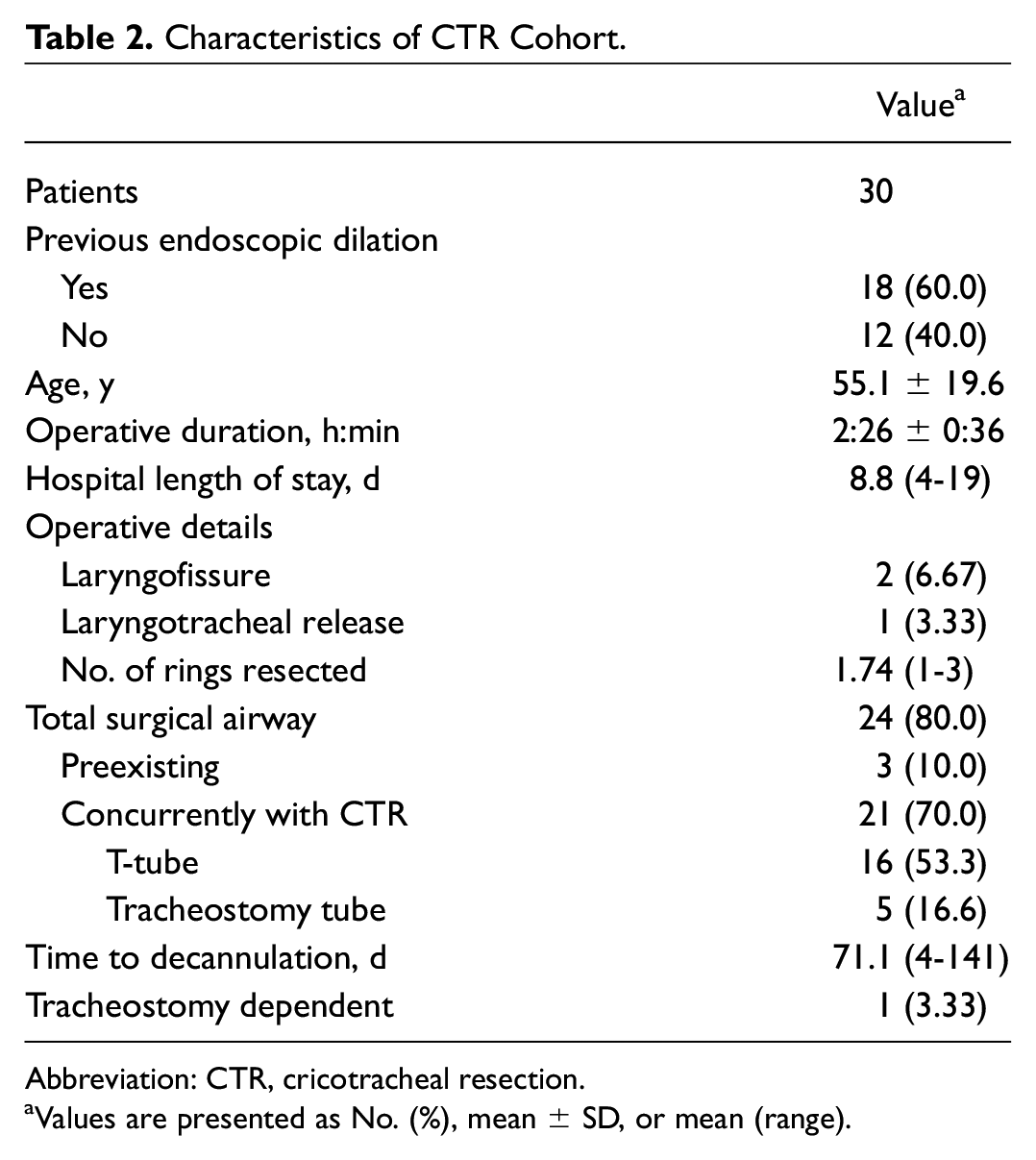
Abbreviation: CTR, cricotracheal resection.
Values are presented as No. (%), mean ± SD, or mean (range).
Three patients (10%) were tracheotomy dependent prior to CTR. A total of 24 (80%) surgical airways were placed at the conclusion of the CTR (19 T-tubes, 5 tracheostomy tubes). The mean time to decannulation was 71.1 days (SD, 46.7; range, 4-149). One patient remains tracheotomy dependent, unable to achieve decannulation due to obstructive granulation tissue and iatrogenic glottic stenosis.
Of all 31 patients undergoing CTR, 7 (22.5%) have required a total of 16 additional endoscopic procedures in an attempt to achieve decannulation or maintain airway patency during the included study interval. Kaplan-Meier analysis provides a representation of surgical reintervention and the timing thereof ( Figure 3 ). With exclusion of early recurrences from obstructive granulation tissue, 4 (12.9%) patients experienced true recurrent stenosis requiring endoscopic dilations. Of these, 1 patient remains tracheostomy dependent (as described earlier).
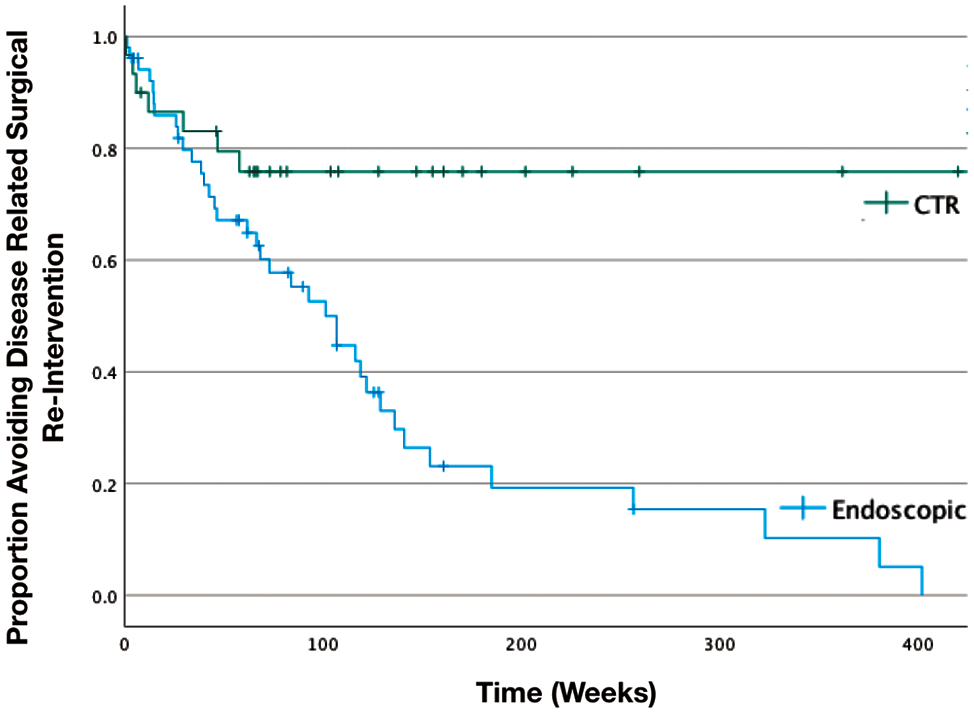
Kaplan-Meyer analysis of disease reintervention between endoscopic and cricotracheal resection (CTR) groups.
Endoscopic Management of Stenosis
Endoscopic interventions are summarized in Table 3 . Sixty patients underwent a combined total of 147 endoscopic procedures during the study interval. This was the initial management strategy in 53 of 72 (73.6%) patients, with a mean follow-up of 4.5 years (SD, 3.0; range, 25-4724 days) since their index procedure. The mean age at the time of endoscopic surgery was 49.8 years (SD, 13.6; range, 28.3-88.4). The majority (68.2%) were admitted postoperatively for overnight observation.
Characteristics of Endoscopic Cohort.
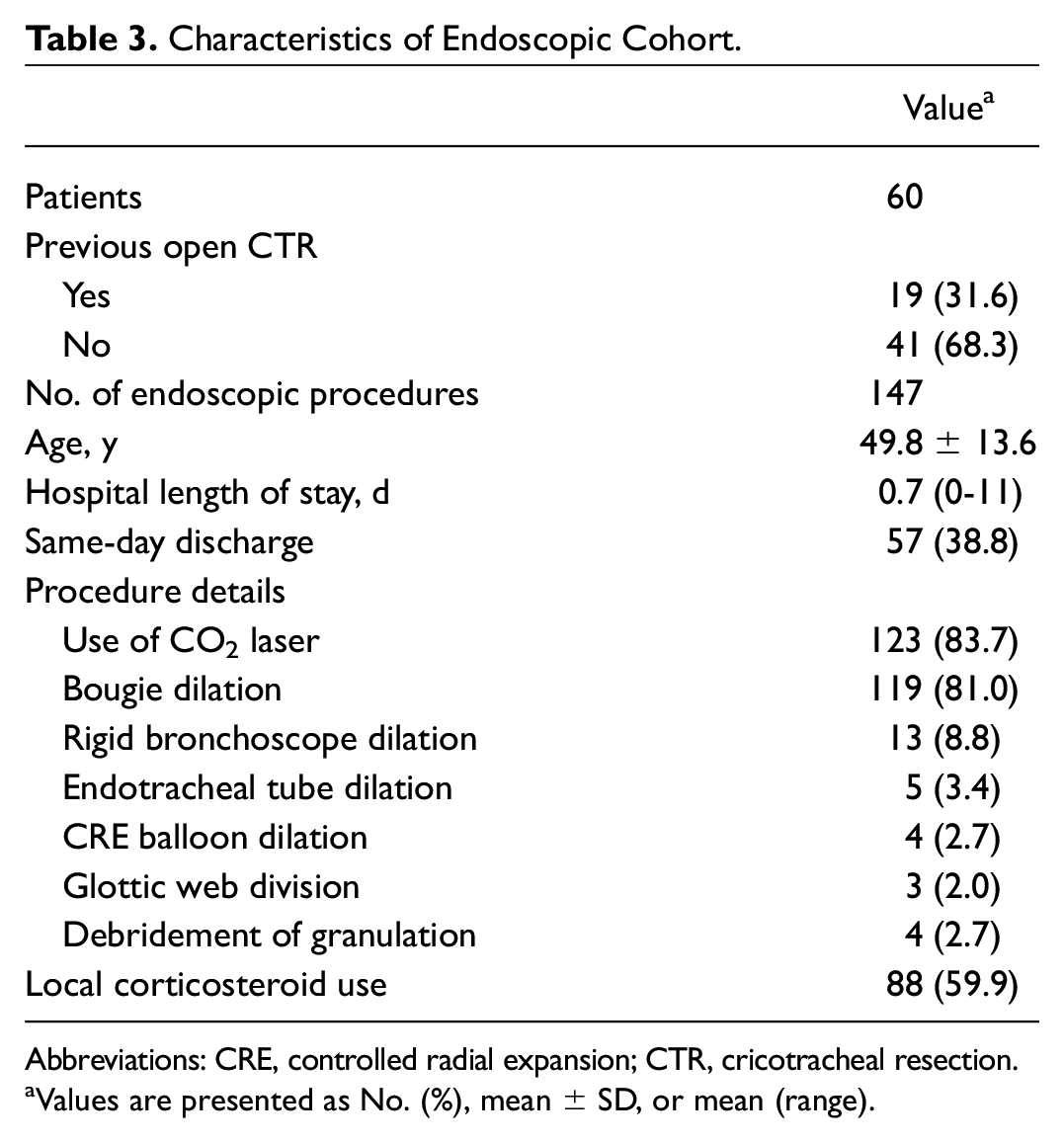
Abbreviations: CRE, controlled radial expansion; CTR, cricotracheal resection.
Values are presented as No. (%), mean ± SD, or mean (range).
Tracheotomy was performed prior to endoscopic management in 5 patients ( Figure 2 ). An additional 3 patients required tracheotomy following endoscopic dilation. In 1 patient, this was performed emergently for airway control, distant from the last endoscopic procedure (7 years). The other 2 cases were considered complications of endoscopic management: one in the setting of an intraoperative pneumothorax and the other 8 days following dilation from obstructive granulation tissue ( Table 4 ). One patient remains tracheostomy dependent despite attempt at endoscopic intervention.
Operative Complications.
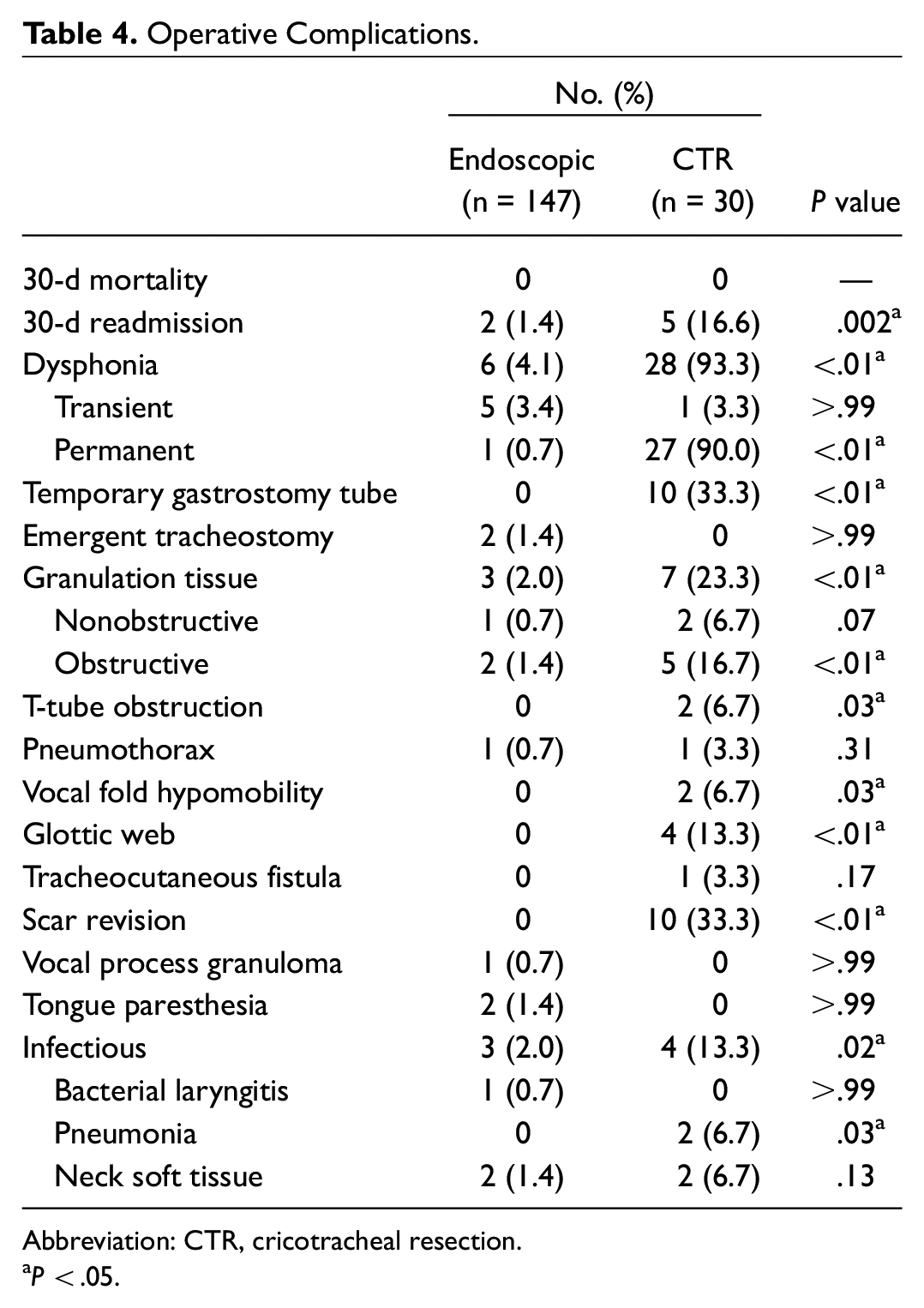
Abbreviation: CTR, cricotracheal resection.
P < .05.
The reintervention rate following initial endoscopic dilation was 75.5%. This includes 3 patients scheduled for repeat endoscopic dilation due to symptomatic dyspnea at the time of the most recent chart review. Forty-one patients have been treated exclusively with endoscopic dilation; 12 patients subsequently underwent CTR. For the 25 patients undergoing multiple (≥2) dilations, the mean time between dilations was 583.3 days (499.8 SD; range, 36-2815). Total dilations performed at last follow-up ranged from 1 to 13. Kaplan-Meier analysis ( Figure 3 ) contrasts the need for reintervention following endoscopic and CTR (75.5% vs 22.5%, P < .001).
Complications
A summary of operative complications is provided in Table 4 . Thirty-day readmission rate following CTR was 16.7%, as opposed to 1.4% following endoscopic management (P < .01). Overall, CTR was associated with increased functional morbidity, notably subjective dysphonia and transient dysphagia/aspiration requiring temporary gastrostomy tube (G-tube) placement (P < .01). Among patients with T-tubes who underwent CTR, 52.6% (n = 10/19) experienced dysphagia/aspiration requiring concurrent temporary G-tube placement. Conversely, there were no patients without T-tubes (n = 11) who underwent CTR and required G-tube placement.
Discussion
ISGS continues to be a frustrating and recalcitrant disease for patients and surgeons. Almost all patients require surgical treatment to restore respiratory function and quality of life.18,26 There is no fixed surgical algorithm, and management remains heterogeneous despite demographic homogeneity. 3 Our institution offers a multisurgeon, multimodality experience with a relatively large cohort of patients with ISGS (n = 72), thereby adding disease-specific outcome data to the currently available literature, where reported recurrence and reintervention rates are variable. Endoscopic and open reconstructive treatment modalities are readily available, and our cohort of patients is uniquely split fairly equally between both. Thus, while no fixed surgical algorithm exists,3,17,20 our multimodality surgical workflow, decision-making considerations between treatment options, and combined results for ISGS may serve as a reference.
To date, most studies report single-stage CTR to provide the most favorable long-term success for definitive management of subglottic stenosis.19,27-29 In our series, 22.5% of patients required additional endoscopic procedures to maintain airway patency. This was commonly due to early obstructive granulation tissue. Recurrent stenosis outside this early period (>3 months) requiring endoscopic dilation was 12.9%. A recent publication of 61 patients with CTR for ISGS reported a reintervention rate of 16% within 3 months postoperatively and a restenosis rate of 13%. Several late recurrences were identified, with a mean predicted disease-free survival of 12.1 years. 19 Our mean follow-up from CTR was 3.5 years; thus, long-term recurrences may not be adequately captured. In comparison with other high-volume CTR series, where restenosis ranges upward to 59.1%, 30 our restenosis rate is favorable.19,21 Differing definitions of reintervention and restenosis, as well as follow-up duration, all contribute to the variability of reported literature results. Important for patient counseling is our inclusion of reintervention rates—even in the early postoperative period. CTR should not be sold as a one-time procedure, as endoscopic reinterventions were required in over a fifth of patients.
Alternatively, endoscopic methods are advocated to avoid open neck surgical morbidity. 31 Numerous variations in endoscopic management have been described. Commonly, this involves a dilation procedure, often in conjunction with CO2 laser scar lysis/radial incisions.32,33 Alternatively, endoscopic resection with medical treatment whereby scar resection occurs without dilation has been described, with an adjuvant medication regime recommended postoperatively. 14 For our initial endoscopic cohort, the reintervention rate was 75.5%. This is consistent with other publications, where repeat dilations usually range from 60% to 83.8%.4,26,32,34 During a 3-year prospective study by the NoAAC network, only 28% of patients undergoing endoscopic dilation required a repeat procedure, with a median follow-up of 1.3 years and with surgical reintervention plateauing at roughly 50% around 3 years. While this recurrence rate is much lower than ours and other literature reports, the study is also limited by its definition of index procedure, failure to consider all interventions since disease diagnosis, and relatively short follow-up. Our mean interdilation interval was 83.32 weeks, with a mean follow-up of 4.5 years; therefore, most recurrences were (hopefully) captured. Prior studies have reported average recurrence intervals between 38.4 and 90.7 weeks.17,18,34
Criteria defining “failure” of endoscopic management and predictors of needing open intervention remain debatable. Factors cited to favor open resection include increased luminal occlusion, stenosis length, and frequent/early recurrence following endoscopic management. In these situations, while an increased number of endoscopic procedures may be required, improvement and maintenance of airway patency are still possible endoscopically, as is avoidance of tracheostomy.17,34 In terms of baseline characteristics ( Table 1 ), patients who presented with increased stenosis length were more likely to undergo up-front CTR (P < .01); initial grade of stenosis was not statistically significant (P = .50). Our surgical group regards these factors as considerations to offering CTR, but they should not represent absolute contraindications to attempting endoscopic management. For longer segment stenosis, endoluminal scar excision rather than radial incisions can be successfully attempted. Given that our tertiary care center services a large referral area, some patients opted for up-front CTR due to the travel and time constraints anticipated with repeated dilations. Based on the retrospective nature of the study, biases of patient and surgeon preference preclude drawing definite conclusions regarding an “optimal” choice of initial and subsequent surgical strategy, but these aforementioned factors are considered carefully by our group in the decision-making process.
Discussion of potential adverse events and anticipated functional outcomes are key to an informed consent process. When we consider the homogeneous middle-aged female demographic, the harsh lower pitch that frequently accompanies CTR is an important preoperative discussion point. Endoscopic dilation and open reconstructive laryngotracheoplasty have been associated with superior voice outcomes when compared with CTR.35,36 Following endoscopic management, patients rarely reported dysphonia. In contrast, persistent subjective dysphonia was reported by 90% following CTR. Etiologies of dysphonia to consider include recurrent laryngeal nerve injury, cricothyroid muscle disruption, glottic web, laryngofissure sequelae, and muscle tension dysphonia.
An additional morbidity identified following CTR was dysphagia/aspiration requiring temporary G-tube placement (33.3%). This was attributed to impaired laryngeal function from T-tube stenting. T-tubes are associated with other complications, including crusting, local site infection, as well as obstruction ( Table 3 ). Their use following CTR remains debated in the literature and will be considered more critically carrying forward to decrease CTR morbidity without compromising durable airway outcomes.
In summary, a full armamentarium of surgical approaches should be considered to provide a patient-centered care approach. The majority of patients prefer voice-sparing, low-risk procedures—consistent with an endoscopic approach, even if multiple procedures are required. 37 With our data, we can provide patients with ISGS with disease-specific realistic outcomes between endoscopic and open surgery. Attempting endoscopic management has limited downsides given the lower complication risk, shorter procedure and hospital stay, and immediate dyspnea improvement. Acceptable interval and frequency of dilations are highly patient specific. Alternatively, CTR remains a reliable surgical option for patients desiring more durable airway/respiratory outcomes. Ultimately, avoidance of permanent tracheostomy is possible with these surgical interventions, either independently or in combination.
This study is limited by its retrospective observational nature and biases associated with the nonrandom assignment of intervention. Some patients had limited follow-up, possibly requiring interventions outside our center. Influence of medical adjuncts cannot be guaranteed, and these were inconsistently documented. Additionally, reporting of dysphonia was limited to subjective assessment as a bivariate outcome. Unfortunately, validated patient-reported outcome measures (eg, VHI-10, VRQOL) and acoustic measurements are not routinely collected at our center, nor was perceptual voice analysis (eg, CAPE-V, GRBAS) documented in the patient’s chart.
Conclusions
This retrospective study capitalizes on the longitudinal course of a large ISGS cohort at an institution where open and endoscopic surgical intervention is readily available, and it describes the surgical sequence of interventions, outcomes, complications, and tracheostomy needs. Collectively, both interventions can be employed successfully to avoid tracheotomy dependence and maintain airway patency. Similar to previous reports, CTR reintervention rates are lower than endoscopic dilation but with increased morbidity and can be salvaged with endoscopic procedures. Long-term quality-of-life outcomes should be clearly discussed before deciding on surgical management strategy.
Footnotes
This article was presented as a poster at the 73rd Annual Meeting of the Canadian Society of Otolaryngology–Head and Neck Surgery (June 1-4, 2019; Edmonton, Canada) and the Fall Voice Conference (October 17-19, 2019; Plano, Texas).
Author Contributions
Disclosures
Ethics Approval and Consent to Participate
Institutional review board approval was obtained from both Lawson Research Institute and Western University for this study (ReDA ID 5108).
Availability of Data and Materials
The data sets supporting the conclusions of this article are available upon reasonable request from the corresponding author.