






Abstract
While research on the determinants of perceived discrimination among immigrants has rapidly increased in recent years, much of it focuses on adults, and far less is known about immigrant youth. This article addresses that gap by studying perceptions of discrimination among immigrant youth in Spain. We focus on the role of unmet educational expectations and parental background, as education and awareness play a key role in predicting discrimination perceptions among adults. We draw on a three-wave panel of respondents interviewed between the ages of 14 and 22. We find that unmet expectations — captured by the mismatch between adolescents’ expected and achieved educational levels — are not related to perceived discrimination. We also find little evidence that parental education is associated with their children's perceptions of discrimination. Instead, we find that parental experiences of discrimination largely shape their children's perceptions, highlighting a strong intergenerational transmission of perceptions of discrimination.
Introduction
Among immigrant-origin youth, early experiences of discrimination predict poorer mental health (Benner et al. 2018) and can have lasting implications for educational trajectories (D’hondt et al. 2016; Voyer and Lund 2026) and beliefs in meritocracy and fairness of the educational system (Owens and de St Croix 2020). Despite these consequences, we know comparatively less about what leads immigrant-origin youth to perceive discrimination in their everyday lives. While a growing body of research examines predictors of perceived discrimination among adults (Diehl, Liebau, and Mühlau 2021; Schaeffer and Kas 2023), available evidence suggests that the drivers may differ in adolescence (Lindemann 2020; Van Maaren and van de Rijt 2020), and that family-level factors can be particularly consequential during this life stage (Juang and Alvarez 2011; Flores 2015; Espinosa, Clemente, and Uña 2016). In this article, we examine how parental background and unmet educational expectations shape perceived discrimination among immigrant-origin youth. Specifically, we ask: how do unmet educational expectations and parents’ characteristics contribute to youths’ perceptions of discrimination?
Immigrant-origin children have high educational expectations compared to natives with similar socioeconomic backgrounds (Brinbaum and Cebolla-Boado 2007; Jonsson and Rudolphi 2011; Teney, Devleeshouwer, and Hanquinet 2013; Gil-Hernández and Gracia 2018; Dollmann and Weißmann 2020; Ferrara and Salikutluk 2025). These expectations contribute to narrowing achievement gaps with children of natives through secondary choice effects (Jonsson and Rudolphi 2011; Dollmann 2016; Birkelund 2020; Ferrara 2023). Despite lower levels of performance (Birkelund 2020; Dollmann et al. 2023; Ferrara 2023) and less advantaged socioeconomic backgrounds (Ferrara 2023), children of immigrants often enroll in more demanding educational tracks than they would have if their expectations mirrored those of their native peers (Dollmann et al. 2023; Ferrara 2023). However, high educational expectations are not always fulfilled. For example, children of immigrants are at a higher risk of dropping out (Birkelund 2020; Dollmann and Weißmann 2020; Ferrara 2023; Klein and Neugebauer 2023) or completing their education with lower grades (Engzell 2019; Birkelund 2020; Ferrara 2023), partly due to their ambitious educational choices. Such setbacks may have consequences beyond the academic realm, especially in immigrant families, where school attainment is closely tied to intergenerational mobility and long-term integration (Foner and Dreby 2011; Teney, Devleeshouwer, and Hanquinet 2013).
Building on this perspective, we focus on youths’ unmet expectations and the family context that shapes them and propose two mechanisms through which parental background might influence youths’ perceived discrimination. First, drawing on the idea of an “intergenerational integration paradox” (Schaeffer 2019), we argue that higher parental education may raise expectations and increase attentiveness to unfair treatment, making youths more likely to interpret ambiguous setbacks as discriminatory. Second, parents who have experienced discrimination themselves are more likely to engage in ethnic/racial socialization, including preparation for bias (Van Veen, Emmen, and Mesman 2025); such messages can make discrimination a more salient interpretative framework.
Empirically, we investigate (a) whether unmet expectations and parental background are associated with higher perceived discrimination, and (b) whether the association between unmet expectations and perceived discrimination depends on parental background. We use a three-wave panel study on immigrant-origin youth in Spain, including both second-generation youth and those who migrated before the age of 10. Spain provides a useful context because its late-tracking system allows many students to sustain high expectations, while the disproportionate institutional sorting of immigrant-origin youths into vocational tracks constrains the extent to which those expectations are ultimately realized (Mahía Casado and Medina Moral 2024).
We contribute to understanding immigrant-origin youth's discrimination perceptions by linking two prominent sources of socialization — school and family — during a transition period when their relative importance may shift, between the end of compulsory education and entry into the labor market. Because schools are institutions expected to promote meritocratic advancement and equality of opportunity, perceived discrimination in this domain may have particularly consequential implications for minority youth, including later involvement in political life (Hoffmann and Benoit 2025; Kleer et al. 2025) and national disidentification (Jasinskaja-Lahti, Liebkind, and Solheim 2009).
Theoretical Background
Educational Expectations Among Youth With Immigrant Parents
Intergenerational educational progress and upward mobility are often core motivations for voluntary migration. Parents who migrate are willing to face challenges and sacrifices to safeguard a better future for their children in the long run (Zéroulou 1988; Taylor and Krahn 2013; Alba and Foner 2015). The prospect of academic success and socioeconomic mobility thus motivates migration projects within families, fostering high expectations and their (sometimes conflicted) transmission to second-generation children (Foner and Dreby 2011; Feliciano and Lanuza 2017; Feliciano 2018). Subsequently, children of immigrants across multiple European countries hold high educational expectations — that is, beliefs about how far they want and will be able to pursue their education, compared to native-origin youth of similar socio-economic backgrounds (Brinbaum and Cebolla-Boado 2007; Jonsson and Rudolphi 2011; Teney, Devleeshouwer and Hanquinet 2013; Gil-Hernández and Gracia 2018; Dollmann and Weißmann 2020; Ferrara and Salikutluk 2025). In Spain, children of African and Latin American origin display higher aspirations than children of natives, net of parental socioeconomic status and educational performance (Gil-Hernández and Gracia 2018; Cebolla-Boado, Ferrer, and Soysal 2021). 1 However, only a portion of minority youth realize their expectations (Dollmann and Weißmann 2020).
The centrality of educational expectations, coupled with the high ambitions of immigrant-origin youth, leaves room for substantial disappointment when such plans fail to materialize. Early scholarship on high expectations underlined their positive consequences (Khattab 2015), showing that children with higher expectations enroll more often in academic tracks, pursue higher education, and achieve higher grades (Jonsson and Rudolphi 2011; Jackson, Jonsson, and Rudolphi 2012; Jackson 2013). More recently, scholars have investigated the negative consequences of such expectations, primarily materializing as overambitious educational choices leading to dropping out (Birkelund 2020; Dollmann and Weißmann 2020; Ferrara 2023; Klein and Neugebauer 2023) or completion with low grades (Engzell 2019; Birkelund 2020; Ferrara 2023). When children of immigrants fall short of their educational expectations, they display unmet educational expectations (Gil-Hernández and Gracia 2018). When such setbacks occur, adolescents can attribute them to personal factors (e.g., lack of motivation or effort) or to external constraints beyond their control, including discrimination (Schaeffer 2019).
Perceptions of Discrimination as a Downstream Consequence of Unmet Educational Expectations
Unmet educational expectations build on a realistic assessment, or prediction, of how far one should be able to get (Glick and White 2004; Salikutluk 2016). Contrary to aspirations, expectations “may reflect respondents’ understandings of what is possible based on their own resources and their perceptions of external barriers to educational attainment” (Glick and White 2004, 278). Expectations (like aspirations) largely depend on social interactions, internalized constraints, and perceived ability (Nygård 2017), suggesting that they reflect habituated aspirations, that is, “possibilities-within-limits of given socio-cultural positions” (Zipin et al. 2015, 234). Because they entail both an aspect of desire and an element of (perceived) feasibility (Runciman 1966), disappointed expectations might be framed as the result of discrimination.
Beyond this definitional argument, minority youth may be aware that unmet educational expectations can arise due to discriminatory patterns. Previous research shows that attributional processes play a crucial role in discrimination perceptions (Thijs and Piscoi 2016; Diehl and Liebau 2017). Ascriptions to discrimination are heightened when discrimination constitutes a cognitively available explanation for unmet expectations. Previous evidence shows that discrimination exists in orientation to vocational rather than academic tracks (Druez 2016), admission to elite programs (Chareyron et al. 2023), grading (Sprietsma 2013), and appreciation of students with similar performances (Tobisch and Dresel 2017; Papageorge, Gershenson, and Kang 2020). Recent research shows that minority youth in Germany are more likely to believe that they were placed in the wrong educational track than majority youth, even when holding grades constant (Diehl, Pomianowicz, and Hinz 2025), showcasing that perceived unfairness is relatively common among this group. Although discrimination is less severe than in other fields, such as the labor or housing markets (Bischoff, Ejrnæs, and Rubin 2021; Chareyron et al. 2023), discrimination at school likely appears as a reasonable cause to explain unmet expectations. Considering the cognitive availability of discrimination as an explanation for unmet expectations, and the nature of expectations, we hypothesize:
H1: Immigrant-origin youth with unmet expectations are more likely to perceive discrimination than those without unmet expectations.
The Role of Parental Background in Youth's Discrimination Perceptions
We also argue that parental characteristics impact perceived discrimination among youth. We examine two characteristics: parental education and parental perceptions of discrimination. Beyond the transmission of high educational expectations, immigrant-origin youth raised by highly educated parents may be more attuned to discrimination than those from less educated families. Studies on the integration paradox — the finding that higher structural integration (measured by education) increases rather than decreases perceived discrimination (Schaeffer and Kas 2023) — highlight the role of awareness and social comparison processes in shaping discrimination perceptions. Highly educated adults tend to know more about discrimination and inequality, are more exposed to news coverage about immigration-related topics, and may perceive greater relative deprivation (Wodtke 2012; De Vroome, Martinovic, and Verkuyten 2014; Alanya 2015; Steinmann 2019; Schaeffer, Krakowski, and Olsen 2024).
However, evidence for an integration paradox among youth is less consistent (Lindemann 2020; Van Maaren and van de Rijt 2020), potentially because this literature has paid limited attention to family background (one exception is Schaeffer (2019), as discussed below). Parents’ knowledge of discrimination and societal inequalities, as well as their own first-hand experiences, can shape children's perceptions through socialization (Hughes 2003; Ayón 2016). A large body of US research shows that many Black and Latino families engage in ethnic/racial socialization, including “preparation for bias,” aimed at raising children's awareness of racism and unfair treatment while also fostering ethnic/racial pride and group identification (Lobo et al. 2025). Although less often studied in Europe, available evidence suggests that minority parents in European countries also engage in preparation-for-bias messages from an early age to help children cope with discriminatory encounters (Teney, Devleeshouwer, and Hanquinet 2013; Van Veen, Emmen, and Mesman 2025). Such socialization may increase adolescents’ sensitivity to unfair treatment and make discrimination a more salient interpretative framework in everyday interactions.
Building on — yet conceptually distinct from — the integration paradox, Schaeffer (2019) argues that similar dynamics may extend across generations through intergenerational comparisons. Children may evaluate their educational success in light of their parents’ educational standing, and such comparisons can be particularly salient in immigrant families where education is central to projects of upward mobility (Ichou 2014; Salikutluk 2016; Schaeffer 2019). When children of highly educated parents fall short of these intergenerational comparisons, they may be more likely to perceive barriers and interpret such setbacks through a discriminatory lens (Schaeffer 2019). We, therefore, hypothesize:
H2a: Immigrant-origin youth with highly educated immigrant parents are more likely to perceive discrimination than those with less educated parents. H2b: Immigrant-origin youth whose parents report higher perceived discrimination are more likely to perceive discrimination than those whose parents do not report perceived discrimination.
Who Is Most Likely to Interpret Unmet Educational Expectations as Discriminatory?
Thirdly, we argue that when children of highly educated immigrant parents experience unmet educational expectations, they may be more likely to interpret setbacks through a discrimination lens rather than solely as personal failure. Highly educated parents can shape children's expectations and attainment by communicating high and relatively stable educational goals and by mobilizing resources to help their children. Parents with high educational credentials tend to hold high yet relatively realistic educational expectations for their children (Emery, Bram, and Van Avermaet 2023; Li and Chzhen 2025), in part because of their (often tacit) knowledge of the education system (Bourdieu and Passeron 1994; Lareau 2015) and their ability to navigate the educational system effectively (Dollmann 2016). At the same time, they may sustain high aspirations and invest resources when children struggle (e.g., tutoring or academic support; Triventi et al. 2020).
Importantly, this does not imply that children of highly educated parents experience unmet expectations more often. Rather, it suggests that when unmet expectations occur despite substantial parental resources and support, they may be experienced as a particularly consequential shortfall. Building on Schaeffer (2019), the influence of unmet expectations on perceived discrimination may be amplified when falling short also means falling short of a family project of intergenerational mobility. Educational plans among immigrant-origin youth often center on reproducing or surpassing parental status (Kao and Tienda 1998; Ichou 2014; Salikutluk 2016; Feliciano and Lanuza 2017; Schaeffer 2019; van de Werfhorst and Heath 2019). In such contexts, setbacks may be more readily attributed to unfair treatment or discriminatory barriers (Major and Eliezer 2011; Schaeffer 2019). We, therefore, hypothesize:
H3: The association between unmet educational expectations and perceived discrimination is stronger among immigrant-origin youth with highly educated parents than among those with less educated parents.
Educational Attainment and Immigrant Integration in the Spanish Context
In Spain, around the time of the first wave of our study, foreign-born individuals made up almost 10 percent of the total population. The 2000s are a turning point in Spanish immigration history, characterized by a fast-paced growth of the foreign-born population (Arango 2012; Kumar and Faures 2021). Throughout the decade, Spain has been the country receiving the most immigrants annually in Europe (Kumar and Faures 2021). This surge happened in the midst of rapid economic growth and increased demand for work in agriculture, construction, and home-help (Hellgren and Serrano 2019; Kumar and Faures 2021; Cea D’Ancona 2023). Consequently, most migrants to Spain have been economic migrants; only a few have been refugees or asylum seekers (OECD 2024c). The Spanish labor market is highly segmented, characterized by high levels of overqualification among immigrants, with as much as 15 percent declaring that their occupation is below their educational credentials. Relatedly, immigrants tend to suffer a sharp decrease in occupation quality following migration to Spain, with little to no recovery as years pass (Fellini and Guetto 2019; OECD 2024a). Immigrant parents thus experience adverse outcomes in Spain, while likely retaining high ambitions for their children.
Meanwhile, educational expectations and the likelihood of achieving them among children of immigrants are constrained by the national context and educational system in which they are embedded. The Spanish educational system is characterized by common integrated courses (ESO) until the age of sixteen, a late-tracking educational system compared to some other European countries, where tracking can already take place at eleven years old (such as Germany or the Netherlands). Following this mandatory education, children can either continue in an academic track (“Bachillerato”) or choose to enroll in vocational education to obtain an intermediate or advanced vocational degree (Pau et al. 2010). 2 Children who migrated before 16 years old have low educational attainment compared to other OECD countries, with only 29 percent of them attaining upper secondary education (OECD 2024b). Although tertiary education became more widespread in the past decade (from 41% in 2016 to 52% in 2023), the share of individuals not in employment, education, or training (NEET) remains fairly high (17% in the general population versus 26.5% for the foreign-born). While immigrant-origin youth in Spain exhibit high educational expectations (Portes et al. 2010), they are thus liable to experience unmet expectations, either because they fall short of their ambitious choices or through rechanneling to vocational rather than academic tracks.
Data and Methods
Survey and Sample
We used a three-wave panel study conducted by Portes et al. (2013), the Longitudinal Study of Second Generations in Spain (ILSEG 3 ). The survey comprises children residing in Spain, aged 14 years old on average in the first wave, and enrolled in mandatory education. Children were sampled from 180 secondary schools in Madrid and Barcelona. Data collection for the first wave took place in 2006 and 2007, among 6,953 children. All children have immigrant parents: some were born in Spain, the strict second generation, but most were migrants themselves, and arrived before the age of ten. We followed previous research and pooled these children in our analyses, as they spent most of their educational careers in the Spanish educational system and, crucially, arrived before the first tracking opportunity (Dollmann 2016). In the second wave (2011–2012), a large fraction of these children were re-interviewed (around 70% 4 ). To account for attrition between the first two waves, a replacement sample was drawn by the team conducting the survey and added to the original sample (N = 1,534). In total, 5,343 children were interviewed in ILSEG's second wave. Finally, all children who answered the second wave of the survey were approached for the final round in 2016–2017. The retention rate for this round was much lower, with only 2,268 cases. 5 Overall, the panel spans 8 years, from mandatory education to entry into the labor market or completion of a tertiary degree.
As described, a substantial share of students drop out of the survey. To account for this, we created inverse probability of attrition weights. Details about the procedure and information on the distribution of weights are available in the Supplemental Appendix. All results are thus weighted (except results for the “balanced panel,” see below).
We estimate models on three partially overlapping samples. The first sample includes respondents surveyed in Waves 1 and 2 and is used to study transitions out of education between these waves (“Wave 2 sample”). The second subsample includes respondents interviewed in Waves 2 and 3 and captures transitions between these later waves (“Wave 3 sample”). We distinguish these samples because the measurement of perceived discrimination differs across survey waves (as described in Supplemental Table A1), making direct pooling of the outcomes across waves difficult to interpret. In addition, we estimate models on a “balanced panel,” restricted to students interviewed in all waves. Although this substantially reduces the sample size, this specification serves two purposes. First, it keeps the comparison group stable across waves: respondents exiting the system between Waves 1 and 2 and respondents exiting the system between Waves 2 and 3 are compared to the same students who remained in the survey across all waves. By contrast, the wave-specific analysis relies on partially different comparison groups in each wave pair. Second, as described below, part of the analyses, including parental perceived discrimination, rely on this balanced panel, because parental questionnaires were collected only for a subset of students linked to the original panel design. We thus present our results in the balanced sample as well, in the main text or in the Supplemental Appendix.
Measurements
Dependent Variable
Perceived Discrimination
In all waves, respondents answered questions about previous (personal) experiences of discrimination. In Waves 1 and 3, a follow-up question inquired about the grounds for discrimination. In Wave 2, there was no information about the grounds, but details regarding perpetrators were gathered. We recoded the variables regarding discrimination in each wave to obtain a dummy variable indicating whether one perceived discrimination (1) or not (0). Details about the coding procedure and survey items are available in the Supplemental Appendix (see Supplemental Table A1). Overall, although the phrasing of questions differed across waves, all of them explicitly mentioned discrimination, and the timeframe specified for Waves 2 and 3 excluded timing covered by previous waves, so that reports in different waves represent different experiences. To ensure the variation in phrasing did not produce spurious results, our main analyses investigate waves separately. We present pooled models with individual and survey-year fixed effects in the Supplemental Appendix (Supplemental Tables D6 and D7).
Because perceived discrimination is a result of attributional processes and of exposure to discrimination, so-called “objective” discrimination influences perceived discrimination. At the same time, “objective” discrimination can directly cause unmet expectations through discriminatory grading or tracking. “Objective” discrimination can thus confound our results, but is unobserved. We circumvent this issue using an alternative dependent variable. We change our dependent variable to exclude discrimination stemming from educational experiences, blocking the causal link between “objective” school-centered discrimination and perceived discrimination (out of school). Following data constraints, in Wave 2, we look at discrimination not perpetrated by teachers, and in Wave 3, we use an additional available question focused on discrimination at work. 6 We report any significant deviation from our main analyses in the text, and all tables are available in the Supplemental Appendix.
Independent and Moderating Variables
Unmet Educational Expectations
To measure unmet educational expectations, we compared expected education in one wave to achieved education measured in the next wave. Expectations were measured in all waves with the following question: “What is the highest [educational level] you think you will realistically reach?” Only respondents still in school answered questions about their expectations. Available answer categories were: Lower Secondary (ESO or Basic vocational degree), Upper Secondary (High school degree), Short-cycle Tertiary (Intermediate vocational degree), Vocational Tertiary (Intermediate vocational degree), and three options for University Tertiary degrees (Bachelor's Degree, Master's Degree, PhD, and other similar degrees), which we collapsed. We set unmet expectations to 1 when a respondent exited the schooling system with an achieved level of education strictly below (in ISCED level) the expected education stated in the previous wave. The variable stayed 0 if the respondent exited school with a higher (or equal to) level of education than expected, and as long as they stayed in school. For example, a respondent who reported in Wave 2 expecting to complete a Bachelor's Degree, who effectively obtained a High school degree in Wave 3, and was not a student, was coded as having unmet expectations (see Supplemental Table A2 for an overview of possible situations). In the last wave, we coded all students enrolled in vocational tracks who expected to achieve a university degree as having unmet expectations. 7
Parental Education
To construct one's educational background, we used parents’ education as reported by the child or by the parent when available. 8 Parental education was asked in Waves 1 and 2. When both measures are available, we chose the most recent information, assuming that older children report parental characteristics more accurately (Lavest et al. 2025). We used the level of education of the most educated parent to construct the educational background. This variable is numeric, with values based on ISCED levels ranging from 1 (Primary schooling or less) to 6 (Bachelor's and above).
Parental Discrimination
For a subsample of parents, we had first-hand information on their perceived personal discrimination. Indeed, after their children completed the first wave of the survey, parents were invited to fill out another questionnaire on similar themes. In total, 1,857 parents returned the questionnaire; in Wave 2, 1,456 children with a parental questionnaire were re-interviewed. Parents were invited to answer the following question: “Do you think that you have ever been discriminated against in Spain because of your race or national origin?” Available answers included “Never,” “Occasionally,” “Seldom,” and “Often.” We dichotomized the answer so that never experiencing discrimination (0) is contrasted with all other levels (1).
Control Variables
We accounted for an array of socio-demographic variables influencing perceived discrimination (Cinelli, Forney, and Pearl 2024): sex (dichotomous variable, 0 = female, 1 = male), being born abroad (dichotomous variable, 1 = yes, 0 = no), region of origin (categorical variable, Central and Southern America, Asia, Africa, and Europe), age (numeric variable), and language spoken at home (dichotomous variable, 1 = Spanish, 0 = Other). Most importantly, we controlled for respondents’ current educational attainment (measured in the same wave). Expectation-attainment mismatch models face a fundamental identification problem: expectations, attained education, and their difference are linearly dependent, so they cannot be simultaneously estimated as independent predictors in the same model (Wiedner 2022). Given this constraint, we include unmet expectations (our focal explanatory variable) and current educational attainment, and omit the level of expectations. This specification rests on the theoretically motivated assumption that past expectations are unlikely to affect perceived discrimination once both attained education and the mismatch between attainment and expectations are taken into account. Indeed, past literature suggests that education itself might be consequential for perceived discrimination, although the direction of this association among youth remains debated (Lindemann 2020; Van Maaren and van de Rijt 2020) and because children who achieve the highest (resp. lowest) levels of education are structurally very unlikely (resp. likely) to show unmet expectations. 9 Once achieved education and mismatch are accounted for, we have no theoretical reason to believe that past expectations continue to exert an influence on perceived discrimination. In the Supplemental Appendix, we additionally present a “gross” effect of unmet expectations, without controlling for educational attainment. Results are mostly similar to our main models presented below (see Supplemental Figure D1).
Analytical Strategy
We tested all hypotheses using weighted generalized logistic models. Hypotheses 1 and 2 tested the effect of unmet expectations and parent background on perceived discrimination. We thus regressed perceived discrimination on unmet expectations, parental education, and, when appropriate, parental discrimination. All models included our control variables described above (for an overview, see Table 1). We estimated these regressions separately for the Wave 2 and Wave 3 samples. We present additional evidence using the balanced panel and an alternative discrimination variable to address the potential confounding effect of “objective” discrimination, as previously described. In all models, our independent variable leverages information from multiple panel waves by comparing achieved education in wave t and expected education in wave t–1 (with t = {2,3}). We present all results as predicted probabilities of perceiving discrimination.
Finally, we tested Hypothesis 3, addressing a potential moderation effect of parental background, by adding an interaction term between parental education and unmet educational expectations when predicting discrimination reports. Our main models included parental education as a numeric variable; additional analyses present alternative specifications (using both parents’ education or a categorical measure of parental education, see Section D of the Supplemental Appendix).
Note that, for all directed hypotheses, we use one-sided significance tests, as reported in the figures’ notes. Coding files for replication are available at the following URL: https://osf.io/czbhk/?view_only=fc3ed0a4db6746699e45a76e730c09bf. The data used can be downloaded from the ICPSR (Inter-university Consortium for Political and Social Research) web archive: https://www.openicpsr.org/openicpsr/project/155023/version/V1/view.
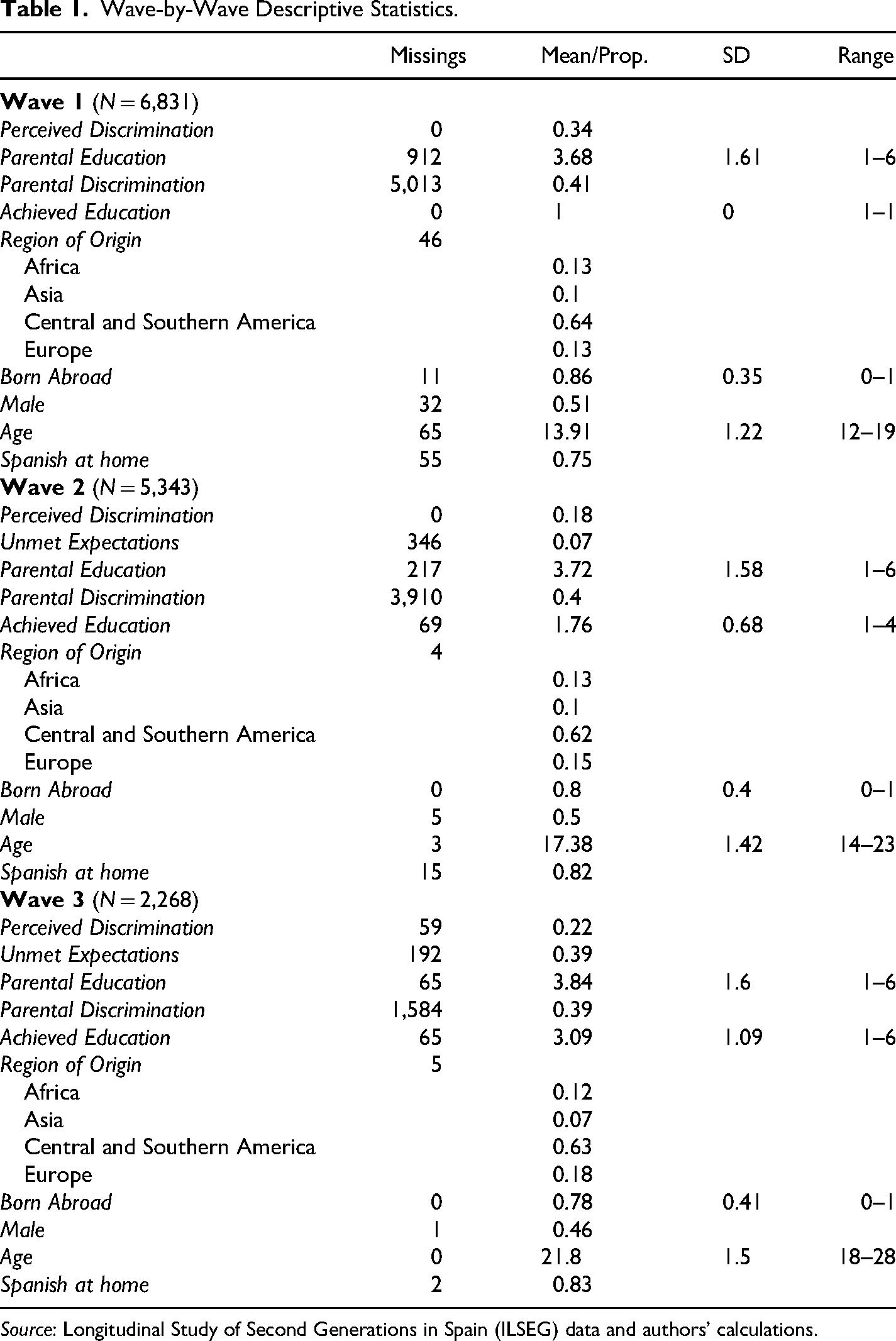
Wave-by-Wave Descriptive Statistics.
Source: Longitudinal Study of Second Generations in Spain (ILSEG) data and authors’ calculations.
Results
Descriptive Results
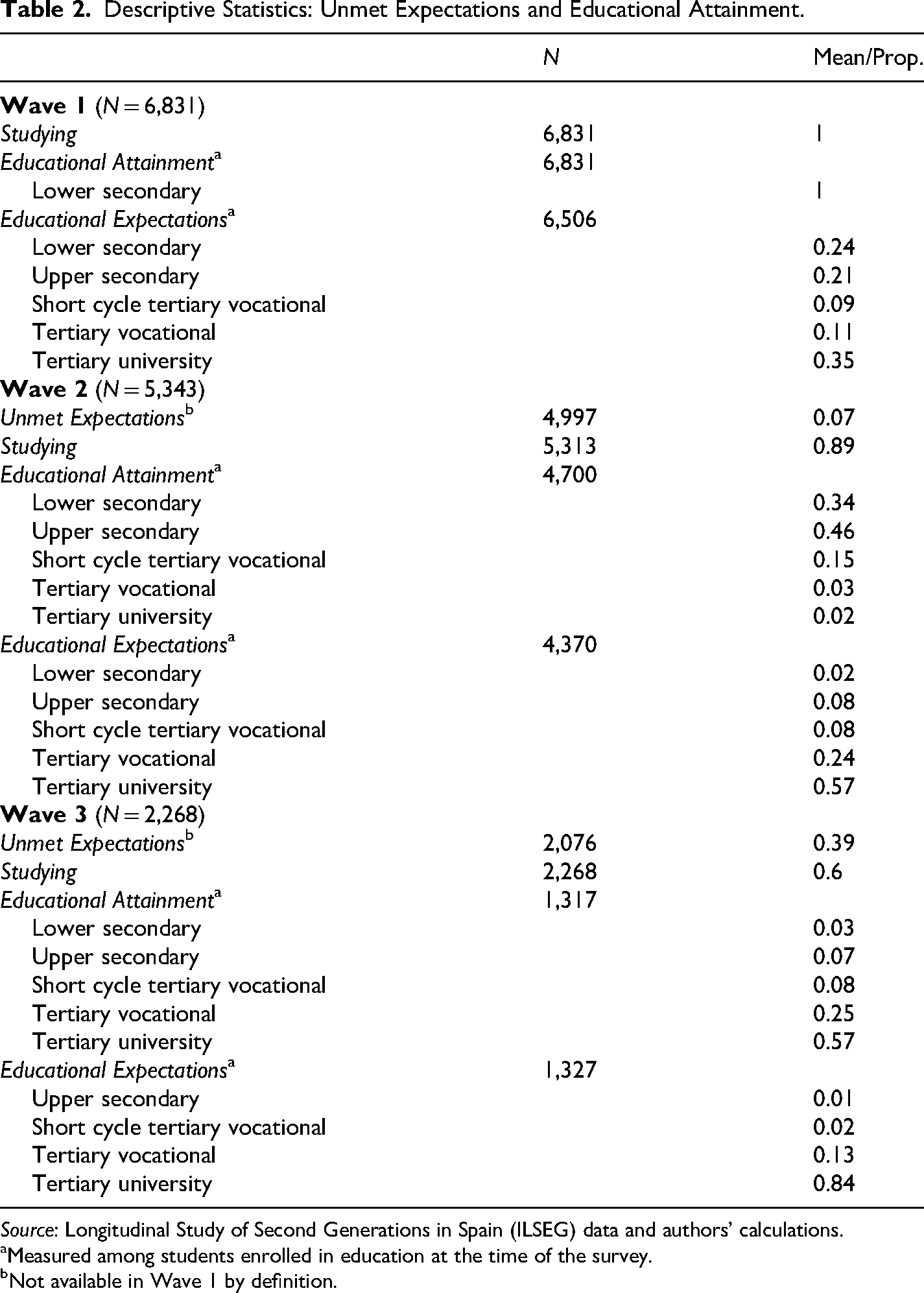
In our sample, all adolescents are students in the first wave, and over a third report discrimination at the individual level (34%, see Figure 1). This means that one out of three students reports feeling discriminated against and/or having experienced unequal treatment. Around 35 percent of respondents report expecting to obtain a university degree in the first wave. We do not report unmet expectations in this wave, as they can only arise from the second wave onwards. Considerable variation in perceived discrimination is introduced in subsequent waves, with a notable decrease in the percentage of respondents reporting discrimination — around 18 percent in Wave 2 and 22 percent in Wave 3. Note that discrimination perceptions in Waves 2 and 3 constitute new experiences, happening between waves (see question phrasing in Supplemental Table A1). University expectations steadily increase across waves, partly reflecting the educational advancement of the children in the sample (see Figure 1 and Table 2). Indeed, only individuals still in education are asked again about their expectations, and many increase their ambitions across waves. In the last wave, 60 percent of our sample is still studying, mostly at higher educational levels. Most children who exit education before Wave 2 or Wave 3 exhibit unmet expectations. Among the 11 percent of respondents who exited school between Waves 1 and 2, 71 percent report unmet expectations. Between Waves 2 and 3, this phenomenon remains strong: 79 percent of those who exit have unmet expectations, and 22 percent of students who expected to obtain a university degree were enrolled in a vocational track in Wave 3.
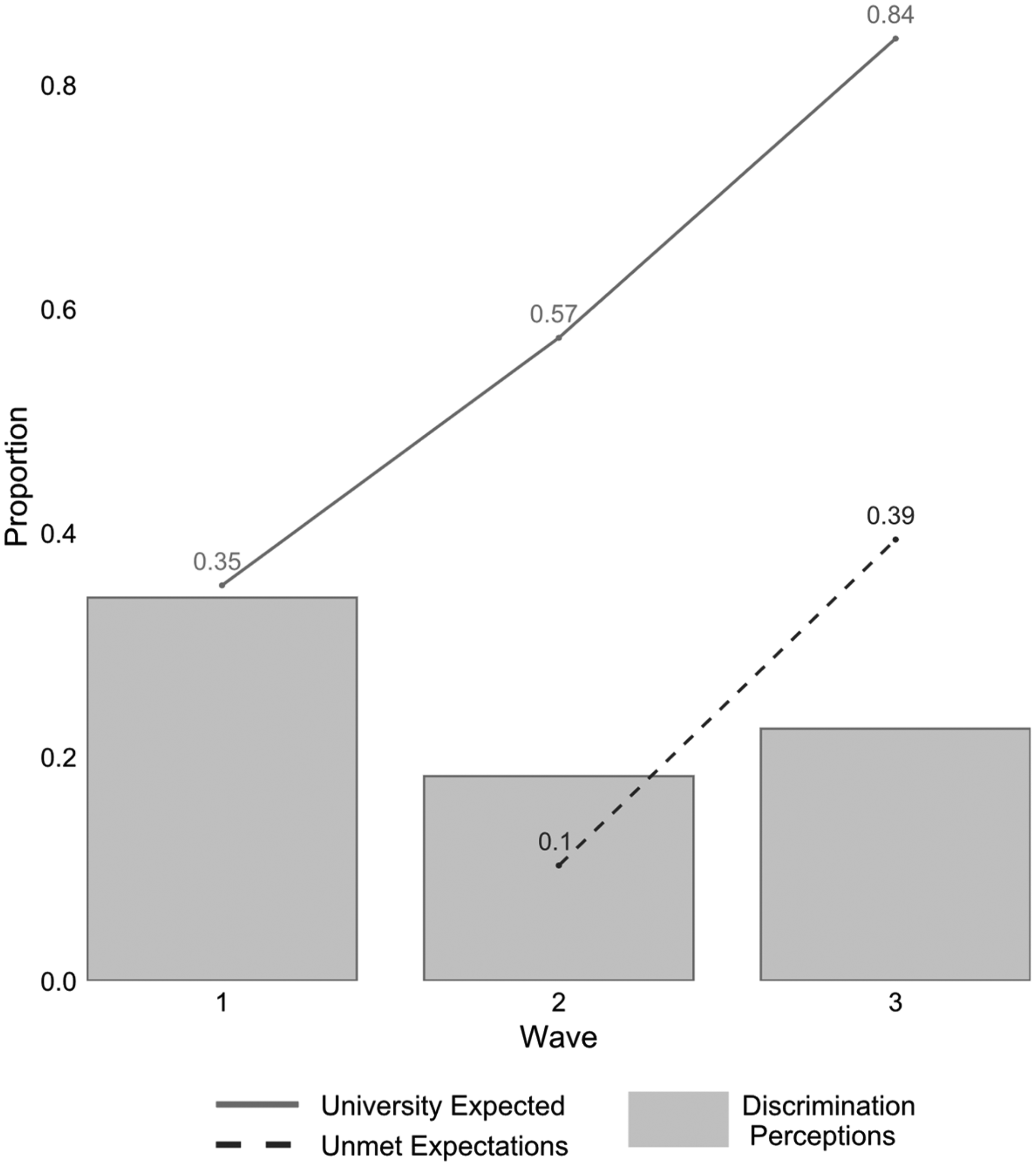
Development of perceived discrimination and educational expectations among immigrant-origin youth.
Descriptive Statistics: Unmet Expectations and Educational Attainment.
Source: Longitudinal Study of Second Generations in Spain (ILSEG) data and authors’ calculations.
aMeasured among students enrolled in education at the time of the survey.
bNot available in Wave 1 by definition.
Do Unmet Expectations Predict Individual Discrimination Perceptions?
We first investigate whether unmet educational expectations lead to an increase in perceived discrimination. We present results based on the Wave 2 and Wave 3 samples (as described in the Survey and Sample section). As shown in Panel A of Figure 2, our main results (based on inverse orobability of attrition weighting) contradict our theoretical expectations. In Wave 2, although we can observe that unmet expectations tend to increase the probability of reporting discrimination from 20 percent to 24 percent, this increase is not significant. In Wave 3, predicted probabilities of reporting discrimination significantly decrease from 24 percent (no unmet expectations) to 20 percent (with unmet expectations). Full models are presented in Supplemental Tables B1 and B2.
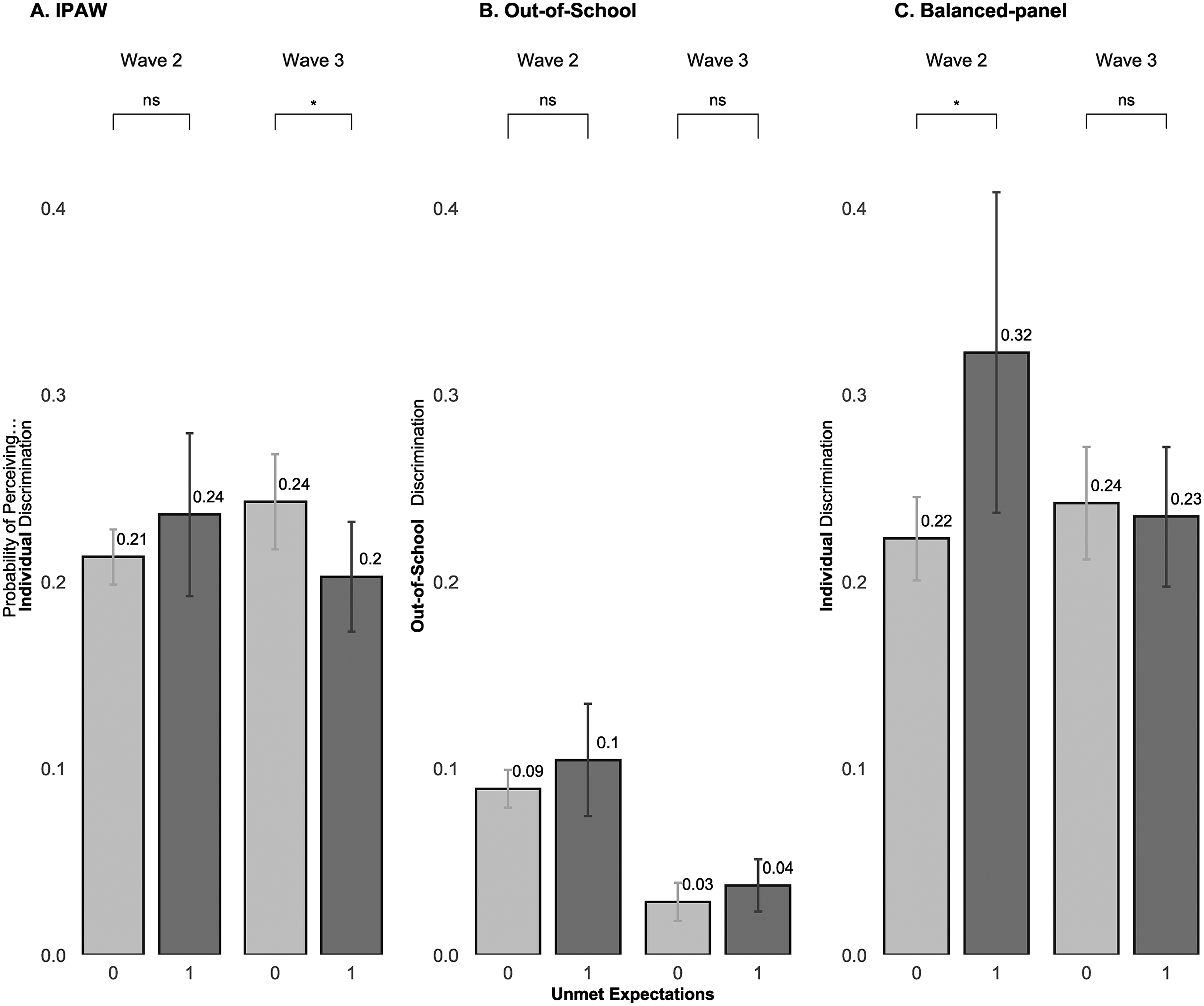
Effect of unmet educational expectations on discrimination perceptions.
To assess whether our findings are driven by discrimination in the school context — which could plausibly affect both perceived discrimination and educational trajectories — we estimate an additional specification with a more conservative outcome definition. Panel B of Figure 2 reports models that (i) exclude reports of discrimination perpetrated by teachers in Wave 2 and (ii) focus on work-related discrimination perceptions in Wave 3. These outcomes are less likely to influence whether adolescents end up falling short of their educational expectations, thereby reducing concerns that school-context discrimination confounds the association between unmet expectations and perceived discrimination. As expected, excluding teacher-related discrimination substantially reduces the prevalence of reported discrimination in Wave 2 (from 22% to 9%). Despite this stricter outcome, unmet expectations remain non-significantly associated with perceived discrimination in Wave 2. We observe a very small positive effect of unmet expectations, with a 10 percent probability of reporting discrimination (full models are available in Supplemental Tables C1 and C2). The effect of unmet expectations is positive and non-significant in Wave 3.
Our last model (Panel C of Figure 2) focuses on children whom we follow in all three waves (balanced panel), which yields more encompassing information on their educational trajectories, at the expense of generalization to the full sample (see Data and Methods section for a discussion of attrition in the survey). The picture is similar in this restricted sample, although unmet expectations now have a positive and significant impact on perceived discrimination, but only in Wave 2 (full models are available in Supplemental Tables B3 and B4). In Wave 3, unmet expectations non-significantly decrease perceived discrimination (from 24% to 23%).
We conducted robustness checks using fixed-effects models. Results indicate a positive (significant) effect of unmet expectations in Wave 2 and a positive but significantly smaller effect in Wave 3 (see Supplemental Table D6). In Wave 3, we tested whether focusing on ethno-racial discrimination changed the main results. We find that the coefficient of unmet expectations is negative and non-significant (see Supplemental Table D1).
In Wave 2, we thus note a small positive effect of unmet expectations on perceived discrimination. This effect only reaches significance in the balanced panel and fixed-effects specifications. In Wave 3, the estimation strategy significantly affects our conclusions, with unmet expectations having, in turn, positive or negative effects on perceived discrimination. Overall, these inconsistent results lead us to reject H1.
We check whether these results hold across the different origin groups in our sample. Table 1 shows that 17 percent of the children in our sample (across waves) are second-generation, that is, were born in Spain. All children have at least one parent who migrated, with the majority of families coming from Central and Southern America (around two-thirds of the total), followed by Europe, Africa, and Asia. There are reasons to expect that unmet expectations differently influence perceived discrimination across different ethnic groups, as their exposure to actual discrimination, the socioeconomic status of their parents, and racial/ethnic socialization systematically vary across these groups. However, we overall see no heterogeneity between origin groups in the link between unmet expectations and perceived discrimination, as demonstrated in Figure 3. We similarly see little difference across immigrant generations: although the effect of unmet expectations is positive for children born outside of Spain in Wave 2, this coefficient fails to reach significance. We can thus reject H1 across immigrant generations and origin groups.
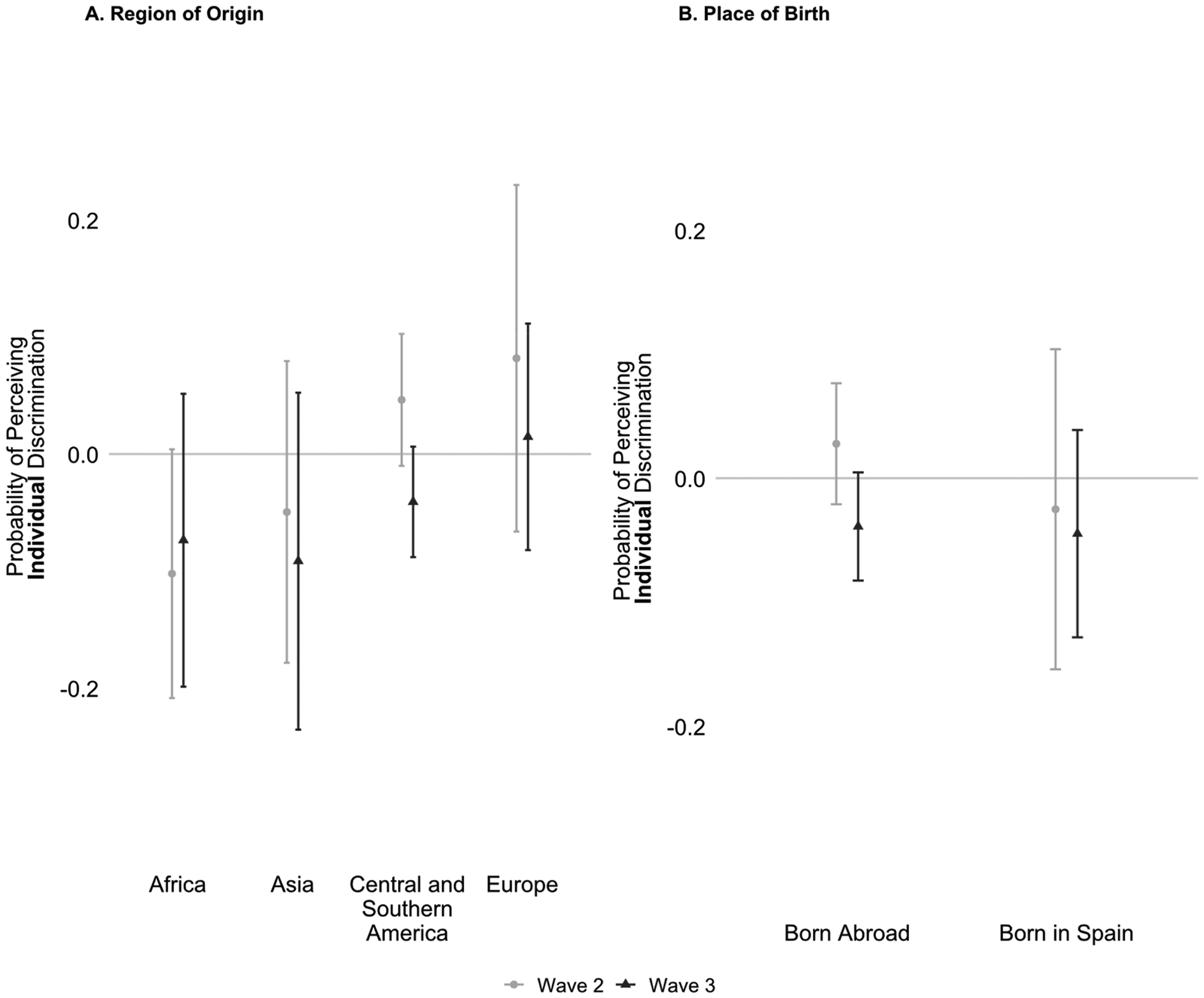
Interaction effect of unmet educational expectations on discrimination perceptions depending on the origin region or country.
The Influence of Parental Background on Discrimination Perceptions
We now turn to Hypothesis 2a, which assumes that immigrant-origin youth with highly educated parents are more likely to perceive discrimination (Panel A of Figure 4). In Wave 2, parental education is not significantly associated with perceived discrimination. This conclusion is robust across specifications, including models with alternative measures of parental education (using both parents’ educational attainment and a categorical variable for educational background) and models excluding school-based discrimination (see Supplemental Appendix C and Supplemental Tables D2 to D5). Results in Wave 3 are remarkably similar, again suggesting no association between parental education and perceived discrimination. We thus reject H2a: there is no indication that having highly educated parents fosters perceptions of discrimination.
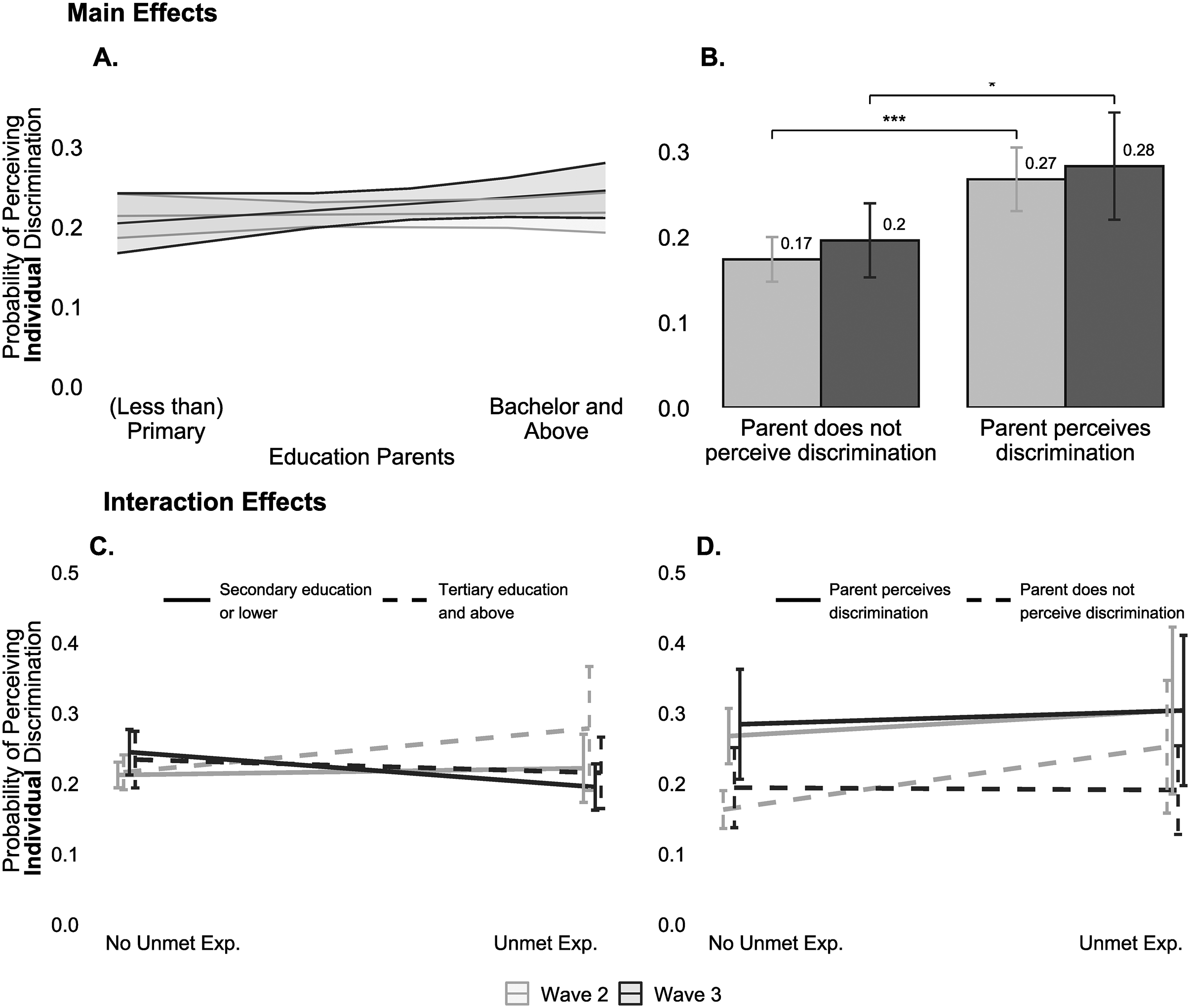
Effect of parental characteristics on perceived discrimination.
We then proceed to test H2b, which hypothesizes that parents’ perceived discrimination is positively associated with their children's perceived discrimination, potentially through sensitizing children to discriminatory experiences. We find that parental perceived discrimination is positively and statistically significantly associated with children's perceived discrimination in both waves (see Panel B of Figure 4). When a parent reports discrimination, children have a 27 percent chance of reporting discrimination (28% in Wave 3), compared to 17 percent (20% in Wave 3) when parents do not report discrimination. In specifications where both indicators of parental background are included, we observe that parental education and unmet expectations are significant in Wave 2 (see Supplemental Table B9 and balanced panel estimates in Figure 2). This suggests meaningful heterogeneity in the effect of parental education and unmet expectations depending on whether parents perceive discrimination. Finally, we remind the reader that perceptions of discrimination among parents were collected in the first wave of the survey, implying a substantial time lag between experiences of parents and children's reports. The positive coefficient of parental experiences in Wave 3 of the survey suggests a longer-lasting influence. Overall, these findings support H2b: parental perceived discrimination is associated with higher perceived discrimination among children.
For Whom Do Unmet Expectations Appear Most Detrimental?
Our final hypothesis concerns a potential interaction between unmet expectations and parental education (H3). We hypothesized that children of highly educated parents are more likely to interpret disappointment as discriminatory, which would be reflected in a positive interaction term between unmet expectations and parental education. Our findings provide no evidence for such a hypothesis (Panel C of Figure 4). The interaction term is positive, but small and statistically non-significant in both waves. Extending the reasoning underlying H2b, we also tested whether parental perceived discrimination moderated the association between unmet expectations and perceived discrimination. Results were similar: the interaction terms are consistently non-significant and even turn negative in Wave 2 (Panel D of Figure 4). Overall, we find no support for H3: the association between unmet expectations and perceived discrimination does not differ systematically by parental education (or parental perceived discrimination).
Discussion and Conclusion
In recent decades, sociological research on perceived discrimination has expanded substantially (Simon 2021; Schaeffer and Kas 2023). Whereas earlier work focused on the wide-ranging consequences of such perceptions among immigrant-origin groups (e.g., Schmitt et al. 2014), more recent research has increasingly examined its antecedents, with most studies focusing on adults (Diehl, Liebau, and Mühlau 2021, 2025; Schaeffer and Kas 2023; Lavest et al. 2025). In this article, we extend this line of research by focusing on immigrant-origin youth. We argue that their perceptions of discrimination are shaped by the realization of their (ambitious) educational expectations and by parental characteristics. Because educational expectations embody parents’ aspirations for socioeconomic advancement (Alba and Foner 2015; Salikutluk 2016), immigrant-origin youth are expected not only to match but also to surpass their parents’ educational attainment, thereby partly legitimizing the hardships their parents experienced after migration (Teney, Devleeshouwer, and Hanquinet 2013; Schaeffer 2019). Consequently, we expected that unmet educational expectations are more likely to be interpreted as discriminatory among children of highly educated parents.
First, our results show that unmet expectations are common among immigrant-origin youth, especially among those who do not attain a tertiary degree. This confirms recent concerns about a potential darker side of immigrant optimism: many immigrant-origin students fall short of their educational ambitions. But how many experience increased discrimination perceptions following unmet expectations (H1)? We did not find convincing evidence that unmet educational expectations systematically bolster discrimination perceptions among minority youth in Spain.
This null result could be driven by strong beliefs in meritocracy and the school system, leading children to accept the outcomes of their educational careers as fair — even when these outcomes fall short of their initial ambitions. This possibility is coherent with the sociological concept of “cooling the mark out” proposed by Goffman (1952) and applied to school trajectories (Clark 1960; Grubbs 2020; Emery, Bram, and Van Avermaet 2023; Voyer and Lund 2026). Cooling the mark out is the process by which the “mark” (here, an immigrant-origin student) comes to accept an outcome they would initially have rejected (here, an educational level lower than expected). In the context of this article, the cooling-out process unfolds as immigrant-origin youth learn to accept alternative educational outcomes and gradually internalize responsibility for their lack of success (Emery, Bram, and Van Avermaet 2023). The longer minority youth spend in the educational system, the more they learn to accept the institution's judgment. The more common mismatches between expectations and achievement become, the less likely they are to predict discrimination perceptions. Another potential explanation for the lack of influence of unmet expectations is that immigrant-origin youth may become aware of fulfilling alternatives to their initial expectations, such that attaining a lower level of education than expected is not experienced as downward mobility. This mechanism was investigated in a recently published paper using qualitative methods, in which the authors conceptualize this process as “branching out” (Voyer and Lund 2026), an alternative to the “cooling out” of expectations. “Branching out” may be particularly likely among youth who attain a minimum educational threshold before leaving the educational system, as is more common among those who exit at later stages.
Second, building on insights from the ethnic and racial socialization literature, we investigated heterogeneity across origins and generations. We expected that stronger preparation for bias among non-White groups would increase the likelihood that unmet educational expectations are perceived as discrimination. However, we observed limited heterogeneity across origin groups: although point estimates differed, we did not uncover significant variations across national origin groups or generations. Unmet expectations thus don’t seem to predict discrimination perceptions. However, these expectations develop within, and are influenced by, a family context, which functions as a reference point for assessing socio-economic progress, provides resources to achieve goals, and constitutes a socialization context through which youth learn to recognize discrimination. Accordingly, we hypothesized that parental education would increase discrimination perceptions via intergenerational transmission mechanisms and would positively moderate the relationship between unmet expectations and discrimination perceptions. Our findings were not always aligned with our expectations. Parental educational achievement did not foster discrimination perceptions among children as hypothesized in H2a. This may reflect the long-lasting occupational downgrading experienced by first-generation immigrants in Spain (Schnell and Azzolini 2015; Fellini and Guetto 2019). In this context, parental education constitutes a weak signal of socio-economic status, which does not entail increased educational resources at the family level. Because children perceive their parents’ occupation as more salient than their education (Lavest et al. 2025), the weak relationship between education and occupation in Spain may further obscure the role of parental education as a reference point for children.
In contrast, perceived discrimination among parents was significantly associated with higher discrimination perceptions among children (H2b). The coefficient was large and remained significant across waves and specifications. This suggests an intergenerational integration paradox (Schaeffer 2019), running through increased awareness of discrimination. This result is consistent with previous research showing that most of the effect of the integration paradox stems from increased awareness of discrimination processes rather than increased exposure to discrimination (Diehl and Liebau 2017; Schaeffer and Kas 2023). Moreover, our results suggest an explanation for previous unsuccessful attempts to document an integration paradox among youths (Lindemann 2020; Van Maaren and van de Rijt 2020). Minority youth's perceptions of discrimination may strongly depend on their parents’ perceptions, less so on their own educational trajectories. The full effect of children's education on their discrimination perceptions may only emerge after school, when they encounter additional contexts in which discrimination occurs, particularly on the labor market (Flores 2015).
Finally, we also examined whether the association between unmet expectations and perceived discrimination varies by parental education, as hypothesized in H3. This hypothesis was motivated by the idea that highly educated parents provide both greater resources and stronger intergenerational mobility aspirations, which could lead youth to more readily interpret educational setbacks as unfair. However, the interaction between unmet expectations and parental education was consistently small and statistically non-significant across specifications. The same holds for parental perceived discrimination, which does not moderate the association between unmet expectations and perceived discrimination. Taken together, these results provide no support for heterogeneous effects of unmet expectations by parental education or parental discrimination. It is possible that, due to pre-existing high levels of awareness, children belonging to these groups display high vigilance to discrimination and report it without needing to experience blocked educational expectations. This is coherent with the reported lack of heterogeneity in origins and generations discussed above: the ethno-racial groups most likely to be discriminated against did not react more strongly to unmet expectations.
Although we conducted multiple robustness checks to validate our findings, some limitations should be acknowledged. First, the available panel data did not include children's grades or consistently measured non-cognitive traits. Previous research shows that controlling for grades increases minority youth's expectations (Portes et al. 2013; Dollmann 2016; Dollmann et al. 2023; Ferrara 2023). Because this effect appears to vary by parental education, our analyses may underestimate the moderating effect of parental education on unmet expectations. In addition, unobserved non-cognitive characteristics such as optimism or locus of control could confound our results, as they can shape expectations and may also influence perceived discrimination (Diehl, Pomianowicz, and Hinz 2025). Due to the identification problem inherent in mismatch models, we cannot simultaneously control for expectations, attained education, and unmet expectations. As a result, part of the estimated association between unmet expectations and perceived discrimination may reflect omitted characteristics correlated with prior expectations.
Second, our measure of discrimination is relatively coarse. We have limited information on the context, grounds, or severity of discrimination experiences. Broad-ranging questions about discrimination may underestimate the extent of discrimination perceived by minority youth (Simon 2021). Additionally, because children may exit school up to four years before we measured perceived discrimination, other discriminatory events could have occurred in the interim, meaning unmet expectations may not directly trigger perceived discrimination. Finally, although our data covered a significant period in the lives of our respondents, we could not observe the achieved education of all children enrolled in the most demanding academic tracks (e.g., Master's degree and PhD). While longer educational trajectories increase the likelihood of attaining higher levels of education, our analyses may underestimate the influence of parental education on unmet expectations, as children of the most highly educated parents are more likely to remain in education longer.
Do high educational expectations constitute a double-edged sword for minority youth — promoting high achievement while also increasing perceived discrimination among those who fail to realize their ambitions? Overall, we found no impact of unmet expectations on perceptions of discrimination. Rather, our findings underscore the role of intergenerational mechanisms. Specifically, parental perceptions of discrimination predicted children's perceptions, even after multiple years. Parents likely socialize their children to expect ethnic and racial mistreatment and bias when they, themselves, have experienced discrimination (Lobo et al. 2025; Van Veen, Emmen, and Mesman 2025), allowing them to recognize and cope better with such situations. Yet, discrimination may not always be a frame used to make sense of educational setbacks, which may rather be seen through a meritocratic lens (Teney, Devleeshouwer, and Hanquinet 2013).
These findings highlight the importance of socialization processes in shaping perceived discrimination and suggest that discrimination experiences have enduring effects, influencing both the lives of immigrant parents and those of their children.
Footnotes
Acknowlegments
The authors thank Christoph Janietz, Ely Strömberg, Nazareno Panichella and two anonymous reviewers for in-depth, insightful comments on earlier versions of this article. They also thank participants of the CEPDISC Conference 2024 in Aarhus, of the DeZIM Conference 2024 in Mannheim, of the LIVES Conference 2024 in Geneva, and of the ECSR Spring School 2025 in Turin. Finally, all authors thank Lucas G. Drouhot for his theoretical guidance, his sense of title writing, and his comments on earlier versions of this draft.
Funding
The authors disclosed receipt of the following financial support for the research, authorship, and/or publication of this article: This work was funded by Utrecht University.
Declaration of Conflicting Interests
The authors declared no potential conflicts of interest with respect to the research, authorship, and/or publication of this article.
Data Availability Statement
The data underlying this article are available at the following address: https://www.openicpsr.org/openicpsr/project/155023/version/V1/view. Scripts are available on the following OSF repository:  .
.