






Abstract

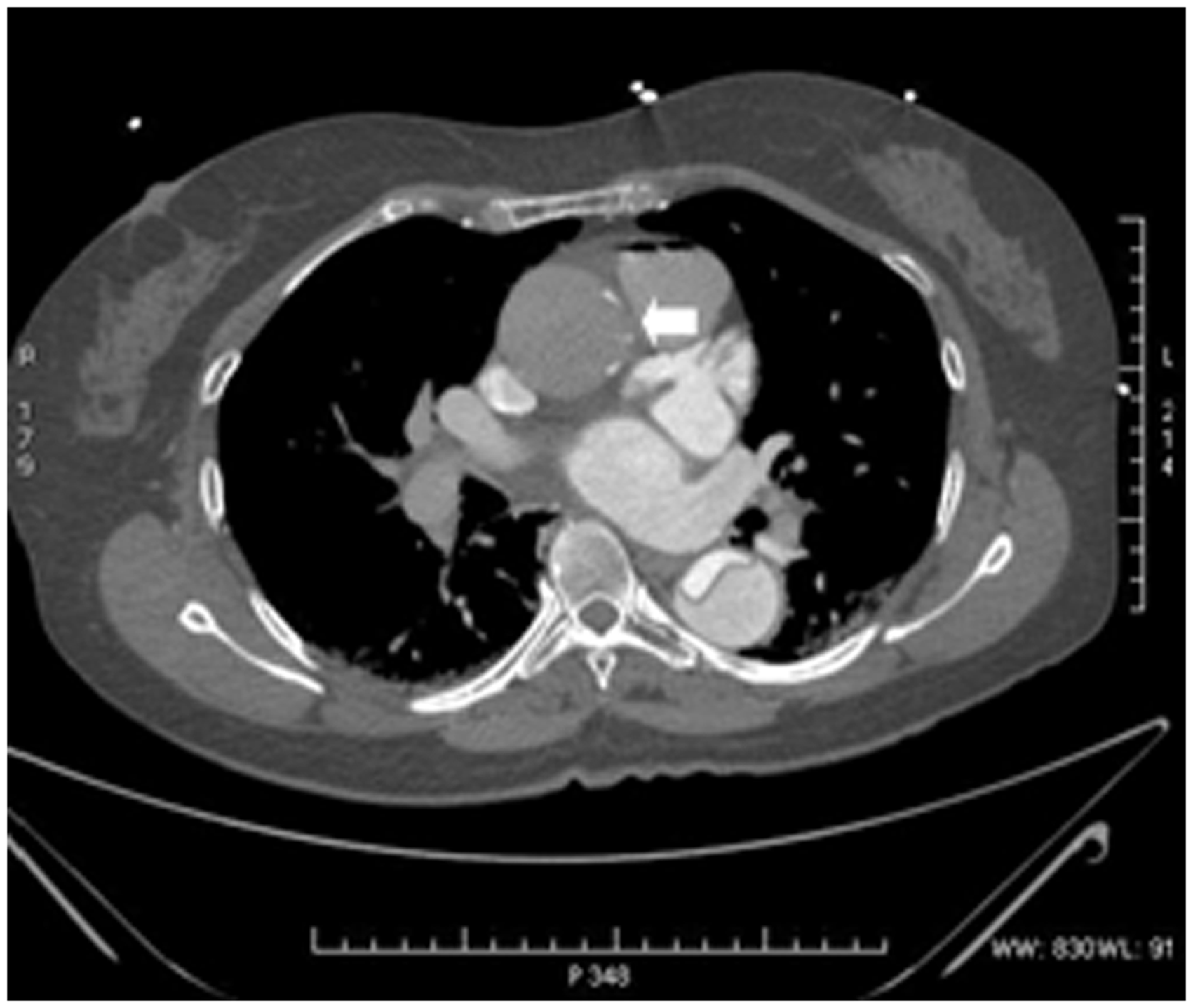
Thoracic computed tomography in a 70-year-old woman with acute chest pain and right upper and lower limb paraesthesia, showed type A aortic dissection (Figure 1) with almost complete collapse of the true lumen in the tubular portion of the ascending aorta (Figure 2). For emergency surgery, the left subclavian artery was cannulated before sternotomy, for arterial return. Intraoperative transesophageal echocardiography revealed no significant associated aortic regurgitation. The proximal intimal tear was located within the tubular portion of the ascending aorta. Repair consisted of total aortic root replacement with a stentless bioprosthesis and a Dacron graft extension for replacement of the tubular ascending aorta. Because of destruction of the right coronary ostium by the dissection process, a saphenous vein graft to the proximal right coronary artery was placed. The patient was discharged with good neurological recovery. True lumen collapse may be a dynamic process. It predominates during diastole but is reduced during the ejection phase to allow distal true lumen perfusion. In our patient, the filling with contrast medium of both true and false lumens in the descending aorta supports this hypothesis.
Thoracic computed tomography showing type A aortic dissection with classic true and false lumens. Computed tomography showing the virtually collapsed true lumen (arrow) of the supracoronary ascending aorta.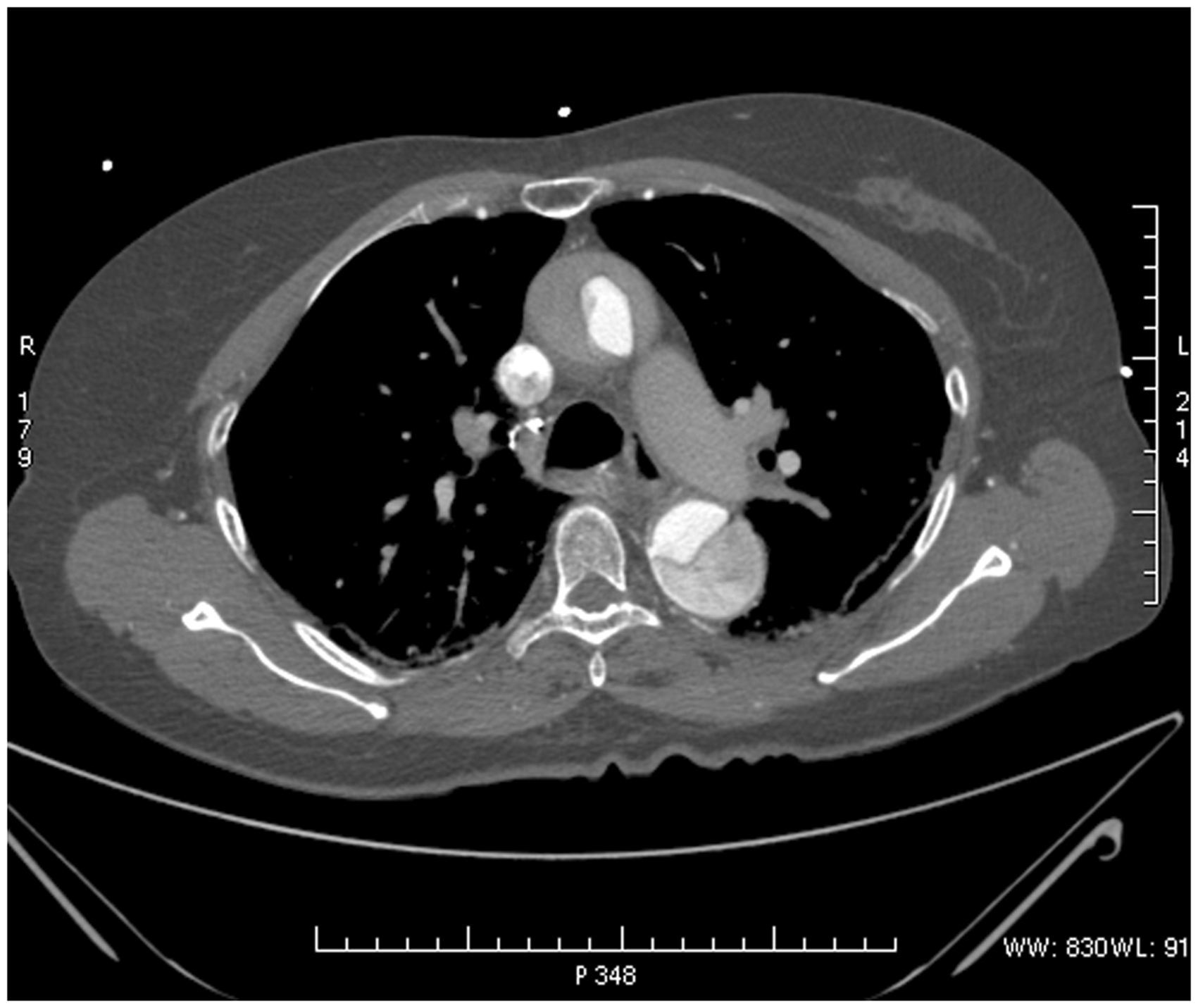
Footnotes
Funding
This research received no specific grant from any funding agency in the public, commercial, or not-for-profit sectors.
Conflicts of interest statement
None declared.