







Abstract
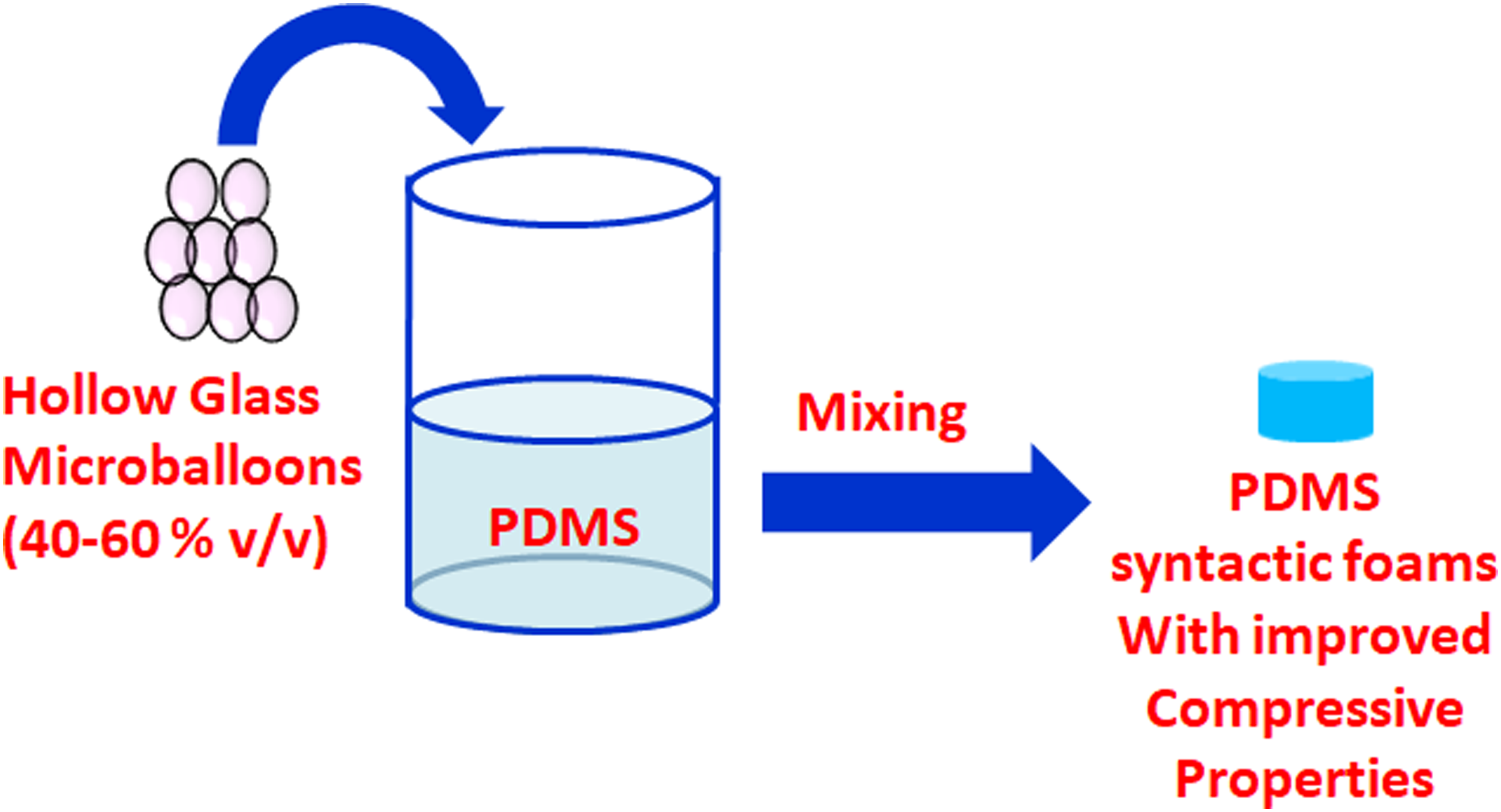
Polymer syntactic foams are lightweight polymer composites that are prepared by introducing hollow microspheres in a resin. The main endeavour is to obtain a significant reduction in the weight of the composite along with energy absorption. The present investigation aims to prepare poly (dimethylsiloxane) (PDMS)-hollow glass microballoons (HGM) (40–60% v/v) syntactic foams. Not only did HGM reduce the density of the syntactic foams but also act as a reinforcing phase and increase the compressive properties of PDMS. A ∼25% reduction in density was obtained in syntactic foam when compared to the neat elastomer. Similarly, an improvement of ∼118% in compressive strength was attained at 40% loading of HGM in PDMS. Specific compressive strength and toughness values also registered improvements of the order of ∼191 and ∼240% respectively which highlight the potential of PDMS syntactic foams in varied applications.
Introduction
Syntactic foams are cellular materials consisting of closed spherical microballoons encapsulated in a resin or binder. For polymer syntactic foams, the resin or binder is polymeric. The cellular nature is provided by the presence of hollow microballoons. They can be considered as a subcategory of polymer composites. 1 The use of hollow microballoons provides lightweight features to the matrix and the structure resembles closely that of foam, hence the term. The application areas of syntactic foams are not restricted. 2 They are used in areas where lowering the weight of structures is desirable such as making lightweight vehicles with high specific strength for use in aerospace, underwater applications, etc., and as a thermal barrier layer in fire-fighting suits 3 and since these hollow counterparts also act as energy absorbers, the syntactic foams offer a suitable candidature in the areas of defence also, for blast mitigation, 4 etc.
A variety of polymer matrices have been used both thermosets and thermoplastics, etc.5–8 Similarly, glass, 9 polymer10,11 and other varieties of hollow microballoons 12 have been used for the fabrication of syntactic foam. The type and volume fraction of matrix and microballoons can be altered to prepare a wide range of materials with contrasting properties.
Elastomers are a category of polymers that have primarily been used for energy/shock absorption, etc. A variety of syntactic foams have been prepared in the past that constitute elastomers or rubbers as toughening agents in polymer syntactic foams.13,14 However, there have only been very few studies on the use of elastomers as a matrix in syntactic foams3,15,16 but none have discussed in detail the compressive properties of elastomeric syntactic foams at varying volume fractions of hollow glass microballoons (HGM).
Poly (dimethylsiloxane) (PDMS) is an elastomer that has been used in the past as a toughening agent for epoxy-based syntactic foams. It was found that incorporation of PDMS led to enhancements of the order of ∼40% and ∼185% in flexural strength and toughness respectively. 13 The non-toxic nature, flexibility and large working temperature range are also added benefits of PDMS. Keeping these points in mind, the aim of this study is to explore the role of PDMS as a matrix material in PDMS–HGM syntactic foams and prepare lightweight energy-absorbing foams for demanding applications.
Materials and methods
Materials
Characteristics of hollow glass microballoons.

Characterization
The surface morphology of the syntactic foam specimen was observed using a scanning electron microscope (CARL ZEISS Gemini SEM 300). Compressive testing was carried out using Universal Testing Machine (International Equipments). Cylindrical specimens (22±2 mm diameter, 11±2 mm thickness) underwent compressive testing at a compression speed of 1.3 mm min−1. The area under the compressive stress-strain curve that corresponds to energy absorption was calculated.
Preparation of syntactic foams
The preparation of PDMS-HGM syntactic foams took place following a procedure reported for epoxy syntactic foams. 17 In brief, a measured quantity of HGM was introduced into the PDMS resin by gentle stirring followed by adding a stoichiometric amount of catalyst. The system was stirred, degassed and transferred to Teflon moulds for crosslinking to occur for 48 h. The specimens were then machined.
Different compositions and designations of neat and reinforced foams.
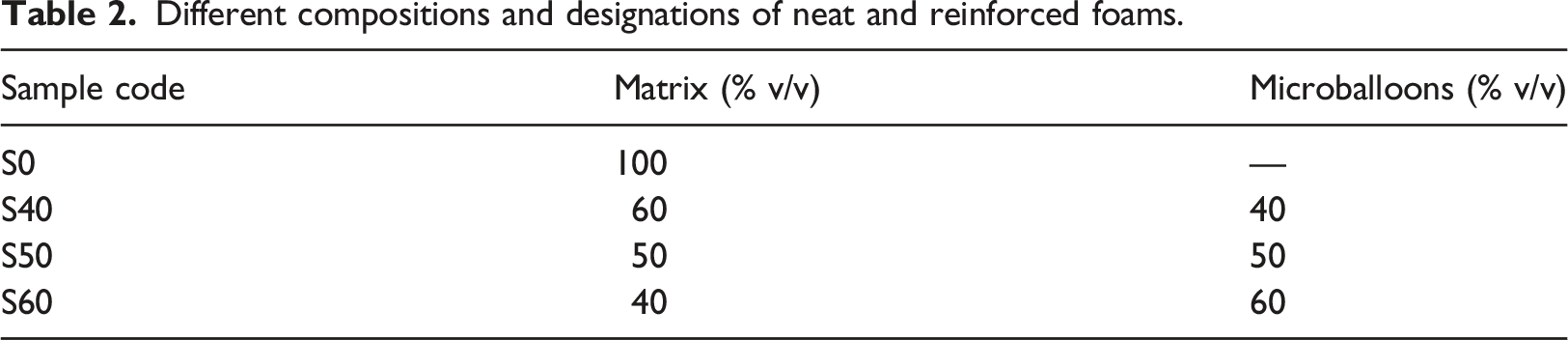
S refers to syntactic foam; the numerals following it represent the volume percent of HGM in syntactic foams.
Density Determination
The theoretical density of syntactic foams was determined according to the rule of mixtures,
18
as indicated in equation (1)
Here, 
Results and discussion
Determination of density
The densities of syntactic foam along with composition is presented in Figure 1. The incorporation of HGM in varying volume fractions (0.4–0.6 v/v) led to a consistent decrement in the density. Moreover, the presence of voids in the system further reduced the experimental density of syntactic foams. The theoretical densities of S40, S50 and S60 were reduced by ∼25%, ∼31 and ∼40% respectively when compared to PDMS (S0). Theoretical density and experimental density of syntactic foams.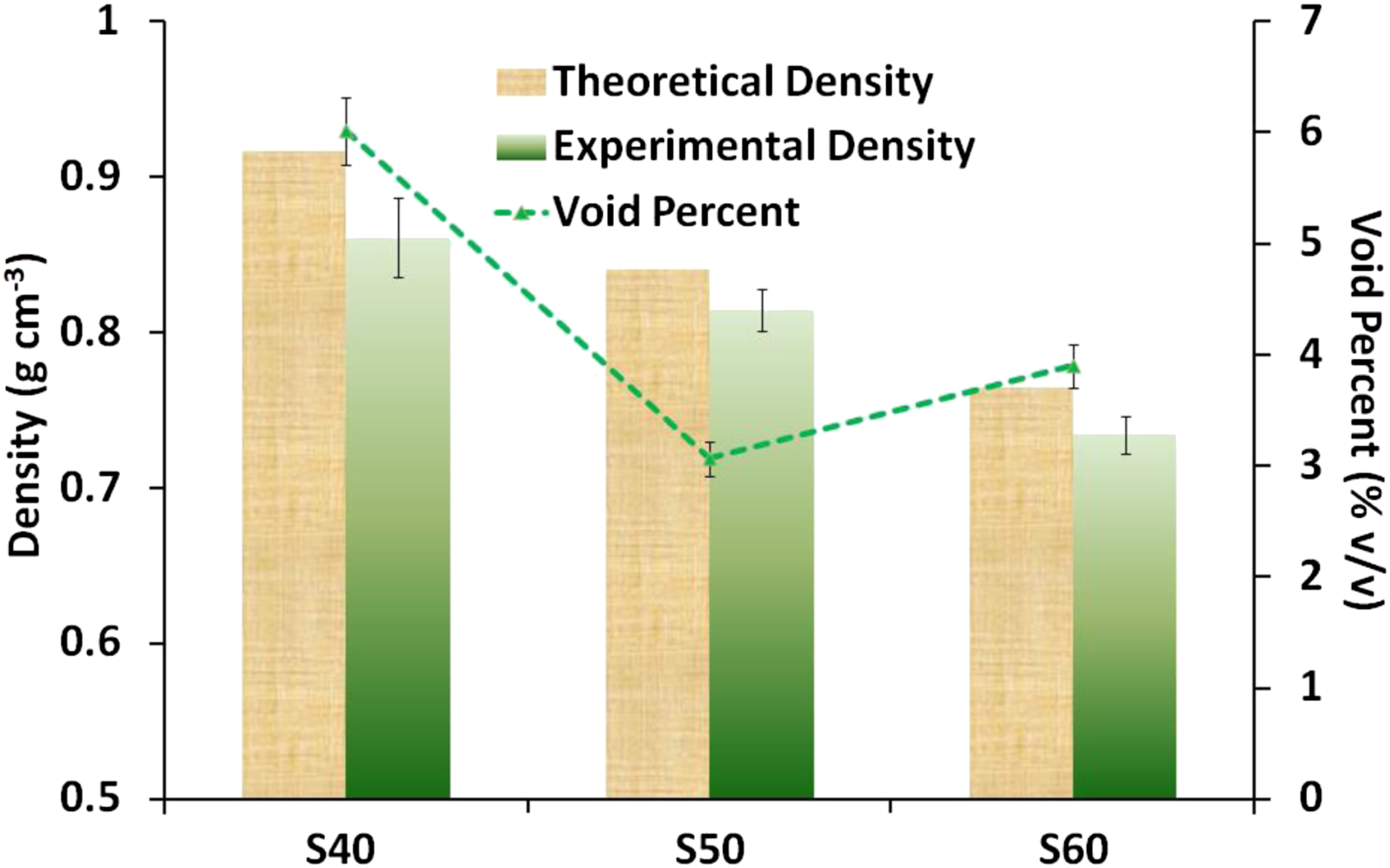
Compressive properties
The quasi-static compressive properties of PDMS-K46 syntactic foams have been ascertained from the stress-strain curves which are presented in Figure 2. It can be comprehended that the stress-strain curve of syntactic foams under compression has an initial non-linear region which is due to the elastomeric matrix that starts to deform at low stress.
15
This is opposed to some of the brittle thermosets like epoxy, where the initial region is linear.19,20 Hollow glass microballoons (K46), owing to their higher crushing strength (41 MPa) are the only stress-bearing components present in the specimen. Therefore, upon increasing the strain in the specimen, the stress increases non-linearly until a yield point is reached which is seen as a sharp drop in stress. This is the point at which the microballoons tend to deform and rather fracture. Increasing the stress leads to densification, resulting in complete foam failure. The area under the curve till the yield point is indicative of the energy absorbed by the foams. Compressive stress-strain curves of syntactic foams. Inset shows the stress-strain curve till the yield point.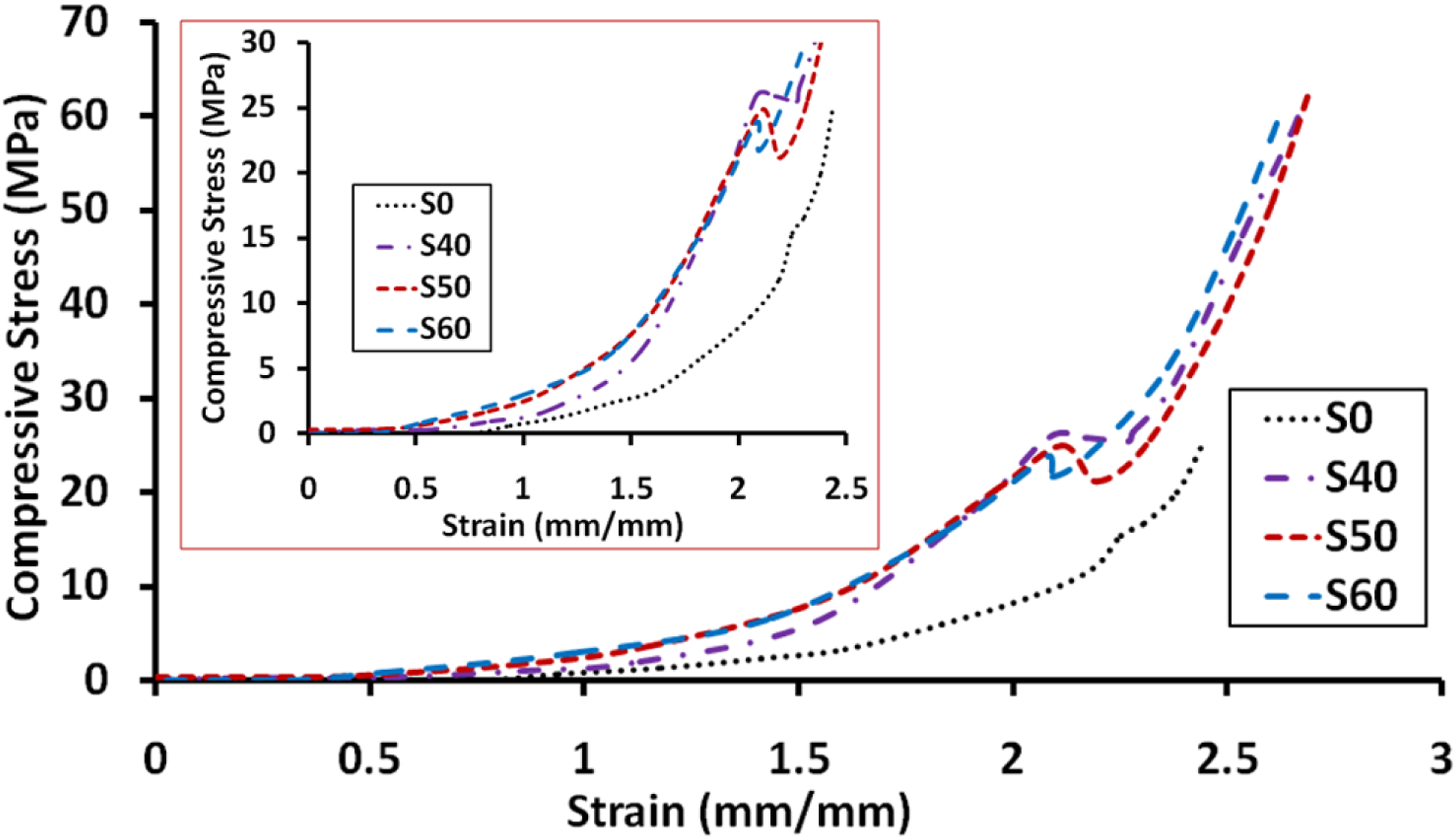
The variation in compressive strength and specific compressive strength of PDMS syntactic foams, derived from the stress-strain curves is featured in Figure 3. The point of fracture of HGM, which is the yield point of the composites, has been chosen as the basis for the calculation of compressive properties. It is apparent from the figure that with the increase in volume fractions of HGM, the compressive strength of syntactic foams decreases faintly. This is attributed to the fact that even though HGMs are the primary load-bearing phase in PDMS syntactic foams but increasing the microballoons volume fraction, in turn, reduces the volume fraction of PDMS and thus they are unable to hold the particles together. This is seen as a drop (∼3% and ∼8%) in compressive strengths of S50 and S60 compared to S40 syntactic foams. However, a major improvement in compressive strength, i.e. ∼118%, is observed in S40 when compared to neat PDMS without microballoons. This is primarily due to the reinforcing effect of the rigid glass microballoons. The specific strength values of syntactic foams are found to increase at higher loadings of HGM due to the dominating effect of reduction in density at higher microballoons content compared to the compressive strength. An increment of ∼5% and ∼10% in specific compressive strength values of S50 and S60 respectively over the S40 specimen is thus observed. A notable improvement of ∼191% in specific compressive strength is observed at 0.4 (v/v) HGM (S40) compared to neat PDMS (S0). Compressive and specific compressive strength of syntactic foams.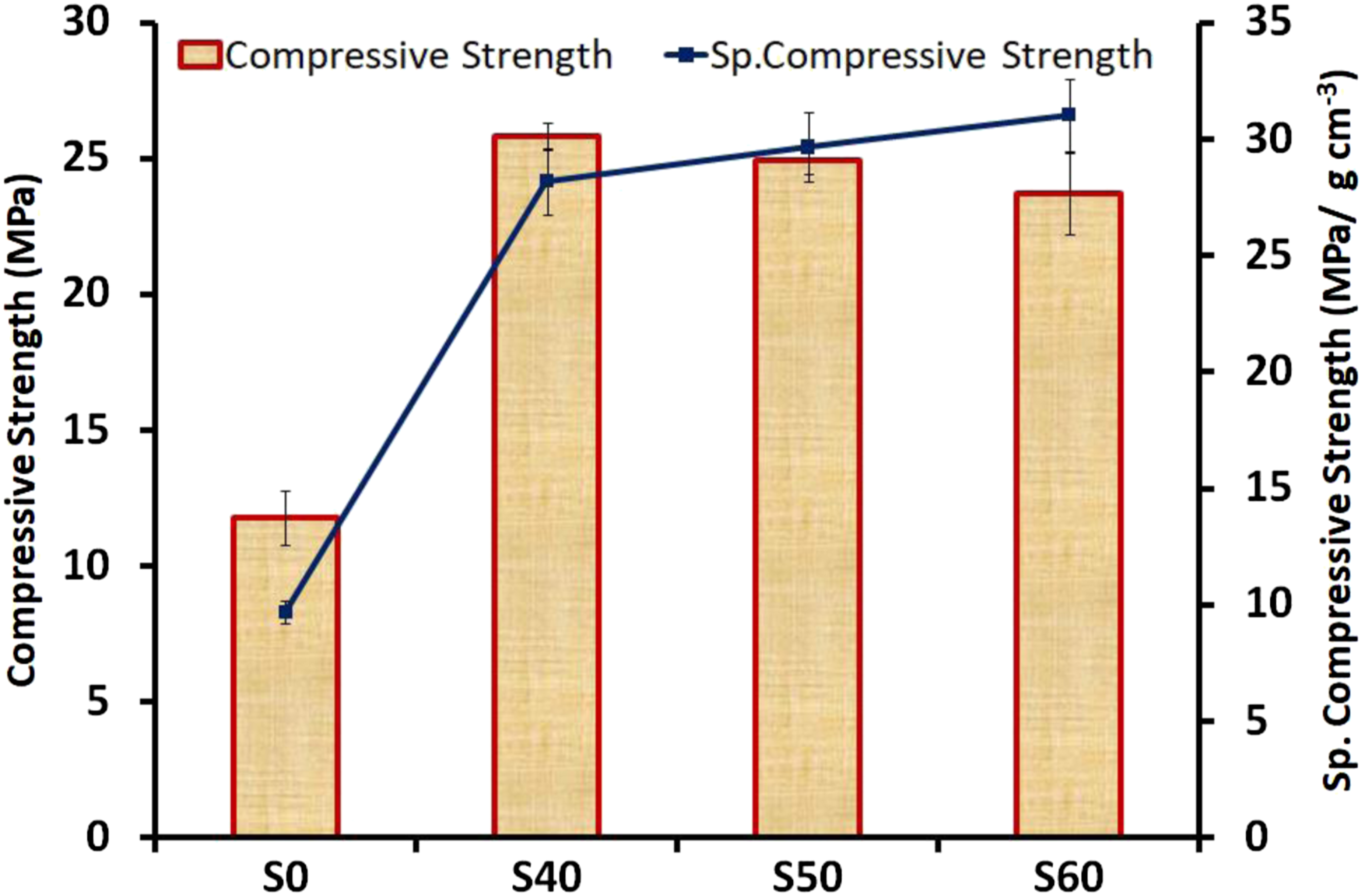
The compressive and specific compressive toughness of PDMS syntactic foams follow a similar trend as observed for compressive strength values. The corresponding graph is presented in Figure 4. Compressive toughness, quantified by measuring the area under the curve, is an indication of the energy absorbed by the foams till fracture and shows major enhancement when compared to neat PDMS. The presence of HGM enhances the yield strength considerably when compared to PDMS and thus increases the area under the curve. It is supported by the fact that the presence of high strength microballoons acts as independent loci for energy absorption.
4
An increment of ∼155% is found in S40 specimens compared to neat PDMS (S0). Specific compressive toughness, obtained by dividing the toughness value by the density, also registers an increase of ∼240% compared to neat elastomer thus showing the advantage of syntactic foams in energy absorption. Compressive toughness and specific compressive toughness of syntactic foams at varying volume fractions (0–0.6 v/v) of hollow glass microballoons.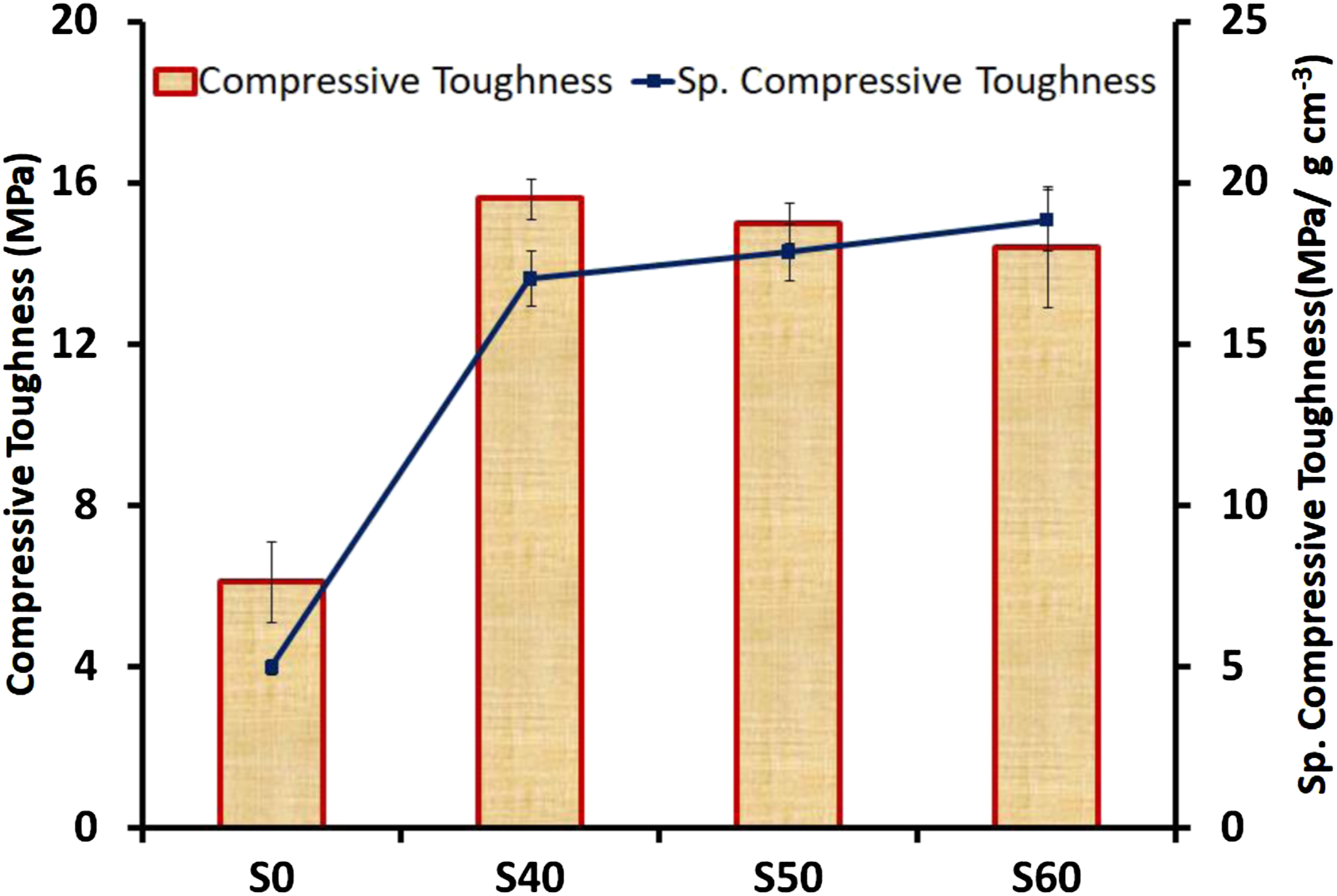
Increasing the HGM content beyond 40 reduces the compressive toughness due to the reduced compressive strength at higher loadings. Nevertheless, the specific compressive toughness values of S50 and S60 increase by ∼5 and ∼10% when compared to S40 due to the effect of reduction in the density at higher glass microballoons loading.
Microstructural Analysis
Scanning electron microscope of unreinforced PDMS and PDMS syntactic foam at different magnifications are presented in Figure 5. It can be seen that there is a noticeable difference in the microstructure of both the specimens. PDMS rubber (Figure 5(a) and (c)) has an irregular surface whereas the syntactic foam is characterized by the presence of several distinct microballoons embedded in PDMS matrix (Figure 5(b) and (d)). SEM micrographs of (a), (c) unreinforced poly (dimethylsiloxane) and (b), (d) poly (dimethylsiloxane) syntactic foam (S40) at different magnifications.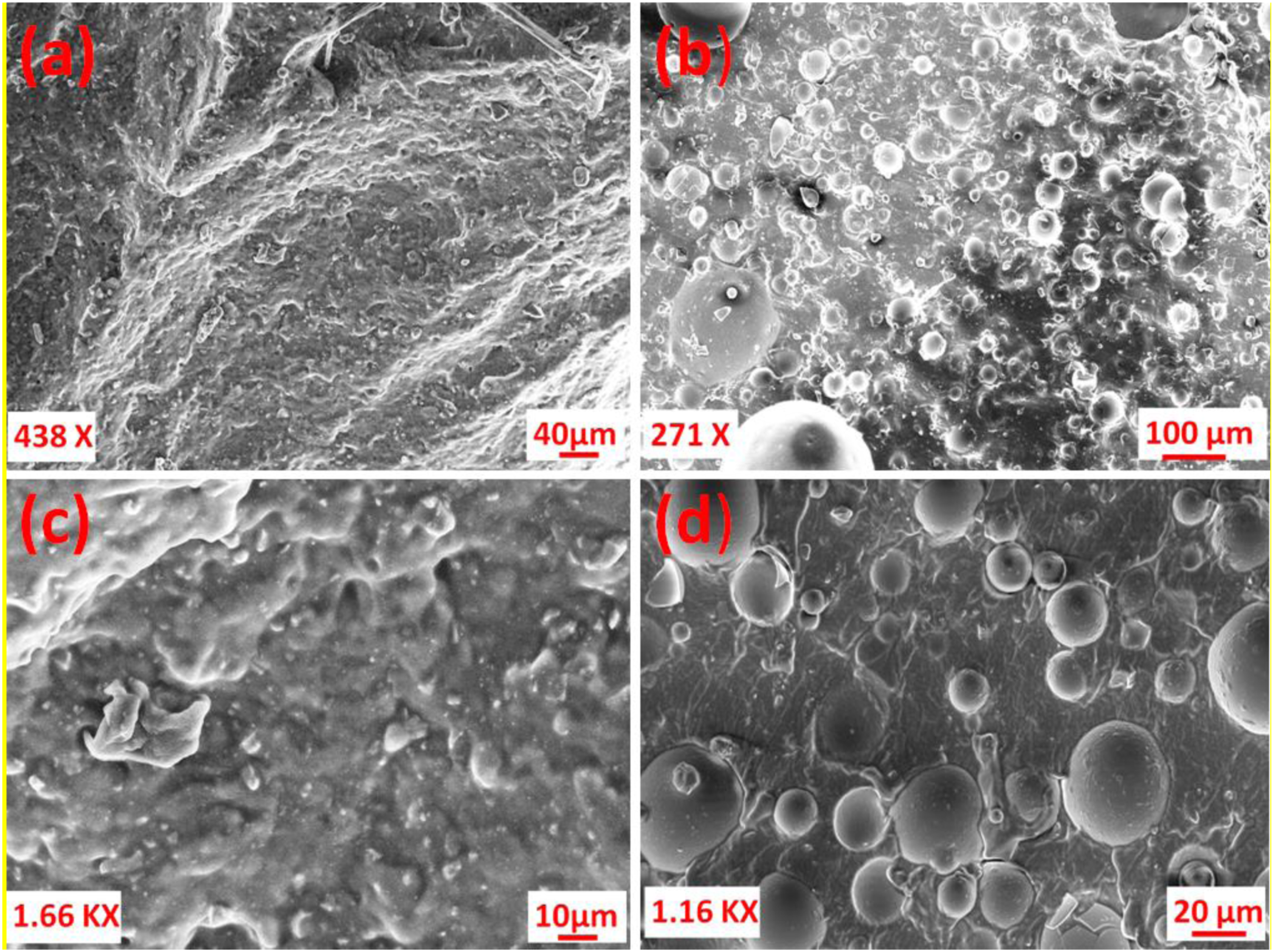
Thermal properties
The thermogravimetric traces of neat PDMS (S0) and syntactic foam compositions (S40-S60) in the air atmosphere are presented in Figure 6. A single-step decomposition pattern is observed in the TG traces of all the samples. The char content of neat PDMS is around ∼40% which increases to ∼60%, ∼67% and ∼74% in S40, S50 and S60 specimens respectively upon addition of HGM. The thermal stability of all the specimens, however, remains unaffected. Thermogravimetric traces of poly (dimethylsiloxane) syntactic foams.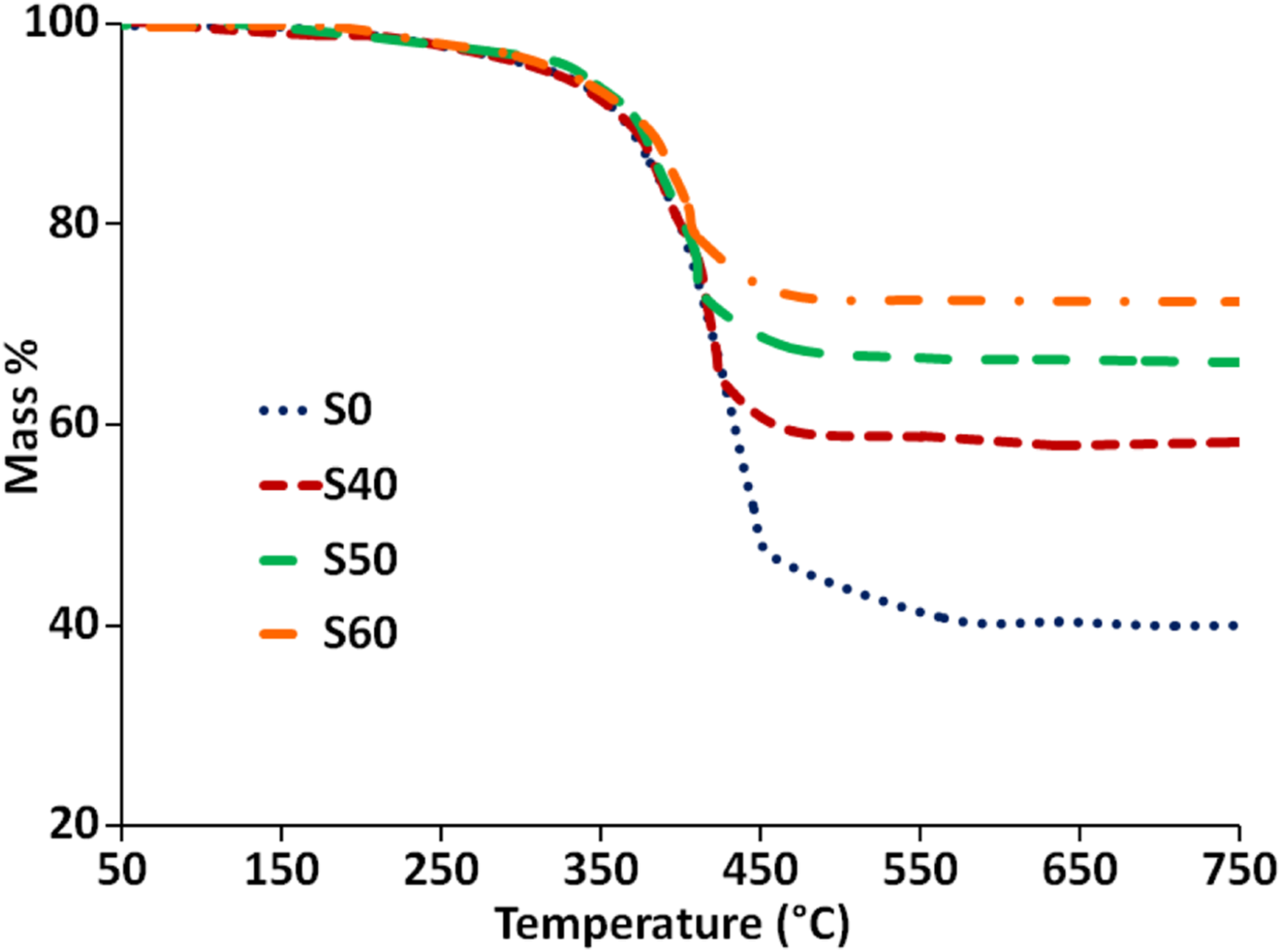
Conclusion
Poly (dimethylsiloxane)–HGM (0–60% v/v) were prepared by stir casting. The samples were subjected to quasi-static compression testing. The experimental and theoretical densities of syntactic foams decreased with increasing the volume fraction of HGM. A 25% reduction in theoretical density was observed for S40 compared to neat PDMS. HGMs also acted as reinforcement in the PDMS matrix and increased the compressive strength and specific compressive strength of PDMS by ∼118% and ∼191% respectively when added at 40% (v/v). Similarly, the compressive toughness and specific compressive toughness at 0.4 (v/v) HGM loading increased by ∼155% and ∼240% when compared to the neat elastomer. Poly (dimethylsiloxane) syntactic foams thus offer the potential to develop into a lightweight and high-energy absorbing materials that could replace conventional rubbers.
Footnotes
Acknowledgements
The authors acknowledge Director, Centre for Advanced Studies Lucknow for providing logistic support. The authors thank Dr Manorama Tripathi for the testing of samples.
Declaration of conflicting interests
The author(s) declared no potential conflicts of interest with respect to the research, authorship, and/or publication of this article.
Funding
The author(s) received no financial support for the research, authorship, and/or publication of this article.
