







Abstract
Child-centrism is a commonly practiced parenting approach in which parents prioritize their children’s well-being over their own. Despite initial validation of a child-centrism scale among mothers—supporting its distinctiveness from other intensive parenting styles—research has yet to comprehensively examine child-centrism in fathers and identify motivations for engaging in and concrete manifestations of child-centrism. In this research, we provide a nuanced examination of mother and father child-centrism, including parents’ child-centric motivations and behaviors. Across two mixed-method studies (N = 387 parents from the U.S.), we demonstrate that mothers and fathers interpret and respond to the child-centrism scale similarly and further establish the validity of the child-centrism measure. We also conduct gender comparisons of child-centrism endorsement, examine parents’ motivations for engaging in child-centrism, and identify qualitative themes among parents’ child-centric behaviors. This research advances understanding of child-centrism as a distinct and meaningful parenting approach, underscoring its relevance for both mothers and fathers.
Prioritizing the needs of close others, especially children, is a strongly endorsed communal norm (Clark & Jordan, 2002; Clark & Mills, 2012). Ethical perspectives suggest that parents should base decisions on what is best for their children (Birchley, 2016), and parenting ideals across cultures valorize high parental investment in children’s well-being (Chao & Kaeochinda, 2010; Ishizuka, 2019). These ideals manifest in child-centrism, a parenting approach in which parents—particularly mothers (Hays, 1996)—feel compelled to prioritize their children’s needs, even at the expense of their own (Craig et al., 2014; Elliott et al., 2015; Henderson et al., 2016). Yet, despite its prominence across cultures, limited research exists on how parents internalize and enact child-centrism. Most studies have focused on mothers, leaving fathers’ perspectives underexamined, and little is known about the motivations underlying or the behaviors that reflect child-centrism.
This research addresses these gaps. Study 1 tested whether mothers and fathers interpret and endorse items in the Child-Centrism Scale (Ashton-James et al., 2013) similarly, providing evidence for its measurement validity and invariance. Study 2 extended this work by using a mixed-method design to compare mothers’ and fathers’ child-centrism endorsement, motivations, and behaviors (e.g., time spent with children, frequency of sacrifice), and identified qualitative themes illustrating how parents describe child-centric parenting in daily life.
Child-Centrism
Child-centrism is a parenting approach characterized by parents’ motivation to prioritize their child(ren)’s well-being over their own, reflected in a willingness to devote time, emotional energy, financial resources, and attention to their children rather than themselves (Ashton-James et al., 2013). Parenting ideals have shifted dramatically over time from viewing children as contributors to household survival to the central focus of parental identity and investment (Cohen, 2018; Zelizer, 1994). “Child-first” ideologies construct children’s needs as paramount, framing good parenting as prioritizing children’s well-being above parents’ own (Hays, 1996; Ishizuka, 2019). Nationally representative data indicate that most American parents describe parenthood as central to their personal identity across genders, income levels, and racial backgrounds (Minkin & Horowitz, 2023), and child-centrism is broadly normative across middle-class families of diverse racial backgrounds (Hays, 1996; Lareau, 2003). Critically, variation among parents lies in the degree of endorsement rather than whether they hold child-centric values (Ashton-James et al., 2013).
Child-centrism is thus likely shaped by both internalized values and contextual demands, with individual variation in the extent to which it reflects personal endorsement versus social expectation. These cultural expectations have prompted ethical arguments that parents are morally obligated to maximize their child’s welfare even at personal cost (Birchley, 2016). Still, some parents may enter parenthood internally motivated and prepared to prioritize their child’s needs, particularly during periods of high dependency such as the newborn stage (Belsky, 1984). Consistent with these ideals, parental involvement (Cornwell et al., 2019) and time spent with children (Craig et al., 2014; Gauthier et al., 2004) have continued to rise and even doubled compared to 50 years ago (The Economist, 2017), suggesting that child-centrism reflects a widespread, though not uniform, orientation to parenting.
At first glance, child-centrism may appear to resemble other intensive or maladaptive parenting approaches—which can place exhausting demands on parents (Novoa et al., 2022)—because it involves parents subordinating their own well-being for their children’s. However, child-centrism is only moderately correlated with other intensive parenting styles, such as “little emperor parenting” (i.e., providing children with all the material things they desire; Dionne, 2008) and “helicopter parenting” (i.e., solving problems for children and shielding them from harm; Hunt, 2008). Child-centrism is also distinct from “tiger parenting,” which emphasizes exceptionally high achievement standards and harsh reactions to failure (Ashton-James et al., 2013; Chua, 2011). Despite requiring substantial parental investment and sacrifice, child-centric parents report better well-being outcomes, including less negative emotion, greater positive emotion, and more meaning while caregiving than do less child-centric parents (Ashton-James et al., 2013). However, these benefits may depend on whether child-centrism is mutually endorsed by both partners, embedded in a strong interparental relationship, and the family’s developmental context.
At the relational level, alignment between partners is critical. Women report greater satisfaction when their partners share similar child-centric priorities, whereas men’s satisfaction is enhanced when they feel prioritized by their partners (Vowels et al., 2024), and partner alignment benefits marital and coparenting quality (Merrifield & Gamble, 2013). Thus, child-centrism may support well-being when it is mutually endorsed but create tension when it is asymmetrically enacted or comes at the expense of the romantic relationship. More extreme forms of child-centrism, characterized by consistently prioritizing the child at the expense of parental or romantic relationship well-being, may be less adaptive and reflect unmitigated communion—an overinvolvement in others’ needs to the neglect of one’s own—which is linked to poorer individual and relational well-being (Fritz & Helgeson, 1998).
At the family level, child-centrism is likely to operate differently across relational and developmental contexts. It may be more beneficial in families with strong interparental relationships and during periods of high child dependency (e.g., early childhood), but less adaptive in contexts of interparental conflict or stress—where strain may spill over into the family system—or at later developmental stages, where excessive parental self-sacrifice may constrain children’s autonomy. Indeed, better coparenting is bidirectionally linked to better parental well-being, child well-being, and parent-child relationship quality over time (Peltz et al., 2018; Yan et al., 2018).
Despite the cultural prominence of child-centric ideals and their influence on parental well-being, little is known about what motivates parents to endorse child-centrism or how much child-centric parents act on their child-centric values. Fathers consistently comprise small proportions of parenting research samples (e.g., 17%; Davison et al., 2016) if they are included at all, and most studies of intensive parenting have focused exclusively on mothers (e.g., Ashton-James et al., 2013; Lavenda & Kestler-Peleg, 2018). It remains unclear whether fathers experience comparable motivation to be child centric, and whether mothers and fathers differ in how much they endorse and enact child-centrism.
Motivations for Child-Centrism
Parental worth is often tied to sacrifice and selflessness, making child-centrism both normative and socially reinforced. Within this cultural context, parents may feel obligated to engage in child-centric behaviors, viewing them as part of their parental duty. Acting in line with these expectations can also be identity-affirming (Rane & McBride, 2000), allowing parents to see themselves as good, successful caregivers. At the same time, parents’ motivations for child-centrism may extend beyond social obligation or moral duty. Drawing on research that distinguishes between relationship-, partner-, and self-focused motives (Visserman et al., 2018), parents may adopt child-centrism for similarly distinct reasons. Some parents may be guided by relationship-focused motives (e.g., to foster family harmony and strengthen emotional bonds). Indeed, greater parental involvement, particularly among fathers, is linked to higher-quality parent-child relationships and greater marital satisfaction for both partners (Galovan et al., 2014). Other parents may act from partner-focused motives, prioritizing their children to pre-empt or reduce disagreements with a romantic partner (Cheung & Chung, 2023; Nelson et al., 2017). Still others may be driven by self-focused motives, such as providing their children with opportunities they lacked.
Social role theory (Eagly, 1987; Eagly & Wood, 2016) posits that individuals’ behaviors are shaped by the social roles they occupy and the expectations attached to those roles. Because parental roles are deeply gendered, mothers and fathers internalize different norms and pressures about what it means to be a “good” parent. Mothers often experience stronger social and internalized expectations to act selflessly, possibly leading them to endorse child-centrism out of obligation, to affirm their maternal identity, or to compensate for a partner’s limited involvement (Aarntzen et al., 2023; Berger et al., 2022). Fathers, by contrast, tend to face fewer normative expectations to center their lives around childcare (Aarntzen et al., 2023; Craig, 2006) and therefore may be more likely to engage in child-centric behaviors for enjoyment, relational benefits, or conflict avoidance. These perspectives suggest that motivations for child-centrism are shaped both by individual meaning-making and broader gendered expectations about what it means to be a “good” parent.
Current Research
Given the limited research on child-centrism, we first aimed to replicate and extend prior validation of the Child-Centrism Scale (Ashton-James et al., 2013) by examining convergent validity with communal strength, discriminant validity with “tiger parenting”, and measurement invariance across parent gender. Next, we explored parents’ endorsement of theoretically driven child-centric motives and assessed potential gender differences. We also incorporated qualitative methods to capture how parents experience and enact child-centrism beyond what established measures can capture, and to extend scale development efforts by grounding the construct in parents’ own descriptions of their child-centric behaviors. These exploratory studies were designed to refine the conceptualization and measurement of child-centrism before examining its outcomes and were therefore not preregistered. All data, code, and materials are on the Open Science Framework: https://osf.io/5dxgr.
Study 1
We aimed to replicate and extend prior work on child-centrism by assessing the factor structure, reliability, and gender invariance of the Child-Centrism Scale (Ashton-James et al., 2013).
Method
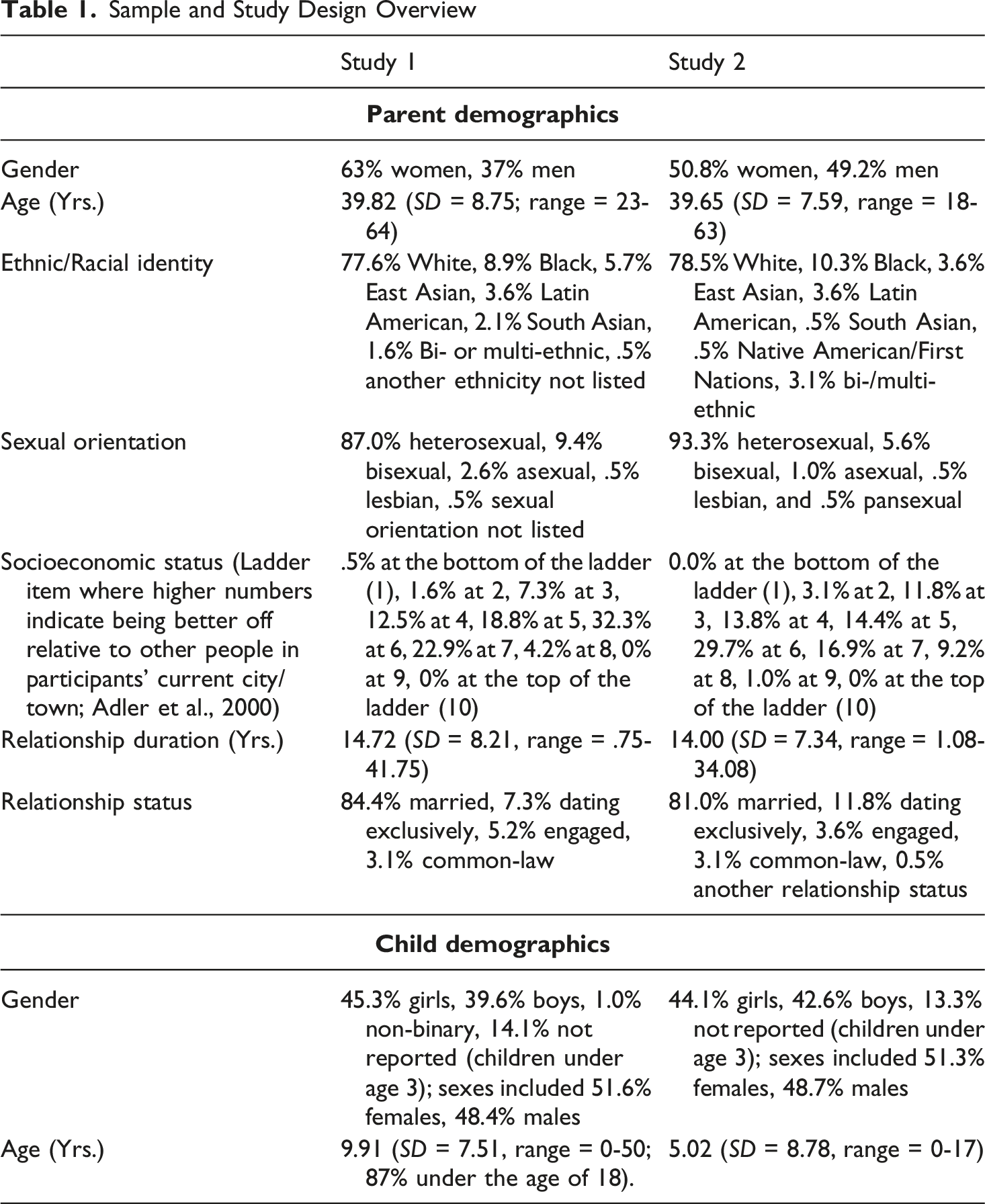
Participants
Sample and Study Design Overview
Measures
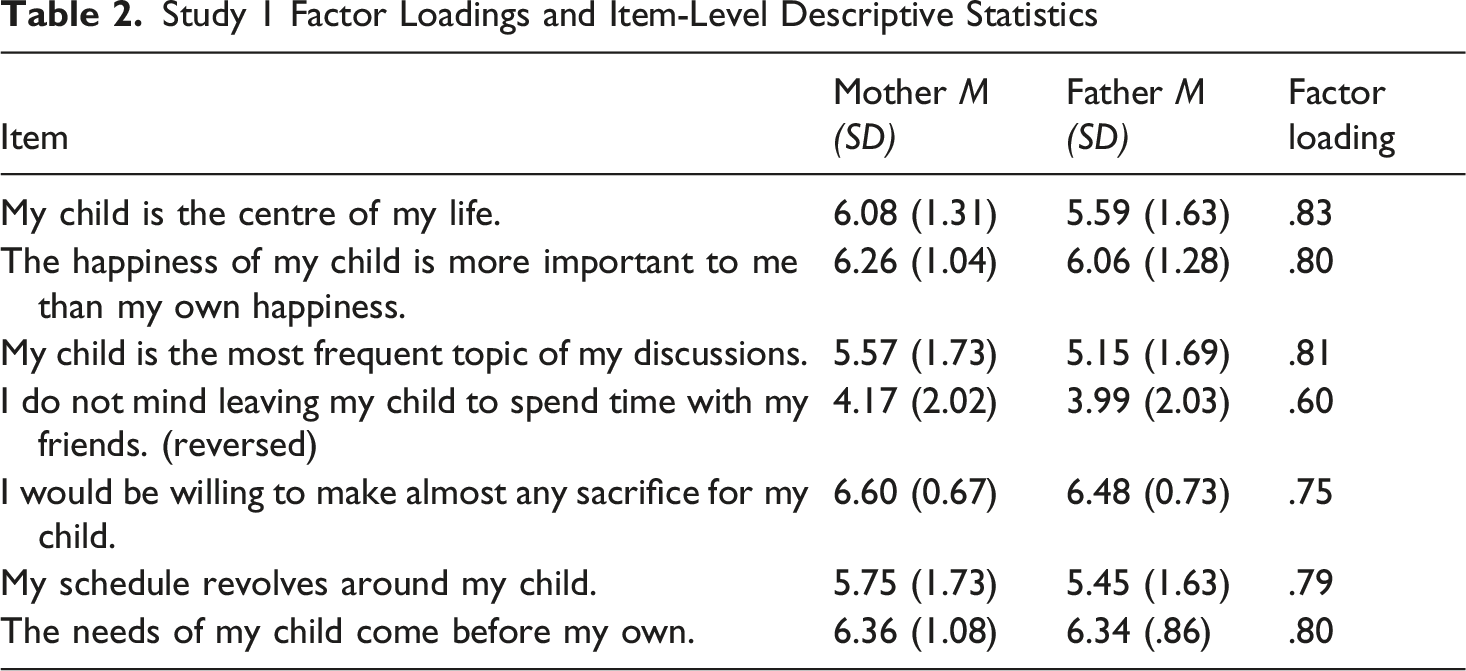
Study 1 Factor Loadings and Item-Level Descriptive Statistics
Analysis Plan
We first conducted a confirmatory factor analysis (CFA) in R using maximum likelihood estimation to validate the proposed one-factor scale structure and examine discriminant and convergent validity. To test for measurement invariance across parent gender, we used the lavaan package (Rosseel, 2012) to estimate a series of increasingly constrained multi-group CFAs (Byrne et al., 1989; van de Schoot et al., 2012). We began by testing for configural invariance to assess whether the same latent factor structure fit across mothers and fathers, while allowing specific loadings and intercepts to differ across gender. We then tested metric (weak) invariance by constraining factor loadings to equality, which would indicate that mothers and fathers attribute the same meaning to child-centrism. Next, we tested for scalar (strong) invariance by constraining intercepts to equality, allowing for child-centrism scores to be compared across groups. Finally, we tested for strict invariance by further constraining residual variances to equality, which would indicate that child-centrism is measured equivalently across groups.
We evaluated model fit using multiple recommended goodness-of-fit indices: CFIs ≥.90 (Bentler, 1992; Byrne, 2001), SRMRs ≤.08 (MacCallum et al., 1996), and RMSEAs ≤.07 (MacCallum et al., 1996; Steiger, 2007). We used robust fit statistics and model comparisons were based on ΔCFI ≥.01 (Cheung & Rensvold, 2002), with higher SRMR and RMSEA values indicating worse fit. We also conducted nested model comparisons using scaled chi-square difference tests (Satorra, 2000; Satorra & Bentler, 2001), where significant results indicate worse fit.
Results
We first confirmed that the child-centrism scale items formed a single construct. Consistent with prior work, all items had high loadings (.60 - .83), and a one-factor CFA provided adequate model fit, χ2(14) = 97.16, p < .001, CFI = .903, TLI = .854, RMSEA = .176 [90% CI: .144, .210], SRMR = .049. Although RMSEA suggested some model misfit, likely influenced by the low degrees of freedom (Kenny et al., 2015), other indices (CFI, SRMR) were within acceptable ranges, and all items showed strong loadings, suggesting coherent item functioning. As expected, tiger parenting was not associated with child-centrism, r(192) = −.03, p = .734, whereas communal strength was positively associated with child-centrism, r(192) = .48, p < .001, providing evidence for discriminant and convergent validity.
Study 1 Model Fit Statistics From Multigroup Confirmatory Factor Analyses Testing Measurement Invariance in Child-Centrism Across Parent Gender
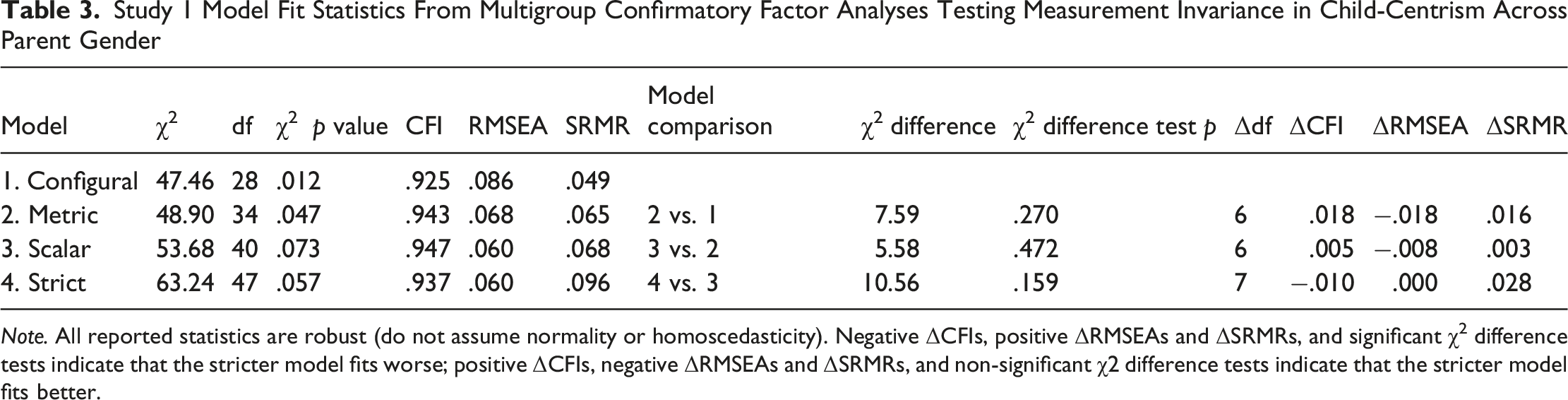
Note. All reported statistics are robust (do not assume normality or homoscedasticity). Negative ΔCFIs, positive ΔRMSEAs and ΔSRMRs, and significant χ2 difference tests indicate that the stricter model fits worse; positive ΔCFIs, negative ΔRMSEAs and ΔSRMRs, and non-significant χ2 difference tests indicate that the stricter model fits better.
Study 2
Establishing the validity and gender invariance of the scale provided a foundation for testing whether mothers and fathers differ in child-centrism, ensuring that any potential differences reflect true variation. In Study 2, we combined quantitative and qualitative comparisons between mothers and fathers to gain a better understanding of parents’ child-centric experiences.
Method
Study 2 was designed to identify the types of behaviors in which child-centric parents engage and examine their motivations for being child-centric. Quantitative analyses assessed mean levels of and potential gender differences in child-centrism, child-centric behaviors, and underlying motivations. Qualitative analyses revealed common themes in parents’ child-centric behaviors.
Participants
We recruited 195 parents (93.8% biological, 4.1% stepparents, 1.5% adoptive parents, 0.5% grandparents) from CloudResearch using the same eligibility criteria as Study 1. Parents completed an online survey and received $1.80 in compensation.
Measures
Quantitative
Study 2 Item Descriptives and Group Mean Differences
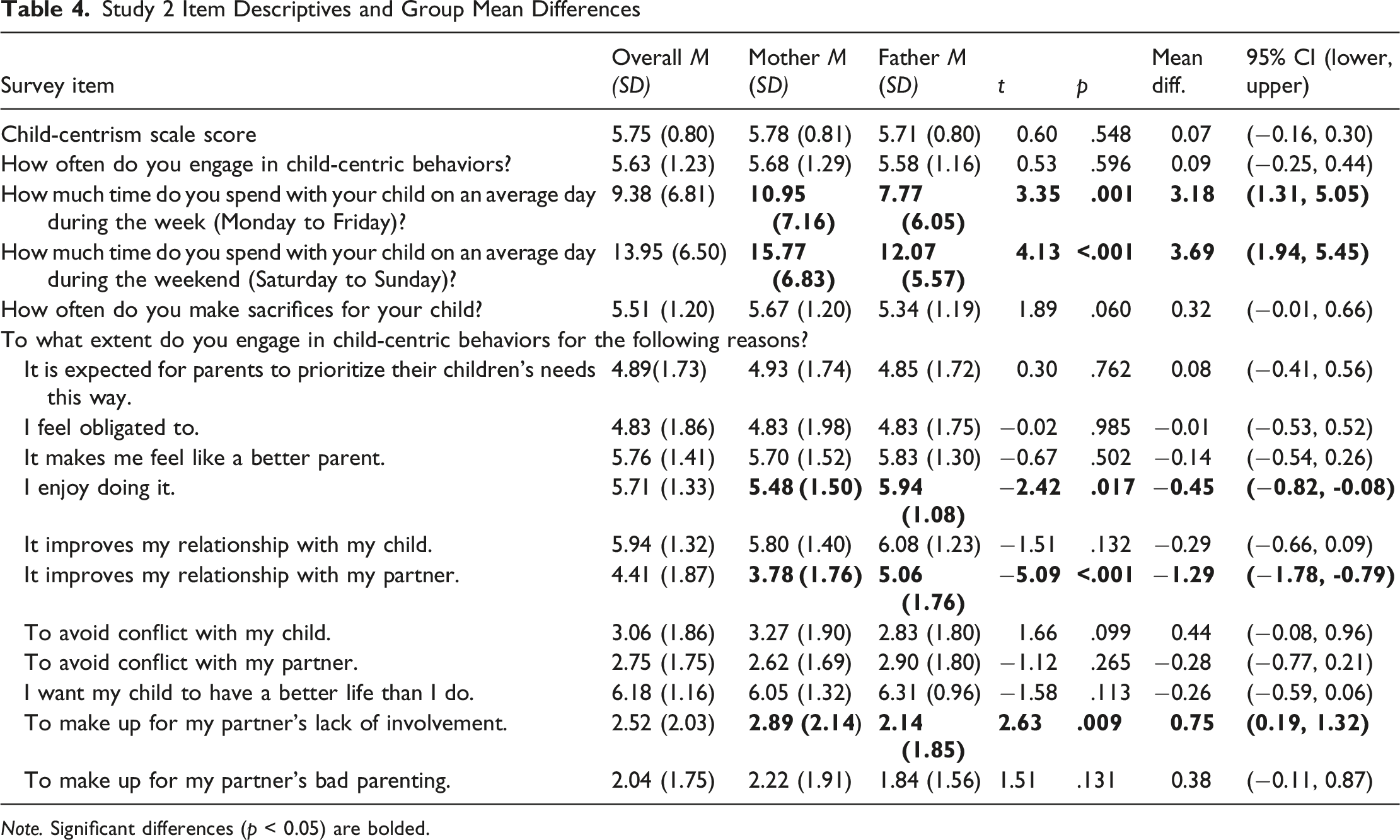
Note. Significant differences (p < 0.05) are bolded.
Study 2 Zero-Order Correlations
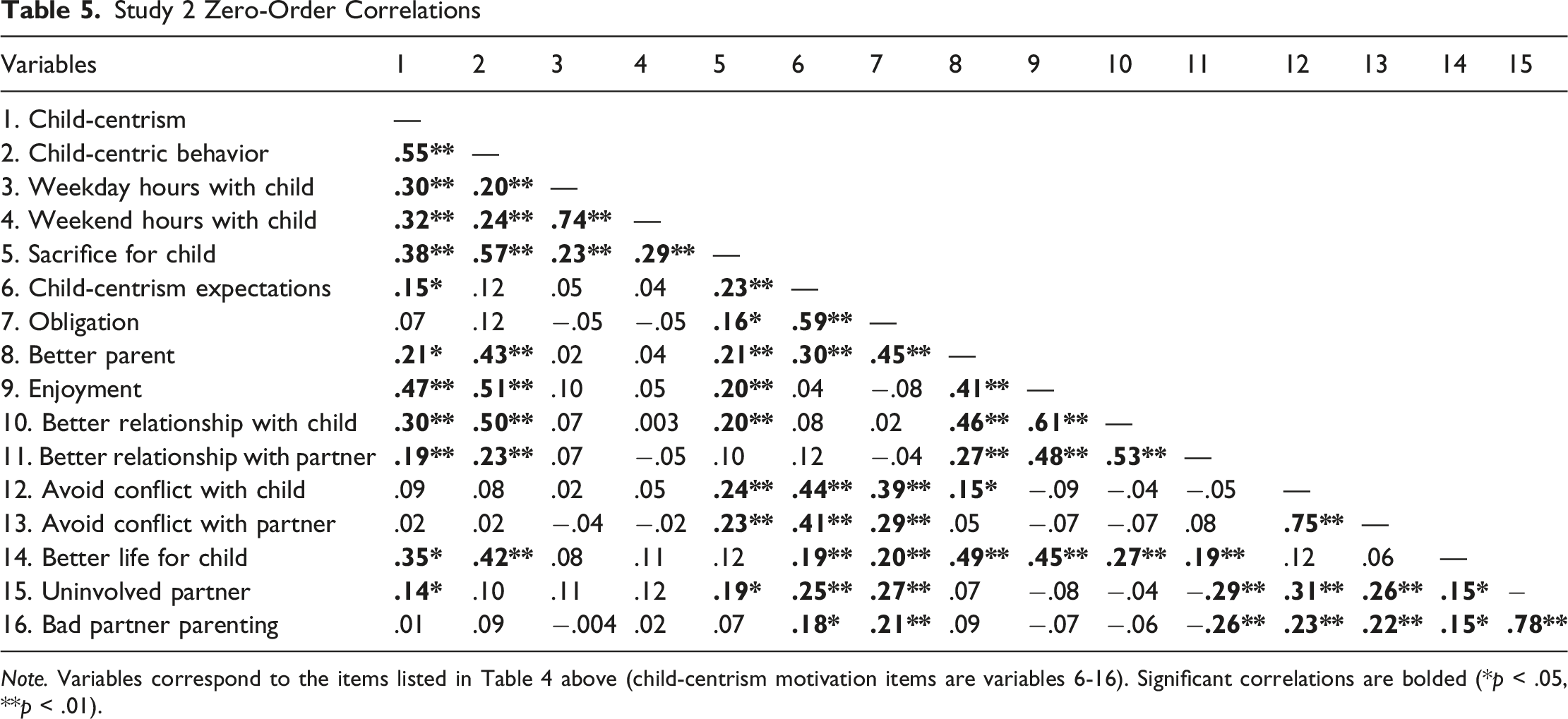
Note. Variables correspond to the items listed in Table 4 above (child-centrism motivation items are variables 6-16). Significant correlations are bolded (*p < .05, **p < .01).
Qualitative
Participants provided brief responses to two 1 open-ended questions in the online survey about their child-centric behaviors (i.e., “Please provide an example of a specific thing you did that was child-centric”, “Please describe the most child-centric thing you have done for your child”).
Analysis Strategy
For the quantitative analyses, we used SPSS v.26 to examine zero-order correlations among child-centrism, motivations, and behaviors (e.g., sacrifice, time spent with children) and conducted independent samples t-tests to compare mothers’ and fathers’ endorsement of each item.
We analyzed open-ended responses with reflexive thematic analysis (Braun & Clarke, 2006, 2021). This inductive approach involved deriving codes from the data and developing specific codes and higher-level themes iteratively to reflect coders’ interpretations, shaped by their own beliefs and identities. To establish trustworthiness (Nowell et al., 2017), we transparently documented our analytic process and ensured that codes and themes credibly represented the data. The first author led the analysis and trained two research assistants to code responses. The team began by reading all responses and then worked together to develop an initial set of codes. The research assistants coded all the data independently and produced very similar codes. Discrepancies in theme classification were discussed by the team until full agreement was reached. We then collated the coded data, generated and refined themes and subthemes for each of the two questions and identified representative quotations. We do not report frequencies or reliabilities in line with best practices for reflexive thematic analysis (Braun & Clarke, 2021).
Reflexivity and Positionality
A key part of thematic analysis is recognizing how researchers’ beliefs and identities shape the development and interpretation of codes and themes (Braun & Clarke, 2021; Lazard & McAvoy, 2020). Since our qualitative data consisted of anonymous open-ended survey responses, researcher positionality had limited bearing on data collection but may have influenced interpretive decisions. At the time of analysis, both research assistants and the first author were not parents which may have shaped our interpretations of child-centric experiences we have not personally navigated. We mitigated this by incorporating guidance from both senior authors, who are parents, throughout the interpretive process. Additionally, our perception of parenting practices may be shaped by our experiences as children or with parents we know, rather than direct parenting experience.
Results
Quantitative
On average, parents reported high levels of child-centrism, with no significant differences between mothers and fathers (see Table 4). Higher child-centrism was correlated with more frequent child-centric behaviors, greater time spent with children on weekdays and weekends, more frequent sacrifice, and greater motivation to be child-centric due to societal expectations, enjoyment, to improve romantic and parent-child relationships, to provide a better life for one’s child, to compensate for an uninvolved partner, and to feel like a better parent. Mothers in our study reported spending more time with their children than fathers and also differed from fathers in their motives. Mothers more often reported being child-centric to offset a partner’s lack of involvement, whereas fathers did so more for enjoyment and to improve their romantic relationship.
Qualitative
Study 2 Qualitative Themes, Subthemes, and Example Quotations
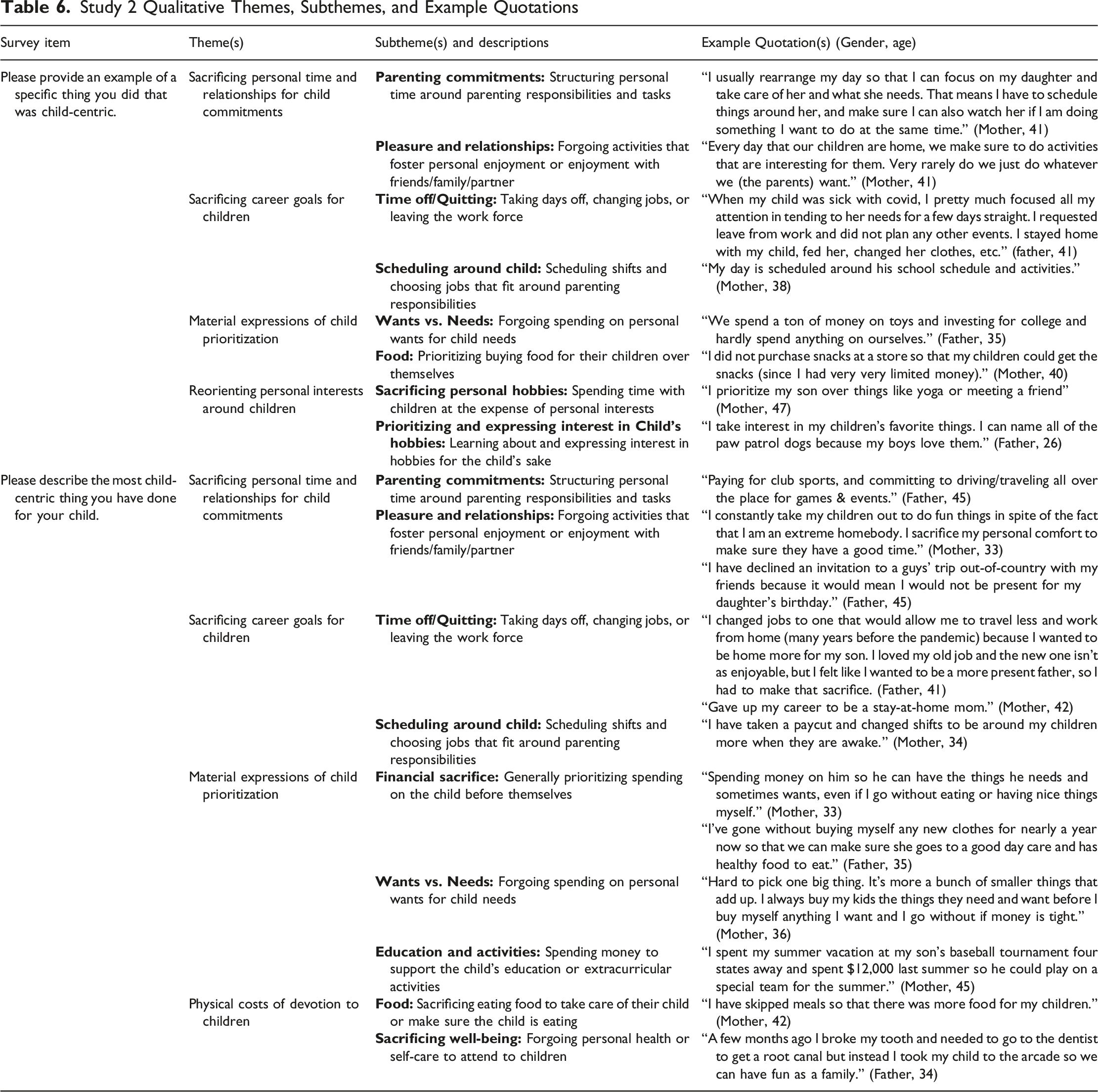
Sacrificing Personal Time and Relationships for Child Commitments
The first common theme highlighted that child-centric parenting often requires careful scheduling and sacrificing personal time in ways that may lead parents to feel disconnected from their other relationships. As one mother (age 36) shared: “I often sacrifice my free time for my child(ren) so I’ve abandoned having many hobbies of my own to support their hobbies and activities.” We identified two subthemes: parents reorganizing personal time around parenting commitments (e.g., driving children to school) and forgoing activities with others (e.g., friends, family members) or activities they enjoy to care for their children. One mother (age 44) wrote: “I wanted to go on a vacation but I knew the only person who was willing to babysit them while I was gone was someone they didn’t like staying over with so I cancelled my vacation.” These patterns suggest that child-centrism reshapes parents’ social lives, with disconnection from friendships, family, and personal pursuits among its most pervasive consequences.
Sacrificing Career Goals for Children
In addition to potentially feeling disconnected from their social networks, the second common theme highlighted how some parents sacrifice having a meaningful career they enjoy to help their children get ahead. One father (age 44) shared: “I go to a job I hate to be able to keep a roof over their heads, pay for their food and see that they go to good schools.” We identified two subthemes, including parents reporting deprioritizing their work by taking time off or leaving the workforce altogether. Many parents felt that these career decisions were not really a choice but instead necessary to ensure they could spend more time caring for their children: “My son has severe autism. I am his main caretaker. I [devote] much of my time to therapies, IEPs, doctors, appointments, etc. I have no choice but to engage in child-centric behaviors. One of the many examples is not working full time. I can not, as my child needs too much of my time. That is a sacrifice I make. A large one.” (Mother, 37)
While the nature and extent of child-centric sacrifices may vary based on children’s individual needs and circumstances, these behaviors nonetheless reflect the defining feature of child-centrism as the consistent prioritization of children’s well-being over one’s own. Parents also reported choosing flexible careers and jobs with specific schedules that allowed more time with their children. One father (age 18) noted: “My whole work schedule is around my child. I work very early 4 am to 1[pm] everyday so that I am free in the evening to take my child to their games, pick up from school, etc.” Tellingly, these examples reproduce traditionally gendered divisions of labor, with fathers enacting child-centrism through continued workforce participation despite personal cost, and mothers through withdrawal from the workforce to provide direct caregiving. These patterns suggest that child-centric behaviors, while shared across genders, may be channeled through pre-existing gender roles, raising questions about how much child-centrism intensifies traditional gendered expectations.
Material Expressions of Child Prioritization
The third common theme across questions demonstrated that child-centric behaviors involve the (re)allocation of tangible resources in addition to intangible resources like time and emotional support. One mother (age 33) shared that she “[spends] a lot of money for [her] daughter to be an all-star cheerleader and [she goes] to her games when she goes and competes.” Parents reported prioritizing spending money on their children’s needs over their own wants, for instance, saving money for post-secondary education or extracurricular activities instead of personal expenses (e.g., nice clothes). Parents seemingly made these financial choices without concern for their own well-being. One mother (age 39) shared: “I keep putting off getting my hair done because I feel like it is a stretch on the budget, but I don’t think twice about enrolling my child in activities and the expenses that come with that.” A unique subtheme concerned food; some parents reported prioritizing buying food for their children over themselves. One mother (age 47) noted: “I have skipped meals to make sure she had plenty to eat.”
Unique finance subthemes among parents’ most child-centric behaviors included general financial sacrifice and education and activities. Parents described prioritizing spending money on their children over themselves and forgoing personal expenditures to fund their children’s activities (e.g., sports teams, private schooling). One father (age 38) shared “The most child-centric thing I have done was to pick a more expensive neighborhood to move into just because we wanted our kids to go to a better public school.” Notably, across subthemes, some parents described sacrificing their own basic needs to fulfill their children’s wants which was most visible among parents with constrained financial resources. This suggests that child-centric behaviors cannot be fully understood apart from structural contexts. Resource scarcity may intensify child-centric behavior by removing the buffer that allows parents to attend to their own well-being alongside their children’s, suggesting that social class may be a meaningful moderator of how child-centrism is enacted.
Reorienting Personal Interests Around Children
A unique theme among specific child-centric behaviors involved parents reorienting their personal hobbies around their children’s. One subtheme reflected spending time with children at the expense of engaging in personal hobbies (e.g., exercise classes). One father (age 35) noted: “I love to golf but have played less and less because it is expensive and I have used that money to buy things for my child.” Another subtheme involved prioritizing children by developing an interest in their hobbies (e.g., attending sports games, learning about their favorite movies and books). One father (age 34) shared: “I take time and spend with my child on their hobbies and things they like.” These subthemes suggest that child-centric parenting can involve the reallocation of time and money and a reorientation of personal identity, with parents adopting their children’s interests as their own, reflecting a form of self-subordination.
Physical Costs of Devotion to Children
In line with parents’ willingness to sacrifice their time and resources, a unique theme among parents’ most child-centric actions demonstrated parents’ willingness to set aside their own health to prioritize their children. One mother (age 38) mentioned: “Paying for healthcare for my children and not for myself.” We identified two subthemes: parents sacrificing eating or eating less to ensure that children had healthy food to eat, and neglecting their own health (e.g., losing sleep, not seeking medical care). One mother (age 46) recalled: “I remember on one of his birthdays he was turning 9. I was really sick and had a fever and my body couldn’t hold me up good enough. I still pushed through it and made him the best birthday party ever.”
Some of these physical sacrifices may reflect the structural realities of inadequate access to healthcare and economic precarity in addition to child-centrism. Indeed, structural conditions may amplify child-centric tendencies by limiting parents’ abilities to meet their own and their children’s needs simultaneously.
Discussion
This research further establishes child-centrism as a distinct parenting approach—shaped by parents’ internal values and broader sociocultural expectations—that captures how modern parents organize their lives around their children’s needs. Replicating and extending prior work, we confirmed the scale’s one-factor structure and demonstrated convergent and discriminant validity, showing positive associations with communal strength and child-centric behaviors (e.g., sacrifice frequency), and no association with tiger parenting. We also demonstrated measurement equivalence, suggesting that child-centrism can be meaningfully compared across mothers and fathers. Beyond measurement, this work illuminated parents’ endorsement and experiences of child-centrism in everyday life. Parents reported high levels of child-centrism, which were linked to more frequent sacrifice, time spent with children, and engagement in child-focused behaviors, aligning with the view that prioritizing children’s needs is a deeply normative and socially reinforced ideal (Ishizuka, 2019).
We also examined parents’ motivations for adopting child-centrism, which were largely focused on fostering positive relational and developmental outcomes. Parents prioritized their children to provide them with a better life, strengthen their relationship, or feel like good or competent parents. These motivations differed by gender, with mothers trying to compensate for a partner’s lack of involvement and spending more time with their children, and fathers engaging in child-centrism for enjoyment or relationship improvement. Fathers’ greater endorsement of approach-based motivations suggests that their involvement may be less normatively required and more discretionary, and they may derive greater relational benefits by strengthening their relationships with their children. Mothers, by contrast, showed relatively greater endorsement of obligation and identity-based motivations, which may render child-centric behaviors more psychologically costly over time, elevating the risk of burnout and resentment. This asymmetry raises the possibility that child-centrism, despite being endorsed similarly across genders, may produce different outcomes for mothers and fathers. These findings reflect gendered parental roles with mothers bearing greater responsibility for family well-being and managing caregiving imbalances (Craig & Mullan, 2011; Hays, 1996), and fathers engaging in enjoyable activities with children, leaving daily caregiving to mothers (Craig, 2006; Sayer et al., 2004). Moreover, cultural stereotypes depicting men as less competent caregivers (Miller & Maiter, 2008) may limit fathers’ involvement to domains where they may feel more confident or appreciated.
Importantly, the qualitative findings illuminate the lived experiences that underlie these quantitative patterns, including trade-offs that explain how child-centrism is enacted in daily life. For example, the correlation between child-centrism and sacrifice frequency is reflected in qualitative accounts of parents prioritizing their children’s needs over their own. Similarly, gender differences in motivations were echoed in qualitative themes: mothers’ greater endorsement of obligation-based motives aligns with narratives of constrained choice and role-based sacrifice, whereas fathers’ greater endorsement of enjoyment and relationship-focused motives is reflected in descriptions of shared activities and relational bonding. At the same time, the qualitative data reveal important variation that mean-level quantitative scores cannot capture. Although most parents reported relatively high child-centrism, the qualitative themes depict a wide range of behaviors—from forgoing occasional leisure activities to substantially restructuring one’s career or forgoing basic needs. This means that parents who score similarly on the child-centrism scale may enact it in ways that differ substantially in personal and relational costs and benefits, highlighting the value of mixed-method approaches.
Building on this, the qualitative findings reveal the specific ways child-centrism is enacted in daily life. Themes in parents’ responses show that child-centrism shapes how parents allocate both tangible and intangible resources, including giving up or deprioritizing personal time, money, hobbies, relationships, careers, and physical health. Many parents scheduled their days around childcare, took time off work, or accepted financial strain to prioritize their children’s needs and wants over their own. Such tradeoffs underscore the structural costs and causes of child-centrism. Consistent with gender differences in child-centric motivations, the embodied costs of these sacrifices were narrated predominantly by mothers.
In addition, many parents described their child-centric sacrifices not as freely chosen but as compelled by circumstance—whether due to children’s needs, financial constraints, or internalized cultural expectations. This perception of constrained choice highlights how structural forces and normative pressures shape child-centric behavior, suggesting that child-centrism may reflect not only a chosen orientation but also a response to conditions that leave parents with limited alternatives. Material conditions such as stagnant wages, inadequate healthcare access, and limited childcare infrastructure may further produce child-centric behaviors by reducing parents’ abilities to balance their own needs with those of their children. Although parents across socioeconomic backgrounds share similar child-focused goals (Le et al., 2019), the ways these goals are enacted likely differ across socioeconomic contexts. In higher-resource contexts, child-centrism may involve greater time investment or enrichment activities, whereas in lower-income contexts, it may be expressed through working longer hours or forgoing personal needs. Future work should examine how structural conditions shape the expression and consequences of child-centrism across socioeconomic groups.
Further, behaving in child-centric ways may leave parents feeling disconnected from important parts of their self-concept (e.g., occupations, hobbies, relationships) and sustained self-sacrifice has been linked to burnout and reduced life satisfaction (Mikolajczak & Roskam, 2020), consequences that may be further stratified by class contexts (Lareau, 2003). At the same time, child-centrism can yield meaningful parenting experiences (Ashton-James et al., 2013)—as evidenced in themes outlining parents’ development of new and shared interests with their children—and reflects approach-oriented motives linked to relational benefits (Visserman et al., 2018). Notably, the themes identified here may reflect more extreme manifestations of child-centrism rather than the full range of ways in which parents prioritize their children while maintaining their own well-being, and future work should identify when and how child-centrism is beneficial or costly.
Limitations and Future Directions
Despite implementing rigorous tests of measurement invariance and a mixed-method approach integrating theoretical and qualitative insights, several limitations warrant consideration. First, our studies relied on a relatively narrow set of structured questions and reports from modestly sized samples of individual parents rather than couples, preventing an understanding of how parents within the same family perceive and enact child-centrism. As such, the factor structure of child-centrism should be interpreted with caution. Future work should adopt dyadic designs with larger samples to further validate the scale’s factor structure using alternative measurement approaches and employ narrative approaches to capture how child-centrism operates within family systems.
Second, our samples were relatively homogenous, composed primarily of White, middle-class parents in the U.S. recruited online. Parents’ experiences and expressions of child-centrism may differ across socioeconomic, cultural, and religious contexts, shaped by varying motivations, values, and structural constraints. The ways in which child-centrism is enacted likely vary with available resources (e.g., time-intensive involvement vs. working longer hours to provide for children), family-of-origin norms and parenting models (Madden et al., 2015), religious frameworks that emphasize sacrifice and selflessness (Pippert et al., 2019), and structural constraints that shape how child-focused goals are pursued. Moreover, non-binary and gender-diverse parents remain largely absent from parenting research and should be included in future work. Additionally, the wide age range in children in our samples, spanning infancy to adulthood, limits interpretation as parenting demands and the meaning of child-centrism likely vary across developmental stages. The present research should be understood as an initial examination of child-centrism, and future research should explore its expression in more diverse samples and across more narrowly defined developmental periods.
Finally, although our list of motivations was derived from theory, participants were not given an opportunity to report motives beyond those provided. As such, our assessment may not capture the full range of motivations underlying child-centrism or instances in which parents prioritized their own needs or acted in less child-centric ways. This approach may have contributed to an overrepresentation of extreme child-centric behaviors and reflects a first step toward understanding how child-centrism is expressed, rather than a comprehensive account of parenting practices. Additionally, the implications of child-centrism for well-being and relationships remain unclear. While past work suggests potential benefits (Ashton-James et al., 2013), focusing one’s time and resources on children may also strain parents’ romantic connection (Vowels et al., 2024). Yet, shared commitment to children’s welfare could strengthen communication between partners, leading to more effective coparenting. Future work should examine the contexts in which child-centrism enhances versus undermines personal, parental, and relational well-being.
Conclusion
This research advances understanding of child-centrism by strengthening evidence for its validity among both mothers and fathers while clarifying motivations underlying child-centric behavior, with mothers engaging more often from obligation and identity-based motives, and fathers more from enjoyment and conflict-avoidance motives. Our findings reveal concrete behavioral manifestations of child-centrism—from allocating time and emotional energy to making tangible sacrifices—showing how it operates in everyday life. Together, these findings establish a stronger conceptual and empirical foundation for studying a common and normative parenting approach.
Footnotes

Funding
This research was supported by a Social Sciences and Humanities Research Council (SSHRC) Insight Development Grant awarded to Emily A. Impett and a SSHRC Graduate Doctoral Scholarship awarded to Natalie M. Sisson.
Declaration of Conflicting Interests
The authors declared no potential conflicts of interest with respect to the research, authorship, and/or publication of this article.