






Abstract
The current research examined the underlying mechanisms by which attachment insecurities negatively impact romantic relationship quality, from the perspective of trait mindfulness and relationship mindfulness. Study 1 (N = 234) tested whether trait mindfulness mediated the link between attachment insecurities and relationship satisfaction, but found no mediation effect. Study 2 (N = 286), a dyadic design, examined relationship mindfulness as a mediator and found that it mediated the link between individuals’ own attachment insecurities and relationship satisfaction. Additionally, women’s relationship mindfulness mediated the effect of men’s attachment insecurities on women’s relationship satisfaction. Study 3 (N = 276) extended these findings, demonstrating that relationship mindfulness mediated the link between attachment avoidance and relationship quality, even when controlling for trait mindfulness. Although cross-sectional, findings across the three studies suggest that relationship mindfulness may be key for understanding relationship functioning. Implications for theory, limitations, and future research are discussed.
Keywords
To understand individuals’ behaviours in romantic relationships and the quality of those relationships, attachment theory provides a foundational framework (Mikulincer & Shaver, 2010). According to attachment theory, individuals develop mental models based on consistent interactions with significant others in early and later life (Bowlby, 1977). Individual differences in mental models of attachment, shaped by varying relational experiences, are referred to as attachment orientations. Attachment orientations influence individuals’ perceptions, emotions, thoughts, and behaviours in close relationships (Hazan & Shaver, 1987). They are typically conceptualised along two dimensions: attachment anxiety and attachment avoidance (Fraley et al., 2000). Attachment-related anxiety, which describes the degree to which an individual is preoccupied with concerns of abandonment and rejection, is associated with hyperactivating strategies (e.g., persistently seeking emotional closeness and reassurance). Attachment-related avoidance, which describes the degree to which an individual feels discomfort with intimacy and dependency, is associated with deactivating strategies (e.g., maintaining emotional and physical distance) (Mikulincer & Shaver, 2010). Attachment security is characterised by low levels of both anxiety and avoidance. Prior research indicates a negative correlation between attachment insecurity and romantic satisfaction (Brennan & Shaver, 1995). Attachment anxiety is associated with heightened internal stress within partnerships (Simpson & Rholes, 2012), increased perceived negative affect (Molero et al., 2017), reduced trust towards partners (Mikulincer, 1998), and maladaptive attributions (Li et al., 2023; Sümer & Cozzarelli, 2004). Attachment avoidance is linked to a loss of passion in sex over time (Davis et al., 2004), lower levels of support and connectedness (Li & Chan, 2012), and less empathy towards partners (Mikulincer & Shaver, 2005). These factors, in turn, result in lower levels of romantic relationship quality. Cross-sectional and longitudinal studies (e.g., Fitzpatrick & Lafontaine, 2017) suggest that attachment insecurities on both dimensions are associated with decreased relationship satisfaction, which is predicted to decline even further over time (Candel & Turliuc, 2019). In contrast, attachment security is consistently associated with greater behavioural, emotional, and cognitive satisfaction in close relationships (Molero et al., 2017; Vollmann et al., 2019).
Recent research points to a key role for mindfulness as a mechanism in the relationship between attachment orientations and relationship quality (Karremans et al., 2017; McGill et al., 2016). Mindfulness refers to a nonjudgemental and accepting awareness of present-moment experiences (Brown & Ryan, 2003). Trait mindfulness, an individual’s stable tendency to remain open and attentive in daily life, varies across people (Brown & Ryan, 2003). It can enhance emotional skills such as identifying, regulating, and communicating emotions within relationships (Wachs & Cordova, 2007). Some studies (Karremans et al., 2017; McGill et al., 2016), though not all (Gambrel & Piercy, 2015), suggest that mindfulness enhances romantic relationship quality. Mindfulness varies as a function of individual differences in attachment orientations (Ryan et al., 2007; Shaver et al., 2007). Cross-sectional and longitudinal studies report a negative association between attachment insecurity and mindfulness (Goodall et al., 2012; Stevenson et al., 2017, 2021). Attachment-related processes align closely with the core elements of mindfulness. Findings reveal that when insecure individuals perceive relational threats, they struggle to remain aware of their negative emotions in the present moment and may instead ruminate about past or future concerns (Quickert & MacDonald, 2020). Insecurely attached individuals also tend to interpret ambiguous partner behaviours negatively, leading to greater bias and judgement (Li et al., 2023). Greater mindfulness may help anxiously attached individuals reduce tendencies toward rumination and heightened threat monitoring by fostering present-moment attention. It may also help avoidantly attached individuals become more aware of suppressed emotions and remain engaged during relational challenges. In this way, mindfulness skills have the potential to reduce biased interpretations, support more adaptive emotion regulation, and lessen the relational difficulties associated with insecure attachment.
As dispositional attachment orientations develop within early-life relationships (Mikulincer & Shaver, 2003), they may (in part) causally shape the development of mindfulness (Stevenson et al., 2021). It is thus plausible that mindfulness acts as a mechanism linking attachment insecurities to romantic relationship outcomes. Examining these relationships is especially important given that attachment orientations are relatively stable yet not immutable, and mindfulness is a skill that can be strengthened through training, thereby offering a theoretically grounded pathway for insecurely attached individuals to learn to mitigate the impact of their attachment style on their relationship and improve relationship functioning.
Overview
The present research examined the correlations between attachment insecurities, mindfulness, and relationship outcomes. In Study 1, we sought to replicate existing findings regarding the relationships among attachment orientations, trait mindfulness, and relationship satisfaction. Additionally, we examined whether trait mindfulness mediated the relationship between attachment orientations and relationship satisfaction. Study 2 investigated how attachment insecurities and relationship mindfulness, which is an individual’s capacity to maintain mindfulness specifically in romantic contexts, impact romantic relationship satisfaction at a dyadic level, within a sample of couples. Furthermore, this study explored a novel pathway from attachment orientations to relationship satisfaction via the potential mediating effect of relationship mindfulness. Study 3 built on the findings of Study 2 by controlling for trait mindfulness among individuals in romantic relationships, exploring both positive and negative relationship quality and using improved measures.
Study 1
Study 1 examined the potential mechanism through which insecure attachment orientation may affect romantic relationship satisfaction via trait mindfulness in a sample of UK university students. The following hypotheses were tested:
Method
Participants
A total of 248 university students residing in the UK participated. After excluding incomplete responses, 234 remained (73.9% of participants identified as women, 26.1% as men). Ages ranged from 17 to 37 years (M = 20, SD = 3.10). Most participants identified as heterosexual (93.6%), with 0.9% identifying as lesbian, 2.1% as gay, and 3.4% preferring not to say. Participants reported being in dating relationships (46.2%), serious relationships (43.6%), cohabiting partnerships (8.5%), or marriages (1.7%). Dating relationships were defined as romantic partnerships characterised by lower commitment and minimal future planning, whereas serious relationships referred to committed, exclusive partnerships with greater stability and long-term orientation. Participants selected the category that best reflected their current relationship. Relationship durations varied: 12.8% had been together for less than three months, 35.9% for three months to one year, 39.7% for one to three years, and 11.5% for more than three years. Participants primarily identified as White (81.2%), Asian (16.2%), or mixed or multiple ethnic backgrounds (1.7%). The study was approved by the University’s Ethics Committee.
Measures
Attachment Orientations
Attachment orientations with romantic partners were assessed using the Experiences in Close Relationships Scale (ECR; Brennan et al., 1998), which measures two dimensions: attachment avoidance and attachment anxiety (18 items each). Participants rated how well each statement described their experiences in their current romantic relationship on a 7-point Likert-type scale (1 = strongly disagree, 7 = strongly agree). Scores were averaged, with higher scores indicating greater attachment avoidance and attachment anxiety, respectively. Both subscales demonstrated good internal consistency (α = .89 for avoidance, α = .90 for anxiety).
Relationship Satisfaction
Relationship satisfaction was assessed using the Relationship Assessment Scale (RAS; Hendrick, 1988), a 7-item measure rated on a 5-point Likert-type scale (1 = poorly/unsatisfied, 5 = extremely well/extremely satisfied). Scores were summed, with higher scores indicating greater satisfaction. The RAS demonstrated good internal consistency (α = .86).
Trait Mindfulness
Trait mindfulness was assessed using the Mindfulness Attention and Awareness Scale (MAAS; Brown & Ryan, 2003), a 15-item measure rated on a 6-point Likert-type scale (1 = almost always, 6 = almost never). Scores were averaged, with higher scores indicating greater mindfulness. The MAAS demonstrated good internal consistency (α = .87).
Procedure
Data were collected via the University’s platform, where students earned course credit for participation. A study overview and a Qualtrics survey link were posted on the system. Upon accessing the survey, participants provided informed consent, acknowledging their right to withdraw at any time without penalty. The survey took approximately 15 minutes. Participants were fully debriefed upon completion.
Data Analysis
All analyses were conducted using SPSS Statistics 22. We first examined bivariate correlations among attachment anxiety, attachment avoidance, trait mindfulness, and relationship satisfaction. To test whether trait mindfulness mediated the relationship between attachment insecurities and relationship satisfaction, we performed two mediation analyses using the PROCESS macro (Hayes, 2017). Both mediation models employed 5,000 bootstrap resamples to estimate indirect effects, with 95% bias-corrected bootstrap confidence intervals (CIs) (Preacher & Hayes, 2008) 1 . An indirect effect was deemed significant if the CI did not include zero.
Results
Descriptive Statistics and Bivariate Correlations
Descriptive Statistics and Correlations Between Study Variables in Study 1
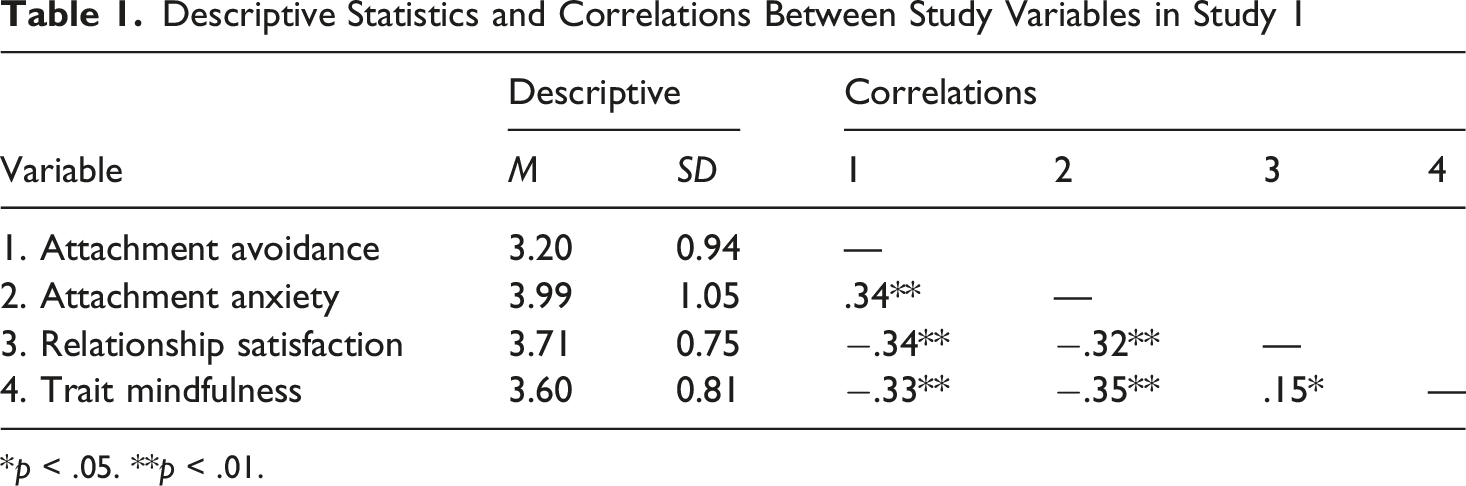
*p < .05. **p < .01.
Mediation Analysis
In the first mediation model (Figure 1), the effect of attachment anxiety on trait mindfulness was significant (95% CI = [−0.35, −0.16]). However, the effect of trait mindfulness on relationship satisfaction was not significant (95% CI = [−0.06, 0.18])
2
. The total effect of attachment anxiety on relationship satisfaction was significant (95% CI = [−0.32, −0.14]), and the direct effect remained significant when controlling for trait mindfulness (95% CI = [−0.31, −0.12]). The indirect effect was not significant (95% CI = [−0.05, 0.02]), indicating that trait mindfulness did not mediate the relationship between attachment anxiety and relationship satisfaction. Mediation model testing trait mindfulness as a mediator between attachment anxiety and relationship satisfaction in Study 1. Note. Solid lines indicate significant paths, and dashed lines indicate nonsignificant paths. ***p < 0.001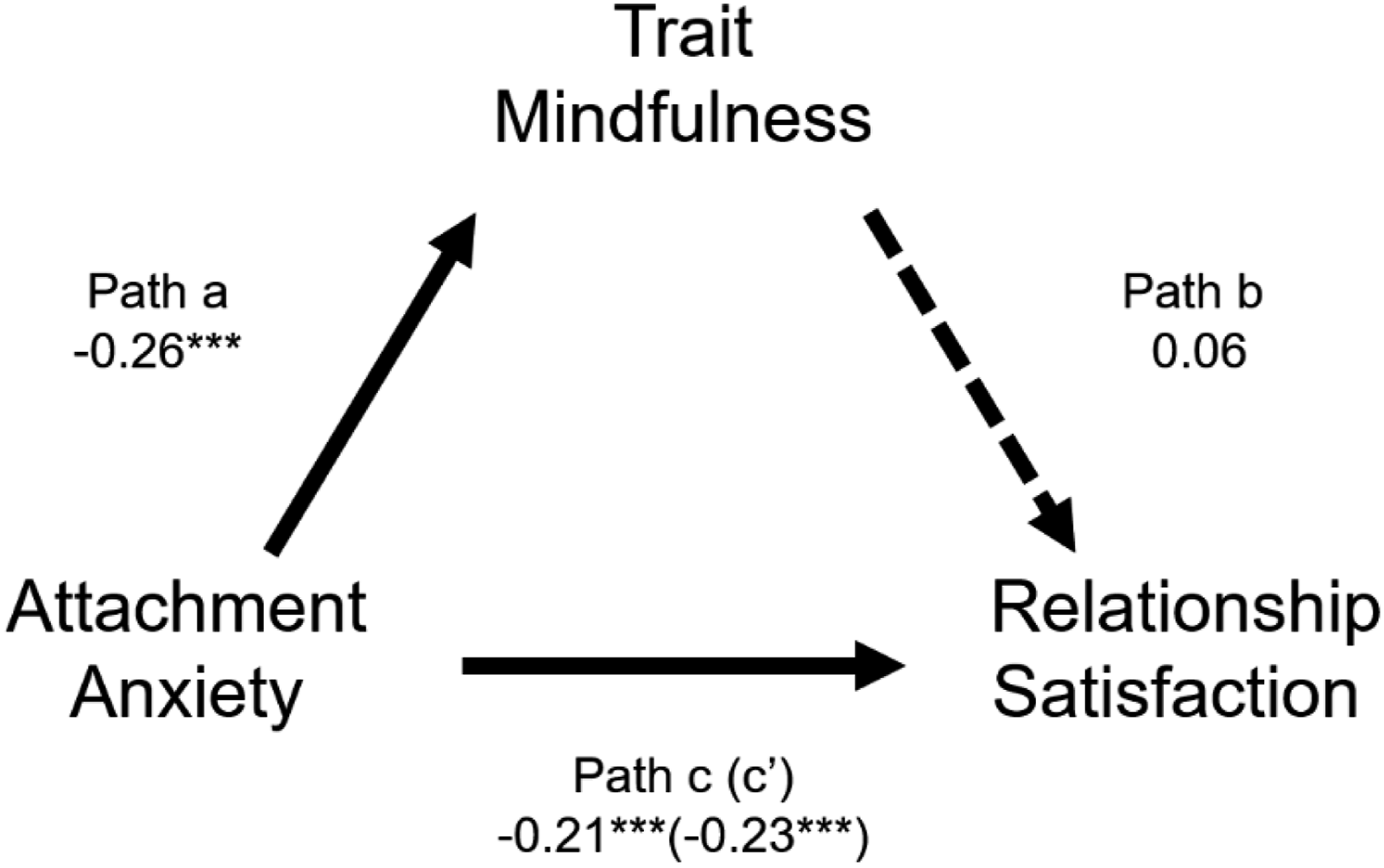
In the second model (Figure 2), the effect of attachment avoidance on trait mindfulness was significant (95% CI = [−0.40, −0.19]). However, the effect of trait mindfulness on relationship satisfaction was not significant (95% CI = [−0.07, 0.17]), and the indirect effect was nonsignificant (95% CI = [−0.06, 0.02]). Thus, trait mindfulness did not mediate the association between attachment avoidance and relationship satisfaction. Mediation model testing trait mindfulness as a mediator between attachment avoidance and relationship satisfaction in Study 1. Note. Solid lines indicate significant paths, and dashed lines indicate nonsignificant paths. ***p < 0.001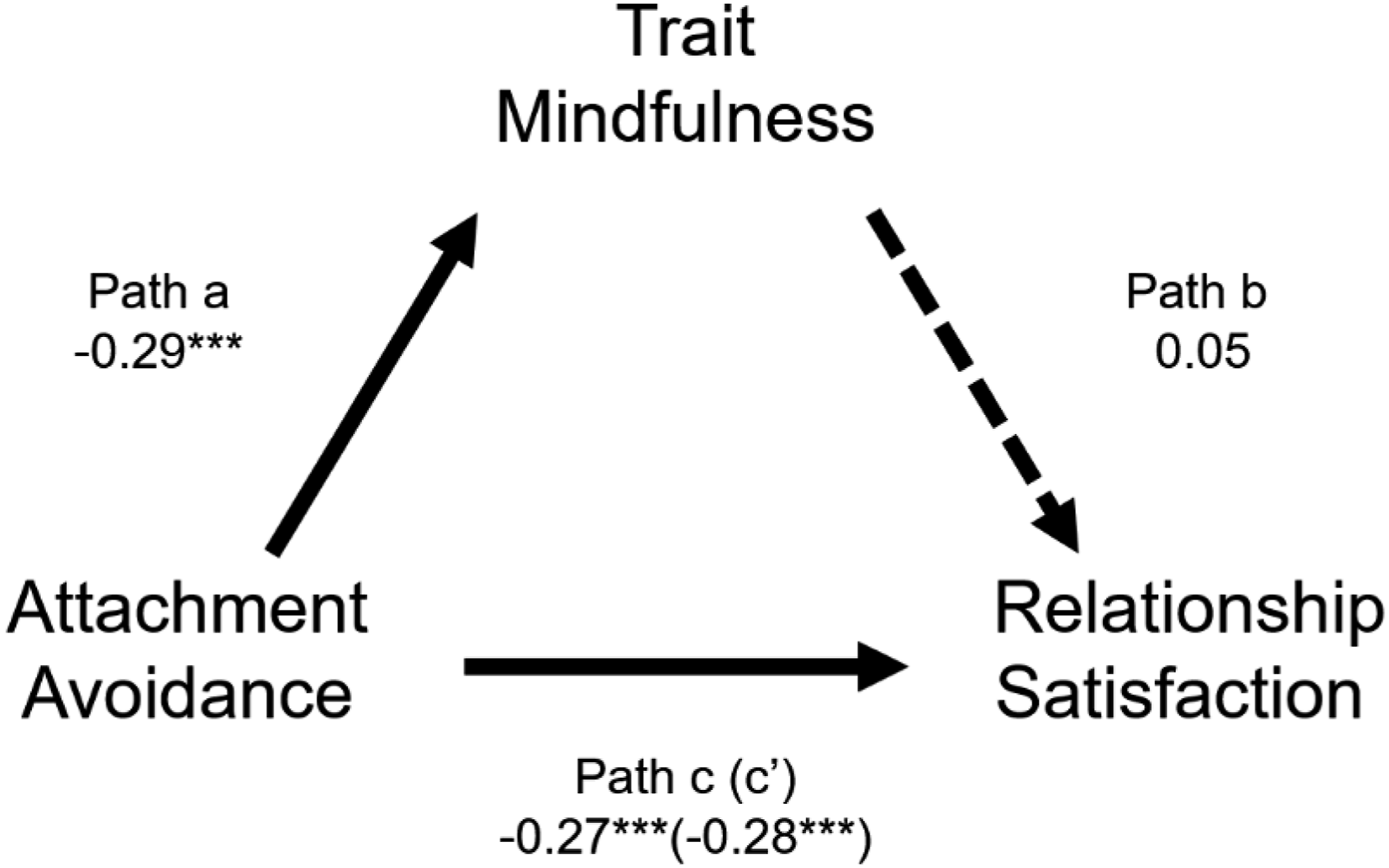
Discussion
Results of Study 1 showed significant correlations between attachment insecurities (attachment anxiety and attachment avoidance) and romantic relationship satisfaction, consistent with Hypothesis 1 and previous findings (Li & Chan, 2012; Mikulincer & Shaver, 2010; Vollmann et al., 2019). Trait mindfulness was positively correlated with romantic relationship satisfaction, consistent with Hypothesis 2 and previous studies (Barnes et al., 2007; McGill et al., 2016; Quinn-Nilas, 2020). The results were not consistent with Hypothesis 3, as trait mindfulness did not mediate the pathway from attachment insecurities to romantic relationship satisfaction for either attachment dimension. This may be due to mindfulness being measured at the individual level and not at the relationship level, as suggested by Kimmes and colleagues (2018). Therefore, in Study 2 we examined whether relationship mindfulness mediated the relationships between attachment orientations and relationship satisfaction in couples using dyadic analysis.
A further consideration concerns the inclusion of participants who had been in their current romantic relationship for less than three months. Although additional analyses indicated that the inclusion of these participants did not alter the primary pattern of findings 3 , the short relationship duration may still be considered a limitation, as those in the early stages of a romantic relationship show less stable patterns of attachment-system activation and may report heightened relationship quality due to the ‘honeymoon’ effect (Lorber et al., 2015). Recognising this, Studies 2 and 3 required participants to be in relationships of at least six months to ensure greater stability in well-established relationships and to increase confidence in the attachment-related processes examined.
Study 2
Study 2 investigated whether relationship mindfulness not only predicts relationship satisfaction but also serves as a potential mediator between attachment orientations and relationship satisfaction. Kimmes et al. (2018) emphasised the importance of exploring relationship mindfulness, which focuses on romantic relationship contexts. They noted that trait mindfulness may not sufficiently reflect an individual’s ability to be mindful in specific contexts, as interactions between romantic partners may trigger attachment-related issues. For example, individuals high in attachment avoidance may be capable of mindfulness in other contexts (e.g., at work), but their need for psychological and physical distance from their partner may weaken their ability to remain aware and attentive in the relationship context. Indeed, relationship mindfulness, compared with trait mindfulness, appears to have a stronger impact on relationship quality and relationship behaviours (Kimmes et al., 2018, 2020), and a stronger inverse relationship with both attachment dimensions (Kimmes et al., 2018). In a longitudinal study, Stanton et al. (2021) found that relationship mindfulness, in addition to trait mindfulness, positively predicted positive relationship quality and negatively predicted negative relationship quality. To date, no research has examined whether relationship mindfulness acts as a mediator in the association between attachment orientations and relationship outcomes. Given that romantic partners are interdependent (Karremans et al., 2017), the behaviours and emotions of each member of the dyad affect their partner’s relationship outcomes. So, in a dyadic design, we used the actor–partner interdependence mediation model (APIMeM; Ledermann et al., 2011) to analyse the associations among attachment orientations, romantic relationship satisfaction, and relationship mindfulness both within and between partners, and to examine whether relationship mindfulness mediates the links between attachment insecurities (attachment anxiety and attachment avoidance) and romantic relationship satisfaction.
Building on prior research that adopts a dyadic approach to explore relationship outcomes, we tested the following hypotheses:
An individual’s attachment anxiety (H1a) and attachment avoidance (H1b) would be negatively associated with their own relationship satisfaction.
An individual’s relationship mindfulness (H1c) would be positively associated with their own relationship satisfaction.
An individual’s relationship mindfulness would mediate the association between their attachment orientations (attachment anxiety: H2a; attachment avoidance: H2b), and their own relationship satisfaction.
A partner’s relationship mindfulness would mediate the association between an individual’s attachment orientations (attachment anxiety: H2c; attachment avoidance: H2d), and their own relationship satisfaction.
An individual’s attachment anxiety (H3a) and attachment avoidance (H3b) would be negatively associated with their partner’s relationship satisfaction.
An individual’s relationship mindfulness (H3c) would be positively associated with their partner’s relationship satisfaction.
An individual’s relationship mindfulness would mediate the association between their attachment orientations (attachment anxiety: H4a; attachment avoidance: H4b), and their partner’s relationship satisfaction.
A partner’s relationship mindfulness would mediate the association between an individual’s attachment orientations (attachment anxiety: H4c; attachment avoidance: H4d), and their partner’s relationship satisfaction.
Method
Participants
A total of 157 couples (N = 314) were recruited via Prolific, all residing in the USA or the UK. After excluding incomplete cases and couples with missing partner data, the final sample included 143 heterosexual couples (N = 286) with equal numbers of women and men (n = 143 each). Ages ranged from 18 to 66 years (M = 31, SD = 12.79). Relationship status categories included serious relationships (52.4%, 75 couples), cohabitation (32.2%, 46 couples), dating relationships (12.6%, 18 couples), and marriage (2.8%, 4 couples). Relationship durations varied: 26.6% had been together for 3–5 years (38 couples), 21% for 10–20 years (30 couples), 20.3% for 1–3 years (29 couples), 20.3% for 5–10 years (29 couples), 11.2% for over 20 years (16 couples), and 0.7% for 6 months to 1 year (1 couple). Most participants identified as White (88.1%, n = 252), with 9.4% identifying as Asian (n = 27), 0.3% as Black/African (n = 1), and 2.1% as belonging to another ethnic group (n = 6). Regarding employment, 47.9% were in full-time work (n = 137), 40.2% were students (n = 115), 11.2% were in part-time work (n = 32), and 0.7% were unemployed (n = 2). The study was approved by the University’s Ethics Committee.
Measures
Attachment Orientations
Attachment orientations were assessed using the 36-item Experiences in Close Relationships (ECR) scale (Brennan et al., 1998); see Study 1 for details. Both subscales demonstrated high internal consistency (α = .92 for attachment anxiety, α = .90 for attachment avoidance).
Relationship Satisfaction
Relationship satisfaction was measured using the 32-item Dyadic Adjustment Scale (DAS; Spanier, 1976), which comprises four subscales: Dyadic Consensus, Dyadic Satisfaction, Dyadic Cohesion, and Affectional Expression. Items are rated on 4-point, 5-point, and 6-point Likert-type scales assessing agreement levels and event frequency, along with two binary (yes/no) items. Total scores were computed by summing all items, with higher scores indicating greater relationship satisfaction. The scale showed excellent internal consistency (α = .94).
Relationship Mindfulness
Relationship mindfulness was assessed using the Relationship Mindfulness Scale (RMS), adapted from the MAAS (Brown & Ryan, 2003) for this study to measure mindfulness in romantic relationships. The 12 items were reworded so that the object of attention shifted from general daily experiences to relationship-specific experiences with one’s partner. For example, the original MAAS item “I find it difficult to stay focused on what’s happening in the present” was adapted to “When I’m with my romantic partner, I find it difficult to stay focused on what’s happening in the present.” All final RMS items are presented in the Supplemental Materials. The 12-item scale evaluates individuals’ awareness and attentiveness within their relationship experiences. Items are rated on a 6-point Likert-type scale (1 = almost always, 6 = almost never). Scores were averaged, with higher scores indicating greater relationship mindfulness. The RMS demonstrated good internal consistency (α = .87).
Procedure
An online survey was conducted via Prolific. Inclusion criteria required that couples had been in a relationship for over six months and both partners were aged 18 or older. To ensure anonymity and encourage honesty, each participant received a personal survey link and completed the survey independently. To match responses within couples, both partners provided their own and their partner’s Prolific ID. Initially, participants (partner A) completed a pre-survey to confirm eligibility. Once confirmed, their partners (partner B) were invited to participate. Partner A completed their questionnaire first, after which partner B was notified of partner A’s completion and proceeded with their survey. Upon completion, both partners were compensated. The survey took approximately 40 minutes. A full debrief was provided once both partners completed the survey.
Data Analysis
Statistical analyses were performed using SPSS version 22. Descriptive statistics were first calculated to provide demographic information. Independent samples t-tests were conducted to explore differences in key variables (attachment anxiety, attachment avoidance, relationship mindfulness, and relationship satisfaction) between romantic partners. Correlation analyses were then performed to identify preliminary associations, supporting the subsequent Actor-Partner Interdependence Mediation Model (APIMeM) analyses.
To examine how romantic partners’ attachment orientations influenced each other’s relationship outcomes via relationship mindfulness, the MEDYAD SPSS macro (Coutts et al., 2019) was employed. This model included attachment anxiety and attachment avoidance for both women and men as independent variables, relationship mindfulness for both partners as mediators, and relationship satisfaction for both partners as outcome variables. Using 5,000 bootstrap samples, indirect effects of insecure attachment orientations on relationship satisfaction via relationship mindfulness were estimated with 95% bias-corrected bootstrap confidence intervals (CIs).
Results
Descriptive Statistics
Means, Standard Deviations, Test Statistics, and Effect Sizes for Examining the Differences Between Partners in Main Study Measures in Study 2
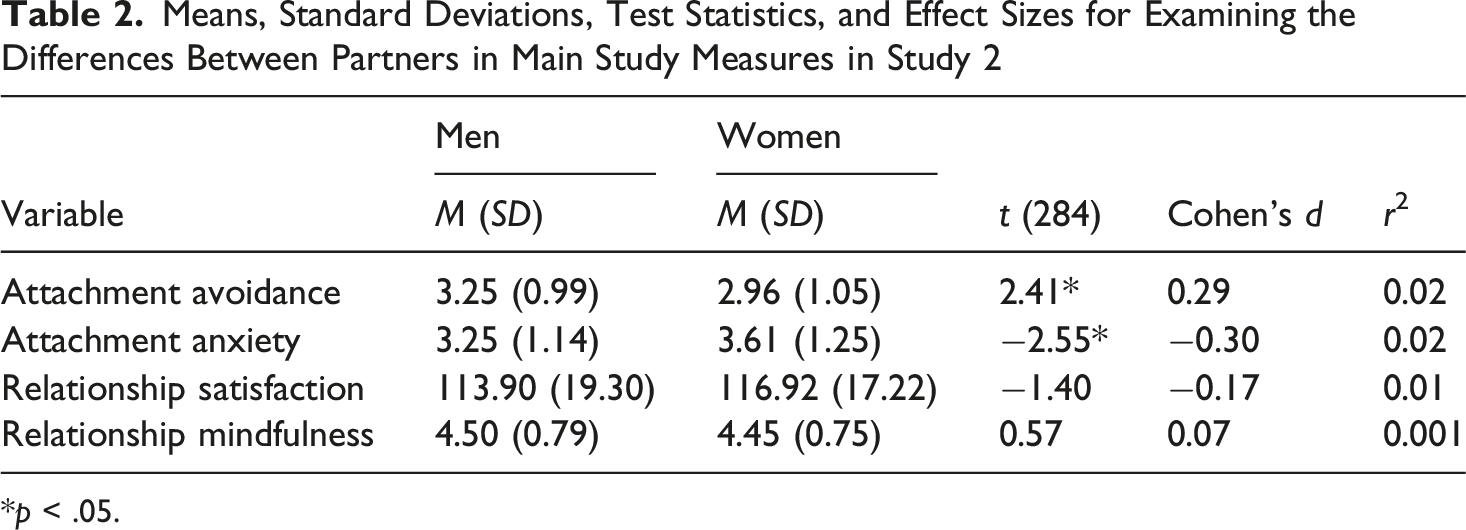
*p < .05.
Bivariate Correlations and Mean Differences
Correlations Between Main Study Measures in Study 2
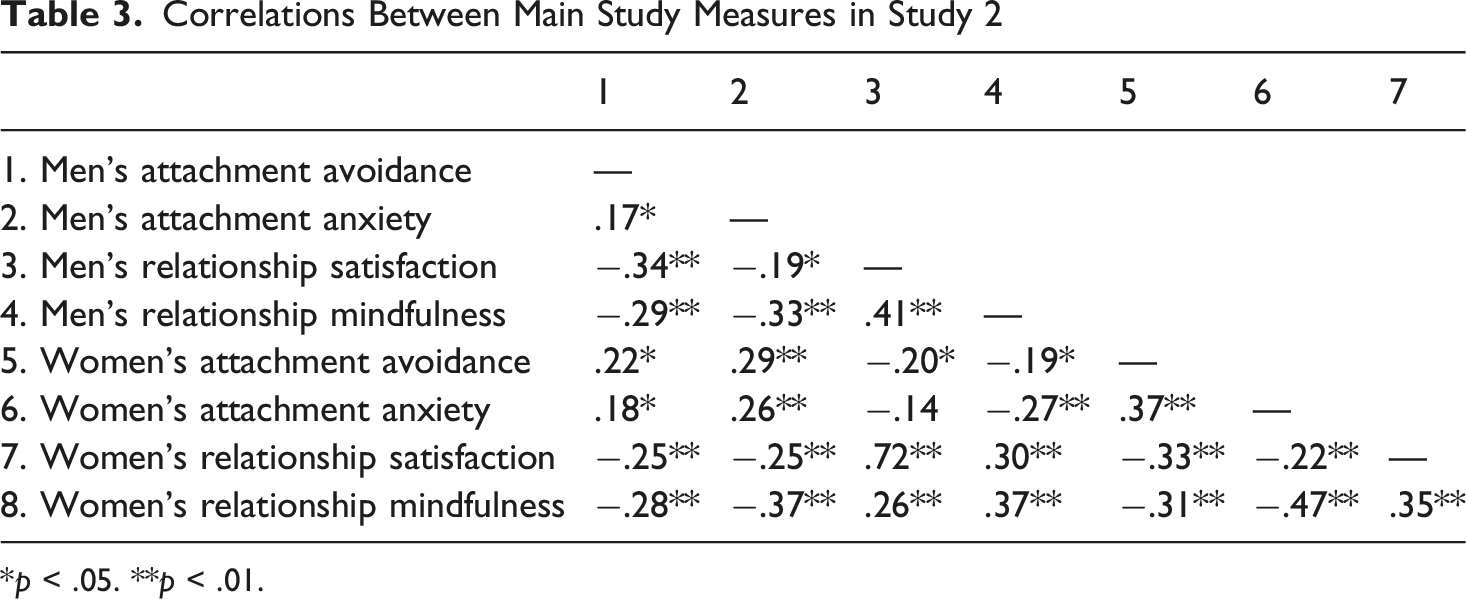
*p < .05. **p < .01.
APIM-Mediation Analysis
The Actor Effect in the APIMeM: Total, Indirect, and Direct Effects in Study 2
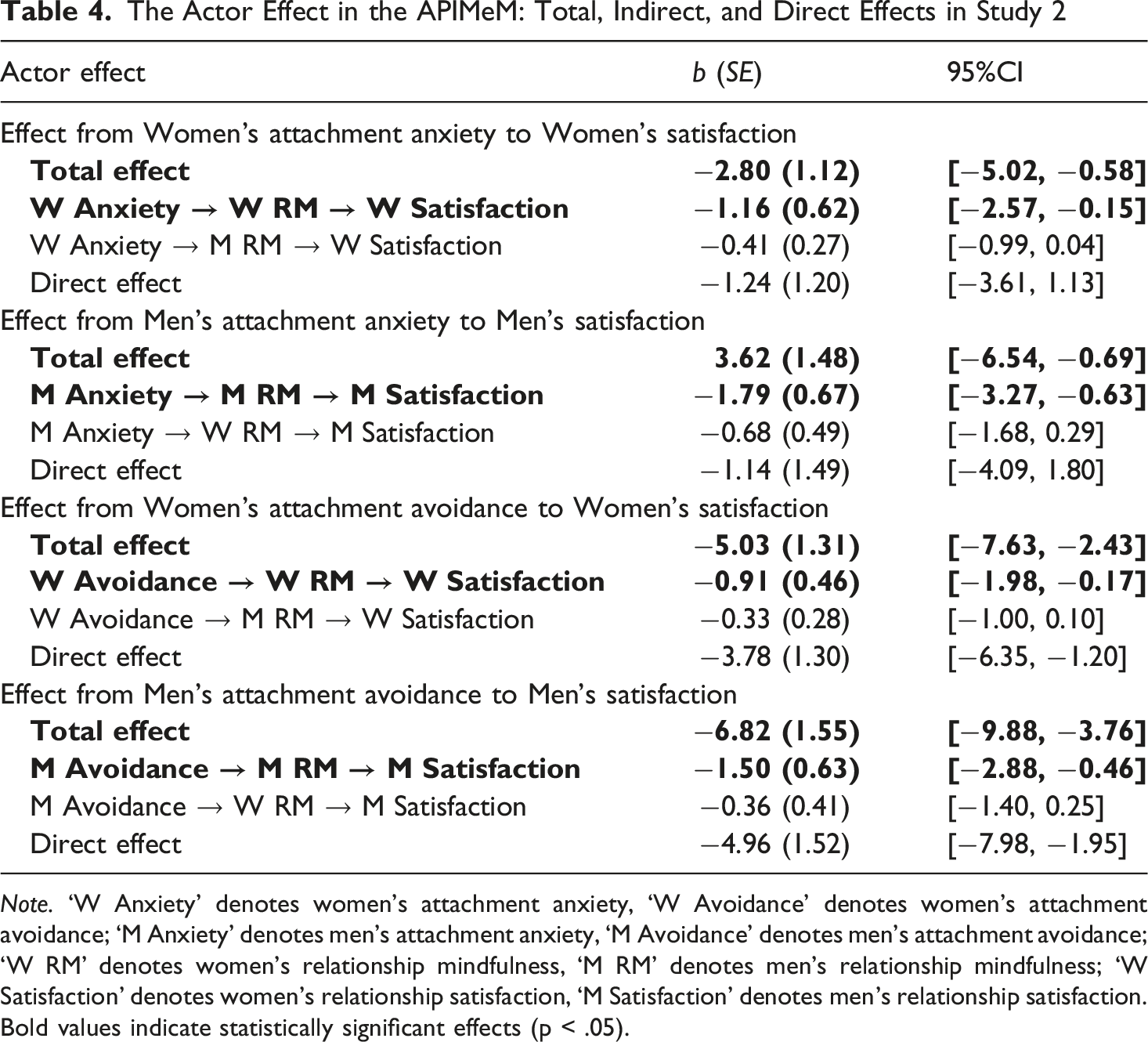
Note. ‘W Anxiety’ denotes women’s attachment anxiety, ‘W Avoidance’ denotes women’s attachment avoidance; ‘M Anxiety’ denotes men’s attachment anxiety, ‘M Avoidance’ denotes men’s attachment avoidance; ‘W RM’ denotes women’s relationship mindfulness, ‘M RM’ denotes men’s relationship mindfulness; ‘W Satisfaction’ denotes women’s relationship satisfaction, ‘M Satisfaction’ denotes men’s relationship satisfaction. Bold values indicate statistically significant effects (p < .05).
The Partner Effect in the APIMeM: Total, Indirect, and Direct Effects in Study 2
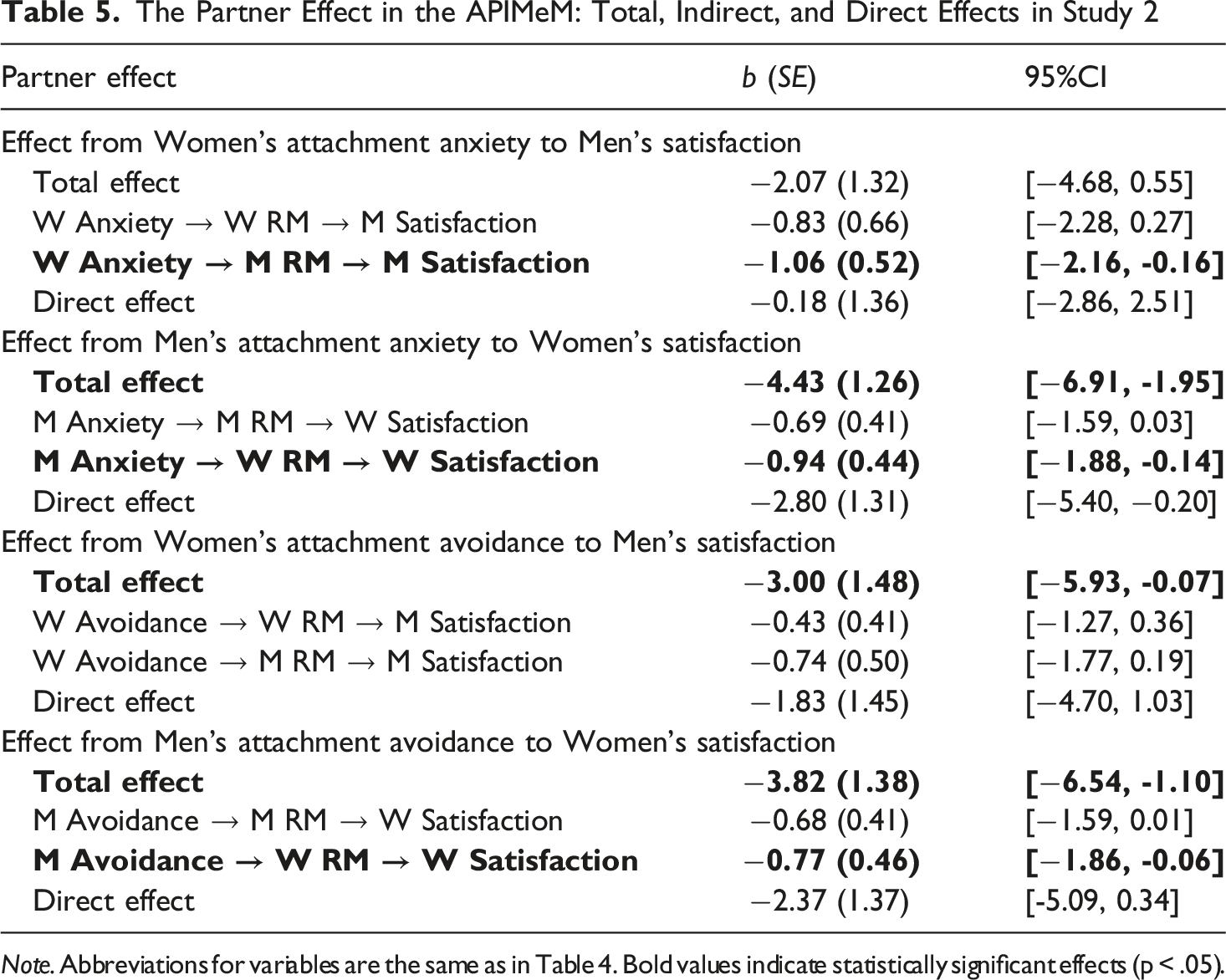
Note. Abbreviations for variables are the same as in Table 4. Bold values indicate statistically significant effects (p < .05).
The results were partially consistent with Hypothesis 2. Indirect effects showed actor relationship mindfulness significantly mediated the association between attachment insecurities (attachment anxiety: H2a; attachment avoidance: H2b) and relationship satisfaction for both genders. However, no significant indirect effects via partner relationship mindfulness emerged for either attachment anxiety (H2c) or attachment avoidance (H2d).
The results were partially consistent with Hypothesis 3. Total effects indicated that women’s attachment avoidance was negatively associated with men’s relationship satisfaction (H3b), whereas men’s attachment anxiety (H3a) and attachment avoidance (H3b) were negatively associated with women’s relationship satisfaction. However, relationship mindfulness did not show a significant effect on a partner’s relationship satisfaction, indicating that the data were not consistent with H3c.
The results were partially consistent with Hypothesis 4. Indirect effects showed that women’s relationship mindfulness mediated the association between men’s attachment anxiety and women’s relationship satisfaction (H4c), as well as between men’s attachment avoidance and women’s relationship satisfaction (H4d). Men’s relationship mindfulness mediated the association between women’s attachment anxiety and men’s relationship satisfaction (H4c). No other indirect partner effects via relationship mindfulness reached significance (H4a, H4b).
Discussion
Results of Study 2 are consistent with previous research showing a negative relationship between both the actor’s and partner’s attachment insecurities and romantic relationship satisfaction for both genders (Candel & Turliuc, 2019). Although the findings supported an actor effect of relationship mindfulness on relationship satisfaction, no partner effect was observed. The actor-partner interdependence mediation model analysis indicated several mediation pathways. For actor effects, the actor’s attachment avoidance and attachment anxiety were related to their own lower relationship mindfulness, which in turn influenced their relationship dissatisfaction for both genders. For partner effects, the partner’s relationship mindfulness mediated the link between the actor’s anxiety and the partner’s relationship satisfaction. When individuals high in anxiety display heightened emotions and a strong need for proximity, their partner may become preoccupied with managing these emotional demands. This preoccupation may impair their ability to remain mindfully present, ultimately reducing their relationship satisfaction. Additionally, women’s relationship mindfulness mediated the association between men’s attachment avoidance and women’s satisfaction. A man’s reluctance to engage emotionally may limit attunement to the woman’s needs, leaving her feeling unsupported or unseen. This lack of responsiveness can evoke negative emotions and reduce her capacity to remain mindful and nonjudgemental in relational moments, thereby lowering her satisfaction.
Additionally, partner effects were smaller than actor effects. That is, an individual’s own predictors were more closely related to their own relationship outcomes than to their partner’s, which is consistent with earlier dyadic research, particularly in self-report data (Stanton et al., 2021). So, based on the results of Study 2, further exploration of individual actor effects is warranted. Furthermore, considering the connection between trait mindfulness and relationship mindfulness, it is essential to investigate the direct impact of relationship mindfulness on romantic relationship outcomes. Thus, Study 3 was designed to measure both trait mindfulness and relationship mindfulness, controlling for one to better isolate and observe the effects of the other in a sample of individuals in romantic relationships.
Study 3
Study 3 aimed to build on the previous studies, introducing three main improvements. First, both trait and relationship mindfulness were assessed within the same model, enabling direct comparison of their unique mediating effects on the link between attachment orientations and relationship quality while controlling for the other. Second, we employed more comprehensive mindfulness measures. Trait mindfulness was assessed using the Five Facet Mindfulness Questionnaire (FFMQ), which captures observing, describing, acting with awareness, nonjudging, and nonreactivity, offering a broader conceptualisation than the MAAS used in Study 1, which focuses mainly on attention and awareness. For relationship mindfulness, we used the Interpersonal Mindfulness Scale (IMS; Pratscher et al., 2019), which assesses both intrapersonal and interpersonal dimensions, including attunement to the partner’s emotions, tone, and gestures, thereby addressing the limitations of the RMM used in Study 2, which largely centred on individuals’ internal awareness. Pratscher et al. (2019) emphasised that interpersonal mindfulness involves awareness not only of one’s own inner states but also of a partner’s, which is crucial in real-life relational exchanges. The IMS includes four dimensions: present-moment attention, awareness of self and others, nonjudgemental acceptance, and nonreactivity, making it well suited for romantic contexts. Notably, it has been shown to predict relationship satisfaction more effectively than the MAAS (Pratscher et al., 2019). Third, we employed a bi-dimensional measure of relationship quality using the Positive-Negative Relationship Quality (PNRQ) scale (Rogge et al., 2017), which assesses positive and negative aspects separately. This provides more detailed insights than traditional unidimensional scales. To strengthen validity and reduce confounding effects, mediation analyses in Study 3 controlled for the alternative attachment dimension (controlling for attachment avoidance when attachment anxiety was the predictor and vice versa) and the alternative mindfulness type (controlling for relationship mindfulness when testing trait mindfulness and vice versa). Additionally, depression and anxiety were included as covariates, given their well-established links with attachment insecurity (Surcinelli et al., 2010). Finally, in light of Study 2’s findings highlighting stronger actor than partner effects, Study 3 focused on individual-level associations and mediations.
Based on our previous findings, the current study proposed the following hypotheses:
Method
Participants
A total of 275 participants were recruited via Prolific (48.0% identified as women, 51.3% as men, and 0.7% as others), in the USA and the UK. Participants ranged from 18 to 78 years of age (M = 40.4, SD = 12.17), and relationship durations ranged from 1.25 to 55.25 years (M = 12.81, SD = 10.23). Most participants identified as heterosexual (94.9%), with 0.4% identifying as gay, 0.4% as lesbian, 3.3% as bisexual, and 1.1% as other. Relationship status included marriage (73.1%), committed relationships (15.6%), serious dating relationships (6.2%), civil partnerships (3.3%), and engagement (1.8%). The majority (93.1%) were cohabiting. Most participants identified as White (49.8%), 32.4% as Black/African, 2.9% as Latino/Hispanic, 9.8% as Asian, 3.6% as mixed/multiple ethnic background, and 1.5% as another ethnic group.
Measures
Attachment Orientations
Attachment orientations were assessed using the 12-item Experience in Close Relationships Scale-Short Form (ECR-S; Wei et al., 2007). Participants rated statements on a 7-point scale (1 = strongly disagree, 7 = strongly agree) reflecting their experiences in romantic relationships. Scores were averaged, with higher scores indicating greater attachment avoidance and attachment anxiety, respectively. Six items measured attachment anxiety (α = .73), and six measured attachment avoidance (α = .83).
Trait Mindfulness
Trait mindfulness was assessed using the Five Facet Mindfulness Questionnaire-Short Form (FFMQ-SF; Bohlmeijer et al., 2011), a 24-item measure rated on a 5-point Likert-type scale (1 = never or very rarely true, 5 = very often or always true). The FFMQ-SF comprises five subscales: observing, describing, acting with awareness, nonjudging, and nonreactivity. Scores were averaged, with higher scores indicating greater trait mindfulness. The scale demonstrated good internal consistency (α = .84).
Relationship Mindfulness
Relationship mindfulness was assessed using the Interpersonal Mindfulness Scale (IMS; Pratscher et al., 2019), which measures attention to the present moment, self-other awareness, nonjudgemental acceptance, and nonreactivity in interpersonal interactions. The 27-item scale is rated on a 5-point Likert-type scale (1 = almost always, 5 = almost never). Scores were averaged, with higher scores indicating greater relationship mindfulness. To emphasise the romantic relationship context, “other people” was replaced with “your romantic partner” in all items. The scale demonstrated excellent internal consistency (α = .93).
Relationship Quality
The Positive-Negative Relationship Quality Scale (PN-RQ; Rogge et al., 2017) was used to assess relationship quality, which has an 8-item positive subscale and an 8-item negative subscale. Responses are given on a 7-point Likert-type scale (1 = not at all, 7 = extremely). Scores were summed, with higher subscale scores reflecting higher levels of positive or negative relationship quality. Previous research has demonstrated that the positive and negative subscales of the PN-RQ are empirically distinct, with a moderate negative correlation (r = −.50; Rogge et al., 2017), and confirmatory factor analyses supporting a two-factor structure. These findings support the conceptualisation of positive and negative relationship quality as partially independent constructs. Internal consistency was excellent for both the positive subscale (α = .96) and the negative subscale (α = .96).
Depression and Anxiety
The Patient Health Questionnaire-4 (PHQ-4; Kroenke et al., 2009) was used to assess depression and anxiety as potential covariates. Responses are rated on a 4-point scale (0 = not at all, 3 = nearly every day), with a total psychological distress score calculated by summing the anxiety and depression subscales.
Procedure
This study was conducted online via the Prolific platform, using a survey created in Qualtrics. Ethical approval was obtained from the University’s Ethics Committee prior to data collection. Participants provided informed consent before taking part and completed a set of self-report scales assessing attachment orientations, trait mindfulness, relationship mindfulness, relationship quality, and depression and anxiety, which took approximately 25 minutes. Data were collected anonymously and responses treated confidentially. Upon completion, participants received payment through their Prolific accounts.
Data Analysis
Data were analysed using SPSS Statistics 22. Pearson correlation analysis was first conducted to examine associations among all variables. Mediation analysis, using the PROCESS macro for SPSS (Hayes, 2017), tested whether trait mindfulness and relationship mindfulness mediated the link between attachment insecurities and relationship quality, controlling for depression and anxiety. The alternative attachment dimension was accounted for, with attachment avoidance controlled when attachment anxiety was the predictor, and vice versa. To improve the validity of the mediation models in Study 3 we controlled for the alternative attachment dimension as well as the alternative mindfulness scores 4 . Each mediation analysis was conducted twice, once with and once without the alternative mindfulness mediator (trait mindfulness or relationship mindfulness) as a covariate.
Results
Descriptive Statistics and Bivariate Correlations
Descriptive Statistics and Correlations Between Study Variables in Study 3
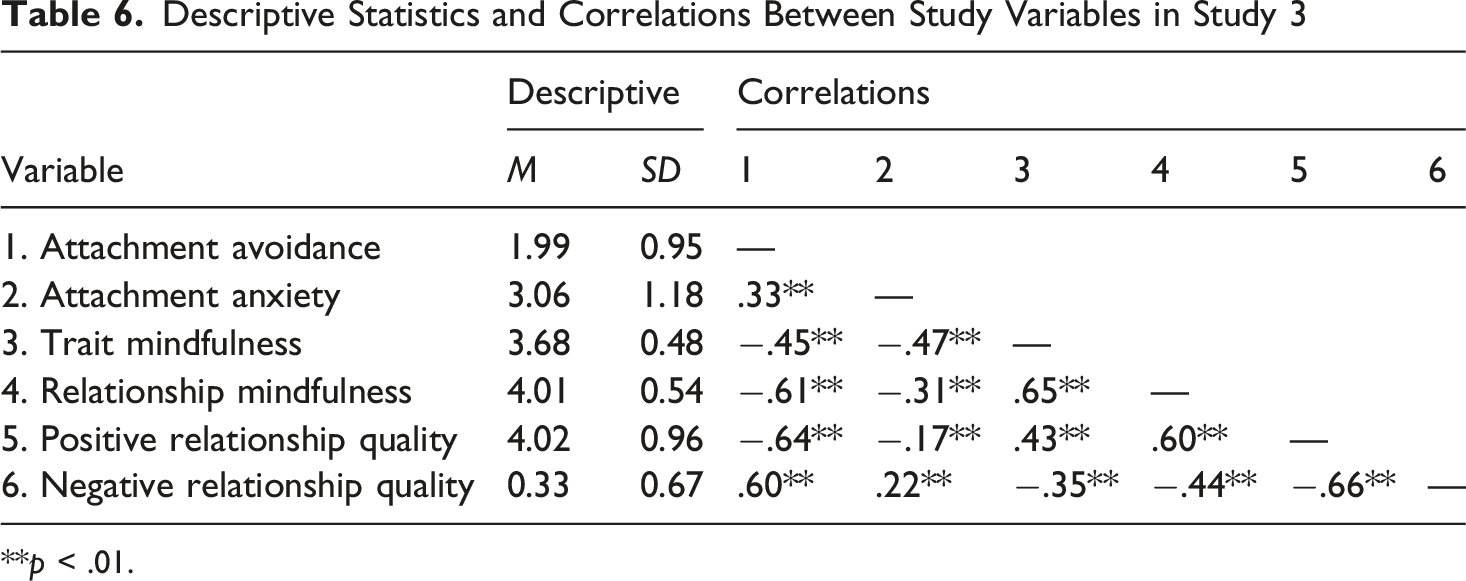
**p < .01.
Mediation Analysis
Summary of Mediation Analyses in Study 3
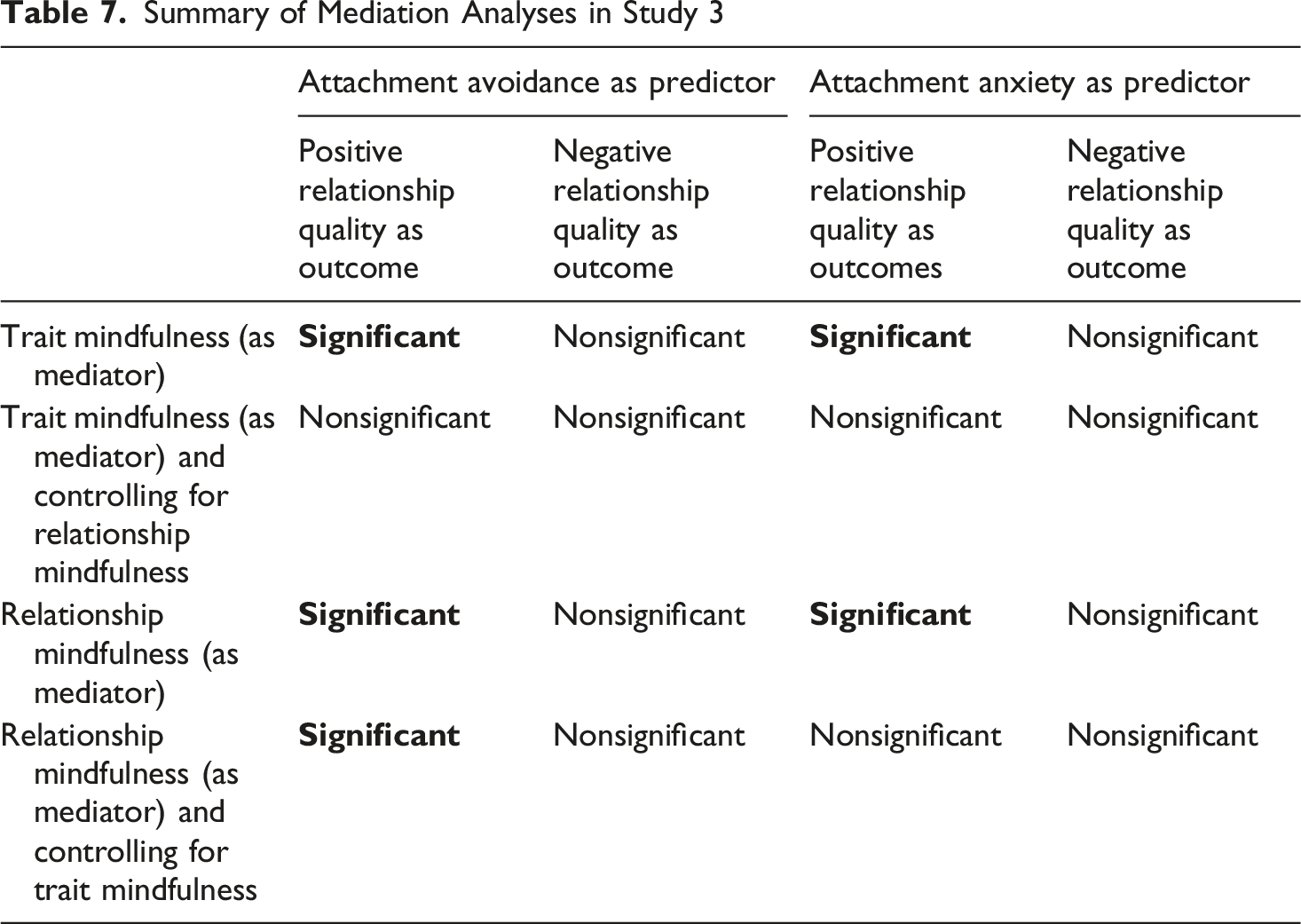
The results were partially consistent with Hypothesis 4. As shown in Table 7, relationship mindfulness significantly mediated the association between attachment avoidance and positive relationship quality (95% CI = [−0.28, −0.13]), after controlling for attachment anxiety, depression and anxiety. This effect remained significant when controlling for trait mindfulness (95% CI = [−0.22, −0.08]). For attachment anxiety, the indirect effect on positive relationship quality via relationship mindfulness was significant (95% CI = [−0.07, −0.01]) but became nonsignificant when controlling for trait mindfulness (95% CI = [−0.02, 0.04]). Relationship mindfulness did not significantly mediate the associations between attachment anxiety or attachment avoidance and negative relationship quality, regardless of whether trait mindfulness was controlled. Overall, these results indicate that relationship mindfulness uniquely mediates the link between attachment avoidance and positive relationship quality, whereas its mediating role for attachment anxiety does not remain significant after controlling for trait mindfulness.
Discussion
The findings from Studies 1 and 2 were partly replicated. Trait mindfulness mediated the relationship between attachment insecurities and relationship quality. However, when controlling for relationship mindfulness, trait mindfulness was no longer a significant mediator. Conversely, relationship mindfulness mediated the relationship between attachment insecurities and relationship quality, even after controlling for trait mindfulness. Specifically, relationship mindfulness mediated the relationship between attachment avoidance and positive relationship quality when controlling for trait mindfulness. This finding aligns with Stanton et al. (2021), who observed that relationship mindfulness predicted relationship quality prospectively, even when controlling for trait mindfulness, whereas trait mindfulness showed no association with changes in relationship quality when compared to relationship mindfulness. These results thus replicate earlier studies supporting the predictive validity of relationship mindfulness over general trait mindfulness in romantic contexts (Kimmes et al., 2018, 2020).
Although trait mindfulness and relationship mindfulness were moderately to strongly correlated in Study 3 (r = .65), this level of association is theoretically expected given that relationship mindfulness is conceptualized as a domain-specific extension of trait mindfulness. Importantly, the two constructs showed different patterns of associations with attachment orientations and relationship quality across studies, suggesting that they are not redundant. Previous research has similarly reported strong correlations between trait and relationship mindfulness (e.g., r = .72; Kimmes et al., 2020), while demonstrating that the two constructs differ in their intrapersonal versus interpersonal associations with psychological and relational well-being. Together, these findings suggest that trait mindfulness and relationship mindfulness are related yet distinct constructs that capture different levels of mindfulness within romantic relationships.
General Discussion
This research examined how attachment insecurities relate to romantic relationship quality, with a particular focus on the roles of trait mindfulness and relationship mindfulness. Across three studies, analyses of individual and dyadic data consistently found that both attachment anxiety and attachment avoidance were negatively associated with relationship satisfaction. Trait mindfulness and relationship mindfulness were positively associated with relationship satisfaction, but they differed in their explanatory power. Individuals with higher relationship mindfulness may be more attuned to what is happening in their close relationships, aware of their own internal experiences (e.g., emotions and bodily sensations) as well as external cues from their partner (e.g., mood and body language), without becoming overly reactive (Teper & Inzlicht, 2013). This awareness may in turn enable them to respond more effectively to their partner and promote emotional acceptance (Pratscher et al., 2019), thereby fostering positive aspects of the relationship and improving its overall positive quality.
Importantly, relationship mindfulness may be particularly relevant in the context of insecure attachment, as it has the potential to alter how attachment-related threats are perceived, processed, and regulated within romantic interactions. For anxiously attached individuals, relationship experiences are often characterised by heightened sensitivity to relational threats, excessive reassurance seeking, and difficulty disengaging from negative relationship-related thoughts. Relationship mindfulness may help anxious individuals by increasing awareness of these automatic cognitive and emotional patterns as they arise, thereby reducing rumination and emotional reactivity. For avoidantly attached individuals, romantic interactions are often marked by emotional distancing, suppression of attachment needs, and reduced attention to relational cues. Relationship mindfulness may be particularly beneficial for these individuals by encouraging present-moment engagement with both their own internal experiences and their partner’s emotional signals, without immediate withdrawal or defensiveness, thereby facilitating more responsive and emotionally engaged interactions.
While trait mindfulness was beneficial overall, it did not mediate the link between attachment insecurities and relationship outcomes. This suggests that general mindful awareness and acceptance, centred on internal experiences, may be insufficient to buffer the interpersonal challenges posed by insecure attachment in romantic contexts.
In contrast, relationship mindfulness, which captures mindful states within romantic interactions, demonstrated stronger mediating effects. Specifically, it significantly mediated the association between attachment avoidance and positive relationship quality, even when controlling for trait mindfulness. Individuals low in attachment avoidance tend to be more accepting and attentive in relationships and pay nonjudgemental attention to ongoing relational experiences, and this may directly counteract their deactivating tendencies by enhancing awareness of both their own and their partner’s emotional and cognitive experiences within interactions, fostering more positive relationship perceptions. This aligns with previous findings that greater relationship mindfulness, rather than general trait mindfulness, is associated with indirect reductions in attachment avoidance via increased partner-focused empathy (Gazder & Stanton, 2023). As such, relationship mindfulness appears particularly well suited to addressing the interpersonal deficits associated with avoidant attachment, leading to more consistently positive relational outcomes. Though relationship mindfulness consistently mediates the effects of attachment avoidance, it shows a more limited and inconsistent mediating role for attachment anxiety. Specifically, the mediating role of relationship mindfulness was not significant in the relationship between attachment anxiety and relationship quality when controlling for trait mindfulness. This indicates that the mediating effect of relationship mindfulness in the link between attachment anxiety and relationship quality is limited and influenced by trait mindfulness. This finding aligns with previous longitudinal research demonstrating attachment anxiety and trait mindfulness, rather than relationship mindfulness, predict longitudinal changes in each other (Gazder & Stanton, 2023). This pattern implies that anxious individuals may require a more general capacity for emotional awareness and regulation, in addition to situational mindfulness within the relationship, to effectively manage attachment-related distress.
Relationship mindfulness mediated the association between attachment avoidance and positive relationship quality, but not negative relationship quality. This finding suggests that, for individuals high in attachment avoidance, relationship mindfulness is more strongly associated with the enhancement of positive experiences in romantic relationships than with the reduction of negative experiences. Relationship mindfulness involves present-moment awareness and nonjudgmental attention within interpersonal contexts, which may facilitate greater openness and responsiveness toward one’s partner, thereby supporting positive relational experiences such as intimacy and satisfaction (Kimmes et al., 2020). However, reductions in negative relationship experiences may require additional interpersonal regulatory processes, such as emotion regulation strategies and constructive engagement in interpersonal conflict. Therefore, relationship mindfulness may function more as a relational resource that strengthens positive interpersonal engagement, rather than as a direct mechanism for reducing negative relational experiences.
Although partner effects were weaker than actor effects, they nonetheless revealed meaningful patterns. Specifically, one’s attachment insecurities were linked to their partner’s lower relationship mindfulness, which in turn reduced their partner’s relationship quality. These findings suggest that one partner’s attachment orientations can subtly shape the other’s relational experience through mindfulness-related processes. The presence of partner effects underscores the interdependent nature of romantic relationships and highlights the value of dyadic approaches.
Limitations and Directions for Further Research
This study has some limitations. All variables were assessed via online self-report measures, which are subject to social desirability and recall biases (Wittenborn et al., 2013). Future research should incorporate additional methodologies, such as daily diaries or semi-structured interviews, to capture relationship processes from a dyadic perspective. Second, the study focused solely on self-perceptions, leaving it unclear how partners perceive and evaluate each other in the absence of “other” reports. Future studies should examine partner perceptions, specifically, how individuals view one another, or employ external observers to assess individual and dyadic behaviours. Third, the sample lacked diversity, which may limit the generalisability of the findings. Most participants were heterosexual and identified as White, and we did not collect information on participants’ disability status. Future research should include more diverse samples and employ more inclusive recruitment strategies. Attachment and mindfulness processes may be shaped by minority stress, cultural norms, and disability-related experiences, highlighting the importance of examining these dynamics among non-heterosexual couples and across cultural contexts. Fourth, the present research focused primarily on high attachment anxiety or high attachment avoidance, without fully examining their combined effects. Future research should therefore investigate whether mindfulness functions differently for individuals high in both attachment anxiety and avoidance, such as those with fearful-avoidant attachment. Fifth, while relationship mindfulness emerged as a key mediator for avoidance, its mediating role in anxiety was inconsistent across studies, suggesting additional mechanisms (e.g., emotion dysregulation, rumination) may be at play. Finally, the present research was cross-sectional and correlational, limiting causal inference (though see Stevenson et al., 2021, reporting direction to be from attachment anxiety to mindfulness, and Gazder & Stanton, 2023, reporting a bidirectional link between mindfulness to attachment anxiety). While the findings suggest that attachment security may contribute to enhancing relationship mindfulness and, in turn, relationship satisfaction, it is also possible that reciprocal relationships exist among the variables. Further longitudinal or experimental designs are needed.
Conclusion
This research advances understanding of the distinct roles of trait mindfulness and relationship mindfulness in explaining how attachment orientations relate to romantic relationship quality. By employing the actor-partner interdependence model, the study extends beyond individual-level analysis to offer a dyadic perspective. Notably, it demonstrates that relationship mindfulness significantly mediates the link between attachment insecurities and relationship quality. These findings suggest that integrating mindfulness techniques with attachment-based approaches may assist romantic couples facing relationship issues, both intrapersonally and interpersonally.
Supplemental Material
Supplemental Material - Linking Attachment Orientations and Romantic Relationship Quality: The Role of Trait Mindfulness and Relationship Mindfulness
Supplemental Material for Linking Attachment Orientations and Romantic Relationship Quality: The Role of Trait Mindfulness and Relationship Mindfulness by Jiedi Li, Angela C. Rowe, Justin H. Park in Journal of Social and Personal Relationships.
Footnotes

Ethical Considerations
This study received ethical approval from the university’s ethics committee.
Consent to Participate
All participants provided informed consent before beginning the survey.
Funding
The authors disclosed receipt of the following financial support for the research, authorship, and/or publication of this article: This research was supported by funds from the China Scholarship Council (CSC, 202208060278).
Declaration of Conflicting Interests
The authors declared no potential conflicts of interest with respect to the research, authorship, and/or publication of this article.
Data Availability Statement
The data is available upon reasonable request from the author.
Open Research Statement
As part of IARR’s encouragement of open research practices, the authors have provided the following information. The research was not pre-registered. The data and materials used in the research are available upon request and can be obtained via email
Supplemental Material
Supplemental material for this article is available online.
Notes
References
Supplementary Material
Please find the following supplemental material available below.
For Open Access articles published under a Creative Commons License, all supplemental material carries the same license as the article it is associated with.
For non-Open Access articles published, all supplemental material carries a non-exclusive license, and permission requests for re-use of supplemental material or any part of supplemental material shall be sent directly to the copyright owner as specified in the copyright notice associated with the article.
