







Abstract
Electronic commerce (e-commerce) is widening the concept of business from a simple transactional approach to a broader and more complex concept of inter-firm co-operation. Amidst market globalization, growing interpenetration of national economies and the increased interdependence of national economies, e-commerce adoption remains a vital yet complex and elusive phenomenon, with very little known about its determinants. This study identifies the major determining factors in Ghanaian small and medium sized enterprises’ (SMEs) e-commerce adoption, offers practical implications, and indicates the actions required. This research integrates technological, organizational, and environmental determinisms with social constructivism to build a practical framework for understanding e-commerce adoption among SMEs in Ghana. Structural equation modeling was employed for data analysis. The results indicate that government support has the greatest direct impact on intentions to use e-commerce. Managerial support and the influence of enabling and regulatory conditions also play a vital role in stimulating SME e-commerce adoption in Ghana. The results also show that Ghanaian SMEs tend to imitate successful first-movers to avoid the risks that attend e-commerce technology.
Introduction
The use of electronic commerce (e-commerce) in business transactions, now a priority for many firms, is attracting increasing attention. As the world economy integrates and reduces its trade barriers, some of the greatest opportunities for small businesses will derive from their ability to participate in regional and international markets (Mutula and Brakel, 2006). Adopting information and communications technology (ICT) is considered a means of enabling small businesses to compete globally through improved efficiency and closer customer and supplier relationships (Chong et al., 2001). Information and communications technology may also help small and medium sized enterprises (SMEs) enhance their competitiveness (Swash, 1998).
E-commerce is changing the shape of competition, streamlining interactions and payments from consumers to companies and from companies to suppliers, while making marketing more flexible and accessible, lengthening business hours across the world (Hagel and Lansing, 1994). E-commerce offers many benefits, particularly productivity gains, transaction cost reductions, efficient information sharing between organizations within and across industries, and automatic product identification. E-commerce also plays a significant role in bridging the digital gap between developed and developing economies through improved access to information, knowledge, and expertise. E-commerce also allows global businesses to extend their supply chain and engage in international trade more efficiently and effectively regardless of location. Consequently, e-commerce can enhance the competitiveness of developing countries and reduce poverty (Qureshi and Davis, 2007). Nevertheless, relevant studies have been contradictory, finding that e-commerce marginalizes developing nations and widens the digital divide (Odedra-Straub, 2003), assertions premised on the numerous challenges confronting developing countries, such as infrastructural setbacks and the narrow diffusion of technological paraphernalia and knowledge.
Nevertheless, the competitive business environment, and the need to survive in it, make SMEs’ adoption of e-commerce inevitable: SMEs must adopt innovative and informed e-marketing strategies to remain distinct, profitable, and successful in domestic and international markets. According to Frempong (2007), the Internet has become so important that its usage should form an integral part of SME operations in developing countries. He further maintains that the Internet has become a pervasive aspect of ICT, which is radically changing the traditional forms of trade and providing windows of opportunities that enterprises, especially those from developing countries, can exploit (Frempong, 2007). This is further affirmed by the Nielsen Company (2008), which claims that more than 85% of the world’s online population has used the Internet to make a purchase.
The ubiquitous nature of this technology allows businesses to reach millions of people worldwide and offers numerous benefits and opportunities, particularly to SMEs. Wen et al. (2001) argue that e-commerce enables a company to achieve competitive advantage and cost savings through reduced advertising costs, product differentiation, timely market responses, and improved customer relationships and services. Bakos (2001) agrees that e-commerce enhances business operations, particularly for SMEs, and consequently reduces operational costs. Awa et al. (2010) find, however, that despite the growing consciousness of and enthusiasm for the use of electronic platforms in business activities such as marketing and sales, only a few SMEs are exploiting its extensive benefits.
Moreover, UNCTAD (United Nations Conference on Trade and Development, 2004) shows that, despite the increase in e-commerce revenues, employment, and number of participating SMEs, e-commerce growth in SMEs is largely confined to industrialized countries. Over 95% of e-commerce occurs in developed countries, with Africa and Latin America combined accounting for less than 1% of the total (United Nations Conference on Trade and Development, 2003). This highly skewed distribution in e-commerce growth implies an unbalanced benefit spread.
Small and medium sized enterprises are integral to economic growth and development. Ayyagari et al. (2007) find that, in high-income countries, formal SMEs contribute to 50% of GDP on average; they also estimate that, on average, SMEs account for close to 60% of employment in the global manufacturing sector. Estimations also suggest that SMEs represent, on average, over 90% of the enterprises and 50% to 60% of employment in most African countries (Ahiawodzi and Adade, 2012). In Ghana, SMEs dominate industry and have the potential to accelerate economic development, wealth creation, and poverty reduction. Abor and Quartey (2010) find that SMEs account for about 92% of businesses in Ghana and about 85% of manufacturing employment, while contributing about 70% of Ghana’s Gross Domestic Product (GDP). Thus, SMEs’ significance to the Ghanaian economy is clear. Given the pivotal role ICT plays in SME development, it could be seen as an enabler of socio-economic development and a critical support for effective political governance.
Ghanaians have striven to use ICT as a key developmental enabler for bridging the digital divide between them and their trading partners in developed economies. These efforts include the Ghana ICT for Accelerated Development (ICT4AD) policy and the liberalization of the ICT sector, designed to facilitate ICT infrastructural developments and human resource capacity building. The ICT4AD policy also intended to provide an enabling platform for safeguarding the development of the ICT industry and fostering e-commerce and Internet usage in Ghana.
Despite these developments, Ghana still lags behind other countries such as South Africa in terms of e-commerce performance (Hinson and Sorensen, 2007). Furthermore, the Ghanaian SME sector appears unaware of the benefits of e-commerce, illustrating the claim in Fillis et al. (2004) that SMEs already employing e-marketing technologies show little evidence of engaging in their long-term strategic development, especially among less developed countries. This lack of awareness of e-commerce’s critical potential is an important barrier to its adoption and remains a serious concern (Turban et al., 2008).
Given the significance of SMEs to the Ghanaian economy, the adoption of Internet and e-commerce remains a key competitive tool for allowing SMEs to survive and gain competitive advantages over rivals (Department of Trade and Industry, 2001). Consequently, understanding the drivers influencing e-commerce adoption will allow SMEs to find ways of attracting consumers to their products and services, thus enhancing their global market presence (Ghobakhloo et al., 2011). The paucity of research on e-commerce adoption that explores its influencing factors in developing countries, particularly sub-Saharan Africa, leaves a significant gap that requires attention. This study bridges this knowledge gap in the e-commerce literature and reveals the driving forces behind SMEs’ e-commerce adoption in Ghana. Focusing on owners/managers and firm-level characteristics, this study employs a structural equation modeling (SEM) approach and makes recommendations of particular interest for governments and the business community. It also establishes a theoretical framework for generating new knowledge of and insight into e-commerce and ICT adoption by SMEs while also serving as a reference point for future researchers.
The following sections present an overview of the significance of e-commerce for economic growth, the status of e-commerce in Ghana, and the study’s theoretical foundation and research hypotheses. The research methodology and findings are explained, and the study’s results, contributions, and limitations are presented. Finally, avenues for future research are identified.
Literature review
E-commerce and economic development
Turban et al. (2008) defined e-commerce as the process of selling, buying, transferring, or exchanging products, services, and/or information through the Internet. They distinguished between Internet and non-Internet e-commerce, whereby the latter involves buying and paying for services or products using such methods as the smart card through vending machines or transactions via networks such as local area networks (LANs). Huy and Filiatrault (2006) claimed that e-commerce is any economic or business activity that uses ICT applications to enable the buying and selling of products and services, facilitating business transactions between and among businesses, individuals, governments, and other organizations. Scholars such as Simpson and Docherty (2004) defined e-commerce as the use of the Internet for buying and selling activities such as advertising, negotiations, and contracts. We could integrate these diverse conceptions of e-commerce and suggest that it comprises digitally enabled commercial transactions between and among organizations and individuals (Laudon and Traver, 2013).
Technology has become one of the main drivers of economic development. In their study of the fundamentals and applications of e-commerce, Chan et al. (2001) stated that ICT and e-commerce play an integral role in economic and social transformation.
Many empirical studies have examined the impact of e-commerce on aggregate economic development. Cohen et al. (2000) found that e-commerce enabled businesses in developing countries to overcome the traditional boundaries associated with limited access to information, high market-entry costs, and isolation from potential markets. Moodley and Morris (2004) and Molla and Heeks (2007) also argued for the strategic informational and operational benefits of e-commerce adoption for firms in developing countries. They also found that e-commerce is fostering a wide array of innovative businesses, markets, and trading communities. Molla and Licker (2005) argued that businesses should take advantage of e-commerce’s opportunities and expand their market reach, gain from economies of scale, become more profitable, and contribute to economic development.
E-commerce has changed the face of retail, services, and global business strategies. It will continue to influence how companies sell and market their products, as well as how people make their purchases. Porter (2001) argued that e-commerce allows economic actors to significantly reduce their transaction costs, encouraging the use of markets to organize economic activities, improve company performance, and promote consumption. Effectively utilized, then, e-commerce can provide opportunities in international trade and facilitate growth and economic development (Singh, 1999).
Some studies show e-commerce contributions and implications for developing countries. Boateng et al. (2008b) proposed a roadmap indicating the current state of research on e-commerce in developing countries by analyzing 181 published articles. The research showed the gaps in the research and implications for future research on e-commerce in developing countries. Boateng et al. (2008a) also attempted to show how e-commerce can contribute to socio-economic development in developing countries by constructing an integrated conceptual model connecting e-commerce with socio-economic development.
E-commerce in Ghana
The Ghanaian Government (2003) claims that Ghana is one of the few African countries with a liberalized telecom market and a vast array of Internet service providers, ranging from total telecommunications products and services to customized data management services. Hinson et al. (2009) illustrated industrial Internet usage by focusing on major industrial sectors such as tourism, banking, and manufacturing. The study also examined e-commerce readiness in Ghana and provided suggestions for e-commerce adoption in the country. Internet user growth in Ghana was held back for many years by the poor condition of the national fixed-line network and the high cost of connectivity. As a result, Internet penetration languished below 10% of the population (BuddeComm, 2013). However, the sector developed rapidly following the introduction of wireless and third-generation (3G) mobile and wireless broadband technologies such as High Speed Packet Access (HSPA), Worldwide Interoperability for Microwave Access (WiMAX), and iBurst. Augmented international connectivity combined with the rollout of national fiber backbone networks by a number of players is continuing to revolutionize the country’s broadband market and pave the way for the convergence of technologies and services. BuddeComm (2013) indicated that these improvements have generated subscriber growth at the expense of the Average Revenue per User (ARPU), which has fallen below US$5 per month for some operators. Further, BuddeComm (2013) reported 100% voice market penetration in mid-2013. These developments provide mammoth potential in both subscriber and ARPU terms for 3G mobile broadband services, which already account for a greater proportion of Internet connectivity in the country.
In 2011, Ghana had an estimated 2,085,501 Internet users, a major increase over the estimated 3000 Internet users in 2000 (International Telecommunication Union, 2012). This estimate corroborates Abbey (2011), who indicated that over 2 million Ghanaians have access to the Internet. Estimates suggest that Ghana’s Internet users per 100 inhabitants 1 are steadily increasing. Figure 1 compares Internet usage per 100 persons in Ghana, Nigeria, and South Africa up to 2012.
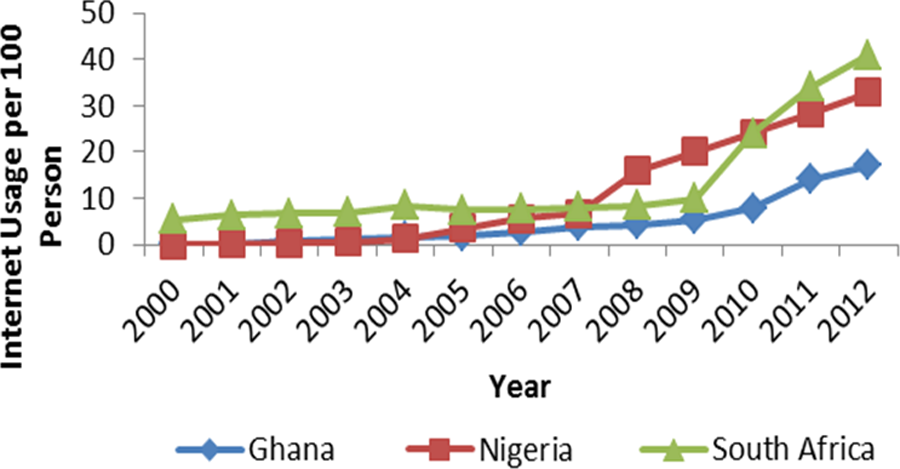
Estimated Internet users per 100 inhabitants (International Telecommunication Union (2013)).
Mobidensity and mobile cellular subscription 2 (MCS) rates are also improving. Mobile cellular subscriptions in Ghana were last reported at 108 per 100 people in 2013 according to World Bank data (http://wdi.worldbank.org/table/5.11). Figure 2 compares Ghana’s and Nigeria’s mobile cellular subscription rates up to 2012. Figure 2 shows that Ghana’s MCS growth per 100 persons has been tremendous, far surpassing Nigeria’s. Ghanaian MCS also surpasses the world average of 93 per 100 as indicated in World Bank data (http://wdi.worldbank.org/table/5.11). Ghana is thus a congenial environment for e-commerce development and adoption.
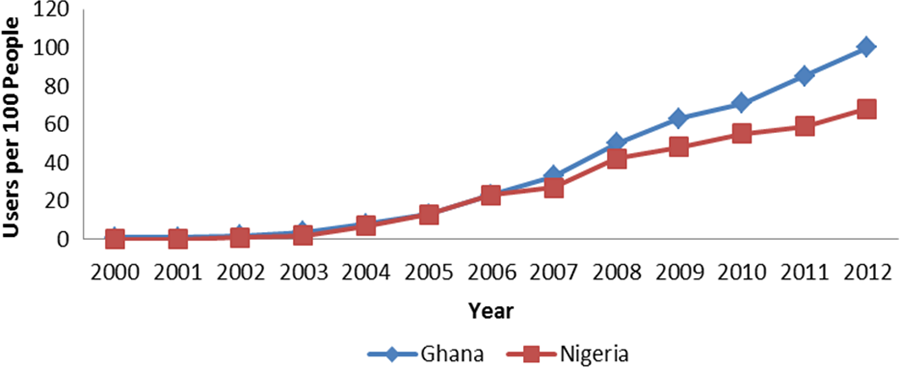
Mobile cellular subscriptions per 100 inhabitants (International Telecommunication Union (2013)).
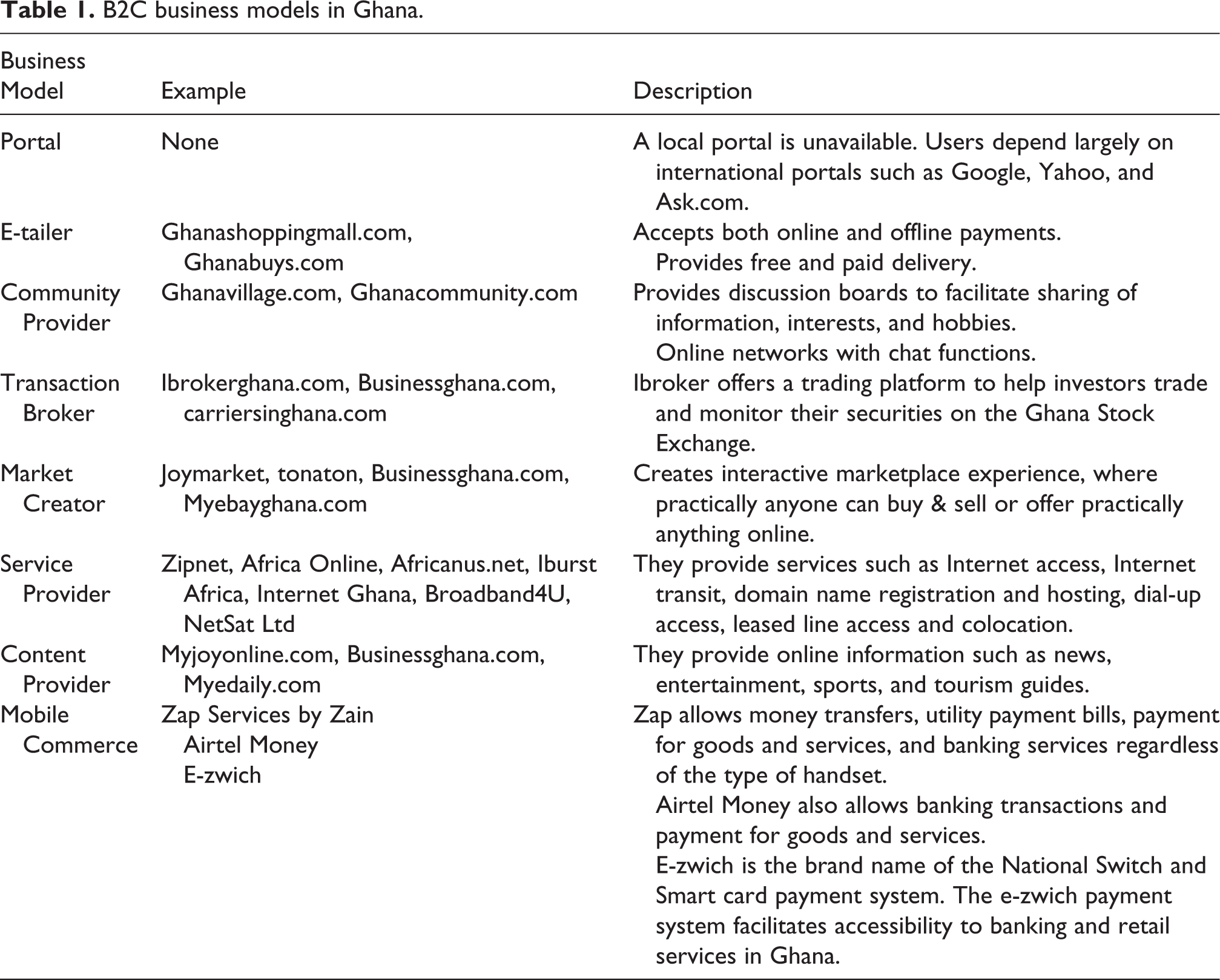
Research conducted on the growth and usage of Internet in Ghana shows that 40.6% of Ghanaians depend on the Internet for information on products and services (Quarshie and Ami-Narh, 2012); many Ghanaian businesses and individuals employ the Internet and e-commerce to enhance their businesses and remain competitive. Table 1 shows an overview of B2C e-commerce business models in Ghana.
B2C business models in Ghana.
Theoretical background
Adoption and diffusion innovations have received considerable interest from industry groups, policymakers, and scholars. Extensive analysis of these theories reveals two broad categories: IT adoption at the individual level and IT adoption at the organizational level (Oliveira and Martins, 2011).
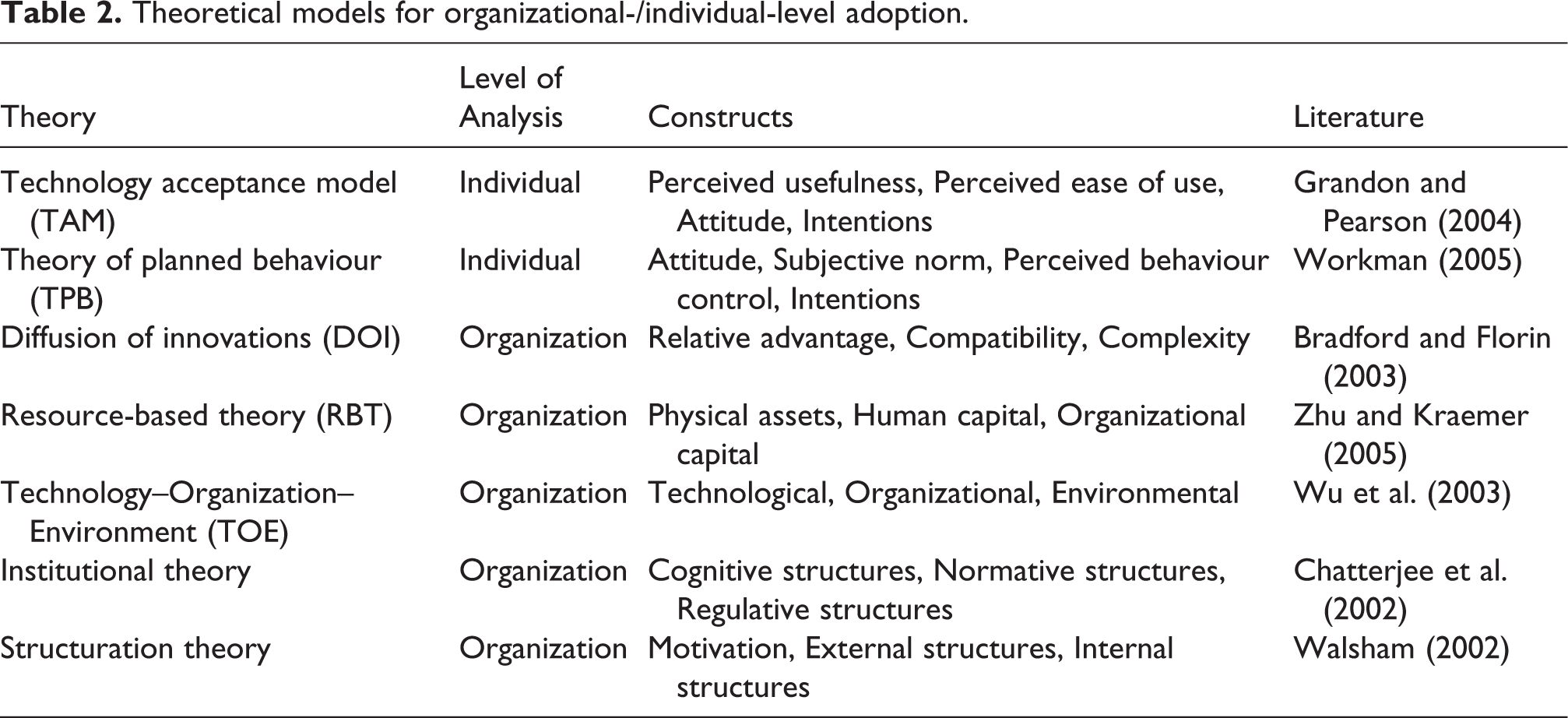
Individual-level adoption models include the Theory of Planned Behaviour (TPB) (Ajzen, 1991), the Technology Acceptance Model (TAM) (Davis, 1989), and the Unified Theory of Acceptance and Use of Technology (UTAUT) (Venkatesh et al., 2003). At the organizational level, Oliveira and Martins (2011) claimed that the most widely used theories include the Diffusion of Innovations (DoI) theory of Rogers (2003) and the Technology Organization Environmental (TOE) framework (Kraemer et al., 2006; Tornatzky et al., 1990). The institutional theory has also been employed extensively in firm-level studies. Downs and Mohr (1976) explained that no single unitary theory can explain all aspects of innovation acceptance. Consequently, most research on the adoption of e-commerce is based on any or a combination of the adoption models. Table 2 outlines some of the theoretical models used to examine the organizational- /individual-level factors influencing innovation adoption and diffusion.
Theoretical models for organizational-/individual-level adoption.
Firm-level adoption studies
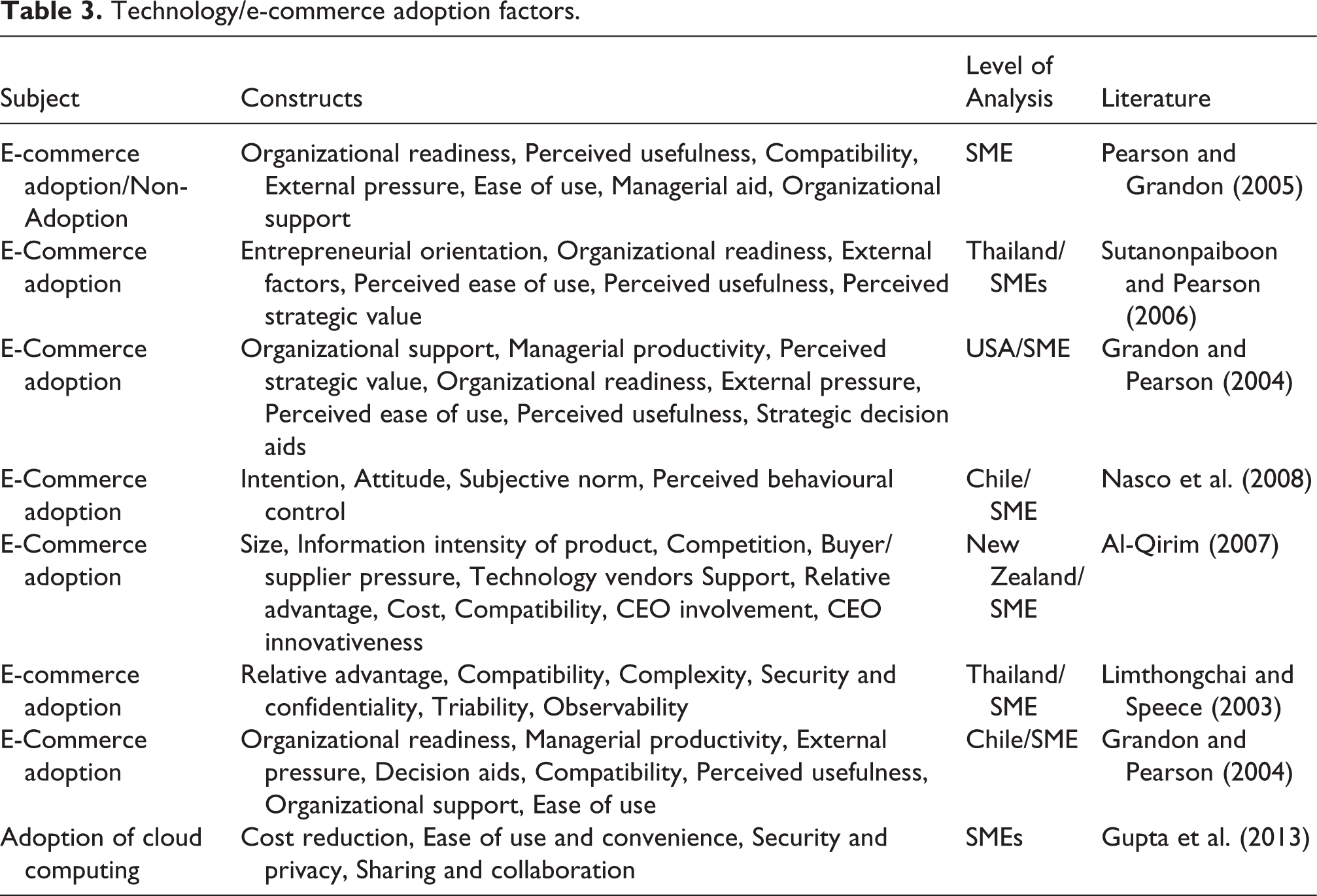
Adoption theories have been applied to various adoption studies topics, such as Internet banking, online shopping, mobile commerce, and technology switching intentions. Similarly, studies on SMEs, developing countries, and firm-level technology adoption have used either one or a combination of these theories. Table 3 provides a summary of some of the studies designed to determine e-commerce adoption drivers in SMEs, at the firm level, and in developing countries. These studies provide an overview of the critical determining factors of firm-level and SME adoption behaviour, particularly in developing countries. For a study of firm-level adoption in Ghana, Boateng et al. (2011) analyzed the country’s readiness for firm-level e-commence adoption. The study highlighted factors affecting e-commerce adoption in terms of government, technology, market, and culture, and showed that social networks and government commitment have significant impacts.
Technology/e-commerce adoption factors.
Research model and hypothesis development
Research model
Recognizing the importance of owners’ perceived characteristics to business performance, this study adopts the TPB as the basis of its proposed research model. Harrison et al. (1997) has also adopted the TPB to examine the influence of owner and management decisions on small businesses’ adoption behaviour and affirmed its theoretical strength in evaluating adoptions in small businesses. This study integrates the TPB with the TOE; however, given the complex environment within which firms operate, the decision to adopt e-commerce may be partially influenced by factors external to the organization. This study’s integrated model thus has stronger predictive power. Our integration is guided by the claim in Ramdani (2008) that the TPB requires unique operationalization, such as integration with other theories, to enhance its predictive power.
The proposed improvements to the model are based on the literature (Sait et al., 2004) on the adoption and use of innovation by SMEs in developing countries. The study adopts behavioural intention as a proxy for adoption, as intention has been posited by many theorists as the closest cognitive antecedent of behaviour and as substantial empirical evidence supports the theoretical intention–behaviour relationship (Fishbein and Ajzen, 2005).This provides a comprehensive framework of technological, organizational, environmental, and individual constructivism for explaining adoption among SMEs in Ghana. The proposed research model is shown in Figure 3.
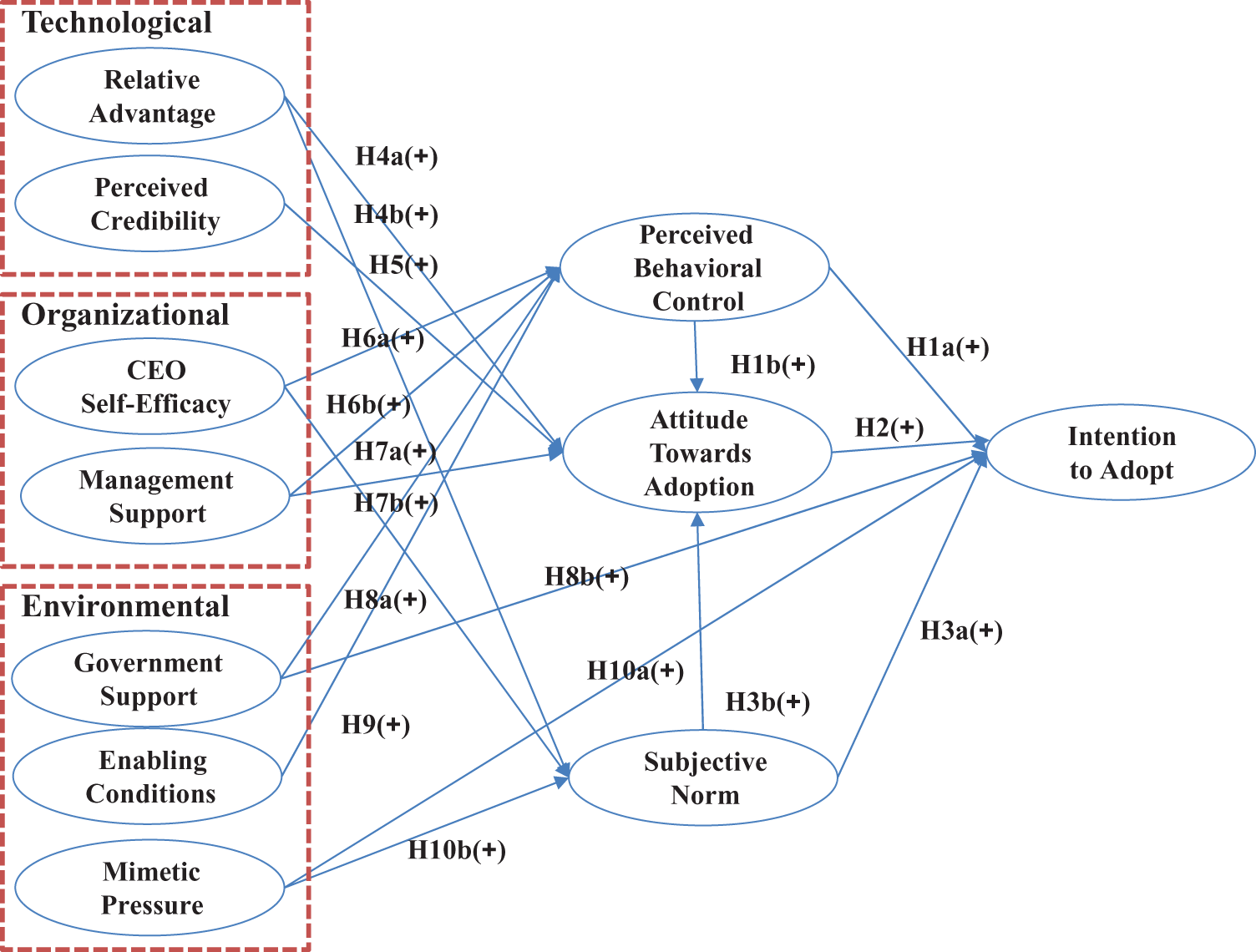
Proposed research model.
Hypothesis development
The TPB dimension: perceived behavioural control
According to Montalvo (2006), perceived behavioural control represents an index of the existence of or deficiency in the resources and opportunities indispensable for carrying out innovative activities. Yi et al. (2006) indicated that perceived behavioural control accounts for users’ agility, as shaped by the resources needed to exploit the potential of planned applications. According to Ajzen (1991), this control corresponds to the perceived ease or difficulty of achieving a given behaviour as conditioned by previous experiences or accumulated knowledge. Harrison et al. (1997) demonstrated that perceived behavioural control had a significantly positive impact on the organizational adoption of innovation. Venkatesh and Davis (2000) also found perceived behavioural control (both internal and external) to be a very strong determinant of intention to use an innovation. Based on the above analysis, this study posits the following:
The TPB dimension: attitude towards use
Attitudes are informed by the beliefs required for a behaviour. Attitudes can also be understood as individuals’ positive or negative feelings associated with performing a specific behavior (Ajzen, 1991). Consequently, individuals will hold a favorable attitude toward a given behaviour if they believe that its performance will lead to mostly positive outcomes (Ajzen and Fishbein, 1980). Several studies, such as Celik (2008), George (2002) and Chai and Pavlou (2004), found a significant direct relationship between attitude and usage. Celik (2008) found that attitude is significantly related to Internet banking intention. Pavlou and Chai (2002) also established attitude as a significant predictor of electronic commerce intention in Greece and the USA. This study therefore theorizes the following:
The TPB dimension: subjective norm
Subjective norm is the perceived social pressure to engage in (or desist from) behaviour (Ajzen, 1991). Small and medium sized enterprises are particularly strongly influenced by external situations that might exert normative pressure on adoption behaviour. Hence, Montalvo (2006) opined that subjective norm indicates the social pressure or norm triggered by a company’s environment. Consequently, organizational adoption intention increases as the environmental pressures associated with adoption increase.
A study by Yang and Maxwell (2011) on the factors influencing intention to use an expert system showed that subjective norm was a significant determinant of intention. Pavlou and Chai (2002) found subjective norm to be significantly related to intention in both the USA and Greece. Nor and Pearson (2008) also found subjective norm to have a positive and significant impact on intention to use e-commerce in Malaysia. Contrariwise, Tan and Teo (2000) found an insignificant linkage between attitude and intention in Singapore. This study therefore posits the following hypothesis:
Technological context
Few studies have examined the influence of technological physiognomies on small businesses (Premkumar, 2003). This study adopts relative advantage and perceived credibility to measure the impact of technological characteristics on SMEs’ willingness to adopt e-commerce.
Technological context: relative advantage
According to Rogers (2003), relative advantage is the extent to which an innovation is perceived as being better than the idea it supersedes; it is thus similar to perceived usefulness (Wu and Wang, 2005). Kendall et al. (2001) observed that relative advantage is the benefit to SMEs in terms of wider market coverage, lower business costs, and the importance of doing future business on the Internet. This study defines relative advantage as the degree to which e-commerce can enhance competitiveness, reduce transaction costs, and increase revenue and sales.
Many studies attempt to explain the substantial influence of relative advantage on innovation adoption. Jeon et al. (2006) identified relative advantage as an important factor influencing e-business adoption among SMEs. Low et al. (2011) noted that the relative advantage firms expect to derive from adopting a new technology substantially influences their attitude towards adoption. Meanwhile, Moon and Kim (2001) empirically confirmed the significance of relative advantage to attitude. This study thus hypothesizes the following:
Technological context: perceived credibility
Wang et al. (2003) posited that perceived credibility consists of two important elements: privacy and security. Security refers to the protection of information or systems from unsanctioned intrusions or outflows (Nysveen et al., 2005). Fear of a lack of security has been identified in most studies as a factor in the growth and development of e-commerce (Wang et al., 2003). Killikanya and Chantranontwong (2000) found that the fear of losing trade secrets made SMEs reluctant to consider entering the e-commerce business arena.
Tan and Eze (2008) found that SMEs’ major concerns were data confidentiality related to immature electronic payment methods, Internet security, and the limitation of legal frameworks. Wang et al. (2003) found that perceived credibility had a significantly positive effect on behavioural intention: the lower the perceived security of e-commerce, the less likely that it would be adopted. Accordingly, the following hypothesis is proposed:
Organizational context
Organizational traits seem to be the primary focus of many firm-level studies, particularly those on small business (Premkumar, 2003). Management support and CEO self-efficacy are employed in this study.
Organizational context: CEO self-efficacy
According to Pedersen (2003), self-efficacy in the context of technology adoption can be viewed as confidence in one’s ability to use an innovation to achieve a desired behaviour. It therefore plays an important role in high-technology adoption because consumers with greater self-efficacy concerning a product are expected to develop positive attitudes about it.
In their SME IT adoption studies, Thong et al. (1994) and Thong (1999) established that small businesses with CEOs who are well-informed about IT are more likely to adopt IT. They further claimed that greater CEO knowledge reduces uncertainty concerning IT, which reduces the risks surrounding IT adoption. Wymer and Regan (2005) asserted that CEO innovativeness directly impacts perceived behaviour control. Similarly, Al-Qirim (2005) found that SMEs’ level of e-commerce capabilities substantially depends on CEOs’ efficacy and their influence on the business. We expect that SME owners who believe that they have the ability to use IT innovation will have a higher intention of adopting and using IT innovation. Therefore, this study hypothesizes the following:
Organizational context: management support
Management support is the extent to which management encourages the use of IT by their subordinates and encourages development and initiative. Grover and Goslar (1993) cited top management support as a critical variable in creating a supportive climate for the adoption of new technologies. Igbaria et al. (1996) evaluated degrees of overall support, including top management encouragement and the allocation of adequate resources for creating a favorable computing environment. They found that organizational support can take myriad forms, including providing appropriate technology learning opportunities, encouraging experimentation with microcomputers, and offering a wide selection of user-friendly software for special use in different jobs.
Empirically, Jeyaraj et al. (2006) found top management support to be one of the best predictors of the organizational adoption of IS innovations. Henry and Stone (1995) also showed that management support can indirectly influence users’ outcome expectancy. Accordingly, this study posits the following:
Environmental context
The environment can encourage or impede an organization’s adoption of innovations. Many studies have proven the importance of environmental pressure on innovation adoption. This study examines the impact of government support, enabling conditions, and mimetic pressure on SME e-commerce adoption in Ghana.
Environmental context: government support
Ample scholarly evidence shows the significance of government in e-commerce development. Scholars such as Martinsons (2008), Chan and Al-Hawamdeh (2002), and Dunt and Harpe (2002) found that the level of e-commerce and e-business adoption and use in developed economies has been greatly enhanced by governments’ participatory role in providing the empowering infrastructure for e-commerce to thrive. In Singapore, for instance, the government enhanced e-commerce infrastructure by ratifying favorable e-commerce development legislation (Al-Hawamdeh, 2002). Bjørn et al. (2003) found that governmental intervention occurs both as influence and as regulation, and that such interventions should emphasize knowledge, subsidies, and mobilization, which, he explained, trigger a sense of internal organizational readiness or behaviour control towards adoption. Seyal et al. (2004) also indicated that government support is significantly related to the adoption of e-commerce. We therefore postulate the following:
Environmental context: enabling conditions
Venkatesh et al. (2003) defined enabling conditions as the degree to which an individual believes that an organizational and technical infrastructure exists to support technology use. According to Chaston and Mangles (2000), SMEs usually rely on their trusted networks as sources of the resources required to adopt and use ICT.
Foon and Fah (2011) examined the adoption of Internet banking in Malaysia and found that facilitating conditions strongly influenced behavioural intention to use. Huang and Qin (2011) examined the influence of facilitating conditions on behavioural intention to use a virtual fitting room in China; contrary to the findings of Foon and Fah (2011), they found no significant influence. However, a study by Alrawashdeh et al. (2012) conducted on the adoption of e-learning in Jordan found that facilitating conditions significantly influenced behavioural control. On the basis of the above, the following hypothesis is proposed:
Environmental context: mimetic pressures
DiMaggio and Powel (1983) defined mimetic pressures as the influences of structurally equivalent organizations that have initiated an innovation successfully. Mimetic pressures emanate from uncertainty and lead organizations to model themselves on others in their organizational fields. This mimicking behaviour enables organizations to lower the costs of searching for alternatives and the risks taken by first movers (DiMaggio and Powel, 1983).
Many studies include mimetic pressures while examining organizational ICT adoption behaviour (e.g., Premkumar and Ramamurthy (1995); Toe et al. (2003)). Toe et al. (2003) found a significant impact of mimetic pressures on organizations’ adoption of financial EDI technology. We therefore postulate the following:
Measurements
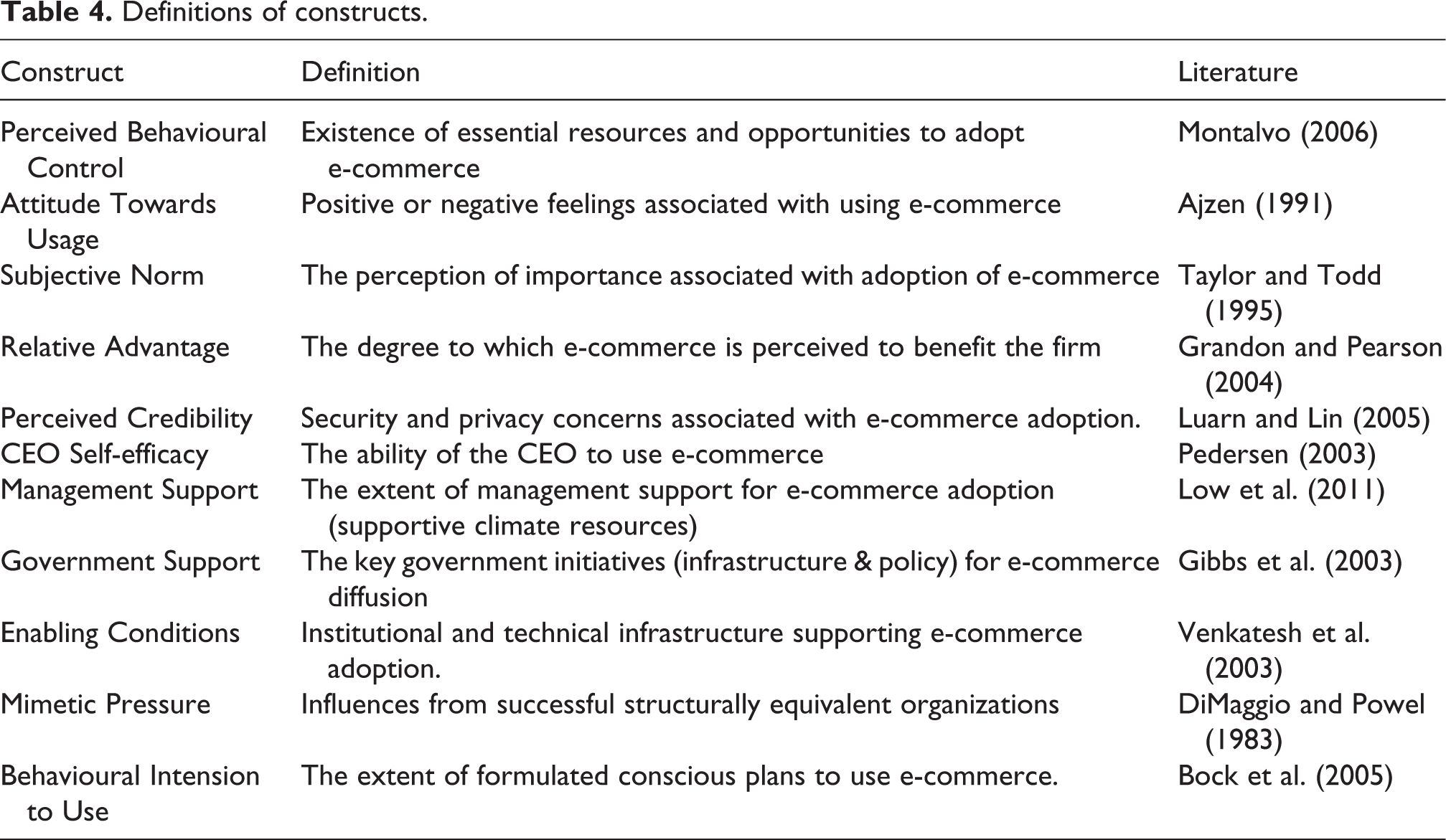
Table 4 provides the operational definitions of the constructs employed in this study and the key related literature. For all measures, multiple items based on a seven-point Likert scale were used.
Definitions of constructs.
Results
Data collection and results
The purposive sampling technique was used to gather the needed data for the analysis. It was the best means of getting respondents who had adopted and used or intended to adopt e-commerce and were therefore knowledgeable and well-informed about the subject. The selection of this procedure was guided by the proposition by Neuman (1997). Purposive sampling is a non-probability sampling technique where the researcher selects units based on their knowledge and professional judgment.
A questionnaire survey was used to collect the data because it is the most widely used methodology in the MIS literature (Palvia et al., 2004) and in studies on organizational e-commerce adoption (Azam and Quadddus, 2009). The questionnaire was piloted with a sample of twenty SMEs to assess the questions’ ease of comprehension. One author who is a government officer obtained a list of SMEs registered in the government database. From the list, the SMEs that had adopted and used or intended to adopt e-commerce became the target of our survey using the purposive sampling technique as mentioned above. Four out of the ten regions of Ghana were selected for the survey: Greater Accra and the Western, Northern and, Upper West Regions. The number of qualified SMEs in the selected regions was almost 200, so we sent the self-administered questionnaires to 200 SMEs by email. Out of 200 questionnaires, 160 were received, representing a response rate of 80%. Only 154 were analyzed after they were sorted because six questionnaires were incomplete. Table 5 presents the demographics of the respondents.
Demographic characteristics of respondents (N = 154).
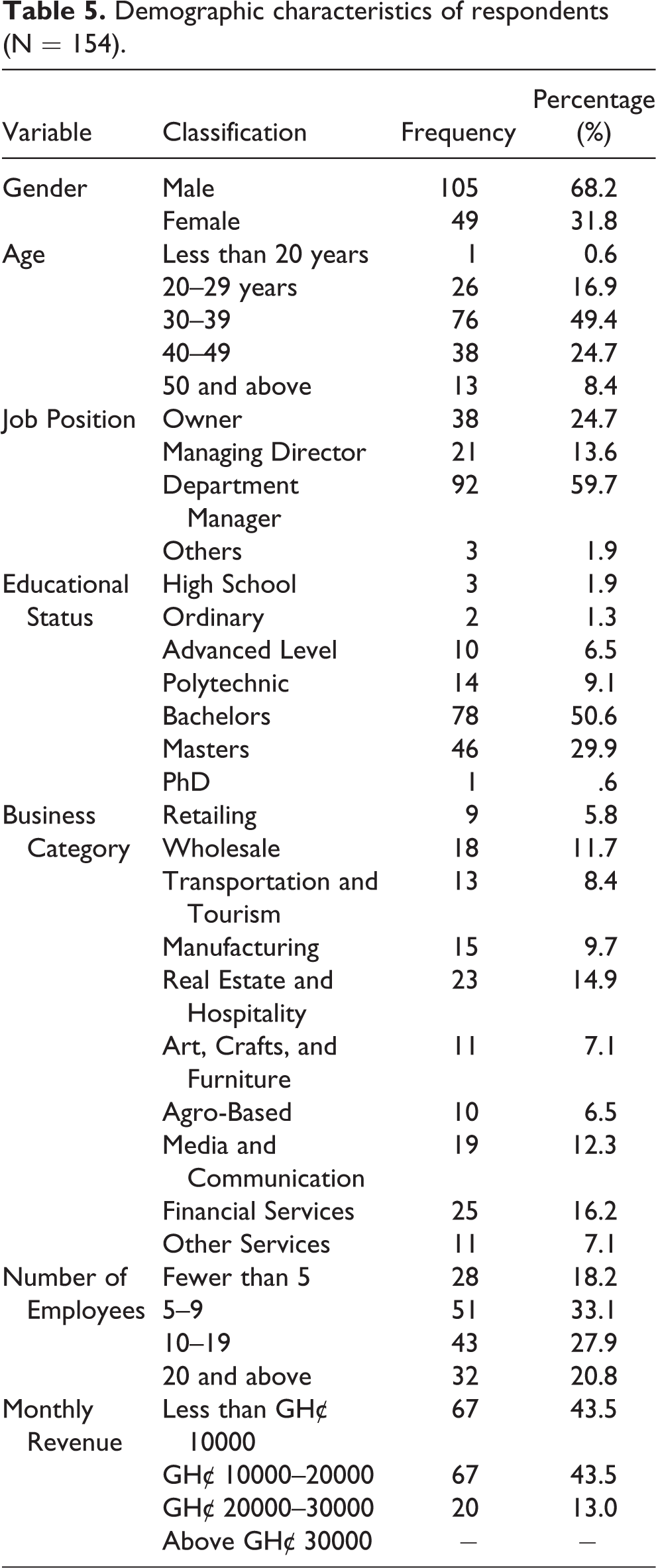
In addition to the demographics of Table 5, 72.7% of the firms used the service from service providers for Internet access and 66.9% adopted e-commerce. Moreover, 6.5% do not use Internet for business operations even though they have considerable knowledge on e-commerce.
Measurement model
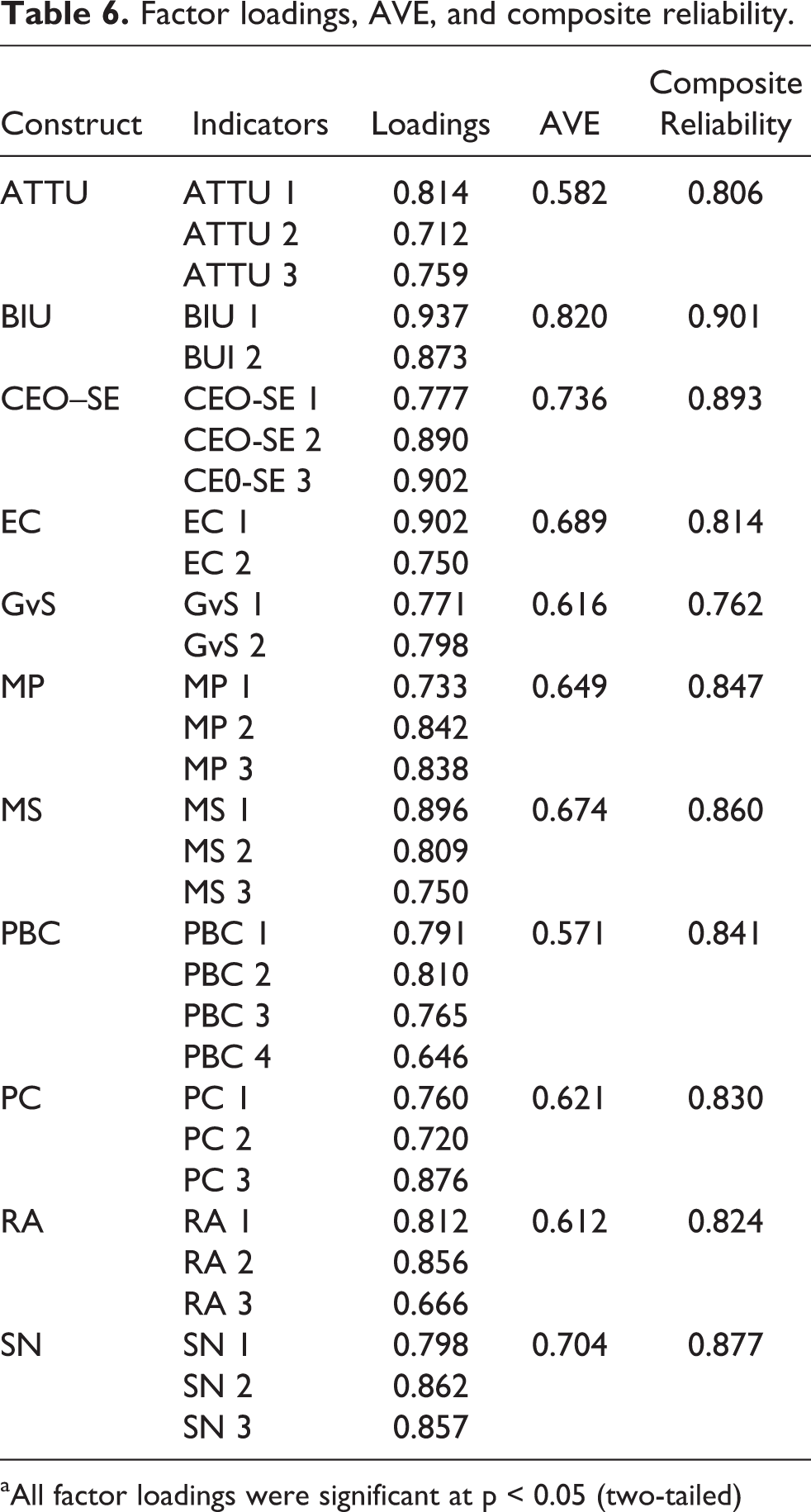
To validate the measurement model, quality criteria such as item reliabilities together with construct-related factors such as convergent and discriminant validity were employed. These assessments confirm the reliability and validity of the observed variables relative to the respective latent variables. The composite reliability was employed because it provides a better estimate of the variance shared by the respective indicators and a more conservative measurement in PLS–SEM than does Cronbach’s alpha (Hair et al., 2012). The factor loadings, composite reliability, and average variance extracted (AVE) values from the PLS algorithm are shown in Table 6.
Factor loadings, AVE, and composite reliability.
aAll factor loadings were significant at p < 0.05 (two-tailed)
The composite factor reliability coefficients of the constructs ranged from 0.762 to 0.901, satisfying the standard of at least 0.70 suggested by Fornell and Larcker (1981). The AVE was used to measure the convergent validity of the measured constructs. As Table shows, the AVE values meet the threshold of AVE ≥ 0.50 suggested by Bagozzi and Yi (1988). This indicates that the scales used to measure the constructs possess ample convergent validity.
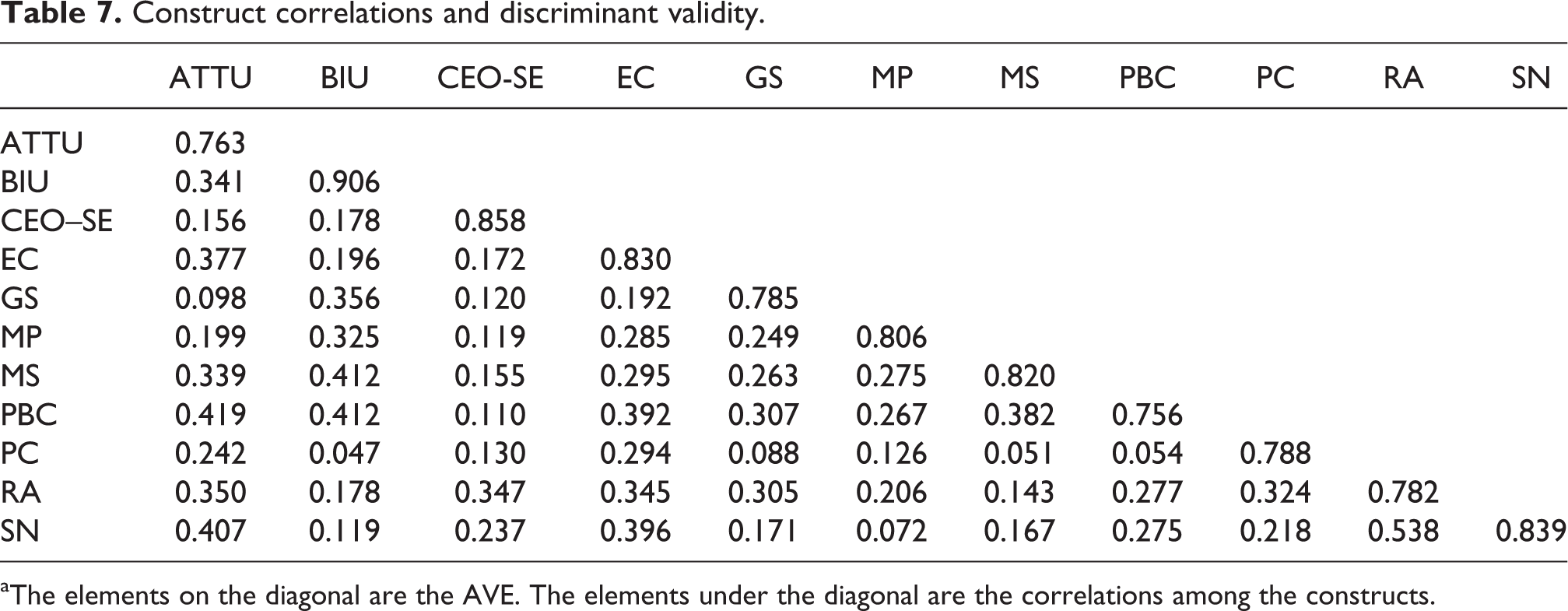
Discriminant validity was assessed through two approaches. First, the square root of the AVE was compared against the inter-construct correlation estimates (Fornell and Larcker 1981). As seen in Table 7, all the diagonal elements in bold (i.e., the square root of AVE) are greater than the corresponding inter-construct correlation coefficients. Second, the cross loadings of the measurement items were assessed.
Construct correlations and discriminant validity.
aThe elements on the diagonal are the AVE. The elements under the diagonal are the correlations among the constructs.
The goodness-of-fit (GoF) index in Tenenhaus et al. (2005) was employed to evaluate the overall fit of the model since the PLS modeling does not report fit indices such as the root mean square error approximation (RMSEA) or the comparative fit index (CFI). The GoF is the geometric mean of the average communality and the average R2. According to Tenenhaus et al (2005), GoF indices of 0.1, 0.25, and 0.36 indicate small, medium, and large model fit respectively. The computation resulted in a substantial value of GoF = 0.442, indicating that the research model is substantially fit.
Hypothesis testing
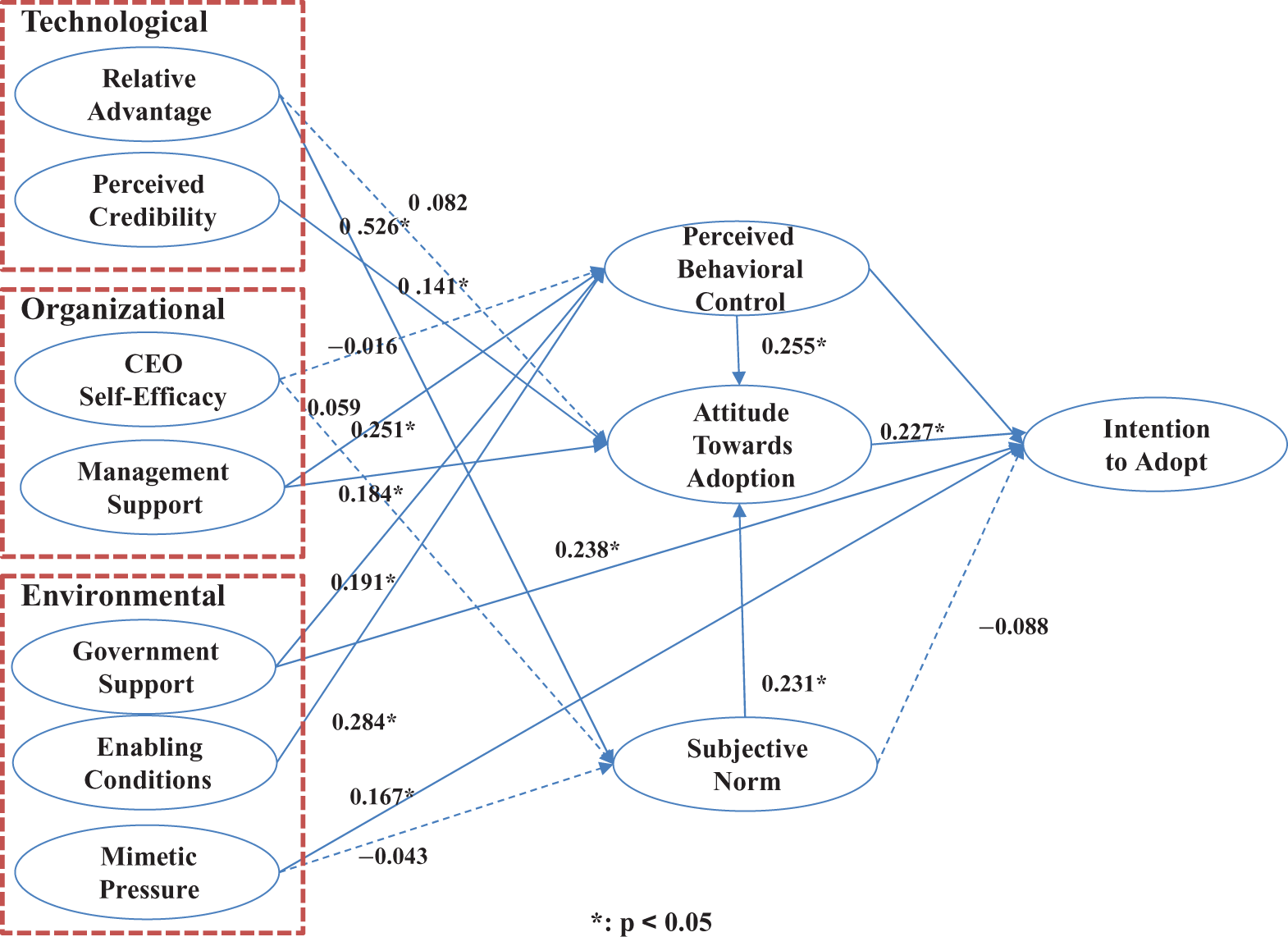
The SEM technique under smart partial least squares (smart PLS) 2.0 was employed to test the research hypotheses. Based on the data analysis, Figure 4 presents the path coefficients of all constructs, and Table 8 lists the results for the hypotheses. As seen in Figure 4, twelve out of the seventeen paths in the research model are supported.
Results of structural equation model.
Test results.
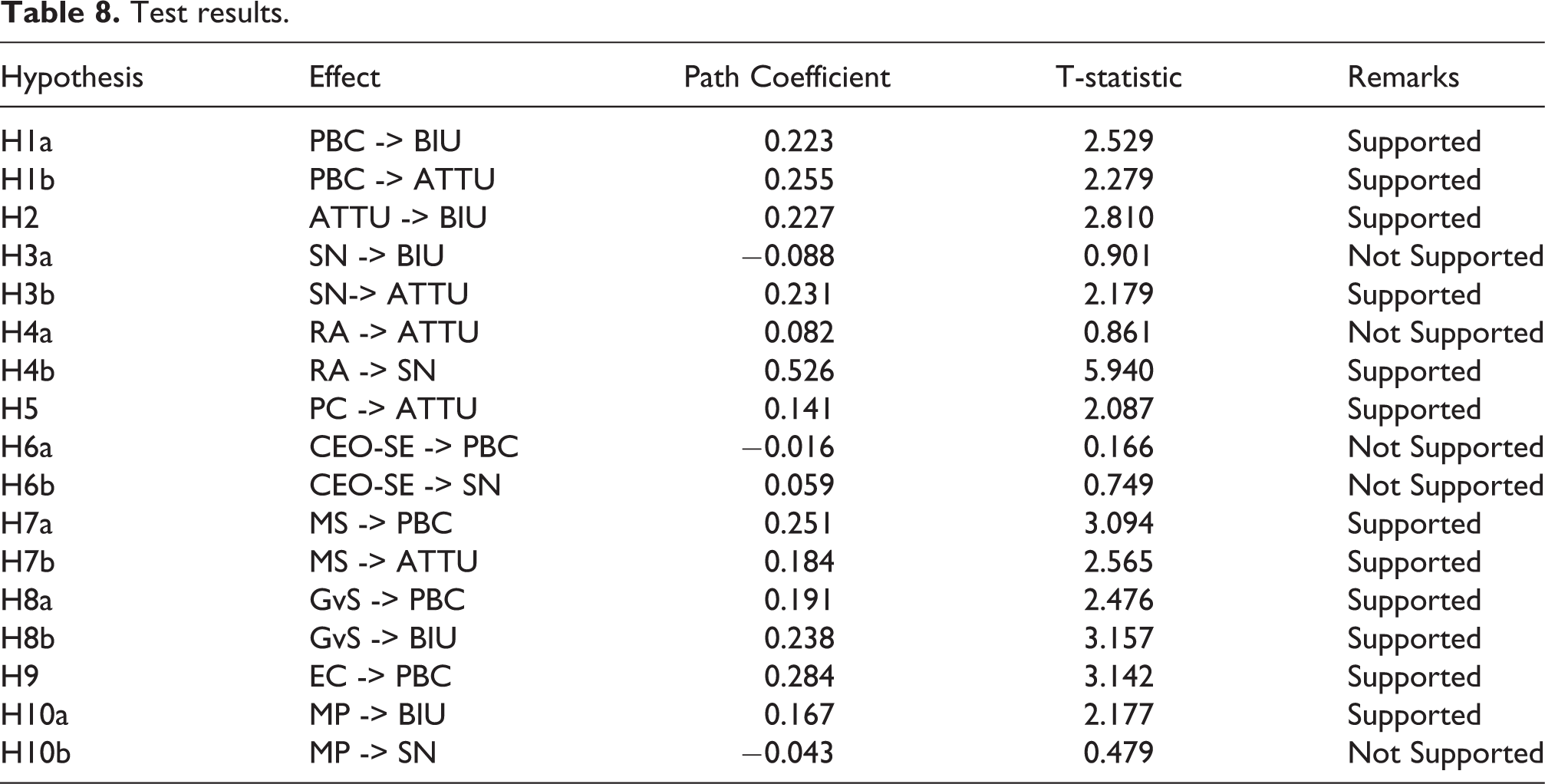
Perceived behavioural control (PBC) was significantly associated with both behavioural intention (β = 0.223, t = 2.529, p < 0.05) and attitude towards use (β = 0.225, t = 2.279, p < 0.05), supporting H1a and H1b. As expected, attitude exhibited significant positive influence on behavioural intention to adopt e-commerce (β = 0.227, t = 2.810, p < 0.05), supporting H2. However, mixed findings were obtained concerning subjective norm. The posited association between subjective norm and behavioural intention (in H3a) was not supported (β = −0.088, t = 0.901). However, subjective norm showed a significant association with attitude, supporting H3b (β = 0.231, t = 2.179, p < 0.05).
Surprisingly, relative advantage did not show a significant association with attitude (β = 0.082, t = 0.061), rejecting the path theorized in H4a. Instead, the hypothesized path between relative advantage and subjective norm (in H4b) was supported (β = 0.526, t = 5.940, p < 0.05). Perceived credibility had a significant impact on attitudes (β = 0.141, t = 2.087, p < 0.05), supporting H5.
Contrary to our expectations, the relationship between CEO self-efficacy and perceived behavioural control (in H6a) did not show significant estimates (β = −0.026, t = 0.166). Similarly, the relationship between CEO self-efficacy and subjective norm (H6b) was insignificant (β = 0.59, t = 0.749). The posited paths of CEO self-efficacy were thus not supported. The coefficient defining the relationship between management support and perceived behavioural control (in H7a) indicated a significant relationship (β = 0.251, t = 3.094, p < 0.05). The link between management support and attitude towards use (in H7b) was also statistically significant (β = 0.184, t = 2.565, p < 0.05). Hence, the two theorized paths were supported.
The estimated coefficients (β = 0.238, t = 3.157, p < 0.05) revealed that government support has the largest direct impact on behaviour intention (as in H8a), at a 5% confidence level. Furthermore, government support was positively correlated with perceived behavioural control (β = 0.191, t = 2.476, p < 0.05). Thus, H8b was supported. The coefficient of the path theorized in H9 ( β= 0.284; t = 3.142; p < 0.05) revealed a significant association between enabling conditions and perceived behavioural control. Mimetic pressure was posited to relate positively with behaviour intentions and subjective norm. Mimetic pressure had a significant relationship with behavioural intention (β = 0.167, t = 2.177, p < 0.05). Hence, H10a was supported. However, H10b was not supported, the path coefficient revealing insignificant estimates (β = −0.043; t = 0.479). Overall, the structural model explained 29.8% (0.298) of the variation in behavioural intention to use e-commerce, providing a good indication of the model’s strong explanatory power.
Discussion
The study’s results indicate that technological factors, organizational factors, environmental factors, and individual constructivism tend to affect SMEs’ adoption of e-commerce in Ghana. Specifically, perceived behavioural control exhibited a significant, positive, and direct relationship with attitude and behaviour intention. The multi-dimensional significance of PBC seen in this study is strongly consistent with Kang et al. (2006), who also identified PBC as a strong antecedent of adoption behaviour intention and attitude to adoption. The PBC factor is immensely important in developing countries such Ghana, where the availability of equipment such as computers and the required knowledge are critical precursors of the adoption of Web-based and related technologies. The most plausible explanation of PBC’s significance on attitude and behaviour intention in this study underscores the importance of its constituents, such as financial and technological resources and skills, on SMEs’ e-commerce use and diffusion.
Attitude also exhibited a strong direct relationship with behaviour intention, as widely confirmed in TRA and TPB studies, where a strong significant association between the two was noted (Armitage and Conner, 2001). As noted earlier, attitudes are perceptual pictograms internally formulated by an individual due to many cognition factors and thus affect the strength of intention. Consequently, the significance of the path estimate of attitude on behavioural intention clearly shows that SMEs in Ghana are likely to adopt e-commerce if given enough evidence of its benefits. As a result, efforts should be made to create awareness of the enormous potential of e-commerce among businesses. This will stimulate a probationary attitude and eventually lead to widespread adoption.
Empirically supported by studies such as Kim et al. (2009), this study identified subjective norm as an antecedent of attitude and e-commerce adoption intention in Ghana. This finding characteristically indicates that SMEs in Ghana tend to rely strongly on internal referents in IT-related adoption decision making. E-commerce usage and diffusion in Ghana are still in their infancy; thus, the perceptions of important referents strongly influence adoption initiatives, explaining the substantial rapport between subjective norm and behavioural intention to use e-commerce through the mediation of attitude.
A surprising revelation was the insignificant relationship between relative advantage and attitude, which sharply contrasts with other findings, such as in Low et al. (2011). The insignificant impact of relative advantage on attitude could be attributed to Ghana’s minimal e-commerce use. Very few Ghanaian businesses use e-commerce, making it difficult for Ghanaians to perceive its practical advantages. The influence of relative advantage on subjective norm, however, emphasizes the likelihood of adoption once evidence of success appears. Intense awareness of the advantages of incorporating e-commerce in business operations is also likely to influence adoption. Though this research recognizes the importance of relative advantage, this factor cannot be treated as significant on its own, as it works with other factors that encourage e-commerce adoption. Also, the direct significant impact of perceived credibility on attitude towards adoption shows the importance of security and privacy in organizational e-commerce use. In the wake of numerous reports of Internet fraud, credit and debit card theft, hacking, and virus attacks, the importance of the system’s credibility to peoples’ attitudes is no surprise.
Despite the myriad studies that confirm CEO self-efficacy as a major determining factor in SME e-commerce adoption, this study revealed that CEOs’ technological literacy is not necessarily influential in e-commerce adoption and use in Ghana, perhaps because the skills and technical background of staff can make a difference in the overall e-commerce deployment and encourage greater organizational acceptance. This outcome also indicates that Ghanaian SMEs acknowledge that staff attitudes and ICT competency are vital to successful e-commerce adoption. Consequently, small businesses with employees with technological know-how are more likely to adopt than are others.
Managerial support was identified as having the greatest impact on attitude. The construct also demonstrated a significant influence on perceived behavioural control, showing that the commitment of managers, especially those at the top, determines the speed and extent of e-commerce use. These findings extend evidence of the “snowballing” effect of top managers’ knowledge in innovation adoption to the e-commerce milieu: in a context of complex innovation such as e-commerce, the power and influence of top managers remain substantial and necessary for acceptance, usage, and diffusion.
The influence of government support or intervention was also marked. Government support exhibited the greatest influence on behaviour intention and showed substantial influence on perceived behavioural control. Researchers such as Zhu and Kraemer (2005) found that countries adopting new technology must have appropriate government policies and regulations to enhance transactional integrity and encourage private investment. Government initiatives for e-commerce adoption and diffusion may include establishing policies for SME operations, providing financial and technological assistance, improving e-commerce infrastructure, and enacting favorable e-commerce laws. With the liberalization of the ICT sector, the Ghanaian government’s policies helped increase Internet penetration and led to an upsurge in several IT-related services. Researchers such as Bakos and Bailey (1997) report a high mobidensity, which has created a suitable condition for the growth of e-commerce in Ghana. However, mobidensity alone does not obviate the necessity for greater Internet penetration. The findings in this study recommend the implementation of comprehensive approaches that go beyond technology-based solutions to address e-commerce challenges. As the reliability and cost of telecommunication services and equipment strongly influence the adoption of electronic commerce (Wresch, 2003), government policies and initiatives should play a remedial role through subsidies and tax incentives to facilitate SME exposure to information technology and stimulate the adoption and use of e-commerce.
The findings of this study showed that enabling conditions strongly impact perceived behavioural control. The existence and reliability of national technological infrastructures is widely believed critical for the development and use of e-commerce; the required infrastructure includes physical infrastructure, transportation infrastructure, banking infrastructure, and a skilled workforce (Peng and Kurnia, 2008). Frempong and Stark (2005) posited accessibility and affordability as the two critical issues that tend to condition access to ICT services in Ghana. Hence, an improved investment climate, coupled with strategic incentives for investment in e-commerce-supporting institutions and the creation of supply chains, will increase the number of participating firms and consequently enhance access at competitive prices.
The mimetic pressure construct also had a direct significant impact on behavioural intentions. This implies that SMEs in Ghana tend to imitate successful initiators to lower the costs of searching for alternatives and avoid the risks endured by first movers. However, mimetic pressure demonstrated the least explanatory power among those constructs with a direct significant impact on behaviour intentions, attributable to Ghana’s minimal e-commerce use and the consequent absence of a large pool of references. A number of studies (Chong et al., 2009; Grover, 1993; Tan and Teo, 1998) have confirmed the importance of successful references or project champions as a positive and significant factor influencing the organizational adoption of innovations. Mimicking could minimize the risk associated with a high degree of environmental uncertainty or the high cost of technological investments. Mimicking could also be a reaction to the fear of business losses. Thus, if enough model companies become available as successful references, acceptance and use will become much more likely.
Conclusion
Contributions and implications
This paper makes a number of contributions to research. Its major contribution to the literature on innovation adoption is its extension of current notions concerning technology adoption to the context of e-commerce, enhancing our understanding of e-commerce adoption, particularly in developing countries.
This paper evaluated the applicability of several theories and models of organizational and individual innovation adoption and then integrated the TPB and TOE frameworks, creating a comprehensive conceptual framework that integrated constructs from these theoretical perspectives. This provided a holistic view of the firm perspective on e-commerce technology acceptance. Integrating the constructs of the individual difference factors (i.e., perceived behavioural control, attitude, and subjective norm), technology factors (i.e., relative advantage, perceived credibility), organizational factors (i.e., management support, CEO self-efficacy), and environmental factors (i.e., government support, enabling conditions, and mimetic pressure) into a single framework offers a richer theoretical basis for explaining and predicting firm adoption behaviour.
Furthermore, the proposed relationships between the constructs represent an upgrade of the original TAM and TOE models as well as of the decomposed TPB, substantially enhancing their predictive and explanatory scopes. More broadly, the research instrument developed and validated in this research can be used to study other emerging technologies such as cloud computing and Web 2.0 from an organizational perspective.
This study has pragmatic implications for governments and policymakers, owners and managers of businesses, technology vendors, and service providers. The role of government in SME growth is becoming increasingly crucial as the global business environment becomes more competitive. Consequently, government support has become a critical factor in overcoming the concerns and challenges associated with adoption decisions and fostering widespread e-commerce acceptance among SMEs. Government assistance in identifying and incorporating e-commerce technology in businesses would improve SMEs’ competitiveness in the new digital economy. E-commerce development and growth among SMEs would also benefit from a review of government policies and incentives with the aim of promoting the adoption of technology in the sector.
Consistent with what is seen in countries such as Singapore, Botswana, Japan, China, Taiwan, and South Africa, the findings of this study provide a strong theoretical foundation for tailor-made interventions designed to enhance the technological capabilities of SMEs.
These findings also provide important implications for managers and owners. Managers who exhibit favorable attitudes to e-commerce use will likely generate a positive attitude to implementation. Our findings show that organizational IT readiness influences e-commerce penetration at the firm level. It is therefore important for managers and owners to have a favorable attitude to e-commerce usage and develop strategies for evaluating the availability of existing and required IT resources for e-commerce adoption.
Finally, the significance of enabling conditions, mimetic pressure, and perceived credibility imposes responsibilities on, while providing opportunities for, technology vendors. Revealed as mediating agents, the factors impacting the organizational adoption of e-commerce technologies must be understood in order to enable technology vendors to design strategies for addressing the technological glitches hindering the widespread adoption of e-commerce. Furthermore, technology vendors can foster SME e-commerce acceptance by offering trial periods before the full implementation of e-commerce.
The use of Internet technologies such as e-commerce as a platform for business transactions is gaining attention in the business environment. E-commerce represents a technological innovation offering a borderless global marketplace. This study identifies the major determining factors driving e-commerce adoption by Ghanaian SMEs, offers practical implications, and identifies the required action. This research integrates technological, organizational, and environmental determinisms with social constructivism. Aware of e-commerce’s many benefits to businesses, this paper provides findings that require committed efforts from government, business owners, and managers as well as from technology vendors.
Limitations and future research
This research employed robust and powerful statistical techniques for its data analysis; however, it is not without limitations. This study examined e-commerce adoption through cross-sectional survey data, which does not permit the interpretation of causal inferences between constructs. As observed by Zmud (1982), the diffusion of innovation is a socialization process in which attitudes to the desirability of behaviours develop over time. Within this framework, a longitudinal study might be ideal, though longitudinal studies tend to be ineffective in dealing with samples as large as that used in this study and tend to require large financial investments. This study also focused on the adoption decision rather than on its implementation. Research on the tenets of the implementation phase should be conducted.
Moreover, each respondent represents a firm, and self-reported measures were used to assess the constructs in the questionnaire. This approach has been criticized by innovation adoption scholars such as Devaraj and Kohli (2003), who maintained that self-reported measures of innovation adoption might not be a suitable proxy for actual usage due to subjects’ potential informational and attention lapses. Though this technique is common in technology adoption research, replication is required to validate this study’s measures.
Finally, this study was limited to the capital cities of four of Ghana’s ten regions. An extension of the research to cover the other regions would enhance the results’ generalizability. Future research could also test the influence of moderating factors such as culture and gender on the adoption process.
Footnotes
Notes
Funding
This work was supported by the Ajou university research fund of 2012-2013.