







Abstract
Although searching for information in an electronic environment is generally seen as an efficient and easy process, accessing the desired information within the breadth of data available on the web can be a complex and difficult process. For students preparing for a life at sea, it is important to establish and determine the appropriate strategies for accessing and interpreting information on the web, as their ability to perform such tasks quickly and effectively is vital for their success in this particular sector. In this study, the information searching and commitment strategies of students studying in the maritime faculty of a Turkish state university in the 2018-2019 academic year were examined. The study determined that students generally use advanced searching strategies, explicit components instead of more implicit components, and simple searching strategies instead of advanced searching strategies. Further, students in the department of Marine Transportation used more varied searching strategies on the web than those in the department of Marine Management. Possessing higher levels of computer skills was found to be more significant than computer or smart phone usage times in determining more advanced searching strategies. The results highlight the importance of educating students in order to gain awareness of how to organize information and identify appropriate content alongside teaching them how to access and use the information and scientific data they are looking for.
Introduction
The shipping industry has played a crucial role in the development of global trade and military defense for countless countries throughout history. Today, maritime shipping remains the vital link in worldwide supply chains which support the product transportation timelines of globalisation. The maritime sector accounts for a trade volume of 90% in terms of global transportation (International Chamber of Shipping, 2019). Given its size and significance to the world economy, it is by definition a world-class enterprise that requires full implementation of international regulations and standards alongside highly qualified personnel who are able to survive in a competitive and challenging environment. Not only that, the industry depends on continuous improvement of the system through the development and innovations that adopt and adapt new technologies to ensure quality (Erdoğan and Demirel, 2017). It is up to seafarers to use the systems efficiently, to apply the standards correctly and to work to the highest of standards depends on self development.
These standards mean that today’s on-board personnel need to acquire a broad range of knowledge and expertise. This includes knowledge of the captains and senior officers in the fields of public security, as well the ability to demonstrate skills, abilities or relevant experience in the following diverse areas (Cruise Job Finder, 2019):
Knowledge: Customer and personal service, management, specialised education and training, telecommunications, geography, personnel and human resources, mechanics, psychology. Skills and Abilities: Adjudication and decision-making, active listening, operations and control, coordination, information-handling and teaching, effective communication, social perception, critical thinking, time management, oral expression, verbal comprehension, distant vision, problem sensitivity, depth perception, speech clarity, control precision, selective attention, spatial orientation, and among other things, possess deductive reasoning skills
Of these many desirable characteristics and skills, those to do with the ability to deal with data efficiently, accurately and securely are emerging as key to the modern maritime industry. The sector’s importance to the global economy means that access to accurate information is vital for its smooth operations. The most significant information for sea-faring personnel tends to revolve around those countries and companies with which the sector is dealing, and accurate and up-to-date knowledge of the technical equipment used on-board. This is because all aspects of ship management are time-sensitive, meaning that it is crucial that both on-board personnel and support staff must be able to manage time efficiently and be able to produce solutions to unanticipated problems in the fastest and most effective way.
It has always been crucial for the ship’s personnel to know their equipment very well so that they are able to make good decisions in a timely manner and able to carry out periodic maintenance correctly. However, limited energy resources and economic pressures all combine in the contemporary moment to intensify the push for efficiencies. Maddox (2012) stated that the increase in energy efficiency, i.e. the decrease in fuel consumption, not only reduces the cost for ship owners and operators economically, but is also important for the reduction of incidence of respiratory diseases across the globe, alongside helping to mitigate against problems that may arise from increasing sea levels by reducing greenhouse gas emissions and air pollution. Kaya and Erginer (2017) stated that the effective use of some methods related to energy efficiency depends on the experience and practices of the ship’s personnel and that some problems may arise due to deficiencies in personnel training and information.
This underlines the need for a seafaring workforce adequately equipped to deal with the changing conditions of maritime transport. Direct access to up-to-date and accurate information is suggested by the research to have a significant impact on energy efficiency. Moreover, the technical knowledge necessary for the contemporary generation of maritime personnel extends beyond energy efficiency measures: individuals must also be able to reach new generation information on a standard machine, have direct access to updated navigational maps and reach the correct and up-to-date information in cases of emergency or malfunction. This now means ensuring access to the Internet and having secure sources of confidential information so that these tasks and their attendant exchanges of information can be carried out in an effective manner.
Safe and secure access to the following information is a baseline for those in the maritime industry: data provided by the International Maritime Organization (IMO), which is the body responsible for taking the necessary technical measures with respect to navigational safety in international seas; data which helps bodies monitor and prevent incidences of sea pollution within the scope of the International Convention for the Prevention of Pollution from Ships (MARPOL); and data prepared exclusively for the individual ship via satellite systems with the purpose of improving the efficiency of maritime management. In addition, individual cargo and production companies can monitor the results of reports sent by the ships involved in their supply chain quickly and accurately through online environments. These advanced information systems and communication technologies are, as Fei (2011) has stated, fundamental to the industry, and are supported by a special knowledge-sharing culture combined with strong leadership, both of which are key in facilitating information transfer in the context of maritime transport.
As developed countries have increasingly adopted knowledge-based systems, the meaning attached to information and its veracity has become more and more important, as it is produced and shared and is accepted as the main currency of the system, raising its status above that of being a mere component of a management system (Işık, 2018). Security of that information is yet more vital, as Greval and Haugstetter (2007) have argued, because in the maritime transport sector the mobility of the labour force is a constituent part of its operations. Thus it is paramount that an environment must be provided in which information can be gleaned and shared securely so that the information that individuals possess is protected.
Given the constantly evolving nature of the maritime industry, it is clear that the relationships between individuals, the industry as a whole and the educational institutions which train present and future staff are of great importance and affect each other in a nested way in this triple system (Greval and Haugstetter, 2007). In preparing to be a seafarer, the maritime students’ efficient use of the systems with which they must become proficient and confident depends on their self-motivation and their ability to prioritise and learn to direct their own education and training. In the maritime context, technological competence is now paramount as the industry is turning more and more towards digitization. The changes in the last two decades are palpable. While in 2004, Asyalı, Tuna and Cerit (2004) were underlining the importance of maritime students developing their own critical and independent thinking skills so that they were able to question and correct unexpected results and manage their own learning processes, by 2009 Lai and Land were focussing on information-handling, arguing that individuals should be able to use information, question, produce new information, transfer information, and produce solutions to the problems they face in their lives, instead of learning information as it is. The information revolution has only gathered pace in the subsequent decade. With this in mind, students’ ability to access and process accurate and reliable information has become paramount.
With the development of web technologies, many different kinds of information have ballooned on the Internet. Millions of pieces of information, documents, news, comments etc. are added everyday into this environment, which theoretically if not practically is accessible to anyone with an Internet connection. Recent research shows that individuals now use the Internet as the most basic source of information (Deveci Topal and Budak, 2019; Ekici and Uçak, 2012; Oliver and Goerke, 2007). Efficient and low-cost access to information and at least a partial reduction in inequality regarding access to information without time and space limitation are among the most important benefits of the Internet; nevertheless, there is ubiquity of content of unknown quality, accuracy or source that can be accessed via Internet (Çelen and Seferoğlu, 2016). The ease of accessing any and all data means that the ability to determine trustworthy sources becomes highly important. Even in the early 2000s, researchers were drawing attention to the potential pitfalls of the Internet. Debowski (2001), for instance, assumes that searching for information in the electronic environment is generally considered to be an efficient and easy process, but that it is in fact a complex and difficult process to access the desired information working within the breadth of information available on the web. Nowadays, as the understanding of searching and interpreting information is changing, it is important for the web users to have information about filtering and selecting this information and to follow some rules in order to access accurate, useful and reliable information.
Aşkar and Mazman (2013) state that search-based online tasks can enable students to realize the weaknesses and strengths of their information-searching strategies and to increase control of their own learning processes. Further, they argue that such tasks can be useful in terms of guiding instructors in the arrangement and design of programs requiring online information searches as they can pre-determine the strategies required of the students in search-based online activities. Tsai (2004) proposed the following theoretical framework to explain the information links of web users in web-based learning: Searching strategy: Web users use searching strategies to search web information such as searching from different sources and using one source. The organizing information is defined as that web users use to navigate for a specific purpose while browsing the web and choosing the most suitable one for their purposes from different web sites. Also the Internet use of one source as defined by the students’ search for the most efficient and relevant information by finding a few websites; the two terms might be the opposite of each other. Accuracy standards: Some web users often use searching from different sources, such as other websites, prior information, colleagues, or other printed materials, to examine the accuracy of web information, while others use the official and professional status of the website as a major indicator of accuracy, and these two orientations are the opposite of each other. Standards for usefulness: Students use standards such as technical and visual features versus consistency of the content to evaluate the usefulness of web information. Accordingly, consistency of the content refers to the consistency of web content, while technical and visual features refer to the functional and technical problems of the web (for example, ease of retrieval, ease of search) as the main indicators of usefulness and these may be the opposite of each other.
Wu and Tsai (2005) described organizing information strategies, searching from different sources strategies and consistency of the content strategies as advanced searching strategies, because students expended a lot of effort and labour to find the information that was right and useful for them. They identified the Internet use of one source, searching in official and professional sites and technical and visual features as simple searching strategies (Figure 1).
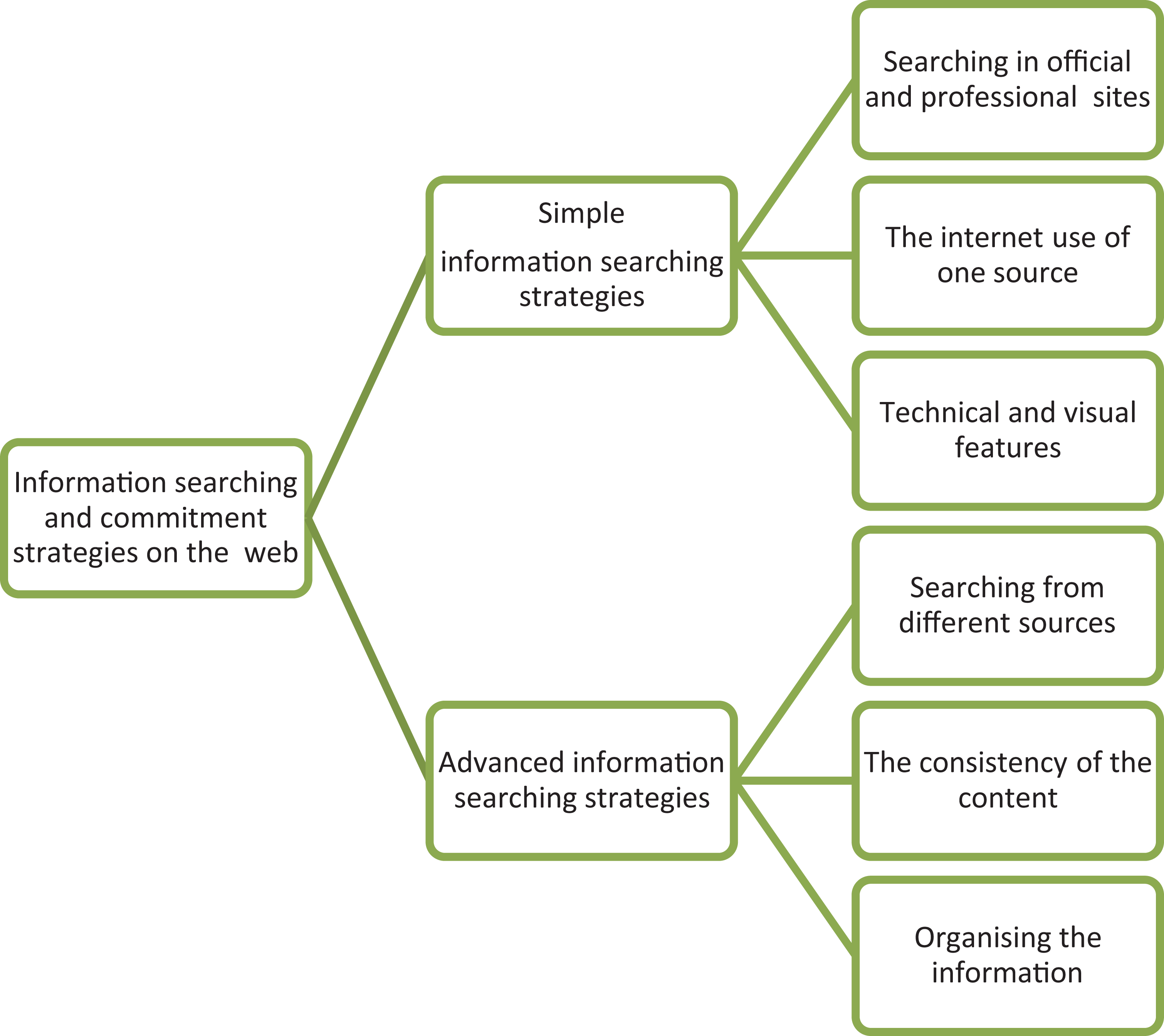
Simple and advanced information searching strategies.
According to Tsai (2004), students with individual differences use various standards in searching and interpreting information on the web. Standards are useful in interpreting the usefulness and accuracy of information in web-based learning environments. The standards also guide students’ information searching strategies (Geçer and İra, 2014). Wu and Tsai (2005) evaluate the accuracy and usefulness of students’ information-gathering on the web as an implicit component, while considering the use of different information searching strategies on the web as an explicit component. In Figure 2, the diagram of these components is given.
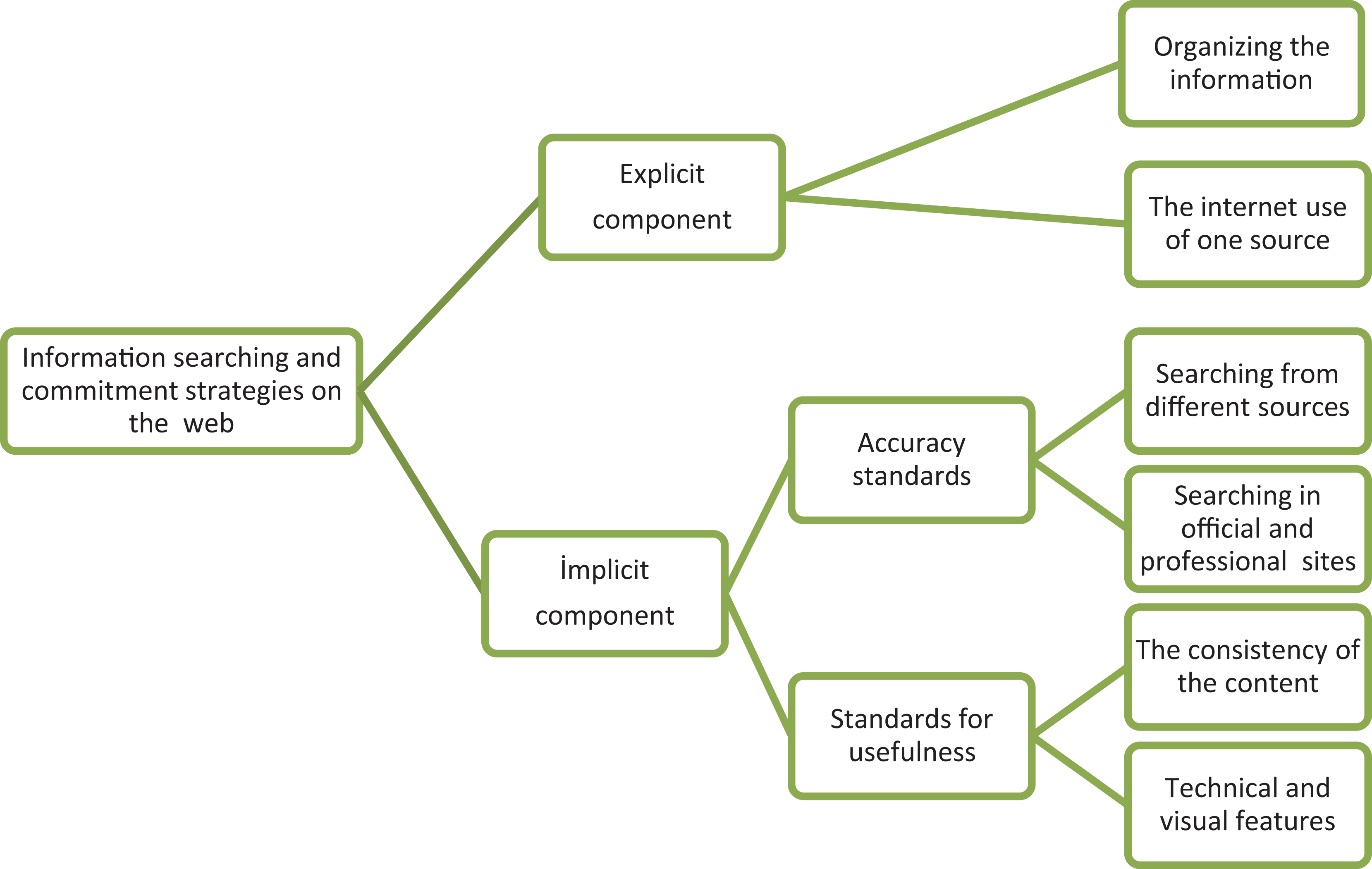
Explicit and implicit component search strategies.
There are many studies in the literature conducted using different test groups which have analysed information searching and commitment strategies. However, such a study has not been undertaken using subjects preparing for careers, or currently employed, in the maritime sector, where, as we have established, it is very important to be able to reach accurate information quickly which will then inform time-sensitive decision-making. This study aims to determine the access to information on the web and commitment strategies of maritime students in one of the world’s leading universities studying in one of Turkey’s foremost maritime faculties. The sub-research questions of the study: What are the information searching and commitment strategies of students studying in the Maritime Faculty’? Do the students’ information searching-commitment strategies on the web show a significant difference according to department, class, gender, computer skills, frequency of Internet and computer use? Is there a significant difference between students’ advanced and simple searching strategies and implicit and explicit component strategy? What is the power of the sub-dimensions to organize information and predict the Internet use of one source strategy?
Method
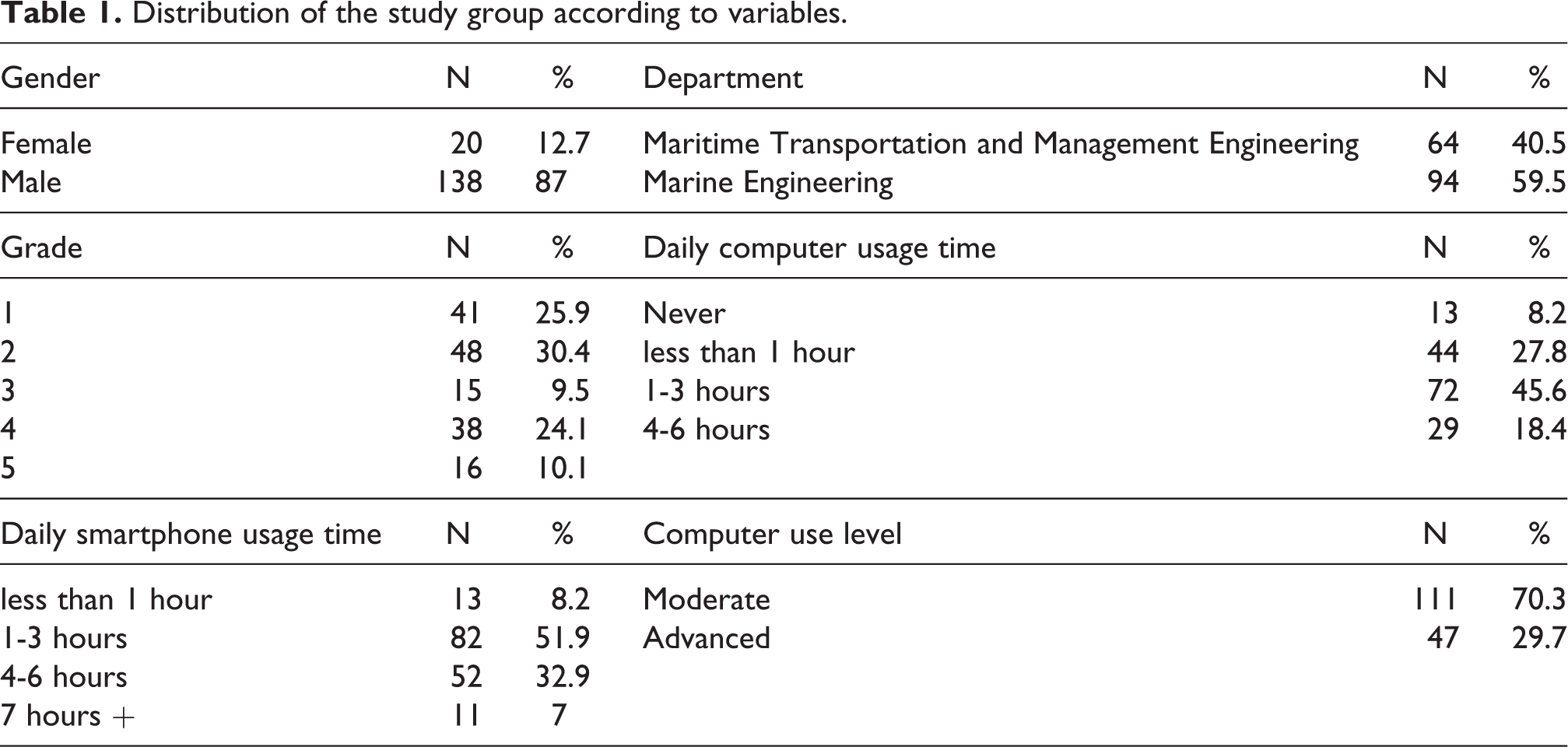
The research was conducted using a descriptive survey model. The descriptive survey model attempts to explain an existing situation according to various independent variables (Karasar, 2012). In this research, the searching and commitment strategies of students enrolled in Istanbul Technical University’s Maritime Faculty are examined. 158 students from the 2018-2019 academic year participated in the study and data was collected digitally. The distribution of the study group according to demographic variables is given in Table 1.
Distribution of the study group according to variables.
Data collection tool
In this study, a 5-point Likert-type Information Search on Web and Interpretation Strategies Scale was used, consisting of 23 items and 6 sub-dimensions, originally developed by Wu and Tsai (2005) and adapted to the Turkish context by Geçer and İra (2014). The sub-dimensions of the scale: searching from different sources dimension included two items related to the accuracy of data found from information interpreting strategies in the web-based learning environment; searching in official and professional sites dimension included four items related to information interpreting strategies in the web-based learning environment; the consistency of the content dimension contained six items relating to the expediency of the information on the web; the technical and visual features dimension included three items of usefulness; the dimension of organizing the information included five items related to reviewing information research strategies in a web-based learning environment; the Internet use of one source included three items related to information research strategies; finally, KMO was calculated as = 0.778 (Geçer and İra, 2014). The reliability coefficient was calculated as cronbach alpha = 0.836 and it was determined to be reliable.
Data analysis
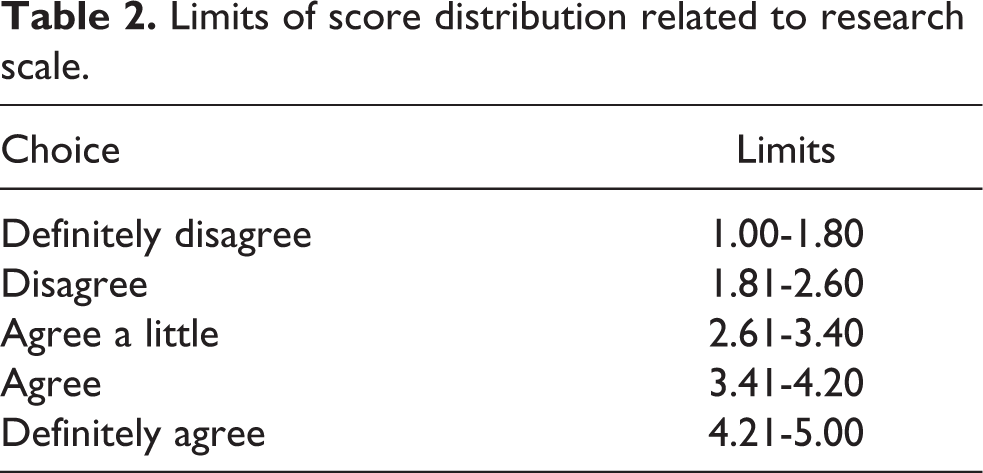
Data analysis was performed with SPSS 18.0 program. Descriptive statistics, frequency analysis, mean, standard deviation, independent sample t test, ANOVA test and regression analysis were all applied. The significance level in the study was accepted as 0.05. Assuming the degree range is equal in the responses to the scale items, the highest value was subtracted from the lowest value and divided by the number of degrees. The value of this range is 4/5 = 0.80 and these values are given in Table 2. In order to use the scale, the necessary permission was obtained from the Aynur Geçer and Nejat İra who adapted the scale in the face-to-face environment. In addition, the effect size was calculated in order to explain the power of the relationship between dependent and independent variables and to show whether the difference between the results of the groups in the study was significant in these tests. The effect size ranges reported by Cohen are interpreted as 0.2: low, 0.5: medium and 0.8: high for the t test in independent groups (Özsoy and Özsoy, 2013).
Limits of score distribution related to research scale.
Findings
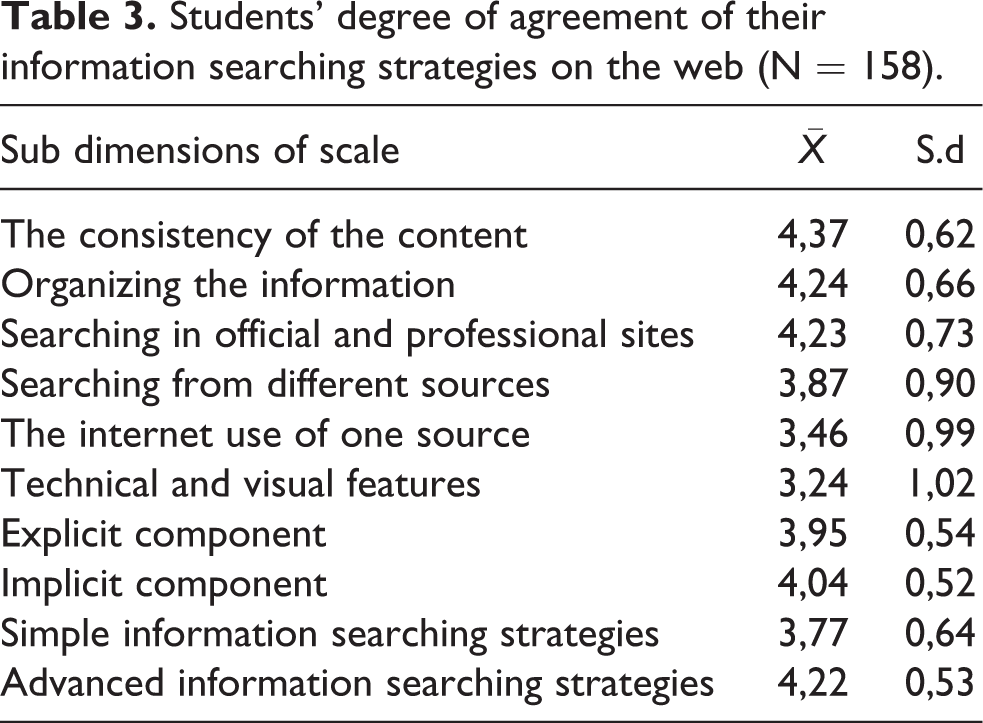
Students’ degrees of agreement of their information searching strategies on the web are given in Table 3. According to this table, the consistency of the content, the organization of the information, and searching in official and professional sites are determined as ‘definitely agree’ while searching from different sources and the Internet use of one source is determined as ‘agree’, and technical and visual features are determined as ‘agree a little’. Again, the adoption of a simple information searching strategy with the explicit and implicit component is determined as ‘agree’ while the advanced information searching strategy is determined as ‘definitely agree’. These results show that students generally use advanced searching strategies.
Students’ degree of agreement of their information searching strategies on the web (N = 158).
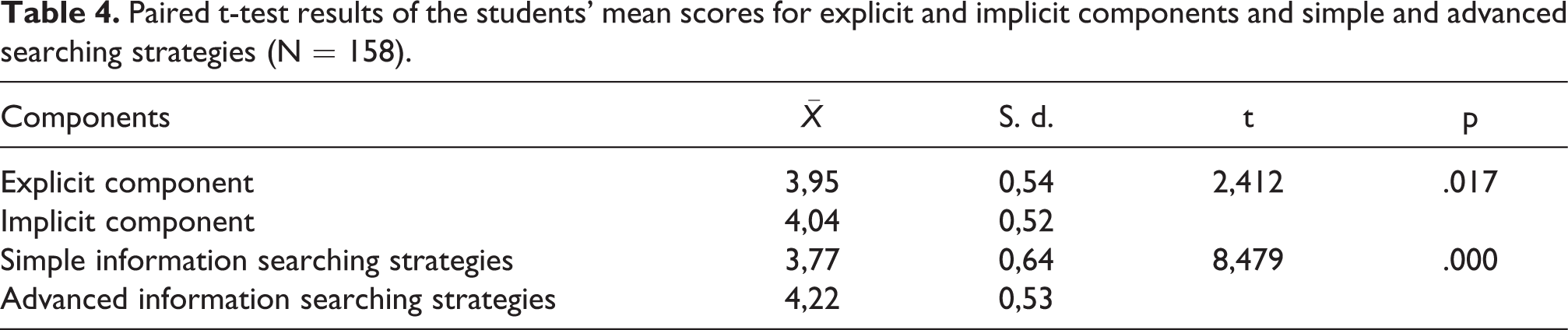
The paired t-test results of the students’ mean scores for explicit and implicit components and simple and advanced searching strategies are given in Table 4. When the results were examined, the students were shown to have significantly more implicit components (t(157) = 2.41; p < .05) and to be employing advanced searching strategies (t(157) = 8.48; p < .01).
Paired t-test results of the students’ mean scores for explicit and implicit components and simple and advanced searching strategies (N = 158).
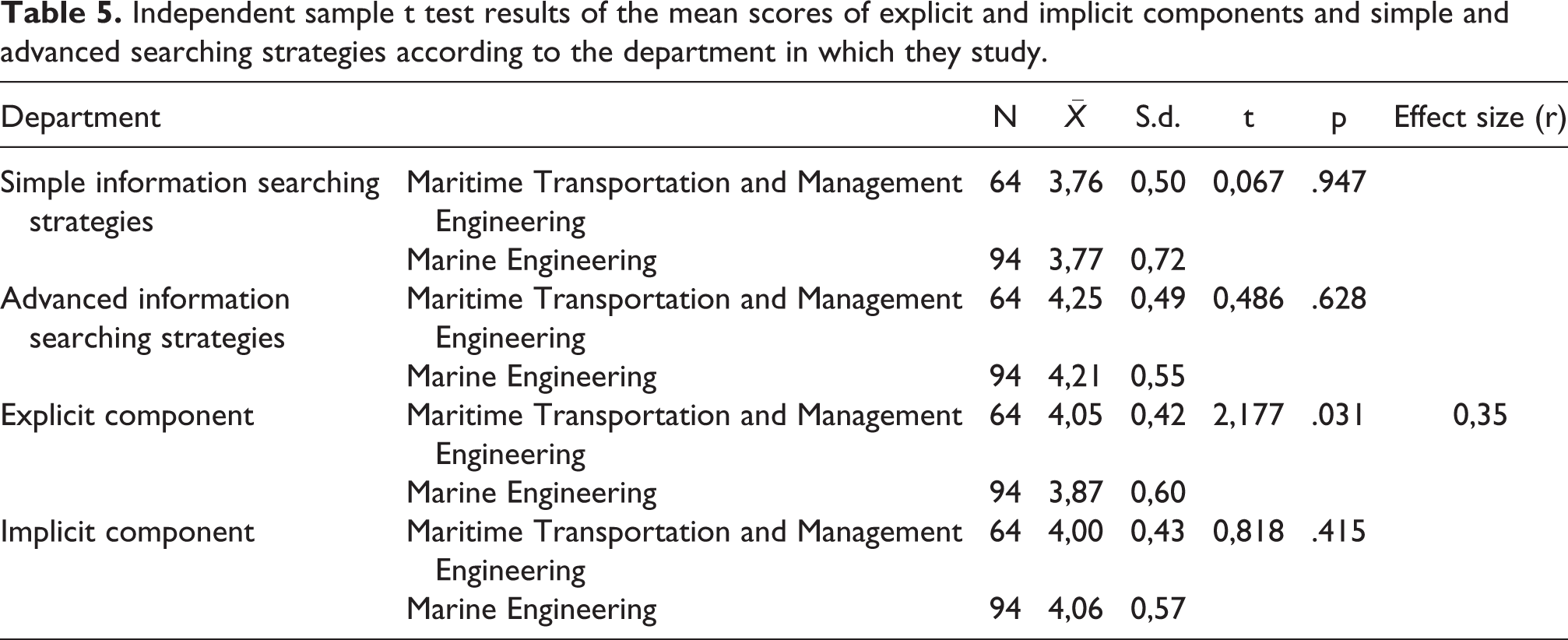
The independent sample t test results of the mean scores of explicit and implicit components and simple and advanced searching strategies according to the department of study (either combined Maritime Transportation and Management Engineering or Maritime Engineering) are given in Table 5. According to these results, only in the explicit component, i.e. on the web, there is a significant difference in favour of the Maritime Transportation students in using different information searching strategies (t(156) = 2.18; p < .05); no significant difference was found in the subscales of the scale, the explicit component, the simple nor the advanced searching strategies scores. In this analysis, the effect size was determined as Cohen d = 0.35 and interpreted to be of a medium effect in size. Also, according to ANOVA analysis, in accordance to the number of years, no significant difference was found between the groups.
Independent sample t test results of the mean scores of explicit and implicit components and simple and advanced searching strategies according to the department in which they study.
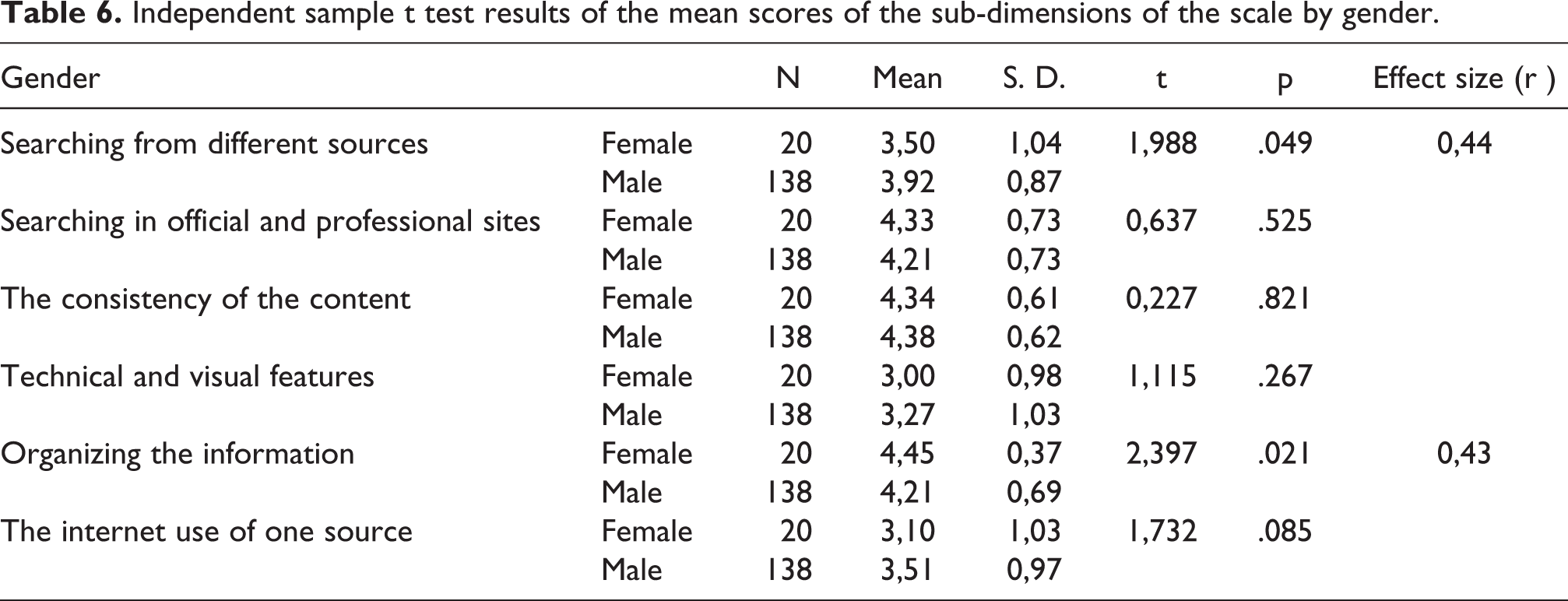
According to the independent sample t test results of the average scores of the students regarding the sub-dimensions of the scale by gender (Table 6), a significant difference exists in favor of men (t(156) = 1.99; p < .05) terms of searching in different sources while in terms of organizing information (t(156) = 2.39; p < .05) a significant difference in favor of women was found. No significant difference was found in the scores of other sub-dimensions, implicit and explicit components nor the simple and advanced searching strategies. The effect size was interpreted as medium level in both dimensions where significant differences were found.
Independent sample t test results of the mean scores of the sub-dimensions of the scale by gender.
According to the ANOVA results (Table 7) of the information searching strategies scores based on the daily computer usage time of the students, the average scores of those who use a computer between 4-6 hours a day in terms of their Internet use of one source as compared to students who use the computer for less than 1 hour or between 1-3 hours (F(3.154) = 5.52 p < .01), and of the students who use between 4-6 hours as compared to those who use 1-3 hours (F(3.154) = 3.25; p < .05) were found to be higher in the explicit component.
ANOVA results of information searching strategies scores according to students’ daily computer use.
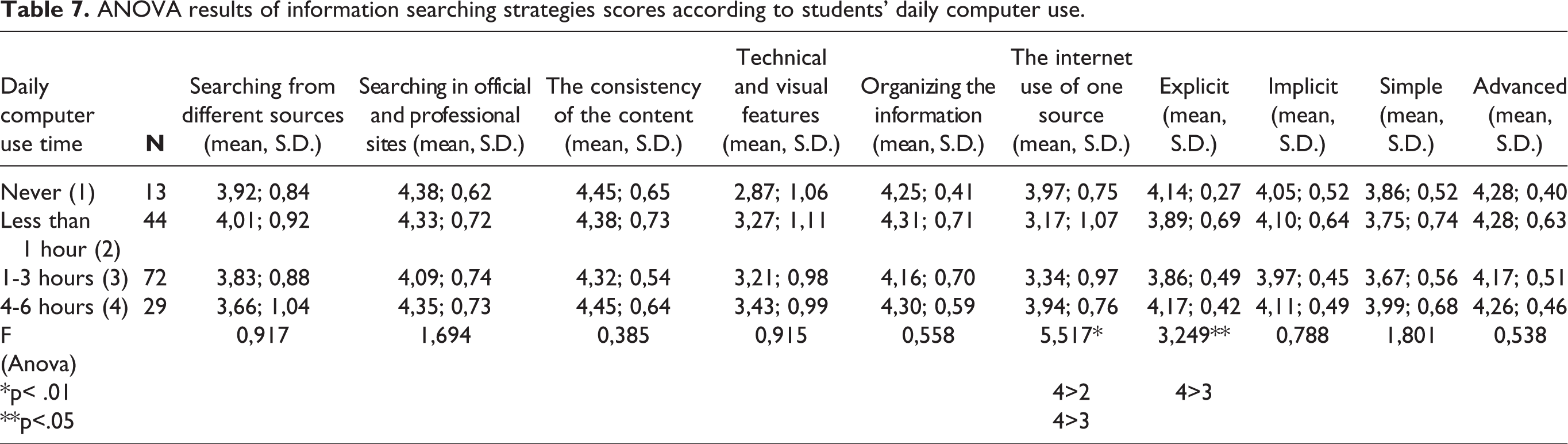
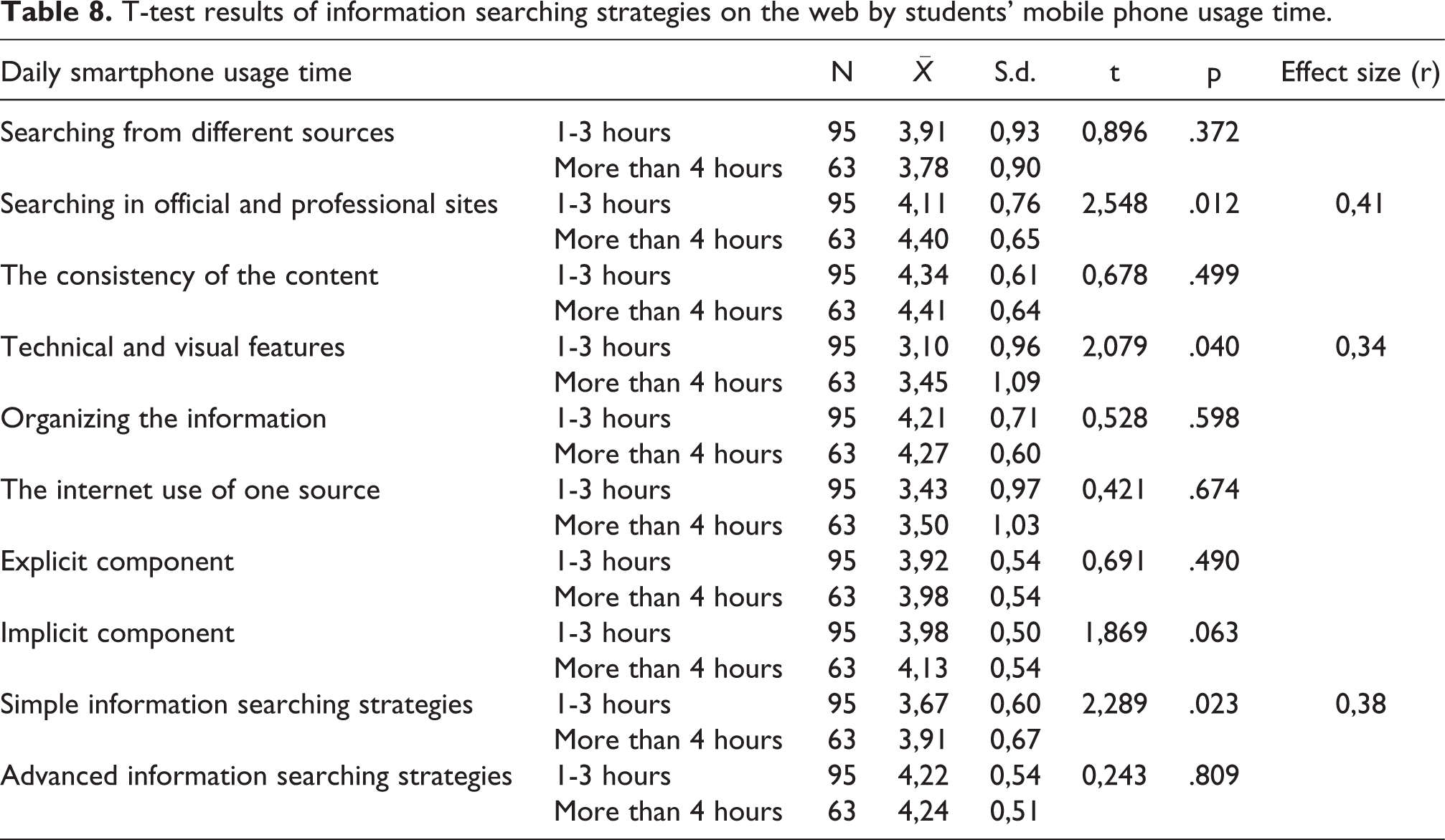
Table 8 shows the T-test results of the students’ information searching strategies scores according to the duration of smart mobile phone use. According to this table, between those who use the smart mobile phones between 1-3 hours a day and those who use their phones 4 hours or more significant differences were found in the following areas: in the official and professional sites searching (t(156) = 2.548, p < .05), technical and visual features (t(156) = 2.079, p < .05) and simple searching strategies (t(156) = 2.289, p < .05) scores. The effect size was determined as moderate in all groups. According to this, it can be said that those who use smart phones 4 hours or more tend to benefit rather from simple searching strategies.
T-test results of information searching strategies on the web by students’ mobile phone usage time.
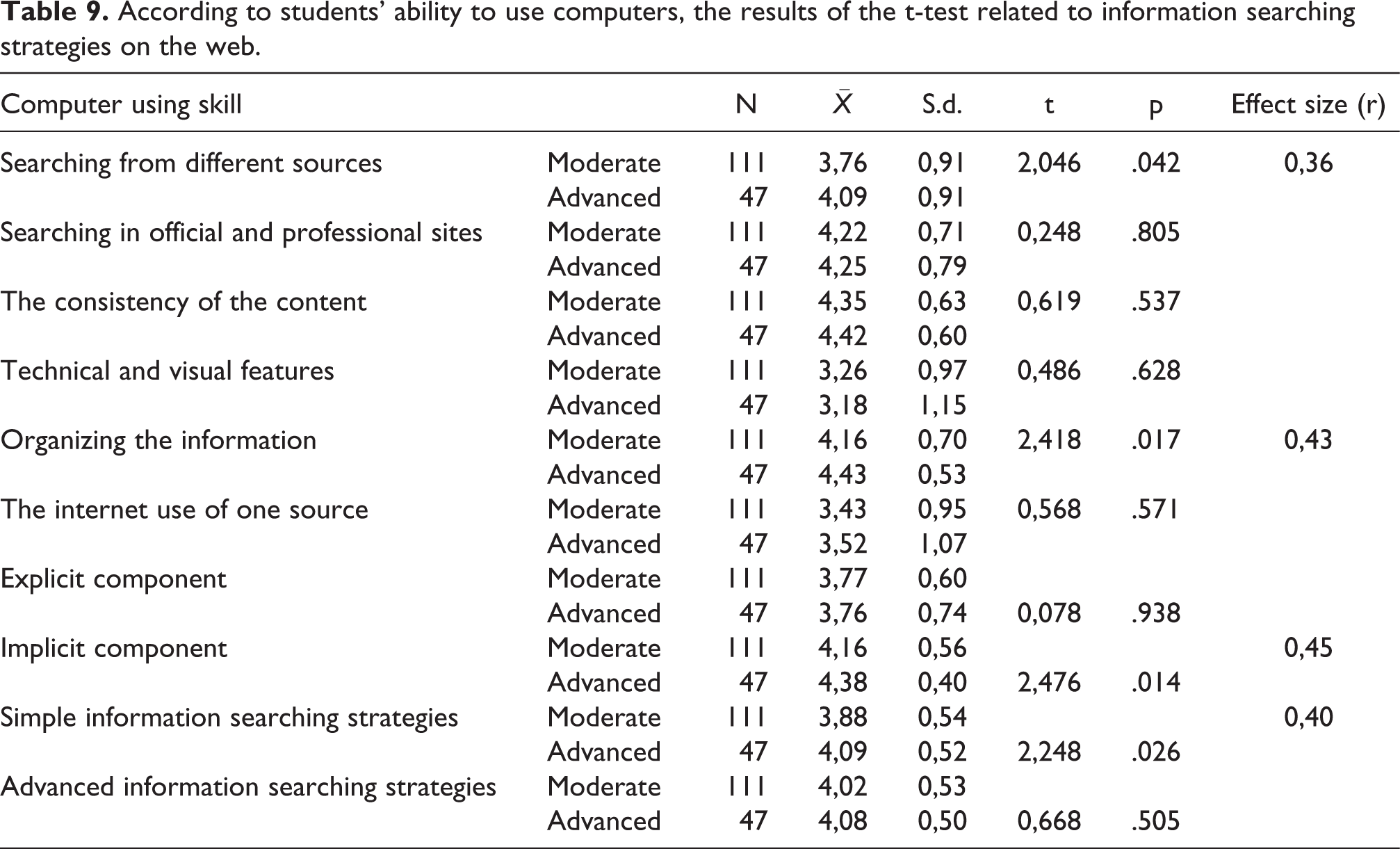
According to the results of the t-test results (Table 9) of the students’ search skills on the web based on their computer skills, there was a significant difference in favor of advanced level between the scores of advanced and medium level computer skills in the following areas: dimensions of searching from different sources (t(156) = 2.05; p < .05), organizing the information (t(156) = 2.42; p < .05), advanced searching strategy (t(156) = 2.48; p < .05) and explicit component (t(156) = 2.25, p < .05). The effect size was interpreted as medium level with significant differences.
According to students’ ability to use computers, the results of the t-test related to information searching strategies on the web.
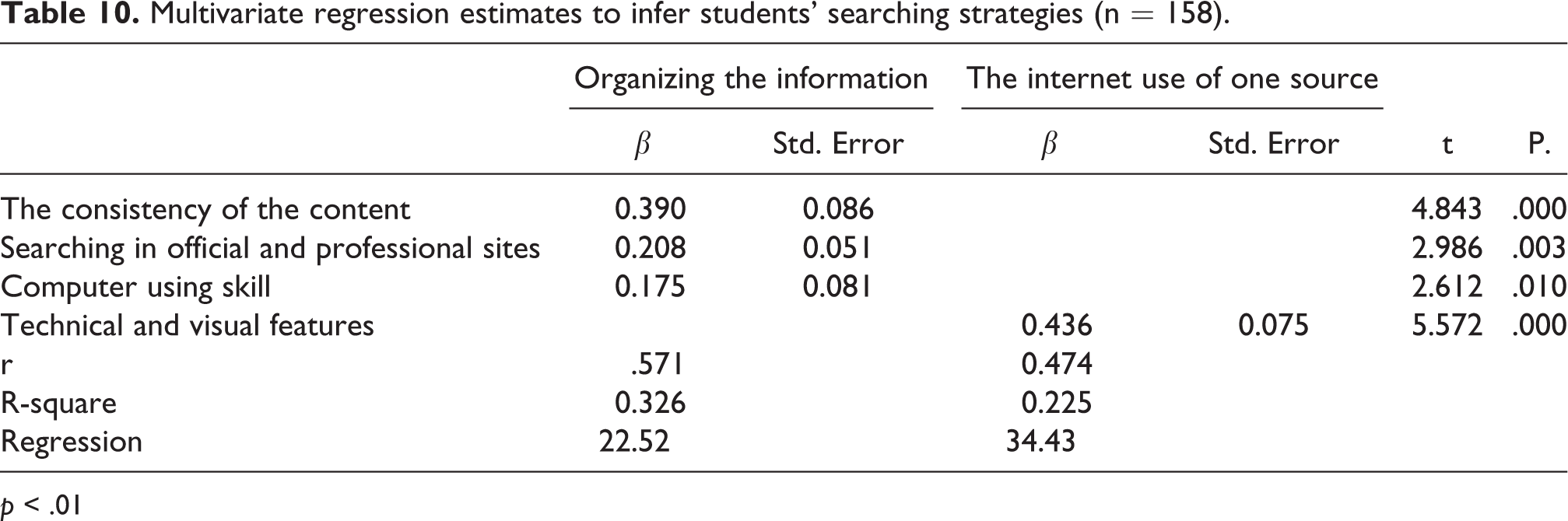
One of the aims of this study was to conduct a multivariate multiple regression analysis in order to investigate the ability to search from different sources, to search in official and professional sites, to assess the consistency of content, the interactions with technical and visual features, in the context of students’ computer skills and abilities to organize the information and use this information to reach a prediction regarding the Internet use of one source strategies. As a result of the regression analysis (Table 10), it can be seen that searching from different sources (β = 0.208, p < .01), the consistency of the content (β = 0390, p < .01) and computer skills (β = 0.175, p < .01) together have a meaningful and positive effect on students’ strategies regarding the organization of information and explain 33% of the students’ use of this strategy. Technical and visual features (β = 0436, p < .01) have a significant and positive effect on the Internet use of one source strategy and explain 23% of the students’ use of this strategy. No significant relationship was found between strategies of searching in official and professional sites and the Internet use of one source to organize information.
Multivariate regression estimates to infer students’ searching strategies (n = 158).
p < .01
Discussion and conclusion
This study aimed to determine the approaches and strategies of students in the maritime faculties of Istanbul Technical University when finding and interpret information on the web. In the study, a descriptive survey, one of the quantitative research techniques, developed from an original survey designed by Wu and Tsai (2005), and adapted by using an information-commitment strategies scale with 23 articles modified for the Turkish context by Geçer and İra (2014), was used. Accordingly, students’ strategies and approaches to searching are determined as high for the consistency of the content, organizing the information, official and professional sites, information from different sources, the Internet use of one source, while technical and visual features are determined at the level of medium. Again, a simple information searching strategy with implicit and explicit component with advanced and simple information searching strategy was determined at the level of high. These results show that the students studied generally use advanced searching strategies. These results are consistent with other studies in the literature. İra and Geçer (2017) found that students had a high level of information searching and commitment strategies. On the other hand, Du and Evans (2011) stated that they used more than one source, in a study with doctoral students, but they used more general search engines instead of using academic databases at the beginning of the research. Hargittai et al. (2010) reported that individuals have a high level of confidence in search engines and their results today. On the other hand, Porter (2011) determined that undergraduate students believe that the first link they see on a web page, regardless of their sources of information, is the most relevant and best.
The results from this study suggest that students use implicit components more than explicit components and prefer advanced searching strategies instead of simple searches. For this reason, it can be stated that students pay attention to interpreting the accuracy and usefulness of the information on the web rather than different information searching strategies on the web. While there is a significant difference in the explicit component in favour of the maritime department in terms of using different information searching strategies on the web, no significant difference was found in the implicit component and simple and advanced searching strategies scores. In a similar study, Tsai, Hsu, and Tsai (2012) found that participants who spend more time on detailed reading, one of the explicit components, and who have better ability to evaluate and interpret web information, one of the implicit components, tend to have higher searching performance.
A significant difference was found in favour of men in terms of searching in different sources while in terms of organizing information it was favour of women, and no significant different was found in other sub-dimensions, implicit and explicit components and simple and advanced searching strategies scores. In the literature, different conclusions have been reached regarding this finding in terms of gender. Wu and Tsai et al. (2007) found that men benefited from one source more than women, while Geçer et al. (2017) found that men make more searches from different sources compared to women. In other studies, no significant difference was found between searching strategies of men and women (Turan et al. 2015). It is possible to argue that these discrepancies in results according to gender might be affected by outside conditions such as individuals students’ department of study and the wider societal norms in which they live.
‘One resource’ use scores, which are one of the explicit components, also increase based on students’ daily computer usage time. It can be seen that students whose smart phone usage time amounts to 4 hours or more daily benefit mostly from simple searching strategies. It is also seen that computer and smart phones are more used in order to access the Internet, use social networks, speak/message, read newspapers/watch news/get information, listen to music, etc. (Minaz and Çetinkaya Bozkurt, 2017; Tekin and Polat, 2017). We can surmise from this that as smart phone and computer usage time increases, the orientation towards advanced searching strategies decreases. One reason may be that these devices are used primarily for leisure, particularly in providing access to social networks. But Wu and Tsai (2007) also state that individuals who spend more time using the Internet generally use advanced searching strategies and tend to use some advanced assessment standards to assess the usefulness of materials in web-based learning. Çaka, Doğan and Şahin (2016) in a more recent study seemed to confirm similar findings in that social network users with more daily Internet usage time have more advanced online information searching strategies. However, both these results contradict our own findings.
According to the computer usage skills of the students, in the following areas they demonstrated higher scores according to more advanced levels of computer skills: searching from different sources, organizing information, advanced searching strategies and explicit component. Some studies in the literature show that individuals with higher proficiency in computer skills have more advanced searching strategies (Ay and Seferoğlu, 2017) and Abell (2000) argued for the importance of individuals improving their computer skills in order to find, obtain, manage, share and use the information more effectively. As the computer skills of the students improve, their rates of sharing information also increase; as a consequence, computer literacy should naturally progress as their familiarity with such tasks increases.
The results of the multivariate multiple regression analysis show that students’ ability to search from different sources, check for consistency of the content and the general level of their computer skills were found to be significant predictors of performance in terms of strategic organization of information, and that technical and visual features were the only predictors of the Internet use of one source strategy. This result confirms, as Wu and Tsai (2005) stated, that the strategies for organizing the information and using one resource are opposing strategies. In addition, it has shown that the ability to use computers positively affects the advanced searching strategy. Wu and Tsai (2007) state that experts in searching strategies often use many resources when searching in web-based learning environments, pay attention to content, and tend to search in detail, but novices pay more attention to technical features, use limited resources, and tend towards searching in official and professional sites. Nevertheless, Aula, Jhaveri, and Käki (2005) found that even experienced users with advanced searching strategies find it difficult to search and reuse information on the web. Our study reaffirms the importance of enhancing students’ computer skills at every opportunity so that, in particular, less experienced users can be brought up to the standard required by their chosen industry.
This study has shown that the sample set of students studying in the maritime faculty generally use advanced searching strategies. Computer usage skills were found have a positive effect on advanced searching strategies but smart phone and computer usage times had negligible effects. Also, the study shows that it is important to educate students in gaining awareness of how to organize information and identify appropriate content, along with how to access and use the information and scientific data they are looking for. In this study, the information was collected through a questionnaire which showed the students’ own perceptions of their behaviours online. A potentially revealing opportunity for further study could provide students with a given subject and ask them to search around it in order to obtain a realistic snapshot of actual online behaviour, rather than subjective perception. Such an experimental study could be based on observation and practice, analysing uses of items such as key words alongside the usage conditions of academic databases. Likewise, in order to enhance the significance of the study, it could be expanded out to include comparisons, either with other faculties or comparable maritime faculties, across national and international institutions. This would allow for a fuller picture of how effectively students and young people are being prepared for the ever-expanding technical demands of the contemporary maritime industry.
