







Abstract
The primary goal of this research is to examine Egyptian pregnant women's health information needs and behaviour in terms of their thoughts, perceptions, attitudes, motives, interests, techniques, preferences, tools, and other factors that influence their use of health information. Six focus groups with an effective size of 64 women were used in a qualitative approach. Approximately two-thirds of the Egyptian pregnant women sampled in this study were between the ages of 26 and 35, had a Bachelor's degree (BA), and were classified as upper-middle income. Approximately two-thirds of the pregnant Egyptian women sampled were able to precisely identify these needs and use appropriate means to meet them. Many of them preferred to communicate with their families, relatives, peers, and friends, particularly those who are currently pregnant or have recently delivered, via cell phones or inperson meetings. Verbal communication with mothers and relatives, friends, as well as gynaecologists and healthcare providers have been identified as the most commonly used communication channels. Pregnant Egyptian women surveyed used health information sources to assist with pregnancy-related tasks such as understanding the requirements for monitoring the foetus's health, nutrition, weight, growth, and movement, and finding suitable and affordable birthplaces. The majority of them have used a variety of technologies for day-to-day communication, particularly cell phones, the Internet, social media, and social networking sites such as WhatsApp and Facebook. Because of the difficulties associated with pregnancy, many pregnant women have stated that using any type of library to meet their health information needs plays no significant role. The most significant barriers encountered by Egyptian pregnant women in this study were a lack of time, a lack of money, and a lack of knowledge about appropriate sources of information.
Keywords
Introduction
Information is extremely important to all people, including pregnant women, in terms of their demographic, professional, and cognitive differences, as well as their needs. It makes it easier for them to manage their everyday lives. Information needs may be synonymous with verbal or written requests made to a library or another information system (Brittain, 1970). They could be interpreted as knowledge that can help people cope with situations and lead to better disease management and a higher quality of life (Hepworth et al., 2002). One of the best ways to promote a healthy birth is to have a healthy pregnancy based on accurate and well-organized health information (National Institute of Child Health and Human Development (NIHD), 2021). The critical importance of the accuracy of information used by pregnant women emphasises the need to provide hospital libraries with up-to-date information sources and facilities (Hamzehei et al., 2018).
Everyone, including pregnant women, must have adequate access to appropriate information sources to help them meet their various needs (Mansour, 2015). Pregnant women require a great deal of information in order to care for themselves and their babies. As a result, when developing educational programmes for them, their information needs should be identified and taken into account. They should be given pertinent information to assist them in reaching this specific stage of their lives (Kamali et al., 2018). According to Taheri et al. (2021), pregnant women seek health-related information for their own health, as well as the health of their children. Pregnant women's health knowledge can be improved by searching for and using information during their pregnancy (Basinlioglu, 2004).
The use of information raises pregnant women's awareness of pregnancy. This knowledge will assist pregnant women in engaging with healthcare providers, demonstrating protective healthcare behaviours, and developing self-care skills. It also aids in their education about pregnancy, childbirth, and parenting (Hamzehei et al., 2018). Pregnant women's lack of information, combined with a lack of information on various pregnancy issues, may cause problems and increase medical interventions, potentially leading to complications and risks (Kamali et al., 2018). As a result, prior to providing this information, the needs of this information group should be assessed. In a country like Egypt, where this type of research is uncommon, this study aims to meet as many of such a group's information needs as possible. The study's findings may raise policymakers’ awareness of these groups of information users’ needs. Researchers may be compelled to include this information user group on their research agenda as a result of this level of awareness. According to Javanmardi et al. (2020), Egyptian pregnant women sampled in this study require health information in order to maintain their health and have a healthy delivery. As a result, providing them with sufficient information can result in the desired health outcomes for them and their foetuses.
Purpose and significance of the study
The primary goal of this research is to provide first-hand information about Egyptian pregnant women's health information needs and behaviour in terms of their thoughts, perceptions, attitudes, motives, interests, techniques, preferences, tools, and other factors that may influence their use and access to information. This study is notable because it is the first of its kind in Egypt to address such important issues and topics.
Problem statement
There is a severe lack of literature relevant to the topic of study, not only locally, but also regionally and internationally, particularly among library and information science researchers. Despite the fact that these information users/seekers are receiving more attention around the world, no research on their status and characteristics in Egypt has been conducted, particularly in terms of their information needs and behaviour. As a result, the purpose of this study is to draw sufficient attention to these information needs and the behaviour of this category of information users.
Objectives of the study
The primary goal of this study was to identify Egyptian pregnant women's health information needs and behaviour. The following specific objectives were established to achieve this key goal:
To profile the demographic characteristics of Egyptian pregnant women; To identify Egyptian pregnant women's health information needs and behaviour; To determine the sources of health information used by Egyptian pregnant women; To determine the reasons enhancing Egyptian pregnant women's ability to seek information; and To identify factors that may influence Egyptian pregnant women while seeking information.
Research questions
Based on its objectives, the following five questions lead the research among Egyptian pregnant women:
RQ1. What is the demographic profile of Egyptian pregnant women?
RQ2. What are Egyptian pregnant women's health information needs?
RQ3. What are the health information sources and channels used by Egyptian pregnant women?
RQ4. Why are Egyptian pregnant women seeking for information?
RQ5. What barriers, if any, do Egyptian pregnant women face when seeking information?
Literature review
Much research has focused on many different types of information needs and behaviours of popular information seekers, but other groups, such as pregnant women, have received little attention from these studies (Mansour, 2015). Previously conducted research did not attempt to address or fully identify the actual information needs of such groups of information users in such settings. Previous studies on pregnant women in Egypt have been conducted from a medical perspective, but no studies have been conducted on their information needs and behavior. Sanders and Crozier (2018) attempted to investigate women's experiences in informal information sources. The study concluded that women's access to a flood of informal information sources in the mainstream media had a significant impact on decision-making during pregnancy. During pregnancy, women's access to a flood of non-official sources of information in the mainstream media had a significant impact on decision-making. Javanmardi et al. (2020) interviewed 30 pregnant women, 5 midwives, and 4 obstetricians in Isfahan, Iran, to investigate women's health information needs during pregnancy. The analysis of the data resulted in the formation of sub-categories such as “common complaints and problems during pregnancy”, “factors affecting foetal health”, “reasonable nutrition, sex, exercises, and diagnostic tests during pregnancy”, “foetal growth and development”, “types of childbirth and preparation for delivery”, “baby care and breastfeeding”, and “health information needs”. The study concluded that pregnant women's needs should be identified when seeking health information. Kamali et al. (2018) attempted to assess the information needs of 400 pregnant women who attended antennatal clinics and obstetricians/gynaecologists’ offices in Kerman, Iran, during their pregnancy and childbirth in 2015. The study found that most pregnant women needed information on foetus care, physical and psychological complications after delivery, foetus development and growth, pregnancy nutrition and special tests during pregnancy. Most of pregnant women searched for information when they were suffering from complications of pregnancy. Onuoha and Amuda (2013) surveyed 1900 pregnant women in Ibadan Metropolis hospitals to determine their information behaviour. According to the findings, the majority of the women required information on environmental cleanliness and immunisation. Doctors and nurses are the most widely available and widely used sources of health information. However, libraries have been identified as the least accessible and most widely used source of health information. The difficulties encountered in the search for information were primarily attributed to libraries, a lack of income, and a lack of time. Obasola and Obajimi (2019) attempted to investigate the health information-seeking behaviour of 101 pregnant women attending prenatal clinics at the University College Hospital, Ibadan. According to the findings, books and magazines were the most popular sources of formal information, whereas the Internet was the most popular source of daily information. While health workers' information, particularly doctors’, was the most valuable, the attitude of these health care providers was the most significant limitation to the search for health information. With the findings of around 65% of patients visiting the internet on a daily basis, the study concluded that with the increasing availability of Internet services in Nigeria, a paradigm shift was unavoidable. As a result, there is a need to create a welcoming and accommodating environment for seeking health information at Nigeria's various antenatal health posts. Chalak and Riahi (2017) identified the information needs of 188 pregnant women referred to health centres in Behshahr, Iran, between 2016 and 2017. According to the findings, pregnant women are the most in need of information about the health of their embryos. Although there are other significant sources, such as telegram networks, social media, and mobile phones, gynaecologists and specialists are the most important means of influencing access to information. Furthermore, there have been significant differences in certain information and resource needs as well as access to information resources based on pregnant demographic factors. The study concluded that pregnant women require a variety of sources of information during their pregnancy. Kotecha et al. (2012) attempted to investigate the patterns of health seeking of 60 women for antenatal care during pregnancy, use of delivery services by women, and use of child health care during the first month of life after birth. The majority of pregnant women preferred to go to private hospitals. Almost all women used to send their children to parental care to ensure their child's health and safety. The majority of people preferred to have their babies delivered in private hospitals. Only a few people chose home delivery. Almost two-thirds of the women received postpartum screening (PNC). The study concluded that the majority of women prefer private hospitals for childbirth, and most mothers neglect postpartum care. Hamzehei et al. (2018) investigated 196 pregnant Iranian women to investigate their pattern of health information obtained from the Internet. When faced with pregnancy complications, the study discovered that the majority of pregnant women seek out health information on the Internet and share it with their doctor. Websites and social networks are two important places to find health information. Fetal development and nutrition during pregnancy were regarded as two of the most pressing concerns among pregnant women. According to the study, the Internet has become a popular source of health information.
Research design and method
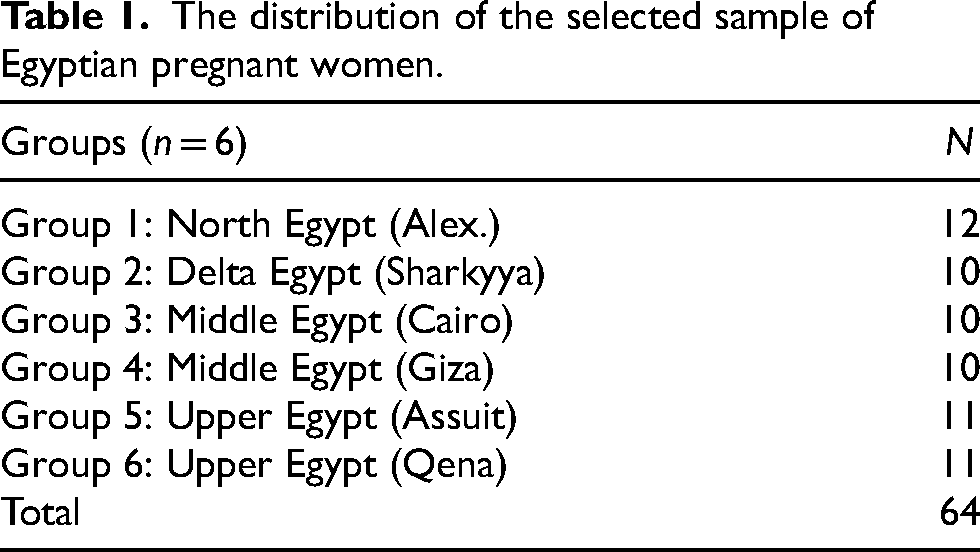
To achieve the study's objectives, a qualitative approach based on content analysis was used in the form of six focus groups (distributed across Egypt's administrative divisions as North, Delta, Middle, and Upper Egypt). Focus groups, according to Morgan (1996), are a valuable tool for exploratory research and can be used to test preliminary ideas about the research design. The focus group technique has been widely used to ascertain the perceptions and feelings of participants in a specific field of study (Chase, 2000). This methodology presents and reveals a number of issues that are difficult to detect precisely and deeply with other methods, such as questionnaires, through dialogue and discussion. The main purpose of the focus group approach in this study is to allow participants to freely express their opinions and views about their use of information, to provide the opportunity to hear a variety of perspectives, and to agree/disagree or expand on each other's ideas. Some training sessions were provided due to a lack of awareness among some of the participants, as well as their low level of education. To assist the main researcher, two research assistants (women) and three interviewers (women) were hired. Three experimental interviews were conducted by the research team. Based on the results of this test, the interview guide was revised to address the gaps identified. Initially, the study's announcement drew a large number of responses. However, due to practical constraints, the researcher was forced to choose an effective sample size of 64 pregnant women who were willing and welcome to participate in the study. The ages of the participants ranged from under 25 to over 41. Respondents were divided into six equal-sized groups as appropriate based on Egypt's administrative division and for the focus groups (Table 1). According to Krueger and Casey (2008), this sample size is adequate for the study. Interviews took placed in October 2020. Sessions ranged approximately between eighty to nearly one hundred minutes, viewed as adequate by Gibbs (1997).
The distribution of the selected sample of Egyptian pregnant women.
Data analyses
The researcher used grounded theory to analyse this qualitative study because it is the most widely used method and is appropriate for the nature of the qualitative studies. Glaser and Strauss (1967) jointly developed grounded theory as a methodology for developing theory from systematic data obtained from social research (Büscher, 2007). Simply, it is a qualitative method for studying a specific phenomenon or process and developing new theories based on the collection and analysis of real-world data. One of the most significant benefits of using grounded theory is that the end result is an accurate representation of real-world settings. Grounded theory is derived directly from real-world participants in real-world settings using methods such as in-depth interviews and observation, resulting in more accurate representations of the real world. Other research methods, on the other hand, take place in less natural settings, such as research labs. Because the analysis should be limited to the most important data, the researcher relied solely on the data that needed to be analysed. As a result, the analysis of the data closely related to the research questions was limited to the deletion of the rest, which could amount to half or more. After analysing the data into many small encodings, the stage of converting it into large and few subjects begins. This conversion is accomplished by grouping similar or convergent encodings into a single class known as “theme” (Figure 1).
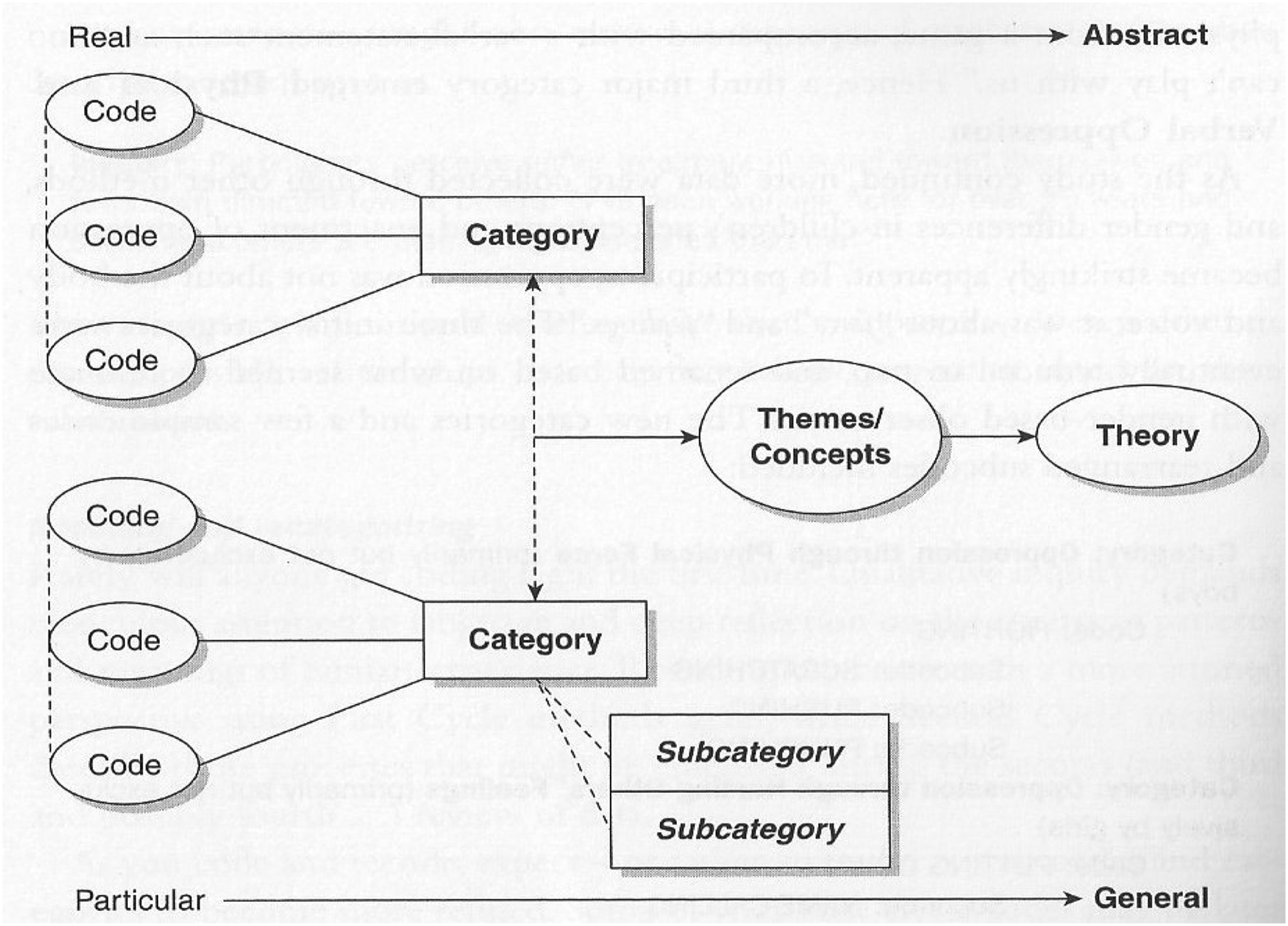
The grounded theory's construction and process.
Consideration of ethics
All participants agreed and welcomed, through a written statement, to conduct the study and that no personal information will be used for any purpose other than scientific research.
Limitation of the study
This study focuses only on Egyptian pregnant women. It does not apply to any other women. Any conclusions resulting from this study; they are limited in scope to only Egyptian pregame women. The study does not contain a significantly large sample of a population from across Egypt to draw meaningful widespread conclusions that indicate such a larger population.
Findings of the study
The findings of this study are organized on the basis of the order of the items listed in its interview. They are also handled in terms of the answer of the five questions of the study.
RQ1. What is the demographic profile of Egyptian pregnant women?
Regarding the demographic profile (age, education, and monthly income) of the sample taken from Egyptian pregnant women, the average age was around 30, concentrated more between 26 and 35 years. See Figure 2.
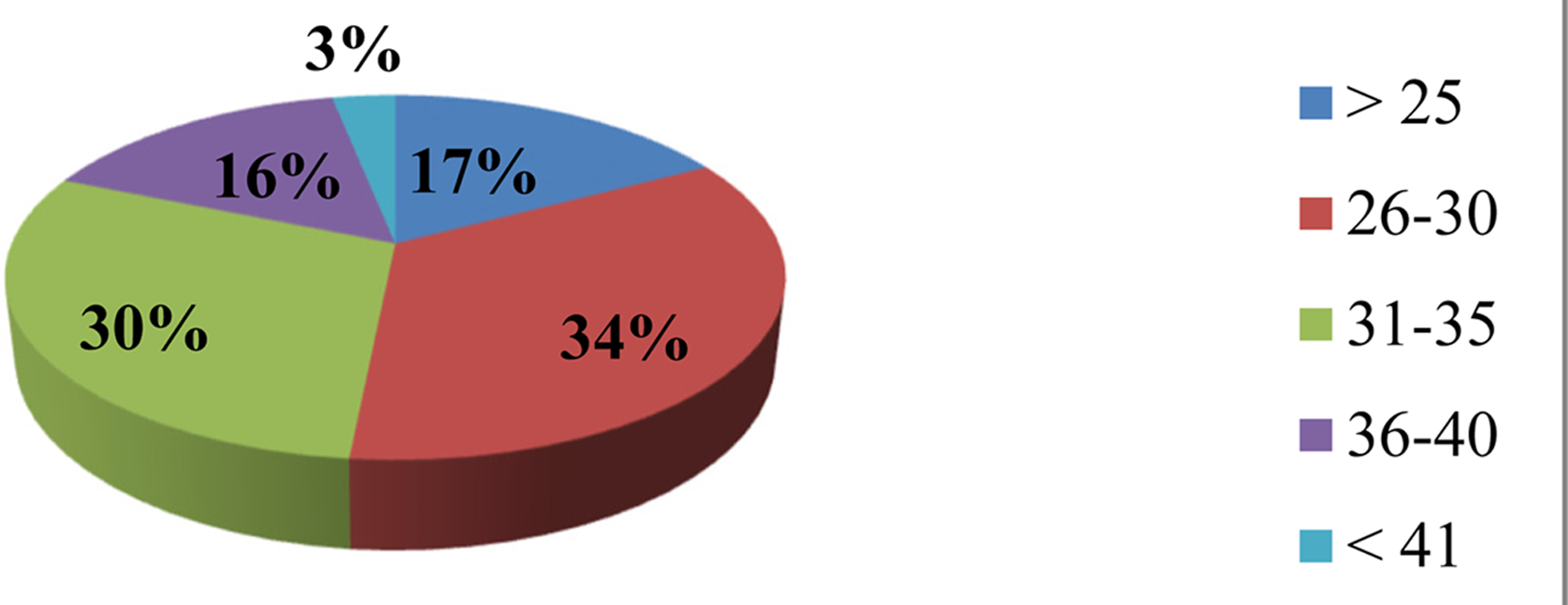
Egyptian pregnant women's age.
This study revealed that over half (56%) of the sample taken were holding Bachelor's degree (BA), followed by just over a quarter (28%) of them with high school/diploma (See Figure 3).
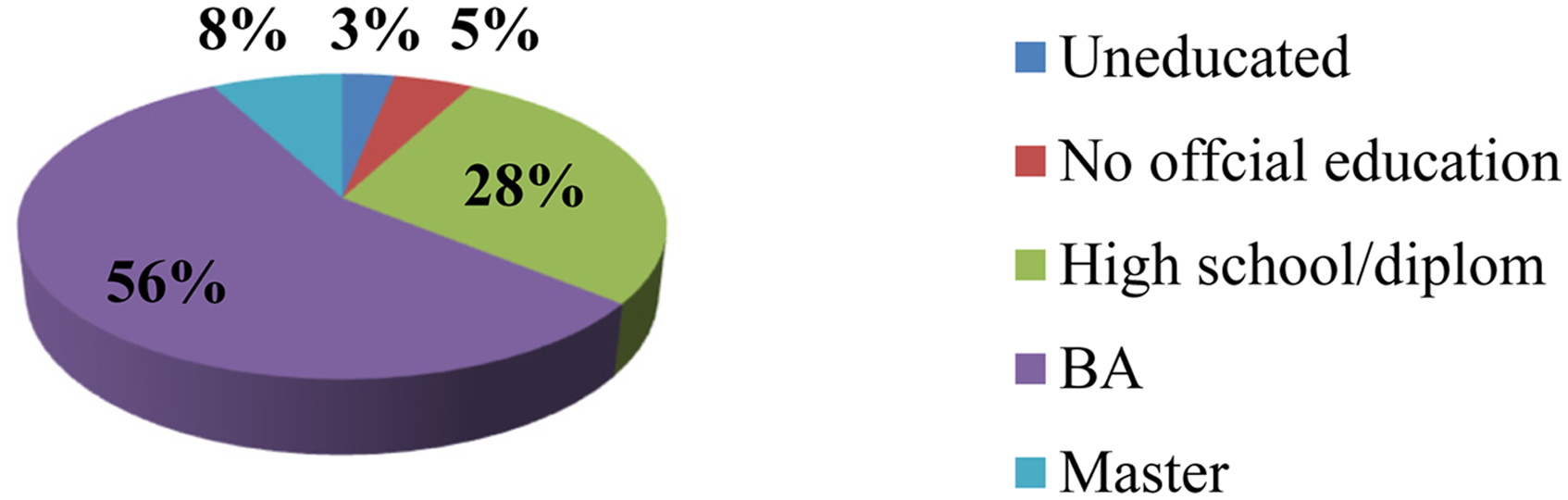
Egyptian pregnant women's education level.
As shown in Figure 4, the study showed almost half (44%) of the sample taken were labeled as upper-middle income people, where their monthly income was less than 2000 EGP (equivalent of $127 (Each US dollar equals 15.73 Egyptian pounds, based on the estimation of February, 2021), followed by those (30%) whose monthly income was lower-middle income (less than 1500 EGP or $95) (Currency Exchange Rates 2021).
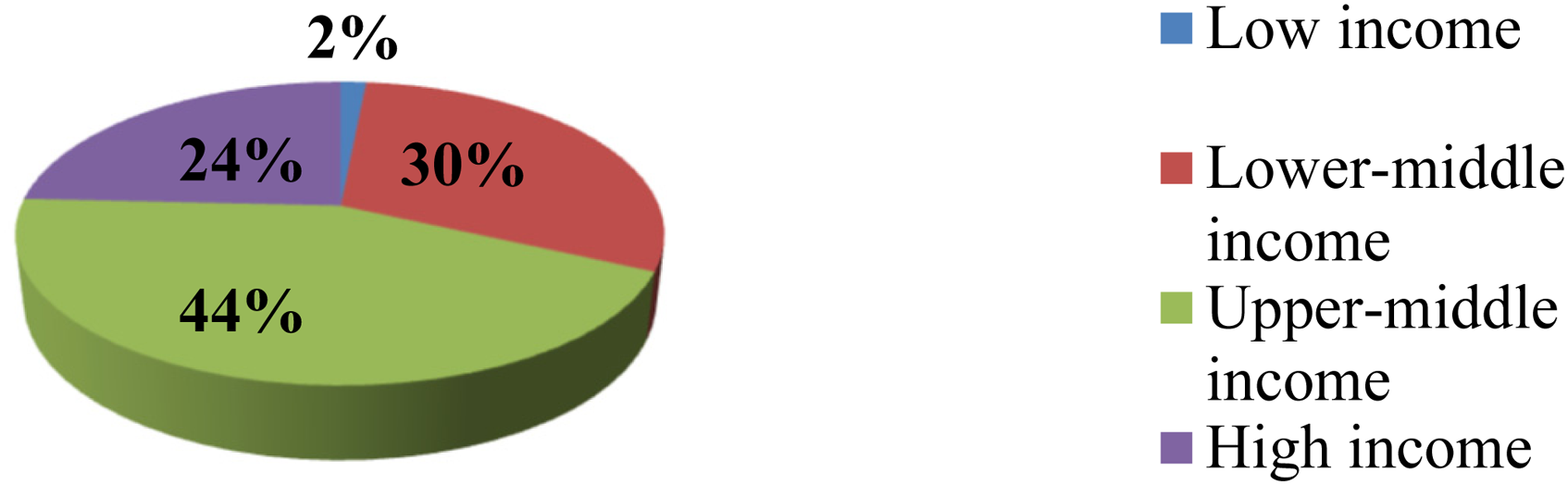
Egyptian pregnant women's monthly income.
RQ2. What are Egyptian pregnant women's health information needs and behaviour?
About a quarter (21.9%) of the Egyptian pregnant women in the sample taken did not know how to address their needs of information. They have not been able to appropriately identify these needs. However, approximately two-thirds (64.1%) of them were able to precisely identify these needs through the use of appropriate methods and tools to reach and achieve these needs. Egyptian pregnant women's information needs were described as very clear and realistic, reflecting their basic demands during pregnancy. Information related to the health of embryos, fetal development, regular follow-up the necessary tests and CT scans for the type of foetus during pregnancy, exercises during pregnancy, preparation for delivery, the costs of childbirth, proper and recommended nutrition, as well as information related to finding a suitable place for a better birth and the search for a suitable name for the newborn were most commonly necessitated by Egyptian pregnant women. “My health information needs, especially in my first three months of pregnancy, can be explained by ensuring continuous and regular contact with my gynecologist who is following my case. A pregnant woman of less than 25 years old
“My health information needs can be determined by knowing the proper nutrition recommended by the specialist, along with knowledge of folk recipes based on natural herbs recommended during pregnancy”. A pregnant woman between 31 and 35 years of age
“My health information needs are defined as how to take care of the health of the fetus, his/her development, regular follow-up, special tests during pregnancy, exercises necessary for the period of pregnancy, as well as preparation for the birth and the costs of childbirth”. Three pregnant women between 26 and 35 years of age
“An important part of my health information needs is to perform the necessary CT scan to monitor the health of the fetus, especially for aging conditions, and to perform a specific ultrasound to know his/her type”. A pregnant woman of 41 years and over
RQ3. What are the health information sources and channels used by Egyptian pregnant women?
The findings revealed that Egyptian pregnant women sampled in this study obtained information from a variety of sources, including oral sources described as informal and written sources described as formal. To exchange information, a large proportion of the Egyptian pregnant women surveyed preferred to use informal sources, also known as personal/interpersonal sources, such as communication with families, relatives, peers, and friends via phones, specifically cell phones, or face-to-face meetings. Such categories of informal sources/channels are described as the most popular information sources/channels identified by Egyptian pregnant women sampled in this study. Pregnant women sampled in this study indicated that verbal communication with families, relatives, and friends, as well as doctors (gynaecologists) and healthcare providers, were identified as the most popular communication channels followed for access to information, with almost all (96.9%) indicating that verbal information is most used when pregnancy requires any infancy care. More than two-thirds (75%) of pregnant women regard gynaecologists as the most trustworthy sources and channels of pregnancy-monitoring information. Few respondents in the sample indicated that they were looking for sources of entertainment-related information, such as audiovisual materials, particularly television and radio, to reduce stress and pregnancy problems. Despite their small number, some of the participants, who were described as more educated, mentioned that they used to read books and specialised magazines, particularly fiction books and entertaining stories. “Since this is my first pregnancy, I strongly seek the help of some pregnant women who have been pregnant before, especially my family members and my relatives, to obtain information on the stages of fetal formation and the nutrition that is needed”. A pregnant woman between 26 and 30 years of age
“I rely mainly on the follow-up and consultation of the doctor to obtain information related to the fetus and the requirements of each stage of pregnancy”. A pregnant woman between 26–30 years of age
“My cell phone has been very helpful to me in exchanging information with others. It also helps to support my social network with friends. It has also contributed to be in contact with healthcare providers”. A pregnant woman between 31 and 35 years of age
“I use health information sources, as well as appropriate instructions in order to choose the appropriate food and drinks for the nutrition of the fetus, especially in the early stages of his/her development”. A pregnant woman of less than 25 years
“I do not see a significant role for the use of any type of library to meet my health information needs for the difficult conditions of movement. There are other alternatives that can replace this role”. A pregnant woman of 26–30 years of age
“I am accustomed to reading materials, such as books and specialized magazines, especially fiction books and entertaining stories”. A pregnant woman over 41 years of age
RQ4. Why are Egyptian pregnant women seeking for information?
According to the data obtained from the sample, Egyptian pregnant women prioritised the use of health information sources to assist with pregnancy-related tasks. To that end, nearly two-thirds (64.1%) said they used health information sources to exchange information about the various stages of pregnancy with relevant people, such as doctors and hospitals, as well as some pregnant women. They used health information to understand the requirements for monitoring the foetus in terms of health, nutrition, weight, growth, and movement, as well as to find suitable and affordable birthplaces. Others (54.7%) indicated that they used the information available on the Internet and social media sites to exchange opinions, experiences, and pregnancy challenges, as well as search for a name for the foetus or share suggested names. “I use health information sources to exchange information related to the different stages of my pregnancy with the relevant people, such as the specialist doctor and the hospital, as well as some pregnant women”. A pregnant woman between 31 and 35 years of age
“I use reliable sources of health information to understand the requirements for the monitoring of the fetus in terms of health, nutrition, weight, growth, and movement”. A pregnant woman between 26–30 years of age
“I use reliable health information sources to find suitable and affordable places of birth”. A pregnant woman between 31–35 years of age
“I am browsing the Internet, as well as social media sites and subscribing to groups dedicated to pregnant women with the aim of exchanging opinions, experiences and challenges of pregnancy, along with searching for a name for the fetus or share suggested names”. Two pregnant women between 26–30 years of age
RQ5. What barriers, if any, do Egyptian pregnant women face when seeking information?
All of the Egyptian pregnant women interviewed for this study expressed a variety of concerns and issues while looking for information during their pregnancy, which influenced their use of information. The most significant concerns and issues that have prevented a large number of them from obtaining and accessing information have been identified as illiteracy and time. Other barriers for Egyptian pregnant women included a lack of money and knowledge about appropriate sources of information, as well as training and the ability to obtain information. “Lack of time is one of the greatest barriers to accessing information resources that require allocating time to be allocated to them, whether they are accessed or used”. A pregnant woman between 31 and 35 years of age
“Poor health education or familiarity with health knowledge, especially during pregnancy, affects good pregnancy outcomes”. A pregnant woman between 36–40 years of age
“Lack of money is an important constraint to take advantage of the information sources that require allocating a budget for it, such as contacting some health service providers, such as doctors”. A pregnant woman between 36 and 40 years of age
“I do my best to improve my skills in finding information about pregnancy to eliminate the mistakes I made during my first pregnancy”. A pregnant woman of less than 25 years old
Discussion
This study focuses on a sample taken from Egyptian pregnant women to investigate their information needs, as well as their information behaviour. In general, information is extremely important and necessary for all humans, including pregnant women. When individuals find themselves in a situation that necessitates knowledge in order to deal with the situation as they see fit, the need for information arises (Tackie and Adams, 2007). According to Mansour (2015), any use of information is primarily determined by the need for that information. In this study, the researcher attempted to identify as much as possible Egyptian pregnant women's health information needs and their information behaviour, who are one of the underserved information-use groups, particularly in Egypt. This study found that approximately two-thirds (64.1%) of the sample taken from Egyptian pregnant women were between the ages of 26 and 35, that just over half (56%) of them held a Bachelor's degree (BA), and that roughly half (44%) of them were classified as upper-middle income people with a monthly income of less than 2000 EGP (equivalent of $127). (Each US dollar equals 15.73 Egyptian pounds, based on the estimation of February, 2021). In terms of participant age, this study agrees with previous research, such as Obasola and Obajimi (2019), who found that the average age of pregnant women was 32.04 ± 2.34 years. The study found that participants’ use of and access to information is related to their level of education, with more than two-thirds (68.7%) describing themselves as educated with a bachelor's degree as mature, conscious, and reflective of the information they required during their pregnancy. The study also found that one-third (31.3%) of pregnant women's monthly income was one of the barriers to using and accessing health information. While approximately a quarter of Egyptian pregnant women of the sample taken did not know how to address their information needs, approximately two-thirds (64.1%) of them were able to precisely identify these needs using appropriate means of appropriate ways and tools to meet these needs. According to Mansour (2015), an individual's level of education is a context that defines one's information needs in terms of how they interact with others. In other words, there is a link between educational attainment and access to information. The information needs of Egyptian pregnant women have been described as very clear and realistic, reflecting their basic needs during pregnancy. Information on embryo health, foetal development, regular follow-up of the necessary tests and CT scans for the type of foetus during pregnancy, exercises during pregnancy, preparation for delivery, childbirth costs, proper and recommended nutrition, as well as information on finding an appropriate place for a better birth and the search for an appropriate name for the baby.
This study discovered that the sources of health information used by Egyptian pregnant women sampled in this study ranged from oral sources, which were described as informal, to written sources, which were described as formal. A large proportion (79.7%) of Egyptian pregnant women sampled preferred to communicate with families, relatives, peers, and friends via cell phones or in-person meetings, particularly those who are currently pregnant or have recently delivered. Verbal communication with mothers and relatives who had more experience with pregnancy affairs, as well as friends and doctors (gynaecologists) and healthcare providers, was identified as the most popular communication channels used by the sample for using and accessing information, with 95.3% indicating that this type of communication is most useful. More than two-thirds (71.9%) of the sample consider gynaecologists to be the most reliable sources and channels of pregnancy-monitoring information. According to Sanders and Crozier (2018), pregnant women rely heavily on non-official information, which has been sought to alleviate the common experience of maternity professionals providing contradictory information. These unofficial sources alter the power dynamics between women and maternal healthcare providers, increasing anxiety and challenging women's pre-existing beliefs and expectations about their own births. These findings are consistent with previous research, such as that of Chalak and Riahi (2017), who discovered that gynaecologists and specialists have the most influence on pregnant women's access to information.
More than one-third (39.1%) of Egyptian pregnant women surveyed in this study said they were looking for sources of entertainment-related information, such as audiovisual materials, particularly television and radio, to help them cope with stress and pregnancy problems. Despite their small number, some of the well-educated women stated that they used formal sources such as books and specialised magazines, particularly fiction books and entertaining stories. These findings are consistent with those of Obasola and Obajimi (2019), who discovered that books and magazines were the most popular sources of formal information, while the Internet was the most popular source of daily information.
Data collected from Egyptian pregnant women sampled in this study revealed that their primary goal in using health information sources was to assist with pregnancy-related tasks, with nearly two-thirds (64.1%) indicating that they used health information sources to exchange information about the various stages of pregnancy with relevant people, such as gynaecologists and the hospital, a Just over half (56.3%) of them discovered that they used health information to understand the requirements for monitoring the foetus in terms of health, nutrition, weight, growth, and movement, as well as to find suitable and affordable birthplaces. Others (54.7%) stated that they used information available on the Internet, social media, and social networking sites to exchange pregnancy opinions, experiences, and challenges, as well as search for or share suggested names for the foetus.
The majority of Egyptian pregnant women surveyed use a variety of technologies for day-to-day communication, particularly cell phones, which are the most important means of communication for the majority of them, allowing them to connect with their doctors, friends, families, and peers while also contributing to the growth of their social networks. The Internet has also been identified as one of the technologies that Egyptian pregnant women use to meet some of their health information needs. A little more than half (54.7%) of Egyptian pregnant women surveyed reported using the Internet to find information about their health needs and to stay in touch with families, friends, peers, and healthcare professionals, particularly doctors (gynaecologists) and nurses, via social networking sites such as WhatsApp and Facebook. Due to poor conditions, such as inadequate infrastructure and a lack of funds, some pregnant women were unable to connect to the Internet. These findings were consistent with some of the previous studies’ findings, such as the findings of Obasola and Obajimi (2019), which revealed that with the increasing availability of health information-related Internet services, a paradigm shift is unavoidable, and the findings of Chalak and Riahi (2017), which confirmed that social networks, social media, and mobile phones have been identified significant source of information for pregnant women, in addition to the findings of Hamzehei et al. (2018), which emphasized that when pregnant women face pregnancy problems, they seek out health information from the Internet and social networks that are two important sources for the discovery of health information.
Because of the difficulties associated with pregnancy and its consequences, a large number (84.4%) of pregnant women surveyed have stated that there is no significant role in using any type of library to meet their health information needs. They have confirmed that other alternatives, such as the Internet and social media, could be used to fill this role. These findings are consistent with those of previous studies, such as those of Onuoha and Amuda (2013), who discovered that libraries are the least accessible and most widely used source of health information for pregnant women. According to Hamzehei et al. (2018), the high importance of the accuracy of information used by pregnant women emphasises the need to provide hospital libraries with up-to-date information sources and facilities, such as appropriate sources, effective health services, suitable seats, ventilation, and the like. The use of medical librarians for the purpose of obtaining accurate information, as well as the establishment of accurate portals for pregnant women, is regarded as critical issues in this regard. These findings are consistent with those of Onuoha and Amuda (2013), who discovered that gynaecologists and nurses were the most widely available and widely used sources of health information.
According to the study, the most significant barriers encountered by Egyptian pregnant women surveyed in this study while seeking health information during their pregnancy were a lack of time, a lack of money, and a lack of knowledge of appropriate sources of information, including training and the ability to obtain information. These significant challenges have been identified as the most significant concerns and issues preventing a large number of Egyptian pregnant women sampled in this study from using and accessing information. The study found that, while the characteristics of Egyptian pregnant women vary depending on their demographic data, a small percentage of them, primarily in rural and poorer areas of Egypt were labelled as illiterates, which has an impact on their use of information. Despite these obstacles, some Egyptian pregnant women expressed a desire to improve their situation in terms of their pregnancy. These findings are consistent with the findings of Sanders and Crozier (2018), who discovered that a lack of awareness among some pregnant women creates barriers to women-centered support, as well as the findings of Onuoha and Amuda (2013), who discovered that the challenges faced by pregnant women were a lack of income and time.
The study’s conclusion
The study concluded that about two-thirds of the sample were able to precisely identify these needs and use appropriate means to meet these needs. A large number of them preferred to communicate with families, relatives, peers, and friends, particularly those who are currently pregnant or have recently delivered, via cell phones or face-to-face meetings. The most commonly used communication channels have been identified as verbal communication with mothers and relatives, friends, as well as gynaecologists and healthcare providers. Egyptian pregnant women surveyed used health information sources to help with pregnancy-related tasks, such as understanding the requirements for monitoring the foetus's health, nutrition, weight, growth, and movement, and finding suitable and affordable birthplaces. For day-to-day communication, the majority of them have used a variety of technologies, particularly cell phones, the Internet, social media, and social networking sites such as WhatsApp and Facebook. Due to some of the difficulties associated with pregnancy, a large number of pregnant women have stated that using any type of library to meet their health information needs plays no significant role. The most significant barriers Egyptian pregnant women faced were a lack of time, a lack of money, and a lack of knowledge about appropriate sources of information.
Recommendations for further research
Although few Egyptian pregnant women sampled in this study have been able to properly identify their information needs, a significant number of them have expressed an interest in using information during pregnancy, relying primarily on informal channels and sources of health information. Based on the review of existing literature and the study's findings, more research was needed to understand information needs and dissemination among pregnant women in a country like Egypt, as well as how they perceive, select, access, use, and evaluate different sources of health information. This study, like Chalak and Riahi (2017), advocated for providing pregnant women with a variety of effective and appropriate sources of information throughout their pregnancy. Health literacy and knowledge should be provided through planning, policy development, and ongoing training and education.
Due to the lack of research on the role of libraries, more research on this role is required, particularly in providing pregnant women with related collections needed to meet related needs, as well as in providing better and more effective services to them. Supporting Onuoha and Amuda (2013), this study suggests that the government provide health libraries with relevant sources of health information in order to encourage pregnant women to search for health information. According to Obasola and Obajimi (2019), there is a need to create a welcoming and accommodating environment for people seeking health information at various antenatal health posts.
One of the study's limitations is that it did not discuss pregnant women's needs of health information sources at each stage of pregnancy. As a result, the study suggests studying all of the needs of each stage and comparing these needs to determine which sources of information, as well as the accompanying services, is most needed. According to Mansour (2017), this study used a qualitative approach, which is the best research method for reaching out to study participants. However, there are other methods that can be used to further expose pregnant women's health information needs, as well as related services. Mixed research methods (MMRs), which combine quantitative and qualitative methods, could be used to justify additional data on this type of use by this group of information users.
Footnotes
Authors’ note
Essam Mansour, PhD, in library & information science, the University of Pittsburgh, USA; MLIS in Library & Information Science, the University of Wisconsin, Milwaukee, USA; BA in Library & Information Sciences, Cairo University, Egypt.
