







Abstract
This study explores the perception of male college librarians in the Khyber Pakhtunkhawa province of Pakistan regarding the merits of attaining faculty status, merging into teaching cadres, or retaining their current positions. A questionnaire was adapted for the online survey and data collection. The study surveyed 116 out of a target population of 125 librarians, resulting in a response rate of 92.8%. The research reveals a prevalent dissatisfaction among librarians with their current status. They express a strong preference for merging into the teaching cadre to enhance their respect and honor, secure faculty designations, equal benefits, and promotional opportunities aligned with the positions held by their teaching counterparts. Challenges identified include a lack of struggle and unity for shared efforts among librarians, limited involvement in decision-making processes and ineffective leadership. The study concludes that active efforts by librarians to become part of the teaching cadre or obtain faculty status are crucial. Recommendations emphasize alignment with government education policies and the Higher Education Commission of Pakistan decision.
Introduction
The question of whether academic librarians should receive faculty status or not has frequently been discussed in the literature in the past; however, there was no definitive answer or suggestion for getting faculty status until the late nineteenth century. Due to the nature of librarians’ official duties, Sawtelle (1878) argues librarians should have faculty status. He adds that librarians are primarily engaged in activities closely associated with and/or related to teaching.
Faculty status is defined differently in the Pakistani university and college sectors. Few studies have been conducted on the subject so far and favor faculty status for academic librarians. Ameen and Ullah (2013), in their research conducted on university librarians in Islamabad, Pakistan's capital, conclude that faculty status for librarians is the need of the day. This will bring favorable results for academic librarians in Pakistan. Khan et al. (2021) report on the perception of college librarians in the Sindh Province of Pakistan and argue that librarians favor faculty positions over professional librarian positions.
In addition to faculty status, librarians in the college sector use the term merging into the teaching cadre. It is imperative to understand college librarians’ perception that only a merger into the teaching cadre can bring faculty status. This is because in colleges, seniority lists are maintained and promotion is given based on the serial number on the seniority list among all. Therefore, this study focuses on three aspects. These aspects include faculty status, merger into teaching cadres or maintaining librarian status in the Khyber Pakhtunkhwa (KPK) province of Pakistan. For a better understanding of the study's context, it is also pertinent to operationalize the terms.
Faculty status
In an academic institution, faculty status refers to retaining librarian identities and holding the same library positions in a hierarchy or nomenclature while getting the status of teaching faculty. Librarians will use the existing nomenclature but with faculty status.
Merger into the teaching cadre
The merger into the teaching cadre involves renouncing librarian identity and other hierarchical nomenclature and adopting the teaching cadre and its nomenclature in the domain of Library and Information Science (LIS).
Retaining the current status
The current status is the same as that maintained by the provincial government of KPK for its college librarians according to the notification of the four-tier service structure (Department of Higher Education, Archives and Libraries, 2022). In this notification, the method of appointment, qualifications, and other conditions related to the librarians’ cadre in general colleges of the department have been outlined.
The discussion of faculty status for librarians in higher education institutions, including colleges and universities, has gained considerable attention in global literature. Faculty status is traditionally associated with three fundamental principles: academic freedom and tenure, collegial governance, and criteria/standards for faculty evaluation. It is noteworthy that the qualification and recruitment criteria for faculty and librarians are identical in colleges in Pakistan. However, an evident disparity exists, where librarians do not enjoy equality with teaching faculty. A preliminary review of the international literature suggests that this issue is not unique to this region but rather prevalent worldwide. Therefore, it is needed to conduct a study to know the perspective of college librarians regarding faculty status, merging into the teaching cadre and maintaining the current status. Moreover, it is required to identify challenges influencing librarians’ perceptions and furnish recommendations for determining the future course of action regarding their professional status. The case of college librarians of KPK province of Pakistan is taken to conduct a research on this particular subject.
Khyber Pakhtunkhwa, commonly abbreviated as KP or KPK, was formerly known as the North-West Frontier Province (NWFP). It stands as one of the four provinces of Pakistan, located in the northwestern region of the country. Specifically, within KPK colleges, male librarians operate under the Higher Education Archives and Libraries Department (HED). Currently, the college librarians of KPK province are uninformed about who supports the idea of obtaining faculty status or merger into the teaching cadre. Likewise, they lack knowledge of those who opposes these propositions. Furthermore, there exists diversity of opinions regarding the most appropriate course of action. To gain an accurate and clear understanding of the situation, it is imperative to conduct a systematic inquiry.
Significance of the study
Advocates for faculty status among librarians emphasize the need to elevate their standing in the academic community and secure equal benefits, salaries, sabbatical leaves, and the freedom to participate in teaching and collegial governance, similar to their teaching counterparts. A prevailing sentiment among college librarians is that, despite possessing equivalent qualifications and recruitment criteria, they are often perceived as subservient, particularly in their interactions with faculty. This divide is largely rooted in the distinct nature of their roles and assignments. This dichotomy prompts discussions among college librarians regarding the pursuit of faculty status, merging into the teaching cadre or retaining their current role. As such, there is a compelling need to delve into the perceptions of college librarians regarding these matters.
The implications of this study extend beyond KPK, as it offers insights that can benefit college librarians in other provinces of Pakistan, aiding them in making informed decisions about their professional status. This research is centered on three aspects: faculty status, merging into the teaching cadre, and retaining their current status. The findings are expected to shed light on the job satisfaction of college librarians with their current roles and guide them towards a more dignified career path within the academic landscape of Pakistan. Of particular note is the absence of any prior study on the topic of merging into the teaching cadre, both locally and internationally. As such, this study seeks to address this significant gap in the literature by gathering feedback from senior librarians and faculty members through personal communications.
Objectives of the study
To assess the perceptions of male college librarians of public sector degree colleges in KPK regarding potential changes in their professional status and nomenclature.
To articulate the views of male librarians of public sector degree colleges in KPK regarding the merits of faculty status, merging into the teaching cadre, or retaining their current professional status.
To identify the challenges in/barriers to changing the status quo.
To formulate recommendations for determining the future course of action concerning the professional status of male librarians in KPK degree colleges.
Literature review
According to the literature review, there is almost no debate or literature about librarians merging into teaching cadres. Therefore, personal communications were recorded for this purpose to learn stakeholders’ viewpoints, but internationally adequate literature was recorded on librarians’ faculty status.
International scenario about librarians’ faculty status
McAnally (1963) argues that there appears to be no good reason why librarians cannot be full professors if they meet the guidelines of successful introduction, managerial achievement, help grant, instructive accomplishment, and action in professional, college, and network undertakings. Obviously, this is true regardless of whether the library unit wherein they work is large or small. It is also true if their duties include teaching, research, or administration. McAnally (1971) further reports that the university library department of the Association of College & Research Libraries (ACRL) established a committee on scholarly status in 1958. It was the first body of the American Library Association (ALA) to officially and formally endorse faculty status as a policy and right.
Association of College & Research Libraries (1974) defines faculty status for librarians as: “Faculty status entails librarians having the same rights and responsibilities as other faculty members. They should have corresponding entitlements to rank, promotion, tenure, compensation, leaves, and research funds. They must experience the same evaluation process and meet the same standards as other faculty members.”
Sewell (1983) states that librarians seek faculty status to improve the profession's stature and their own status within their academic community. In addition, librarians seek to receive the full benefits of teaching faculty including higher salaries, sabbatical leaves, and more freedom and autonomy. What commitment to faculty status meant in terms of adopting faculty roles and evaluation standards was unclear. Many librarians have been ill-prepared for faculty duties. University and library administrators frequently have difficulties finding common ground for determining the proper roles and responsibilities for the librarian who is also a faculty member. However, Buschman (1989) expresses that librarian faculty status has been thoroughly discussed in the literature. He believes that faculty status should be consistently reviewed, so that new library entrants know what is appropriate and what is not. Mitchell and Morton (1992) opine that librarians lack consensus about faculty status for two reasons. First, whether librarians are eligible to become teaching faculty. The second controversy concerns performance criteria for librarians and instructional faculty, and whether the criteria for judging librarians’ performance should be the same as those for teaching faculty or whether a modification may be needed due to differences in duty assignments and work schedules.
Advancement in technology and the information revolution determine the challenging role of libraries and librarians. Association of College & Research Libraries (1992) highlights the changing pervasive characteristics of academic libraries due to technological advancement and information explosion in a variety of formats. The use of technology and libraries has become more sophisticated than in the past. Therefore, to serve effectively in this changing world, librarians need to be well educated, expert and experienced. In addition to developing and managing collections, they should also be able to interpret them for the college and university community. They should have research and innovation abilities. Their intellectual contribution will enhance their abilities in research, teaching and public service. As part of their academic experience, they work closely with faculty at colleges and universities. Therefore, the ACRL Academic Status Committee has developed standards for college and university librarians to recognize faculty status in academic libraries. The standards include librarian professional responsibilities, academic governance in libraries, college and university governance while providing membership in the Senate and other equivalent governing bodies. They also provide compensation in terms of salary and other fringe benefits paid to faculty with equivalent ranks.
A number of studies have been conducted to explore various aspects associated with the faculty status of academic librarians. Applegate (1993) reports that faculty status benefits and disadvantages have been debated in the literature for a long time. There are concepts and models of faculty status based on logically connected assumptions. Basic assumption is that teaching faculty receive certain benefits and roles. Administrators and other staff without faculty status lack faculty benefits and remuneration. Librarians who are not considered teachers or teaching faculty will be considered staff or administrators. Therefore, they will not have the facilities enjoyed by faculty and those librarians will not be viewed as capable of imparting knowledge or having an educational role.
Ivey (1994) highlights academic librarians’ serious concern about their faculty counterparts and how they perceive them. He reports that a high percentage of librarians believe that they should not have faculty status as their core job is to serve the university through library services. While Oberg et al. (1994) state that academic librarians participate in the educational mission of their institutions, although this may be in a broad sense and not necessarily confined to traditional classroom instruction. They believe that faculty status can ensure recognition, scholarly freedom, job security, salary equity, and benefits, although these occur in varying degrees. Flexible scheduling needs to be addressed so librarians have enough time to pursue meaningful research. However, they must also maintain a high quality of library service. Faculty status is a system already in place, widely used, and can be applied to academic librarians with modifications. They add, ‘'Faculty status accords librarians’ full partnership in the creative, cooperative, synergistic, and collegial relationship between students, teaching faculty, and campus administrators that today's volatile academic environment requires’’ (p.146).
Weaver-Meyers (2002) highlights that faculty status for academic librarians has a complex history that includes past conflicts. Furthermore, this history has never fully resolved the problem of librarian's status in non-librarian faculty minds. Even librarians’ minds, as evidenced by a variety of current statuses (professional status, non-tenured faculty status, teaching status, faculty status without rank, and faculty status with rank) are unsettled. Academic librarians may move from one institution to another, dramatically affecting evaluation criteria.
Research and innovation are considered critical to the faculty's role and contribute to the progression of any field. According to Hoggan (2003), librarians argue that they have inadequate time for scholarly writing due to professional assignments. However, more than 60% of reference service heads believe that they have freed up time for scholarly writing. Thus, time does not seem to be an issue in creating research or writing by academic librarians. He discusses the impact of faculty status on traditional librarianship practices and the implications of ACRL standards for faculty status for librarians as follows: · Librarians perform professional responsibilities. · Librarians have an academic form of governance for the library faculty. · Librarians have equal representation in all college or university governance. · Librarians receive compensation comparable to that of other faculty. · Librarians are covered by tenure policies. · Librarians are promoted in rank based on a peer review system. · Librarians are eligible for sabbaticals and other leaves. · Librarians have access to research and professional development funds. · Librarians have the same academic freedom protections as students.
Kemp (2006) argues “Isn’t being a librarian enough? That being a librarian is enough responsibility for many librarians but the thing is that librarians need to redefine their role for a better future” (p. 18). This study concludes that teaching library science is a difficult job for librarians along with library management assignments. There is a difference of opinion whether the library profession is a service profession or an academic discipline. Many librarians believe that the library is an academic discipline but on the other hand, a large proportion advocate that this is basically a service discipline. Among the benefits of granting librarians faculty status are the possibility of actively participating in organizational core activities; increased respect and honor for librarians; retaining their identity as librarians in terms of employment, promotion, and responsibilities; and gaining the privileges and benefits reserved only for teaching faculty.
Bryan (2007) reports a number of concerns regarding the faculty status of academic librarians. These concerns include a disagreement with the basic tenet that librarians are primarily teachers. Evidence supports academic librarians’ faculty status. This status provides scholarly freedom, recognition of librarians in their role as educators, financial benefits, and job security. It is supported by ACRL, the Association of American Colleges, and the American Association of University Professors.
Bolin (2008) categorizes librarians at Land Grant universities. For this purpose, data was gathered from 50 Land Grant University websites and 1862 allied Land Grant institutions in each state. Spreadsheets were used to compile the data and SPSS was used to check frequencies and cross-tabulations. According to the study, four-fifths of librarians are faculty members. Sixty percent (60%) of universities have the title of dean for their heads of libraries, 30% have the title of director and university librarians. Eight percent have the title of “vice provost” for library heads. Out of the population, 40% of librarians have professional ranks such as librarian and assistant librarian. These professional ranks are called faculty. Assistant librarians are equal to assistant professors, etc. Twenty percent of librarians are classified as staff rather than faculty in the population surveyed. The findings show that 70% of librarians use tenure track systems. One-third of librarians are staff and two-thirds are faculty. The majority of librarians who are faculty also have tenure. Few librarians hold faculty status and are not included in the faculty Senate. The study reveals that 50% of librarians who are not faculty are called “staff” and are part of the faculty Senate. In all tenure-granting institutions, 70% of positions are “Dean” and “University librarian”. Sixty percent of libraries are headed by a director and there is no tenure system for librarians. Furthermore, librarians are mostly members of the university Senate. The study concludes that 80% of librarians hold faculty positions at Land Grant Universities.
Gillum (2010) reviews the merits and demerits of faculty status for academic librarians, particularly reference librarians. He concludes that faculty status is highly beneficial for academic librarians. One positive thing is having the opportunity to work with teaching faculty as their equals; another benefit is the path leading to tenure and continuous appointment, which ensures equal opportunities for faculty librarians as for their teaching counterparts.
Loesch (2010) favors librarians’ role as teaching faculty and highlights that librarians have taught information literacy classes for centuries. He emphasizes that the teacher-librarian role is the need of the era. Blackburn and Hays (2017) add that librarians have taught throughout history. They urge the need for proper training in classroom management for librarians due to the evolution of the focus on “librarians as teachers”. Sometimes librarians have to deliver instructions to students in short-term courses, single sessions, or courses for credit, but textbooks of library schools do not have any material on classroom management.
Wyss (2010) examines library schools’ faculty perceptions of librarian faculty status. The population surveyed consisted of 906 faculty members of library schools. The results reveal that library school faculty have neutral views about librarian faculty status. They agree that librarians having faculty status should equally be given the same remuneration, benefits, and governance as teaching faculty.
Polger and Okamoto (2010) investigate students’ perceptions of academic librarians as teachers or faculty members. They believe that their teaching counterparts’ perception of academic librarians has been recorded many times. Therefore, it is worthwhile to know the perception of students about librarians as teachers, and how they see librarians in the classroom and outside the classroom. For this study, Survey Monkey was used as a survey management tool. The entire population sample was 500 respondents. The study reveals that 66% of students perceive librarians as teachers.
Shadwick (2014) reveals librarians’ faculty status at California State University while reporting the California Faculty Association contract CSU-CFA from 01 July 1987 to June 30, 1991. Librarian salary schedules reflect the following positions similar to teaching faculty. Assistant librarian = lecturer, senior assistant librarian = assistant professor, associate librarian = associate professor, librarian = professor. The study further states that librarians feel dissatisfaction, particularly regarding sabbatical leave.
Drobnicki (2014) reports that at City College, New York, only librarians who hold the rank of assistant librarian and above are considered faculty. The hierarchy of posts was as follows. Assistant to the librarian, assistant librarian, associate librarian, and professor-librarian. Librarians are considered faculty in these institutions, however, faculty rank and pay are not comparable to instructional faculty. Librarians have faced threats to their faculty status due to unfavorable and changing policies.
Freedman (2014) reports that 45% of institutions of higher education in New England offer faculty status to librarians along with keeping their professional identity. He further concludes that librarians’ professional identities are closely matched with five traditional roles. “Educator,” “teacher,” “information professional,” and “facilitator of learning” are four newly emerging roles.
Galbraith et al. (2016) investigate the impact of faculty status on job satisfaction for male and female librarians. They surveyed 719 librarians at American research institutions offering faculty status or other status. The researchers found that female librarians with faculty status were dissatisfied. They experienced poor work/life balance, stress, and fatigue compared to male academic librarians.
Hoekstra (2016) concludes that when defining the collaborative role of librarians with teaching faculty in the current scenario, it appears that librarians’ role in the present era is closely associated with teaching assignments. Technological advances have also furthered librarians’ role as “instructors”. Students in academic institutions now consider librarians as instructors and key role players in their academic process. Today, students come to librarians for assistance with their research projects and information about literature searches. This also demonstrates the librarian's role as a teacher or instructor. Librarians contribute to teaching information literacy to students and teaching faculty.
Weng and Murray (2018) conducted a study to gain insight into faculty perceptions about librarians and library services. They also investigated the possible association of librarians’ faculty status with those perceptions. They surveyed the faculty of two large universities, Indiana University Bloomington and the University of Pennsylvania. This study reveals that the size of the institution, the number of students, and the number of disciplines also affect faculty perceptions about librarians. Based on the results of the study, teaching faculty that interact with librarians regularly are more aware of librarians’ academic or faculty status.
George et al. (2019) reveal that faculty status for librarians has been a burning issue since the nineteenth century in several countries. A review of the literature establishes that librarians in colleges and universities have little success in achieving faculty status in general. In Sri Lanka, librarians in higher education institutions have enjoyed faculty status for 40 years. There are 140 academic librarians at universities in Sri Lanka. The Universities Act 16 of 1978 plays a vital role in librarian development. The said act defines and declares qualified librarians as “teachers” with the same pay and remuneration as professors in Sri Lankan universities.
The Association of College & Research Libraries (2021) revised the standards for faculty status for academic librarians in recognition of the importance of their role and contribution. The association urges higher education institutions and their governing bodies to adopt these standards. The standards define the term ‘academic librarians with faculty status’ and their work environment to work with non-librarian faculty. The key features include librarians’ professional responsibilities, academic forms of shared governance, compensation and contracts, promotion and tenure, funds for professional development and research/scholarship, academic freedom, dismissal or termination, and the grievance/appeal process.
Pakistani scenario about librarians’ faculty status
Faculty role has been acknowledged in relevant Pakistani literature, government policies and by the Higher Education Commission of Pakistan (HEC). Haider (1974) reports that the National Education Policy was framed and presented for the first time in Pakistan in 1972–80, recommending faculty status for academic librarians. Unfortunately, these recommendations could not be implemented due to lack of interest from the government (Government of Pakistan, 1972). The 26th Vice Chancellors’ Committee constituted by the HEC formerly University Grant Commission (UGC) has decided on equal status for university librarians with university faculty subject to equivalent qualifications in library science (University Grant Commission, 1982). University librarians are generally members of the Senate and Academic Council in public sector universities in Pakistan.
The National Education Policy of 2009 recommended faculty status for academic librarians (Government of Pakistan, 2009: 47). The Federal Ministry for Education and Professional Training, Government of Pakistan has published the National Education Policy, 2017–2025. According to this policy, to ensure improved library services, the current career and professional development structure for librarians may be reviewed. This will allow a service structure to compete with teaching faculty so that quality human resources will be attracted and retained in the profession (Government of Pakistan, 2017: 99). The government has recommended teaching status for librarians in all education policies announced.
Ameen and Ullah (2013) conducted a study to find out the perception of university librarians in Islamabad, Pakistan regarding faculty status. A qualitative research design was used to conduct this study and an interview technique was opted for to collect the data. The targeted population of this study was 18 chief librarians serving in the universities of the capital city of Islamabad, Pakistan, of whom 15 (83.3%) responded to the survey. According to the study findings, librarians should try to get faculty status in Pakistani universities. Faculty status provides financial benefits, privileges, stature, respect, recognition, and academic freedom, they claim. Moreover, faculty status will improve librarian visibility in the organization due to more coordination with faculty and interaction with students. Many participants consider the benefits of faculty status but ignore the terms and conditions for promotion and appointment as faculty librarians. They argue that the main obstacle to faculty status is librarians themselves. Lack of preparation, research skills, and qualifications prevent them from faculty status. The study recommends that library associations strive towards faculty status for librarians. Library schools should update their curriculum to meet LIS faculty needs. To qualify for faculty status, university librarians must hold an M.Phil. or PhD
Khan et al. (2021) conducted a study to know librarians’ perception about faculty status, job, and up-gradation criteria for LIS faculty working in colleges in the Sindh province of Pakistan. For conducting this study, the researchers used a qualitative research method with a purposive sample. Participants in this study belong to 29 public sector colleges in Sindh province. This study found that most of the population preferred faculty-rank positions over professional librarian positions. The participants believed that having faculty status would enhance librarian prestige and dignity by working with teaching faculty and providing opportunities for teaching. Furthermore, faculty status will bring appreciation, financial benefits, scholarship opportunities, and intellectual freedom. In their view, librarians should be appointed following the same criteria as their teaching counterparts along with the same remuneration and rewards. Most librarians are interested in joining LIS schools after obtaining higher academic qualifications. According to this study, librarians themselves are the major obstacle to faculty status. The study recommends that LIS schools improve their curriculum to prepare better graduates for faculty positions. Moreover, upcoming LIS graduates should pay attention to research skills to do quality research work. In addition, librarians who possess the necessary qualifications should be granted faculty status at the college level.
Personal communications
Currently, there is a notable absence of literature on merging into a teaching cadre, whether at a local or international level. Consequently, personal communications were initiated to gain insights into the perspectives of seasoned librarians and academicians. In addition, the viewpoints of senior colleagues teaching in related academic disciplines within the KPK are as follows.
In the broader interest of the profession, librarians should strive for faculty status instead of merging into the teaching cadre. This is the core value of the profession that there should be separate posts for library teachers and librarians in colleges. Merger into the teaching cadre will demolish the basic and core functions of a library as an institution and librarianship as a profession. Keeping both types of responsibilities ‘professional work and teaching’ simultaneously will have an unhealthy impact on librarianship as a profession and the library as an institution. One cannot justify dual responsibilities by having these two types of jobs simultaneously (M. I. Mairaj, personal communication July 22, 2020).
In my view, a technical aspect is that in the college sector, a seniority list of all scales or grades of librarians and other employees is kept. This list is maintained for promotion to the next grade in the hierarchy, while in universities the case is different. No such seniority list is maintained. Therefore, librarians must keep their identity as librarians. As faculty members, they will receive the same benefits and remuneration as teaching faculty at a university. Moreover, for college librarians, a merger into the teaching cadre means faculty status (Midrarullah, personal communication, July 28, 2020).
As capable as lecturers/professors, librarians deserve to be part of the teaching cadre. In my opinion, librarians should not hesitate to merge into the teaching cadre. Similarly to faculty, librarians are recruited based on their subject knowledge. Therefore, they should be allowed to merge into college teachers/faculty. In addition, librarians should not be averse to integrating with teaching faculty (M.S. Saffi, personal communication, August 20, 2020).
Librarians should strive for merging into the teaching cadre so that they may be treated equally not only by the parent department but also by the teaching community. (Q. Z. Iqbal, personal communication, October 10, 2020).
Faculty status and merger into teaching are the same. It is impossible to attain faculty status without merging into college teaching faculty. Faculty status and merger into a teaching cadre are not different from each other, so faculty status is merger into a teaching cadre only (S. Jan, personal communication, July 25, 2021).
Khyber Pakhtunkhwa Professors and Lecturers Association (KPPLA) is the representative association of lecturers, professors, and librarians in KPK. Librarians should be integrated into the teaching cadre for short and long-term benefits for the profession and the individual. Being president, I believe that by merging into the teaching cadre, librarians will be considered part of the mainstream and treated equally by the department and authorities (A. K. Afridi, personal communication, August 10, 2021).
Librarians would benefit if they merged into the teaching cadre. However, I think the process would be difficult due to the complexities and technicalities involved. (S.A. Marwat, personal communication, Sept. 8, 2021)
Despite the fact that KP librarians have recently achieved a four-tier service structure and become eligible for Basic Pay Scale 20 (BPS-20), to achieve additional benefits and remuneration, a merger into the teaching cadre is the preferred option to address all the current and potential upcoming problems of college librarians. By doing so, they will enjoy a five-tier service structure like college teaching faculty and thus librarians will be able to get BPS-21 and many other associated benefits with their teaching counterparts (Jamshed Khan, personal communication, October 03, 2022).
The literature review has established that adequate support is available for librarians’ faculty status at the international level. Researchers have been writing on this topic for 100 years, and their efforts have been at their peak for 40 years. The Government of Pakistan and HEC have recognized librarians’ faculty status. Few studies on faculty status have also been published in Pakistan; however, no such study has been conducted so far on librarians serving in KPK higher education colleges. Moreover, by looking through the literature, it has been noted that not a single study on “merger into the teaching cadres” has been conducted at the national or international level on this topic. Therefore, personal communications were reported to gain a better understanding of the views of a few senior librarians, LIS and college faculty members about the concept of “merging into the teaching cadres”. This study explores how male college librarians perceive faculty status, merging into the teaching cadre, or keeping the same status to bridge the gap in the literature.
Methodology
A quantitative research design is used to collect data from a large population. Therefore, based on a quantitative research approach, a survey was conducted to gather data from all male college librarians at the HED after conducting the census. The questionnaire was adapted based on the literature reviewed, especially drawing insights from Ameen and Ullah (2013), and informed by personal communications with senior university and college librarians and teachers. A five point Likert scale ranging from strongly agree (05) to strongly disagree (01) was used to achieve the objectives of the study. Experts’ opinions were sought to ensure the content validity of the questionnaire. Following pre-testing with two college librarians, minor corrections were implemented for better comprehension of the statements. With a total of 146 librarian positions, 21 were vacant at the time of the survey. Consequently, questionnaires were distributed to 125 librarians primarily through email using a Google form. Some questionnaires were distributed in person to those who had no Internet connection and allied facilities in their localities by visiting their libraries. The respondents were assured of the anonymity of their responses and the exclusive use of data for this research. A total of 116 librarians out of 125 responded to the survey with a response rate of 92.8%. Subsequently, the data were analyzed using SPSS, incorporating various statistical tests to address the study's objectives.
Results
Demographics
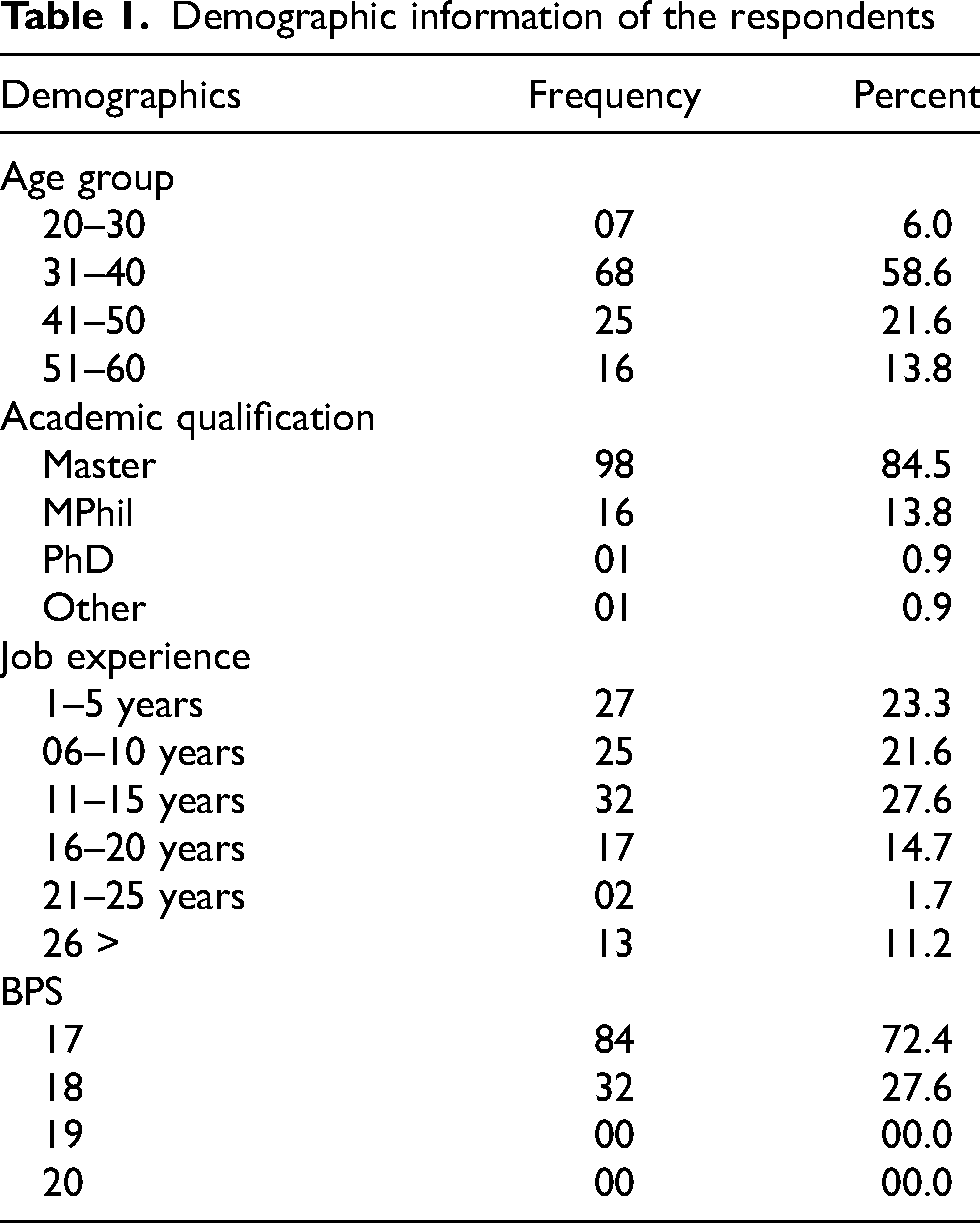
Participants were asked to provide their age, qualifications, experience, and basic pay scale (BPS). The results (see Table 1) indicate that 68 respondents representing 58.6% of the participating population were in the age group of 31–40 years. According to the survey, 98 respondents (84.5%) representing the majority of the population had master's degrees. Thirty-two personnel, constituting 27.6% of the population, served in the HED for 11–15 years. Twenty-seven representing 23.3% of the workforce, worked in the current department for 01–05 years. The majority of librarians 84 (72.4%) were in grade 17.
Demographic information of the respondents
Librarians’ perceptions towards a future course of action
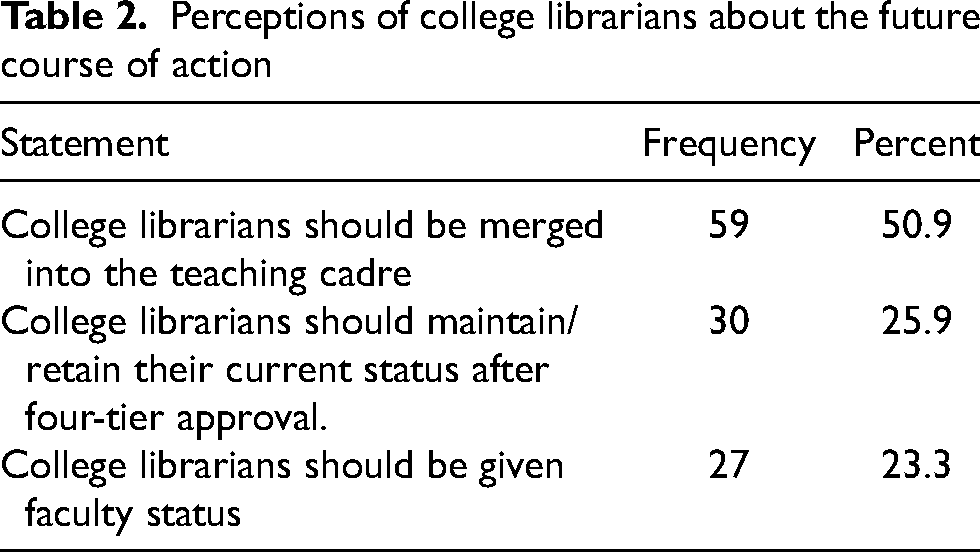
The results show that a majority of the participants 86 (74%) intend to change their current status, of whom 59 (50.9%) college librarians would like to be merged into the teaching cadre, while 30 (25.9%) want to keep their current status (see Table 2).
Perceptions of college librarians about the future course of action
Perceptions towards change in nomenclature
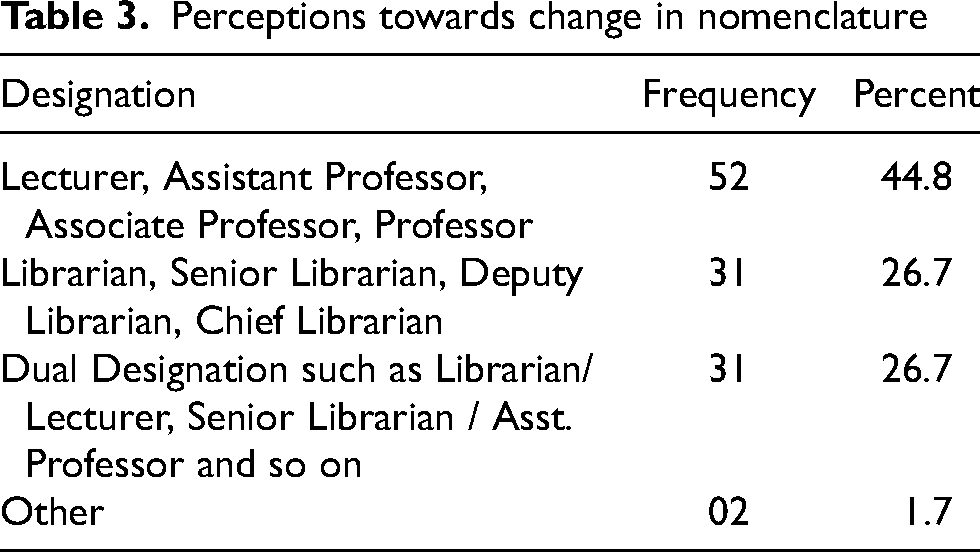
The statistics (see Table 3) indicate that a clear majority of 52 (44.8%) favor having the nomenclature/designations of lecturer, assistant professor, associate professor, and professor for librarians in case of cadre change. The results indicate that most librarians want to change their cadre to become library science lecturer/professor.
Perceptions towards change in nomenclature
Merits of merger into teaching cadre
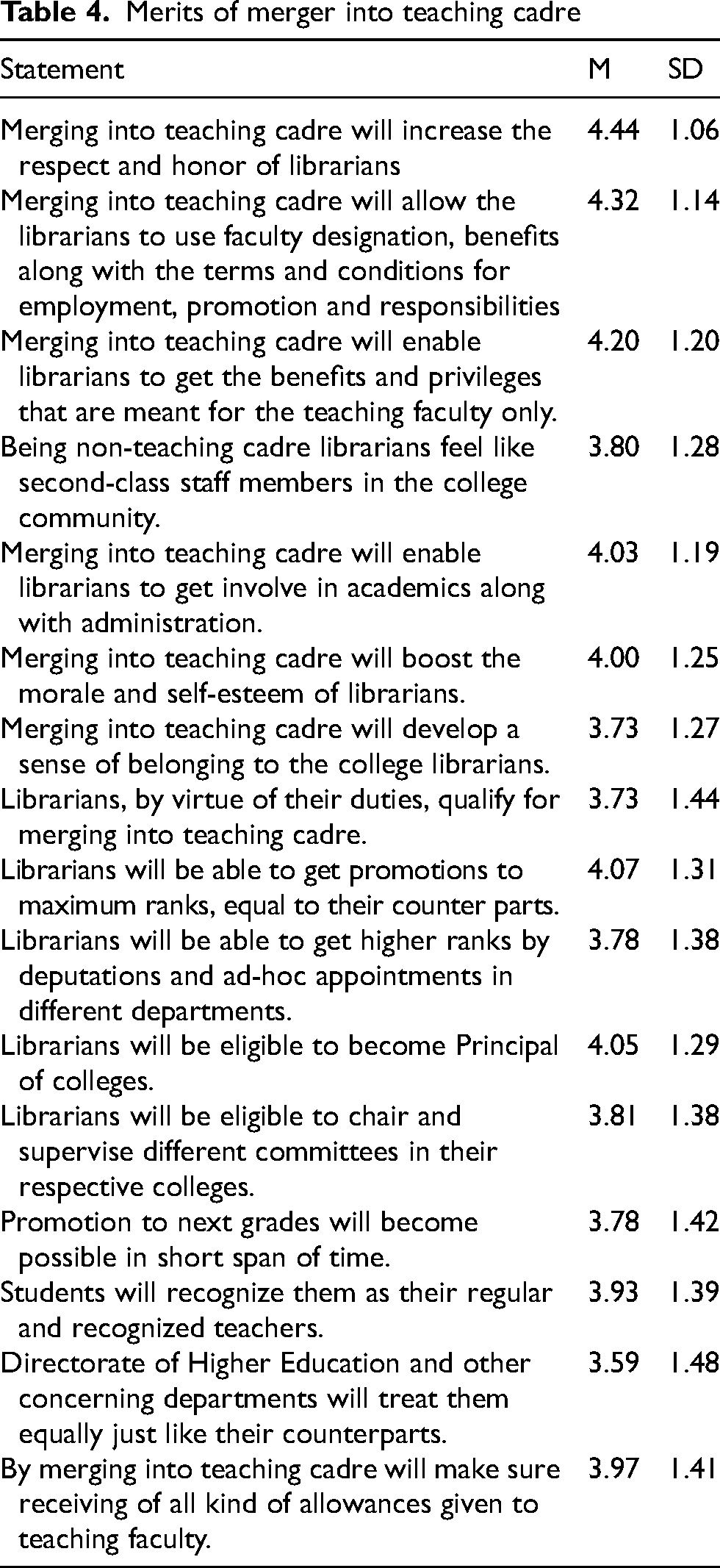
Based on the findings (see Table 4), in terms of merits, the majority of respondents feel that merging into the teaching cadre will increase their respect and honor (mean = 4.44), allow them to use faculty designations, benefits, and promotions (mean = 4.32) and they will receive all teaching faculty benefits and allowances (mean = 4.20). The Analysis of Variance (ANOVA) confirms that there is no difference of opinion statistically significant on the basis of various age groups (F = .315, Sig. = .815), qualification (F = 2.014, Sig. = .144), experience (F = 1.009, Sig. = .422), and scale (F = 3.824, Sig. = .056) of librarians regarding merging into the teaching cadre.
Merits of merger into teaching cadre
Merits of retaining current status
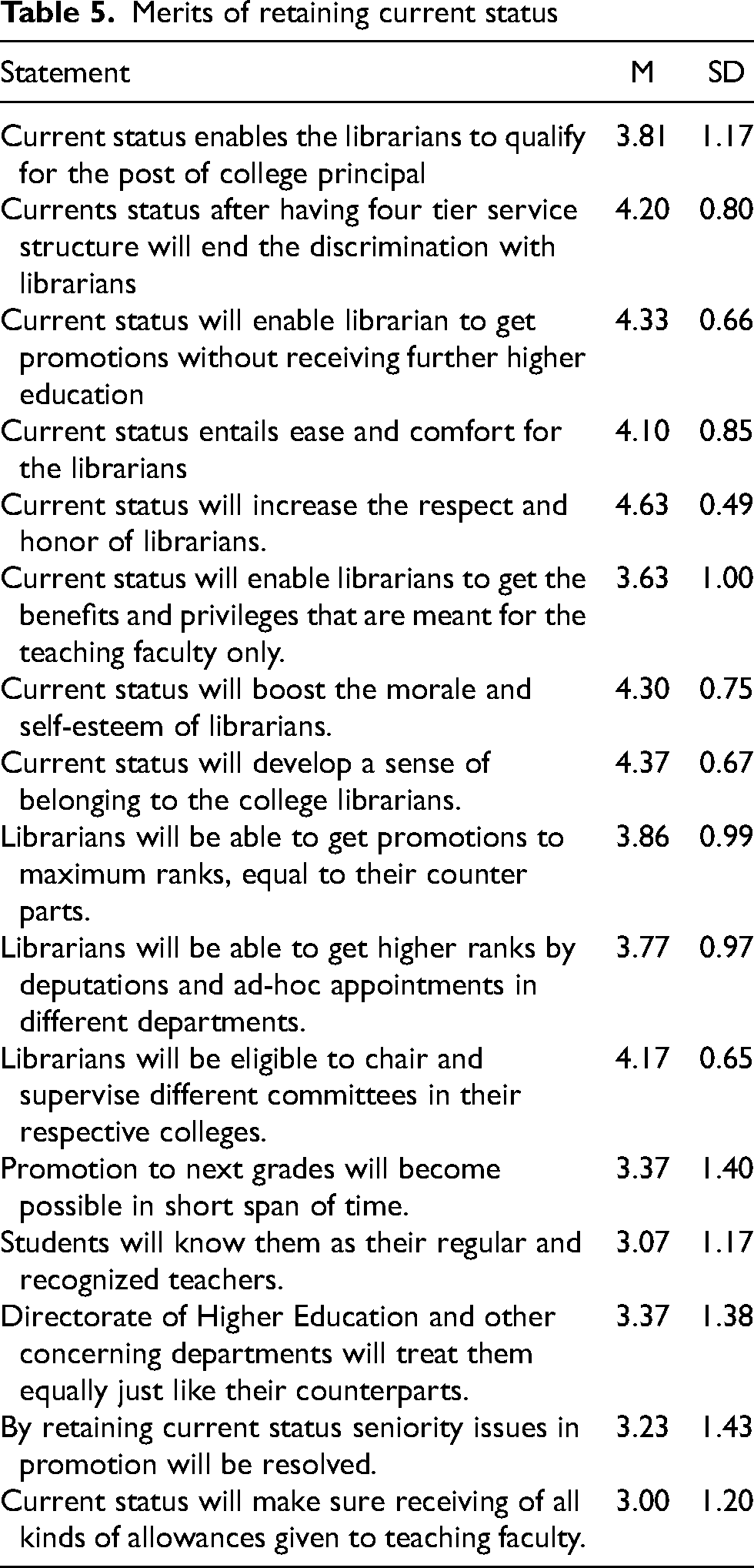
The results demonstrate that 31 (26.7%) out of 116 librarians want to maintain the status quo for college librarians. They predict that the current status will increase their respect and honor (mean = 4.63), will develop a sense of belonging (mean = 4.37), will enable librarians to get promotions without receiving further higher education (mean = 4.33), and will boost the morale and self-esteem of librarians (mean = 4.30) (see Table 5). The ANOVA results indicate no statistically significant difference among various age groups (F = 1.208, Sig. = .327), qualification groups (F = .808, Sig. = .377), experience groups (F = .930, Sig. = .480), and scale groups (F = 3.724, Sig. = .064) regarding retaining the current status.
Merits of retaining current status
Merits of getting faculty status
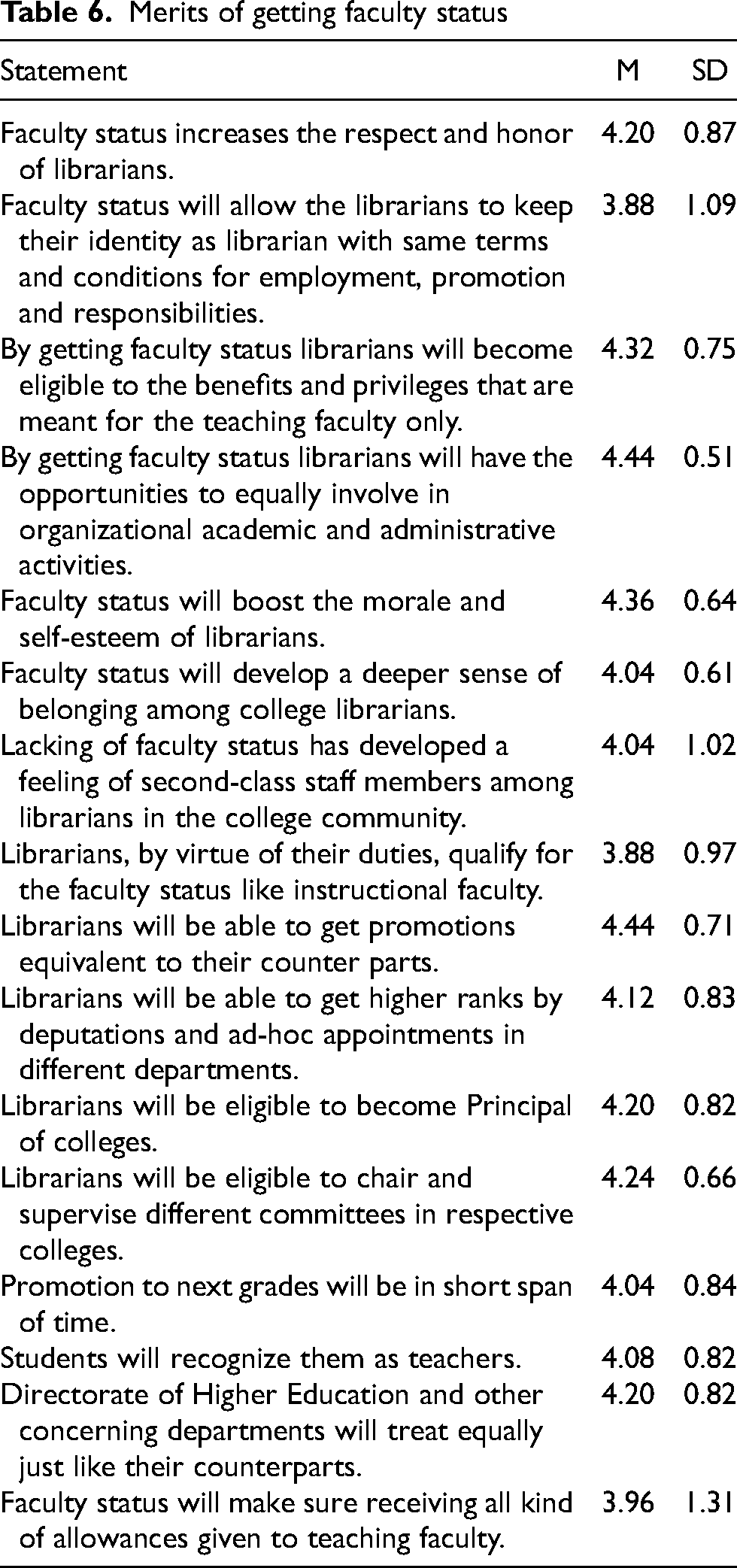
The results indicate that 27 (23.3%) of 116 respondents want faculty status for college librarians. A majority of librarians believe that receiving faculty status provides them with opportunities to participate equally in organizational, academic, and administrative activities (mean = 4.44), and they will be able to get promotions equivalent to their counter parts (mean = 4.44). Moreover, faculty status will boost the morale and self-esteem of librarians (mean = 4.36), and by getting faculty status they will become eligible for the benefits and privileges that are meant for teaching faculty only (mean = 4.32) (see Table 6). The ANOVA confirms that there is no group variance statistically significant with respect to age (F = 2.069, Sig. = .137), qualification (F = .651, Sig. = .532), experience (F = 1.430, Sig. = .262), and scale (F = 2.768, Sig. = .110) of librarians regarding the overall mean score of faculty status.
Merits of getting faculty status
Barriers to changing the current status
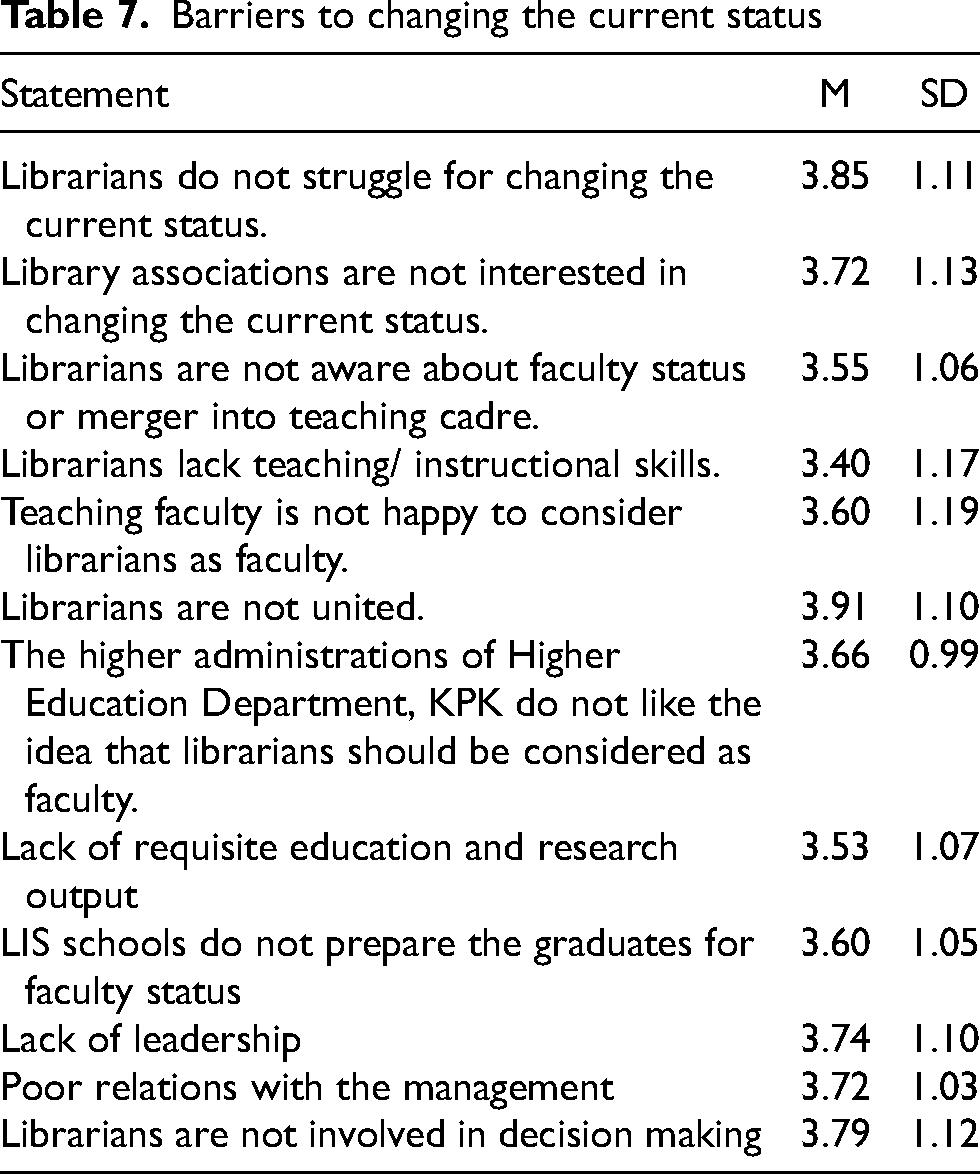
According to the findings (see Table 7), a large number of librarians agreed with the statements that librarians are not united (mean = 3.91); do not struggle for changing their current status (mean = 3.85); and are not involved in decision-making (mean = 3.79). In addition, lack of leadership (mean = 3.74), poor relationship with management (mean = 3.72), and lack of interest from library associations (mean = 3.72) are major barriers to changing their current status.
Barriers to changing the current status
Discussion
The study reveals that male college librarians in KPK, Pakistan express a preference for integration into the teaching cadre. Despite possessing similar qualifications and being appointed under comparable terms and conditions, many senior librarians have complained for a long time about the discrimination they experience. They advocate for eligibility for the same privileges, perks, and remuneration as teaching faculty, emphasizing the need to merge into the teaching cadre. Several disparities in benefits between the two groups are outlined below.
Faculty members receive departmental scholarships for higher studies, such as the Faculty Development Support Program (FDSP), which librarians are not entitled to. Faculty members experience rapid promotion compared to the slow progression of librarians. Unlike librarians, faculty members receive per lecture remuneration beyond four lectures, in addition to a fixed salary. Faculty members can become college principals and receive principal allowances, a privilege not extended to librarians. In allied academies and directorates, such as the Higher Education Teacher Training Academy (HETTA), and directorates of the Department of Higher Education KPK, faculty members secure positions like Directors and Deputy Directors, roles inaccessible to librarians. Faculty members have the opportunity to earn extra through evening shifts, a prospects unavailable to librarians. Librarians are excluded from departmental trainings, seminars, and workshops that benefit faculty members. Faculty members enjoy ad-hoc appointments across various departments in the country at the federal and provincial level, which librarians do not have access to. Faculty members can achieve BPS-21, this progression is not avaialble to librarians. Faculty members often contribute to various college committees in decision making on college matters, but librarians lack such opportunities. Librarians are excluded from the irregular benefits schemes available to faculty members.
As a result, librarians believe that integration into the teaching cadre is crucial for contributing effectively to the college community's development. The study indicates widespread dissatisfaction among participants with the current status quo, and their collective goal is to merge into the teaching faculty. This integration is seen as a means to instill dignity and respect into the library profession, providing librarians with equal status, benefits, ownership and opportunities for professional development and promotion aligned with the positions held by their teaching counterparts. No significant influence on librarians’ perceptions regarding merging into the teaching cadre, faculty status or retaining their current status was identified on the basis of age, qualification, experience and scale difference.
The study identifies key challenges hindering this integration, primarily originating from librarians themselves (Ameen & Ullah, 2013; Khan,et.al.2021). Lack of determination, unity, non-involvement in decision-making processes, and leadership crisis pose significant hurdles. It is noteworthy that even if the cadres change, merging librarians into teaching cadres must address library management issues, necessitating the provision of support staff similar to laboratory assistants and attendants in science laboratories.
Achieving faculty status or merging into the teaching staff poses a formidable challenge for college librarians. However, with the cooperation of all stakeholders, overcoming this challenge is plausible. Providing equal opportunities for professional development, administrative positions and promotion will not only elevate the satisfaction levels of librarians but also foster their active contribution to the development of colleges.
Conclusion
This study explores the perspectives of male college librarians in the Khyber Pakhtunkhawa province of Pakistan regarding their faculty status, merging into the teaching cadre or maintaining their current status. The existing body of literature strongly supports the concept of faculty status. However, a noticeable gap exists in studies exploring the concept of “merger into the teaching cadre” both locally and internationally. To grasp this unique aspect, insights were sought through personal communications with relevant professionals and experts. This study reveals a prevalent dissatisfaction among college librarians with their current status, prompting a desire for change and a shift towards merging into the teaching cadre. Librarians argue that, given their equivalent qualifications, they should be entitled to the same status as teaching faculty, advocating for the merger to receive identical benefits and ranks. Such a transition, they believe, would not only grant them faculty nomenclature but also ensure respect, equal benefits and opportunities for professional advancement. This, in turn, is anticipated to elevate their standing within the college community. Will allow them to have faculty nomenclature, equal benefits and opportunities for promotion. They will be treated equally enhancing their prestige and honor in the college community. The age, qualification, experience and scale difference have not significant influence on the perceptions of librarians regarding merging into the teaching cadre, faculty status or retaining their current status.
This study identifies intrinsic barriers hindering the transition of librarians to higher academic positions, primarily stemming from within the librarian community. These challenges include a lack of collective efforts, unity, involvement in decision-making processes and effective leadership. Despite these barriers, a noticeable majority of participants express a preference for lecturer/professor nomenclature in the event of a cadre change. In light of these findings, the study recommends that librarians actively strive for higher education and enhance their professional and research skills. Such endeavors are seen as pivotal steps toward integrating into teaching cadres or obtaining faculty status. This study aligns with government education policies and HEC in Pakistan, offering insights into potential solutions for recommendations. This study will pave the way for service and job structure issues faced by librarians in academic institutions. The results of this study will contribute to the broader understanding of the challenges and aspirations of librarians and pave the way for the design and execution of future studies directly addressing these pertinent issues.
Recommendations
It is recommended that following the implementation of the recently approved four-tier service structure and promotions of senior librarians to the next grade, a comprehensive reassessment and analysis of librarians’ status should be conducted. Practical steps toward merging into the teaching cadre or obtaining faculty status should be explored, with active consultation and consent sought from senior librarians, KPPLA, and HED.
The Higher Education Commission of Pakistan, KPPLA, HED, and Pakistan Library Association (PLA) should provide support for librarians seeking to merge into the teaching cadre or acquire faculty status.
Recognizing the shortage of supporting staff in libraries, librarians should be provided with the necessary support staff, including library assistants, clerks, and attendants. Such support staff is crucial to navigating challenges associated with cadre changes and ensuring the smooth functioning of library affairs, similar to laboratory staff supporting the teaching faculty of science subjects in colleges.
Librarians should be eligible for various scholarships, including those offered by the HEC, and other departmental programs. Inclusion in the FDSP of the HED should be explored to support their professional growth.
In addition to their traditional roles, librarians should actively participate in the core activities of their colleges. This involvement will foster a sense of ownership enabling them to build a favorable reputation in their colleges.
Librarians are encouraged to pursue higher qualifications such as MS/M.Phil. and PhD to advance their professional development and recognition. Elevating their research skills is crucial for meeting higher education challenges, aligning with the standards set by their teaching counterparts, and serving library users effectively.
Librarians should actively contribute to the international and local literature within the field of LIS. This contribution would not only lead to the development of the LIS domain but also enhance the research productivity of their institutions, thereby elevating their worth within the college community.
To enhance the research skills of students, faculty, and staff, librarians should conduct workshops, lectures, and seminars on information literacy. By doing so, they can demonstrate their value as both educators and professionals, ensuring the effective utilization of library resources and services and contributing to the overall research outcome of their colleges.
Limitations of the study
Following are the limitations of this study resulting from circumstances beyond the researchers’ control.
The researchers’ capacity to gather essential data and address the study's overarching questions was heavily reliant on the cooperation of the respondent librarians. This extent to which the individuals were willing to furnish the requested information may influence data collection. The study exclusively focused on male librarians in KPK colleges due to challenges in approaching and obtaining responses from their female counterparts. This limitation is attributed to cultural values, social and religious norms, local traditions, and a general lack of interest in responding to the questionnaires. A separate study conducted by a female researcher may illuminate the perspectives of female college librarians. Given the extensive literature on librarians’ faculty status, the review concentrated solely on literature pertaining to faculty status for academic librarians, tenure policies in different institutions, cadre and nomenclature changes, librarians’ job nomenclature, and their views on the work environment and their counterparts. Notably, no literature was found on merging into teaching cadres. The study was conducted amidst the approval and implementation of the four-tier service structure for college librarians in KPK by the HED. An assessment following the full implementation of this development is necessary to gauge any subsequent change in librarians’ perceptions. A significant development occurred after data collection and results compilation, namely the approval of a five-tier service structure for college teachers by HED, KPK. Consequently, the findings of this study should be interpreted with caution, considering the potential impact of the new structural framework.
Directions for future research
Given that this survey exclusively focused on male college librarians from HED, KPK, a parallel study should be conducted to ascertain the perceptions of female college librarians. Exploring gender specific insights will contribute to a more comprehensive understanding of the challenges and aspirations faced by librarians in academic settings.
Researchers are encouraged to conduct parallel studies in other provinces of Pakistan including Punjab, Sindh, and Baluchistan to gauge how college librarians in these regions perceive similar issues. A comparative analysis of perceptions across provinces can inform solutions and guide future action in the broader context of college librarianship in Pakistan.
Similar studies should be extended to university settings, investigating how university librarians across Pakistan perceive issues related to their professional status, nomenclature, and potential integration into teaching cadres, obtaining faculty status or maintaining current status. Examining the unique dynamics of university libraries will enrich the overall understanding of librarianship challenges in higher education.
Complementing the quantitative nature of this study, future research should incorporate qualitative methodologies to delve deeper into the nuances of librarians’ perspectives. Qualitative studies can unveil multifaceted aspects of the topic, providing a more comprehensive and nuanced understanding of the challenges and aspirations faced by college librarians.
The scarcity of literature on the topic of “merging into teaching cadres” underscores the need for dedicated research in this area. Researchers are encouraged to focus on filling this gap by investigating and documenting the implications, challenges and potential benefits associated with librarians merging into teaching cadres.
Footnotes
Acknowledgements
Superior University, Technology Campus, Lahore has undertaken this research project for an M.Phil. degree in Library and Information Management. The researchers also acknowledge the contribution of senior librarians and teachers from various academic institutions who generously shared their insights and experiences during personal communications. Their contributions were instrumental in enhancing our understanding of the nuanced concepts of ‘merger into the teaching cadre’ and ‘faculty status’ for college librarians.
