







Abstract
Although ChatGPT has gained widespread popularity, research on users’ post-adoption behaviors remains limited. This study examined whether information quality (across five distinct attributes) predicts information usefulness and source trust, which, in turn, influences users’ intention to continue using ChatGPT. Data from ChatGPT users were analyzed using structural equation modeling. The results indicate that the accuracy, richness, timeliness, format, and relevance of the information presented by ChatGPT were significantly associated with both information usefulness and source trust. Moreover, the findings showed that both information usefulness and source trust were positively and significantly associated with the continuance usage intention toward ChatGPT. This study sheds light on the factors that drive user perceptions and behaviors and offers a deeper understanding of the continuance usage within the domain of generative AI like ChatGPT. The implications of these findings and directions for future research are discussed.
Introduction
ChatGPT, a generative artificial intelligence (AI) system developed by OpenAI in 2019, has gained popularity since its launch. It can generate complex content such as articles, stories, poems, essays, and computer code (Lucy and Bamman, 2021). Notably, ChatGPT's ability to generate information relevant to user queries has contributed to its rise as a new-generation information-seeking tool. This platform enhances the user experience by facilitating interactive searches and adaptation based on user feedback, leading to superior search results and refined information compared with traditional search engines (Dwivedi et al., 2023). Users often rate the information provided by ChatGPT as superior to that from conventional search engines such as Google (Xu et al., 2023), with some viewing it as a potential replacement for traditional search engines (Fitria, 2023).
The post-adoption behavior of users shows continued and repeated usage, indicating the transformation of initial users into loyal users (Zhou, 2011a). The continuous use of information technology is crucial for market success (Li and Liu, 2014). As ChatGPT grows in popularity, understanding the factors that encourage users to continue engaging with it after initial adoption is becoming increasingly important. The Information Adoption Model (IAM) and DeLone and McLean Information Systems Success Model (D&M IS Success Model) emphasize information quality's crucial role in determining both information usefulness and trust in information sources (Abdulkareem and Mohd Ramli, 2022; Cheung, 2014; Lu and Bai, 2021). High-quality information serves multiple purposes: It reduces user search costs, attracts and maintains user interest, enhances comprehension through proper formatting, and establishes sources’ credibility and value (Filieri and McLeay, 2014; Kim and Niehm, 2009; Lee et al., 2002; Nicolaou et al., 2013; Zhou et al., 2022). Research indicates that information quality, including information volume, timeliness, and relevance, positively influences information usefulness (Cheung, 2014; Cheung et al., 2008; Lu and Bai, 2021). Further, according to one study (Abdulkareem and Mohd Ramli, 2022), trust in e-government is influenced by information quality, service quality and actual use. This suggests that information quality enhances both information usefulness and source trust within the ChatGPT context.
Furthermore, the Information Systems (IS) Continuance Model (Bhattacherjee, 2001) provides crucial insights into users’ post-adoption behavior by highlighting perceived usefulness’ role in driving continuous usage intention. Research has supported this relationship in various technological contexts, and scholars clarify that users who perceive a technology to be beneficial are more likely to continue using it than those who do not perceive any benefits (De Kervenoael et al., 2021; Marikyan et al., 2024). For instance, Ashfaq et al. (2020) found that the perceived usefulness of information sources is a significant antecedent of continuance usage intention toward such technologies. Additionally, in recent years, trust in information sources has emerged as a critical determinant of user behavior, with research indicating that source trust fosters positive attitudes and influences behavioral intentions (Zainal et al., 2017). Another study clarifies that trust interacts with consumer beliefs such as perceived usefulness and these beliefs together influence consumer intentions and behaviors concerning e-services at both the initial and latter stages of use (Mou et al., 2017). These findings indicate that, in the ChatGPT context, both perceived information usefulness and source trust may help enhance users’ continuance intentions.
Despite ChatGPT's growing popularity, research continues to focus on its initial adoption factors (e.g. Lai et al., 2023; Thongsri et al., 2024; Tiwari et al., 2023). These studies create a significant gap in our understanding of the factors enhancing ChatGPT's continuous usage, particularly regarding how information quality attributes influence information usefulness and source trust and how these factors subsequently affect continuous usage intention. This gap is particularly noteworthy given ChatGPT's unique position as an AI-powered information system. The current study addresses this gap by investigating the effects of information quality attributes on information usefulness and source trust and their subsequent influence on the continuance usage intention of ChatGPT. Specifically, this study clarifies (1) how information quality attributes—specifically, accuracy, richness, timeliness, relevance, and format—influence information usefulness and ChatGPT trust, and (2) how information usefulness and ChatGPT trust affect users’ intention to continue using ChatGPT.
Literature review
Information quality and information usefulness
The IAM (Sussman and Siegal, 2003) provides a framework to identify the antecedents and outcomes of information usefulness. According to this model, information quality plays a crucial to role in information processing and strongly predicts information usefulness (Erkan and Evans, 2016; Peng et al., 2016; Sussman and Siegal, 2003). The Elaboration Likelihood Model (ELM; Petty and Cacioppo, 1986) helps clarify and understand the effects of information quality on information usefulness (Zhou, 2022). The ELM suggests two routes for information processing: the central route, which involves intensive information processing and logical analysis, and peripheral route, which relies on heuristic cues and superficial processing (Bhattacherjee and Sanford, 2006; Chaiken and Maheswaran, 1994; Chang et al., 2020; Han et al., 2018; Sang et al., 2023; Zhou et al., 2022).
Researchers have proposed various key attributes of information quality (e.g. Miller, 2005; Petter et al., 2008). Following existing literature (Delone and McLean, 1992; Zheng et al., 2013), this study adopted five attributes of ChatGPT information quality: accuracy, richness, timeliness, format, and relevance.
Accuracy refers to the correctness, precision, and unambiguity of information (Lee et al., 2002; Setia et al., 2013). Accurate information helps users avoid misinformation and reduces uncertainty and search costs (Filieri and McLeay, 2014; Shen et al., 2013). Poor information quality forces users to seek alternative sources, increasing their effort and time investment, often resulting in a negative appraisal of information usefulness (Gao et al., 2015). Studies indicate that trustworthy or credible information positively influences both information usefulness and perceived usefulness (Hajli, 2018; Mou et al., 2017; Wang et al., 2008).
Richness indicates the depth and breadth of information (Bilsel et al., 2006; Zheng et al., 2013). A substantial volume of information can lead to the perception of high quality (Song et al., 2012), and diverse information enhances perceived usefulness (Matute et al., 2016). Studies have shown that information volume positively influences its usefulness (Lu and Bai, 2021; Zwijnenberg et al., 2012).
Timeliness refers to current or up-to-date information (Lee and Lehto, 2013; Zheng et al., 2013). Timely information reflects the latest developments and attracts user interest (Zhou et al., 2022), whereas outdated information has diminished value (Chen and Tseng, 2011). Research clarifies the positive association between information timeliness and usefulness (Cheung, 2014).
Relevance refers to the extent to which information aligns with user needs (Chou and Cheng, 2012; Park et al., 2009). Users prefer quick and effortless access to pertinent information and tend to pay attention to relevant information (Nah and Davis, 2002; Petty and Cacioppo, 1986), which may lead to positive evaluations of information usefulness. The presentation of relevant information contributes to positive evaluations of information usefulness (Cheung et al., 2008).
ChatGPT provides ample, up-to-date, and relevant information on various topics (AlAfnan et al., 2023; Baidoo-Anu and Ansah, 2023; Van Bulck and Moons, 2024). Well-crafted prompts generate accurate information (Harahap et al., 2023; White et al., 2023; Xu et al., 2024). In the context of ChatGPT, the central route may be engaged when users focus on content attributes such as accuracy, richness, timeliness, and relevance. Therefore, this study hypothesized the following:
The peripheral route is engaged when individuals cannot evaluate any content in depth. Format refers to how the information is presented or organized (Gorla et al., 2010; Setia et al., 2013). Formally and consistently presented information is easy to understand (Lee et al., 2002), facilitates efficient information search (Shen et al., 2013), and positively affects information usefulness. Additionally, a well-organized and visually appealing format makes information more accessible. ChatGPT generates information that is formal, objective, and tailored to a specific format (Bang et al., 2023). In the context of ChatGPT, the peripheral route may be engaged when individuals focus on superficial cues such as format. Therefore, this study hypothesized the following:
Information quality and ChatGPT trust
The D&M IS Success Model (DeLone and McLean, 1992) provides a framework to evaluate the acceptance of IT based on various quality dimensions, including information, system, and service quality. This model posits that these quality aspects influence IT use (Cheng, 2014). Among these dimensions, information quality has emerged as a critical factor in assessing IT acceptance (DeLone and McLean, 2003). Abdulkareem and Mohd Ramli (2022) extended the D&M IS Success Model by incorporating trust in information sources, suggesting that information quality acts as a key driver of information source trust.
Trust in an information source is a crucial consideration in information interpretation and utilization by users (Huschens et al., 2023). This understanding is particularly important in generative AI, such as ChatGPT, which is increasingly being utilized for various real-world applications, including automated customer service and information retrieval (Buchanan and Hickman, 2024). Trust can be conceptualized as the positive expectations that users hold regarding an information source's future behavior (Zhou, 2011b), including the necessary knowledge and skills to perform their tasks, and concern for users’ interests rather than their own (Mun et al., 2013). Notably, when individuals perceive an information source to contain high-quality information, they tend to trust it (Harris et al., 2011; Kim, 2016). When a source has high-quality information, they appear to have expertise and value (Kim and Niehm, 2009; Nicolaou et al., 2013), which may enhance information source trust.
Research on the impact of ChatGPT's information quality attributes on trust is limited; however, the extant literature supports this argument. For instance, a previous study identified information quality as a predictor of e-commerce trust (Aslam et al., 2020). Similarly, Zahedi and Song (2008) found that attributes such as relevance, understandability, and adequacy positively influence trust in infomediaries. Additionally, Sillence et al. (2007) highlighted that clear and simple language, relevant content, and a wide variety of topics are determinants of trust in websites. Based on the above literature review, we assume that, in the context of ChatGPT, high-quality information—characterized by accuracy, richness, relevance, timeliness, and a well-organized format—can lead users to perceive ChatGPT as an expert, thereby increasing their trust in it. Therefore, we hypothesized the following relationships:
Information usefulness and continuance usage intention
The IS Continuance Model (Bhattacherjee, 2001) provides a theoretical framework to understand the reasons for the post-adoption and continuous use of IS (Filieri et al., 2021; Tang et al., 2014). This model suggests that user perceptions of IS utility may evolve after the initial use, influencing continuous usage intentions (Halilovic and Cicic, 2013; Limayem et al., 2007). The IS Continuance Model has been utilized across various domains, including online communities, e-learning platforms, and social media to explain continuance usage intentions (Jin et al., 2010; Krasnova et al., 2017). In this model, perceived usefulness is key to understanding user propensity for continued IS engagement (Larsen et al., 2009; Li and Liu, 2014). The users who consider a technology beneficial are likely to appreciate its value and potential to enhance their productivity (De Kervenoael et al., 2021; Marikyan et al., 2024); this increases their likelihood of continued use. Research on mobile commerce, online communities, and chatbots has identified perceived usefulness as a key factor influencing continuous usage intention (Ashfaq et al., 2020; Chong, 2013). Further, perceived usefulness was found to predict user satisfaction in the ChatGPT context (Niu and Mvondo, 2024). These findings indirectly support the argument that the more useful to users the information provided by ChatGPT, the greater the probability of their continued use. This led to the following hypothesis:
Source trust and continuance usage intention
Trust has been identified as a critical factor that influences the intention to use technology (Song, 2007). When users have high trust in technology, it mitigates the ambiguity and uncertainty related to its use (Shen et al., 2013), thereby increasing the likelihood that they continue using the technology (Filieri et al., 2015; Huh and Shin, 2014). Additionally, trust in information sources fosters a positive attitude toward them, which, in turn, influences behavioral intentions (Zainal et al., 2017). Research on various technologies has demonstrated a positive association between trust and the intention to use technologies. For instance, studies on e-services and infomediaries have shown that trust significantly enhances the continuance intention to use such technologies (Lim and Kim, 2012; Mou et al., 2017). Similarly, Hooda et al. (2022) found that trust in e-government systems played a crucial role in users’ intention to continue using them. In the context of ChatGPT, Choudhury and Shamszare (2023) found that trust in ChatGPT positively affects the intention to use it. These findings suggest that trust in ChatGPT reduces uncertainty and enhances positive attitudes toward the platform, leading to increased continuous usage intention. Thus, we proposed the following hypothesis:
Methods
Research model
Based on our comprehensive literature review on ChatGPTs’ information quality, usefulness, source trust, and continuous usage intentions, we proposed a research model (Figure 1). This model posits that the quality of the information provided by ChatGPT influence the perceived usefulness of the information and the source trust. Both usefulness and trust impact the user's intention to continue using ChatGPT. Specifically, the model examines how different attributes of information quality (accuracy, richness, timeliness, format, and relevance) contribute to the overall usefulness of ChatGPT-generated information and the source trust, thereby affecting users’ continuance usage intention.
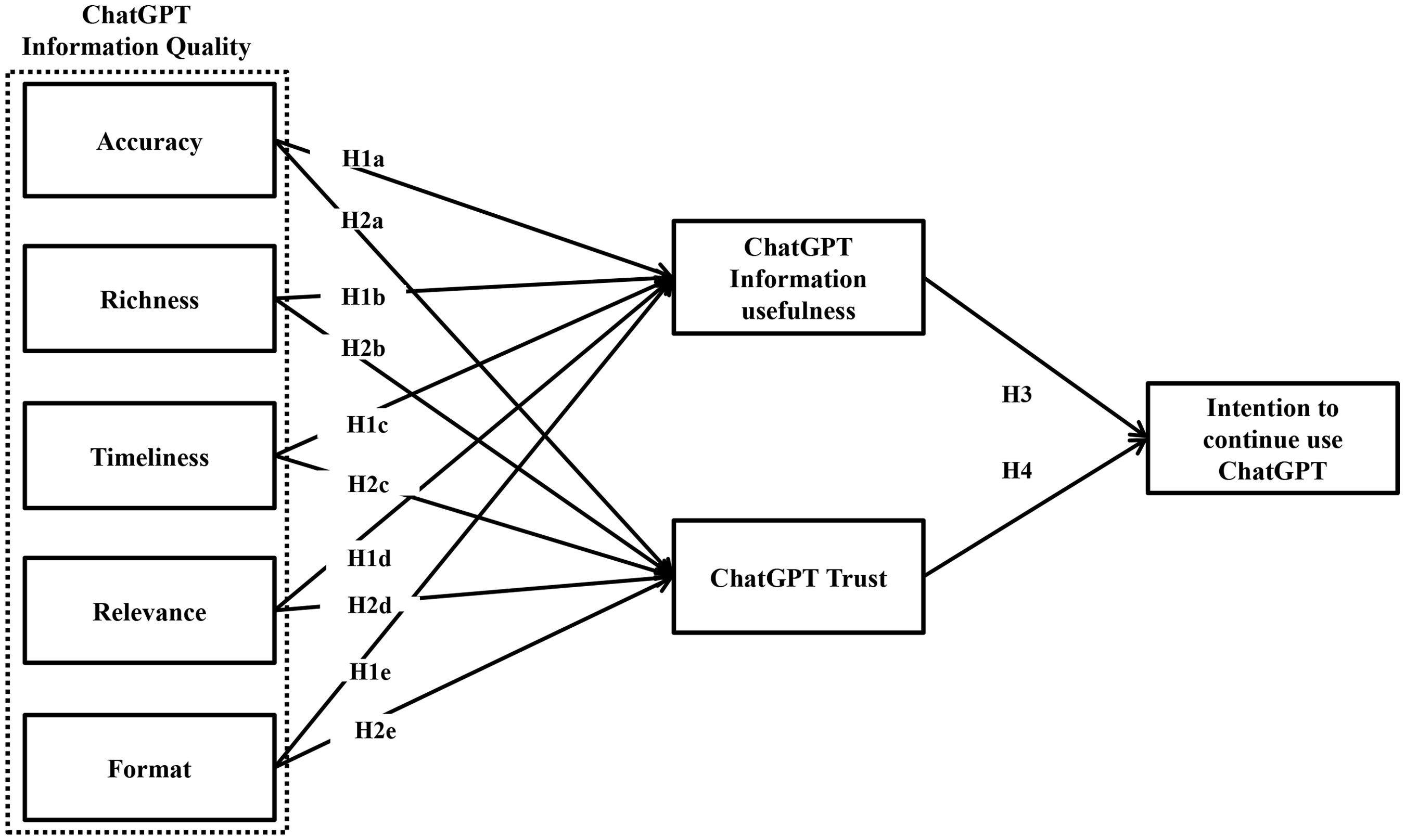
The research model.
Participants and procedures
Participants were recruited from the online panel of PMI (https://pmirnc.com), a professional survey company in South Korea. PMI operates a panel composed of more than 1.6 million active members who regularly participate in survey research. This study targeted users with ChatGPT experience to examine the relationship between information quality, information usefulness, source trust, and the intention to continue using ChatGPT. Data were collected through an online survey conducted from August 7 to 15, 2024. To ensure the relevance and reliability of the responses, the survey excluded panel members who had never used ChatGPT or had failed to respond to the key variables of interest. Before participating, each respondent provided informed consent and was briefed on the purpose of the survey. They were compensated for their time with cash or a gift to encourage their participation and engagement. Initially, 1319 individuals participated in the survey. After applying the exclusion criteria, 618 respondents were screened. The final sample comprised 701 participants.
Measures
Information quality
This study used the information quality scale developed by Cheung et al. (2008), Teo et al. (2008), and Zheng et al. (2013) to assess the level of information quality measured across five attributes: accuracy (three items), richness (three items), timeliness (two items), format (three items), and relevance (three items). Participants rated these items on a five-point Likert scale ranging from 1 (“not at all”) to 5 (“very much”) (accuracy: M = 2.96, SD = .79, richness: M = 3.72, SD = .61, timeliness: M = 3.32, SD = .87, format: M = 3.59, SD = .66, relevance: M = 3.66, SD = .59).
Information usefulness
The usefulness of ChatGPT information was measured using Cheung et al.'s (2008) information usefulness scale. It consisted of three items. Participants responded on a five-point Likert scale ranging from 1 (“not at all”) to 5 (“very much”) (M = 3.62, SD = .63).
Source trust
This study evaluated ChatGPT trust using an information source trust scale adapted from Filieri et al. (2015), Wu et al. (2010), and Zhou (2011b). This scale includes four items rated on a five-point Likert scale ranging from 1 (“not at all”) to 5 (“very much”) (M = 3.37, SD = .68).
Continuance usage intention
Continuance usage intention toward ChatGPT was measured using a scale from Bhattacherjee (2001) and Chen et al. (2018) featuring three items. Participants responded on a five-point Likert scale ranging from 1 (“not at all”) to 5 (“very much”) (M = 3.75, SD = .72).
Demographics
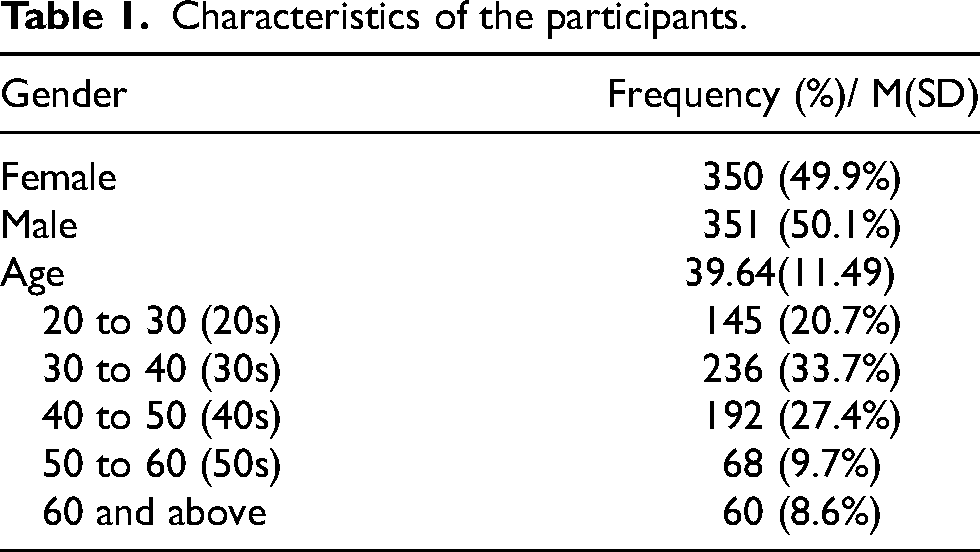
This study considered various demographic variables, including gender (male, female) and age. The average age of the participants was 39.64 (SD = 11.49) years (min: 20, max: 70 years). The sex distribution was nearly even, with 50.1% men (n = 351) and 49.9% women (n = 350). Table 1 presents a comprehensive breakdown of their demographic characteristics.
Characteristics of the participants.
Data analysis
First, Pearson's correlation analysis, conducted using SPSS version 27.0, was used to discern interrelations among the variables. Second, we used AMOS 27 to perform confirmatory factor analysis (CFA) to assess the validity and reliability of the measurement instruments. Convergent and discriminant validity were assessed by calculating item reliability, construct reliability, and average variance extracted (AVE), based on the recommendations of Chin (1998) and Fornell and Larcker (1981). The model fit for construct validity was assessed with AMOS, adhering to established fit criteria. The Comparative Fit Index (CFI > .90), Incremental Fit Index (IFI > .90), Goodness-of-Fit Index (GFI > .90), Adjusted Goodness of Fit Index (AGFI > .80), Normed Fit Index (NFI > .90), Non-Normed Fit Index (NNFI > .90), and Standardized Root Mean Square Residual (SRMR < .08) were deemed acceptable benchmarks (Remondi et al., 2020; Thompson, 2004). Finally, path analysis was conducted using maximum likelihood estimation with AMOS to test the proposed hypotheses. This included assessing the effects of information quality attributes on information usefulness and source trust (Hypotheses 1 and 2) and the influence of both information usefulness and source trust on continuance usage intention toward ChatGPT (Hypotheses 3 and 4).
Results
Validity and reliability tests
This study conducted a CFA to evaluate the validity of eight constructs (accuracy, richness, timeliness, format, relevance of ChatGPT information quality, ChatGPT information usefulness, ChatGPT trust, and continuous usage intention) in the research model. According to the CFA, the fit indices indicated a poor model fit. The CFA model demonstrated satisfactory fit: χ2 (224) = 942.18, p < .001, χ2 / df = 4.21, CFI = .92, IFI = .92, GFI = .90, NFI = .90, AGFI = .90, NNFI = .90 and SRMR = .07. As Table 2 shows, internal consistency was confirmed for information quality (Cronbach's alpha: accuracy = .82, richness = .71, timeliness = .83, format = .74, relevance = .75), information usefulness (Cronbach's alpha = .75), source trust (Cronbach's alpha = .79), and intention to continue using ChatGPT (Cronbach's alpha = .84), indicating acceptable reliability.
Reliability and convergent validity.
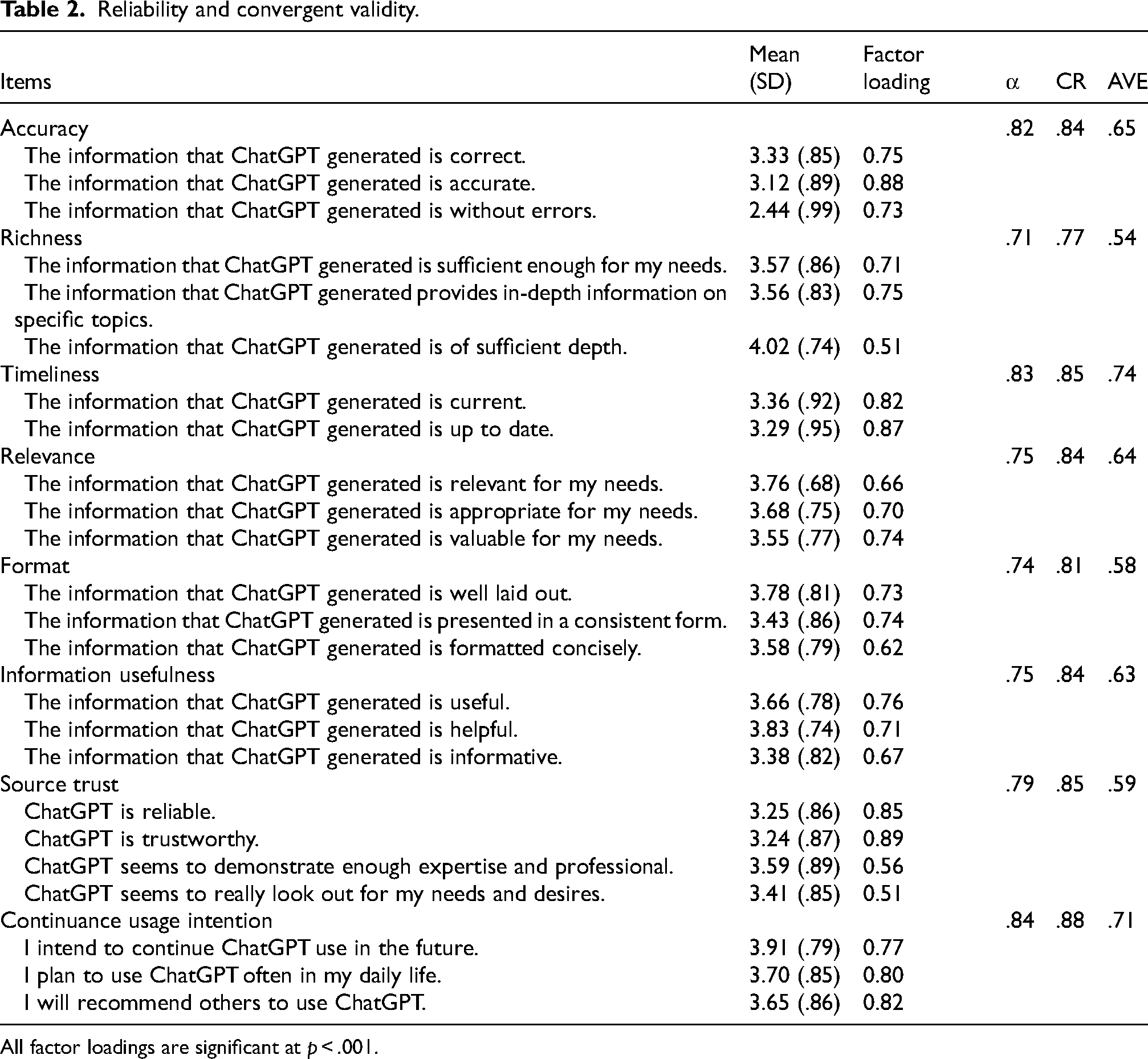
All factor loadings are significant at p < .001.
The measurement model was evaluated to ensure convergent and discriminant validity. For convergent validity assessment, we applied the criteria established by Chin (1998) and Fornell and Larcker (1981), which specify two key recommended value: Composite reliability (CR) should be above .7, and AVE should exceed .5 for each construct. In our analysis, CR values were between .77 and .88, whereas AVE values ranged from .54 to .74 (see Tables 2); these values indicate acceptable convergent validity. Further, discriminant validity was assessed by comparing the square root of AVE values with the correlations among constructs. Results revealed that the square root of the AVE for each variable exceeded the correlation values for any other variables to satisfy the discriminant validity criteria (see Table 3). Therefore, the model demonstrated acceptable convergent and discriminant validity.
Square root of AVE and correlation matrix for key variables.
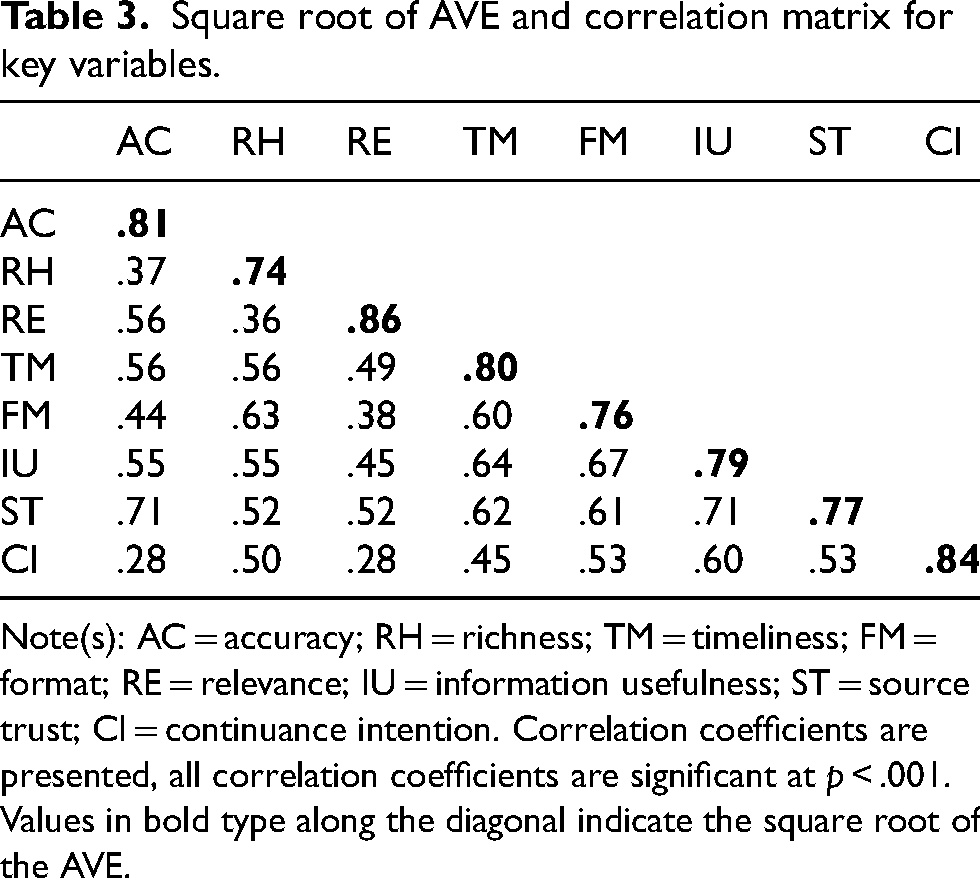
Note(s): AC = accuracy; RH = richness; TM = timeliness; FM = format; RE = relevance; IU = information usefulness; ST = source trust; CI = continuance intention. Correlation coefficients are presented, all correlation coefficients are significant at p < .001. Values in bold type along the diagonal indicate the square root of the AVE.
Preliminary analyses
In this study, self-report questionnaires were used to collect data; hence, we conducted Harman's single-factor test to assess common method bias (Podsakoff et al., 2003). The analysis revealed eight factors with eigenvalues greater than 1, with the first factor accounting for 38.7% of the variance, which falls below the critical threshold of 40% (Podsakoff et al., 2003). This result suggests that common method bias was not a serious issue in this study. Additionally, correlation analyses were performed to examine the relationships among the research variables. Table 3 shows that all variables were significantly and positively correlated.
Hypotheses testing
A path analysis was conducted to test these hypotheses. The model fit was acceptable (χ2 (6) = 151.06, p < .001, χ2 / df = 25.18, CFI = .95, IFI = .95, GFI = .95, NFI = .95, and SRMR = .04). Squared multiple correlations (SMCs; R² values) were calculated to evaluate the explanatory power of endogenous variables in structural equations (Fornell and Larcker, 1981; Lien and Cao, 2014). The SMC values clarified the following: Information quality accounted for 64.9% of the total variance in information usefulness and 57.8% of the variance in ChatGPT trust, and information usefulness and ChatGPT trust together explained 36.4% of the variance in the continuous usage intention for ChatGPT.
Figure 2 presents the path coefficients and hypothesis-testing results, respectively. Hypothesis H1 stated that the accuracy (H1a), richness (H1b), timeliness (H1c), relevance (H1d), and format (H1e) of ChatGPT information were positively associated with its usefulness. The results of path analysis showed that the accuracy, richness, timeliness, relevance, and format of information had significant positive effects on its usefulness (β = .18, SE = .03, p < .001; β = .11, SE = .03, p < .001; β = .07, SE = .02, p < .05; β = .36, SE = .04, p < .001; β = .23, SE = .03, p < .001, respectively). These findings indicate that users evaluate information as being more useful when it is more accurate, richer, up-to-date, better presented (in format), and more relevant to their needs. Therefore, H1a, H1b, H1c, H1d, and H1e were supported.
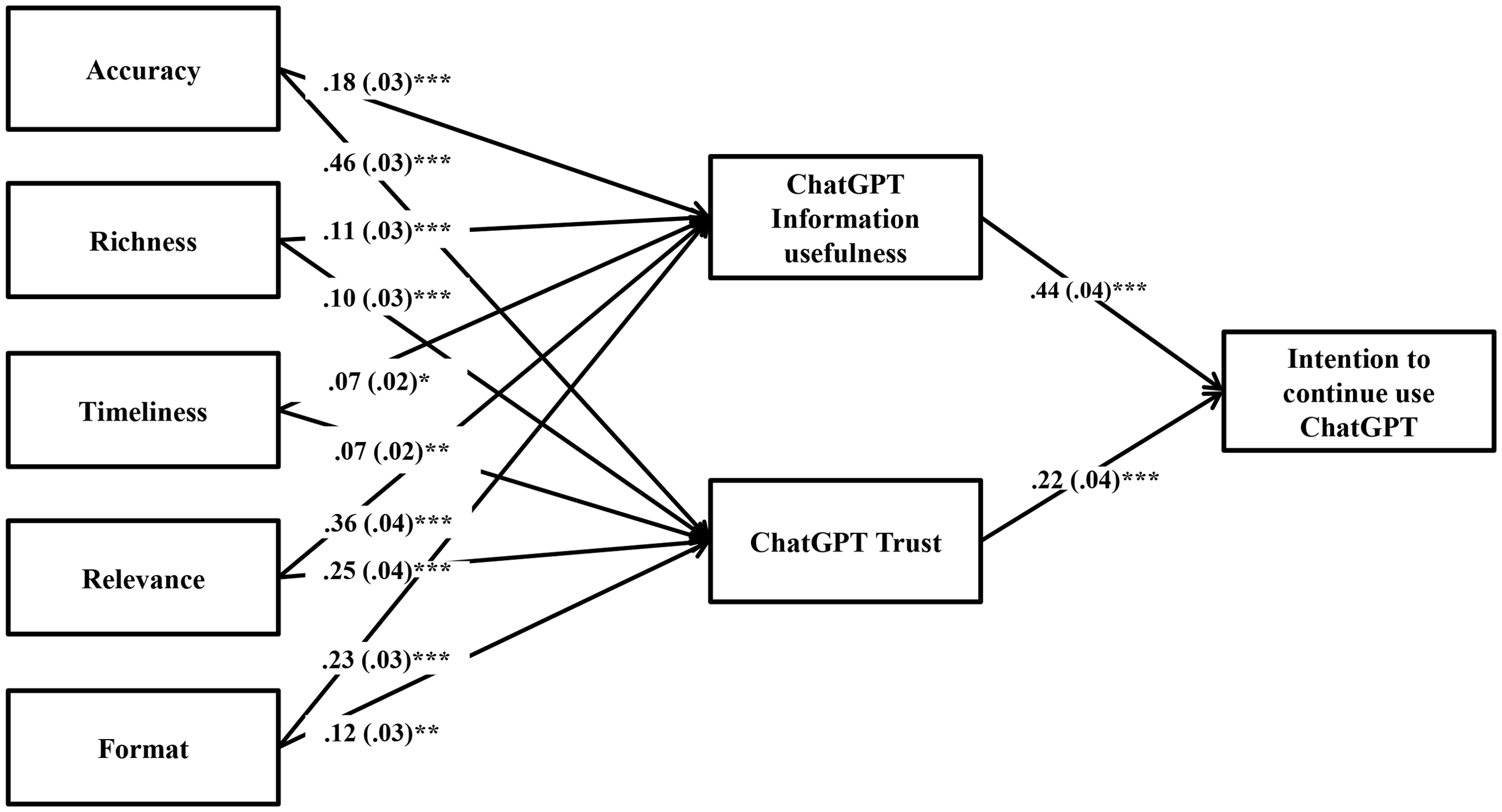
Path analysis depicting the relationship between information quality, source trust, information usefulness and continuance usage intention. Standardized coefficients (S.E.: Stand Error) are presented. * p < .05, ** p < .01, *** p < .001.
H2 hypothesized that the accuracy (H2a), richness (H2b), timeliness (H2c), relevance (H2d), and format (H2e) of ChatGPT information are positively associated with ChatGPT trust. As illustrated in Figure 2, The results of path analysis showed that the accuracy, richness, timeliness, relevance, and format of information had significant positive effects on trust in ChatGPT (β = .46, SE = .03, p < .001; β = .10, SE = .03, p < .001; β = .07, SE = .02, p < .01; β = .25, SE = .04, p < .001; β = .12, SE = .03, p < .001, respectively). These findings indicate that users evaluate ChatGPT as more trustworthy when it is more accurate, richer, up-to-date, better presented (in format), and relevant to their needs. Therefore, H2a, H2b, H2c, H2d, and H2e were supported.
H3 posited that information usefulness is significantly associated with continuous usage intention toward ChatGPT. As shown in Figure 2, the result showed that information usefulness significantly affected continuance usage intention toward ChatGPT (β = .45, SE = .04, p < .001). This suggests that users who evaluate information as more useful are more likely to continue using ChatGPT. Thus, H3 was supported.
H4 stated that ChatGPT trust is significantly associated with continuous usage intention toward ChatGPT. The result showed that ChatGPT trust significantly affected continuance usage intention toward ChatGPT (β = .22, SE = .04, p < .001). This finding suggests that users who evaluate ChatGPT as trustworthy are more likely to continue using it. Thus, H4 was supported.
To examine how information usefulness and source trust mediate the relationship between information quality attributes and continuance usage intention, we conducted mediation analyses using AMOS with 5000 bootstrap samples. This bootstrapping approach provided a robust assessment of indirect effects by necessitating the repeated sampling of a dataset (Shrout and Bolger, 2002). A confidence interval test (95% CI) was conducted to evaluate the significance of mediating effects. As shown in Table 4, for the indirect effect of information usefulness, the effects of the accuracy, richness, timeliness, relevance, and format of information on the intention to continue usage were mediated through information usefulness (β = .07, SE = .02, 95% CI [05, .11]; β = .06, SE = .02, 95% CI [.02, .10]; β = .02, SE = .01, 95% CI [.01, .05]; β = .19, SE = .03, 95% CI [.14, .26]; β = .11, SE = .02, 95% CI [.07, .16], respectively). For the indirect effect of source trust, the effects of the accuracy, richness, timeliness, relevance, and format of information on the intention to continue usage were mediated through source trust (β = .09, SE = .02, 95% CI [.06, .13]; β = .03, SE = .01, 95% CI [.01, .06]; β = .01, SE = .01, 95% CI [.01, .03]; β = .07, SE = .02, 95% CI [.04, .11]; β = .03, SE = .01, 95% CI [.01, .06], respectively).
The analysis of the mediation effects.
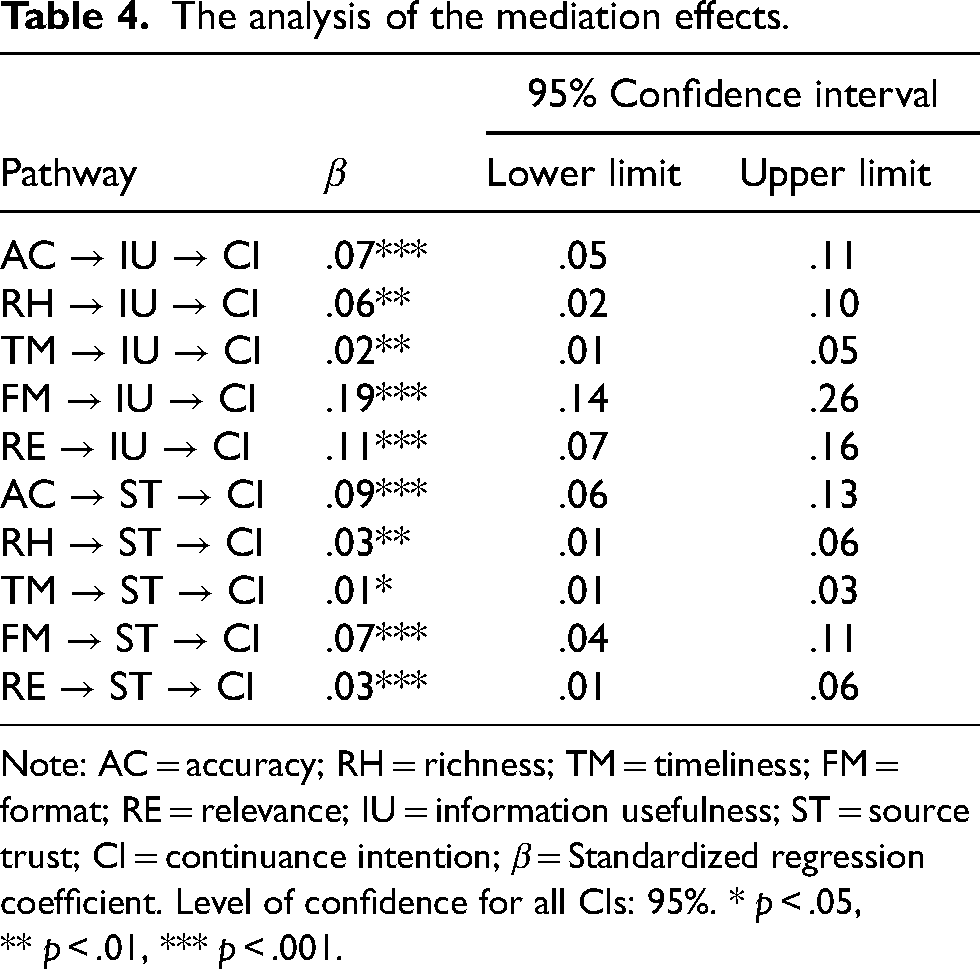
Note: AC = accuracy; RH = richness; TM = timeliness; FM = format; RE = relevance; IU = information usefulness; ST = source trust; CI = continuance intention; β = Standardized regression coefficient. Level of confidence for all CIs: 95%. * p < .05, ** p < .01, *** p < .001.
Additional analyses: Moderating effects of gender and age
Although our hypotheses did not address demographic moderators, earlier research has indicated that perceptions of information quality, media's source credibility, and information quality's positive impact on perceived value vary by demographics (Dedeoglu, 2019; Molinillo et al., 2021). Therefore, we conducted additional analyses to examine potential gender and age differences in the relationships among our model constructs using multigroup structural equation modeling in AMOS.
Gender differences
To conduct multigroup analysis, samples were divided into male and female groups. As depicted in Figure 3, for male users, accuracy, richness, relevance, and format (β = .17, SE = .04, p < .001; β = .16, SE = .05, p < .001; β = .34, SE = .05, p < .001; and β = .27, SE = .05, p < .001, respectively) demonstrated significant positive effects on information usefulness. However, timeliness had no significant effect (β = .04, p = .299). For female users, information accuracy, relevance, and format (β = .20, SE = .04, p < .001; β = .39, SE = .05, p < .001; and β = .18, SE = .05, p < .001, respectively) positively influenced information usefulness, whereas richness (β = .06, p = .245) and timeliness (β = .09, p = .056) showed no significant effects.
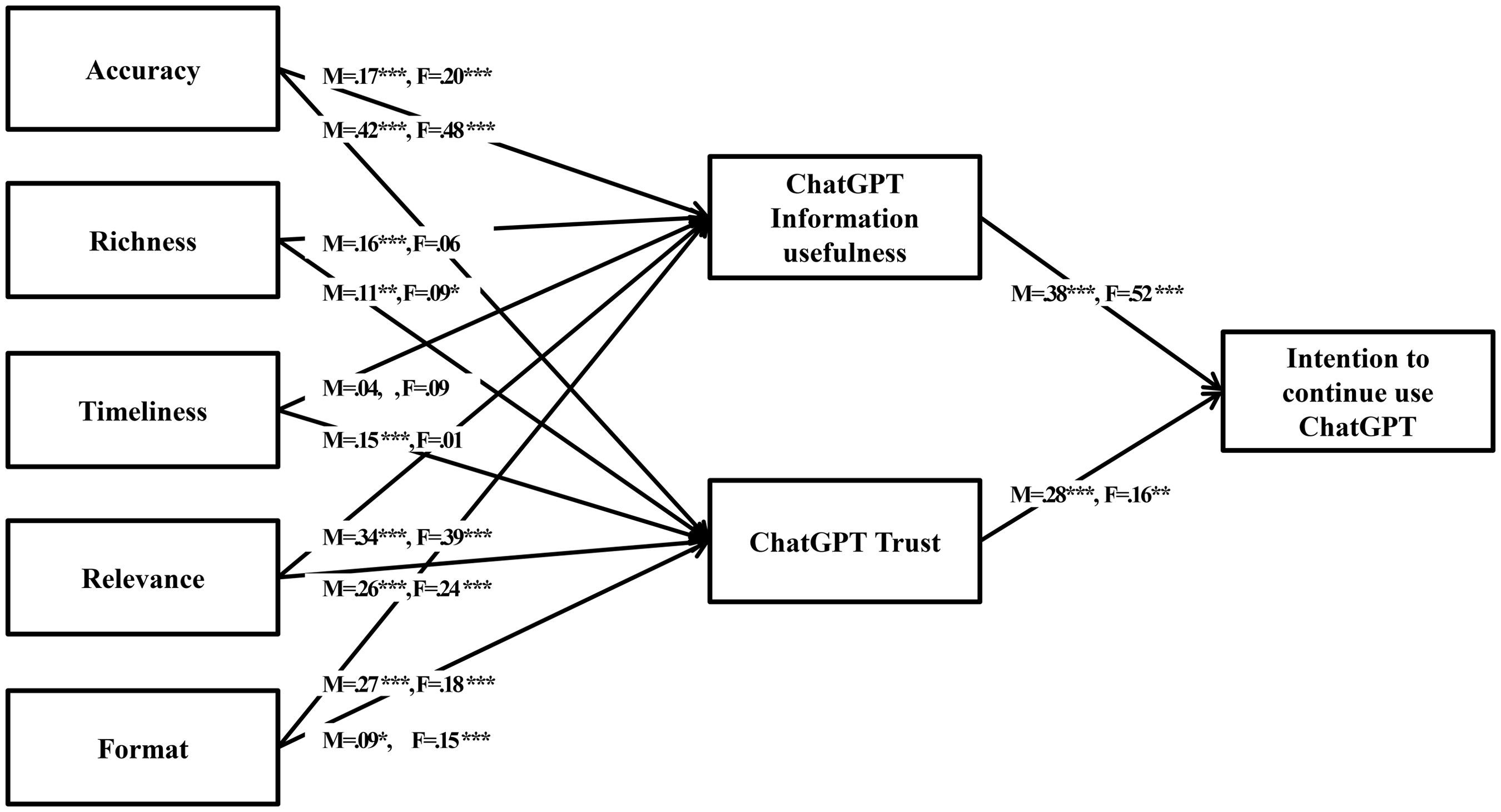
Path analysis depicting the relationship between information quality, source trust, information usefulness and continuance usage intention across gender.
Male users’ perceptions of source trust were significantly influenced by all the information quality dimensions: accuracy, richness, timeliness, relevance, and format (β = .42, SE = .03, p < .001; β = .11, SE = .05, p < .01; β = .15, SE = .03, p < .001; β = .26, SE = .05, p < .001; and β = .09, SE = .04, p < .05, respectively). However, for female users, all the dimensions except timeliness (β = .01, p = .777) significantly affected source trust (β = .48, SE = .04, p < .001; β = .09, SE = .05, p < .05; β = .24, SE = .05, p < .001; and β = .15, SE = .05, p < .001 for accuracy, richness, relevance, and format, respectively).
Both gender groups displayed a significant positive relationship between information usefulness and continuous usage intention (β = .38, SE = .06 for males, β = .52, SE = .06 for females, p < .001). Similarly, source trust significantly influenced continuous usage intention for both males and females (β = .28, SE = .06, p < .001; β = .16, SE = .05, p < .01, respectively).
Age differences
We divided the sample into younger and pre-midlife (age < 39.61 years, n = 381) and midlife and older adults (age ≥ 39.61 years, n = 320) groups based on participants’ mean age (39.61 years). As illustrated in Figure 4, for younger and pre-midlife adults, the accuracy, richness, relevance, and format of information (β = .22, SE = .04, p < .001; β = .10, SE = .05, p < .05; β = .37, SE = .05, p < .001; and β = .21, SE = .05, p < .001, respectively) significantly influenced information usefulness, whereas timeliness had no significant effect (β = .03, p = .428). For midlife and older adults, all dimensions except accuracy (β = .08, p = .111) significantly affected information usefulness (β = .14, SE = .05, p < .01; β = .14, SE = .04, p < .01; β = .37, SE = .05, p < .001; and β = .24, SE= .05, p < .001 for richness, timeliness, relevance, and format, respectively).
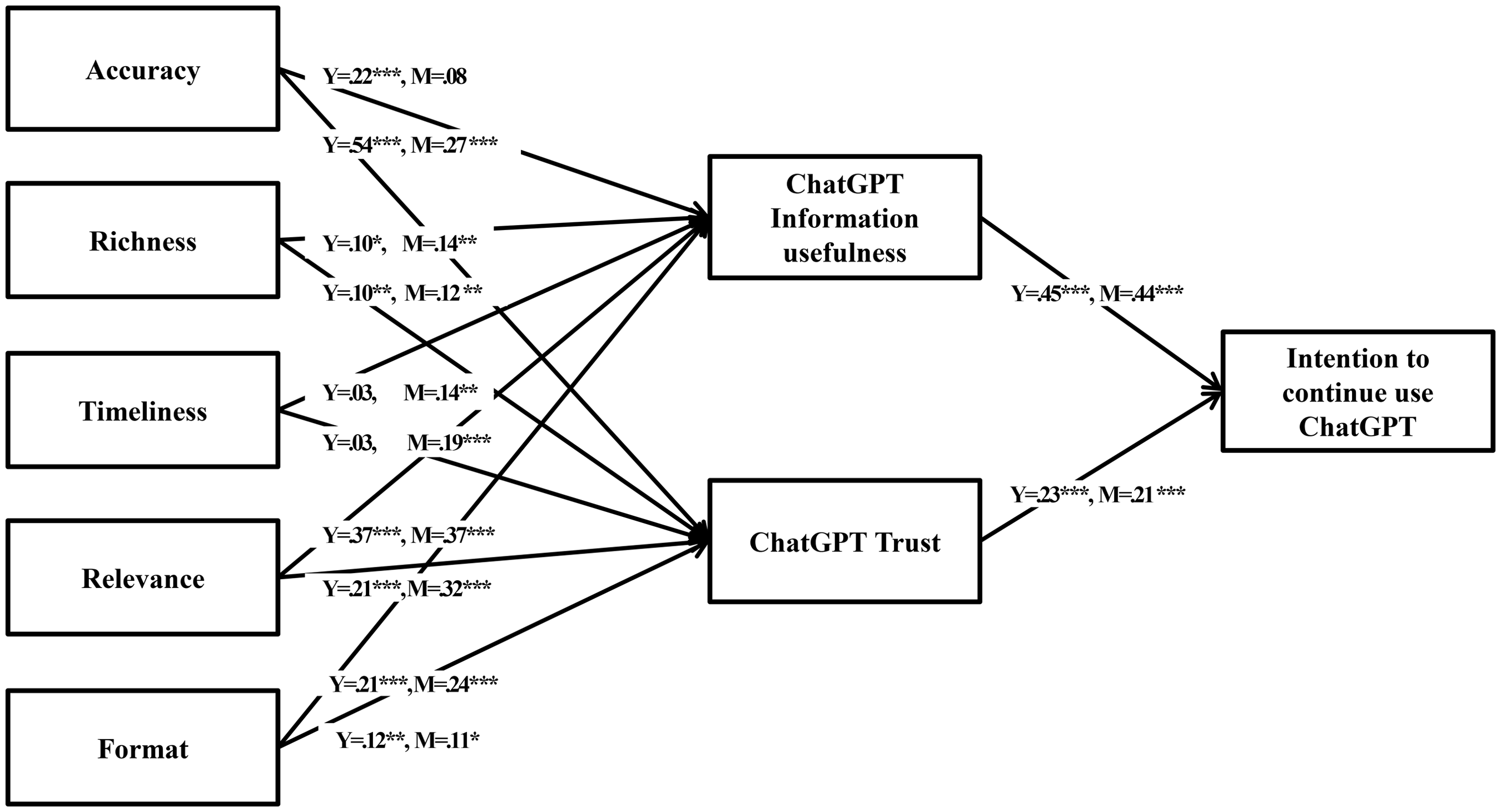
Path analysis depicting the relationship between information quality, source trust, information usefulness and continuance usage intention across age.
Regarding source trust, younger and pre-midlife adults’ perceptions were significantly influenced by all dimensions except timeliness (β = .03, p = .484), with accuracy, richness, relevance, and format having the values β = .54, SE = .03, p < .001; β = .10, SE = .05, p < .01; β = .21, SE = .05, p < .001; and β = .12, SE = .05, p < .01, respectively. For midlife and older adults, all the information quality dimensions showed significant positive effects: β = .27, SE = .04, p < .001; β = .12, SE = .05; p < .01; β = .19, SE = .04, p < .001; β = .32, SE = .05, p < .001; and β = .11, SE = .05, p < .05 for accuracy, richness, timeliness, relevance, and format, respectively.
Similar to the gender groups, both age groups displayed a significant positive relationship between information usefulness and continuous usage intention (β = .45, SE = .06 for younger and pre-midlife adults and β = .44, SE = .07 for midlife and older adults, p < .001). Moreover, source trust significantly influenced continuous usage intention in both the age groups (β = .23, SE = .05 for younger and pre-midlife adults and β = .21, SE = .06 for midlife and older adults, p < .001).
Discussion
This study explored how information quality attributes enhance user perceptions of information usefulness and source trust in the context of ChatGPT. Additionally, it investigated the role of information usefulness and source trust in explaining users’ intention to continue using ChatGPT. First, the present study found that certain information quality attributes, namely, accuracy, richness, timeliness, format, and relevance, were positively associated with perceived information usefulness. These findings are similar to those of previous studies that demonstrated a positive link between credibility, richness, timeliness, format, information relevance, and information usefulness (Cheung, 2014; Cheung et al., 2008; Cheung and Thadani, 2012; Hajli, 2018; Shen et al., 2013; Zwijnenberg et al., 2012). When ChatGPT provides an accurate, up-to-date, and sufficiently large amount of well-presented and relevant information, users can avoid misinformation, reduce search costs, and obtain sufficient information quickly and easily to meet their needs (Filieri and McLeay, 2014; Lee et al., 2002; Matute et al., 2016; Shen et al., 2013), therefore, they evaluate ChatGPT-generated information as useful.
Second, the current study found that similar to the results concerning information usefulness, the information quality attributes of accuracy, richness, timeliness, format, and relevance significantly impacted ChatGPT trust. These results are similar to the findings of previous research that demonstrated that information quality, including the relevance of information and a wide variety of topics, is positively associated with trust in information sources (Sillence et al., 2007; Zahedi and Song, 2008). This suggests that when ChatGPT provides accurate, up-to-date, rich, well-presented (in format), and relevant information, users consider the platform’ as having expertise and value and start trusting it. However, ChatGPT occasionally generates incorrect or misleading information (Choudhury and Shamszare, 2023; Kim et al., 2023). Our findings reflect users’ perceptions of ChatGPT's accuracy rather than objective measures of its accuracy, suggesting that users’ trust in ChatGPT is likely influenced more by their subjective rather than objective assessment of its accuracy. In other words, users’ trust in ChatGPT may increase when they receive high-quality information that satisfies their needs, despite the occasional occurrence of inaccuracies. Therefore, the critical evaluation of the information generated by AI tools such as ChatGPT is necessary. Further, the relative importance of information quality attributes differed between usefulness and source trust. Relevance emerged as the most influential factor for information usefulness, followed by format, whereas accuracy played a primary role in fostering trust. These differences indicate that when prioritizing information that directly satisfies their needs in determining usefulness, users rely on accuracy as the primary determinant of the platform's trust.
Third, this study found that the usefulness of ChatGPT information was positively linked to the continued usage of ChatGPT. This finding is similar to those of chatbot-related studies, which showed that perceived usefulness is positively linked to chatbots’ continuous usage intention (Ashfaq et al., 2020; Lee et al., 2023). One plausible explanation is that users who find ChatGPT-generated information useful are more inclined to recognize its value in enhancing productivity, ultimately leading to a stronger desire to continue using the platform.
Fourth, the current study found that ChatGPT trust was positively linked to continued ChatGPT usage. This result is consistent with the findings of a previous study that ChatGPT trust is positively linked to the intention to use it (Choudhury and Shamszare, 2023). A plausible explanation is that when users have high trust in ChatGPT, they are likely to intend to continue using it because trust reduces the ambiguity and uncertainty related to technology use (Shen et al., 2013).
Finally, although additional analyses of sex and age differences revealed similar patterns overall, subtle differences were observed in how information quality attributes influenced usefulness and trust. Both usefulness and trust consistently predicted continuance of usage intention across the sex and age groups. However, the impact of information quality attributes on usefulness and trust varied depending on user demographics, with certain dimensions being more influential or having no impact on certain groups. This suggests that users’ perceptions and evaluations of AI-generated content may be influenced by demographic factors, which cause differences in their responses to information quality attributes.
Implications
This study contributes to the existing literature in several significant ways. Although previous research explored the continuous use of ChatGPT (Niu and Mvondo, 2024; Pham et al., 2024) and highlighted the importance of information quality in online IS and chatbots (Luo et al., 2018; Peng et al., 2016), the specific relationship between these factors in the context of ChatGPT remains largely unexplored. Grounded in the IAM and IS Continuance Model and incorporating the concept of trust, this research addressed this gap by constructing a comprehensive research model focusing on information quality attributes, information usefulness, source trust, and the intention to continue using ChatGPT. This study provides novel insights into users’ evaluation of and continuous engagement with AI-generated content.
Additionally, this study extends previous research on information quality by decomposing it into specific attributes rather than treating it as a unified construct, as commonly done in prior studies (e.g. Erkan and Evans, 2016; Salehi-Esfahani et al., 2016; Sussman and Siegal, 2003). Our findings reveal that accuracy, richness, timeliness, format, and relevance independently affect both information usefulness and source trust in ChatGPT usage. Specifically, information quality attributes have differential effects on ChatGPT use: Whereas relevance and format showed stronger associations with information usefulness, accuracy substantially affected ChatGPT trust. Additionally, accuracy and relevance were more influential than timeliness and richness in shaping users’ perceptions of information usefulness. These findings suggest that users evaluate AI-generated content using different criteria compared to human-generated content.
Moreover, this study demonstrated that both information usefulness and source trust act as crucial intrinsic motivators for ChatGPT's continued use. While previous research has established the importance of these factors in various technological contexts such as mobile commerce, online communities, and e-government systems (Ashfaq et al., 2020; Chong, 2013; Hooda et al., 2022), our findings extend this understanding to the emerging context of generative AI. Furthermore, we identify two variables that may serve as mechanisms by which information quality attributes influence continuance intention. Specifically, information quality characteristics (accuracy, richness, relevance, format, and timeliness) affect users’ continuance intention through two mediating pathways: perceived information usefulness and source trust. These findings offer theoretical insights into how different quality attributes determine usage behavior in AI contexts and clarify the underlying mechanisms that drive continuous usage intention.
Further, our study contributes to the literature by examining the demographic differences in ChatGPT usage through a multigroup analysis. Results reveal varying effects of information quality attributes on information usefulness and source trust across gender and age groups, suggesting that different demographic groups may prioritize different aspects of information quality in ChatGPT output evaluations. This finding enhances our understanding of how individual differences influence the relationship between information quality attributes and user perceptions in AI-powered systems.
The findings of the current study have several valuable practical implications. Our research indicates that improving information quality attributes—particularly accuracy, richness, timeliness, format, and relevance—is crucial to enhancing both information usefulness and source trust. To achieve this, developers and designers should implement advanced natural language processing techniques, frequently update the knowledge base, and customize responses that align with user queries. Additionally, our findings suggest the importance of investing in user education programs. These programs should teach users how to formulate effective prompts, interpret and verify responses, and understand the strengths and limitations of the system. This study also highlights the importance of enhancing ChatGPT's perceived usefulness. Providing tailored responses can help meet user expectations, fostering positive attitudes and encouraging ongoing engagement with the platform. Moreover, building ChatGPT trust is necessary to support continuous use. Developers can consider implementing features that address potential user concerns regarding AI credibility. Furthermore, the findings from our multigroup analysis underscore the importance of tailoring ChatGPT's interface and responses to the preferences of different demographic groups. By adapting features to ensure their alignment with the unique needs of various user demographics, ChatGPT can improve its overall appeal and effectiveness across diverse audiences.
Limitations and future research
This study has some limitations. Firstly, it did not consider user satisfaction, a construct that is central to IS continuance research (Bhattacherjee, 2001). Whereas studies such as those by Ashfaq et al. (2020) consider satisfaction as a variable mediating information quality and continuance intention, this study examined the distinct characteristics of generative AI, such as information usefulness and source trust. Future studies should investigate how satisfaction mediates these relationships in the ChatGPT usage context. Secondly, although the study considered a sample including a diverse group of participants, it conducted a relatively limited demographic analysis. Hence, future research should consider a broad range of demographics, including participants’ educational background, professional experience, and familiarity with AI tools, to better understand how these variables influence information quality and trust perceptions. This will provide a more comprehensive view of how different user characteristics affect interaction with generative AI. Thirdly, the reliance on self-reported measures for all variables probably introduced potential biases. Future studies should incorporate objective measures or behavioral data to complement self-reports and validate findings. Fourthly, it explored the influence of certain information quality attributes on the usefulness of ChatGPT-generated information and ChatGPT trust. Future research can investigate the impact of additional information quality attributes such as comprehensiveness or completeness, which have been shown to influence information usefulness in other contexts (Cheung and Thadani, 2012; Shen et al., 2013). Additionally, the constructs of information quality attributes addressed in this study may not capture all central and peripheral cues. Future research can explore additional cues, such as source credibility, system quality, or the perceived information strength (Han et al., 2018; Luo et al., 2018; Zheng et al., 2013). Moreover, considering the positive influence of information quality on user satisfaction, perceived playfulness, and flow factors known to influence continued usage intentions or post-adoption behaviors (Hsu et al., 2012; Petter et al., 2013)—and the impact of information source trust on actual use (Choudhury and Shamszare, 2023)—future studies should explore these variables to generalize the effects found in this study. Finally, with the advent of new generative AI platforms such as Gemini and Bing, comparative studies can yield valuable insights that enhance both theoretical understanding and practical applications.
Conclusions
This study examined how information quality attributes influence the usefulness of ChatGPT-generated information, trust in ChatGPT, and continuous usage intention toward ChatGPT. Our findings revealed that specific aspects of information quality, namely accuracy, richness, format, and relevance, are significant determinants of information usefulness and trust in this platform. Furthermore, our research confirmed that continuous usage intention is driven by the usefulness of the information provided and trust. This study makes valuable contributions to the field by expanding our understanding of the factors that drive information usefulness and source trust, ultimately leading to user retention for generative AI platforms such as ChatGPT.
Footnotes
Declaration of conflicting interests
The authors declared no potential conflicts of interest with respect to the research, authorship, and/or publication of this article.
Funding
The authors received no financial support for the research, authorship, and/or publication of this article.
