







Abstract
In order to enhance the photocatalytic performance of the Cu2ZnSnS4 compound, an ionic substitution strategy was employed to partially and completely substitute Zn2+ with Cr3+ ions using the solvothermal method. The structural analysis reveals that partial substitution significantly improves the crystallite lattice order without disturbing the kesterite crystal structure, confirming the successful incorporation of chromium into the lattice. Morphological investigations imply the formation of spherically aggregated nanorods-like, which efficiently arise the lively surface area, at the same time as EDS analysis confirms a homogeneous elemental distribution without the formation of secondary phases. Upon comparing the photocatalytic performance of all synthesized compounds using methylene blue dye as a version pollutant, the Cu2Zn0.5Cr0.5SnS4 compound showed the highest degradation efficiency of about 93% within 120 min in visible light irradiation. This more desirable overall performance is attributed to the synergistic outcomes of advanced crystallinity, changed morphology, and enhanced light absorption caused by partial Cr3 substitution. These consequences exhibit that managed ionic substitution represents an effective approach for tailoring the structural and photocatalytic residences of the Cu2ZnSnS4 compound-primarily based substances for environmental remediation packages.
Keywords
Introduction
In recent years, semiconductor nanomaterials have gained widespread attention as they play an important role in combating environmental pollution and in clean and sustainable energy technologies. Therefore, the Cu2ZnSnS4 (CZTS) kesterite structure compound has emerged as a promising candidate thanks to its suitable structural and optical properties, including having a direct optical energy gap of approximately 1.4–1.6 eV and a high absorption coefficient of approximately 10−5 cm−1 within the visible light range.1,2 In addition to these essential properties that this compound possesses, the chemical elements (Cu, Zn, Sn and S) that make it up are abundant elements in the Earth's crust, low cost, and environmentally friendly, which makes this compound particularly important in the field of energy and the environment. 3 Initially, the compound CZTS was used as a light-absorbing layer in thin-film solar cells in the early 1990s, and serious research interest in the compound crystallized after 2007. Applied studies have shown the ability of the compound as a competitive alternative to the Cu(In,Ga)Se4 (CIGS) compound for reducing rare and toxic elements such as indium and selenium. 4 With the increase and development of research, it was found that the CZTS compound can contribute as a photocatalyst in the field of environmental treatment, especially in the decomposition of organic pollutants in an aqueous medium under the influence of sunlight, since the CZTS compound has the ability to form electron-hole pairs with high efficiency, which in turn improves the photocatalytic process.5,6 Despite these advantages, the CZTS compound suffers from some problems that limit the efficiency of photocatalysis. The most prominent of these problems are crystal defects, meaning cationic disturbance between the Cu+ and Zn2+ ions, in addition to the stress of the crystal lattice. These defects reduce the efficiency of charge separation, as they act as centers for reorienting charge carriers, which limits the overall catalytic performance. 7 Therefore, it is necessary to propose several strategies to improve the performance of the compound. Among these strategies are doping and ionic substitution with transition elements, with the aim of modifying the crystal structure and the electronic and optical properties of the compound. Recent studies have shown that ionic substitution in the crystal lattice of the CZTS compound significantly affects the degree of crystal regularity, energy gap, and charge carrier dynamics, which leads to improved functional properties of the material.8–11 Therefore, partial and total substitution at the Zn2+ ion site is of great importance as it contributes to reducing cationic disorder and modifying the electronic structure, which in turn improves the photo-absorption properties. The compatibility of the ionic radius and electron configuration of chromium(III) ions with zinc(II) ions contributes to the introduction of energy levels and narrows the energy gap, thereby enhancing charge separation. This, in turn, improves photocatalytic efficiency without causing the formation of undesirable secondary phases. In this context, the present manuscript aims to investigate the effect of ion substitution between Zn2+ ions and Cr3+ ions in the Cu2ZnSnS4 kesterite compound prepared by the solvothermal method. Three compounds were prepared: the first, Cu2ZnSnS4 (pure sample); the second, Cu2Zn0.5Cr0.5SnS4 with 50% partial substitution; and the third, Cu2CrSnS4 with 100% complete substitution. These compounds were studied in terms of their crystallite structure, morphology, elemental composition, and optical properties, as well as their performance as photocatalysts in the analysis of methylene blue dye as a model for organic pollutants in photocatalytic processes. To the best of our knowledge, this manuscript presents the first systematic and comparative investigation of partial and total substitution, demonstrating a clear correlation between changes in crystal structure, morphological evolution, energy gap tuning, and photocatalytic performance. The results highlight the crucial role of partial substitution in achieving a significant improvement in photocatalytic efficiency, providing new scientific insights for the design of highly efficient kesterite nanomaterials in photocatalytic and energy applications.
Materials and methods
Synthesis of the samples
Cu2ZnSnS4, Cu2CrSnS4 and Cu2(Zn0.5Cr0.5)SnS4 compounds were synthesized by using a solvothermal method in ethylene glycol (EG). In each synthesis, CuCl2, ZnCl2, CrCl3, SnCl2 and Thiourea (CH4N2S) were dissolved under stoichiometric conditions in 50 mL of ethylene glycol, in the presence of 0.64 g of polyvioletpirolidone (PVP), which acted as a surfactant and stabilizing agent. The PVP material was added gradually with continuous stirring to ensure homogeneous dispersion and effective particle stabilization. For Cu2ZnSnS4 samples, the elemental precursors were introduced in the following molar ratios: 28.3% Cu2+, 14.4% Zn2+, 20.0% Sn2+ and 37.3% S2−. For the completely Cr-substituted Cu2CrSnS4 sample, the precursor solution was composed of 26.6% Cu2+, 24.4% Cr3+, 26.6% Sn2+ and 22.4% S2−. The partially substituted Cu2(Zn0.5Cr0.5)SnS4 sample included 29.5% Cu2+, 14.2% Zn2+, 12.8% Cr3+, 20.8% Sn2+ and 22.7% S2− in the molar composition. This relative ratio ensured appropriate cationic stoichiometry in the final quadrilateral sulphide material. Homogeneous solutions were magnetically stirred for 30 min at room temperature to ensure complete dissolution and uniform mixing. The resulting solutions were then transferred into Teflon-lined stainless steel autoclaves with a filling degree of approximately 80% of the total volume. The autoclaves were sealed and subjected to solvothermal treatment at 220°C for 15 h. After natural cooling to room temperature, the resulting precipitates were collected by centrifugation, washed thoroughly several times with ethanol and DI water to remove unreacted precursors and residual organic species, and then dried at temperatures 100°C for 3 h. No additional annealing or calcination process was applied. The procedure yielded fine nanocrystalline powders of Cu2ZnSnS4, Cu2CrSnS4, and Cu2(Zn0.5Cr0.5)SnS4, respectively. This controlled solvothermal synthesis enabled the formation of high-purity kesterite-phase nanoparticles.
Photocatalytic activity evaluation
The synthesized Cu2ZnSnS4, Cu2CrSnS4, and Cu2(Zn0.5Cr0.5)SnS4 compounds were used as photocatalysts in evaluating the photocatalytic performance using methylene blue (MB) dye as a pollutant under visible light irradiation. In the first step, 50 mg of the catalyst was dispersed in 100 mL of the dye solution prepared at a concentration of 10 mg/L. Then the solution was placed on a magnetic stirrer for 30 min in the dark to achieve adsorption–desorption equilibrium between the dye molecules and the catalyst surface, ensuring that initial adsorption does not affect photocatalytic results. In the second step, a 300-Watt xenon lamp with a visible light cut-off filter (λ > 420 nm) was used, positioned at a fixed distance to ensure uniform illumination of the entire solution. The third step involves the photocatalytic process. In this process, 5 mL of the solution is taken and exposed to light for 30 min. After that, the solution is subjected to centrifugation to remove the photocatalyst particles. Then, the absorption spectrum of the remaining dye is recorded using a UV-visible spectrometer. This procedure is repeated every 30 min for up to 120 min, and the decrease in the dye absorption intensity is monitored to evaluate the photocatalytic efficiency over time.
Characterization
In order to understand the structural, optical and morphological properties of the prepared compounds, a comprehensive set of physical and chemical characterization techniques was carried out, where the crystal structure of the samples was analysed using XRD technique with Cu-Kα radiation wavelength of 1.5406 Å operating at 45KV and current 40 mA over a 2θ range of 10–80° with a step size of 0.001°. The scanning electron microscope FESEM (Zeiss, PIJMA-VP) was also used to analyse the surface morphology and particle shape. To confirm the existence of elements and the success of partial and complete ionic replacement without the formation of undesired phases, elemental composition analysis EDS was used to support the FESEM results. Tuck-plot curves were used to calculate the energy gap, and UV-Vis absorption spectroscopy (Shimadzu UV-1800) was used to determine the absorption spectra and analyse the optical properties. Lastly, by analysing the methylene blue dye degradation efficiency under visible light (300-W xenon lamp equipped with a visible light cut-off filter λ > 420 nm), comparing the performance over time, and comparing the results with the crystal structure, energy gap, morphology, and elemental distribution, the photocatalytic activity of the three samples was assessed.
Results and discussion
Impact of Zn/Cr substitution on the crystal structure and micro strain of Cu2ZnSnS4 nanoparticles
In order to study the crystal structure of the Cu2ZnSnS4, Cu2CrSnS4, and Cu2(Zn0.5Cr0.5)SnS4 compounds, X-ray diffraction (XRD) pattern was used as shown in Figure 1. The crystallographic parameters were extracted from the XRD patterns and are summarized in Table 1. The results showed that all compounds crystalize in the kesterite phase, indicating the structural stability of the crystal lattice and its preservation even after partial and complete ionic substitution. However, a noticeable contraction of the crystal lattice is evidenced by a clear shift of the dominant diffraction peak (112) towards the higher angles upon partial and complete replacement of the zinc ion and the chromium ion. Specifically, The (112) peak shift from 28.45° for the Cu2ZnSnS4 compound to 29.15° for Cu2CrSnS4 compound and to an intermediate position at 28.81° for the Cu2(Zn0.5Cr0.5)SnS4. This shift indicates a reduction in the inter-planar spacing according to Bragg's law, 12 indicating the shrinkage and contraction in the crystal lattice by the incorporation of ions with a smaller ionic radius.13–15 In the case of partial substitution, as in the Cu2(Zn0.5Cr0.5)SnS4 compound, the intermediate position of the (112) peak suggests effective co-incorporation and structural compatibility of zinc and chromium ions within the crystal lattice. Additional evidence of lattice contraction is provided by the variation in lattice constants. 16 A clear decrease in the lattice constant “a” is observed, decreasing from 5.653 Å for the Cu2ZnSnS4 compound to 5.339 Å for the Cu2CrSnS4 compound, while an intermediate value of 5.384 Å is obtained for the Cu2(Zn0.5Cr0.5)SnS4 compound.
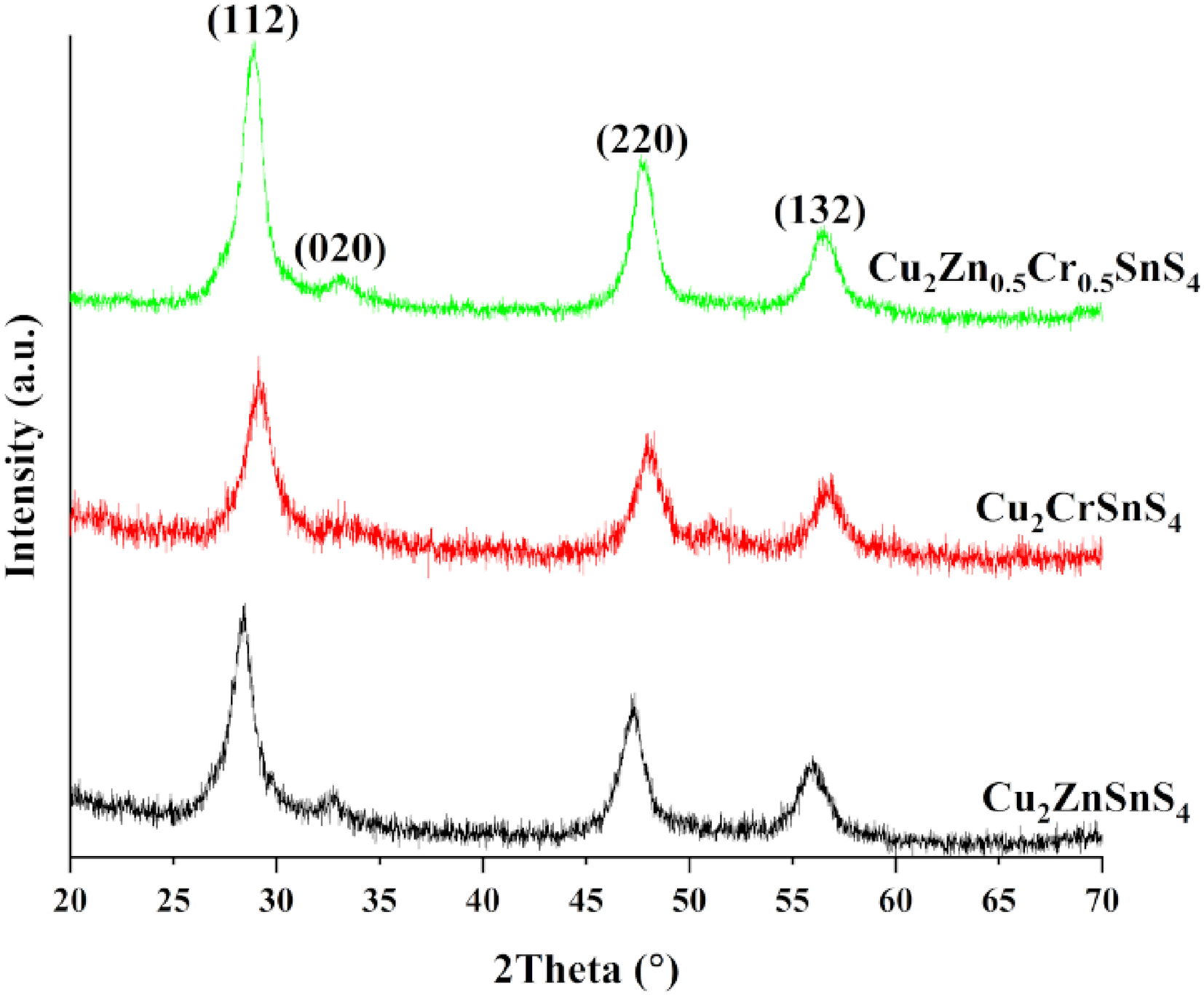
XRD pattern of the Cu2ZnSnS4, Cu2CrSnS4 and Cu2(Zn0.5Cr0.5)SnS4 compounds.
Crystallite parameters of the Cu2ZnSnS4, Cu2CrSnS4 and Cu2(Zn0.5Cr0.5)SnS4 compounds

This reflects the presence of a gradual shrinkage in the crystal lattice dimensions. 17 On the other hand, the observed changes in the lattice constant “c” are relatively minor compared to those of the lattice constant “a”, indicating that the lattice distortion and contraction are predominantly concentrated within the basal plane. Such anisotropic lattice contraction suggests that Cr3+ substitution mainly affects the in-plane atomic arrangement of the kesterite structure rather than the c-axis direction. Moreover, crystal lattice distortion and cation disorder are known to significantly influence crystallite size and strain. 18 Accordingly, a slight reduction in crystallite size was observed, deceasing from 45 Å for the Cu2ZnSnS4 compound to 42 Å for the Cu2CrSnS4 compound, which can be attributed to enhanced lattice distortion and the increased density of structural defects induced by complete Cr substitution.
On the contrary, it was observed that partial replacement significantly enhances crystallization and improves the overall crystallinity of the kesterite structure. The Cu2(Zn0.5Cr0.5)SnS4 compound showed an increase in crystallite size to 51 Å, indicating a reduction in local lattice stress and an improvement in structural ordering. 19 This suggests that partial Cr3+ incorporation plays stabilizing role excessive distortions. Furthermore, partial replacement was found to reduce lattice strain to 3.01359 in the Cu2(Zn0.5Cr0.5)SnS4 compound, confirming the relaxation of internal stresses. Conversely, the large variation in ionic radii and oxidation states of Zn2+ and Cr3+ ions led to increased lattice distortion upon complete substitution, 20 resulting in a rise in crystal strain from 3.5171 in Cu2ZnSnS4 to 3.6506 in Cu2CrSnS4. The disorder coefficient (η=c/2a) is an important criterion for assessing structural stability, reflecting the degree of order in the crystal structure of the kesterite. Values close to one indicate improved Cu/Zn arrangement and structural stability, while any deviation from this value indicates increased cation disorder or lattice distortion within the kesterite framework. In the kesterite-structure, the disorder coefficient approaches unity, which represents a perfect crystal lattice, and any deviation in this value indicates cationic disorder such as antisite defects Cu+/Zn2+. As summarized in Table 1 the disorder coefficient was increased from 0.9319 in the Cu2ZnSnS4 compound to 0.9713 in the Cu2CrSnS4 compound and to 0.9881 in the Cu2(Zn0.5Cr0.5)SnS4 compound. Therefore, this gradual increase towards unity indicates a gradual decrease in the disorder of the Cu/Zn cations and an improvement in the structural arrangement when chromium ions are incorporated, particularly when there is partial substitution in the Cu2(Zn0.5Cr0.5)SnS4 compound. This trend is consistent with the increase in crystal size and the decrease in microstrain, which confirms that partial ion substitution provides a better balance between crystal lattice distortion and structural arrangement. According to these results, the increase in the disorder coefficient towards unity as a result of the ion substitution between zinc and chromium ions indicates an improvement in the regularity of the crystal lattice accompanied by a decrease in Cu/Zn-type disorder, especially in the partially substituted Cu2Zn0.5Cr0.5SnS4 compound. This type of cation disorder or lattice distortion affects the local symmetry, internal electric fields, and even the optical and electronic properties of the material. 21 The complete and partial replacement of zinc ions (Zn2+) with chromium ions (Cr3+) showed a significant decrease in the unit cell volume, decreasing from 336.72 Å3 for Cu2ZnSnS4 to 298.11 Å3 for Cu2CrSnS4 and 308.51 Å3 for Cu2(Zn0.5Cr0.5)SnS4. This decrease may be attributed to the smaller ionic radius of chromium (Cr3+) compared to zinc (Zn2+), supporting the previous conclusion regarding crystal shrinkage or lattice distortion.15,17,20 Although the difference in electronegativity between Zn and Cr is relatively small, the possible variation in oxidation state and bonding environment can alter the strength and nature of metal-sulfur bonds, thereby influencing lattice disorder and internal stress. These effects are in good agreement with the observed trends in crystallite size, strain, and disorder coefficient discussed earlier. It is observed that there are significant modifications in the crystal structure, such as lattice shrinkage, changes in internal stress, and cation arrangement resulting from partial and complete substitution between zinc and chromium ions. Partial substitution exhibits a better balance between crystal arrangement and lattice distortion, which is highly beneficial for modifying the structural and physical properties of kesterite-based materials. Complete substitution, on the other hand, results in lattice shrinkage due to the difference in ionic radii between zinc and chromium. Therefore, it can be said that partial ionic substitution improves crystal symmetry, which promotes crystallization and reduces crystal disorder.
Morphology and surface analysis
To analyze the morphology of the prepared compounds, FESEM images were used, as shown in Figure 2. The images reveal that the Cu2ZnSnS4 compound consists of uniformly sized, homogeneously distributed spherical nanoparticles. This reflects stable preparation conditions and crystal growth as in the previous reports on the Cu2ZnSnS4 particles.22–24 Although quantitative assessment such as BET analysis would be required to accurately determine the surface area, this suggests a potentially higher qualitative surface area due to the formation of rod-like aggregated nanostructures. This shape is generally favorable for providing a moderate specific surface area, however, it may suffer from partial compaction and aggregation which can reduce the number of accessible active sites available for photocatalytic reactions. Upon complete replacement of Zn2+ by Cr3+, as observed in the Cu2CrSnS4 compound, a significant alteration in particle morphology was detected. The particles exhibit a lumpy, irregular morphology with rough edges and high degree of agglomeration. Such morphological degradation can be attributed to the increased internal lattice stress and structural distortions, induced by full Cr incorporation, which the create of defects that interfere with uniform particle nucleation and growth processes.24–26 Furthermore, the difference in ionic charge and oxidation state between Zn2+ and Cr3+ can significantly influence crystallization kinetics, including nucleation rate and growth saturation, as reflected in the structural parameters presented in Table 1. These factors collectively disrupt the regular growth of crystallites, ultimately leading to poor morphological uniformity and enhanced particle aggregation, which may be negatively affect the photocatalytic efficiency of the fully substituted compound. 27 For the purpose of conducting a quantitative morphological analysis between the three compounds, ImageJ software was used based on several images from FESEM. The nanoparticles in the compound Cu2ZnSnS4 exhibit a spherical morphology with a narrow size distribution, with an average nanoparticle diameter of 360 ± 30 nm based on a statistical analysis of a number of nanoparticles. The relatively high circularity values confirm the homogeneous spherical nature with a limited degree of agglomeration. In contrast, partial substitution, as in Cu2Zn0.5Cr0.5SnS4 compound, leads to a clear morphological shift towards a Rod-like structure accompanied by noticeable aggregation. Accordingly, two distinct size groups were adopted in the Cu2Zn0.5Cr0.5SnS4 sample: (i) Dimensions of a single, well-insulated nanorod, and (ii) Sizes of the rod-like clusters. The average size of the individual characteristic nanorods was 0.43 ± 0.08 µm, while the Feret diameter of the clustered regions was adopted, with the average cluster size being 0.90 ± 0.19 µm. When completely replaced with chromium, the degree of particle aggregation becomes more dominant, preventing reliable differentiation of individual nanoparticles. Accordingly, only aggregated clusters were adopted for the analysis of the nanoparticle morphology of the Cu2CrSnS4 sample, where the equivalent Feret diameter was determined to be 0.84 ± 0.36 µm, indicating a wide size distribution and a high degree of aggregation. In general, based on these results, it appears that the growth pattern of nanoparticles and their aggregation behavior are affected by increasing chromium content, leading to a gradual transition from dispersed spherical nanoparticles in the Cu2ZnSnS4 compound to highly aggregated structures, as in total substitution. Because of agglomeration and poor dispersion, this crystalline structure may result in a lower effective surface area, which could lower the photocatalytic efficiency. On the other hand, it was observed that partial substitution has displayed a distinct hybrid morphology, as in the case of the Cu2(Zn0.5Cr0.5)SnS4 compound. Initially, the nanoparticles grew in short-nanorods and then aggregated into tightly spherical clusters.
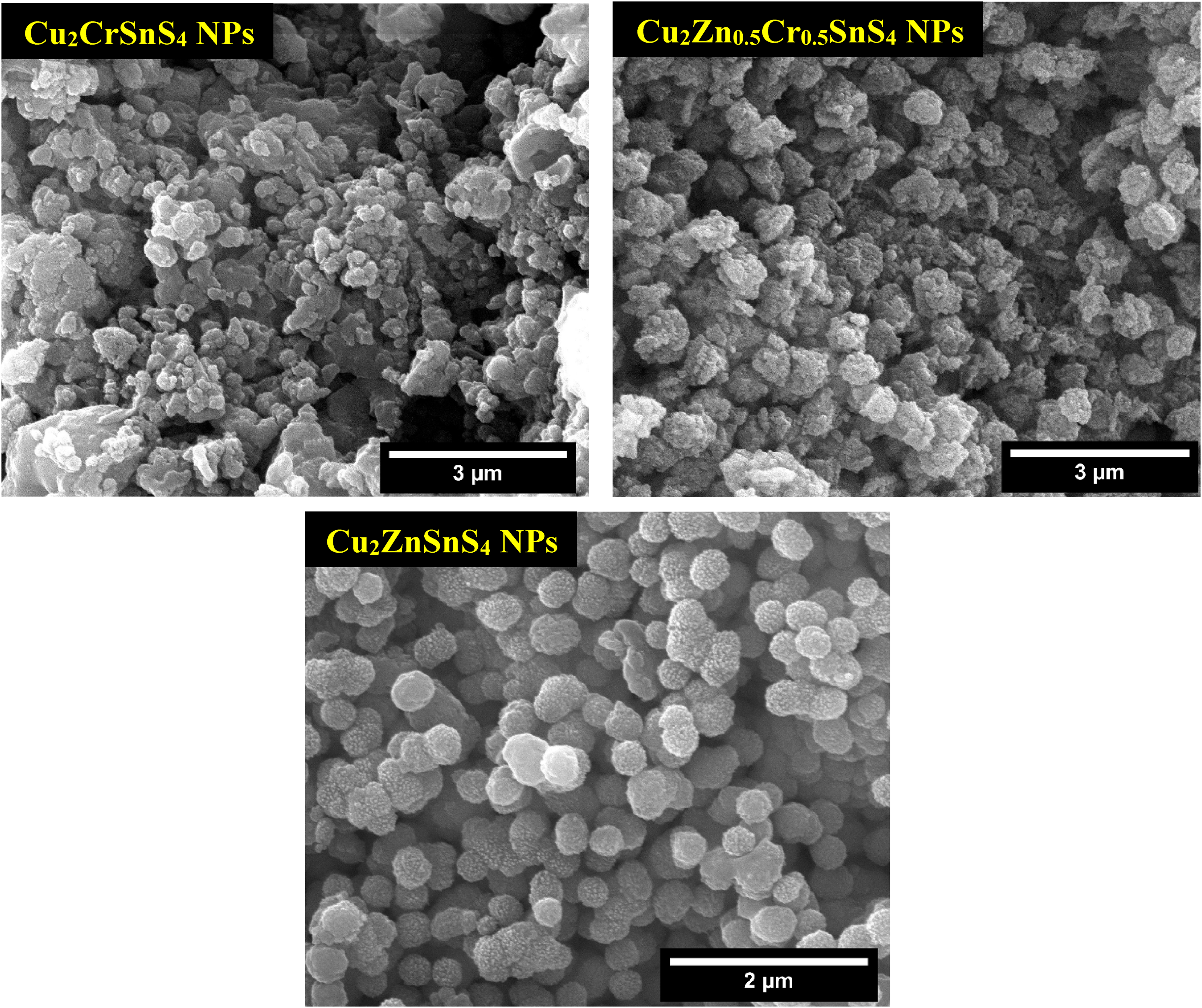
Morphology of the Cu2ZnSnS4, Cu2CrSnS4 and Cu2(Zn0.5Cr0.5)SnS4 nanoparticles.
This type of clustering can be described as spherically aggregated nanorods, which arises from a more balanced crystallization environment and a relatively homogenous partial distribution of chromium and zinc ions within the lattice. Such a hierarchical morphology provides an optimal balance between efficient axial charge transport along the nanorods and an increased active surface area resulting from spherical aggregation. which improves light absorption and lowers electron-hole recombination to produce good photocatalysis. Consequently, this structure enhances light absorption and suppresses electron-hole recombination, leading to improved photocatalytic performance. From a catalytic perspective, this morphology is particularly advantageous, as it facilitates charge separation, enhances electron transfer pathways, and increases the number of accessible active sites.24,26 In general, variations in crystal structure and growth kinetics are considered as the primary factor governing particle shape evolution. The substitution of chromium ions, which has a smaller ionic radius, with zinc, which has a larger ionic radius, may disturb the structural equilibrium of the kesterite lattice, thereby influencing nucleation and growth behavior. Additionally, the higher oxidation state of chromium introduces localized charge fields, which can inhibit uniform particle growth and promote anisotropic morphology formation. This process is also influenced by other variables, including temperature, growth rate, pH fluctuation of the solution, and the possible presence of residual ionic species. From a photocatalytic perspective, the Cu2(Zn0.5Cr0.5)SnS4 compound (partially substituted) exhibits the most favorable morphology, As the one dimensional nanorods enhance charge transport along their longitudinal axis, while the spherical aggregation promotes multiple light scattering and trapping effects, collectively resulting in superior photocatalytic efficiency.27–29 In this manuscript, the term “Nanoscale Strategy” refers to the control of nanoparticle morphology at the nanoscale using the Solvothermal method. Increasing the surface area-to-volume ratio during nanoparticle formation is accompanied by an increase in the number of active sites and a reduction in charge carrier transport distance. These nanoscale effects contribute to a decrease in electron-hole pair recombination, thus improving charge transport efficiency, which in turn enhances photocatalysis performance.
Optical properties analysis and energy gap measurement
The optical absorption spectrum using UV-Visible spectrum and energy gap analysis using the Tauc-plot method showed a clear change in the optical properties of the three compounds, Cu2ZnSnS4, Cu2CrSnS4 and Cu2(Zn0.5Cr0.5)SnS4 respectively, as illustrated in Figures 3 and 4. Although substitution with chromium ions may lead to the formation of intermediate energy levels that contribute to the separation of the generated electron-hole charges, the specific cycle of these levels was not quantitatively analyzed in the current study, as the study focused on the relationship between the introduction of chromium ions and the reduction of the energy gap and the improvement of nanoparticle morphology. It is noted that the optical absorption edge of the Cu2ZnSnS4 compound corresponds to a direct energy gap of about 1.57 eV, which lies within the optimal range for visible light absorption, and this observation is in good agreement with previously published values for kesterite Cu2ZnSnS4 compound. 30 Upon complete substitution of zinc with chromium ions, as in the Cu2CrSnS4 compound, the energy gap narrows to 1.49 eV, whereas partial substitution, as in the Cu2(Zn0.5Cr0.5)SnS4 compound, results in more pronounced reduction of the energy gap to 1.34 eV. This progressive energy gap narrowing by both complete and partial replacement can be attributed to the formation of additional localized electronic states near the conduction band due edge, arising from the difference in ionic charge, electronic configuration, and orbital hybridization between Zn2+ and Cr3+ ions. 17 These newly introduced energy states facilitate electronic transitions under visible light irradiation, thereby enhancing photon absorption and photocatalytic activity.
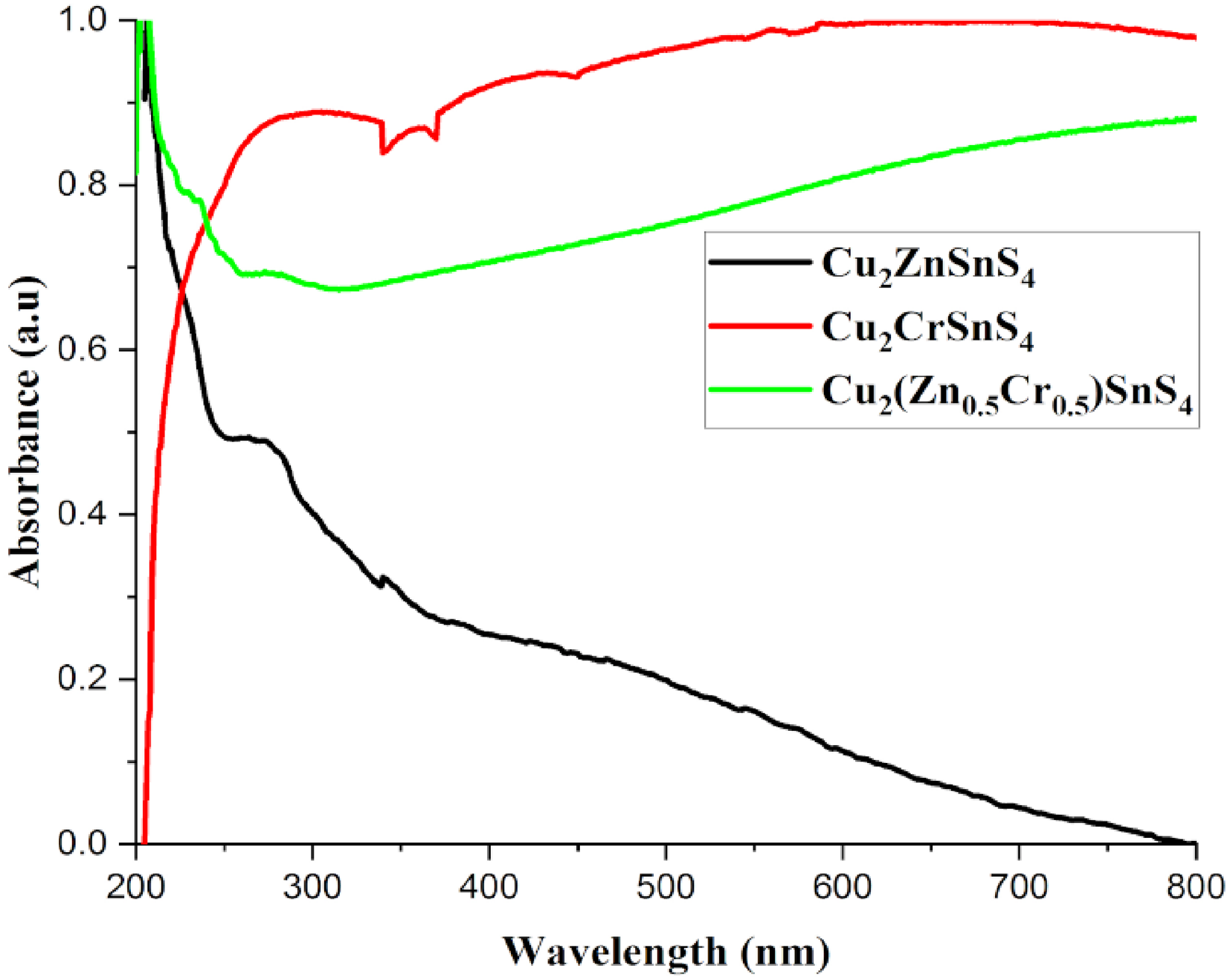
Absorption spectrum of the Cu2ZnSnS4, Cu2CrSnS4 and Cu2(Zn0.5Cr0.5)SnS4 compounds.
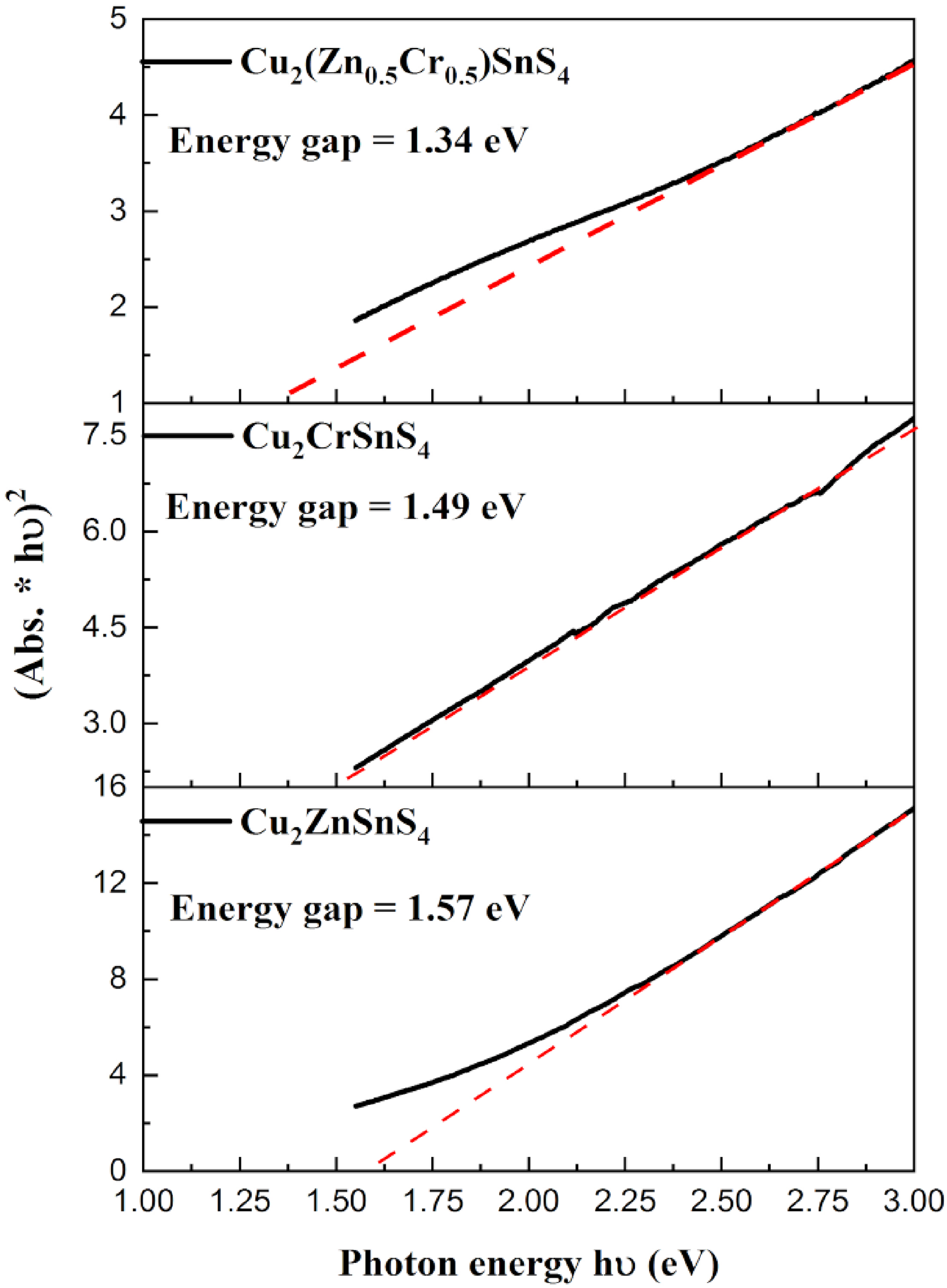
Energy bandgap of the Cu2ZnSnS4, Cu2CrSnS4 and Cu2(Zn0.5Cr0.5)SnS4 compounds.
Replacing chromium with zinc introduces 3d orbitals specific to Cr3+ ions. These orbitals actively participate in the electronic structure near the edge of the valence and conduction bands, resulting in a significant reduction in the energy gap. In contrast, Zn2+ ions which have completely filled orbitals, Cr3+ ions have partially filled orbitals leading to the creation of intermediate energy levels or enhancing hybridization p-d with sulfur orbitals S 3p, ultimately resulting in a narrowing of the energy gap. In addition to the increased lattice distortion induced by mismatch in ionic radii between the substituted ions, as observed by XRD analysis, the Cu2CrSnS4 compound shows a reduction in the crystal lattice constants accompanied by an increase in lattice strain. In Cu2CrSnS4, compound an increase in lattice distortion was observed due to the mismatch in ionic radii between the substituted ions, resulting in a decrease in lattice constants accompanied by an increase in lattice stress. The disorder coefficient also plays a crucial role in modifying the local electronic structure and energy levels, indicating a redistribution of cations within the crystal lattice.25,26 To ensure improved optical or photocatalytic performance, a low energy gap alone is insufficient, as seen in Cu2CrSnS4, compound which exhibits a narrower energy gap compared to Cu2ZnSnS4. A synergistic effect with a suitable nanoparticle morphology is also necessary. Therefore, the irregular and highly aggregated shape of Cu2CrSnS4 nanoparticles limits their light absorption and charge transport efficiency, thus hindering their photocatalytic performance. In contrast, the Cu2(Zn0.5Cr0.5)SnS4 compound combines a narrow energy gap with a well-defined morphology that provides a large active surface area and enhances light absorption through multiple nano-assemblies. The rod-like substructure of the nanoparticle morphology exhibits directed charge transport, effectively inhibiting electron-gap recombination, which ultimately leads to superior photocatalytic efficiency. 31 Therefore, it can be argued that partial chromium substitution is an effective strategy for adjusting the energy gap and also promotes consistent improvements in crystallinity, lattice stability, and morphology, thereby enhancing the photocatalytic performance of the kesterite-based nanomaterials.
Elemental composition and substitution verification
In order to study the elemental distribution and the effectiveness of Zn/Cr substitution in three compounds, EDS analysis was performed as shown in Figure 5. The EDS spectrum of the Cu2ZnSnS4 compound confirms the presence of its constituent elements (Cu, Zn, Sn and S) with atomic ratios close to the theoretical stoichiometric values, indicating successful synthesis. The corresponding elemental mapping reveal a uniform spatial distribution of all elements, which reflects good compositional homogeneity and structural stability of the kesterite phase. When zinc is completely replaced by chromium, as in the Cu2CrSnS4 compound, the EDS spectrum clearly shows the appearance of Cr signals and the absence of Zn, confirming the effectiveness of the complete substitution. In addition, the elemental distribution maps demonstrate that Cu, Cr, Sn, and S are homogeneously distributed throughout the sample, suggesting the successful incorporation of chromium into the crystal lattice without noticeable segregation or clustering. Despite the overall uniform elemental distribution, differences in oxidation states and local atomic lattice strain may still lead to the formation of internal lattice distortions, as observed and discussed in the XRD analysis.
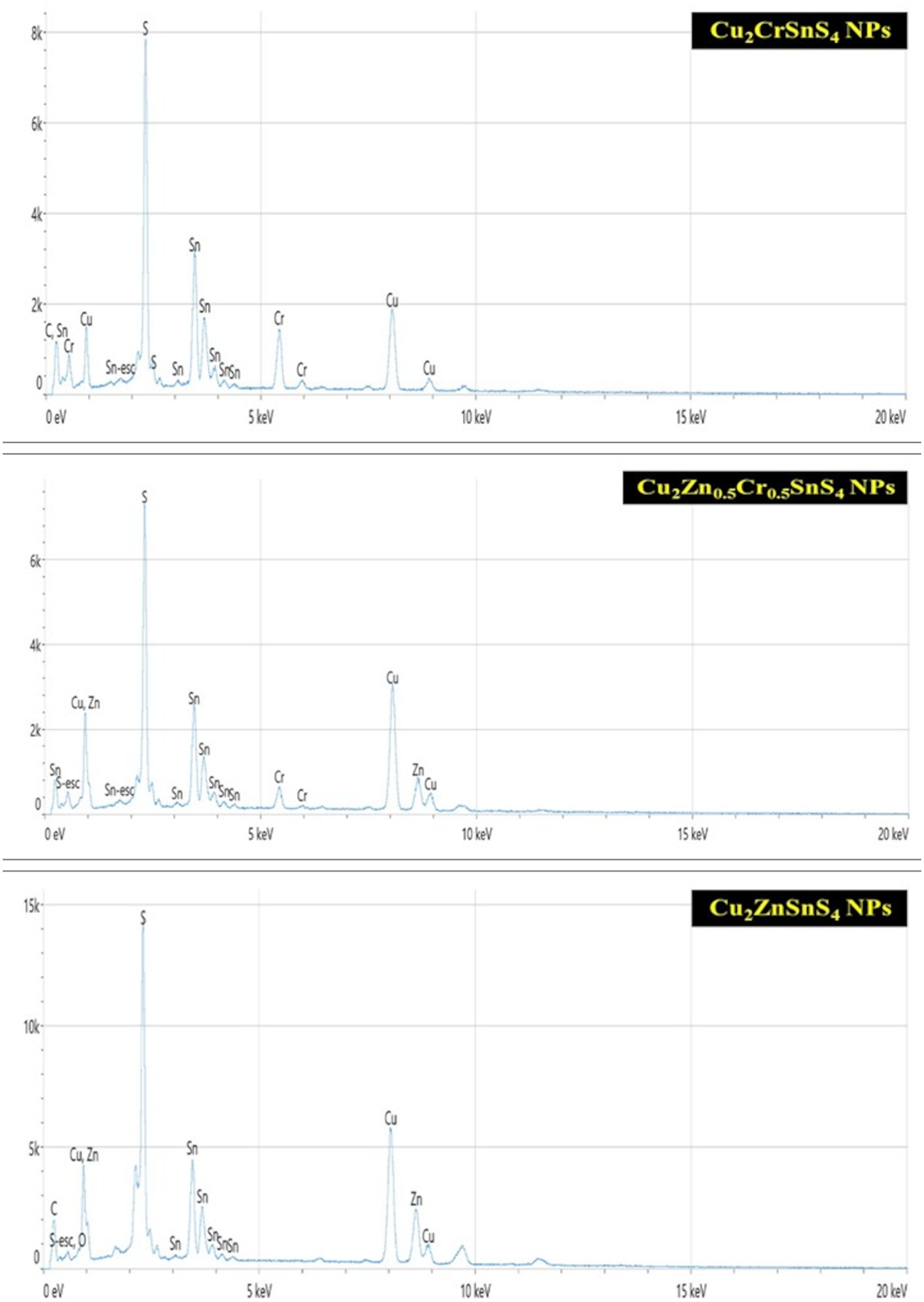
Elemental composition of the Cu2ZnSnS4, Cu2(Zn0.5Cr0.5)SnS4 and Cu2CrSnS4 compounds.
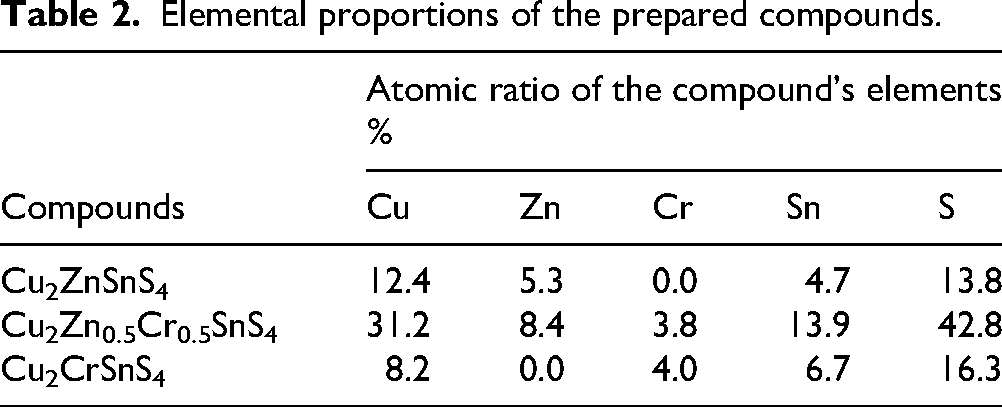
As summarized in Table 2, it is noted that in the case of partial substitution between chromium and zinc, the EDS spectrum shows the presence of all constituent elements, with chromium for approximately 3.8% and zinc for about 8.4%. These values confirm the occurrence of partial substitution, while preserving the kesterite framework of the Cu2(Zn0.5Cr0.5)SnS4 compound. 32 In addition, the elemental mapping images reveal excellent homogeneity of zinc and chromium within the same regions, indicating effective ionic mixing and the absence of elemental clustering. The high degree of compositional homogeneity supports the interpretation that a balanced cations distribution contributes to stress relaxation within the crystal lattice, thereby promoting the growth of favorable morphologies such as nanorods, as observed in FESEM analysis. 33 The simultaneous presence of zinc and chromium without the detection of secondary phases, together with the uniform elemental distribution, provides strong evidence for effective partial replacement between zinc and chromium, even though the Zn/Cr ratio deviates slightly from the ideal 1:1 value, which is consistent with the previously reported.32–34
Elemental proportions of the prepared compounds.
Performance and efficiency of photocatalytic degradation
The photo-catalysis process can be illustrated by the schematic diagram shown in Figure 6. When the material (catalyst) is exposed to visible light, electrons e− are generated from the valence band and move to the conduction band, leaving positively charged h+ holes in the valence band. Electrons form superoxide radicals by reacting with dissolved oxygen molecules on the catalyst surface, while holes oxidize water molecules or hydroxide ions to form highly reactive hydroxyl radicals. These resulting radicals play a crucial role in the degradation of the dye molecules into smaller, less damaging products.
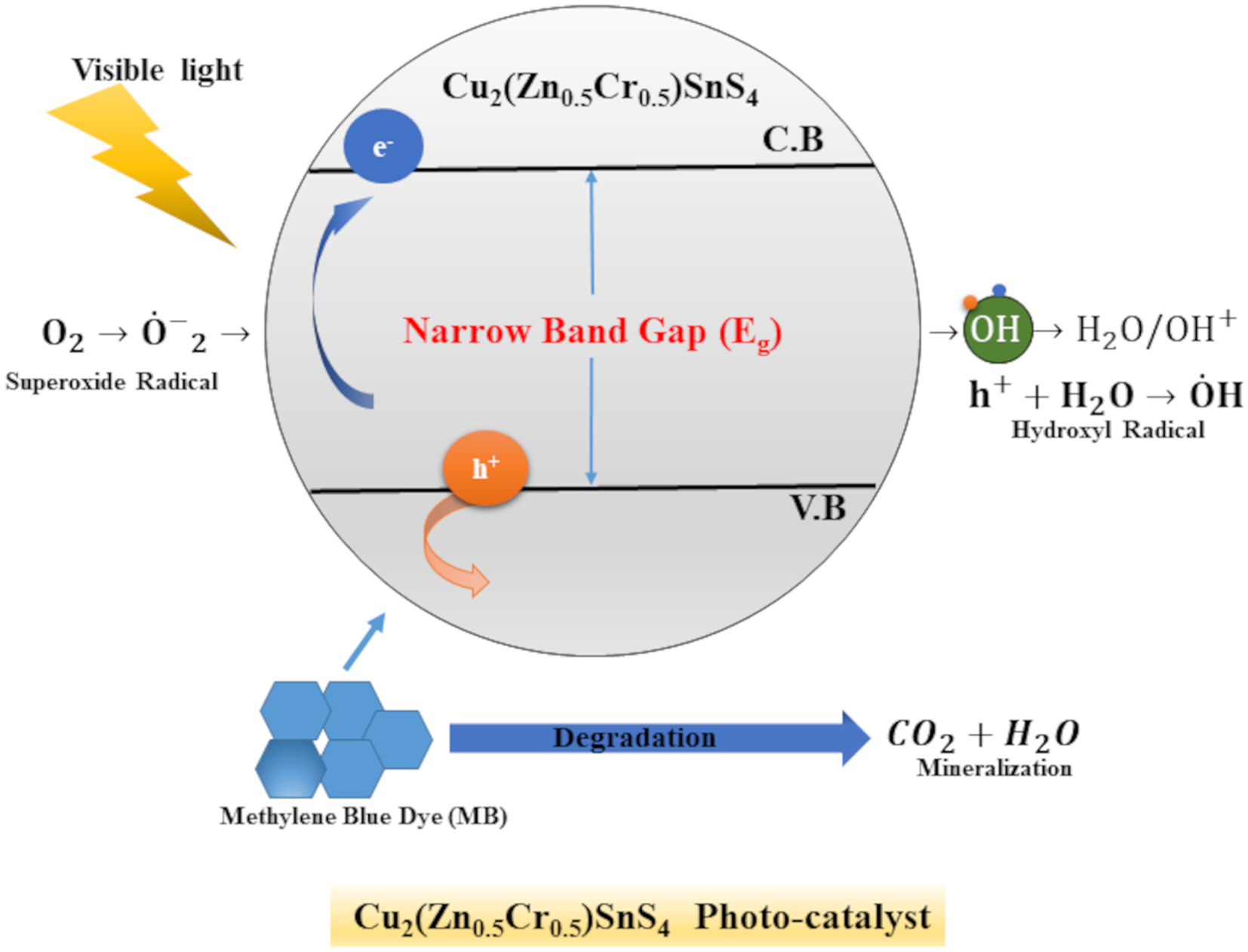
A schematic diagram of the photocatalytic mechanism.
From Figure 7, the degradation efficiency is calculated using the following relationship
35
:
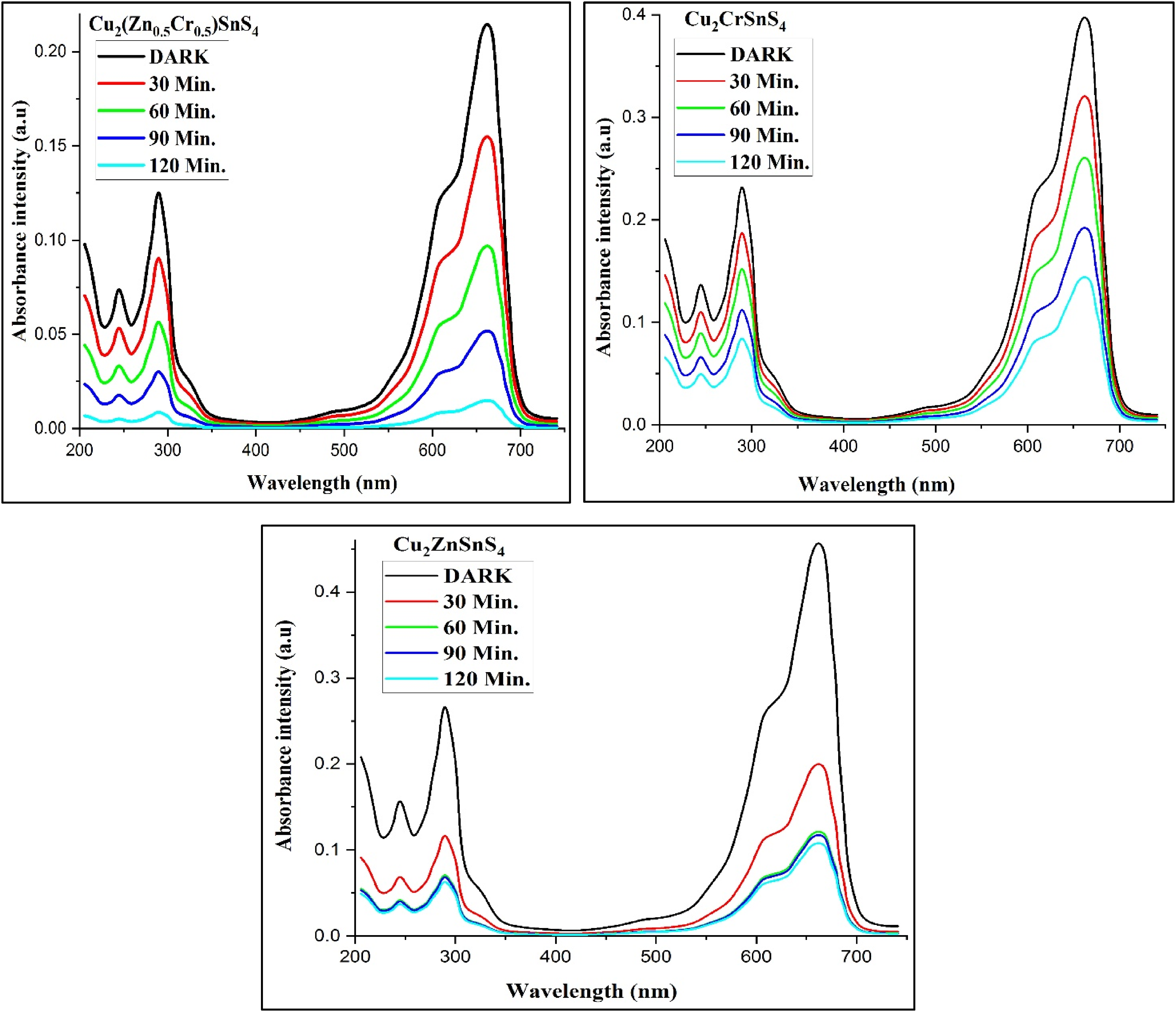
Photocatalysis application of the Cu2ZnSnS4, Cu2CrSnS4 and Cu2(Zn0.5Cr0.5)SnS4 compounds.
While metal- anionic transitions appear in the range of 250 nm to 350 nm in compounds containing transition ions such as Cr3+ and Cu2+. When a chromium ion is introduced, empty 3d levels are formed, allowing electrons to transfer from S2− or Sn2+ to Cr3+. These transitions occur within the energy range corresponding to the observed absorption. 32 The intense absorption peaks of the Cu2ZnSnS4 compound in the 200–300 nm range are attributed to π-π transitions associated with Sn-S and Cu-S bonds. in contrast, the Cu2CrSnS4 compound, exhibits high-intensity absorption peaks in the 300–350 nm range due to the introduction of Cr3 + ions and the formation of ligand-to-metal charge transfer (LMCT) from S2− to Cr3+. The Cu2(Zn0.5Cr0.5)SnS4 compound shows features of both types of transitions. 33 The superior performance of Cu2(Zn0.5Cr0.5)SnS4 compound to other compounds is attributed to the ideal balance between the slightly distorted crystal structure that creates catalytic vacancies and defects, the effective nanoscale morphology, and the narrow energy gap. In contrast, the total substitution in Cu2CrSnS4 reduced the energy gap, but led to excessive distortion in the crystal lattice and a reduction in surface order, which limited its catalytic efficiency compared to Cu2ZnSnS4 compound. The improved photocatalytic activity cannot be attributed to a single factor alone, but rather to the synergistic effect of modifications in crystal structure, optical properties, and nanoparticle morphology resulting from ionic substitution, particularly between zinc and chromium ions. Alterations in lattice constants and micro-strain indicate lattice distortion, which in turn leads to the formation of local energy levels and facilitates charge carrier separation. Furthermore, the reduced energy gap enhances light absorption, leading to increased charge carrier generation. Additionally, the uniformly distributed nanoparticle morphology provides shorter charge transport pathways and more accessible active sites. All these factors contribute to improving the photocatalytic efficiency of the substituted samples.
Conclusions
Based on the structural, morphological, optical, and photocatalytic tests of the compounds prepared by the Solvothermal method in this manuscript, the following conclusions can be drawn:
Successfully achieving total and partial substitution between zinc ions and chromium ions within the crystal structure of the Cu2ZnSnS4 compound without the formation of undesirable secondary phases. Achieving effective incorporation of the substituted ions in the crystal structure through a slight shrinkage in the crystal lattice constants and an improvement in the degree of crystallinity. Partial substitution in the Cu2Zn0.5Cr0.5SnS4 compound showed a distinctive nanoparticle morphology in the form of a spherical cluster of nanorods, which contributes to increasing the effective surface area. Increased absorption of visible light and generation of electron-hole pairs as a result of the decrease in the energy gap in samples replaced with chromium (partial and total). The highest photo-degradation efficiency of methylene blue dye was recorded by the Cu2Zn0.5Cr0.5SnS4 compound compared to the other compounds. The superior catalytic performance of the Cu2Zn0.5Cr0.5SnS4 compound is attributed to the synergistic effect between the control of the crystal structure and morphology, the homogeneous elemental distribution, and the narrowing of the energy gap.
Footnotes
Acknowledgements
The authors thank the University of Kufa for providing laboratory support.

Author contribution(s)
Funding
The authors received no financial support for the research, authorship, and/or publication of this article.
Declaration of conflicting interests
The authors declared no potential conflicts of interest with respect to the research, authorship, and/or publication of this article.