







Abstract
The formation of ice on solid surfaces can occasionally lead to severe consequences. Bamboo leaves offer an excellent biomimetic blueprint for anti-icing micro- and nanostructured surfaces. This work utilizes polydimethylsiloxane (PDMS) to emulate the intricate surface architecture of bamboo leaves. The bamboo leaf specimen exhibited a contact angle of 156°, whereas the PDMS replica demonstrated 151°. Atomic Force Microscope (AFM) analysis revealed that the micro- and nanostructures on the replica surface were predominantly arranged in a needle-like configuration, with an average surface roughness of 46.4 nm. The freezing temperature of the PDMS surface was 2.8°C lower than that of an untreated planar surface. The textured surfaces showed an approximately 21% increase in the delayed freezing time compared to the non-textured counterpart. This research presents a novel approach to anti-icing surface design.
Keywords
Introduction
Ice formation on solid surfaces is a common natural phenomenon; however, it can sometimes lead to severe consequences. For instance, rain, snow, and ice disasters can cause power transmission lines to break, and ice accumulation on vehicles and aircraft surfaces can lead to mechanical failure, resulting in significant damage.1,2 Therefore, it is crucial to strengthen research on anti-icing on solid surfaces. Hydrophilic surfaces tend to form thicker and denser ice layers compared to hydrophobic surfaces. This is because ice retention on hydrophilic surfaces reduces thermal transfer efficiency. Consequently, when melted water refreezes, it creates ice layers that are more difficult to remove. 3 Researchers have begun to consider applying hydrophobic surfaces in anti-icing research, with superhydrophobic surfaces exhibiting superior anti-icing properties.4–6 Dorror et al. fabricated a superhydrophobic surface with a silicon nanograss structure via micro-machining, achieving only 0.01% macro-droplet coverage. 7 During vapor condensation, even the smallest droplets cannot wet its surface microstructures. Microfabrication techniques such as photolithography and wet etching were performed on aluminum and copper samples to etch microgroove structures without any chemical modification of their surfaces.8,9 Experimental results show that metal samples with microgroove structures have less condensed and frozen droplet coverage area and slower ice formation compared to flat samples. Although the microgroove structure does not significantly affect the ice structure, it significantly inhibits the refreezing of residual melted water on metal surfaces. Gaddam et al. used femtosecond lasers to prepare micro-nanostructures on stainless steel surfaces, which exhibited good anti-icing properties. 10
Through long-term evolution, nature has produced many organisms with remarkable adaptations. By observing, studying, and imitating their structures and functional principles, humans have created numerous bionic structures and materials. 11 Karuppasamy et al. fabricated a bioinspired superhydrophobic coating on an aluminum alloy surface using plant leaf (Senna auriculata) extract and Nafion polymer, achieving a water contact angle (WCA) of 153°. 12 Chen et al. fabricated a double-layer superhydrophobic structure inspired by lotus leaf surfaces through micromachining deposition of carbon nanotubes (CNTs). 13 They discovered that this superhydrophobic surface, featuring a high aspect ratio structure, achieved remarkable droplet coalescence during condensation experiments, demonstrating excellent anti-icing properties. Its superhydrophobic performance both before and after experiments surpassed that of lotus leaf surfaces. Wisdom et al. demonstrated a mechanism of self-cleaning achieved by a superhydrophobic surface under conditions of condensing water vapor. 14 On the superhydrophobic surface modeled on cicada wings, condensing water vapor can realize self-propelled jumping.
Bamboo leaves in alpine regions, which serve as excellent prototypes of hydrophobic surfaces, exhibit evergreen and frost-free characteristics, offering an excellent biomimetic model for the design of anti-icing microstructures. The phenomenon of bamboo leaf surfaces facilitating the self-propelled movement of condensed water droplets has garnered significant attention in anti-icing research. The mechanism underlying its frost resistance and anti-icing properties has long been a subject of extensive investigation. He Yang's team studied Qinling Arrow Bamboo leaves—an evergreen found at high latitudes and altitudes—to create a cold-resistant, hairy microstructure. 15 This surface features two types of microstructures: a layer of hair-like structures and a layer of downy structures, both arranged in an array of pillar-shaped formations. The larger hair-like structures form a thicker boundary layer, reducing the surface Reynolds number, enabling colder airflows to more easily maintain a laminar state over the surface, thereby decreasing momentum and heat exchange rates. Meanwhile, the downy structures further enhance convective resistance within the established boundary layer, further hindering momentum and heat exchange, thereby intensifying the frost resistance and cold protection properties.
However, directly using bamboo leaves as an anti-icing structure faces challenges such as vulnerability to damage and aging. As a natural material, bamboo leaves exhibit inherent mechanical fragility, rendering them susceptible to physical damage from environmental factors including wind, rain, and biological infestations. These can lead to a decline or even loss of their ice-resistant properties. Furthermore, bamboo leaves naturally degrade over time, with potential changes to their surface properties and internal structure, thereby affecting their anti-icing effectiveness. Additionally, there are concerns regarding resource consumption; while bamboo leaves are a renewable resource, their extensive use may still impact the ecological environment. Therefore, when considering the use of bamboo leaves as an ice-resistant structure, their environmental impact and sustainability must be considered. Contemporary anti-icing research investigates both micro-nanostructured surfaces and smooth surface configurations. Smooth surfaces promote self-propelled droplet mobility, thereby reducing icing probabilities. With this in mind, the study employed polydimethylsiloxane (PDMS) to replicate the surface structure of Qinling Arrow Bamboo leaves. As a silicone-based elastomer renowned for its intrinsic hydrophobic character and low surface energy properties, PDMS demonstrates significant potential as an anti-icing material. From an economic perspective, while initial capital expenditure for precision mold fabrication may present a barrier to entry for small-batch manufacturing applications, the polymer's scalability advantage becomes evident in mass production contexts where replication costs remain economically advantageous. Longevity analysis reveals superior performance compared to conventional coatings and mechanical anti-icing systems, as PDMS exhibits extended operational lifespans with reduced replacement frequencies attributable to its inherent chemical stability and resistance to environmental degradation.16,17 In addition, maintenance requirements are further minimized through the material's self-cleaning properties and durability against mechanical abrasion, yielding substantial reductions in long-term operational expenditures. Although anodic oxidation technology can also produce superhydrophobic (SHP) anti-icing surface, this process needs long oxidation time. 18 Despite theoretical viability for infrastructure ice prevention, photothermal superhydrophobic coatings often exhibit performance degradation under real-world icing conditions and insufficient mechanical durability, underscoring persistent challenges in scaling laboratory efficacy to practical applications. 19
Using biomimetic technology, 20 this contribution created a smooth surface with micro- and nanostructures mirroring those of bamboo leaves. PDMS replica has the advantages of durability and controlled fabrication, which is required in practical anti-icing applications. This innovative approach offers a new strategy for designing anti-icing surfaces.
Materials and methods
Qinling Arrow Bamboo leaves harvested for this study underwent pretreatment, including removal of surface dust. The transverse stripes can be observed on the front. The color on the back was lighter than that on the front, but the touch was rougher. Bamboo leaves were initially sectioned into 1 cm × 1 cm specimens. Specimens underwent ultrasonic cleaning in anhydrous ethanol for 5 min, followed by rinsing with deionized water (DI) for an additional 5 min. Samples were subsequently dried in a convection oven at 60°C for 1 h. PDMS soft stamps were fabricated using Dow Corning's SYLGARD 184 PDMS prepolymer/curing agent two-component kit. The prepolymer and curing agent were combined at a 10:1 volume ratio, yielding a mixture of moderate viscosity. After removing bubbles in the vacuum oven, it was coated on the surface of bamboo leaves. After curing in the 65 °C oven for 2 h, it was detached from the surface of bamboo leaves by hand. The thickness of PDMS is 2 mm. The pictures of the bamboo leaf sample and PDMS replica is shown in Figure 1 (a) and (b), respectively.
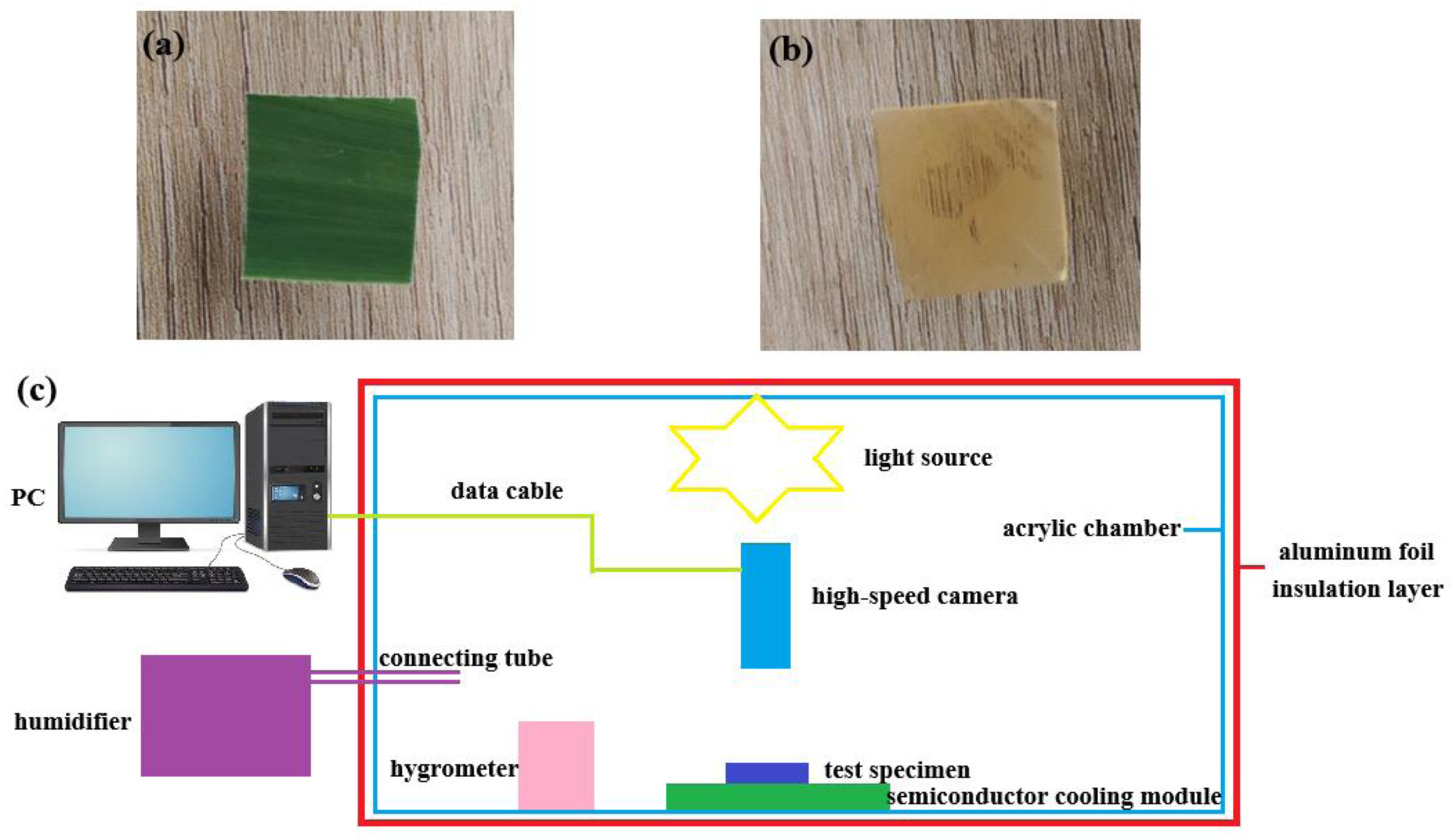
Test specimen and anti-icing test platform. (a) bamboo leaf, (b) PDMS replica, and (c) schematic diagram.
The freezing temperatures and freezing times for the PDMS sample imitating the bamboo leaf and the smooth sample of the control group were measured to evaluate the anti-icing performance of the biomimetic sample. A schematic diagram of the experimental setup is presented in Figure 1(c).
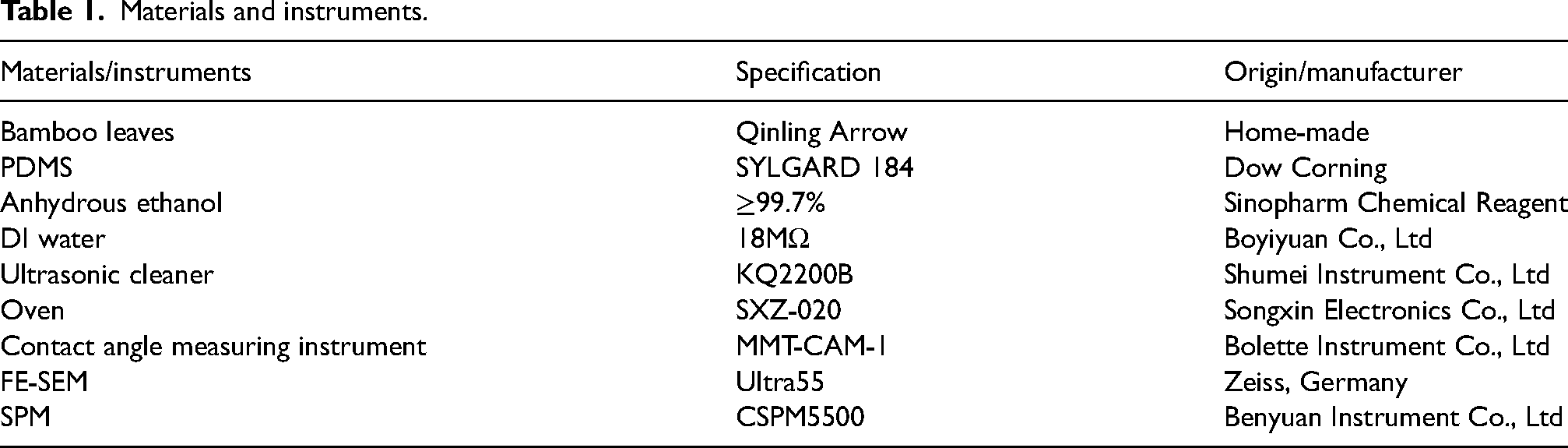
Surface wettability serves as a direct indicator of hydrophilic or hydrophobic properties. In this experiment, the static three-phase WCA and sliding angle (SA) of the specimens were measured using a contact angle measuring instrument (Bolette Instrument Co., Ltd). The samples were characterized using field emission scanning electron microscopy (FE-SEM, Ultra55, Zeiss) and atom force microscope (AFM) with the tapping mode (Benyuan Instrument Co., Ltd). A silicon tip with a radius of curvature of 10 nm was employed for AFM measurement. Materials and experimental instrumentation are summarized in Table 1.
Materials and instruments.
Results and discussion
Water contact angle (WCA) measurements were conducted at ambient temperature by depositing 5 μL deionized water droplets at five randomly selected locations on each specimen surface. The final contact angle value was the arithmetic mean of triplicate measurements. As shown in Figure 2, the bamboo leaf specimen exhibited a contact angle of 156°, whereas the PDMS replica demonstrated 151°, which is higher than the WCA of slippery liquid-infused porous surfaces (SLIPS, 121.5°)21,22 and similar to the WCA of the lotus leaf-inspired surface (>150°) 23 and the superhydrophobic silicon fluoride @PDMS coating (155°).24,25 However, it is lower than the WCA of the bio-inspired Al alloy micro-structure (166°). 26 For sliding angle determination, a servo motor-controlled tilting stage was employed to precisely monitor droplet mobility. The sliding angle was defined as the critical tilt angle at which droplet detachment initiated, with triplicate measurements averaged for statistical reliability. Notably, the PDMS replica achieved a minimum sliding angle of 5°, indicating superior dynamic hydrophobicity. The combination of a high static contact angle and a low sliding angle confirms the replicated PDMS surface's enhanced non-wetting characteristics. This suggests promising anti-icing potential.
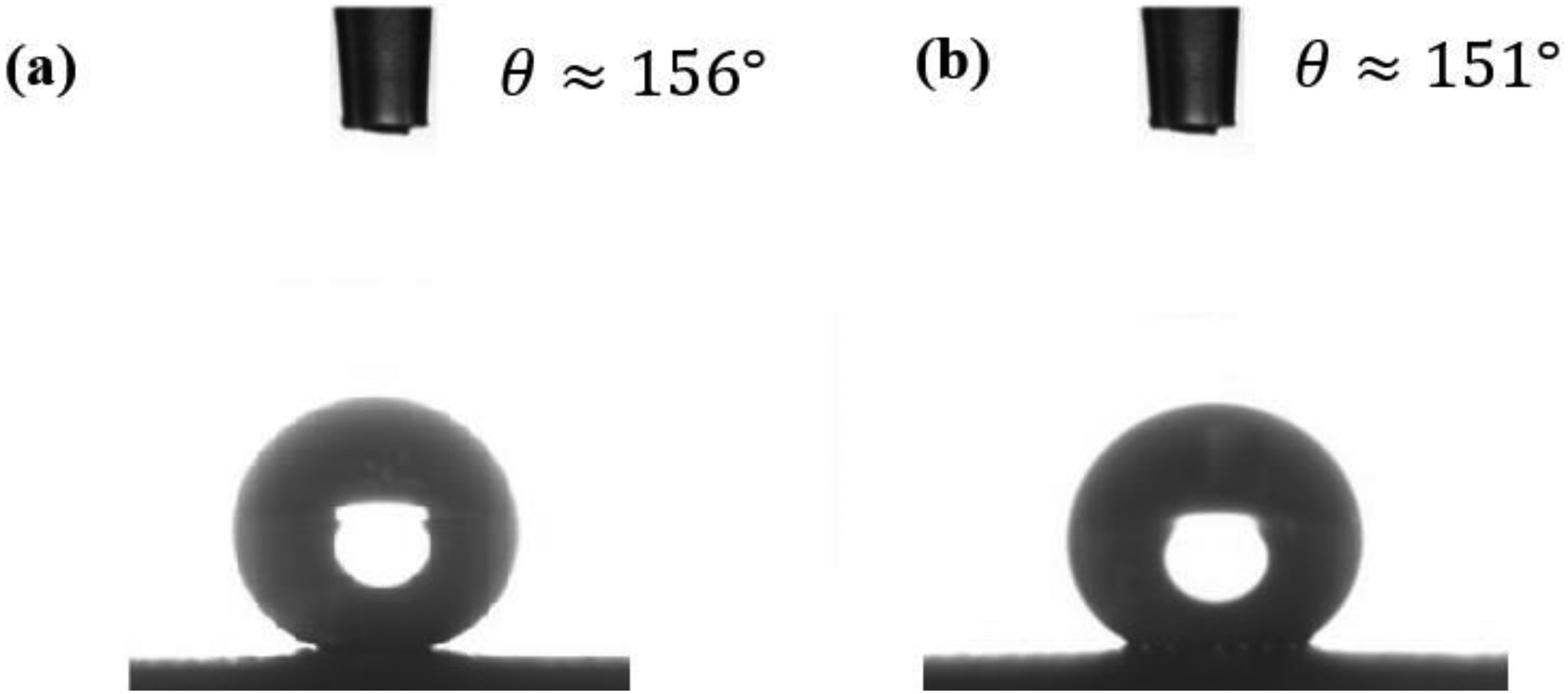
Contact angle measurement of (a) bamboo leaf and (b) PDMS replica.
In scenarios where ice formation cannot be prevented, mitigating ice adhesion emerges as a critical design consideration for anti-icing technologies. Experimental evidence demonstrates a direct correlation between ice adhesion strength and anti-icing energy requirements. When ice adhesion is suppressed below a threshold (typically <100 kPa), wind or gravitational forces alone can achieve spontaneous ice detachment without external energy input. The present PDMS replica achieves an ice adhesion strength of approximately 55 kPa, measured by a home-made apparatus. This value is lower than the ice adhesion strength (460 kPa) of silicon micro/nanostructures made by lithography and deep reactive etching 15 and similar to the adhesion force (50 kPa) of a switchable zwitterionic ester and capsaicin copolymer. 27
Surface morphology characterization of both bamboo leaf specimens and their PDMS replicas was performed using an AFM. AFM operates via a cantilevered probe with a nanoscale apex that raster-scans the sample surface. Topographical data are acquired by monitoring probe-sample interactions during scanning. Specifically, the AFM utilizes the Coulomb force between atoms to cause deformation of the microcantilever of the probe. A laser detects this deformation, enabling the acquisition of surface information.
The AFM image obtained by tapping mode shows that the surface of the bamboo leaf is remarkably complex, as illustrated in Figure 3. The protrusions show greater variation in amplitude. Ridge widths span 994.92–2992.25 nm, while groove widths measure 8157.81–10362.23 nm. By setting the surface display type of the 3D graph and adjusting the simulated light source, numerous fine protrusions densely distributed within the groove structure can be observed more clearly, as shown in Figure 4, significantly increasing the roughness of its surface. Furthermore, the ridge structures consist of two or three narrower ridge structures. These microstructures of grooves and ridges significantly inhibit the ice formation rate and ice coverage, and notably inhibit the retention of ice-melt water.28–30
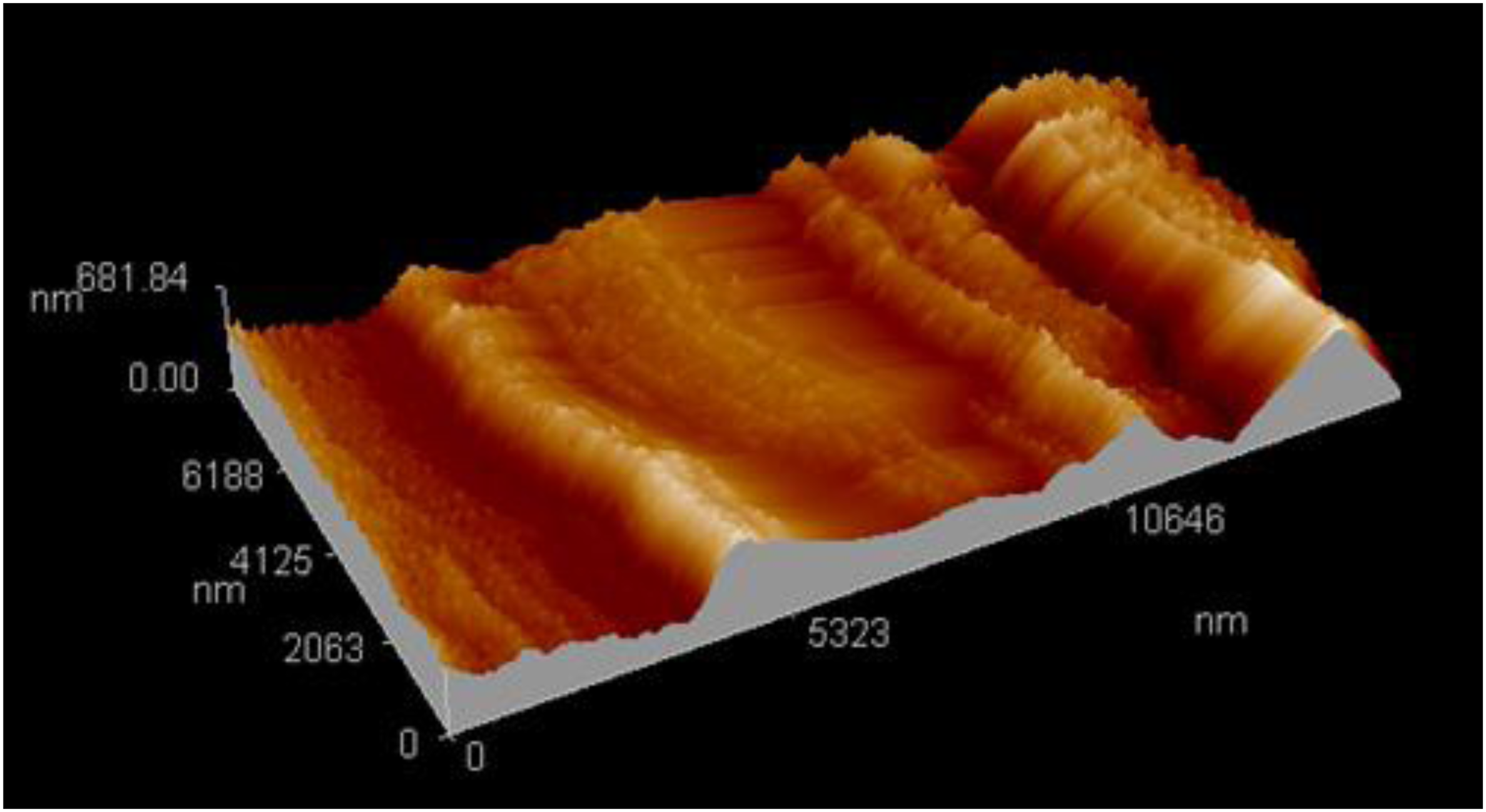
AFM image of the bamboo leaf structures.
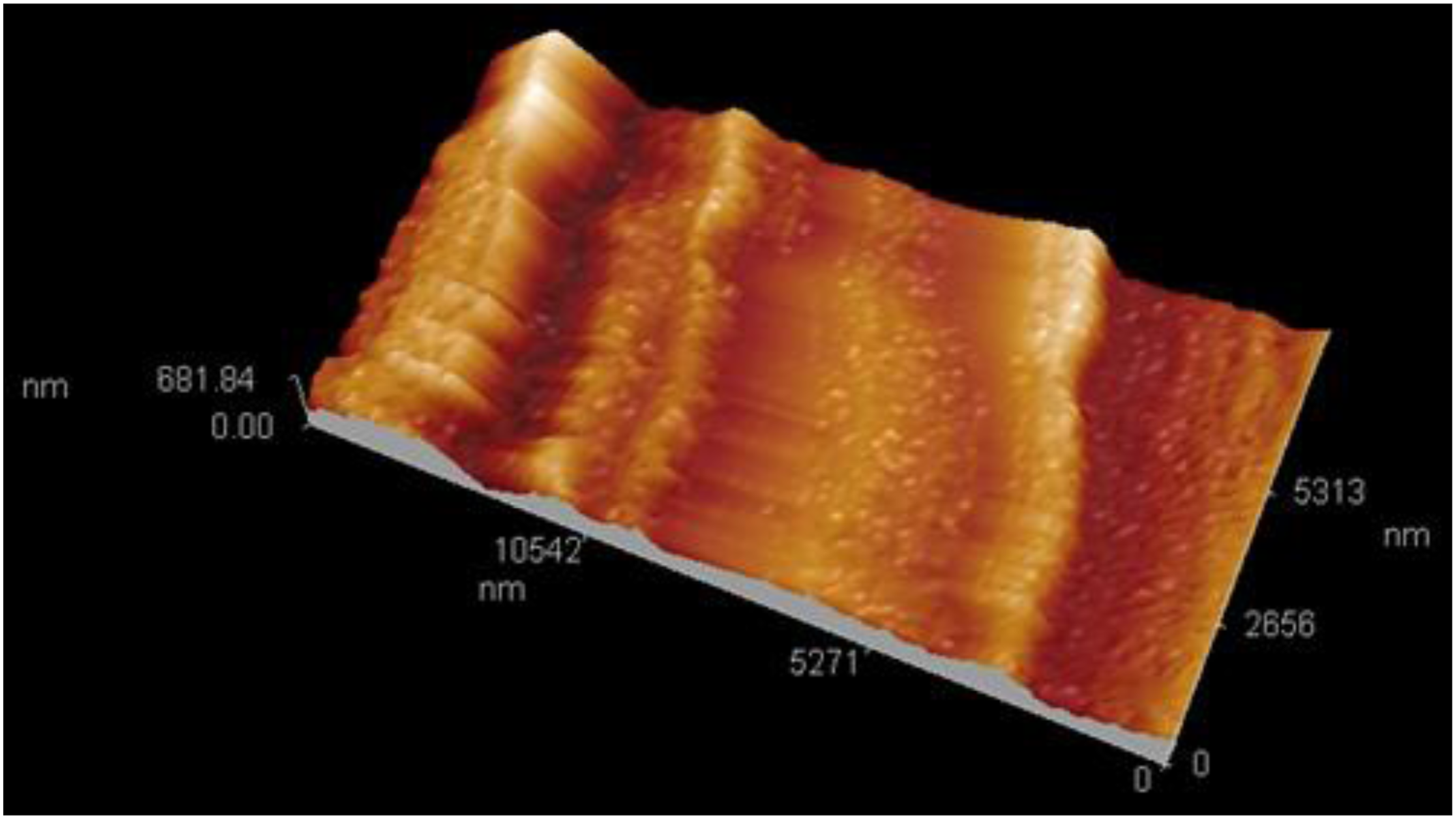
Fine protrusions in the grooves of the bamboo leaf.
AFM scanning of the biomimetic PDMS replicas in tapping mode revealed that the microstructures on the surface of the replicas were generally arranged in a needle-like shape, as shown in Figure 5. Achieving a high-fidelity full replication of the bamboo leaf surface structure is challenging, as the height of the highest point on the bamboo leaf sample surface is 681.84 nm, while that on the replica surface is 545.37 nm, leading to a difference of 136.47 nm. These replication inaccuracies may induce the degradation of anti-icing performance such as higher freezing temperature compared to the original bamboo leaf. The losses in this regard can be partially compensated by the surface smoothness of PDMS. Fluoropolymers such as perfluorodecyltrichlorosilane may be utilized to further reduce the surface energy of the PDMS replica. Chemical treatment to create more effective hybrid systems is a common way to improve the surface property. 31 The optimization of PDMS curing parameters coupled with the controlled application of mechanical pressure may constitute an effective approach to improve the fidelity of the replication process. The replicas also reveal that the structures on the bamboo leaf surface are not entirely uniform. Figure 5 shows that the needle-like structures are densely distributed in the replica. The needle-like structures extend from left to right with a certain inclination, and the undulating surface morphology causes a degree of layering in the arrangement of these structures.
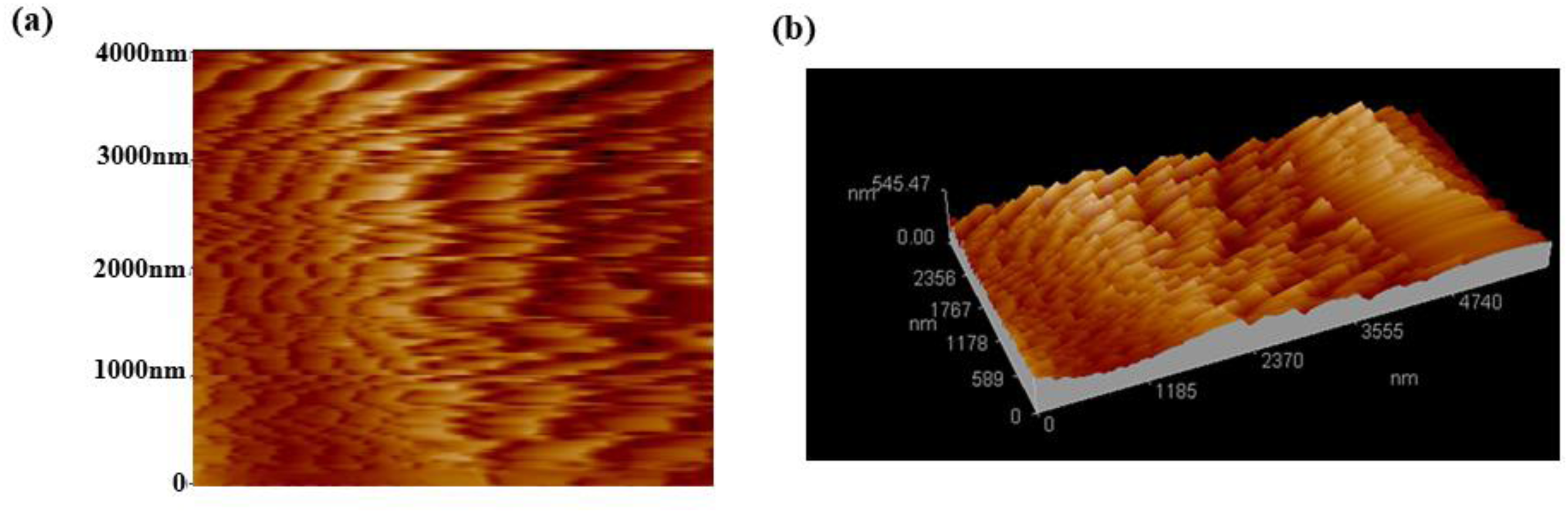
AFM image of the bionic PDMS replica, (a) 2D and (b) 3D.
Similar to the multi-technique approach employed by Ref.,32,33 which combined AFM, FE-SEM, EDAX (Energy Dispersive X-ray Analysis) and XPS (X-ray Photoelectron Spectroscopy) to confirm the surface morphology and adsorption of Tamarindus indica fiber (TIF) extract on the mild steel, our study could be further enhanced by incorporating FE-SEM and surface analysis to identify the special surface properties of the bionic PDMS replica.
The sharp shape of the needle-like pattern may not be well resolved due to the tip shape convolution of AFM. To address this issue, FE-SEM was also employed to characterize the sample surface, as illustrated in Figure 6. The figure provides a broader perspective, revealing that the surface exhibits not only needle-like structures but also typical groove features. These micro- and nanostructures render water droplets difficult to adhere to the sample surface, thereby reducing the formation and adhesion of ice crystals.
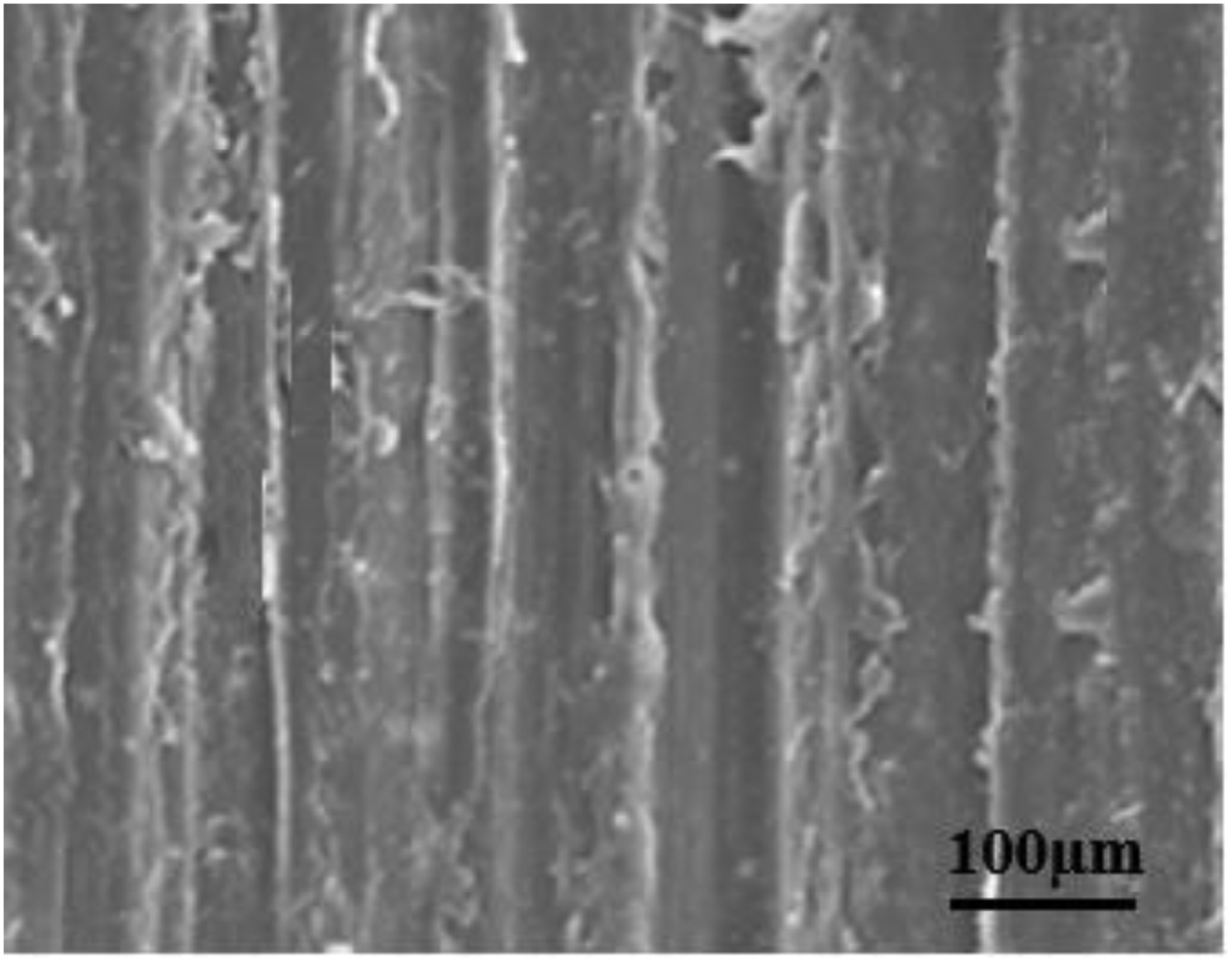
FE-SEM image of the bionic PDMS replica.
Prior to surface roughness analysis, the biomimetic PDMS replica's scanned image was preprocessed by adjusting contrast, removing scan lines, and correcting tilt direction to minimize errors. The average roughness (Ra) of the replica surface was 46.4 nm, while that of the bamboo leaf sample was 74 nm, with a difference of 27.6 nm, indicating a smoother replica surface, which is conducive to anti-icing. The Ra value of the replica exhibits intermediate surface roughness, being significantly higher than that of polished mild steel (Ra = 6.89 nm 33 and Ra = 8.249 nm 34 while lower than that of aluminum alloy (Ra = 120 nm. 12 The root mean square (RMS, Rq) roughness of the replica surface was 59.8 nm, while that of the bamboo leaf sample was 91.2 nm, revealing a notable distinction. PDMS surfaces with low roughness can reduce ice adhesion. The Rq value of the replica is also larger than that of polished mild steel, as reported in Ref. 33 (Rq = 8.53 nm) and Ref. 34 (Rq = 10.183 nm). This indicates a relatively rougher surface finish compared to the metallic benchmarks. The Surface Skewness (Ssk) of the biomimetic PDMS replica was −0.274, indicating that the surface morphology was basically parallel to the horizontal plane but with slight concavity. The negative value is because the replica's surface morphology is an inverse of the bamboo leaf sample. Negative skewness promotes droplet rebound. The biomimetic PDMS replica exhibited a Surface Bearing Index (Sbi) of 0.611, a Core Fluid Retention Index (Sci) of 1.48, and a Valley Fluid Retention Index (Svi) of 0.137. The Surface Bearing Index (Sbi) quantifies the “peakedness” or sharpness of surface asperities. A lower Sbi value (0.611 in this study) indicates a relatively smooth surface with blunt or rounded microstructures. This rounded morphology is often desirable because it reduces the likelihood of ice nucleation at sharp edges and promotes uniform water shedding. The Core Fluid Retention Index (Sci) measures the ability of a surface's microstructure to retain liquid in its “core” regions (e.g., valleys or pores). In the context of ice inhibition, this property can be advantageous: retained liquid (e.g., meltwater) in the core regions may act as a lubricating layer, reducing the adhesion of ice to the surface. However, excessive fluid retention could also lead to prolonged liquid presence, which might paradoxically increase freezing risks under prolonged sub-zero conditions. The Valley Fluid Retention Index (Svi) specifically evaluates the liquid retention capacity of the surface's lowest topographical features (valleys or troughs). A very low Svi (0.137) indicates that the PDMS surface has shallow valleys that do not retain significant liquid. This is beneficial for anti-icing performance because shallow valleys minimize the formation of stable water pockets that could freeze into ice anchors. Instead, liquid is more likely to drain away from the surface, reducing the chances of ice accretion. Low Svi also correlates with reduced capillary forces, which are known to exacerbate ice adhesion by drawing water into narrow gaps. These values demonstrate that the replica surface still maintains good characteristics of self-bouncing behavior for droplet aggregation. Further surface analysis data are presented in Table 2.
Surface analysis data of the biomimetic PDMS replica.
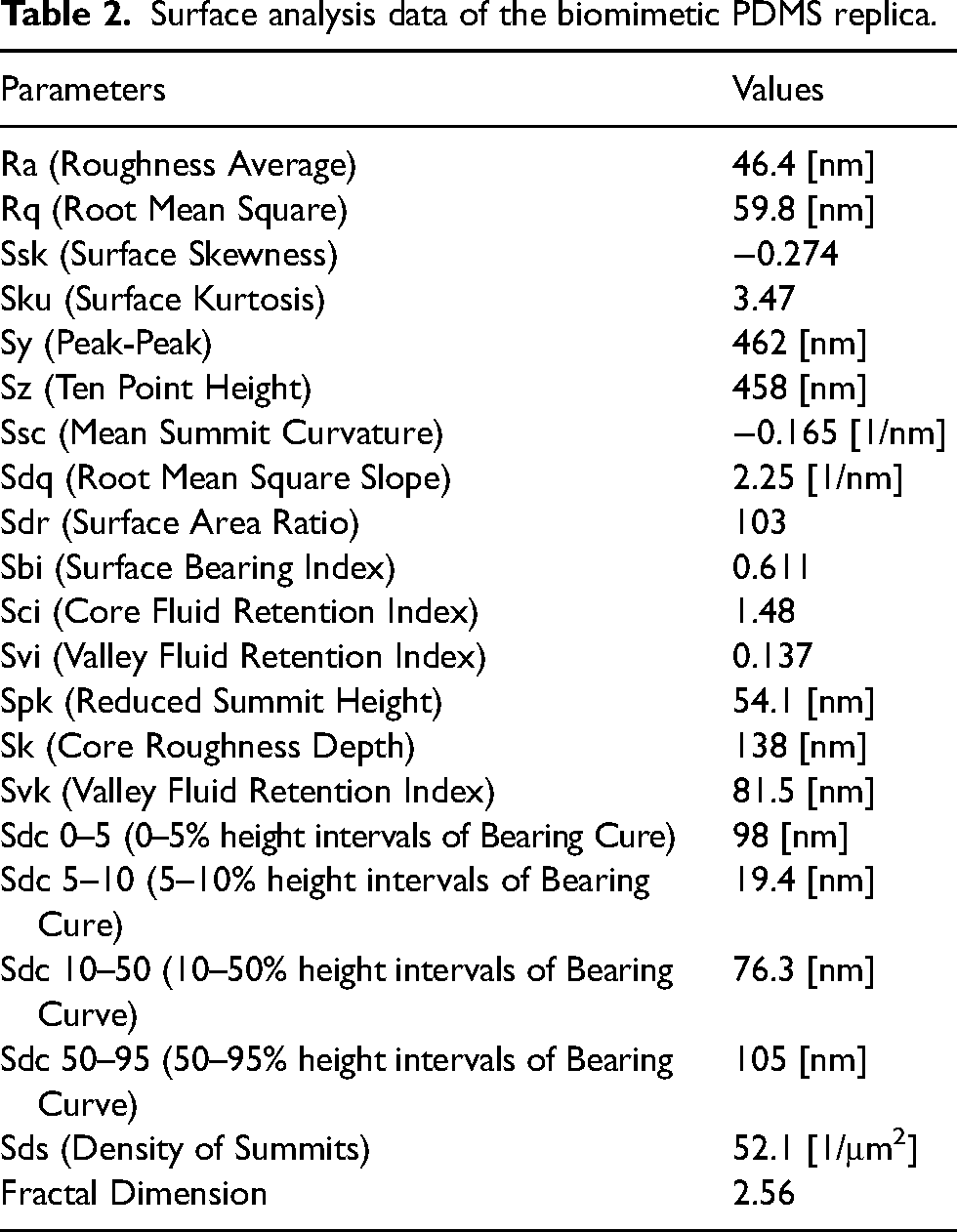
The surface roughness analysis report indicates that the fractal dimension of the bionic PDMS sample surface is 2.56. Relative to the bamboo leaf, the replica's lower fractal dimension reflects reduced surface complexity and roughness, alongside a more aperiodic morphology, which will reduce ice nucleation sites.
Particle analysis, performed after smoothing and filtering the image files, is shown in Figure 7. The PDMS replica exhibits 757 surface particles with a mean diameter of 240.3 nm and mean height of 324.8 nm, statistically comparable to the bamboo leaf specimen. Particle dimensions range from 271 nm² (minimum area) to 6.997 × 10⁵ nm² (maximum area), with heights spanning 106.9 nm to 447.2 nm. By analyzing the surface area, it can be obtained that the rough surface area of the bionic PDMS replica is 66295856.41 nm2. Relative to the bamboo leaf, the replica exhibits finer and denser particle distribution. Observation of the particle area reveals that the overall arrangement of the needle-like structure is denser on the left and sparser on the right, denser on the top and sparser on the bottom.
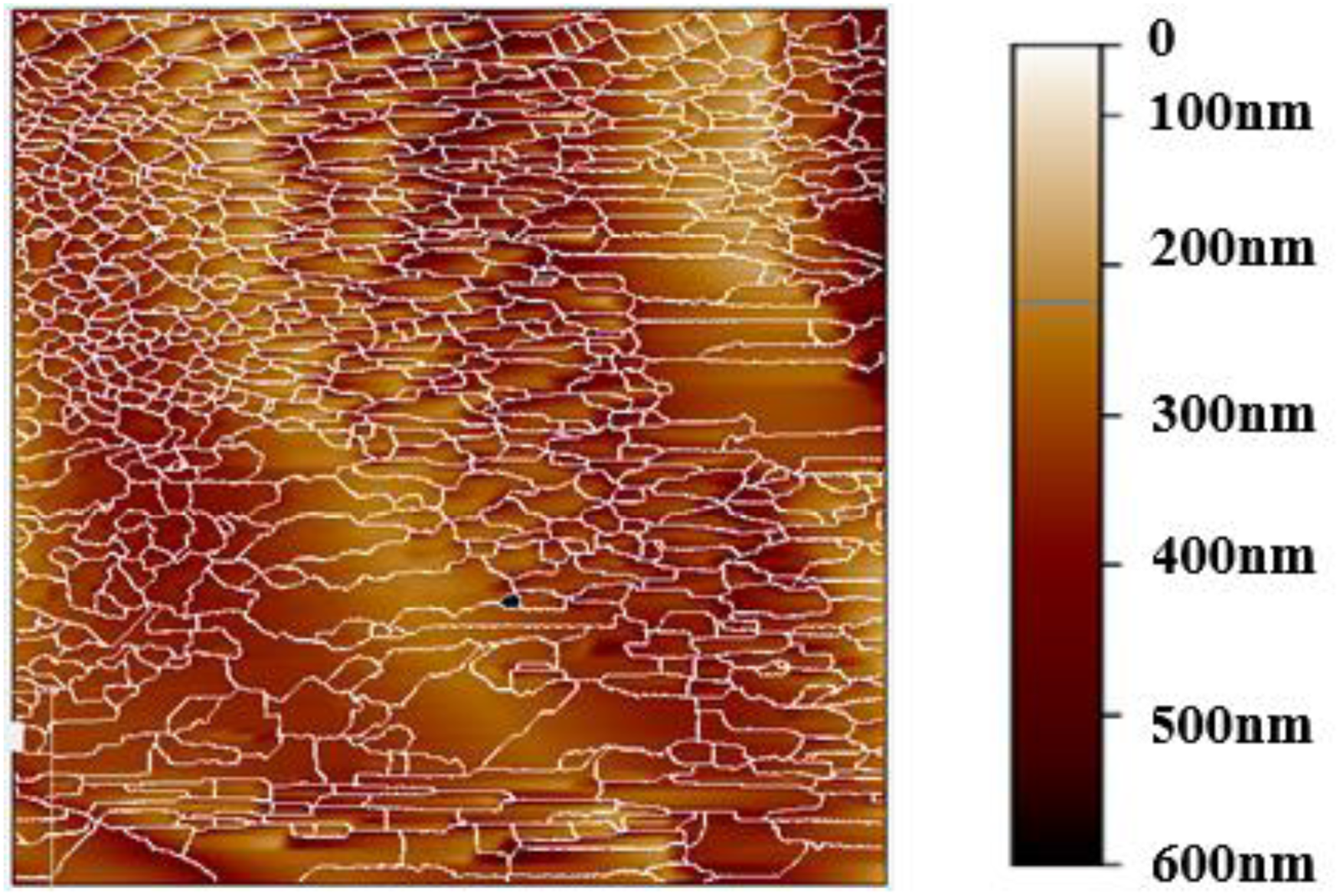
Particle analysis of the biomimetic PDMS replica.
Autocorrelation analysis was performed on two typical areas (zones A and B) of the replica to reveal surface alignment trends, as shown in Figure 8. Both zones A and B exhibited a significant reduction in autocorrelation relative to bamboo leaves, suggesting greater surface irregularity in the biomimetic PDMS replicas. While Zone A retained densely packed needle-like structures, Zone B's sparse and uneven distribution of these structures significantly exacerbated surface irregularity. The autocorrelation functions for both zones exhibit a decay trend in spatial correlation, with the primary correlation length reached at approximately 3000 nm in both cases. This suggests that the spatial self-similarity of the surface structure is maintained over a characteristic length scale of around 3 micrometers, likely reflecting the inherent structural features of the original bamboo leaf surface which are well-preserved by the PDMS replication process.
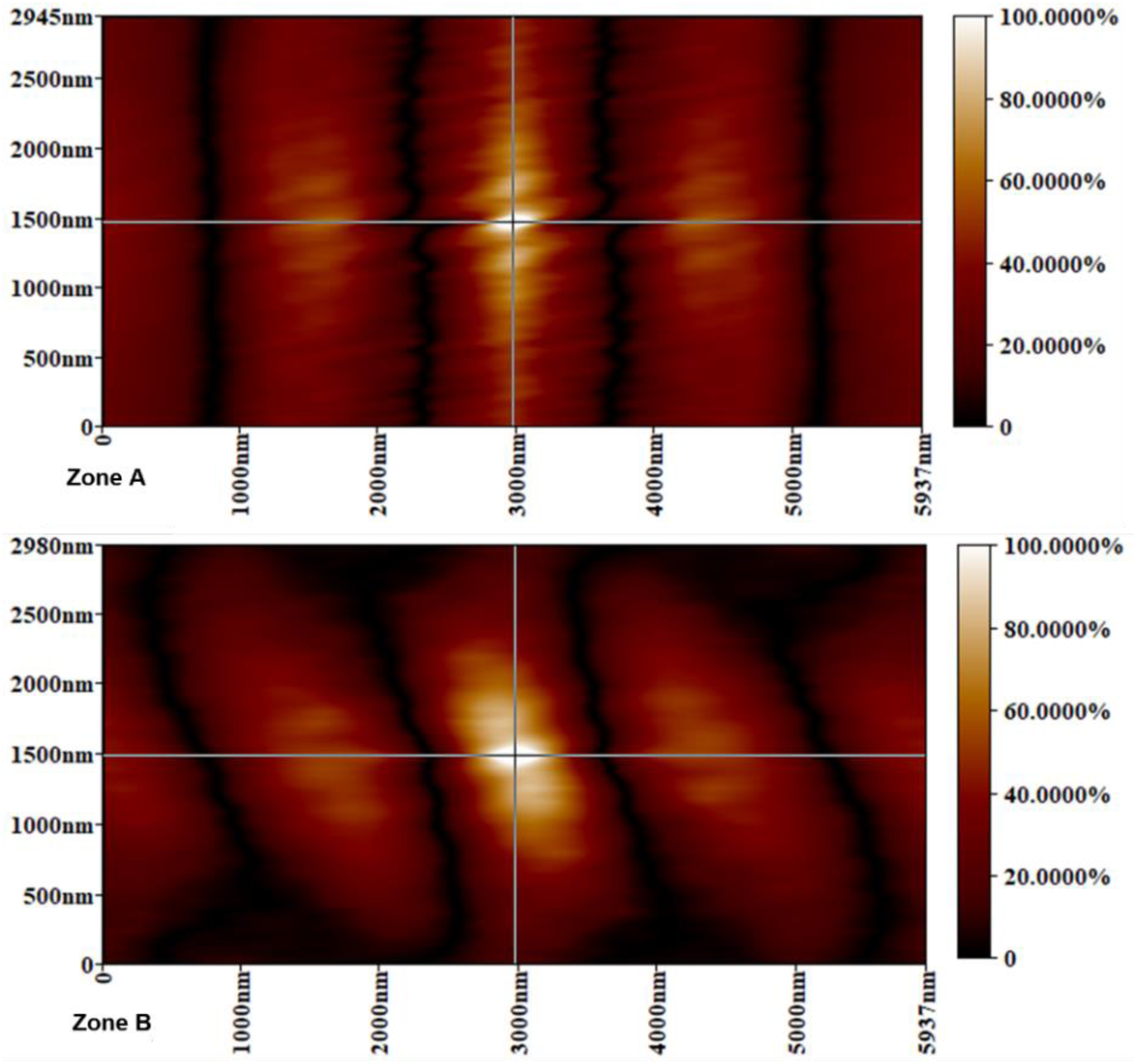
Autocorrelation analysis of the biomimetic PDMS replica.
Furthermore, a cross-correlation analysis was conducted between the scanning images of the bamboo leaf sample and the biomimetic PDMS replica. Because the biomimetic PDMS replicas were scanned over a smaller area (5960 × 5960 nm) than the bamboo leaf (16000 × 16000 nm), a matching region was extracted from the bamboo leaf sample to enable cross-correlation analysis, as shown in Figure 9. The correlation between the corresponding regions was strong, indicating high similarity between before and after replication of the bamboo leaf sample. This consistency further suggests that the surface morphology retained a degree of structural regularity across the scanned areas.
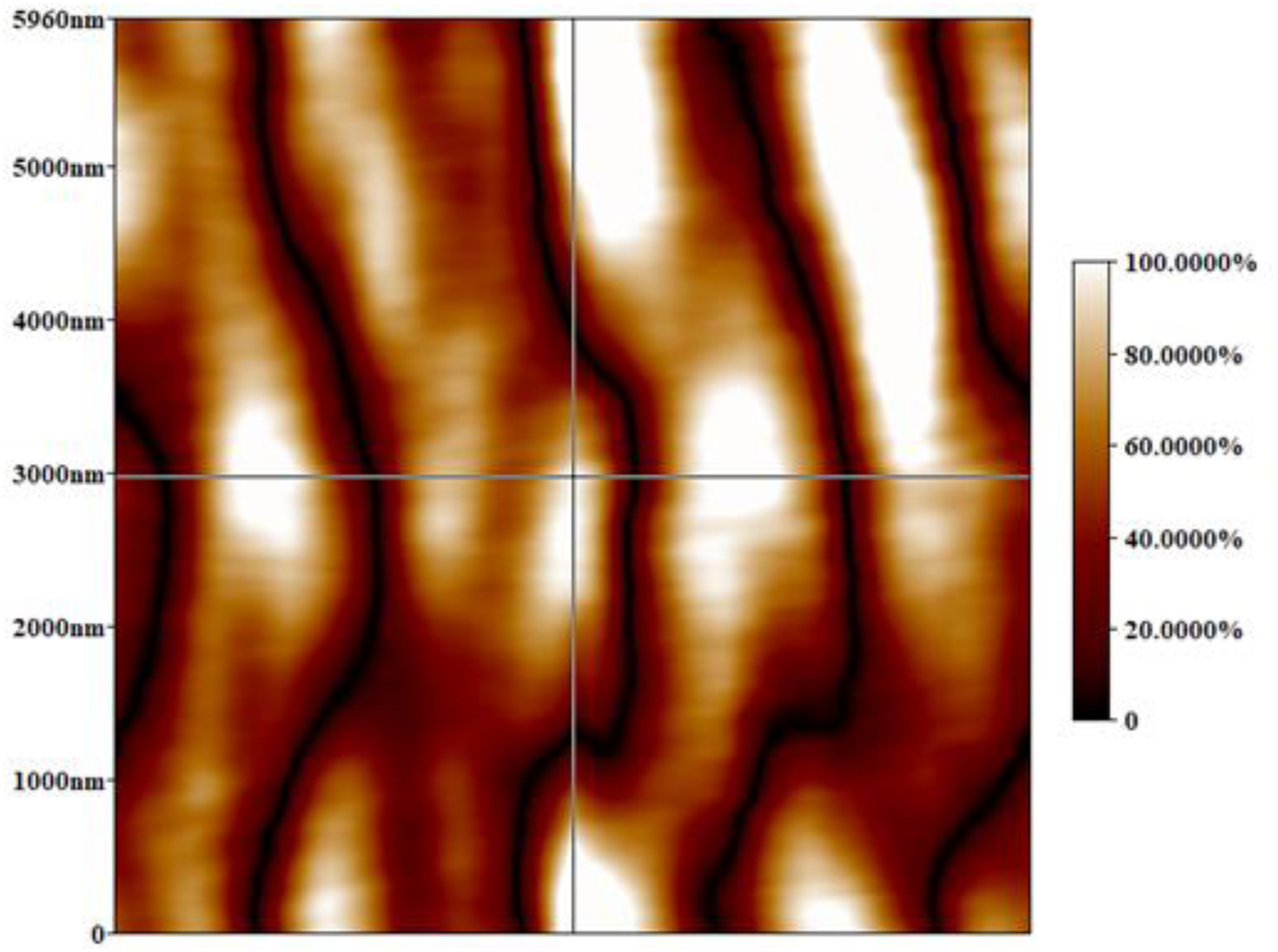
Cross-correlation analysis between the bamboo leaf and biomimetic PDMS replica.
The surface of the biomimetic PDMS replica was also analyzed using a profile line analysis. A horizontal line was drawn across regions A and B, and the filtered results are shown in Figure 10. The needle-like structures in region A show significant changes, with a dense distribution and large height variations. The highest point on this profile line is 441.78 nm, and the lowest point is 41.78 nm, resulting in a vertical distance difference of 408.98 nm. The surface roughness between these two points is 75.4 nm. In contrast, the needle-like structures in region B have smoother tops. However, their overall morphology fluctuates more pronouncedly, with further diminished regularity and an uneven, left-dense/right-sparse distribution. The highest point on this profile line is 371.74 nm, and the lowest point is 98.62 nm, indicating a significant variation. The horizontal distance between these two points is 865.57 nm, and the surface distance is 915.46 nm. Analysis of the profile line fluctuations and axis dimensions in regions A and B reveals that region B has a significantly higher aspect ratio than region A, also exceeding the aspect ratio of region B in the bamboo leaf sample. This indicates that region B's higher aspect ratio enhances hydrophobic performance under dew condensation and improves anti-icing characteristics, likely due to its morphology promoting greater air entrapment and reduced solid-liquid contact.
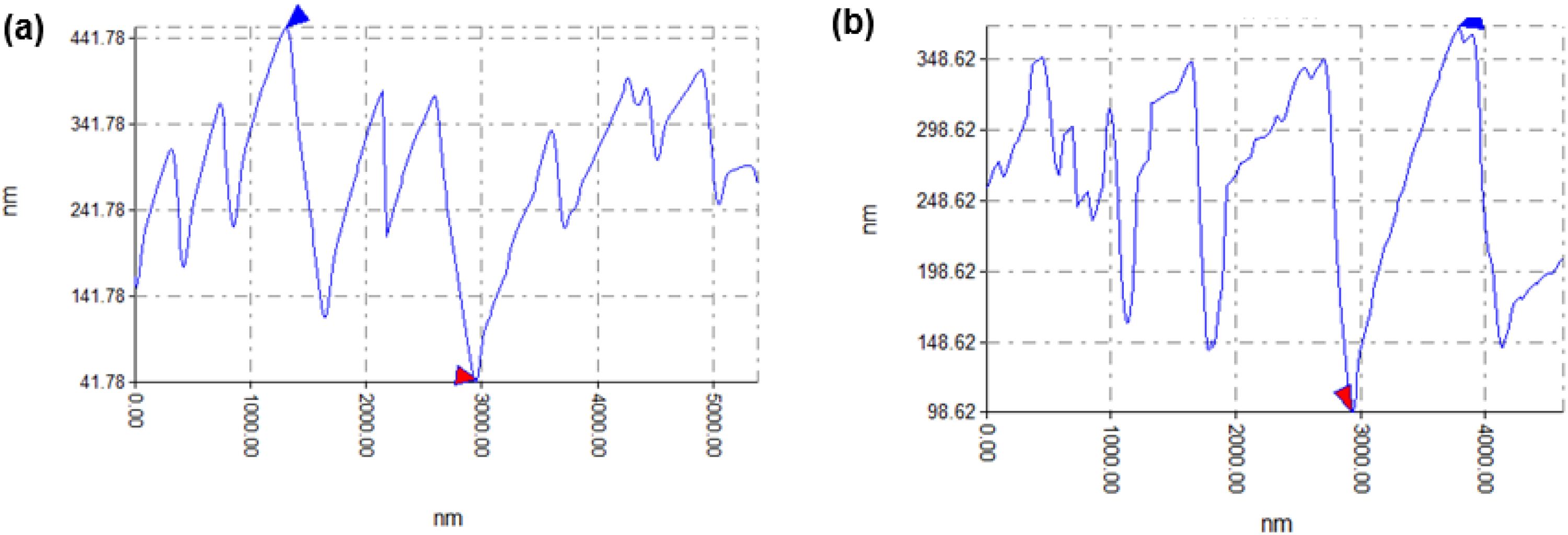
Profile line analysis of the bionic PDMS replica: (a) Region A and (b) Region B.
To verify the analysis, the freezing temperature and freezing time were measured for both the bionic PDMS sample and the planar control sample. Experimental conditions were set as: environmental temperature −10°C, humidity 80% RH, droplet size: 5 μL. The PDMS surface containing micro- and nanostructures exhibited a freezing temperature that was lower by 2.8°C compared to the untreated planar surface, with the former recording −4.9°C and the latter −2.1°C. Accurate assessment of the anti-icing system's capacity requires considering the freezing time of droplets. Notably, textured surfaces demonstrated an increase of approximately 21% in the freezing time (787 s) compared to their non-textured counterpart. Superhydrophobic surfaces can postpone the freezing time of water droplets at low temperatures. This extended freezing period allows for additional time to remove water droplets through external forces, thereby minimizing the accumulation of ice layers on surfaces.
The micro-nanostructures on the PDMS sample create abundant air gaps, significantly reducing the water-material contact area. Combined with water's surface tension, droplets on these rough surfaces adopt a nearly spherical shape (following the Cassie-Baxter model), minimizing the attachment area and adhesion force between the water and the rough surface. This enables droplets to roll off the PDMS surface more easily. The micro/nanostructured PDMS surface synergistically reduces solid-liquid contact area (via trapped air pockets) and elevates the water contact angle (>150° in Cassie-Baxter state), thereby enhancing droplet mobility (roll-off angle 5°), which is beneficial for delaying freezing time.35–37 The micro-nanostructures on superhydrophobic surfaces and low surface energy of PDMS are the fundamental reason for the anti-icing property.
Investigating the anti-icing performance under a wider range of temperatures, humidity levels, and droplet sizes to assess the robustness is important for actual usage of the biomimetic surface. 38 This aspect of the research was conducted by keeping two parameters constant while varying the third parameter. When the environmental temperature was set to −20°C, the freezing temperature was increased to −4.7 °C and freezing time was shortened to 770 s. High humidity accelerates ice formation by enhancing condensation rates. In the condition of humidity 90% RH, the freezing temperature was −4.8 °C and freezing time was 772 s. While the droplet size changed from 1 to 10 μL, the freezing analysis revealed minimal variation. However, if macrodroplets such as >100 μL was employed, the freezing temperature was increased to −3.9 °C. Large droplet size may overwhelm micro/nanostructures, leading to premature Wenzel-state transitions. The findings of this study are consistent with those reported in Reference. 39
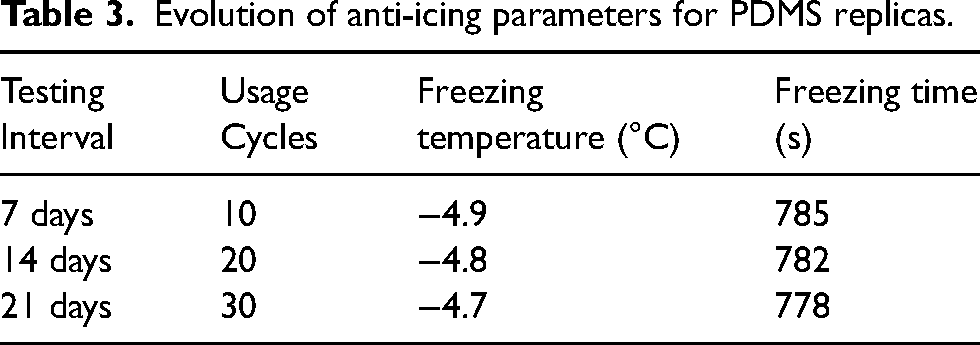
To evaluate the durability of the anti-icing characteristics exhibited by polydimethylsiloxane (PDMS) replicas of bamboo leaf surfaces, freezing temperature and freezing time measurements were conducted at three experimental intervals: 7 days (10 usage cycles), 14 days (20 usage cycles), and 21 days (30 usage cycles). Despite prolonged exposure to mechanical stress and environmental interactions, the PDMS replicas demonstrated consistent anti-icing performance throughout the testing period, with a slight elevation in freezing temperature and an acceptable reduction in freezing time, as summarized in Table 3. These findings substantiate the long-term operational reliability of PDMS-based bioinspired surfaces. As comparisons, the PDMS-coated micro-nano-nanowire surface produced by Zhong group maintained superhydrophobicity after 60 ice/de-icing cycles under −20 °C and exhibited robust durability under 1.2 kPa abrasion for 15 cycles. 40 Photothermal superhydrophobic surfaces fabricated by Liu et al. offered long-term stable anti-icing performance, demonstrating an icing delay of 1250 s and sustaining anti-icing performance through 400 abrasion cycles, showcasing exceptional long-term durability. 41 Durability test under various abrasion pressure and more usage cycles will be considered in our future work. To elucidate the dynamic wetting behavior and ice nucleation kinetics on biomimetic surfaces, numerical modeling is another research direction, 42 which would enable visualize droplet dynamics on the complex micro/nanostructured surface and potentially guide the design of more effective anti-icing topographies.
Evolution of anti-icing parameters for PDMS replicas.
Replica molding demonstrates strong scalability for fabricating large-area PDMS anti-icing surfaces, particularly through optimized processes like soft lithography and roll-to-roll manufacturing. Challenges in scalability, such as uniform PDMS curing across large substrates and mold durability, are addressed by innovations like electrostatic spray coating and hybrid deposition techniques. Such methods enable continuous production lines, reducing per-unit costs for industrial applications in the areas such as aerospace, aviation, automotive, infrastructure, microfluidics and renewable energy.
Conclusions
While ice formation on solid surfaces is a common natural phenomenon, it can lead to severe consequences such as power transmission line disruptions, mechanical failures in vehicles and aircraft, and substantial infrastructure damage. Micro-nanostructured surfaces offer advantages in ice resistance compared to planar surfaces. Nature provides numerous examples of ice-resistant surfaces, including bamboo leaves. This study uses PDMS to replicate bamboo leaf textures via biomimetic methods, creating a slippery surface with micro/nanostructures. The surface morphology of the replica was characterized using AFM and FE-SEM. The microstructures on the replica surface were observed to have a predominantly needle-like arrangement. The replicas had an average surface roughness of 46.4 nm and an RMS roughness of 59.8 nm. The replicated PDMS surface demonstrates good non-wetting behavior, evidenced by its high contact angle and low sliding angle, suggesting strong anti-icing capabilities. The PDMS surface froze at −4.9°C, 2.8°C lower than the untreated planar surface's −2.1°C. Furthermore, the textured surfaces showed a 21% delay in freezing time compared to smooth surfaces. The PDMS replica not only possesses micro- and nanostructures on their surface but also exhibits extreme slipperiness, both of which are indispensable advantages for ice-repellent properties. This study offers a biomimetic strategy for anti-icing surfaces, offering a potential to mitigate ice-related hazards through nature-inspired design.
Footnotes
Declaration of conflicting interests
The authors declared no potential conflicts of interest with respect to the research, authorship, and/or publication of this article.
Funding
The authors disclosed receipt of the following financial support for the research, authorship, and/or publication of this article: This work was supported by the major scientific research projects and landmark achievements cultivation projects, Institute for International People-to-People Exchange in Artificial Intelligence and Advanced Manufacturing, Jiangsu Provincial Industry-University Cooperation research project, (grant number 2022-ZDKYXM-06, CCIPERGZN202409, BY20230820).
