






Abstract
Marine biofouling remains a persistent challenge affecting the durability, efficiency and operational cost of marine structures and vessels. Conventional antifouling coatings, although effective, they are limited due to several factors, including toxicity, environmental persistence and regulatory restrictions. In this context, chitosan (CHT) and CHT-based nanocomposites have now intruded into various applications, satisfying multi-faceted requisites. What started from a humble beginning of marine shell waste transformed to chitin, transpired to CHT and diversified to multiple CHT derivatives and nanocomposites. The CHT-based coatings hold promise as eco-friendly alternatives due to their biodegradability, biocompatibility and inherent antimicrobial properties. Hence, the present review aimed to consolidate the various existing CHT based nanocomposites, and evaluated their antifouling and antibacterial efficiencies. Among the CHT-based nanocomposites, ZnO-CHT systems have demonstrated efficient antifouling with relatively lower toxicity, making them one of the most efficient and sustainable antifouling systems. In addition to the antifouling performance, the mechanisms behind the antifouling activity of the CHT-based nanocomposites were also discussed. The future recommendations based on the current challenges faced have been summarised. By consolidating the current knowledge on antifouling application of CHT-based nanocomposites, this review addresses existing knowledge gaps and provides comprehensive information and insights for future research and developments.
Introduction
Biofouling is the phenomenon of macro-/micro-organism growth and colonisation on materials that are constantly in contact with water, including ships, membranes, pipes and buoys. 1 The intensity of biofouling varies greatly depending on the substrate properties, as well as various biotic and abiotic factors. 2 Biofouling of submerged ship surfaces poses a crucial operational challenge in maritime sector as it alters hull texture, increases surface roughness and intensifies hydrodynamic drag. Consequently, vessels experience reduced efficiency, speed, higher fuel consumption along with significant rise in their expenditure.1,3 For instance, for a single DDG-51 class navy vessel, the total annual expenditure associated with biofouling management has been estimated to be around $56 million, which is extrapolated to $1 billion for an operational period of 15 years.4,5 Additionally, the biofouling management expenditure in aquaculture industries for infrastructures such as rope, cage, nets and floats has been estimated to contribute for approximately 5–10% of total cost.6,7
Marine biofouling is a sequential process that involves the development of a conditioning film, followed by microfouling and macrofouling.8–11 The bacterial biofilms drive the formation of fouling in ships and on wastewater treatment plant infrastructures. 12 Biofouling, along with some biofilms, such as the Staphylococcus aureus biofilms, have been known to cause infections in humans and animals and their underlying mechanisms have been explored from physical, chemical and biological viewpoints. 13
The biofilm formation depends on multiple surface properties such as micro- and nanostructure properties, hydrophilic and hydrophobic balance, surface chemistry, charge, pH and protein concentration of media. 14 In addition, intrinsic microbial characteristics such as the cell surface charge, secretion of extracellular polysaccharide layers and the presence of specific surface-associated molecules (such as autolysins in S. aureus) also play crucial roles. The initial adsorption of bacteria to the surface is controlled by physicochemical forces: electrostatic interactions, Vander Waals forces and other phenomena such as chemotaxis and compounds that function as chemoattractants (e.g., amino acids, sugars, and oligopeptides). In addition, active biological processes such as chemotaxis also contribute, whereby bacteria respond to chemical gradients generated by chemoattractant molecules. 15
Biofouling has been traditionally controlled through the application of antifouling paints. 16 However, these conventional antifouling paints comprise biocidal compounds that are toxic to a broad range of marine organisms. 1 Even at minimal concentrations, these biocides if released in aquatic environments are known to cause adverse ecological effects including disruptions in reproductive and behavioural patterns.8,17 Due to this reason, their usage has been hampered by the International Maritime Organization (IMO). 18 Furthermore, the antifouling paints exhibit only limited efficiency against microfoulants. 19 Therefore the development of nontoxic methods for biofouling has emerged as a pressing need to control adverse effects caused by biofouling on water submerged surfaces.19,20 The motivation of any antifouling technique aims primarily at these three aspects: (1) physical removal of foulants through mechanical clearing; (2) Antibiotic/biocide based eradication of biofoulants (3) modification of surface properties of the substrate to create low-fouling and non-adhesive substrate. This results in attenuation in the surface properties of substrate such as surface topography, hydrophilic-hydrophobic balance, chemical composition, roughness, polarity and surface energy. Surface modification strategies make the surfaces refractory to microbial adhesion, thereby preventing the formation of biofouling.19,21,22 While various studies have reported enhanced efficiency of different antibacterial coating, the synthesis of biofilm resistant materials using surface nano structuring based methods have recently held even more promise for wider applications.23,24 Coatings made from metal oxide nanoparticles (NPs) are crucial in the development of non-toxic control technologies. 25 For instance, TiO2 nanomaterials have exhibited superior antimicrobial properties under UV irradiation through generation of electron hole pairs, i.e., photocatalytic degradation. 26 Similarly, Ag NPs combined with biocides and water repellents also exhibit remarkable algaecide activity, which is influenced primarily by the concentration of Ag. 27 Doping with NPs like Sn, Au, Ag, and Pt, to modify TiO2 catalysts effectively regulates electron-hole recombination and significantly improves photocatalytic ability. 26 In a study conducted by Dineshram et al. (2009), 25 nanoparticle-based coatings were explored for combating biofouling under UV irradiation. UV-C radiation offers several benefits, such as reducing and eliminating biocide-mediated toxicity and reduces abrasion since it operates without direct physical contact with substrate. Titanium-based surfaces have also been used with Cu-Ni, 28 Cu coatings, 29 along with polymers to form composite coatings for antifouling applications. Further, Gopal et al. 30 have reported a process of repeated pickling and polishing cycles that have led to the reduction of the microroughness of titanium surfaces, leading to a significant decrease in biofouling. Other surface modifications include CHT-coated surfaces, 31 zwitterionic surfaces, 32 and quaternised CHT-loaded PMMA.33,34 Gopal et al. 30 reported the use of cost-effective, microwave-based methods, microroughness reduction and anodisation for modifying the titanium surface for repelling bacterial adhesion.12,30,35
Given the superior potential of nanostructures against biofouling, the present review aims to consolidate the CHT-based nano polymers and nanocomposites for antifouling coatings that have been successfully demonstrated against biofouling, with particular emphasis on fabrication strategies, material properties and performance against microbial adhesion and biofilm formation. In addition, the mechanisms employed by the CHT based polymers are critically analyzed to provide mechanistic insights into their effectiveness. To the best of our knowledge this article is first of its kind to cartograph the effective administration and application of CHT based nano polymer composites for biofouling. By consolidating the current advances in this domain, this article aims to provide effective insights for the development of effective biofilm intervention strategies.
Marine biofouling mechanisms
The biofouling phenomenon has been extensively studied in marine systems and it is generally described as a sequential process involving physiochemical surface conditioning, microbial colonization, biofilm formation, and subsequent settlement of larger organisms. The biofouling processes begin with the rapid formation of a conditioning film on the material surface immediately after immersion in marine environment. 10 Subsequently the dissolved organic molecules present in seawater including the proteins, polysaccharides, lipids and glycoproteins adsorb on to the surface through physiochemical interactions. This molecular layer modifies the surface properties of substrates such as the surface energy, hydrophobicity and charge. 11 The formation of conditioning layer is followed by microbial colonization. Bacteria and diatoms are typically the earliest colonizers and they enter the surface through their mobility or carried by water. 19 The conditioning layers play crucial roles in determining the microbial attachment on substrate since the layers modulate the properties of surface and hence the attaching bacteria.18,36
Once attached on to the surface, the bacteria proliferate and secrete extracellular polymeric substances (EPS) leading to the formation of a microbial biofilm. EPS is a complex matrix composed mainly of polysaccharides, proteins, nucleic acids and lipids that embed microbial cells and anchor them to the surface. 37 The EPS matrix provides the structural stability to biofilm, facilitates nutrient retention, and protects microbial community from environmental stressors such as hydrodynamic forces and antimicrobial agents. The formation of this biofilm represents the microfouling stage and creates a biologically active interface between the surface and the surrounding environment. 38 As the microbial biofilm matures, it modifies the surface further and releases biochemical molecules that promote the settling of additional organisms such as microalgae and protozoa. The final stage of biofouling involves colonization and growth of larger organisms commonly referred to as macrofoulers. Larvae and spores of organisms such as barnacles, mussels, tubeworms and macroalgae recognize physical and chemical signals associated with the established biofilm and attach permanently to the surface. Once after attachment, they grow and form a mature fouling community characterized by increased biomass and structural complexity. 37
Conventional antifouling polymer coatings
The antifouling polymer coatings integrated with nanomaterials, provide numerous advantages attributable to their environmentally benign and distinctive range of applications. A wide variety of metals and nonmetals such as CuO, ZnO, TiO2, and carbon-based nanomaterials have been employed for the synthesis of nanocoatings. Due to the low-cost production and superior antimicrobial properties, copper oxide based nanocomposites are widely used for antimicrobial applications. For instance, Chasse et al., 39 employed two different types of copper based nanomaterial coatings, among which the first coating was synthesized based on copper oxide (Coating A) and the second coating was prepared using cuprous thiocyanate (Coating B). These coatings were then assessed for their removal of biofouling on aluminum panels. However, this study does not recommend the use of copper oxide based nanocoating for aluminium due to the high possibility of galvanic corrosion. In another study by Wu et al., 40 a Cu2O based nanocomposite was synthesized with different morphologies including sphere, cube and cuboctahedrons. Among these morphologies, the cuboctahedron shaped NPs exhibited excellent antibacterial activity with up to 100% bacteriostatic rate against E. coli and 98% against B. subtilis.
Although copper based nanocoatings have proven effective for prevention of biofouling, they pose significant environmental risks due to the release of copper biocides into aquatic systems. Adeleye et al., 41 has comprehensively documented the environmental impacts of copper-based coatings and characterized key factors influencing their release, which include water salinity, substrate material and paint drying time.
Studies by Palanivelu et al., 42 and Suresh et al., 43 have utilised ZnO-based nanocoatings in different matrices for the prevention of fouling effects on different surfaces. Palanivelu et al., 42 integrated amide functionalized ZnO NPs along with epoxy coating and assessed its antifouling properties on mild steel surface under marine conditions. The coating that comprised 2.5 wt% ZnO nanocomposites was found to be more effective against marine biofouling organisms such as barnacles. Further, in order to enhance the antimicrobial properties of marine epoxy paints Suresh et al., 43 incorporated a silane grafted ZnO-APTES (ZnO integrated with 3-aminopropyltriethoxysilane) core shell NPs in epoxy matrix and subsequently explored their antimicrobial potential. The results of this study showed that 7wt% formulation of NPs possessed more potent antimicrobial activities against Streptomyces, Staphylococcus aureus, Pseudomonas aeruginosa and Aspergillus niger. The antifouling activity of polyaniline modified ZnO nanorods, integrated with epoxy matrices was assessed by Mostafaei et al., 44 These nanocoatings were applied to hulls and assessed under sea water conditions. Epoxy coatings containing 4.5 wt% of polyaniline modified ZnO nanorods exhibited enhanced resistance against algae and bacteria such as E. coli and S. epidermis.
TiO2 based NPs have emerged as one of the prominent contenders for antifouling and antimicrobial activities due to their superior thermal and chemical stability, photocatalytic activity, cheaper production costs, and non-toxicity.45,46 Various researchers have focused on utilizing TiO2 nanomaterials for antifouling applications. For instance, a nanocoating comprising TiO2 NPs hybridized with DGEBA epoxy resin was developed by Saravanan et al. 47 and was subsequently assessed for its corrosion resistance and antifouling effects on mild steel materials under sea water conditions through electrochemical impedance spectroscopy and agar diffusion test respectively. The results indicated that the nanocoating composed of 3wt% of APTES- TiO2 demonstrated superior antifouling and antibacterial activities against bacteria such as Staphylococcus aureus and Pseudomonas aeruginosa. Similarly, Zhang et al. 48 explored the antifouling properties of APTES modified TiO2 in combination with fluorinated acrylic nanocomposite coatings to demonstrate antifouling properties on aluminium panels immersed in marine environment. This study showed significant biofouling reduction in panels that were coated with this nanocoating when compared with uncoated aluminium panels. Although the authors haven’t mentioned specific target microbes of this coating, this nanocoating was reported to be more effective generally against algae and barnacles.
The application of TiO2 NPs for antifouling was further extended by Selim et al. 49 where in the TiO2 NPs were incorporated into a silicone (polydimethylsiloxane (PDMS)) matrix along with SiO2 NPs. This nanocoating was found to be effective against bacteria such as Staphylococcus aureus and Pseudomonas aeruginosa, algae and barnacles. The optimum concentration of TiO2 NPs was found to be 0.5 wt%.
In addition to the metallic NPs, several nonmetallic NPs, (particularly carbon-based NPs) such as graphene and carbon nanotubes have also been widely employed for formulation of antifouling nanocoating. Using ball milling approach Krishnamoorthy et al. 50 developed a graphene oxide based nano-paint for the prevention of fouling and growth of bacteria such as E. coli, S. aureus and P. aeruginosa in galvanized iron. Another study by Liu et al. 51 had reported similar antifouling and antibiotic effects exhibited by nanocoating synthesized by combining silver NPs and graphene oxide along with tetraethyl orthosilicate (TEOS) with 3-mercaptopropyltrimethoxysilane (MAPS) and hydroxyl-terminated PDMS. On the other hand, the antifouling and antimicrobial effects of an epoxy coating doped with polyaniline modified graphene oxides (PANI-GO) was investigated by Fazli-Shoukuli et al. 52 on carbon steel substrates under marine conditions. The nanocoating PANI-GO exhibited enhanced corrosion and fouling resistance.
Apart from graphene-based NPs, Carbon nanotubes (CNTs) were also employed in combination with other NPs as a nanocoating against the growth of fouling agents and microbes.53–55 For instance, Irani et al. 53 synthesized an antifouling polymer coating by integrating polydimethylsiloxane with fluorinated multiwalled-CNTs (MWCNTs). This coating was assessed for its antifouling ability along with pristine CNT. This study reported that both types of CNTs enhance the fouling release properties of the coating with fluorinated CNTs demonstrating maximum antifouling effects (reduction by 67%). Further, the MWCNTs were utilized in combination with graphene oxide NPs by Cavas et al. 55 for the synthesis of PDMS based marine coatings. Subsequently, the coating was applied to metal plates and were investigated for their antifouling effects under seawater environment. The results showed that the addition of 0.50 wt% MWCNTs significantly enhanced the mechanical strength and elongation of the PDMS coatings. The study concludes that while MWCNTs and GO improve the mechanical properties of PDMS, their effect on antifouling performance is limited. Various such, polymer based antifouling coatings have been successfully demonstrated for their ability to combat marine fouling. Similarly, Dustebek et al. 54 reinforced a Rosin based antifouling paint with MWCNTs and it was subsequently assessed on metal plates. The enhanced antifouling efficiency and extended shelf life was observed on metal plates when coated with the MWCNTs mixed paint.
Although various metal or metal oxide based, and carbon-based nanomaterials have shown promise for antifouling potential, several limitations restrict their large scale and environmentally sustainable implementation. For instance, the metal oxide nanomaterials, such as TiO2 and ZnO demonstrate efficient antimicrobial and antifouling activities only under UV/visible light irradiation. This restricts their performance in low light aquatic environments, turbid waters or deeper marine zones. In addition, the ZnO and CuO NPs can undergo dissolution and release Zn2+ and Cu2+ ions which may cause toxicity to other non-target aquatic organisms such as phytoplankton or algae. For example, the Cu based coatings have been reported to be toxic towards Isochrysis galbana a non target phytoplankton. 41 In addition, the Cu2O based nanocoating have caused galvanic corrosion of aluminium plate making them unsuitable for aluminium based substrates. 39 Apart from these, CNT based coatings exhibit poor dispersion within polymer matrices and a strong tendency towards aggregation which can significantly reduce their effective surface area and antifouling performance. 56 These apart, the CNTs along with graphene based nanomaterials are hindered by other various factors such as high production cost, difficulties in scalable synthesis, instability under prolonged marine exposure and uncertainties regarding long term ecological toxicity against non-target niches.
Preparation of CHT and CHT nanocomposites based antifouling coatings
CHT, a co-polymer comprising of glucosamine and N-acetyl glucosamine is derived from its parent compound Chitin which is a biopolymer found generally in the exoskeletons of crustaceans, molluscs, insects, and cell walls of fungi. 57 Ngasotter et al. 58 has comprehensively reviewed the diverse applications of CHT in various industries such as food, medicine, pharmaceutical and agriculture. This broader application of CHT can be attributed to reactive amino and hydroxyl groups which provide CHT with various functional properties such as polyelectrolytic properties, antimicrobial properties, antioxidative properties and ability to chelate metals. 59 Although chitin is found in a wide range of organisms, its primary source remains crustaceans, particularly crab, prawns and shrimp shells. These shells that are abundantly generated as by products or waste in food industry provide an increasingly accessible source for chitin extraction. 58
The conversion of chitin into CHT is achieved through deacetylation, a process that involves removal of acetyl groups from amino groups and thereby exposing the amino group (Figure. 1). 60 Categorization of the material into chitin and CHT depends upon the extent of acetylation. When the polymer contains >50% of N acetylglucosamine it is classified as chitin and if the percentage falls below the threshold, then the material is classified as CHT.60,61 Deacetylation process significantly impacts various properties of CHT such as the acid/base behavior, solubility, self-aggregation, metal chelating potential, electrostatic properties and biodegradability. 62 Although both acids and alkalis can be employed for the deacetylation, alkali-based methods are more preferred due to the vulnerability of glycosidic bonds towards acid hydrolysis at higher temperatures. 63 Deacetylation processes are commonly carried out with alkalis such as 40–50% of NaOH or KOH at temperatures exceeding 100°C, resulting in the production of CHT in various forms such as fibers, powders, flakes or beads. 64 The degree of deacetylation (DDA) of CHT is influenced by factors such as the concentration of alkali, molecular weight of precursor chitin molecule, reaction time and temperature. 64 Even though alkaline deacetylation is effective, it consumes high amount of energy, alters the structural integrity of chitin and the CHT polymers possess high degree of variation in their DDA and molecular weight.65,66 To address these shortcomings the amount of alkali added can be minimized by using water miscible solvents such as acetone and the reaction time can be shortened in order to optimize the deacetylation process. 65
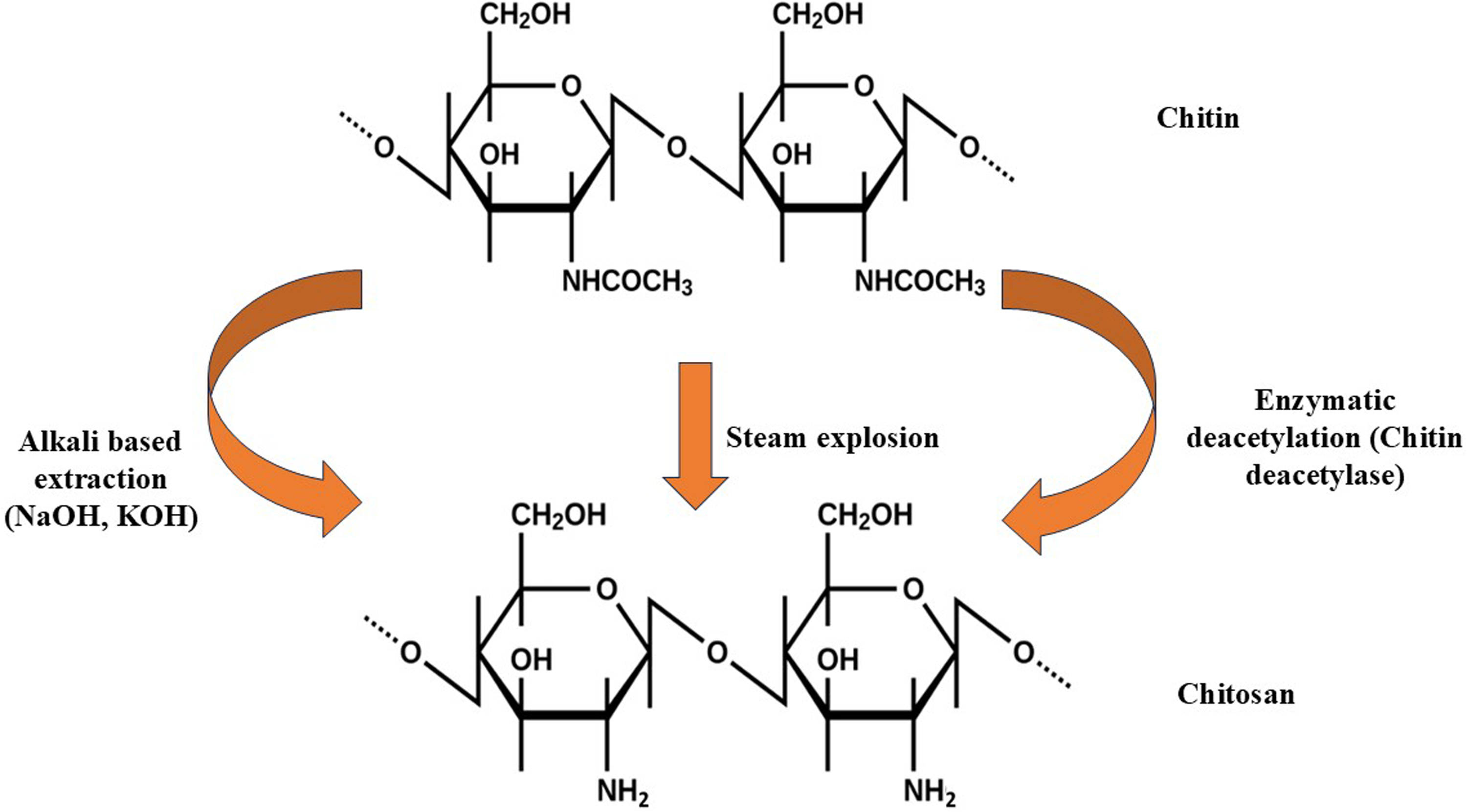
Preparation of CHT from Chitin.
Emerging methods such as microwave mediated extraction, steam explosion, deep eutectic solvent integrated with microwaves and enzymatic deacetylations show promise for the economical synthesis of CHT polymers. 67 The microwave assisted extraction has been demonstrated to improve the efficiency of NaOH-Alkali based extraction technique while reducing the reaction time from hours to minutes. 68 In contrast, the steam explosion technique employs a different mechanism where in the chitin in subjected to high pressure and temperature followed by a rapid decompression in a puffing gun. This process converts the steam energy into thermo mechanical energy facilitating removal of acyl groups from amino groups. 67
Enzymatic deacetylation is yet another promising alternative strategy for the preparation of CHT from chitin. These enzymes are primarily derived from various bacteria, fungi and insects including Mucor rouxii, Absidia coerulea, Aspergillus nidulans and Colletotrichum lindemuthianum. 69 However enzymatic approaches haven’t yet been employed in industrial processes primarily due to their high cost. Furthermore, these enzymes are less efficient in catalysing insoluble chitin without pretreatment of the materials.
Fabrication methods of CHT polymers
CHT is further employed to generate CHT based nanocoatings through several fabrication methods including solution casting, layer by layer assembly, extrusion and coating and spraying. Out of these techniques the solution casting technique is the most commonly used technique which involves dissolution of CHT in an acidic solution along with other polymers. This is followed by casting into a flat surface which upon drying yields the nanofilm. 70 The layer-by-layer technique (LbL) is another popular method in which the oppositely charged layers are sequentially deposited to create a multilayered structure with superior properties. 71 Extrusion is a large scale industrial method which involves melting and shaping of CHTs along with other polymers which impart enhanced thermal stability and mechanical properties. 72 Lastly coating and spraying methods involve direct application of CHT coatings onto the surface of the substrate.73,74 This method is particularly used in food industries to extend the shelf life of food by reducing moisture loss and inhibiting microbial growth. 60 Among these techniques, the LbL method has proven to be the most efficient method to synthesize multilayered structures using oppositely charged electrolytes. This makes it more suitable method for fabrication of antimicrobial coatings. The various techniques that have been used to prepare CHT based nanocomposite coatings have been represented in Figure. 2(a-c)
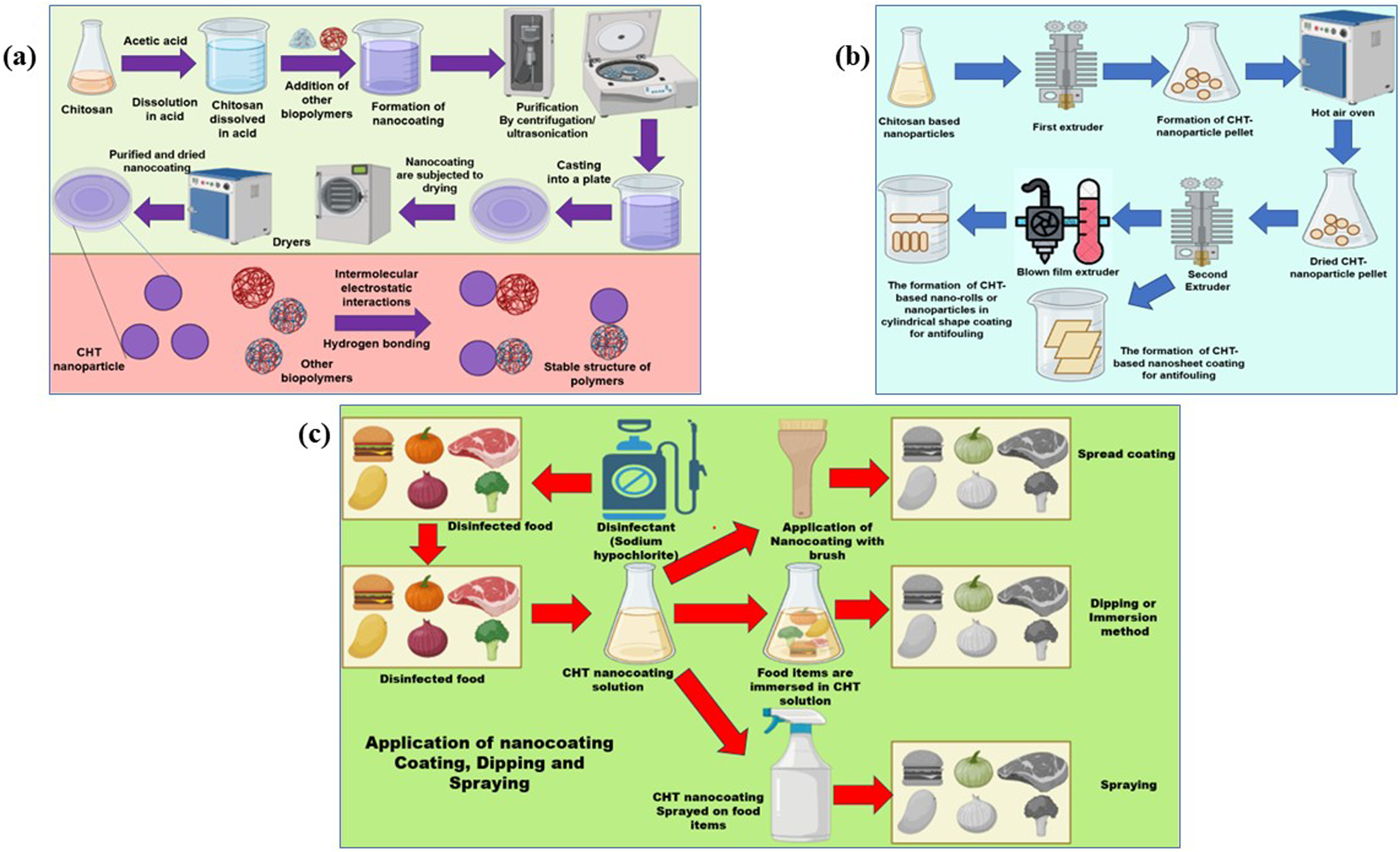
Schematic of the various predominantly used antifouling CHT nanocoating preparation techniques. (A) Solution casting method, (B) Extrusion method and (C) Coating, dipping and spraying methods.
Types of CHT nanocomposite coatings
Despite its high surface and physiochemical properties, pristine CHT offers certain limitations including poor mechanical stability, thermal stability and barrier properties. To address these issues, CHT can be combined with a wide variety of (nanoscale) organic, inorganic and metallic substances.75,76 In particular, the distinctive antimicrobial properties and metal chelating capabilities of CHT enable it to interact with various metal oxides such as ZnO, CuO and TiO2. Building on these interactions, numerous studies have developed novel and efficient CHT based nanocomposite coatings in combination with metal oxides to prevent bio-fouling.35,36,38,56,77–84
For instance, a recent study by Ghattavi et al. 84 synthesized a hybrid melanin and CHT based NPs effective against organisms such as E. coli, S. aureus, Artemia salina and Amphibalanus Amphitrite in marine environment. Similarly, Lima et al. 85 developed a polylactic acid surface spiked with different concentrations of CHT derived from Loligo opalescens pens, a waste generated in fishery industries. Subsequently these nanocomposites were integrated into marine paints and assessed for its antifouling and antimicrobial activity against a model proteobacterium Cobetia marina which causes biofouling. The findings of this study revealed >35% reduction of biofilm formation of Cobetia marina and ∼70% reduction in growth of its cultivable viable cells. Further, Al-Naamani et al. 86 have employed pure CHT based coatings on plastic substrates to evaluate their antifouling and antimicrobial properties. This study reported the effective antilarval activity of CHT coatings on bryozoan Bugula larva (88% reduction) preventing its accumulation on the plastic surface exposed to marine conditions.
Similarly, Elshaarawy et al. 87 synthesized a novel polyelectrolyte grafted CHT Schiff bases as nanocoating in combination with a paint matrix for the inhibition of fouling under Marine conditions. This nanocoating was highly effective in inhibition of fouling organisms particularly Staphylococcus aureus.
The utility of CHT was further extended by Bulwan et al. 88 where in LbL technique was employed for the synthesis of ionic CHT based ultrathin antifouling and antimicrobial nanocoating. This coating demonstrated superior bactericidal activity against Staphylococcus aureus biofilms. Due to their distinctive antimicrobial and anticoagulative properties, this nanocoating holds promise for various biomedical applications such as disinfectant coatings on medical devices, PPE kits and they can be utilized to protect membrane integrity.
Further, CHT-metaloxides based nanomaterials have also demonstrated superior antimicrobial activity when compared with pure CHT. In particular CHT-ZnO nanorods have exhibited more efficacy outperforming the pure CHT and other CHT-metal based nanocomposites. In comparison with ZnO NPs, ZnO nanorods impart less toxicity to the marine environment, suggesting that the combination of CHT and ZnO nanorods would result in a more efficient coatings comprising enhanced stability and antifouling properties. Owing to their superior antimicrobial, antifouling properties and reduced toxicity, ZnOs have been used as an important component along with CHTs in antifouling coatings. In addition, ZnO has been declared as Generally recognized as safe materials (GRAS) by FDA, USA.89–91 ZnOs when used along with CHTs have demonstrated improved thermal stability, UV blocking capability, mechanical strength and antimicrobial efficacy.92–94 In addition, the enhanced efficiency of ZnO nanorods in preventing biofouling has been documented by various previous studies.86,93,95 Recent studies by Mandal et al., 80 and Sivakumar et al. 79 proposed CHT-ZnO nanomaterials in combination with CuO and TiO2 respectively for effective antifouling against M. leutus, E. coli, Cyanobacteria 80 and barnacles. 79 Among these studies Mandal et al., 80 reported enhanced microbicidal effects under solar irradiation.
A study by Al-Belushi et al. 95 developed a nanocomposite coating combining CHT and ZnO nanorods in varying concentration applied to fiberglass plates to improve its antimicrobial and antifouling activities both under light and dark conditions. The CHT-ZnO nanocomposites exhibited superior antimicrobial activity against organisms such as E. coli and Bacillus subtilis particularly under the light conditions. In addition, it was also reported that the enhanced antimicrobial efficiency was observed with the nanocomposite composed of 2 wt% CHT-ZnO nanorods. Al-Naamani et al.93,96 conducted two distinct studies for exploring the applications of ZnO-CHT nanocomposite in marine environments, 96 and for food packaging. 93 In their study on marine antifouling, ZnO-CHT based nanocomposite demonstrated significant antimicrobial activities against marine organisms such as Navicula incerta and Pseudoalteromonas nigrifaciens. However, in their another study, 93 ZnO-CHT nanocomposite was incorporated into polyethylene films to develop a novel packaging material. About 99% of food pathogens such as Salmonella enterica, E. coli, and Staphylococcus aureus were reported to be inhibited by this nano packaging material. This study highlighted the potential of these materials for improving the shelf life of packed foods.
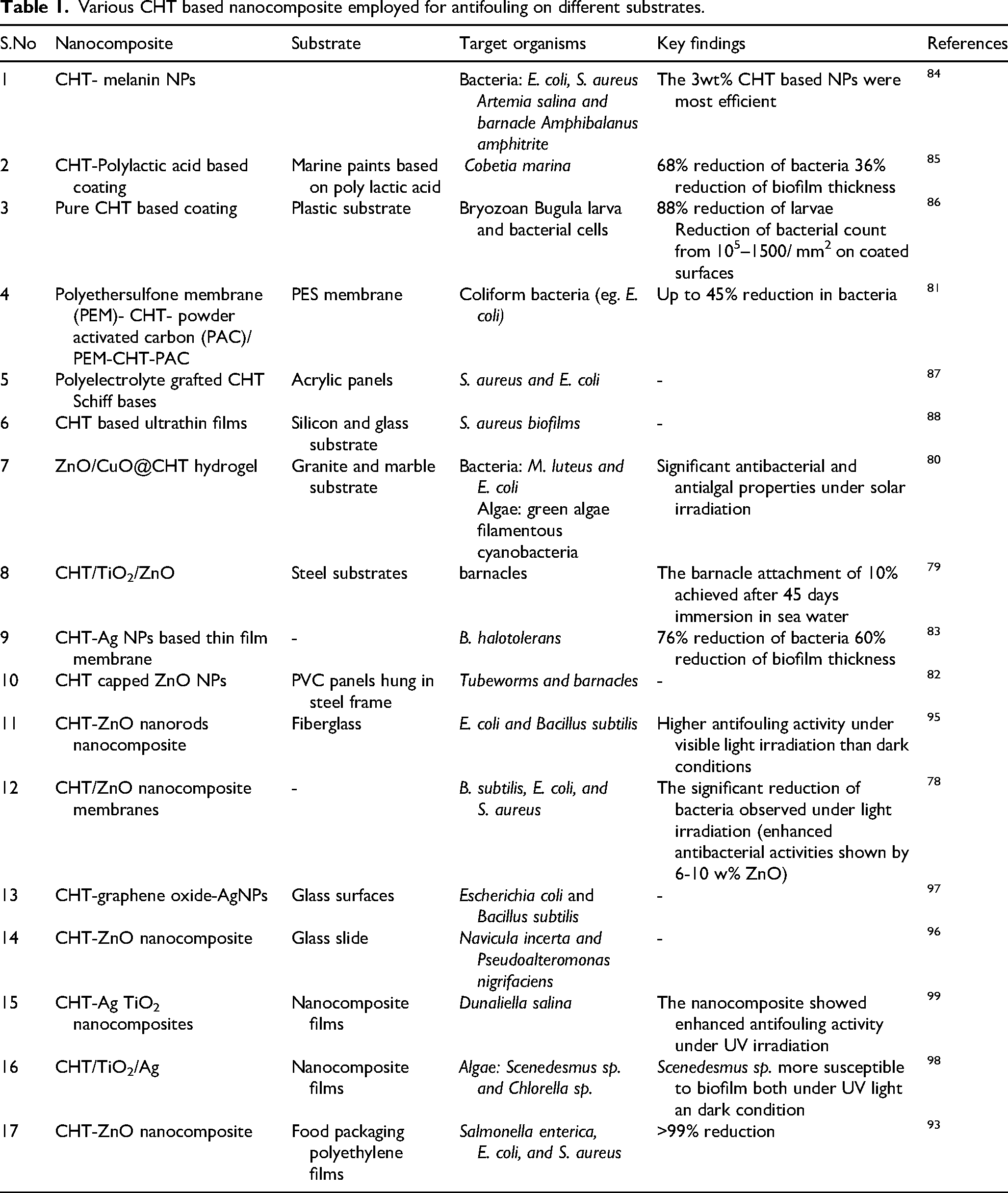
ZnO-CHT NPs exhibit high efficiency, however it faces a significant feasibility challenge. The ZnO NPs lose stability under acidic conditions and dissociates into Zn2+ ions. On the other hand, CHT can be crosslinked to ZnO particles only under acidic condition (protonation constants between 6 and 6.5). These contrasting characters of ZnO and CHT create complexities in employing ZnO-CHT based nanocomposites particularly in acidic conditions. To address these shortcomings Pounraj et al. 97 developed a composite material combining CHT with a graphene oxide nanomaterial along with AgNPs and subsequently explored its antimicrobial and antifouling activities. The resulting nanofilm effectively reduced the growth and biofilm formation by bacteria such as E. coli (Gram-negative) and Bacillus subtilis (Gram-positive). This study provides scope for the hybridization of CHT with several other non-metallic NPs for the effective prevention of antifouling. Similarly, in their two distinct studies Natarajan and co-workers had investigated the efficiency of CHT/TiO2/Ag films for the effective growth inhibition of freshwater algae Scenedesmus sp. and Chlorella sp. 98 and marine microalgae Dunaliella salina. 99 The nanofilm was reported to significantly inhibit Scenedesmus sp., Chlorella sp and Dunaliella salina under the UC-C light. Table 1 summarizes the various CHT based nanocomposites used for antifouling applications.
Various CHT based nanocomposite employed for antifouling on different substrates.
It is noted that ZnO, has been widely employed along with CHT nanostructures despite their inherent disadvantages for biofouling applications. This can be primarily attributable to its unique multifunctional characteristics enabling synergistic enhancement of biofouling. Unlike other metal oxides such as TiO2 or Ag based polymers, the ZnO can generate both reactive oxygen species (ROS) and Zn2+ ions both contributing to effective microbial deactivation. When integrated with CHT which itself disrupt microbial membranes using electrostatic interactions a complementary and amplified antimicrobial effect is achieved. 100
CHT based mechanisms of antifouling
Mechanism of action by organic and inorganic compounds based CHT nanocoating
The effective microbial growth inhibition by CHT based nanocomposites can be attributed to different mechanisms as highlighted in aforementioned literatures. Generally, the pure CHT exert surface charge interactions where the protonated amino groups of CHT interacts electrostatically with negatively charged microbial organisms. This interaction leads to membrane depolarization, increased permeability and leakage of intracellular components ultimately leading to cell death. A similar mechanism has been proposed by Lima et al. 85 for antifouling activity using CHTs.
The antifouling mechanisms discussed by Elsharaawy et al., 87 and Bulwan et al., 88 utilize similar strategies to prevent biofouling, i.e.,., particularly by preventing the adhesion and biofilm formation of microbes. The mechanism highlighted by Elsharaawy et al., 87 involves surface modification that increases hydrophilic activity of the nanocomposite. The ionic liquids used in this composite prevent microbial adhesion while the polyelectrolyte brushes staging the microbial membrane disruption through various electrostatic interactions. Similarly, the CHT nanocomposites proposed by Bulwan et al., 88 also increase surface hydrophilicity following which the biofilm formation is rendered by reduction in microbial protein absorption. In addition, the smooth-layered CHT nanocomposites also acts as physical barrier by creating a weakly adherent surface thereby preventing microbial adhesion. 88 Similar mechanism of microbial growth has been attributed to the pure CHT based nanocoating by Al-Naamani et al. 86
Mechanism of action by metal based CHT nanocomposites
In general Zn-CHT nanocomposites employ synergistic mechanisms i nvolving photocatalytic production of ROS such as hydroxyl ions and with controlled release of ions due to dissolution of metal-oxides in water. While under the light exposure the ROS production through water photocatalysis was high when compared with release of metal ions and hence ROS contributed more towards the antimicrobial effects. ROS are widely known for their capability to degrade bacteria through effective disruption of bacterial cell membranes, mitochondrial damage and DNA damage ultimately resulting in bacterial cell death.85,93
In contrast, enhanced dissolution of metal ions such as Zn2+ ions was observed in the absence of light. The Zn2+ ions are known to produce ROS which in turn contributed towards the antimicrobial activities. Other than the previously mentioned mechanisms, this study speculates another mechanism of antimicrobial action for CHT-ZnO nanocomposites. The charged amino groups on the coatings can disrupt bacterial outer membrane through electrostatic interactions which destabilizes the bacterial membrane leading to cell death. 93 Similar to Zn-CHT based nanocomposite TiO2/ Ag/ CHT and Ag/CHT based nanocomposite also mediate microbial inhibition through the production of ROS.98,99 Figure. 3 represents the speculated mechanisms behind the antifouling activity of CHT nanocoating. Despite these reports many studies have not delved deep into mechanism of antifouling and antimicrobial activities, using CHT based nanocomposites. This study aims to emphasise the importance of mechanistic studies focussing on surface charge interactions, wettability, nano topographical features, controlled ion release and photocatalytic activities. A deeper understanding is required for the rational design optimisation and large scale applications of CHT based antifouling coating in complex marine environment.
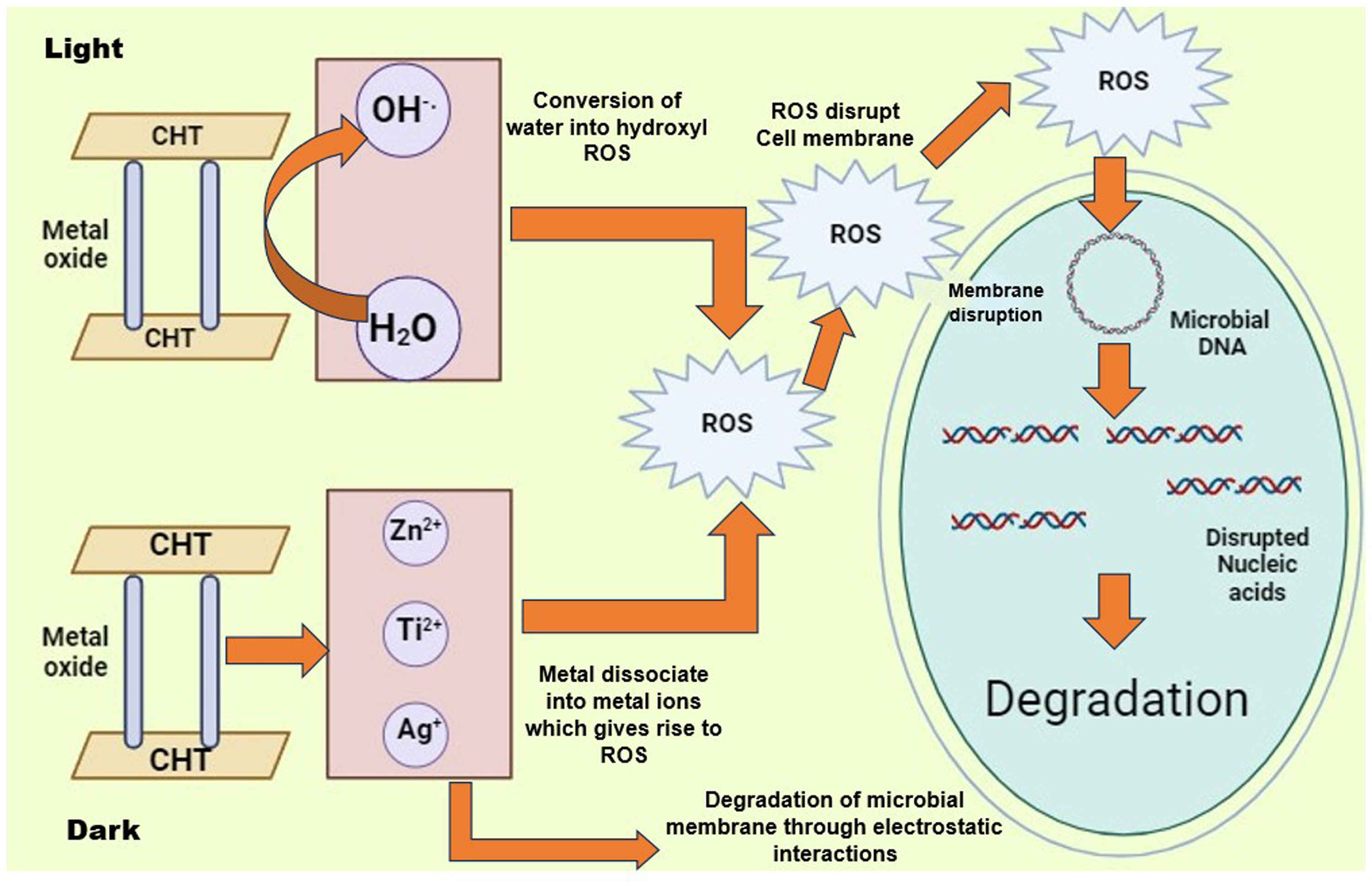
Mechanism of microbial degradation by metal-CHT nanocomposites under light/dark conditions.
Challenges and future research
The practical challenges for any antifouling coating had been well summarized by Maan et al. 100 A successful antifouling coating will need to possess various features such as: enhanced durability, reliability, ease in application, stability, cost-effectiveness, eco-friendliness and substrate-independency. Given the volume of high-quality research that is being performed, and furthermore sophisticated designs being experimented on, arriving at an ideal antifouling coating is not impossible. But practically it is not that easy to come up with a reliable and trustworthy antifouling coating.
The challenges when it comes to antifouling coatings is due to the very fact that they are exposed to aqueous environment, sea water or freshwater, which is an aggressive, dynamic environment. The next challenge is that they are attacked by fouling organisms and hence these coatings are likely to be modified over time. In the beginning, most of these coated surfaces display excellent antifouling properties, but maintaining the long term sustainability of these becomes challenging. Over the time, fouling agents with different surface characteristics and heterogeneities will adsorb from the surroundings and compromise the surface characteristics of the coatings. Also, the coatings are prone to degradation, accidental scratching, or other types of mechanical damage that will eventually harm the antifouling coating and expose the underlying substrate, making the situation worse than before. Translating the specific lab-scale antifouling coating to larger surfaces turns out to be far too difficult and expensive. Polymer coatings also are subjected to all these challenges, hence, real time applications and assessments are what will actually give us a exact picture of how successful our coatings are.
During the course of this review, we found that although numerous laboratory scale assessments have been carried out, not many real time testings have been demonstrated. However, only a limited studies have evaluated the CHT based nanocomposites under real marine environments. For instance El Saied et al. 82 assessed nanoCHT based capped ZnO coatings through direct immersion of coated PVC panels in Eastern Harbor of Alexandria (Mediterranean Sea). After 64 days significant reduction in adhesion of tapeworms and barnacles (∼10%) was observed. Similarly, Al-Naamani et al. 96 assessed CHT-Ag TiO2 nanocoatings under natural sea water in an aquarium set up. A recent study by Sivakumar et al. 79 conducted a mesocosm and field immersion studies for assessing the scalability their CHT/TiO₂/ZnO nanocomposite. This study has reported significant reduction in macro and micro fouling. However, this study was limited to small scale in indoor set ups and short term exposure periods. More of studies that assess nanocoatings in natural environments are needed to determine the overall reliability of CHT based nanocomposites for antifouling applications. We are in need of mechanically stable and durable antifouling coatings, which can be cheaply synthesized and universally applied onto large surfaces, while preserving their antifouling performance on a long-term basis.
In contemporary world, cost consideration is a very important criterion. Generation of chitin/CHT from marine shell wastes, categorizes this polymer as naturally obtained, sustainable, recyclable material derived polymer. Hence, exploring more applications based on CHT, CHT derivatives and chitin is deemed advantageous. In addition, the mechanism behind the antifouling activity of CHT nanocomposites has not been completely elucidated. There are scattered reports on how the antifouling activity is orchestrated but they are not sufficient to obtain a clear understanding of CHT based antifouling. A clear understanding on the fundamental mechanism behind the antifouling activity of CHT nanocomposites will actually help exploit this available technology to the full maximum.
Conclusions
The present review highlights the potential of CHT based nanocomposites as effective and sustainable antifouling agents. Key findings indicate that the incorporation of materials such as ZnO, TiO2, and Ag significantly enhances antifouling performance, through synergistic mechanisms including surface charge interactions, photocatalytic ROS generation, controlled ion release, hydrophilic surface modifications, and nano topographical effects. Among the CHT based systems ZnO doped systems were widely applied and demonstrated superior antifouling effects with relatively lower toxicity. The major advantages of CHT based nanocomposites include their biodegradability, biocompatibility, lower toxicity and multifunctional strategies addressing the environmental regulatory limitations associated with conventional antifouling coatings. Despite these benefits they still encompass challenges associated with scalability, large scale applicability and persistence of limited field assessments. However, with continuous advancements, CHT nanocomposites exhibit strong industrial potential for development of ecofriendly efficient and commercially viable antifouling coating for marine applications.
Footnotes

Author contribution(s)
Funding
The authors received no financial support for the research, authorship, and/or publication of this article.
Declaration of conflicting interests
The authors declared no potential conflicts of interest with respect to the research, authorship, and/or publication of this article.
Data availability statement
No data is reported.
Institutional review board statement
Not applicable.