






Abstract
The lack of head-to-head clinical studies powered to compare atomoxetine and osmotic release oral system (OROS) methylphenidate necessitates treatment comparison by methods that include indirect evidence such as network meta-analysis (NMA). A NMA assessing the relative treatment effects of atomoxetine and OROS methylphenidate in adults with attention-deficit/hyperactivity disorder (ADHD) was conducted. Studies were identified by systematic literature review. Analyses summarised improvements in efficacy, measured by ADHD-specific scales, using Cohen’s d to calculate the standardised mean difference (SMD), and all cause discontinuations. Results showed effect sizes (SMD, 95% credible interval (CrI)) relative to placebo that did not differ significantly between atomoxetine (0.46, 0.36–0.56) and OROS methylphenidate (0.51, 0.40–0.63) in clinical studies of up to 12 weeks’ duration (SMD, 95% CrI for atomoxetine versus OROS methylphenidate: –0.05, –0.18–0.08). Patients treated with these medications responded better than those given placebo across all analyses. There was also no significant difference in discontinuation rates between atomoxetine and OROS methylphenidate (odds ratio, 95% CrI: 0.85, 0.53–1.35). Between-study heterogeneity was low overall. Results of this NMA suggest that the efficacy of atomoxetine and OROS methylphenidate in adults does not differ significantly. Clinical guidelines may require amendment to reflect these recent data.
Keywords
Introduction
Attention-deficit/hyperactivity disorder (ADHD) is becoming increasingly recognised as a psychiatric disorder that persists into adulthood (Bolea-Alamanac et al., 2014; Kooij et al., 2010). Dependent on the diagnostic criteria utilised, estimates for the prevalence of ADHD in the adult population are commonly accepted to be between 3.4 and 4.4% (Bitter et al., 2010; Faraone et al., 2005; Fayyad et al., 2007; Kessler et al., 2005a, 2006). The prevalence of ADHD among patients attending routine psychiatric outpatient clinics in Europe, using Diagnostic and Statistical Manual of Mental Disorders (DSM) criteria, has been recently estimated to be 15.8% (using DSM-IV criteria) and 17.4% (using DSM-V criteria), based on a European observational study of 2009 patients (Deberdt et al., 2015). These findings are similar to those of a naturalistic study of psychiatric outpatient clinics in the UK reporting a prevalence rate of 22% (Rao and Place, 2011).
Older guidelines such as National Institute for Health and Clinical Excellence (NICE) guidelines (NICE, 2008) and European consensus (Kooij et al., 2010) guidelines recommend methylphenidate as first-line treatment for adults with ADHD, although they acknowledge the lack of head-to-head clinical trials directly comparing methylphenidate with atomoxetine (NICE, 2008). The 2008 NICE recommendation is based on a combination of short- and long-term efficacy and safety evidence, retrieved up to December 2007. The long-term benefit and safety conclusions for methylphenidate were founded largely on outcomes from a long-term US study in children (Jensen et al., 2007). However, atomoxetine is currently the only ADHD medication licensed in most European countries for initiation in adults to treat ADHD, based on results of a comprehensive clinical study programme. One other available treatment for initiation in adults with ADHD is lisdexamfetamine, which is currently licensed in the UK, Denmark and Sweden (UK Medicines Information, 2015). The majority of the clinical data on atomoxetine in adult populations were not published at the time the NICE guidelines were produced, and analyses included only the publically available information at the time. Although NICE did issue an evidence update on ADHD in July 2013, which discussed new evidence that had emerged between May 2011 and March 2013 (NICE, 2013), neither this update nor more recent guidelines from the UK (Bolea-Alamanac et al., 2014) included all the recent atomoxetine clinical data.
Numerous clinical papers have been published on atomoxetine since development of the 2008 NICE guidelines. In total, there have been nine randomised, placebo-controlled, parallel-design clinical studies with atomoxetine in adults (Adler et al., 2008, 2009a, 2009b; Durell et al., 2013; Goto et al., 2013; Michelson et al., 2003; Wilens et al., 2011; Young et al., 2011) and one maintenance of response study (Upadhyaya et al., 2013). In addition, one recent randomised study evaluated atomoxetine and osmotic release oral system (OROS) methylphenidate directly and reported no difference in outcomes using traditional ADHD rating scales and measures of cognitive functioning (Weisler et al., 2012). This study by Weisler et al. (2012) was not powered to consider the comparison between OROS methylphenidate and atomoxetine, but rather an experimental medication at three different dose levels versus placebo. OROS methylphenidate and atomoxetine served as active controls in this study and showed similar efficacy (Weisler et al., 2012).
Meta-analyses have also been performed to assess the relative treatment effects of different ADHD medications. A previous meta-analysis in adult ADHD populations reported mean effect sizes that were generally larger for stimulants than non-stimulants (0.73 for long-acting stimulants and 0.39 for non-stimulants (atomoxetine, bupropion and others)) (Faraone and Glatt, 2010). Reported effect sizes in other meta-analyses included 0.4 for atomoxetine (Cunill et al., 2013) and 0.42 for methylphenidate (Koesters et al., 2009), although methodological issues make comparisons between individual meta-analyses difficult (Koesters et al., 2009). Many of the available meta-analyses (Cunill et al., 2013; Faraone and Glatt, 2010; Koesters et al., 2009) were performed before the majority of the atomoxetine clinical studies were published and therefore did not include a number of the more recent clinical studies. The meta-analysis of Faraone and Glatt (2010) evaluated a subset of studies and was therefore only able to include three long-acting methylphenidate studies involving 165 methylphenidate-treated patients and three out of nine atomoxetine studies comprising 279 patients exposed to atomoxetine in placebo-controlled trials. At the current time, 4600 patients have been exposed to atomoxetine in adult ADHD clinical studies of all types, with the majority in randomised, placebo-controlled trials (Medicines and Healthcare Products Regulatory Agency (MHRA), 2012).
The results of meta-analyses can reflect differing methodologies (Koesters et al., 2009) and the number of studies able to be included due to the time of analysis relative to the available information in the literature. Network meta-analysis (NMA) is a methodology that allows for the synthesis of indirect and direct evidence to compare the efficacy of multiple treatments in the absence of definitive head-to-head clinical study data. It includes both head-to-head studies and studies comparing to a common comparator (Mills et al., 2013), enabling the simultaneous comparison of multiple interventions in a single analysis (Sutton et al., 2008). An advantage of NMA is the ability to include different study methodologies and hence a potentially greater number of studies. The key difference between meta-analysis and NMA is that meta-analysis cannot combine both direct and indirect evidence and looks at two treatments only using direct evidence.
NMA has been used in ADHD to compare multiple treatment options for children and adolescents (Roskell et al., 2014), in schizophrenia to compare multiple antipsychotics (Leucht et al., 2013) and also in bipolar depression (Ng-Mak et al., 2014). As in a classical meta-analysis, an NMA results in a summary of treatment effects between the different arms; hence the benefit of randomisation is retained if only randomised controlled studies are used. NMA is therefore an appropriate method for combining both direct and indirect evidence to compare the efficacy of atomoxetine and OROS methylphenidate.
Our study aims to report on the comparative effect size of atomoxetine and the most commonly prescribed treatment for ADHD in the UK, OROS methylphenidate, in adults with ADHD, based on an NMA incorporating all currently available randomised, controlled studies in the literature – using both individual studies versus placebo and any direct comparative data. As the focus of this NMA was exclusively on the comparison between atomoxetine and OROS methylphenidate, studies involving amphetamines or other (non-OROS) formulations of methylphenidate were not included. At the date when this NMA was performed, no head-to-head randomised clinical study powered for superiority existed to provide evidence of the efficacy and tolerability of atomoxetine in comparison with OROS methylphenidate for the treatment of adult patients with ADHD.
Methods
Literature search
The studies used in this analysis were identified by a systematic review of the literature up to March 2013, using the following databases and conference proceedings: Embase, Medline, Cochrane Library, Health Technology Assessment (HTA), Database of Abstracts of Reviews of Effects and National Health Service (NHS) Economic Evaluation Database. This ensured that the best available evidence was used when deriving the pooled estimates of the relative treatment effects. This analysis was undertaken to support the UK HTA reviews of the adult indication for atomoxetine, hence the timelines used for identifying papers for inclusion. The majority of data were taken from published manuscripts, except for the Asian study (LYEE) (Goto et al., 2013), which was not published at the time of the analyses, necessitating use of the clinical study report. All included studies used DSM-IV criteria and were considered, as ensured by the study inclusion criteria, sufficiently homogeneous to be quantitatively combined.
Study inclusion and exclusion criteria
To be included in the analysis, studies must (a) have included adults who met the DSM-IV definition of ADHD; (b) have atomoxetine or OROS methylphenidate as interventions; (c) have either placebo, atomoxetine or OROS methylphenidate as comparator; (d) have reported on ADHD scales that measure core symptoms (Conners’ Adult ADHD Rating Scales (CAARS) (Conners et al., 1999), Adult ADHD Self-Report Scale (ASRS) (Kessler et al., 2005b), ADHD Investigator Symptom Rating Scale (AISRS) (Spencer et al., 2010), ADHD Rating Scale (ADHD-RS) (DuPaul et al., 1998) or Wender-Reimherr Adult Attention Deficit Disorder Scale (WRAADS) (Rösler et al., 2008)), rates of discontinuation or persistence; and (e) be parallel, randomised, double-blind, controlled studies. Recent systematic literature reviews and meta-analyses were used to validate that all relevant studies had been identified.
The following exclusion criteria were applied: (a) studies which did not report the mean improvement measured by at least one of the five main ADHD symptom scales (CAARS, AISRS, ASRS, ADHD-RS or WRAADS); (b) studies investigating the effects of amphetamines, extended-release (ER) methylphenidate or immediate-release (IR) methylphenidate – unless these also included atomoxetine or OROS methylphenidate as an intervention (see inclusion criterion (b) above), in which case only data from the atomoxetine or OROS MPH arm were included. Studies involving other (non-OROS) formulations of methylphenidate were excluded as the aim of the NMA was to specifically compare OROS methylphenidate – the mostly widely prescribed methylphenidate product – with atomoxetine (Coghill and Seth, 2006); (c) open-label studies, as these were considered to potentially have a high risk of bias, specifically in ADHD where measurements of outcomes involve subjective judgments by the investigator or patient; (d) cross-over studies, as these were considered less appropriate in a condition like ADHD in which “carry-over” effects may potentially occur, increasing the risk of “contamination” bias; (e) observational studies, as numerous parallel, double-blind, randomised, controlled trials were identified; and (f) all studies exceeding 12 weeks’ duration, as no relevant studies longer than 12 weeks were identified for OROS methylphenidate and, hence, no relevant data were available for this treatment option. As a result, four atomoxetine studies (LYDQ, LYBV, LYCU and LYCW) were excluded as being of 16–24 weeks’ duration (Adler et al., 2008, 2009a, 2009b; Young et al., 2011).
Initial inclusion of studies was based on review of the abstract; if that information was insufficient, the complete manuscript was reviewed to make the final determination of inclusion or exclusion. Two independent reviewers identified the studies for the NMA, and any disagreement between the two reviewers was decided by a third reviewer. The reasons for exclusion of studies at the full text review stage were documented.
Data extraction
The following data were extracted or derived from the clinical studies, based on availability, to be used in the analysis: discontinuation rate for intervention and comparator; change from baseline and standard error in efficacy scale for the intervention and comparator; pooled standard deviation; overall effect size, defined as Cohen’s d standardised mean difference (SMD) (Cohen, 1998).
Outcomes
This paper reports the results of meta-analyses of efficacy, as well as NMA, that used SMD based on the mean change from baseline in efficacy scales. A separate meta-analysis was performed for study discontinuation rates.
Statistical analysis
For continuous outcomes measuring the mean change in disease scale score, in the absence of a single scale or series of mutually interchangeable scales, the mean change estimates derived across studies were standardised before they were combined. This was implemented using the Cohen’s d SMD, which converts the measured continuous outcomes to a uniform scale, whereby the magnitude of the intervention effect is expressed in proportion to the observed variability of each study (Cohen, 1998). This was achieved by dividing the difference in means between the treatment and control arms by the pooled standard deviation between the two groups.
When conducting the continuous outcomes analyses, it was apparent that, in many instances, variability information had not been reported alongside mean change point estimates. In these instances, and to allow the analyses, missing variability information (standard deviation) was imputed using the average of the standard deviation of the remaining trials (where this information was reported). This was a pragmatic approach to address missing data and avoided exclusion of the study from the meta-analysis and NMA.
Pairwise meta-analysis
Direct pairwise meta-analyses were conducted to characterise the level of heterogeneity among included studies. For treatment response, measured as SMD, as well as for discontinuation, meta-analyses were conducted for each active intervention versus placebo using a frequentist framework.
For treatment response (continuous outcome), fixed effects models used the inverse variance method (I-V), and random effects models used the DerSimonian and Laird (D+L) method. For discontinuation (binary outcome), fixed effects models employed the Mantel-Haenszel (M-H) method, while for random effects models, the D+L method was used (DerSimonian and Laird, 1986). Fixed and random effects model analyses were conducted using Stata/SE 11.1 (StataCorp, College Station, Texas, USA). The main difference between these two types of models is that the former assumes that all studies for a given comparison are estimating the same true underlying treatment effect, while the latter assumes that the true treatment effect across studies for a comparison come from a common distribution (Jansen et al., 2014). This generally leads to wider confidence intervals (CIs) associated with random effects models than with fixed effects models. Random effects models are preferred in the presence of heterogeneity across studies.
NMA
The NMA was conducted using a Bayesian framework and the analyses were conducted using WinBUGS version 1.4.3 (Lunn et al., 2000). Between-trial heterogeneity was generally low in the pairwise meta-analysis, as indicated by a low I2 value. As a result, no adjustment was made for treatment effect modifiers in the NMA. Both fixed and random effects models were fitted to the data, and standardised mean differences, with 95% credible intervals (CrIs), were calculated. Baseline and intervention effect parameters were given flat (uninformative) normal (0, 1000) priors, and the between-study standard deviation flat uniform distributions with an appropriately large range given the scale of measurement.
The difference (improvement from baseline measured by the CAARS, AISRS, ASRS, ADHD-RS or WRAADS scales) between placebo and atomoxetine and between placebo and OROS methylphenidate, and respective standard deviations, were collected to derive an overall intervention effect of atomoxetine and OROS methylphenidate relative to placebo.
None of the 95% CrIs or p-values were corrected for multiplicity.
Pre-specified analyses
The base case analysis included all relevant studies identified as part of the systematic literature review for atomoxetine and OROS methylphenidate.
Three sensitivity analyses were also run to exclude specific studies or groups of patients that may have skewed the findings: (a) excluding patients with comorbidities, (b) excluding the studies in predominantly Asian populations, as the majority of studies were conducted in predominantly White populations, and (c) excluding the study of Weisler et al. (2012) in which OROS methylphenidate and atomoxetine served as active controls. Although the Weisler et al. (2012) study was excluded in one of the three pre-specified sensitivity analyses, it remained included in the base case of 15 studies identified for the core NMA for both efficacy and discontinuations – hence it is referred to at relevant points in this manuscript. Both the studies with comorbidities and the Asian studies were included in the base case analyses.
Heterogeneity
Between-study heterogeneity was accounted for in the random effects model. The I2 measure of heterogeneity (Higgins et al., 2003) was reported for results of the pairwise meta-analyses. I2 was calculated by the metan command in Stata (Harris et al., 2008).
Results
Literature search
In total, 2017 articles were identified through the database search; 393 studies were removed as duplicates. Of the 1624 screened abstracts, 1455 were excluded based on the pre-established inclusion/exclusion criteria. A total of 169 full text articles were assessed for eligibility, of which 122 were excluded. The reasons for exclusion were the comparator (n=11), the study design (n=86) or relevance (n=25). This left 47 full text articles, which were included based on the eligibility criteria; however, 33 of these were subsequently excluded from the NMA. The reasons for exclusion at this stage were meta-analyses (n=7), systematic reviews (n=2) or relevance (e.g. formulations of methylphenidate other than OROS) (n=24). Finally, 14 studies were included in the NMA.
The results of the screening process are outlined in the Preferred Reporting Items for Systematic Reviews and Meta-Analyses (PRISMA) diagram in Figure 1, while detailed descriptions of the included studies are presented in Table 1. Of the OROS methylphenidate studies included, one was a dose-response study that assessed three different dose levels of OROS methylphenidate (Medori et al., 2008). Only data from the highest dose cohort of OROS methylphenidate (72 mg daily) were included in the NMA for dosing consistency across studies. Where reported, the average daily dose of OROS methylphenidate used in the other studies analysed ranged from 67.7 to 80.9 mg (Table 1).
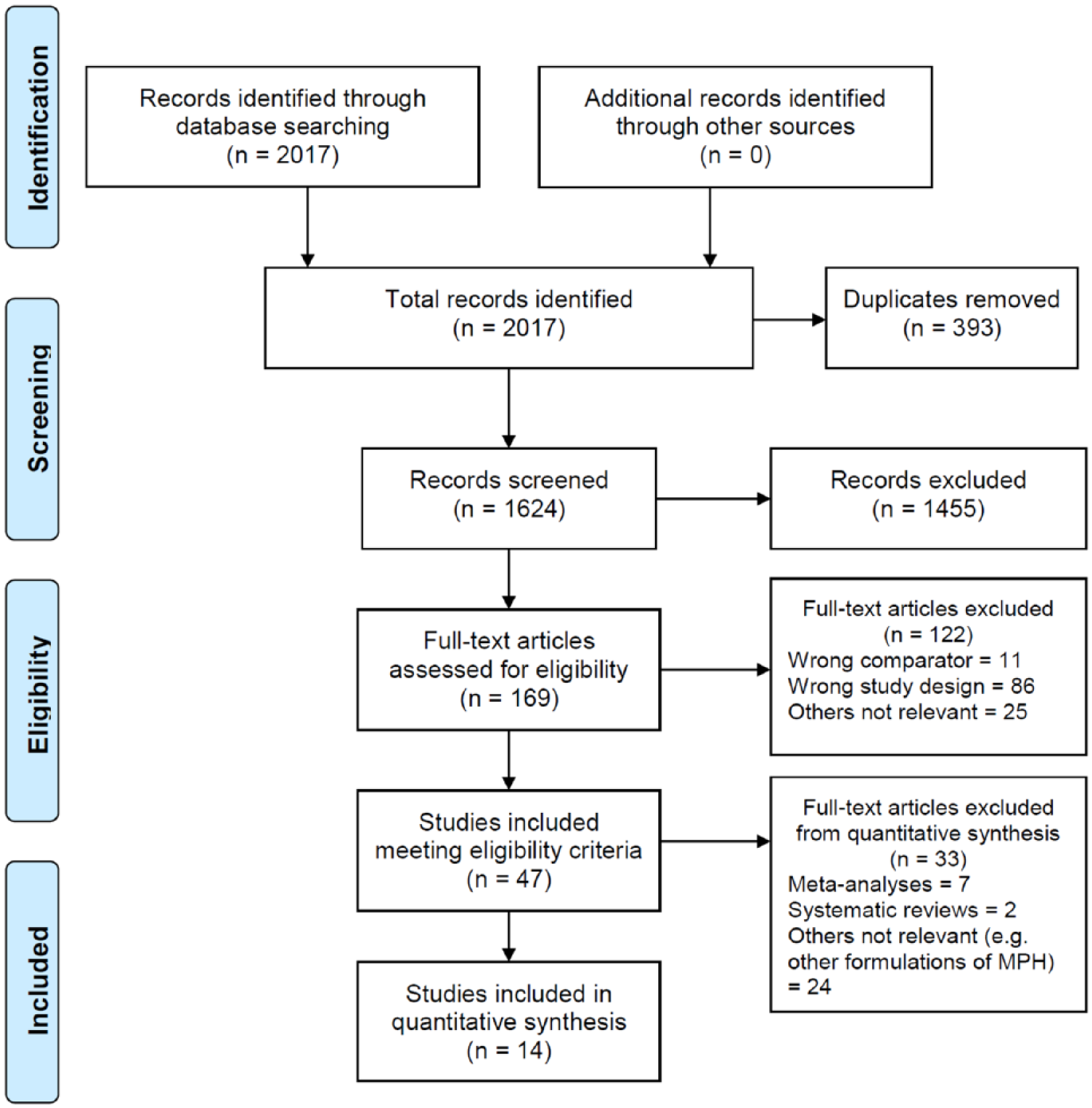
Preferred Reporting Items for Systematic Reviews and Meta-Analyses (PRISMA) flow diagram (Moher et al., 2009) showing selection of studies for inclusion in this review.
Randomised controlled studies of up to 12 weeks, duration identified in the systematic literature search and included in the network meta-analysis.

ADHD: attention deficit/hyperactivity disorder; ADHD-RS-IV: ADHD Rating Scale IV; ADHD-RS total: ADHD Rating Scale IV Total Score; AISRS: Adult ADHD Investigator Symptom Rating Scale; ATX: atomoxetine; CAARS: Conners’ Adult ADHD Rating Scales; CAARS: Inv total: Conners’ Adult ADHD Rating Scale: Investigator Rated Total ADHD Symptoms; CAARS: SV total: Conners’ Adult ADHD Rating Scales: Screening Version Total ADHD Symptoms; OROS-MPH: osmotic release oral system methylphenidate; PBO: placebo; WRAADS: Wender-Reimherr Adult Attention Deficit Disorder Scale.
This was an Eli Lilly-sponsored study in which prior stimulant use was permitted.
The Weisler et al. (2012) study is included twice as it contains both ATX and OROS-MPH arms.
Medori et al. (2008) provided results for three dosages of OROS-MPH: 18 mg, 36 mg and 72 mg. However, the analyses including this study conservatively modelled the 72 mg dosage only: this was the most efficacious dose.
Data extraction
The extracted data for SMD and discontinuation rates from each of the selected studies are shown in Tables 2 and 3, respectively.
Extracted data for standardised mean differences (SMDs) from each study. a

ADHD: attention deficit/hyperactivity disorder; ADHD-RS-IV: ADHD Rating Scale IV; ADHD-RS total: ADHD Rating Scale IV Total Score; AISRS: Adult ADHD Investigator Symptom Rating Scale; ATX: atomoxetine; CAARS: Conners’ Adult ADHD Rating Scales; CAARS: Inv total: Conners’ Adult ADHD Rating Scale: Investigator Rated Total ADHD Symptoms; CAARS: SV total: Conners’ Adult ADHD Rating Scales: Screening Version Total ADHD Symptoms; MPH: methylphenidate; OROS-MPH: osmotic release oral system methylphenidate; PBO: placebo; SD: standard deviation; SE: standard error; WRAADS: Wender-Reimherr Adult Attention Deficit Disorder Scale.
Data are presented to the number of decimal places reported in the respective reference.
Standard errors/deviations or other variability measures in the continuous ADHD symptom scale were not reported, so missing data were imputed using the variability of the placebo group from the study having the most similar sample size.
Medori et al. (2008) provided results for three dosages of OROS-MPH: 18 mg, 36 mg and 72 mg. However, the analyses including this study conservatively modelled the 72 mg dosage only: this was the most efficacious dose.
Patients discontinuing (for any reason) from each study.
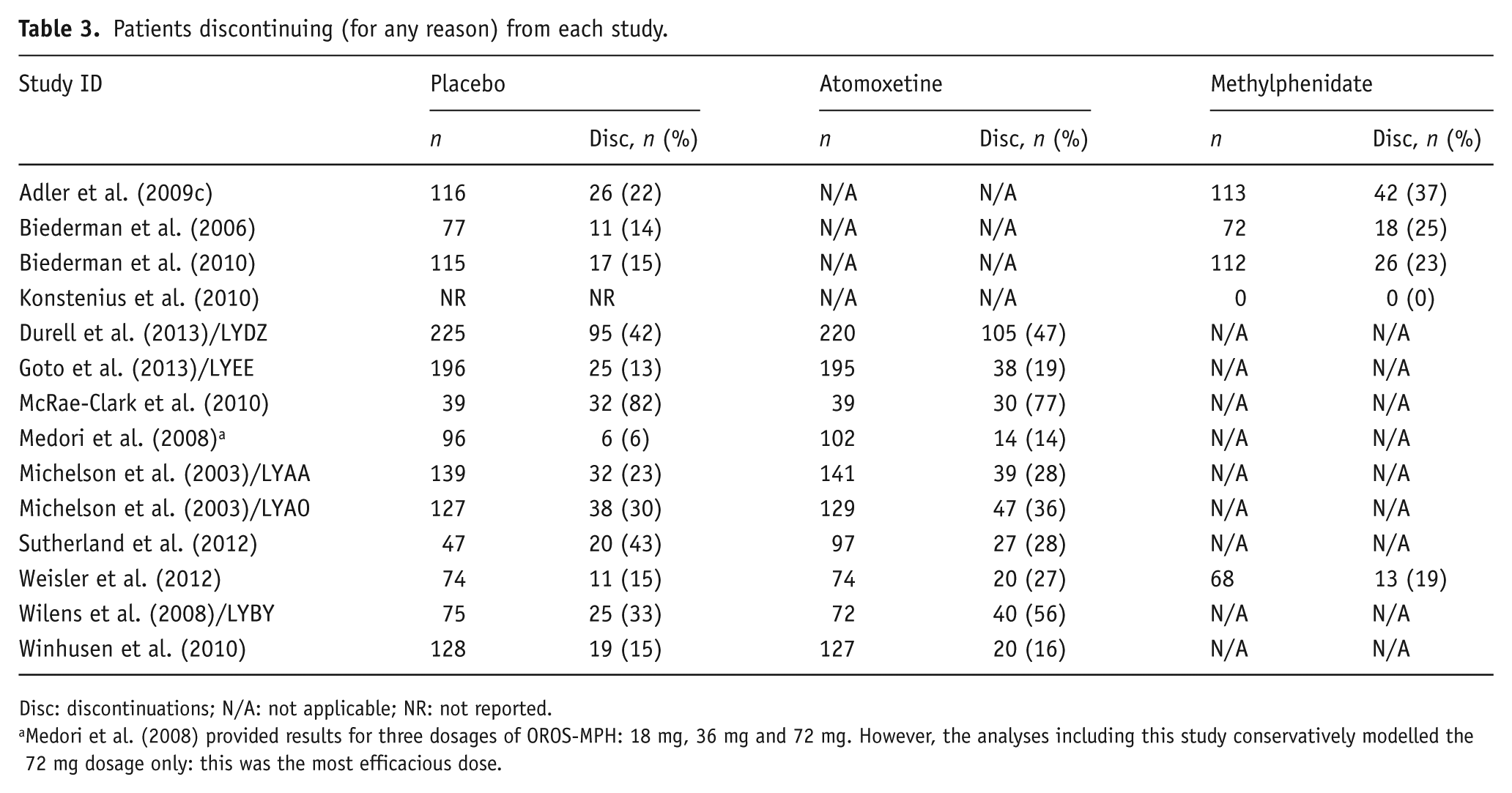
Disc: discontinuations; N/A: not applicable; NR: not reported.
Medori et al. (2008) provided results for three dosages of OROS-MPH: 18 mg, 36 mg and 72 mg. However, the analyses including this study conservatively modelled the 72 mg dosage only: this was the most efficacious dose.
Network of evidence
Figure 2 shows the network of evidence, which describes the links between treatments and their associated studies. The network of evidence comprises studies of all interventions where each treatment had been compared either directly or indirectly with every other via a comparator – in this case, placebo.

Network of evidence for (a) standardised mean differences (SMDs) and (b) discontinuation (any) rates. MPH: methylphenidate; OROS: osmotic release oral system.
Statistical analyses
Pairwise meta-analysis
Results from the binary and continuous outcomes analysis are presented in the form of forest plots, with both fixed and random effects outputs presented on the same plot for each comparison. The individual study SMD data for OROS methylphenidate versus placebo are shown in Figure 3(a) and for atomoxetine versus placebo in Figure 3(b). In all but one study of atomoxetine, there was a significant difference from placebo in core symptom efficacy (McRae-Clark et al., 2010). The same was true for OROS methylphenidate (Konstenius et al., 2010). In both studies demonstrating no significant difference versus placebo, the sample size was small. For discontinuation rates, the individual study data are shown in Figure 4; overall results using the fixed and random effects models are shown in the bottom two rows of the plot. Patients treated with atomoxetine or OROS methylphenidate appeared to discontinue more than those treated with placebo (Figure 4). An I2 of 0% was observed for both the SMD analyses and the OROS methylphenidate versus placebo discontinuation analysis, indicating low heterogeneity across studies in the active versus placebo comparison of these endpoints. For the atomoxetine versus placebo discontinuation analysis, an I2 of 45.7% was observed. Although not statistically significant, this indicates moderate heterogeneity for the comparison of atomoxetine and placebo in discontinuation rates across studies, with the studies LYBY, Sutherland et al. (2012) and Weisler et al. (2012) deviating most from the overall average odds ratio (OR) estimate of 1.33.

Standardised mean difference (SMD) for (a) osmotic release oral system (OROS) methylphenidate (MPH) versus placebo (PBO) and (b) atomoxetine (ATX) versus PBO – fixed and random effects model. CI: confidence interval; D-L; DerSimonian and Laird method; I-V: inverse variance method.
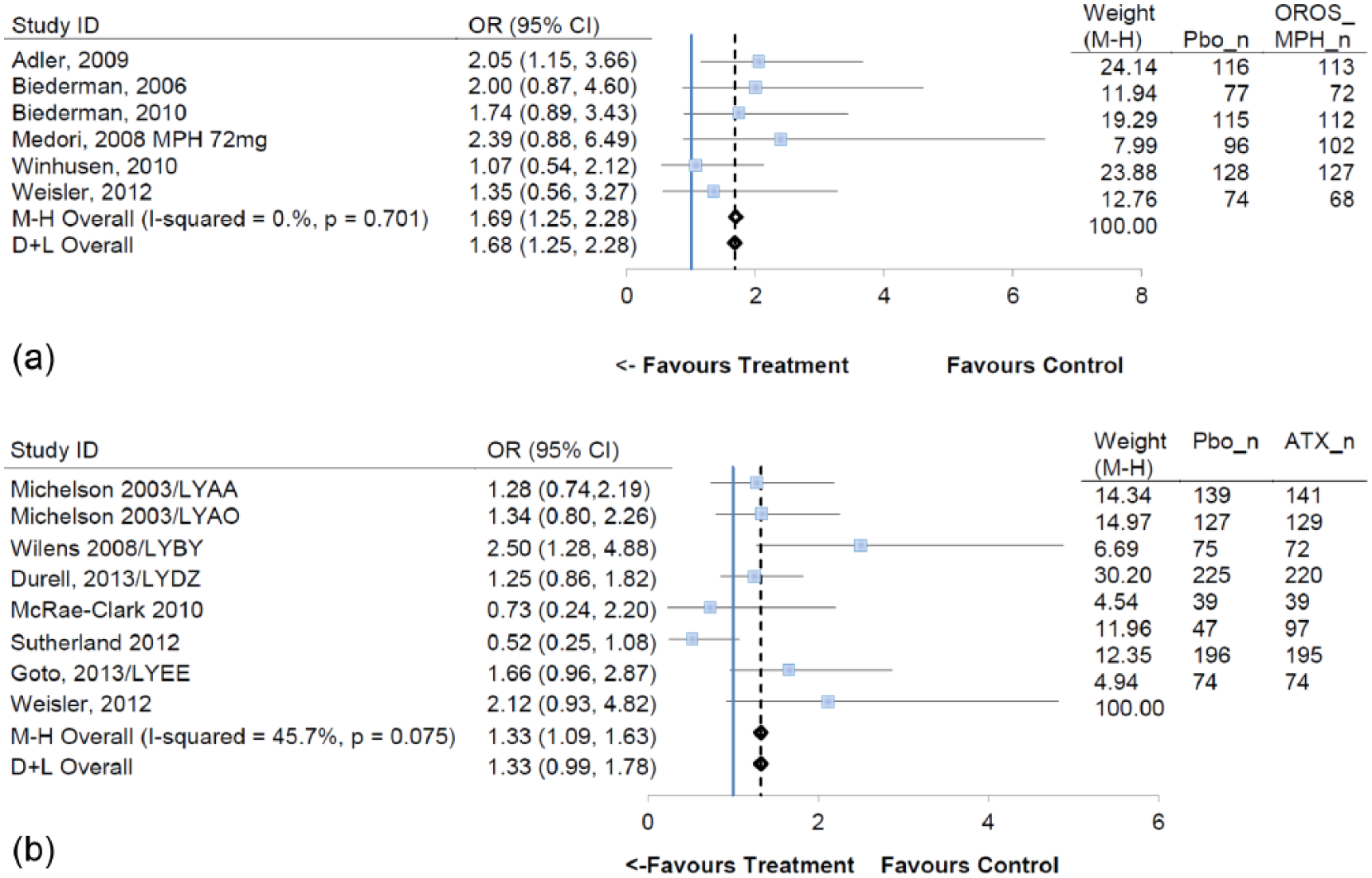
Discontinuation with (a) osmotic release oral system (OROS) methylphenidate (MPH) versus placebo (PBO) and (b) atomoxetine versus PBO – fixed and random effects model. D-L; DerSimonian and Laird method; M-H; Mantel-Haenszel method; OR: odds ratio.
NMA
The SMD data for atomoxetine and OROS methylphenidate are shown in Table 4. Using the random effects model, the SMD (95% Crl) for atomoxetine versus placebo was 0.46 (0.36–0.56) and for OROS methylphenidate versus placebo was 0.51 (0.40–0.63), indicating that patients treated with atomoxetine or OROS methylphenidate responded better than those treated with placebo.
Overall direct and indirect between-treatment standardised mean difference (SMD) using data from all randomised, controlled studies with durations of up to 12 weeks.

95% CrI: 95% credible interval; OROS-MPH: osmotic release oral system methylphenidate.
When efficacy scale changes from baseline for atomoxetine were compared to those for OROS methylphenidate, the relative differences in SMD (95% Crl) using random and fixed effects modelling were −0.05 (−0.18–0.08) and −0.05 (−0.17–0.07), respectively, suggesting potential for a small advantage for OROS methylphenidate at 12 weeks (Figure 5). However, the 95% CrI for the SMD includes zero for all the scenarios tested, indicating a lack of statistically significant difference between atomoxetine and OROS methylphenidate in adult patients with ADHD.
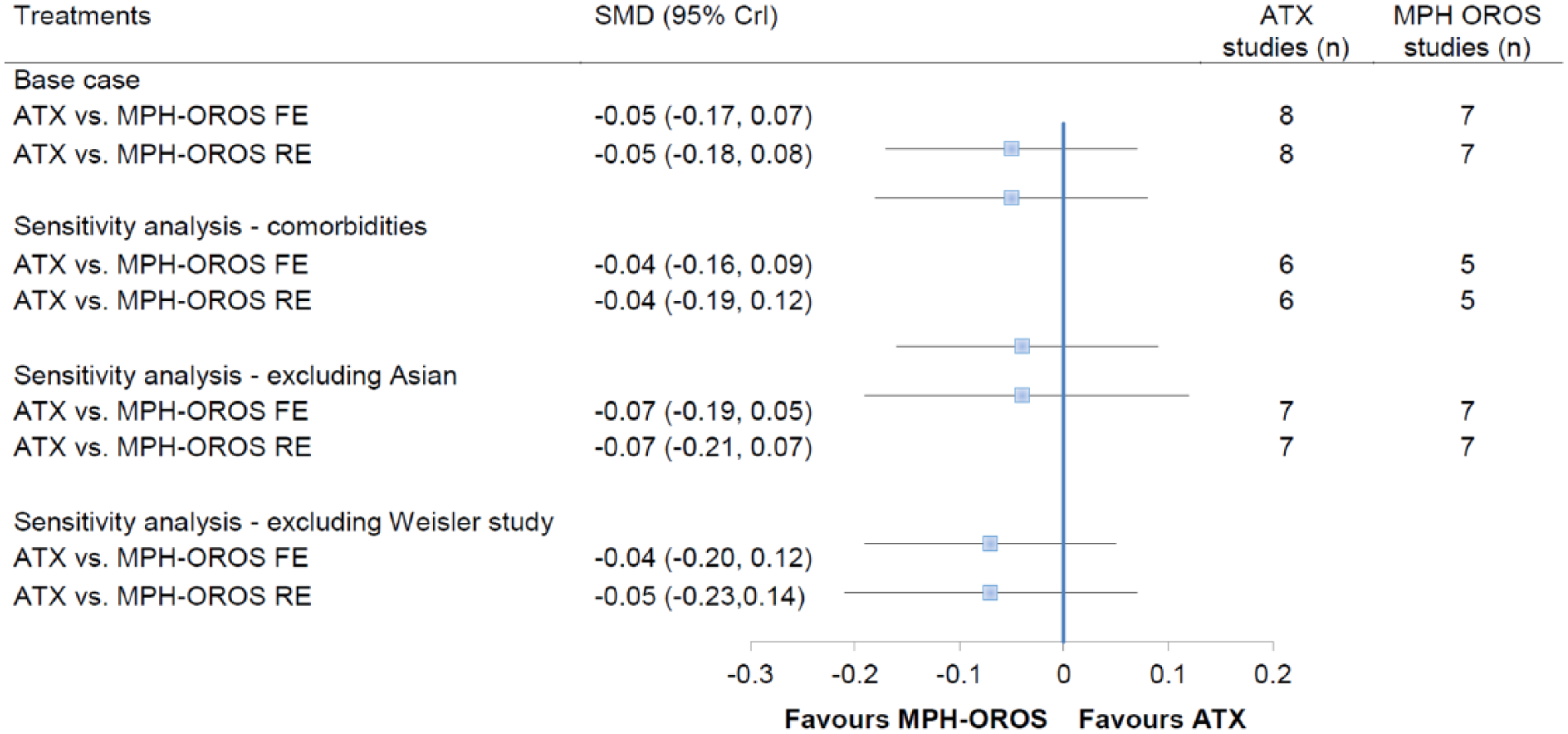
Response to treatment (standardised mean difference (SMD)) for atomoxetine (ATX) versus osmotic release oral system (OROS) methylphenidate (MPH) – base case and sensitivity analyses (excluding studies that selected for either patients with ADHD and comorbidities or the Asian study). FE: fixed effects; RE: random effects.
Similarly, no statistically meaningful differences were observed in discontinuation rates for atomoxetine when compared to OROS methylphenidate using the random or the fixed effects model (OR (95% Crl): 0.85 (0.53–1.35) and 0.85 (0.61–1.20), respectively, slightly favouring atomoxetine) (Table 5, Figure 6). No difference in discontinuation can be claimed between atomoxetine and OROS methylphenidate because the 95% Crl for the ORs included one.
Overall direct and indirect between-treatment discontinuation (any) rates using data from all randomised, controlled studies with durations of up to 12 weeks.

95% CrI: 95% credible interval; OROS-MPH: osmotic release oral system methylphenidate.
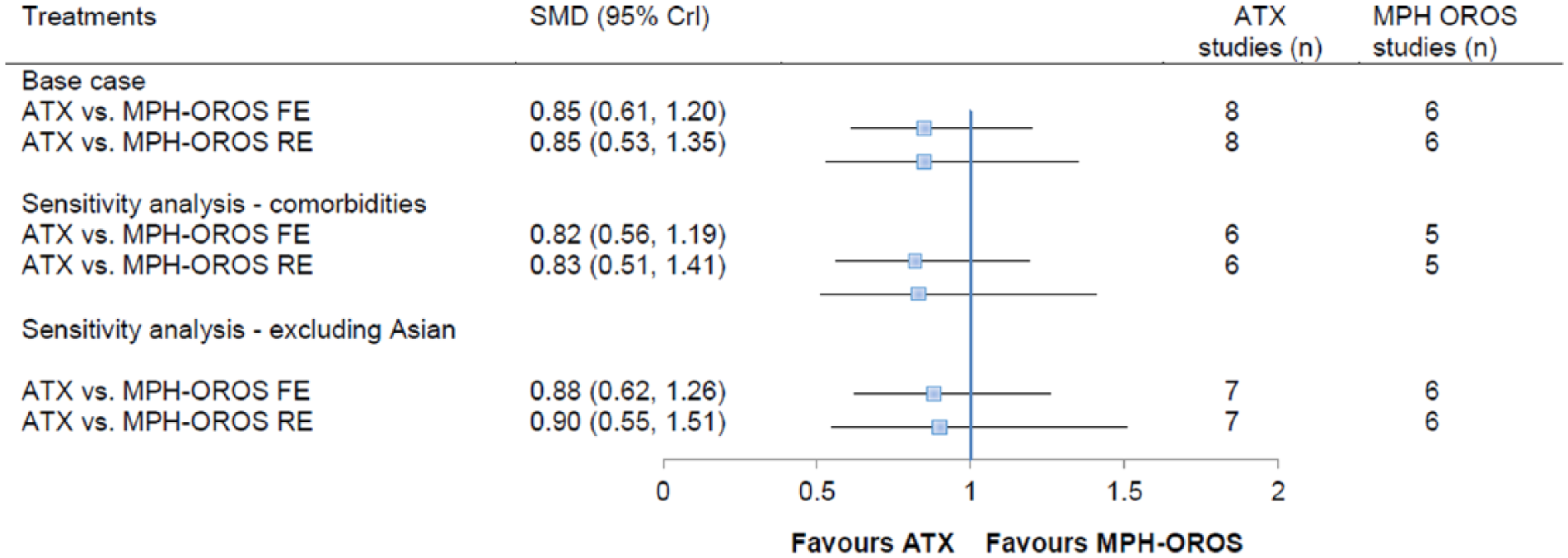
Discontinuation for any reason with atomoxetine (ATX) versus osmotic release oral system (OROS) methylphenidate (MPH): base case and sensitivity analyses (excluding studies that selected for either patients with ADHD and comorbidities or the Asian study). FE: fixed effects; RE: random effects; SMD: standardised mean difference.
A subsequent NMA using a fixed effects model analysed discontinuations due to adverse events (AEs) for atomoxetine versus placebo (OR, 95% Crl: 2.91, 1.86–4.40) and OROS methylphenidate versus placebo (OR, 95% Crl: 3.59, 2.04–5.98). The difference between the two agents did not reach statistical significance (atomoxetine versus OROS methylphenidate OR, 95% CrI: 0.87, 0.43–1.55). A random effects model was also run as part of this NMA of discontinuations due to AEs; however, the deviance information criteria indicated that the fixed effects model was a better fit. Results for this additional NMA of discontinuations due to AEs are available as supplementary data (see online Supplementary Material).
Three sensitivity analyses for efficacy outcomes were undertaken, firstly to exclude studies in which patients with ADHD were specifically selected with comorbidities (history of amphetamine dependence (Konstenius et al., 2010), substance abuse (McRae-Clark et al., 2010) and alcohol use disorder (Wilens et al., 2008), and smokers (Winhusen et al., 2010)), secondly to exclude the study in an Asian population (Goto et al., 2013), and thirdly to exclude the study of Weisler et al. (2012); the first two populations were also considered in sensitivity analyses for discontinuations. The results of these sensitivity analyses did not alter any of the base case analysis conclusions, for either the efficacy or discontinuation outcomes. The results for the first and second sensitivity analysis are shown in Figures 5 and 6.
Discussion
Using all published, parallel, randomised, placebo-controlled and head-to-head studies through to March 2013, our NMA reports effect sizes and discontinuation rates that did not differ significantly between atomoxetine and long-acting OROS methylphenidate. The overall SMD sizes and discontinuation rates for atomoxetine and OROS methylphenidate are reasonably consistent with most previously reported meta-analyses (Castells et al., 2011, 2013; Cunill et al., 2013; Koesters et al., 2009), although our data set also reflects the inclusion of many more recent studies. The lack of significant difference between these effect sizes is also consistent with the only published, randomised study in adults including both atomoxetine and OROS methylphenidate (Weisler et al., 2012). Over six weeks, when atomoxetine and OROS methylphenidate were included as sensitivity arms in that investigational, placebo-controlled study, reductions in the ADHD-RS total score were numerically the same, although no statistics were reported (Weisler et al., 2012).
Due to the absence of randomised studies of OROS methylphenidate of greater than 12 weeks’ duration in the literature, the studies included in this analysis were limited to those of up to 12 weeks’ duration in order to maximise the fairness of the comparison and increase consistency across studies. This temporal limit may introduce bias in the NMA against atomoxetine, given strong evidence for the increasing efficacy of atomoxetine (versus maintained efficacy of methylphenidate) for at least 24 weeks in adult studies (Biederman et al., 2010; Rösler et al., 2009; Sobanski et al., 2014; Young et al., 2011). The NICE guidelines that were published in 2008 (NICE, 2008) and Scottish Intercollegiate Guidelines Network (SIGN) guidelines, published in 2009 (Scottish Intercollegiate Guidelines Network (SIGN), 2009), both based their advice on, and included, clinical studies that were as short as three weeks’ duration. Given the differential effects of atomoxetine and methylphenidate over time (Adler et al., 2014; Rösler et al., 2009; Sobanski et al., 2014; Young et al., 2011), longer studies are clearly needed to allow accurate comparison of these medications as it is clear that the onset of efficacy with methylphenidate is faster than with atomoxetine.
In the absence of a single, powered, definitive, head-to-head, randomised study in adults, NMA may present the only viable alternative for comparing the efficacy of ADHD medications. Patients treated with either atomoxetine or OROS methylphenidate responded better than those treated with placebo across all the analyses conducted. Our data show no significant difference in efficacy in patients treated with atomoxetine and OROS methylphenidate in the overall results and also in all sensitivity analyses that excluded selected studies, with 95% CrIs including zero for all the scenarios tested. Supportive of our findings is the fact that heterogeneity can be considered low to moderate, due to the small differences in width for the 95% CrIs and the magnitude of I2 for both fixed and random effects models.
One of the strengths of our NMA was the relative homogeneity of results across studies and endpoints. The only potential heterogeneity was seen for the atomoxetine versus placebo discontinuation analysis, where an I2 of 45.7% was observed, indicating moderate heterogeneity. That we found otherwise low heterogeneity may be due to the fact that all studies included in the NMA had a specified inclusion criterion of a DSM-IV diagnosis of ADHD, and that the primary NMA outcome was the primary measure examined in nearly all clinical studies included. These factors together would have helped to ensure relative consistency across all the studies analysed. For other meta-analyses, this was not always the case. For example, in a recent meta-analysis of methylphenidate studies, five of the 18 studies included had not used pure DSM-IV diagnostic criteria for entry (Castells et al., 2011).
For both medications, our NMA found that discontinuation rates on active treatment were greater than placebo rates, but showed no statistically meaningful differences between atomoxetine and OROS methylphenidate. A subsequent NMA of discontinuations due specifically to AEs showed a broadly similar direction of results as for overall discontinuations. No significant difference in discontinuation rates due to AEs were seen for atomoxetine as compared to OROS methylphenidate. Our findings are broadly in agreement with results of other recent meta-analyses (Castells et al., 2013; Cunill et al., 2013). In one such meta-analysis, the discontinuation rate with methylphenidate – although reported to be similar to that with placebo (OR, 95% CI: 1.19, 0.82–1.74) – was actually found to be greater than that with placebo after removal of a single study that was causing heterogeneity in the results (OR, 95% CI: 1.44, 1.14–1.82) (Castells et al., 2013). The same research group also published results showing discontinuation rates with atomoxetine to be greater than those with placebo (OR, 95% CI: 1.39, 1.17–1.64) (Cunill et al., 2013).
Although some researchers suggested that these discontinuation rates indicate a lack of a good risk-benefit ratio, such data are to be broadly expected when considering a randomised clinical study population (Castells et al., 2013, Cunill et al., 2013). There are many ways to determine the risk-benefit of medications. For ADHD medications, this can be better illustrated by the large reductions in crime (32% males and 41% females) and serious road traffic accidents (58% reduction in hospitalisation and fatalities in males) measured over a four-year period in large cohorts when ADHD is treated (Chang et al., 2014; Lichtenstein et al., 2012). These important pragmatic outcomes in ADHD-treated patients, regardless of medication choice or any short-term changes in efficacy measures, underscore the importance of therapy for adults with ADHD. Discontinuation as an endpoint is not included in the European Medicines Agency guidelines for the investigation and clinical assessment of the risk-benefit of medicinal products, and has never been used or accepted by any regulatory agency as a risk-benefit measure (EMA, 2010). Discontinuation rates and the many factors that contribute to discontinuation are too complex to analyse rigorously in a randomised clinical trial (RCT) setting (Ramos-Quiroga et al., 2014). Observational or naturalistic studies are more generalisable than short-term RCTs in terms of reflecting treatment discontinuation in clinical practice. However, real-world evidence for adherence to ADHD medication is limited; the literature that exists indicates that persistence over longer time intervals is generally poor (Gajria et al., 2014). There is some indication that persistence may be better in Europe than in the USA, but current studies in large databases are needed.
Limitations
Systematic reviews and NMAs must always carry the limitation that there may have been incomplete data retrieval. All meta-analyses are also limited, to some extent, by both the size and quality of the included studies. However, in the absence of defining head-to-head studies, these data provide useful information that is consistent with the two published head-to-head data sets that do exist. Despite careful systematic review of the included studies, the design and lengths of the individual studies are variable and the possibility remains that a meta-analytic approach to such studies may potentially include confounders and biases that have not been addressed. Indeed, our analyses used aggregate data from RCTs and no covariate adjustments were made for differences between studies in terms of baseline treatment effect modifiers. The random effects model was assumed to capture all between-study heterogeneity, but the ideal way to account for heterogeneity is to use meta-regression with results and covariates at the study level, which was not available for all studies. Limitations are also inherent in the data reporting of rates and reasons for discontinuations, with many studies citing subjective and ill-defined terms such as ‘patient decision’. Data published in a language other than English have also not been included in this NMA. As a result of these limitations, any definitive statement regarding parity or superiority between the two compared treatments must await results of clinical RCTs comparing these agents for an adequate duration and with the appropriate level of powering.
Conclusion
In the absence of any one single definitive direct comparative clinical study, our NMA suggests that the clinical effect sizes of atomoxetine and OROS methylphenidate are not different in clinical studies of up to 12 weeks’ duration. No difference in discontinuation rates between atomoxetine and OROS methylphenidate was detected. These data are consistent with the only randomised study including atomoxetine and OROS methylphenidate, and may help to inform clinicians in their decision as to the most appropriate medication for adult patients with ADHD.
Footnotes
Acknowledgements
Marie-Ange Paget is an employee of Eli Lilly and Company and contributed as a statistician to the design and development of the NMA. Helen Boreham and Caroline Spencer (Rx Communications, Mold, UK) provided editorial assistance with the preparation of this article, funded by Eli Lilly and Company.
Declaration of conflicting interests
The authors declared the following potential conflicts of interest with respect to the research, authorship, and/or publication of this article: CB, KD, VR, KK, VH, LB are employees of Eli Lilly and Company, the manufacturer of atomoxetine. FT was an employee of Eli Lilly and Company at the time when the research was undertaken. AP is an employee of IMS Health, which has received revenue from Eli Lilly and Company.
Funding
The authors disclosed receipt of the following financial support for the research, authorship, and/or publication of this article: This work was supported by Eli Lilly and Company.
References
Supplementary Material
Please find the following supplemental material available below.
For Open Access articles published under a Creative Commons License, all supplemental material carries the same license as the article it is associated with.
For non-Open Access articles published, all supplemental material carries a non-exclusive license, and permission requests for re-use of supplemental material or any part of supplemental material shall be sent directly to the copyright owner as specified in the copyright notice associated with the article.
