






Abstract
Purpose
This research investigates how individuals’ perceived motivations for receiving the COVID-19 vaccine—specifically, feeling pressured versus vaccinating voluntarily—relate to future health-protective behaviors and perceived risk of the vaccine and the virus.
Methods
In 2 studies, with a total of N = 1,252 respondents, participants self-reported their past vaccination motivation and completed measures assessing willingness to receive future vaccines, engage in general health-protective behaviors, and perceived risks associated with the virus and the vaccine.
Results
Findings consistently show that individuals who felt pressured to vaccinate are positioned between unvaccinated individuals and those who vaccinated voluntarily in their perceptions and intentions. Compared with voluntary vaccinators, they reported lower willingness to receive future vaccines and engage in protective behaviors and greater perceived vaccine risk. However, their willingness to engage in these behaviors was still greater than that of unvaccinated individuals.
Limitations
The studies are mainly cross-sectional and do not track the same individuals over time.
Conclusions
Perceived motivation for past vaccination significantly predicts vaccinated individuals’ attitudes and future intentions related to health behaviors, even unrelated to COVID-19.
Implications
Treating all vaccinated individuals as a uniform group can be overly simplistic. Public health messaging and interventions may be more effective when considering individuals’ vaccination motivation.
Highlights
Treating all vaccinated individuals the same can be simplistic.
The perception of the vaccine and virus risks differ depending on whether vaccination felt voluntary or coerced.
Different motivations behind vaccination can shape future medical decisions beyond the pandemic.
COVID-19 vaccines helped control the spread and severity of the virus. To increase uptake, countries implemented public health campaigns, monetary incentives, and mandates for groups such as federal and health care workers. Some employers and public venues also required vaccination, indirectly pressuring individuals to vaccinate. Although some people chose to get vaccinated willingly, others did so under pressure (e.g., workplace requirements), even while feeling concerned about the vaccine—a concern also shared by many unvaccinated individuals. 1
While past research has mainly focused on reactions to mandates, we examine how individuals’ subjective experiences of being pressured versus choosing freely to vaccinate relate to future health behaviors. Few studies have explored individuals who felt pressured to vaccinate during the pandemic. While it may be tempting to group them with those who vaccinated voluntarily and compare vaccinated versus unvaccinated groups (e.g., Bendau et al.), 2 this approach may be simplistic. Pressured individuals may have different motivations, emotional responses, and risk perceptions. Overlooking these differences could hinder predictions about future willingness to vaccinate (WTV) alongside public health compliance during future outbreaks and other diseases.
We have 2 goals. First, we examine whether past different vaccination motivations predict individuals’ WTV in future pandemics as well as their willingness to engage in other medical behaviors such as routine medical checkups. In doing so, we extend our investigation beyond COVID-19 vaccination to other health-related behaviors. Second, we explore how people who felt forced to get the COVID-19 vaccine perceive virus and vaccine risks.
Risk Perception and WTV
Risk perceptions are often biased by intuitions and emotions.3,4 In the context of vaccinations, fear of infection tends to increase vaccine acceptance, whereas fear of side effects reduces it.5–7 Furthermore, people may perceive vaccine harm as self-inflicted—and therefore more regrettable—while harm caused by illness may be viewed as an act of fate. 8 Similarly, vivid outcomes often overshadow actual probabilities in risk judgments.9,10 These biases emerge despite evidence that vaccines are safe.11,12
We propose that individuals’ motivations for receiving the COVID-19 vaccine relate to their future perceptions of virus and vaccine risks. Among unvaccinated individuals, concerns and hesitancy toward vaccines suggest that they perceive the vaccine as more threatening than the virus itself. Conversely, those who freely chose vaccination tend to perceive the virus as the greater threat (our pilot data in Supplementary Online Materials [SOM], supports this prediction). However, predictions are less clear for those who felt pressured to vaccinate. On one hand, these individuals might share similar beliefs with unvaccinated people, likely because they would not have chosen to get vaccinated initially. On the other hand, their decision to vaccinate might lead them to align their perceptions with those of vaccinated individuals, bringing their attitudes in line with their actions (see Festinger 13 ).
External pressure may heighten vaccine suspicion and resistance.14,15 This is consistent with psychological reactance theory, 16 which posits that perceived threats to autonomy can trigger opposition. Similar resistance has been observed in domains such as environmental regulation, 17 workplace oversight, 18 and taxpayers’ behaviors. 19 Importantly, reactance often emerges later in time, affecting future behaviors (e.g., Sprengholz et al. 20 ). Although these studies explored actual mandates rather than perceived pressure, they suggest that pressured individuals may resemble the unvaccinated in their risk perception, viewing vaccines as more dangerous than viruses.
At the same time, having chosen to vaccinate despite reservations may evoke cognitive dissonance, 13 motivating attitude change to resolve internal conflict. Research shows dissonance can boost compliance with health behaviors 21 and that people often align future actions with past behavior.22,23 Moreover, practical benefits from vaccination (e.g., access to workplaces, travel) may reinforce positive retrospective attitudes. Thus, individuals who felt pressured to vaccinate may eventually align more with those who perceive their vaccination decision as stemming from free will in perceiving vaccines as less risky, although to a lesser extent than unvaccinated individuals do. Another possibility is that their risk perceptions were already somewhere between the other 2 groups before vaccinating (lower fear from the virus and lower fear from the vaccine compared with freely vaccinated individuals), which may explain their external motivation to vaccinate.
Given the 2 opposing effects, we hypothesize that people who felt pressured to vaccinate likely occupy a middle ground between the vaccinated by choice and the unvaccinated, differing in both risk perception and future preventative behaviors. Put differently, among vaccinated individuals, the more they perceive their decision as stemming from free will, the less fearful they are of the vaccine and the more likely they are to receive future vaccinations and engage in other health-protective behaviors. For clarity, we refer to 2 groups of vaccinated individuals: those who perceive their decision as voluntary and those who feel pressured. However, perceptions of motivation lie on a continuum between these 2 poles, with no clear boundary or sharp distinction.
The Current Research
We conducted 2 studies to examine the association between perceived past motivation to vaccinate and people’s risk perceptions and behavioral intentions. We assessed perceived risks of the virus and vaccine, WTV against a new virus, and willingness to engage in future protective behaviors (e.g., mask wearing) and in routine medical care (e.g., flu vaccine and routine checkups).
To better understand how pressured participants’ past perceptions relate to their future WTV and their risk perceptions, we tested different exploratory manipulations designed to revive their initial experiences during COVID-19. In study 1, participants were asked to recall their experiences during the early stages of the pandemic, whereas in study 2, they were reminded of their vaccination motivation and decision before reporting their future intentions. These reminder manipulations could operate in 2 opposite ways. On one hand, they may heighten participants’ sense of (in)consistency between their initial attitudes and eventual decisions. This effect should be stronger among individuals who felt pressured to vaccinate, as they are more likely to experience conflict between their past behavior and current perceptions. Revisiting the beginning of the pandemic—or the decision to vaccinate—may also intensify feelings of external pressure, thereby increasing psychological reactance. On the other hand, the reminder may encourage a reappraisal of the decision as beneficial in hindsight, consistent with a general motivation for cognitive consistency. Thus, we advance a bidirectional hypothesis regarding the effects of the reminders.
In contrast, individuals who feel vaccinated voluntarily are likely to experience greater alignment between past and present, reinforcing their motivation and increasing future WTV. These manipulations are grounded in prior research demonstrating that reflecting on past behaviors can influence current perceptions and decisions (e.g., Albarracín and Wyer, 18 Kogut and Ritov, 24 and Nikolova et al. 25 ).
While prior research has explored the pressure to vaccinate, it mostly relied on hypothetical vignettes 26 or simulated scenarios, 27 rather than real-world decisions. Some studies manipulated perceived mandates,20,28 but our study stands apart by surveying individuals who received the same policy yet differed in perceived autonomy. This design allows us to compare real behaviors across pandemic stages. The main contribution of our work is to show that perceived motivation for vaccination—whether rooted in internal beliefs or external pressures—offers a crucial but often overlooked dimension. This perspective moves beyond treating the vaccinated as a uniform group and links motivation to future vaccination choices and broader medical behaviors.
Study 1
Participants and Procedure
We recruited N = 400 participants (37% female; Mage = 43.53 y, SDage = 13.73 y) using Prolific Academic in exchange for 1.80 GBP (∼$2.30). Of the participants, 323 were vaccinated (81%), whereas 77 (19%) were not. The sample size was determined by an a priori power analysis using G*Power software 29 (version 3.1) to detect a small to medium effect size of f = 0.15, with an 80% power and with α = 0.05, in a 2 (reflection conditions) × 3 (vaccination status) analysis of variance (ANOVA).
Participants were then randomly assigned to 1 of 2 reflection conditions (between-subjects). In the recall condition (n = 203), participants described the emotions and thoughts they experienced during the early months of the pandemic, including whether they felt afraid of the virus or concerned for their own or others’ health. In the current state condition (n = 197), they described their present feelings and concerns about the virus. In both conditions, participants wrote at least 2 sentences. As noted above, our prediction for vaccinated–forced individuals was bidirectional. On one hand, recalling the early stages of vaccination could revive doubts and feelings of coercion, making their views resemble those of unvaccinated individuals. On the other hand, it could create a need to justify and align with their past behavior, thereby increasing their WTV in the future.
Next, we developed 10 ad hoc items to measure participants’ justifiability of various protective measures used during the pandemic (e.g., “The lockdowns were necessary and just,”“Maintaining social distancing was crucial,” and reverse-coded items such as “The government’s reaction was exaggerated,” where 1 = not at all and 7 = very much). These responses were averaged into a measures justifiability index (α = 0.95).
Participants then read a short scenario based on expert reports at the time, describing the potential emergence of a new vaccine-resistant COVID-19 variant. The passage explained that a new vaccine was expected soon, along with its benefits for vaccinated individuals and risks for the unvaccinated (see the SOM).
To assess risk perception, participants rated the extent to which the new virus and the vaccine would threaten their health (1 = no chance at all, 7 = very high chance; see Man et al. 30 for similar questions). They then indicated how strongly they would recommend 4 common protective actions to deal with the new virus before the new vaccine became available (e.g., wearing masks in crowded places, avoiding contact with elderly relatives working from home, and supporting the closing of entertainment venues; α = 0.84). These recommendations were taken directly from existing Centers for Disease Control and Prevention guidelines. We averaged into a future protective measures score. Participants next rated their WTV against the new virus on a 1 to 7 scale.
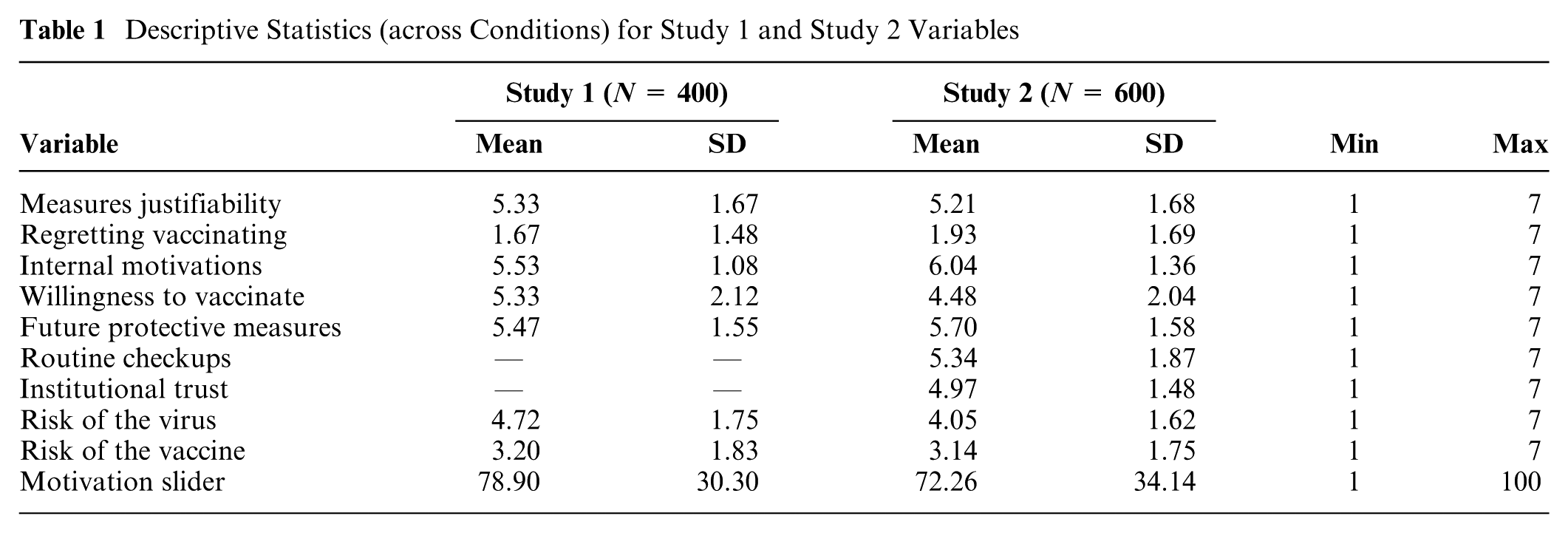
Afterward, participants indicated whether they had previously been vaccinated against COVID-19. Vaccinated participants reported the extent to which they felt their decision was voluntary using a slider ranging from 0 (completely forced) to 100 (completely voluntary). They also responded to 8 items measuring specific vaccination motivations (all measured on a scale ranging from 1 = not at all to 7 = a high degree; α = 0.71). These items were inspired by and adapted from Moore and colleagues (2022). 31 In our research, 5 items reflected internal motivation (e.g., trust in science, trust in government/health authorities, belief that vaccination is the right thing to do, desire to protect oneself, and desire to protect close others). Three items reflected external pressure (e.g., workplace or institutional demands, pressure from family or friends, and the ability to travel internationally) and were reverse coded. The final motivation score was calculated as the average of all 8 items (after reversing the external pressure items). Lastly, vaccinated participants rated their regret about having received the COVID-19 vaccine. Please see Table 1 for statistical information on our measures.
Descriptive Statistics (across Conditions) for Study 1 and Study 2 Variables
Results
Reflection manipulation
Our manipulation did not have a significant effect on any of the examined variables (P’s > 0.22, in independent t tests), showing that participants’ perceptions are robust to our manipulation. We still included the Reflection manipulation and its interaction with the other variables in all analyses.
Measures justifiability and regret
Since unvaccinated people did not complete the Forced-Free-Will scale (which referred to the decision to vaccinate), in the following analyses, we divided vaccinated participants into 2 groups according to the median value of the Forced-Free-Will scale. We created 3 groups based on vaccination status: unvaccinated, vaccinated-forced, and vaccinated-free-will. These 3 groups significantly differed in terms of their retrospective perceptions of the justifiability of the measures taken during the pandemic before vaccines were available, F(2, 397) = 114.00, P < 0.001. Vaccinated-free-will participants reported the highest scores, unvaccinated participants the lowest, with vaccinated-forced ones sitting in between them (P’s < 0.001 for all contrasts; see Table 1).
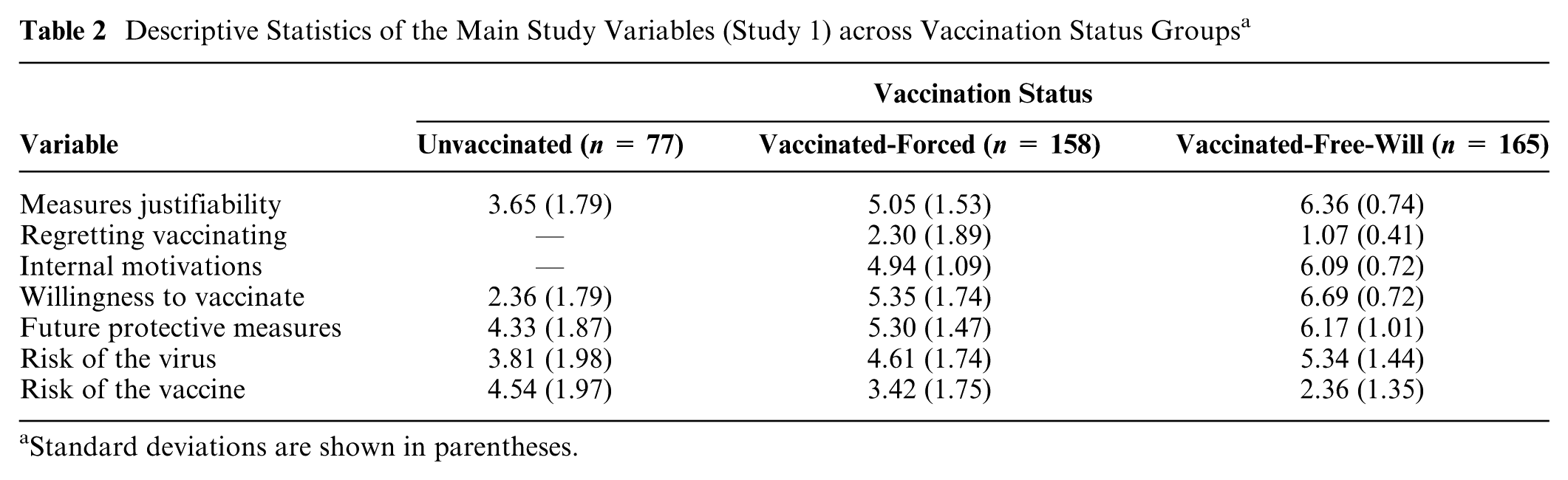
Note that only vaccinated people completed the question about vaccination regret and the motivation items: vaccinated-forced participants regretted vaccinating more than free-will participants did, t(321) = 8.18, P < 0.001, and they reported feeling less internally motivated to get vaccinated, t(321) = −11.26, P < 0.001 (lower scores correspond to higher external pressure to get vaccinated; see Table 2).
Descriptive Statistics of the Main Study Variables (Study 1) across Vaccination Status Groups a
Standard deviations are shown in parentheses.
WTV and to take future protective measures
An ANOVA on WTV with reflection manipulation and vaccination status as the independent variables revealed a significant effect of vaccination status, F(2, 394) = 242.67, P < 0.001, η2 = 0.55. Post hoc tests (Tukey honestly significant difference [HSD]) revealed significant differences among the 3 groups, such that vaccinated-free-will participants were significantly more willing to vaccinate in the future than participants who felt forced to vaccinate and unvaccinated people. The latter 2 groups also significantly differed (P’s < 0.001). A linear regression on WTV with the reflection manipulation, the continuous Forced-Free-Will scale, and their interaction as predictors revealed significant results, F(3, 319) = 52.01, R2 = 0.33, P < 0.001. Only the Forced-Free-Will scale significantly contributed to the model (t = 2.73, SE = 0.07, β = 0.40, P = 0.007), showing that the more the participants felt that they had freely chosen to vaccinate against COVID-19, the more willing they were to vaccinate. A linear regression with both the average score on the motivation items as a predictor and an ANOVA with 3 groups using the midpoint (i.e., 50) of the slider revealed similar and significant results (see the SOM). Similar results were obtained in an ANOVA predicting participants’ recommendations for future measures to deal with a new virus before the availability of a new vaccine (e.g., wearing masks, keeping social distance), F(2, 394) = 48.08, P < 0.001, η2 = 0.20. All 3 differences were significant (P’s < 0.001). See Table 2.
Risk perceptions
An ANOVA on participants’ estimations of the risk from the virus and the vaccine, as a within-subject factor (risk), and reflection manipulation and vaccination status as between-subject factors, revealed a significant interaction between risk and vaccination status, F(2, 394) = 80.92, P < 0.001, η2 = 0.29 (see Figure 1). Perceptions of the risk from the virus, F(2, 394) = 19.56, P < 0.001, η2 = 0.09, and of the vaccine, F(2, 394) = 48.87, P < 0.001, η2 = 0.20, significantly differed among the 3 groups. Vaccinated-free-will participants perceived the virus as riskier than vaccinated-forced participants and unvaccinated participants did. Conversely, unvaccinated participants perceived the vaccine as riskier than vaccinated-forced participants and vaccinated-free-will participants did (P’s < 0.001, Tukey HSD correction; see Table 2).

Average perception of the risks of the vaccine and COVID-19 as a function of participants’ vaccination status (study 1). Error bars represent 95% confidence intervals.
Unvaccinated participants perceived the vaccine as riskier than the virus (mean difference = −0.73). The opposite pattern emerged for the vaccinated-free-will participants, who perceived the virus as riskier than the vaccine (mean difference = 2.88). Vaccinated-forced participants perceived the virus as riskier than the vaccine (mean difference = 1.19). Post hoc comparisons revealed that all of the differences between the 3 groups were significant (all P’s < 0.001). Supporting our prediction, the risk perception of vaccinated-forced participants fell in between the 2 other groups, as the difference between their perception of the 2 risks was significantly smaller than among vaccinated-free-will participants (P < 0.001).
Discussion
Study 1 largely confirmed our predictions: those who felt pressured to vaccinate fell between the unvaccinated and voluntary vaccinators on perceived risks (virus v. vaccine), WTV again, and support for protective measures—significantly different from both groups. Recall prompts had no additional effect, likely because questions about vaccination motives already activated early-pandemic memories. We further discuss this point in the “General Discussion” section.
Study 2
Study 2, which was preregistered (https://aspredicted.org/8phk-rf39.pdf), aimed to replicate study 1’s findings, especially the effect of vaccination status on risk perceptions and WTV. We also explored whether feeling pressured to vaccinate predicted a lower willingness to receive other vaccines (e.g., flu) or engage in other protective medical behaviors such as routine checkups. This may reflect diminished trust in medical authorities—stemming from concerns about rushed vaccine development and coercive policies—in line with research on institutional trust32,33 and psychological reactance. 16
Finally, we manipulated the timing of participants’ reflection on their vaccination motivation—before or after reporting WTV in the future—to test whether being reminded of their past motivation would raise feelings of coercion or rather consistency with past behavior.
Participants and Procedure
To collect a larger group of unvaccinated participants, we recruited 600 participants (57.7% female, Mage = 38.51 y, SDage = 13.34 y) via Prolific Academic in exchange for 0.92 GBP (∼$1.19). One hundred twenty-three respondents were not vaccinated against COVID-19, while the remaining 477 were. Sensitivity analysis (using G*Power software, 29 version 3.1 29 ) revealed that a sample of 600 participants was sufficient to detect a small to medium effect (f = 0.13) in a 3 × 2 ANOVA with a power of 0.80 and α = 0.05.
Participants were randomly assigned to 1 of 2 between-subjects conditions. In the reminder condition (n = 302), participants first reported whether they had received a COVID-19 vaccine. They then indicated how much they felt their decision was voluntary versus forced using the same slider scale from study 1, followed by the same internal motivation items, and rated their level of regret about their decision (about vaccinating or not getting vaccinated on a scale ranging from 1 = not at all to 7 = very much). Afterward, they answered a series of questions about their willingness to engage in future medical behaviors. First, they rated their willingness to attend routine medical checkups (a preventative behavior unrelated to vaccination). Next, they rated their willingness to get a flu shot, a COVID shot, and a new vaccine for a future deadly virus (all on 7-point scales). These were averaged into a WTV index (α = 0.82), with separate analyses on each item yielding similar results. Next, participants assessed risk perceptions of a potential future virus and its corresponding vaccine, using the same 2 items as in study 1, before reporting their willingness to engage in future protective behaviors, including mask wearing, avoiding elderly relatives, and steering clear of crowded venues (1–7 scale; α = 0.86). These items formed a Protective Measures index. Note that, unlike in study 1, these questions assessed participants’ personal willingness to adopt behaviors rather than recommend them to others. Finally, participants answered the same questions about their retrospective perceptions of the justifiability of the measures taken during the pandemic before vaccines were available (α
In the no reminder condition (n = 298), the order of these components was reversed: participants first answered the WTV, protective measures, and risk perception items, followed by questions about their COVID-19 vaccination status, motivations, and retrospective perceptions. Thus, the manipulation was whether participants were reminded of their vaccination experience before or after reporting their future intentions. Finally, all participants completed a 4-item Institutional Trust scale inspired by the work of Sønderskov and Dinesen 34 (e.g., trust in science, public health recommendations, government, and medical institutions; α = 0.93) and provided basic demographic information.
Results
Reminder manipulation
The reminder manipulation (order of questions) did not have a significant effect on any of the examined variables (P’s > 0.22 in independent t tests). This shows that participants’ perceptions and reactions are robust to our manipulations. We still included the reminder manipulation and its interaction with the other variables in all analyses.
Measures justifiability and regret
As in study 1, to include unvaccinated people (who did not complete the Forced-Free-Will scale) in the analyses, we created 3 groups of participants based on vaccination status: unvaccinated, vaccinated-forced, and vaccinated-free-will (the latter 2 groups were based on the median of the Forced-Free-Will scale). Replicating study 1, there were significant differences among these 3 groups regarding retrospective perceptions of the justifiability of the measures taken during the pandemic before vaccines were available, F(2, 597) = 190.92, P < 0.001. Vaccinated-free-will participants reported the highest scores, unvaccinated participants the lowest, with vaccinated-forced ones sitting in between them (P’s < 0.001).
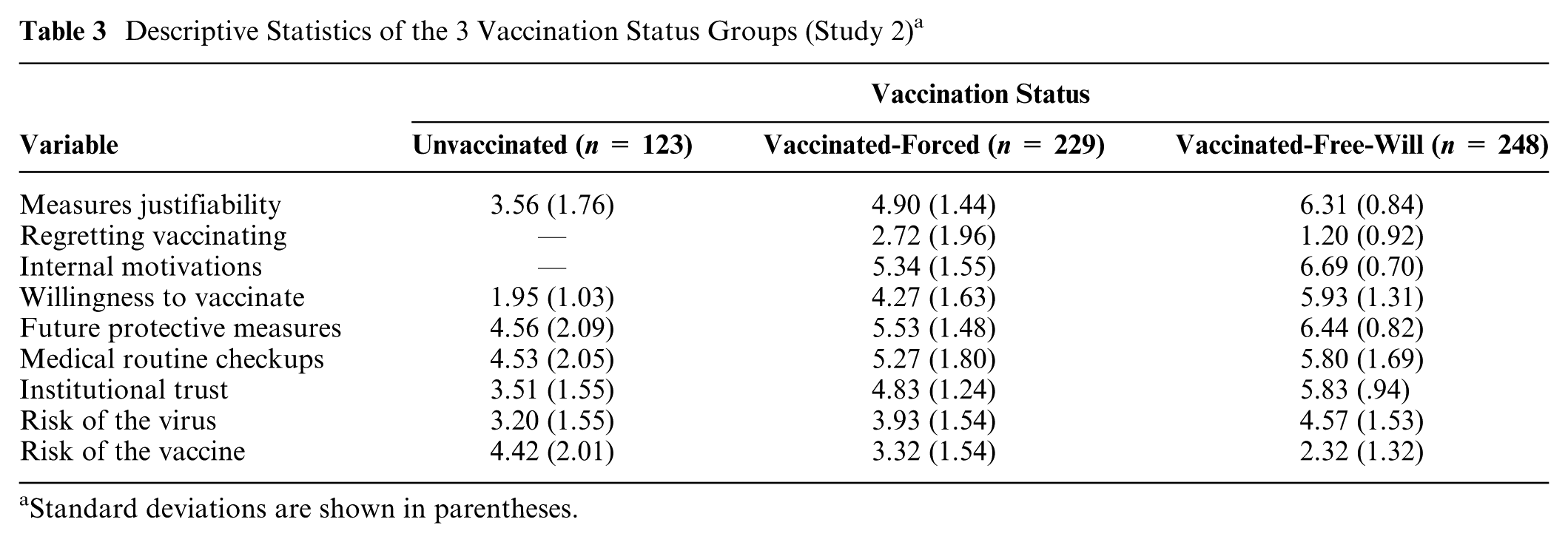
Vaccinated-forced participants also regretted getting vaccinated more than their vaccinated-free-will counterparts did, t(475) = 10.96, P < 0.001, and reported feeling less internally motivated to get vaccinated, t(321) = −12.36, P < 0.001. Further analyses showed that unvaccinated individuals expressed very low levels of regret, similar to those in the vaccinated-free-will group. These 2 groups (unvaccinated and vaccinated-free-will) did not significantly differ from each other (P = 0.54), but both reported significantly lower regret than vaccinated-forced individuals did (both P < 0.001). See Table 3.
Descriptive Statistics of the 3 Vaccination Status Groups (Study 2) a
Standard deviations are shown in parentheses.
WTV and to take future pandemic protective measures
An ANOVA on WTV with the reminder manipulation and vaccination status as the independent variables revealed a significant effect of vaccination status, F(2, 594) = 339.56, P < 0.001, η2 = 0.53. There was a significant difference among the 3 groups, such that vaccinated-free-will participants were significantly more willing to vaccinate in the future than participants who felt forced to vaccinate and unvaccinated people. The latter 2 groups also significantly differed (all P’s < 0.001, comparisons conducted with post hoc tests, Tukey HSD correction; see Table 3). A linear regression analysis on WTV (averaged across the 3 vaccination decisions) with the reminder manipulation, the continuous Forced-Free-Will scale, and their interaction as predictors revealed significant results, F(3, 473) = 40.59, R2 = 0.21, P < 0.001. Only the Forced-Free-Will scale significantly contributed to the model (t = 7.89, b = 0.02, β = 0.44, P < 0.001), showing that the more the participants felt that they had freely chosen to vaccinate against COVID-19, the more willing they were to vaccinate. A linear regression with both the average score on the motivation items as a predictor, and an ANOVA with 3 groups using the midpoint (i.e., 50) of the slider, revealed similar and significant results (see the SOM).
Similar results were obtained in an ANOVA of participants’ willingness to engage in future protective measures to deal with a new virus, F(2, 594) = 74.58, P < 0.001, η2 = 0.20; all 3 differences were significant (P’s < 0.001; see Table 3).
Risk perceptions
We conducted the same ANOVA as in study 1 on participants’ risk perceptions of the virus and the vaccine. Results revealed a significant interaction between risk and vaccination status, F(2, 594) = 129.24, P < 0.001, η2 = 0.30 (see Figure 2). Replicating the results of study 1, we found that the perception of risk of both the virus and the vaccine differed among the 3 groups: vaccinated-free-will participants perceive the virus as riskier than vaccinated-forced participants and unvaccinated participants did. Conversely, unvaccinated participants perceived the vaccine as riskier than vaccinated-forced and vaccinated-free-will participants did (P’s < 0.001 Tukey HSD correction, see Table 3). As in both the pilot study and study 1, unvaccinated participants perceived the vaccine as riskier than the virus (mean difference = 1.22, P < 0.001). Conversely, vaccinated-free-will participants perceived the virus as riskier than the vaccine (mean difference = 2.45, P < 0.001). This difference was less pronounced among vaccinated-forced participants (mean difference = 0.62, P < 0.001).
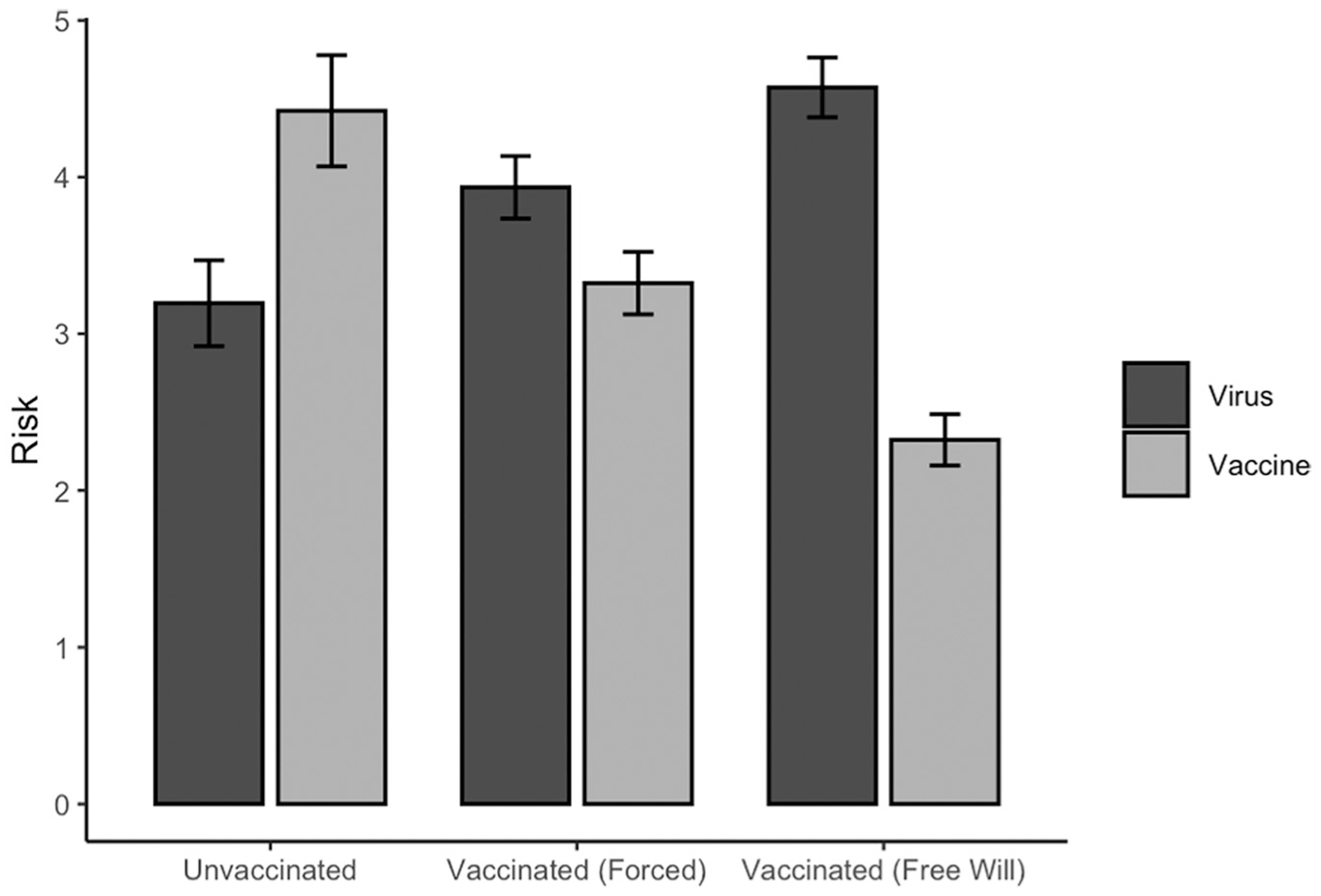
Average perception of the risks of the vaccine and COVID-19 as a function of participants’ vaccination status (study 2). Error bars represent 95% confidence intervals.
Willingness to engage in preventative medical behaviors unrelated to vaccination
An ANOVA with reminder manipulation, vaccination status, and their interaction as predictors and willingness to engage in regular medical checkups as the dependent variable showed a significant effect of vaccination status, F(2, 594) = 20.40, P < 0.001, η2 = 0.30. Unvaccinated participants were the least willing to engage in medical checkups followed by vaccinated-forced participants and vaccinated-free-will participants. All contrasts were significant (P’s < 0.001; see Table 2). No other effects were significant (P’s > 0.28).
Institutional trust
A 1-way ANOVA revealed a significant difference in trust levels among the 3 vaccinated status groups, F(2, 597) = 156.68, P < 0.001, η2 = 0.34. Post hoc tests (Tukey HSD corrected) showed a significant difference between the 3 groups (all P’s < 0.001), such that vaccinated-free-will participants showed greater institutional trust than vaccinated-forced participants and unvaccinated people did. The latter 2 groups also significantly differed (see Table 3).
Following our exploratory preregistered plans, we examined whether the link between vaccination status and WTV was mediated by institutional trust, using the PROCESS macro for SPSS (model 4 with 95% bias-corrected bootstrap confidence intervals, based on 5,000 iterations 35 ; see Figure 3 for a graphical representation of the models). As vaccination status includes 3 levels, we first examined a model that compared vaccinated-forced to vaccinated-free-will individuals. The analysis revealed significant indirect effects for institutional trust (b = 0.68, SE = 0.09, 95% CI [0.509, 0.874]. The effect of vaccination status remained significant, indicating partial mediation.

Proposed mediation model. Because vaccination status has 3 levels, the following contrasts are represented: unvaccinated versus vaccinated-forced + vaccinated-free-will and vaccinated-forced versus vaccinated-free-will. The dependent variables were willingness to vaccinate (1) and risk perception (2), each predicted in separate models.
The second model comparing unvaccinated with vaccinated (vaccinated-forced + vaccinated-free-will) individuals also revealed a significant indirect effect of trust, b = 1.29, SE = 0.13, 95% CI [1.050, 1.551]. The effect of vaccination status remained significant, again indicating partial mediation.
Finally, we tested whether institutional trust mediated the effect of vaccination status on the perceived risk of the vaccine. First, we compared participants who felt forced to get vaccinated with those who were vaccinated voluntarily. The indirect effect was significant, b = −0.33, SE = 0.08, 95% CI [−0.502, −.177]. The effect of vaccination status remained significant, b = −0.67, SE = 0.14, 95% CI [−0.942, −0.395], indicating partial mediation. Similar results emerged when predicting the risk of the virus. We repeated the same mediation analyses comparing unvaccinated with vaccinated (vaccinated-forced + vaccinated-free-will individuals), predicting perceived risk of the vaccine and of the virus. The indirect effect of trust was significant both for virus perception (b = 0.73, SE = 0.10, 95% CI [0.534, 0.943]) and vaccine perception (b = −0.85, SE = 0.13, 95% CI [−1.122, −0.607].
Discussion
Study 2 confirmed that vaccinated individuals differ in their motivations. Those who felt pressured, compared with those who chose freely, showed lower willingness to receive future vaccines and engage in preventive behaviors, including routine checkups. This spillover effect was partly explained by a reduced trust in science and authorities and emerged regardless of whether participants were reminded of their vaccination decision.
General Discussion
We examined how the perceived motivation for vaccination during the pandemic—whether driven by internal beliefs or external pressures—relates to perceptions of virus and vaccine risk, WTV, and a range of future medical behaviors and health recommendations, both related and unrelated to COVID-19. In doing so, we explore a psychological dimension often overlooked when treating vaccinated individuals as a uniform group. Identifying the reasons why people chose to vaccinate helps us move beyond the simplistic assumption that all vaccinated individuals share similar attitudes, fears, and future behaviors.
Our primary focus was on individuals who felt pressured to vaccinate. We hypothesized (and found) that their attitudes and intentions fell between those of unvaccinated and voluntarily vaccinated individuals. This pattern likely reflects 2 psychological forces: a drive for consistency between past and future behavior 13 and the reactance—or need to reassert autonomy—triggered by the prior experiences of coercion. 16 Our results showed that pressured vaccinators differed from both groups: while more willing to vaccinate than the unvaccinated, they were less willing than voluntary vaccinators. They also perceived vaccines as riskier and the virus as less risky compared with those who freely chose to vaccinate. Importantly, individuals who felt coerced into vaccination tended to extend their resistance to other medical domains, such as taking recommended preventive measures during a pandemic, and even future health recommendations, such as routine checkups. This spillover effect highlights how coercion in one decision can undermine broader medical engagement. Another possibility is that those who felt forced to vaccinate already held moderate perceptions regarding the risk of the virus and the new vaccine, which made their choice to vaccinate more difficult, pushed by external motivations of convenience.
In any case, forced-vaccinated individuals’ lower WTV and willingness to take other recommended medical preventions in the future may be partly explained by reduced institutional trust. Indeed, Sprengholz et al. 28 found that coercion undermines trust in health authorities, leading to greater vaccine skepticism. Nonetheless, our analyses were exploratory, and we refrain from making strong causal claims. Future research should experimentally manipulate or longitudinally track trust to clarify these mechanisms.
Contrary to predictions, reminding participants of the early pandemic or their vaccination choice did not shift attitudes or intentions. For pressured vaccinators, we posited a bidirectional effect: reminders could either rekindle feelings of coercion (increasing reactance) or invite post hoc justification (increasing consistency). The null result likely reflects these opposing processes canceling out. A second explanation is that questions about future vaccination spontaneously triggered vivid COVID-19 memories, making prompts redundant. Similar responses across conditions may suggest relatively stable attitudes, namely, those moderately skeptical of COVID-19 vaccines show comparable hesitancy toward a future vaccine. This stability also implies that participants were not subject to recall bias, making their responses more reliable.
Two limitations should be noted. First, we relied on retrospective perceptions rather than tracking changes over time, leaving open whether attitudes remain stable or whether reactance emerges after feeling pressured. Tracking when individuals got the vaccine—information that we do not have in our data—could also provide an important indicator of participants’ motivation. Second, our evidence is correlational, preventing conclusions about causality. Future research should examine these processes longitudinally or through experimental manipulations (e.g., simulation studies in which people are assigned to different motivations) to clarify how perceived pressure to vaccinate shapes subsequent health decisions.
Supplemental Material
sj-docx-1-mdm-10.1177_0272989X251408848 – Supplemental material for Pressured or Voluntary? Motivations for Vaccination during the COVID-19 Pandemic and Future Health-Protective Behaviors
Supplemental material, sj-docx-1-mdm-10.1177_0272989X251408848 for Pressured or Voluntary? Motivations for Vaccination during the COVID-19 Pandemic and Future Health-Protective Behaviors by Andrea Pittarello, Hagai Rabinovitch, Enrico Rubaltelli, Paul Slovic and Tehila Kogut in Medical Decision Making
Footnotes
The authors declared no potential conflicts of interest with respect to the research, authorship, and/or publication of this article. The authors disclosed receipt of the following financial support for the research, authorship, and/or publication of this article: This study was supported financially by NSF grant 2021727 and BSF grant 2411613, awarded to Paul Slovic and Tehila Kogut. The funding agreement ensured the authors’ independence in designing the study, interpreting the data, writing, and publishing the report.
Ethical Considerations
The studies were approved by the Ethics Committee of Ben Gurion University of the Negev (IRB No. 185-1)
Consent to Participate
All participants provided consent online to participate in the studies.

Data Availability
Datasets will be made available upon reasonable request.
References
Supplementary Material
Please find the following supplemental material available below.
For Open Access articles published under a Creative Commons License, all supplemental material carries the same license as the article it is associated with.
For non-Open Access articles published, all supplemental material carries a non-exclusive license, and permission requests for re-use of supplemental material or any part of supplemental material shall be sent directly to the copyright owner as specified in the copyright notice associated with the article.
