







Abstract
Student engagement is regarded as a critical educational outcome. However, it has proven to be elusive to educators within technical domains, such as marketing research and analytics, which has inspired the exploration of experiential course design elements. Client-sponsored projects (CSPs) have become a popular tactic to meet this objective in such courses. The authors utilize a mixed-methods design to examine CSPs and their effectiveness in marketing research and analytics courses. In Study 1, qualitative research yields student insights regarding the desired characteristics of a CSP. Study 2 illustrates that CSPs boost student engagement through perceptions of course relevance. However, students’ subjective interest in the client represented a boundary condition for this effect. That is, CSPs did not offer value to students who lacked inherent interest in the client. In Study 3, a discrete choice model analysis outlined what attributes make clients interesting for students. Finally, Study 4 utilizes a field experiment to identify project-framing tactics that increase student interest through enhanced client familiarity. A series of recommendations are provided to maximize the efficacy of CSPs to marketing research and analytics courses.
Keywords
Research and analytics courses are a focal element of marketing curricula in higher education. Teaching marketing research, however, can be a daunting experience. Students often consider the material to be both dry and complex. Moreover, they are often disengaged from the content, believing the subject to be overly technical and difficult to apply in practice (Shih & Tsai, 2017). Nonetheless, knowledge of marketing research is extremely important due to prevailing industry trends. For one, technology and global business growth are increasing the complexity of marketing research and generating an abundance of data. It is critical for students to learn research and analytical skills that will allow them to extract insights from this data. Furthermore, demand for insights professionals is rising due to the explosion of data in the business environment (Hair et al., 2021). Given the surge in professional demand for research and data-savvy employees, generating student engagement in marketing research courses is an ongoing and pressing issue. In this article, we aim to address this challenge by unlocking design elements that make marketing research courses more engaging for students.
The value of student engagement is no longer questioned (Trowler & Trowler, 2010). This multifaceted construct is arguably the strongest predictor of academic achievement, scholarly persistence, and career outcomes (Trowler & Trowler, 2010). Although very few scholars dissent on the view that engagement should be a focal indicator of classroom success, there is less conformity regarding the proper antecedents and theoretical underpinnings of this construct. Furthermore, due to its context-dependent nature (Lam et al., 2012), effective strategies for promoting engagement likely differ across environmental settings. Thus, scholars should assess common practices for driving engagement across the educational milieu to test their efficacy within specific classroom settings as well as develop a contextually appropriate theoretical understanding of this construct. The purpose of the present research is to critically evaluate a particularly popular tactic for promoting student engagement in marketing research courses—the client-sponsored project (CSP).
Prior research has shown that student involvement in marketing research courses is enhanced through hands-on experiences that connect course content to real-world cases (Parsons & Taylor, 2011). One way to achieve this is through real-time client research projects where organizations sponsor student-driven studies on topics in which the organizations have vested interests (Bove & Davies, 2009). These CSPs have been celebrated for their value as experiential learning devices that increase the critical and analytical thinking skills of students (Childers et al., 2020). Although CSPs have been shown to be an effective tool for marketing educators, much of this research is descriptive in nature. Furthermore, this literature often lacks a theoretical accounting of the underlying drivers of student engagement. The insights deriving from these findings are also potentially overgeneralized, framing experiential projects as plug-and-play antidotes for battling engagement deficits. Very little research has isolated conditions under which CSPs fail to drive engagement and prescribe remedies to overcome this undesirable outcome.
This research aims to address the aforementioned gaps in the literature. Utilizing the meta-theory of motivation, we examine the theoretical forces underlying the relationship between CSPs and student engagement. We develop a prescriptive model for enhancing key drivers of engagement, namely, student interest and perceptions of relevance. Importantly, we identify idiosyncratic conditions in which CSPs may fail to generate necessary levels of engagement, and we empirically develop tactics for mitigating the risk of this outcome through proper project framing and client selection.
In the following sections of this article, we review the student engagement and motivation literatures as they relate to experiential projects. Next, we report findings from four empirical studies, which collectively offer a critical and theoretical account of the value of CSPs in driving student engagement. Finally, we provide recommendations for educators of marketing research courses regarding strategies for enhancing student engagement through CSPs and overcoming conditions in which low student interest may undermine project efficacy.
Literature Review
Student Engagement
Student engagement has been broadly defined as “the amount of physical and psychological energy a student dedicates to the course” (Lin & Huang, 2018, p. 695). High levels of engagement are necessary for maximizing educational outcomes, including critical thinking and academic achievement (Carini et al., 2006; Rinaldo et al., 2011). Furthermore, engagement has been shown to have a particularly positive influence on the development of low-performing students (Carini et al., 2006). Finally, several researchers have noted the institutional benefits of high levels of student engagement (see Trowler & Trowler, 2010). Due to these eclectic and pronounced positive influences, student engagement is regarded as “the glue, or mediator, that links important contexts—home, school, peers, and community—to students and, in turn, to outcomes of interest” (Reschly & Christenson, 2012, p. 3).
Engagement is malleable and elusive. It is responsive to forces exogenous to the student, such as pedagogical design and instructor dynamics (Pianta et al., 2012). Engagement should not be regarded as an attribute or trait, but rather as “an alterable state of being that is highly influenced by the capacity of school, family, and peers” (Christenson et al., 2012, p. 5). Thus, an understanding of the course tactics likely to motivate engagement in the classroom is necessary for educators to maximize student outcomes. Theories of motivation have been consistently used to explain engagement in educational contexts. Some examples of theoretical approaches include self-determination theory (e.g., Reeve & Halusic, 2009), achievement goal theory (e.g., Young, 2005), and expectancy-value theory (e.g., Fan, 2011). Taken together, the manifold motivational frameworks cohere to advocate for course design tactics that facilitate and enhance (1) students’ expectations for success, (2) perceptions of the intrinsic and extrinsic value of each task—particularly the overlap of student goals and elemental outcomes, (3) the autonomy of the student and ownership of their education, (4) subjective interest of the material, and (5) collaborations with peers and mentors.
Due to the academic consensus that has formed in support of these education motivation antecedents, higher education has recently drifted away from classical course construction (Crittenden et al, 2019). Traditional “chalk and talk” pedagogy has been argued to scale information dissemination in a uniform manner that promotes low engagement and passive and/or superficial learning (Diamond et al., 2008). Student engagement suffers when the content is not meaningfully connected to experiences and goal-oriented outcomes. Thus, techniques that promote active and experiential learning have taken favor in higher education.
Projects that deliver a specific end-product that characterize “real-world” work represent a popular course design tactic in business schools due to their capacity to offer practical experience and answer authentic questions while also building student portfolios and résumés. This form of contextualized experiential learning has been tied to several positive educational benefits, and many of these outcomes have a direct relationship with student motivation and engagement. For instance, project-based learning has been shown to foster psychological ownership of the work (Wood, 2003), higher level thinking (Hamer, 2000) and perceptions of goal-attainment (Cardozo et al., 2002). Unsurprisingly, experiential projects have been shown to elevate student motivation (Bobbitt et al., 2000; Doppelt, 2003) and engagement (Bove & Davies, 2009).
Client-Sponsored Projects
CSPs provide unique advantages to the applied discipline of marketing, as they offer value to several key stakeholders. However, they impart exceptional benefits in marketing research courses, which often feature dry quantitative, technical, and science-based modules with which students often struggle (Bove & Davies, 2009). Classroom projects disproportionately benefit students who are at-risk of poor performance and struggle to practically relate to the material (Doppelt, 2003; Koutrouba & Karageorgou, 2013). They have proven useful for connecting theory and mechanics to actual practice, which represents a challenge for marketing research courses (Baker & Holt, 2004). An experiential project represents a high-authenticity, dynamic tactic useful for enhancing student enjoyment and long-term retention of dry material (Blunsdon et al., 2003; Makienko & Bernard, 2012; Specht & Sandlin, 1991).
CSPs are argued to increase student motivation and thereby foster engagement. Theories of motivation, including expectancy-value theory (Wigfield, 1994) and self-determination theory (Ryan & Deci, 2000), suggest that CSPs offer three distinct features that boost student motivation. First, they enhance the perceived task value of classwork. CSPs provide direct involvement and practice with skills and activities presently demanded by industry. This offers exceptional utility value for marketing students seeking work-related experience. Additionally, attainment value (i.e., importance of doing well) is enhanced by the potential for students to become meaningfully engaged with the client. Connecting the task with student goals and adding benefits that extend beyond academic performance combine to increase the subjective task value of CSPs, thereby enhancing student motivation and engagement. Second, students typically lead CSPs with the guidance of the instructor. This affords students a sense of ownership and autonomy over the work, which has a strong relationship with intrinsic student motivation (Ryan & Deci, 2000). Finally, CSPs often involve team collaborations, which have also been shown to facilitate state motivation (Bobbitt et al., 2000). Taken together, these three features of CSPs drive our first hypothesis:
The Role of Personal Relevance
Although CSPs offer several advantages to a marketing research course, their efficacy may be conditional on certain subjective factors. Some studies have demonstrated that the impact of experiential projects vary based on perceptions of relevance (Helle et al., 2006). Personal relevance can be defined as the extent to which the course components are meaningful, build on previously learned information, facilitate the attainment of goals, and provide the learner with intrinsic value. Personal relevance has played a key role in theoretical accounts of student motivation (Boekaerts, 2009).
The integration of subjectively relevant course components has a two-prong effect on student learning. First, widely held cognitive approaches to educational theory dictate that “the activation of relevant prior knowledge before the processing of new information is critical to learning and subsequent retrieval” (Helle et al., 2006, p. 292). The elaboration likelihood model (Petty & Cacioppo, 1986) similarly offers a cognitive basis for the key role of personal relevance; students are more likely to engage central route processing for subjectively relevant information. Based on the cognitive view, personally relevant course design permits students to undergo a constructionist approach to learning by scaffolding new information on a preexisting knowledge base.
Second, the value of personal relevance has been broadly supported in the education motivation literature. Keller (1987a, 1987b) depicts perceptions of course relevance as an essential component in eliciting student motivation. Based on Keller’s research, these perceptions are supported by content that is familiar, goal-oriented, and well-matched with learner motives. Means et al. (1997) expand on Keller’s work and determine that extrinsically embedded relevance strategies are even more effective than the student’s intrinsic relevance evaluations of the course topic. That is, course design that deliberately integrates relevant components can fully compensate for a student’s lack of dispositional interest. The authors conclude that relevance enhances meaningfulness and increases the use of the cognitive strategies that lead to academic performance.
Achieving course relevance is difficult, as “the foundation for relevance lies in understanding such concepts as the dynamics of goal choice, psychological needs and motives, future orientation, interests, intrinsic motivation, personal and social values, and a host of affective and emotional states” (Keller, 2009, p. 99). However, for marketing research courses, CSPs offer an opportunity to enhance perceptions of relevance. These courses typically feature content that students do not intrinsically perceive as relevant, such as quantitative analysis (Tarasi et al., 2013). Enhancing course relevance has been shown to be particularly beneficial in the context of teaching statistics (Mvududu, 2003). CSPs represent a compelling strategy to support perceptions of relevance due to their capacity for matching the goals and motives of the learner. Based on the reviewed theories of school motivation, CSPs are predicted to enhance student engagement through perceptions of course relevance. Therefore, our second hypothesis is
In the following sections, we report findings from four empirical studies to test these hypotheses. In Study 1, a qualitative, thematic analysis of student evaluations for marketing research courses yields insights pertaining to student, client, and contextual factors that potentially drive a successful CSP. In Study 2, we experimentally test these propositions and develop support for an underlying construct that theoretically connects CSPs to student engagement. Furthermore, Study 2 reveals conditions in which CSPs may fail to have this desired effect. In Study 3, we employ discrete-choice modeling to develop strategies for overcoming low student interest through proper client selection. Study 4 features a field experiment that offers support for enhancing student interest through project-framing tactics. Collectively, these studies utilize a variety of methods to offer a detailed account of the conditional gains in student engagement elicited by proper CSP selection and framing.
Study 1: Qualitative Inquiry Into Student Engagement and Course Relevance
Our hypotheses propose that CSPs positively influence student engagement through perceptions of course relevance. Before testing these theorized relationships, we sought to generally explore what aspects of CSPs are associated with greater student engagement.
Method
A qualitative, thematic analysis (Miles et al., 2014) was conducted on a data set of anonymous student comments from marketing research course evaluations. The course is mandatory for all undergraduate business school students, meaning the data feature responses from students enrolled across a range of majors. The data includes comments from six different semesters (approximately 8-10 sections per semester) from 2016 to 2019, taught by a wide range of instructors (tenured, tenure-track, and adjunct). All students enrolled in a given semester worked with a single client recruited by members of the marketing department. For example, the course client in Fall, 2016 was a Web 2.0 content platform company. In other semesters, the clients were a grocery store chain, music electronics company (two semesters), health club, and hospital. Student comments about the client project reflect their experiences working with one of these organizations.
In the first stage of analysis, two graduate students independently reviewed the course evaluations. They were unaware of the research question and were instructed to identify student comments that indicated interest, engagement, relevance, or the opposite of any of these constructs. They each created a spreadsheet that catalogued these comments, open coded the data (Miles et al., 2014), and then met with members of the research team and discussed their preliminary coding and analysis. In the second stage of the analysis, a member of the research team reviewed both spreadsheets and code lists. A third document was created that compiled all original comments from the course evaluations that related to the client project in the marketing research course and excluded unrelated comments focused on the professor, team issues, and so on. The researcher, then, coded and categorized the appropriately focused data, reviewed relevant literature, and discussed emerging interpretations with the research team to develop a more refined answer to the research question.
Findings
In our qualitative data, we commonly observe that students express positive sentiments about their experiences with CSPs in marketing research courses. Their comments are often concise, but some speak with great passion, such as this student from Spring 2017, who worked with a music electronics company: “[I] love, love, love working on consulting-like projects. Seriously, my favorite thing about [Northeast University] is this kind of learning work” (course evaluation, Spring 2017). Their comments reflect prior research, which highlights how CSPs make course content seem more real, applicable, and enjoyable (De los Santos & Jensen, 1985).
Yet we know from prior studies that this sentiment is not universally held by all students (Parsons & Lepkowska-White, 2009), who are sometimes less motivated to learn from CSPs. Past results are mixed on this finding (cf., Kraft & Goodell, 1991), and we do observe a few students who express dissatisfaction. For example, one student articulates, “This [Web 2.0 content platform company] project also did not give me any learning experience. As this is not something I am interested in” (course evaluation, Fall 2016). Although this type of comment is in the minority in our data set, it reveals some contours around which CSPs may be more or less successful from a student perspective. For one, students expect projects to add to their learning experience in a meaningful way. Moreover, they expect them to be interesting. As described in the above quote, if they are not interesting, they may not be seen as providing a meaningful learning experience. We see both of these themes reemerge as we delve further into the specific aspects of CSPs that drive appeal and engagement.
General theories of motivation suggest that people will be more motivated to complete a task if it is of interest to them (Ryan & Deci, 2000). As expressed in the previous quote, this has implications for the types of clients that students will respond to best. The above student was not interested in conducting research for the Web 2.0 content platform company; other students responded similarly for that client or others, and comments from prior research reinforce the perspective that students sometimes lament client choices (Parsons & Lepkowska-White, 2009). As we find, students want to work with clients that are of personal interest to them. One student writes, “[I] liked learning about [the health club client] and real world situations” (course evaluation, Spring 2019). Although this is, perhaps, intuitive, it highlights the importance of understanding the organizations and industries that attract student interest.
Beyond partnering with interesting organizations, students also desire to work with organizations that are responsive to their projects and efforts. Students often report, “[I liked] working on a real-life problem” (course evaluation, Spring 2019); however, they want to know that their work on that “real-life problem” has the potential to make an impact and that the client cares about their efforts. Students can become frustrated and less engaged when those conditions are not met. For example, one student writes, “I would not work with [health club client] in the future. They are unprofessional and wanted us to do a project solely for their own gain, yet they offered us no help and made false promises to the students” (course evaluation, Spring 2019). A student from a different semester adds, “The company chosen to analyze hindered my learning ability. We learned one thing in class, for instance, about surveys. We gave [the Web 2.0 content platform company] the survey we created and then they modified it and went against everything we learned” (course evaluation, Fall 2016). Taken together, these quotes indicate that student experience may be greatly impaired by client partners who are unsupportive, unhelpful, or unreliable. While we acknowledge that these situations may also lead to valuable instructor-class discussions about “real business experiences” and what to expect from “busy bosses,” past research acknowledges the challenges these types of clients may pose for instructors (Lopez & Lee, 2005) and student experience (Kennedy et al., 2001). For example, Kennedy et al. (2001) note that students may become frustrated if clients are nonresponsive to information requests. Following our research and this insight, we reiterate the importance of sourcing the right client for marketing research course projects.
Finally, in addition to working with interesting and responsive clients, students value working on projects that enable them to develop professionally relevant skills (Helle et al., 2006). In describing what she liked about the course, one student explains, “. . . the whole time it felt more like an internship than a class,” implying that she took away benefits from the course that she would expect to yield from an outside internship (course evaluation, Spring 2017). Other students spoke more directly to this benefit of CSPs in marketing research courses. One reports, “It was really helpful. I genuinely have learned enough that is relevant to my major/future job” (course evaluation, Fall 2019). When students are able to recognize that their client project work will be “helpful” to them in the future, it can further engage them in the course. This insight echoes previous findings which highlight student appreciation for CSPs: They recognize that they can afford them opportunities to learn and practice real-world skills that are sought out by employers (Bove & Davies, 2009; Kraft & Goodell, 1991).
Collectively, our qualitative analysis reveals that students generally find CSPs to be a valuable part of their learning experience. However, they do not universally enhance student engagement in the course: boundary conditions may exist. It is important that projects are conducted with interesting and responsive clients and that these projects afford students the opportunity to practice skills they recognize as being useful to them professionally. To further explore the nuanced relationship between CSP selection and implementation and student engagement, a lab experiment featuring a different student population was conducted in Study 2.
Study 2: Lab Experiment on the Boundary Role of Client Interest
Our hypotheses propose that CSPs are effective experiential design tools that drive student engagement with marketing research courses through influencing students’ perceptions of course relevance. However, the findings from Study 1 illustrate that their efficacy may be bound by certain CSP characteristics (i.e., student interest in the client, client responsiveness, and professional link). In Study 2, in addition to establishing the relationships among CSPs, course relevance, and student engagement (H1 and H2), we provide strong evidence for one of these boundary conditions: student interest in the course client. Accordingly, we show that CSPs increase student engagement through course relevance only when the client of the project is of higher interest to the students; they do not have an effect on students lacking an inherent interest in the client.
Method
Pretest
A total of 79 undergraduate students who were taking the marketing research course during the same semester as the main study participated in a pretest in exchange for course credit. The goal of the pretest was to establish low- and high-interest companies in a variety of industries that are of interest to a similar student pool that would participate in the main study (i.e., students who were enrolled in the prerequisite course of the marketing research course). Each participant was randomly presented with 12 companies from four different industries (three companies per assigned industry) out of a total of 33 companies from 11 industries (tech, finance and insurance, entertainment and sports, food and beverage, hospitality, media, fashion, real estate, beauty and cosmetics, government, and nonprofit). To assess the interest level in each company, participants indicated how interested they would be if the following companies were a client in their marketing research class (1 = not interested at all, 5 = extremely interested). Participants also rated all industries in the study in relation to their interest level (1 = not interesting at all, 5 = extremely interesting). Results indicated that entertainment and sports (M = 4.03) and media (M = 3.9) had the highest interest level and were both significantly higher than the rest of the industries, while government (M = 2.66), nonprofit (M = 2.73), hospitality (M = 2.85), and beauty and cosmetics (M = 3.04) had the lowest interest level and were all significantly lower than the rest of the industries (see Table 1). In order to account for a variety of interest levels in the main study, we selected two high-interest (i.e., entertainment and sports and media), three medium-interest (i.e., tech, food and beverage, and finance and insurance), and two low-interest industries (i.e., hospitality and government) with significant interest level differences between their respective lowest and highest rated companies (see Table 2).
Industry Interest Levels.
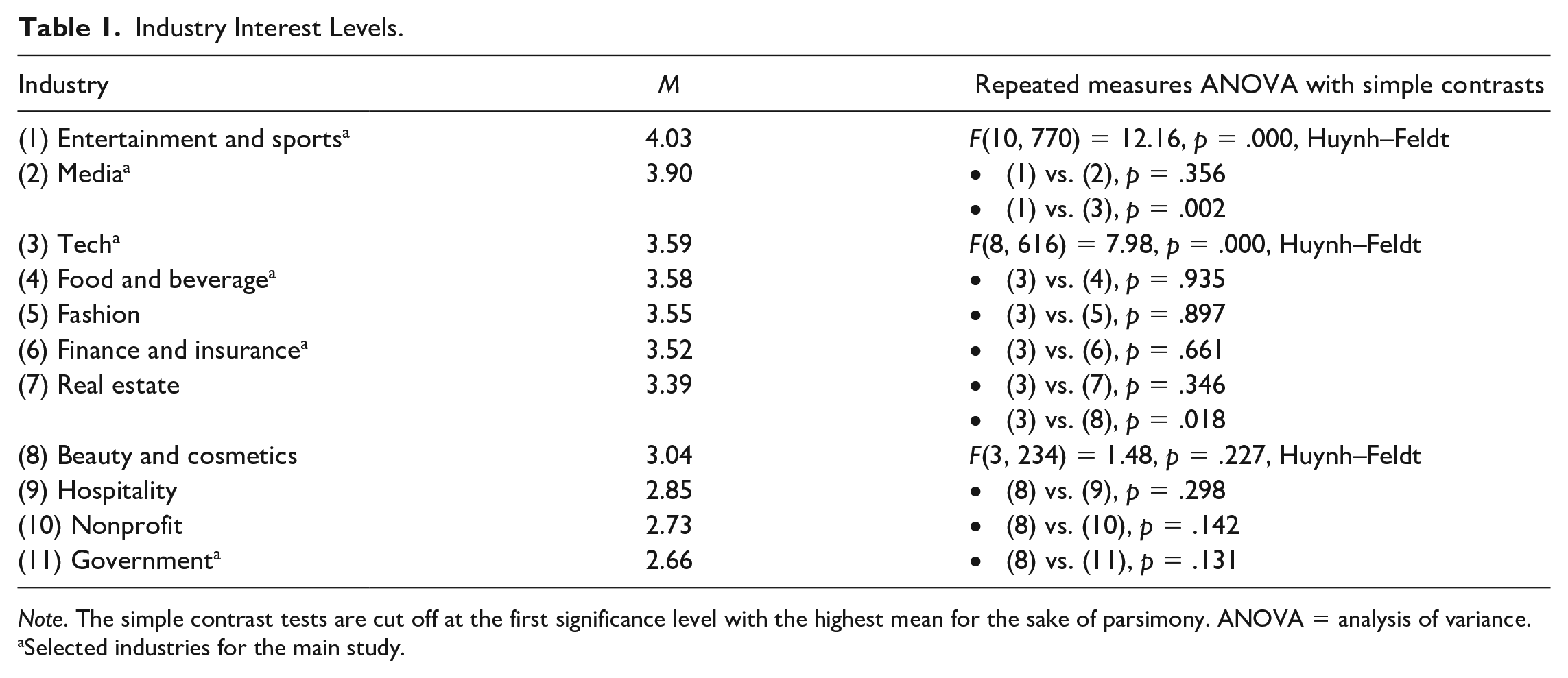
Note. The simple contrast tests are cut off at the first significance level with the highest mean for the sake of parsimony. ANOVA = analysis of variance.
Selected industries for the main study.
Company Interest Levels.
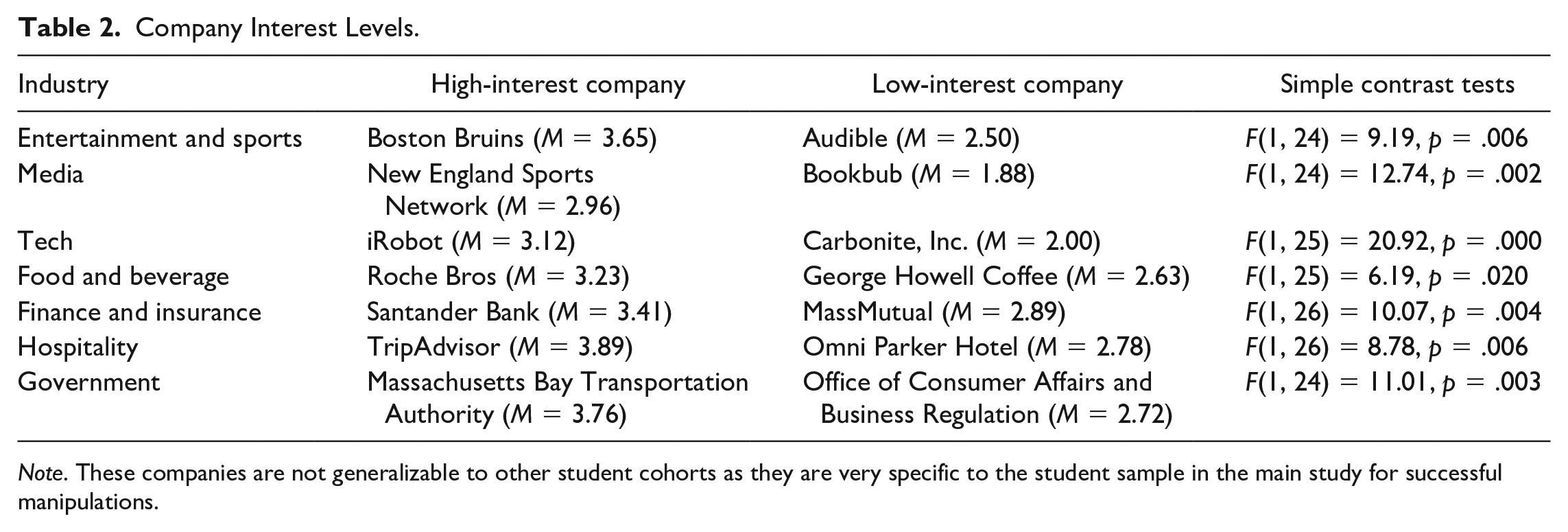
Note. These companies are not generalizable to other student cohorts as they are very specific to the student sample in the main study for successful manipulations.
Participants and Design
279 undergraduate students from an AACSB (Association to Advance Collegiate Schools of Business)-accredited business school (59.8% male, with five students not reporting gender) participated in a control versus client (2 [client interest: high, low] × 2 [client receptiveness: high, low] × 2 [professional link: with, without]) between-subjects experiment in exchange for course credit. At the time of the study, the participants were students in the principles of marketing classes (i.e., one of the prerequisite course of the marketing research course) and were randomly assigned to one of the experimental conditions with a hypothetical scenario that was based on taking the marketing research course in the following semester. The design included an attention check (i.e., selecting the correct client organization or “There wasn’t any client in my scenario” option based on their assigned scenario) and a timestamp check (i.e., spending at least 4 seconds on the course description infographics) to ensure the quality of the responses. The participants who failed these checks were eliminated from the study sample; the reported findings are similar with or without these eliminated participants. The manipulation checks for client receptiveness and professional link were still not significant, failing to establish the validity of these conditions; the reported findings of the study are the same with or without consideration of these manipulations. Thus, for the sake of parsimony, the resulting data set amounts to a control versus client (interest: low, high) three-cell between-subjects design with 120 participants (55.5% male, with one student not reporting gender).
Stimuli and Procedure
On reading, “Before the study, we would like to poll [the principles of marketing] students on your interest level in different industries. Your feedback may help us determine future [school name] client projects,” students were randomly asked to choose the industry they are either “most” or “least” interested in from the selected industries of the pretest. These answers were later used to construct their assigned scenarios for each client condition. In order to cognitively distance these responses from the scenarios, the participants were thanked for their answers, told that they would now be directed to participate in a study, which they would earn their extra credit, and to read the study introduction. Next, they were randomly assigned to an experimental condition where they read their respective course description infographics (time stamped) and were later presented with their respective scenario.
All the course descriptions started with the same statements (i.e., brief definition and topics covered). For the participants in the control condition, the description continued as, “You will use Excel and SPSS (statistical software program) to support your research analyses, implement what you have learned from previous statistics courses, and learn new data analysis techniques. You will discuss and present research ideas and processes,” whereas for the participants in the client conditions, the description continued as, You will use Excel and SPSS (statistical software program) to support your research analyses, implement what you have learned from previous statistics courses in a client project, and learn new data analysis techniques. Select students will have the opportunity to discuss and present research ideas and processes to the client, enabling interactions with executives from the client organization.
Next, the scenarios were presented where each participant was instructed to imagine that it was now the following semester and they were taking the marketing research course on successfully finishing the principles of marketing course. The participants in the client conditions further read that, “the client for the course project is from the [selected low/high interest] industry: [the name and brief description of its respective low/high interest company].”
Measures
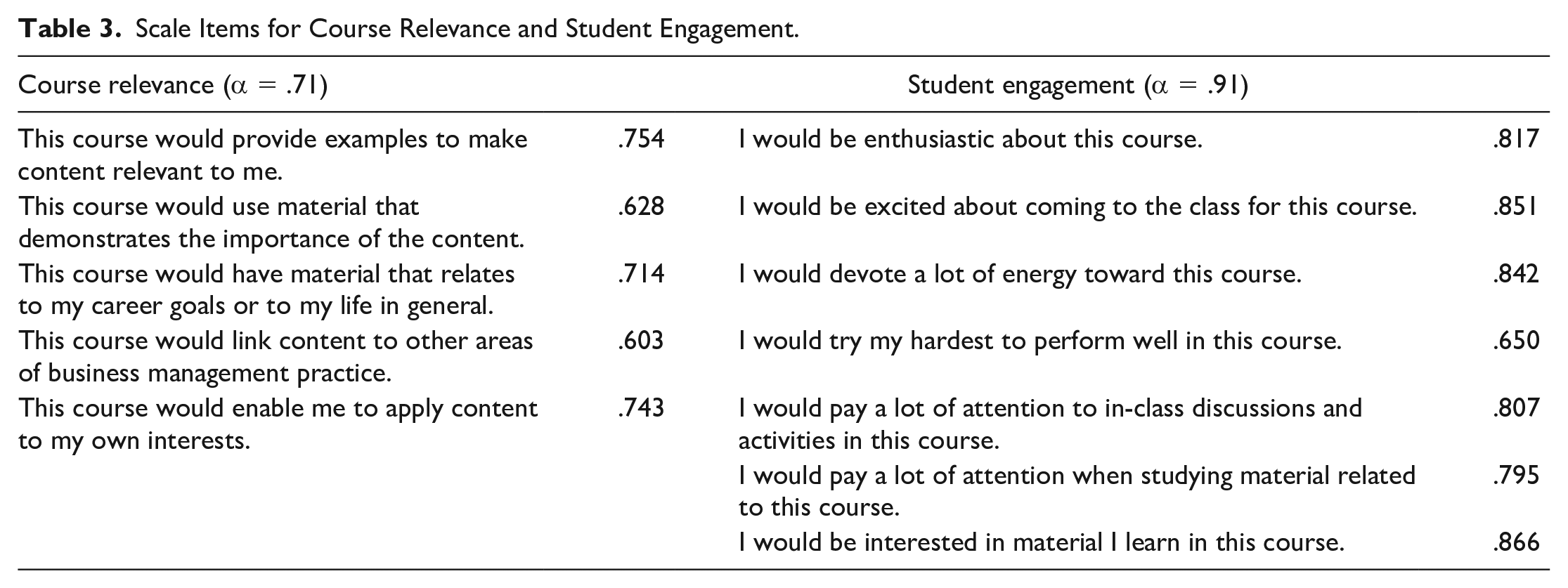
On reading the course instructions and the scenarios, participants indicated their agreement (1 = strongly disagree, 7 = strongly agree) with statements related to course relevance (modified from Frymier & Shulman, 1995) and engagement (modified from Burch et al., 2015). These items can be seen in Table 3. Next, they responded to questions related to manipulation checks (“Does the course incorporate a client project?” [1 = definitely not, 5 = definitely yes]; “How would you evaluate the client organization?” [Interesting, 1 = not at all, 7 = a great deal]) and others that included their age, gender, knowledge level on the marketing research course, work experience, major, current academic standing, and GPA (grade point average).
Scale Items for Course Relevance and Student Engagement.
Findings
Manipulation Checks
Two independent sample t tests were conducted to check for the effectiveness of the client manipulations. First, when asked about the course incorporating a client project, the students in the control condition answered with less certainty (M = 3.74) than those in the client conditions (M = 4.36, p = .001). Second, when asked about their interest level in the client, the students in the low interest condition evaluated the client less interesting (M = 4.57) than those in the high interest condition (M = 5.67, p = .000).
Student Engagement (H1) Under the Boundary Condition of Client Interest
A one-way analysis of variance (ANOVA) showed significant differences in student engagement based on the experimental conditions (i.e., no client, low-interest client, and high-interest client; F(2, 117) = 11.40, p = .000; see Figure 1). Follow-up contrast results revealed that students in the high-interest client condition indicated higher engagement (M = 6.21) than students in the no-client condition (M = 5.67, p = .004); there was no difference in engagement between students in the low-interest client condition (M = 5.40) and those in the no-client condition (M = 5.67, p = .186).
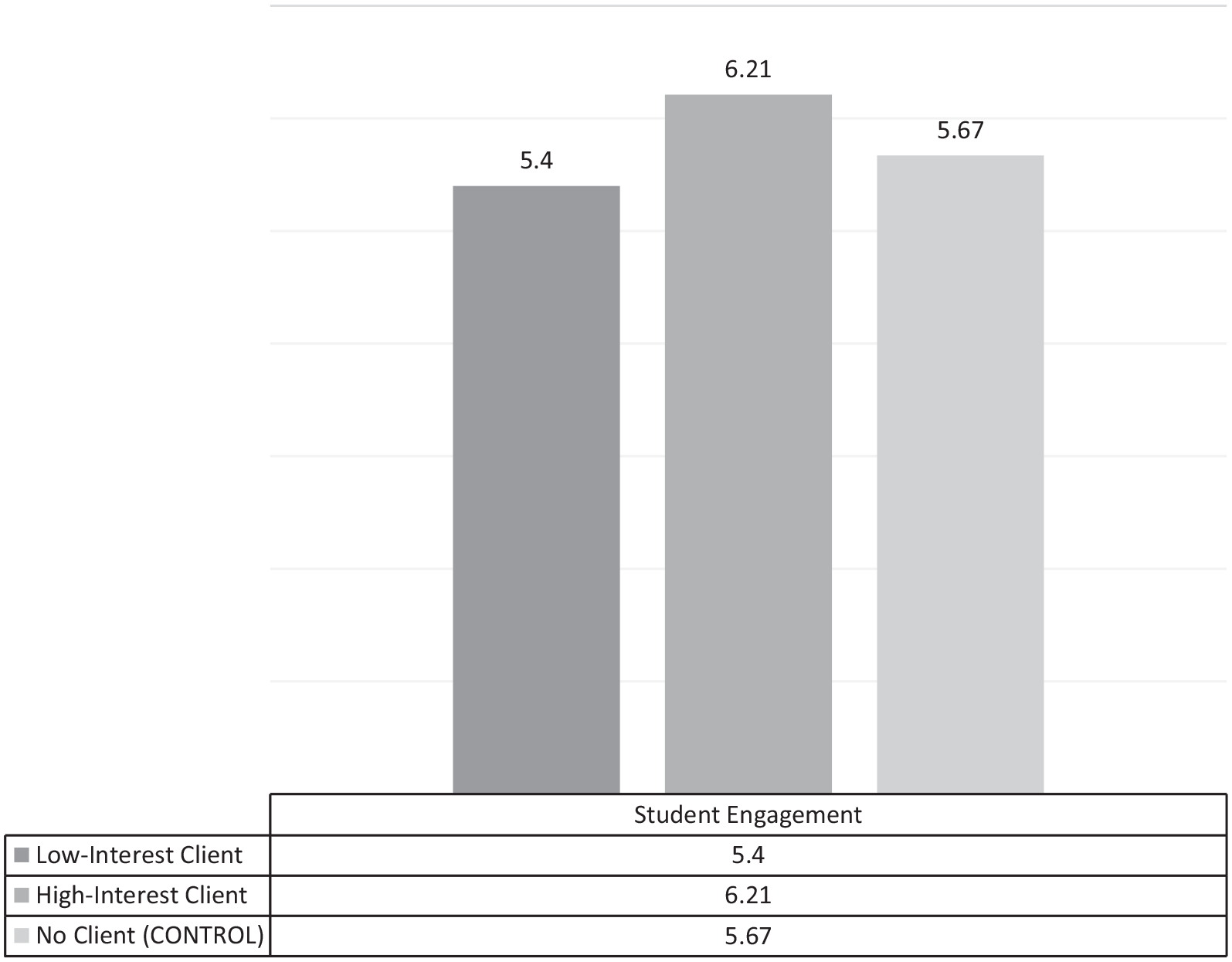
Impact of client-sponsored project (CSP) on student engagement.
Student Engagement Through Course Relevance (H2) Under the Boundary Condition of Client Interest
Hayes’s (2017) PROCESS Model 4 with student engagement as the dependent variable, course relevance as the mediator, and the three conditions as the multicategorical independent variable, where each subsequent category (i.e., the client conditions: low, high interest) is tested against the base category (i.e., the no-client control condition), was used to test the hypotheses. Accordingly, when compared against the no-client control group, the conditional process analysis returned a significant index of mediation for the high-interest client group (β = .54, SE = .15, 95% CI [.28, .86]), but not for the low-interest client group (β = .10, SE = .11, 95% CI [−.10, .33]; see Figure 2).
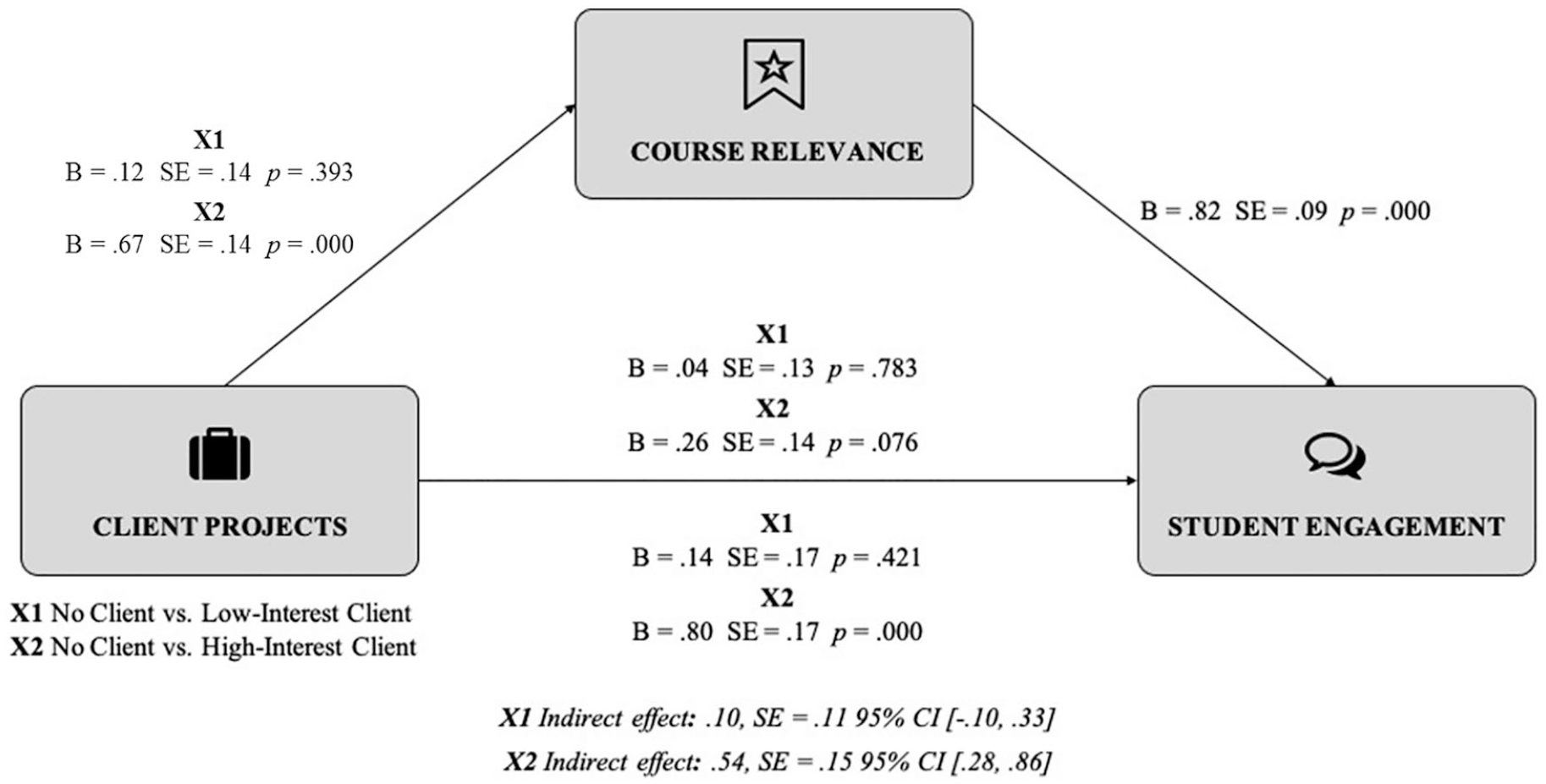
Impact of client-sponsored project (CSP) on student engagement through course relevance.
Discussion
Consistent with our theorization and the findings of Study 1, these results indicate that the impact of CSPs on student engagement with marketing research courses depends on how interested students are in the client. Students report being more engaged with a marketing research course when the course incorporates a CSP with an interesting company than when there is no CSP in the course, supporting H1. The process behind this relationship can be explained by how relevant students perceive the course to be to them. Namely, an experiential design tool with an interesting client increases student engagement with a marketing research course when this CSP leads to an increase in perceived course relevance, supporting H2. However, these positive effects of CSPs as an experiential course element disappear when students are not interested in the client company, highlighting student interest in the client company as a relevant boundary condition for the supported relationships.
Collectively, Studies 1 and 2 demonstrate the value of proper client selection for optimizing student engagement in the classroom. However, these studies fail to yield comprehensive insights regarding how to predict student interest in a potential client. In the following study, discrete choice modeling is utilized to disentangle and prioritize the critical features that predicate student intrinsic interest in a client.
Study 3: Discrete Choice Model Analysis on What Makes a Project Client Interesting
We have previously identified student interest in clients as a boundary condition for the effectiveness of CSPs on student engagement via course relevance. In this study, our objective is to elevate the prescriptive insights from our findings by focusing on various characteristics of a client that may affect student interest. Using discrete choice analysis to assess the relative importance of client attributes, we aim to answer the research question: What makes a project client interesting for students?
Method
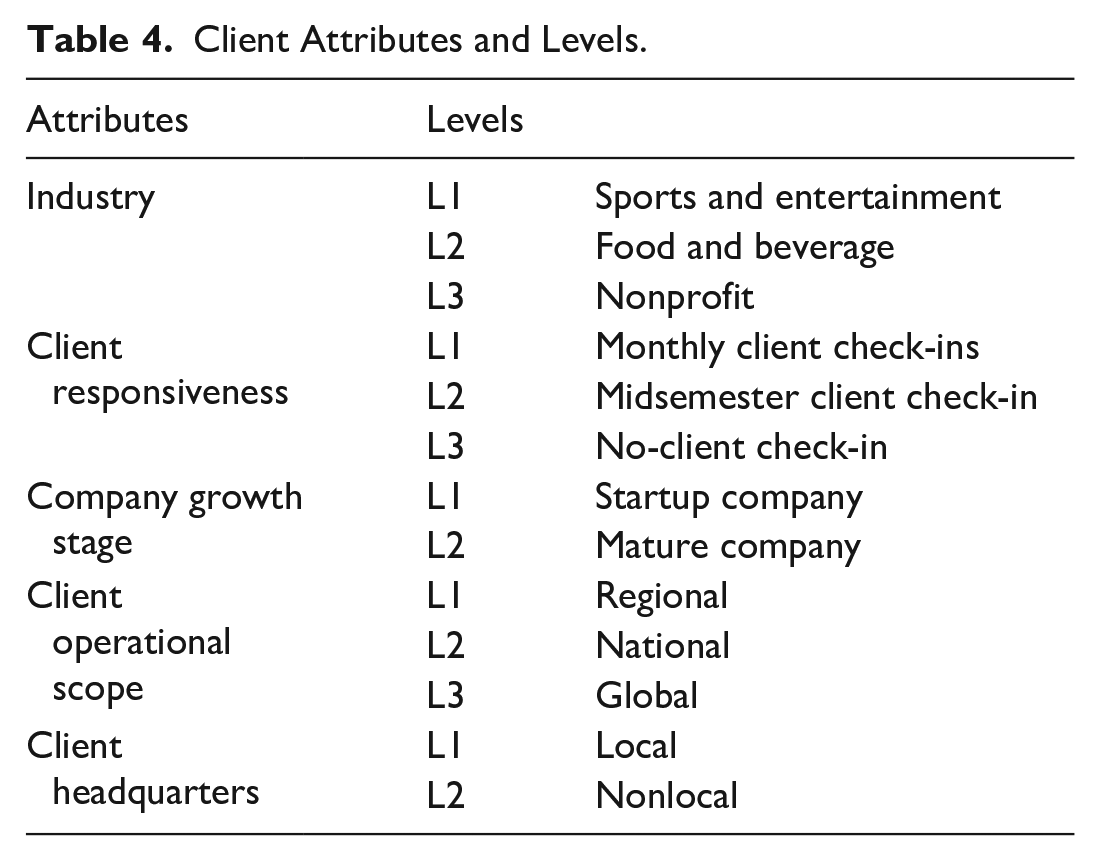
A total of 71 undergraduate and graduate students from an AACSB-accredited business school (35.2% male, with one student not reporting gender) participated in a discrete choice experiment in exchange for course credit. The students were invited to participate in an online survey in which they simultaneously considered multiple client profiles that were constructed out of five client attributes: client industry, client responsiveness, company growth stage, client operational scope, and location of client headquarters. All levels associated with each attribute can be seen in Table 4. The author team decided on these attributes based on qualitative insights from Study 1, quantitative insights from Study 2 pretest on industries, extant literature, and their own experience and expertise in instructing CPSs in research courses.
Client Attributes and Levels.
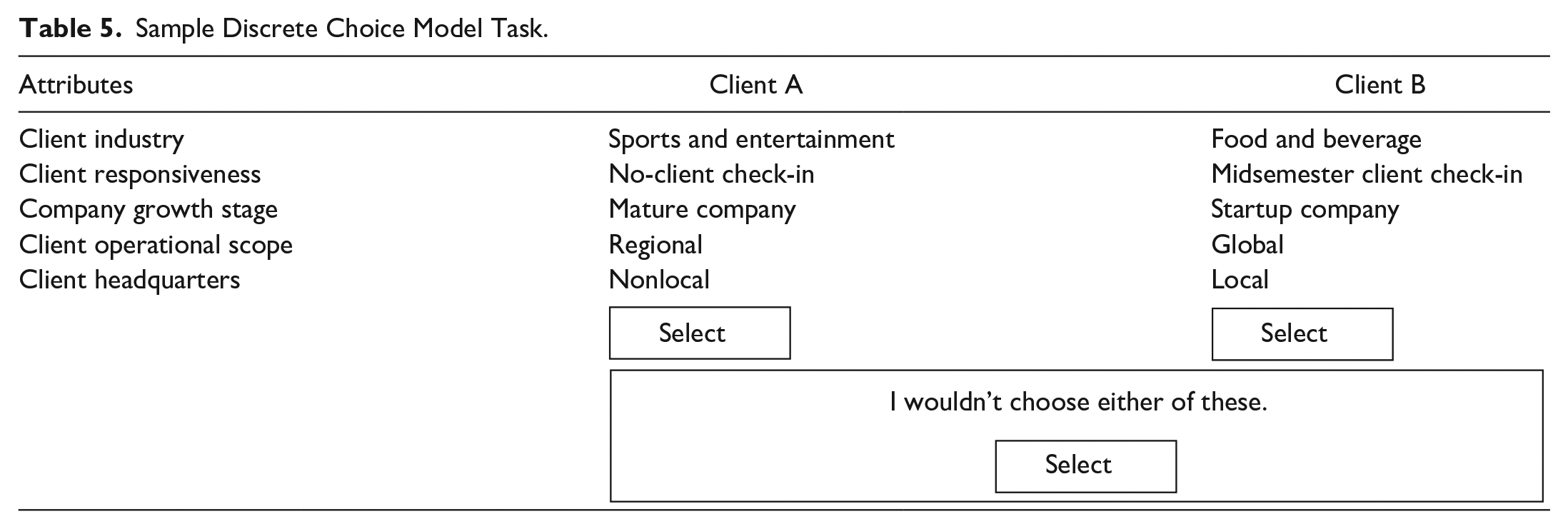
Each student was exposed to a unique series of choice tasks, and in each task, they were asked which client profile they would most prefer to work with (for a sample task, see Table 5). These choice sets were designed so that each attribute level was equally likely to occur with each level of every other attribute. For the analysis, we measured the influence of the attributes on student choices; more specifically, the discrete choice model (DCM) analysis considers the profile levels that were chosen, along with the profiles in each respective choice task that were not chosen, yielding a measure of the relative importance for each attribute, and a measure of the strength of influence of each level of each attribute. The multinomial logit model version of discrete choice methodology was applied throughout the analysis.
Sample Discrete Choice Model Task.
Findings
The DCM approach provides value in identifying the relative importance of attributes that can help predict student interest in a client. Results show that client industry has the highest relative importance (49.9 %) in predicting interest in a client (see Figure 3). Client operational scope follows with 17.1 % in relative importance. Respectively, the next three attributes that follow in relative importance are client responsiveness (16.1%), company growth stage (11.4%), and client headquarters (5.5%).
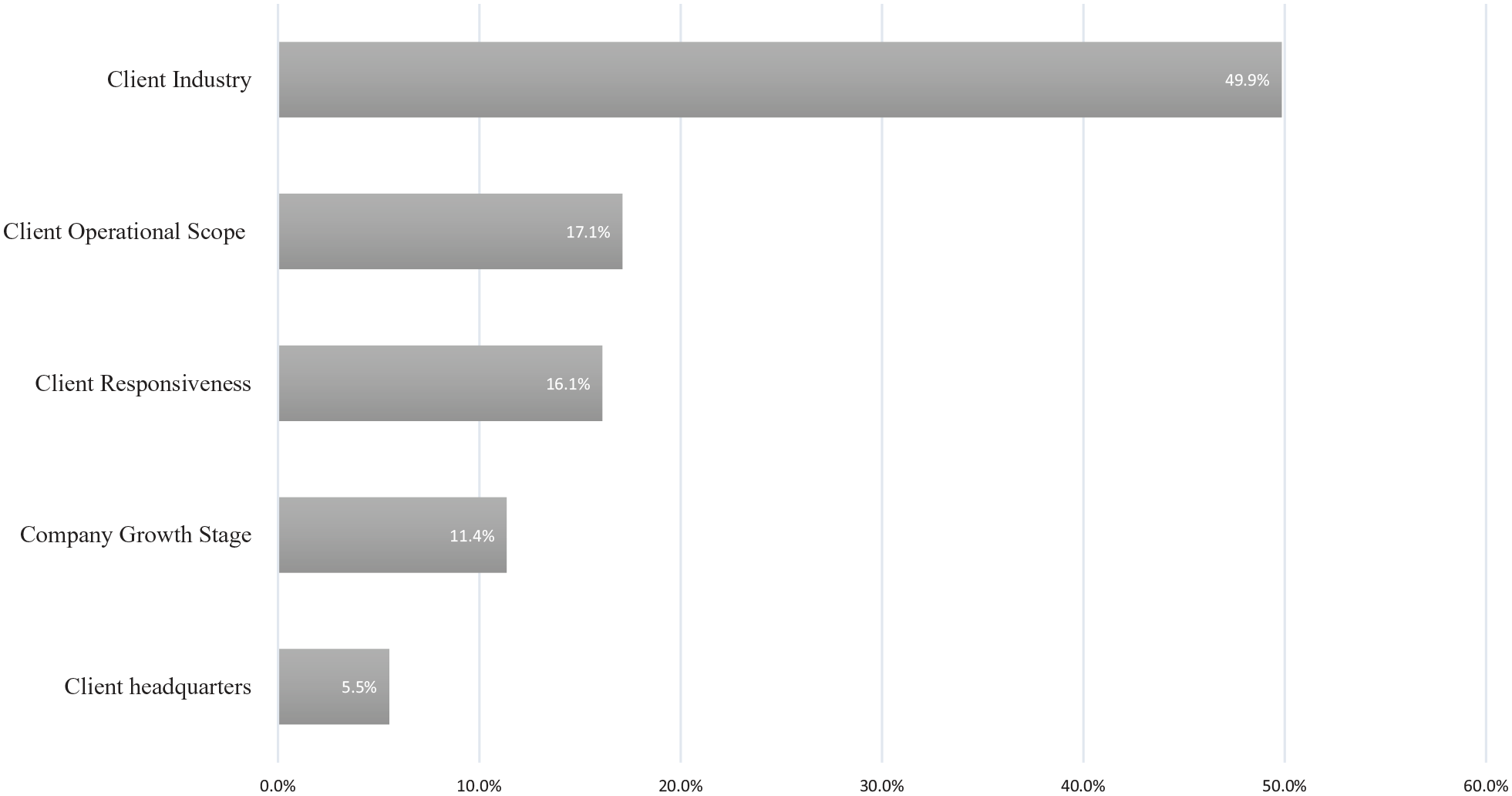
Relative importance of client attributes.
The sensitivity results illustrate that students prefer a client from the sports and entertainment industry 21.5% over a nonprofit client, whereas a client from the food and beverage industry was selected 15.2% as being more interesting than a client from nonprofit industry (see Figure 4a). Results also show that students assign their interest in a client operating at a global scale (10.6%) or a client with a regional focus (4.7%) over a national client (see Figure 4b). When it comes to client responsiveness, students find it more interesting when clients are responsive with check-ins to learn the status of the project and give feedback to students during the semester (a midsemester check-in, or monthly client check-in, were preferred, respectively, 9.2% and 8.0% over a client with no-check-ins, see Figure 4c). Findings also highlight that students have 10% more interest in clients at a mature development stage than start-up clients (see Figure 4d). Last, clients with local headquarters are found to be 3.1 % more interesting than the ones with nonlocal headquarters (see Figure 4e).
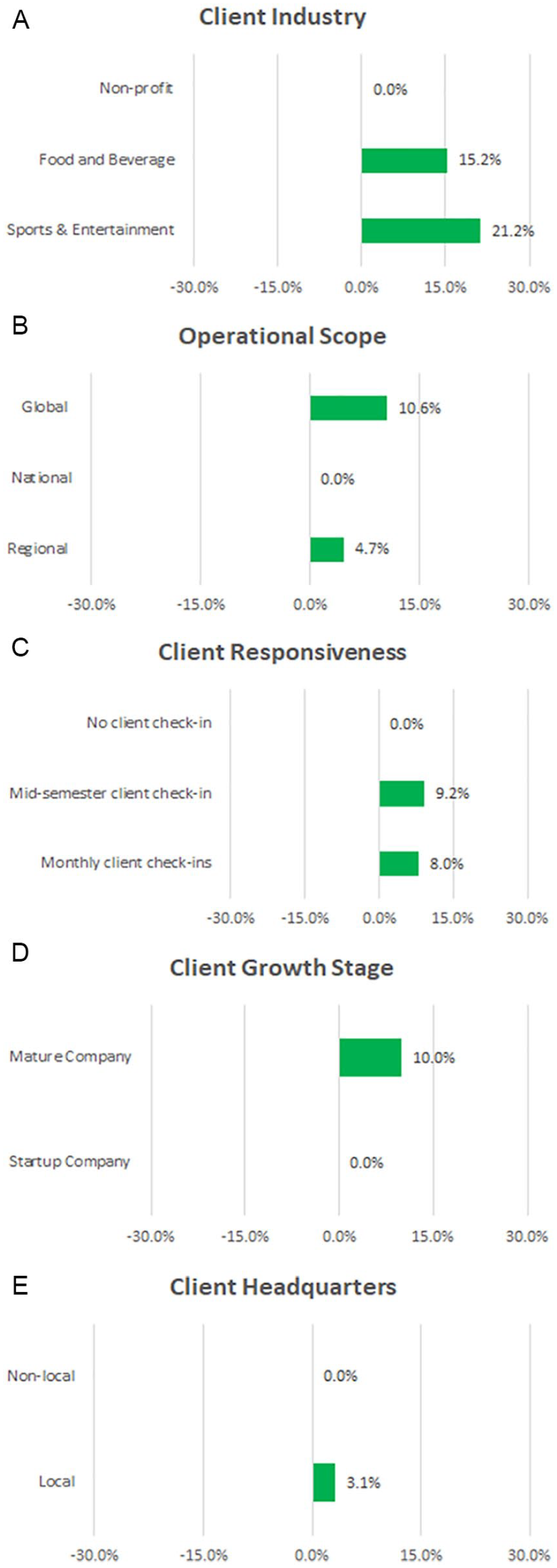
Sensitivity analysis results.
Discussion
Our results show that students find certain attributes of clients to be more interesting. Client industry is the most important factor in setting their preferences. Among three industries, students found the sports and entertainment industry to be the most attractive. This result supports the findings from the Study 2 pretest in which student interest in various industries was measured. Furthermore, the client operational scope, level of course interaction (i.e., client responsiveness), growth stage, and location were all associated with level of student interest. Based on the findings from this study, then, students prefer local, globally scaled, mature companies from the sports and entertainment industry that offer moderate interaction and midterm feedback.
Study 3 provides insights into the independent features to prioritize when recruiting clients for experiential projects. However, in practice, instructors cannot often be overly fastidious in client selection. Depending on various uncontrollable factors, including project scope, university location, resources, and support, options may be limited or predetermined. Therefore, research is necessary to highlight best practices for enhancing students’ preexisting perceptions of course design elements. Study 4 offers a field experiment designed to test the role of project framing in elevating students’ intrinsic interest in a preselected client.
Study 4: Field Experiment With Client Trivia as an Awareness Intervention
In our previous studies, we highlighted the influential role of interesting clients in CSPs in marketing research courses and illustrated certain attributes that make client organizations interesting for students. In Study 4, we provide a classroom intervention that has the potential to increase student interest in project clients.
Education research has long documented the critical role of learners’ preexisting, intrinsic interests in driving student engagement (see Harackiewicz & Knogler, 2017, for a review). However, it is not realistic for many educators to customize their curriculum according to the idiosyncratic makeup of the student body, particularly as this relates to selecting external clients for class projects. Fortunately, this literature has afforded many strategies for embedding elements that enhance the extrinsic interests of students in preselected class materials. One such tactic is to develop familiarity by engaging the students with the focal element prior to the outset of the curriculum (Means et al., 1997).
Familiarity is a well-supported antecedent of interest perceptions. It is highlighted in Keller’s (1987b) attention–relevance–confidence–satisfaction (ARCS) model of student motivation as a necessary condition for eliciting interest through relevance-enhancing strategies. Keller concludes that “the use of concrete examples from settings familiar to the learner can help to achieve relevance, especially when teaching abstract material” (p. 4). This is supported by formal theories of interest development. Krapp et al. (1992) depict a learner’s actualized individual interest as a function of two interacting forces: their preexisting dispositional interest in the topic and the contextual framing accompanied with its stimulus. As noted by Harackiewicz and Knogler (2017), this relegates one’s interest as both a state- and trait-like construct, and the development of the former to the latter is dependent on facilitating connections of the target to previously learned information. Referred to as a “context manipulation,” the authors argue that the pedagogical strategy of context personalization “can support learner motivation, as well as further knowledge acquisition through mechanisms that build on positive affect, perceived value, and accumulated knowledge as three core components of individual interest” (p. 344). Context manipulation as an extrinsic interest-embedding tactic has been empirically shown to better predict motivation and performance than preexisting trait–like levels of interest (Means et al., 1997).
Thus, we expected this intervention to increase student interest through increased familiarity. In the study, we show that client trivia is an effective classroom activity that increases student interest in the project client. However, familiarity only partially explains this effect, highlighting omitted variables that can further explain the process.
Method
Participants and Design
A total of 186 undergraduate students (58.9% male, with two students not wanting or failing to disclose gender) across 10 sections of a marketing research course at an AACSB-accredited business school participated in a between-subjects field experiment (one control and two intervention conditions; i.e., client trivia and professional link). Each participating course section was assigned to one of the experimental conditions. The participating sections were selected based on whether its instructor taught at least two sections of the course to control for instructor variation by assigning one control and one intervention condition to each instructor. The manipulation check for professional link intervention was not significant, failing to establish the validity of the condition; thus, for the sake of parsimony, these sections with their corresponding control sections were removed from the final data set; keeping these control sections do not change the results of the study, but we wanted to be conservative in our approach to control for instructor variety. The resulting data set amounts to a control versus intervention (i.e., client trivia) two-cell between-subjects design with 118 participants (54.7% male, with one student not reporting gender) across six course sections with three different instructors.
Stimuli, Procedure, and Measures
The marketing research course utilizes a CSP each semester, and at the time of the study, the client organization was a broadcasting company that provides satellite radio, online radio, and on-demand online content to media consumers in the United States. Each participating instructor taught their two course sections on the same day, controlling for time effects between the control and intervention conditions. The lectures of the two course sections were identical in content except for the client trivia intervention, which included an interactive, multiple choice trivia activity. For data collection, the instructor administered an online survey. On reading, “As the marketing department of [school name], we conduct research every semester to assess student perceptions on the client. This is an ongoing effort to structure better client project experiences for our students,” participants indicated their assessment on how interesting [the organization] is as a project client for the course (1 = not interesting at all, 7 = extremely interesting). Next, they responded to questions related to manipulation checks (“How familiar are you with [the organization]?” [1 = not familiar at all, 7 = extremely familiar]; “How relevant do you think [the organization name] will be for your professional career goals?” [1 = not relevant at all, 7 = extremely relevant]). The students were also asked their course section, their age, gender, and major. The section’s educational level (i.e., honors section vs. regular) was included as a control variable in the data set.
Findings
In our field experiment, we had three regular and three honors sections; we expect the students in the honors sections to score higher on study variables such as interest and relevance; thus, we have included the honors variable in the following ANOVAs to observe their effects and rule out any interaction effects.
Familiarity
An ANOVA with familiarity as the dependent variable and intervention (i.e., client trivia) and honors as the independent variables revealed a marginally significant effect of intervention, F(1, 113) = 3.08, p = .082, indicating that students in the intervention group reported higher familiarity (M = 4.40) than those in the control group (M = 3.96). This difference cannot be attributed to the distribution of honors students as both the main effect of honors, F(1, 113) = 1.50, p = .224, and the interaction effect, F(1, 113) = 0.02, p = .878, were not significant.
Client Interest
An ANOVA with client interest as the dependent variable and intervention (i.e., client trivia) and honors as the independent variables revealed a significant effect of intervention, F(1, 114) = 4.97, p = .028, indicating that students in the intervention group assessed the client as more interesting (M = 5.30) than those in the control group did (M = 4.62). Students in the honors sections also, marginally, assessed the client as more interesting (M = 5.29) than those in the regular sections (M = 4.68), F(1, 114) = 5.07, p = .078. However, the interaction effect was not significant, F(1, 114) = .04, p = .843; thus, the client trivia intervention was effective for both regular and honors sections (see Figure 5).
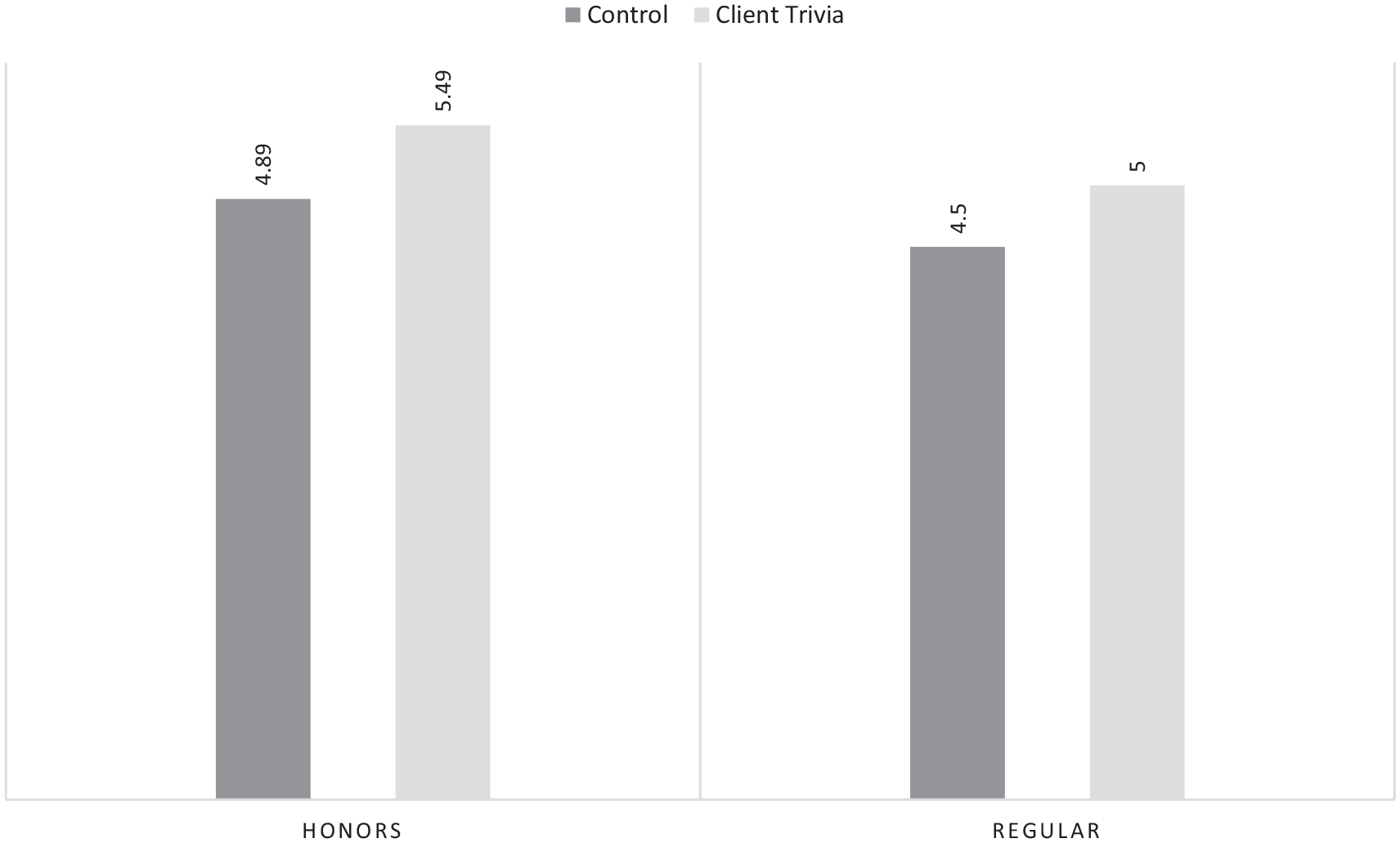
Impact of intervention on client interest.
Client Interest Through Familiarity
Hayes’s (2017) PROCESS Model 4 with client interest as the dependent variable, familiarity as the mediator, the intervention as the independent variable, and honors as a control variable was used to test the hypotheses with 90% CIs due to the intervention’s marginal effect on familiarity. Accordingly, the conditional process analysis returned a significant index of mediation (β = .12, SE = .24, 90% CI [.01, .25]). Both the total (β = .54, SE = .25, 90% CI [.13, .94]) and direct effects (β = .42, SE = .24, 90% CI [.02, .82]) of client trivia intervention on client interest was significant, indicating possible other mediators that can further explain this effect.
Discussion
Our findings indicate that a client trivia activity can be an effective way to increase student interest in the client regardless of whether the students are in a regular or honors marketing research class, and this increase can be marginally attributed to increasing awareness of the client organization. The client organization in this field experiment was a well-known brand in the media and entertainment industry; thus, the means for all conditions were in the higher ranges. Even then, the activity proved to be effective in increasing interest. Hence, in the absence of an interesting client, an awareness intervention such as a client trivia activity, may boost students’ interest level, which, in our initial studies, is shown to moderate the effectiveness of CSPs on student engagement.
General Discussion
Theoretical and Practical Implications
Seminal works such as Astin’s (1999) theory of involvement and sociocultural theories of engagement, such as Kahu et al. (2020), show that student engagement is linked to improved achievement, persistence, and retention. When students are meaningfully engaged with a course, they are intrinsically motivated to learn due to the purposeful nature of the learning activities (Massika & Jones, 2016). CSPs promote deeper engagement because they involve applied learning in the context of a real-time managerial problem. They enhance students’ sense of ownership of learning and autonomy over work (Lopez & Lee, 2005). However, our research indicates that this outcome holds only if students find clients to be interesting.
According to theories of interest, interest as a phenomenon combines positive affective qualities, such as curiosity, with cognitive qualities, such as focused attention, as well as a sense of value and personal significance (Harackiewicz et al., 2016). By incorporating clients that are perceived to be interesting, student learning and attention feel more effortless (Hidi & Renninger, 2006). Being in a state of interest is positively related to self-regulation and persistence (Tulis & Fulmer, 2013), and this interest amplifies the use of deep learning strategies (Ainley, 2006). Our study suggests two pathways to create student interest in clients: (1) choosing clients that are perceived to be interesting (preexisting dispositional interest with clients) and (2) incorporating classroom interventions (such as client trivia) to foster student familiarity with clients prior to the outset of the curriculum (context manipulation as an extrinsic interest-embedding tactic).
First, what makes a client interesting for students? Our DCM analysis results show that client industry is the biggest driver of subjective student interest in clients. We had three levels of client industry in the DCM study, among which sports and entertainment received the highest score followed by food and beverage and nonprofit industries. Overall, students found mature, global, sports and entertainment focused clients with a local headquarter to be the most interesting. It might be that mature global companies are generally more well-known or that students are more familiar with sports and entertainment focused companies since they are often target customers for these industries. Students also found companies with local headquarters to be more interesting than ones with national headquarters, which highlights that client proximity matters in building interest in clients. Last, our results show that clients who conduct midterm feedback sessions are more interesting to students (compared with monthly check-in, or no–check-in clients). These results provide useful cues to marketing educators who seek to select interesting clients. It is also advisable that, given the type of clients located in the respective university’s town, educators may want to conduct a similar type of DCM study among their students to find out which industries would interest their students the most.
Second, regardless of whether a client is intrinsically interesting to students, we recommend that marketing educators consider conducting interventions that can increase student interest in these client organizations. One such classroom intervention involves fostering student familiarity with a client. In the current study, we used client trivia as a fun activity to familiarize students with the client. Though the client was a well-known brand, the sections that were exposed to trivia showed more interest in the client than the control group sections. This finding has implications for instructional material design. The instructional benefits observed are consistent with the project-centered approach to curriculum design (Katz & Chard, 1989), in which instructional objectives are integrated into meaningful activities deliberately designed and selected for their potential to sustain high levels of intrinsic interest with the clients (Hidi & Harackiewicz, 2000).
As alluded to in Studies 1 and 3, it is also very important to have the client interact with students to increase their interest in the client. We recommend educators involve the client from the very beginning to brief students on the urgency of the project, explain their motivations, and translate how student efforts on the project will be used to improve organizational performance. This information should be provided to students at the outset of the project. The client’s direct interaction with students during the briefing will establish a line of direct contact with the client, enable students to hear about managerial issues firsthand, and give students a chance to ask questions. The theory of interest identifies this process as triggered situational interest, which is elicited by external factors (Hidi & Renninger, 2006).
After the client briefing, the project should start to build on this momentum to further guide interest development, which is called the maintained situational interest. As our DCM findings show, midsemester check-in clients are more interesting than the ones who do not have any check-ins or who have them monthly, which may be perceived as too burdensome for undergraduate students. Therefore, we recommend that students create a midterm progress report to receive feedback from the client; by this time, students will know more about the client and root managerial problem the client is facing. If the client can provide feedback on this deliverable, students may develop maintained interest beyond the course project and associate it with their accumulated knowledge, which develops into emerging individual interest. If feasible, instructors can also take students to the client’s facility to further maintain student interest. With the second half of the project, knowledge and stored value can increase further and students may eventually enter the fourth phase of well-developed individual interest. Hidi and Renninger (2006) state that as interest deepens across these four phases, students develop an increasing metacognitive awareness of their own.
Limitations and Future Research
This study has limitations that provide fruitful avenues for future research. First, Study 2 experimental conditions for client responsiveness and professional link did not yield meaningful differences in what they were designed to manipulate, and thus, did not have any effect on the study’s dependent variables. One reason for this failed attempt at manipulation may be that these two concepts are difficult for students to imagine in a hypothetical scenario before experiencing such CSPs. Accordingly, future research can benefit from field studies to explore whether these play an important role in student engagement in marketing research courses. Furthermore, this study uses cross-sectional experimental design in a course where students read hypothetical scenarios about clients from various industries. Future studies could conduct pretest–posttest surveys in a marketing research course with a CSP to see whether the results replicate and explore how engagement level evolves throughout the course. Also in this study, we would like to note, as a limitation, that a social desirability scale was not included, especially given that students’ GPA was requested. Second, all studies focused on students from a single university. Although the nonrandom nature of the sample only supports preliminary conclusions, the findings provide justification for, and insight into, incorporating interesting clients into marketing research courses to increase student engagement, assessing important attributes when considering clients, and applying classroom interventions to boost student interest in clients through increased awareness. Finally, although we demonstrated how familiarity can enhance student perceptions of client interestingness, other interventions—such as how the client briefing is conducted—may also serve to boost this important outcome and should be tested in future research.
Conclusion
This research addresses the growing importance of CSPs in marketing research courses. Specifically, we investigated the process through which CSPs impact student engagement. We leveraged literature on student engagement, theories of motivation, and experiential learning and proposed that CSPs increase student engagement through perceived course relevance. We used a mixed-methods approach to understand the proposed relationships. As our qualitative and quantitative findings show, for a CSP to be effective in student engagement, the students’ interest in the client is crucial. Next, we identified client industry as an important determinant in predicting student interest, with clients from the sports and entertainment industry being of the most interesting to students. Finally, we illustrated the importance of classroom interventions, such as a client trivia, in boosting student interest in a client.
Footnotes
Declaration of Conflicting Interests
The author(s) declared no potential conflicts of interest with respect to the research, authorship, and/or publication of this article.
Funding
The author(s) received no financial support for the research, authorship, and/or publication of this article.
