






Abstract
This study examines how object circulation—the recurrent transferring of objects among members of a group—can be used to foster a hybrid value regime in alternative economies. Prior research notes that alternative economies harbor multiple conceptions of what is valuable, suggesting that hybridity can help sustain alternative economies. This study mobilizes ethnographic and netnographic data to examine the circulation of singularized objects in a religion-based alternative economy in Brazil. It focuses on value creation through object circulation to shed light on the constitution of value regime hybridity. Findings explain how the governing institution in this economy—the church – fosters a hybrid value regime through promoting the creation of multiple types of value outcomes and incentivizing their intertwining. We discuss how value regime hybridity reduces tension and criticism directed at the alternative economy and promotes resource dependence among heterogeneous participants.
Alternative economies often carry a strong moral logic and represent local and intentional forms of resistance to the mainstream market (Healy 2009; Kozinets 2002; Marcoux 2009). Despite this perception, research has shown that alternative economies are not infused with only one logic (e.g., the moral logic), but in fact harbor multiple logics to guide value creation, exchange, and valuation (Papaoikonomou and Valor 2016; Scaraboto 2015). The argument for multiple logics is not new, as scholars have long argued that moral logics often associated with alternative economies infuse commercial relationships and that moral relationships are important in the commercial logics of mainstream economic activity (Polanyi 1944). Yet, as Healy (2009) notes, very few scholars study alternative economies from “an ontology of economic difference that highlights the ubiquity […] of non-market and non-capitalist practices alongside the variety of capitalist forms” (p. 338). Doing so allows researchers to consider possibilities, rather than limits, of how marketing theory and practice can support the shaping of alternative economies (Gibson-Graham 2008).
Once researchers acknowledge hybridity as a constitutive characteristic of alternative economies, opportunities to explore hybridity in macromarketing research and practice come into view. For instance, prior research has shown that the hybrid status of certain economies is constantly under the threat of destabilization by the struggle between competing modes of exchange (Scaraboto 2015). This suggests that alternative economies may become more stable and, therefore, sustainable when this struggle is minimized (Scaraboto 2015; Zelizer 2004). Further, since the multiple logics of hybrid economies often are underpinned by multiple regimes of value, that is, by different conceptions of what is valuable and of what types of value outcomes should be prioritized (Arnould 2014; Karababa and Kjeldgaard 2013), a better integration among various value regimes may lead to more sustainable hybrid economies.
The small collection of studies that develops the notion of regimes of value is multidisciplinary and flexibly employs the concept to support examinations of one or another aspect of a given society’s economy (Graeber 2001). For instance, regimes of value have been associated to specific modes of exchange (Arnould 2014; Scaraboto 2015); and employed to examine situational and contextualized understandings of value (Crossley and Piccard 2014) and value creation (Figueiredo and Scaraboto 2016).
To be clear, this study draws from the definition proposed by Levy, Reinecke, and Manning (2016, p. 369), which argues that value regimes are composed by three inter-related dimensions, as follows. “[1] Economic models of value creation and distribution, including processes of production and exchange, mechanisms of valuation, and their associated market structures and business models; [2] Normative and cultural values regarding the moral and social value of products, lifestyles, the natural environment, and labour conditions; and [3] Governance mechanisms, representing formal and informal rules, power relations, technical standards, and organizations with authority.” This definition extends Appadurai’s (1988) initial explanation of value regimes as cultural understandings guiding economic activity to include the structures and mechanisms that enable the creation, distribution and assessment of value.
This study draws from theories of value creation through object circulation (Appadurai 1988; Graeber 2001; Figueiredo and Scaraboto 2016; Weiner 1992) to explore the possibility that object circulation can promote a hybrid value regime and support the sustainability of alternative economies. Recent research has found that circulation fosters practices of value creation capable of generating multiple types of value outcomes, hence catering to multiple value regimes. Through circulation, the actions of participants in a collective become interdependent, allowing various logics of value creation to coexist (Figueiredo and Scaraboto 2016). Findings from this literature suggest that alternative economies could benefit from a closer examination of how object circulation generates multiple types of value outcomes (i.e., the various types of benefits that one derives from using an object) and sustains hybrid value regimes in alternative economies.
Toward this goal, this study relies on data on the alternative economy of the Small Chapels Movement (SCM), which circulates small wooden chapels containing a statue of the Virgin Mary among Catholic households in Brazil. The SCM represents an interesting case of hybridization because it clearly evidences an interplay of value regimes. The SCM is an alternative economy comprising multiple logics (e.g. spirituality, communality, and economics) that aims at fostering relationships among participants, and giving them access to goods and services considered sacred, while simultaneously collecting monetary donations for the church. Since the Catholic Church is the central actor in this alternative economy, this study pays particular attention to its role in fostering hybridity among regimes of value in the SCM. Object circulation will be compared in two branches of the SCM: Campos Novos, where the church’s involvement in object circulation is low, and Curitiba, where it is high.
The Journal of Macromarketing has published various studies about the role of religious organizations in market systems (for a review, see Drenten and McManus 2015). Research shows that religious institutions purposefully manage hybrid economies to influence their economic or social standing in the community (Kamarulzaman et al. 2015), and use the normative dichotomy between the sacred and secular to frame the meaning of their involvement in the marketplace (Yip and Ainsworth 2016). This suggests that religious institutions can be relevant actors in reducing tensions between multiple logics and fostering hybridity in alternative economies. By focusing on the role of the church in this examination of hybrid value-regimes in alternative economies, this study extends macromarketing research that considers how such institutions may shape economic models and markets.
Through the analysis of the SCM case, this study discusses how the church promotes the creation of multiple types of value outcomes through object circulation and explains how the church supports the intertwining of these different value types through value translations. By identifying a way in which alternative economies can be conceived as hybrid—and not necessarily the opposite of capitalist market economies—this study expands understanding on how alternative economies can be shaped and sustained and, thus, opens avenues for future research.
Value Creation through Object Circulation
Although some researchers have questioned anthropologist Bronislaw Malinowski’s (1922) explanation of the Kula ring (Damon 2002; Weiner 1992), his framework put object circulation at the center of value creation in economic contexts and influenced much of current research on the subject, including analyses of gift systems (Giesler 2006; Weinberger and Wallendorf 2012) and sharing (Belk 2010). Object circulation can create several types of value as it promotes morality and solidarity (Bajde 2009; Giesler 2006), symbolic distinctions (Bourdieu 1998; Godelier 1999; Weiner 1992), and community expansion (Komter 2005) and stabilization (Berking 1999).
Appadurai (1988), for instance, argues that, by looking at circulation, we can understand how objects become valuable (i.e., how value is created) and are valued (i.e., how value outcomes are assessed). Graeber (2001) notes that circulation has value-creating capacities and argues that value (a perceived benefit) is embedded in the notion of values (general standards or higher-order norms and beliefs), as people consider valuable those things that are important in their belief system.
Recent work on collaborative consumer networks (Figueiredo and Scaraboto 2016; Scaraboto and Figueiredo 2015) has found that object circulation can create various types of value outcomes for networked participants. This happens because object circulation is a powerful resource integrator, linking the value outcomes of various actions into a system that generates different types of value outcomes. For instance, while a networked participant may engage in object circulation with the aim to profit from this interaction, another may engage in it to build community. Yet, the actions performed by both participants become interdependent as an object is transferred between these participants. Figueiredo and Scaraboto (2016) demonstrate that these value-creating systems generate several types of value outcomes (e.g., hedonic, epistemic, and linking) that are distributed to the multiple participants and help promote different sets of shared values (e.g., enjoyment, discovery, and collaboration), providing stability to the network and the value-creating system.
The authors also found that individuals may initiate or reproduce actions related to object circulation that reinforce certain shared values or logics in a system. For example, transferring an object to others may reinforce the logic of participation and collaboration, while selling and buying circulating objects may promote a logic based on individualism and self-interest among participants. Their findings suggest that, if object circulation can be managed in ways that support the creation of value outcomes linked to multiple logics, a hybrid value regime could be promoted and maintained in alternative economies.
Another important aspect raised by prior research is that value is a “contingent effect of interactions” (Arnould 2014, p. 2; Simmel and Frisby 2004) and different regimes of value “are not separate and exclusive; they are interrelated and cogenerative” (Karababa and Kjeldgaard 2014, p. 5). Hence, “it might be useful to think in terms of regimes of value creation and the relationships between them” (Arnould 2014, p. 3). Attending to these interfaces among multiple regimes of value, we employ the term hybrid regime of value to refer to a regime whose economic model, normative and cultural values, and governance mechanisms entangle multiple logics, in contrast to purer regimes in which one type of logic (e.g. the commercial in market-based value regimes) clearly predominates.
Similarly, it may be useful to think about object circulation in terms of the value translations it promotes. Value translations occur when one type of value (produced according to certain logics) becomes meaningful under another logic. For instance, the economic value produced through market exchange may translate into social value following communal logics, and vice versa (Appadurai 1988; Bird-David and Darr 2009). However, researchers have not examined value translations yet in the hybrid value regimes of alternative economies, and the role of object circulation in promoting value translations is still unclear. Therefore, the first research question follows:
Because the Catholic Church is the central actor in the studied alternative economy, the second question focuses on its role in mobilizing object circulation:
The Small Chapels Movement
The circulation of small wooden chapels containing a statue of the Virgin Mary began in 1888 in Ecuador, where Canon Santistevan decided to foster the presence of Mary in households in the hopes to solve familial difficulties, reduce materialism among Catholics, and increase faith among young people. The SCM spread through Latin America and arrived in Brazil in 1914. Similar systems of “pilgrim” Virgin Mary statues regularly transferred among families within a neighborhood soon started to operate in Europe and the United States and continue to exist in various countries (Hermkens 2012).
This study investigated the circulation of small chapels in two cities in Southern Brazil: Curitiba, a cultural, political, and economic urban center (1,760,500 habitants, 10,523 habitants/sq. mile), and Campos Novos, a town of 32,800 habitants (44.4 habitants/sq. mile), economically centered on agriculture and cattle and poultry farming. These cities also differ regarding the circulation of small chapels, and the church’s approach to value creation, allowing the development of within-case comparisons. In Curitiba, a well-organized hierarchy of priests and lay volunteers coordinates the movement. The volunteers who supervise the circulation of each small chapel are known as “messengers” and respond to a director, who is subordinate to a designated priest. Volunteers assemble the chapels (combining a religious statue, a protective case, and decorative items at a cost of about US$50), oversee their circulation, and spread the church’s message among Catholic households. An estimated 10,000 small chapels circulate in Curitiba. About 100 messengers convene monthly to discuss matters related to the movement and to define goals for the chapels (Figure 1). The Curitiba branch has a Facebook page and a blog, where messengers and other parochial members post and comment on news and updates about the movement. The small chapels are also an instrument for the Catholic Church to collect donations (inserted into chapel cases through slots or given during masses and other events promoted around the small chapel). In Curitiba, donations go to sponsor apprentice priests. As one of the interviewed participants explained, volunteers who coordinate the circulation of a small chapel are able to estimate the amount of money collected during a month’s worth of circulation. Circulating the chapels results in an estimated US$500,000 donated annually to the church in Curitiba, indicating the potential of this alternative economy to generate economic value.
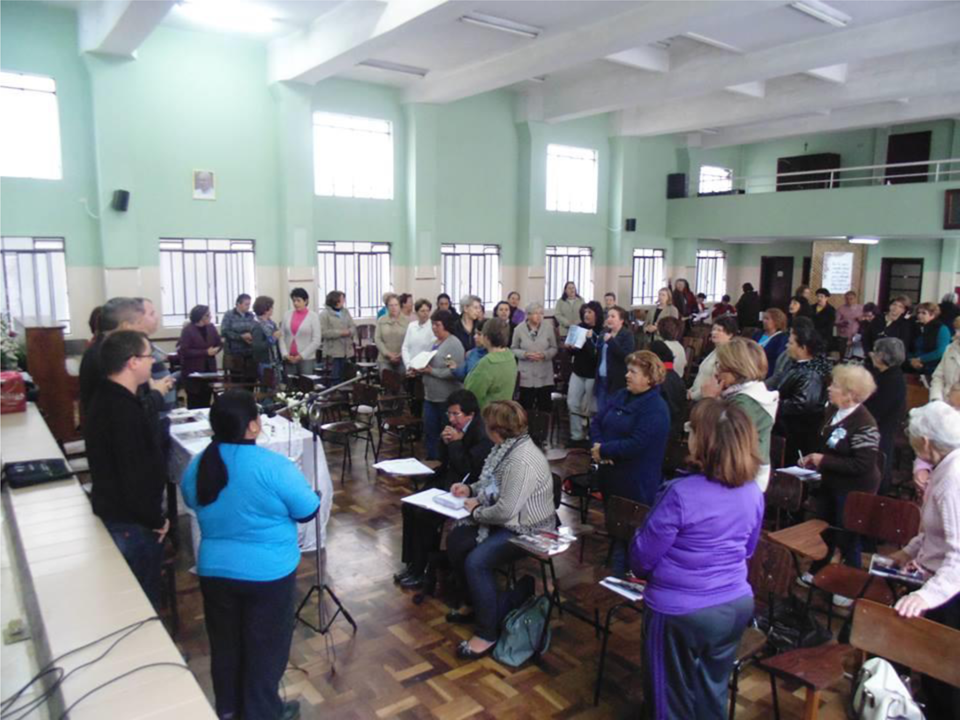
Messengers’ meeting to coordinate the circulation of chapels in Curitiba. Source: Photo by Tarcisio Cirino, Small Chapels Movement, Curitiba.
In Campos Novos, the church is involved much less in the circulation of the Chapels. Lay volunteers organize the circulation of chapels, following their understanding of the tradition, yet respecting the mandates of the local priest, who oversees most of the town’s groups. There, volunteers who organize the circulation of the chapels are known as “custodians” and play a role similar to but less formalized than that played by the messengers in Curitiba. The custodians interviewed for this study affirm that the tradition has waned over the years and that the lack of incentives for participation and the feeble support from the local clergy have made keeping the chapels in circulation a challenge. Custodian meetings are infrequent and poorly attended. The church provides no support to custodians other than a small amount of money to acquire a statue and protective case for new chapels. Custodians are required to visit families in their jurisdiction to collect donations of food and money for the church’s yearly party in honor of the parish’s patron saint. The low-support–high-demand approach adopted by the local church has generated tensions between custodians and the local priest who coordinates the movement. Independent groups have emerged to organize the circulation of small chapels and accomplish specific goals (e.g., to offer comfort and prayers to ailing neighbors).
In both cities, as in many others where the movement occurs, the small chapels circulate by transference from one neighbor to another in a predetermined order. Ideally, a small chapel will circulate among 30 households, remaining for 24 hours in each home for clarity before going to the next one. Yet, group size varies as families join or leave a neighborhood. The transfer of chapels usually occurs in the evening when people are back home from work. Upon receiving the chapel, a family follows a ritualized tradition to acknowledge its visit, much as the guidelines for organizing the circulation of the chapels in Curitiba describe: “Upon receiving the chapel, give it a place of honor. If possible, light a candle or a lamp and say the Prayer of Visitation. […] During the night and the following day, the small chapel remains at the place of honor. There is no need to keep the light on all the time and, if needed, all family members can leave the house. There is a custom of leaving an offering to the small chapel. These offerings are destined for the formation of new priests, and it befits that they are the result of small sacrifices (for instance, refraining from buying ice-cream, popcorn, soda, cigarettes, or others).” (Booklet of Guidelines for the SCM Curitiba)
Research Method
“Following the thing” is an appropriate technique for conducting multi-sited ethnographies under the mobilities paradigm (Marcus 1995; Sheller and Urry 2006). Researchers can move alongside the moving object, or they can use observation, interviews, and other ethnographic methods to trace and capture the complex mobilities of objects (Larsen, Axhausen, and Urry 2006). This study collects and analyzes a variety of qualitative data on the mobilities of the small chapels that circulate among Catholic households. By following the circulation of small chapels, the authors were able to identify he types of value outcomes it creates.
Having grown up in places where small chapels circulate, the study’s authors have direct experience with the SCM. Moreover, in July 2013 and April 2014, one of the authors conducted weeklong, intensive fieldwork at each of the two focal cities for this study. Researchers in this study selected Campos Novos because one of the authors has family members there who are actively involved with the circulation of the small chapels. This presented a good opportunity for initial access to the SCM and for using a snowball sampling technique to reach other participants. The author visited family members while the small chapel was at their houses and interacted with the object during these visits. Nevertheless, it proved difficult to secure access to the church members in charge of the local movement. Therefore, the research team added Curitiba as a second site.
Those involved with chapel sharing regard the Curitiba SCM chapter as one of the most organized in Brazil. Comprising thousands of small chapels, the system has grown, with strong support from the church. Researchers made initial contact with the Curitiba branch through social networks, and arranged field visits as well as interviews at a local church. The authors remained in contact with the interview subjects afterwards in order to collect additional data via phone and online communication. Both authors conducted participant observation on the online pages of the SCM for two years, starting in June 2013 and continuing through the writing of this manuscript. Additionally, the final dataset (Table 1) comprises field notes from online and offline participant observation, online archival data, in-depth and informal interviews, photographs, videos, artifacts, and media reports collected in both contexts. The authors conducted follow-up interviews with members of both branches of the SCM.
Description of Dataset.
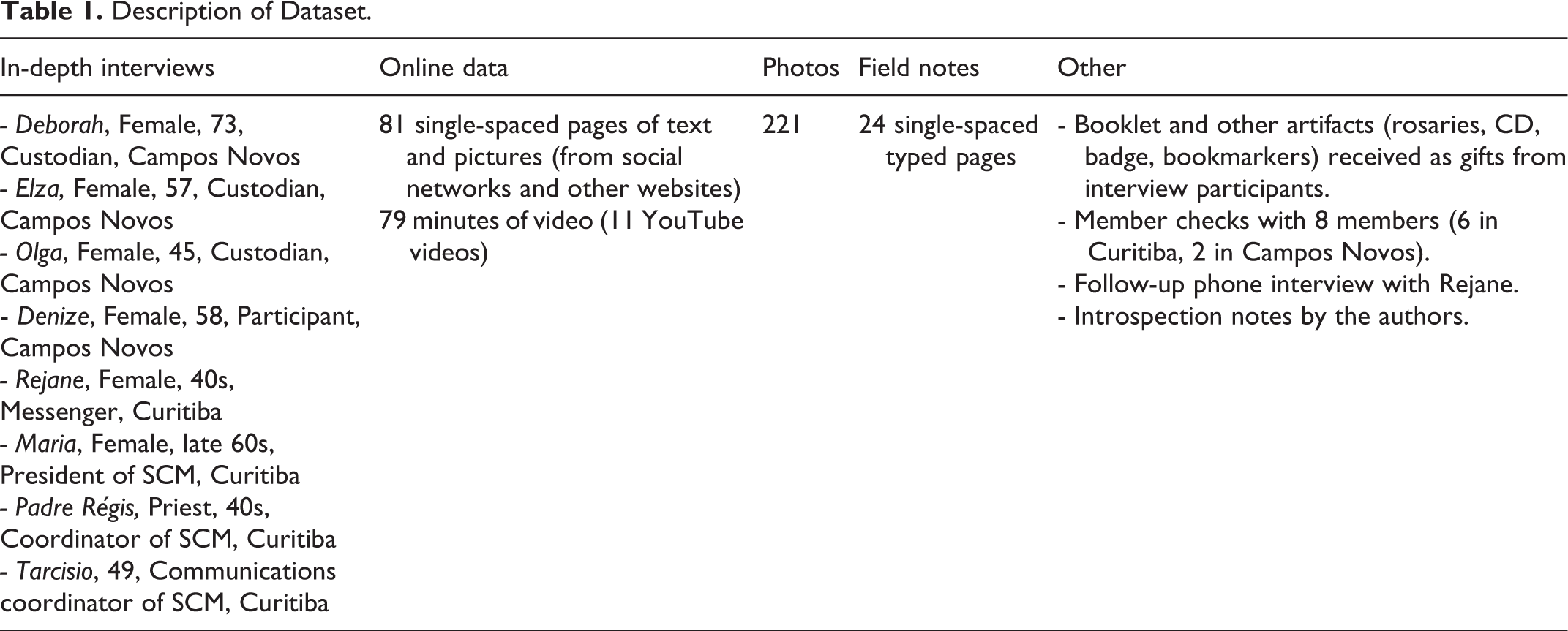
Through iterative readings of this dataset, this study compared and contrasted the various types of values outcomes created in the SCM through an examination of how their creation is promoted by the circulation of the small chapels—how one type of value translates into another—and analyzed the role of the church in fostering value creation and translations.
Findings
Following a framework centered on object circulation and value creation (Figueiredo and Scaraboto 2016), this study found that the circulation of small chapels among neighbors create several types of value outcomes for participants of the SCM: spiritual, linking, reputational, and economic value. The Church actively supports the coexistence of various types of value outcomes and their underlying logics because such a hybrid value regime benefits the church and allows the alternative community to achieve its goals. The hybridity of the SCM is promoted further through continuous value translations that are not only facilitated, but often initiated by the church itself. The next sections explain how the church promotes the creation of multiple types of value outcomes through the circulation of small chapels and how the church supports the coexistence of these multiple types, and incentivizes translations among them.
How the Church Manages Object Circulation to Promote Spiritual Value
Object circulation helps create spiritual benefits, such as good luck and sacredness (Boztepe 2007; Holbrook 1999), for the participants of the SCM. When a small chapel visits a household or when participants interact with the object elsewhere, it often becomes the enabler of spiritual experiences. The priest responsible for the SCM in Curitiba explains how the circulation of small chapels works to increase and maintain the faith of those who participate in the movement “through devotion to Mary, through the reading of God’s words, and especially through the [chapel’s] visit, because we believe that when Mary visits, she brings Christ himself” (Régis, interview, Curitiba). Catholic participants adore Holy Mary for her presumed role as intercessor between themselves and Jesus. Praying for Holy Mary and welcoming her into one’s home, thus, is a pathway to developing a strong spiritual link to Jesus and God.
As Srinivas (2012) explains, circulation allows devotees and institutional agents to reconstruct a religious “narrative of transcendence through their material interactions and the ensuing interpretations of the object” (p. 278). As objects circulate, they are “interpreted and reinterpreted, wrapped in layers of meaning to be made plastic, polysemic and portable, enabling them to recreate some portion of the meta-narrative of transcendence” (p. 278). Thus, spiritual value arises through the ritualization of the visit that becomes possible by the circulation of the small chapel. Such spiritual value surges when something other than regular prayers happens during visits, because uncommon facts materialize this meta-narrative of transcendence (Belk, Wallendorf, and Sherry 1989; Kozinets 2002). For instance, custodian Elza recalls a mystical episode: “When my son came back home on a medical stretcher [after a long stay at the hospital recovering from a major bus accident], the small chapel was here. We walked past the living room where the small chapel was, carrying the stretcher on our way to the bedroom. The glass that protects the image on the chapel broke [makes dramatic pause], without anyone touching it.” (Elza, interview, Campos Novos)
The church, as the governing institution in this alternative economy, actively manages the circulation of small chapels to foster and reinforce the spiritual value it brings. One of the responsibilities of custodians and messengers is to identify in the SCM the need for additional spiritual support and to adjust circulation paths through retrieving a chapel and passing it on to a family in need, allowing the small chapel to remain for a week (rather than the normal 24 hours) at a household whenever a family has experienced a loss or when someone is ailing. It was not coincidental that the small chapel was being kept at Elza’s house when her son came back from the hospital; the chapel had been diverted to Elza’s to help the cure and give physical and spiritual protection to the ailing family member. In Curitiba, where the church has a much stronger and more organized presence, messengers are prompted to organize masses at households in need of spiritual protection. Accounts of these visits (and the value outcomes they promote) are shared online by the communications coordinator of the movement and in the monthly meetings promoted by the church and managed by the local priest. These actions reinforce in the alternative economy a logic based on spiritual value. Yet, this is not the only logic the church promotes. The next section explains how a logic of sociality and communal collaboration is promoted by the church through fostering the creation of linking value via object circulation.
How the Church Manages Object Circulation to Promote Linking Value
The capacity of circulating objects to help individuals perceive and/or experience tribal connection is referred to as linking value (Cova 1997). As priest Régis (interview, Curitiba) explains, “The small chapel always agglutinates; it ends up forming a community of people that get together to celebrate their faith, and this keeps growing, forming […] parishes, and rendering fruits. Really, this is [the small chapel’s] job, to agglutinate and celebrate faith.”
Priest Régis’ statement underscores the role of the church in actively framing the circulation of the chapels as a social activity. Given the institutional power of the church in this alternative economy, this understanding helps shape practices of circulation to support the community goals set by the church for the SCM (e.g., to engage a new parish through the establishment of new circulation routes). Such goals are much clearer and established in Curitiba. There, understandings of sociality as a valuable outcome of engaging in the circulation of small chapels is disseminated through masses, meetings, and training events attended by volunteers, messengers, and other members of the parish. An underlying assumption (often made quite explicit in comments on the Facebook page run by messengers in Curitiba) is that linking (social) value can be gained if one engages with the circulation of the small chapels. In addition to this formalized conception of linking value, participants experience community firsthand and develop connections to each other as they retrieve and pass on a chapel to a neighbor, or through sharing stories, understandings, and procedures about the circulation of chapels. This is one of the reasons why the church in Curitiba actively creates processes (e.g., systematic training and regular meetings of messengers with an assigned priest) to facilitate the transmission of stories and construction of these shared understandings. As our analysis reveals, the church relies on three mechanisms to promote linking value through the circulation of small chapels:
Contamination, whereby the immaterial qualities or the essence of a person can be transferred to an object through physical contact (Newman, Diesendruck, and Bloom 2011, p. 217). In this alternative economy, contamination is mostly positive. Small chapels that have been circulating for longer tend to be perceived as more valuable because each round of circulation exposes the object to different situations, forging connections between the small chapel and various individuals, places, events, institutions, and objects. If those situations are considered valuable in the context of the SCM, the small chapel is considered to be positively contaminated, and this becomes a means for participants to develop links between themselves and valuable actors. For example, when a small chapel is placed next to the altar during special monthly masses or is featured on the stage during yearly assemblies, its proximity to other sacred objects and actors (e.g., the priest or bishop) increases the small chapel’s value for participants in the movement who wish to connect with the church, its priests, saints, and God (Figure 2). The church reinforces the process of contamination by ritualizing and communicating the desirability of contamination via the small chapel. For example, one of the volunteers of the SCM in Curitiba recounts an instance of contamination in an online post: “On December 5th, at the five o’clock mass, Friar David Nogueira Barboza blessed some of the Small Chapels in the Parish of Nossa Senhora das Mercês” (Helena, Dec 12, 2015, Curitiba). The volunteer’s affirmation of the ritual enacted by the priest suggests that proximity to an important member of the church increases the perception that a chapel is connected to the church, the parish, and the community.
Totemization, whereby, through rituals and pilgrimages, objects can become further singularized, often acquiring a sacred aura (Belk, Wallendorf, and Sherry 1989; Kopytoff 1988) and becoming symbols of a group (Levi-Strauss 1966). As affirmed by priest Régis in an earlier quote, small chapels often become a symbol of the group in which they circulate. That is, small chapels are not only objects that connect group members but also a representation of the group itself. Jointly organizing the circulation of a new chapel or sharing stories about it supports the totemization of circulating objects by transforming individual experiences into collective ones and creating a symbolic role for the circulating object that is much more emblematic of the group than of any individual member. Participants frequently refer to the small chapel that circulates in their neighborhood as “our small chapel” or “our neighborhood’s small chapel.” This perception is promoted heavily by the church through masses, meetings, and training of messengers.
Fetishization, whereby possessions materialize members’ magical thinking (Fernandez and Lastovicka 2011) and are conferred agency, “in the sense that the object is endowed with a life, a power of relationship” (Guillard and Roux 2014, p. 302). For example, the story told by Elza, about how the glass of a small chapel shattered when her son arrived home from the hospital, unveils the attribution of magical powers to the small chapels. By breaking, the chapel was seen to react to its caretaker’s situation, evidencing the connection between members of the group and the object. Fetishization has been discussed in marketing contexts as a consumer disposition (Golding 2009) associated with specific gleaning practices (Guillard and Roux 2014), cultural discourses (Golding 2009), and advertising practices (O’Shaughnessy and O’Shaughnessy 2002). Prior research refers to a specific type of fetishism—commodity fetishism—which describes the ascription of value to a commodity, concealing the labor invested in its manufacturer. In object circulation, it is the labor involved in circulating the object (i.e., the practice of object circulation itself) that is attributed to the fetishized object.
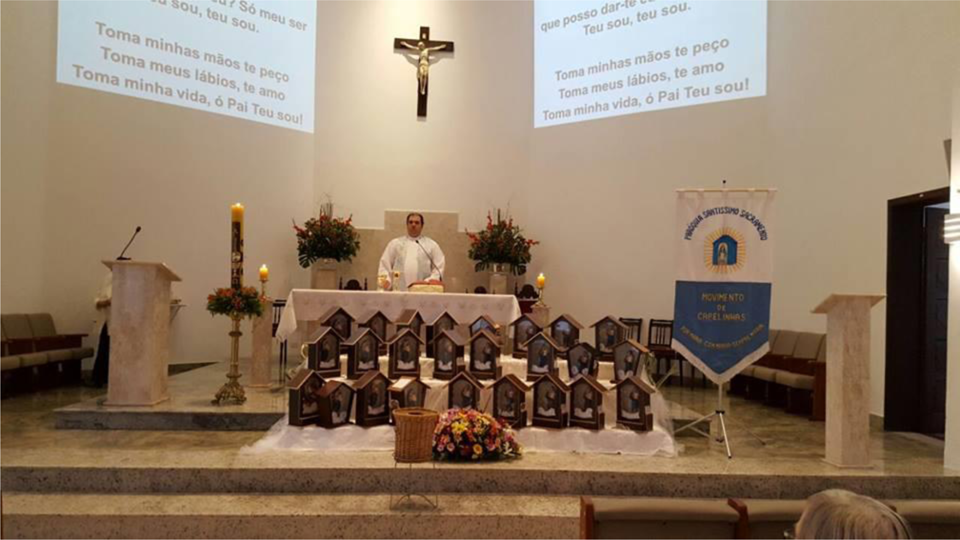
Small chapels placed at the altar during celebratory mass. Source: Photo by Tarcisio Cirino, Small Chapels Movement, Curitiba.
Fetishization is a key process in the Catholic Church, as saints and religious relics often are supposed to harbor magical power. Historically, in Catholicism, the more an object circulates, the more it becomes valuable. Processions for the circulation of saints are common practice fostered by the church. Objects that leave the church also gain value as they reach the market. Geary (1988) provides a detailed account about the way medieval Christians and merchants assaulted tombs, raided churches, and robbed Roman catacombs in order to obtain sacred relics, which then were put in circulation. These items were highly fetishized.
The church in Curitiba leverages the fetishization promoted by object circulation by upholding guidelines that help ritualize and attribute meanings to the circulation of small chapels. The circulating objects become highly fetishized and, consequently, irreplaceable. For example, Rejane recounts a story of a fetishized chapel: “The small chapel fell—the image wasn’t properly fixed to it—and it broke. I went to a store in the neighborhood and bought another image like that—not exactly like it, because that one was already 12 years old. Then I said, ‘Listen, we will need to replace the image. There is no way of repairing this gesso image and putting it back there.’ So we replaced it […] and sent a note along: ‘Unfortunately, due to someone’s carelessness, the image of the chapel broke, and we had to replace it.’ We had more than 10 phone calls from people who wanted to know what had happened and who had kept the old image, because they wanted to keep it for themselves. […] It is there in my oratory, because I was the first messenger for this small chapel. […] It has no feet, but it is there, patched together. And it represents something like love, not love for the image, for Our Lady, but it is something you cherish. (Rejane, interview, Curitiba)”
By managing the circulation of the small chapels, the church moves beyond a value regime based on the logic of spirituality to incorporate the logic of sociality. These two logics are complementary in many ways, but they emphasize different benefits to those who participate in the SCM. While the first incentivizes spiritual outcomes, the second incentivizes social outcomes. This entanglementof logics in the hybrid value-regime promoted by the Church strengthens the SCM because participants perceive more reasons and more benefits to continue participating in the network. The next section explains how the church uses the circulation of objects to advance yet another logic, based on reputation.
How the Church Manages Object Circulation to Promote Reputational Value
Reputational value reflects the social recognition, prestige, authority, respect, and legitimacy achieved by a participant (Corneo and Jeanne 1997). Participants who competently engage in object circulation (e.g., transferring the small chapel to a neighbor when expected) may benefit from increased reputation within the alternative economy.
Recurrent interaction with circulating objects gives participants a chance to display and develop competences that generate reputational value for these participants. Participants who abide by the social norms and move the small chapels properly are perceived as good neighbors and responsible messengers or custodians. Conversely, the mishandling of circulating objects and the careless enactment of practices of circulation negatively affect one’s reputation. Public acknowledgement is a powerful tool to create reputational value, and the church actively engages in publicly recognizing the efforts of those participants who mostly contribute to the SCM, especially those who volunteer as messengers or custodians. In Curitiba, where these public acknowledgements are much more frequent, the church celebrates special masses to acknowledge the work of volunteers, who wear made-to-order T-shirts and ribbon pins on those occasions.
Much like the circulation of valuables in the Kula ring creates distinctions among tribal men (Malinowski 1922) and the circulation of songs promotes distinctions among p2p music sharers (Giesler 2006), the circulation of small chapels, embedded in a religious and communitarian ethos, promotes social distinctions among SCM participants. By promoting this social distinction, the church fosters a reputational value regime, for the SCM becomes a site for reputation acquisition and display.
Yet, the church may choose to downplay social distinctions in order to reduce tensions between the reputational regime of value preferred by some participants and the religious and social regimes of value also advanced in the alternative economy. This action can be evidenced in the following passage, in which custodian Elza describes how she attempted to put a small chapel back into circulation: “The chapel circulated for three months very well. Suddenly, the chapel stopped. [pause] […] I went after it and found that it had stopped at Silva’s. He got divorced, and along with the separation, the chapel was at his house, and he did not give continuity to it. So when I found out that the chapel was there, I went there and talked to him, and he clearly didn’t like that conversation, but I told him, “[The chapel] has to move. Do you want me to take it to the next neighbor?” He said, “No, I will take it.” After some time, I checked, and he hadn’t taken it. So I went to his house again, and then he passed it on. The next month, it stopped there again, it stopped moving again.” (Elza, interview, Campos Novos)
Even though Elza does not elaborate on the reasons for the vicar’s negative response, other instances observed during fieldwork suggest that the church wants to keep the coexistence of regimes of values, incentivizing the search for reputational value while promoting religious and social value regimes, which requires that even participants with poor reputation are kept in the alternative economy. The church trains its volunteers to manage object circulation in order to promote the creation of reputational value while simultaneously fostering other types of value and, consequently, other value regimes.
For example, the story of a broken image shows how skillfully the church manages object circulation to promote reputational value (among other types) in the alternative economy. When messenger Rejane (interview, Curitiba) identified a household where the image inside a small chapel was broken, a few participants asked her to “remove this family from the group” or “skip that house.” Following her training as a messenger, Rejane explained to these participants that the problematic family needed the visits by the small chapel more than any other in the community did. Instead of removing the family from the group, Rejane visited them and offered her support, trying to understand what difficulties they were facing that impeded them from properly caring for the small chapel. In doing so, she competently performed her duties as a messenger while simultaneously increasing her reputational value in the alternative economy. At the same time, the other participants gained spiritual value (by understanding the situation and helping the poor performers fit in), and the poor performers gained linking value, as they were embraced by the community and continued to participate in the circulation of small chapels.
Beyond promoting logics based on spirituality, sociality, and reputation, the church also promotes a commercial logic centered on generating economic value, which normally is associated with market-based economies, but in this case it is repurposed to sustain the hybrid value regime of the SCM. This is explained in the next section.
How the Church Manages Object Circulation to Promote Economic Value
In alternative economies, economic value might manifest as the amount of profit achieved by individual participants. Yet, rather than being the alternative economy’s main value regime (as in capitalist market economies), economic value is just another type of value generated by object circulation. In the SCM, large sums are generated through circulation practices due to the number of chapels circulation and the repetitive nature of these donations (a family receives the Chapel every 30 days). When a small chapel visits a household, participants usually make donations to the church by inserting small amounts of money into the chapel through a slot designated for that purpose. The chapel works as a physical reminder that it is time to donate and as a collector for these donations. Because the chapel combines the collection drawer and the image of the Holy Mary, it becomes a material representation of the hybridity among economic, spiritual, social and reputational logics (Figure 3).
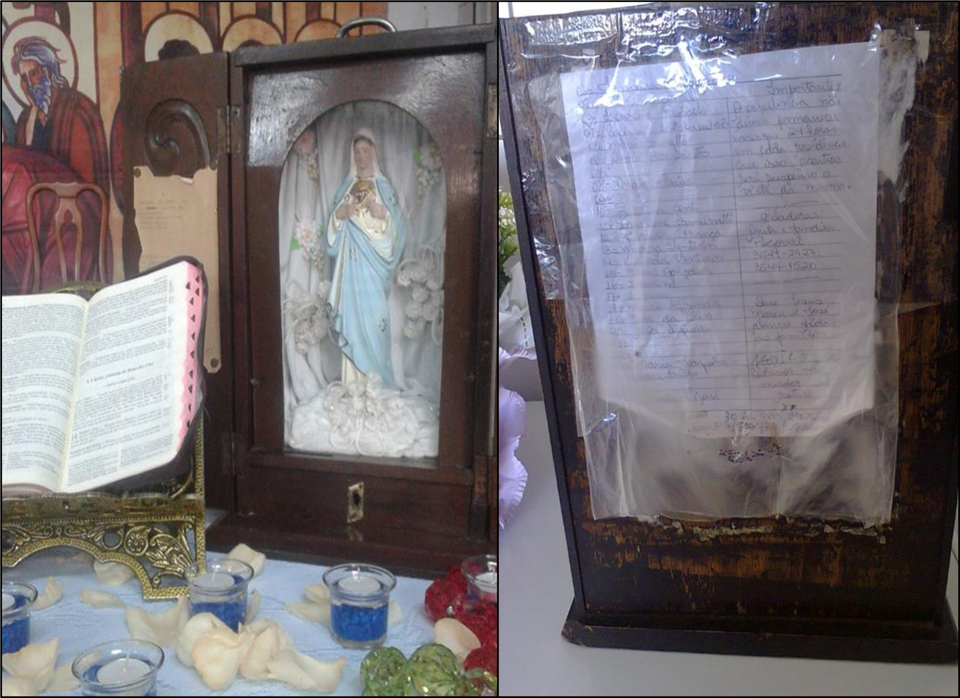
Small chapel comprising image, case, donations drawer, and list of participants. Source: Photo on the left by Tarcisio Cirino, Small Chapels Movement, Curitiba. Photo on the right taken by authors.
The church helps participants procure a protective case with a slot and locked drawer when it is time to organize a new chapel. Clear rules explain that donations are welcome and help determine the future use for the collected money. As recounted by priest Régis in Curitiba, when the church notices that money donations are reducing, the movement directors place a sticker on the glass of each small chapel explaining that the money collected through the chapels goes to the formation of new priests to incentivize participants to contribute with donations toward that goal. Hence, managing the circulation of the object enables the church to receive donations, generating economic value.
Another way in which the church manages to generate economic value through object circulation is by making messengers and custodians responsible for monitoring the chapel, collecting the donations from the chapels, and bringing them to the church. Frequently, these volunteers note that attempts indeed have been made to steal money from a chapel. Rejane (interview, Curitiba), for instance, explains, “We’ve found magnets and tweezers inside the drawer, things that people use when trying to remove coins and money from the inside of the small chapel. Sometimes it is just kids, you know, or a teenager who wants money to play videogames or buy an ice pop.” The church consistently has searched for ways to minimize these attempts at stealing money. Some chapels no longer have slots for donations, and the church invites families on those neighborhoods to special masses when donations are collected to support the formation of new priests.
Four types of value outcomes and associated logics (spiritual, social, reputational, and economic) have been introduced and the role of the church in promoting each one of them has been explained. However, the role of the church goes beyond promoting the creation of these multiple value outcomes. The church actively fosters their coexistence as a hybrid regime of value. The next section explains how this happens.
How the Church Supports the Coexistence of Multiple Types of Value
The church in Curitiba formally trains and mentors messengers in the best practices to support the circulation of small chapels (Figure 4). Messengers then apply this knowledge in their own enactment of circulation and ensure that circulation happens in ways that add value to all participants. For example, messengers instruct participants on how to interact with the chapel (increasing the possibility of participants creating spiritual and economic value); disseminate information about desirable participant behavior (increasing appreciation for reputation and social value); and introduce neighbors to each other and invite them to gatherings (increasing opportunities for the creation of linking value).
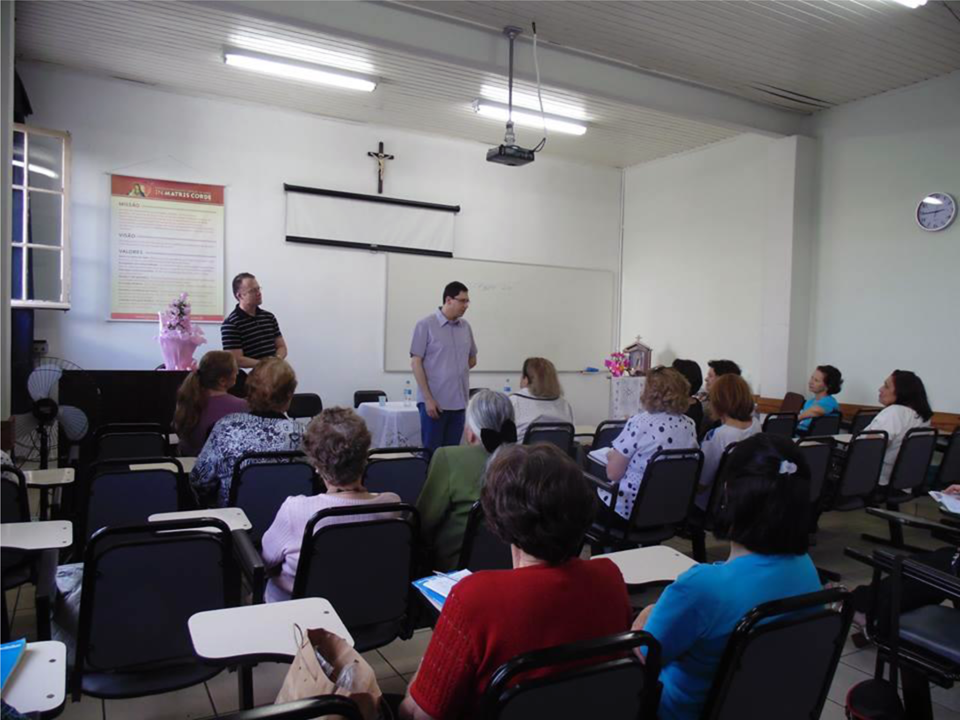
Training of new messengers at the Small Chapels Movement, Curitiba. Source: Photo by Tarcisio Cirino, Small Chapels Movement, Curitiba.
When Rejane (Curitiba), decided not to dismiss, and instead to support, a family that had broken an image by carelessly handling a small chapel, she was applying the values and motivations of the SCM, which she acquired through training and close proximity to the church. In contrast, Elza (Campos Novos) intended to treat a similar case of carelessness by removing a neighbor from her chapel’s circuit. Only upon contacting the coordinating vicar did she discover that her intended course of action would hinder the values and goals of the SCM.
The support and governance of the church appear much less substantial in the Campos Novos branch of the SCM. The local church gives some seed money and orientation to custodians upon request and recommends good practices. Yet, custodians are loosely coordinated and poorly instructed. They have goodwill and faith, but this is often not enough to create a structure that supports value creation. While neighbors and custodians create value, the system lacks efficient mechanisms for maintaining and distributing the created value (i.e., no formal meetings, media, or trainings). Consequently, it is more difficult for participants to perceive how this alternative economy generates value for other members of the group. To be clear, participants do acknowledge that their individual work with the chapel reinforces some shared values (e.g., religious beliefs and faith). However, those interviewed for this study in Campos Novos have not directly reasoned, for instance, that the religious and linking value of passing on the chapel are leveraged to the community level when these actions are acknowledged and assessed collectively.
In contrast, the SCM in Curitiba has a blog and Facebook page and regularly conducts formal and informal meetings (e.g., parties) where the circulation of the chapels is discussed. That is, the church has set a structure to support object circulation, which has resulted in more participants being able to support object circulation better, ultimately creating more value. The institutional intervention of the church helps participants understand and realize the various types of value created by the circulation, which in turn helps motivate participants to embrace the various logics promoted by the church and to keep engaged with the SCM. In short, the church provides the mechanisms (e.g., training sessions) and structure (leaflets, meetings, the small chapel) that promote not only the multiplicity of value outcomes, but incentivize the co-existence of multiple logics and collective positive dependence on a hybrid regime of value. The church promotes further hybridity by supporting translations between types of value. The next section explains this process.
How the Church Supports Translations between Various Types of Value
Translations between types of value (Appadurai 1988; Arnould 2014) occur when value created by the circulation of the object in one logic (e.g., the spiritual logic) has the potential to be realized in another logic (i.e., the commercial logic that also exists in religious alternative economies).
This study has identified three forms of value translation related to object circulation in the SCM. First, as noted in prior research (e.g., Kopytoff 1988), translations may happen due to the circulation of the object from one value regime to another. Every year, several statues ‘leave’ the marketplace (a value regime in which market exchange is the key logic) through purchases or donations to the church and become part of the alternative economy of the SCM, thus ‘entering’ a hybrid value regime where multiple logics coexist. The church promotes these value translations by helping organize the processes by which objects move from the commercial sphere to the SCM (e.g., buying chapel cases in bulk to set out new parishes). Value translation occurs because the object moves from one value regime to another. For instance, the economic value outcomes of the object in the market-based value regime is different from the economic value outcome of the object in the hybrid value regime of the Church. Both value outcomes are underpinned by a commercial logic and both are associated with the object, but they are different value outcomes because the translation removed the object from commercial exchange and re-inserted it into the hybrid regime of the alternative economy.
Second, value translations may be triggered by participants when these take advantage of the value acquired through one logic (e.g. reputation) to create value in another logic (e.g. commercial). For example, some well-connected participants, and those of high reputation, may exert economic activities that yield profit within the alternative economy. In the Curitiba SCM, for instance, one of the participants involved in the coordination of the movement took upon himself the manufacturing of new standardized wood cases that are sold to the church to assemble new small chapels. Other participants cater the events frequently promoted by the SCM by selling pastries and cakes to the organizing committee. The reputation these participants built through object circulation has provided them with an advantageous position in the commercial logic of the hybrid regime (commercial). This position is a result of the translation of value outcomes promoted by the social, religious and reputational logics to a commercial logic. Value translation happens in Curitiba and Campos Novos and is incentivized by the church as it hires participants’ services and allows participants to promote goods and services through the alternative economy’s channels. Evidently, as a key institution in this economy, the church also translates its own reputational, spiritual, and linking value into economic value through fundraising and sales of religious objects associated to the SCM (e.g., T-shirts, ribbons, and images).
Third, value translations can be triggered by circulation itself (not by objects or participants). For example, as a small chapel circulates, it collects donations for the church. Hence, its circulation triggers translations of spiritual value into economic value for the church. When the money collected is employed in a priest’s education or used to institute chapels in new neighborhoods, it is once again translated into non-economic value outcomes. Such translations evidence how circulation operates across various logics because circulation enacted within one logic (e.g., circulating the chapel for the creation of community following the religious logic of the church) also serves a different logic (circulating the chapel to collect money for the church). The church incentivizes these translations by instructing participants in ways that intermingle these values and activate multiple logics when participants enact object circulation. For example, when the church places stickers on the small chapels inviting participants to donate money, it also provides explanations about how the money collected is used to pursue the religious and social purposes of the church, thus reinforcing the hybrid nature of the SCM.
Overall, this study’s analysis of the church’s role in promoting multiple types of value (spiritual, linking, reputational, and economic), actively supporting their coexistence, and incentivizing translations among them, helps demonstrate how the church fosters hybridity of logics in the value regime through its management of object circulation. The following section will discuss these findings to describe their implications for the sustainability of alternative economies.
Discussion
Understandings of alternative economies as the opposite of capitalist, mainstream market economies (Healy 2009) have provided the bases for critiques targeting those alternative economies that are “not so different” from the market (Morozov 2015), or that generate profit of any kind (Olma 2014). Religious institutions, in particular, have been historically and consistently criticized for pursuing profit-making goals rather than developing alternative economies that are purely morally, spiritually, or socially oriented (Mittelstaedt 2002). Such critiques add strain to alternative economies’ struggle to establish themselves and coexist with prevailing economic models.
To advance toward the sustainability of alternative economies, a goal of macromarketing policy, a different ontology needs to be adopted, one that considers alternative economies as diverse (Gibson-Graham 2008) rather than a substitute or the opposite of capitalist markets. Only then can hybridity become a possibility and, as recent studies suggest, a very likely avenue leading toward the sustainability of alternative economies (Eden 2015; Golding 2009). Drawing on this principle, this study has shown how an alternative economy led by the Catholic Church is sustained through the fostering of hybrid regime of value. In the alternative economy studied here, the church promotes the coexistence of several types of value and incentivizes translations among them through shaping and managing object circulation among participants. This hybrid regime of value strengthens the alternative economy by 1) reducing internal tensions and external criticism; and 2) promoting resource dependence among heterogeneous participants.
First, the entanglement of various logics, much like the entanglement of roots in a forest, makes the alternative economy more resistant to threats. When multiple logics of value creation and exchange are intertwined, participants find it difficult to disentangle economic value from the various other types of value outcomes created in the alternative economy. This blurring (Scaraboto 2015) minimizes perceived tension between the alternative economy and the market, and reducing external criticism over the generation of economic value in an alternative economy, particularly one led by a religious institution.
For example, the redirecting of money collected through donations to the formation of young priests makes it difficult for one to judge the church as profit-seeker even though it generates more than half a million dollars per year from the work of volunteers and donations from participants. This finding provides empirical evidence that contributes to advance a stream of research suggesting that macromarketers should endeavor to understand the “symbiotic relationships between religion and the market […] to broaden the conceptual scope of ecological, social as well as economic sustainability” (El Jurdi, Batat, and Jafari 2016, p. 14). This study’s findings explain how the Catholic Church fosters hybridity among multiple regimes of value in an alternative economy through managing object circulation.
Second, the fostering of multiple types of value outcomes in the alternative economy allows individual participants to derive diverse benefits from their engagement in the SCM. Hence, participants will often rely on this system of value creation (Figueiredo and Scaraboto 2016) to access multiple resources and address various needs. Consequently, participants would lose much should this plural resource stream be threatened and the SCM become a purely religious economy. As Thomas, Price, and Schau (2013) demonstrate in the context of brand communities, heterogeneity can contribute to continuity when it co-occurs with resource dependence. Participants who depend on the alternative economy to provide them with multiple types of value outcomes are likely to concur with guidelines and governing mechanisms established by the church in its efforts to promote a hybrid regime of value. These participants are also likely to undertake actions to further hybridize the alternative economy, making it more sustainable. In this sense, even though this study restricts its focus to the role of the church as a governing mechanism, other actors and structures may also employ object circulation to promote hybridity in value regimes. When analyzing value translations, for instance, we note the role of other participants (including local communities and objects) in shaping the hybrid value-regime. Additional research is called for to explore the multiplicity of actors involved in sustaining alternative economies.
Footnotes
Acknowledgements
The authors thank coordinators and participants of the Small Chapels Movement in Campos Novos and Curitiba for their openness and generosity in sharing information for this study. An earlier conceptualization of the process of object circulation described in this article was presented at the 2015 EPIC Conference and published in its proceedings ( ). The authors also thank the editors of the special issue and reviewers for their advice during the review process.
Authors’ Note
Both authors have contributed equally to this manuscript.
Declaration of Conflicting Interests
The author(s) declared no potential conflicts of interest with respect to the research, authorship, and/or publication of this article.
Funding
The author(s) disclosed receipt of the following financial support for the research, authorship, and/or publication of this article: The authors thank the VRI from the Pontificia Universidad Catolica de Chile for its support.