






Abstract
In Indonesia, rural communities have been using wild animals in traditional medicines based on local knowledge (corpus/cognitive) and cosmos/belief since ancient times. The use is increasingly being replaced by modern medicines in cities. Local knowledge is also experiencing erosion. This research analyzes the Traditional Ecological Knowledge (TEK) of rural people of Gunungkelir, Yogyakarta, on the diversity, folk classification, and utilization of land snails for various traditional medicines, and TEK of land snails in rural groups. Mixed methods, qualitative and quantitative approaches, with an ethnozoological approach, were used. Some field data, including observations, semistructured interviews, and structured interviews, were collected in this study. The results showed that, based on TEK, there are forty-two vernacular names of land snails. However, scientifically, four species have been identified and one is unidentified. The Gunungkelir people well recognize different land snails. Land snails are popularly used for wound healing (81%–97%). The use value indices were 0.98 for Lissachatina fulica and 0.81 for Amphidromus palaceus. Adults and elderly people have greater knowledge and expertise than children and teenagers. Moreover, there is also different knowledge among occupations. However, the knowledge is shared between genders and people of different educational backgrounds. The Gunungkelir people still have a rich local knowledge of land snails. Our ethnozoological data enrich biodiversity data, document the cultural value of regional biodiversity, and open bioprospecting opportunities for medicine.
Introduction
Land snails have been consumed for at least 10,000 years (Hill et al. 2015) and remain popular in regions like the Mediterranean, where they are famously known as escargot in France (Meyer-Rochow 2019; Peterson 2002). Beyond being used as food, land snails serve various cultural functions: they are used as animal feed, decorative items, symbols in beliefs, currency, bioindicators, and ingredients in cosmetics and traditional medicines (Blanton 2023; Bonnemain 2005; Fauvelle 2024; Rosales et al. 2020; Silva et al. 2020; Wargala et al. 2023; Wojcieszak et al. 2023). Their medicinal use is deeply rooted in the Traditional Ecological Knowledge (TEK) of rural communities, which reflects a cumulative body of knowledge, practices, and beliefs passed down through generations and shaped by interactions between people and their environments (Berkes 2012; Iskandar 2018; Toledo 2002). TEK is preserved through oral traditions such as stories, ceremonies, art, and songs, evolving with new observations and insights (Finn, Herne, and Castille 2017). In rural communities, TEK related to flora and fauna is diverse and typically passed down in local languages, with knowledge influenced by factors such as age, gender, education, and occupation (Lizarralde 2004; Müller, Boubacar, and Guimbo 2015; Pinheiro et al. 2016). Elderly men often have greater familiarity with a forest ecosystem and its species, while healers and shamans hold specialized knowledge within the community. Women, through their role in family care, often possess an extensive understanding of plants and animals used in medicinal contexts (Lizarralde 2004; Teixidor-Toneu et al. 2021).
In Indonesia, karst areas typically provide ideal habitats for a variety of land snail species (Nurinsiyah 2015; Nurinsiyah and Hausdorf 2020). Given the strong interconnection between biological and cultural diversity in biocultural systems (Loh and Harmon 2014; Skutnabb-Kangas and Harmon 2017), people living in these regions often have extensive knowledge about snail diversity and usage. The Gunungkelir area in Jatimulyo Village, Yogyakarta, is one such rural area on Java with a significant karst ecosystem, likely hosting a wide variety of land snails. The Gunungkelir community possesses a wealth of TEK about land snail species and their uses, as the local karst ecosystem supports diverse snail populations.
Studies on the population and distribution of land snails in Yogyakarta, West Java, and Central Java indicate that Watu Blencong, in Jatimulyo Village, has the highest species diversity and population density (16 species, 158 individuals) (Mujiono and Priawandiputra 2020). Across Java and nearby islands, 263 land snail species have been documented, with 40% being native (Nurinsiyah 2021). However, local residents are primarily familiar with Bekicot, a specific land snail species scientifically identified as Lissachatina fulica. Introduced to Indonesia in 1903 via Riau, L. fulica reached Java between 1922 and 1925 and spread from Jakarta to Sukabumi by 1933 through plant breeders (Bequaert 1950; Mead 1961). Records of snail mucus used for wound treatment appear in traditional Javanese texts, Primbon Atmasupana and Serat Centhini (Sudardi 2011). However, it remains unclear whether these accounts refer to L. fulica or a native species.
The increasing density of rural populations, rapid advancements in information and technology, and the expanding reach of market economies into rural areas are all factors that can contribute to the degradation or loss of rural ecosystems, such as karst landscapes. Beyond the physical and ecological impacts, these forces also disrupt socioeconomic and cultural systems. TEK, for example, may erode as younger generations are not adequately taught these practices, as elders like traditional healers or shamans are sidelined, and as locals shift from farming to nonagricultural jobs, reducing their interaction with local ecosystems (Hedges, Kipila, and Carriedo-Ostos 2020; McCarter and Gavin 2014). This context highlights the importance of ethnozoological studies, particularly in evaluating the TEK related to land snails, to preserve valuable cultural and ecological knowledge.
Numerous studies on land snails in Indonesia have explored various aspects, including species diversity, dietary preferences, locomotion, in vivo treatments, and ethnozoology (Ferdian et al. 2021; Harti, Murharyati, and Sulisetyawati 2015; Lestiani 2022; Mujiono et al. 2020; Nurinsiyah 2021). Building on this work, the current study investigates local knowledge in Gunungkelir, Yogyakarta, focusing on the diversity of land snails, their medicinal uses, and variations in knowledge by age, gender, occupation, and education. The study aims to analyze the TEK of the Gunungkelir community, examining the diversity of land snails, local classification systems, medicinal applications, and TEK differences among rural demographic groups.
Materials and Methods
Study Area
An ethnozoological study on land snails was conducted in Gunungkelir Hamlet, Jatimulyo Village, Girimulyo District, Kulon Progo Regency, DI Yogyakarta Province, Indonesia (Figure 1). It is located at 7°45′10″S and longitude 110°7′22″E with an altitude of 750–800 m above sea level. The study area covers 165.4 ha, with a mean annual rainfall of 2,000 mm and mean annual temperatures of 21 °C–23 °C (morning) and 27 °C–29 °C (daytime). The area is bordered by Kaligesing District (west), Kaligesing and Girimulyo District (north), Girimulyo District (east), and Pengasih and Kokap Districts (south) (Geomorfologi 2020).
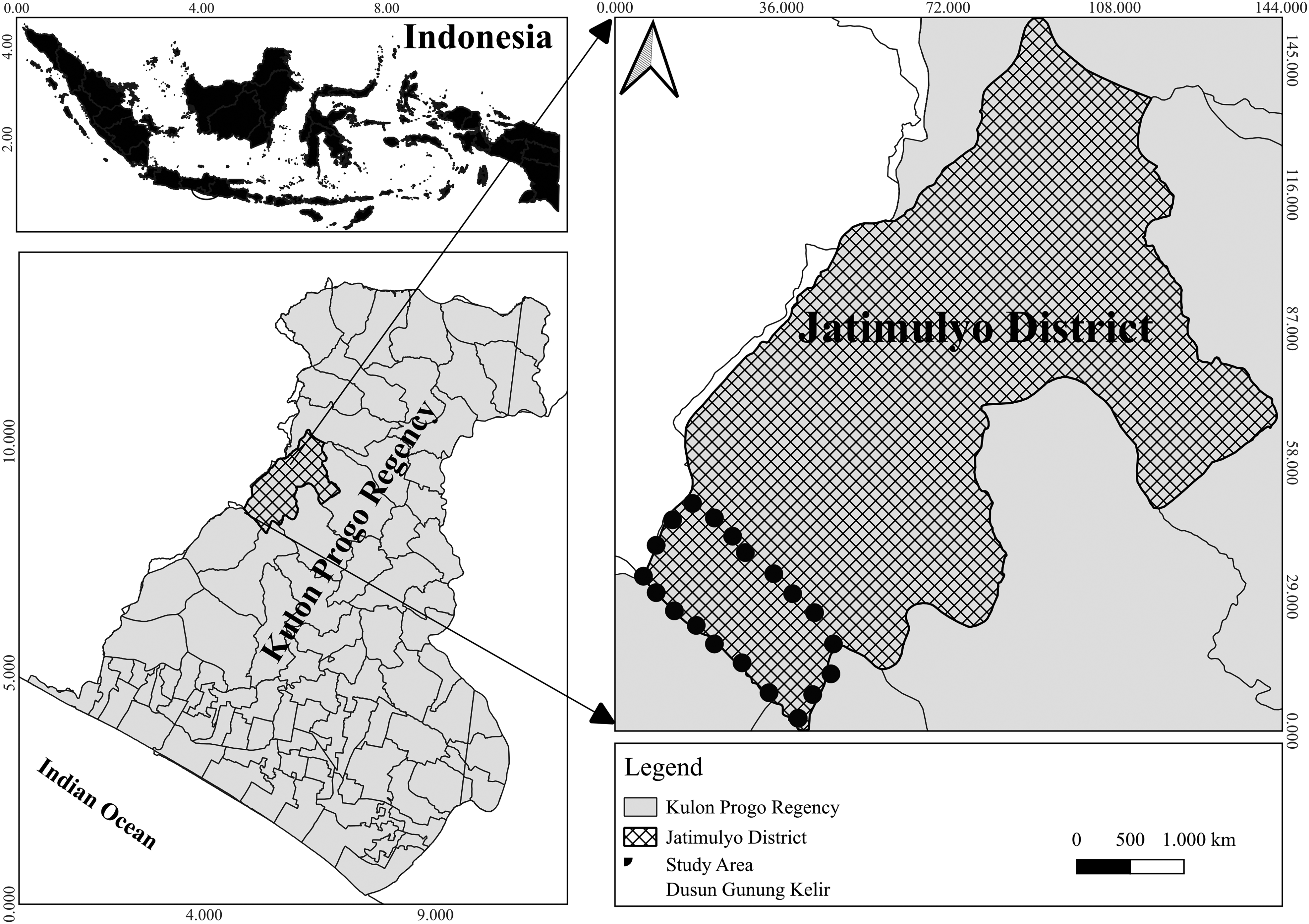
Study site at Gunungkelir Hamlet, Yogyakarta, Indonesia.
The name “Gunungkelir” originates from a white hill in the hamlet's landscape, which resembles Kelir, a type of screen used in the Wayang performance (Kulonprogokab 2019b). The land utilized in Gunungkelir consists of forested areas, agriculture (plantation and forestry commodity crops), and livestock. The plantation commodities include cloves, cocoa, coffee, pepper, and coconut. Goats (kambing etawa) and stingless bees (Tetragonula laeviceps/lebah klanceng) are common livestock commodities (Kulonprogokab 2019a). Jatimulyo Village is also known as a bird-friendly village, with 227 bird species recorded in the area (Taufiqurrahman et al. 2015). The landscape of Gunungkelir is covered with limestone outcrops, springs, and caves, a suitable habitat for land snails.
Data Collection
This ethnozoology research was approved under ethical code 1018/IT3.KEPMSM-IPB/SK/2023 by the Ethics Committee for Research Involving Human Subjects at IPB University. The study used mixed methods (qualitative and quantitative) with ethnozoological approaches (Albuquerque et al. 2014; Iskandar 2018; Martin 1995). The field research techniques applied in this study included semistructured and structured interviews and observations.
Semistructured interviews were conducted using a snowball sampling technique (Albuquerque et al. 2014), with twenty-five purposively selected informants. The initial informants included the village head, village secretary, and hamlet head, who also granted the research permit in Gunungkelir Hamlet. These base informants then recommended additional participants with an in-depth knowledge of land snails (local experts). The subsequent informants, selected based on prior recommendations, included 14 men and 11 women, spanning different age groups: children (3), teenagers (1), adults (16), and elderly individuals (5). Their educational backgrounds ranged from no schooling (2), elementary school (8), middle school (2), high school (8), to bachelor's degrees (5). Occupations varied and included farmers (5), village officials (4), teachers (5), students (3), household workers (3), and entrepreneurs (5). The interview guide used is provided in Supplemental S1.
Following the semistructured interviews, structured interviews were conducted with respondents chosen based on age, gender, education, and occupation, all of whom were native residents of Gunungkelir and heads of their households, totaling 246 respondents (Supplemental S2).
Land snail behavior was observed, and specimens from museum collections were studied. Snails were collected directly from their habitats using bare hands or sticks, following guidance from local informants. These habitats included leaf litter, foliage, tree trunks, livestock pens, and house walls. The collected snails were housed in artificial cages and later identified at BRIN. The identification aimed to determine species-level classification where possible, referencing Dharma (2005) and Heryanto (2011). Systematic arrangements and updated nomenclature followed the classifications of Bouchet et al. (2017) and Molluscabase (2024).
Data Analysis
Qualitative data were analyzed through several stages, that is, cross-checking, summarizing, synthesizing, and creating narratives (Iskandar 2018; Newing et al. 2011). The cross-checking stage includes validating data between informants, field observation data, and various reports. These data were then compiled, complemented, validated, and summarized into complete and comprehensive information. Afterward, the data were synthesized, and a narrative was created using descriptive analysis.
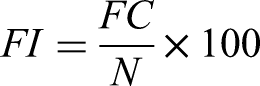
The frequency of the informant's answers was analyzed via quantitative data, the use value (UV) was calculated, and the differences in ethnomalacology knowledge among informants were examined. The frequency of responses from each respondent was analyzed using the following formula (Madikizela et al. 2012):
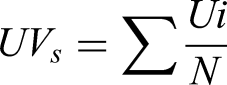
The UV is a quantitative index that assesses the relative importance of land snail species for medicinal purposes within a community. This index helps identify which snail species are most commonly used to treat diseases in Gunungkelir. A higher UV value indicates more frequent use of a species as a medicinal ingredient (Ralte, Sailo, and Singh 2024; Tiétiambou et al. 2020). The UV index is calculated using the following formula (Rossato, Leitão-Filho, and Begossi 1999; Tardío and De Santayana 2008):
According to cross-cultural studies globally, the local knowledge of biology is not homogeneous but varies depending on age, gender, level of education, and occupation (Lizarralde 2004; Müller, Boubacar, and Guimbo 2015; Pinheiro et al. 2016). The results of interviews in Gunungkelir were analyzed based on these four categories. We used chi-square analysis to test the difference in the local knowledge of land snails based on gender and occupation. In addition, the Kruskal–Wallis test was used to test differences in the local knowledge of land snails based on age group and educational background (Tang et al. 2020). These statistical tests utilized SPSS version 22 software.
Results
Folk Classification of the Land Snails
In Gunungkelir, land snails are commonly referred to as “siput,” while in Indonesia, they are called “keong.” While land snail species can be classified based on their morphology, anatomy, biochemistry, and genetics (Molluscabase.org), the people of Gunungkelir classify them primarily by their morphological characteristics, such as shell color, shape, and size. Additionally, land snails may be classified according to their habitat (terrestrial or freshwater) and their role in traditional medicines, social, cultural, and ecological contexts (Figure 2).
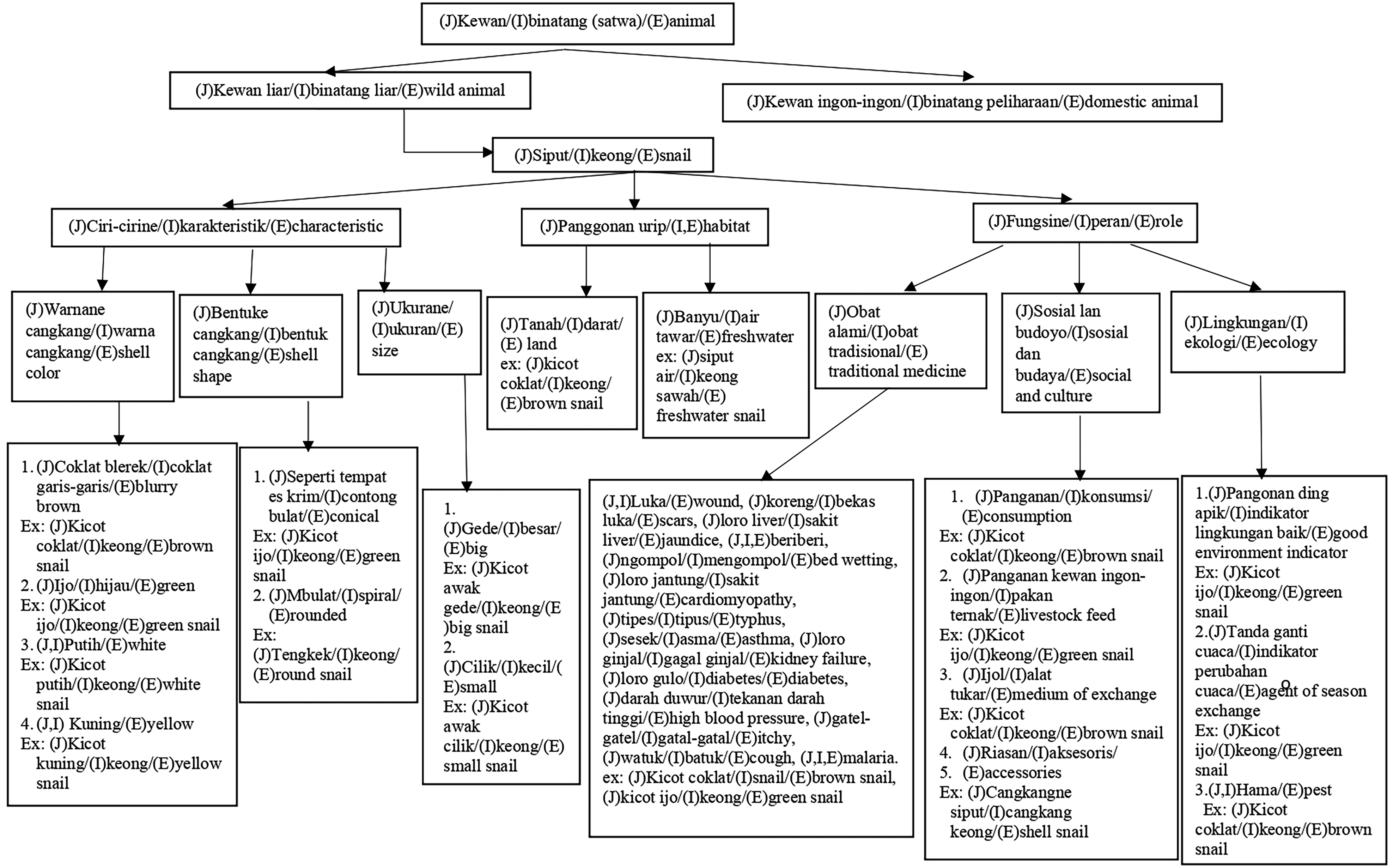
Folk classification of the land snails based on the Gunungkelir people, Yogyakarta (J = Javanese, I = Bahasa Indonesia, E = English).
Based on the folk classification system, the people of Gunungkelir Hamlet recognize four levels (Supplemental S3). This folk classification was adapted from Berlin (1992). People can differentiate between animals and plants at level 0 (unique beginner). According to local people, an animal is called kewan or, in Indonesia, binatang/satwa. At level 1, life forms, local people differentiated into kewan liar (wild animal) and kewan ingon-ingon (domestic animal). At level 2 (generic), people are familiar with siput for land snail, slug, and freshwater snail or gastropods in English. At level 3 (specific), people still use siput to mention keong (Indonesia) or snail. Then, at the lower level, level 4 (varietal), people differentiate between various varieties of kicot, such as the giant kicot.
Diversity of Land Snails
After conducting interviews with informants and respondents, forty-two vernacular names of land snails were identified in Gunungkelir Hamlet (Supplemental S4). In general, respondents use the term siput to describe several species of Gastropods which can refer to land as well as freshwater species. However, tengkek specifically refers to land snails with rounded shells. The respondents also stated that only land snails (apart from tengkek snails) are often used in traditional medicines (Table 1).
Land Snail Diversity and Utilization as Traditional Medicine in Gunungkelir, Yogyakarta.
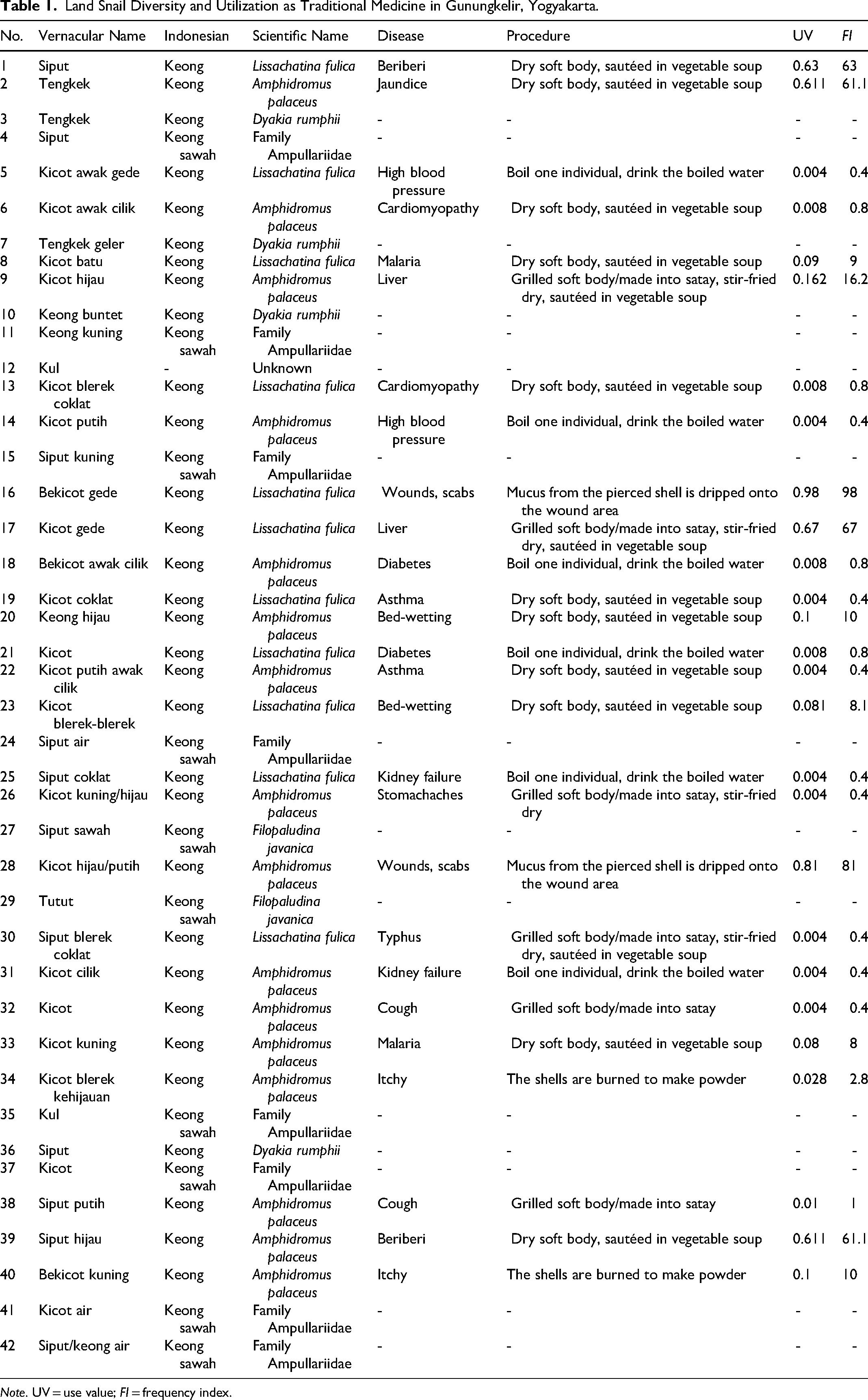
Note. UV = use value; FI = frequency index.
The two most commonly used species (Amphidromus palaceus and L. fulica) were used in fourteen different types of external and internal medication. Only a single respondent reported that A. palaceus could also heal stomachaches. More than 80% of the respondents agreed that both species can cure wounds and scars. The species were also used for internal medicine, such as liver/jaundice and beriberi, based on the information from more than 60% of the respondents. The highest UV index values were for wounds and scars, with values of 0.81 (A. palaceus) and 0.98 (L. fulica). The UV index reflects a preference for these land snail species, which are widely used as medicinal ingredients by the Gunungkelir people.
Different parts of snails from A. palaceus and L. fulica were used depending on the type of disease. The slime/mucus from both species was used for external medication (wounds, scars). The soft bodies of the species were cooked and used for most internal medications. Based on the information from the respondents, the water from boiled snails (shell and soft body) of L. fulica can be used to treat kidney failure, diabetes, and high blood pressure. Moreover, the powder from the shell of A. palaceus can be used to heal itches.
Informants and respondents stated that in the past, land snails were often used for treating internal diseases by cooking their soft bodies of land snails by sautéing, grilling, or boiling. This method once became a lifesaver when an outbreak of yellow fever infected several people. Those showing signs of other internal illnesses also used the same methods, with positive results. Moreover, land snail mucus was used for treating external conditions, such as wounds, by applying it directly to the affected area, with respondents reporting the method as effective.
The forty-two snails were determined and validated to the species level, scientifically based on Bouchet et al. (2017) and Dharma (2005). The forty-two vernacular names were assigned to four species from four genera and five families. In addition, there was one snail which cannot be determined to the species level (Figure 3).
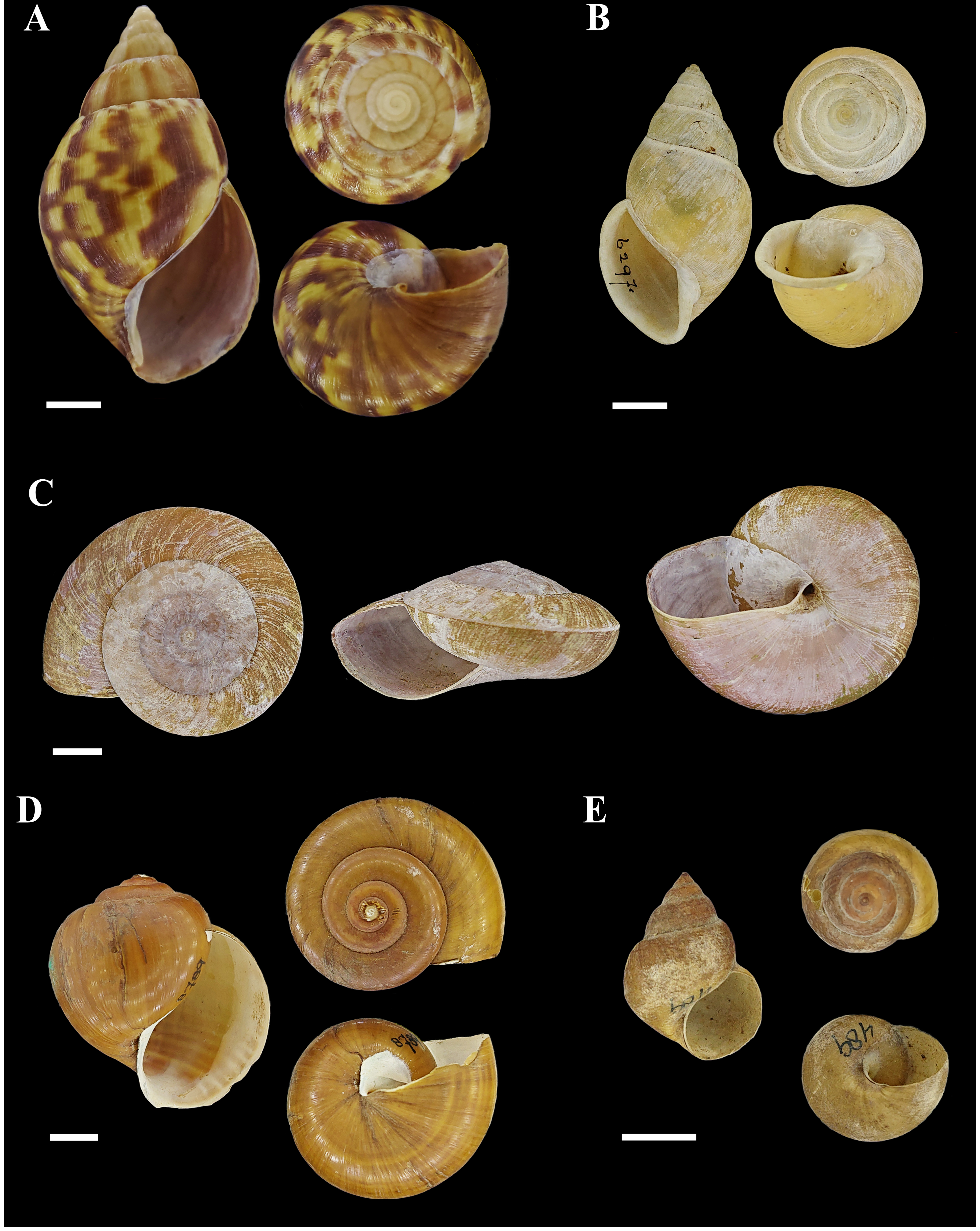
Photo of the snail collections from the Museum Zoologicum Bogoriense. (A) Lissachatina fulica (Bowdich 1822) MZB. Gst. 18.260; (B) Amphidromus palaceus (Mousson 1849) MZB. Gst. 6297; (C) Dyakia rumphii (L.Pfeiffer 1842) MZB. Gst. 21.382; (D) Family Ampulariidae MZB. Gst. 8789; and (E) Filopaludina javanica (von dem Busch 1844) MZB. Gst. 489. Scale bar = 1 cm.
TEK on Land Snails by Group
We analyzed the effects of TEK on the utilization of land snails across four categories: age, gender, education, and occupation (Supplemental S5). The Kruskal–Wallis test revealed that the knowledge of land snails varied significantly based on age (p value <.05). This outcome is consistent with the chi-square analysis of the occupation group as well (p value <.05). However, no significant differences were found between gender (p value = .716) and education (p value = .187).
Effectiveness of Wound Treatment
According to respondents from Gunungkelir Hamlet, the mucus of land snails is considered the most effective for the use of land snails in wound medicine. The process is simple: gently tap the shell until the mucus flows out and then drop it onto the wound; a cool sensation is felt, and healing is fast (3–7 days) (Supplemental S6).
Discussion
Qualitative data gathered from informants provided the foundation for developing the respondent questionnaire, which further explored the entire population of Gunungkelir in relation to land snails. This included investigating local knowledge of land snails as a medicinal resource, particularly for treating wounds, the specific parts of the snails used for healing, treatment procedures, and the effectiveness of wound healing. Additionally, the study examined the influence of family, language, and the impact of modern medicine on local knowledge.
The use of land snails for medicinal purposes in Gunungkelir has been practiced for generations, with knowledge passed down through families. One informant, an 80-year-old man, shared that he had learned about using land snails for treatment since his childhood, from his parents and grandparents. He was born in 1942, his parents around 1910, and his grandparents around 1880. Records of snail mucus being used for wound treatment can also be found in traditional texts, such as Primbon Atmasupana and Serat Centhini (Sudardi 2011). Serat Centhini, which was compiled in the early nineteenth century, contains various teachings related to birth, marriage, death, and health, reflecting the long-standing cultural connection between humans and nature in Javanese tradition (Subalidinata 1985; Sudardi 2002). However, it is unclear whether the “bekicot/snail” referred to in these texts is the species L. fulica or a native species. In terms of folk classification, as adapted from Berlin (1992), the Gunungkelir respondents recognized four taxonomic levels: the life form level (kewan liar and kewan ingon-ingon), the generic and specific levels, both referred to as siput, and the varietal level represented by various forms of kicot, bekicot, and other local names (Supplemental S3). The local people are particularly knowledgeable at the species and variety levels, which corresponds with scientific classifications. This ability to classify species mirrors the expertise of residents from other regions, such as those from Karangwangi (birds) and Kampung Naga (chickens) (Partasasmita, Iskandar, and Malone 2016; Partasasmita, Iskandar, and Rukmana 2017).
TEK practices related to land snails in Gunungkelir Hamlet include indigenous knowledge of species identification, capture methods, habitat characteristics, ecological roles, and utilization in daily life. The practice of TEK in this community serves as a crucial component of conservation efforts that enable the local community to sustainably preserve and protect the land snail population.
The integration of TEK into local conservation practices was illustrated by one of our informants, a village head and also a puppeteer, who shared a myth about land snails. According to a local myth, the presence of land snails signifies unseen entity is observing. Therefore, the snail must be carefully relocated to avoid harm, emphasizing the importance of respecting and preserving this organism. However, other informants did not confirm this information. Another informant, who practices traditional medicine and a member of Wanapaksi (an environmental community in Gunungkelir), noted a decline in land snail population due to the growing number of urbanizations. Additionally, land snails are seen as a sign of transition into the rainy season, which is believed to bring blessings. Some informants, including elderly people, farmers, and teachers, agree with this information. This cultural belief, embedded with local cosmology, is reflected in the local community's effort to preserve the land snail habitat through TEK. Myths can indeed serve as a powerful tool for environmental education (Farrelly 2019) and help regulate human interactions with the environment, leading to positive outcomes for forest conservation (Alexander and Okorie 2024).
In general, the Gunungkelir people possess rich local knowledge about land snails. These snails are widespread throughout the hamlet and are easily found in various habitats, such as leaf litter, trees, limestone rocks, livestock pens, and house walls. The local people use different vernacular names to identify the land snails, but they do not distinguish between shelled and unshelled snails in their common terminology. Scientifically, the two are differentiated, with Keong referring to shelled snails and Siput referring to unshelled snails, or slugs (Marwoto et al. 2021). Locals often categorize snails based on their size, using terms like “giant” or “large” snails to refer to those with brown shells (Kicot awak gede) and “small” snails for those with green or round shells (Kicot awak kecil). Specifically, small snails, also known as microsnails, are less than 10 mm in size, while larger species like L. fulica (±60–70 mm), A. palaceus (±50 mm), and Dyakia rumphii (±15.5 mm) are recognized for their bigger size. As such, all land snails identified by the local people are considered to have large shells (Heryanto 2011). The local knowledge regarding the shell's color is in line with scientific observations. Gunungkelir residents can describe snail shell colors as brown, green, white, yellow, black, or gray, which mirrors the color classifications provided by Heryanto (2011). Shell color plays an important role in a snail's survival, influencing its ability to withstand extreme temperatures. Darker shells absorb more heat, while lighter shells can reflect sunlight, helping to reduce water loss and prevent overheating (Kerstes et al. 2019; Schweizer, Triebskorn, and Köhler 2019). Additionally, shell color can serve as camouflage against predators (Gefaell, Galindo, and Rolán-Alvarez 2023; Surmacki, Ożarowska-Nowicka, and Rosin 2013). Younger snails often have brighter colors, and their color range is more diverse. The color is influenced by genetic, dietary, and environmental factors (Bouchiba et al. 2021; Proćków et al. 2022). The Gunungkelir people recognize several roles for land snails, including their use in medicine, consumption, animal feed, as a medium of exchange (historically), as accessories, as environmental indicators, and as pests. However, D. rumphii is not frequently used by the local community. Freshwater snails, on the other hand, are not used in the same way; they do not serve as medicine, a medium of exchange, or accessories. These ecological and cultural roles of land snails have been documented as indicators of a healthy environment, decorations, and even as nutricosmeceuticals (Ferdian 2020; Marwoto 2016; Nurinsiyah et al. 2016).
TEK regarding the use of land snails in Gunungkelir differs significantly across age categories. This variance suggests that each age group possesses different levels of knowledge about land snails. Teenagers, while aware of the characteristics of snails and their medicinal uses, are generally unfamiliar with the practical application of snail therapy. In contrast, adults and elderly individuals are more knowledgeable about both the characteristics and therapeutic uses of land snails. The knowledge of medicinal benefits of land snails is passed down through generations, typically from parents and grandparents, and is often communicated through stories, fables, proverbs, or myths (Alves 2016; Mahomoodally, Samoisy, and Suroowan 2019). Elderly people play a crucial role in transmitting this knowledge, and their activities are often mimicked by younger generations. The lack of detailed knowledge among teenagers regarding snail therapy may result from insufficient information transfer, as the knowledge-sharing process between generations may have weakened over time (De Almeida et al. 2012). Verbal transmission of knowledge remains the primary method of passing on traditional knowledge in Gunungkelir, with the majority of respondents agreeing that information about the medicinal use of land snails is shared verbally. A teacher informant mentioned that some information, such as the use of snail mucus for wound treatment, could also be found in an elementary school book. The use of language plays an important role in this knowledge transfer (Maffi 2005; Nel 2004). While Javanese is the local mother tongue, there has been a shift toward using mixed languages, including Javanese, Bahasa Indonesia, or other regional languages, especially among people who have migrated or married non-Javanese individuals. This shift in language use, coupled with the influence of social media and television, particularly among younger generations, has led to a decline in the frequent use of Javanese. This reduction in language use may contribute to the diminished transmission of traditional knowledge, which in turn may result in the erosion of regional cultural richness and heritage (Gómez-Baggethun 2022).
Occupation also plays a role in the variance of TEK concerning land snails. Consistent with the findings of Nigussie et al. (2022), farmers in Gunungkelir are more likely to use traditional medicine, especially land snails. Farmers spend a significant amount of time in fields, gardens, and forests—habitats where land snails are commonly found. Snail mucus is often used as a first-aid remedy for wounds sustained while working, such as cuts from a hoe or other sharp objects. Farmers find snails easily due to their large size, and if the wound does not heal or is deep, they typically seek further medical attention at a health center. While the use of land snails in traditional medicine persists among farmers, it has increasingly been substituted by modern medicine. Entrepreneurs, whose work may also involve plantation areas, can access land snails, but their knowledge of them is more limited to what they encounter in their surroundings. In contrast, those in occupations that involve less direct contact with land snails, such as lecturers, government employees, and the unemployed, tend to rely on familial knowledge, even though they rarely interact with the snails themselves. The TEK of the local people in Gunungkelir regarding land snails is not influenced by gender, as both male and female residents possess knowledge of the medicinal uses of land snails. However, there are notable differences in how the information is conveyed and the personal impressions associated with land snails. Several female informants expressed an aversion to using land snails for treatment, particularly due to feelings of disgust, especially when it comes to live snails. Despite these feelings, they were able to provide detailed information on the use of snails in cooking, especially regarding the preparation of snails as food. In contrast, male respondents were more likely to emphasize the medicinal uses of land snails, providing more information on how snails are used for healing purposes. This difference highlights how cultural perceptions and emotional responses can influence the way traditional knowledge is communicated, even when the knowledge itself is shared across genders.
Regarding the impact of education on TEK, the study found no significant differences in the traditional knowledge of land snails based on educational background. This suggests that the transmission of knowledge about land snails in Gunungkelir occurs primarily within the family, rather than through formal education. As a result, higher educational attainment does not necessarily correlate with greater knowledge of the traditional uses of land snails. However, higher levels of education may provide access to new sources of cultural information that could potentially compete with traditional knowledge. Additionally, individuals with higher education may have better awareness of conservation efforts and environmental preservation, which can influence their perceptions of the value of land snails in ecological and medicinal contexts. The medicinal use of land snails in Gunungkelir is primarily focused on two species: L. fulica and A. palaceus. The soft body parts, shells, and mucus of these species are commonly used for healing purposes. Recent studies have highlighted the medicinal potential of snail mucus, showing its effectiveness in healing incised wounds, dental injuries, and as an anti-inflammatory agent (Harti, Murharyati, and Sulisetyawati 2015; Rosanto et al. 2022; Ulagesan and Kim 2018). Snail mucus contains bioactive components, including cysteine-rich peptides and the antimicrobial glycoprotein achacin, which have been reported to exhibit antimicrobial activity and contribute to wound healing (Etim, Aleruchi, and Obande 2016; Pitt et al. 2015; Zhong et al. 2013). Additionally, it has been reported that therapies in connection with snail components were still widely used in the nineteenth century in Europe, a practice that has been revived more recently in medicinal syrups to treat whooping cough and bronchial complaints, because of antibacterial factors in snail mucus known for treatments of dermatitis, inflammation, warts, and other skin conditions (Meyer-Rochow 2017). In Gunungkelir, locals also believe that land snails can treat a variety of ailments, including malaria, asthma, beriberi, itching, and bed-wetting. However, while these uses are supported by local knowledge, there is no scientific evidence to confirm these claims.
As such, the ethnomalacology in Gunungkelir presents a valuable opportunity for bioprospection and further scientific research. The use of land snail mucus for treating wounds and scars in Gunungkelir aligns with traditional practices recorded in various regions, such as for eye stye in Lombok (Yamin, Burhanudin, and Nasruddin 2018), for external wounds (skin cuts) and skin diseases in Central Java (Husain and Wahidah 2019) and Banyuwangi (Prasetyo 2021), and for toothache in Bangka Belitung (Syafutra et al. 2024). In Gunungkelir, L. fulica, the invasive species, is more commonly used than A. palaceus for wound healing, which is reflected in the higher UV index for L. fulica. This species is easier to find due to its large shell size and widespread distribution in various habitats throughout the area. Furthermore, parents and grandparents share examples and stories of using these snails during illnesses, as illustrated in Table 1. Scientific research supports the medicinal properties of L. fulica for wound healing, with studies indicating that its mucus contains bioactive compounds that help with tissue repair and inflammation reduction (Etim, Aleruchi, and Obande 2016; Pitt et al. 2015; Zhong et al. 2013). In contrast, there is limited scientific literature on the use of A. palaceus for medicinal purposes, specifically in the context of wound healing, suggesting that L. fulica is more widely researched and utilized for this application. The preference for L. fulica in Gunungkelir could be linked to its accessibility, which makes it a practical and readily available remedy for wound care.
In Gunungkelir, the use of snail mucus for wound healing is widespread, with nearly all respondents (97.5%) reporting its use over other parts of the snail, such as shells or soft bodies. The local people frequently mention that the cold sensation provided by the mucus when applied to wounds accelerates healing and results in minimal scarring. According to 94.3% of the respondents, wounds heal within 3–7 days, although the exact healing time depends on the severity of the wound. Scientific research supports these observations. Based on in vivo studies, wounds treated with snail mucus, particularly for incised wounds, were fully closed by the 7th day (Rosanto et al. 2022), while burn wounds healed more slowly, taking up to 21 days (Song et al. 2021). The mucus from snails, especially from species like L. fulica, contains compounds like heparan sulfate, which promote blood clotting and fibroblast proliferation, both crucial for wound healing (Harti, Murharyati, and Sulisetyawati 2015). These findings corroborate the traditional use of snail mucus as an effective remedy for wound care in Gunungkelir.
Overall, the selected informants and all respondents in Gunungkelir recognize land snails as valuable medicinal ingredients. This widespread knowledge likely stems from the fact that the species are commonly found in diverse habitats throughout the area. Additionally, the long-standing tradition of using snails for medicinal purposes has contributed to the persistence of this knowledge across generations. The continuity of this practice suggests that the value of land snails in local medicine is deeply embedded in the cultural and ecological fabric of the community, further solidifying their role as a trusted and accessible resource for health care.
Conclusion
Based on this research, the Gunungkelir population has developed a detailed classification system for land snails, with forty-two vernacular names attributed to various species based on their shell shape, color, size, and role. Scientifically, the area is home to four species and five families, with one species remaining unidentified. Locals classify snails primarily at the specific and varietal levels, corresponding to species and varieties in biological taxonomy. The most used part of the snail for medicinal purposes is the mucus, particularly for treating wounds. The species L. fulica (with a UV of 0.98) and A. palaceus (UV of 0.81) are preferred for their healing properties. While there are differences in TEK based on age and occupation, no significant differences were found in relation to gender or education levels. These findings indicate that the Gunungkelir people possess a deep respect for and a comprehensive understanding of the medicinal uses of land snails, with knowledge passed down through generations.
Supplemental Material
sj-docx-1-ebi-10.1177_02780771261458786 - Supplemental material for Land Snail Ethnomalacology and Medicinal Use in Yogyakarta, Indonesia
Supplemental material, sj-docx-1-ebi-10.1177_02780771261458786 for Land Snail Ethnomalacology and Medicinal Use in Yogyakarta, Indonesia by Meilisha Putri Pertiwi, Johan Iskandar, Ayu Savitri Nurinsiyah, Berry Juliandi and Windra Priawandiputra in Journal of Ethnobiology
Supplemental Material
sj-docx-2-ebi-10.1177_02780771261458786 - Supplemental material for Land Snail Ethnomalacology and Medicinal Use in Yogyakarta, Indonesia
Supplemental material, sj-docx-2-ebi-10.1177_02780771261458786 for Land Snail Ethnomalacology and Medicinal Use in Yogyakarta, Indonesia by Meilisha Putri Pertiwi, Johan Iskandar, Ayu Savitri Nurinsiyah, Berry Juliandi and Windra Priawandiputra in Journal of Ethnobiology
Supplemental Material
sj-docx-3-ebi-10.1177_02780771261458786 - Supplemental material for Land Snail Ethnomalacology and Medicinal Use in Yogyakarta, Indonesia
Supplemental material, sj-docx-3-ebi-10.1177_02780771261458786 for Land Snail Ethnomalacology and Medicinal Use in Yogyakarta, Indonesia by Meilisha Putri Pertiwi, Johan Iskandar, Ayu Savitri Nurinsiyah, Berry Juliandi and Windra Priawandiputra in Journal of Ethnobiology
Supplemental Material
sj-docx-4-ebi-10.1177_02780771261458786 - Supplemental material for Land Snail Ethnomalacology and Medicinal Use in Yogyakarta, Indonesia
Supplemental material, sj-docx-4-ebi-10.1177_02780771261458786 for Land Snail Ethnomalacology and Medicinal Use in Yogyakarta, Indonesia by Meilisha Putri Pertiwi, Johan Iskandar, Ayu Savitri Nurinsiyah, Berry Juliandi and Windra Priawandiputra in Journal of Ethnobiology
Footnotes
Acknowledgments
The authors also wish to express their gratitude to the people in Gunungkelir and research assistance in the Mollusca laboratory, Research Center for Biosystematics and Evolution, BRIN.
ORCID iDs

Funding
The authors disclosed receipt of the following financial support for the research, authorship, and/or publication of this article: The authors would like to acknowledge BPI (The Indonesian Education Scholarship), PPAPT (Center for Higher Education Funding and Assessment), and LPDP (Endowment Fund for Education Agency), Ministry of Higher Education, Science, and Technology of Republic Indonesia for funding this research.
Declaration of Conflicting Interests
The authors declared no potential conflicts of interest with respect to the research, authorship, and/or publication of this article.
Supplemental Material
Supplemental material for this article is available online.
References
Supplementary Material
Please find the following supplemental material available below.
For Open Access articles published under a Creative Commons License, all supplemental material carries the same license as the article it is associated with.
For non-Open Access articles published, all supplemental material carries a non-exclusive license, and permission requests for re-use of supplemental material or any part of supplemental material shall be sent directly to the copyright owner as specified in the copyright notice associated with the article.
