







Abstract
African pangolins are exceptionally difficult to monitor in the wild, which means that assessing threats and impacts to these species also remains a challenge. Local ecological knowledge (LEK) surveys have been recommended as an important tool to collect data for small elusive species. We carried out community-based interviews in 20 villages surrounding Mpem et Djim and Deng-Deng National Parks to gather information on local ecological and traditional medicine knowledge, perceived population status, and the level of conservation awareness amongst local people concerning giant pangolin (Smutsia gigantea), white-bellied pangolin (Phataginus tricuspis), and black-bellied pangolin (Phataginus tetradactyla). The arboreal black-bellied pangolin was least known by local people, and along with the giant pangolin was the least recently observed species. The white-bellied pangolin was reported to be the most recently observed species by most people. Local people reported seeing giant pangolins most around forest and savannah burrows and white-bellied pangolins in forests, commonly crossing dead fallen trees. Limited traditional or cultural uses of pangolins were reported, and most respondents were aware of threats to pangolins. Respondents showed great interest in pangolin conservation, suggesting various strategies for conservation activities, such as trade controls and provisioning of alternative sources of food. We show that working with local communities can provide useful information for pangolin conservation and management efforts within protected areas.
Introduction
Pangolins (Pholidota: Manidae) are a unique and evolutionarily distinct group of eight mammal species distributed across parts of Asia and Africa (Bräutigam et al. 1994; Gaubert et al. 2018). They are characterized by their overlapping keratinous scales that cover most of their body, are solitary and, with the exception of the black-bellied pangolin (Phataginus tetradactyla), are largely nocturnal (Newton et al. 2008; Willcox et al. 2019). Their ecological traits and behaviors, such as poor eyesight and their mechanism of defense, make them highly susceptible to overexploitation (Sodeinde and Adedipe 1994). All eight species of pangolin are globally threatened due to both local demand in pangolin range states and increasing international demands for pangolin scales in parts of Asia (IUCN 2019). Populations of Asian pangolins have severely declined as a result (e.g., Loucks et al. 2009; Wu et al. 2004) and, simultaneously, the intercontinental trade and trafficking of African pangolin scales has emerged in the last decade (Heinrich et al. 2016; Ingram et al. 2019a), potentially amplified by the growing economic ties between the African and Asian continents (Constantaras 2016; Mambeya et al. 2018). As such, pangolins are listed on Appendix I of the Convention on International Trade in Endangered Species of Wild Fauna and Flora (CITES 2017). Yet, pangolins remain one of the least understood groups of mammals in terms of their ecology and behavior, hindering conservation efforts (Ingram et al. 2019b; Willcox et al. 2019).
African pangolins are distributed across different parts of sub-Saharan Africa and three of the four African species are distributed across tropical West and Central Africa (Kingdon and Hoffmann 2013), where they are consumed as bushmeat in both rural and sometimes urban areas (Ingram et al. 2018). Furthermore, in West Africa, pangolins are reportedly used by local people for traditional medicine (Boakye et al. 2014, 2015; Soewu and Adoyele 2009; Soewu et al. 2020), but less is known about the perceived medicinal and cultural value of pangolins to people in Central African countries. Cameroon has been identified as one of the countries most involved in the trafficking of pangolin scales (Ingram et al. 2019a). Since the transfer of pangolins to CITES Appendix I, all pangolins have now been classified as a Class A species in Cameroon, affording them the highest level of protection (MINFOF 2017). In a recent revision of the conservation status of pangolins, the giant pangolin (Smutsia gigantea) was listed as “Endangered” principally due to the increasing risks posed by overexploitation and habitat loss throughout its range (Pietersen et al. 2019). Given the pressures that pangolins in Cameroon face, it is important to understand pangolin population status, current use levels (e.g., traditional medicine), and local awareness of threats to pangolins.
Data on pangolin life history traits and ecology can be challenging to obtain due to their low population density and their limited detectability through common monitoring approaches effective for other mammals (Nash et al. 2016; Shek et al. 2007; Willcox et al. 2019; Wu et al. 2004). Particularly for rare and elusive species, local ecological knowledge (LEK), usually referring to the environmentally related knowledge acquired over the lifetime of individuals developed through interactions with the natural environment (Gilchrist et al. 2005), has been shown to be an important tool to inform conservation management decisions and has been increasingly applied (Golden et al. 2013; Nash et al. 2016; Segan et al. 2010; Sutherland et al. 2004). LEK surveys can be considered as an important complementary method to obtain useful data relevant to conservation, especially for large-bodied vertebrates, such as occurrence data and information on cultural use and local perspectives on conservation (Meijaard et al. 2011; Parry and Perez 2015; Turvey et al. 2015). While, in some places, small- to medium-sized species of mammals are sometimes misidentified by respondents (Turvey et al. 2014), Nash et al. (2016) have recently used this method successfully to inform relevant ecological features of the Chinese pangolin (Manis pentadactyla). Given that African pangolins are morphologically distinct from other animals due to their scales and the fact that they have high consumptive, economic, and cultural value, it is likely that pangolins can be identified by untrained individuals, and, therefore, constitute a useful target species for LEK-based research (Nash et al. 2016; Newton et al. 2008; Thapa et al. 2014). Furthermore, interview-based methods have been successfully conducted elsewhere to collect data on the LEK and traditional knowledge (i.e., knowledge handed down over generations [Gilchrist et al. 2005]) of pangolins from hunters, market traders, and forest workers (Nash et al. 2016; Newton et al. 2008; Sodeinde and Adedipe 1994).
In Cameroon, ecological information on pangolins from field studies remains limited. Kingdon and Hoffmann (2013) recorded the presence of giant pangolin near the band of the Sanaga River and Bruce et al. (2018a, 2018b) recorded white-bellied pangolin (Phataginus tricuspis) and giant pangolin in the Dja Fauna Reserve using camera traps. Recently, Ichu et al. (2017) assessed the status of three pangolin species in Campo Ma'an and Mbam et Djerem National Parks and the Dja Faunal Reserve using LEK, but data from other areas of Cameroon are still lacking.
Here, we gather information on local ecological and traditional knowledge from local communities surrounding two protected areas located in the Center and East regions of Cameroon, using interview surveys. This is intended to help gain a preliminary understanding of 1) the features of pangolin ecology and population status that can be obtained using LEK; 2) the perceived medicinal and cultural value of pangolin; and 3) the attitudes of local people towards potential pangolin conservation actions.
Methods
Study Area
The survey was carried out in villages around two national parks in Cameroon: Mpem et Djim National Park (MDNP) located in the Center Region, and Deng-Deng National Park (DDNP) in the East Region (Figure 1). Both national parks are located in the transition zone between the savannah and forest habitats (Dames and Moore 1999), and are surrounded by several villages. Populations surrounding these parks belong to several ethnic groups, primarily Babouté and Baveck around MDNP and Képéré, Boblis, Pôl, and Gbaya around DDNP (Diangha 2015).
Survey Method
Field work was carried out between March 8–16, 2018, at DDNP and from August 21 to September 3, 2018, at MDNP. Following Nash et al. (2016), we randomly selected 20 villages that were 1) located within 7 km of each national park and 2) safe to visit at the time of the survey. Local guides able to translate introduced us to local people suspected to have good LEK (Ichu et al. 2017) and enabled us to preclude people of less than ten years of permanent residency in the villages. In each village, we conducted interviews with ≥ ten people, to allow for adequate response saturation levels (Guest 2006; Nash et al. 2016; White et al. 2005). A pre-survey was performed to train the research team of three interviewers to standardize the survey approach, minimize variability, and evaluate the time involved to complete one interview.
Each interview (lasting < 1 hour) was conducted as a proactive conversation, with one individual using a semi-structured questionnaire comprised of both open-ended and close-ended questions (Boakye et al. 2015; Ichu et al. 2017; Nash et al. 2016). The questionnaire firstly addressed the demographic information (e.g., sex, age) of the respondents. They were then asked to identify a series of animal photos by name (in French or their local language). To check for response reliability, we used a negative control photo of a brown bear (Ursus arctos) that was not native to Africa (following Turvey et al. 2014). Subsequently photos of an African Golden cat (Caracal aurata), and giant, black-bellied, and white-bellied pangolins were used as positive controls. For each species, respondents were then asked whether they had seen each animal before and, if so, they were asked when and where they had seen the species and when they had seen each species for the last time. Additionally, we asked the respondent about their perception of the current population size of each species based on their experience of seeing pangolins; responses were categorized as low (for species rarely sighted), stable (for species regularly sighted), or high (for species frequently sighted). Respondents were also asked about their perception of pangolin ecology (e.g., nesting and feeding behavior, number of offspring).
The use of pangolins for traditional medicine was investigated using open-ended questions when respondents were not traditional medicine practitioners to avoid unintentionally suggesting any perceived medicinal value (Nash et al. 2016). We investigated various important issues of pangolin conservation, including awareness of the legality of pangolin hunting and trade and law enforcement activities by the wildlife protection authorities, such as arrests often observed in their villages and their opinion about such arrests. The respondents were also asked if they believed that pangolins were at risk of extinction (based on the individual's perception of past and current pangolin population trends and the threats that they consider pangolins to face locally) and the reasons for their belief; whether they agree with protecting pangolins; and what actions they think would improve conservation in the area.
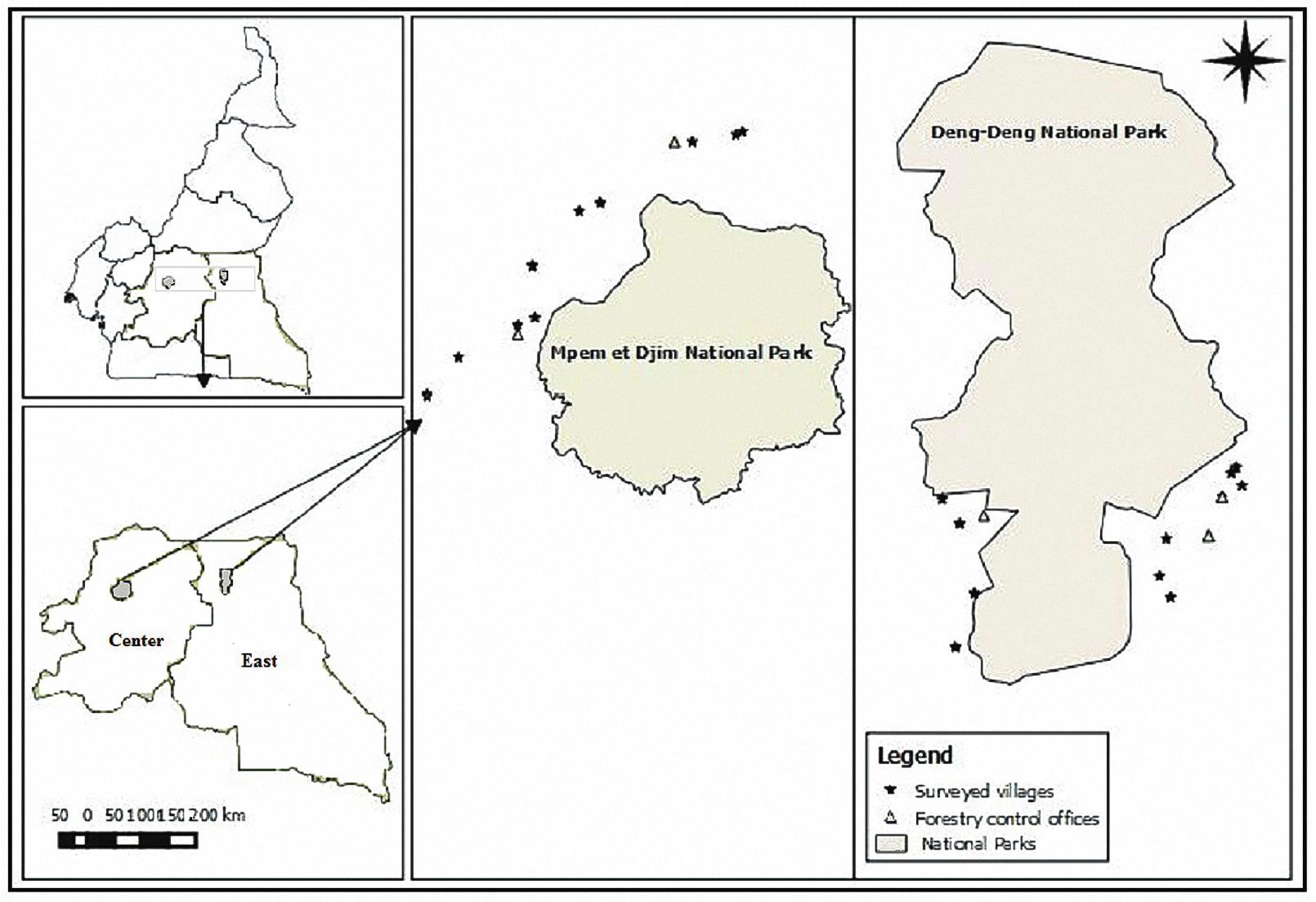
Locations of the surveyed villages and forest offices surrounding MDNP and DDNP in Central and East Regions, Cameroon.
We obtained authorization letters from government authorities and the University of Yaoundé I, and a permit from the Ministry of Forestry and Wildlife (MINFOF). Individual and community level ethical considerations were made following the International Society of Ethnobiology (ISE) Code of Ethics (ISE 2006), where possible, as follows. The survey team first introduced themselves to each surveyed village chief and then asked permission to conduct the study, presenting our institutional affiliation, authorization letters, and informing the chief of the survey objectives, benefits, and study period (translated in local languages where necessary). After agreeing to take part, the chief usually informed the whole village of our presence. Each interviewee's prior informed consent was obtained verbally (Akrim et al. 2017). Before each interview, respondents (all above 19 years old) were informed about the survey objectives, that they would remain anonymous on the questionnaire, and if necessary, were informed about Law N°91/023 (1991) stipulating that information collected from any survey questionnaire could not be used for control purposes. Respondents were informed that their participation was completely voluntary and they could abandon the interview at any point if they felt uncomfortable with questions. Questions were reformulated if respondents were not sure on the exact meaning and we asked for clarification of answers where necessary to ensure accuracy of the information.
Statistical Analysis
Data were analyzed using the software IBM© SPSS Statistics 20.0. We considered the response petit pangolin as the correct name for both white-bellied and black-bellied pangolins. Reported sightings of pangolins before 2016 were grouped into a unique answer category “before 2016.” We performed univariate analyses of frequencies for qualitative non-dependent variables, including demography parameters, the number of respondents (n) who recognized each pangolin species, sighting locations, the year of the sighting, and medicinal and cultural use. We examined the perceived current pangolin population size and the number of each pangolin species sighted per national park according to the age and occupation of the respondents using bivariate analysis of the frequencies. Chi-square tests were used to compare the frequencies of responses between the age and occupation of respondents and national parks, and differences were considered significant at 5% level of probability.
Results
Demography of Respondents
In total, we interviewed 368 respondents belonging to 42 ethnic groups, although not all respondents answered every question, so n differs between questions. Almost all respondents (82.1%) were male and 17.7% were female (n = 367 responses), and most were Christian (84.2%), while only 15.0% were Muslim (n = 365). Most of the participants were aged between 25–45 years old (40.3%), while 27.5% were aged between 19–25 and 32.1% were aged above 45 years old (n = 367). Participants had mostly primary (44.0%) and secondary (45.1%) level of school education (n = 361). The main occupations of participants were farmers (69.3%), fishermen (9.2%), traders (8.4%), and hunters (8.0%) (n = 365). None reported being traditional medicine practitioners.
Identification of Pangolin Species
None of the respondents failed the negative control photo identification. Of the respondents, 95.4% (n = 351) recognized the giant pangolin and correctly named it in French (pangolin géant) or the equivalent in their native language. Among them, 92.4% (n = 350) had already seen this species. People aged between 25 and 35 years old recognized the giant pangolin most frequently (χ
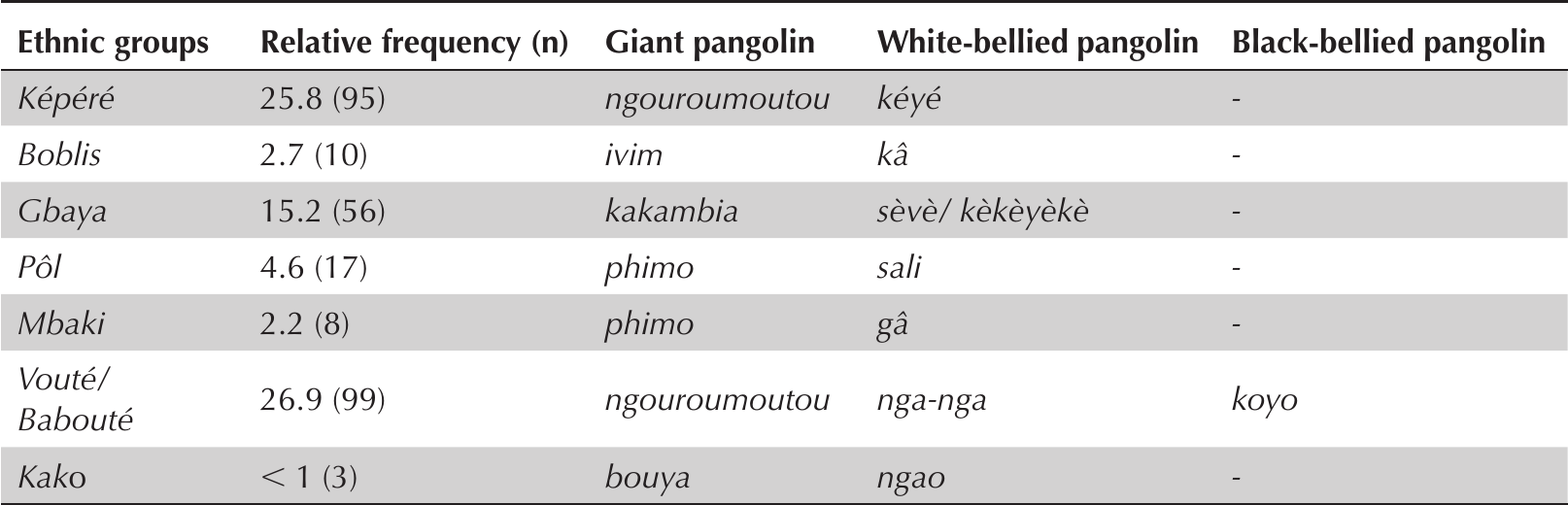
Almost all respondents (96.7%, n = 356) recognized the white-bellied pangolin and named it in French (petit pangolin) or in their native language (92.4%, n = 340). Of those who recognized the white-bellied pangolin, 92.7% (n = 341) admitted to having seen this species. Only 39.9% (n = 147) of interviewees were able to recognize and distinguish morphologically the black-bellied from the white-bellied pangolin (due to locally being considered unlucky—see section on cultural value) but did not name them differently in French. Respondents (27.2%, n = 100) reported the name as petit pangolin, the same as for the white-bellied pangolin, and only one respondent reported a local name of koyo (Table 1). Just 23.6% (n = 87) said they had seen the black-bellied pangolin. People aged between 45–55 years old were significantly more able to name the black-bellied pangolin in French (χ
Reported names of different pangolin species by ethnic groups located in the Center and East regions of Cameroon. Abbreviations: (n) indicates the number of respondents.
Location of Pangolin Sightings
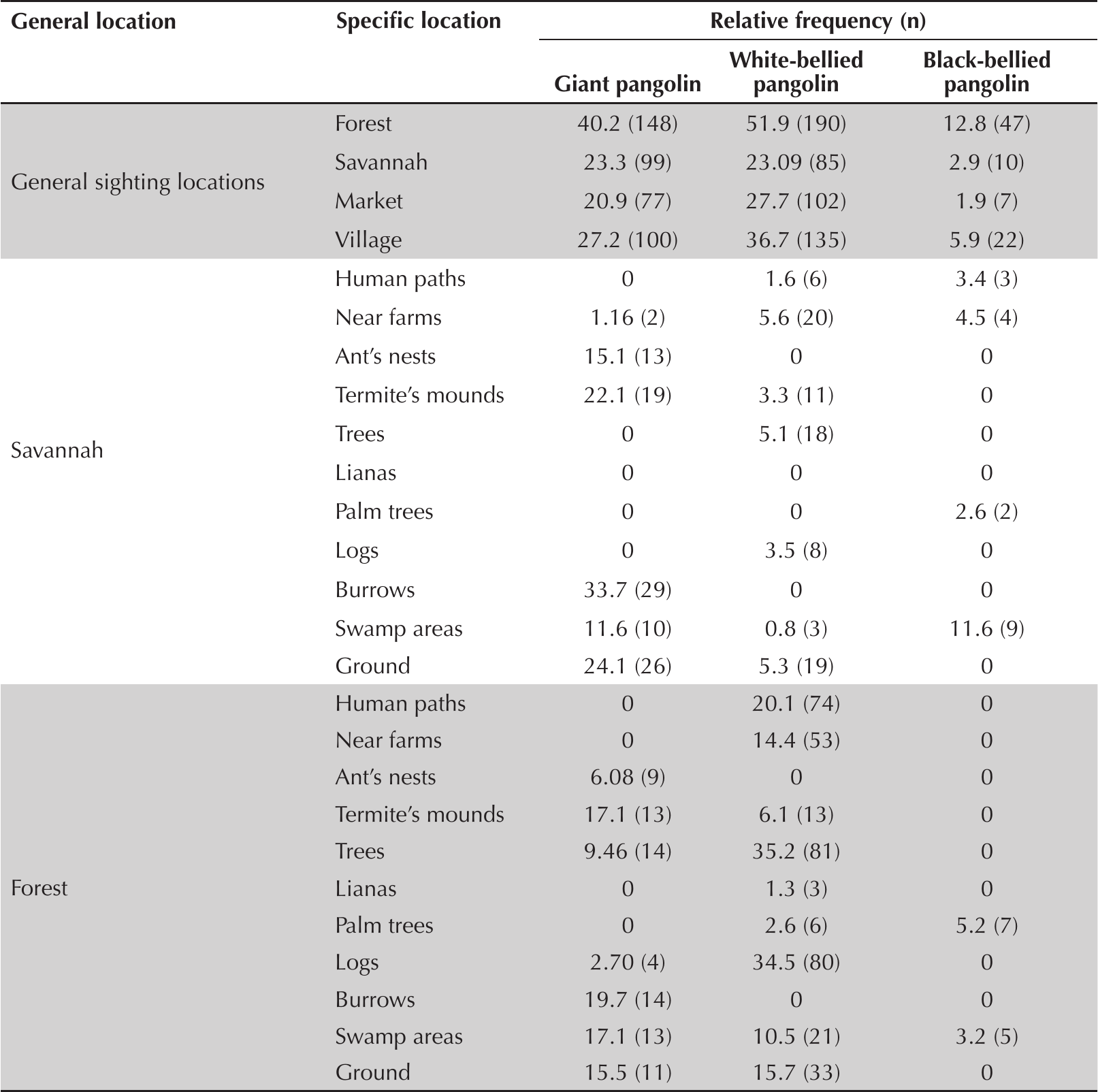
Respondents reported seeing giant pangolins most frequently in the forest (40.2%, n = 148), but also alive or dead in villages (including wild and/or captive; 27.2%; n = 100), in savannah areas (23.3%, n = 99), and in local markets (20.9%, n = 77). In savannah habitat, giant pangolins were reportedly encountered at burrows (33.7%, n = 29), on the ground (24.1%, n = 26), on termite mounds (22.1%, n = 19) and ants' nests (15.1%, n = 13), and, sometimes, near swamp areas (11.6%, n = 10; Table 2). In the forest, giant pangolin was frequently sighted in burrows (19.7%, n = 14), on termite mounds (17.1%, n = 13), in swamp forest (17.1%, n = 13), and on the ground (15.5%, n = 11; Table 2).
White-bellied pangolin was most frequently sighted in forest habitat (51.9, n = 190), in villages (36.7%, n = 135) and markets (27.7%, n = 102), and savannah habitat (23.09%, n = 85) (Table 2). Farmers reported seeing the white-bellied pangolin in forests significantly more than in other locations (χ
The black-bellied pangolin was reported to be found most often in forest habitat (12.8%, n = 47) and in villages (5.9%, n = 22), and rarely in savannahs (2.9%, n = 10) and markets (1.9%, n = 7) (Table 2). Black-bellied pangolin was frequently reported to be found on palm trees and in swamp areas in both the savannah and forest habitats.
Perceived Pangolin Population Trends
Most of the respondents (61.0%, n = 119) mentioned seeing the giant pangolin around DDNP before 2016, while 58.3% (n = 62) of respondents around MDNP have reportedly seen them over the last three years (Figure 2). The number of people who had seen giant pangolins over the last three years was significantly lower in DDNP than in MDNP (χ
Percentage of respondents who reported seeing each species of pangolin in different broad location categories, and in more specific locations within forest and savannah habitat. Abbreviations: (n) indicates the number of respondents.
Most of the respondents reported having seen white-bellied pangolin over the past three years both in DDNP (76.4%, n = 177) and in MDNP (73.7%, n = 90; Figure 2). Most sightings of white-bellied pangolins were in the year of the survey, 2018 (Figure 2). Hunters reported white-bellied pangolin more in 2018 than before 2016 compared to people with other occupations. Respondents had very mixed perceptions about the population status of white-bellied pangolins around both protected areas (Figure 3); almost half of respondents (45%) perceived the population size to be low while the other half perceived the population size to be high. The black-bellied pangolin was also reportedly seen most before 2016 (55.3%, n = 76 responses) by respondents around DDNP and by 50.0% (n = 9 responses) of respondents around MDNP (Figure 2). These sighting frequencies were not significantly different between the two protected areas (χ
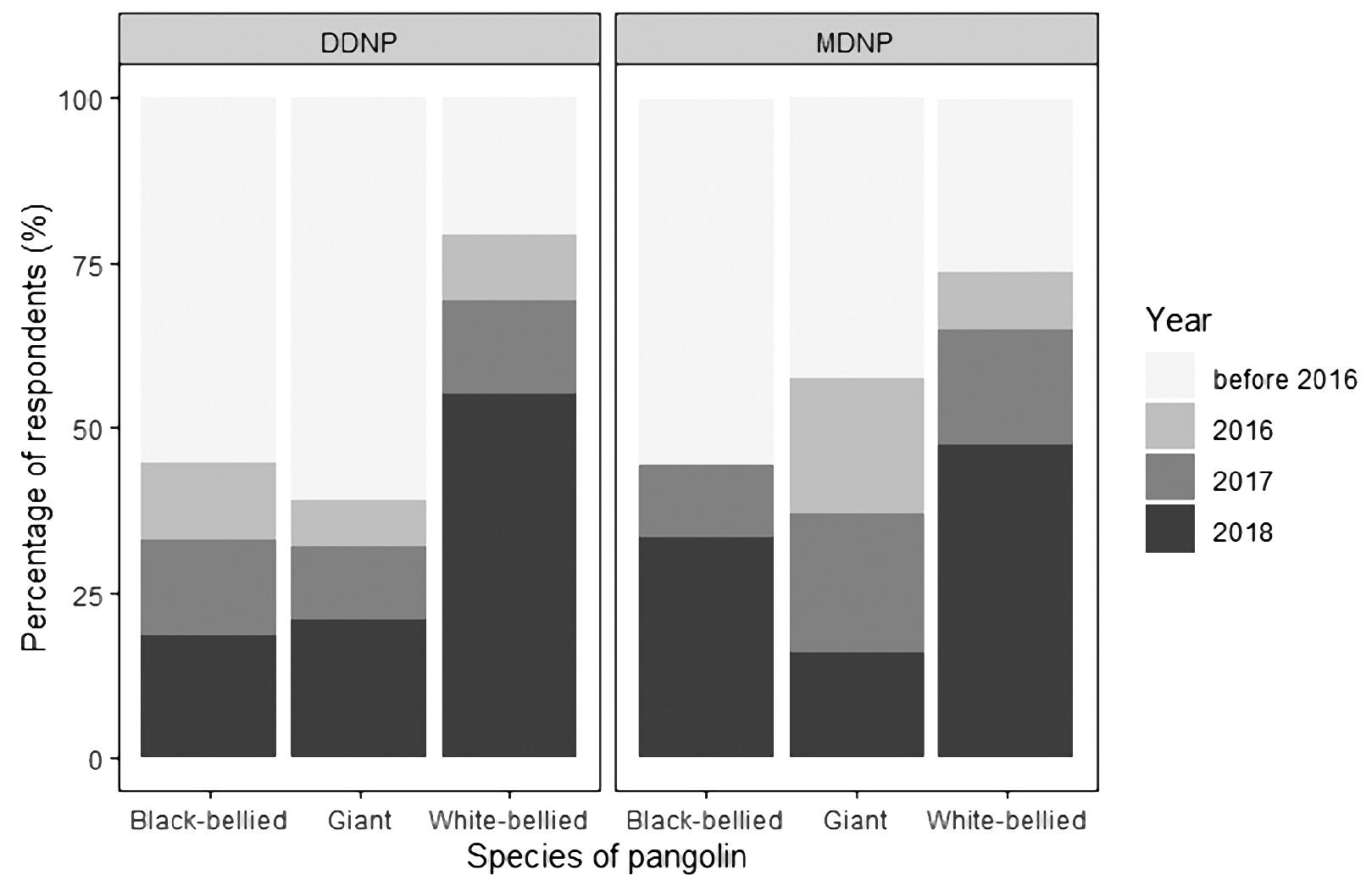
Proportion of respondents who had reported their last observation of each species of pangolin in a given year in the area around Deng-Deng National Park (DDNP) and Mpem et Djim National Park (MDNP). Percentages are calculated only from respondents who had seen each species.
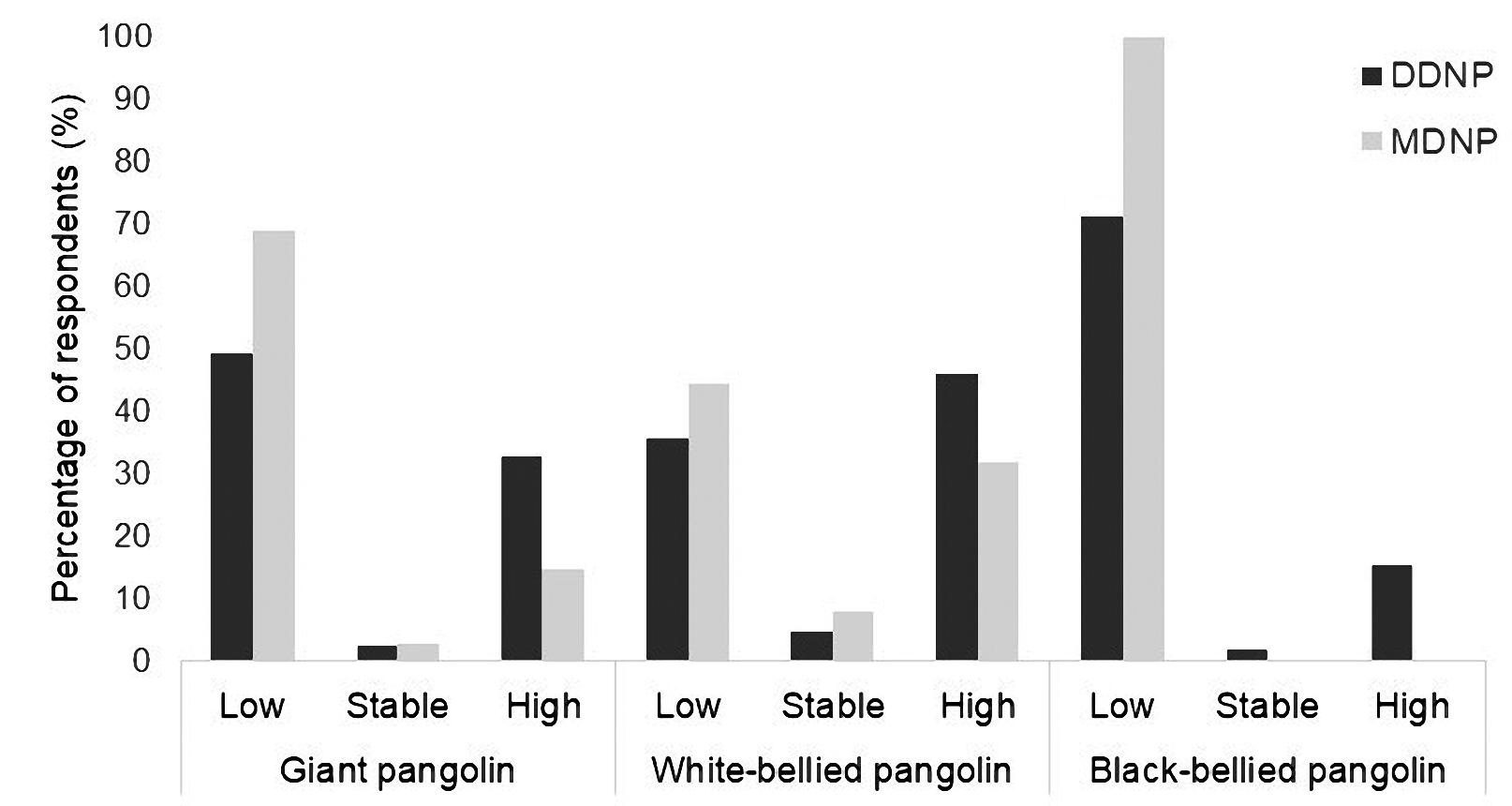
The perceived population size of each pangolin species amongst local people in Deng-Deng National Park (DDNP) and Mpem et Djim National Park (MDNP).
Perceptions on Pangolin Behavior and Reproduction
Almost all respondents (86.7%) reported pangolins to be nocturnal, while 13.3% of people reported diurnal behavior (total n = 353 responses). Pangolins were also reported as solitary by 69.3% (n = 255) of respondents, but 23.1% (n = 85) reported that they had seen two pangolins together, and four respondents reported seeing pangolins mating. When two pangolins were reported together, respondents mentioned a male with a female (14.7%, n = 54) or a female with a juvenile (13.0%, n = 48) and, rarely, two juveniles (1.9%, n = 7). Most of the respondents (48.1%, n = 177) reported pangolins as having one offspring per birth, while 10.9% (n = 40) of them reported two or three offspring per birth, and 36.1% (133) of people did not know the number of offspring per birth. Most respondents (50.8%, n = 187) reported having no knowledge about the annual birth frequency of pangolins. Those who did stated that the frequency is once annually (24.7%, n = 91), while 4.6% (n = 17) of people believed the birth frequency to be more frequent. Most respondents knew that pangolins feed predominantly on ants (82.6%, n = 304) and termites (79.3%, n = 292).
Cultural Beliefs and Medicinal Use of Pangolins
Of those who could identify the black-bellied pangolin, almost 70% (27.99% of total respondents) considered it unlucky when encountered during the daytime. Respondents often said that they did not want to encounter this particular species because seeing it was associated with death of the person or a family member, and they claimed that a ritual (not explained further) must be carried out to protect the person who had seen the black-bellied pangolin and the whole family from death. Another belief commonly heard among respondents (∼80%) was the use of fresh pangolin scales placed into the ground with seeds as an agricultural practice. This is believed to improve yields of groundnuts (Arachis hypogea) and okra (Abelmochus esculentus). Beliefs about purported medicinal uses of pangolins were not reported among the communities we interviewed. One respondent from a region of Cameroon near the Nigeria border believed that fresh pangolin scales could be used as talismans against evil spirits.
Pangolins were largely not reported to have any medicinal uses in the study areas, with less than 1% (n = 3) of respondents stating that they recognized the use of pangolin scales in traditional medicine. Those who did report traditional medicine usage considered pangolin scales useful during pregnancy, suggesting that pangolins scales were used to increase lactation of pregnant women and to facilitate parturition.
Local Opinion about Pangolin Conservation and Threats
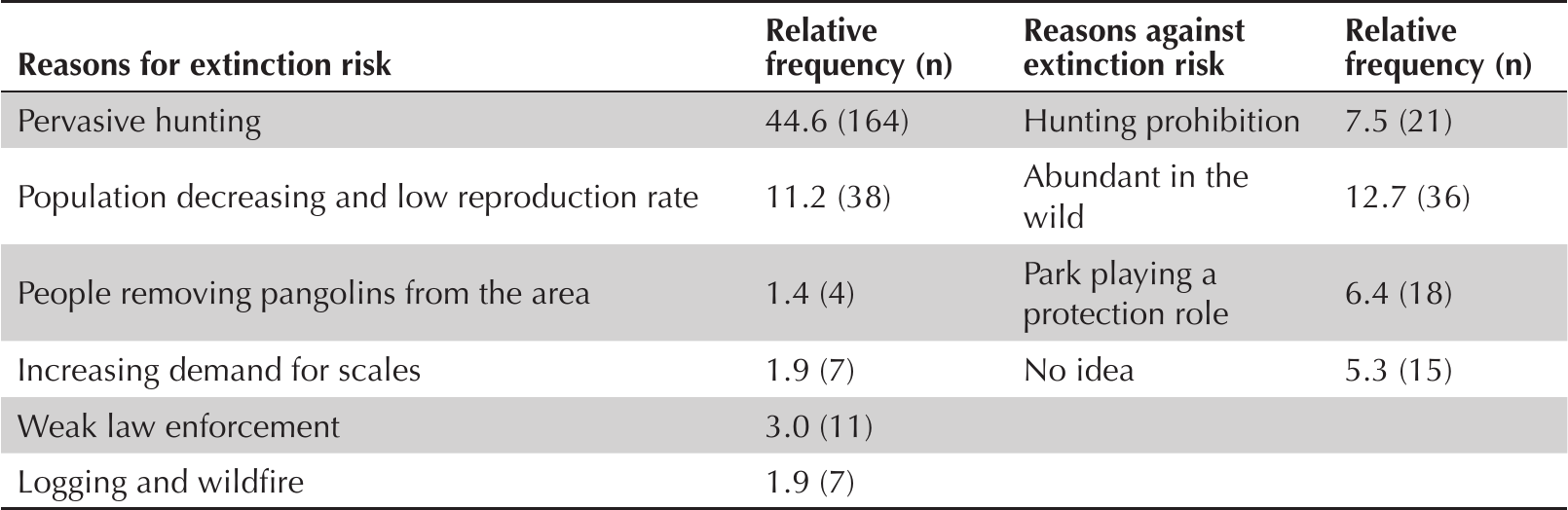
Most of the respondents around both protected areas considered pangolins to be at risk of extirpation (65.5%, n = 241), reporting pervasive hunting as the main reason (44.6%, n = 164; Table 3). Other reasons given include a decrease in pangolin population size, removal of pangolins from the area, low reproductive rate and vulnerable defense mechanism, increasing demand of scales, poor law enforcement, and wildfire and deforestation (logging) (Table 3). Those who did not consider pangolins at risk of extirpation (21.7%, n = 80) stated that it was because pangolin hunting is prohibited (5.7%, n = 21), that pangolins were abundant in the wild (9.0%, n = 33), that the national parks are playing a protection role (6.4, n = 18%), and that they believed pangolin populations to be increasing.
Nearly all respondents (82.1%, n=302) stated that they were interested in pangolin conservation while 8.2% of people were not (n = 30). Almost all respondents knew that pangolin hunting and trade was forbidden (87.8%, n = 323), and 34.0% (n = 125) reported that people had been arrested in local villages for this infraction. When asked whether they believed that arresting people involved in pangolin hunting and trade was important for pangolin conservation, 60.9% (n = 224) agreed while 24.2% (n = 89) did not agree, and 3.5% (n = 13) of respondents could not give their opinion. A small proportion of respondents (5.3%, n = 19) asked why they should protect pangolins and some stated that they should be allowed to consume pangolin meat (2.2%, n = 8).
Opinion of local respondents about whether they considered pangolins to be at risk of extinction in the area, and the reasons for or against. Abbreviations: (n) indicates the number of respondents.
Suggestions for Conservation Improvement
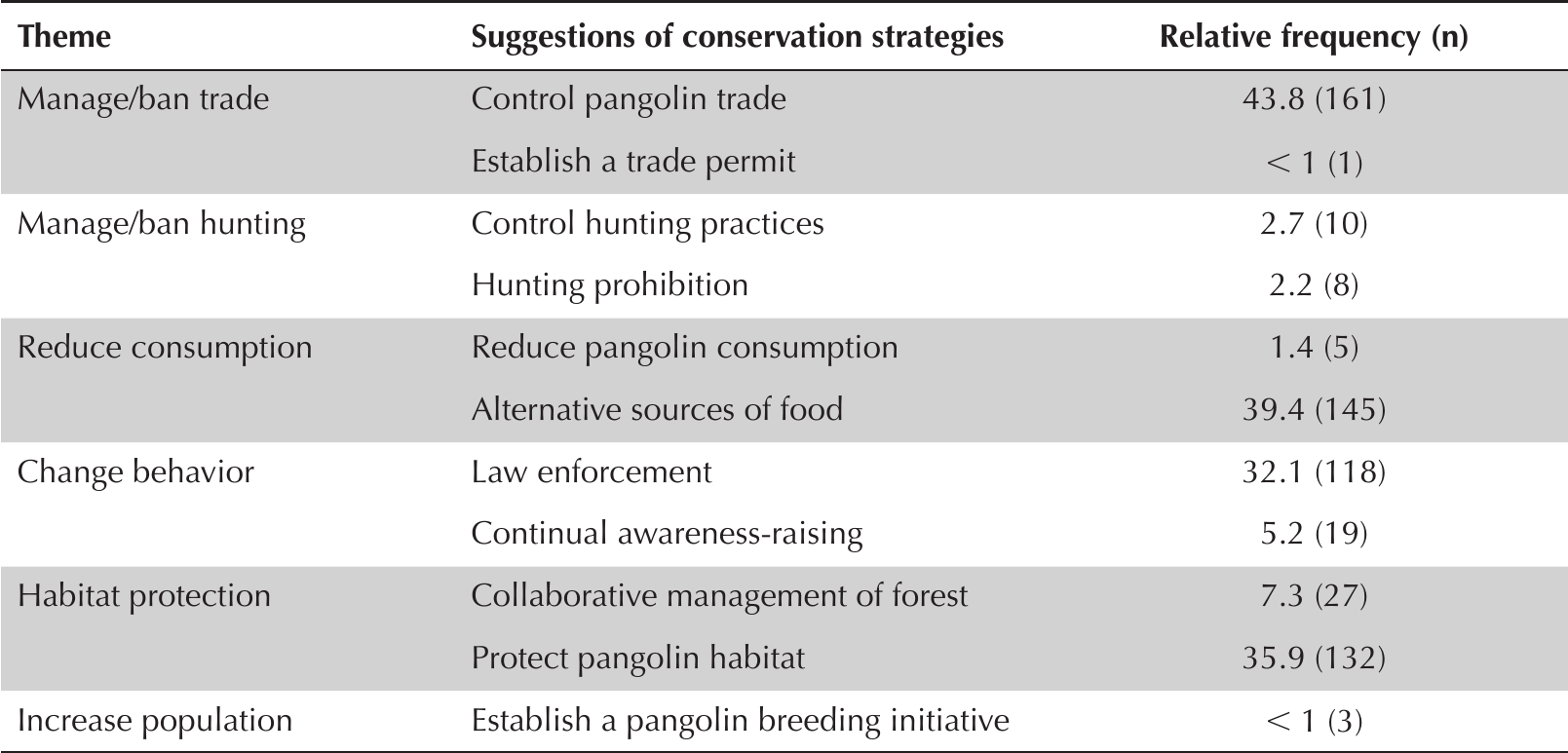
Local people's suggestions to improve pangolin conservation in their area included controlling the pangolin trade (43.8%, n = 161), improving law enforcement (32.1%, n = 118), protecting pangolin habitats (35.9%, n = 132), and the development of alternative sources of food (39.4%, n = 145; Table 4). We also grouped suggestions into overarching themes of conservation strategy to highlight common topics (Table 4).
Suggestions provided by local people to improve pangolin conservation. Respondents were able to provide more than one suggestion.
Discussion
We set out to understand the LEK and traditional uses of pangolins around the Deng-Deng and Mpem et Djim National Parks, Cameroon, and asked communities about pangolin conservation activities. We show that working with local communities can provide useful information for pangolin conservation and management efforts within protected areas. This LEK-based approach has enabled us to collect data on the potential trends in pangolin population size in the area as perceived by the local residents given their life experiences, in a setting where people rely on bushmeat (which often includes pangolins) as a source of food. The data also provided insights into pangolin ecology, local utilization of pangolins other than for meat, and the opinion of local people towards potential conservation activities, which are all essential to consider for effective conservation and collaborative management. We show that black-bellied pangolin is frequently grouped with white-bellied pangolin verbally as petit pangolin in French in the study areas. However, the two species could be distinguished morphologically, and local beliefs differed in regard to the two species. Respondents reported that giant pangolins were commonly found in savannah burrows, while the white-bellied pangolins were often seen in the forest, crossing logs and trees. The black-bellied pangolins were reportedly sighted on rattan palms (Raphia spp.) in both forest and savannah swamp habitats. Respondents more frequently reported low population size of giant and black-bellied pangolins in DDNP than in MDNP, while the perception of the white-bellied pangolin population was mixed. The people living around these parks had good knowledge of pangolins and did not report widespread or consistent use of pangolins for traditional medicine or other non-consumptive uses. Some people reported use of scales for increasing agricultural yields and as protection against bad spirits, and people reported that it was unlucky to encounter a black-bellied pangolin in the day. Overall, our results are therefore relevant to local conservation stakeholders, and should be considered for the management of wildlife in the study area.
Knowledge of Pangolins
Younger respondents aged between 25 and 35 years old recognized giant pangolins the most among those surveyed. Increased recognition may be the result of past participation in awareness-raising and education campaigns in the younger generations. In Cameroon, the giant pangolin has been protected by law (Class A—highest level of protection) since 2006 and this classification has led to several awareness campaigns throughout its range. Nash et al. (2016) suggested young people are often targeted for their interest in wildlife and conservation. Identification of black-bellied pangolin—mostly accurately by older respondents—was low amongst local people in our study, supporting its population decline over the time (Ingram et al. 2019c). Difficulties with identifying the black-bellied pangolin were observed in other parts of Cameroon (Ichu et al. 2017) and the Republic of Congo (Swiacká 2019). This could be associated with the similar size of the two species and their ecological requirements. Furthermore, the black-bellied pangolin is mostly arboreal and its elusive behavior (likely spending most of its time in the forest canopy) might lead to rare encounters. In comparison, the white-bellied pangolin is semi-arboreal and therefore people may be more likely to observe them while walking through the forest. Confirming the presence of black-bellied pangolin is challenging, but Ichu et al. (2017) found a carcass in Campo Ma'an National Park forest zone during a transect-based survey and have not detected this species using camera-trap. Moreover, recent camera-trap data from DDNP and MDNP recorded no evidence of black-bellied pangolin (Difouo Fopa 2020; Simo Talla et al. in press). Recently, a black-bellied pangolin carcass was found on the Nyong-ékélé divisional road located approximately 200 km from the Mpem et Djim National Park (Clinton Factheu, personal communication, March 2020). At present, other than the parks being located within the distribution maps for the black-bellied pangolin (Ingram et al. 2019c), no other published records are available that confirm the presence of this species within the parks. Ingram et al. (2019b) suggested testing whether arboreal camera-traps could be used to monitor black-bellied pangolins given the difficulties with using ground-based camera-trap placement due to the species' near total arboreal lifestyle. LEK-based data is sometimes considered inaccurate in the overlapping range of the black-bellied and white-bellied pangolin (Swiacká 2019; Willcox et al. 2019); nevertheless, our survey has shown that cultural beliefs of wildlife may be useful factors to consider in determining possible species presence, and in distinguishing between species that are called the same locally, such as the white-bellied and black-bellied pangolins, in some cases.
Specific Location of Pangolins in the Forest and Savannah
Giant pangolins were reported in both forest and savannah habitat, and have been sighted in and around burrows, fallen dead trees, termite mounds, and swamps, which corroborates Nixon et al. (2019). In the savannah, local people reported sightings at burrows, which is likely because they are a) more conspicuous in savannah habitat, and b) because the soil substrate is suitable for creating burrows, either dug by the pangolin itself or by the aardvark (Orycteropus afer) (Kingdon and Hoffmann 2013). The burrow locations and presence of giant pangolins have been confirmed by a recent camera-trap survey targeted at burrows and ground feeding sites in the savannah area (Simo Talla et al. in press). The giant pangolins reportedly seen in markets and villages, despite the species scarcity, were based only on pangolin body parts (e.g., tail, legs) prepared as bushmeat for local consumption, rather than the entire body of living or dead individuals.
The white-bellied pangolin was mainly reported from several forest locations, particularly by younger adult respondents who were more likely to be engaged in hunting activities and farmers whose farming activities near forest or savannah increase their encounter rate with this species. In the forest, white-bellied pangolins were sighted walking on the ground, on lianas, and in swamp habitat, which confirms observations from previous studies (Kingdon and Hoffmann 2013; Pietersen et al. 2019). Respondents also stated that white-bellied pangolins use fallen trees as pathways across the forest, and that hunters place snares on these logs specifically. The white-bellied pangolin was reportedly seen most recently by hunters, which might be due to their increasing frequency of being hunted, due to the increasing international demands for pangolin scales (IUCN 2019) during recent years.
Local people reported that black-bellied pangolins had been seen near rivers and swamps, supporting habitat preferences suggested by Kingdon (1997) and Gaubert (2011). The presence of black-bellied pangolins has been reported in farmlands described to be agricultural areas of former lowland rainforests in the southeast of Nigeria (Pietersen et al. 2019), though it is uncertain if they were present in remnant palm swamps in these degraded landscapes.
Traditional Medicine and Cultural Use
The communities surrounding DDNP and MDNP mostly did not report the use of pangolins for traditional medicine, although scales are sometimes collected when pangolins are captured for bushmeat. The use of fresh pangolin scales for agricultural yield improvement was widespread and had not been recorded before; this belief is a traditional knowledge heritage transfer across generations. One person who is originally from near the Nigerian border and who has settled in the area stated that fresh pangolin scales were used as talismans against evil spirits, which has also been reported in other pangolin range states, such as Nepal (Kaspal 2010) and Ghana (Boakye et al. 2015). While use of pangolin scales for traditional medicine is very low in these communities, the presence of beliefs from other communities may affect pangolin scale use in the future.
Perception of Pangolin Population and Extinction Risk
Giant and black-bellied pangolins were observed by communities in a more distant time and least frequently compared to the white-bellied pangolin, which is similar to results reported in other parts of Cameroon (Ichu et al. 2017) and in the Republic of Congo (Swiacká 2019). Given that the giant pangolin is a burrowing species thought to occur at low densities (Kingdon and Hoffmann 2013), it makes them difficult to observe and record using common wildlife survey approaches (Nash et al. 2016). Concerning the black-bellied pangolin, their predominantly arboreal lifestyle in the canopy, low density, and occurrence in swamp habitats might mean that they are rarely observed by residents in these protected areas. The patterns of observation and perceived rarity are also reflected in hunting records from across Central Africa, where white-bellied pangolins are the most commonly caught (Ingram et al. 2018). Furthermore, white-bellied pangolins are thought to occur at higher densities than the other pangolin species (Willcox et al. 2019) and its semi-arboreal lifestyle presumably increases the rate at which white-bellied pangolins are encountered.
Both giant and black-bellied pangolins were perceived to have low population sizes by local communities around DDNP and MDNP, which is similar to that reported by Ichu et al. (2017). It is difficult to interpret the mixed responses of the perceived population status of white-bellied pangolins, where, in both parks, the responses were largely split between low and high. This may be due to the fact that white-bellied pangolins are still seen frequently and recently in the area, but perhaps less often than respondents saw them in the past. It could also be that some villages are surrounded by more favorable habitat for white-bellied pangolins, which may increase their encounter rate.
Around both Deng-Deng and Mpem et Djim National Parks, people considered that pangolins could be at risk of disappearing if protection strategies are not improved. The reasons given for these perceptions are that pangolin populations are low in these areas and that there is pervasive hunting. In contrast, our survey has shown that some local people considered that pangolins are not at risk of extinction because the prohibition of hunting and the park's creation has decreased hunting pressure.
Local Perspectives on the Law and Law Enforcement
Despite most people being aware of the legislation banning hunting and trade of pangolins, a few respondents questioned the need for further protection of pangolins. The level of sensitization widely observed amongst people around the national parks might be a result of forestry control officers (wildlife protection authorities) who frequently conducted awareness-raising campaigns, although we did not measure this. While we found a reasonably high level of agreement towards law enforcement activities, it is unlikely that those who had been arrested were in our sample. Furthermore, this question may have resulted in some level of social desirability bias, whereby respondents may have provided answers that are more socially acceptable or to please the interviewer, particularly for sensitive questions (Grimm 2010).
The communities have suggested strategies for pangolin conservation in their areas which focus principally on managing the trade of pangolins, which has also been suggested by van Vliet and Mbazza (2011) as a way to reduce unsustainable bushmeat harvesting to supply urban markets. Other common suggestions were to provide alternative sources of food, change behavior through law enforcement, and protect pangolin habitat. However, research suggests that some communities may not be motivated to conserve wildlife on which they rely as a primary source of animal protein because they do not have formal rights to benefit from wildlife (Wilkie et al. 2016). In contrast, local people may want to preserve their wildlife from the increasing market demand from towns, reducing availability of meat for local consumption, but may lack the means to do so (Wilkie et al. 2016). This study highlights the ethical aspects of potential conservation activities given that people rely on the consumption of wild meat due to lack of alternatives and the hunting and trading of wild meat as a source of income.
Conclusion and Recommendations
Overall, our results support the notion that LEK can be used to contribute towards increased understanding of pangolin status and threats. Given our results, it is evident that 1) long-term investment and effective management of protected areas will be important for maintaining pangolin populations, and 2) that the needs of local communities need to be considered in conservation action planning. We recommend that governmental and nongovernmental organizations explore the feasibility and development of 1) equitable and sustainable management of hunting, and 2) small-scale sustainable farming (such as grasscutters [Thryonomys swinderianus]) as an alternative source of protein, income, and employment for local people to reduce hunting pressure. Improvement of local living conditions and employment opportunities may also facilitate the implementation of conservation strategies. We recommend that LEK-based surveys could be used across the sub-region to contribute to understanding of pangolin presence and distribution. Particularly, future research effort should focus on identifying suitable methods to accurately detect the presence and abundance of black-bellied pangolin. Furthermore, targeted surveys of traditional medicine practitioners are needed to better establish whether pangolins are used in traditional medicine across Central Africa. Finally, we recommend the development of educational campaigns focusing on the importance of pangolins and their conservation towards increased survival in the wild, but that the effectiveness of any such effort be fully evaluated and ideally work in collaboration with local communities.
Acknowledgments
We thank Francis Tarla Tchembi for his advice, Julian Easton for his help with an early draft of the questionnaire, and the Zoological Society of London for their assistance. We acknowledge Valery Talla for their participation as a researcher during interviews. We show gratitude to the Ministry of Forestry and Wildlife for the research permit N°1050, the Cameroon Ministry of Scientific Research and Innovation, and the University of Yaoundé 1 for research authorization. We acknowledge Charles Innocent Menvi Abessolo and Jean Pierre Bisseck for facilitating the administration process and for assisting us in the field. We are grateful to the Sub Divisional Officers of Belabo in the East Region and Yoko in the Centre Region of Cameroon for their permission and facilitations to conduct the survey in their administrative circumscriptions. We acknowledge Armand Richard Nzoko Fiemapong for his advice. We extend thanks to Djuitsa Ariane, Therese Diane Oma, and Christian Djuideu Tchouamo, respectively, for their help with data input and for advice on statistics, and Michael Dongmo for his review of an early draft of this paper. We are grateful to the Aspire Grant, Conservation Action Research Network (CARN), and the Rufford Small Grant Foundation for financial support for this research. Finally, we are very grateful to the village chiefs and local communities for permitting us to work with them.