






Abstract
This study examined whether attractiveness derived from skeletal indices (skeletal attractiveness) influences facial-attractiveness judgments after makeup application. Three-dimensional facial models were constructed from female faces in the Chicago Face Database (CFD). Based on the anteroposterior positions of the midface and mandible, faces were classified into nine skeletal types and then grouped into high- and low-skeletal-attractiveness categories. A single digital makeup condition, selected through a pretest, was uniformly applied to all faces. Attractiveness ratings were collected online and analyzed using ordinal logistic mixed-effects models with random intercepts for raters and facial identities. Makeup significantly increased attractiveness ratings overall, and faces in the high-skeletal-attractiveness group were rated as more attractive than those in the low group. By contrast, the Makeup
Keywords
Introduction
Background
Facial appearance is an important cue that guides social judgments in interpersonal contexts, including inferences about others’ personality traits and abilities (Jaeger et al., 2022, 2025). In particular, first impressions based on faces are formed rapidly and often automatically, and can exert lasting effects on subsequent social judgments and behavior (Freeman & Johnson, 2016; Todorov et al., 2015). Judgments of facial attractiveness, for example, have been linked to real-world social outcomes such as interpersonal preference, trustworthiness judgments, and employment opportunities (Jaeger et al., 2025). Clarifying how deliberate modifications of facial appearance alter evaluations by others is therefore an important issue in face-perception research (Kramer et al., 2024).
Within this context, makeup can be understood as a form of appearance modification used strategically to shape impressions in accordance with situational demands. Women have been reported to adjust the amount and carefulness of their makeup depending on contextual circumstances (Biesiadecka et al., 2023), suggesting that makeup is not merely decorative but also a practice aimed at guiding social evaluation in desirable directions. More broadly, research on aesthetic facial interventions has likewise shown that people modify their appearance in order to create more favorable first impressions (Jaeger et al., 2025). Recent studies have also examined user experience and satisfaction with beauty-related applications using augmented reality (AR; Voicu et al., 2023). Against this background, the importance of a methodology for objectively evaluating the effects of appearance modification is likely to increase further.
Previous research on the effects of makeup has consistently shown that, on average, makeup enhances facial attractiveness. For example, professionally applied makeup significantly increases attractiveness ratings for female faces (Jones & Kramer, 2016), and attractiveness-enhancing effects of makeup have also been observed for male faces (Batres & Robinson, 2022). Moreover, effect sizes vary depending on how makeup is applied: professional makeup may enhance impressions such as attractiveness, femininity, and status more strongly than self-applied makeup (Batres et al., 2021). At the same time, more controlled approaches have begun to examine makeup effects using standardized or digitally manipulated cosmetic conditions, thereby reducing variation arising from application technique or product choice (Batres et al., 2023). Thus, it is necessary to examine not only whether makeup is present, but also under what conditions, with what degree of stimulus control, and to what extent its effects emerge.
At the same time, existing studies suggest that although makeup has an average positive effect, the magnitude of that effect varies across faces even under the same makeup manipulation. For instance, it has been reported that faces that are already highly attractive without makeup may show smaller gains from makeup (Jones & Kramer, 2016), indicating substantial individual variation in makeup effects. However, the factors underlying this variation remain insufficiently understood. Accordingly, the present study goes beyond treating makeup-related increases in attractiveness as an average effect and instead investigates the underlying factors that may generate such individual differences.
Three-Dimensional Facial Structure and Attractiveness
Research seeking to explain the mechanisms through which makeup enhances attractiveness has so far focused primarily on surface-level visual information. Specifically, light makeup that does not undermine naturalness tends to increase attractiveness (Tagai et al., 2017); skin evenness is associated with attractiveness (Batres et al., 2019; Coetzee et al., 2012); and makeup may alter impressions by increasing facial contrast (Russell, 2009). Taken together, these findings suggest that makeup influences attractiveness judgments mainly by modifying surface cues such as skin appearance and feature contrast.
However, facial attractiveness is not determined by surface information alone. The relationship between facial shape and attractiveness has traditionally been examined using ratios derived from facial length and width. For example, attractiveness may be higher when the face approximates a vertically balanced three-part proportion (Villavisanis et al., 2022). By contrast, associations with the golden ratio, ideal proportions, or ideal angles appear to be limited, and some indices have been reported to explain attractiveness poorly (Zwahlen et al., 2022). One possible reason is that ratio-based indices derived from two-dimensional images do not directly capture depth information or underlying skeletal morphology. In contrast, more recent work has shown that three-dimensional skeletal classifications focusing on the anteroposterior positions of the midface and mandible are significantly related to facial attractiveness (Kunz et al., 2025; Schwarz, 1961). In particular, skeletal types characterized by a protrusive or average midface combined with a retrusive or upright mandible have been reported to be evaluated as more attractive, suggesting that facial morphology including depth is an important underlying determinant of attractiveness judgments (Kunz et al., 2025).
This has important implications for makeup research. Although makeup is an operation that primarily changes surface information, skeletal structure constitutes a relatively stable source of information grounded in the three-dimensional form of the face (Kunz et al., 2025). Conceptually, then, judgments of facial attractiveness may be formed through the integration of both shape-based cues, such as skeletal structure, and surface-based cues, such as makeup. If skeletal structure determines the baseline level of attractiveness, skeletal differences may affect attractiveness levels even after makeup has been applied. Moreover, if skeletal structure also influences how makeup works, then it may contribute to individual differences in attractiveness gains produced by makeup.
Research Gap
Taken together, prior research has shown, first, that makeup increases attractiveness on average; second, that the magnitude of this effect varies across faces; and third, that skeletal differences derived from three-dimensional facial structure are associated with facial attractiveness. However, these findings have largely accumulated in separate lines of research, and studies that examine skeletal differences and makeup effects in an integrated manner under the same stimulus conditions and evaluation procedure remain limited. In particular, much of the research on makeup effects has focused on comparing bare and made-up faces (Batres et al., 2021; Jones & Kramer, 2016). As a result, it remains unclear how individual differences in makeup effects are related to underlying factors rooted in three-dimensional facial structure.
In addition, existing makeup studies have often used stimuli based on makeup manually applied by humans, in which makeup amount, technical skill, product choice, and naturalness can vary simultaneously. Consequently, not only the presence or absence of makeup but also differences attributable to the person applying it or to the specific style can become confounded, making it difficult to isolate the factors that generate individual variation in makeup effects. Indeed, professional makeup has been shown not only to enhance attractiveness more strongly than self-applied makeup, but also to appear heavier and less natural (Batres et al., 2021). Although digitally controlled makeup manipulations have been used to reduce such variation in surface appearance (Batres et al., 2023), these studies have not directly examined whether the effect of a standardized cosmetic manipulation depends on three-dimensional structural differences in the face. Therefore, to test whether skeletal differences moderate makeup effects, a controlled design is required in which the same makeup condition is applied reproducibly across all stimuli while skeletal structure is operationally defined within the same stimulus set.
A further issue concerns the perceptual status of digitally reconstructed three-dimensional faces. Faces that are highly human-like but still perceptibly artificial may evoke a sense of uncanniness or perceptual mismatch, a phenomenon discussed in the literature on the uncanny valley (Olivera-La Rosa, 2018; Wang et al., 2015). This issue is relevant to the present study because applying makeup to digitally reconstructed faces may alter not only surface attractiveness cues but also the perceived congruence between human-like facial structure and artificial rendering. Accordingly, the use of standardized digital stimuli provides experimental control, but it also requires caution when interpreting makeup effects as perceptual responses to natural human faces.
Moreover, recent research on facial appearance interventions suggests that effects relevant to first impressions are often small, yet still socially meaningful. For example, aesthetic interventions may significantly increase attractiveness while producing comparatively modest effect sizes and little spillover to other impression dimensions (Jaeger et al., 2025). Accordingly, the theoretical value of the present study lies not in presuming a large interaction between skeletal structure and makeup, but in disentangling whether skeletal structure functions primarily as a baseline determinant or whether it also alters the increment produced by makeup itself.
Research Aims and Hypotheses
Against this background, the aim of the present study was to examine whether attractiveness based on skeletal indices (hereafter, skeletal attractiveness) influences judgments of facial attractiveness after makeup application. Specifically, three-dimensional facial models were constructed from a standardized facial image database, and skeletal indices were calculated from the anteroposterior positions of the midface and mandible in order to define high- and low-skeletal-attractiveness groups. The same digital makeup condition was then applied to all facial models, and attractiveness judgments were collected through an online rating task. This design made it possible to examine the main effects of skeletal differences and makeup, as well as their interaction, within a single common procedure. In supplementary analyses, we also examined whether these conclusions were robust after accounting for face-level perceived age and Ethnicity category. The basic idea of the study was to conceptualize skeletal structure as the “base” and makeup as an “added layer,” and to clarify their relative contributions.
The study addressed the following three research questions (RQs):
The significance of the present study lies in linking makeup research and skeletal-structure research within a common perceptual-evaluation framework and in examining the relationship between surface information and three-dimensional shape information in attractiveness judgments. In doing so, the study not only advances the theoretical understanding of first impressions from faces, but may also provide a basis for evaluating personalized beauty technologies in the future.
Methods
Stimuli
Three-dimensional facial models were initially constructed from facial images of 308 women included in the Chicago Face Database (CFD; Ma et al., 2015). The CFD provides high-resolution face images obtained under standardized photographic conditions, together with subjective and objective norming data, making it well-suited for reproducible stimulus construction. To avoid possible influences of facial muscle movement on the apparent skeletal structure and on attractiveness judgments, only neutral-expression images were used. To obtain three-dimensional shape information from the original images, each face image was converted into a three-dimensional facial model using the Headshot2 function in Character Creator 4 (CC4). Hair, which could interfere with the visibility of skeletal structure or makeup, was hidden.
After excluding two faces for which the landmarks required for skeletal classification could not be extracted from the mesh, 306 models were available for skeletal classification. From these classified models, a final rating-stimulus set of 116 facial identities was selected using stratified sampling so that the CFD Ethnicity-category composition was matched as closely as possible between the high- and low-skeletal-attractiveness groups. For each of these identities, both a no-makeup version and a makeup-applied version were created, yielding 232 stimulus images in total.
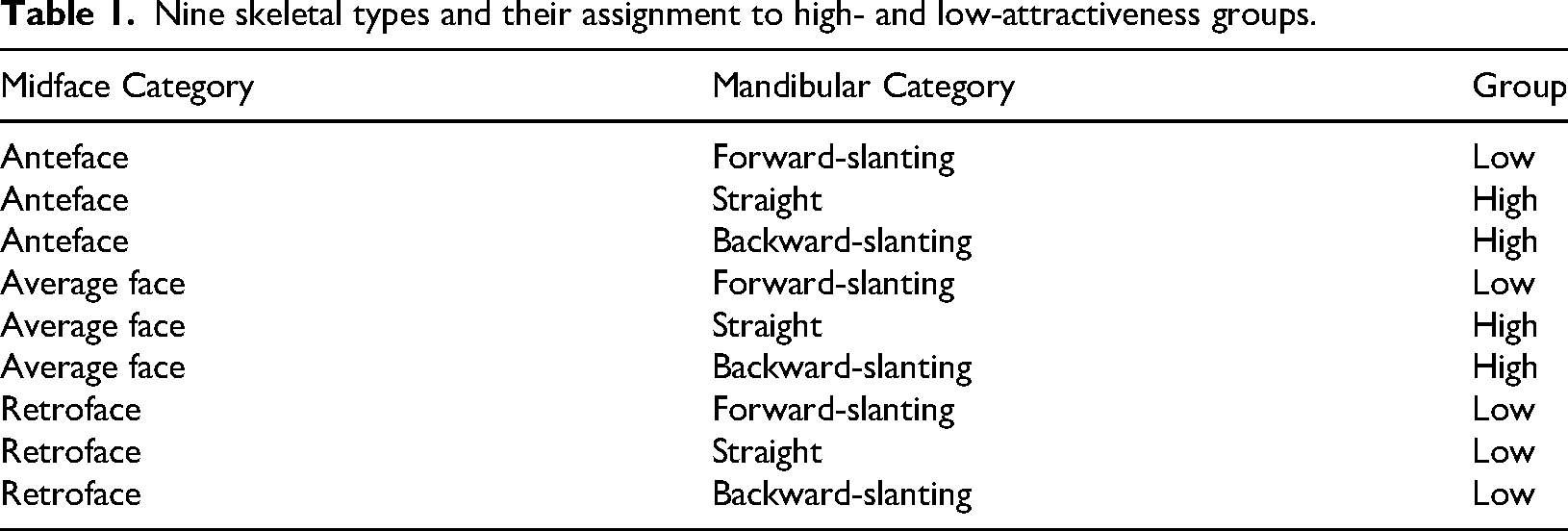
Five anatomical landmarks were used for skeletal classification: Porion (P), Orbitale (O), Nasion (N), Subnasale (Sn), and Pogonion (Pog). Each landmark was identified on the three-dimensional mesh on the basis of either a prespecified corresponding vertex or a candidate region. The resulting skeletal indices should be interpreted as operational proxies for structural variation in perceptual research rather than as substitutes for clinical cephalometric measurements. Because the present study reconstructed three-dimensional models from standardized face images rather than from radiographic or scan-based clinical records, the classification should be understood as a perceptually motivated approximation of craniofacial structure, not as a clinical diagnostic measure. A schematic illustration of the coordinate system and the landmark locations on the left facial profile is shown in Figure 1, and the candidate regions used for landmark identification are shown in Figure 2. Region A corresponds to Orbitale, region B to Nasion, and region C to Pogonion. Based on the coordinates of these landmarks, indices of midfacial position and mandibular position were calculated, and each facial model was classified into one of the nine skeletal types following the framework of Kunz et al. (2025). Specifically, the four skeletal types reported by Kunz et al. (2025) as highly attractive were assigned to the high group, whereas the remaining five types were assigned to the low group. The correspondence between skeletal types and the high- and low-attractiveness groups is shown in Table 1. In addition, we obtained the CFD norming variable AgeRated for each stimulus identity. This variable represents independent raters’ estimates of each target’s approximate age and was therefore treated as a face-level perceived-age covariate, rather than as exact chronological age. AgeRated was available for all 116 facial identities in the present rating data set (
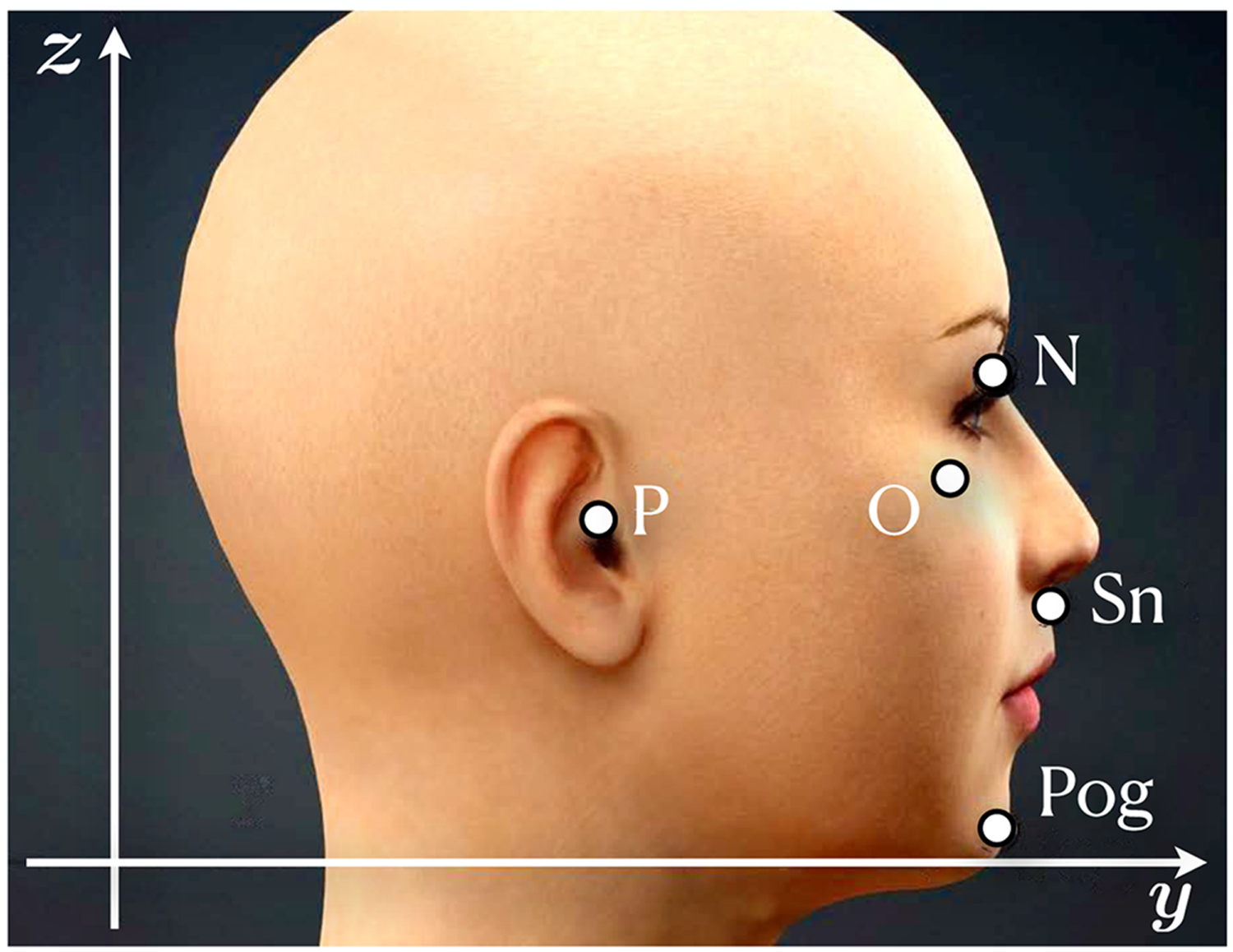
Schematic illustration of the coordinate system and anatomical landmarks on the left facial profile. P
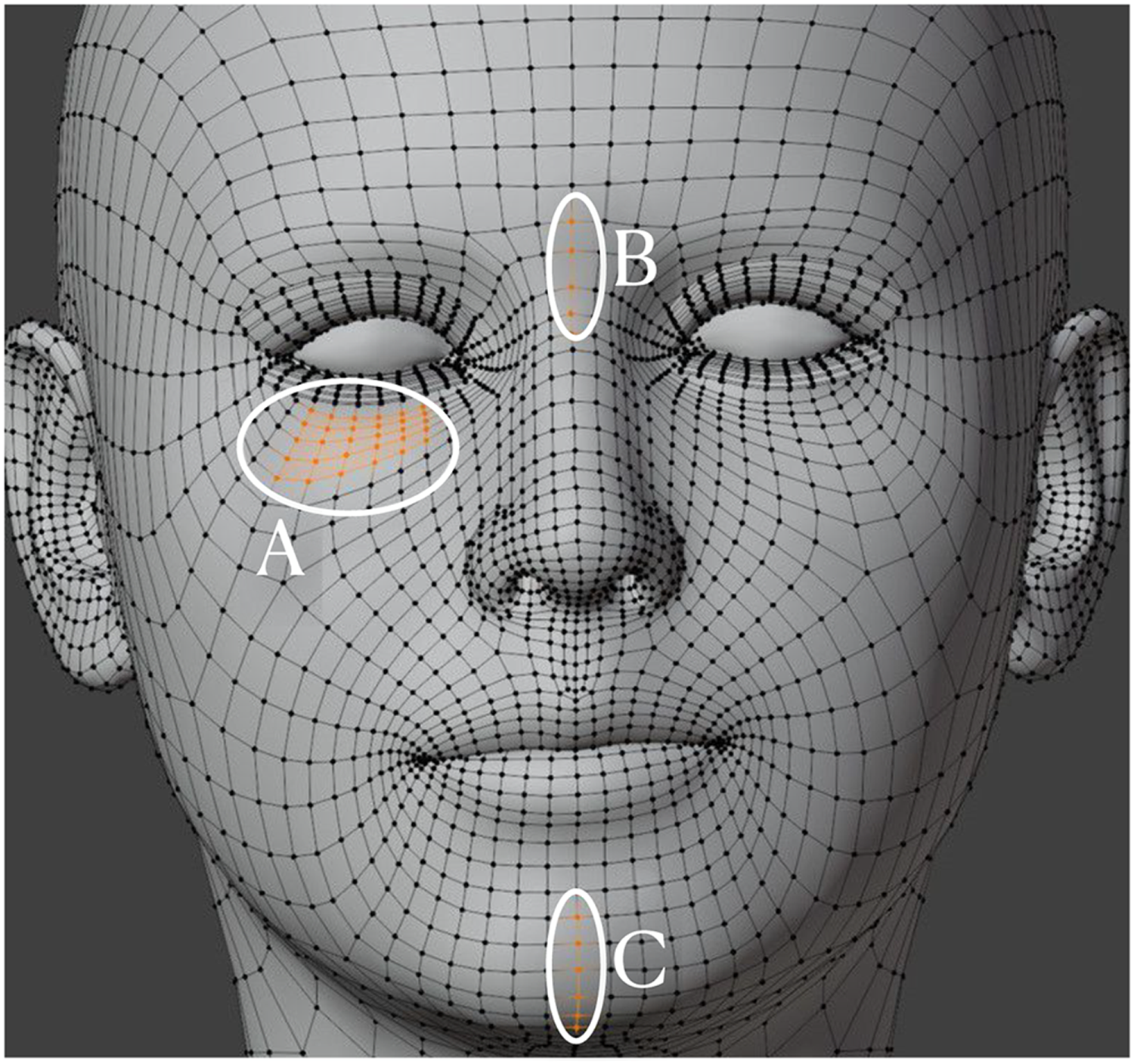
Candidate regions on the 3D mesh used for landmark identification. Region A corresponds to Orbitale, region B to Nasion, and region C to Pogonion.
Nine skeletal types and their assignment to high- and low-attractiveness groups.
Makeup manipulation was implemented using full-makeup presets included in the SkinGen function of CC4. The preset used in the main experiment was selected through a pretest conducted in advance. The pretest was conducted from October 13 to 16, 2025. A total of 79 respondents participated, and 55 valid responses were retained after data screening. For the pretest, 16 facial models were selected from the Black and White categories of the CFD by crossing the Ethnicity category and skeletal-attractiveness group, with four models sampled from each of the four resulting conditions. Each model was rendered with three full-makeup presets, yielding 48 pretest images. Each participant evaluated eight facial models. For each model, the three preset images were presented side by side, and participants answered all three forced-choice questions: which image appeared most natural, which appeared most even, and which appeared most clear. Thus, participants were not randomly assigned to only one criterion; rather, each participant answered all three criteria for the facial identities assigned to them. The presentation of facial identities was randomized and balanced using Qualtrics.
The three pretest criteria were naturalness, evenness, and clarity (facial contrast). Naturalness was defined as the degree to which harmony with the overall face was maintained without excessive emphasis (Tagai et al., 2017). Evenness was defined as low variability in skin tone and the absence of conspicuous unevenness or visible boundaries (Batres et al., 2019; Coetzee et al., 2012). Clarity was defined as the degree to which the eyes, eyebrows, lips, and facial contour were perceived as visually distinct (Russell, 2009). Across the three full-makeup presets, a composite score was calculated from the selection rates for these three criteria, and the highest-scoring preset was adopted as the single makeup condition used in the main experiment.
For each of the 116 facial identities in the rating-stimulus set, two stimulus images were created: a no-makeup version and a makeup-applied version. However, to prevent the same participant from seeing both versions of the same identity, only one of the two versions was assigned to each participant. Stimulus images were generated using the built-in preview function in CC4. Each facial model was rotated 33 degrees to the right relative to the frontal camera position and cropped so that only the head appeared in the center of the image. The output images were saved in JPEG format at a resolution of
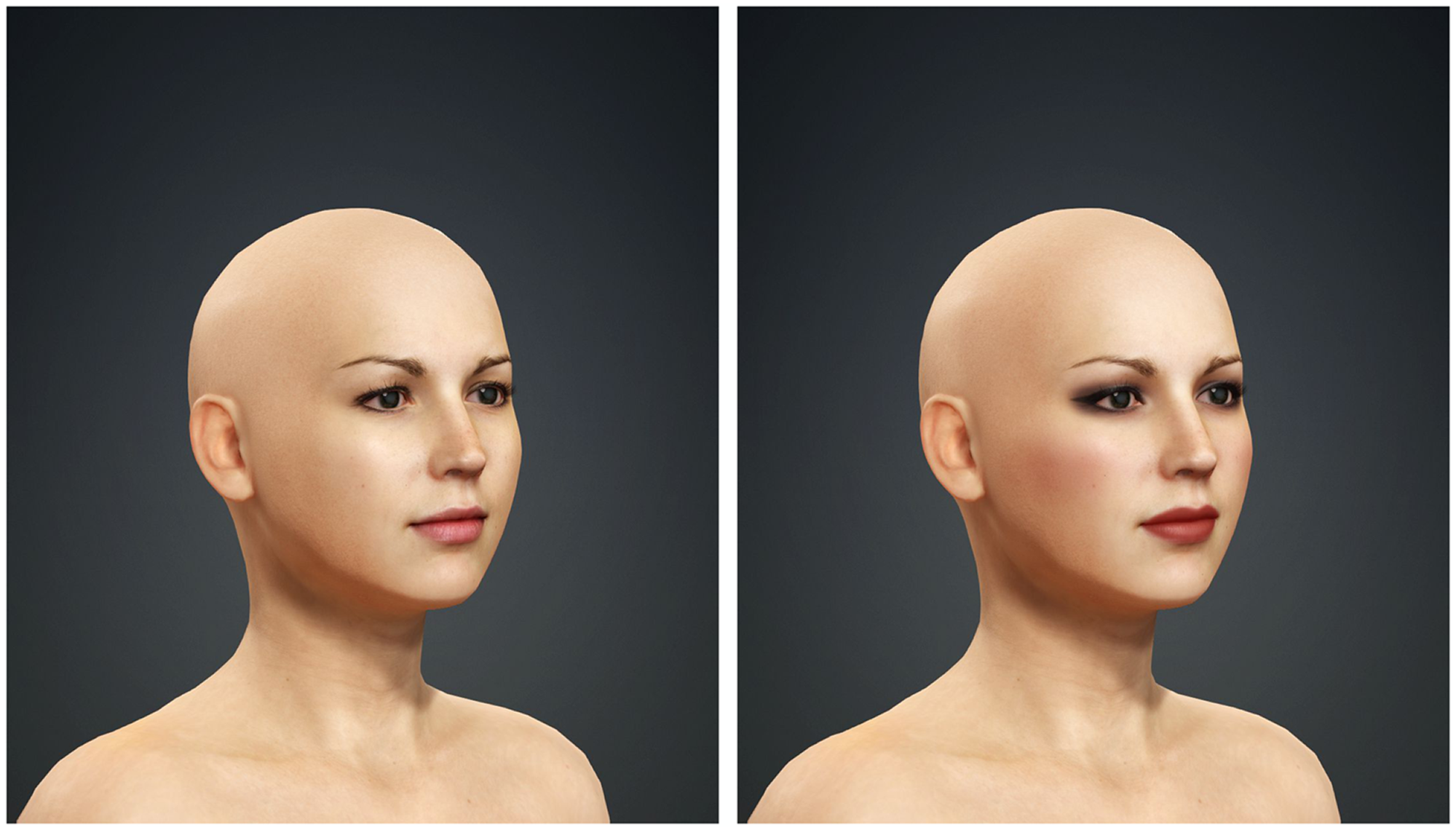
Representative stimulus images used in the attractiveness-rating task (left: no makeup; right: makeup applied). Underlying source image: Chicago Face Database. The author-generated three-dimensional renderings were derived from CFD material and are used under a Creative Commons Attribution 4.0 (CC BY 4.0) license with permission from the University of Chicago, Center for Decision Research. Credit: Ma, Correll, & Wittenbrink (2015). The Chicago Face Database: A Free Stimulus Set of Faces and Norming Data. Behavior Research Methods, 47, 1122–1135.
Participants
Attractiveness ratings were collected online. Participants were recruited from two sources: registered users of the crowdsourcing service CrowdWorks and noncrowdsourced volunteers. The noncrowdsourced volunteers were recruited through courses at several universities, personal networks, and in-person requests in public settings. All participants completed the same Qualtrics-based online questionnaire. At the beginning of the study, participants were informed about the purpose of the research and the anonymous handling of the response data, and only those who consented proceeded to the rating task. Participants reported their gender and age group at the beginning of the survey, and after completing the attractiveness ratings, they reported their makeup frequency and level of interest in makeup. To assess whether participants responded attentively, an attention-check item was embedded in the questionnaire, and data from respondents who failed to follow the instructions were excluded from the analyses. After exclusion of respondents who failed the attention-check item, the final sample comprised 1,197 valid respondents. The sample size was determined by the number of valid responses obtained during the planned data-collection period. Because no a priori power analysis was conducted, the precision of the nonsignificant interaction effect is evaluated using the reported odds ratio and 95% confidence interval (CI). Exact chronological age was not collected; instead, participants reported their age group. The largest age category was 40–49 years (30.7%), and 75.2% of valid respondents were between 30 and 59 years of age.
Among participant attributes, gender, age group, makeup frequency, and interest in makeup were treated as candidate covariates to be included in the statistical models when appropriate. The category structure of these variables and their dummy coding are shown in Table 2. The full distribution of rater attributes is reported in the Results section.
Candidate predictors, covariates, and coding used in the regression analyses.
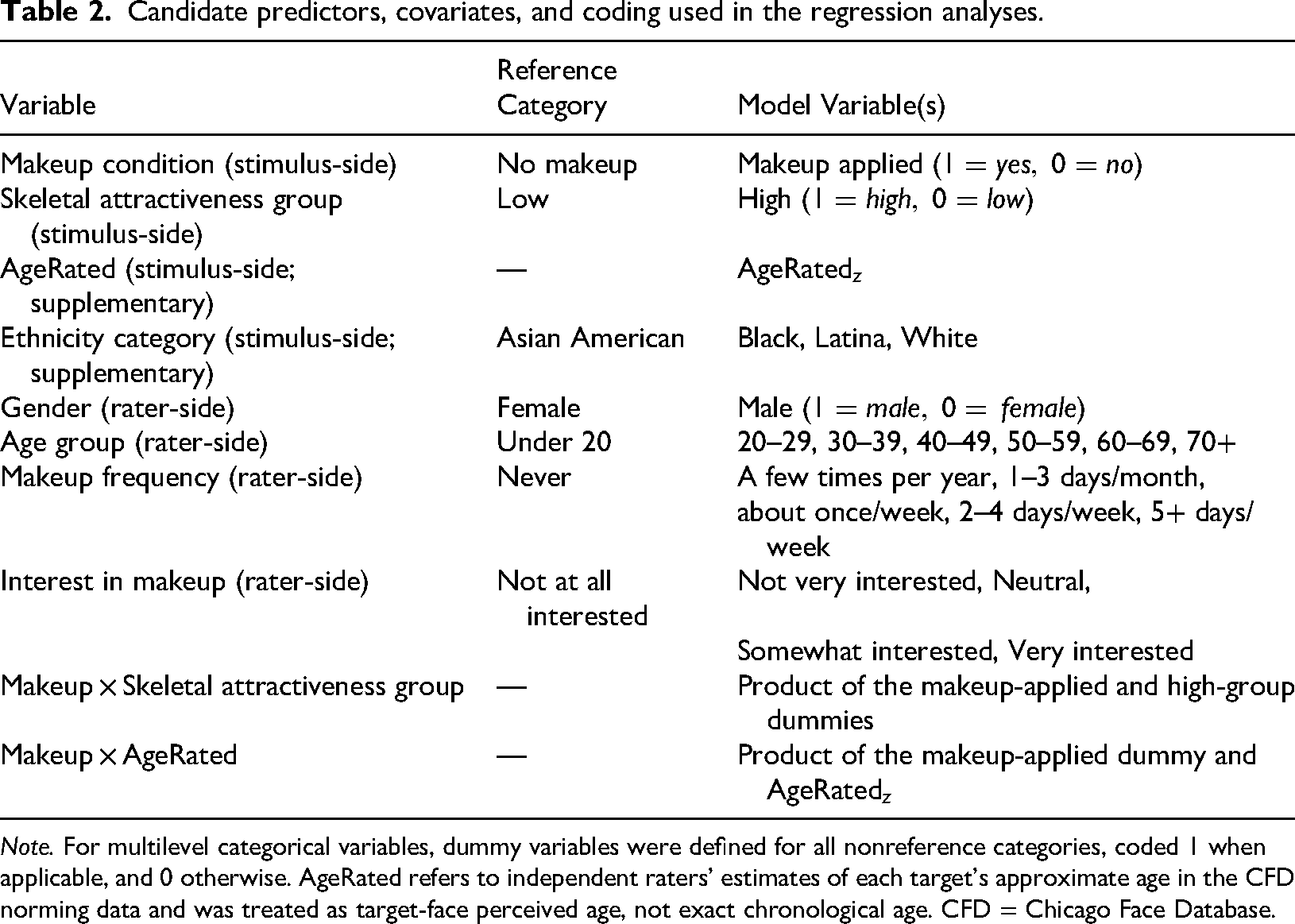
Note. For multilevel categorical variables, dummy variables were defined for all nonreference categories, coded 1 when applicable, and 0 otherwise. AgeRated refers to independent raters’ estimates of each target’s approximate age in the CFD norming data and was treated as target-face perceived age, not exact chronological age. CFD = Chicago Face Database.
Procedure
The attractiveness-rating task was conducted on the survey platform Qualtrics. Each participant evaluated one face image per trial and completed a total of eight attractiveness-rating trials. On each trial, a single facial image was presented, and participants rated its attractiveness on a six-point scale ranging from 1 (“not at all attractive”) to 6 (“very attractive”). The instructions asked participants to base their judgments on immediate first impressions rather than on deliberate reflection.
The order of stimulus presentation was randomized across participants. In addition, the same identity was never presented more than once to a given participant, such that for each facial model, either the no-makeup version or the makeup-applied version was assigned, but not both. This procedure was intended to minimize order effects, learning effects, and comparative judgments arising from repeated exposure to the same face.
Statistical Analysis
Dependent Variable and Model Selection
The dependent variable was the attractiveness rating obtained on the six-point scale. Because the ratings were ordinal and the data had a cross-classified repeated-measures structure in which each rater evaluated multiple images and each image was evaluated by multiple raters, an ordinal logistic mixed-effects model with a cumulative logit link was employed. The analysis was conducted using the
For model selection, makeup condition, skeletal attractiveness group, and their interaction were included as mandatory fixed effects. In addition, rater attributes (gender, age group, makeup frequency, and interest in makeup) were treated as candidate covariates. Multiple candidate models were constructed based on combinations of these predictors, and the optimal model was selected on the basis of Akaike’s information criterion (AIC; Akaike, 1973). The main analysis reported below is based on the model with the smallest AIC among the candidate models. To address the possible influence of target-face perceived age, we also conducted supplementary models including standardized AgeRated (AgeRated
In addition, as a robustness check for the Ethnicity-category composition of the stimulus set, we fitted an extended model that included the Ethnicity category, the Makeup Condition
Fixed Effects
The primary fixed effects in the main analysis were the stimulus-side factors of makeup condition, skeletal attractiveness group, and their interaction. These terms allowed us to examine simultaneously (1) the average effect of makeup, (2) the average difference between the skeletal-attractiveness groups, and (3) whether the size of the makeup effect varied as a function of the skeletal attractiveness group. In addition, when appropriate, the rater-side factors of gender, age group, makeup frequency, and interest in makeup were included. In supplementary analyses, AgeRated
Random Effects
Random intercepts were included for raters and for facial identities. The former captured between-rater differences in general rating leniency versus severity, whereas the latter captured between-identity differences in the baseline attractiveness level. This specification made it possible to estimate the effects of makeup condition, skeletal attractiveness group, and their interaction while accounting for the dependence structure within raters and within facial identities.
Results
Descriptive Statistics
After excluding two faces for which the landmarks required for skeletal classification could not be extracted from the mesh, 306 facial models were available for skeletal classification. The skeletal-classification procedure yielded 247 faces in the high-skeletal-attractiveness group and 59 faces in the low group. A cross-tabulation of the skeletal classification results for these 306 models is shown in Table 3. As shown in Table 3, the most common combination was Average face
Cross-tabulation of skeletal classification results for the 306 classifiable facial models.
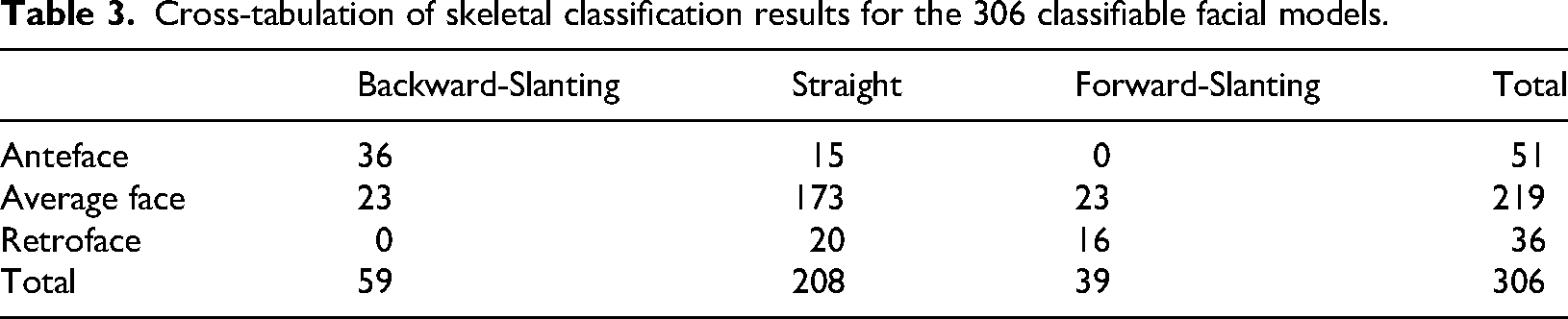
Next, an overview of the attractiveness-rating data is provided. The characteristics of the raters are shown in Table 4. The largest age group among valid respondents was 40–49 years (30.7%). In terms of makeup frequency, the most common category was Never (37.4%), followed by 5+ days per week (30.7%). For interest in makeup, the most frequent response was Somewhat interested (34.9%).
Characteristics of raters.
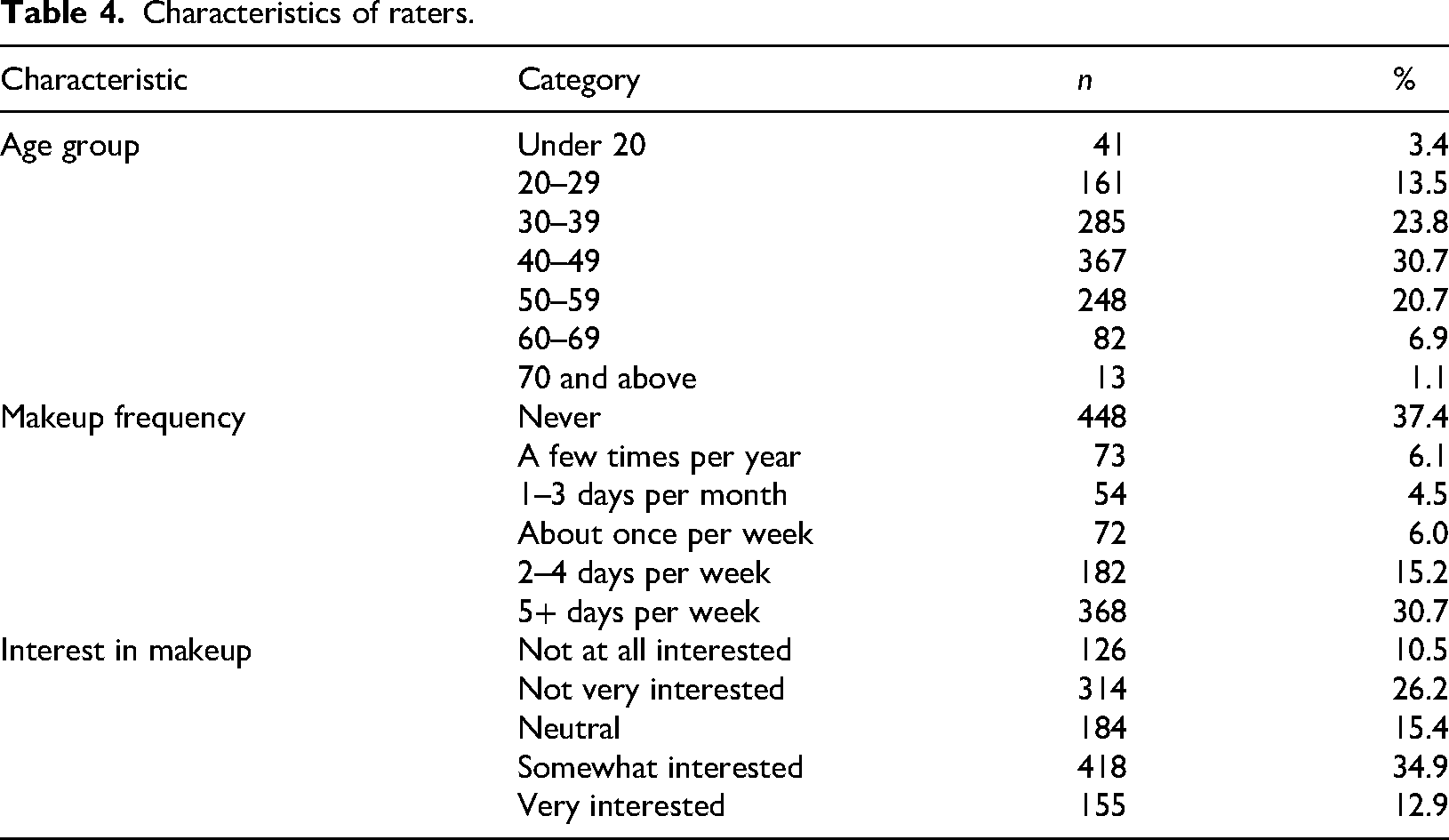
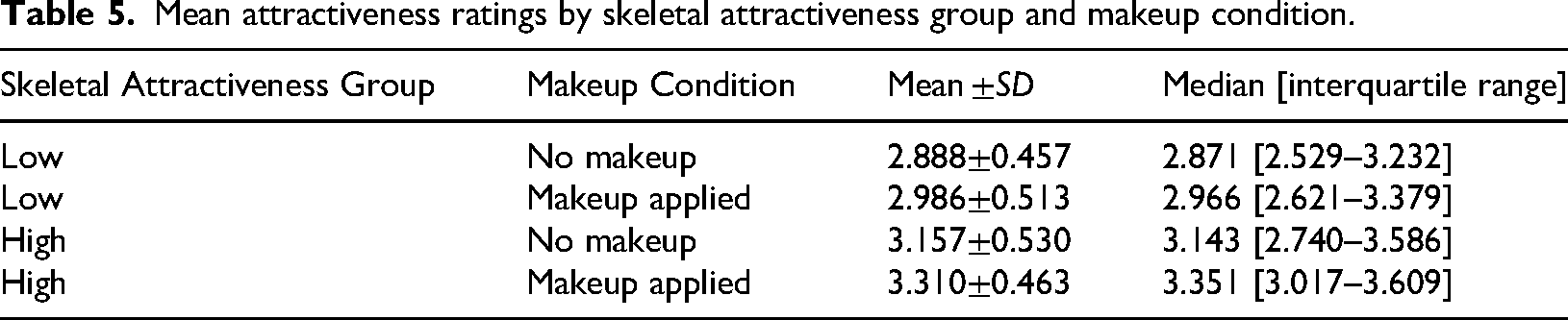
Table 5 presents the mean, standard deviation, median, and interquartile range of attractiveness ratings by the skeletal-attractiveness group (high vs. low) and makeup condition (no makeup vs. makeup applied). In the low group, the mean attractiveness rating was approximately 0.10 points higher for the makeup-applied condition than for the no-makeup condition. In the high group, the corresponding difference was approximately 0.15 points. In addition, regardless of makeup condition, the high-skeletal-attractiveness group showed higher mean attractiveness ratings than the low group. Figure 4 shows the proportional distribution of the six-point attractiveness ratings. Across all conditions, midrange ratings (ratings 2–4) accounted for approximately 80% of responses, whereas extreme ratings such as 1 and 6 each accounted for less than 10% in every condition. In particular, the proportion of rating 6 was small, ranging from 0.7% to 2.1%.
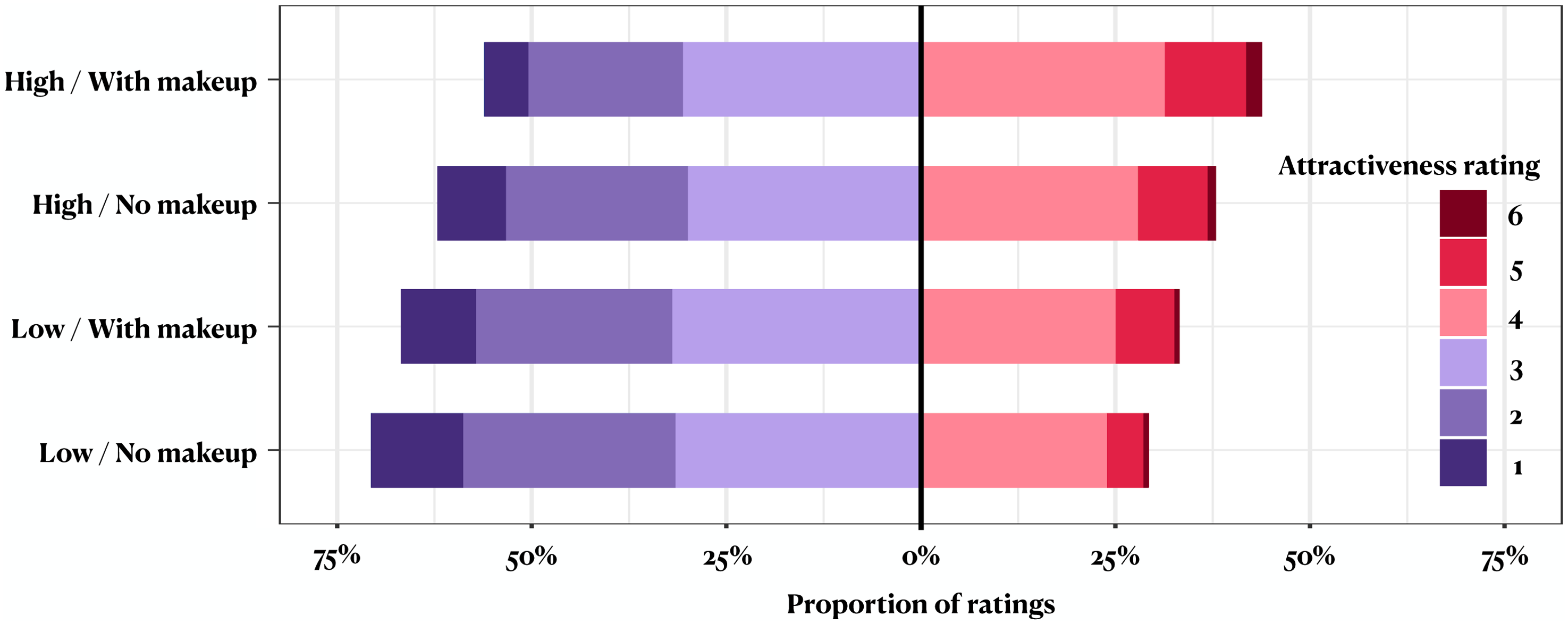
Proportional distribution of attractiveness ratings by skeletal attractiveness group and makeup condition.
Mean attractiveness ratings by skeletal attractiveness group and makeup condition.
Main Analysis
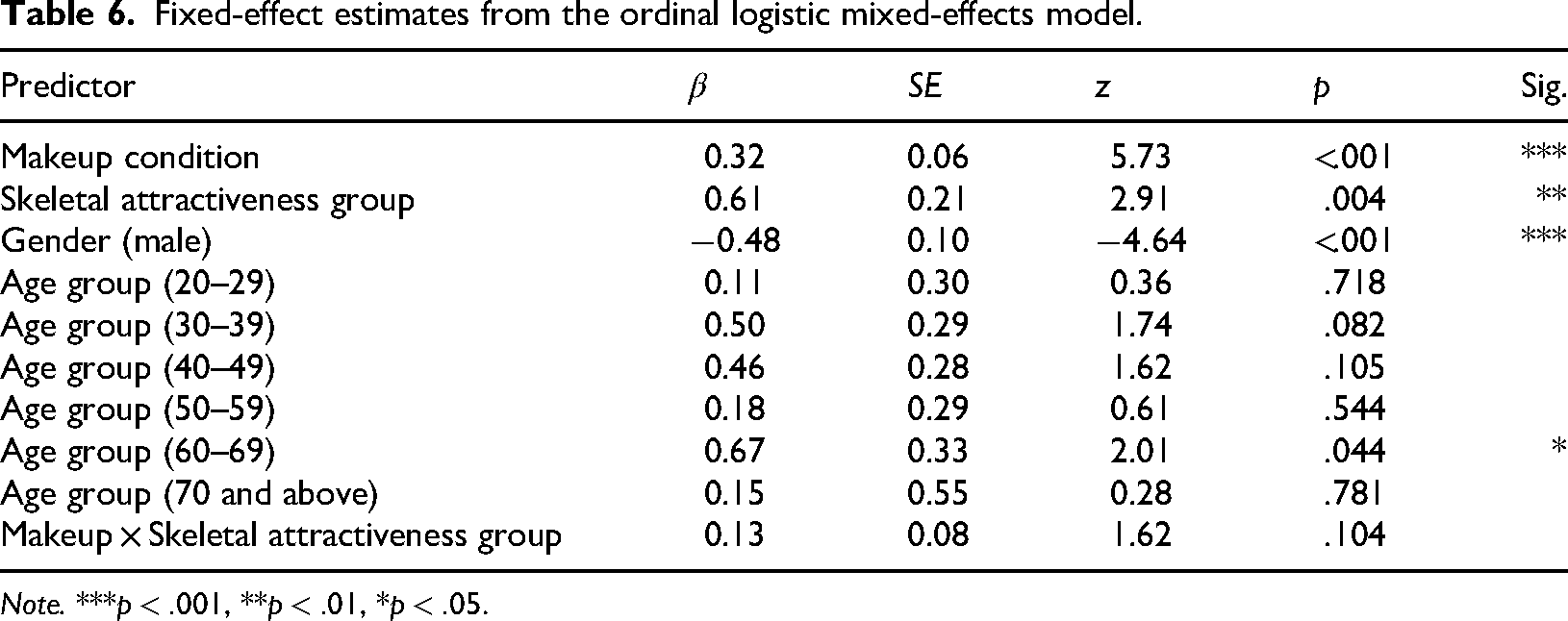
To examine the effects of makeup and skeletal attractiveness on attractiveness ratings, we conducted an ordinal logistic mixed-effects regression analysis. Comparison of the candidate models using AIC showed that the model including makeup condition, skeletal attractiveness group, gender, age group, and the Makeup
Fixed-effect estimates from the ordinal logistic mixed-effects model.
Note. ***
The coefficient for makeup condition was positive and significant (
Among the rater-side covariates, the coefficient for the 60–69 age group was positive and significant relative to the under-20 reference group (
The variance of the random intercepts was 2.44 (
Supplementary Analysis
Supplementary analyses were conducted to examine the robustness of the main results. First, to address the possible influence of target-face perceived age, we fitted models including AgeRated
Importantly, after adding AgeRated
We further fitted a model including the Makeup Condition
Second, as a robustness check for the Ethnicity-category composition of the stimulus set, we fitted an extended model that included the Ethnicity category, the Makeup Condition
Discussion
Summary of the Main Findings
The present study examined whether attractiveness derived from skeletal indices (skeletal attractiveness) influences judgments of facial attractiveness after makeup application. Analysis using an ordinal logistic mixed-effects model yielded three main findings. First, makeup consistently increased attractiveness ratings regardless of whether a face belonged to the high- or low-skeletal-attractiveness group. Second, faces in the high-skeletal-attractiveness group were more likely to receive higher attractiveness ratings than faces in the low group, independently of whether makeup was present. Third, although the interaction between makeup condition and skeletal-attractiveness group was positive in direction, it was not statistically significant, and thus no clear conclusion could be drawn that the magnitude of attractiveness enhancement produced by makeup differed as a function of skeletal attractiveness. Taken together, these results support RQ1 and RQ2, whereas support for RQ3 was limited. Supplementary analyses further showed that these conclusions were robust after accounting for target-face perceived age (AgeRated) and Ethnicity category. AgeRated itself was negatively associated with attractiveness ratings, and the Makeup Condition
These findings suggest that the effects of makeup are better understood not as a uniform operation that works in the same way for all faces, but rather as an average additive effect operating on top of baseline differences rooted in three-dimensional facial structure. Importantly, the contribution of the present study does not depend on finding a statistically significant interaction. To our knowledge, this study is among the first to examine surface-based cosmetic cues and three-dimensional structural cues within a single perceptual-evaluation framework using common stimuli, a common rating procedure, and a single statistical model. In this sense, the present study makes a novel contribution by empirically linking two lines of research that have largely progressed separately: makeup research, which has focused primarily on surface appearance, and facial-shape research, which has focused primarily on structural morphology. More specifically, the pattern observed here indicates that faces in the high-skeletal-attractiveness group started from a higher baseline level of attractiveness, upon which the average enhancing effect of makeup was added. By contrast, no clear evidence was obtained that skeletal characteristics substantially altered the attractiveness increment produced by makeup itself.
Theoretical Implications
The first theoretical implication of the present study is that judgments of facial attractiveness should be understood as a multilayered perceptual process that depends not only on surface-derived cues but also on underlying factors derived from three-dimensional shape. More importantly, the present study provides an early empirical demonstration that these two classes of cues—surface-based cosmetic cues and three-dimensional structural cues—can be examined within a single perceptual framework rather than as separate explanatory domains. Previous studies have shown that makeup may enhance attractiveness by changing surface-level visual cues such as naturalness, skin evenness, and facial contrast (Batres et al., 2019; Coetzee et al., 2012; Russell, 2009; Tagai et al., 2017). However, such accounts are limited in their ability to explain the individual variation observed in responses to the same makeup manipulation. By showing that faces in the high-skeletal-attractiveness group were rated more highly under a controlled digital makeup manipulation, the present study provides grounds for positioning three-dimensional facial structure as a source of baseline differences in attractiveness judgments alongside surface-level appearance cues.
Second, the present findings support a two-layer view of the relationship between skeletal structure and makeup, in which skeletal structure functions as a “base” and makeup as an “added layer.” The idea that three-dimensional structure contributes to facial attractiveness is consistent with findings from orthodontics and facial-profile research, as well as with reports that skeletal types defined by the anteroposterior positions of the midface and mandible are associated with differences in attractiveness (Kunz et al., 2025; Schwarz, 1961). At the same time, because the interaction between skeletal attractiveness and makeup was not significant in the present study, it is more appropriate to interpret skeletal differences as primarily determining a face’s baseline attractiveness level, while makeup functions as an operation that provides a relatively consistent enhancement on top of that baseline, rather than strongly amplifying or attenuating the makeup effect itself.
The supplementary analysis of AgeRated extends this interpretation. Faces perceived as older by the CFD norming raters tended to receive lower attractiveness ratings, indicating that target-face perceived age also contributed to baseline differences in attractiveness. At the same time, the negative Makeup Condition
Third, the present results are consistent with recent work on facial appearance interventions showing that such interventions may significantly affect attractiveness without necessarily producing equally large changes in other impression dimensions, and that their effect sizes may sometimes be smaller than expected (Jaeger et al., 2025). In the present study as well, the average effect of makeup and the main effect of skeletal structure were confirmed, whereas the interaction between them was not clearly established. This pattern underscores the importance of distinguishing not only whether an effect exists, but also at what level it operates: as a surface-based enhancement, a structural baseline difference, or a moderation of one cue by another.
Methodological Implications
The first methodological contribution of the present study lies in reconstructing three-dimensional facial models from a standardized facial image database, classifying stimuli operationally on the basis of skeletal indices, and evaluating attractiveness under a controlled digital-makeup condition. Previous makeup research has often relied on stimuli created through manually applied makeup, in which multiple factors, such as application skill, intensity, naturalness, and product choice, may vary simultaneously (Batres et al., 2021). Although digitally controlled makeup manipulations have also been used to reduce such variation in surface appearance (Batres et al., 2023), the present study extends this approach by combining a standardized cosmetic manipulation with an operational classification of three-dimensional facial structure. Applying the same full-makeup preset uniformly to all stimuli prioritized objectivity and reproducibility, making it possible to separate the average effect of makeup from the contribution of skeletal differences.
Second, the study is methodologically meaningful in its use of a mixed-effects model that treated both stimuli and raters as random factors, thereby improving statistical validity in face research. Recent work on facial stimuli and aesthetic interventions has pointed out that analyses based on averaging across stimuli can inflate false-positive rates, especially when the number of stimuli is small relative to the number of raters (Jaeger et al., 2025). In the present study, attractiveness ratings were treated as ordinal data, and random intercepts for both raters and facial models were introduced in order to account for the cross-classified structure of the data. This modeling strategy strengthens the basis for making inferences about makeup and skeletal effects beyond the specific set of raters and facial identities included in the present data set.
Third, the present study also offers methodological implications for the evaluation of beauty-support technologies using BeautyTech and AR. Prior work has examined user experience and satisfaction with such technologies (Voicu et al., 2023), but frameworks for measuring social impressions themselves under controlled conditions remain insufficiently developed. A design such as the present one, combining a standardized stimulus set, operationally defined skeletal indices, reproducible digital-makeup conditions, and mixed-effects modeling, may provide a foundation for the objective evaluation of future beauty-support technologies. At the same time, such evaluations should also consider whether digitally rendered faces are perceived as natural human faces or as artificial stimuli that may evoke perceptual mismatch.
Limitations and Future Directions
The present study has several limitations. First, there are limitations concerning the validity of stimulus generation and skeletal-index estimation. In this study, three-dimensional facial models were reconstructed from frontal face images, and skeletal indices were calculated from landmarks identified on the resulting mesh. However, this procedure may contain errors related to three-dimensional reconstruction and landmark identification. Future work should therefore examine the measurement validity and reproducibility of the skeletal indices more rigorously, for example, by using three-dimensional scan data or multiview images and by assessing interrater or intrarater agreement in landmark identification. In this respect, the present skeletal indices should be interpreted as perceptually oriented operational proxies for facial-structure cues, rather than as clinical cephalometric substitutes or diagnostic measures.
A related limitation concerns the artificiality of the reconstructed facial stimuli. Digitally reconstructed faces provide strong experimental control, but they may also be perceived as less natural than photographs of real faces. The literature on the uncanny valley suggests that highly human-like but still artificial stimuli can evoke feelings of uncanniness or perceptual mismatch (Olivera-La Rosa, 2018; Wang et al., 2015). In the present study, applying makeup to reconstructed faces may have influenced not only surface-level attractiveness cues but also the perceived congruence between human-like facial structure and digital rendering. Because the main rating task did not include direct measures of perceived naturalness, artificiality, or uncanniness, future research should include such manipulation checks to clarify whether perceptual mismatch moderates the effect of digital makeup on attractiveness judgments.
Second, the makeup condition used in this study involved applying the same preset uniformly to all stimuli in order to maximize objectivity and reproducibility. Although this design is well-suited to testing average effects, it intentionally excludes effects based on the “fit” between makeup and facial structure, such as contour correction or shading adjustments tailored to particular skeletal types. Indeed, professional makeup has been reported to enhance attractiveness more strongly than self-applied makeup while also appearing heavier and less natural, suggesting that the effectiveness of makeup cannot be separated from how it is applied and at what intensity. The supplementary AgeRated analysis also suggests that makeup-related gains may vary with target-face perceived age. Future research should therefore reconsider the conditions under which makeup interactions may become detectable, for example, by varying makeup intensity, comparing multiple presets, or introducing correction conditions tailored to skeletal characteristics, perceived age, or other face-level attributes.
Third, the generalizability of the stimulus set and participant sample is limited. The present study was based on female facial images from the CFD and therefore cannot be directly generalized to male faces, to faces from a wider range of age groups, or to stimuli drawn from different cultural contexts. In addition, the raters were primarily Japanese-speaking participants recruited online, and it cannot be ruled out that cultural context affects both attractiveness judgments and the size of makeup effects. Research on aesthetic interventions has likewise suggested that differences in the national or cultural backgrounds of targets and raters may influence outcomes (Jaeger et al., 2025). Moreover, AgeRated was based on CFD norming ratings rather than on the exact chronological age of the target models. It should therefore be interpreted as target-face perceived age, which may itself covary with attractiveness and other facial impressions. Future work should therefore extend the design to male stimuli and to stimulus sets including faces from other cultural backgrounds, distinguish chronological age from perceived age, and recruit more diverse rater samples.
Finally, the interaction between the high- and low-skeletal-attractiveness groups and makeup was not significant in the present study. This does not mean that skeletal structure is entirely unrelated to makeup effects. The CI for the Makeup
Footnotes
Acknowledgments
The authors thank Professor Gaetan Rappo for helpful comments on an earlier draft of this manuscript.
Ethics Approval and Informed Consent Statements
According to the institutional guidelines of Doshisha University (Faculty/Graduate School policy on human-subject research), this study was deemed exempt from formal ethics committee review because it involved an anonymous online rating survey and collected no personally identifying or sensitive personal information. Participants provided informed consent electronically before beginning the survey. The study used face images obtained under the data-use conditions of the Chicago Face Database (CFD), and no new identifiable personal images were collected from participants.
Author Contribution(s)
Funding
The authors disclosed receipt of the following financial support for the research, authorship, and/or publication of this article: This research was supported by the KOSÉ Cosmetology Research Foundation (34th Cosmetology Research Grant, award listing No. 845). The funder had no role in the study design; data collection, analysis, or interpretation; manuscript preparation; or the decision to submit the manuscript for publication.
Declaration of Conflicting Interests
The authors declared no potential conflicts of interest with respect to the research, authorship, and/or publication of this article.
Data Availability Statement
The analysis code, derived facial-shape measures, and anonymized rating data are available at Zenodo:  . The original face photographs were obtained from the Chicago Face Database (CFD) and are subject to its data-use agreement; therefore, the original images, rendered stimulus images, 3D meshes, raw landmark coordinates, and identifiers linking the derived measures to the original CFD model IDs are not redistributed. The repository includes the scripts and documentation necessary to reproduce the reported analyses from the shared derived data.