






Abstract
Online social networking is a common mode of communication; however, the research literature is divided as to its impact upon well-being. As musicians increasingly engage in online performances, we were interested in exploring responses and feelings stemming from social media (SM) feedback related to shared performance encounters. Six university students enrolled in music classes as novice musicians posted pre-performance clips on SM before an in-person public performance. Qualitative data sources included questionnaires, interviews, SM activities, and SM friend and follower responses. Using the PERMA model as a framework, we coded and analyzed data to provide insights into the SM networking experiences, music performance anxiety (MPA), and self-esteem (SE) of participants. Results indicated positive impacts of SM networking on participants’ well-being, SE, and MPA. Interactions with friends and followers on SM emerged as beneficial and were perceived to contribute to successful performance preparation. The findings indicate that using SM mindfully can be beneficial for novice music students, while intentional use of social platforms may effectively enhance their self-efficacy beliefs. Recommendations are made for educators in engaging SM as part of their students’ performance preparation.
Introduction
Music performance anxiety (MPA) is a feeling of apprehension that may occur in different performance settings and intensifies when musicians perceive judgment from others, fear making mistakes, or face the possibility of failure (Kenny, 2009). It is usually worse in situations involving evaluative pressure, such as performing in front of an audience (Kenny, 2009). Feedback on performance can play a role in a musician’s experience of MPA as it establishes a cognitive framework for the musician’s subsequent musical endeavors (LeBlanc, 2021). Negative feedback may affect the performer beyond the immediate performance (LeBlanc, 2021), heighten MPA, and increase self-doubt and fear of judgment (Kenny, 2011). With performances increasingly taking place online, where audiences may be global and assessments public, it is important to consider both the potential pressures and possibilities social media (SM) contexts catalyze.
Contemporary communication methods, such as SM platforms, have created new opportunities for musicians to share their work beyond in-person performances. For students using SM as a performance or pre-performance platform, the potential to receive feedback from a wide range of listeners globally may elicit strong feelings. Where listeners in an in-person performance might provide no feedback beyond a round of applause, feedback on SM such as Instagram, Snapchat, or TikTok is commonly given with a single click—for example, to “like” on Instagram or to indicate specific feelings by an emoji on Snapchat—often before a performance has even been completed. SM feedback is typically public and sometimes anonymous, which may provide unique challenges for performers as polite niceties may not necessarily be adhered to. The engagement speed and wide reach of SM may make post-performance feedback particularly impactful. However, the benefits of SM, such as social support, accessing information, connectedness, and access to information, have been documented in the literature and are evident across different SM platforms, such as TikTok and Instagram. However, platform design and user practice affect the efficiency of these platforms with greater benefits when users engage actively (Yue et al., 2023). For example, Instagram promotes visual presentation, whereas TikTok focuses on algorithmic trend dynamics and Twitter emphasizes public discourse (Alhabash et al., 2024). The feelings musicians experience related to feedback on SM, in particular, its potential impacts on their self-esteem (SE) and MPA, have not yet been examined by the research community. This study was designed to begin to fill that gap.
We explored novice college-level musicians’ experiences and feelings associated with SM followers’ responses and interactions to a video recording they posted in advance of a live in-person recital. We were particularly interested in the impacts on their MPA and SE. Our research questions were as follows: (1) In what ways do novice musicians report that SM interactions impacted their MPA? (2) In what ways do novice musicians report that SM interactions impacted their SE? and (3) How do novice musicians report that SM interactions impacted their feelings about future performances? We employed PERMA as a comprehensive conceptual framework to understand how SM interactions impact well-being and their potential role in alleviating or intensifying MPA.
The pervasiveness of MPA across the age spectrum and the challenges it poses to the performer and the performance (MacAfee & Comeau, 2020; Papageorgi et al., 2013; Ryan, 1998) have led to a large body of research on the topic. Examples include its relationship with feedback (Huawei & Jenatabadi, 2024), SE (Denissen et al., 2008), the role of audience and fear of negative evaluations (Kenny, 2011), the impacts of audience size and presence (Yoshie et al., 2009), and music performances in virtual classes (Ryan et al., 2024). Although each of these areas has links to performing online, we could find no studies that have explored the potential impacts of engagement with SM on performers’ subsequent MPA, despite the commonality of online networking via SM in contemporary communication (Park et al., 2009).
Discourse surrounding SM and well-being tends to skew negatively (Keles et al., 2020; O’Reilly et al., 2018). However, some researchers have found that active participation in online conversations can have a positive impact on happiness and well-being (Valkenburg & Peter, 2011). Furthermore, studies on online communities have indicated that posts often contain more positive than negative messages (Choi & Toma, 2014), and users seek out positive messages to regulate their emotions (Myrick, 2017). Meaningful interactions through SM platforms have the potential to strengthen social bonds, enhance well-being and motivation, and boost confidence (Verduyn et al., 2017). However, the impact of SM networking on well-being remains controversial, with some researchers suggesting it may negatively affect well-being, especially among young people (O’Reilly et al., 2018). Passive or negative media consumption without a clear purpose has been linked with mood changes based on viewed content (Chukwuere & Chukwuere, 2017), and prolonged SM engagement may lead to reduced productivity, lower academic performance, and increased vulnerability to depression (Keles et al., 2020).
SM networking and self-esteem
An important aspect of well-being involves our sense of self-worth, or SE (Rosenberg, 1965), which may also be impacted by SM engagement. SE influences our thoughts, behavior, and interpersonal relationships. Positive comments from SM followers can be a source of SE enhancement (Valkenburg et al., 2006), validating and affirming the user, boosting confidence, and encouraging positive self-perceptions (Yang & Bradford-Brown, 2016). Some people, particularly those with low SE, may feel more comfortable socializing via SM than in traditional contexts (Kraut et al., 2002). On the contrary, excessive message checking has been shown to trigger negative thoughts and negatively impact SE, thereby fostering mental health risks and increased anxiety, especially in girls (Twenge et al., 2022). SM networking may lead to lower SE, unrealistic expectations, and emotional consequences when peer comparison is central to the interactions (Krause et al., 2021; Valkenburg et al., 2006). Furthermore, SE can be a barrier in SM use, for example, concerning cyberbullying, which can be harmful to overall well-being (Dredge et al., 2014). The overall impact of SM networking use on SE is dependent on individual predispositions and usage patterns (Valkenburg et al., 2017) and requires focusing on inter-individual differences, rather than group differences, to better understand the relationship between SM use and SE (Valkenburg et al., 2017).
SM video production feedback and music performance anxiety
The impacts of SM engagement on SE may be particularly important to consider among musicians, for whom SE has been linked with performance success (Jiang & Tong, 2024). Increasingly, amateur music video production has enabled student musicians to virtually rehearse their performances and seek support from followers as they prepare for upcoming events (King & Himonides, 2016). Feedback from viewers has been shown to bring creators a sense of satisfaction and happiness (Cayari, 2018), serve as a stress reduction outlet (Gilmour et al., 2020), and promote positive psychological well-being (Ellison et al., 2007). Conversely, unfavorable feedback has been found to trigger negative emotions (Valkenburg & Peter, 2011), which may impact performance and lead to negative responses like anxiety, avoidance, and disengagement that could hinder learning (Belschak & Den Hartog, 2009).
PERMA model of well-being
In our study, we employed the PERMA model of well-being as a framework with which to understand participants’ experiences. This model has been applied in a variety of music education contexts, including studies on the well-being of classical professional musicians (Ascenso et al., 2018), music teachers (Miksza et al., 2022), and older adults participating in music ensembles (Matherne, 2022), as well as on the effects of passion for music on musician well-being (Bonneville-Roussy, & Vallerand, 2020). Adopting this model has been found to promote practice, improve students’ abilities and competencies, improve musicians’ psychological states, and positively impact students’ overall well-being (Lee et al., 2017).
PERMA encompasses five components, all of which can be directly linked with MPA. Positive emotions, like happiness and positive judgment, address how individuals cope with stress, improve well-being, and reduce stress reactivity (Tugade et al., 2004). Negative emotions, such as MPA, can harm SE and performance (Nwokenna et al., 2022). Students experiencing positive or mixed emotions have been shown to perform better than those with fear (Kaleńska-Rodzaj, 2020). Engagement pertains to a person’s deep involvement in an activity (Seligman, 2011). The contentment that arises from challenging oneself to reach new heights fosters personal growth and happiness (Seligman & Csikszentmihalyi, 2014). Relationships refers to the ability to establish and maintain meaningful interpersonal connections (Seligman, 2011). Social affiliation is a strong motivator, promoting resilience and well-being, while a lack thereof can hinder adaptation and well-being (Noble & McGrath, 2012). Meaning relates to an individual’s sense of achievement and success (Seligman, 2011). It is associated with lower mortality risk, better physical health, and increased life satisfaction (Ryff & Singer, 2008). Accomplishment motivates individuals toward mastery (Seligman, 2011), which may have a positive impact on SE (Schmidt & Padilla, 2003). We chose the PERMA model to help us understand our participants’ experiences with SM, MPA, and online feedback specifically because of its inclusion of various aspects of well-being relating to emotions, relationships, and achievement.
Method
Study site and participant dynamics
This instrumental case study (Stake, 1995) was conducted at a research university in the United Arab Emirates (UAE) during the 2022 spring and fall semesters. Upon ethics approval, email messages describing the study’s purpose, process, activities, and participant responsibilities were sent to all students pursuing a minor in music and enrolled in novice-learner piano classes, for which solo recitals were required and promoted on Instagram. The first two participants shared information about the study with friends and classmates, resulting in four additional participants and a final group of six students, aged 18 to 25. All had active SM accounts and prior SM engagement experiences, but demonstrated varying approaches to SM engagement and piano practice. To maintain confidentiality, pseudonyms were used for all participants. Most participants were non-Emirati residents of the UAE, except one Emirati student.
Linda, a psychology major from Yemen, shared a performance video on Instagram with limited privacy settings, welcomed comments, and edited her posts before sharing. Kai, an Emirati engineering student, played bongos for 7 years and just started learning piano. He practiced three times a week, rarely posted on SM, but shared piano performances on Instagram. He valued support but ignored negative feedback and sometimes blocked unknown users. Jane, a Jordanian student, studied Marketing and Studio Art, practiced piano three times a week, and occasionally posted videos on SM. Jane valued her followers’ engagement and occasionally deleted or blocked users. She preferred editing posts before sharing to avoid unfavorable feedback. Marian, an Egyptian student majoring in psychology, practiced piano daily. She spent considerable time on SM appreciating the support from followers, but had not been bothered by its absence. She refrained from blocking or deleting critical feedback. Matt, an Emirati civil engineering student, practiced piano three times a week for 1.5 h. He occasionally used Snapchat but preferred limited SM engagement. Stella, a Pakistani student, studied International Studies. She practiced piano once or twice a week for 1 to 2 h and spent 4 to 6 h daily on Instagram, mainly interacting with friends and family. She occasionally edited her posts before sharing and sometimes blocked annoying and unwanted messages on her wall.
Data collection
Data were gathered through a questionnaire, interviews, and artifacts from participants’ SM profiles and live concert experiences. To maintain consistency and support interpretation, questionnaire responses were triangulated with interview themes and SM artifacts.
Questionnaire
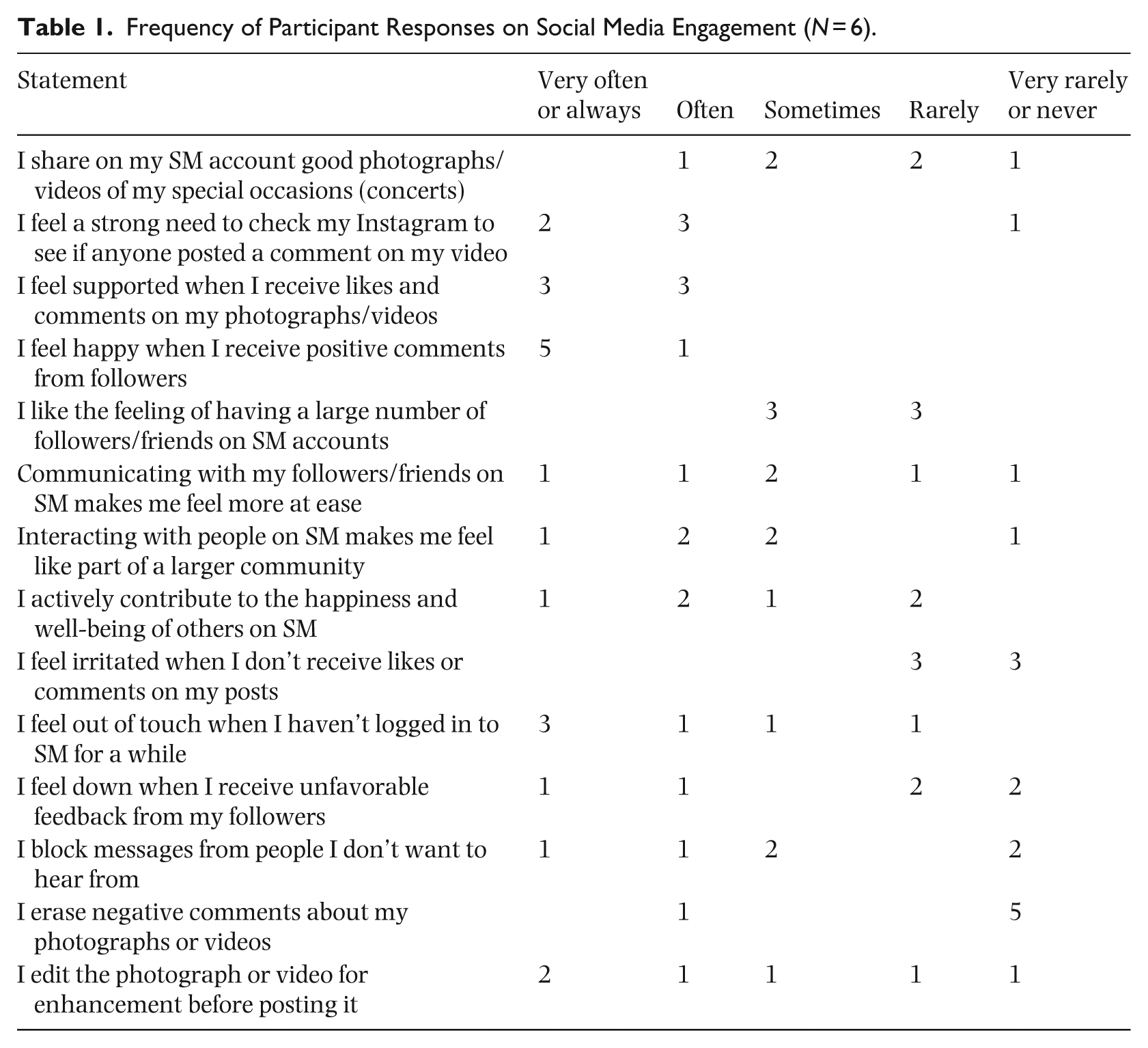
We developed a questionnaire to gather demographic information about participants, such as gender, home country, major, current piano course, and past musical performances. Background questions about SM networking items were based on the literature and included open-ended questions about platforms, usage (time), and perceptions of likes, emojis, and comments. Responses to questions such as I feel supported when I receive likes and comments on my photographs/videos were rated on a 5-point scale from “Very Often” to “Very Rarely or Never.” The questionnaire was pilot tested by a professor of music education and a researcher of SM and learning who provided input that helped clarify and validate the questions. Participant responses are shown in Table 1.
Frequency of Participant Responses on Social Media Engagement (N = 6).
Interviews
We held 20-min semi-structured one-on-one Zoom interviews with each participant at two key points: Stage 1 (study baseline) and Stage 3 (post-concert performance), exploring their SM interactions. In the first interview, we gathered information about interactions that positively impacted participants’ well-being and relationships with followers or any adverse encounters that impaired SE and performance (see Appendix 1). The second interview took place after their live performance and explored various aspects of the performance experience, including participants’ views on sharing performance videos on SM and how online interactions impacted their music goals. Discussions included their intentions for future social networking, challenges they experienced with sharing performance videos on SM, and the overall impact of SM networking on their emotional well-being.
Artifacts
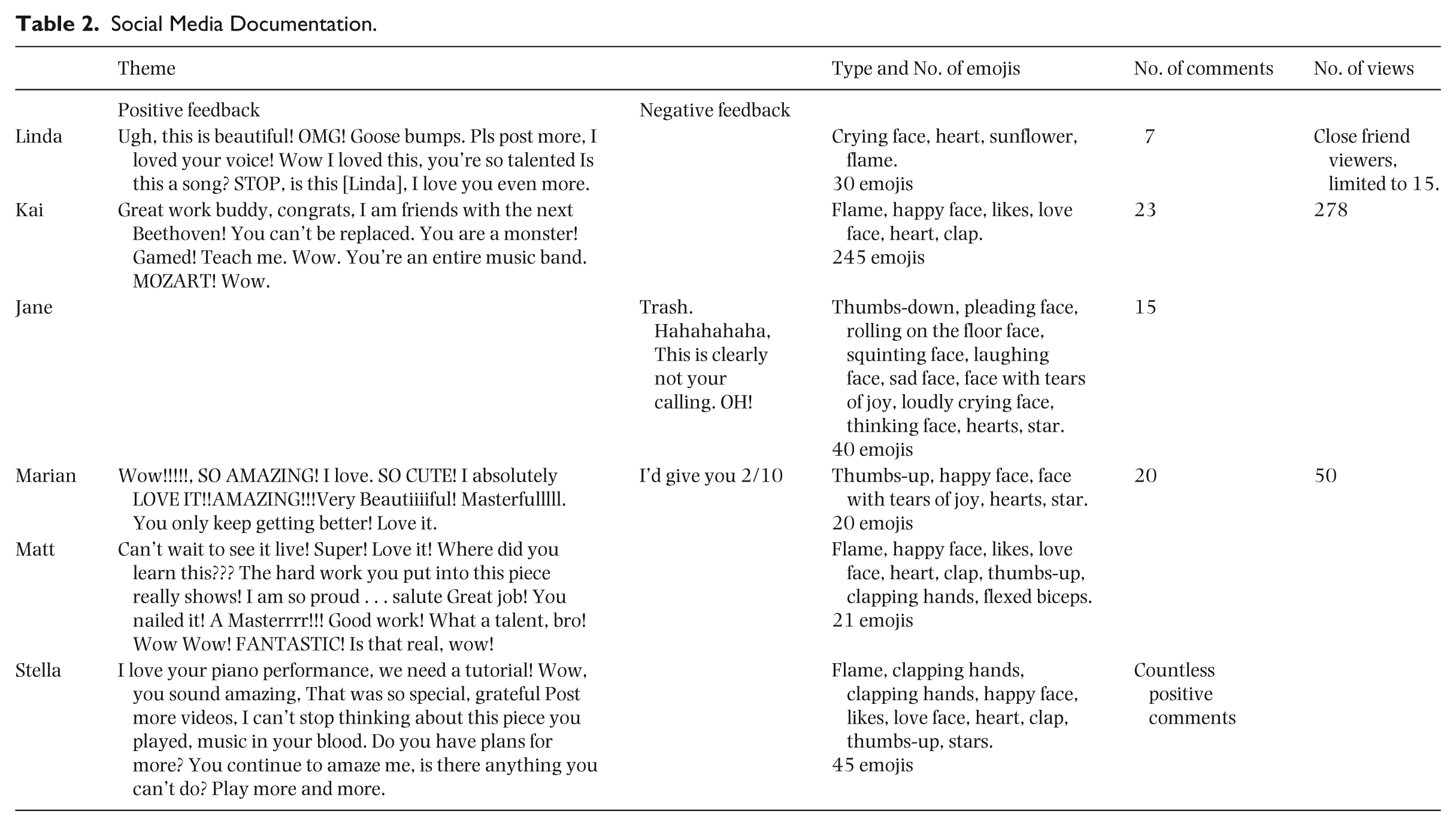
We collected artifacts from participants’ SM accounts, where they posted brief performance videos a week before their live concert. Data from platforms such as Instagram are “dynamic data,” subject to editing and reposting, resembling observations rather than static records (Marotzki et al., 2014, p. 453). These data offer opportunities to capture “highly unusual or idiosyncratic human experiences” and allow for multiple channels of expression, encompassing symbols and words (Merriam & Tisdell, 2016, p. 166). SM profiles provided insights into the dynamic relationship between social networking, MPA, and SE. Once participants accepted their friend requests, the lead researcher gathered information from their SM platform, examined each profile, and collected data about their interactions, including the number of emojis, comments, and posts. Table 2 contains examples of responses to video posts on SM accounts.
Social Media Documentation.
Detailed documentation in our research diary, encompassing concert settings, novice pianist behaviors, and reflections played an important role in facilitating a thorough analysis of participants’ well-being and MPA management. In Stage 3, participants performed solo pieces in a formal public concert. We kept field notes of emerging ideas and questions for later investigation stages. Participant comfort and meticulous data documentation remained a priority throughout.
Procedure
Participants used online platforms of their choice (Snapchat, TikTok, and Instagram) to post short recordings of works they were preparing to perform at a live in-person recital. Most restricted access to their accounts to family and friends, except in one case where the account was public. No participants reported receiving feedback from outside their known social circle. Using these platforms enabled participants to share temporary or permanent posts, re-record and fine-tune their performance videos in advance of posting (as opposed to the single opportunity that might occur in in-person sharing); add previews; and interact with followers and receive feedback in the form of comments, emojis, or symbols, and exchange feedback privately or add directly to the post.
The posts included a short excerpt of the participants’ performance repertoire (mixed-genre piano pieces). They were given the freedom to record a video ranging from a short excerpt they felt confident performing to a more challenging excerpt still under practice. This approach enabled participants to post content that reflected their individual progress and comfort level. Posting occurred 1 week in advance of live performances. The live performances involved a formal piano recital in a small familiar concert hall at the university, with an audience of about 21, comprising friends, family members, and peers.
Data analysis
Interviews were transcribed, reviewed for accuracy, and analyzed by the first author, who used NVivo to code transcripts. We identified themes associated with PERMA’s components through open and contextual coding and categorizing patterns in line with the research questions (Stake, 1995). We then analyzed the data across cases to find differences and similarities among participants’ responses. The first author conducted line-by-line coding and a hierarchical arrangement of codes, followed by thematic analysis to understand how participants used SM in relation to SE and MPA. The second author reviewed them independently and provided feedback, and the third and fourth authors refined the coding framework. Artifacts (comments and emojis from SM platforms and live performances) served as additional data that informed the findings. The process of integration involved comparing themes across all data to identify similarities and contradictions, thereby enabling better interpretation of the research questions.
Member checks guaranteed the validity and accuracy of our findings. We checked with the participants themselves, discussed the preliminary findings with them, solicited their feedback, and revised based on their responses. Analysis yielded seven themes, outlined in Figure 1 and explained below.
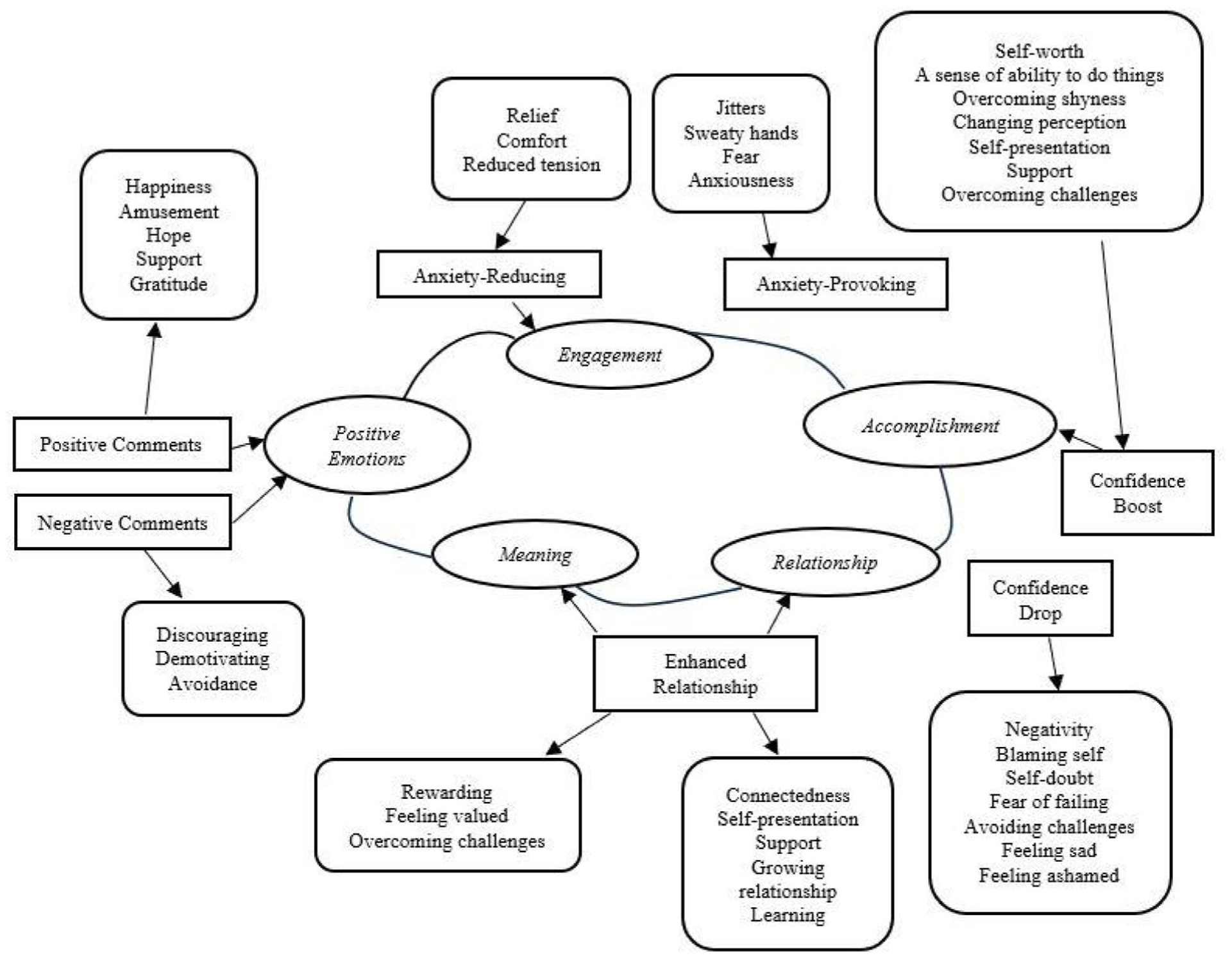
Thematic Analysis Codes and Main Themes.
Findings
Seven overarching themes emerged from the data: positive comments (n = 88), anxiety-provoking (n = 85), negative comments (n = 47), anxiety-reducing (n = 47), confidence boost (n = 43), enhanced relationships (n = 22), and confidence drop (n = 19). These are described below and illustrated with representative codes in Figure 1.
Positive and negative comments
To explore novice piano students’ perceptions of follower interaction on their well-being, we considered both SM feedback and participants’ interview responses regarding their interactions with friends and followers after video posting. The theme positive comments included codes like happiness, hope, and support. Kai, with a public account, Linda, Stella, Matt, and Marian also received positive feedback. Linda, for instance, expressed, “I felt a lot better, a lot more positive . . . positive comments made me feel appreciated and supported by my friends.”
In contrast, negative comments focused on criticism and discouragement. Jane initially received unfavorable comments, but later noted the positive impact of hearts from her audience: “Like hearts helped.” Marian experienced self-doubt after a single negative comment. She explained, “It was meant as a joke, but it made me feel somewhat negative and sparked some doubts about my performance.” Kai, Stella, and Matt were apprehensive about potential criticism. Stella had adjusted her privacy settings to limit access to approved friends, stating, “I believe friends and family don’t give bad comments, at least, mine don’t. And comments from a friend won’t cause me stress.” As seen in Table 2, participants received more positive than negative feedback, both in words and emojis.
Anxiety-reducing and anxiety-provoking
To understand how participants felt about SM engagement and what role, if any, it played in their experience with MPA, we considered their perspectives regarding SM follower engagement and its impact on their MPA. We noted two themes: anxiety-reducing and anxiety-provoking. The former captured moments of relief and comfort; the latter indicated instances of nervous states. We assessed these interactions for subjective well-being. We studied quotes in which participants expressed joy and full engagement in practicing and recording videos and considered these instances as fulfilling and anxiety-free. Under anxiety-reducing, participants shared varied experiences. Marian was so focused on her work that she lost track of time, which indicated a state of concentration and flow. Kai experienced no stress during the video preparation and enjoyed exchanges with followers. He stated that the concert brought him satisfaction and happiness: “I enjoyed performing live in front of the audience and connecting with them. It was a great concert, I had fun.” Similarly, Matt enjoyed performing in the concert without experiencing tension or anxiety. Although he felt some fear before playing, he did not sense pressure during the performance and was confident in front of the audience. Matt noted, “People presume it must be frightening at first, but in my experience, this hasn’t at all been the case.” Linda shared, “I was very focused on playing the piano, and I was very much into it.” Stella, who previously experienced performance anxiety, found recording for SM stress-free. The absence of an immediate audience and privacy settings on her platform allowed her to showcase her talent comfortably. Positive feedback from familiar individuals diminished Stella’s anxiety: “There [SM platform], I did not have any stress, maybe because, in a way, I don’t see any person online.”
Within the anxiety-provoking theme, Jane reported experiencing tension, shaking, and a raised heartbeat during live performances. Negative comments generated anxiety and discouragement and made it challenging for her to persevere in her efforts: “A lot of the people were mean, so it just kind of plays in your brain for a bit . . . when [the comments are] too negative, it really just causes a lot of anxiety.” Linda had no reservations about performing in public, but she experienced stress and disappointment during the performance due to an overwhelming sense of obligation to her audience and a desire to devote more time to training: “I was sad when I was playing, not sad, but disappointed I did not practice enough.” This reflection highlighted the contrast between her relaxed engagement with SM and the performance-induced anxiety she experienced during practice.
These experiences underscored the intricate interplay between SM engagement, MPA, and well-being among participants. Marian’s engagement with SM friends and followers showed a nuanced perspective. Whereas she felt relaxed preparing her performance video, the live concert induced tension and a rapid heartbeat, causing stress. She expressed general stress in public speaking or live performances due to the inability to correct mistakes instantly. In contrast, editing recorded videos allowed corrections, reducing stress: “When filming myself, you know, you can always correct it. But when it’s [the concert] live, you can’t fix what you do in the moment, so it stresses me a lot.”
Stella experienced anxiety during performances, a feeling she had consistently, even in short auditions or public appearances, but not when recording her performance video. She added that the familiar audience of friends and acquaintances further contributed to her ease: “My SM accounts are private. I don’t let random people see my posts, and that’s why I didn’t have any anxiety.” In summary, four participants acknowledged anxiety during live performances despite enjoying sharing short performance videos on SM. Two participants experienced no anxiety during both live performances and SM engagements.
Enhanced relationships
To understand how SM interactions affected participants’ feelings about future performances, we considered their reflections on SM interactions. The theme, enhanced relationships, addressed how SM interactions could impact the future experiences of novice piano students. Students talked about initiating and sustaining positive interpersonal connections, encompassing factors like connectedness, self-presentation, support, growth in relationships, and learning. They expressed a sense of accomplishment and success, articulating feelings of reward and overcoming challenges. The theme emerged as participants expressed pride and happiness from SM achievements, praising it for its positive impacts on well-being and relationships. Matt said he “felt really proud and happy” about SM achievement. Kai found encouragement, stating, “It gives you the hope of going on and practicing more.” Marian felt appreciated and supported through positive feedback, saying, “It just makes you feel like you did it very well.” Jane expressed inspiration to continue practicing: “I will continue [playing the piano] until I think it’s perfect.” Linda highlighted emotional support and increased confidence on SM. She noted, “SM was used for a reason. Not only connecting with friends, but also getting support, the emotional one, and having confidence.”
Confidence boost and confidence drop
The analysis of novice piano students’ SM follower engagement related to their SE revealed two key themes: confidence boost and confidence drop. These themes captured participants’ expressions of self-worth, identity, ability, and their experiences overcoming challenges and dealing with negativity through SM interactions. Linda reported a boost in confidence from positive SM feedback and overcoming initial doubts about her piano skills. She stated, “I would show my face,” in anticipation of her next video. In retrospect, she reflected on the change, explaining: Maybe not showing my face made people focus only on music, but now that I’ve included my face . . . Okay, maybe I could wear makeup, and it would also be part of the experience, like I was showing it to them. Yeah, and that would make me feel better. Yes.
Similarly, Stella was initially hesitant about associating her identity with piano playing and deemed it a questionable idea. However, as she engaged with viewers, she felt appreciated, stating, “The most I got out of that experience was encouragement.” Her followers made her feel “appreciated.” Positive comments and minimal criticism boosted Marian’s confidence, as she stated, “I’m doing something good and something right, and people made me feel good about that.” Marian also credited positive feedback and networking for overcoming her shyness, stating, “I got a lot of positive feedback, so it made me less shy, made me more encouraged to post more things.” Kai found sharing his performance on SM “encouraging,” inspiring him to practice more. He explained, “I think apart from the confidence in posting on SM was the confidence in myself as a person. I think that improved a lot.” Matt admitted he “never had the confidence” to share a video on SM, but after receiving positive feedback, he felt “really proud and happy” about his achievement. Matt explained, “I believe that confidence is really important while playing any instrument because when I get nervous, and I lack confidence, I can’t play well at all.”
Under confidence drop, Jane expressed mixed feelings about SM’s impact on her confidence. While acknowledging the negative effects of critical comments, she viewed them as opportunities for improvement. She said, “. . . Um, you get feedback, whether it’s good or bad, . . . You can see how people react to what you like and what people don’t like so you can learn how to better yourself.” Negative SM interactions initially impacted Jane’s self-talk during performances, causing anxiety. She nevertheless demonstrated resilience by remaining focused and achieving post-performance peace and confidence. Jane attributed her ability to disregard negativity to her friends’ spontaneous and humorous nature. Professional opinions held more weight for her than peer comments, emphasizing the impact of expertise on her SE. Kai highlighted his preference for in-person communication, stating, “Emotions are better perceived face-to-face than over SM.” He indicated a willingness to consider opinions from those with more subject understanding, stating, “It’s not their area of expertise, like I won’t really listen, for me it is bad credibility . . . who is talking to me and not how.” Stella emphasized the distinction between academic and SM comments, saying, “I would interpret criticism differently based on the platform.” Her comfort with SM feedback came from her audience being mostly friends, creating a sense of understanding and support.
Discussion
In this study, we investigated the impact of SM interactions on posted practice performance videos. We found that positive SM interactions promoted well-being and SE and helped to mitigate MPA. Using the PERMA framework, we interpreted the overarching themes: positive comments, negative comments, anxiety-reducing, anxiety-provoking, enhanced relationships, confidence boost, and confidence drop (Seligman, 2011). Figure 1 illustrates a broader theoretical perspective on the association between SM use and the decline of MPA.
SM’s impact on novice musicians’ music performance anxiety
Our first research question focused on participants’ reports about the impact of SM interactions on MPA. We found that SM platforms, Instagram, Snapchat, and TikTok provided an avenue through which novice pianists received support. The overwhelmingly positive reactions from SM friends and followers may have positively impacted their MPA, as had been suggested previously by Ferrara and Yang (2015). These findings support those of Jong & Drummond, (2016), who found that the well-being of participants is contingent upon the nature of friend and follower comments. Abundant positive comments, likes, emojis, and encouragement to perform more contributed to study participants’ well-being, as is consistent with the literature (Sarason et al., 1991).
Social interactions with followers and receiving detrimental comments created pressure and led to anxious feelings for two participants. This post-performance anxiety and feelings of dissatisfaction are inconsistent with the assumptions of the PERMA model of well-being and did not seem to be a result of SM interactions, but rather were caused by other personal factors such as disappointment with the performance or lack of preparation. One exception to the predominantly positive feedback was Jane, who experienced MPA due to insufficient practice. Negative SM comments played in her mind during the concert, inducing anxiety and discouragement. Despite claiming indifference to criticism, Jane’s anxiety suggested otherwise.
Posting a performance video on SM platforms was a new experience for participants. The uniqueness of these performance posts resonated with SM followers, resulting in a high volume of positive feedback. Despite initial anxiety over expectations, the majority did not receive unfavorable comments, which is consistent with research indicating the prevalence of positive emotions in online networks (Ferrara & Yang, 2015). There were initial concerns about potential discomfort and losing confidence—issues noted in previous studies on SM (Wang et al., 2017). Worries included the fear of a video being seen as flaunting, yet findings revealed no such comments. The lack of negative feedback may be due to the limited number of pianists among participants’ followers, which may have led to more blanket expressions of admiration.
The survey results revealed that participants rarely felt down or irritated by unfavorable feedback or lack of likes. Participants recognized that negative interactions with friends and followers triggered self-doubt and negativity, impacting SE. To cope, many minimized negativities and focused on positive comments. One participant, Jane, mentioned feeling discouraged by unfavorable comments. Other studies on the psychological effects of negative SM feedback on learners (Valkenburg & Peter, 2011) have found that there can be a negative impact on performance, anxiety, and disengagement, which may hinder learning (Belschak & Den, 2009). Although SM platforms can serve as a potential educational and motivational tool, it appears to also involve some risks for students. More research that examines both its positive and negative impacts will allow for a more balanced perspective on its use and can support the development of strategies that assist novice musicians in engaging with these platforms more mindfully.
In sum, despite the potential harm from negative interactions, overall, the participants indicated positive engagements. Positive feedback is directly linked to the PERMA model’s Positive Emotions component, which might have contributed to enhanced participants’ well-being, fostered happiness, increased SE, and reduced anxiety (Denissen et al., 2008).
SM interactions and novice musicians’ self-esteem
Our second research question focused on participants’ reports about SM interactions and SE. PERMA elements might have provided the participants with a foundation of confidence to perform with greater comfort and resilience. They may have fostered positive emotions, encouraged engagement that highlighted their strength, supported the development of meaningful social connections, promoted a sense of purpose, and emphasized feelings of accomplishment. These components reinforced a confident self-image.
Positive interactions helped them shift their perspectives from anxiety and fear of failure to anticipation of success. Participants reported that interacting with followers, who were generally supportive, was encouraging and increased their motivation to practice, which in turn increased their confidence, progress, and enjoyment. This suggests that exposure to positive support in SM may serve as a protective factor against SE and MPA. All six participants highlighted the positive impact of SM on strengthening Relationships and showcasing their achievements in piano performance. They noted the benefit of these particular SM platforms for the convenience of virtual communication and the joy of connecting with a broader audience. Participants acknowledged the value of SM followers’ support, which may have bolstered their confidence and motivation to continue. The ability to share progress, receive honest feedback, be appreciated by others, and connect with others facing similar challenges boosted the sense of friendship with their SM friends and followers. Digital platforms, it seems, may offer relational support that helps decrease feelings of isolation, which are frequently associated with increased MPA. To sum, SM favorable interactions appeared to enhance confidence and assisted some participants in overcoming worries about their piano skills and fueled their desire to improve.
Experiencing deep engagement, or flow, through sharing their performance online might have also helped them reduce self-consciousness and quiet anxious thoughts, while encouraging SM interactions provided support and reassurance. Study participants experienced deep engagement, or flow, through the sharing of their performances online. Since they anticipated receiving feedback, they were inclined to practice more to refine their technique and presentation. Posting a pre-performance video seemed to boost their confidence and helped them to prepare a performance they were proud of. Moreover, SM tools (e.g., recording and editing) maximized practice by supporting greater focus and repetition, which may have allowed students to attain “flow” states, periods of deep concentration and sustained involvement that improve motivation, persistence, and the quality of skill development (Csikszentmihalyi, 1990), aligning with the PERMA Engagement component. Engaging in this type of practice that enabled repeated experiences of flow might have helped participants to trust their abilities and reduce anxiety by shifting focus from self-doubt to skill development. Feeling more confident, Stella presented a flawless music video with the help of the editing tools on her app. This sense of accomplishment or achieving her goal reinforced her self-confidence, proving that she could perform her musical piece.
Participants highlighted the efficiency and flexibility of SM platform tools, emphasizing its time-saving benefits and ability to showcase content at their discretion. Two participants who initially lacked the confidence to show their faces in the videos overcame their doubts and decided to share. This shift in perspective highlights Linda’s previous consideration of visual elements for improvement and personal satisfaction. Overall, SM was seen as a platform for revealing different facets of the performer and a valuable tool for connecting and sharing achievements and feeling more confident about completing the task. Positive interactions with SM followers created a kind of support system and enhanced Relationships that may have supported participants’ SE and reduced feelings of isolation and shyness. Encouraging comments and constructive feedback from peers were sources of motivation and guidance, which might have positively reinforced study participants’ SE (Denissen et al., 2008) and reduced psychological stress (Sarason et al., 1991). Engaging in SM brought happiness, improved relationships, and support for participants.
SM impact on novice musicians’ future performances
Our third research question pertained to participants’ reports about the impact of SM on future performances. The findings indicated that positive comments on SM platforms generally elicited positive emotions, as has been found previously in the literature (Ferrara & Yang, 2015). They seemed to foster a sense of Accomplishment, and in doing so acted as incentives for future performances. Participants tracked their progress by receiving feedback from followers. This external praise improved their sense of accomplishment and SE and helped them to persist despite challenges. Having the ability to read comments and reflect on success might have also balanced out their negative self-perceptions and reduced the stress caused by perceived poor performance. Using SM features, students could track their progress by receiving feedback from their followers. This external praise improved students’ sense of accomplishment and SE, encouraging them to persist despite challenges. The ability to read comments and reflect on success may also balance out their negative self-perceptions and reduce the stress caused by perceived poor performance. Positive interactions were observed to enhance participants’ self-confidence in pursuit of their performance goals. Whereas our study revealed positive and negative comments, the prevailing trend leaned toward positivity (Choi & Toma, 2014). Positive interactions may have contributed to finding a greater Meaning in participants' musical goals and helped them achieve personal success. They may have felt more confident, more committed to piano practice, and more motivated to set higher goals for future growth.
PERMA framework insights
The PERMA framework provides a comprehensive lens from which to understand the psychological benefits of positive SM feedback for novice pianists. Our findings support the value of online engagement for developing musicians. SM interactions generally appeared to foster positive emotions, build supportive relationships, and result in a sense of accomplishment that promoted well-being and self-confidence, and mitigated MPA. Positive responses, likes, and emojis seemed to boost motivation and morale and contributed to well-being. This finding suggests they may serve as a possible avenue for emotional regulation, heightened SE, and increased happiness among novice musicians. SM peer support and discussions may have increased Engagement and skill development and could have provided emotional reassurance. Furthermore, sharing accomplishments and receiving feedback may have increased a sense of purpose. PERMA’s positive emotions emerged as the most crucial for musicians’ well-being and were stated 88 times, most of which were from interactions on SM, such as support from others. These emotions, consistent with the PERMA model, represented favorable feelings toward accomplishments and relationships, which may lead to higher well-being and self-confidence boost and decreased MPA and appear to serve as a gateway to interaction with other PERMA components in novice musicians’ experiences, highlighting the model’s relevance for further exploration. Our findings are consistent with previous research indicating that SM interactions support emotional control and a sense of belonging (Myrick, 2017). Although previous studies have cautioned potential dangers of SM (Keles et al., 2020; O’Reilly et al., 2018), our findings indicate that positive SM interaction may boost SE.
Implications
The study provides insights to support novice pianists in their performance preparation and anxiety navigation and underscores the potentially positive impact of mindful SM use on musicians’ overall well-being. Active participation in SM, such as sharing performance videos and receiving feedback, may inspire practice and foster flow states (Verduyn et al., 2017). It is possible that sharing performance excerpts and gaining feedback could aid self-reflection, augment SE, and contribute to achieving performance goals while potentially reducing anxiety over time, particularly in students with high MPA levels (Krause et al., 2021). Therefore, we recommend that educators consider incorporating SM platforms into their performance preparation practices for novice college music students. Possibilities include creating student feedback groups on Instagram, WhatsApp, or other SM platforms that allow followers to post feedback, or sharing short clips with others on TikTok. These methods are supported by previous research and help bridge traditional music education with the digital age.
Social networking offers students a dual landscape with both positive and negative experiences (Appel et al., 2020). The study highlights the potential benefits of mindful SM use in music education while acknowledging challenges and possible negative outcomes. Study participants demonstrated strategic and cautious SM use, akin to exposure therapy for managing MPA (Candia et al., 2023). Teachers are advised to assist students in acclimating to SM gradually, providing a safe platform for their work (Candia et al., 2023). Encouraging hesitant students with low SE to engage with SM through alternative approaches, like showcasing only their hands or sharing audio-only excerpts, could improve confidence (Cayari, 2018).
Limitations and recommendations for future research
Although this study provided insights into novice pianists’ social networking experiences in relation to MPA and SE, the findings are specific to this group and may not apply to other novice pianists. Therefore, it is undetermined if similar outcomes would arise in different age groups, instruments, or online audiences that are more diverse and/or more critical. Another limitation of this study is the cultural background in a country like the UAE. Discussing anxiety or SE challenges may lead to underreporting, where collectivist values and strong family structures may impact participatory social behavior differently than in Western societies (Obeidat et al., 2012). Future studies that compare this study’s findings to research from other regions and cultures would capture a broader perspective.
Second, as data were analyzed deductively using the PERMA framework, it is possible that other insights may be found through inductive analysis and/or by applying other well-being frameworks. Finally, longitudinal studies may reveal additional insights that are not as apparent from one performance preparation cycle.
Future research might explore the impact of social networking on MPA and SE in novice and advanced musicians of various ages, and in diverse settings to understand broader effects across instruments and time frames. In addition, investigating the impact of negative SM feedback on performance readiness, anxiety, and the role of guidance from peers, teachers, and parents is warranted. Examining the impact of SM interactions on music students facing negative experiences can guide educators in providing support for managing online interactions and navigating challenges related to SM engagement.
Footnotes
Appendix 1

Ethical considerations
Ethical approval for this research was granted by the institutional review boards of the American University of Sharjah and Boston University (IRB Protocol Number 22-087).
Consent to participate
Informed consent to participate in the study was obtained from all individual participants.
Funding
The authors received no financial support for the research, authorship, and/or publication of this article.
Declaration of conflicting interests
The authors declared no potential conflicts of interest with respect to the research, authorship, and/or publication of this article.
Data availability statement
Consent for sharing of data was not requested from participants. As such, we are unable to provide access to it to protect participants' privacy.