





Abstract
An algorithm for selecting the polymer matrix materials for a composite with a non-standard set of plastoelastic properties is considered.
Keywords
Within the framework of the project ‘Creation of biologically inert elastomeric materials with a narrow temperature range of transition from the plastic to the rubbery state, intended for the sensory and creative development of children of preschool and primary school age’, the task was set of producing a polymeric plastic material that at room temperature should possess the properties of a rubbery material, and that with increase in temperature should pass into the plastic state, and also that should possess the ability to be reused repeatedly for the production of other articles (toys, handmade articles). Here, the following requirements must be fulfilled: reversible transition from the plastic to the rubbery state at a temperature close to the temperature of the human body, a tensile strength no lower than 15 kg/cm2 (1.5 MPa), and an elongation at break of no more than 100%.
Among the most promising materials developed recently are thermoplastic elastomer blends (TPEBs) – composite materials consisting of rubbers and plastics bound into a single structure by forces of physical and/or chemical interaction in the process of dynamic vulcanisation taking place during mixing. Owing to their structure, TPEBs possess the properties of elastomers capable of passing into the plastic state at the melting point of the plastic. These materials are suitable for use in arts and crafts (including for children) and for the production of articles by injection moulding. A feature of TPEBs is their ability repeatedly to pass from the plastic state to the rubbery (high-elastic) state and back again.
According to literature data [1,2], among existing materials based on TPEBs, and also individual elastomers and plastics, there is currently no ready solution to the formulated problem, and therefore it is necessary to develop a new composite meeting the conditions of the posed technical assignment.
The possibility of successfully using a material for modelling and for children's creative play depends on whether it has the optimum combination of viscosity, plasticity, rigidity, and cohesive strength. In many ways these properties will be determined by the polymer matrix, although appropriate additives enable different adjustments to be made [3,4]. Therefore, the polymer matrix of the composite must be paid particular attention, as a successfully selected ‘rubber–thermoplastic’ pair will enable the end material to achieve the prescribed properties. In order to minimise the amount of material consumed and the time spent, a theoretical approach was taken to selecting the polymer matrix.
To simplify the algorithm for seeking the most promising polymer pair, it was proposed to use the thermodynamic compatibility and the glass transition temperature as criteria of the possible achievement of the prescribed properties. It is assumed that a composite based on polymers possessing thermodynamic compatibility will have greater cohesive strength and outwardly appear to be homogeneous. At the same time, reversible transition from the rubbery state into the plastic state at room temperature will most likely be observed in materials whose glass transition temperature ranges roughly from +15 to +35 °C.
To assess the thermodynamic compatibiity of the ‘rubber-plastic’ pair, we calculated the solubility parameters of polymers that are widely used in TPEB production by the Hansen method, which takes into account the structure of the polymer molecule elementary chain, the dispersion and polar interactions, and the interactions by hydrogen bonds in the molecules [5].
The solubility parameters of polymers

As materials with similar δHSP values theoretically have good compatibility [5], it follows that, according to calculated data, the most promising are pairs formed by a copolymer of ethylene with vinyl acetate and hydrocarbon rubbers not having polar groups. It must also be pointed out that crystalline polymers under these conditions have poor solubility and generally dissolve only at temperatures cose to the melting point [5,7].
In assessing the glass transition temperature, it was assumed that the plastic and elastic components form two interpenetrating networks with a high level of interphase interaction.
The glass transition temperature is closely related to the chemical structure of the polymers, and the structural elements (functional groups) determine both the kinetic flexibility of the chain and the energy of intermolecular interaction. For quick assessment of the glass transition temperature of any polymer, the ratio of units in which can vary, it is convenient to use the simple method proposed by Van Krevelen [8].
The relationship between the chemical structure and the temperature of transition into the glassy state of the polymer can be expressed in general form in the following way:
An example of the calculation of the glass transition temperature for polybutadiene containing 1,2 and 1,4 units in a ratio of 1:1 appears as follows:
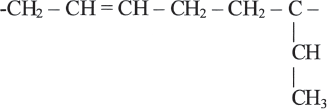
The initial data for calculation are given in
Group contributions to Yg

On the basis of quick theoretical calculations, the following polymers were determined for composites:
polyisoprenes (a content of 1,2-units of 20–25% and a content of 3,4-units of 70–75% govern a glass transition temperature of about +12 °C);
polyvinyl acetate (with a mass fraction of vinyl acetate of 15%, its glass transition temperature is close to 30 °C);
divinylstyrene rubber (mass fraction of styrene 30%, glass transition temperature ~30 °C).
As the glass transition of polymers occurs not at a definite point but in a certain temperature region, it is preferable to use a blend of 3,4-polyisoprene with polyvinyl acetate (as shown above, the two polymers have good thermodynamic compatibility).
On the basis of the selected polymer pair, a composite was developed that satisfied the conditions of the technical assignment; its formulation is presented in
The formulation of a composite based on a TPEB blend intended for the manufacture of items for children's creative activity

For comparison, specimens based on SKI-3 and SKI-5PM polyisoprenes were produced, with glass transition temperatures of −63 °C and with full retention of the remaining formulation and process regime (mixing temperature 110–120 °C, rotor rotational speed 60–75 rev/min, mixing time 10–15 min). These rubbers have also been authorised for use in medical articles and in articles coming into contact with food products.
The results of the conducted tests to ascertain whether the obtained products satisfied the conditions of the technical assignment are given in
The results of testing composites with different rubbers

As can be seen from
Conclusions
It has been shown that the use of known approaches [5,8] makes it possible successfully to select the polymer base for a material with the prescribed plastoelastic and physicomechanical properties, with minimal material costs.
The conducted theoretical calculations made it possible to produce a composite possessing the required properties based on a polymer matrix of 3,4-polyisoprene and a copolymer of vinyl acetate with ethylene.
Footnotes
Acknowledgements
This study was supported financially by the Russian Ministry of Education and Science (Contract No. 14.576.21.0028, unique identifier RFMEF15761 4X0028).