






Abstract
Background
Mental health problems are a major cause of illness worldwide. They are common among children in low- and middle-income countries like Nigeria, with one in six young Nigerians reporting mental health issues.
Aims
This study assessed the mental health status of orphans and vulnerable children in residential institutions and the availability of mental health services.
Methods
A cross-sectional descriptive design was employed, and multi-stage sampling was used to select 384 orphans and vulnerable children from residential institutions. A pre-tested parents’ version of the Strengths and Difficulties Questionnaire (SDQ) and self-developed structured questions were used to collect the data.
Results
Results showed that 44.5% (n = 171) of children had scores that fell within the abnormal category in the total difficulty score on the SDQ. Mental health assessments before/during admission into the residential institution were available to 26.6% (n = 102) of orphans and vulnerable children. A significant association existed between mental health status and orphan status type of institution, age and duration of stay in the institution. The results further showed that being maternal orphans and living in government-owned residential institutions independently predicted abnormal difficulty scores.
Conclusions
This study underscores the need for mental health assessment and care among children in residential institutions.
Plain language summary
Mental health problems are a major cause of illness worldwide. This is more common among children and adolescents in low- and middle-income countries like Nigeria, with one in six young Nigerians reporting mental health problems, such as depression and anxiety. This study assessed the mental health of children residing in 12 children’s residential institutions and the availability of mental health services. Data were collected using a questionnaire. The results of the study showed that a significant proportion of the children who participated had scores that fell within the abnormal category in the total difficulty score of the Strengths and Difficulties Questionnaire (a tool used to assess children and young people’s mental health). Mental health assessments before or during admission into a residential institution were made available to fewer than half of the study participants. A significant association was found to exist between mental health status and orphan status, ownership of the residential institution and the duration of the child’s stay there. The results further showed that being a maternal orphan and living in a government-owned residential institution independently predicted an abnormal difficulty score. This study therefore underscores the need for mental health assessments and care for children in residential institutions.
Keywords
Introduction
Mental health conditions are major causes of illness in young people, with an estimated 8% of children and 15% of adolescents experiencing mental health disorders worldwide (World Health Organization [WHO], 2025). In sub-Saharan Africa, evidence suggests that substantial levels of mental health problems exist among children and adolescents, with one in seven children and adolescents having significant difficulties, while one in 10 (9.5%) have a specific psychiatric disorder (Cortina et al., 2012). Nigeria is the seventh most populated country in the world and the most populated country in Africa (Muhammad et al., 2017), with an estimated half of the population below 19 years of age (Simona, 2021).
Data from a survey reveals that young people in Nigeria are facing mental health challenges; one in six young Nigerians report often feeling depressed, having little interest in doing things, or being worried, nervous or anxious (UNICEF, 2021). Vulnerability to mental health disorders is known to be more pronounced in low- and middle-income countries like Nigeria (Vostanis et al., 2021). In addition to this, the current level of insecurity, poverty, economic hardship, political instability and a host of other predisposing factors that exist in Nigeria might make children, especially the vulnerable ones, more susceptible to mental health problems (Oyinloye et al., 2019).
Orphans and vulnerable children are children who have lost one or both parents to any cause of death and/or children who, because of their circumstances of birth, are at risk of poor health outcomes when compared with other children in society (Federal Ministry of Women Affairs and Social Development [FMWASD], 2008, as cited in Tagurum et al., 2015). In Nigeria, orphans are classified as double, maternal or paternal (single orphans) and social orphans. Children are considered double orphans if they have lost both parents, maternal orphans if they have lost their mother and their father is alive, paternal orphans if they have lost their father and their mother is alive. Those referred to as social orphans have parents who are alive but unable to perform their parental duties as a result of illness, acute poverty or for other reasons (Huynh et al., 2019). The number of these children is said to be greater in low- and middle-income countries like Nigeria (Dorsey et al., 2015).
Although current statistics about the number of orphans and vulnerable children in Nigeria is lacking, this group constitutes a significant proportion of the child population, estimated to be 17.5 million children as documented by FMWASD as of 2008 (Strengthening Partnerships, Results, and Innovations in Nutrition Globally, 2016). This number might have increased considerably as a result of the Covid-19 pandemic and related morbidity and mortality (Hillis et al., 2021).
While there are different models of care for orphans and vulnerable children in Nigeria, one of the most established forms is residential institutions (Connelly and Ikpaahindi, 2017). Residential institutions are for the care of children bereaved of both their father and mother and also sometimes children living with single parents (Ramagopal et al., 2016). They are a formal type of alternative care for orphans and vulnerable children with the basic characteristic that care is provided by paid staff and/or volunteers who are known as caregivers to a group of children in a non-family-based setting (Faith to Action Initiative, 2014). They are referred to by different names internationally, including ‘children’s home’ and ‘residential care for looked after children’. In Nigeria, settings that care for children who lack parental care or are abandoned are usually referred to as orphanages; however, the term ‘residential institution’ is adopted in this article as it is more widely used.
There are two fundamental styles of residential institution identified in the literature: the family-based style and the dormitory style of residential institution (Faith to Action Initiative, 2014). The basis of classification to either of these two styles includes the number of children housed by the residential institution, child-to-caregiver ratio and consistency of caregivers. The family-based style of residential institution is characterised by a limited number of children (one to 15), a ratio of four children to one caregiver and consistent caregivers (Faith to Action Initiative, 2014). The dormitory style of residential institution, on the other hand, is characterised by a large number of children (15 and above), a large child-to-caregiver ratio and inconsistent caregivers (Faith to Action Initiative, 2014). While the dormitory style is still common in Nigeria because of limited resources, the family-based style of residential institution is the recommended style if a child has to be institutionalised for any reason (Faith to Action Initiative, 2014; Van IJzendoorn et al., 2020). For the purpose of this study, residential institutions are also classified according to whether they are government owned, privately owned or privately owned by a faith-based organisation.
Residential institutions are known for the vital role they play in providing protective environments for orphans and vulnerable children in the face of extreme hardship (Herr, 2014). The unpalatable experience of losing parents at a tender age can, however, give rise to emotional distress, making orphans and vulnerable children more susceptible to long-term psychological problems including depression, anger, anxiety and feelings of sadness (Doku et al., 2019; Ntuli et al., 2020). The literature has also documented that children who live in residential institutions are more prone to developing mental health problems, such as depression, anxiety and behavioural problems, when compared to other children (Bano et al., 2019; Bilson, 2020; Datta et al., 2018). This is because institutionalisation has been identified as a major source of developmental delay and mental ill-health during childhood and adolescence, which substantially undermines human wellbeing and capital across the lifespan (Van IJzendoorn et al., 2020).
Mental health disorders in childhood can negatively affect healthy development by interfering with children’s ability to achieve social, emotional, cognitive and academic milestones and to function in daily settings (Ghandour et al., 2019). If untreated, these conditions severely influence children’s development, their educational attainments and their potential to live fulfilling and productive lives (WHO, 2025). In order to limit the impact on orphans and vulnerable children in residential institutions, there is a need to pay attention to their mental health status and the availability of mental health care services, since mental wellbeing has been documented to have a positive correlation with the availability of health care services (Huynh et al., 2019). More so, being orphans and vulnerable children in residential institutions in a low- and middle-income country like Nigeria already puts many of these children at the top of the ladder of the population in terms of the risk of developing a mental health problem (Juma et al., 2020). Also, data on mental health status and the availability of mental health care services to this population are still scant, especially in South-West Nigeria (Juma et al., 2020). Such data are needed to provide evidence-based care to this population by healthcare providers.
Nurses are a key group of healthcare providers. They are central to health care provision and often the first and sometimes only health professionals that people see (WHO, 2024). They are also part of their local community, sharing its culture, strengths and vulnerabilities (WHO, 2024), and they have a unique role to play when it comes to vulnerable populations (Soren, 2020). In Nigeria, nurses work in most settings, such as schools, workplaces, hospitals and community settings, to make healthcare accessible to people. However, their role in the care of children in residential institutions is not well defined and they are not assigned to residential institutions or as obtainable as in schools and some workplace settings in Nigeria (Olowokere and Okanlawon, 2016). This group of children needs mental health assessment and care due to their vulnerable status, and the role of nurses in residential institutions cannot be overemphasised. As such, it is hoped that this study will provide a basis for nurses and other healthcare practitioners becoming part of the response to the mental health needs of vulnerable children in residential institutions.
Aim
The aim of this study was to assess the mental health status of orphans and vulnerable children in residential institutions in Ibadan, a city in South-West Nigeria, the availability of mental health services, and the association between their sociodemographic characteristics and their mental health status.
Methods
Study design
This study employed a cross-sectional descriptive design, a type of observational study design where the authors measure both the outcome (mental health status) and the independent variables (sociodemographic characteristics) in the study participants at the same time. The design was selected because the study involved a population-based survey that assessed the mental health status of orphans and vulnerable children in facility-based samples. However, because the design is a one-time measurement of independent variables and outcome variables, it is difficult to derive causal relationships from a cross-sectional analysis.
Sample size and sampling procedure
The population for this study is orphans and vulnerable children in residential institutions. According to the FMWASD (2008), the regulating body for women and children’s issues in Nigeria, children living in residential institutions are all vulnerable. The sample size was calculated using Cochran’s formula, n = Z 2pq/d2 (Cochran, 1977) with a P value of 48%, the proportion of orphans and vulnerable children that were found to have an abnormal total difficulty score based on the Strengths and Difficulties Questionnaire (SDQ) in a previous study (Beagley et al., 2014). The estimated sample size obtained was 383.4, and it was approximated to 384. Data were collected on 384 orphans and vulnerable children from their caregivers using the parents’ version of the SDQ.
A multistage sampling technique was used to select the children who participated in this study. The first stage involved selection of four local government areas (two urban and two suburban) from the 11 local government areas in Ibadan, using a simple random sampling technique. The second stage involved the random selection of eligible residential institutions (three from each of the selected local government areas) based on the inclusion criteria of being registered with the Ministry of Women Affairs, Ibadan, functional at the time of the study, and with eligible children living in them. The third stage involved the random selection of eligible orphans and vulnerable children (a child less than 18 years with no major physical or congenital impairment and whose caregiver had given permission to be included in the study) from selected residential institutions. The process of selecting children is stated in Figure 1. This was achieved by assigning random numbers to children in each of the residential institutions using the institutions’ registers. Numbers were then selected randomly, and children whose numbers corresponded to them were recruited into the study.

Flow diagram showing how study participants were selected.
Research instrument
A pre-tested structured questionnaire was used to collect data. The questionnaire has three sections. Section A contains questions on the sociodemographic characteristics of orphans and vulnerable children. Section B contains questions assessing their mental health status as taken from the parent version of the SDQ. The SDQ is widely used as a screening tool for detecting mental health difficulties among children (Bryant et al., 2020; Hoosen et al., 2018), including pre-school children (Gustafsson et al., 2016; Molland et al., 2023). It examines 25 attributes divided between five scales: emotional problems, conduct problems, hyperactivity and inattention, peer relationship problems and prosocial behaviours. Each item on the SDQ is scored on a three-point scale: ‘Not true’, ‘Somewhat true’ and ‘Certainly true’. ‘Somewhat true’ is scored 1 for all items. ‘Not true’ and ‘Certainly true’ are scored as 0 and 2 respectively for almost all of the items except for the fourth and fifth items under the hyperactivity scale, second item under the conduct problem scale and the second and third items under the peer problem scale, where ‘Not true’ is scored 2 and ‘Certainly true’ is scored 0. Section C contains a semi-structured three-item question, which assesses the availability of mental health care services to orphans and vulnerable children. The validity of the final instrument was assessed through face and content validity, and the reliability was obtained through an internal consistency method with an overall Cronbach’s alpha value of 0.79 and 0.83, 0.72, 0.70, 0.73 and 0.75 for the prosocial, hyperactivity, emotional, conduct and peer problems scales respectively.
Data collection
Data were collected from January to March 2020. Data on mental health status were gathered from caregivers directly responsible for the care of the children selected to participate in the study. This is because the parents’ version of the SDQ was used in data collection. Caregivers are equivalent to parents of the children since they are responsible for their day-to-day care. Data collection was conducted after consent and assent were provided by the caregivers and children aged five and above. The questionnaires were administered by interviewers, and the questions were read to participants by research assistants. As such, all the distributed questionnaires were retrieved and analysed.
Ethical considerations
This study was approved by the UI/UCH Ethics Committee with approval number: UI/EC/19/0571. Approval was also taken from the State Ministry of Women Affairs in order to access selected residential institutions. Consent was taken from caregivers or proprietors of the residential institutions while assent was taken from each child. Before the consent and assent were taken, the caregivers and the older children were duly informed about the purpose of the study and the benefits of taking part. They were also informed that participation was voluntary, that they were free to choose whether they wanted to participate or not and that they could withdraw from the study at any time without any negative repercussions. To ensure the anonymity of the data collected, unique identifier numbers were used on the survey instrument. Participants were also informed that the data collected would be kept confidential. All the information gathered was treated with utmost confidentiality by the lead author.
Statistical analysis
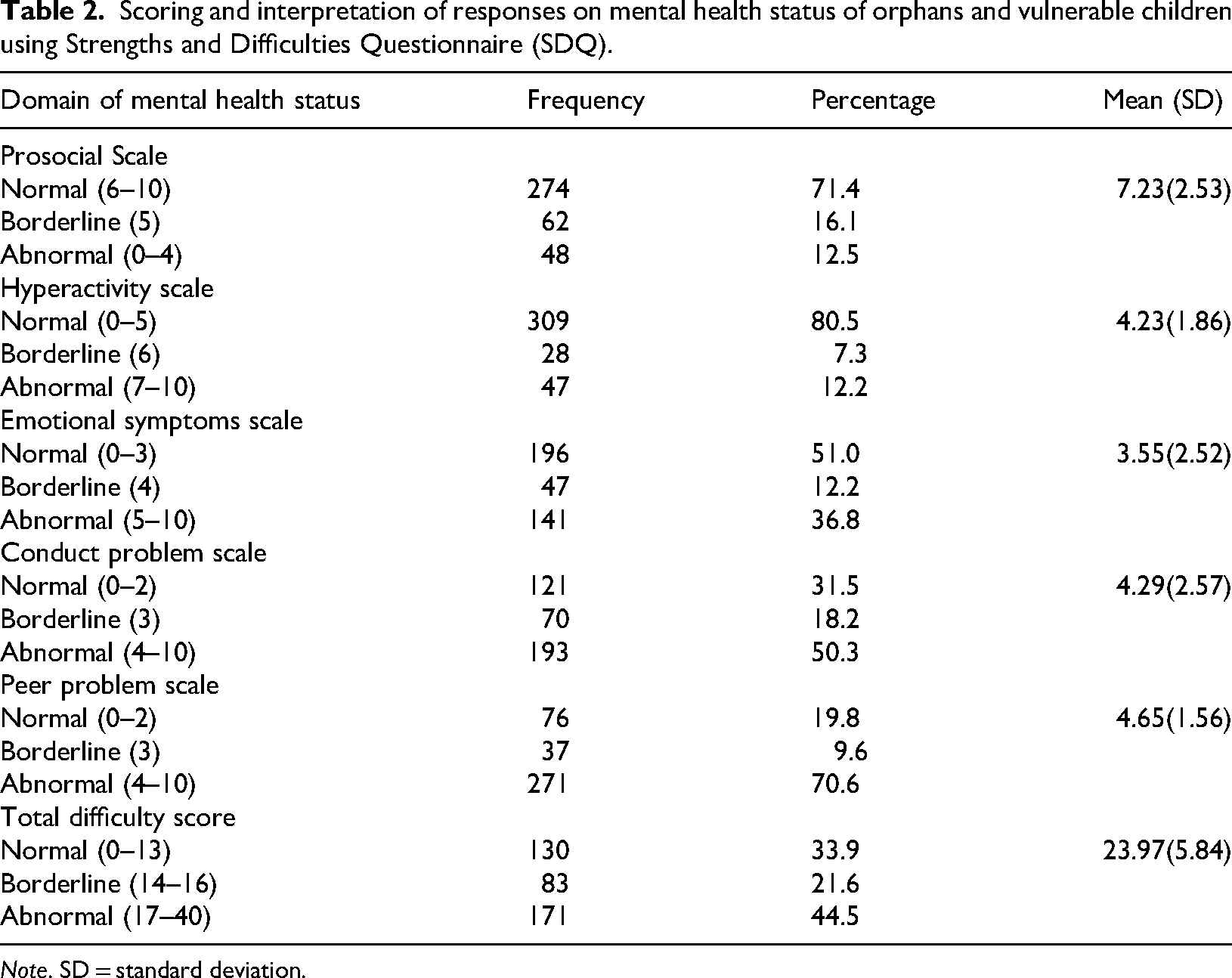
Data were coded and meticulously entered using EpiData. Data analysis was done with Statistical Product and Service Solutions (SPSS) version 23 software using descriptive and inferential statistics. A test of normality was conducted, and the data demonstrated normal distribution with a Shapiro-Wilk value of greater than 0.05. Children’s responses on the sociodemographic characteristics were coded by assigning numerical values to each response. The numerical value was used to differentiate between the different categories of responses by the respondents for the purpose of analysis. For example, female was scored 1 and male 2 to differentiate between genders and to know the proportion of respondents in each category, and this was presented using a frequency distribution table. In analysing the mental health status using the SDQ, the sum total of each item on each of the subscale creates a total score for that scale. The total difficulty score was calculated by adding the score of all the scales except the prosocial scale. The prosocial behaviour scale is usually excluded from the total difficulties score because the items on it assess strengths rather than difficulties (Goodman, 1997). A total difficulties score was calculated using the SDQ which ranges from 0 to 40. Each 1-point increase in the total difficulties score corresponds with an increase in the risk of developing a mental health disorder. The total difficulty score was categorised and interpreted as follows: ‘Normal’ (0–13), ‘Borderline’ (14–16) and ‘Abnormal’ (17–40); this is based on the standard scoring guide for the SDQ (Goodman, 1997). A score that falls in the borderline and abnormal categories in any domain as well as in the total difficulty score indicates a substantial risk of clinically significant mental health problems for that child. Summaries of results from the SDQ are presented using Table 2 and Figure 2. The hypothesis tested was that there was no association between the sociodemographic characteristics and mental health status of the children. This was tested with Chi-square and Pearson correlation at p < 0.05 significance level.

Descriptive statistics showing responses on individual Strengths and Difficulties Questionnaire (SDQ) items.
Results
The sociodemographic and other characteristics of orphans and vulnerable children
Table 1 shows the sociodemographic and other relevant characteristics of the respondents. The mean age of respondents was 11.21 ± 4.20. There were more male children (54.4%, 209) than female (45.6%, 175) in the study. The average age on admission into the residential institution was six years old (±4.46) while the average length of stay was five years (±3.74). More than half of the orphans (55.2%, 212) that participated in the study were social orphans. Three hundred and sixty-three of the participants (94.5%) were residing in the dormitory style of residential institution while 49.3% (n = 189) were privately owned faith-based institutions.
Sociodemographic characteristics of orphans and vulnerable children.

Mental health status of orphans and vulnerable children
The results in Figure 2 show the descriptive statistics of the individual items on the SDQ. The scores across subscales, with the average scores on each subscale, are shown in Table 2. Figure 3 shows the summary of the mental health status of orphans and vulnerable children; the majority (71.4%, n = 274) had normal prosocial and hyperactivity scores (80.5%, n = 309). A little above average (51.0%, n = 196) had normal scores on the emotional symptoms scale while 36.8% (n = 141) had scores that fell in the abnormal category. A little above average (50.3%, n = 193) had scores that fell within the abnormal category on the conduct problem scale while the majority (70.6%, n = 271) had scores that fell within the abnormal category on the peer problem scale. Overall, 44.5% (n = 171) of the children in the study had scores that fell in the abnormal category for the total difficulty score.

Summary of the mental health status of orphans and vulnerable children.
Scoring and interpretation of responses on mental health status of orphans and vulnerable children using Strengths and Difficulties Questionnaire (SDQ).
Note. SD = standard deviation.
Availability of mental health care services to orphans and vulnerable children in residential institutions
Mental health assessments before or during admission into the residential institutions were available to 26.6% (n = 102) of orphans and vulnerable children. In addition, mental health assessments and mental health care while in the residential institution were available to 40.4% (n = 155) and 10.4% (n = 40) respectively. These services were provided to the children that accessed them by mental healthcare professionals who visited the residential institutions on charitable grounds.
Association between child characteristics and their mental health status
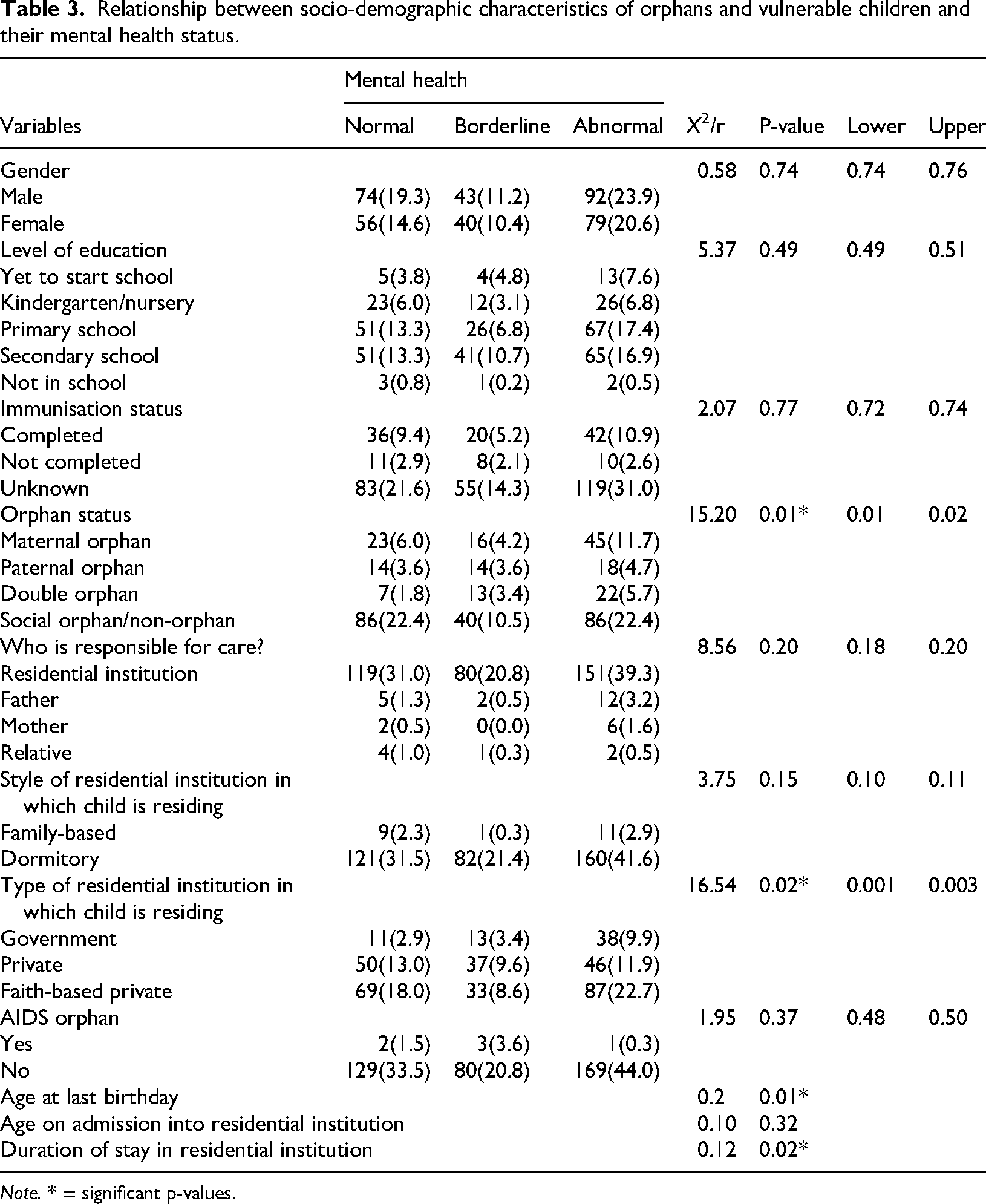
Table 3 shows the Chi-square and Pearson correlation tests of association between the sociodemographic characteristics of orphans and vulnerable children and their mental health status. For the Chi square test, the 95% confidence interval (CI) excludes the null value, thus the null hypotheses for the significant variables were rejected as the p-value was < 0.05. The results showed that orphan status (
Relationship between socio-demographic characteristics of orphans and vulnerable children and their mental health status.
Note. * = significant p-values.
Multinomial logistic regression analysis predicting likelihood factors of abnormal difficulty score.
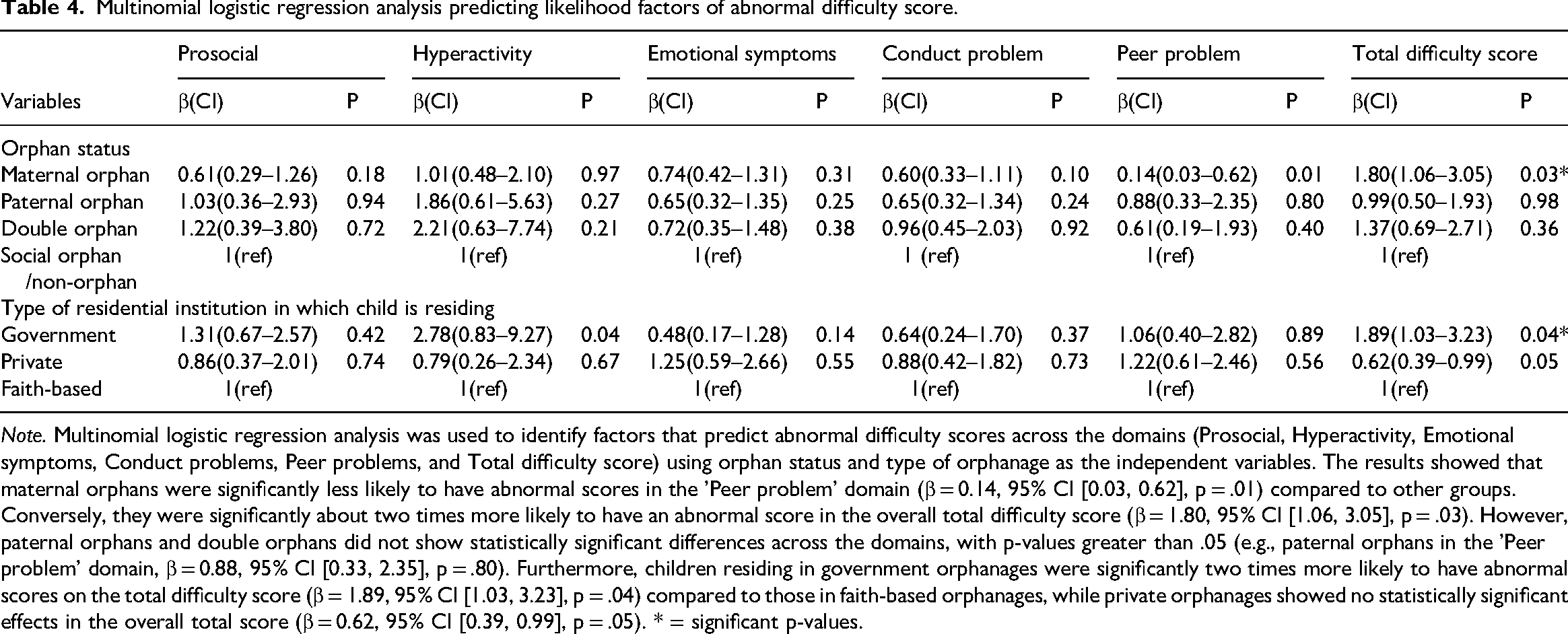
Note. Multinomial logistic regression analysis was used to identify factors that predict abnormal difficulty scores across the domains (Prosocial, Hyperactivity, Emotional symptoms, Conduct problems, Peer problems, and Total difficulty score) using orphan status and type of orphanage as the independent variables. The results showed that maternal orphans were significantly less likely to have abnormal scores in the 'Peer problem' domain (β = 0.14, 95% CI [0.03, 0.62], p = .01) compared to other groups. Conversely, they were significantly about two times more likely to have an abnormal score in the overall total difficulty score (β = 1.80, 95% CI [1.06, 3.05], p = .03). However, paternal orphans and double orphans did not show statistically significant differences across the domains, with p-values greater than .05 (e.g., paternal orphans in the 'Peer problem' domain, β = 0.88, 95% CI [0.33, 2.35], p = .80). Furthermore, children residing in government orphanages were significantly two times more likely to have abnormal scores on the total difficulty score (β = 1.89, 95% CI [1.03, 3.23], p = .04) compared to those in faith-based orphanages, while private orphanages showed no statistically significant effects in the overall total score (β = 0.62, 95% CI [0.39, 0.99], p = .05). * = significant p-values.
Discussion
This study has reported on the mental health status of orphans and vulnerable children and the availability of mental health services in residential institutions in Ibadan, a city in South-West Nigeria, and determined the association between each of the sociodemographic characteristics of these children and their mental health status. The results have been descriptively compared to previous data on the mental health status of orphans and vulnerable children in Nigeria and other countries.
The distribution of children by age in this study revealed that there were more adolescents than those at pre-school and school age. This is a similar finding to that of Kaur and colleagues (2018) who conducted a study among orphans and vulnerable children in India. The results of the present study also revealed that there are more males than females among the participants. This is consistent with a previous study conducted by Ishaya and colleagues (2016) among orphans and vulnerable children in Nigeria but is at variance with a previous study in India by Ashly and Maheswari (2017). The reason for a greater number of male children in residential institutions may be connected to a preference for families to take in female children whose parents are dead or socioeconomically incapacitated to ease domestic responsibilities; according to perceived gender roles in Nigeria, it would not be assumed that male children would help out at home (Odey, 2021).
The results revealed a higher number of social orphans or non-orphans in the current study, and the major causes of their stays in residential institutions were the financial constraints of parents and maternal death. In studies conducted in Nigeria, Connelly and Ikpaahindi (2017) and Olowokere and Okanlawon (2016) had earlier reported poverty and loss of parents as major causes of admission of children into childcare institutions. Economic hardship, insurgency and political instability in the country might have contributed greatly to this result. Most of the orphans and vulnerable children in the present study resided in the dormitory style of residential institutions with a likelihood of low child-to-caregiver ratios and lack of individualised care for children (Darkwah et al., 2018; Embleton et al., 2014; Faith to Action Initiative, 2014).
Assessment of the mental health status of the children showed that the majority (71.4%; n = 274) had normal prosocial scores, with only 12.5% (n = 48) having abnormal scores. This could mean that despite the vulnerable status of the children, many of them still exhibit behaviours that could be of benefit to others and society at large. The number of children with abnormal prosocial scores in this study was slightly higher than those reported by Kaur and colleagues (2018) in an Indian study, where 3.4% of orphans and vulnerable children had abnormal prosocial scores, but lower than those reported by Datta and colleagues (2018) in another study in India, where 80.7% had normal prosocial scores. As low as the proportion of children with abnormal prosocial scores seems to be in this study, it is significant enough to be noted and attended to. This is because nurturing prosocial behaviours has been shown to be valuable for a child’s social wellbeing in adulthood (Vergunst et al., 2019) and academic outcomes (Carlo et al., 2018) among other benefits.
The majority (80.5%; n = 309) of the children had normal scores on the hyperactivity scale, while fewer than a quarter (12.2%; n = 47) of them showed abnormal scores. The latter number is lower than the figure reported by Datta and colleagues (2018) but higher than that reported by Kaur and colleagues (2018) in India, who reported that 32.30% and 8.60% of their respondents had a hyperactivity or concentration disorder respectively. The disparity in the number of children with abnormal scores on the hyperactivity scale across studies in three different countries might be a result of genetic and biological factors inherent in the children who participated. Genetic and biological traits have been identified as important risk factors for hyperactivity disorder in children (Faraone and Larsson 2019; Yadav et al., 2021). However, the number of children with abnormal scores on the hyperactivity scale in the present study is significant enough for appropriate intervention, because children with hyperactivity disorders are prone to low self-esteem, poor academic performance and troubled relationships (Booster et al., 2012; Faraone and Larsson, 2019). In addition, hyperactivity disorder has also been identified as a risk factor for conduct disorder (Royal College of Nursing, 2014).
Just above half (51.0%; n = 196) of the children had normal scores on the emotional symptoms scale while over a third (36.8%; n = 141) had abnormal scores. Orphans and vulnerable children with abnormal scores in this study outnumbered those reported by Beagley and colleagues (2014) in a UK study and Kaur and colleagues (2018) in India, who reported that 12% and 14.70% of their respondents, respectively, had emotional problems. The high level of emotional problems among the children in the present study when compared with these studies might be attributable to the lack of priority given to the mental health service provision for this group in Nigeria, unlike in the UK, where children looked after are on the priority list for mental health services (Healthy London Partnership, 2020). Children with abnormal scores might have undiagnosed emotional problems, which require further assessment and intervention.
Results from the study also show that more than half (50.3%; n = 193) of the children had abnormal scores on the conduct scale. This was higher than reported in Beagley and colleagues’ (2014) UK study but lower than the study in India by Datta and colleagues (2018), who reported that 41% and 84.3% of participants had a conduct disorder respectively. The high prevalence of children with abnormal scores on the conduct scale in the present study might be associated with the multiple risk factors for conduct disorder that exist among the sample population. For example, many of the children are social orphans in residential institutions because of financial constraints or the poverty status of their parents. Poverty has been identified as an important risk factor for the development of conduct disorder among children (Lillig, 2018). In addition, there were more male than female children among the study participants, and conduct problems have been documented to be prevalent among males when compared with their female counterparts (Blakey et al., 2021; Lillig, 2018). These results further reiterate the importance of reaching out to these populations for appropriate promotive and preventative mental health care.
Important to note in this study is the proportion of children (70.6%; n = 271) with abnormal scores on the peer problem scale. This implies that many of the children might have problems getting along with other children. This result is not surprising as many of the children were social and maternal orphans who might have experienced strained child–parent relationships with the resultant effect on their peer skills (Hazell, 2022). This result further reiterates the work of previous authors who have reported that quality child–parent relationships, with good and responsive parenting, result in better peer skills and vice versa (Healey, 2017; Lereya et al., 2013). Furthermore, the fact that the majority of the children resided in the dormitory style of residential institution with a low child-to-caregiver ratio and little to no child–parent relationship could also have contributed to the high level of peer problems. This result suggests the need for interventions that focus on improving interpersonal relationships among orphans and vulnerable children.
The overall difficulty scores showed that about a third (33.9%; n = 130) of orphans and vulnerable children had normal total difficulty scores, while close to half (44.5%; n = 171%) had abnormal total difficulty scores. This means that a significant number of the respondents are at risk of having mental health difficulties and need further assessment and intervention. These results are aligned with those of Beagley and colleagues (2014) in the UK who reported that 48% of the looked after children in their study had abnormal total difficulty scores based on their SDQ scores but at variance with Kaur and colleagues (2018) who reported that 16.78% of their respondents had mental health problems. When compared with a study conducted among school children in South-East Nigeria (Ogbonna et al., 2021), the percentage of children with abnormal difficulty scores in the present study was higher (44.5% vs 11.7%). The high level of abnormal total difficulty scores seen among orphans and vulnerable children in this study might be connected to the stressful experiences they have had early in life. Such experiences include witnessing the death of a parent, not living to see either or both parents and not living with their own parents (Bergman et al., 2017). The memory of these stressful experiences can be a contributory factor to mental health difficulties (Nar, 2020; Turney and Wildeman, 2016).
Multinomial logistic regression analysis predicting the likelihood factors of abnormal difficulty scores showed that maternal orphans and children in government-owned residential institutions were about twice more likely to have an abnormal difficulty score than other orphans and those living in privately owned residential institutions. This result might be because of the significant nurturing role mothers play in child rearing, a lack of which can impact negatively upon children’s wellbeing (Ntuli et al., 2020). In the same vein, the higher total difficulty scores of orphans and vulnerable children in government-owned residential institutions might be attributed to these institutions accommodating more children than privately owned residential institutions. As a result of the large number of children, the child-to-caregiver ratio is likely to be low, as mentioned previously, with little or no child–parent relationship, which has also been found to impact negatively on children’s mental health (Connelly and Ikpaahindi, 2017; Healey, 2017; Lereya et al., 2013).
The results of this current study revealed that mental health services were not available to many of the children, while their scores on the SDQ indicated that many of them needed to access them. Given that the few children who had accessed mental health services were attended to by mental health care professionals who visited the residential institutions on charity grounds, most orphans and vulnerable children lacked access to regular mental health services as needed. These mental health services might range from supportive services, such as counselling, aimed at promoting their mental health, as well as preventative care and treatment of mental health problems if necessary, depending on the individual child’s need upon further assessment. The institution may not be able to access mental health care because of the lack of providers in their area, long distances to facilities that can offer it or long waiting lists. In addition to these issues, cost of care, insurance coverage, and the time and effort involved may make it harder for caregivers to get mental health care for the children (Centers for Disease Control and Prevention, 2021). The above result is at variance with a study in the US by Szilagyi and colleagues (2015) who reported the regular provision of comprehensive health care services, including mental health services, for children in care. The results of the current study show that there might be drawbacks to realising the fourth target of United Nations Sustainable Developmental Goal Three, 1 which aims to reduce premature mortality from noncommunicable diseases by a third through prevention and treatment and to promote mental health and wellbeing (Votruba et al., 2016). In order to achieve this Sustainable Developmental Goal, it is imperative to pay attention to the promotion of mental health and wellbeing among the most vulnerable populations, such as orphans and vulnerable children in residential institutions, because they are at increased risk of mental health problems. There is, therefore, a need to ensure that relevant mental health care services are made available to these children.
In general, the results of this study underscore the need for assessments and services aimed at improving the mental health of vulnerable children who reside in residential institutions. Employing the services of nurses in these institutions – as available in schools and workplace settings – could help to promote access to mental health assessments and services for vulnerable children. However, this would need to be incorporated into institutional and national policy. Further steps in the right direction would include recruiting enough caregivers for residential institutions and training them both to identify children at higher risk of developing mental health difficulties, enabling early intervention, and to provide counselling services or make referrals to health professionals as needed. A better ratio of children to caregivers could go some way towards replicating the attention a child would receive if they were living in a family setting.
Study limitations
The assessment of the children’s mental health status in this study was based on their caregivers’ reports and, as such, may be subject to bias. However, caregivers were aware of the importance of giving accurate information about the children since the data generated would potentially inform evidence-based care and policy recommendations. Assessments using the child and teacher versions of the SDQ were not conducted. In addition to this, while this study assessed the mental health status of orphans and vulnerable children residing in residential institutions, there is also a need to extend the research to this group within the wider community and other alternative care settings. Another limitation is that the SDQ norms grouping is based on European and North American populations, which could affect its reliability in the African context of this study (De Vries et al., 2018). However, the study is still valuable in giving an initial picture of the potential problems in African residential institutions and the range of SDQ scores. Finally, as the study followed a descriptive cross-sectional research design, the results cannot be used to determine a cause-and-effect relationship.
Implications for nursing practice
Caring for vulnerable populations is inherent in the nursing role (Roberts and Kreeger, 2019). This should extend to nurses' involvement in the health needs assessments of children in residential institutions, as well as further interventions to reduce the risks of developing mental health problems and the overall promotion of an environment that supports their wellbeing. Through advocacy, nurses could support vulnerable children by extending the remit of their practice beyond the four walls of the hospital to residential institutions in the community. The need for systemic advocacy to ensure that good mental health is promoted and preventative services are provided for these children by nurses and other healthcare workers cannot be overemphasised. Nurses should also advocate for changes to policy that promote access to mental healthcare services for children in residential institutions, including assessments and interventions, by raising awareness of the mental health needs of these children and lobbying relevant stakeholders and policymakers.
Conclusion
This study found that a significant number of the children in residential institutions in Ibadan, a city in South-West Nigeria, had mental health difficulties or were at risk of developing mental health problems. Children in residential institutions are vulnerable and would benefit from early or regular mental health assessments and subsequent care. As well as promoting their mental health, this approach would also contribute to the prevention of mental health problems in the future. The need for the provision of promotive and preventative mental healthcare services for orphans and vulnerable children should be a concern to nurses and all other healthcare providers. More broadly, there is also a need for all residential institutions to adopt the family-based style of accommodating 15 children at most; the majority of the residential institutions included in the study looked after more than this number.
Footnotes
Acknowledgements
The authors appreciate all the caregivers who participated in the study.
ORCID iD

Funding
The author(s) received no financial support for the research, authorship, and/or publication of this article.
Declaration of conflicting interests
The author(s) declared no potential conflicts of interest with respect to the research, authorship and/or publication of this article.